Offered by Galerie Lamy Chabolle

Decorative art from 18th to 20th century
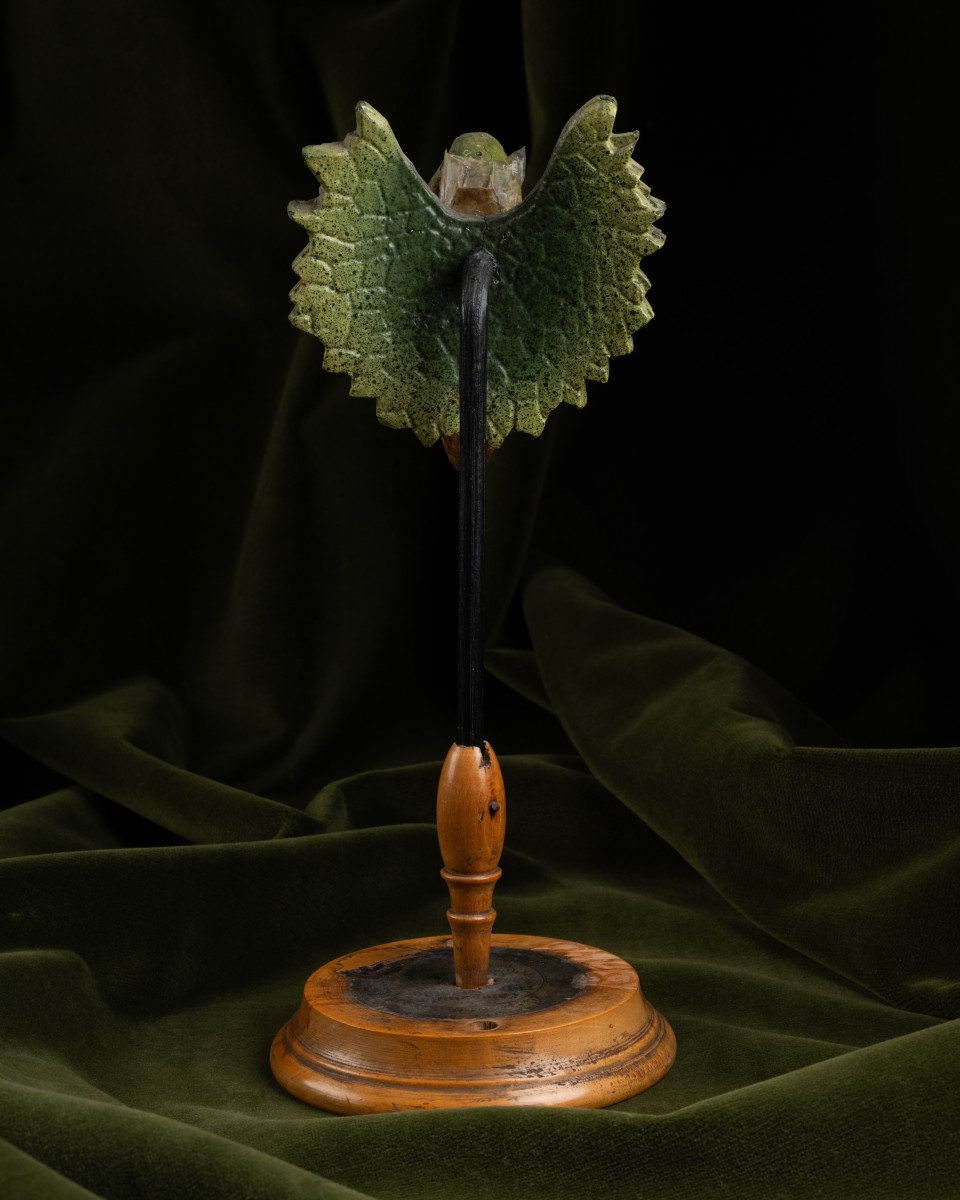
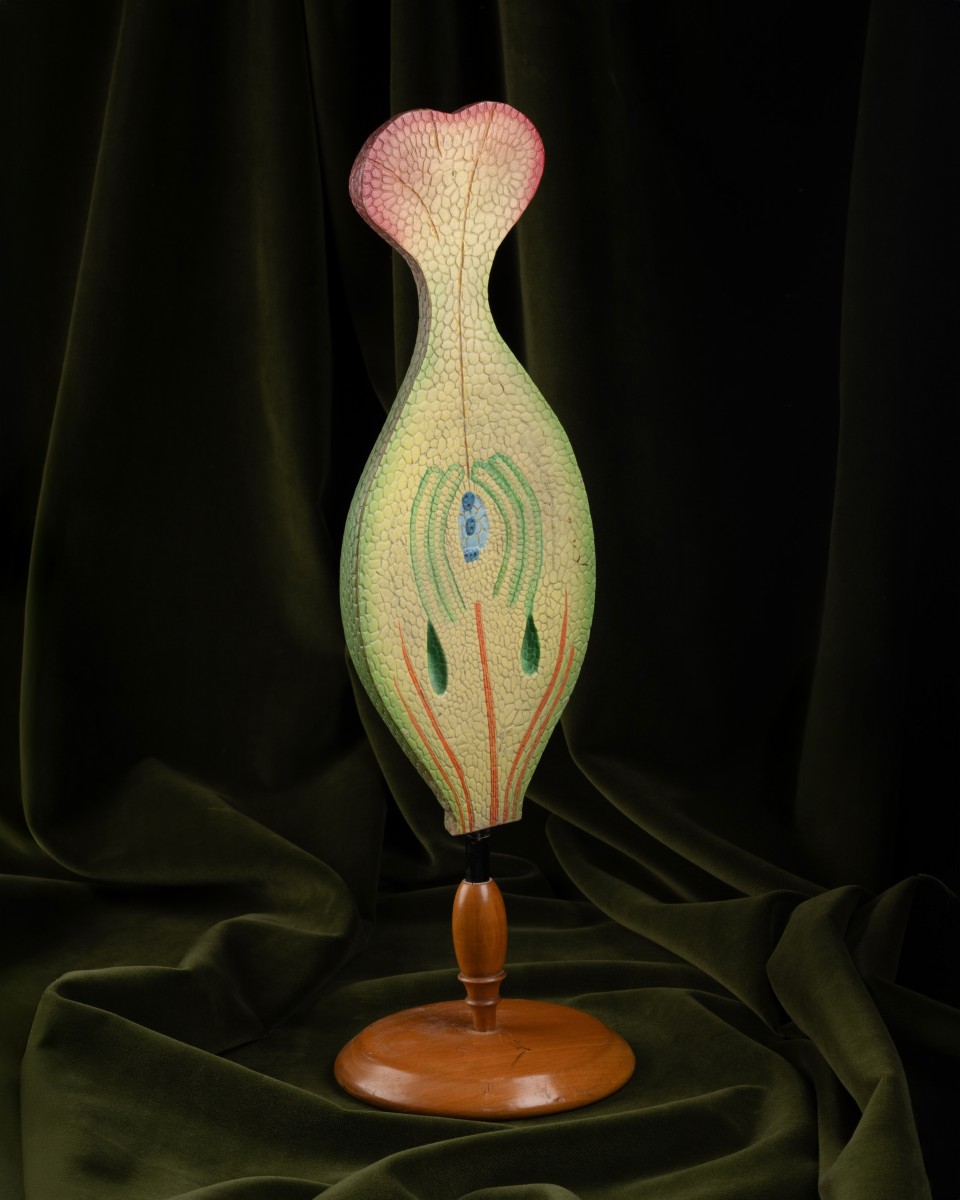
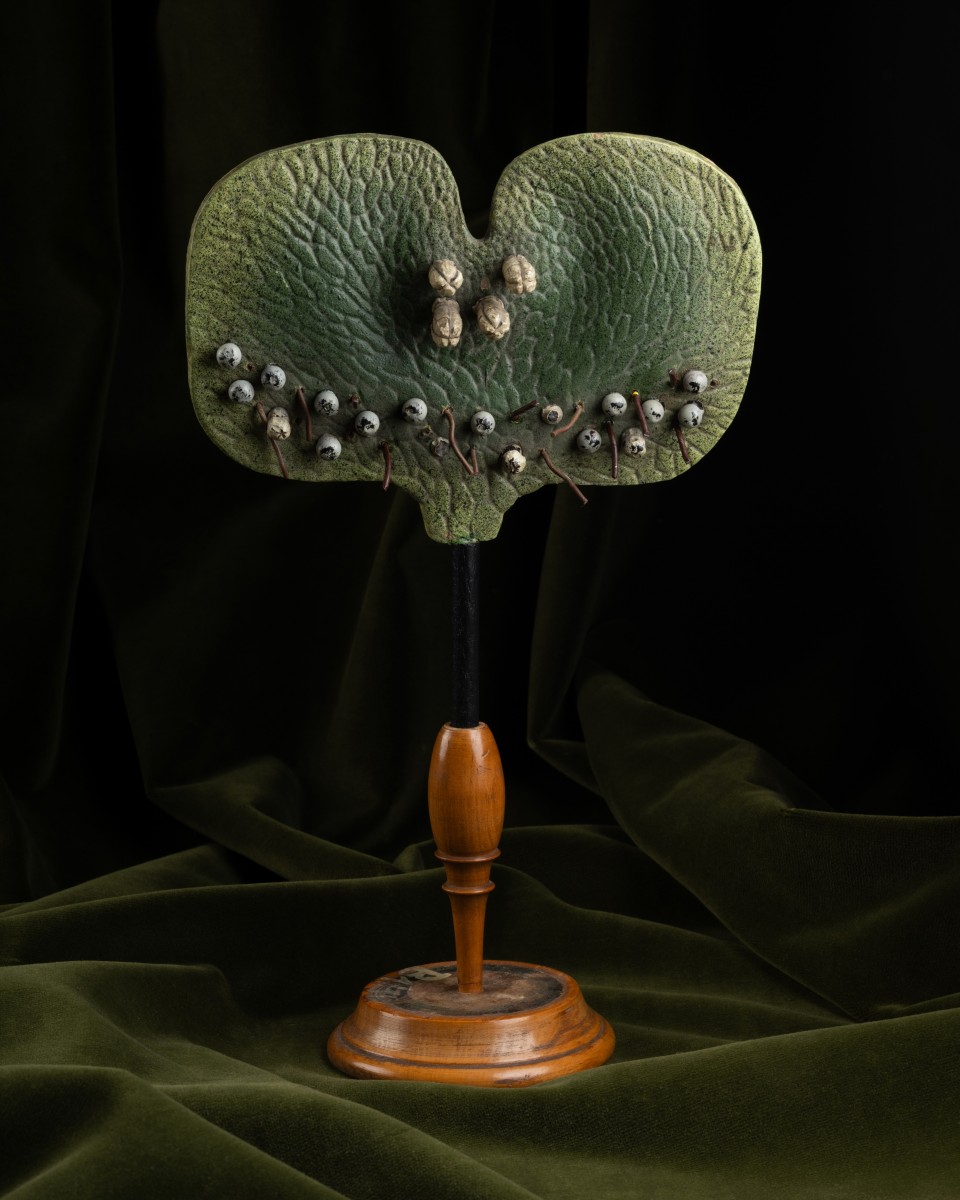
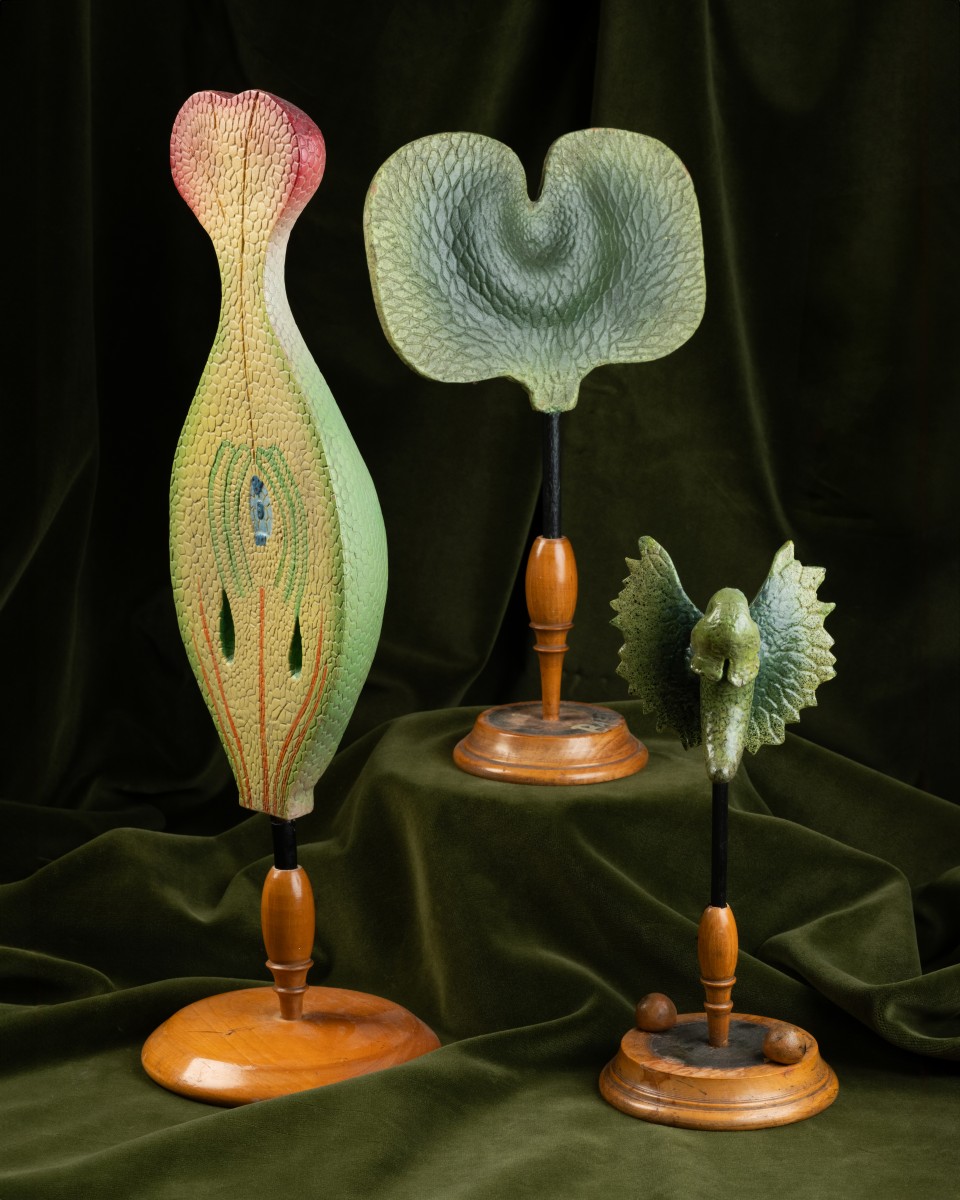
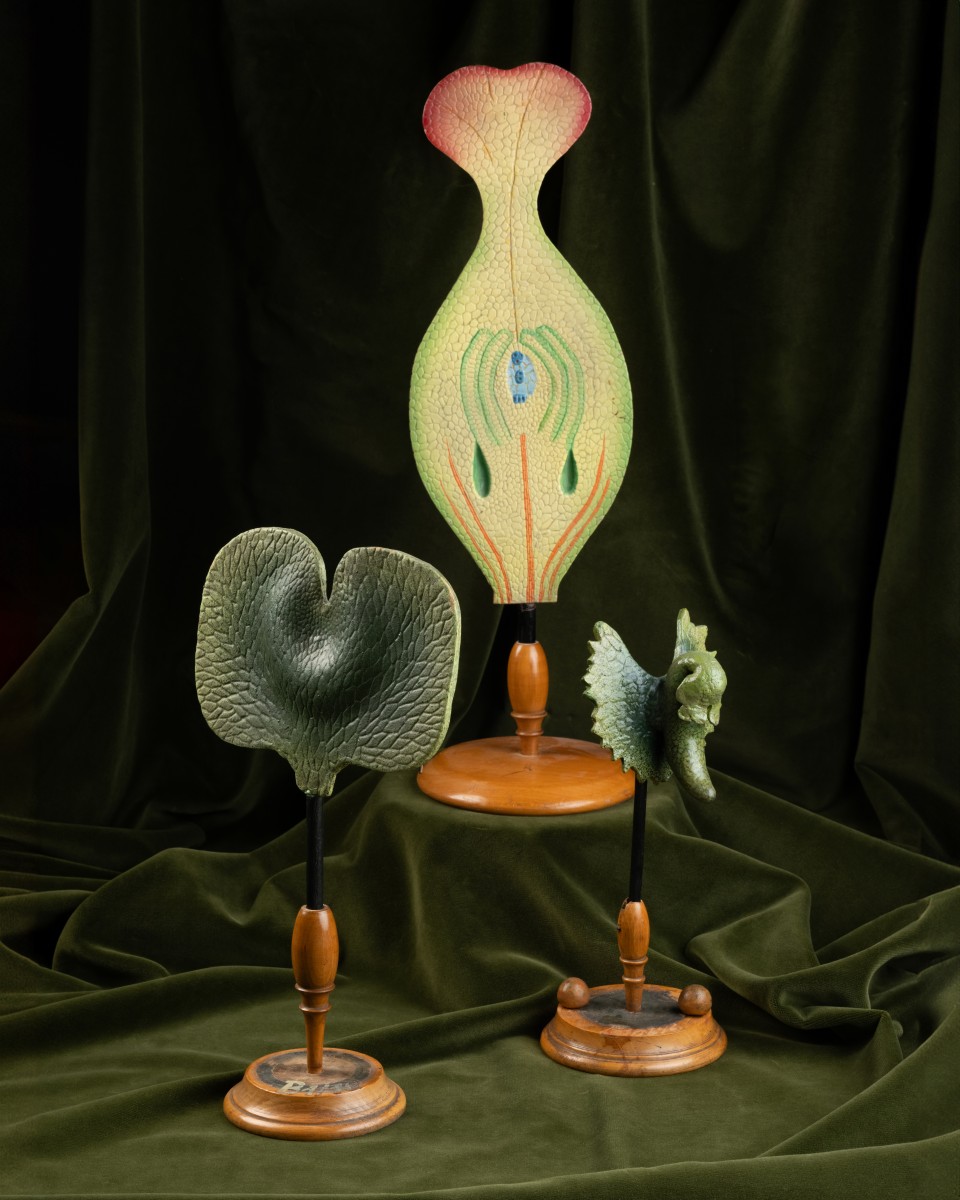
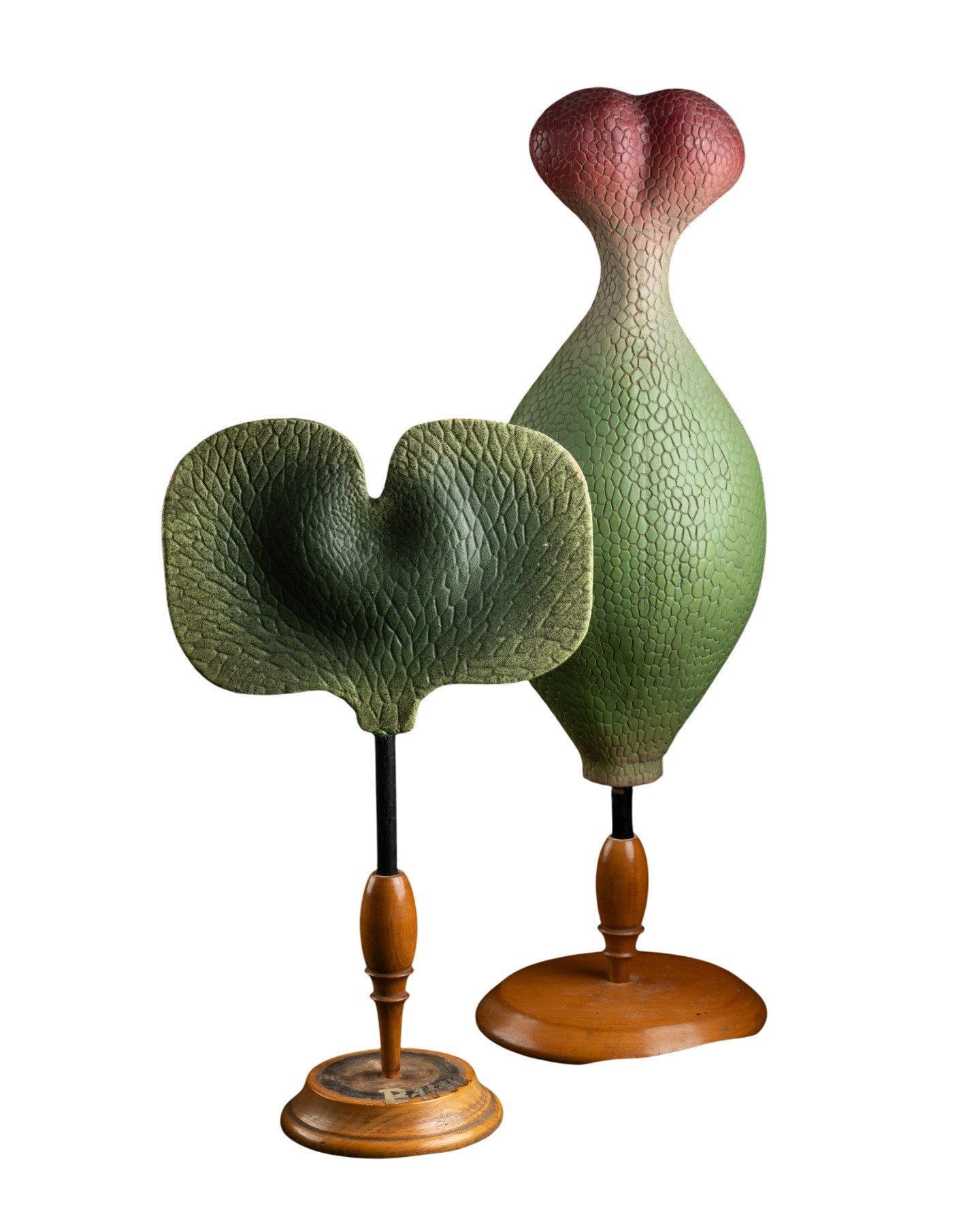
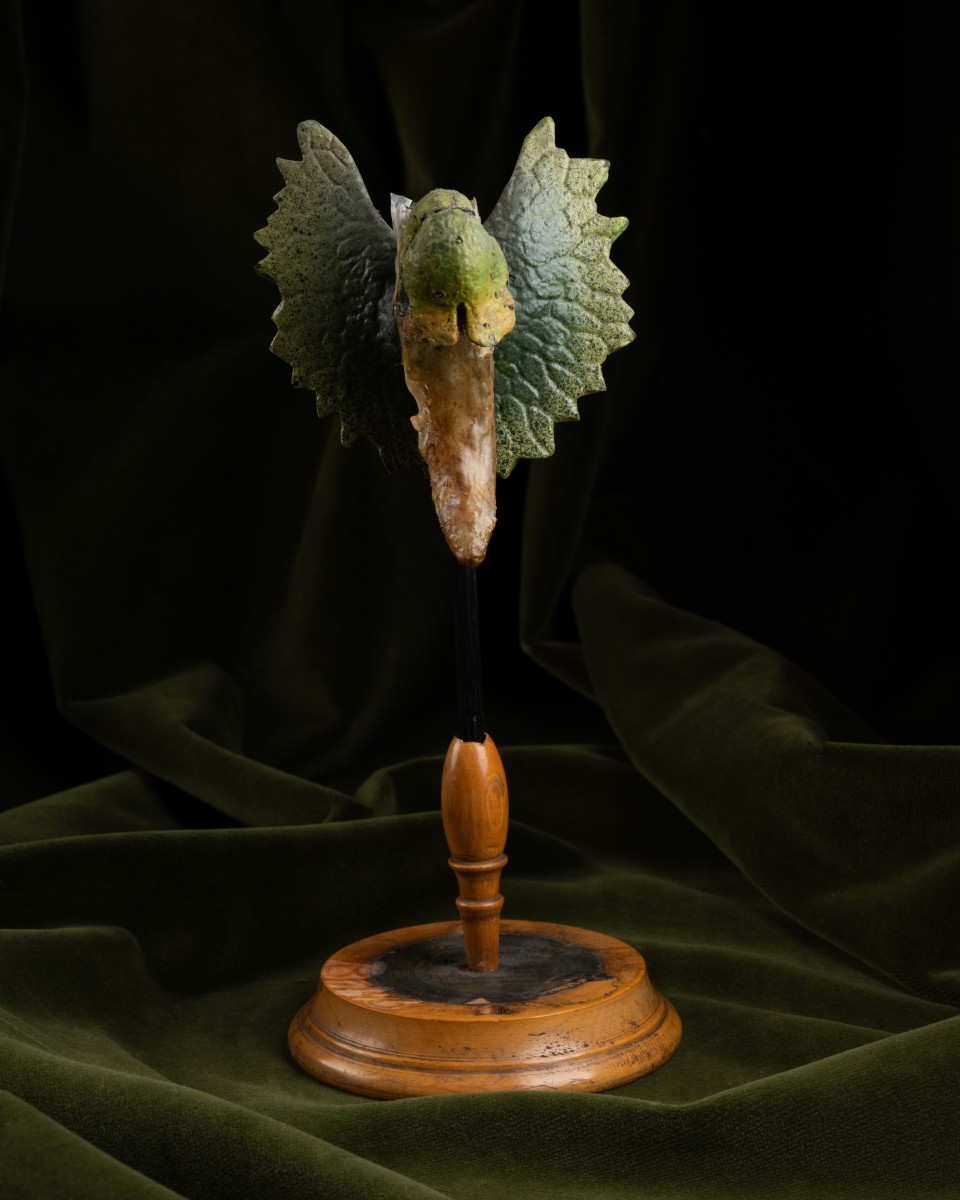
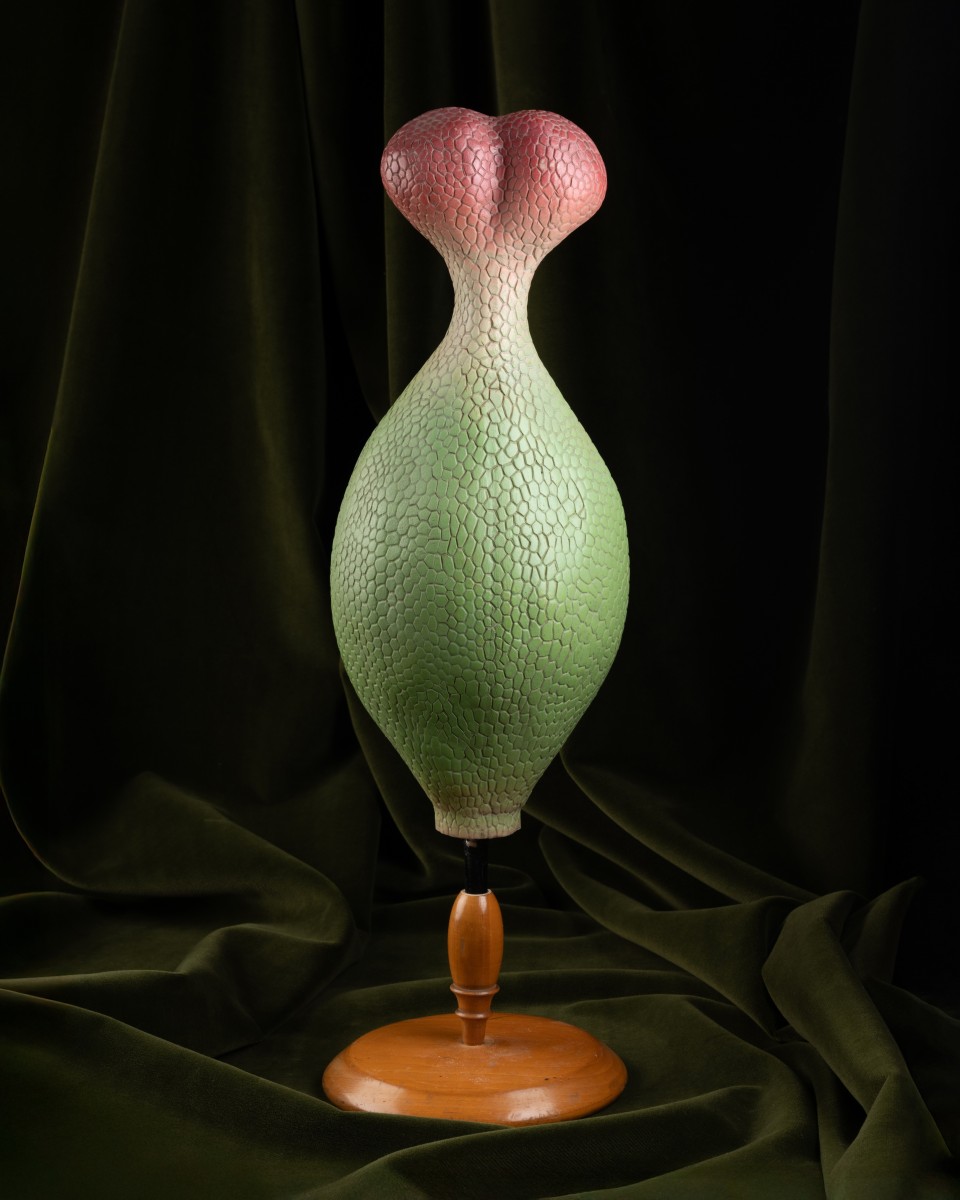
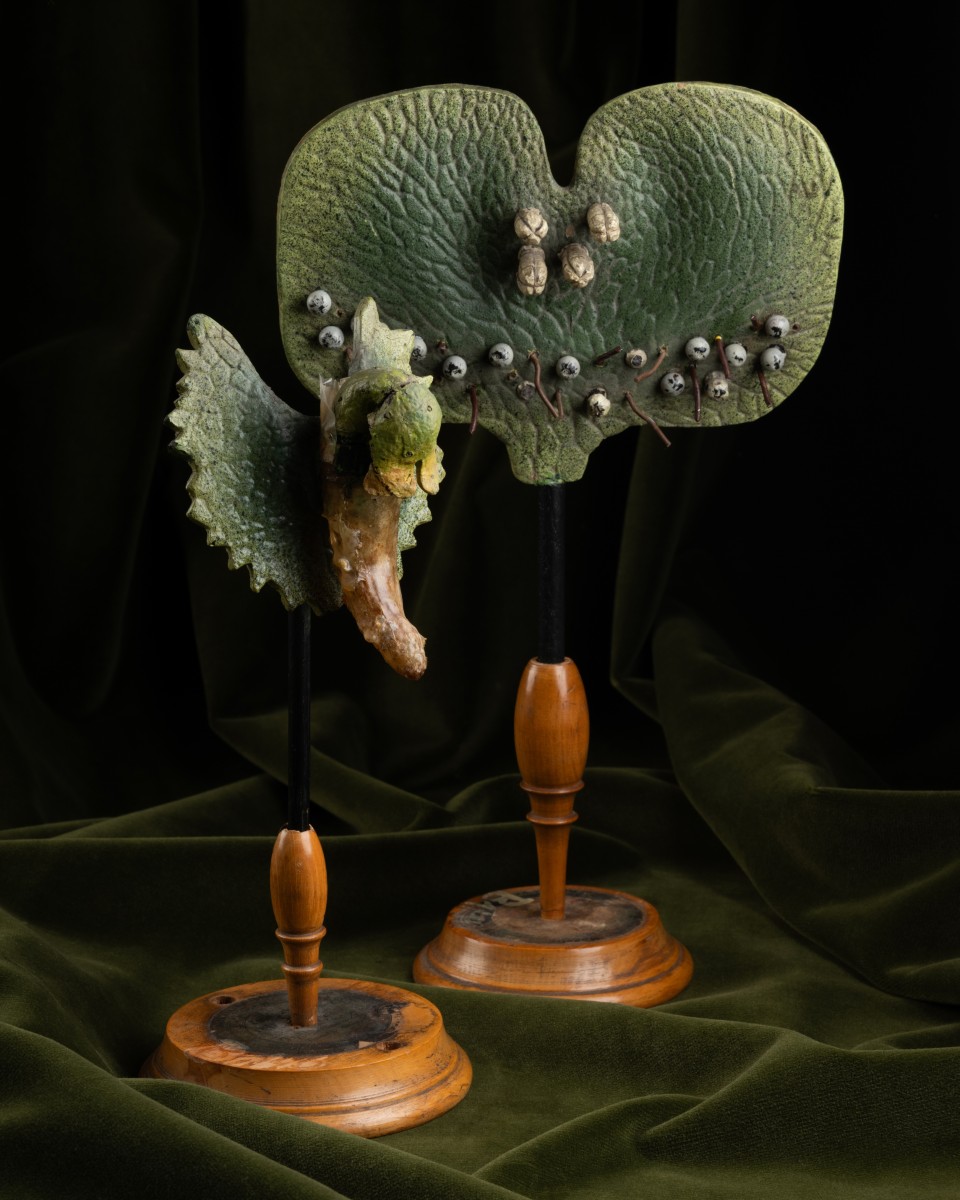
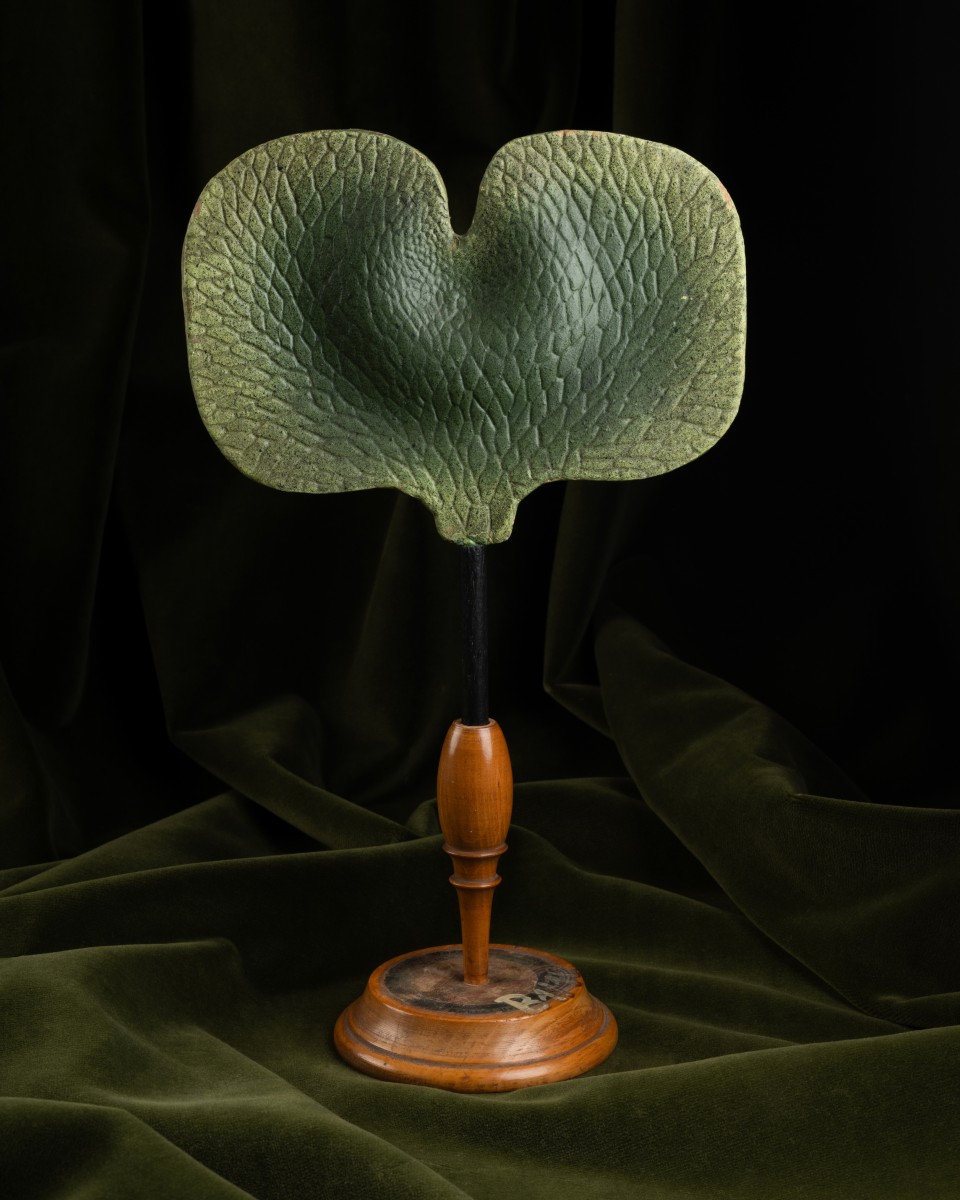
Set of three botanical models, including two by Brendel, representing the prothalli of Pteris serrulata and Aspidium filix-mas, and an angiosperm pistil.
Papier-mâché, wood, gelatin.
Germany. ca. 1870, 1960s.
h. 27 to 47 cm (10,6 to 18,5 in).
The two Brendel models date back from the very first series designed by Robert Brendel starting in 1866 in Breslau. Recognisable by their varnished sculpted bases characteristic of the firm's earliest models, they represent the prothalli — reproductive structures — of two fern varieties, Pteris serrulata and Aspidium filix-mas. The third model represents a section of an angiosperm pistil. It is of more recent conception and can be attributed to the firm Phywe Aktiengesellschaft which, after purchasing the rights and patterns of the Brendel collection following the latter's cessation of activity, continued to produce botanical models based on Brendel's designs in the immediate post-war period.
The Brendel workshops, founded by Robert Brendel in 1866, established themselves at the end of the 19th century as the gold standard of didactic models for academia. Their creations, combining scientific rigor with fine craftsmanship, were awarded prizes in Moscow in 1872 and at the World's Fairs in Chicago (1893) and Paris (1900). Brendel flower and fruit models are rare and fragile, and are most often preserved in natural history museums and universities. They can be found in the collections of the Smithsonian Museum in Washington, the Universities of Bologna and Florence, and the National Museum of Liverpool.
See Alexander Tschirch, Erläuterungen zu den botanischen Modellen von Robert Brendel, Berlin, 1885 ; Reinhold Brendel, Preisliste über Botanische Modelle gefertigt und herausgegegeben von R. Brendel, Berlin, 1900 ; Grazinia Fiorini, Luana Maekawa and Peter Stiberc, “Save the Plants: Conservation of Brendel Anatomical Botany Models”, Florence, 2008.