Offered by Galerie Lamy Chabolle
REQUEST INFORMATION

Decorative art from 18th to 20th century
Parcel-gilt bronze
France
ca. 1848-1851
h. 25 cm (9.85 in)
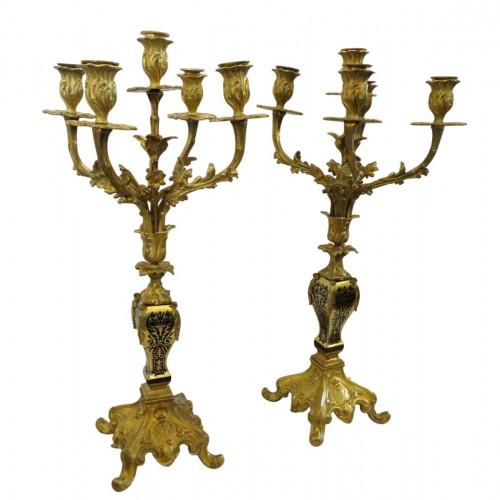
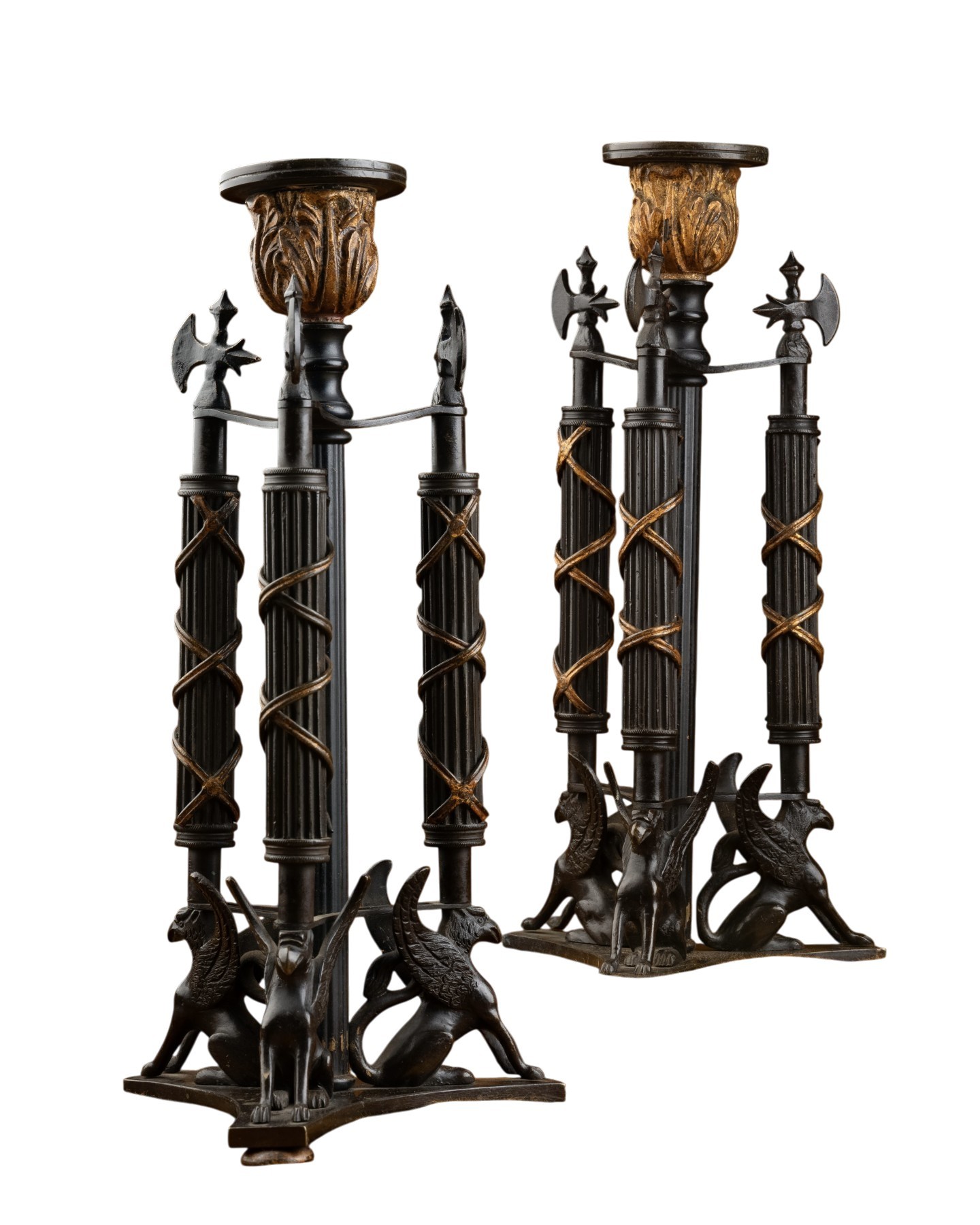
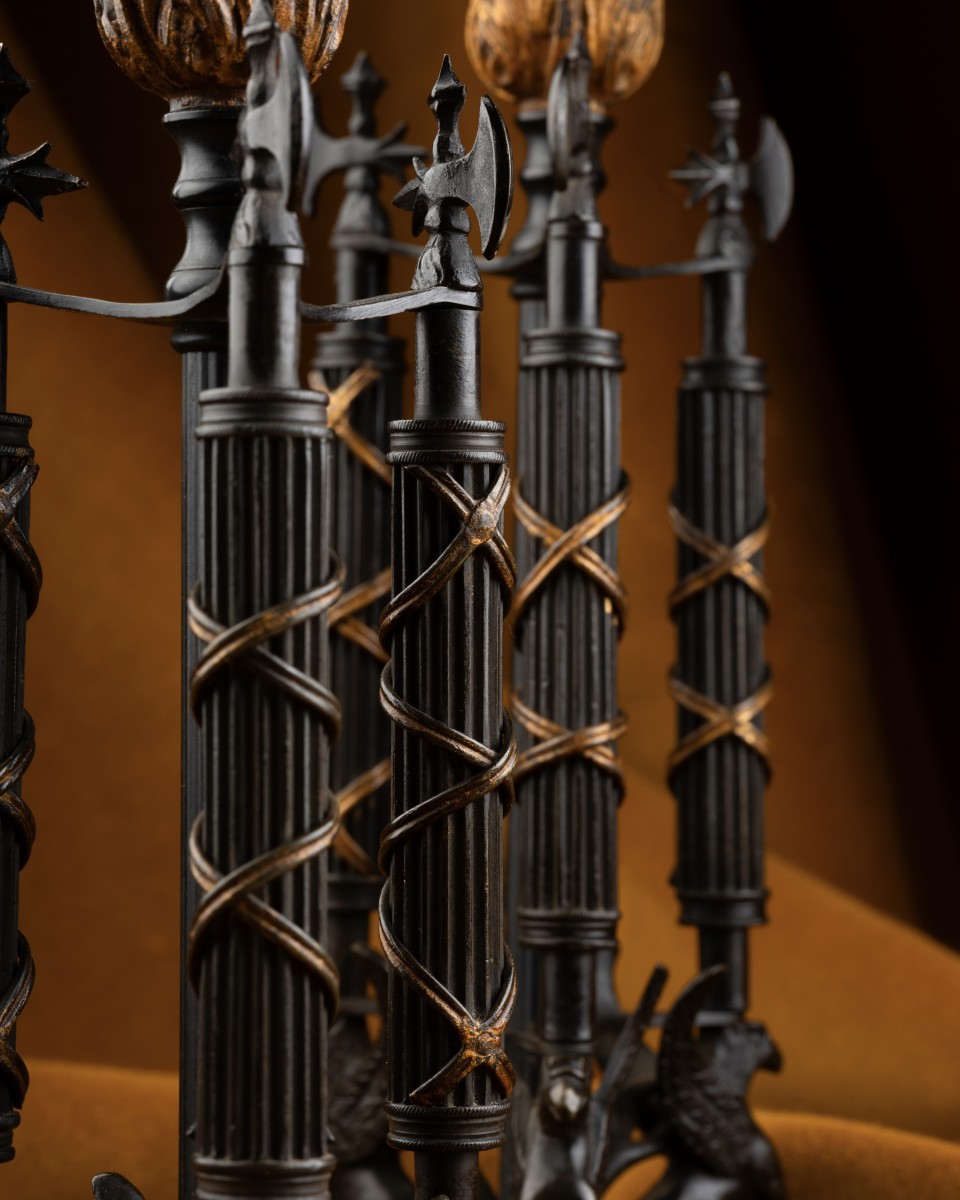
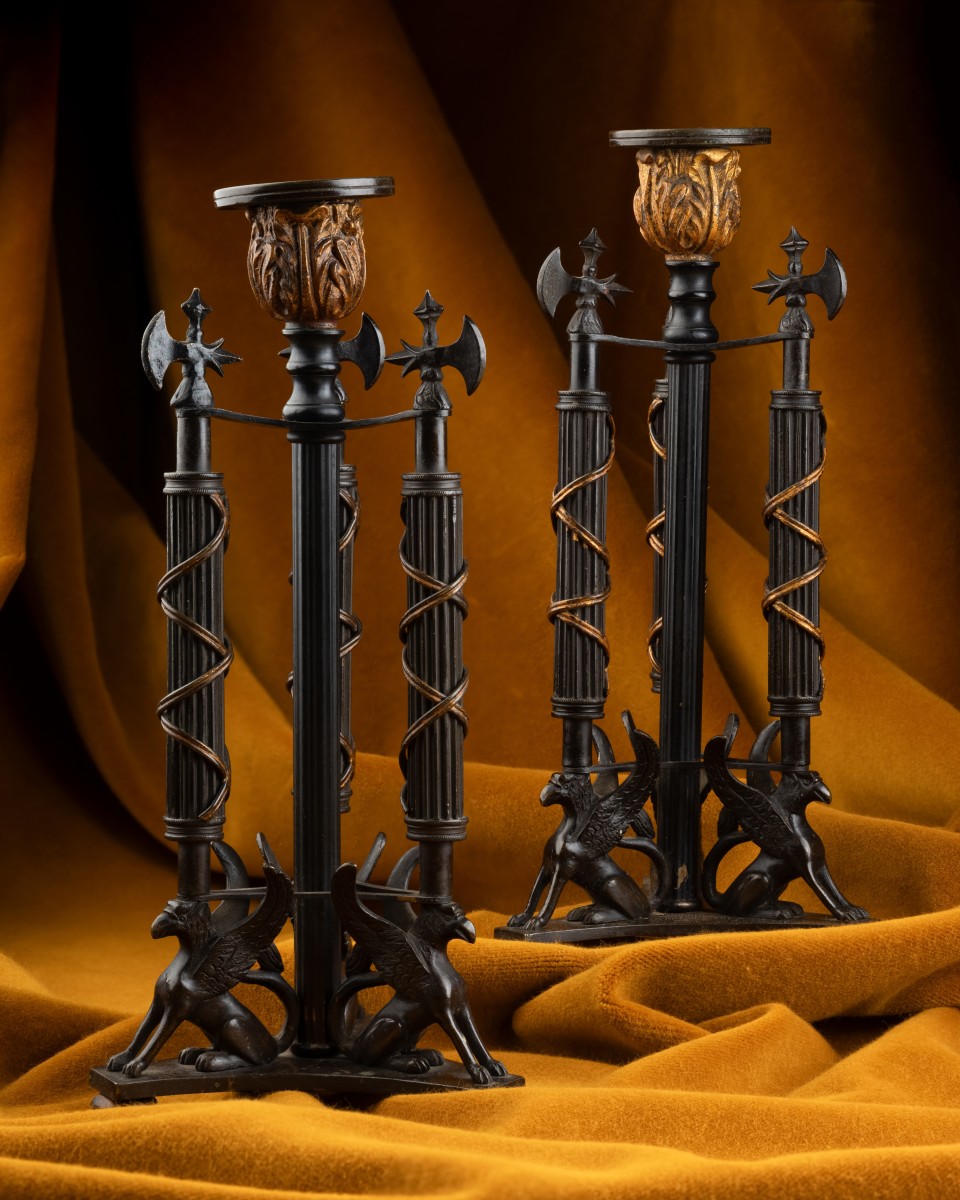
A pair of patinated and gilt bronze candlesticks, the shafts of which are encircled by three fasces (lictor’s bundles) resting upon three seated griffins.
The quality of the casting and the dark hue of the patina suggest a French origin from the mid-19th century. However, the ornamentation — blending the traditional neoclassical motif of the winged griffin with lictors’ fasces — indicates a work dating from the ephemeral Second Republic. This period corresponds to the mandate of the first President of the French Republic, Louis-Napoléon Bonaparte, until his famous coup d’état of December 2, 1851.
The “antiques faisceaux”, whose use in Republican propaganda was enshrined in 1848 with the establishment of the Great Seal designed by Jean-Jacques Barré, had been chosen as emblems of a France “one and indivisible” in 1790 by the Constituent Assembly. At that time, the Assembly chose to misinterpret the Roman symbol of the fasces carried by lictors — a symbol of royal imperium attested from the earliest decades of Roman history. During this era, the Kings of Rome moved preceded by their twelve lictors : twelve guards carrying an axe surrounded by several rods bound together by a strap, with the rods intended for flaying and the axe blade for decapitation. Under the Republic, lictors continued to escort Roman magistrates holding imperium — the power to coerce and punish, and under certain conditions, the power of life and death over Roman citizens. Under the Republic, however, the magistrates were expected to lower their fasces before the assembly of the people. Later, when Sulla was invested with the office of dictator in the 1st century BC, he increased the number of lictors accompanying him from twelve to twenty-four. This original meaning of the fasces, that of superior and sometimes absolute power, was not in use in 19th century France, and was limited to simply represent the institutions of the Republic.