Offered by Galerie William Diximus


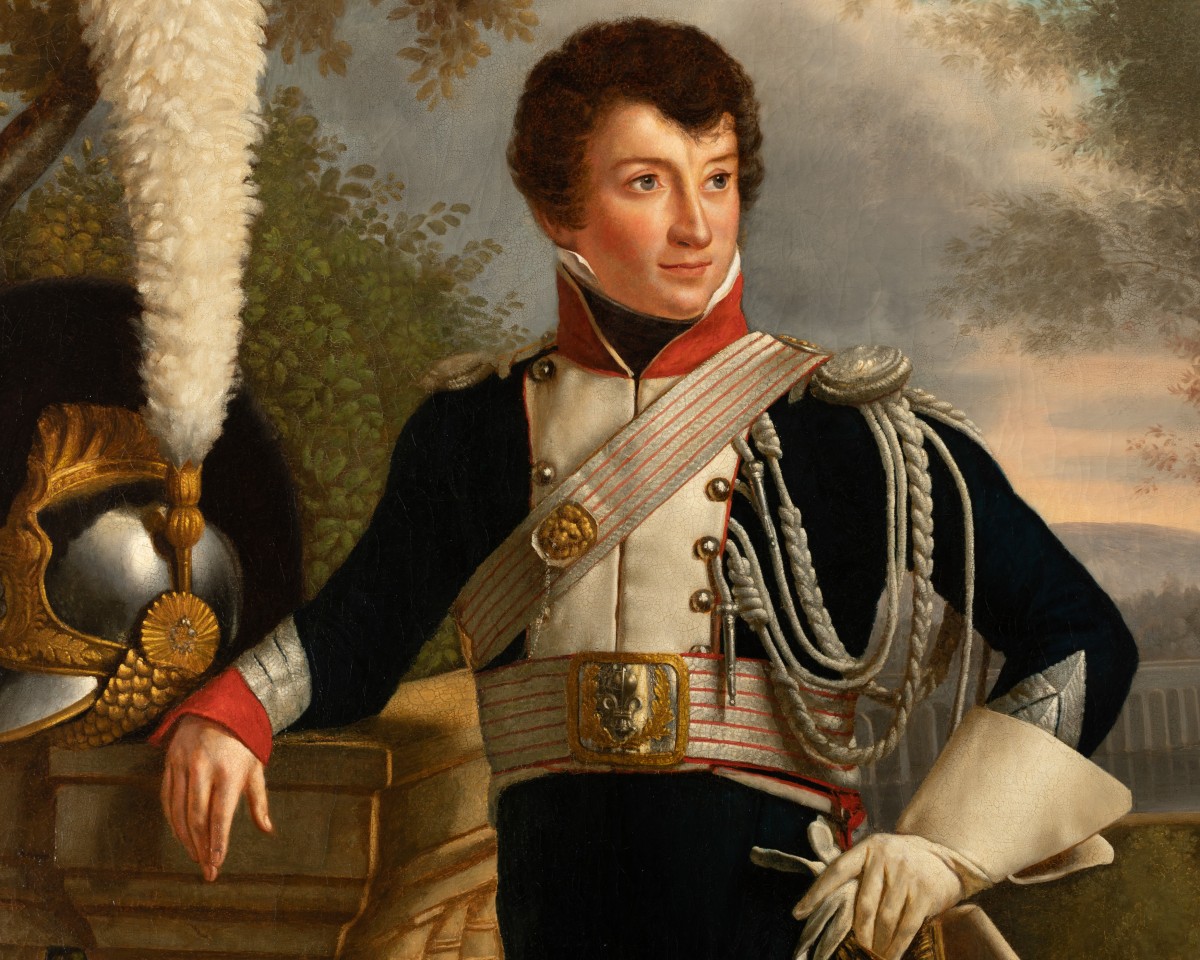


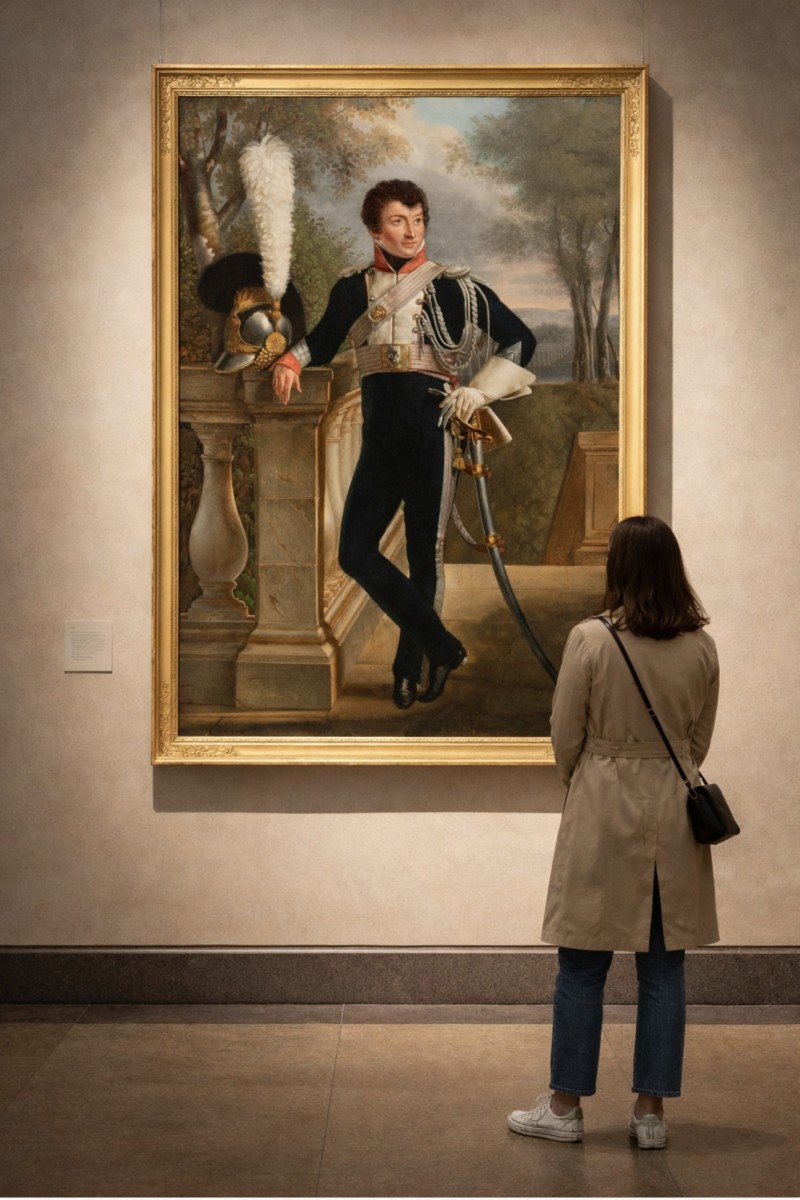
This painting depicts a captain of the National Guard on horseback, dating from between 1814 and 1830, portrayed in an attitude that is at once elegant, confident, and controlled. The work is attributed to Joseph Kinson (1770–1839), a painter renowned for his portraits of officers and notable figures during the transition period between the Empire and the Restoration.
The model, dressed in a dark uniform richly decorated with braid, aiguillettes, and decorations, asserts his rank without ostentation. The composition is carefully constructed: the captain leans on a stone balustrade, while the helmet with a white plume and the saber, arranged with restraint, reinforce the symbolic and martial dimension of the portrait.
The classical architectural background and landscape lend the whole a formal nobility typical of early 19th-century French portraiture. The palette, dominated by deep tones subtly balanced by whites and golds, accentuates the overall elegance.
The treatment of the face, both faithful and idealized, the expressive sobriety and dignity of the model are fully in keeping with Joseph Kinson's stylistic characteristics. With its pictorial quality, refined composition, and excellent state of preservation, this painting is a fine example of an early 19th-century portrait of a French officer.
Dimensions without frame : 207 x 130.5cm
Dimensions with frame : 226 x 159cm
Delevery information :
DELIVERY INFORMATION
Delivery is free in mainland France.
For all deliveries outside France, shipping costs are the responsibility of the buyer and are calculated based on the destination, volume and specific transport constraints.
The William Diximus Gallery works with carriers specializing in the transport of works of art, guaranteeing suitable packaging and secure handling.
A fast and personalized delivery quote can be provided upon request.