Offered by Galerie Magdeleine
REQUEST INFORMATION

Paintings and drawings from the 17th to the 19th century
Alexandre-Évariste FRAGONARD.
(Grasse, 1780 - Paris, 1850).
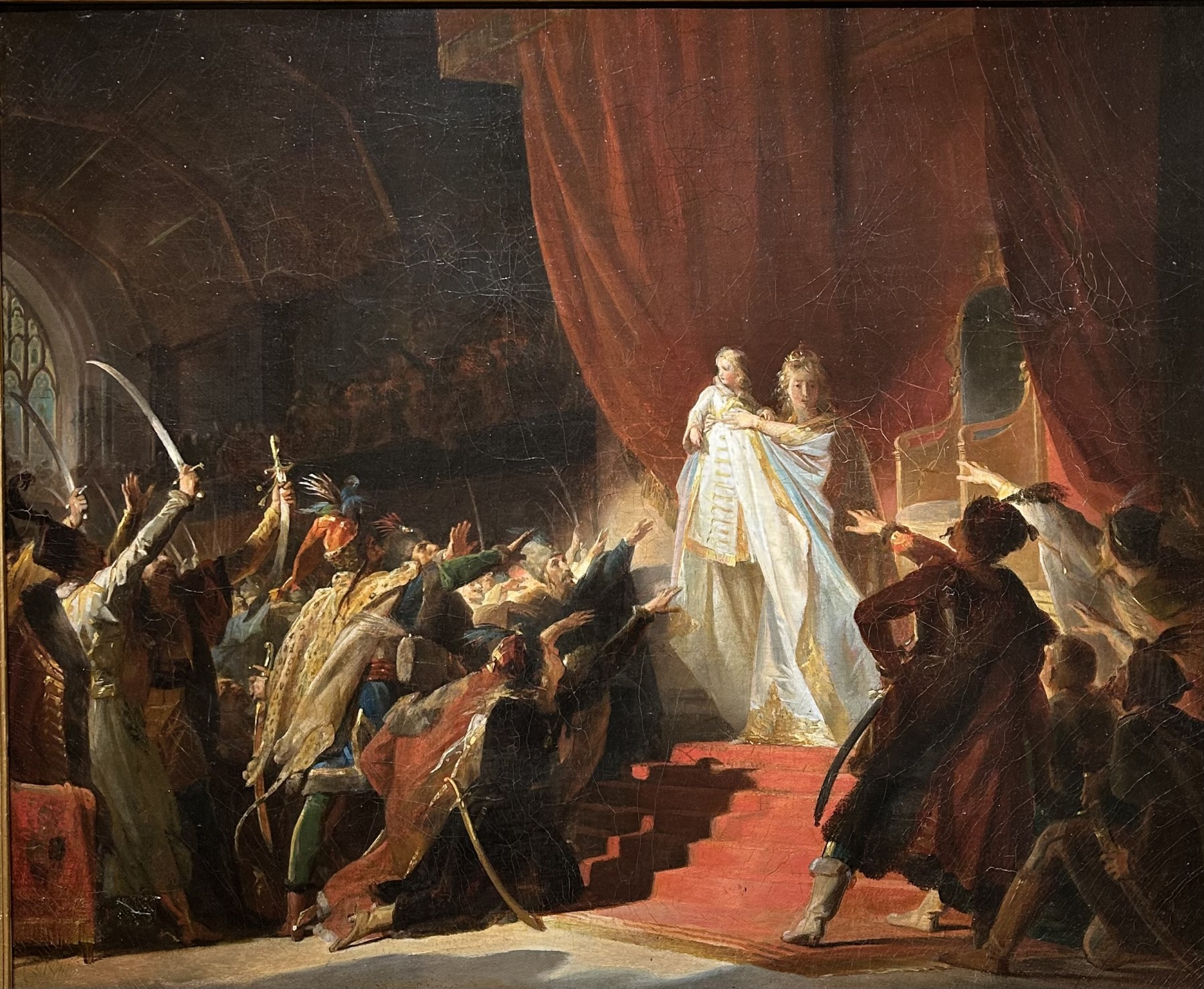
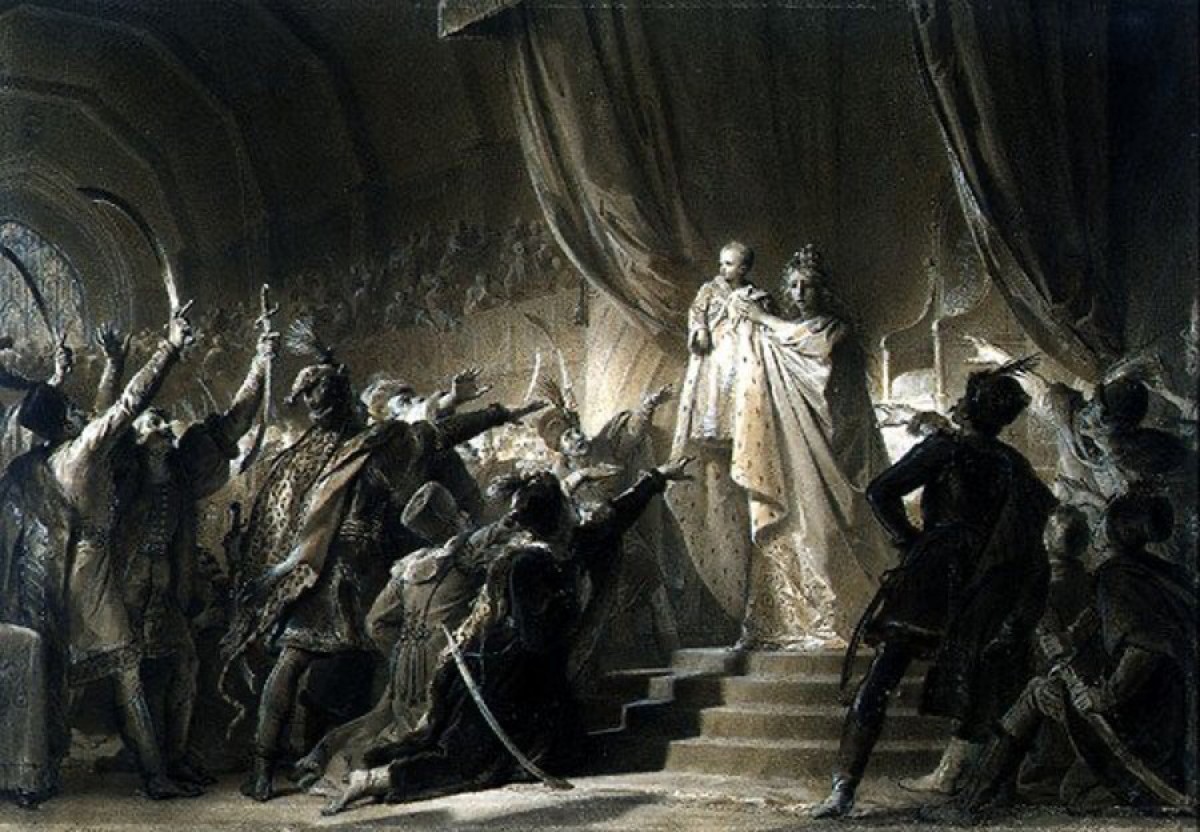
Marie-Thérèse, Queen of Hungary, presenting her son to the Hungarian people.
Circa 1822.
Oil on canvas.
H: 48.5; W: 59.5 cm.
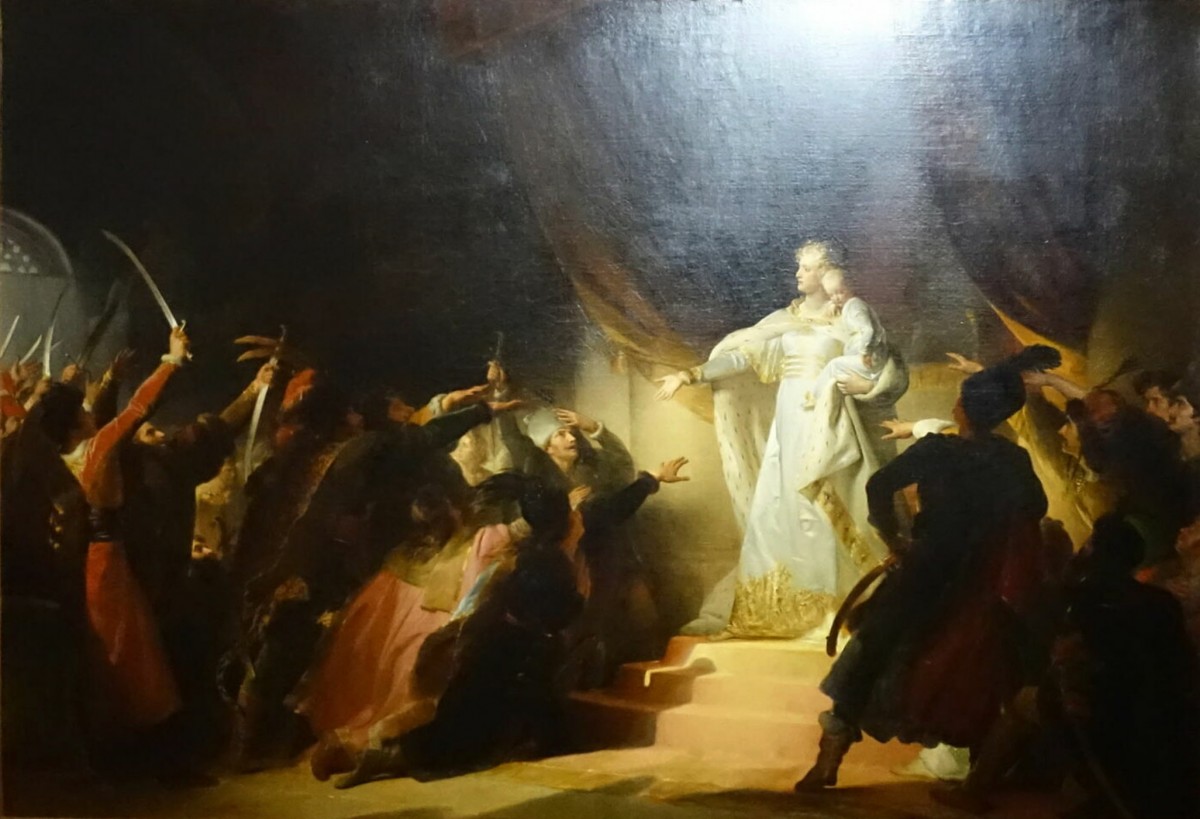
This painting is a sketch for the final large-format work presented at the 1822 Salon by Alexandre-Évariste Fragonard and now preserved at the Villa-Musée Jean-Honoré Fragonard in Grasse.
It depicts a pivotal episode in the history of the Holy Roman Empire. After the death of Emperor Charles VI in 1740, Maria Theresa of Austria, his eldest daughter, is said to have gathered the Hungarian nobility to pledge allegiance to her newborn son, the future Emperor Joseph II, and thus ensure the legitimacy of the throne, which was the subject of succession disputes.
The authorship of this work has been confirmed to us by Rebecca Duffeix, author of the artist's catalogue raisonné[1].
Alexandre-Évariste Fragonard was born in Grasse on October 26, 1780, into a family with a deep attachment to art: his father was Jean-Honoré Fragonard, master of Rococo, and he received artistic training from an early age. From the outset, he studied under his father and then Jacques-Louis David. His father's delicate, fluid, sensual influence, coupled with David's structural rigor and heroic inspiration, shaped his own style, which was refined, narrative, and rooted in academic traditions.
At a very young age, Alexandre-Évariste participated in the Salons: he exhibited his work from the age of thirteen and continued to do so regularly until the 1840s. His work encompasses several genres: history painting, religious subjects, genre scenes, portraits, but also ornamentation, decorations for the Sèvres factory, and costumes for the Opera.
This diversity testifies not only to his technical skill, but also to the balance he sought between his ambitions and his sensitivity to detail and atmosphere.
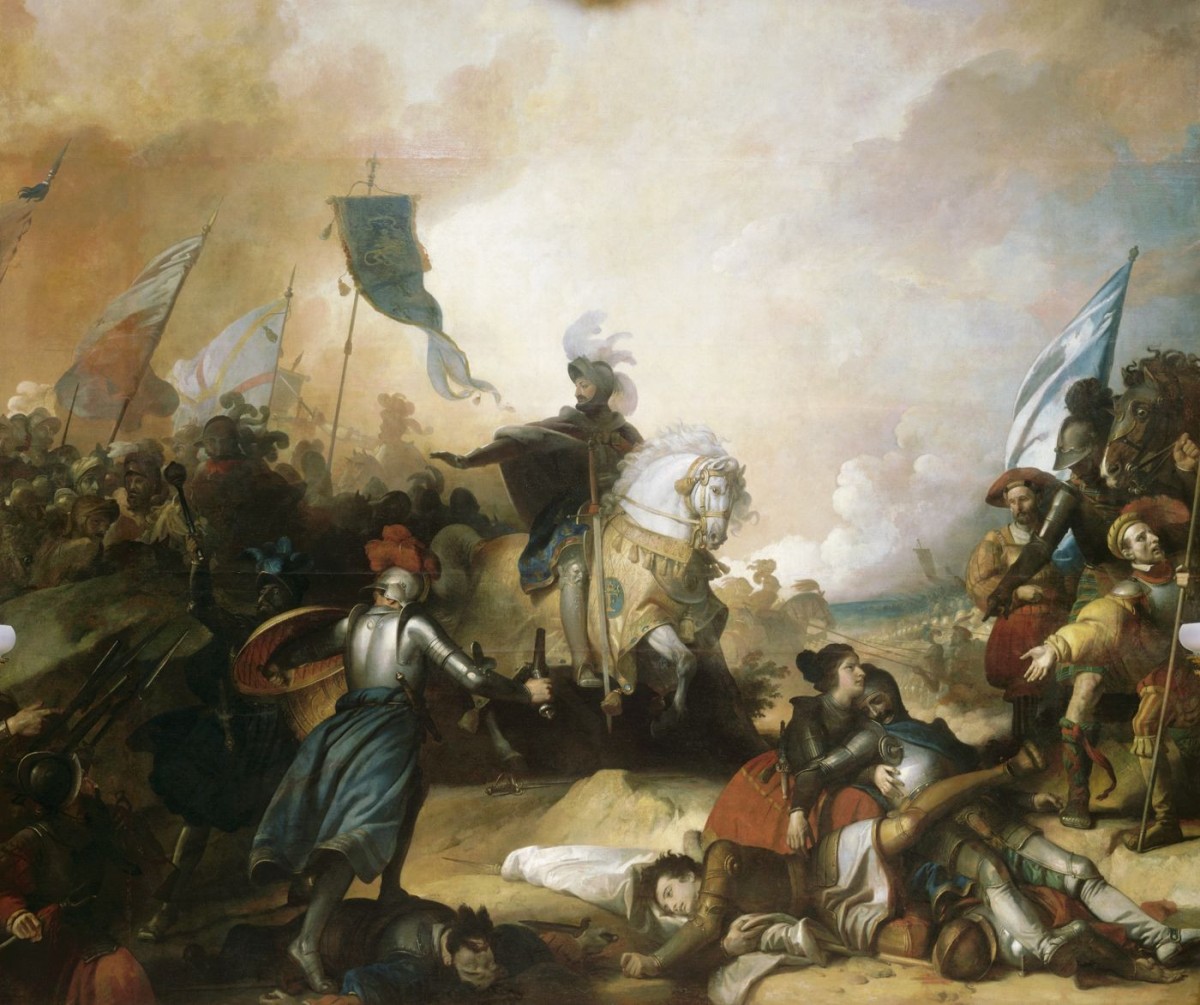
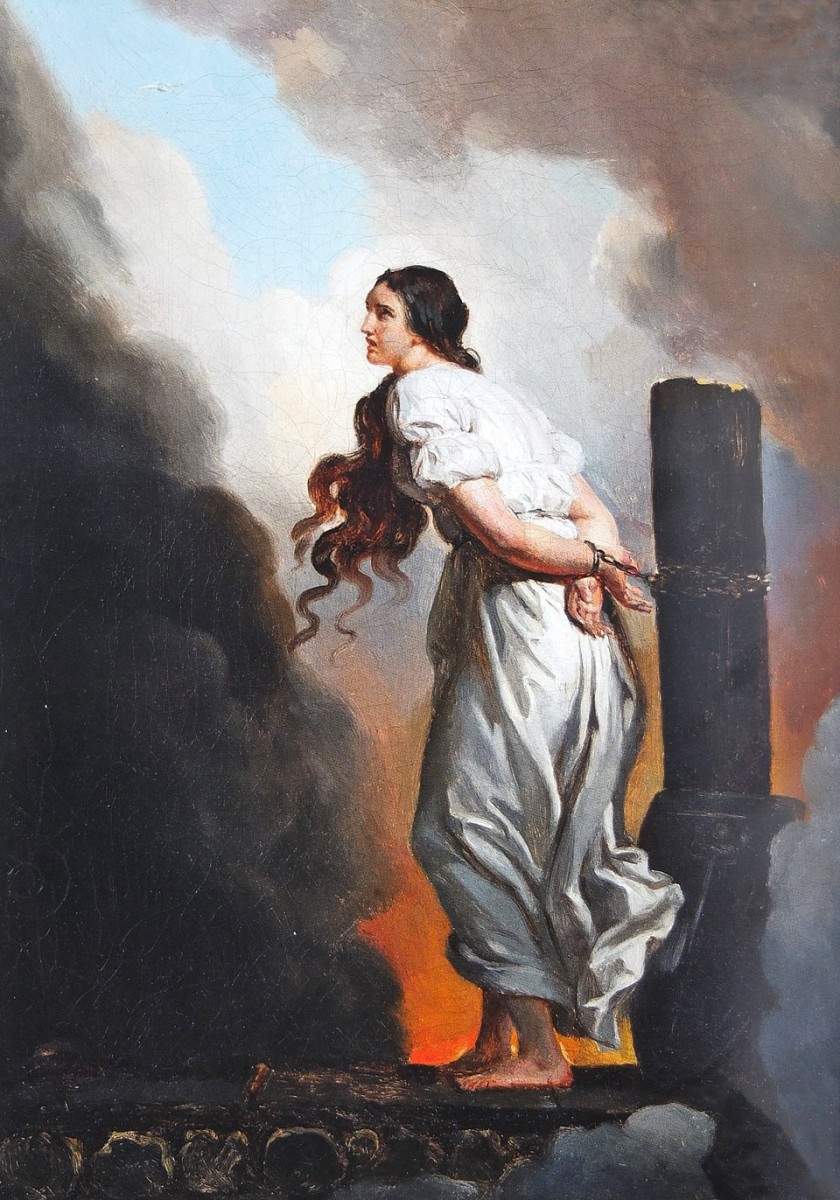
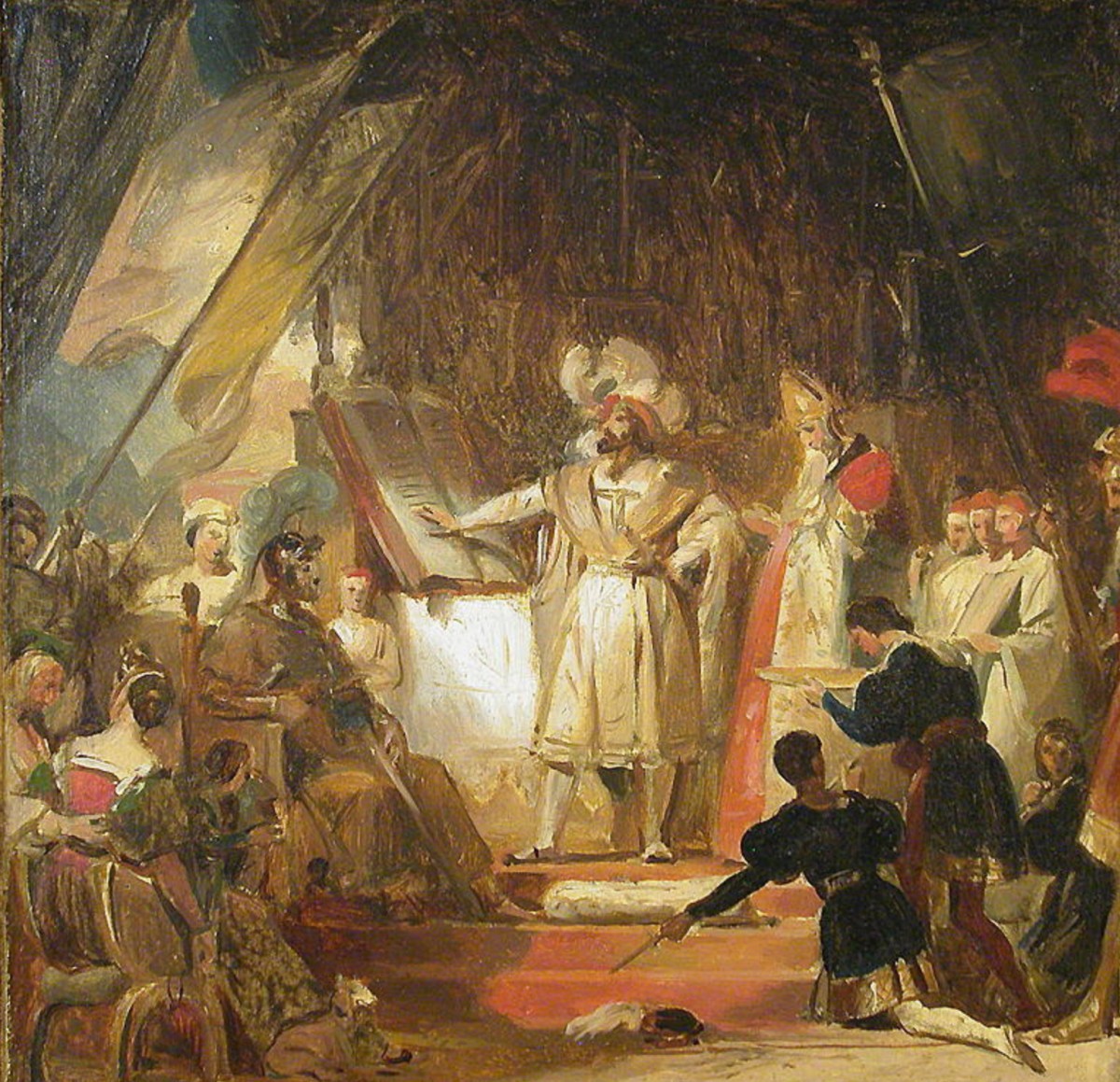
He was part of the “troubadour” style, depicting great historical episodes or national legends with a mixture of nostalgia, restrained romanticism, and a sense of the picturesque. His works such as François Ier armé chevalier par Bayard (Francis I Knighted by Bayard), La Bataille de Marignan (The Battle of Marignan) and Jeanne d'Arc sur le bûcher (Joan of Arc at the Stake) are part of this trend to celebrate French history, making it visually appealing, moving, and a symbol of national identity.
Marie-Thérèse, Queen of Hungary, Presenting Her Son to the Hungarians is part of this movement: presenting the heir before his subjects is a way of affirming continuity, dynasty, and stability. At a time when monarchy, nationalism, and national identities were major issues, this type of scene visually reinforced the political narrative of the state.
The final version differs slightly from our work: the queen is shown in a different posture, holding her child against her hip rather than with both hands, and the large crowd of courtiers has been thinned out. A preparatory drawing for this work is also known to exist. It belonged to the Duchess of Berry and is closer to our version, making our painted sketch a valuable testimony to the artist's creative process as he tackled a subject that presented a real challenge in formal, aesthetic, and political terms.
It is a wonderful synthesis of history, aesthetics, and emotion. A genuine dramatic tension, almost violent, with the presence of numerous swords and the almost oppressive assembly, seems to emanate from this preparatory work. The political context of the restoration of the French monarchy surely led the painter to revise his subject matter to make it more acceptable to an audience eager to see the monarchical order restored without any underlying shadows in the painting.
This is what makes this preparatory work a true historical testimony, imbued with romanticism, which captures a moment in history. It provides the first interpretation conceived by an artist anxious to convey the depth of this historical moment.
[1] Duffeix, Rebecca, and Barthélémy Jobert. Alexandre-Évariste Fragonard, 1780–1850: Fragonard fils. Paris: Arthena, 2022. Print.
Illustrations:
Alexandre-Evariste Fragonard, drawing for the Duchess of Berry, Horvitz Collection, Wilmington (inv. D-F-1373)
Alexandre-Évariste Fragonard, Marie-Thérèse, Queen of Hungary, Presenting Her Son to the Hungarians, oil on canvas, H: 1.78 m; W: 2.56 m; Louvre Museum; INV: 4551.
Alexandre-Évariste Fragonard, sketch for François I taking the oath of knighthood, oil on plaster, H: 23 cm; W: 23 cm, Louvre Museum; INV 20057.
Alexandre-Évariste Fragonard, The Battle of Marignan, 1836, oil on canvas, H: 4.65 m; W: 5.43 m; National Museum of the Palace of Versailles; INV 4547.
Alexandre-Évariste Fragonard, Joan of Arc at the Stake, oil on canvas, circa 1822, H: 37.2 m; W: 24.6 m; Musée des Beaux-Arts d'Orléans; Loan/Deposit Ref.: 74677.