Offered by Galerie Lamy Chabolle
REQUEST INFORMATION


Decorative art from 18th to 20th century
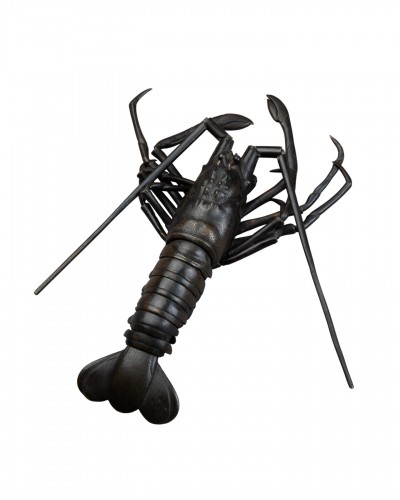
Bronze.
Japan.
Late 19th century.
L. 6,1 in.
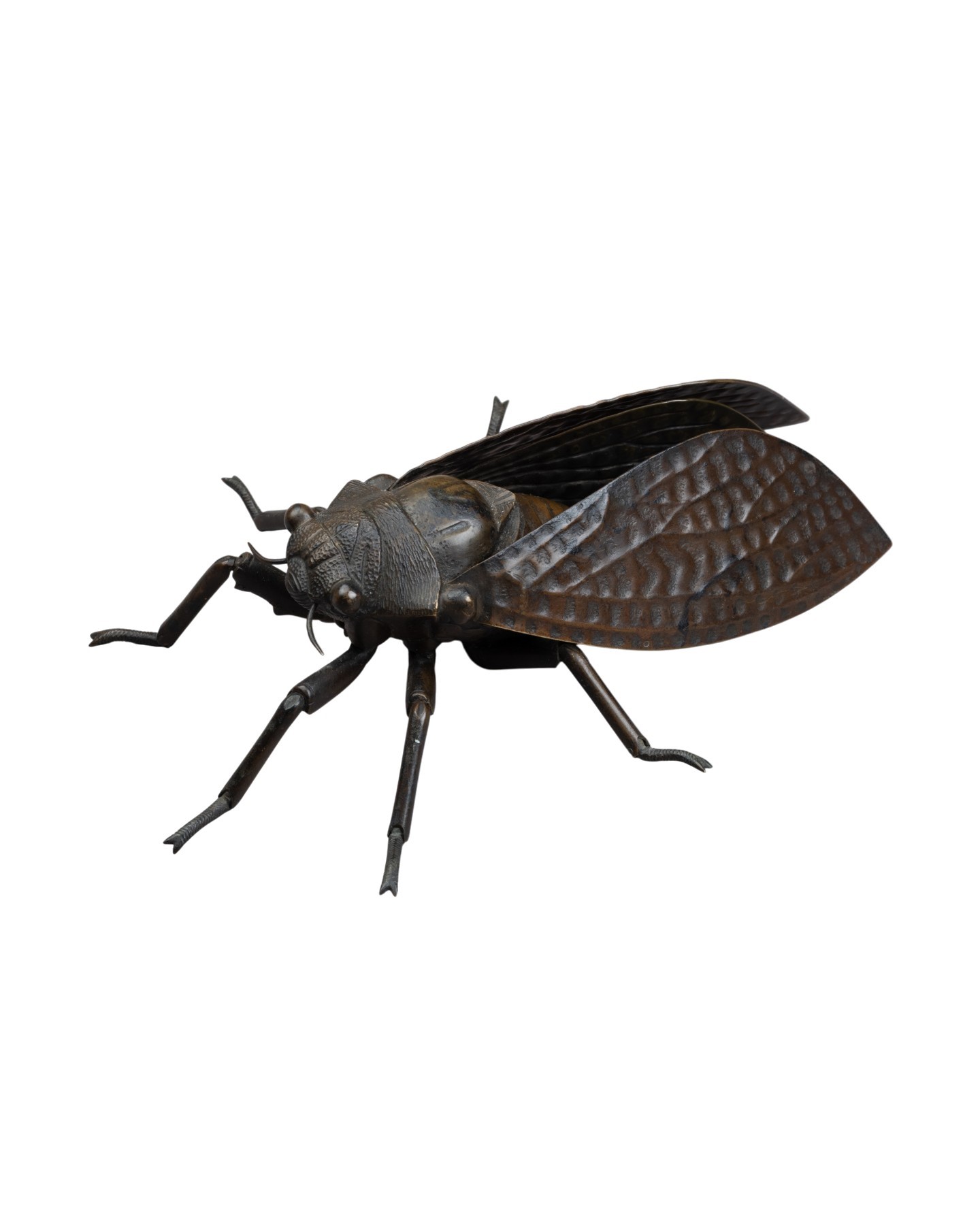
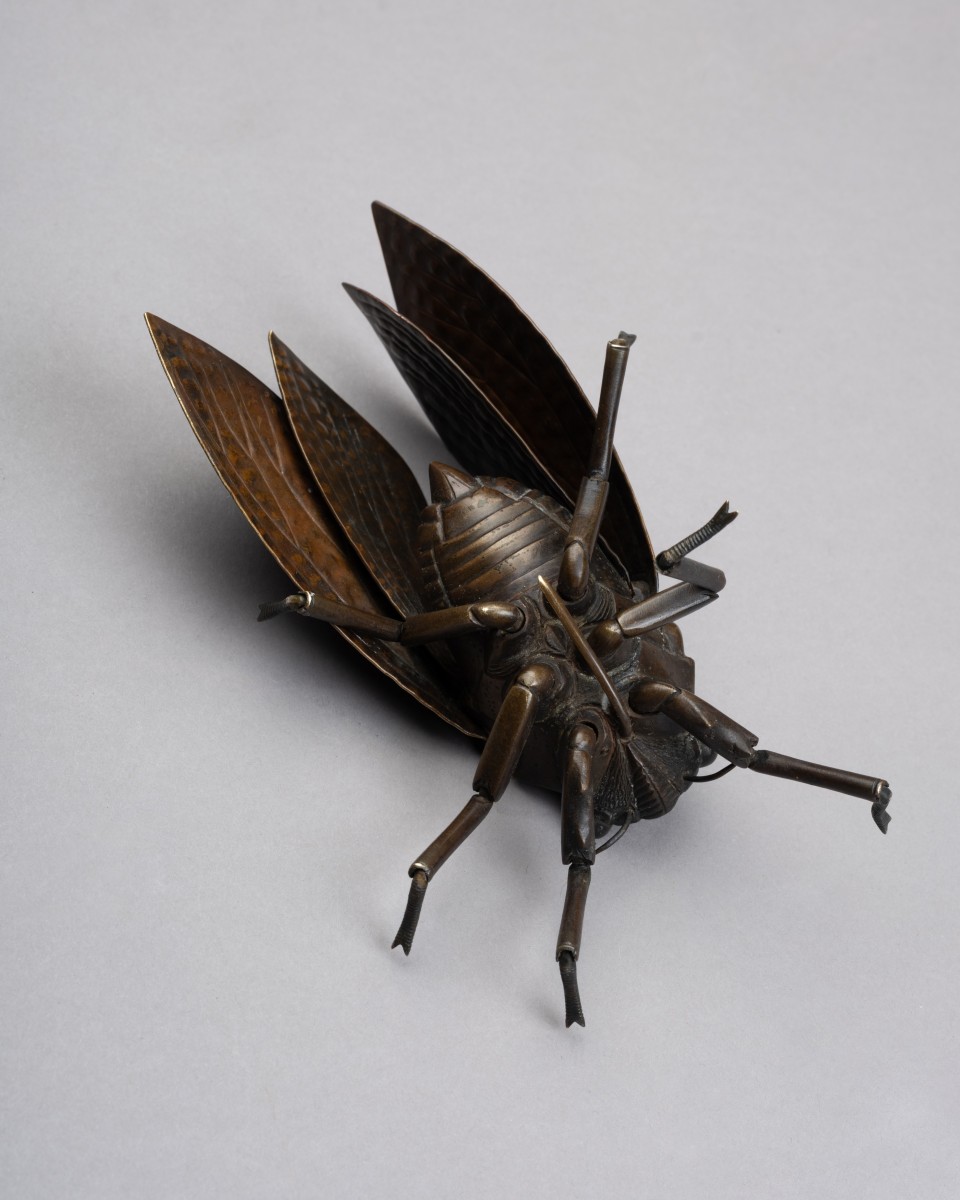
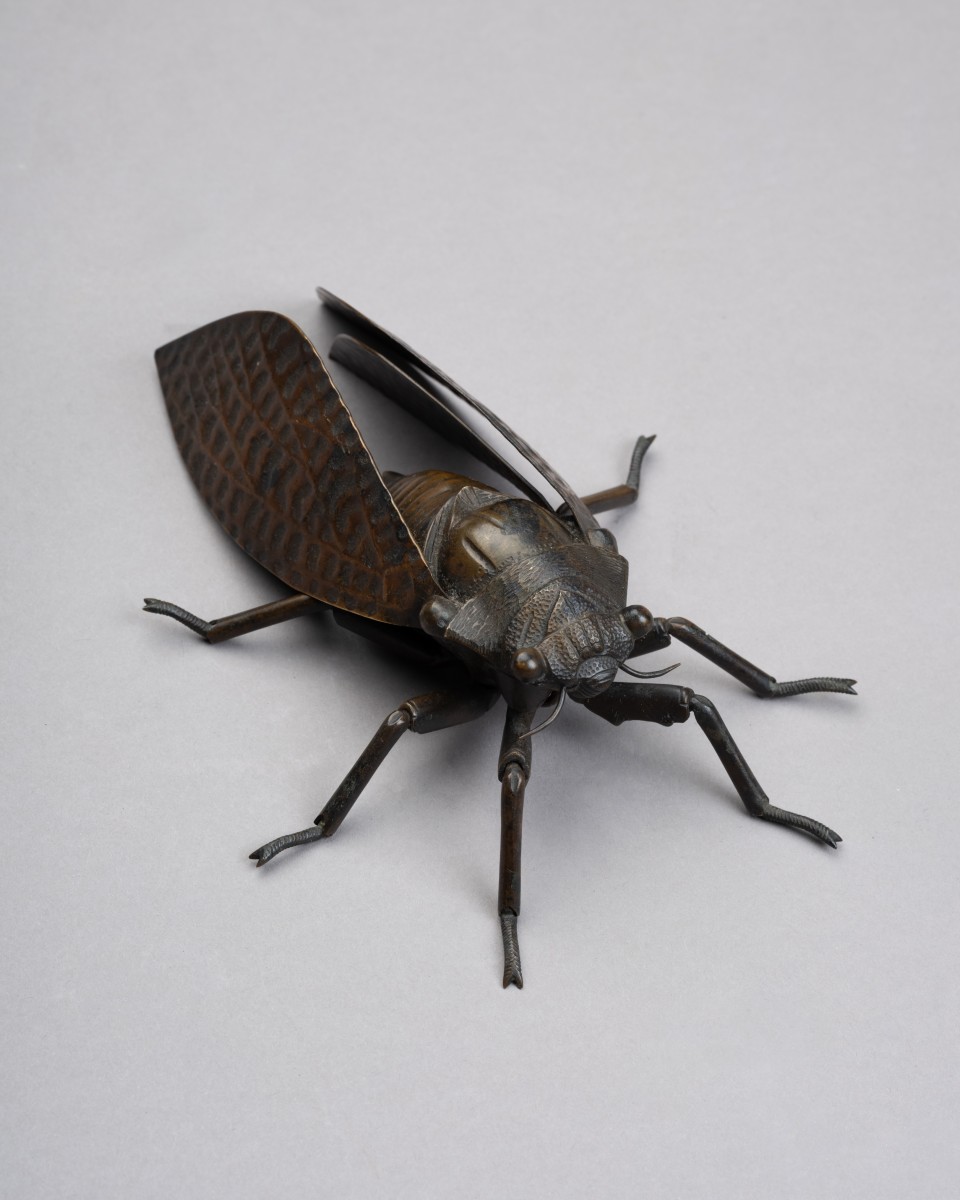
The production of jizai(??, “freely moving”) okimono (??, “ornamental figure”) represents a refined evolution of the Japanese armorer’s craft. Following the decline in demand for traditional suits of armor toward the end of the Edo period, master metalworkers repurposed their expertise in complex, interlocking metal joints to create naturalistic figures. The predilection for insects and crustaceans in this medium — of which this cicada is a primary example — doubtless stems from the armorer’s long-standing familiarity with the segmented, mobile plates of samurai protection.
Many of the articulated insects produced during the Meiji era are associated with the workshop of Takase Kozan in Kyoto. Kozan conceived iron, silver and bronze small-scale entomological subjects. The absence of a signature on the present figure could be explained by the workshop’s known practice of presenting such pieces in a hyohonbako (???, entomological specimen box), where the artist’s mark was frequently apposited to the reverse of the wooden case rather than on the bronze itself.
The present figure exhibits a high degree of technical sophistication, featuring not only movable wings but also fully articulated legs. The forelegs, in particular, possess three distinct points of articulation.
See Iwao Seiichi, Iyanaga Teizo, and al., Dictionnaire historique du Japon, Tokyo, 1987 ; Harada Kazutoshi, Articulated Iron Figures of Animals. Jizai Okimono, Kyoto, 2010. See also Gérard Siary, Histoire du Japon. Des origines à nos jours, Paris, 2020.