Offered by Galerie Sismann
REQUEST INFORMATION

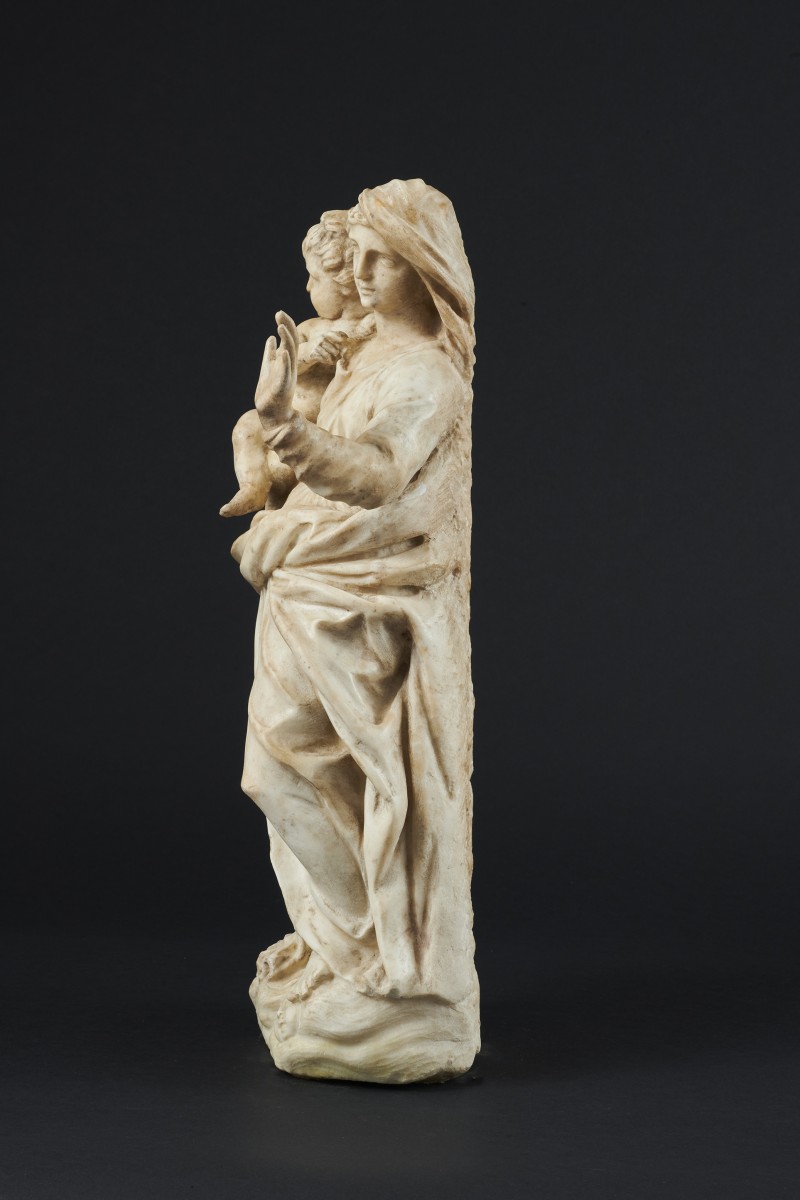
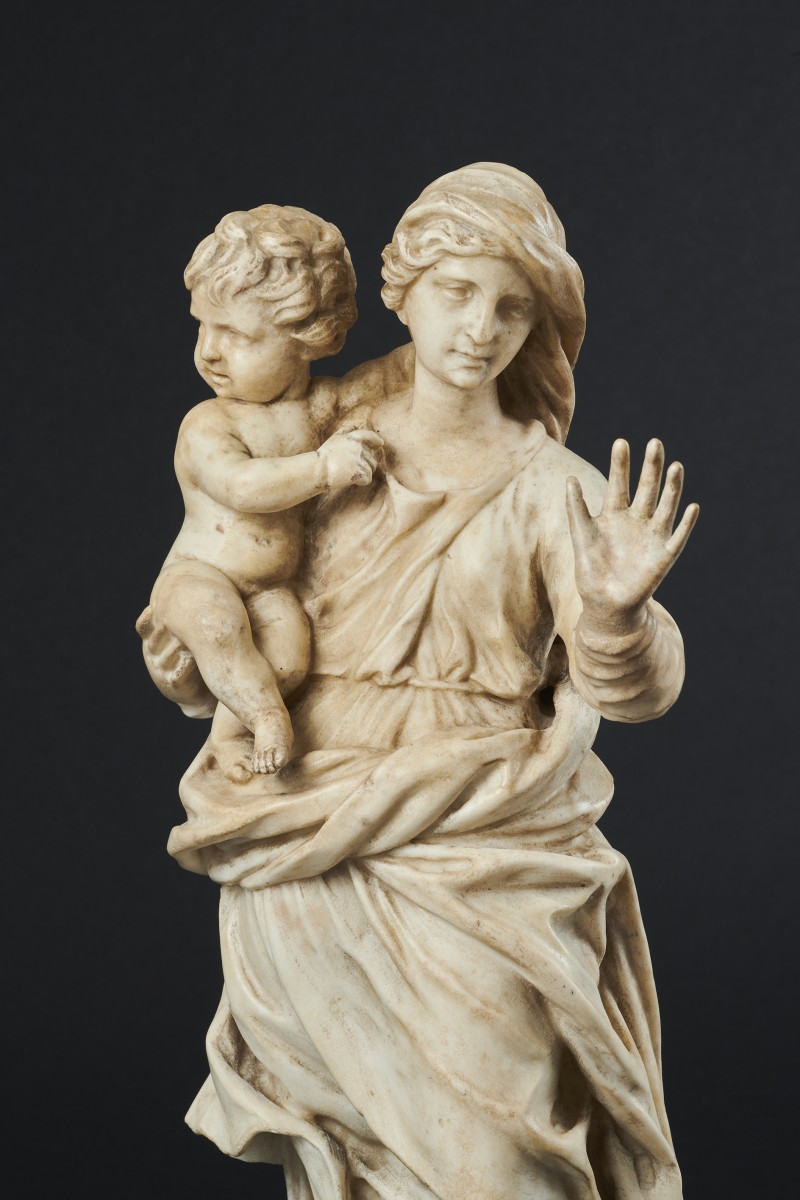

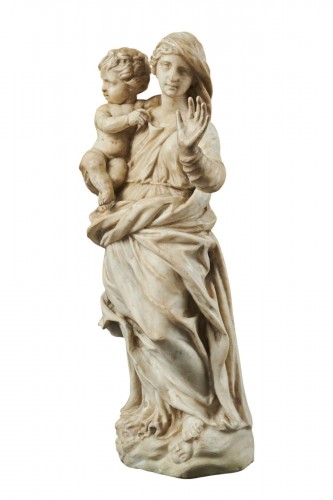
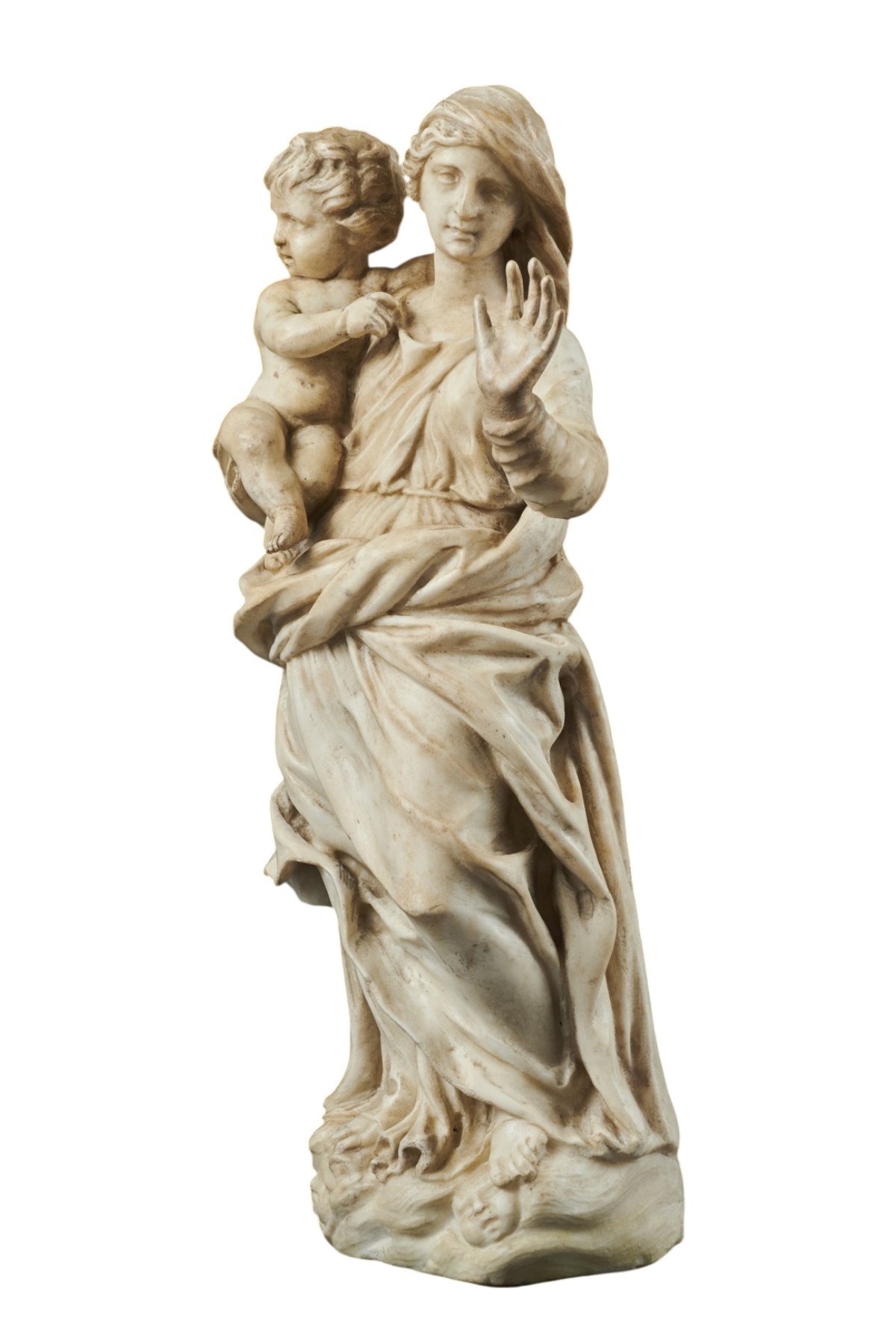
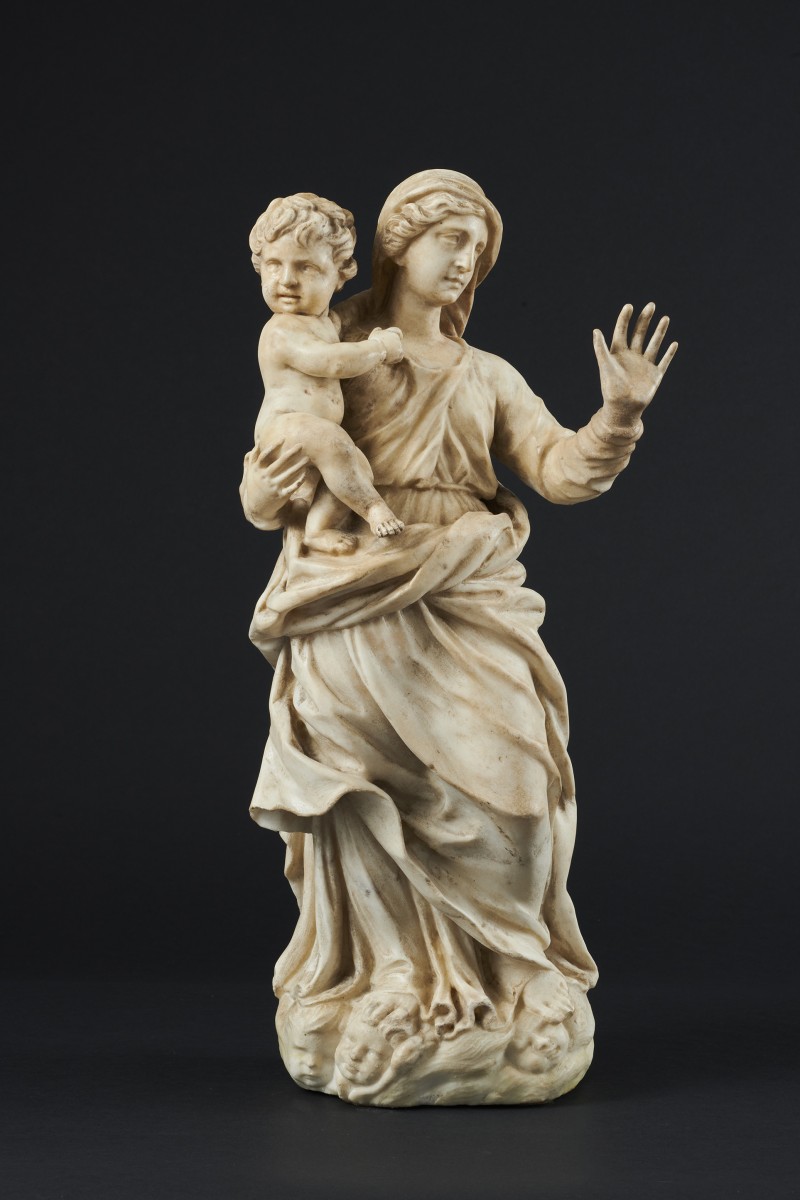
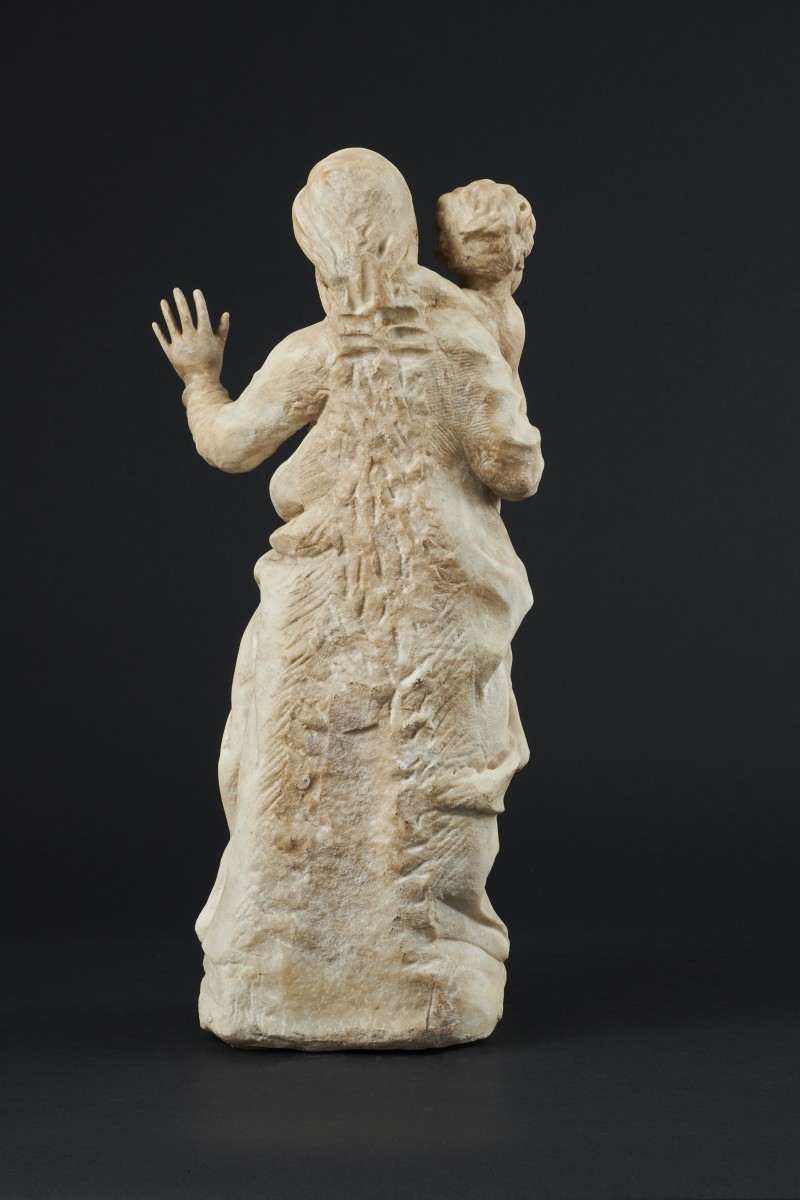
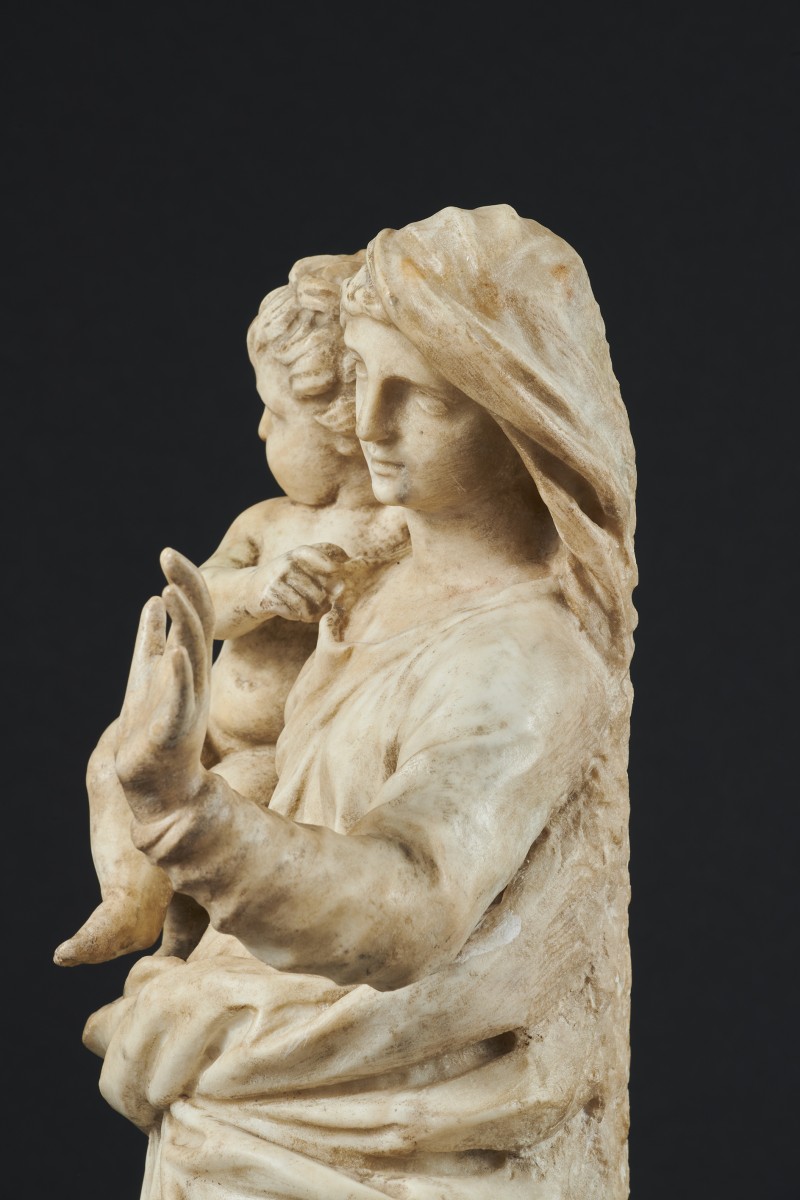
This marble Virgin and Child belongs to Roman sculpture of the seventeenth century, at the intersection of a classicism inherited from Antiquity and the iconographic requirements of post-Tridentine art. The work is closely related to the formal language developed by Alessandro Algardi, drawing upon a model he elaborated in Rome around the middle of the century and widely disseminated through his workshop and artistic circle.
The Virgin is shown standing on a mound adorned with angel heads, holding the Christ Child on her right arm. The Child is distinguished by a marked expressiveness and a deliberately mature, almost adult physiognomy, departing from strictly infantile naturalism. This feature underscores the theological concept of the Christus sapiens, an iconographic type that emphasizes not Christ’s childhood or human vulnerability, but rather his divine wisdom and his early awareness of his salvific mission.
The Virgin’s left hand, extended forward with the palm open, introduces a clear and legible gesture of intercession, in keeping with the iconographic clarity sought in post-Tridentine sculpture. The most expressive element of the work lies in the treatment of the drapery, conceived in an antique “wet drapery” manner, directly derived from the classical models studied and reinterpreted by Algardi. The fabric clings closely to the Virgin’s body, revealing the underlying anatomical structure, while supple, undulating, and deeply carved folds animate the marble surface.
This interplay of tension and release provides the principal source of dynamism in the composition, concentrating expressive force in the drapery itself, while the faces and gestures remain deliberately restrained. Such a distribution of effects,plastic intensity in the drapery balanced by the classical calm of the figures,fully accords with Algardi’s aesthetic and supports an attribution to a sculptor working within the master’s circle or immediate following.