Offered by Acropole Antiquités
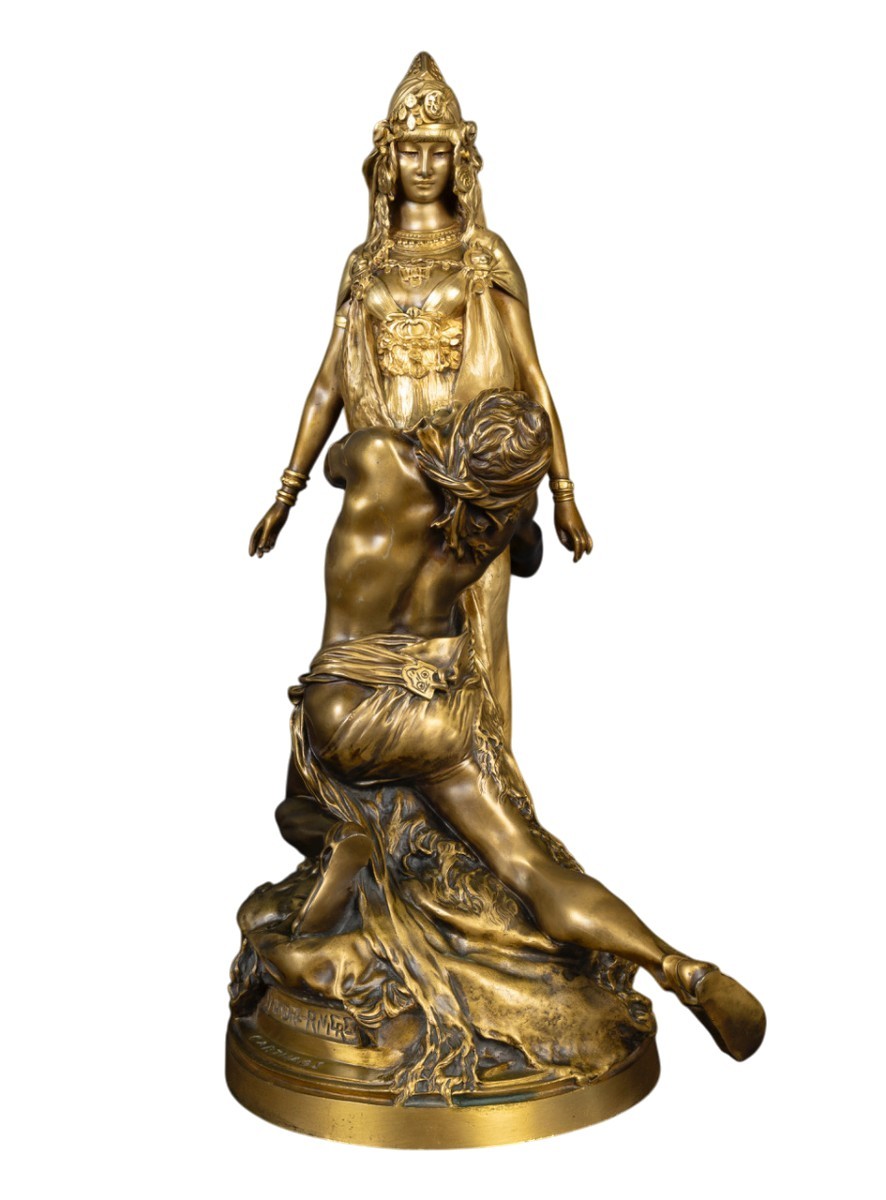

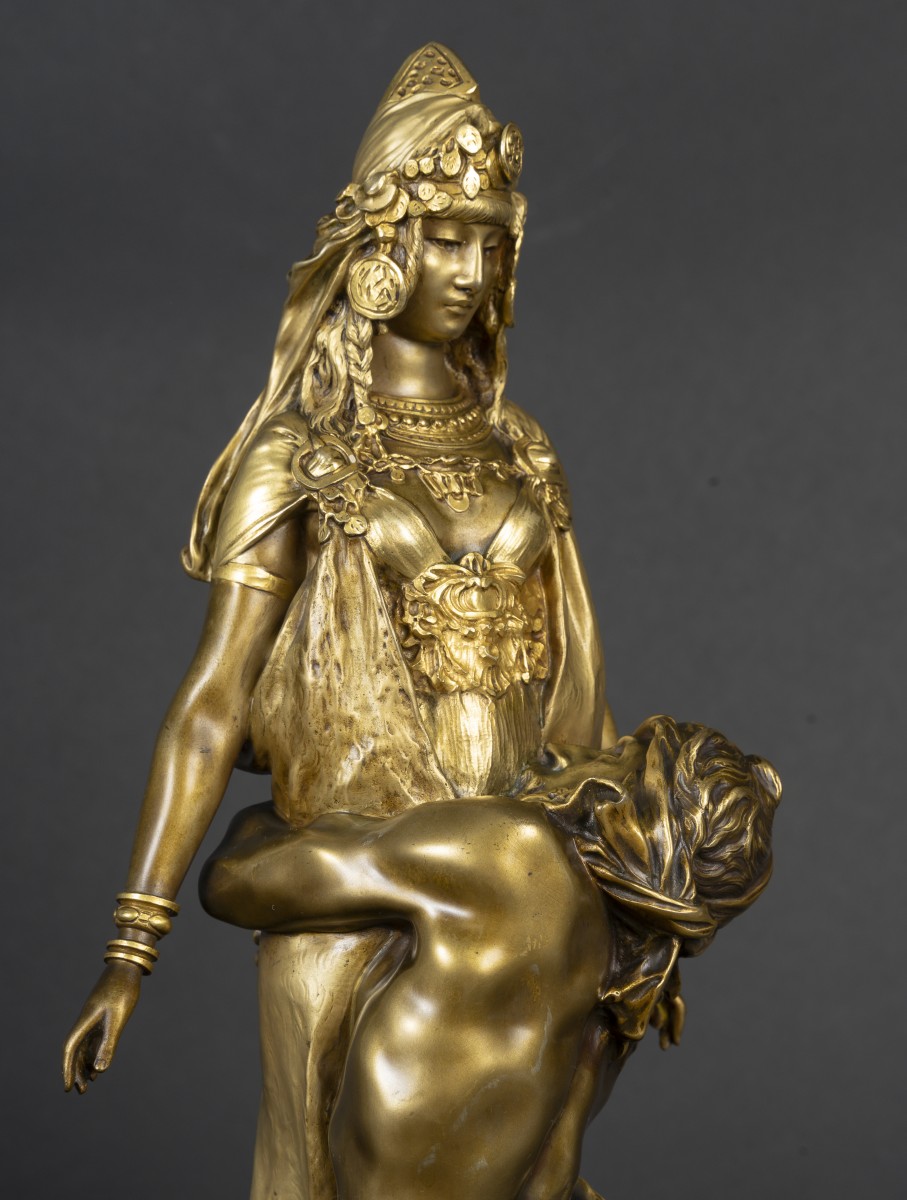

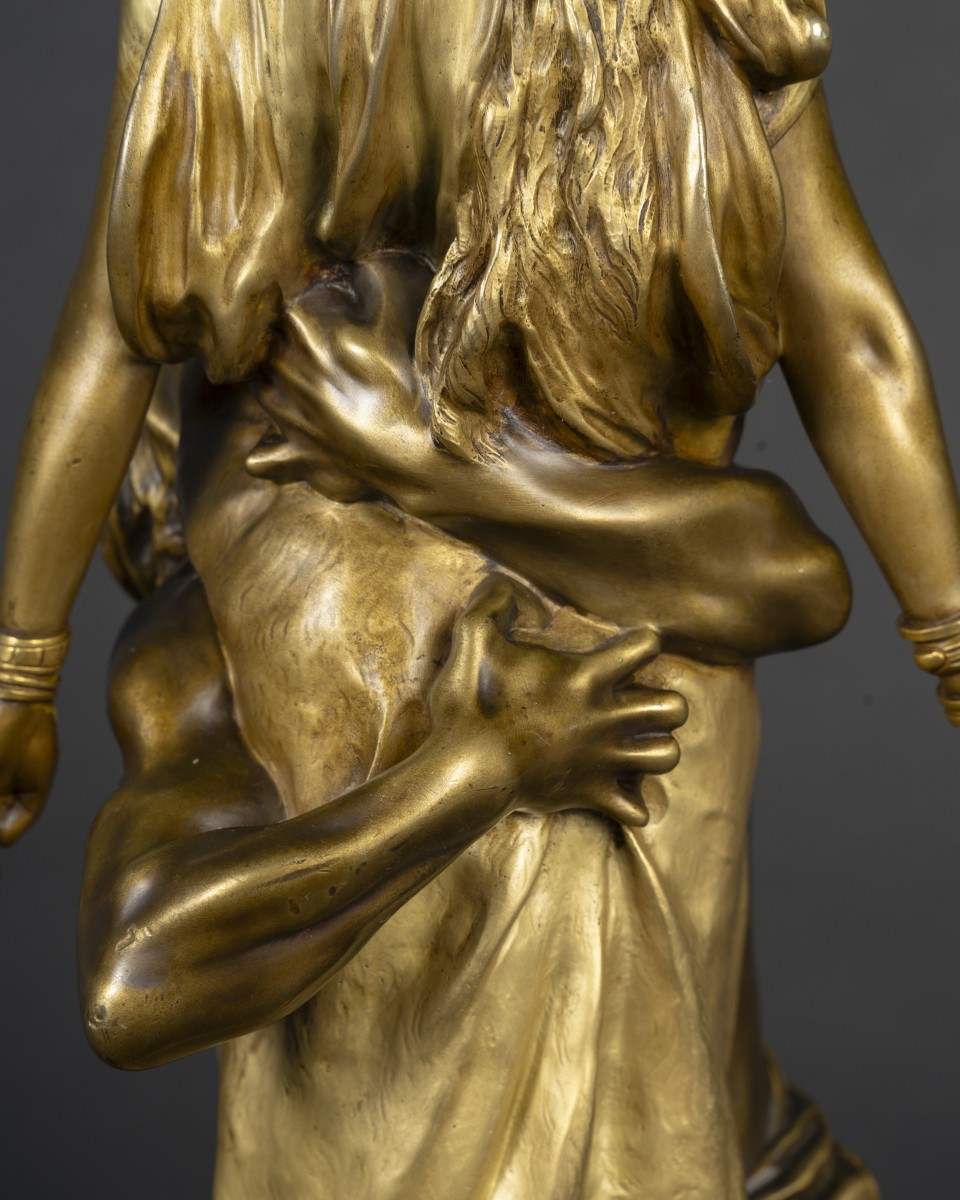

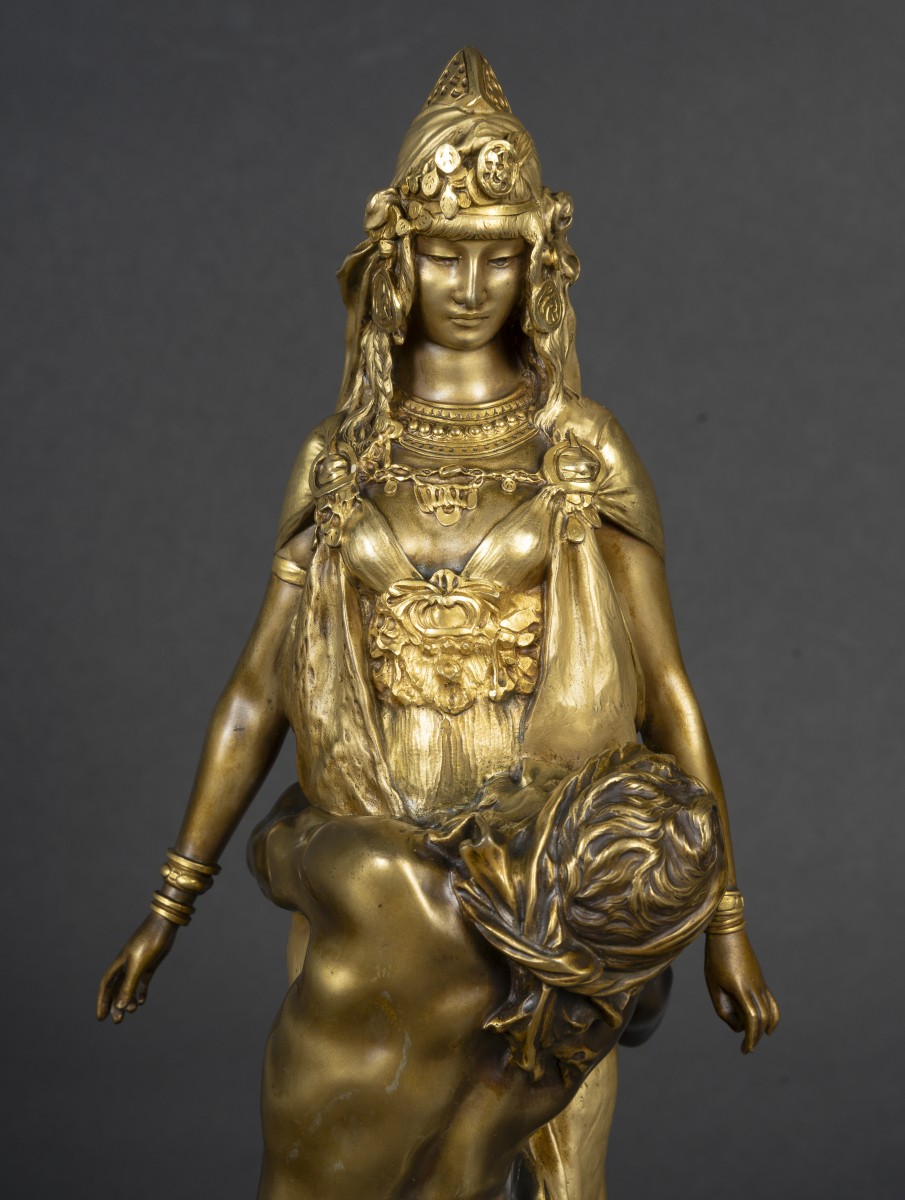
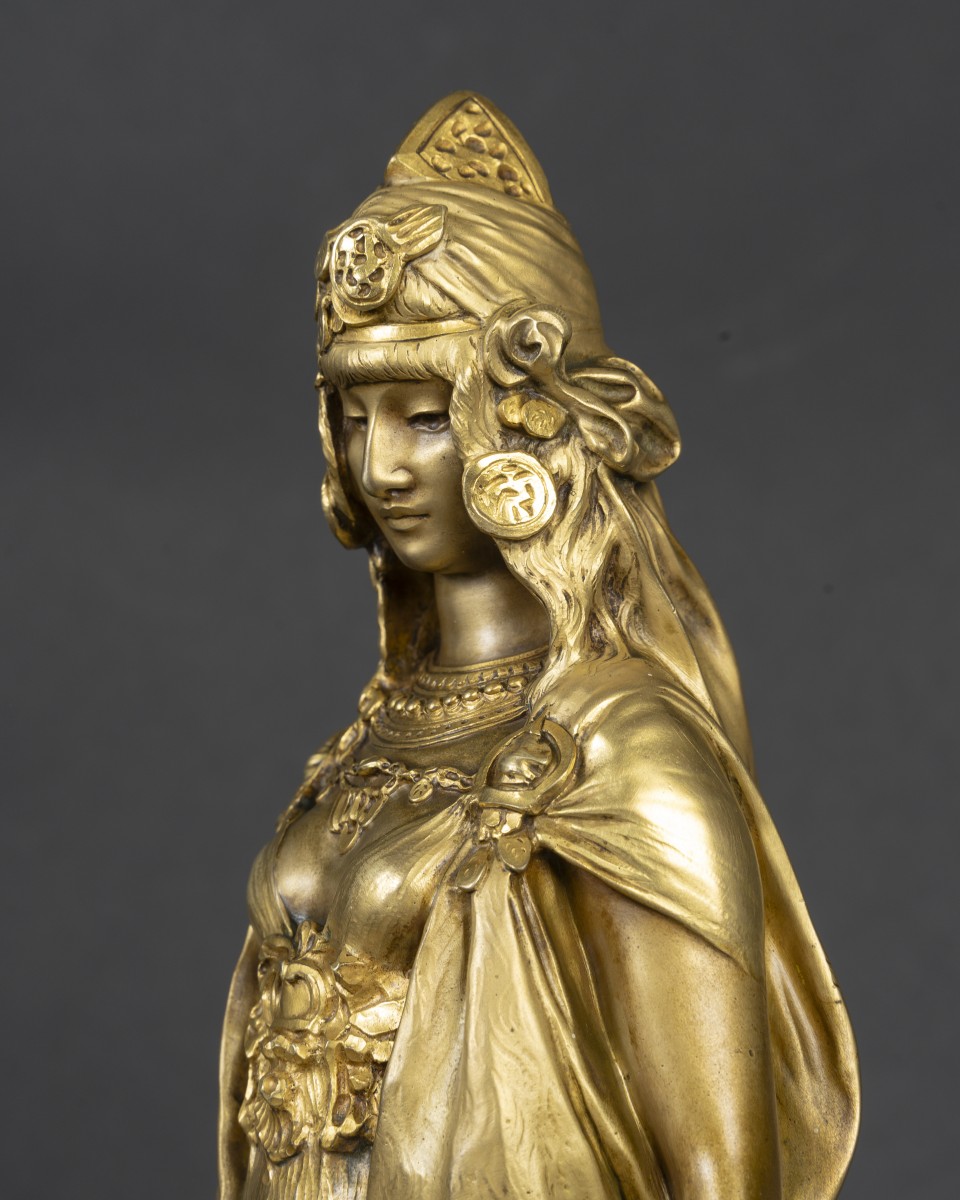
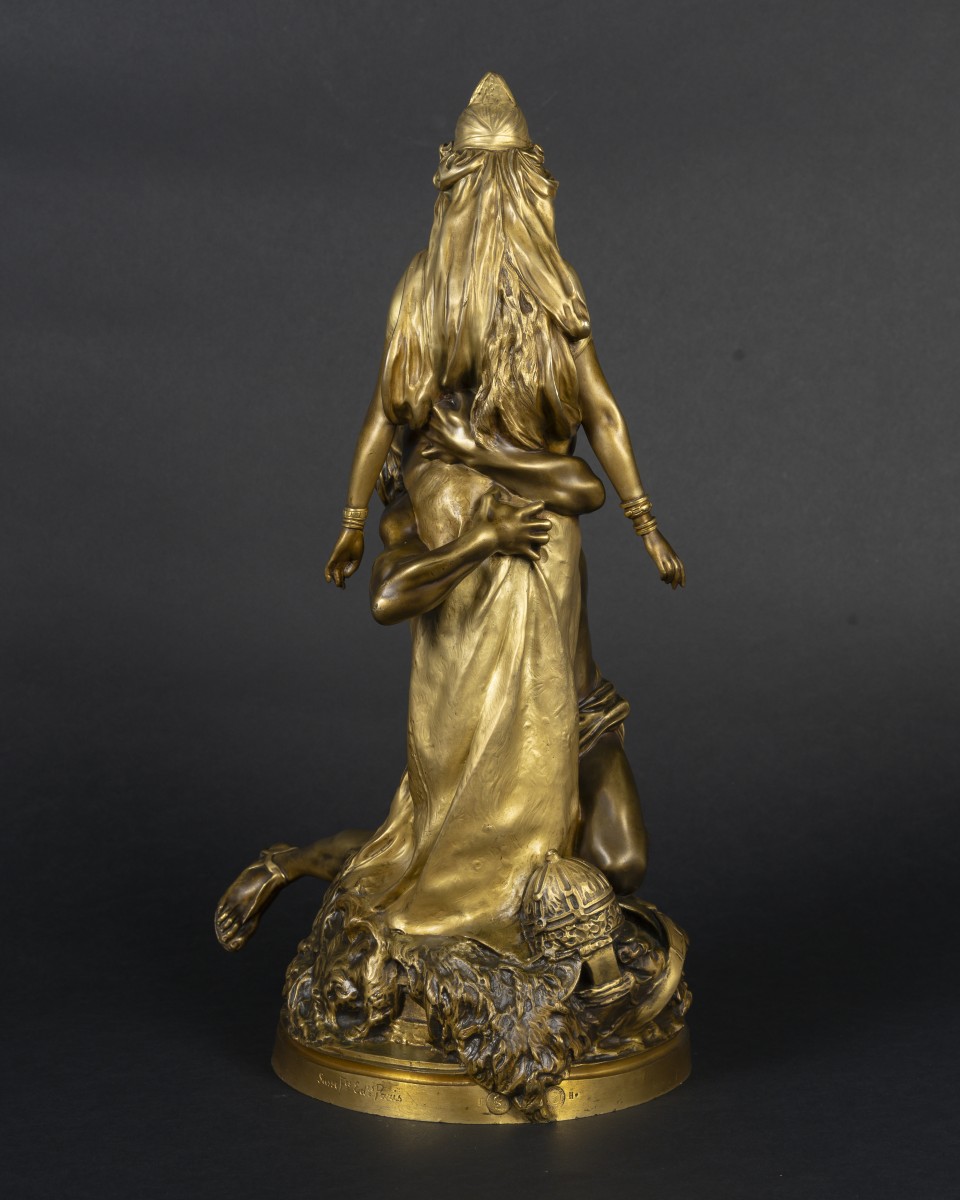
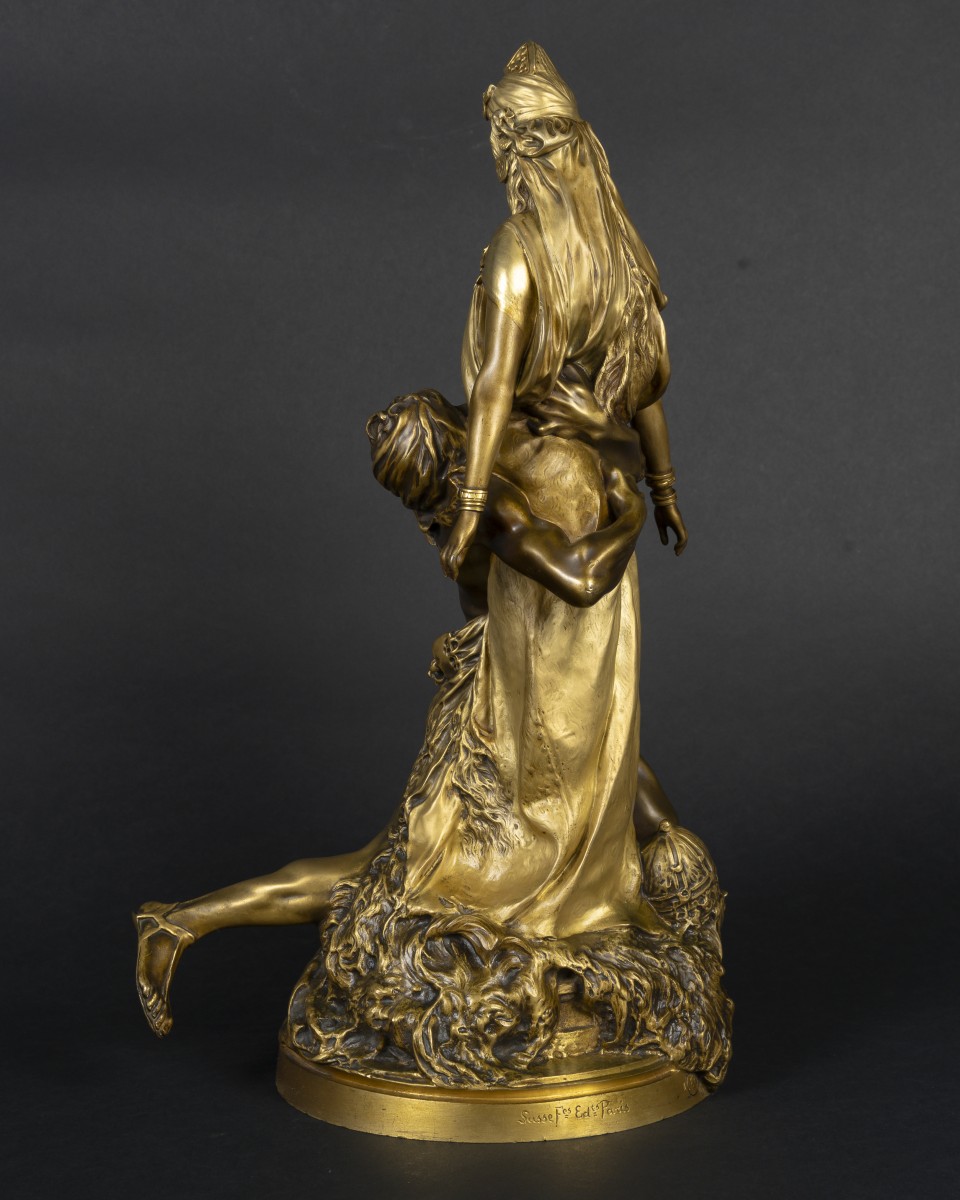
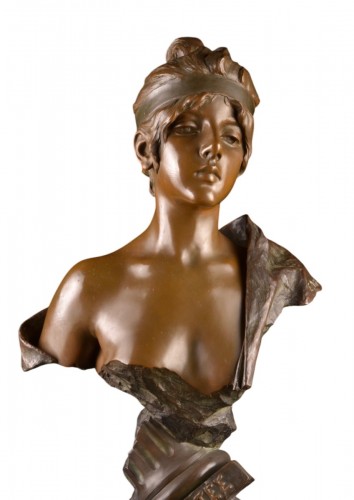
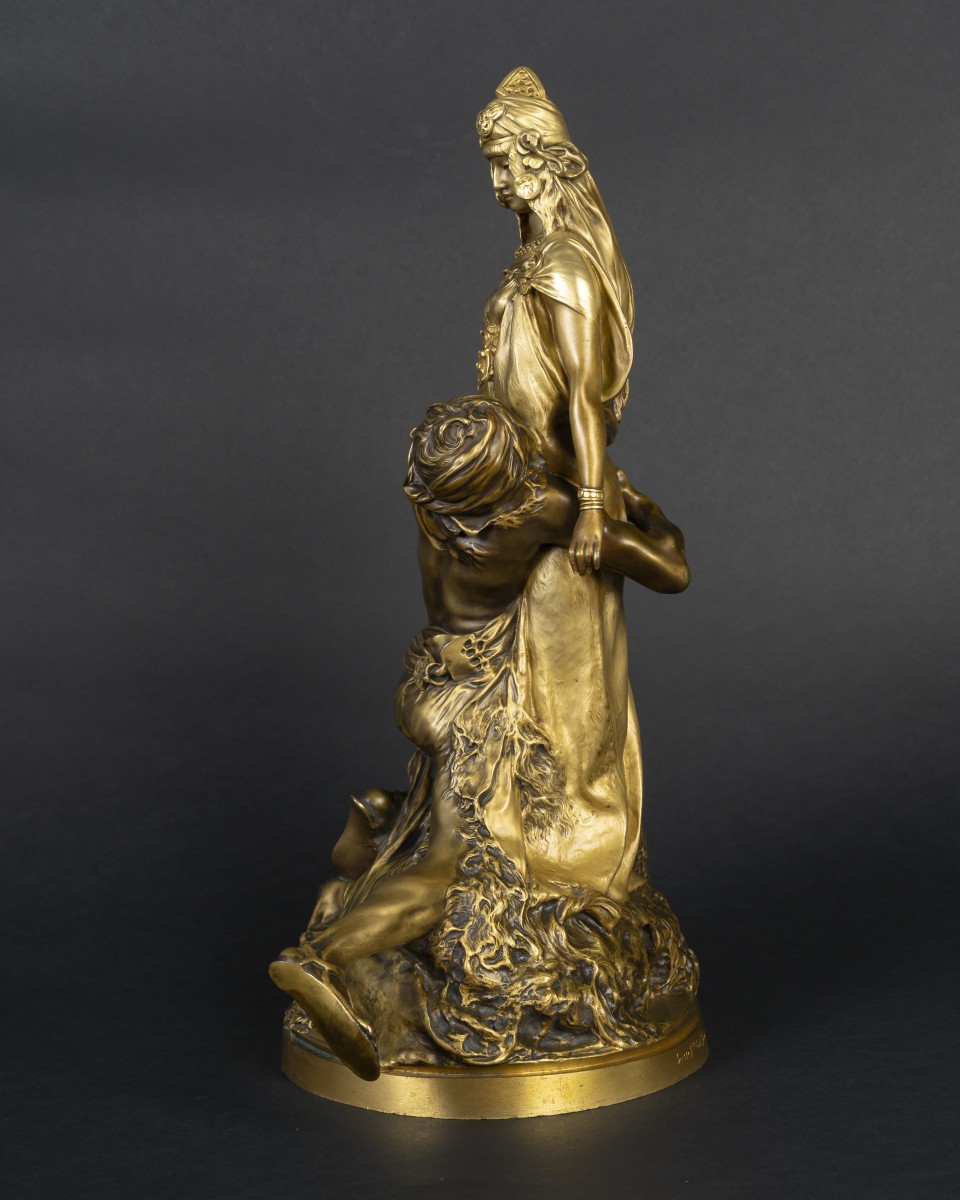
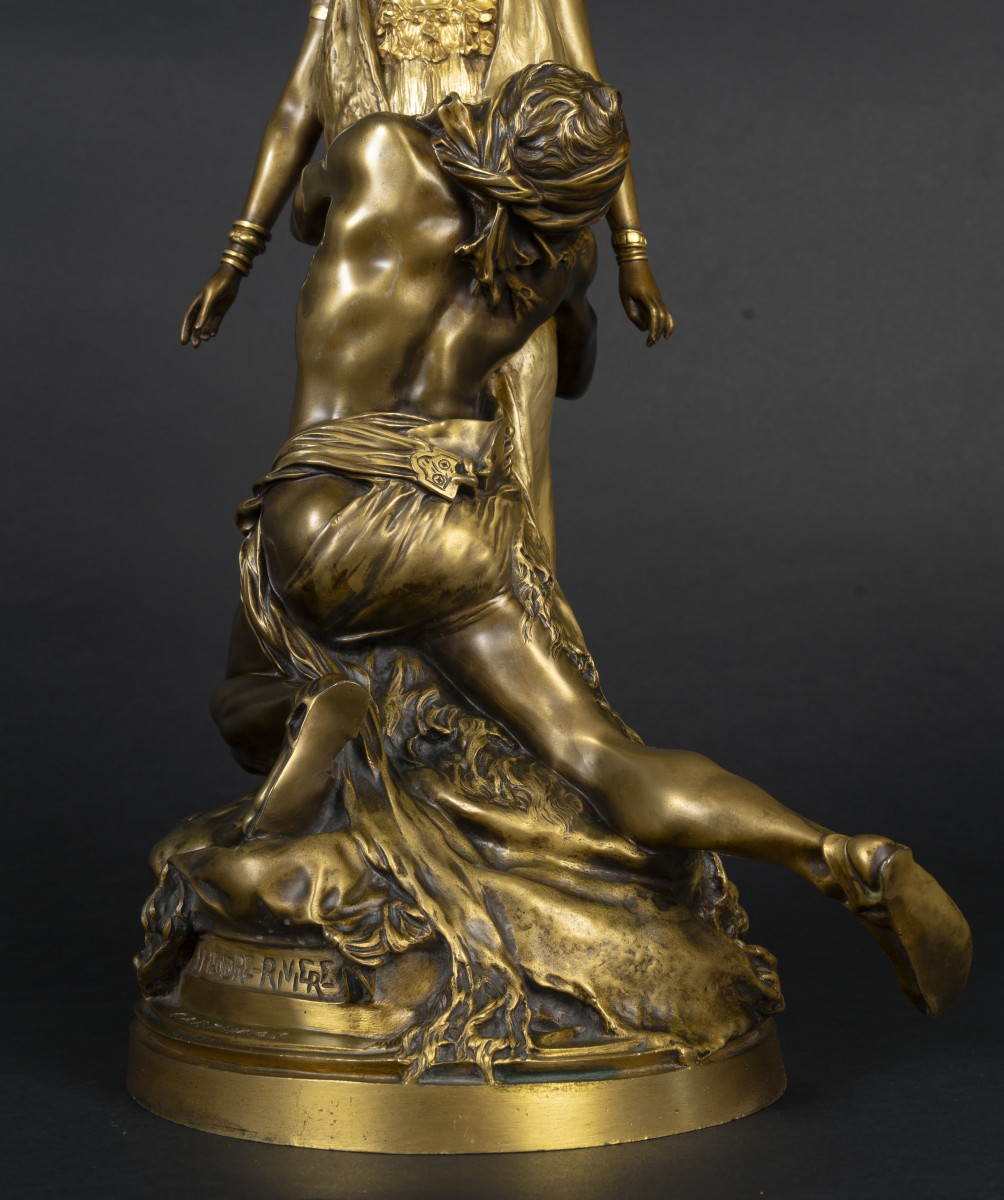
Carthage Bronze with a double gilt patina, signed THEODORE RIVIÈRE on the base.
An early cast, made during the artist's lifetime by the Susse Frères foundry.
Circa 1900
Features
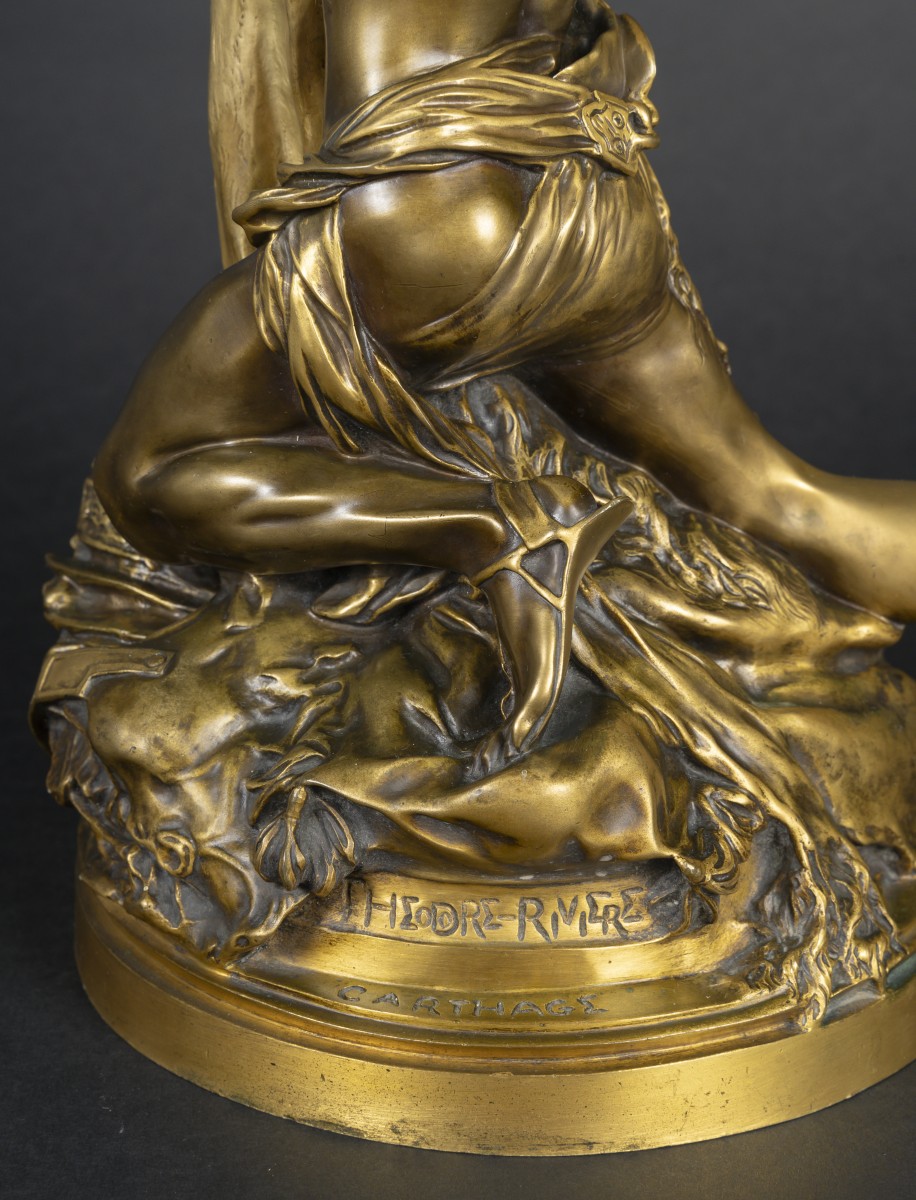
Sculptor's signature, Théodore RIVIÈRE, on the base.
Inscription "CARTHAGE" on the base.
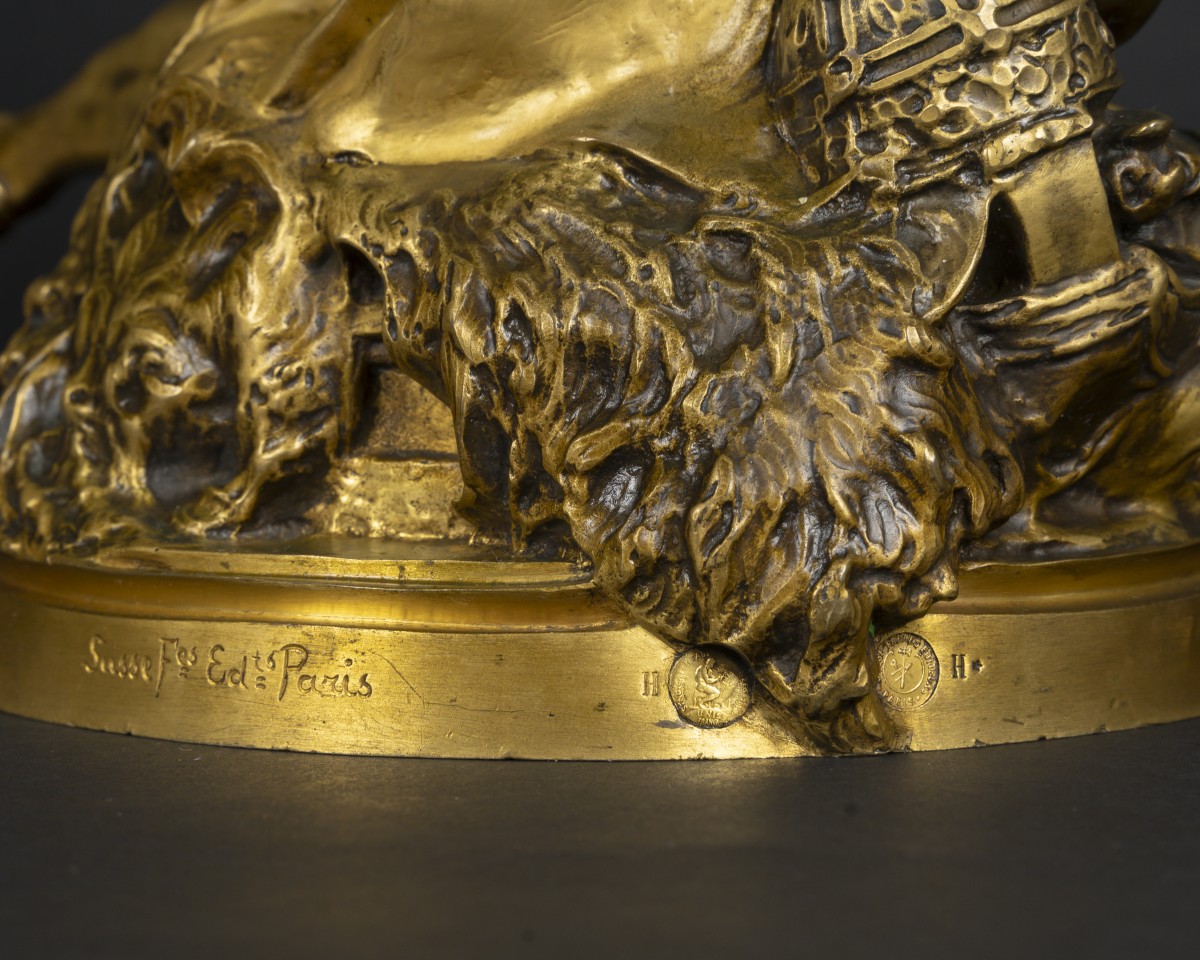
Mark "Susse Frères Editeurs Paris".
Mark "Syndicat Des Fabrts De Bronzes 1818 / Unis France".
Inscription "Susse Frères Editeurs Paris".
Dimensions
Height 42 cm
Diameter 18.5 cm
An elegant bronze sculpture with a double gilt patina depicting a scene between a Carthaginian priestess and a man kneeling at her feet. The upright and solemn female figure contrasts with the expressive movement of the male figure, creating a strong visual tension. The rich, nuanced golden patina highlights the delicate modeling, the details of the costume, and the quality of the drapery. An emblematic work of late 19th-century Orientalist aesthetics.
A rare and decorative collector's item.
Biography of Théodore Rivière
Théodore Rivière was born in Toulouse in 1857 and became one of the most sensitive and original French sculptors of the late 19th century. Trained at the École des Beaux-Arts, he turned early on to a narrative, expressive sculpture strongly influenced by exoticism, ancient civilizations, and historical narratives. His career developed in Paris, where he exhibited regularly at the Salon and was noted for the delicacy of his modeling and the dramatic power of his compositions.
Rivière traveled extensively, notably to North Africa, Spain, and the Levant. These journeys nourished his artistic imagination. He drew on Berber, Arab, Phoenician, and Iberian cultures for intense themes, often inspired by ancient literature and chronicles. His sculptures blend exaltation, pathos, and ethnographic precision, placing him among the Orientalist artists, but with a uniquely intimate and almost psychological dimension.
He worked primarily in bronze, occasionally ivory and precious materials. He collaborated with the leading Parisian foundries of his time, enabling him to produce pieces of exceptional quality. His sculpted groups are characterized by a strong dramatic tension, a predilection for scenes of devotion, passion, or sacrifice, and a highly refined attention to detail in clothing and decoration.
Théodore Rivière received several awards at the Salon and became a member of the Société des Artistes Français. He was prized by collectors for the highly recognizable personality of his work, which was at once elegant, poignant, and skillfully crafted. He died prematurely in 1912, leaving behind a relatively limited but highly sought-after body of work on the art market. His bronzes, often produced in small series, are now considered masterpieces of French Orientalist and Symbolist sculpture.
Biography of the Susse Frères Foundry
The Susse Frères firm, originally founded in 1758 in Paris, transformed in the 19th century into one of the most important French art foundries and publishers. The Susse brothers developed bronze casting techniques in the 1830s and 1840s, acquired a foundry, and signed publishing contracts with leading sculptors; the firm is particularly renowned for the fineness of its castings and the meticulous application of patinas. Susse notably ensured the edition and reproduction of works or models by sculptors such as Pierre-Jules Mêne, Jean-Baptiste Carpeaux and Jules Dalou, and remains a reference on 19th and 20th century bronzes.
Delevery information :
Our pieces are sold with a certificate of authenticity.
We work with specialized art transport companies to arrange deliveries worldwide. Quotes are available on request. Please note that the responsibility for transport during transit rests exclusively with the carrier.