Offered by Galerie Gilles Linossier

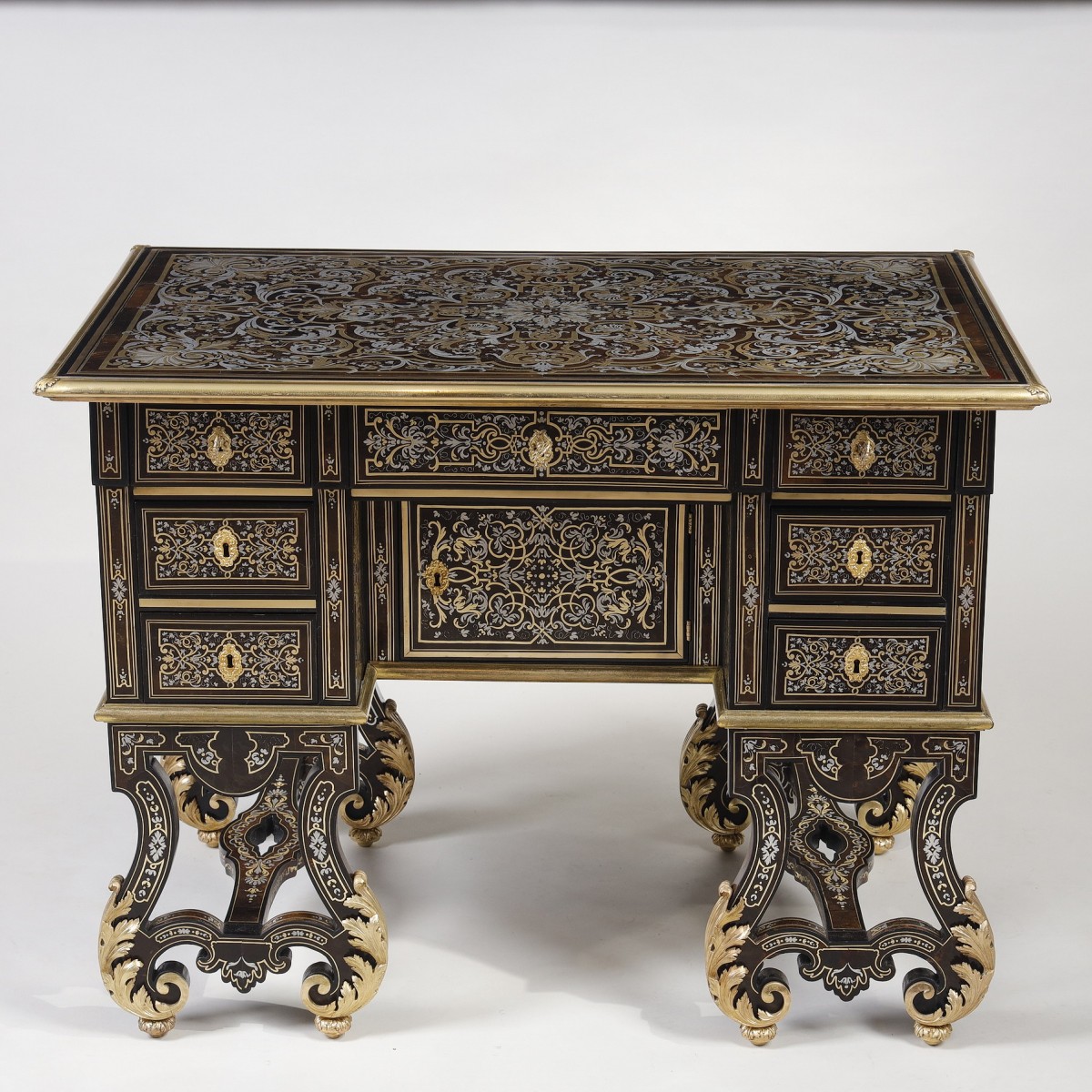
Dimensions: H 79 cm x W 104 cm x D 66 cm.
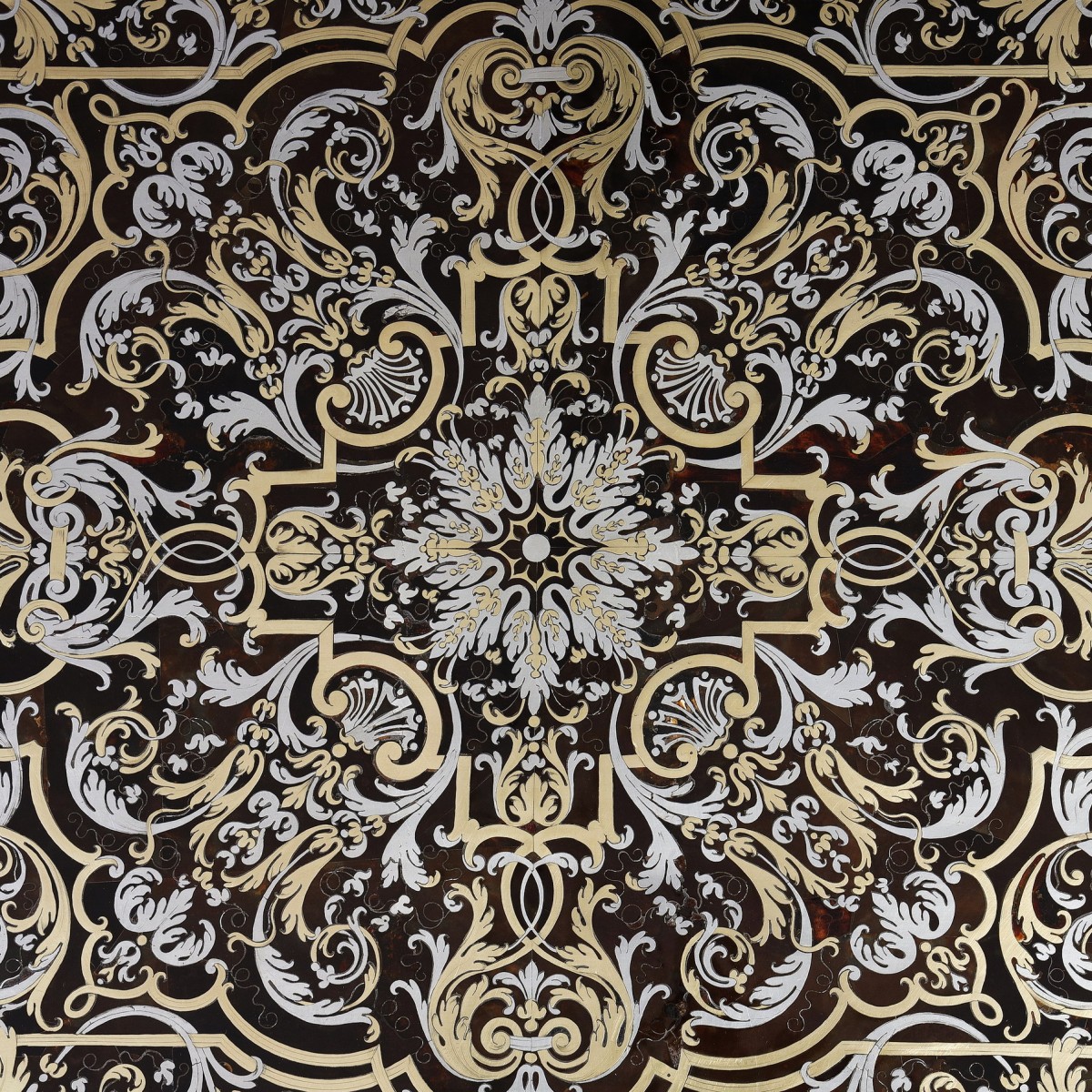
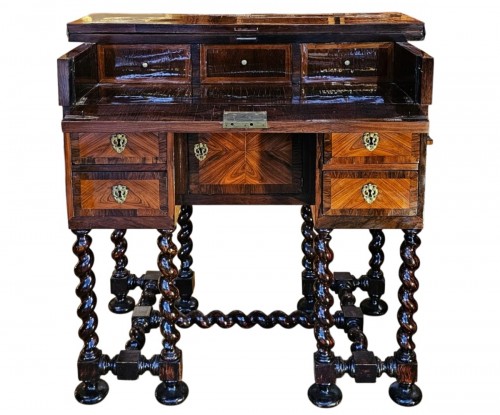
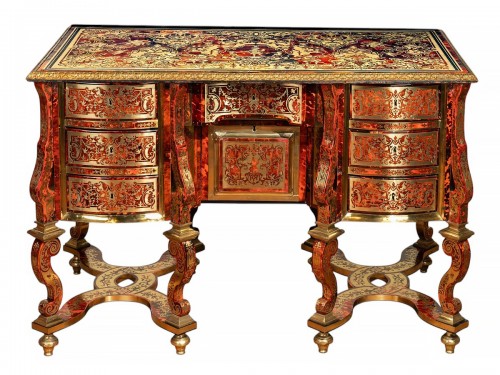
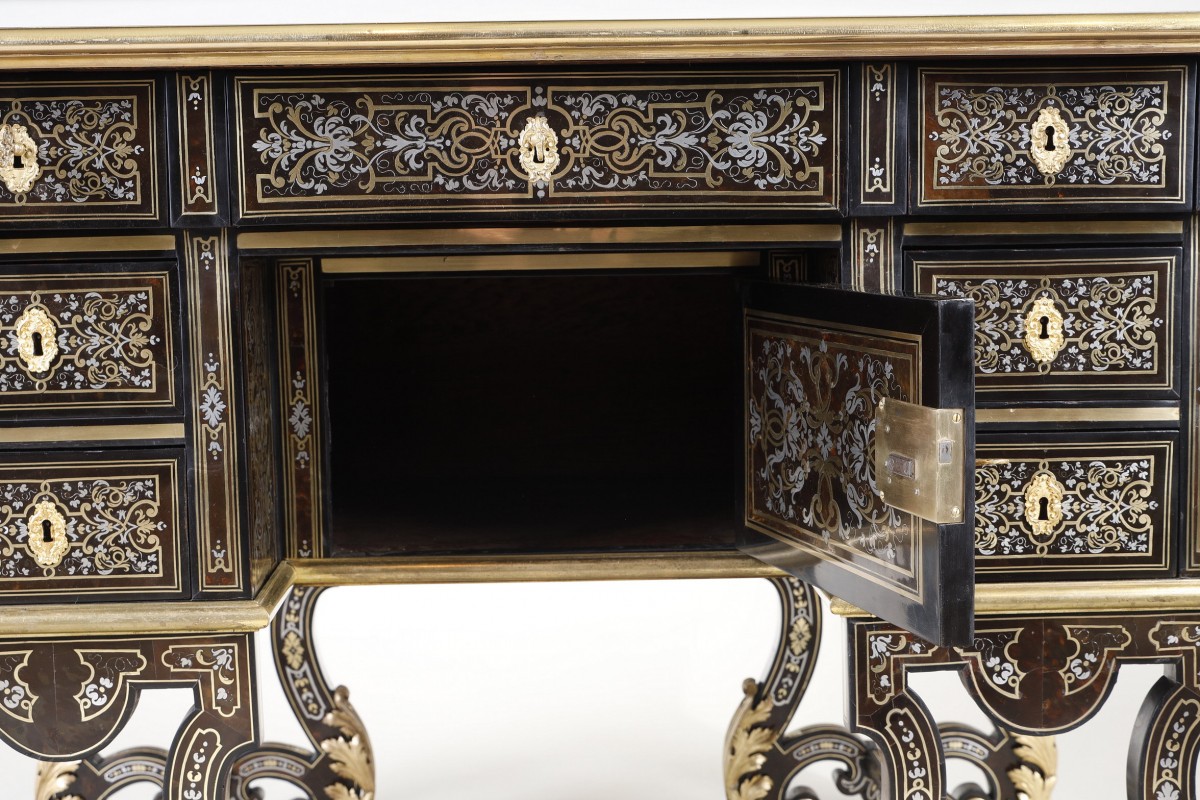
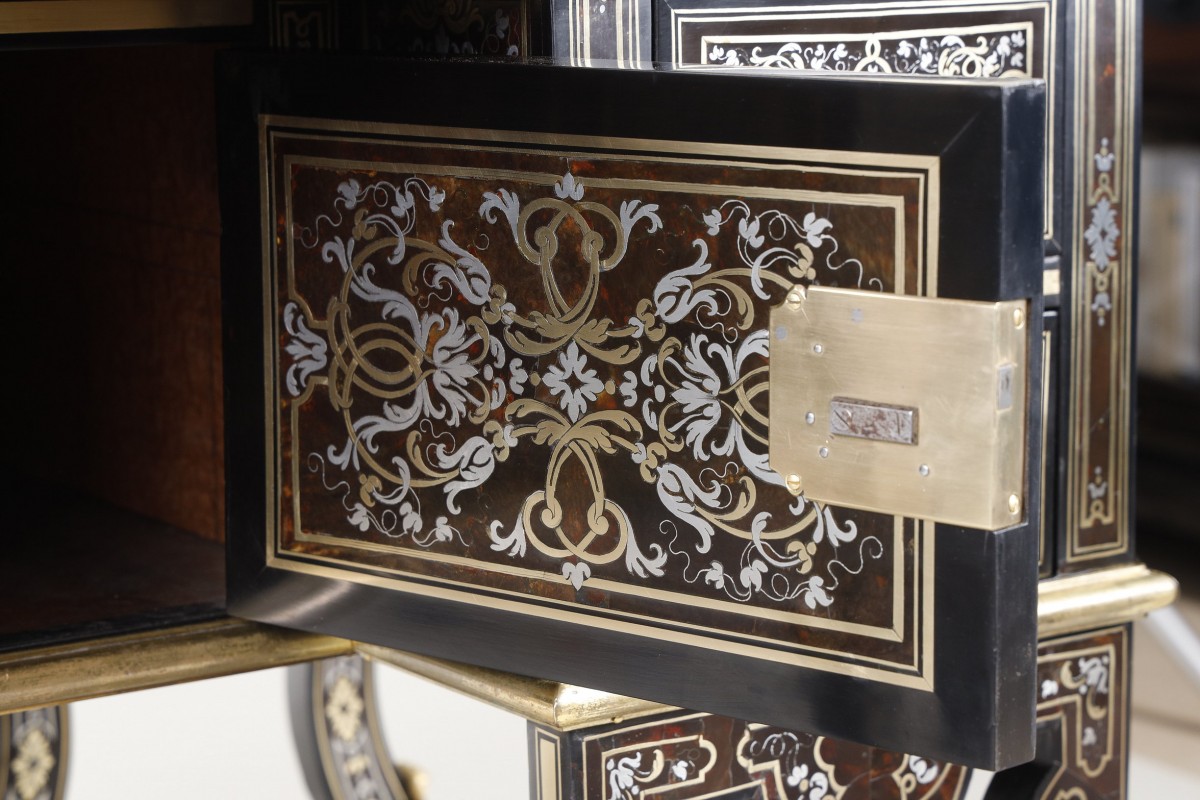
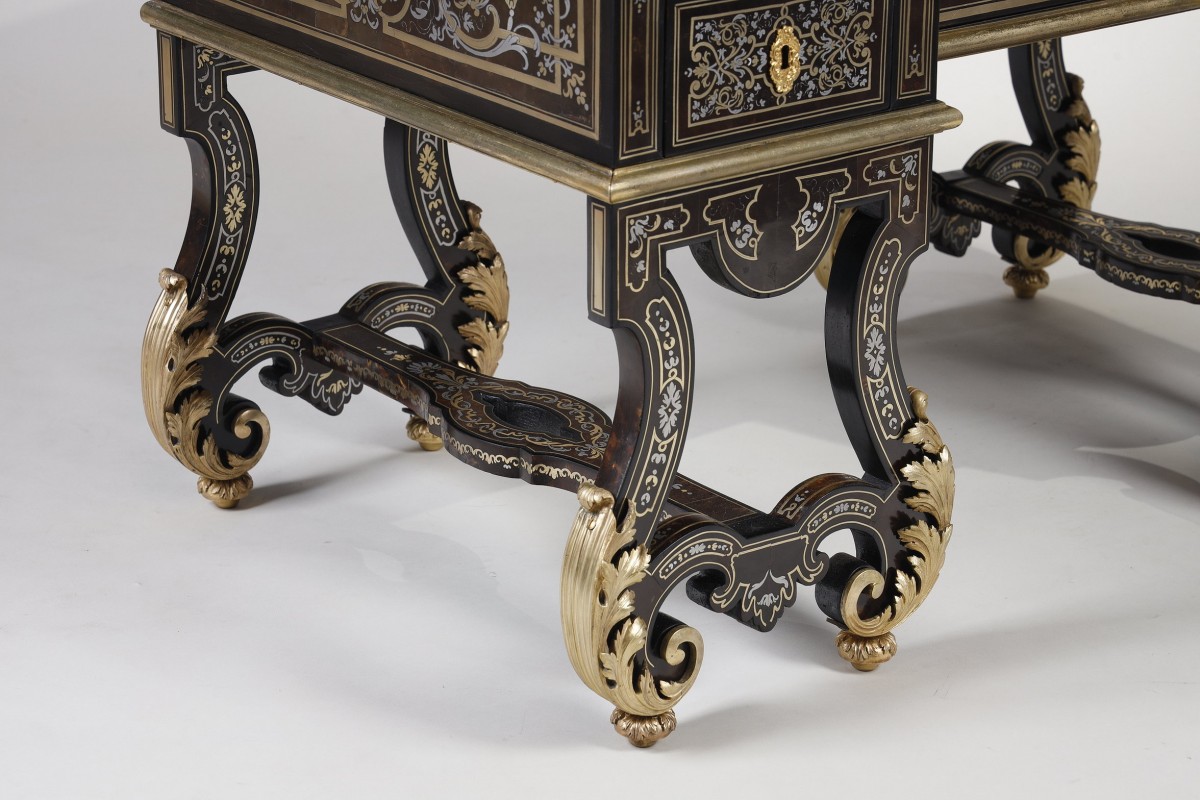
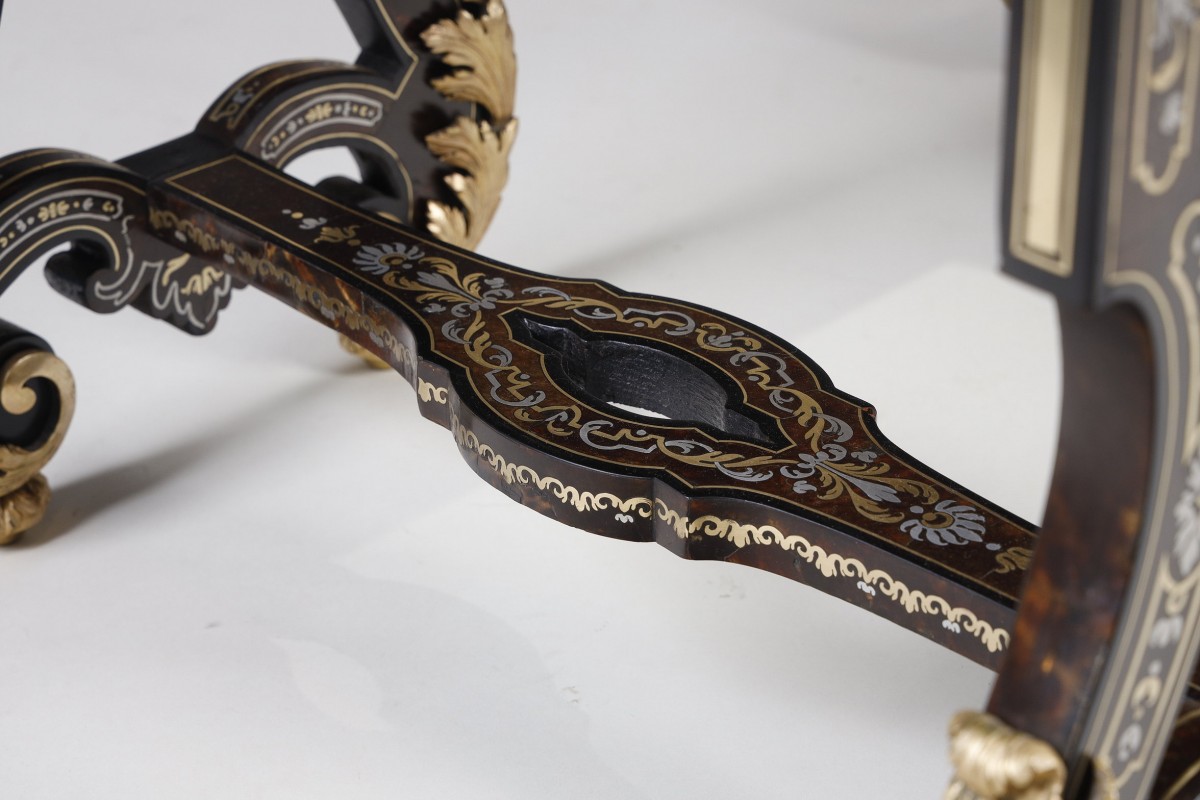
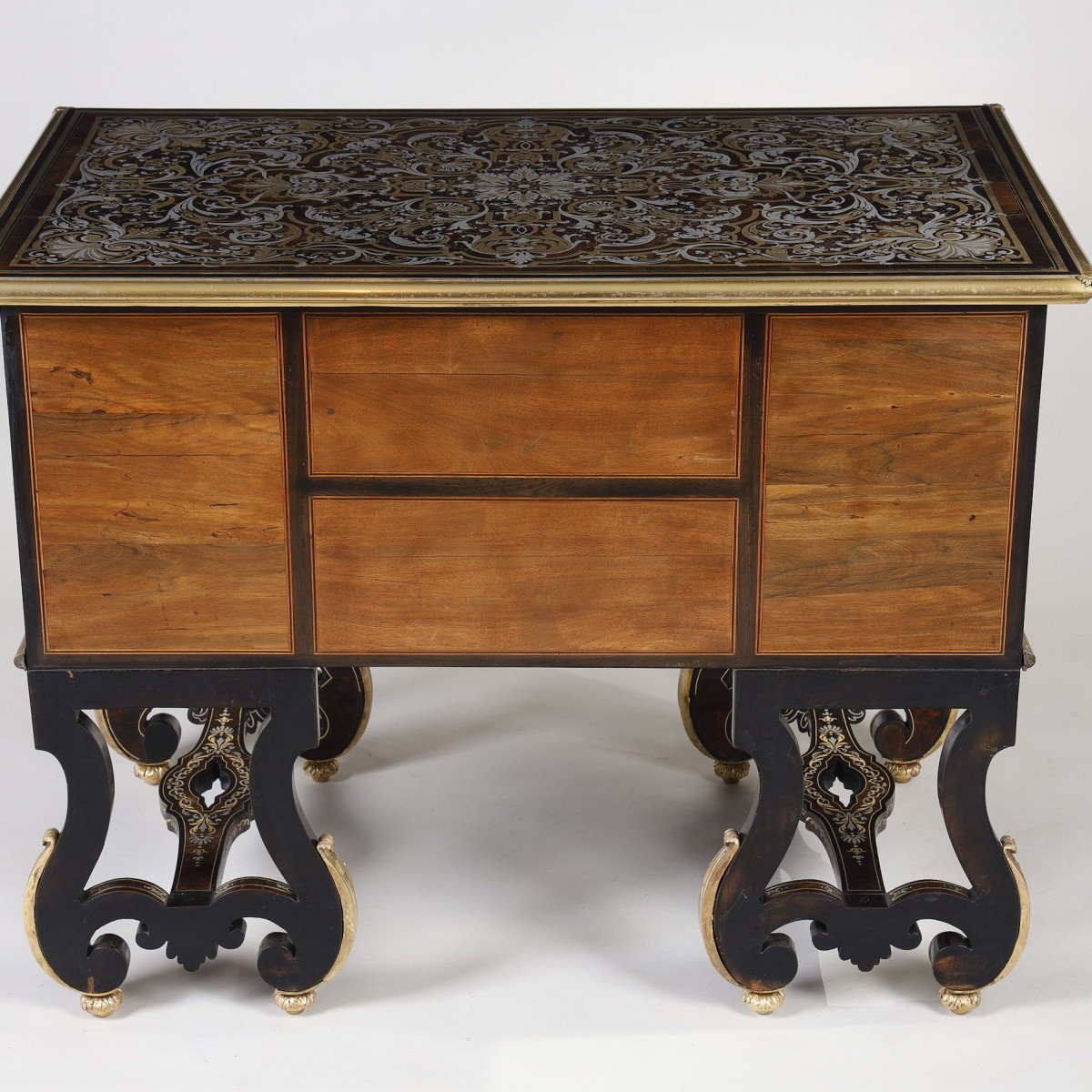
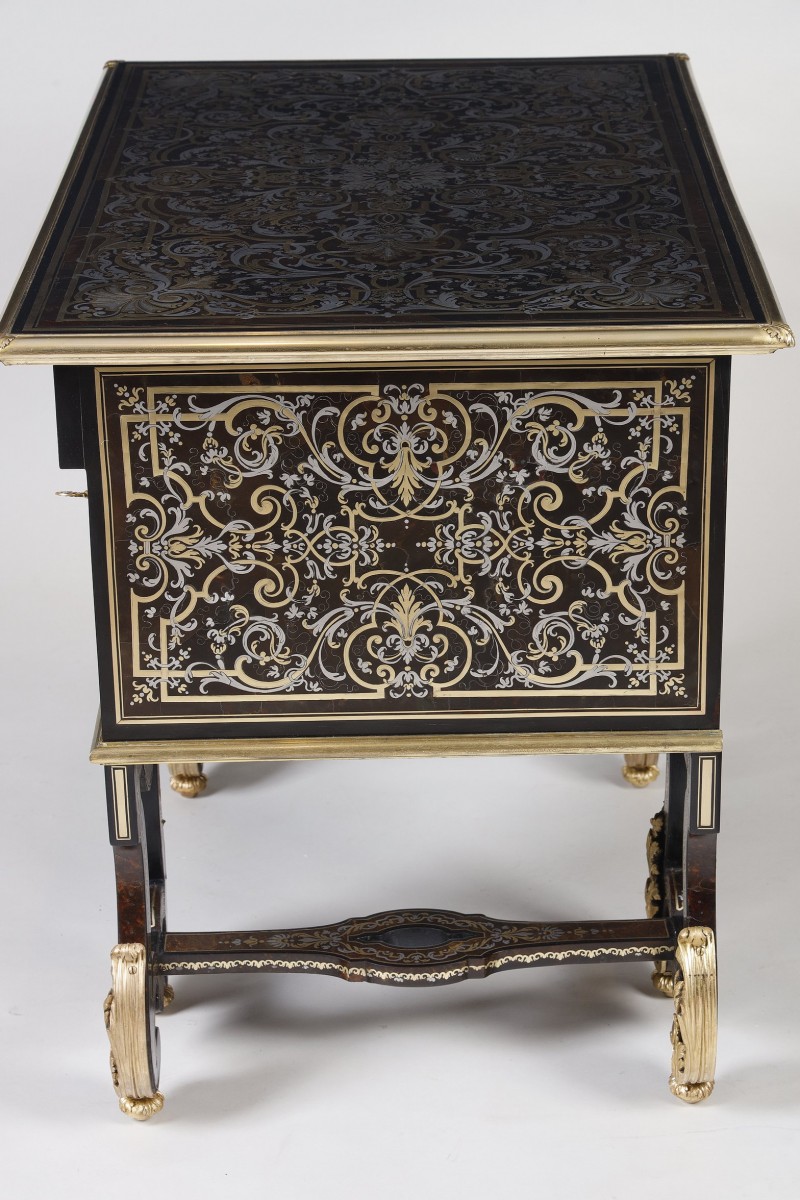
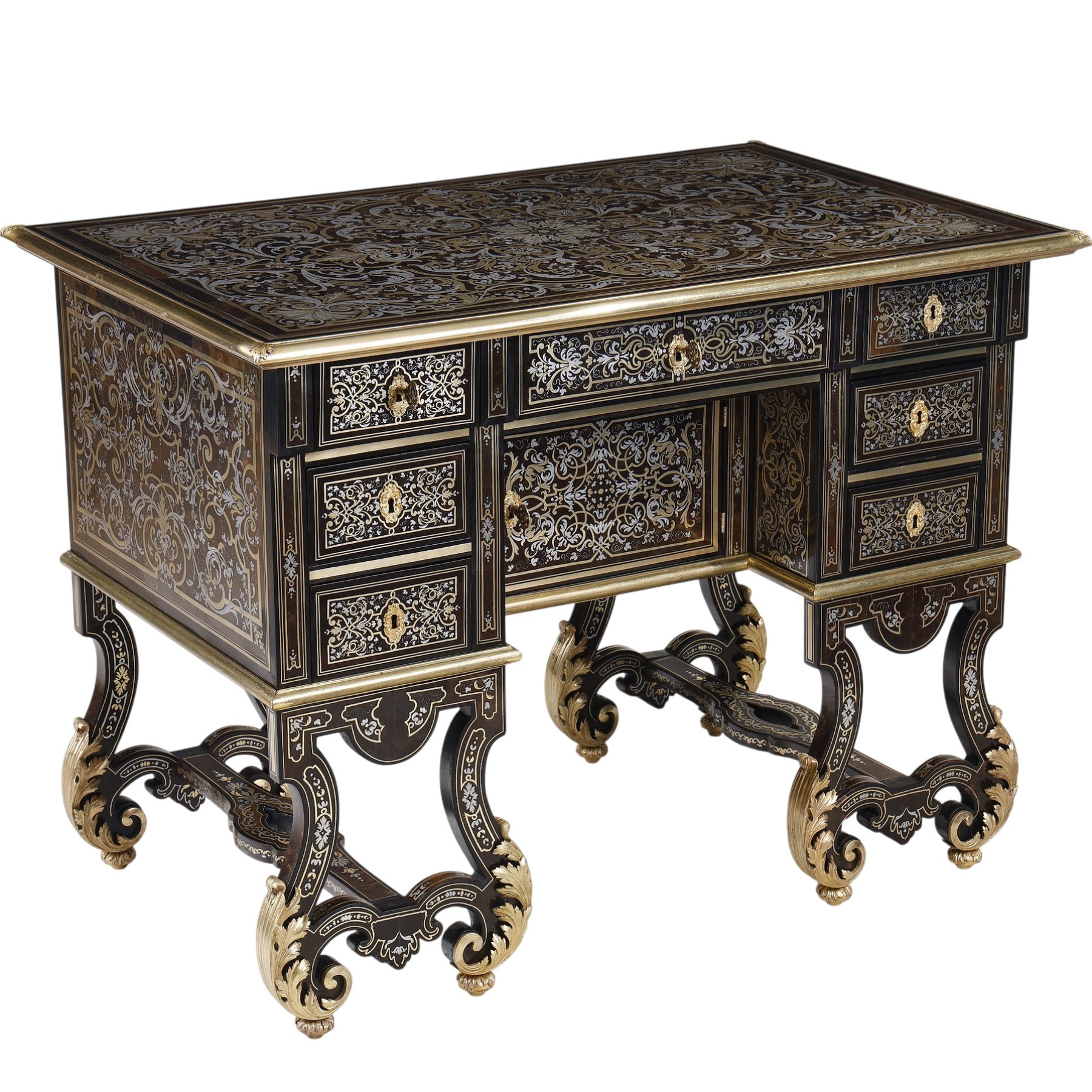
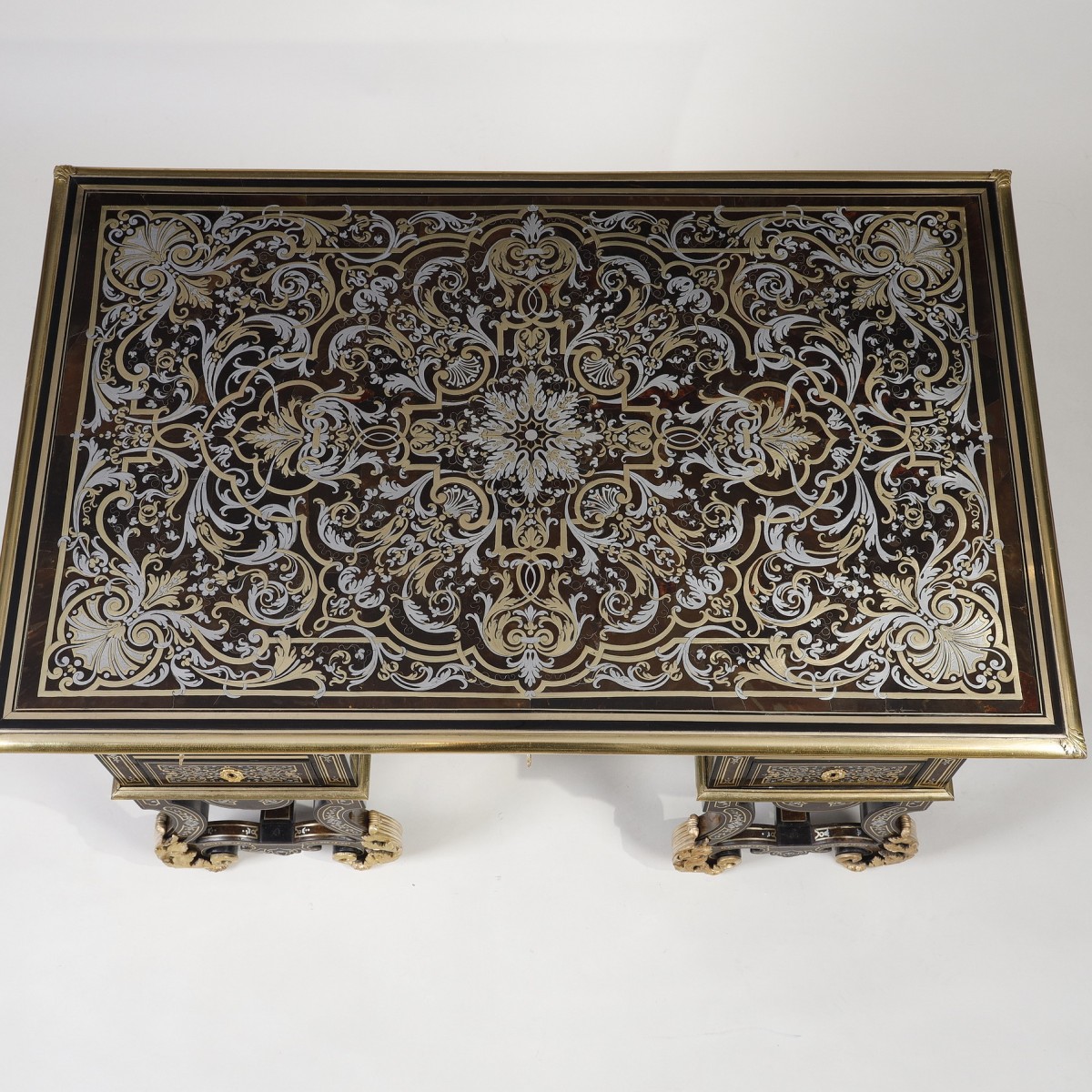
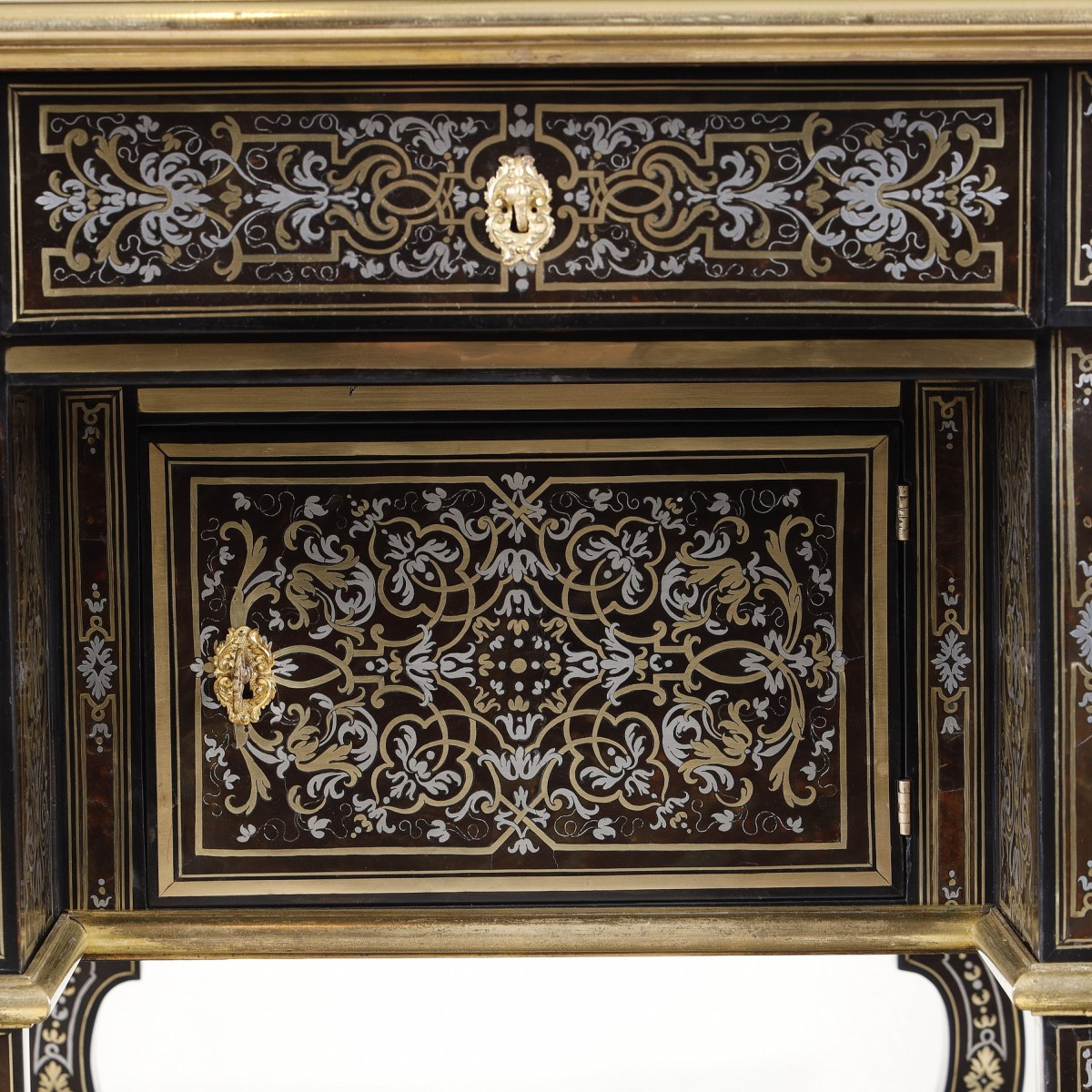
This small desk is adorned with dense Boulle marquetry in the front section, in brass and pewter on a brown tortoiseshell ground.
It features a luxuriant decoration of scrolls, palmettes, shells, and foliate volutes in a fine and complex, harmonious interweaving.
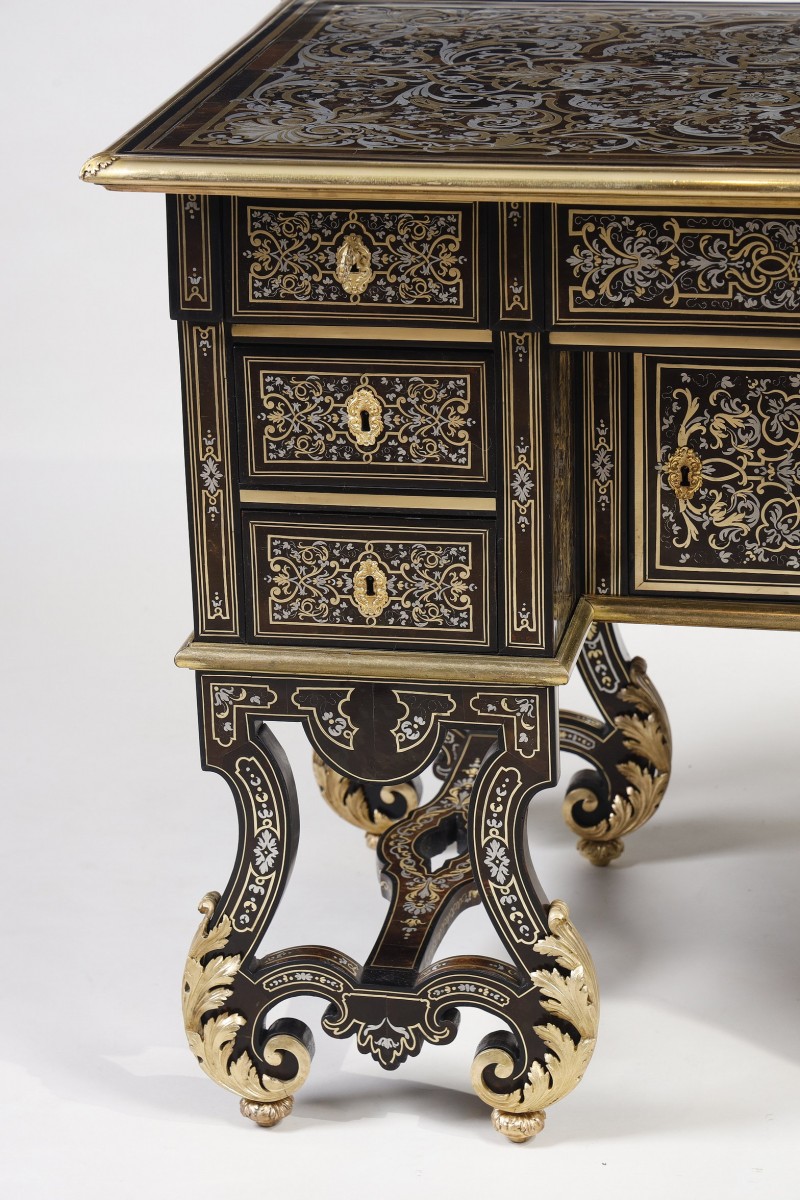
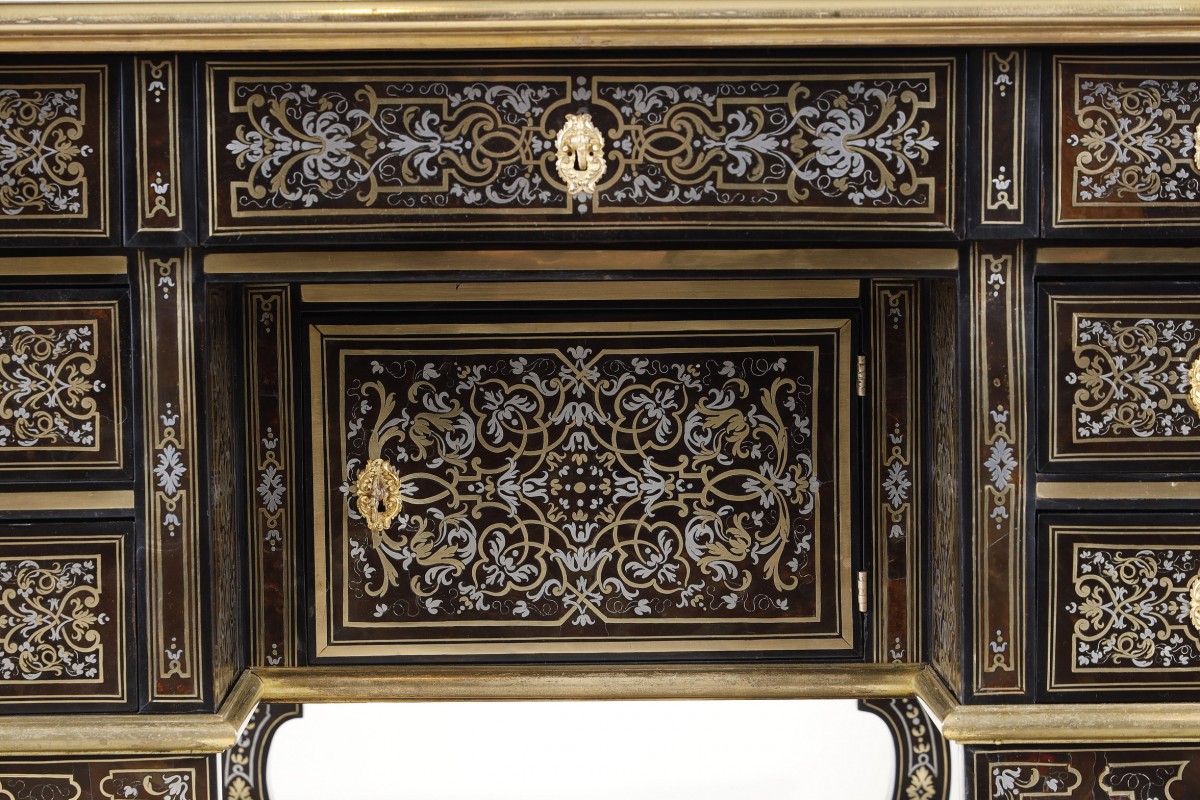
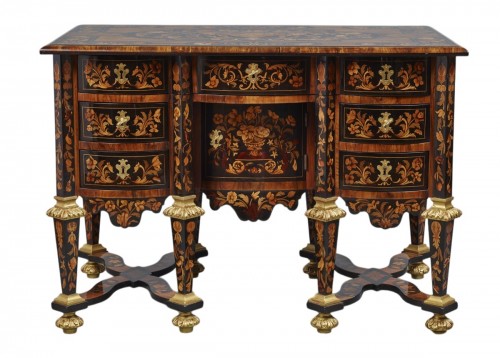
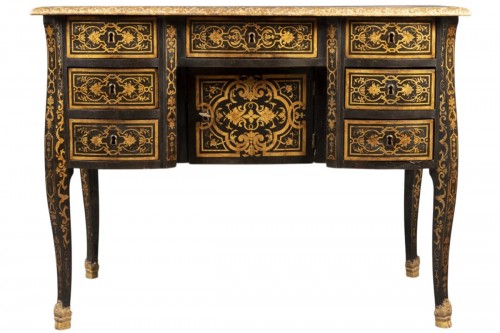
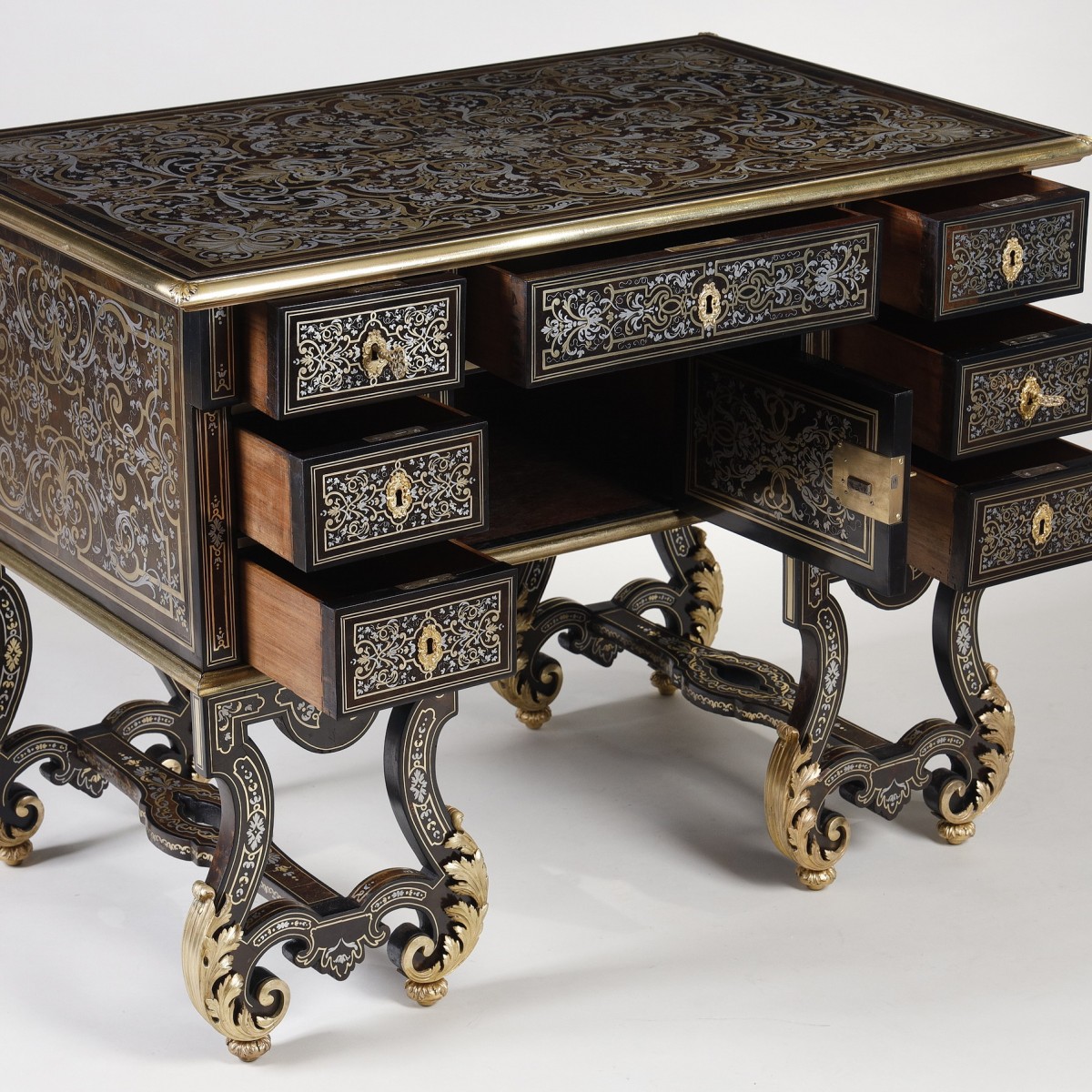
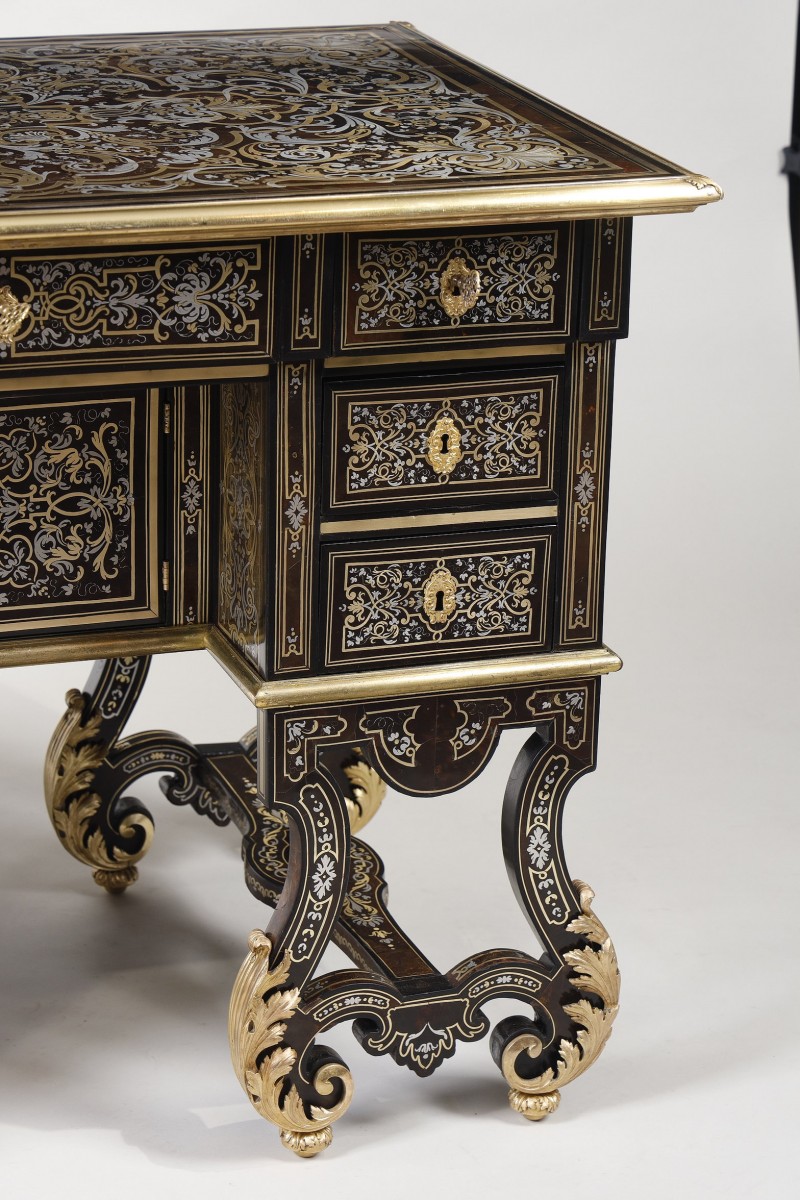
The front has the seven drawers characteristic of the Mazarin typology, three on each side and one central drawer, framing a recessed compartment that opens with a side door.
This recess, also inlaid on all sides, is a sign of high-quality workmanship, as is the door, which is inlaid on both sides.
This section, encircled by a brass band, rests on a very distinctive and rare base.
It is indeed characteristic of a very limited production of furniture by great masters such as André Charles Boulle and Alexandre-Jean Oppenordt.
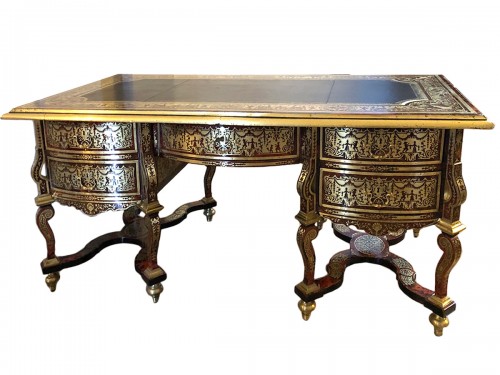
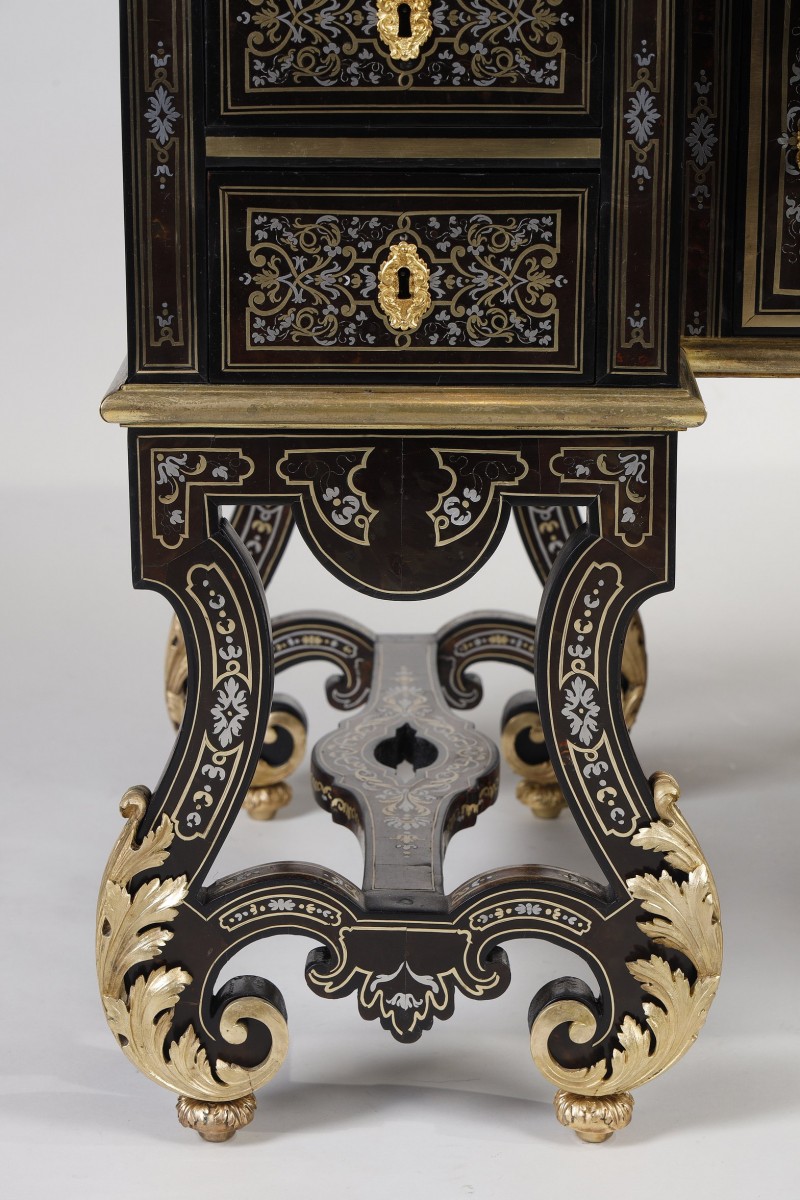
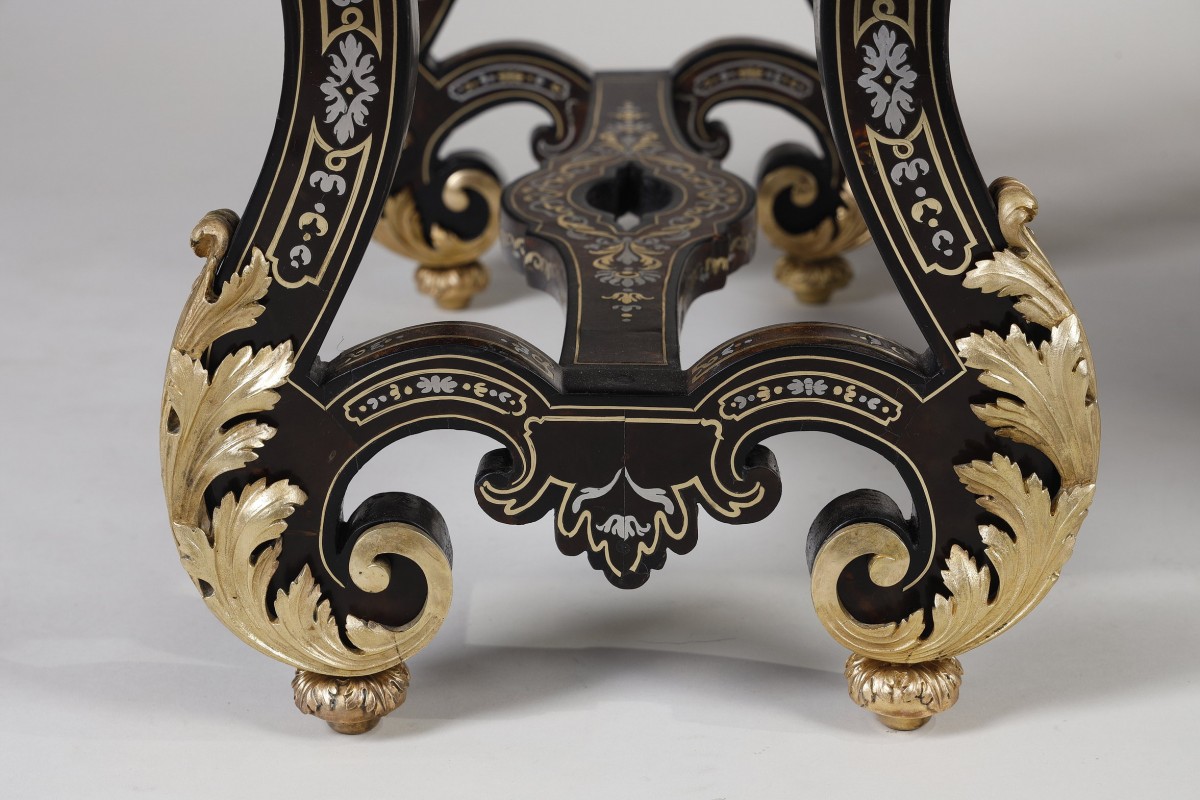
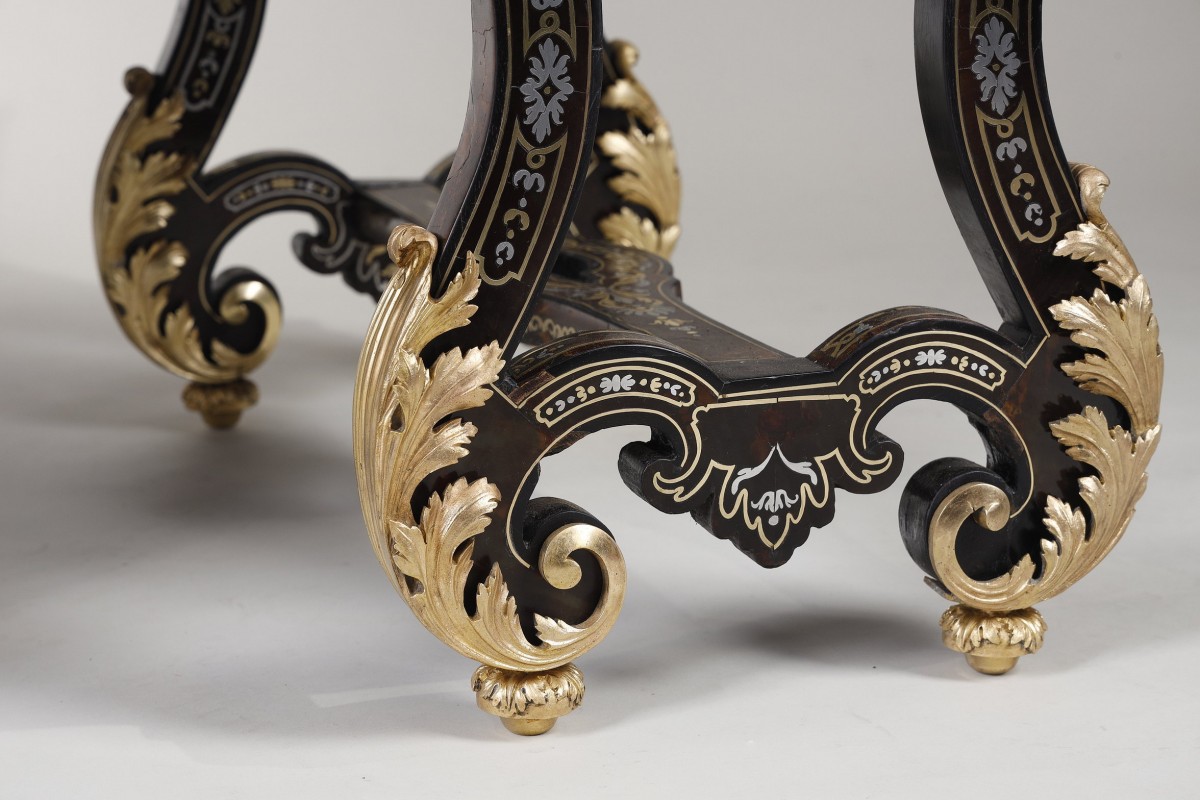
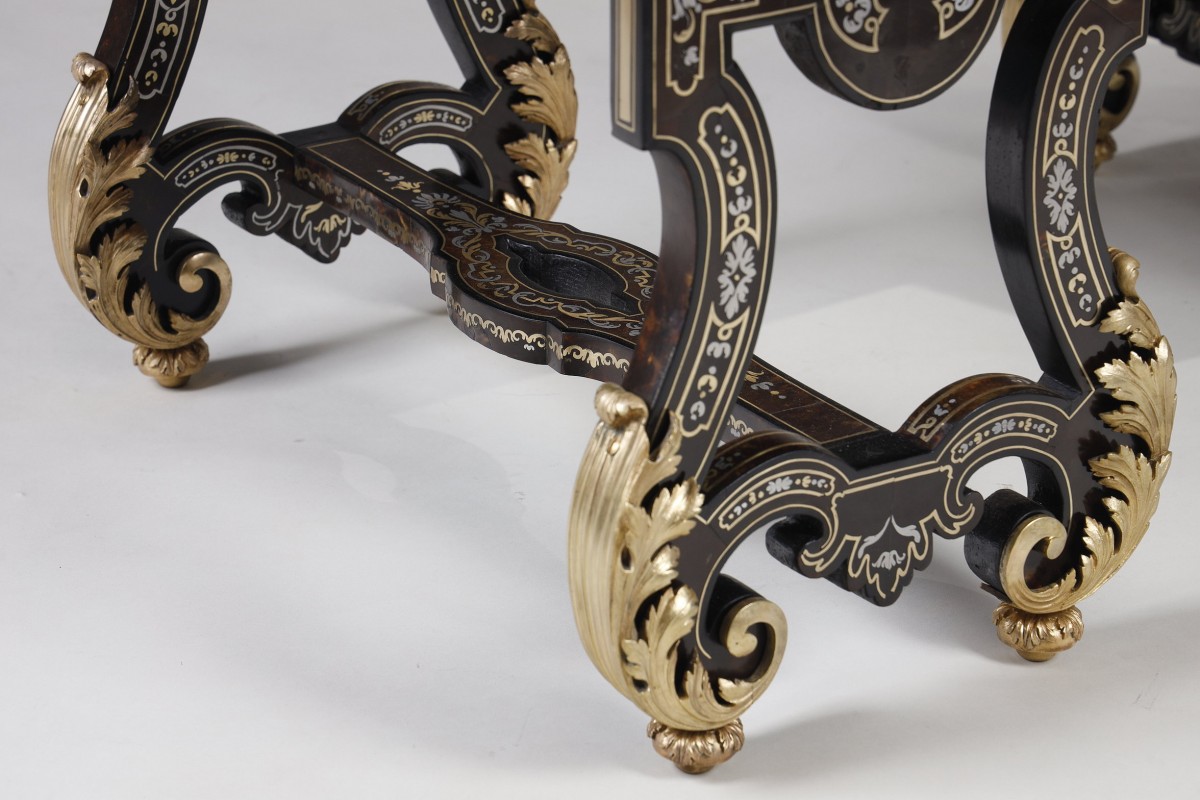
The base is divided into two symmetrical sections, totaling eight legs, characteristic of the Mazarin desk. Four legs on the right are joined by a serpentine, openwork stretcher, and four similar legs on the left.
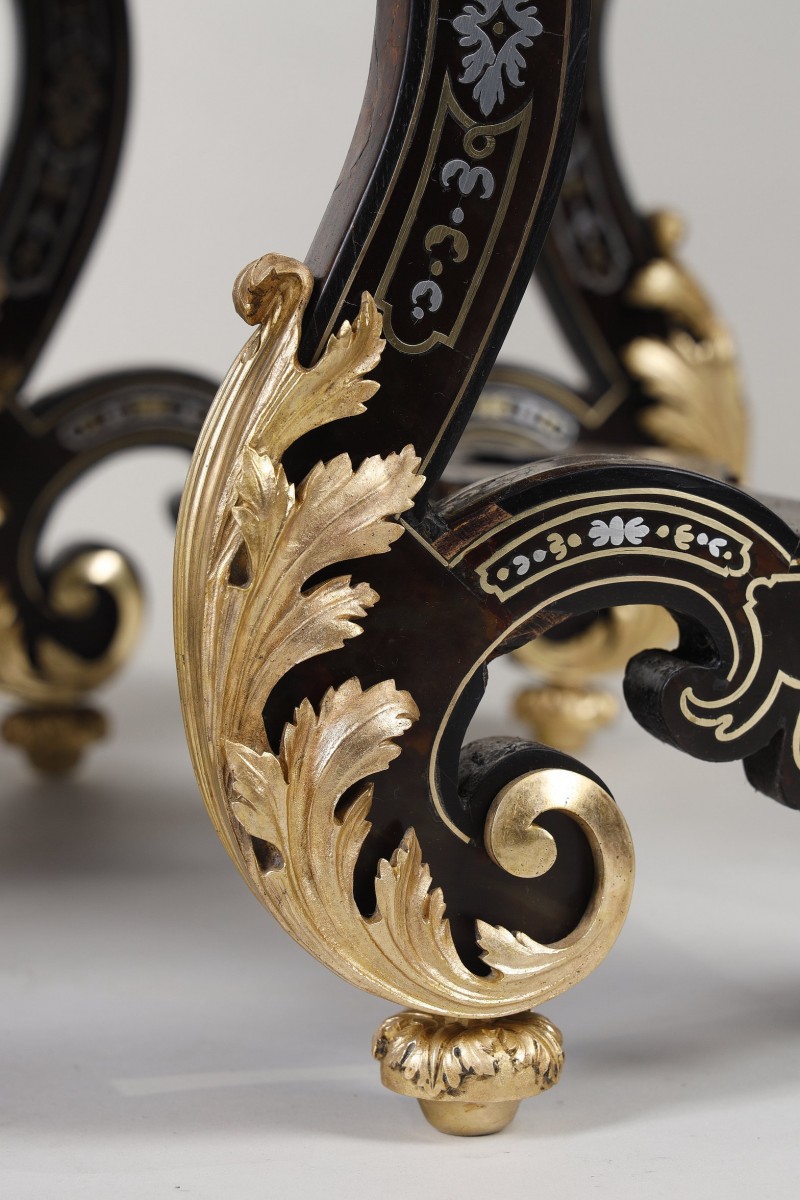
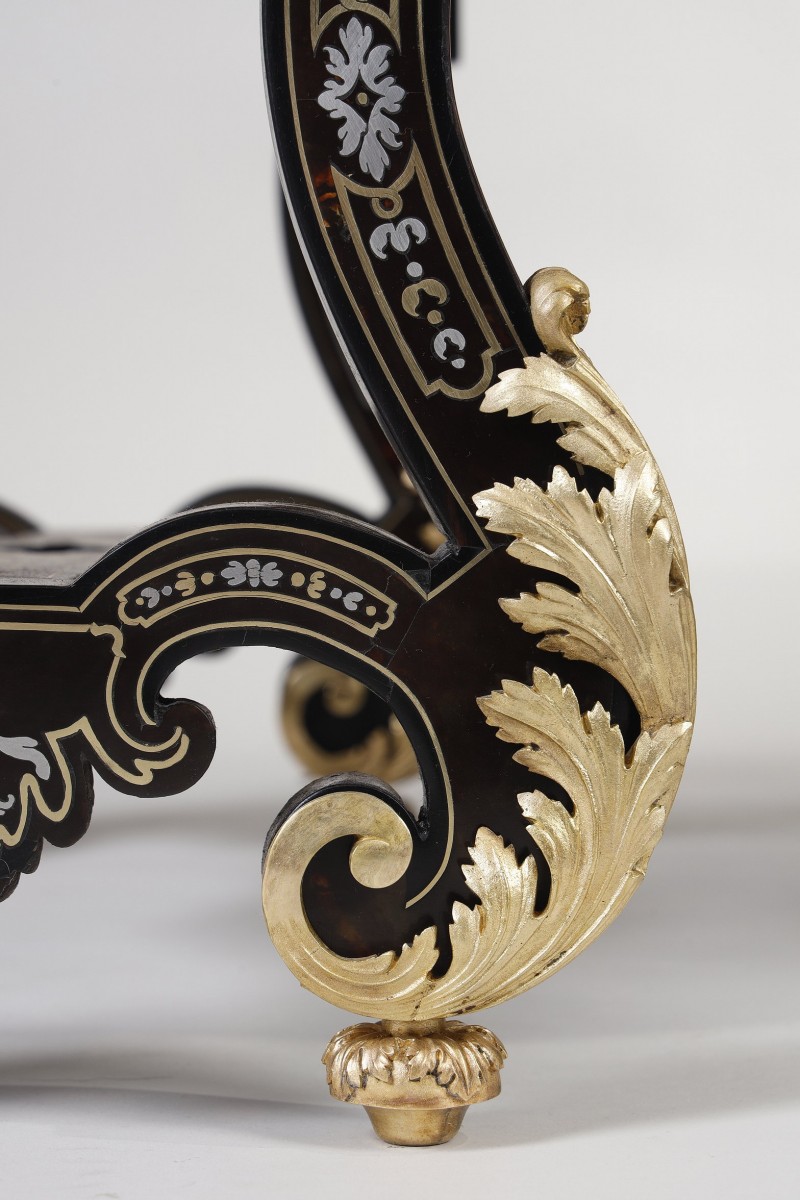
The unique features of this base are expressed by a very particular shape: cabriole legs in opposing brackets, a design found on only a very few pieces of truly valuable furniture.
One such example, a desk quite similar to ours but with a somewhat less refined finish, is attributed to Alexandre-Jean Oppenordt and belongs to the Wallace collection.
A second example, with a somewhat similar base, is nevertheless joined by a full stretcher and has an uninlaid drawer front; it comes from the Steinitz collection. This is a cabinet desk attributed to André Charles Boulle, presented at the 2010 Biennale.
A final piece of furniture, referenced in “André Charle Boulle”, Hayot Edition, Château de Chantilly p 101, and which was sold by Sotheby's in Paris in April 2008 for 300,250 euros, features a facing console base, like ours.
Apart from these three examples, attributed respectively to André Charles Boulle or Oppenordt, all other pieces have much more classical bases.
Our piece thus stands out among the very best production of 17th-18th century French furniture.
The top, encircled by a molding, features a rich decoration of interlacing brass and pewter against a brown tortoiseshell background. This perfectly symmetrical and fluid decoration also testifies to a very high-quality production.
The gilt bronze mounts complete the elegant distinction of this piece. Finely chiseled keyhole escutcheons and gilt bronze feet with scrolling acanthus leaf decoration extend up the base and are supported by toupie feet in acanthus leaf, one of the unique elements of this piece.
This dynamic and architectural, almost sculptural structure distinguishes it from the more traditional, generally more restrained models.
It directly evokes several pieces of furniture attributed to or documented within Oppenordt's circle, whose bases often display a very pronounced, almost theatrical, Baroque style.
A very high-quality French work from the early 18th century attributed to Alexandre Jean Oppenordt (one of the greatest known cabinetmakers).