Offered by Acropole Antiquités


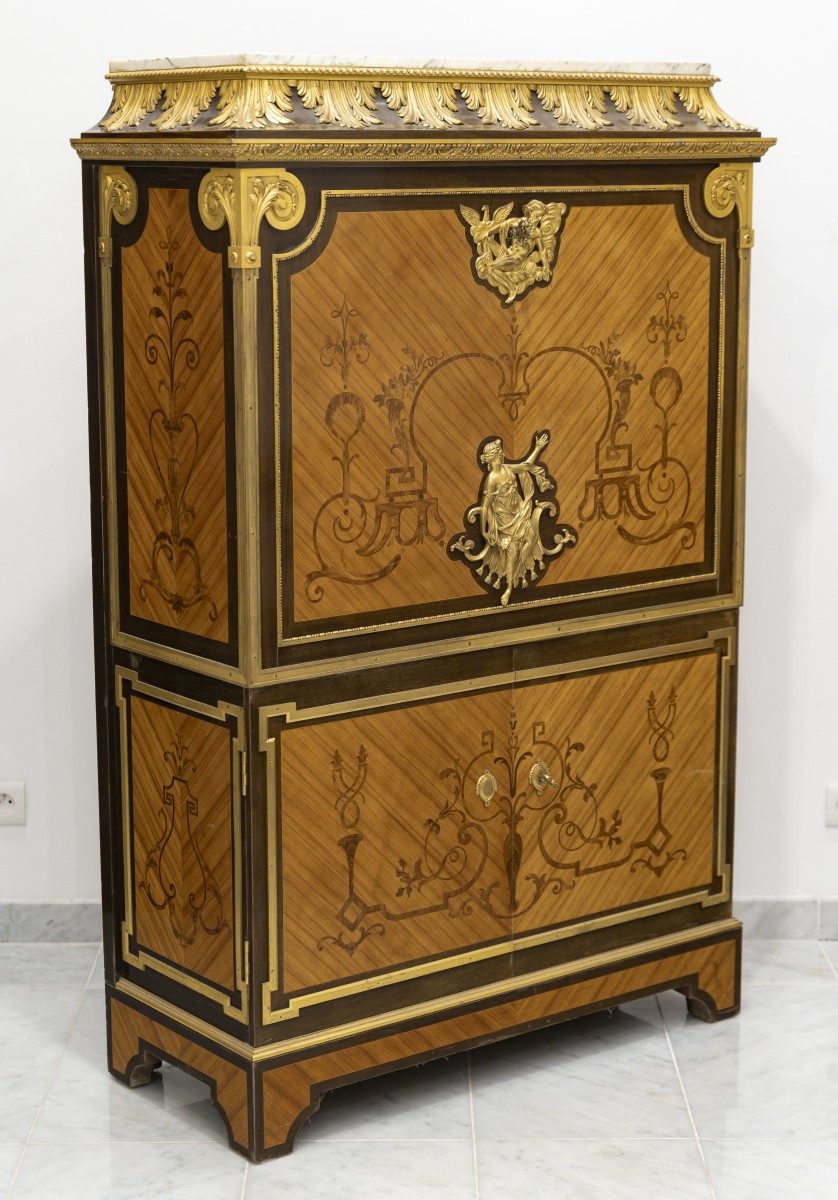
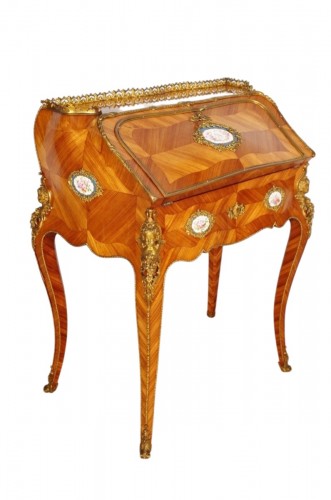
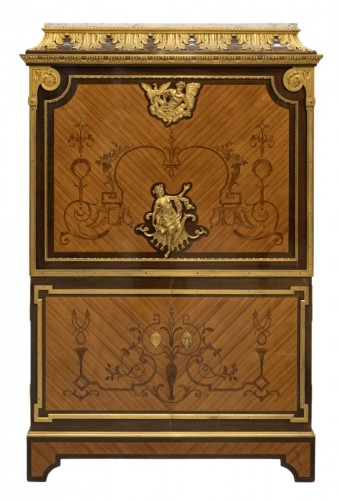
Drop-front secretaire signed Paul Sormani, crafted in refined marquetry combining rosewood, kingwood, sycamore, and satinwood. The piece features a Louis XVI style decoration, with chevron panels and motifs of rinceaux and palmettes executed with great precision.
Our secretaire is not merely functional or decorative. It conveys a message of wealth, elegance, and prestige. On the upper part of the piece, Jupiter, accompanied by his majestic eagle, pours gold coins into the hands of a woman at the center of the panel. With her hand open to receive them, she embodies Fortune, a symbol of prosperity and abundance. Every detail, from the finely chased bronze to the delicate marquetry, highlights the exceptional craftsmanship of the cabinetmaker, transforming this secretaire into a true sculpted and marquetry narrative where art and symbolism meet.
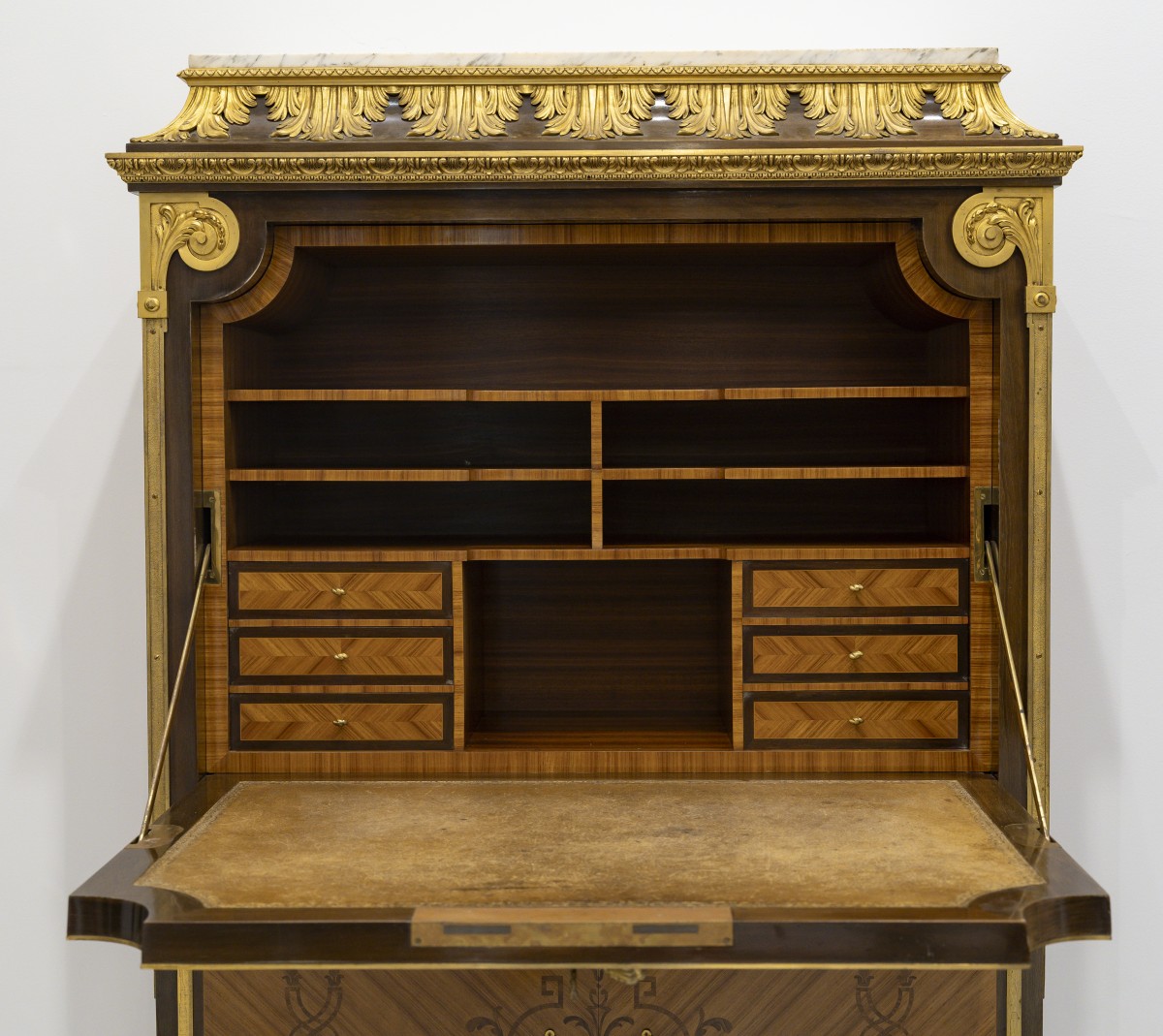
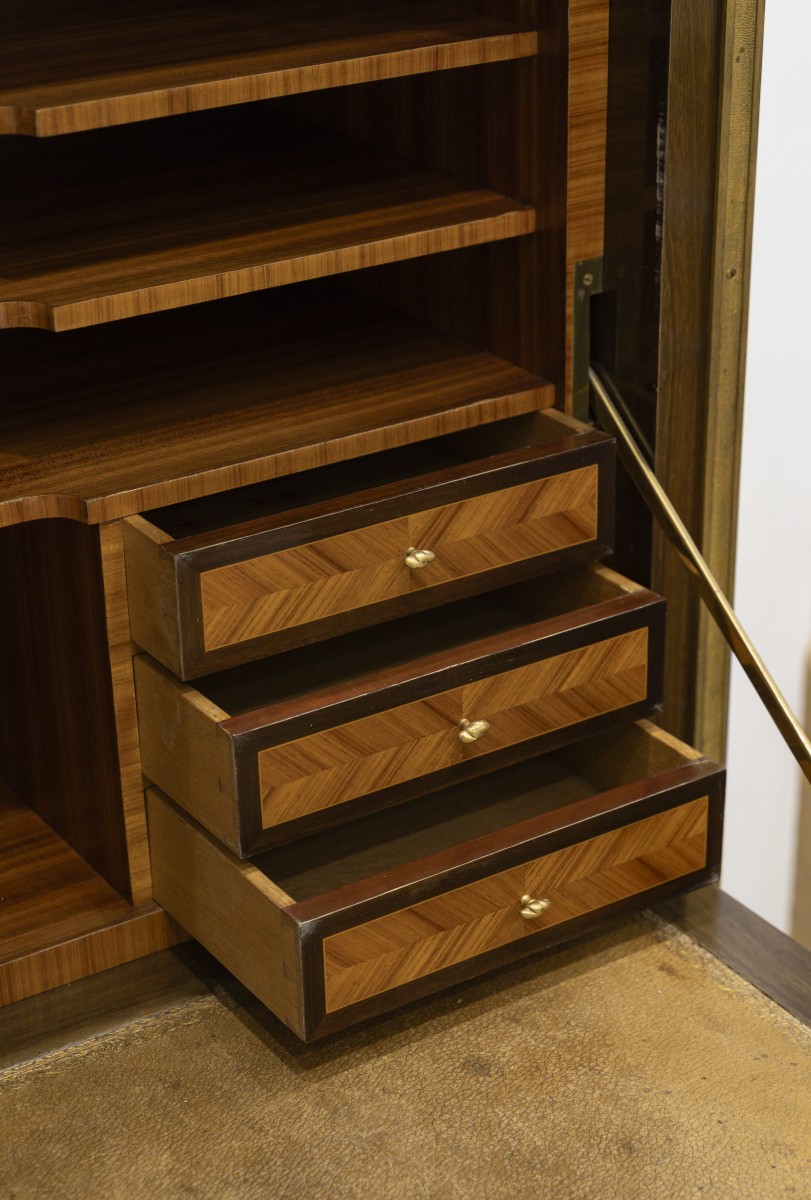
The interior of the secretaire reveals an arrangement of great elegance, entirely veneered in precious woods. The upper section offers generous storage with several horizontal and vertical compartments, perfect for organizing correspondence and small objects. On each side, three drawers with chevron-marquetry fronts add a decorative touch while providing practical space for writing accessories. The open writing surface offers a large, stable, and comfortable area.
The lower section, hidden behind two marquetry doors, provides ample storage with an interior shelf, ideal for files, books, or larger objects. The overall finish is meticulous and reflects the quality of cabinetmaking typical of the finest Parisian productions of the 19th century.
Paul Sormani Biography (1817–1877)
Paul Sormani was a cabinetmaker and maker of artistic furniture, born in 1817 in Canzo, Lombardy, then under Austrian rule. He moved to Paris at a young age, where he trained in cabinetmaking and marquetry techniques. By the 1840s, he opened his own workshop and quickly specialized in luxury furniture inspired by the 18th century, revisiting Louis XV and Louis XVI styles while ensuring meticulous execution and precise finishing, often in precious wood marquetry and finely chased bronzes.
His talent was recognized at the 1855 Exposition Universelle, where he received a medal. During the Second Empire, he became one of the favorite cabinetmakers of Parisian high society and the imperial court. His furniture was commissioned for official palaces, notably the Tuileries and Compiègne. The Sormani workshop quickly earned a solid reputation for quality and prestige.
During the 1860s–1870s, his workshop on Rue Charlot employed numerous specialized craftsmen. Sormani signed his works with the stamp Paul SORMANI.
Today, Paul Sormani’s furniture is highly sought after for the quality of its execution, the finesse of its marquetry, and the richness of its bronzes, reflecting the high level of Parisian cabinetmaking during the Second Empire.
Delevery information :
Our pieces are sold with a certificate of authenticity.
We work with specialized art transport companies to arrange deliveries worldwide. Quotes are available on request. Please note that the responsibility for transport during transit rests exclusively with the carrier.