Offered by Jan Muller
REQUEST INFORMATION

Attributed to AE VAN RABEL
active c. 1653
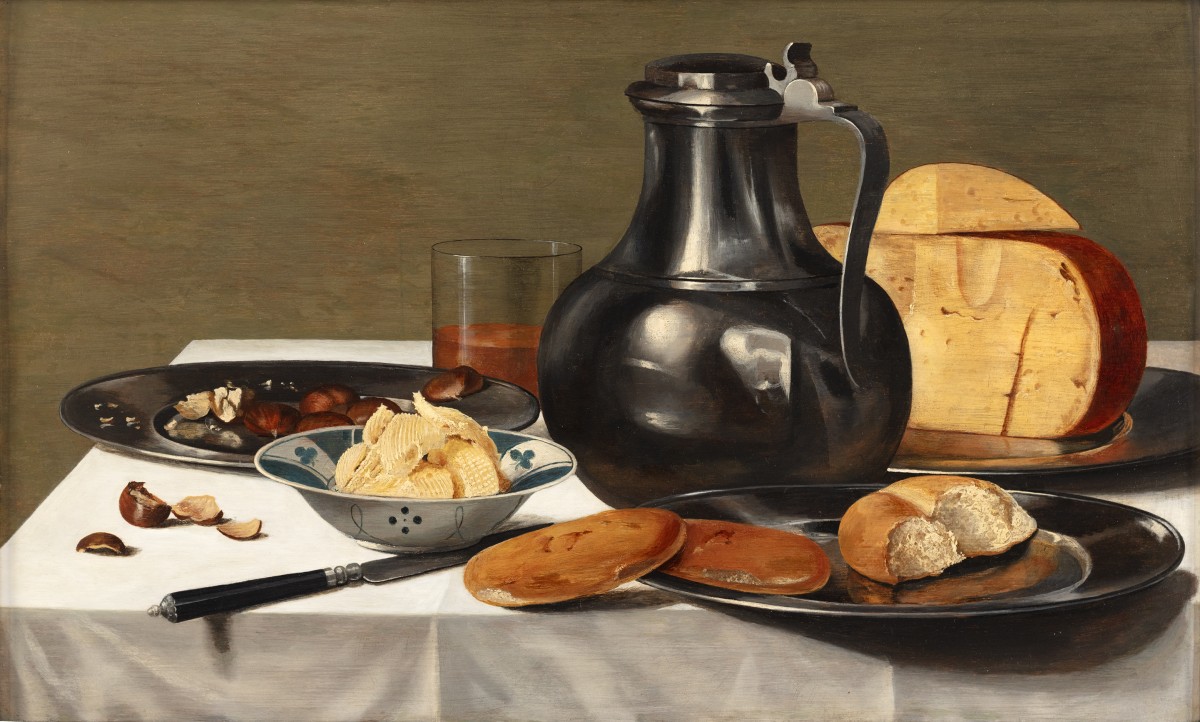
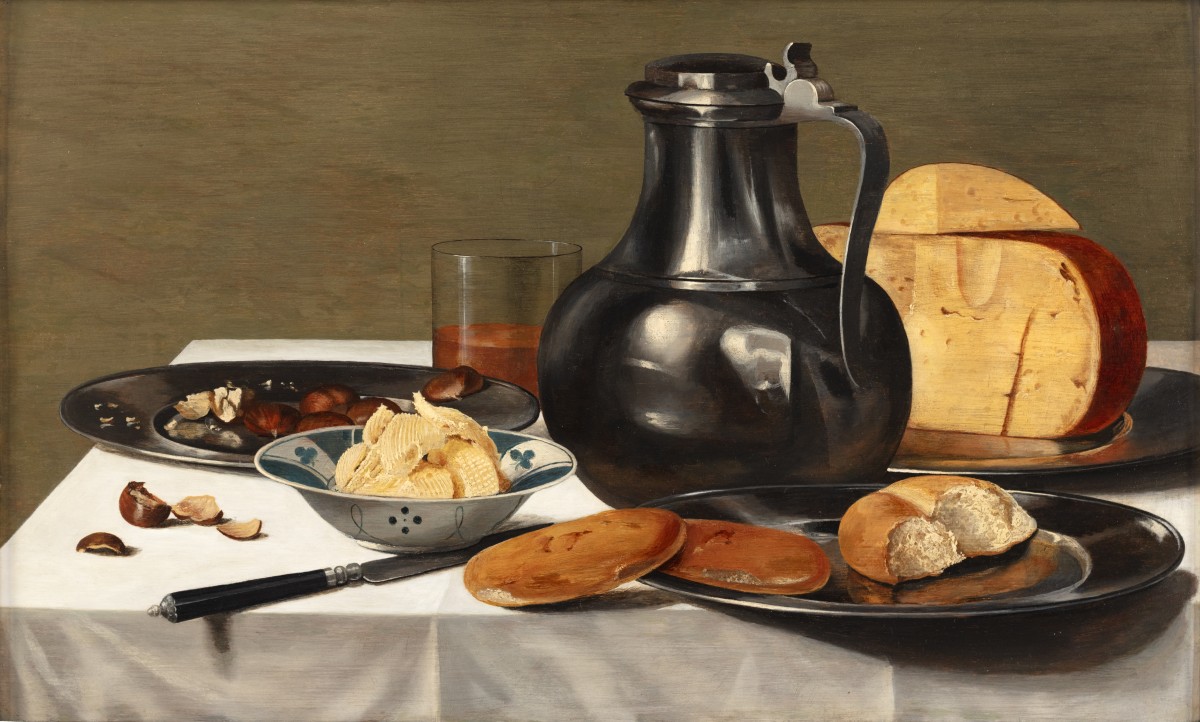
“Still life with cheeses, bread and chestnuts”
Oil on panel
Dimensions: 36 x 59 cm, 51 x 75 cm (framed)
THE ARTIST
In seventeenth-century Holland, still life painting flourished as a reflection of both material prosperity and moral reflection. Among the leading painters of this genre were Willem Claesz. Heda, Pieter Claesz, and Jan Davidsz. de Heem, masters of the ontbijtjes (breakfast pieces) and banquet scenes that celebrated abundance through meticulous realism. While Willem Claesz. Heda painted the food, beverages, tableware and luxury items belonging to wealthy citizens, Van Rabel turned his attention to the provisions and objects that were prevalent in much wider circles.
Ae van Rabel was a Dutch painter who was active in the mid-seventeenth century, a period in which still life painting flourished in the Low Countries. Very little is known about his life: his dates of birth and death have not been recorded, and there is no certainty about his training or workshop. Nevertheless, one surviving painting has made his name appear in art history: Still Life with Fish, Bread, and Onions, signed and dated 1653. Today, this work is part of the collection of the Museum of Fine Arts in Ghent.
The style and themes place him within the Northern Dutch Baroque tradition of the seventeenth century, in which realism, refined texture, and the play of light were central. Yet he distinguishes himself through his choice of modest subjects and a subdued atmosphere. This gives his work a certain intimacy that contrasts with the ostentation of many other still lifes from the same period.
Nothing is known for certain about Van Rabel's other works. No other works have been convincingly attributed to him so far, and there is no information about pupils, commissions, or places of residence. He may have been a local master who produced only a limited number of paintings, or an artist whose work has largely been lost. It is precisely this scarcity that makes Ae van Rabel interesting.
He was a modest but skilled painter who knew how to elevate the everyday to a moment of quiet beauty. That one preserved work is proof that artists beyond the well-known names also made a valuable contribution to the rich tradition of Dutch still life painting in the Golden Age.
THE ARTWORK
On a wooden table we see a pewter pitcher and bowl, the latter containing filleted herring, beer in glass cup with a waffle motif, sliced rye bread, a bunch of onions and a broken-open ball of ripe cheese topped with a blue earthenware dish containing butter, a clove of garlic and a knife. The light falls, as is customary, from the left, and creates interesting effects on the glass, pewter and the onions. The neutral background and the soft interplay of light emphasize the tactile realism of the food and vessels. A knife on the table hints at the imminent act of eating, inviting the viewer into the scene.
In the seventeenth century, Dutch still lifes of food often served a dual purpose: they celebrated prosperity and abundance while simultaneously reminding viewers of the transience of life and pleasure, a theme aligned with the moral teachings of Calvinism.
Cheese, a central motif here, held layered meanings. Though not a luxury product, it was a symbol of national pride and economic success, with Dutch cheeses like Gouda, Edam, and Texel serving as emblems of trade and identity. When stacked or combined with butter, however, they could also signify excess and indulgence, echoing the Dutch proverb “Dairy upon dairy brings the devil.” As art historian Josua Bruyn observed, cheese also carried more somber associations, with decay, disease, and death, and thus added moral tension to scenes of apparent abundance.
Chestnuts, a seasonal motif harvested in autumn, underscore the temporality of nature’s bounty. They frequently appeared in still lifes as symbols of seasonal cycles and in some cases, as tokens of wealth and international trade when paired with exotic objects like Venetian glass or Chinese porcelain.
Bread, a ubiquitous element in Dutch painting, symbolized both daily sustenance and social hierarchy. White wheat bread indicated affluence, while darker rye loaves were linked to the common diet.
Together, these elements create a composition that is both harmonious and morally charged. The objects appear tangible and inviting, yet their symbolic associations remind viewers that earthly pleasures are fleeting.
Delevery information :
After reception of payment we can box and ship our items all over the world. Estimates of this service can be provided.