Offered by Antichità Castelbarco


Godfrey Kneller (Lübeck 1646 – London 1723)
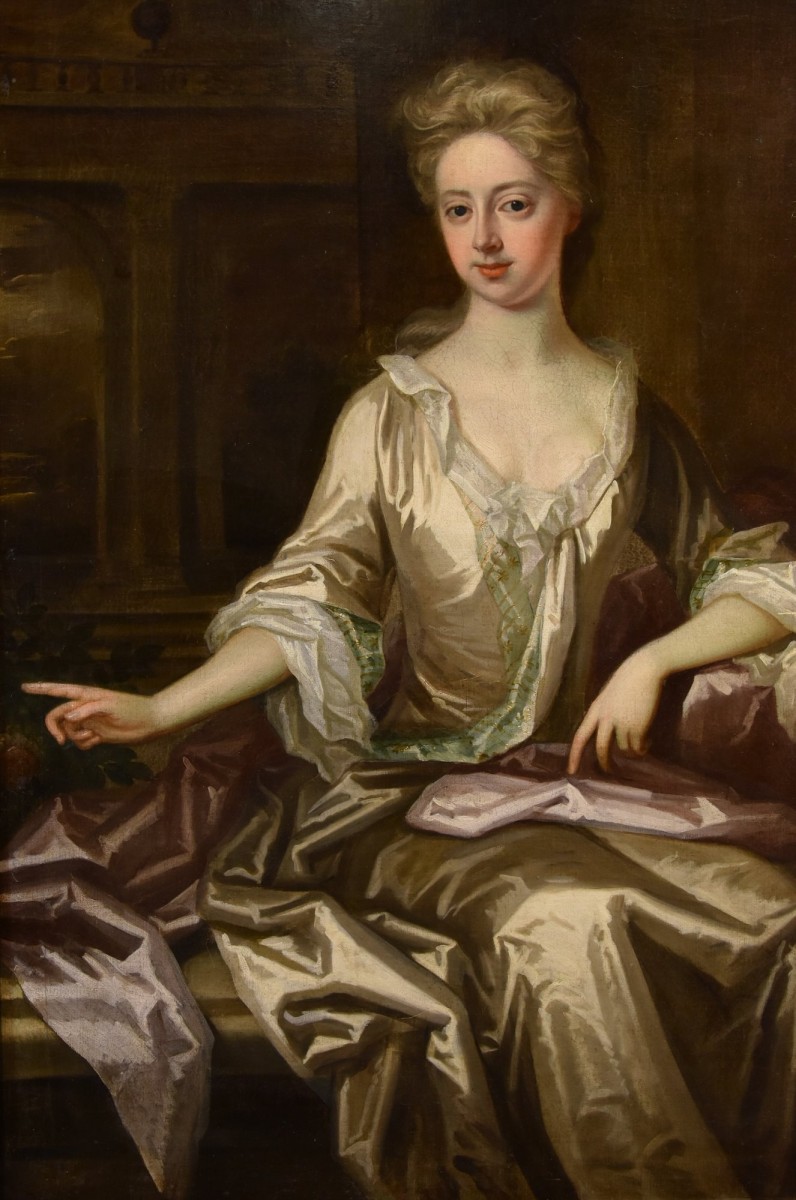
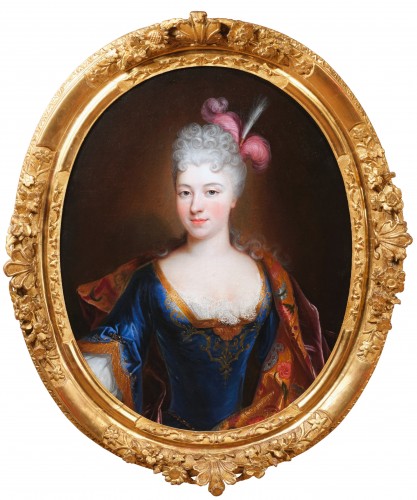
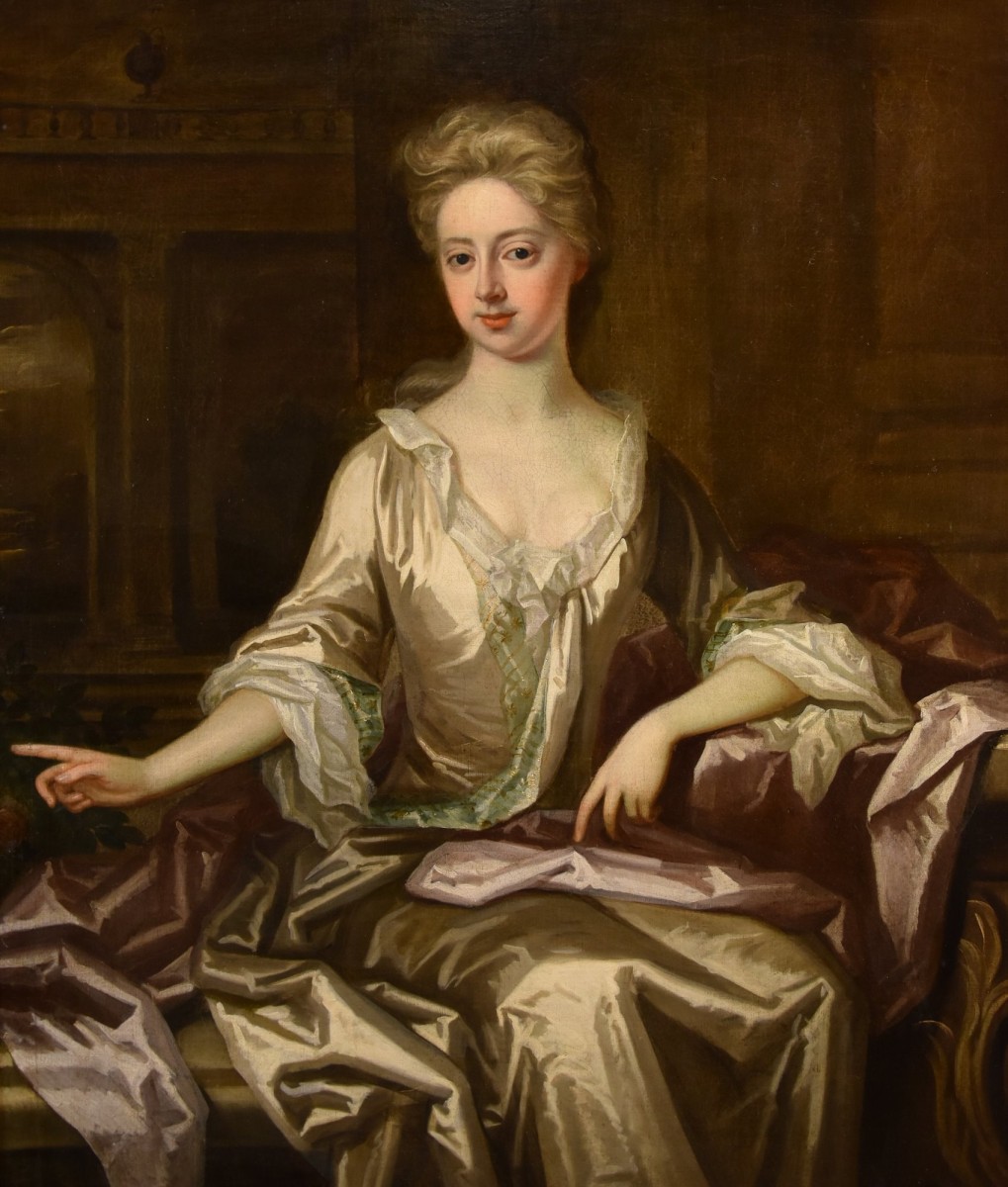
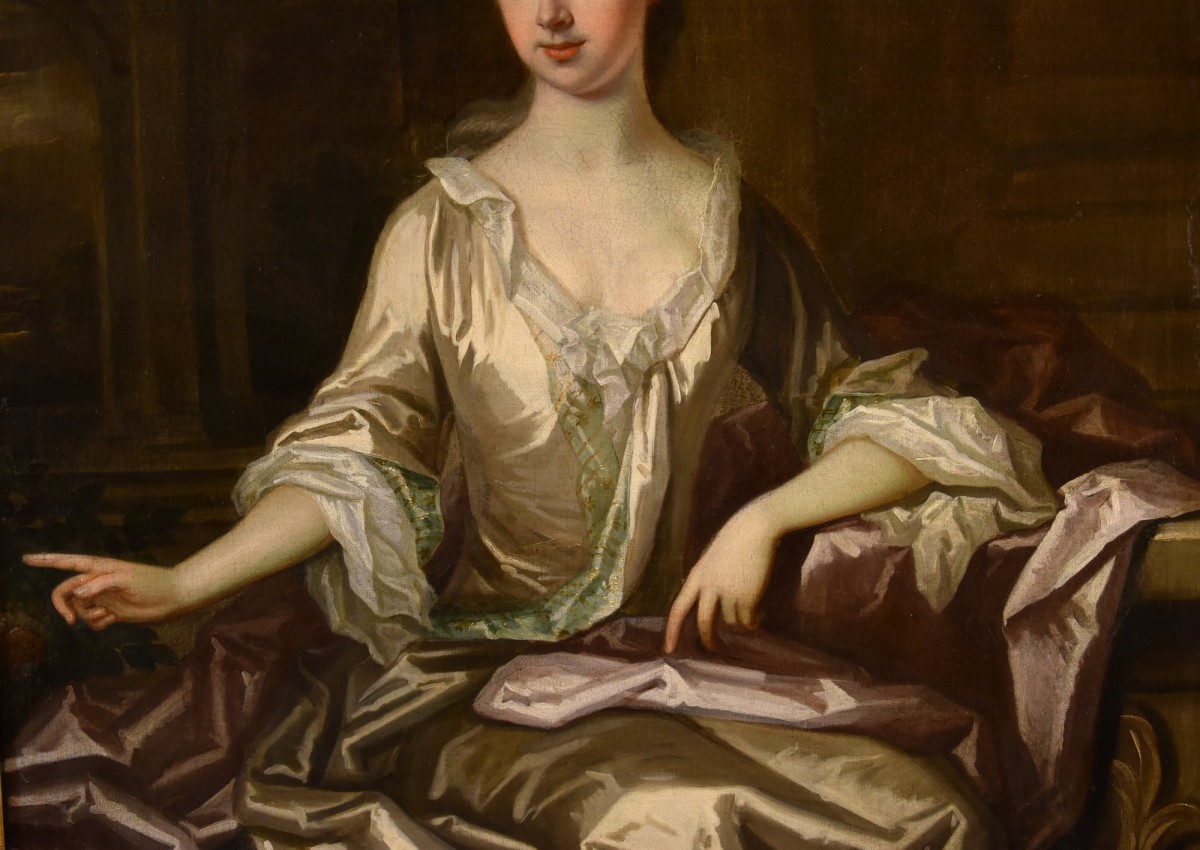
Portrait of an English noblewoman, presumably Mary Capel, Countess of Essex (1679–1726)
Oil on canvas
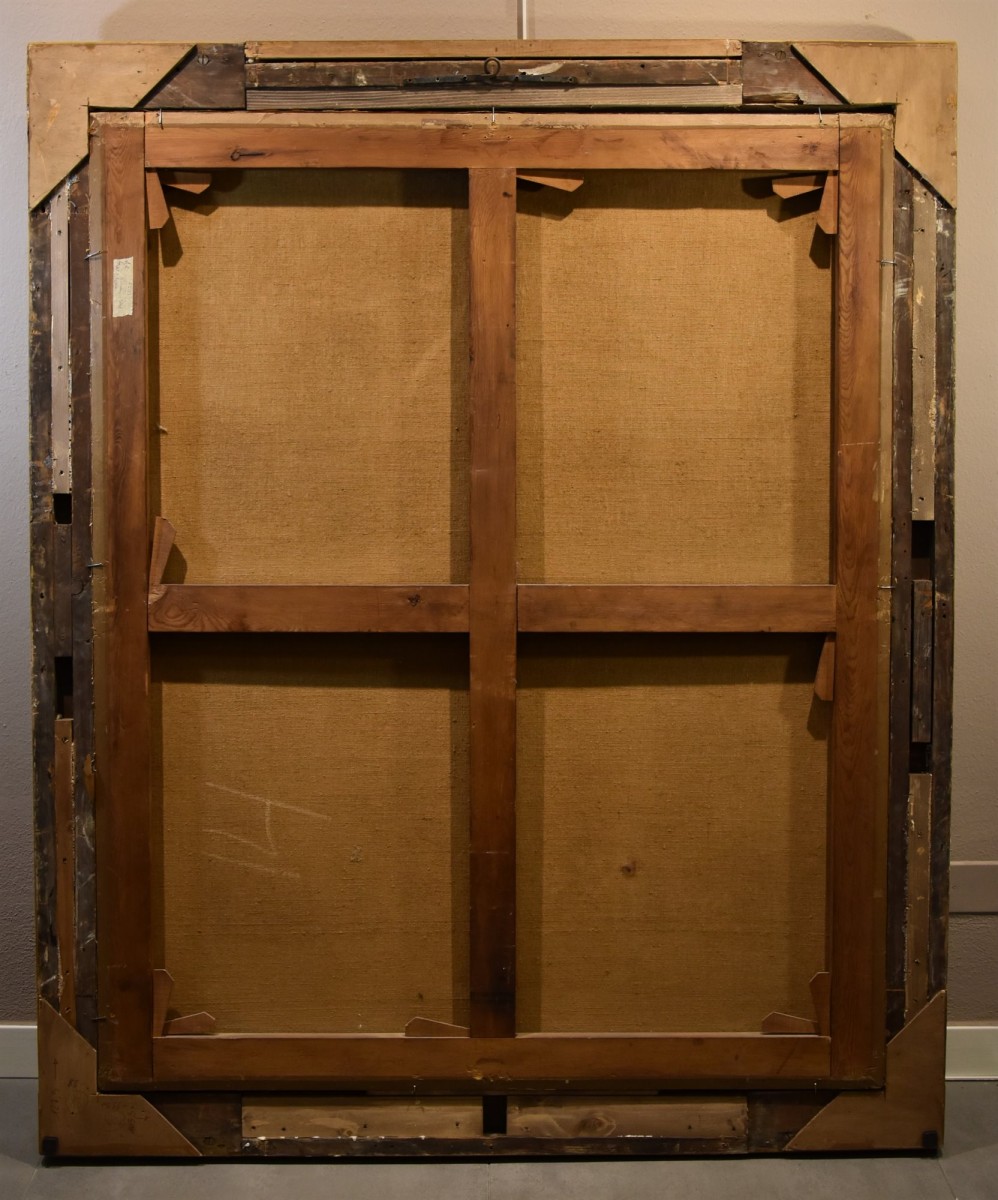
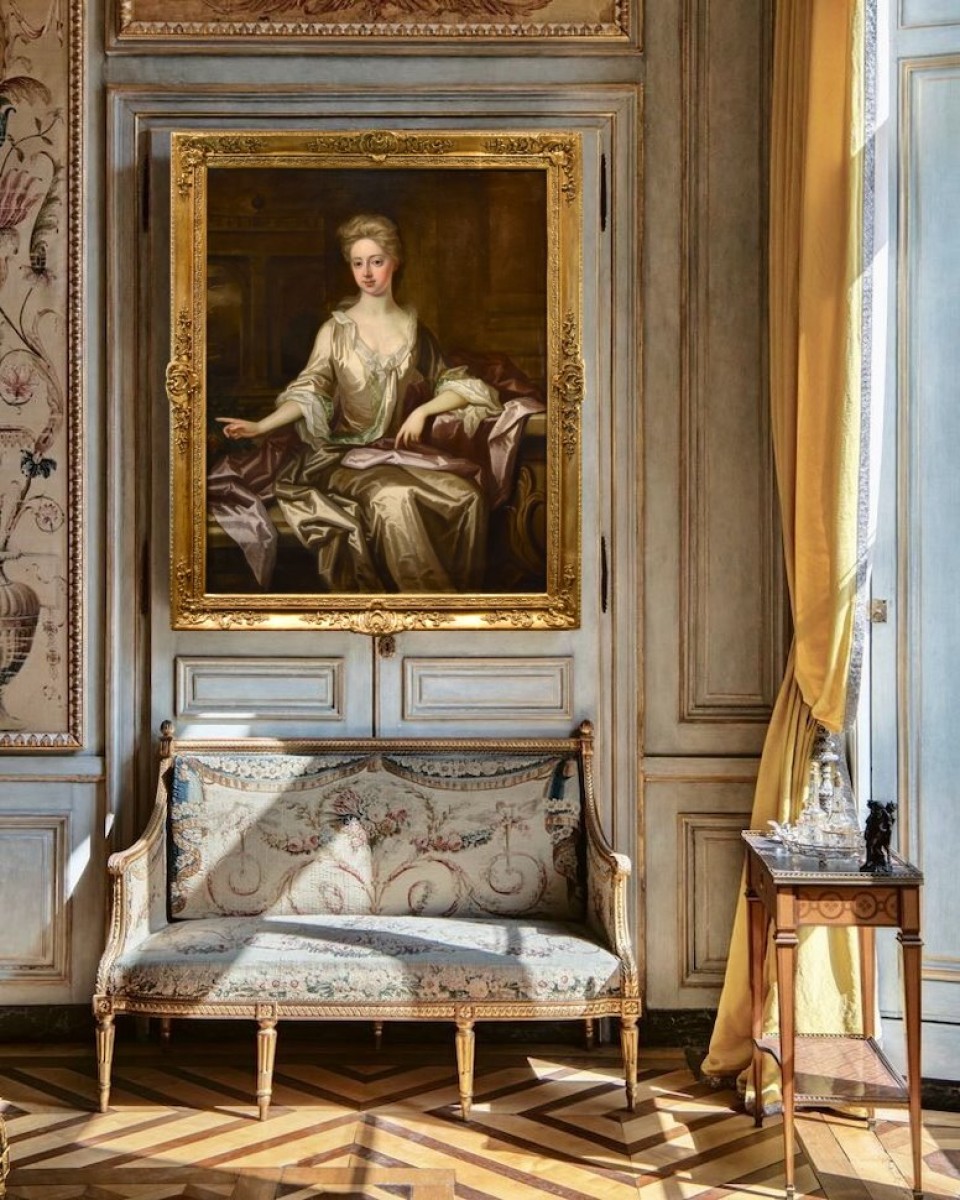
128 x 104 cm. In frame 146 x 121 cm.
Work published in the RDK archive (Netherlands Institute for Art History) item code 2240998, attributed to Godfrey Kneller
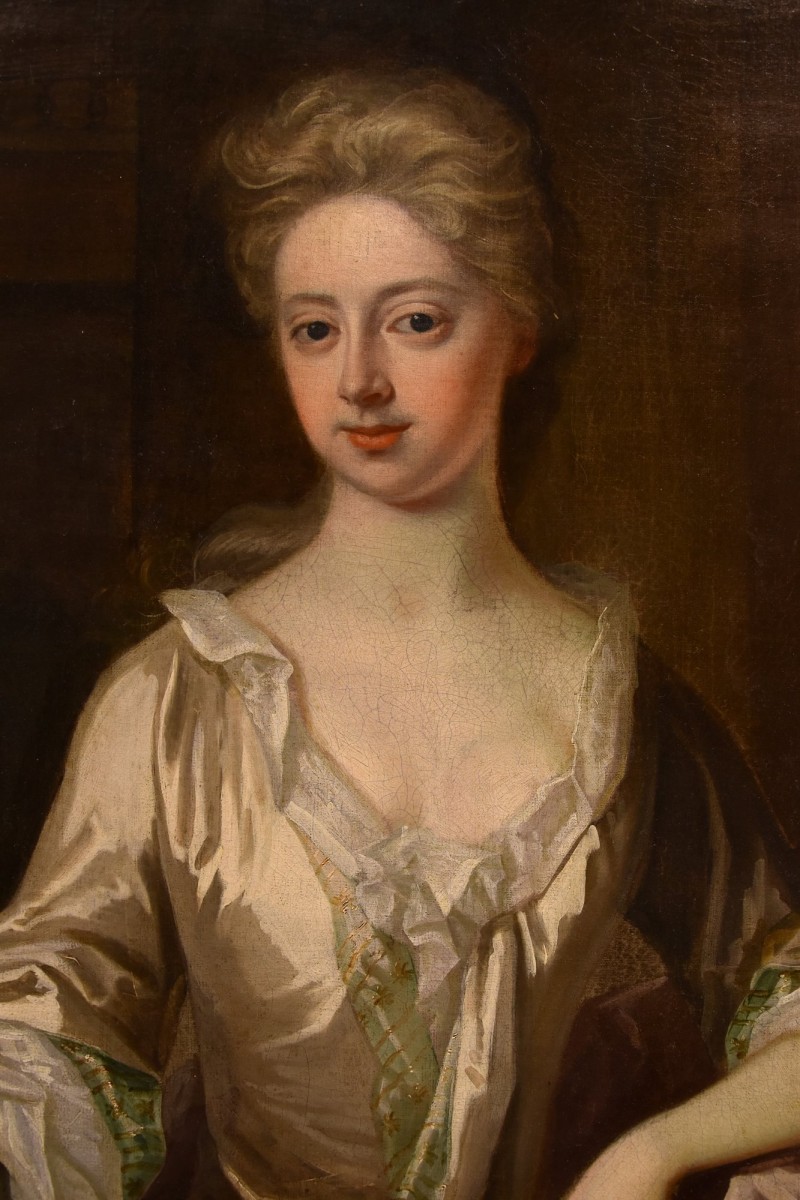
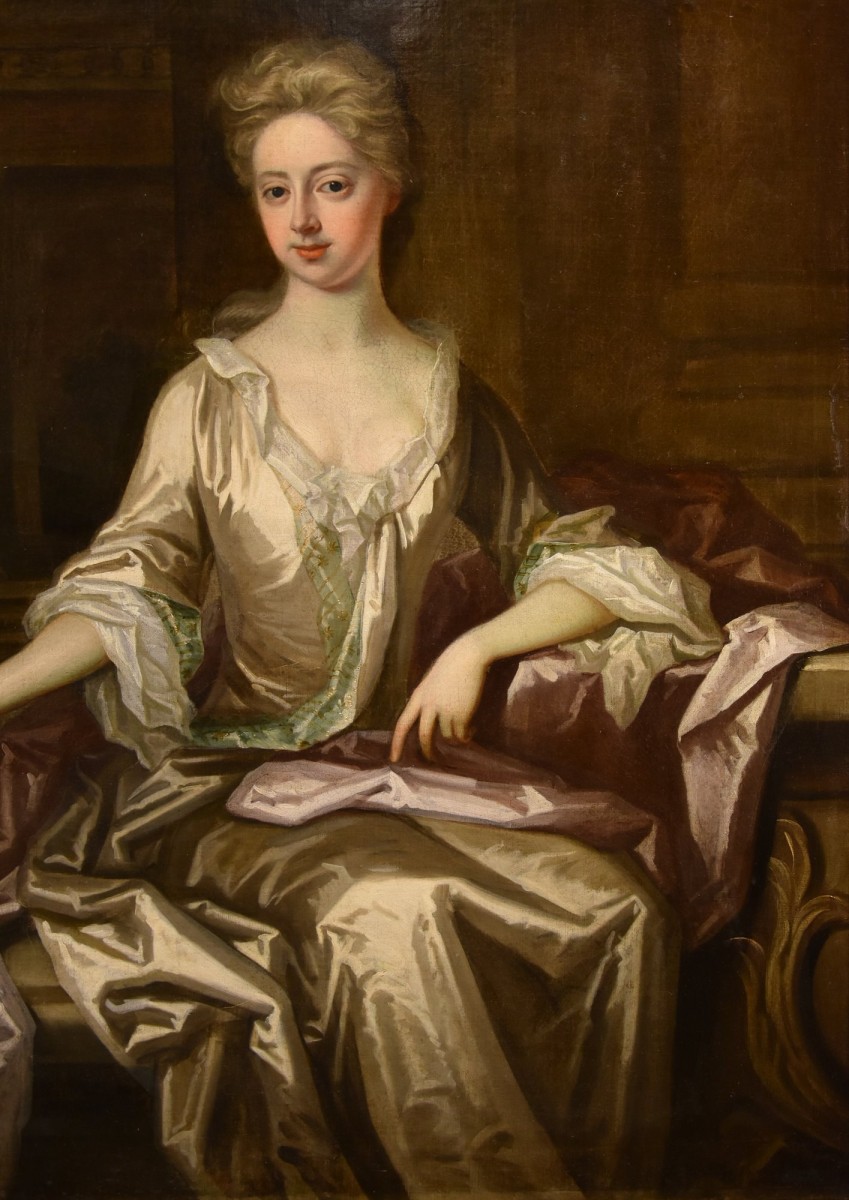
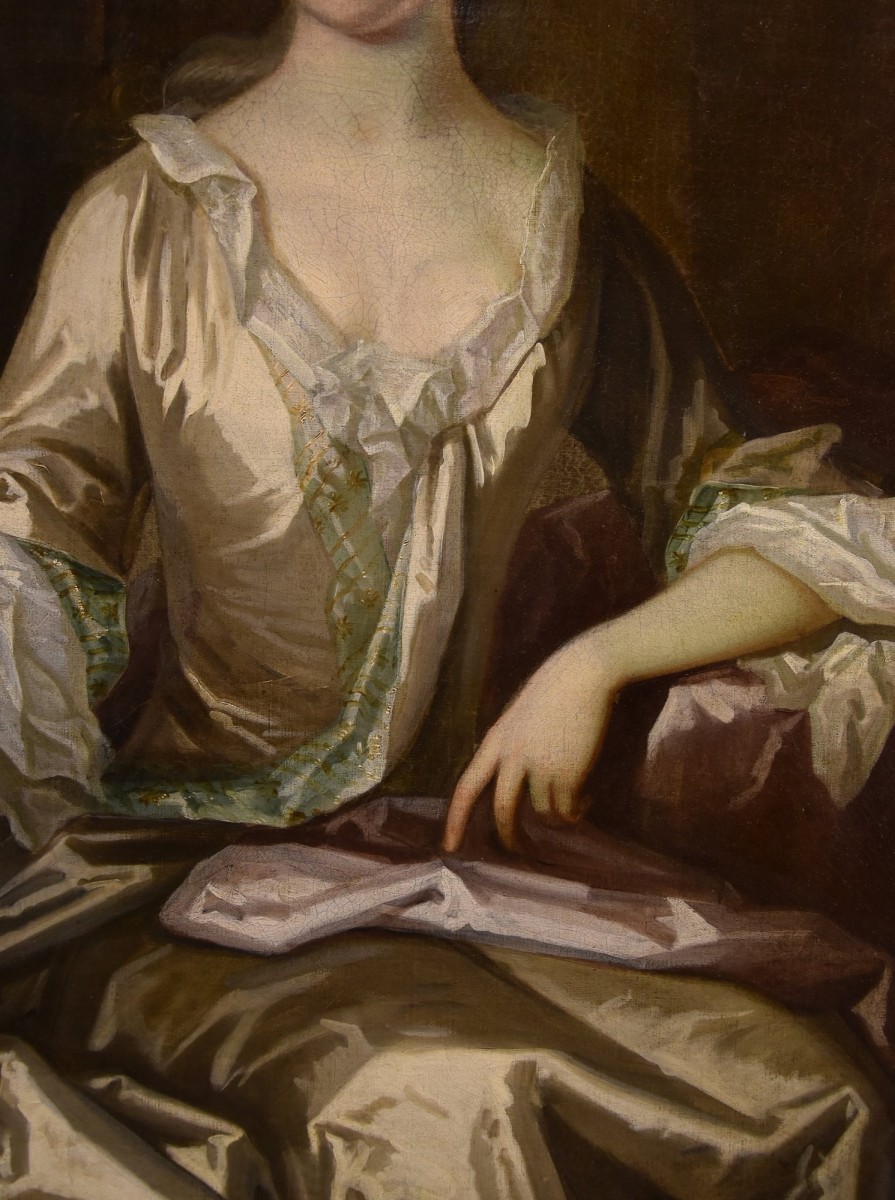
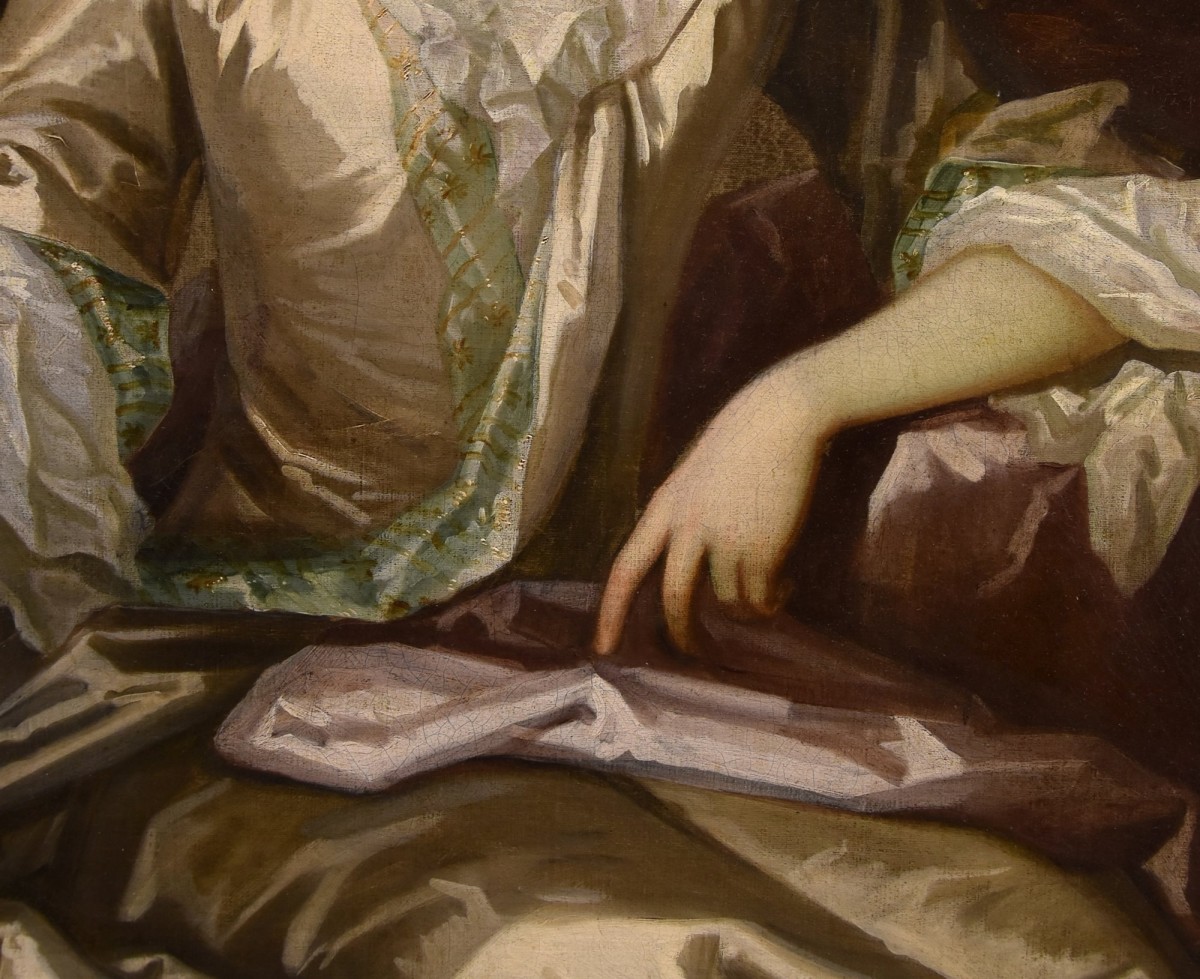
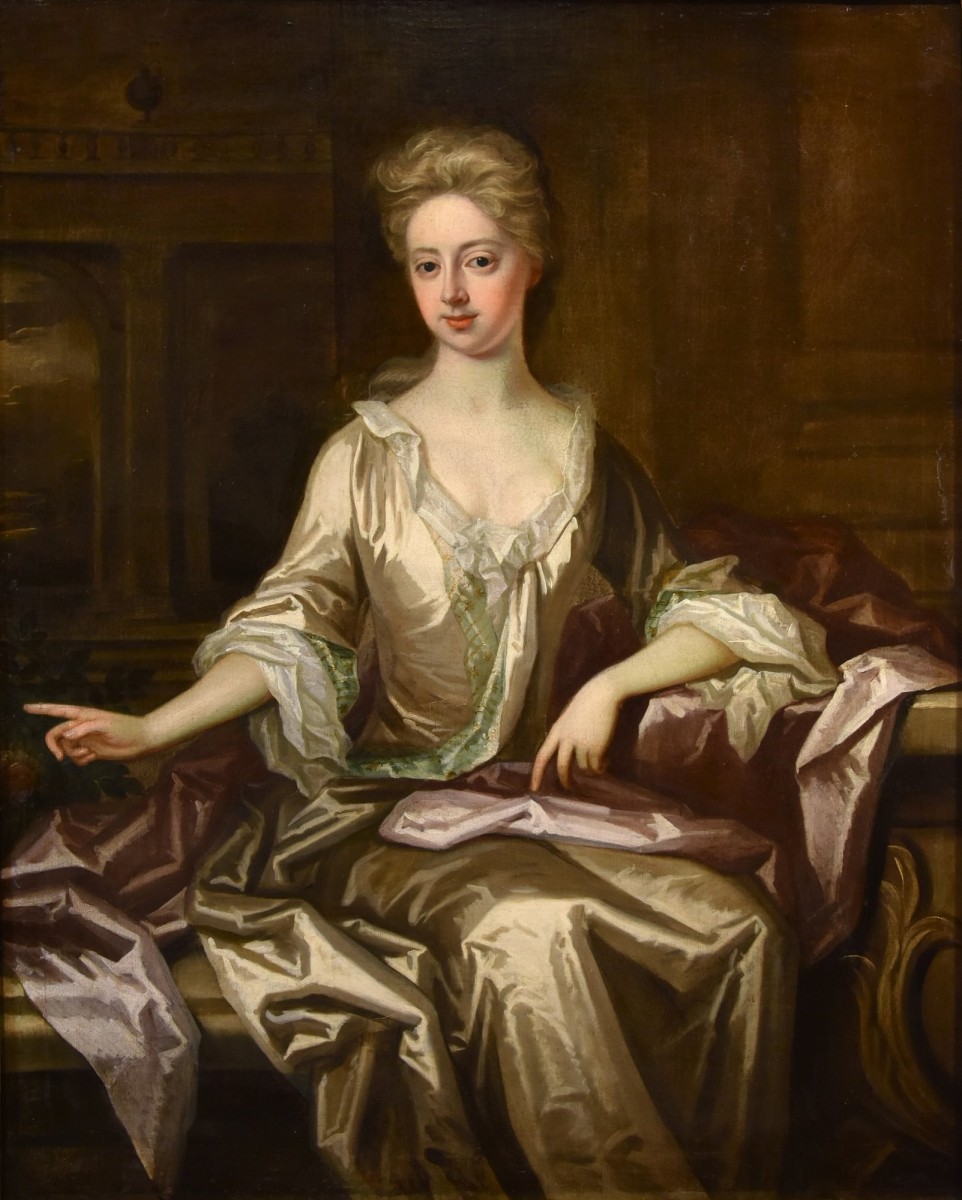
This magnificent portrait, exquisitely crafted and in excellent condition, depicts an elegant aristocratic woman wearing an iridescent ivory silk dress and wrapped in an elegantly draped mauve cloak that encircles her figure and invades the surrounding space, giving depth and opulence to the composition.
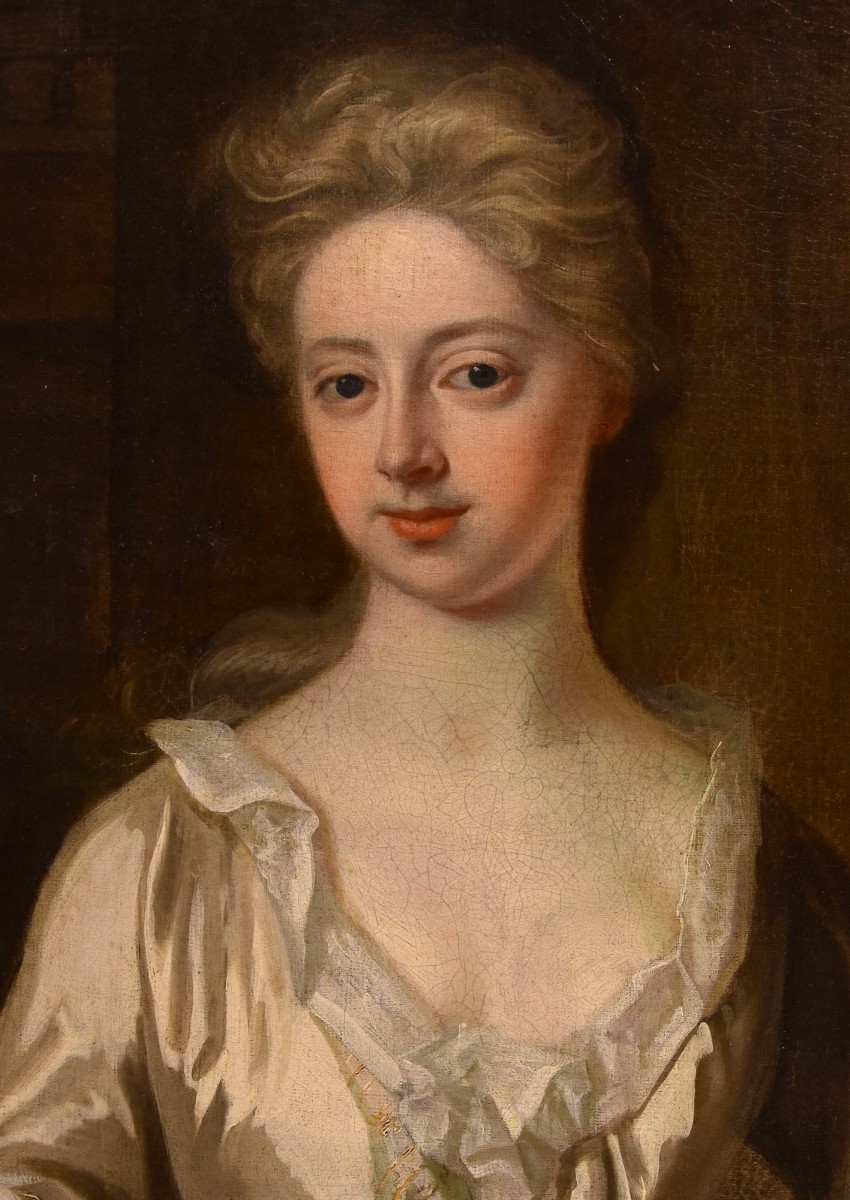
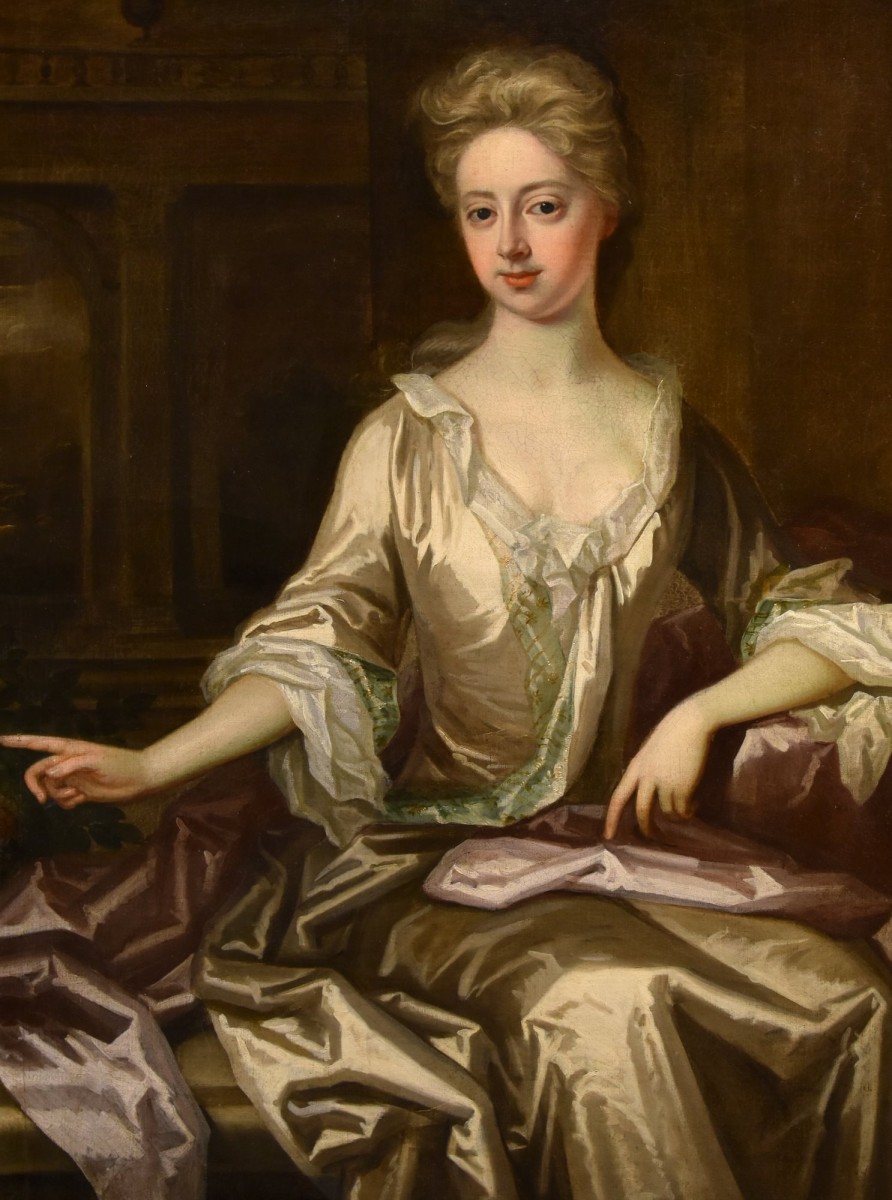
With her hair gathered in a soft hairstyle and a direct, serene gaze directed at the observer, the portrait captures all the aristocratic grace and sense of confidence of the sitter.
This is undoubtedly a valuable work, attributed to Sir Godfrey Kneller (Lübeck 1646 – London 1723) and published with this reference in the RKD archive catalogue: it is believed to be a portrait of Mary Capel, Countess of Essex, daughter of William Bentinck, 1st Earl of Portland, an English nobleman of Dutch origin who soon became the favourite of William, Prince of Orange (future King of England) and his wife Anne Villiers.
In 1692, Lady Mary married Lieutenant General Algernon Capel (1670–1710), 2nd Earl of Essex, and the couple had three children. A beautiful woman, Mary became one of the eight “Beauties” of Hampton Court, a series of portraits commissioned from Sir Godfrey Kneller by Queen Mary II featuring the eight most charming ladies of her court, to decorate the rooms of the palace.
For this reason, the countess must have been a very well-known figure in her day, and the fame of these “Beauties” meant that their image was in great demand and several paintings were made of them. In our work, in particular, her figure emerges from a dimly lit architectural background, illuminated by a light that enhances her complexion and sumptuous dress, characterised by a low-cut bodice and wide sleeves finished with delicate lace.
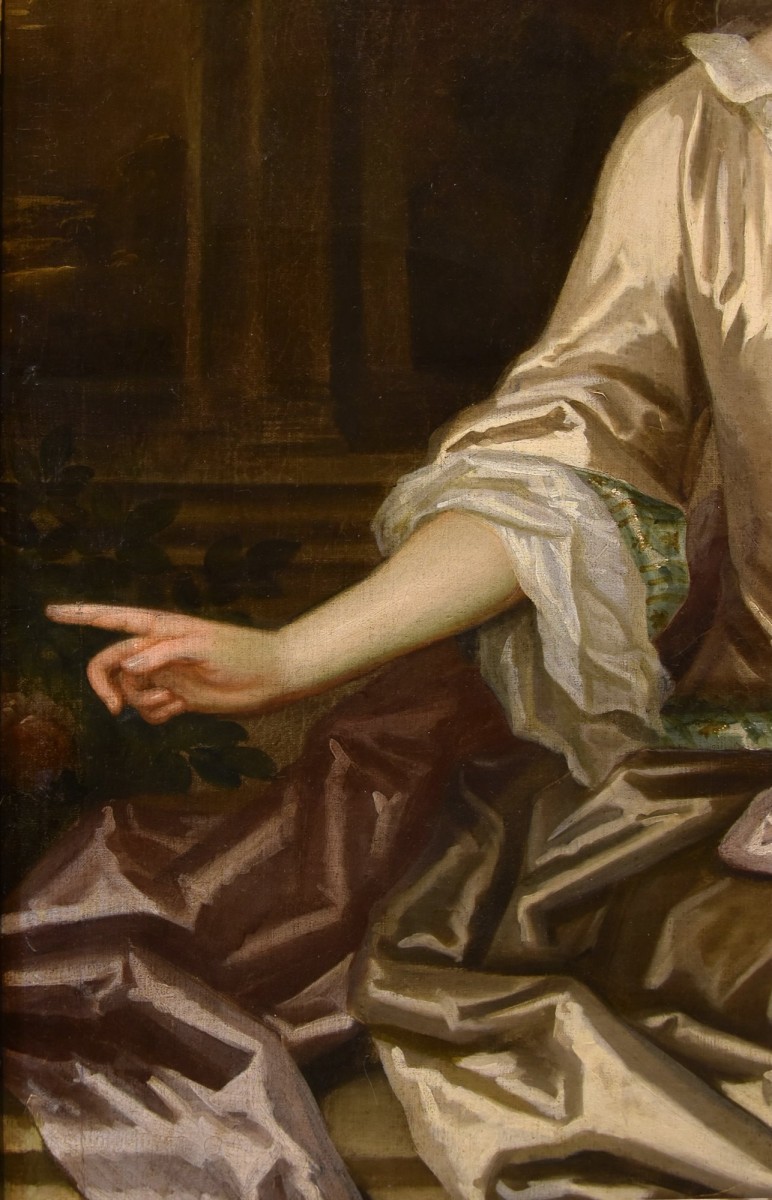
Her pose is relaxed, she sits confidently while gracefully pointing to a rose with one hand, a flower often included in Sir Godfrey Kneller's portraits, taking on different symbolic meanings depending on the subject depicted: when placed next to a young woman, it could indicate that the painting was commissioned around the time of her wedding, symbolising love and fertility.
This is a type of portrait typically requested by the English nobility between the 17th and 18th centuries, where even the most aristocratic subjects loved to be portrayed stripped of their trappings, without pompous clothes, fashionable accessories or elaborate hairstyles, in order to demonstrate that their status and value were innate elements and did not depend solely on the material wealth displayed with opulence.
Below is a link to the digital collection of the RKD archive, with our published work and other works by Kneller on a similar subject, so that you can easily make an immediate comparison.
Godfrey Kneller became the official painter of the English court and, together with Peter Lely and Willem Wissing, was considered one of the masters of English portraiture between the 17th and 18th centuries.
He painted every British monarch in office, from King Charles II to King George I, as well as the most important figures in British society and public life. These portraits, displayed publicly in the royal palaces, were admired and so appreciated by the public that a large number of patrons, mainly nobles, wanted his workshop to take care of their family portraits.
Delevery information :
We take care of and organise the transport of the purchased works, both for Italy and abroad, through professional and insured carriers.
We take great care We personally take care of the packaging, to which we devote a great deal of care: each work is carefully packed, first with arti- cle material, then with a custom-made wooden box.
Should you have the desire to see this or other works in person, we would be happy to welcome you to our gallery in Riva del Garda, Viale Giuseppe Canella 18, we are always open by appointment only.