Offered by Galerie Gilles Linossier
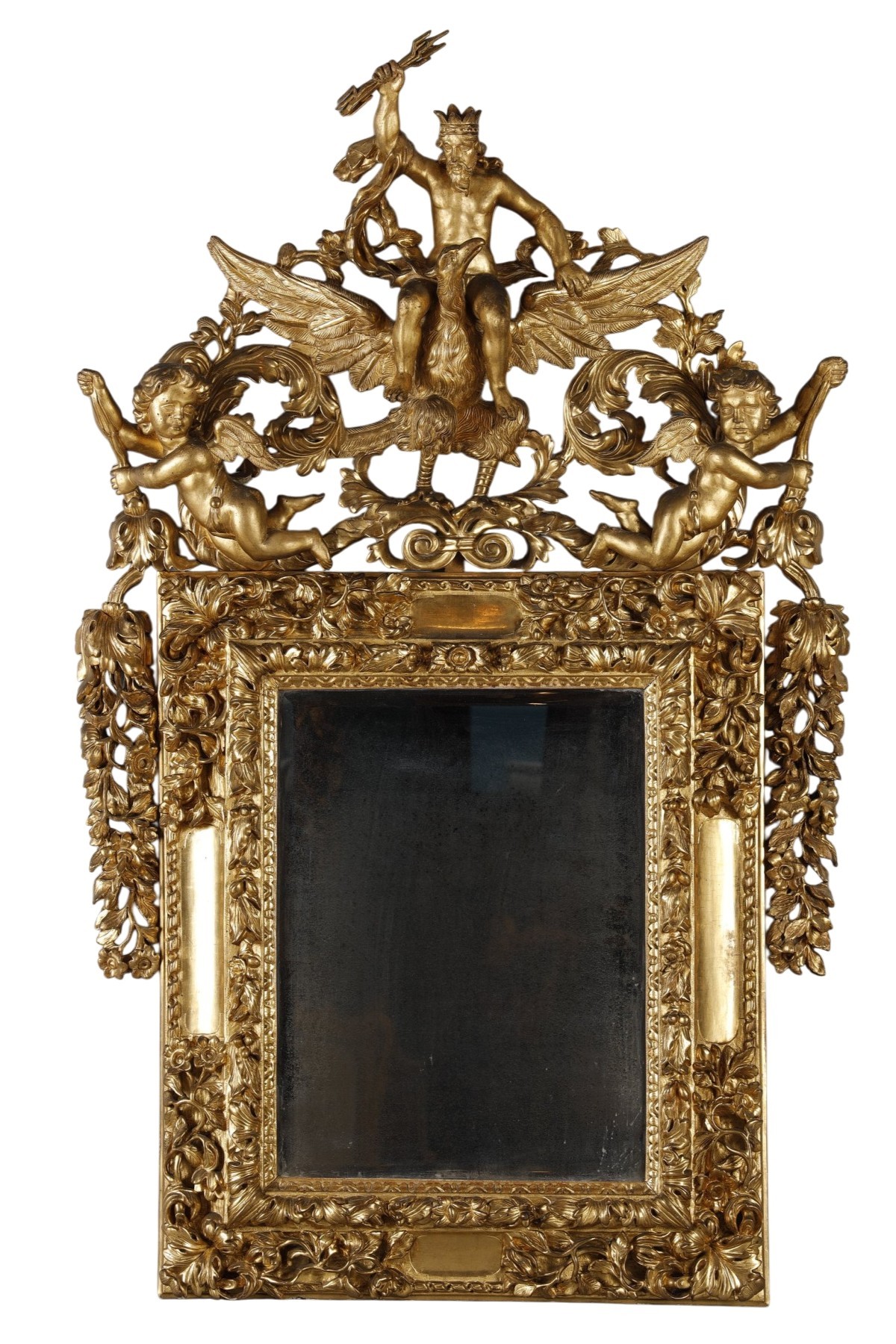

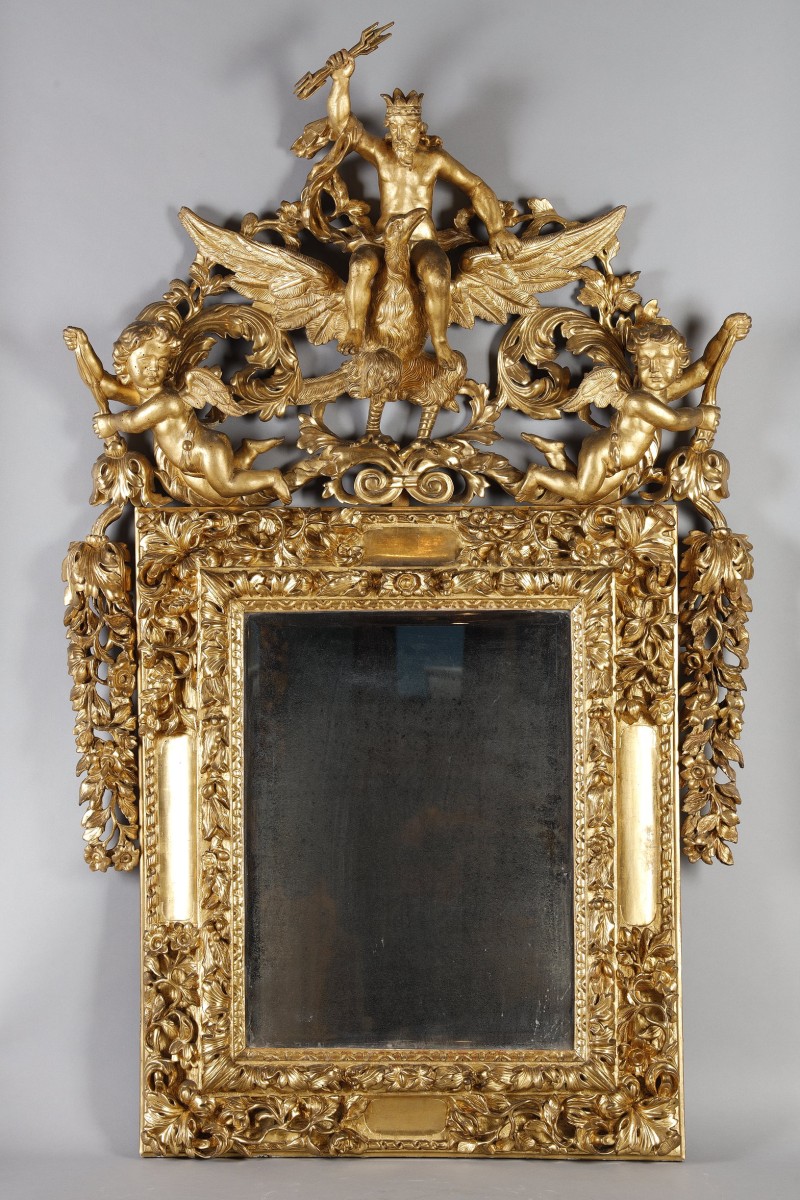
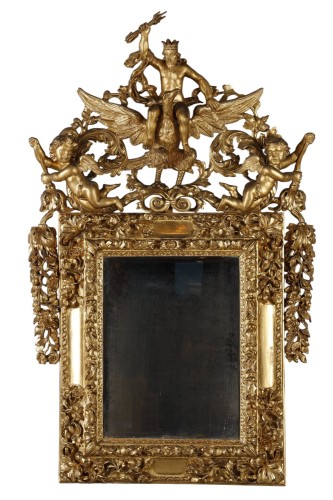
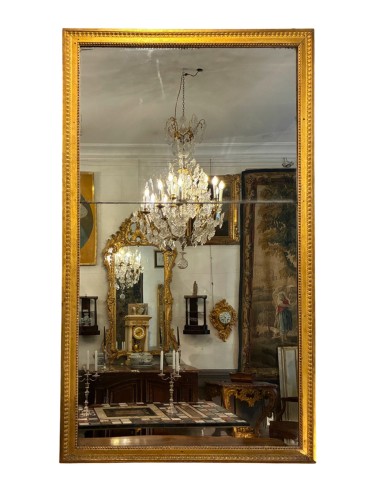
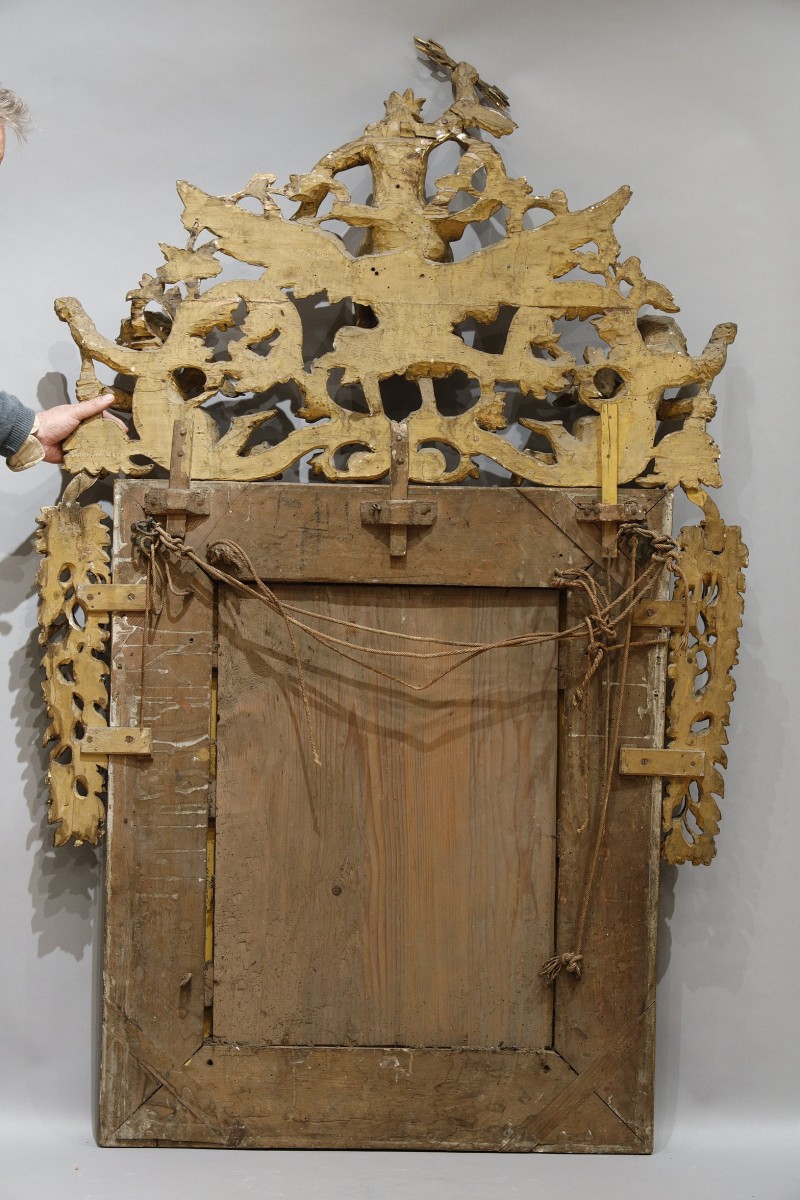
Exceptional for its dimensions and the richness of its openwork carved decoration, this large, rectangular, gilded-wood mirror is a superb example of late 17th-century Provençal craftsmanship, specifically from Aix-en-Provence.
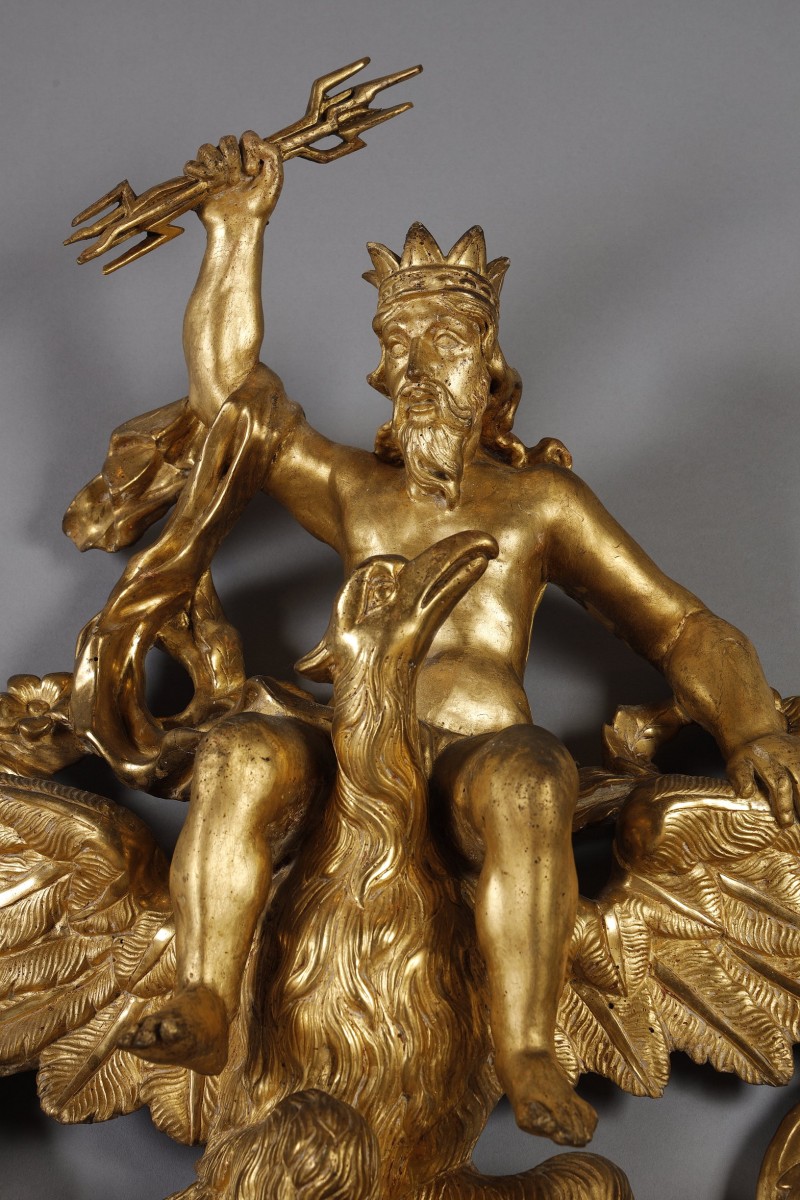
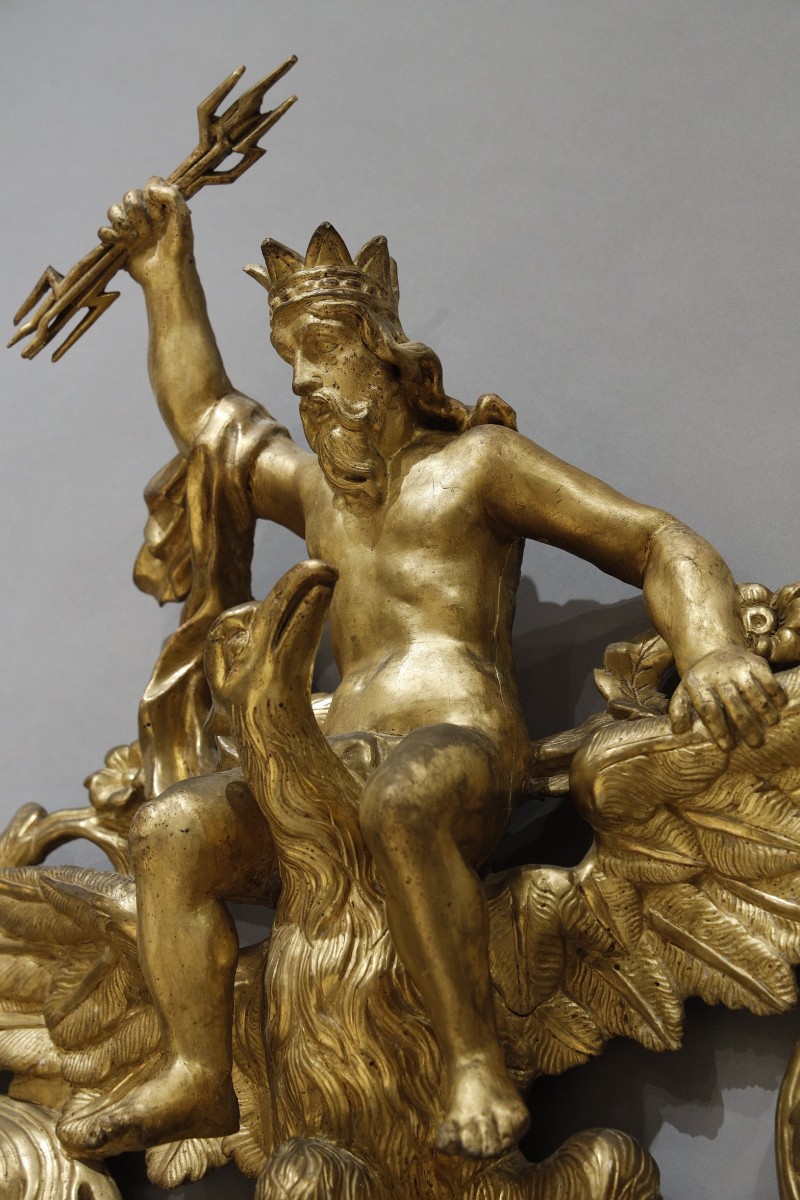
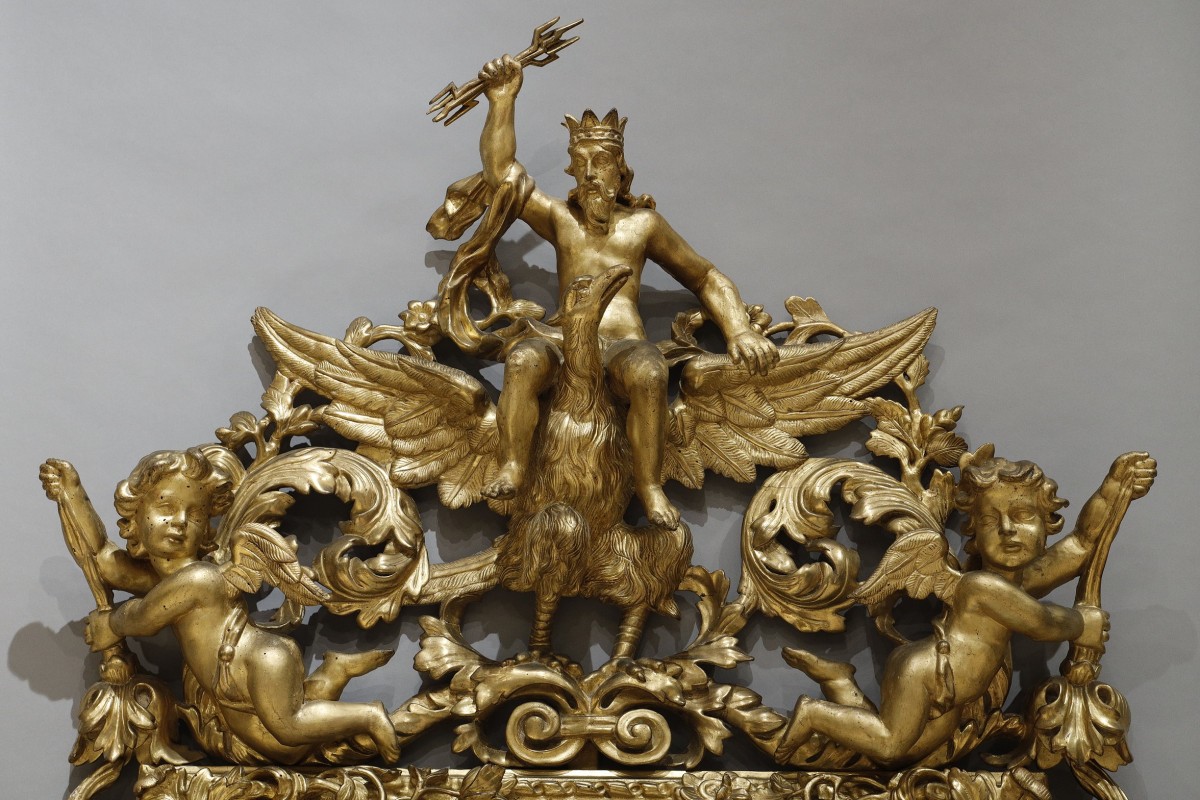
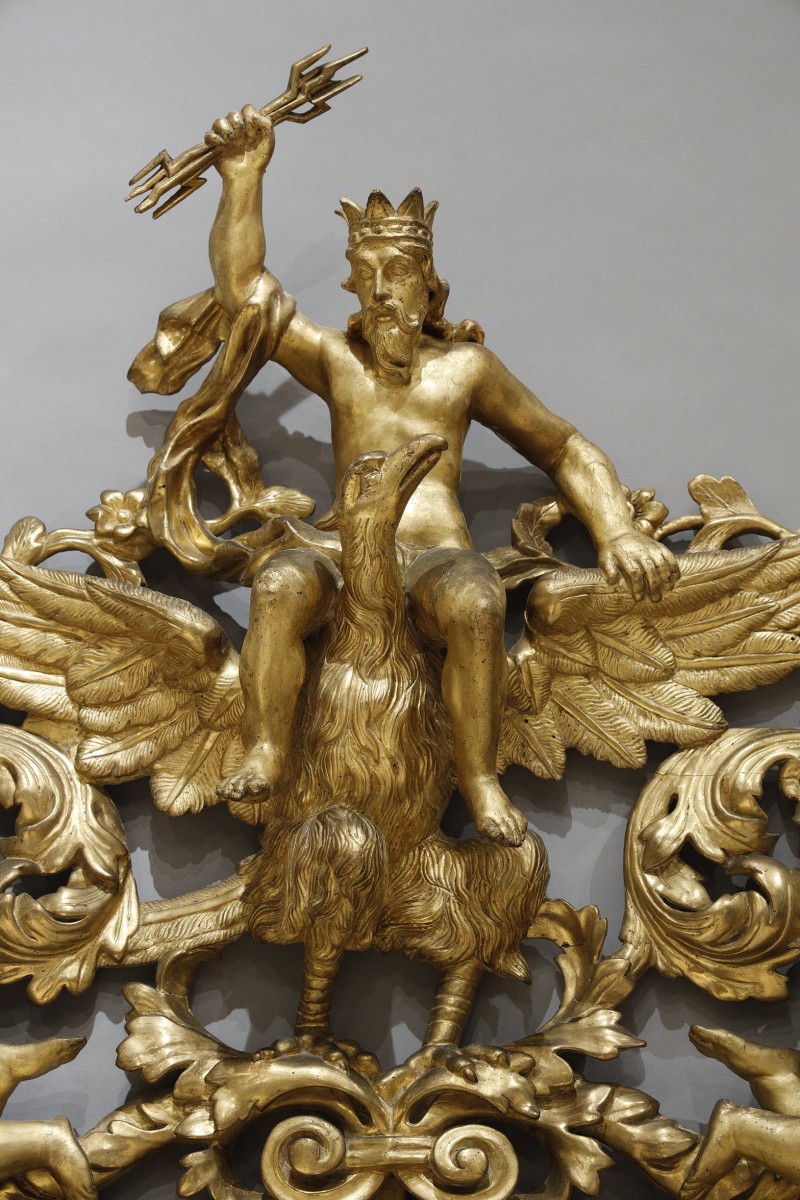
The upper section is dominated by a magnificent openwork pediment, distinguished by the remarkable quality of its carving. Executed in the round, it depicts Jupiter, sovereign of Olympus, seated upon his eagle, whose wings are spread wide.
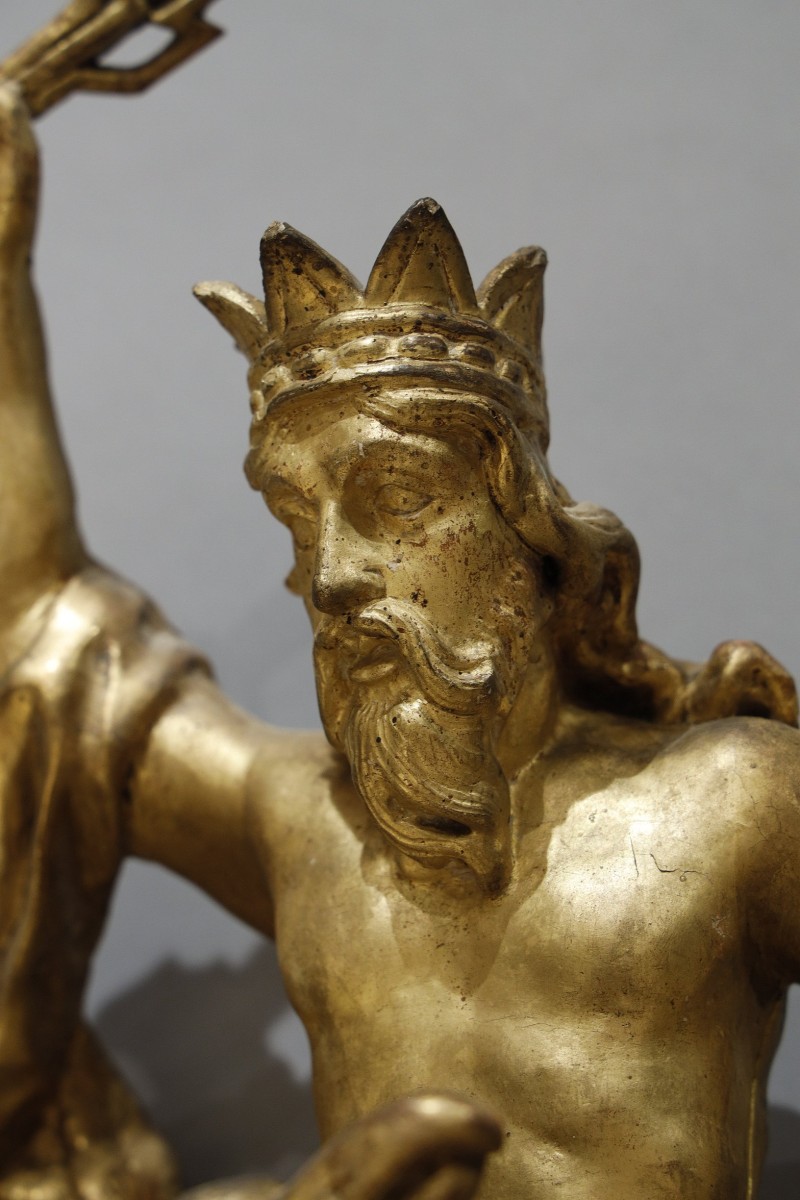
The god, recognizable by his full beard and crown, is shown facing forward, his torso upright and his legs positioned on either side of the bird.
His right arm, accented by swirling drapery, is raised above his head, brandishing a thunderbolt, the attribute through which he asserts his power over both gods and men. His other arm extends toward the eagle’s wing, lending the composition an open, majestic movement.
The eagle, an animal sacred to Jupiter in ancient mythology, gazes up at the god, its wings unfurled horizontally to provide a powerful visual foundation for the divine figure.
This depiction is not insignificant: Jupiter, master of the heavens and wielder of the thunderbolt, embodies supreme authority, power, and sovereignty. His association with the eagle, an emblem of celestial dominion, forms a particularly potent iconographic motif, frequently employed in the decorative arts of the late 17th and early 18th centuries.
A similar staging appears in Boyer’s "Les Amours de Jupiter et Sémélé", in which Jupiter makes his entrance through the air, borne by his eagle and surrounded by fiery clouds.
Molière, too, adopts this vision in his comedy "Amphitryon", presenting the god in a majestic guise: "Jupiter, in a cloud, atop his eagle, armed with his thunderbolt, amidst the sound of thunder and flashes of lightning."
This testifies to the importance placed on the dramatic presentation of Jupiter’s power and grandeur during this period.
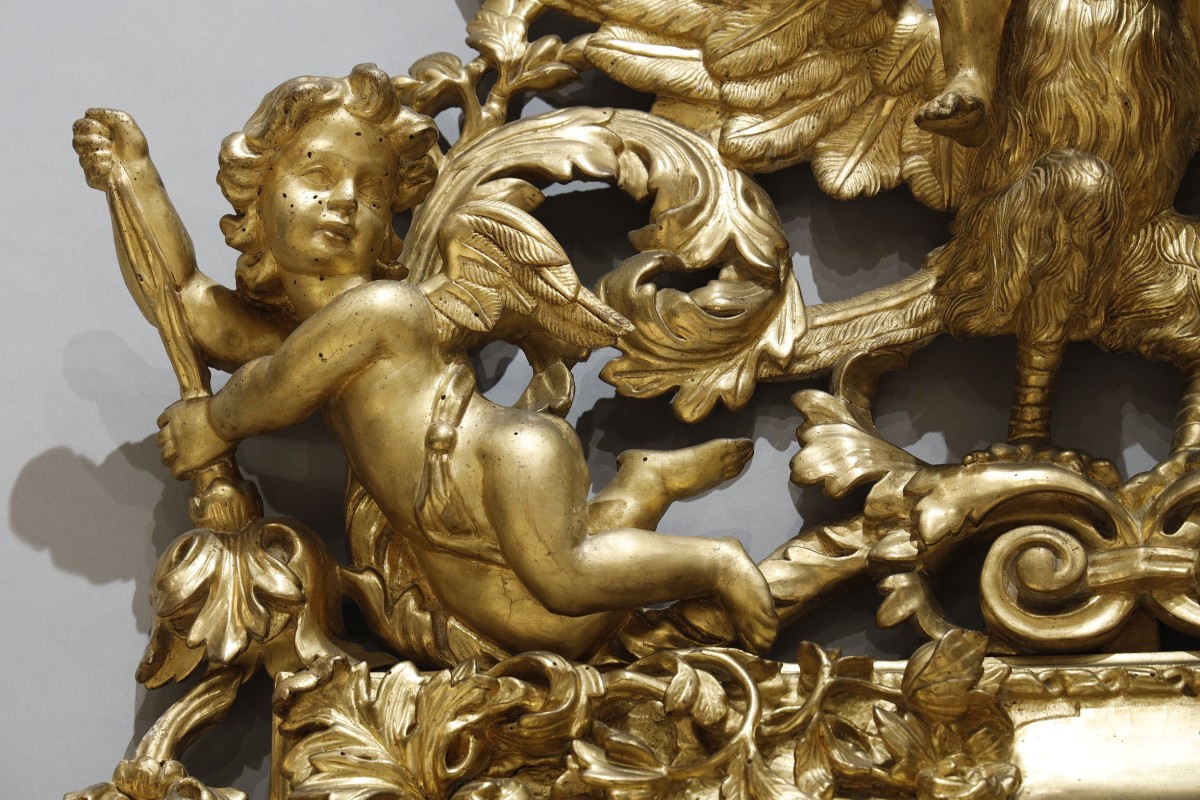
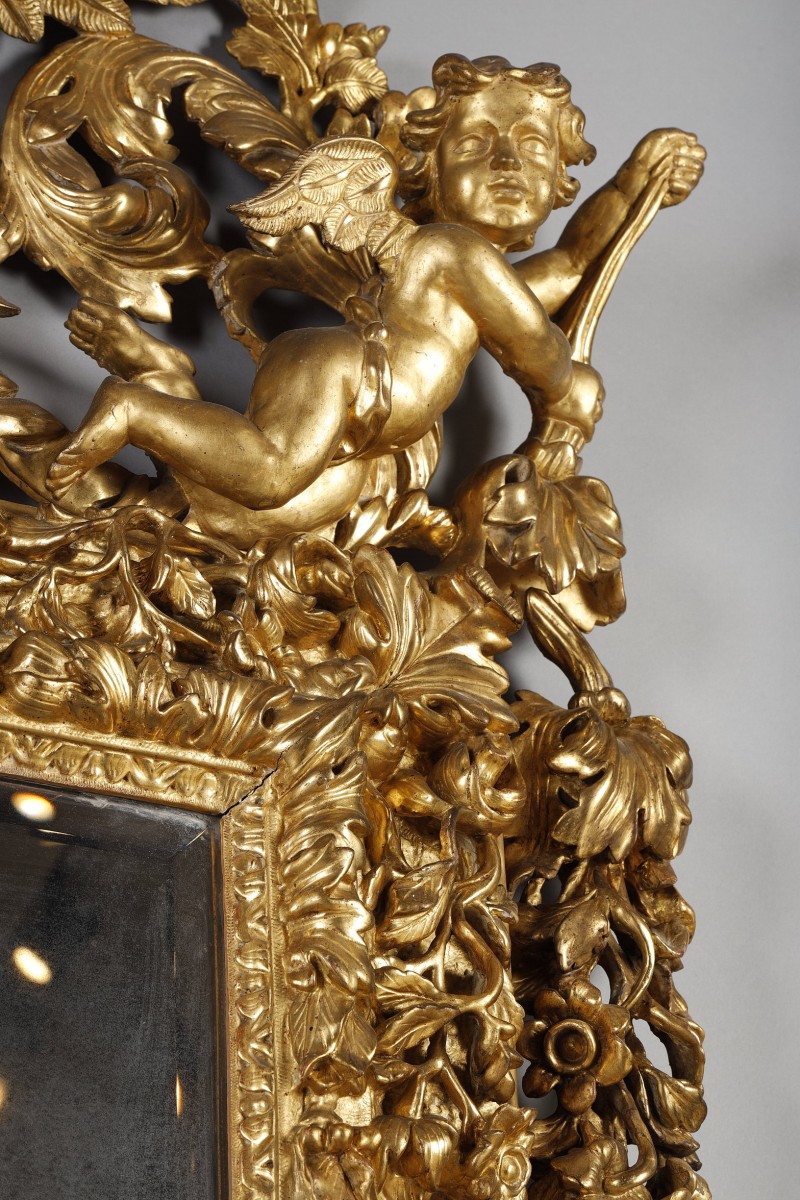
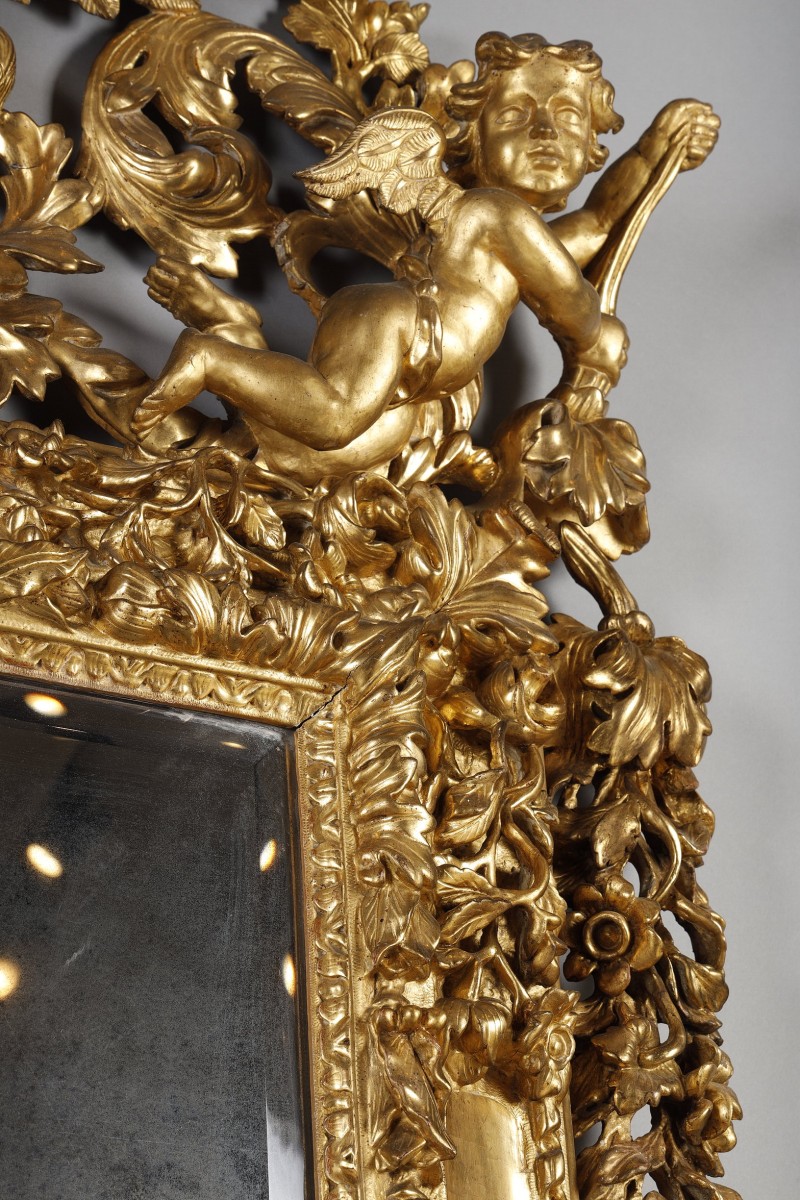
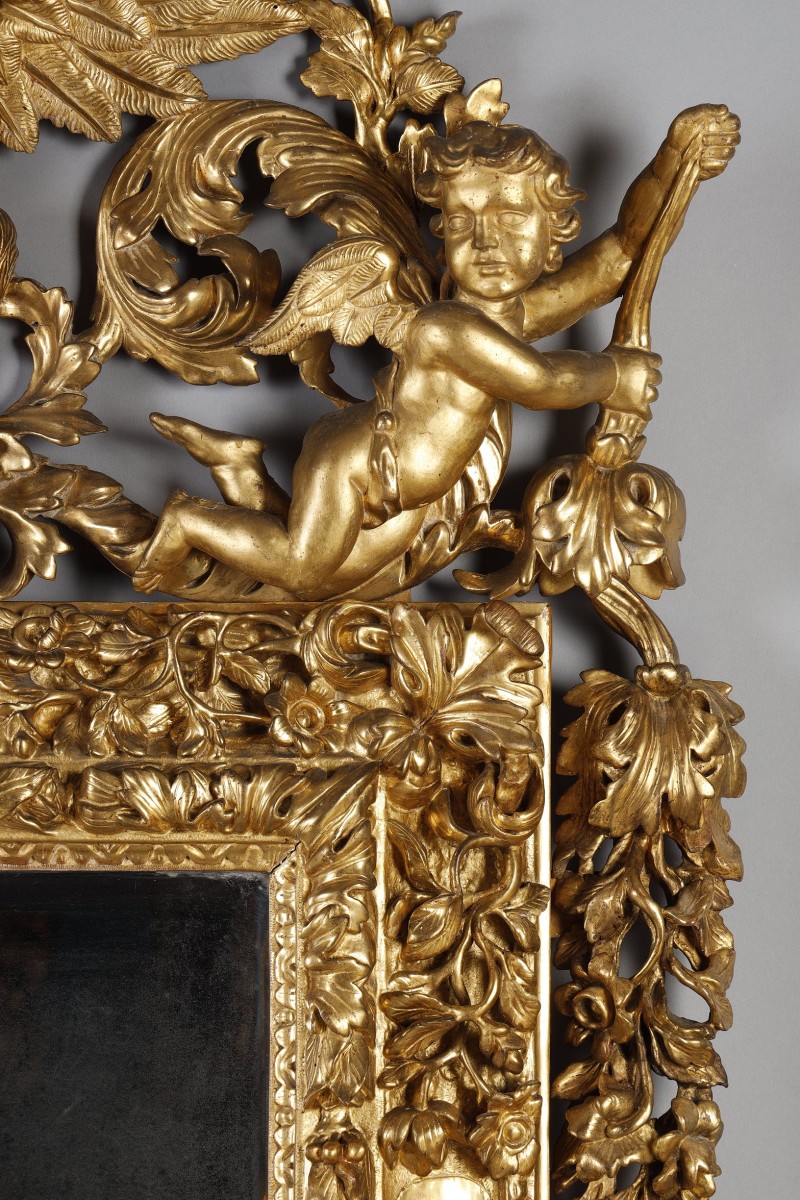
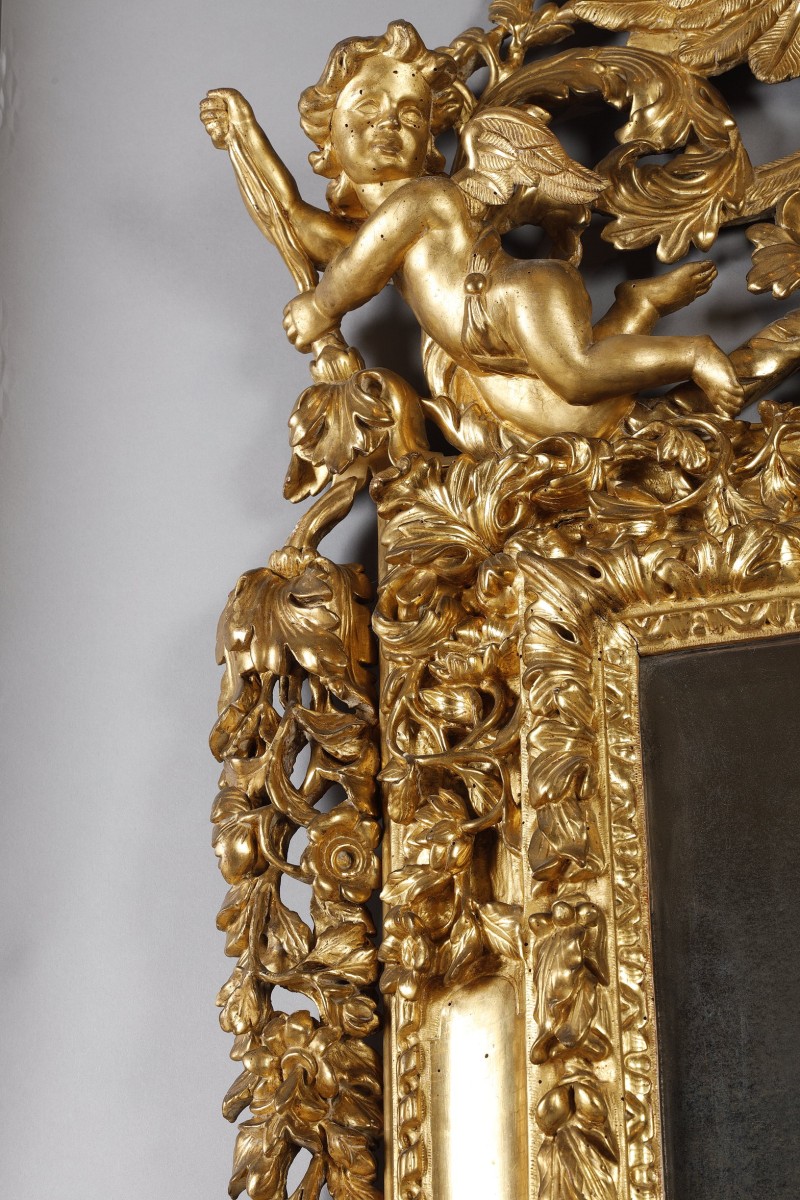
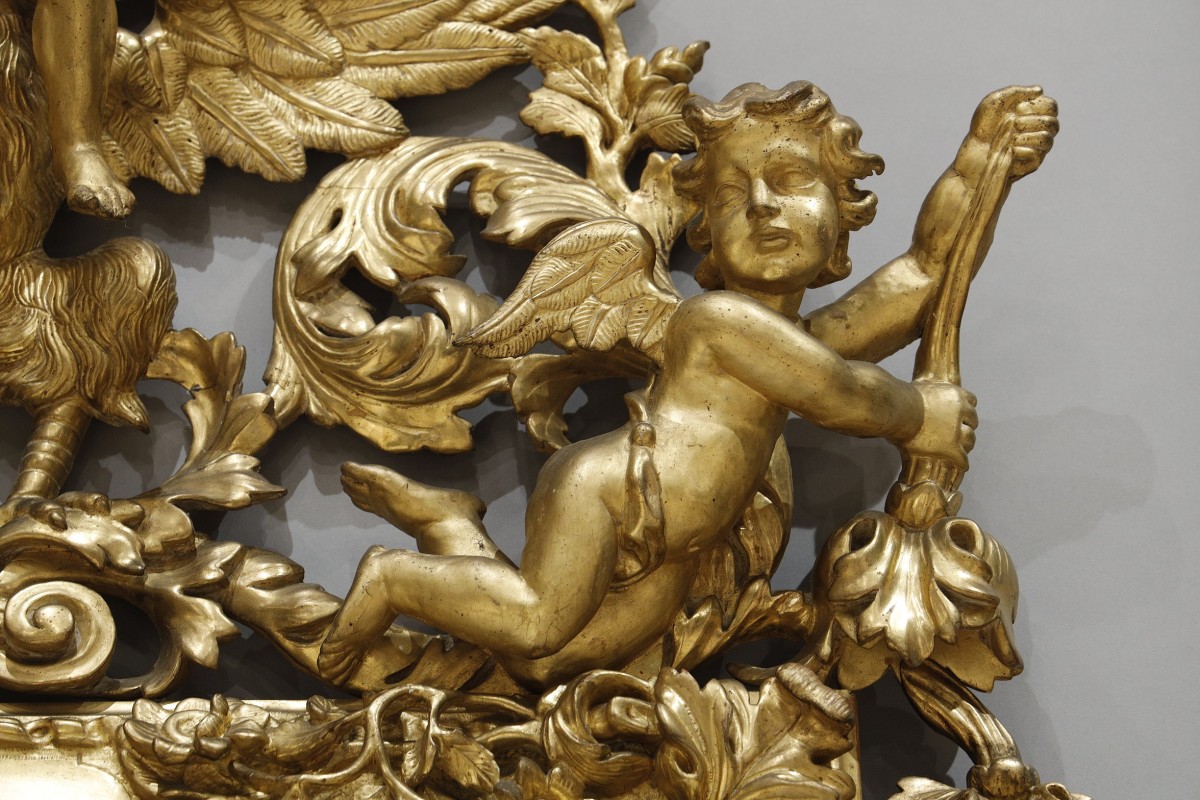
Flanking this scene are two large, sculpted putti in motion, positioned within the upper spandrels. Their plump bodies, rendered with a keen attention to anatomy and modeling, are integrated into a dynamic composition.
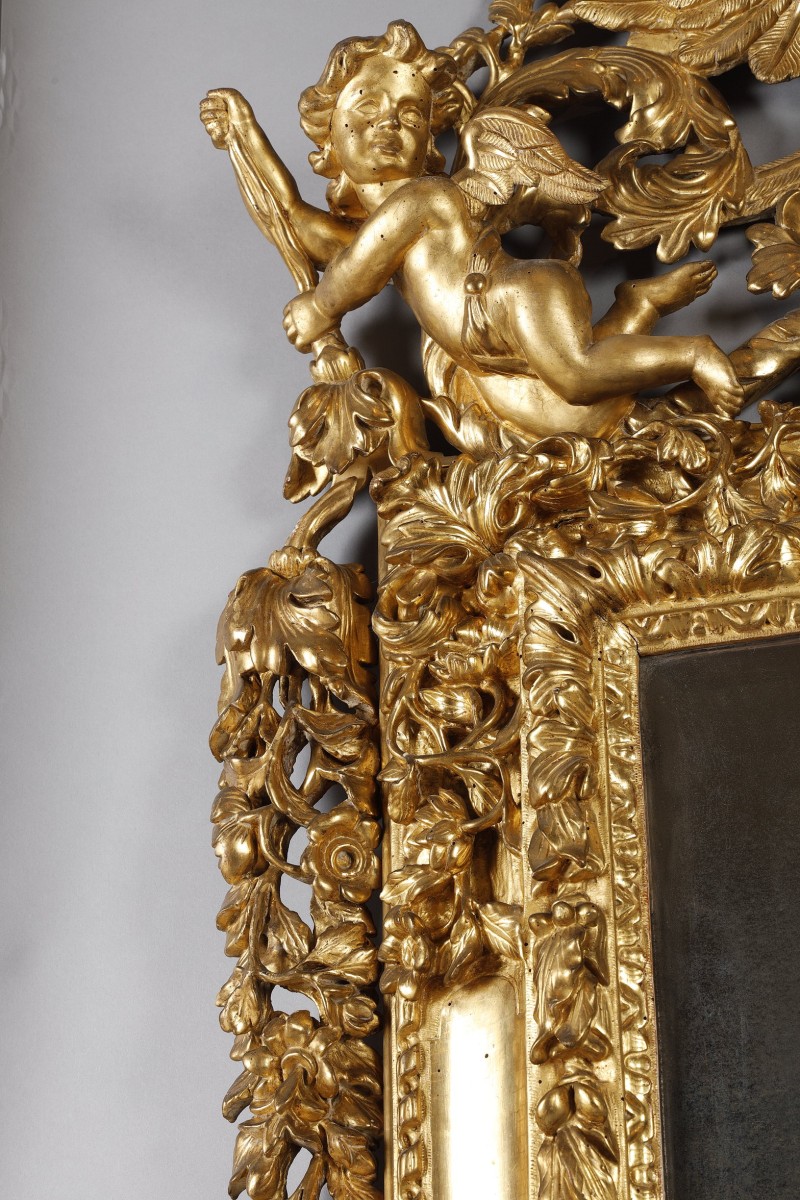
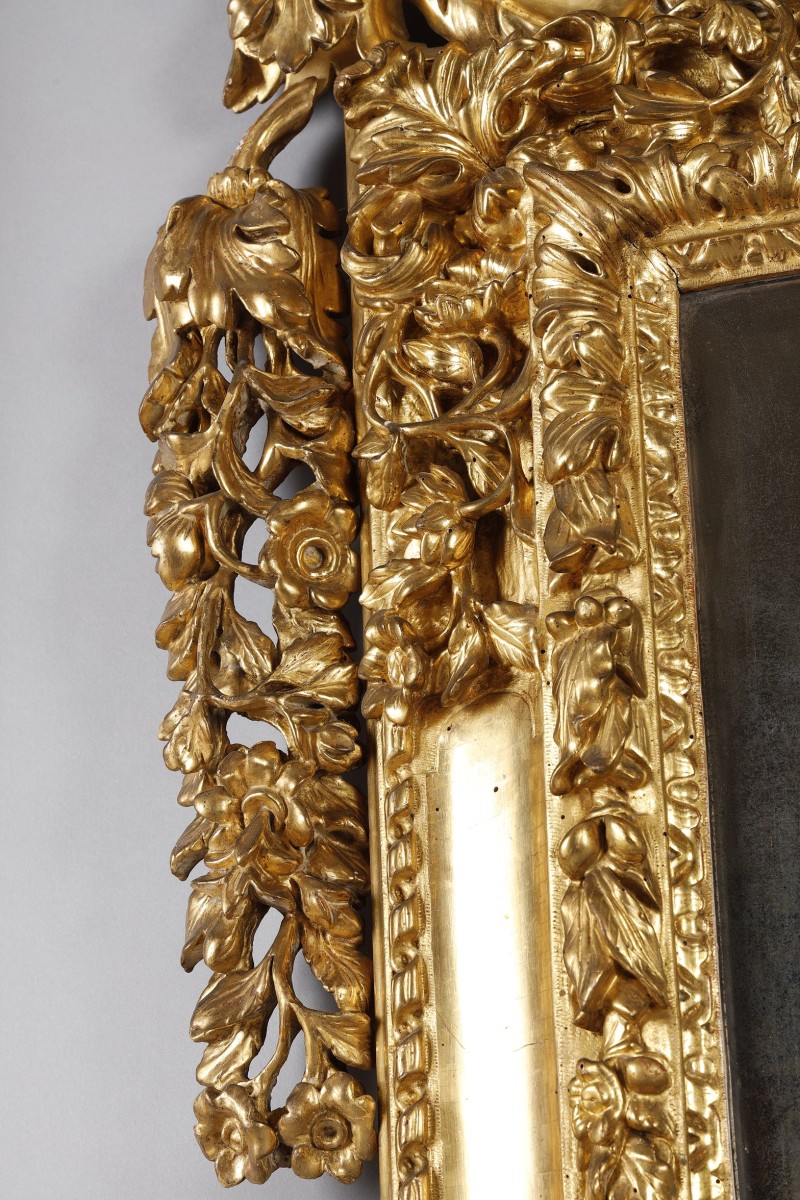
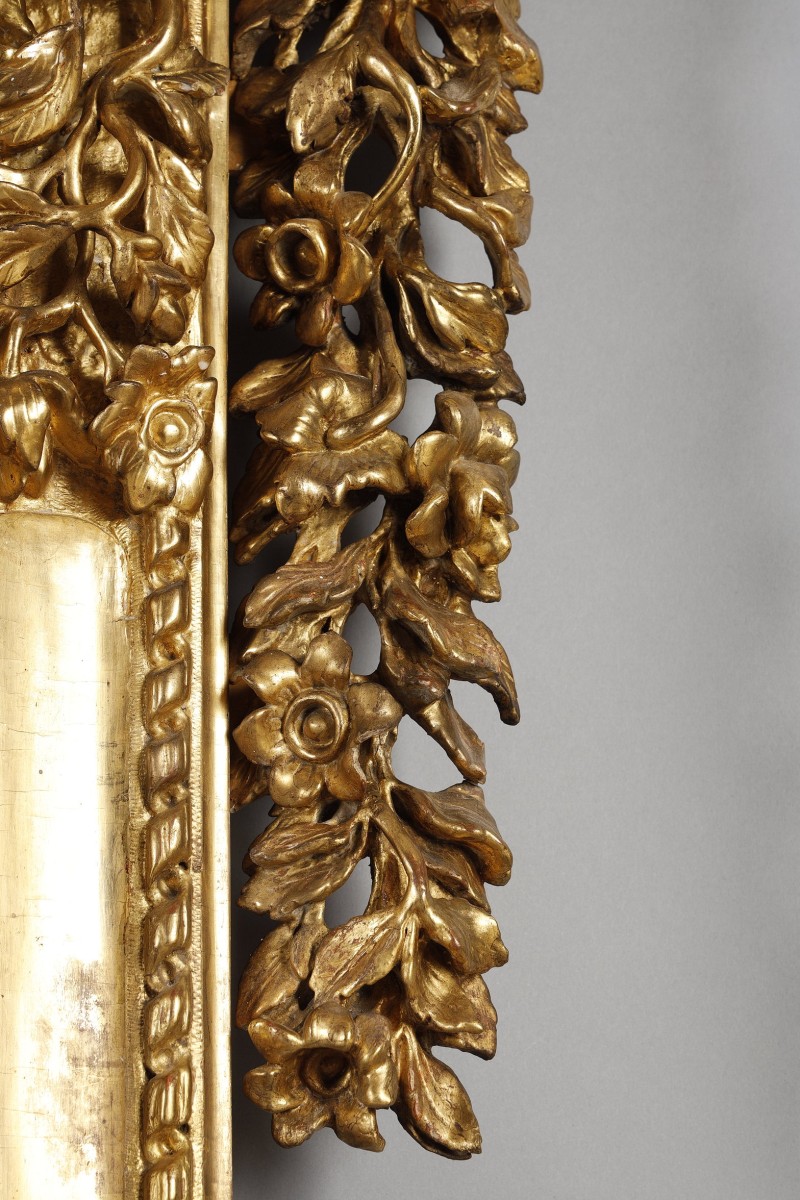
Each figure appears to hold a leafy garland that cascades downward in a delicate, sweeping motion on either side, completing the ensemble.
They are draped in simple fabric, knotted at the waist; their finely chased wings and the positioning of their bodies, with legs extended backward, emphasize their state of flight. They are framed by elaborate foliate scrolls and flowering branches that reach toward Zeus.
The quality of this carving is evident in the treatment of the foliage, the eagle’s feathers, the hair, and the faces, as well as in the numerous finely chased details that enrich the gilded surfaces.
The use of high-relief and openwork carving lends the piece a true architectural dimension, while maintaining a great sense of fluid movement within the motifs.
This pediment is of exceptional quality, setting it apart from other mirrors of the period and placing it among the finest examples ever created.
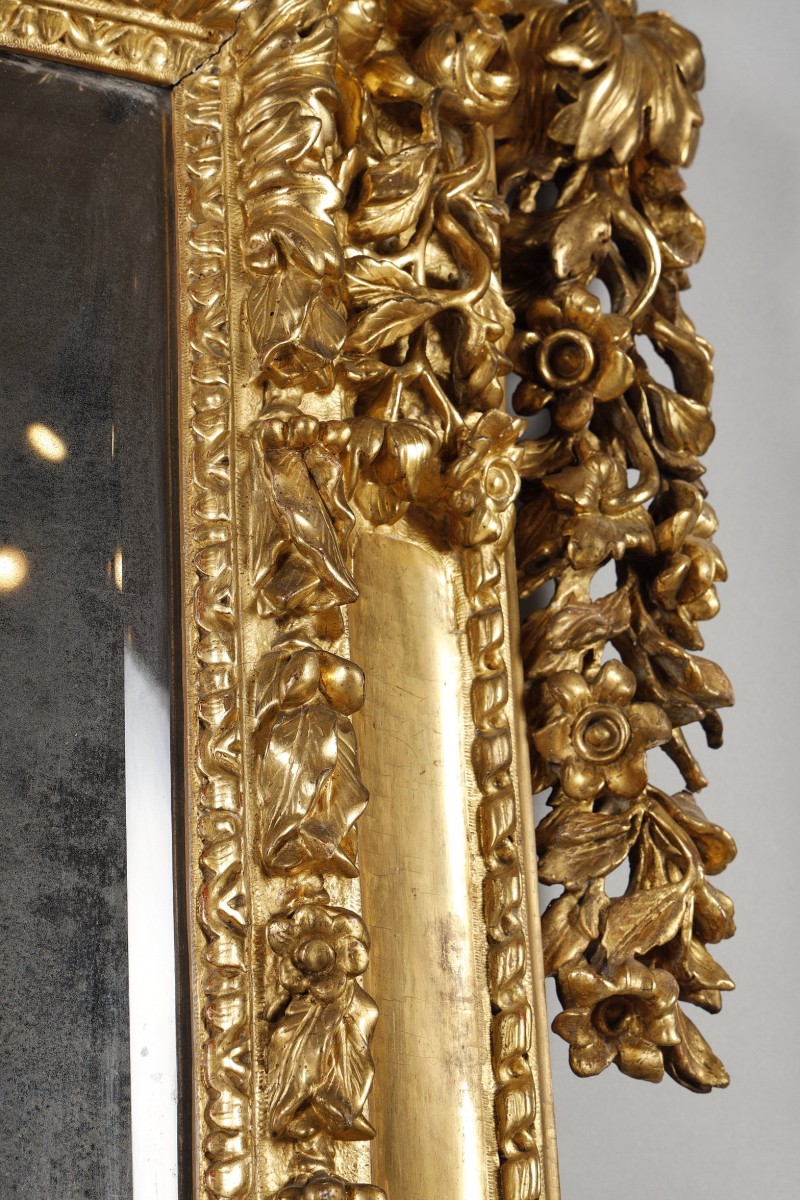
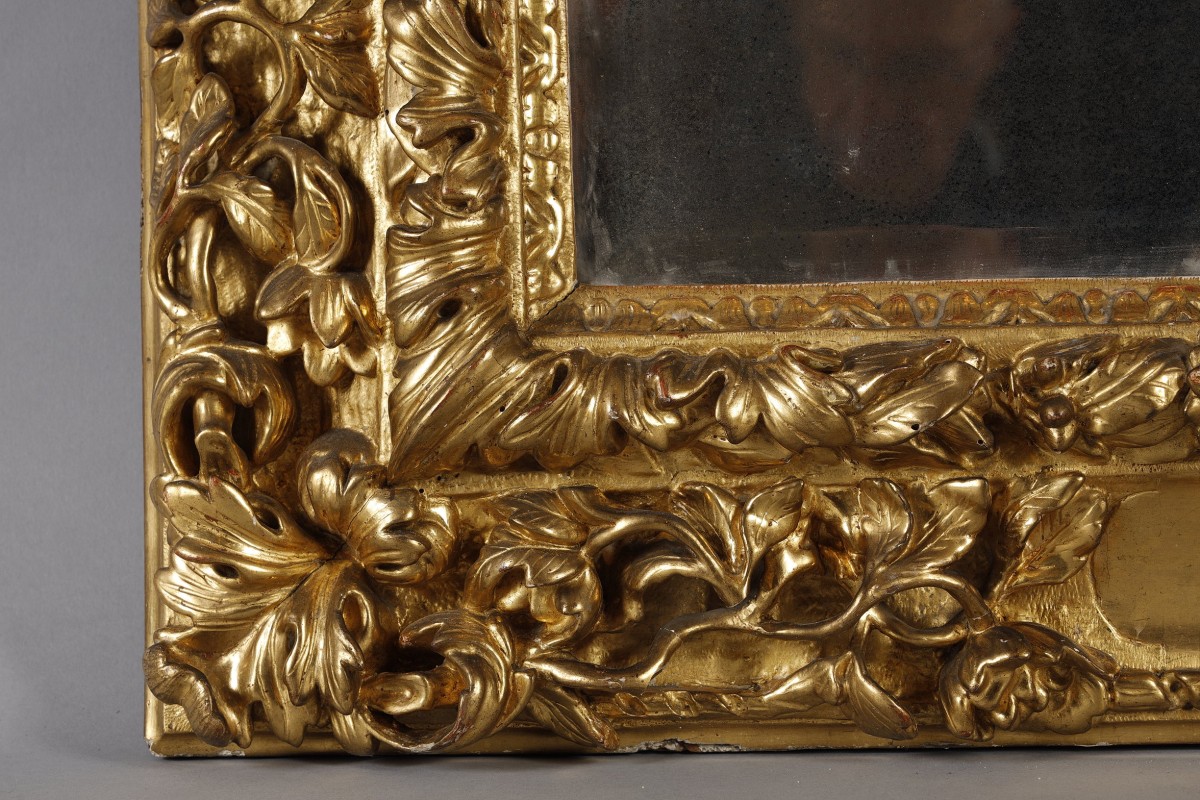
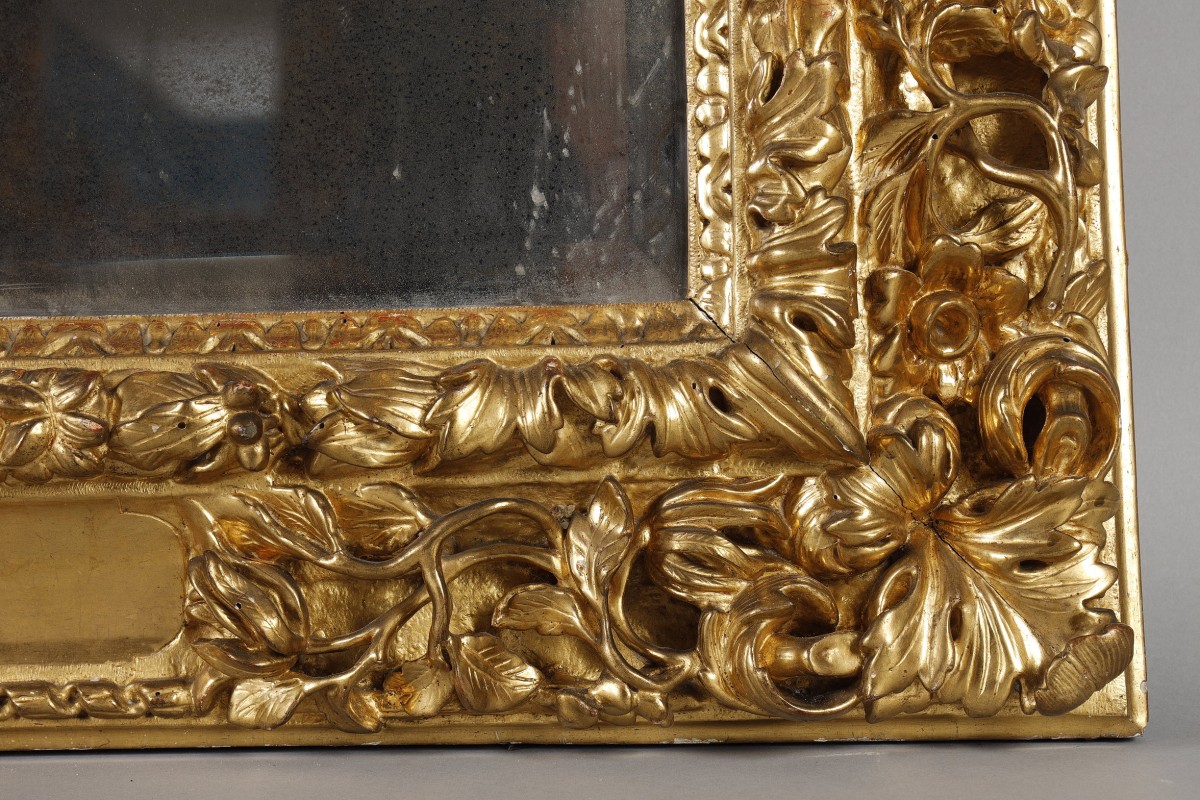
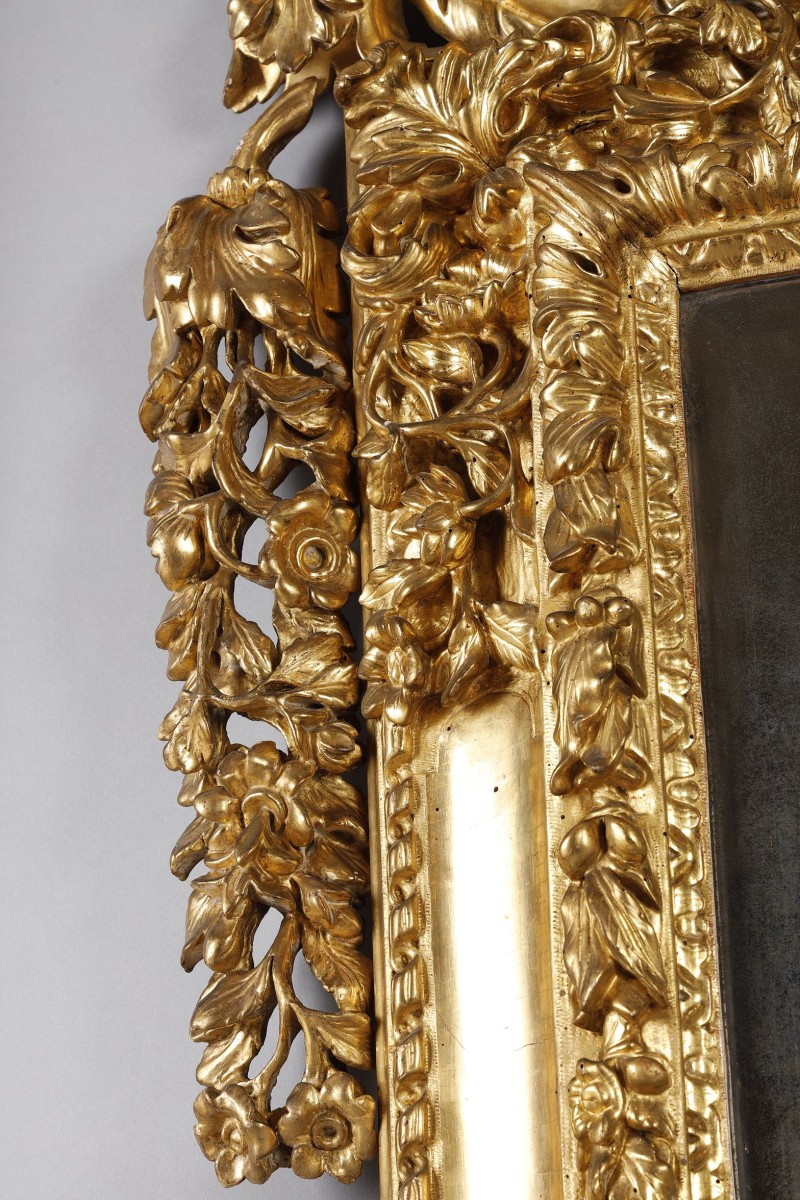
The mirror retains its original mercury-backed glass. Its frame features a particularly elaborate and dense composition, brought to life by a rich array of foliage, scrolling acanthus, branches, and floral motifs.
The frame is structured in three tiers: closest to the glass is a narrow frieze of stylized, heart-shaped leaves. Beyond this lies a broader border, harmoniously composed of small flowers, foliage, and acorns. The outermost section, the thickest part, characterized by deeper relief, demonstrates exceptional craftsmanship. The high-relief carvings are executed with extreme precision, depicting a profusion of flowering branches intertwined with gracefully curling leaves.
This perimeter is punctuated at the corners by finely rendered large leaves, as well as four distinct, smooth-gilded cartouches, a testament to the meticulous attention to detail, both in the depth of the relief and the precision of the overall execution. These central cartouches and the elongated side panels provide structure to the piece while highlighting the richness of the gilding.
With its ambitious iconography, the exceptional quality of its pediment, and the extraordinary richness of its ornamentation, this mirror is a magnificent example of Provençal craftsmanship.
It was created in Aix-en-Provence following the initiative of Michel Mazarin, Archbishop of Aix from 1645 to 1648, who, in 1645, commissioned the development of the "Quartier Mazarin." This project, launched in 1646, was built upon lands belonging to the Archbishopric and the Order of Saint John of Malta. This period, which saw the emergence of a significant architectural movement in Provence, drew in numerous craftsmen and artists, including painters, sculptors, and gilders, to create sumptuous residences for the noble families who wished to settle in the region.
A magnificent, large-scale piece from Aix-en-Provence, dating to the late 17th century.
Features beautiful original gilding and high-quality carving.
Includes restorations consistent with age and maintenance.