Offered by Galerie Gilles Linossier
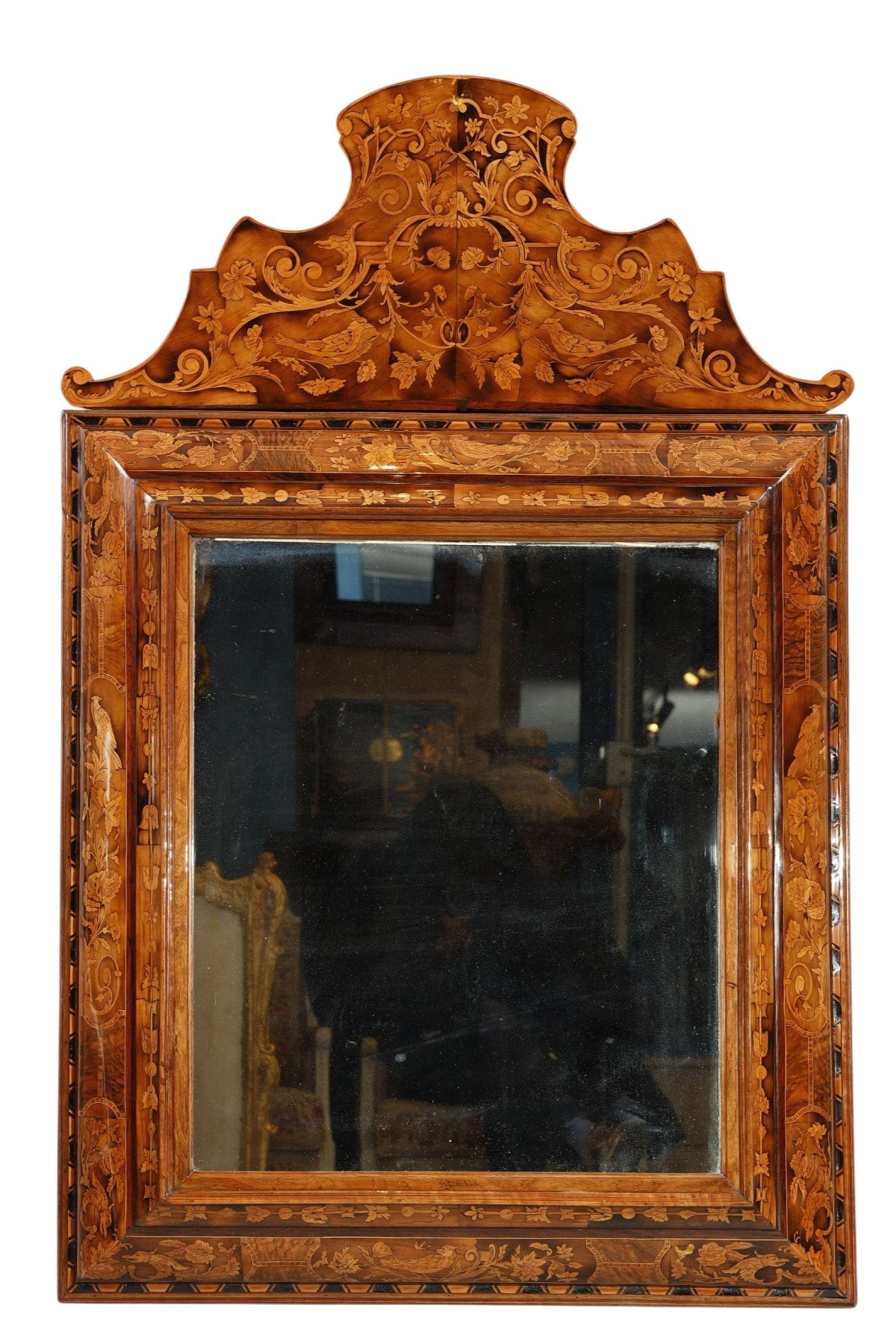

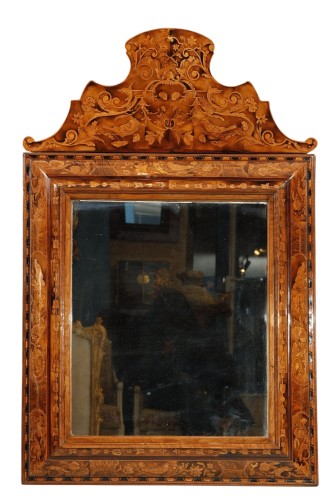
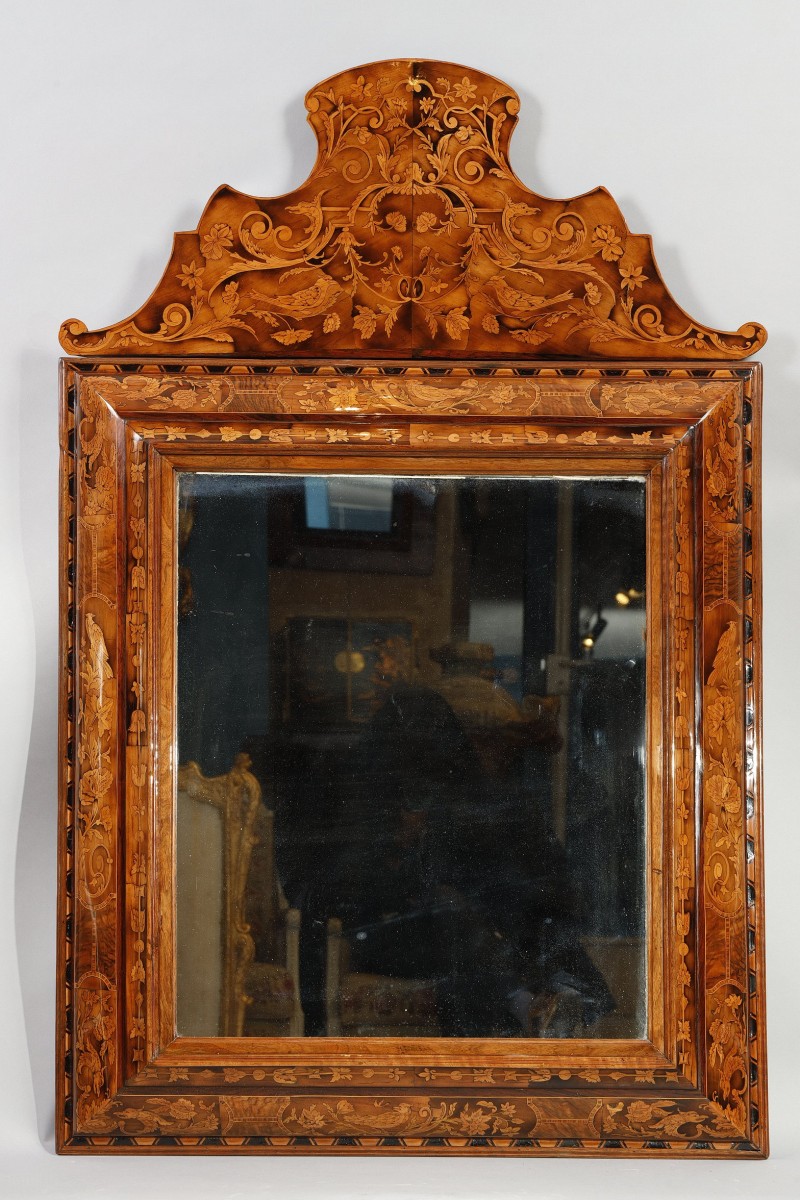
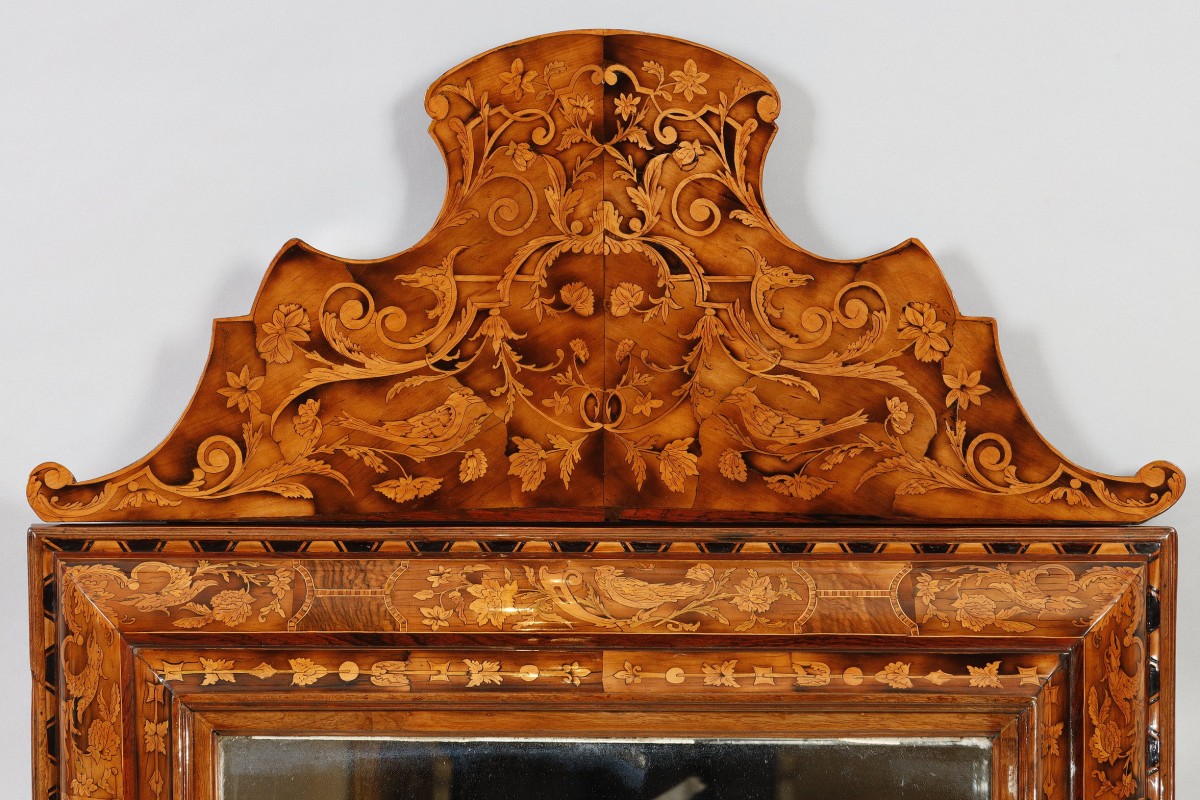
A remarkable and imposing late 17th-century marquetry mirror.
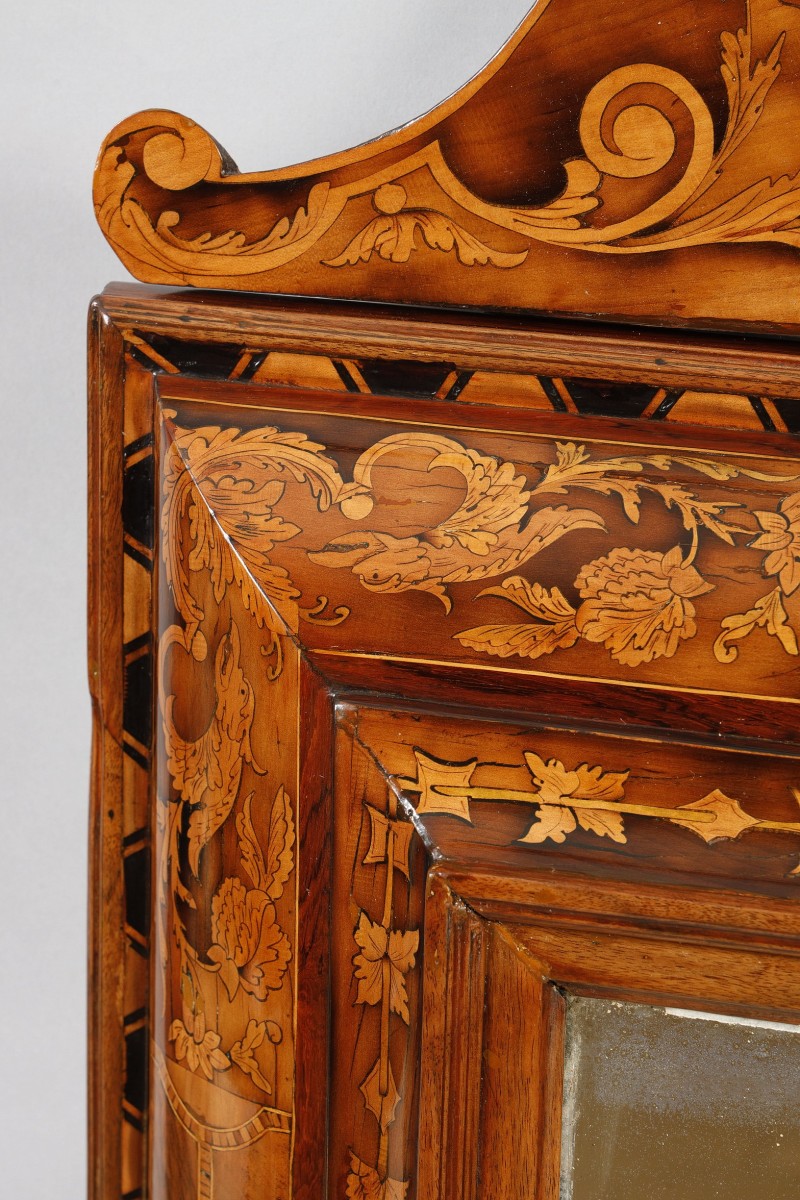
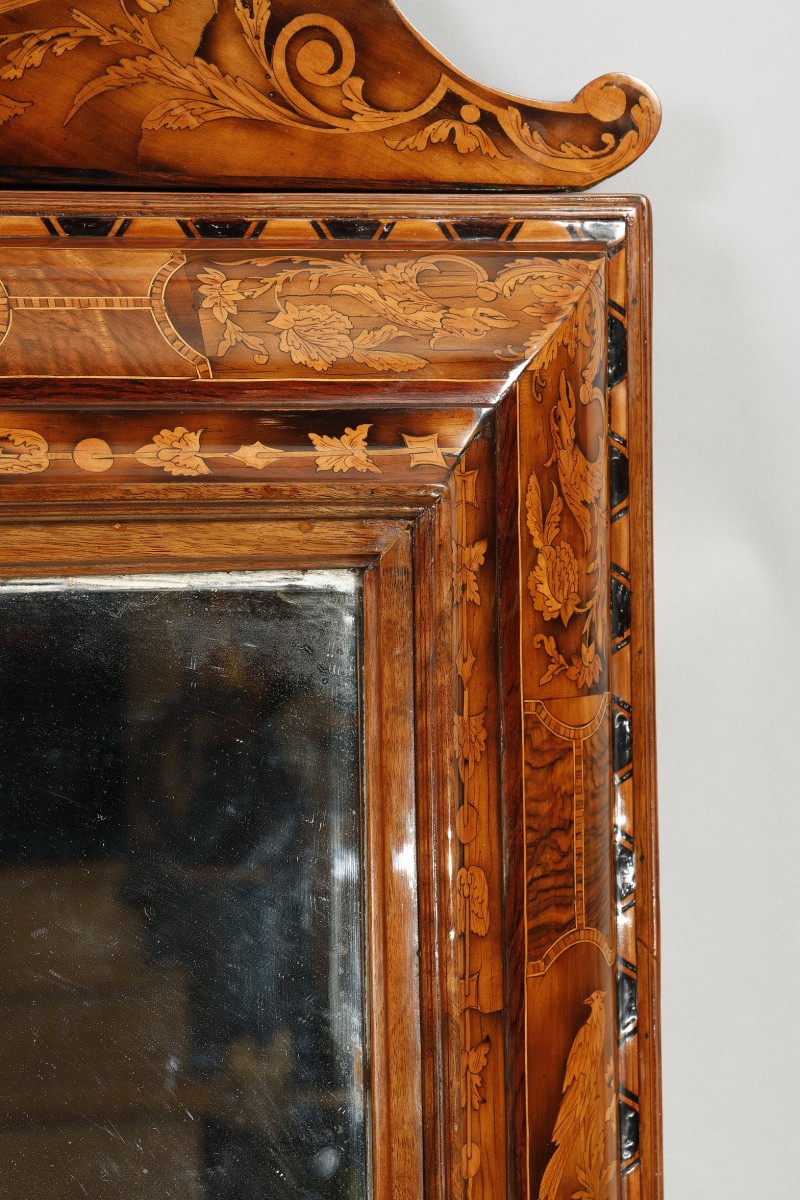
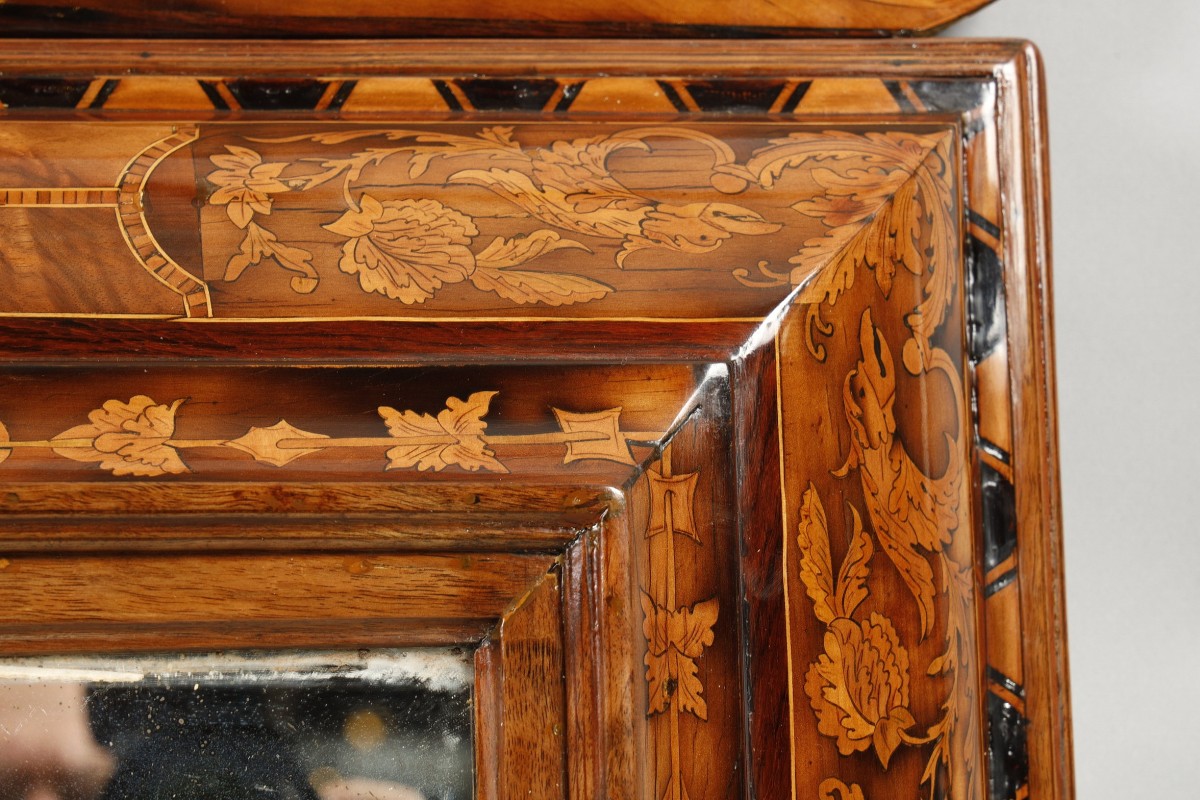
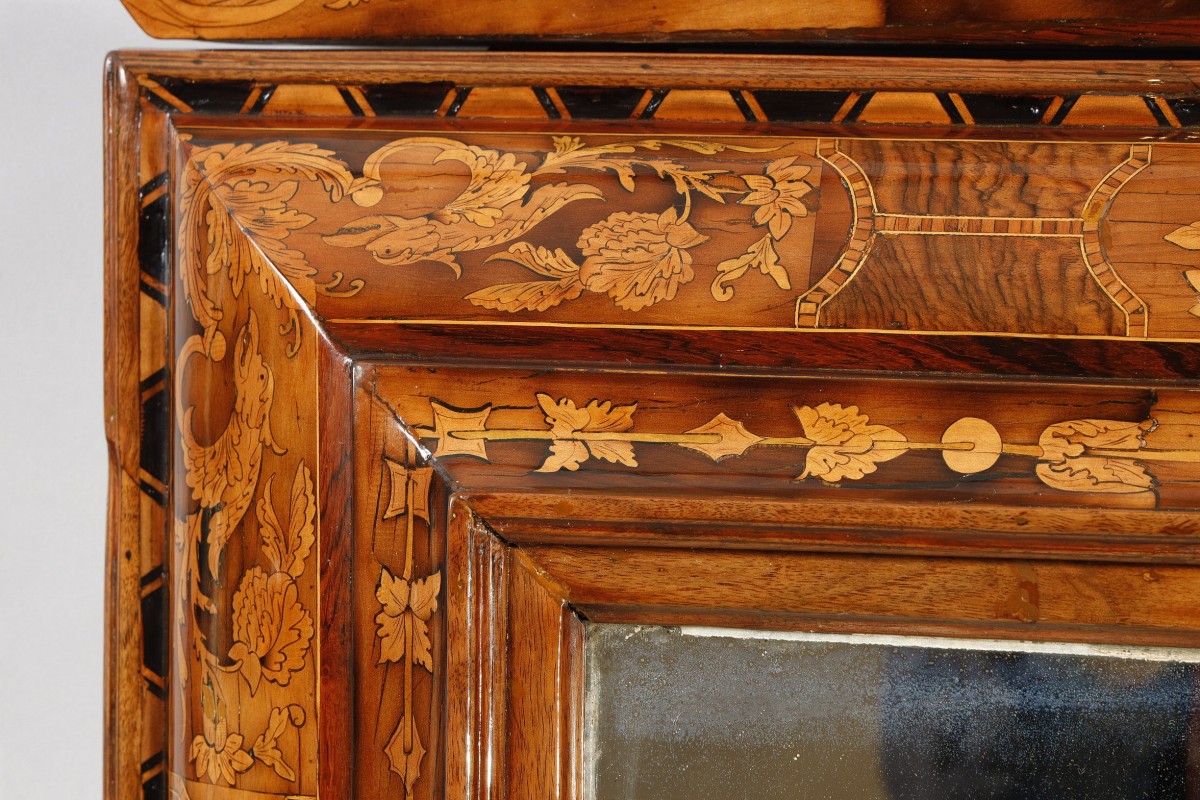
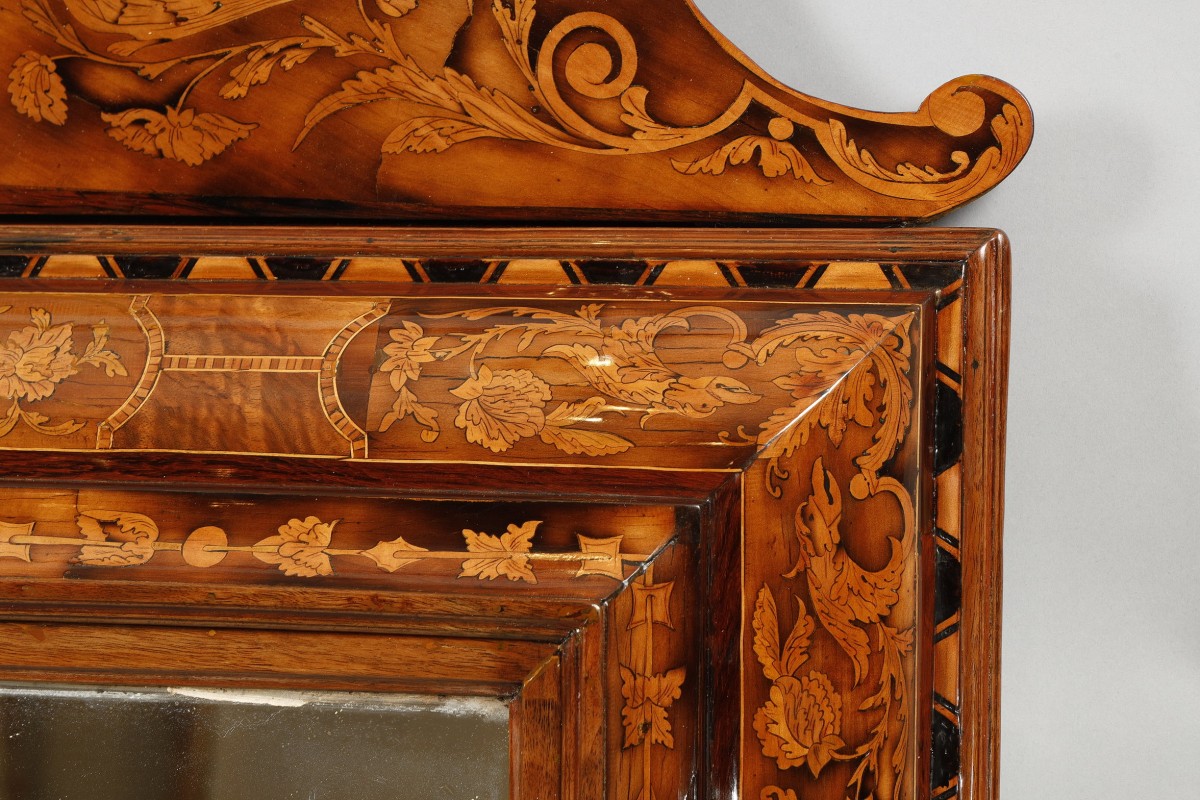
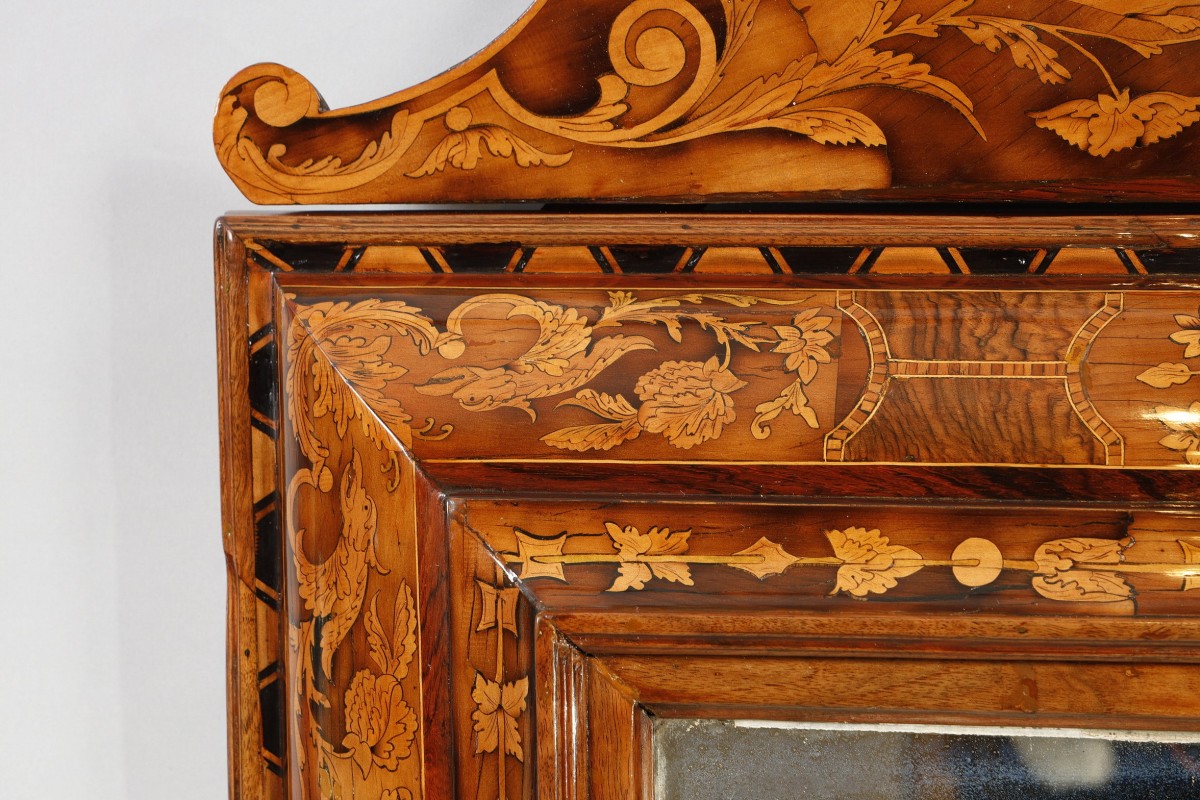
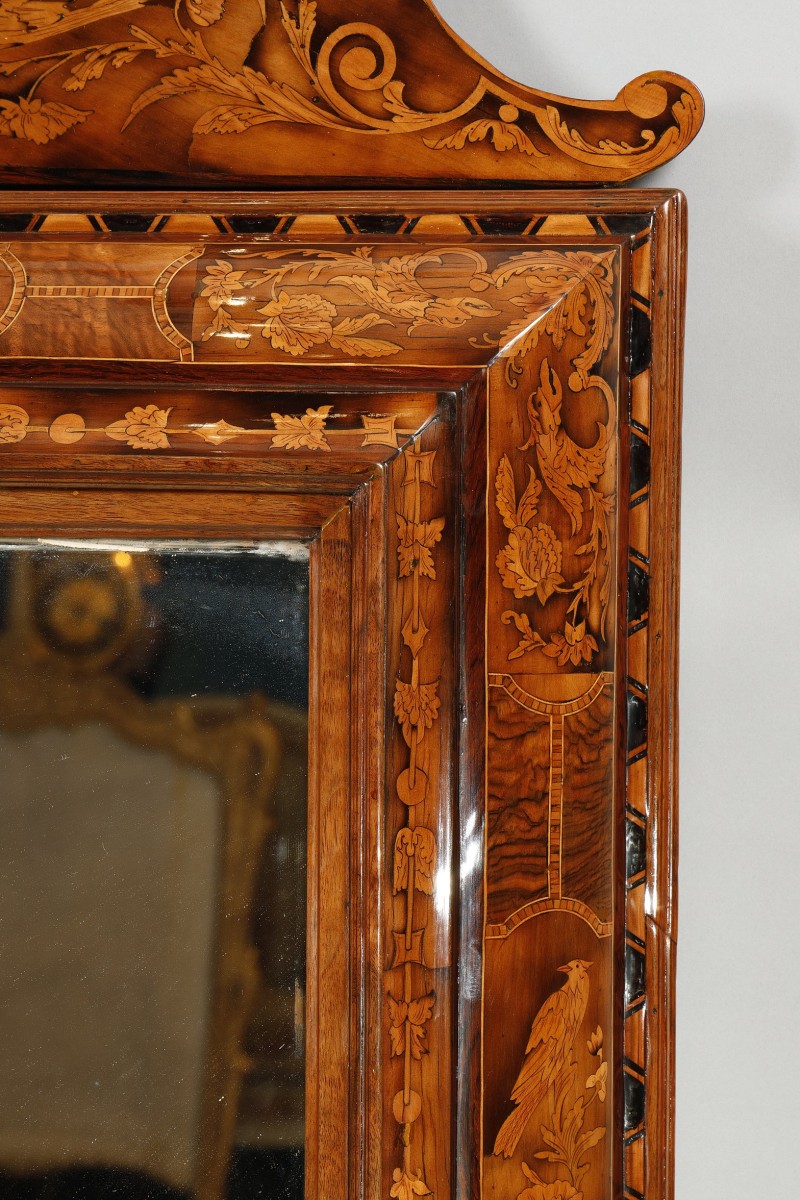
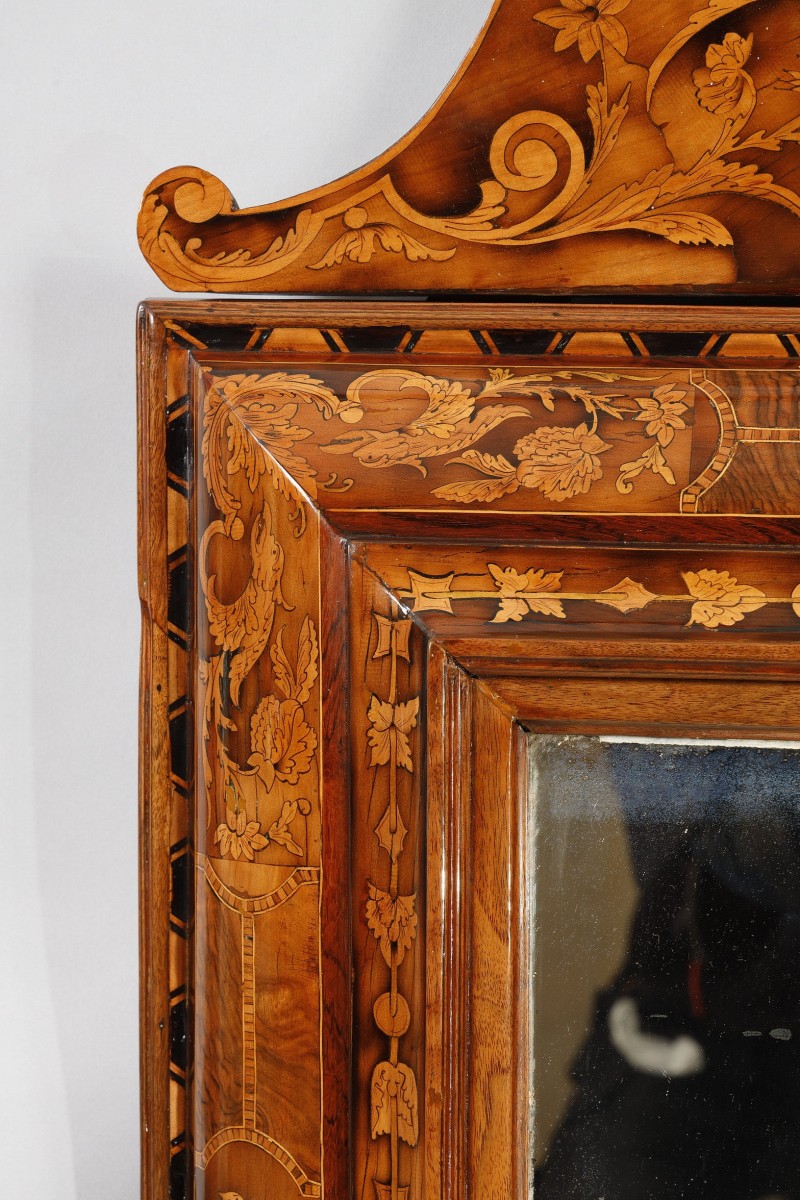
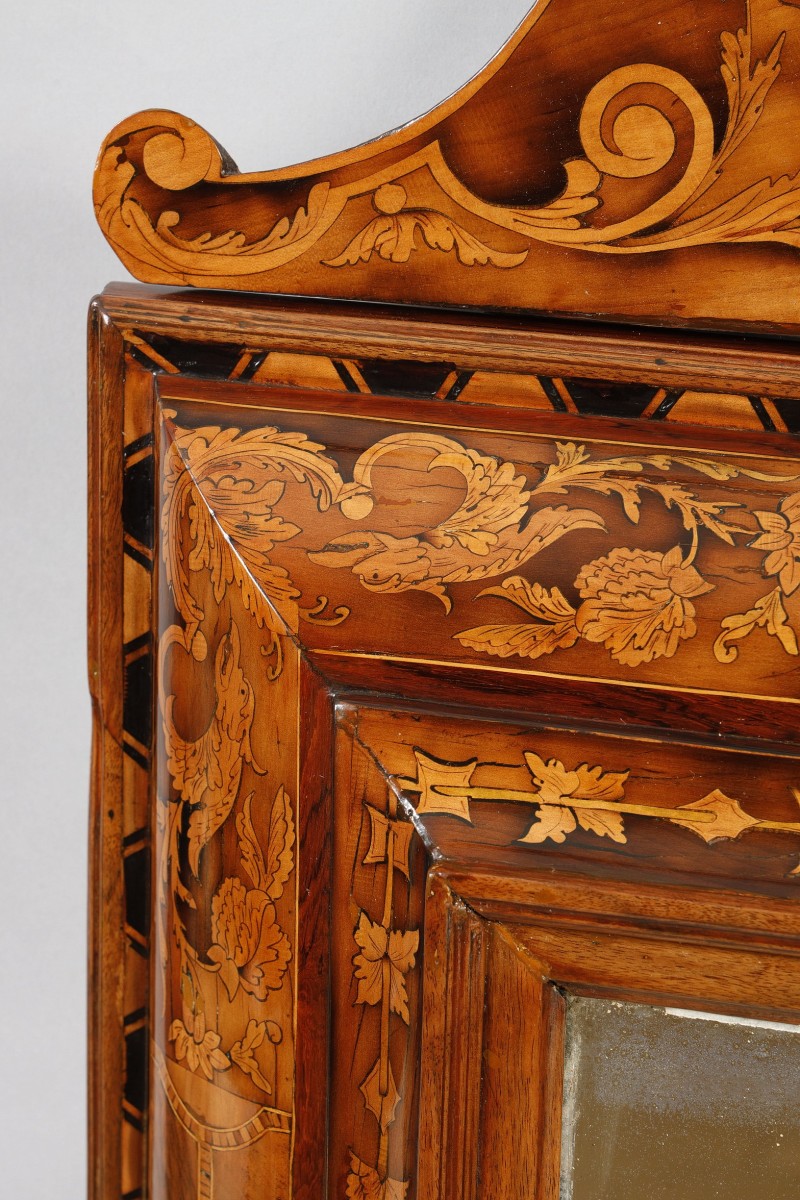
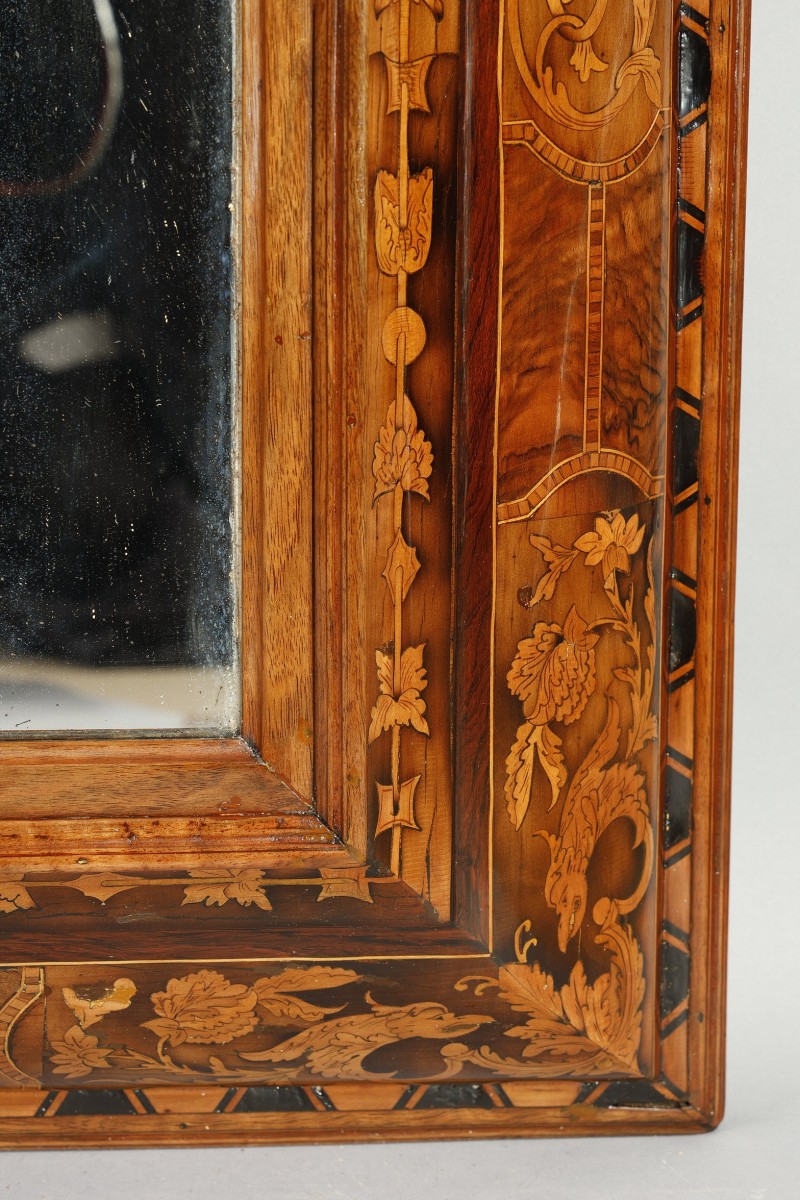
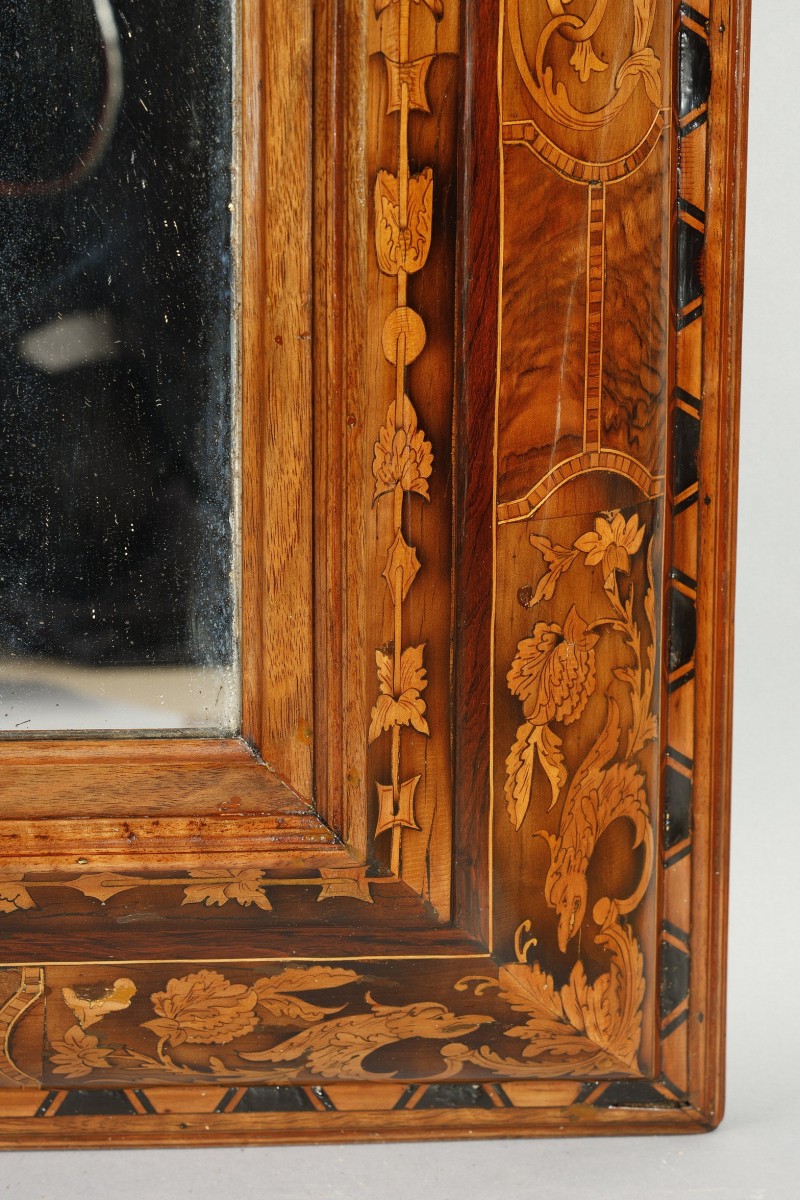
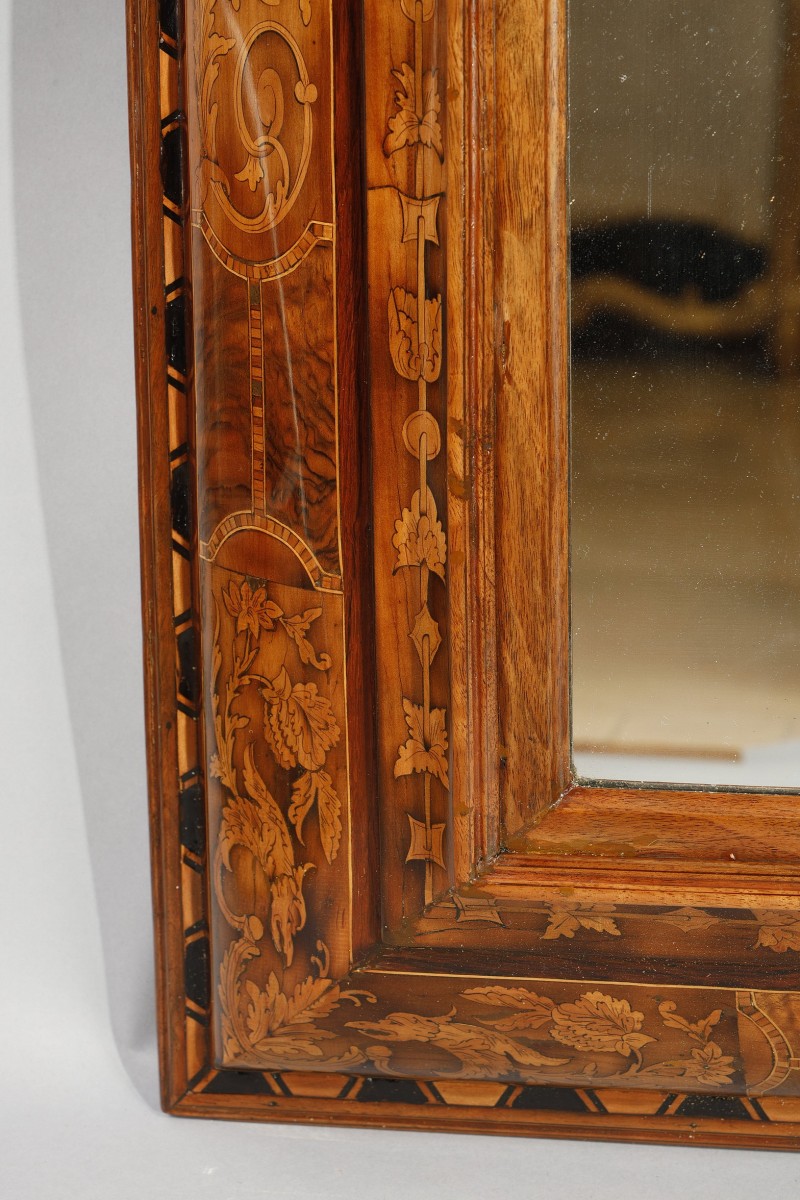
The frame, well-proportioned, is distinguished by its multi-layered, architectural construction and a double-reverse-profile molding; the successive tiers of molding emphasize the depth and showcase the interplay of the veneers.
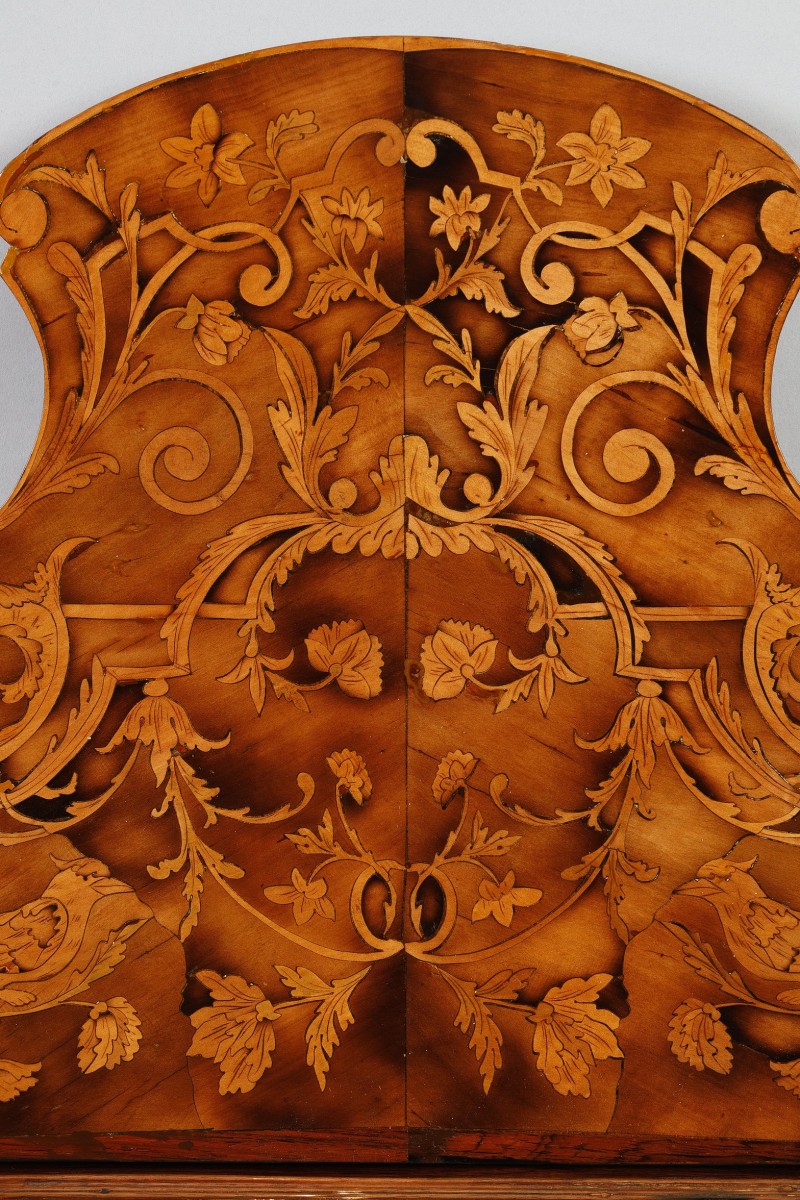
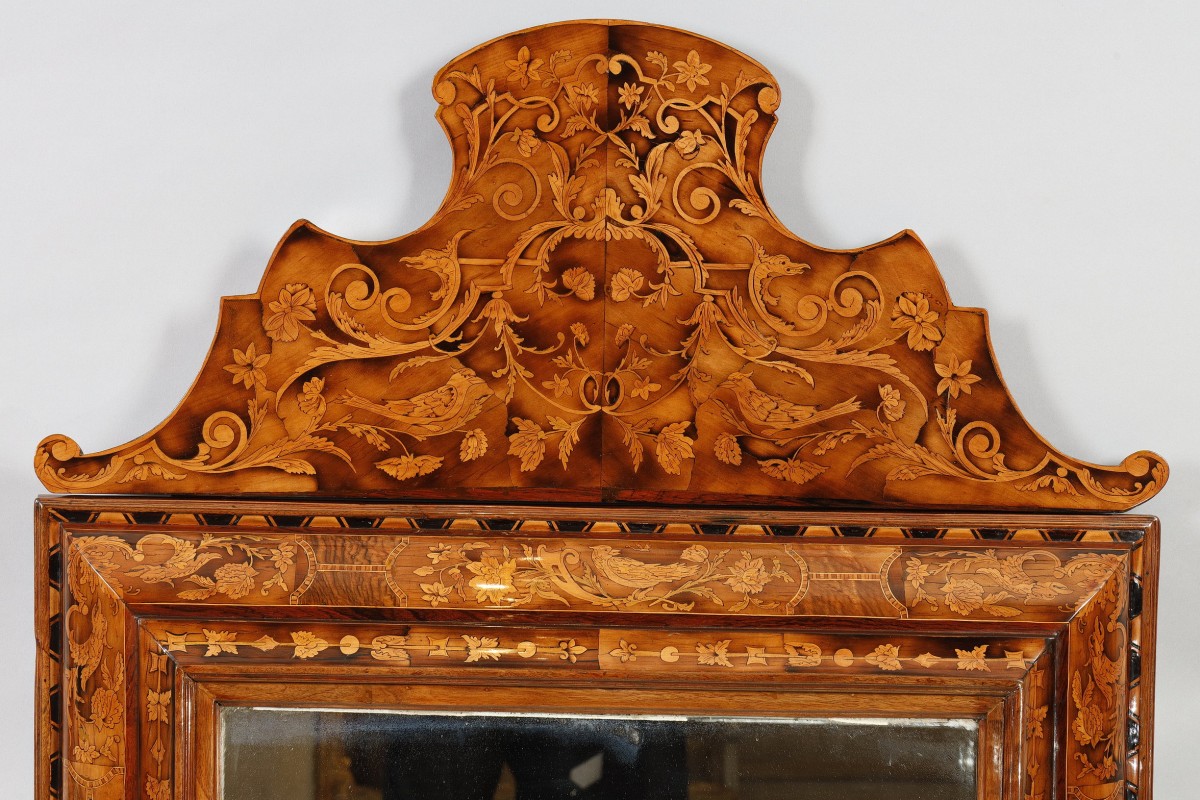
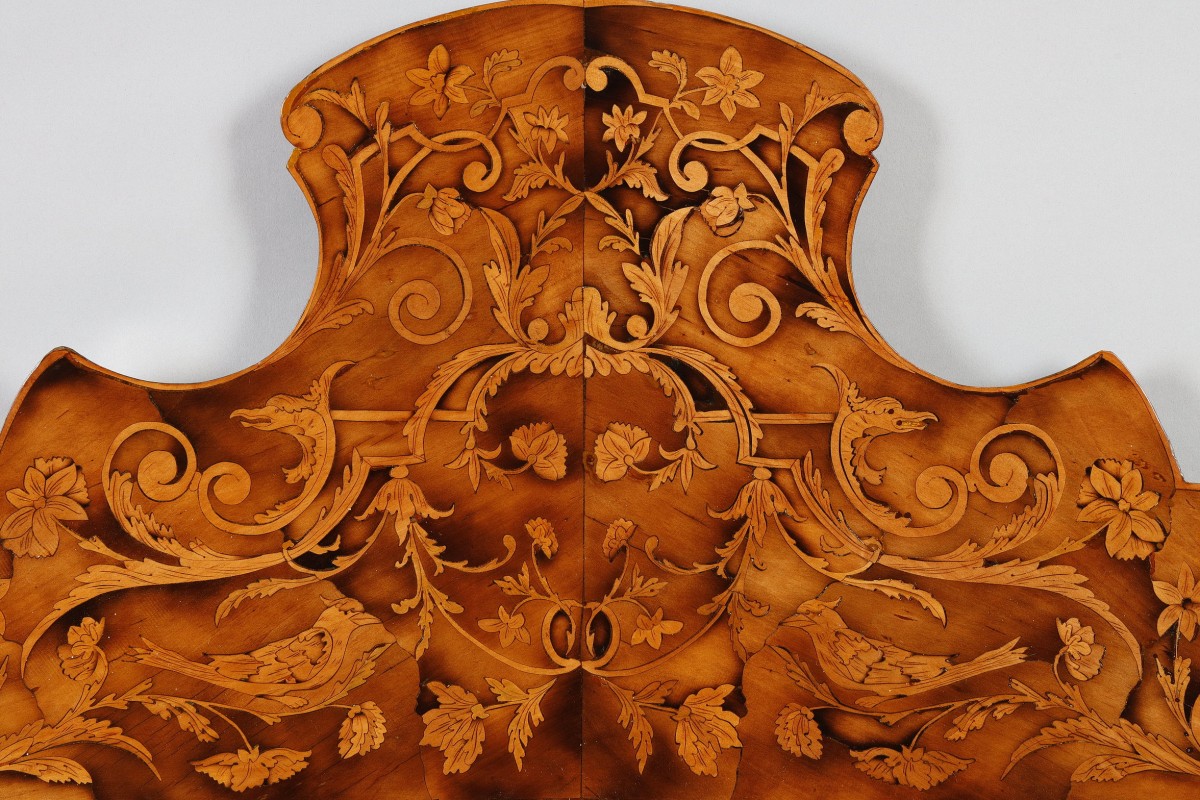
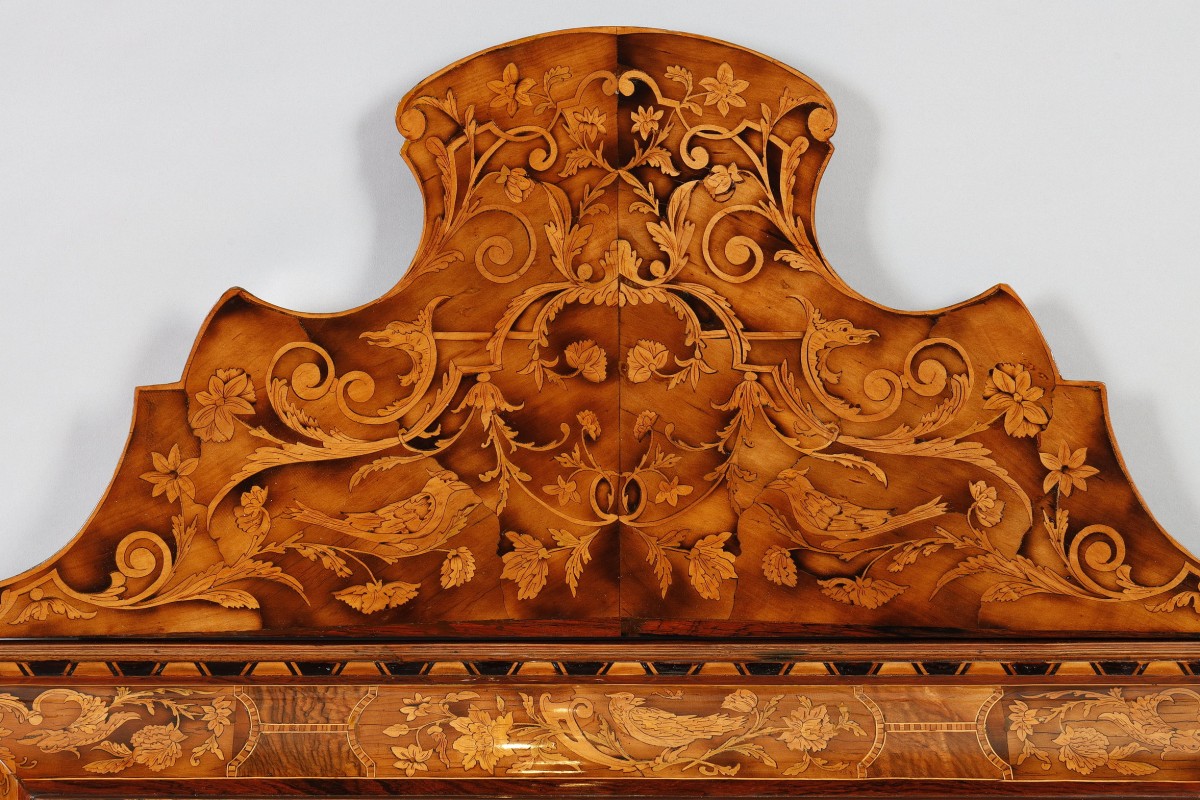
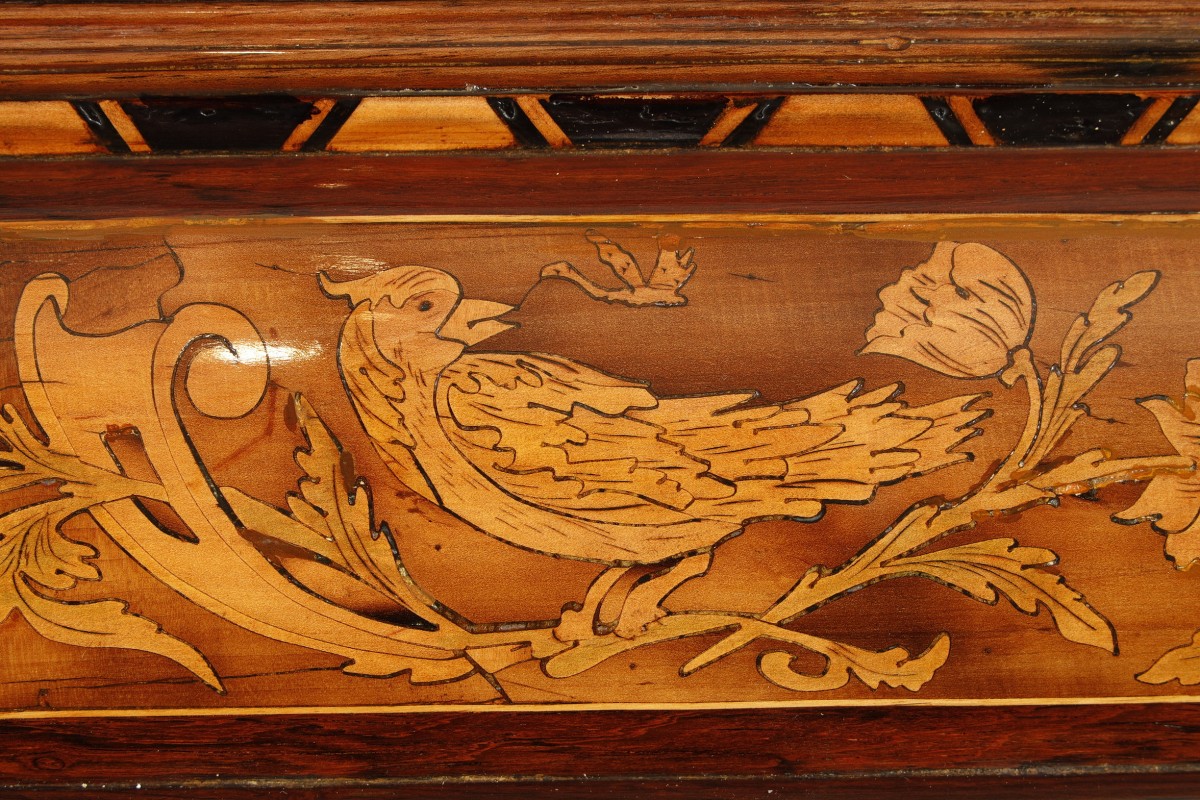
The decoration consists of leafy scrolls, flowers, and pairs of facing birds, arranged in a symmetrical composition. It is crowned by a large, shaped pediment, richly adorned with similar floral and botanical motifs, enlivened by volutes and arrangements of birds positioned on either side of the central axis.
The foliage, flowers, and birds are rendered with precision, while the botanical scrolls follow the contours of the frame.
The motifs are crafted using the "hot sand" shading technique, a process in which the wood is locally heated to create brown tones and graduated shading. This technique adds dimension to the foliage, flowers, and birds, while refining the detail of the overall design.
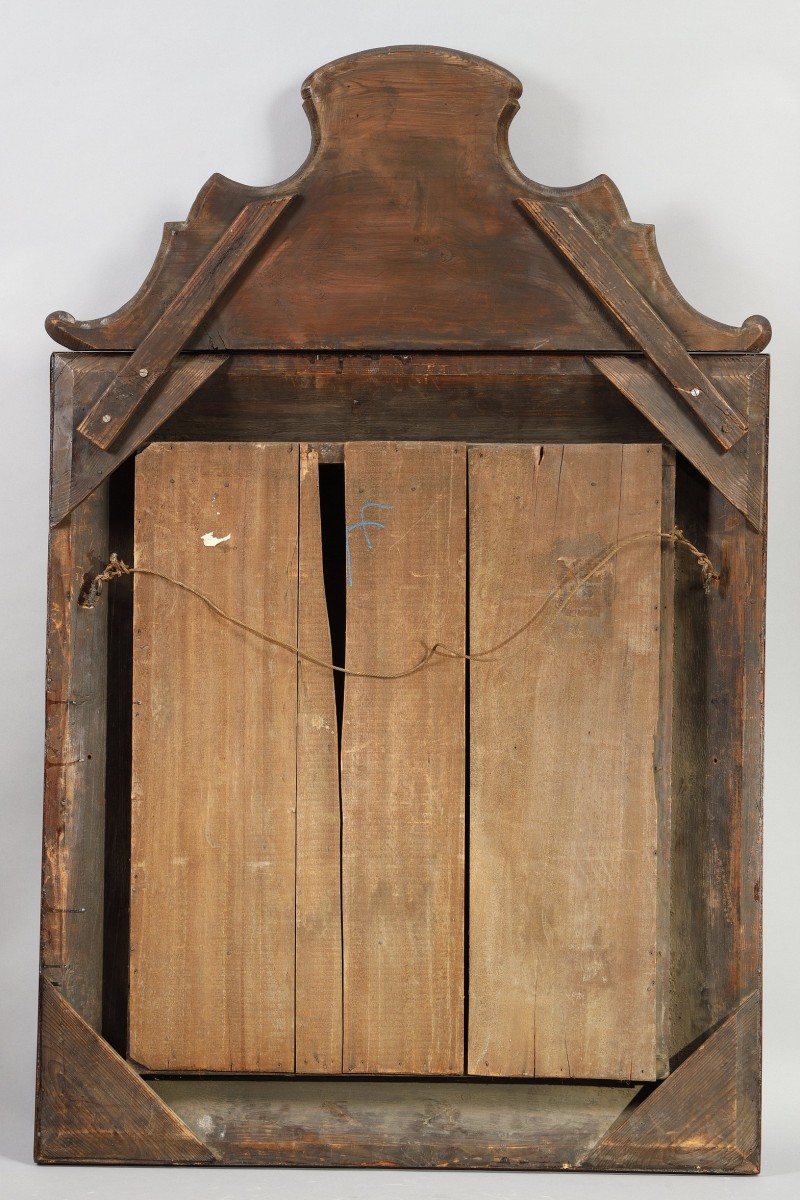
The quality of the marquetry is evident in the precision of the lines, the handling of detail, and the variety of shades achieved. The construction of the frame, with its distinct projections and inverted profiles, lends a unique dimension to this mirror.
Furthermore, the lavish floral ornamentation, playing on contrasts between vivid and dark colors, is a hallmark of the Hache family. Thomas Hache, in particular, introduced innovations in his veneers: "It is in the content of these pre-prepared veneers, featuring stylized scrolls, foliage, and flowers arranged in highly intricate, dense compositions, that he stands apart; no other cabinetmaker, with the exception of his son Pierre, ever employed such designs. The botanical motifs are cut from light-colored wood and shaded to create a sense of relief" ("Le génie des Hache", by Pierre and François Rouge, p. 65).
With its substantial height of 144 cm, its elaborate shaped pediment, and the richness of its marquetry, this mirror represents an exceptional example of craftsmanship from the period.
Late 17th-century work; attributed to Thomas Hache (1664–1747).
The reason Thomas Hache (1664–1747), a cabinetmaker from Grenoble, was able to produce such elaborate marquetry lies in his training under Pierre Gole, cabinetmaker to King Louis XIV and a master of floral marquetry. He later spent time in Chambéry, where he encountered the "Italian-style" decorative tradition, characterized by vegetal scrolls, interlacing patterns, arabesques, acanthus leaves, and an abundance of botanical motifs, as well as the technique of "scagliola". Building upon this technique, he developed his own style of marquetry, characterized by the intricate interlocking of shapes and various types of wood.
In 1695, he settled in Grenoble and established himself as a highly regarded cabinetmaker, constantly seeking a harmonious balance between form and motif. His work is marked by exceptional precision,a quality clearly evident in this mirror.
Dimensions: H 144 cm x W 94 cm