Offered by Galerie Gilles Linossier
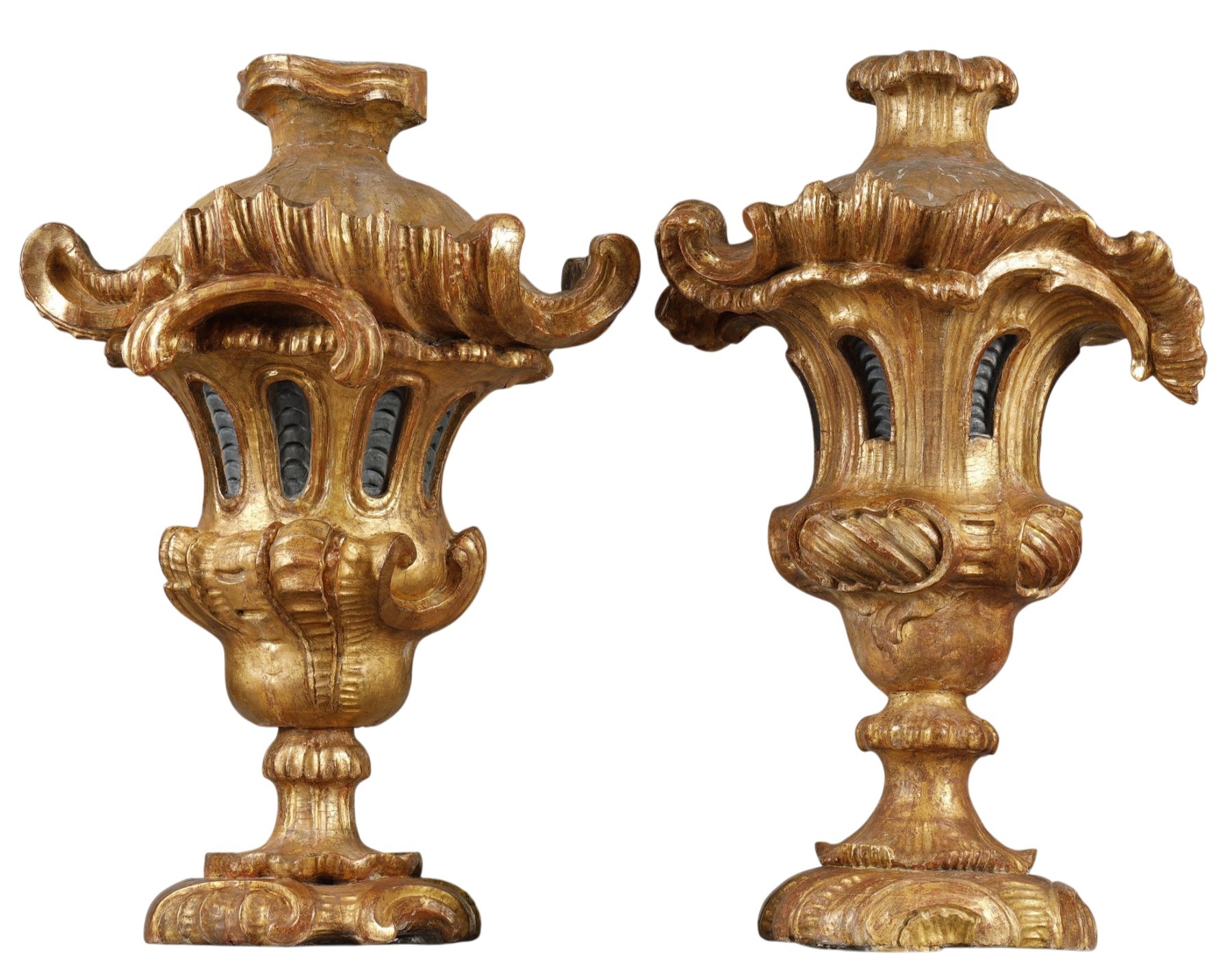
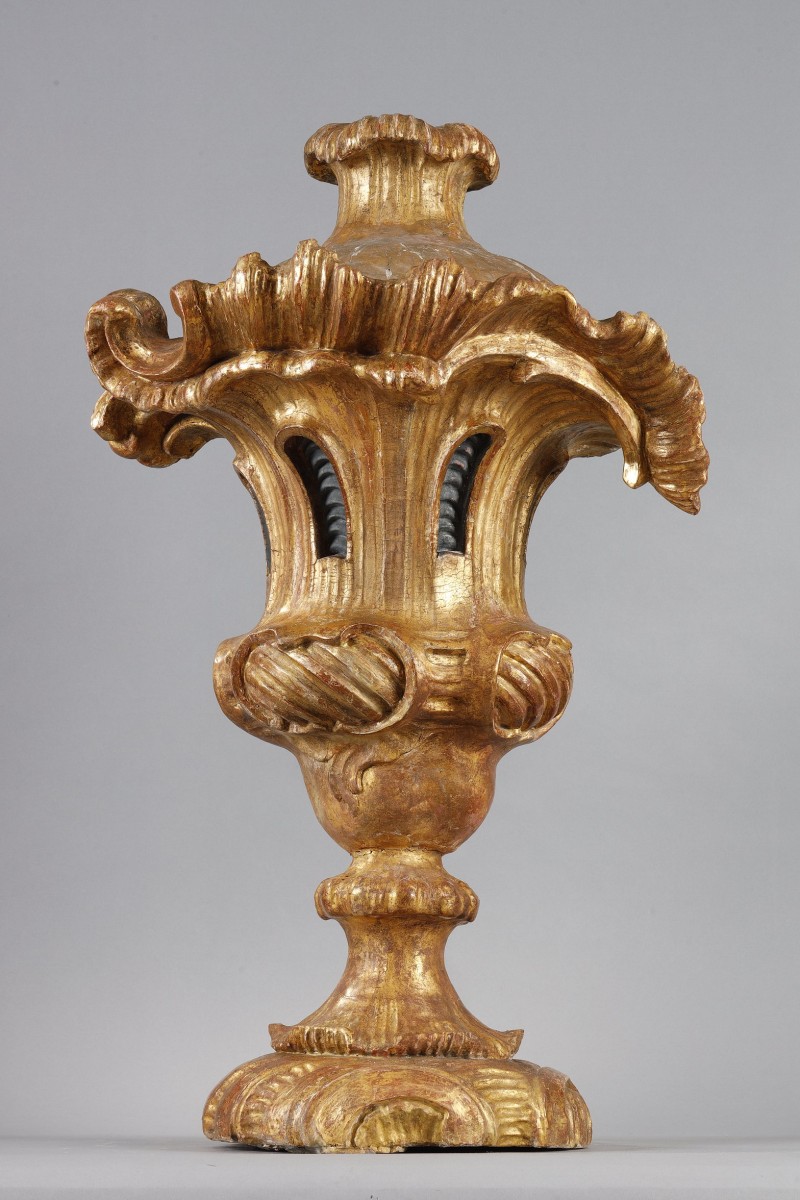

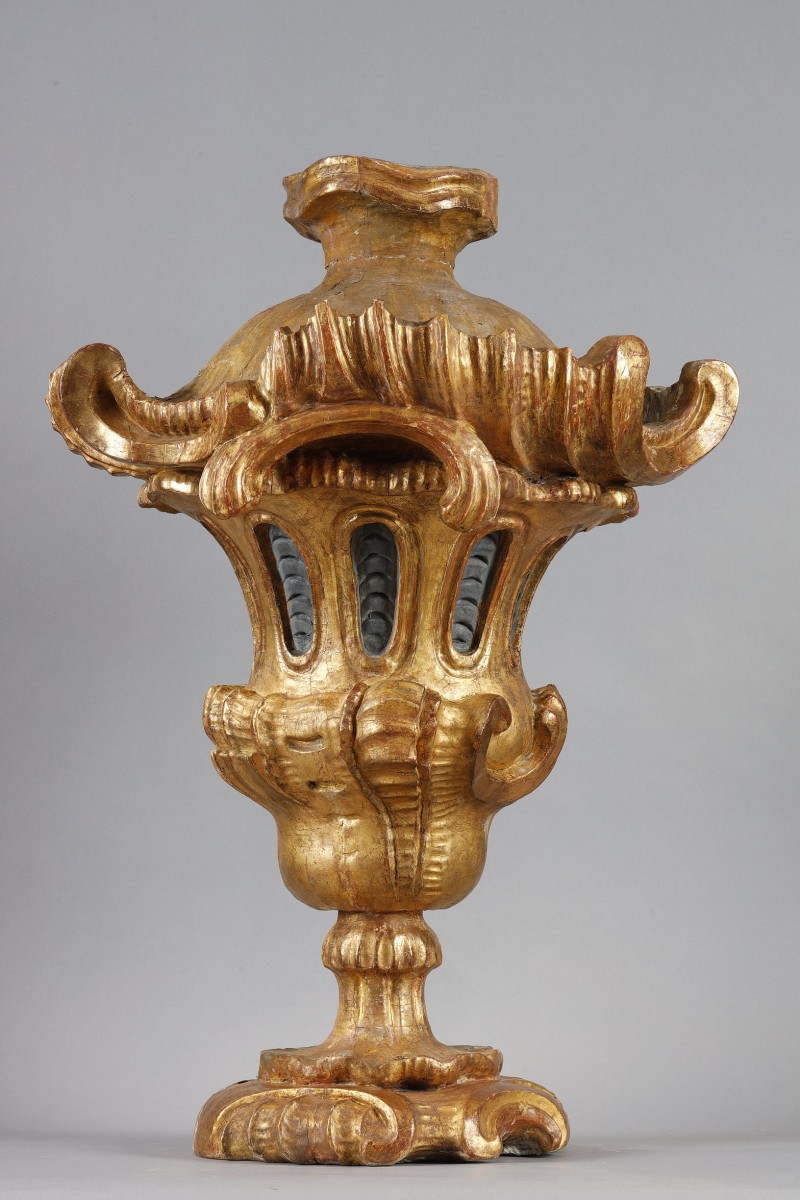
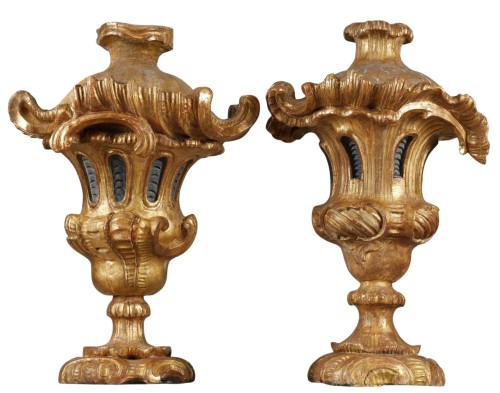
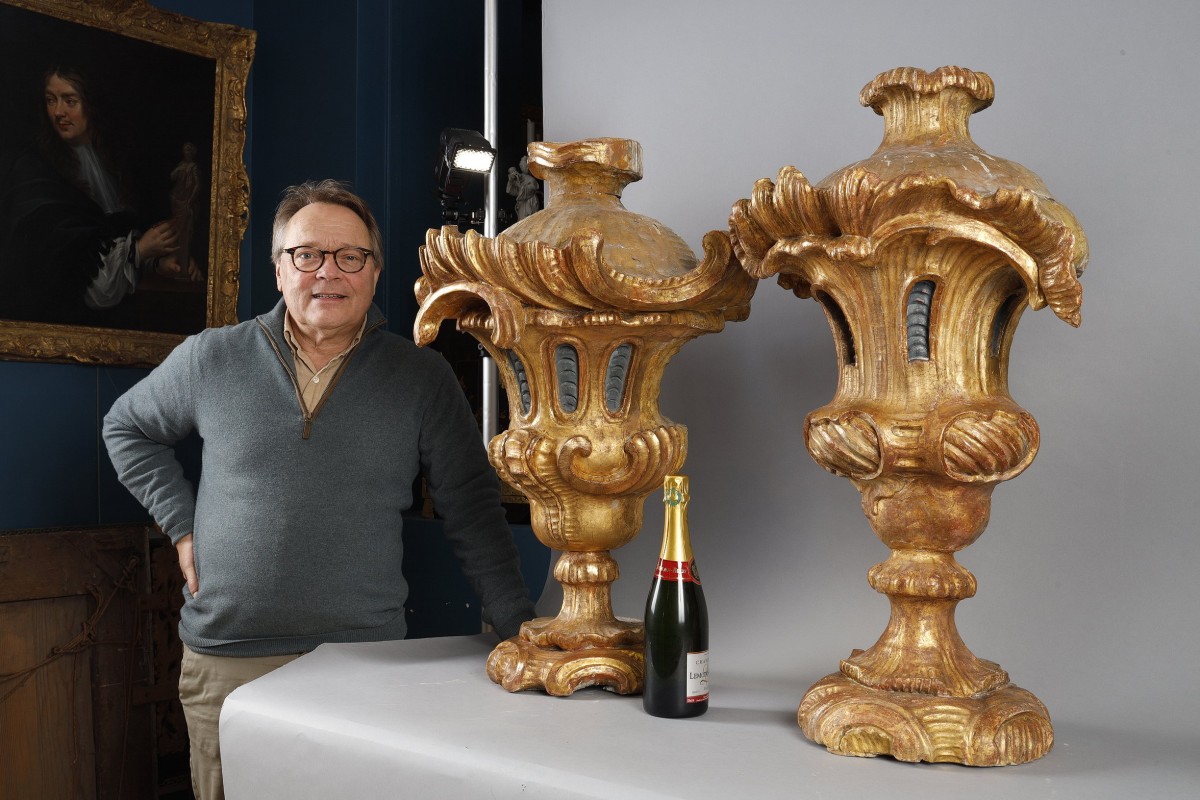
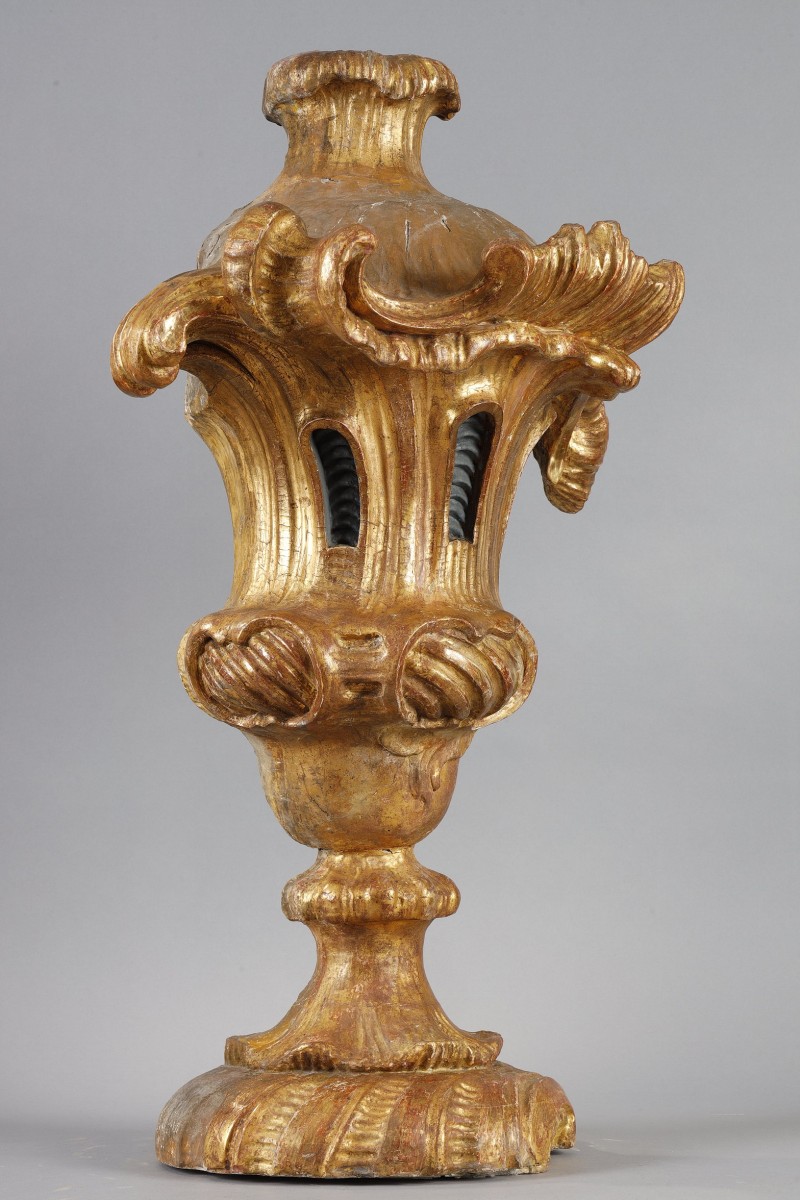
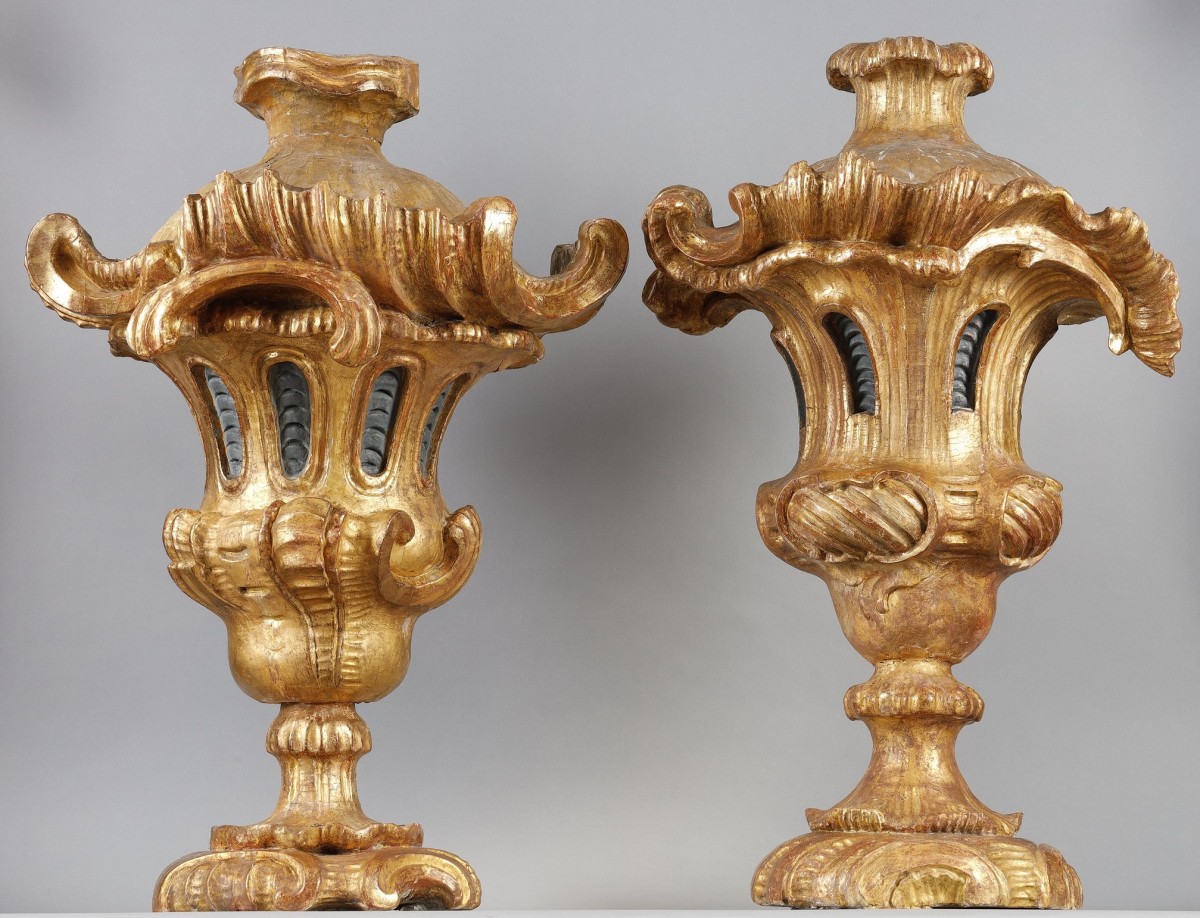
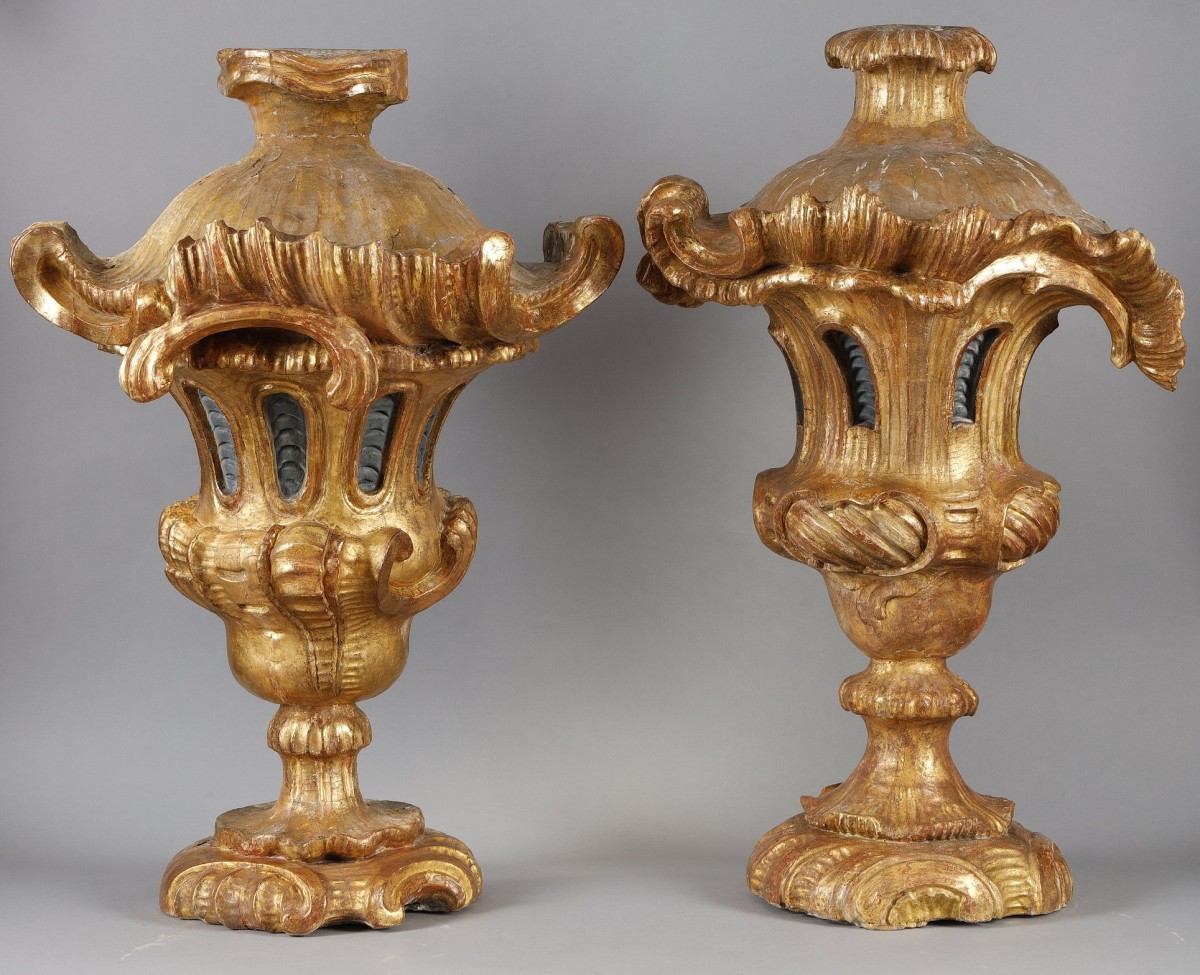
Resting on a richly carved circular base, these two 82 cm-tall ornamental urns, says "pots-à-feu", feature an architectural yet dynamic composition, crafted entirely from solid, gilded wood.
Although each piece possesses unique sculptural details, they form a true pair in terms of their overall structure and the handling of their volumes.
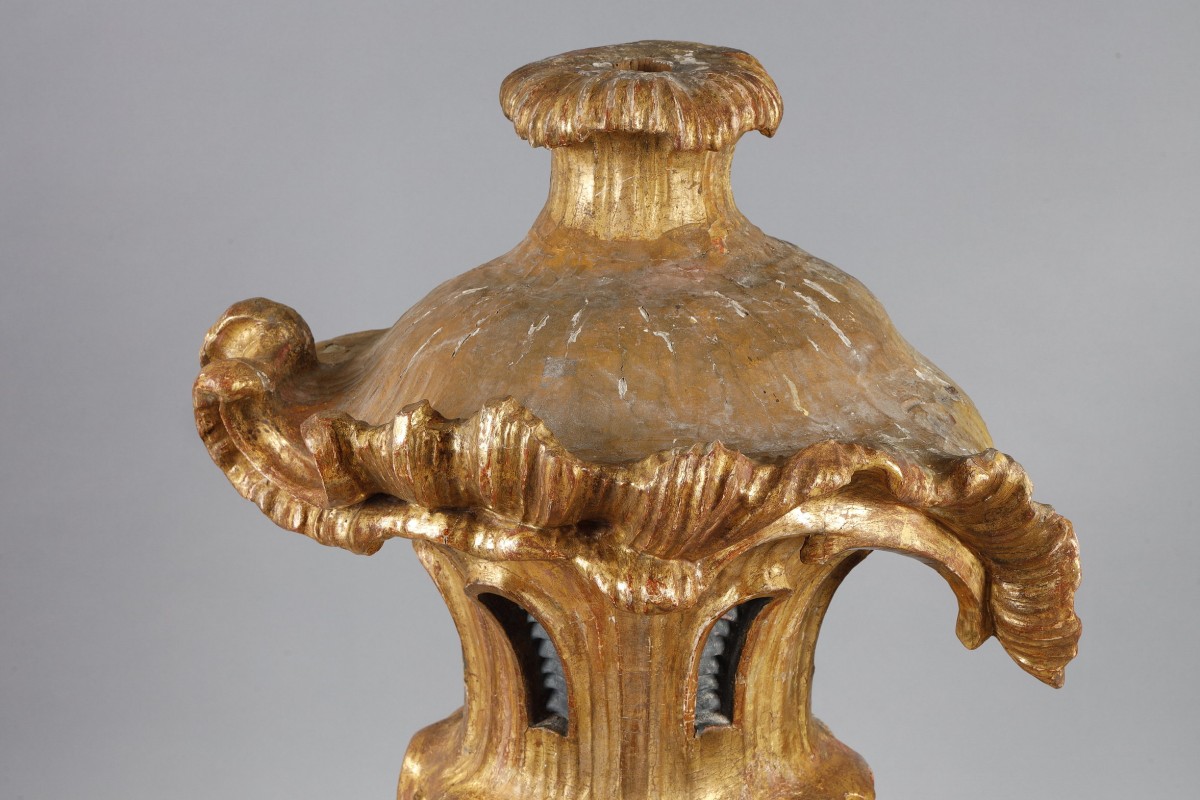
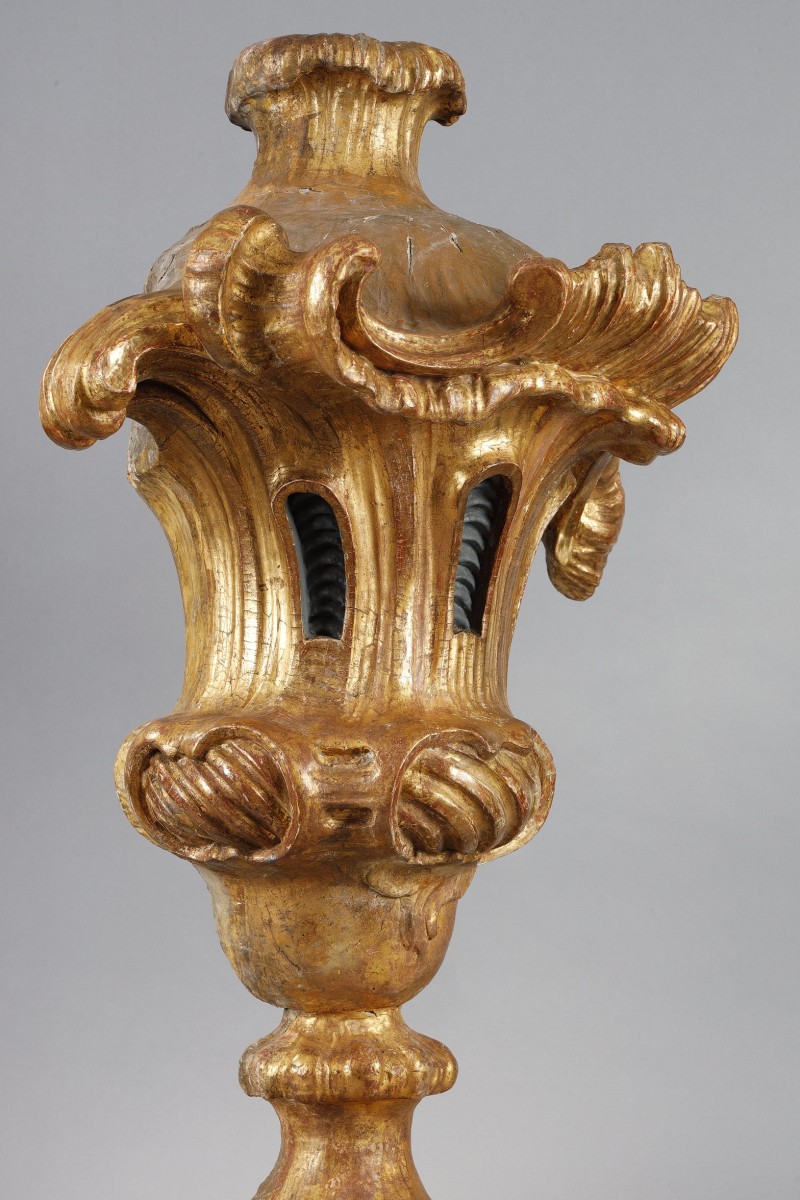
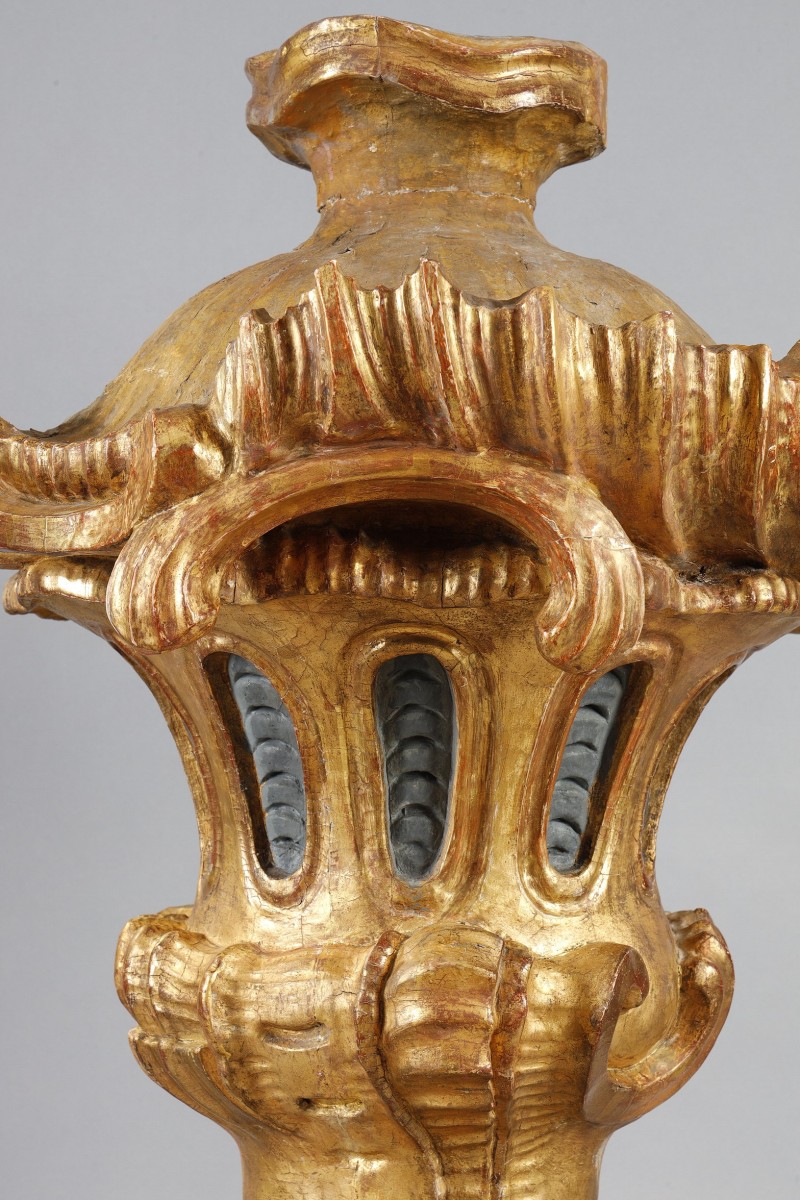
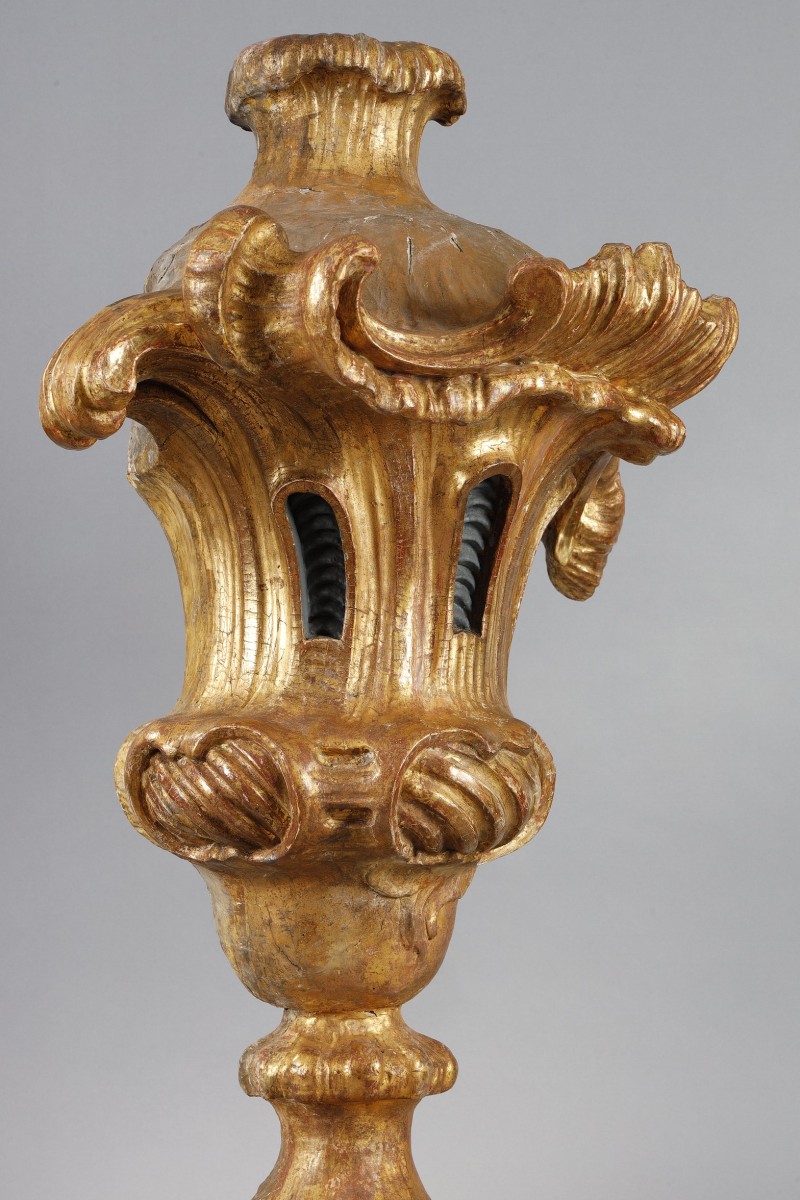
The upper section is enlivened by a broad, contoured cornice with deeply cut edges that rise into volutes. The extremities curl back in sweeping, generous movements, while the central portion is accented by a frieze of fluting and vertical folds, creating a rhythmic, high-contrast relief.
The upper neck, topped with a molded crown (wavy in one instance, mushroom-like in the other), further extends this silhouette.
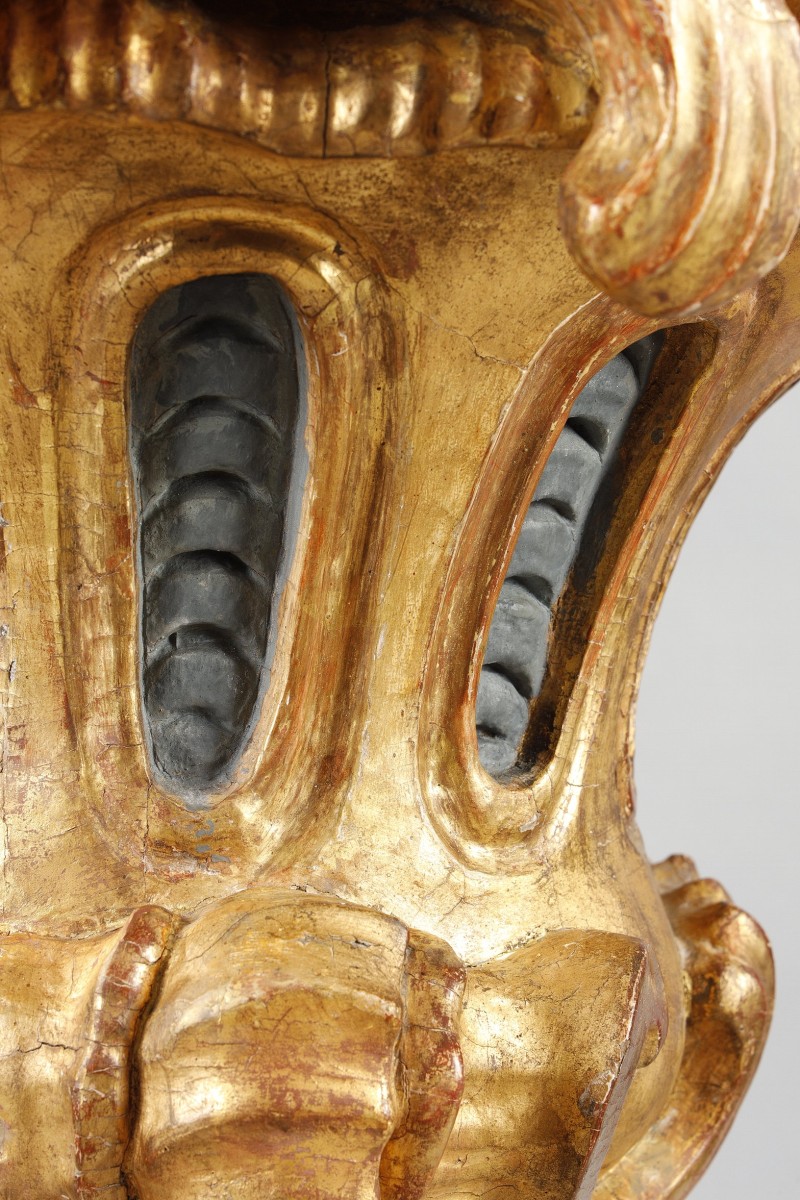
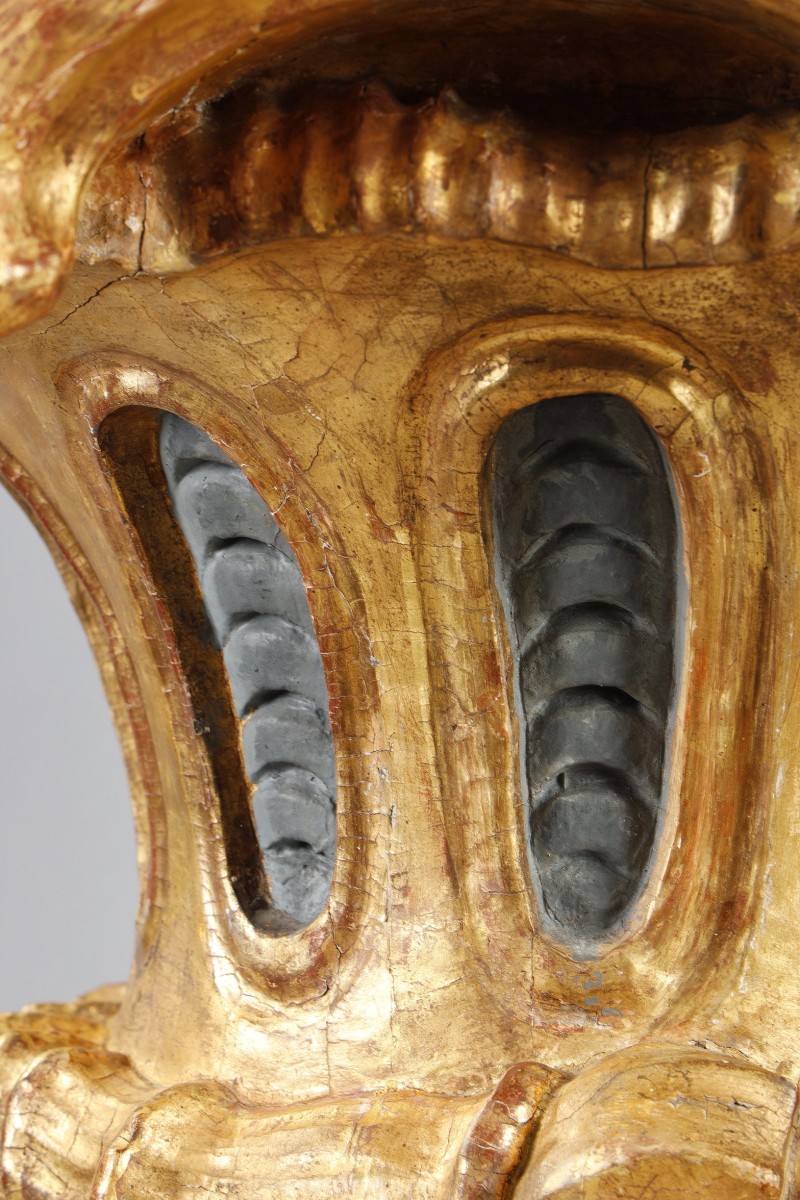
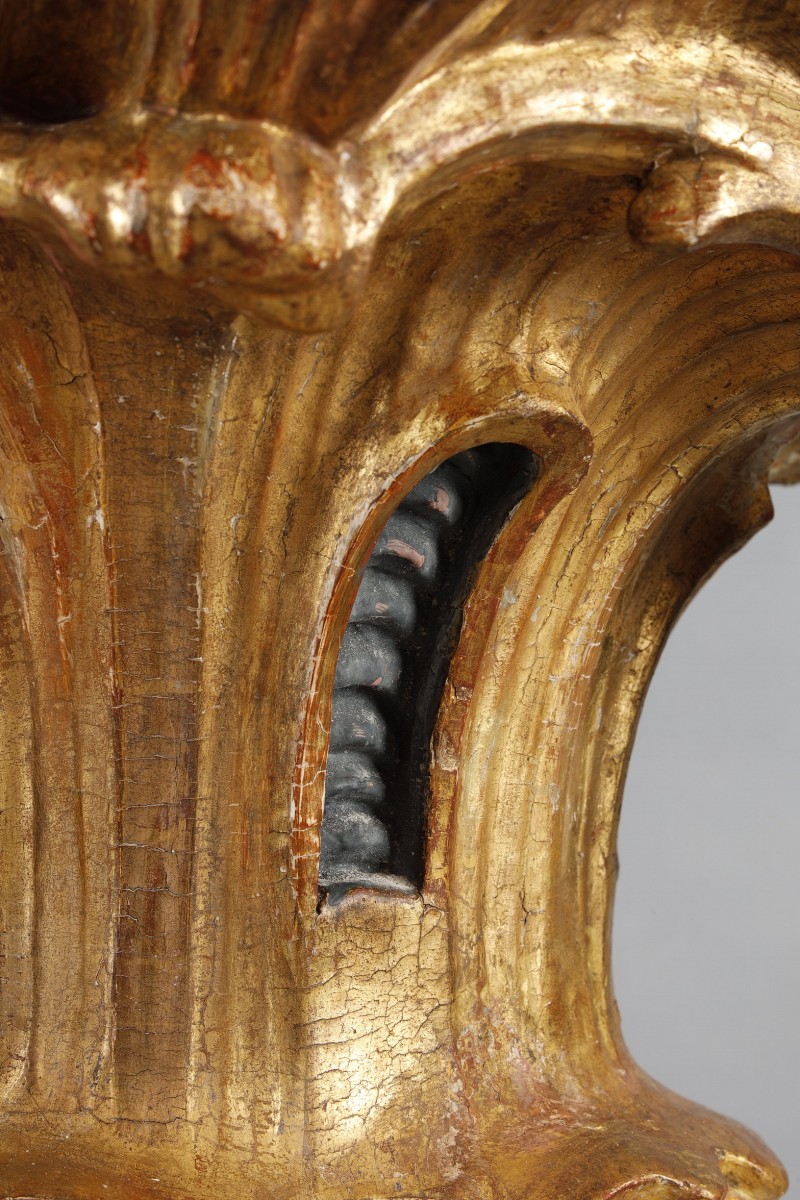
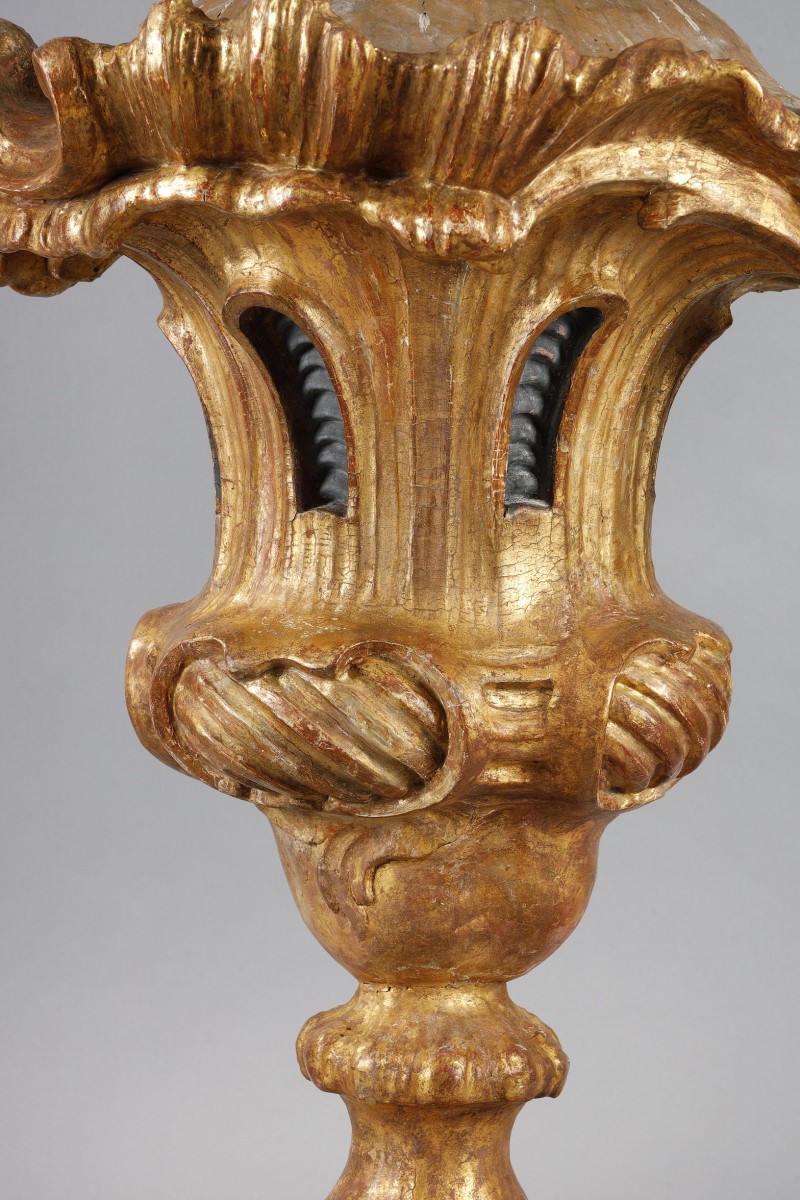
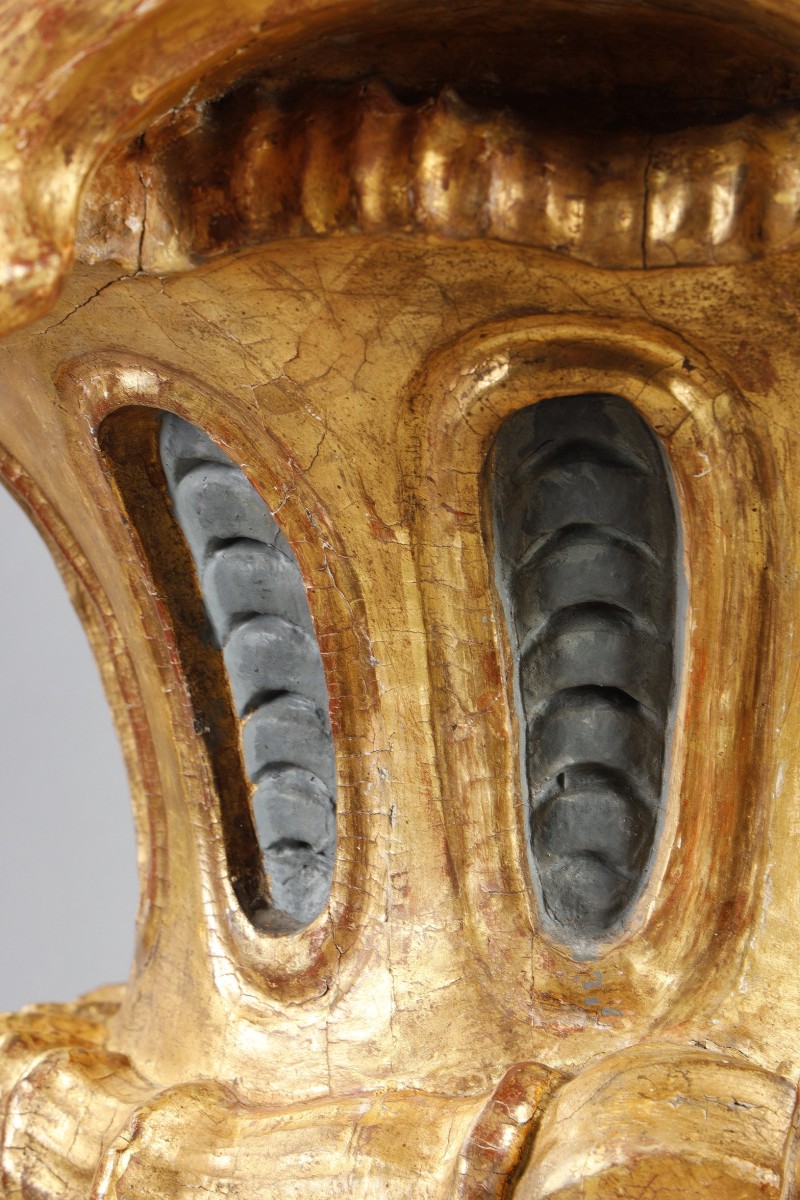
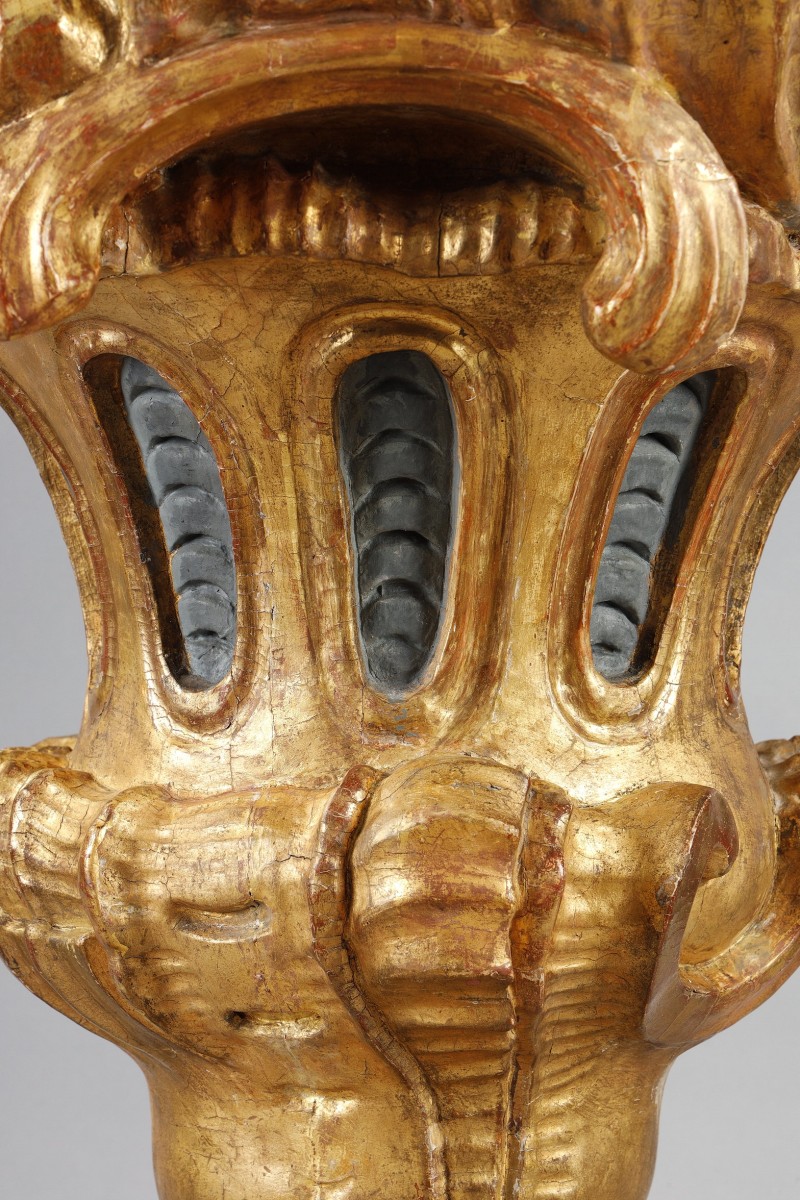
The central body, designed as a baluster, is punctuated by tall, recessed vertical windows.
On one piece, these windows are separated by deeply carved, curved wooden elements; on the other, each windows is framed by delicate, oval-shaped carvings reminiscent of gadroon motifs.
These elements follow the curvature of the shaft, accentuating the slender, elongated quality of the composition.
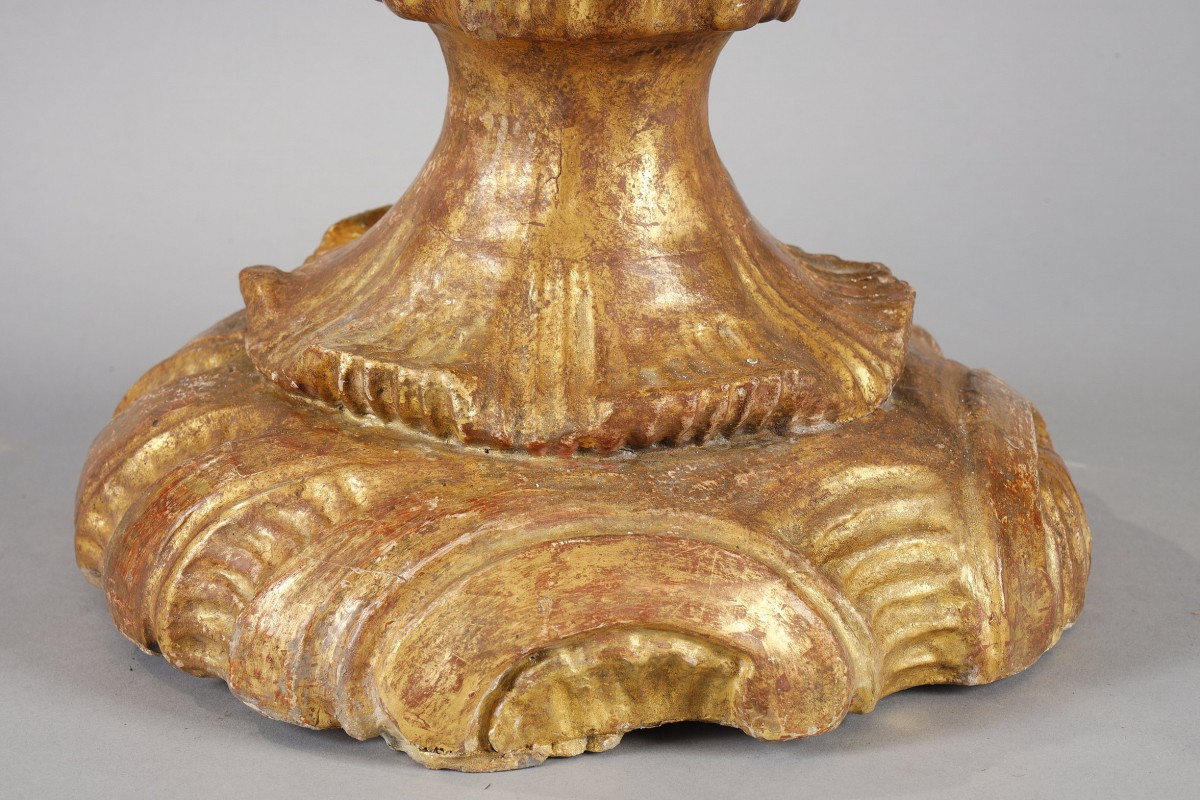
The lower section expands into a bulbous form, adorned with gadroons, shells, and carved, raised volutes.
A short pedestal, featuring a molded profile with gadroon motifs and a curved base, serves as the transition to the circular foot, the perimeter of which is decorated with carved scrollwork.
The interplay of curves and volutes creates a striking decorative effect, harmonizing the upper and lower sections of this pair. The deep-relief carving, executed directly into solid wood, with meticulous attention to the modeling of volumes, the hollowing out of recessed areas, and the crisp definition of the raised elements, lends a spectacular dimension to this impressive pair.
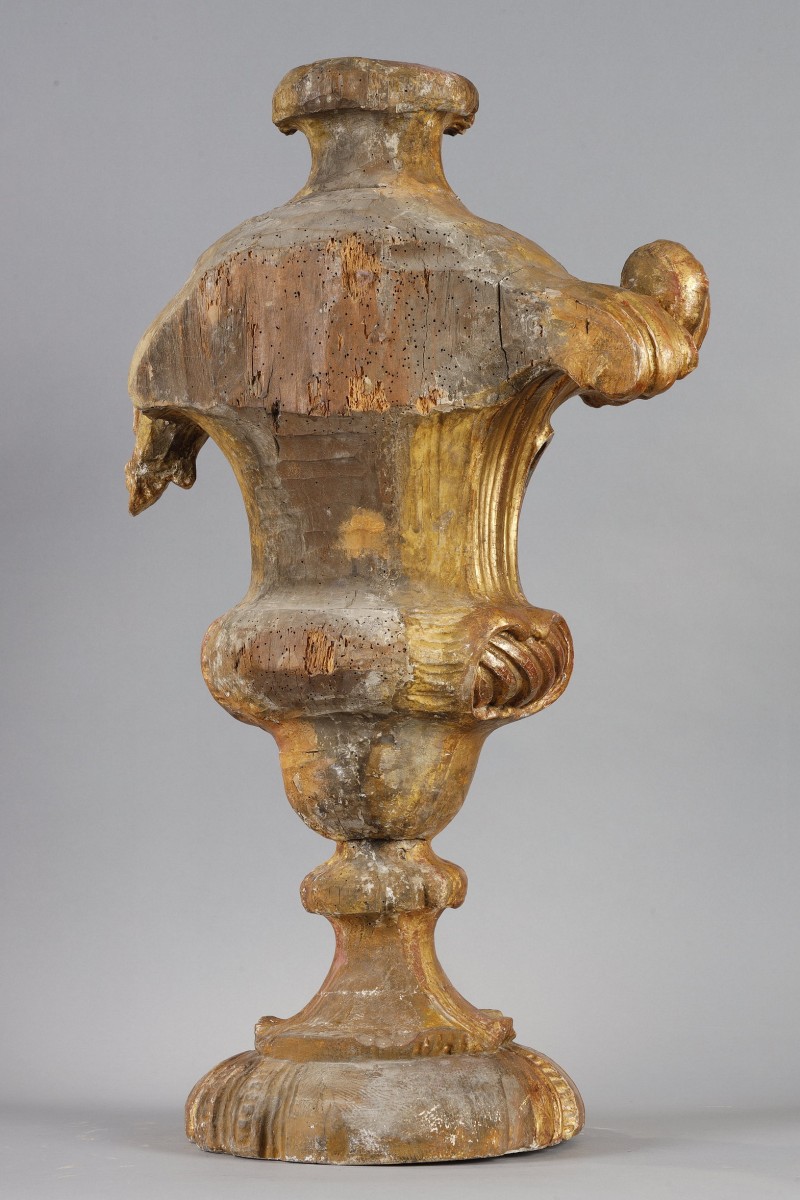
With their exceptional height of 82 cm, their commanding sculptural presence, and the richness of their elaborate, curvilinear ornamentation, these two "pots-à-feu" represent a particularly significant example of decorative furnishings from the Régence period. They likely belonged to a larger set, designed to be displayed within the grand niches of a castle; the backs of these pieces, intended to sit against a wall, feature a more rudimentary finish.
Dimensions : H 82 cm x W 57 cm