Offered by Robin Kowalski Antiques
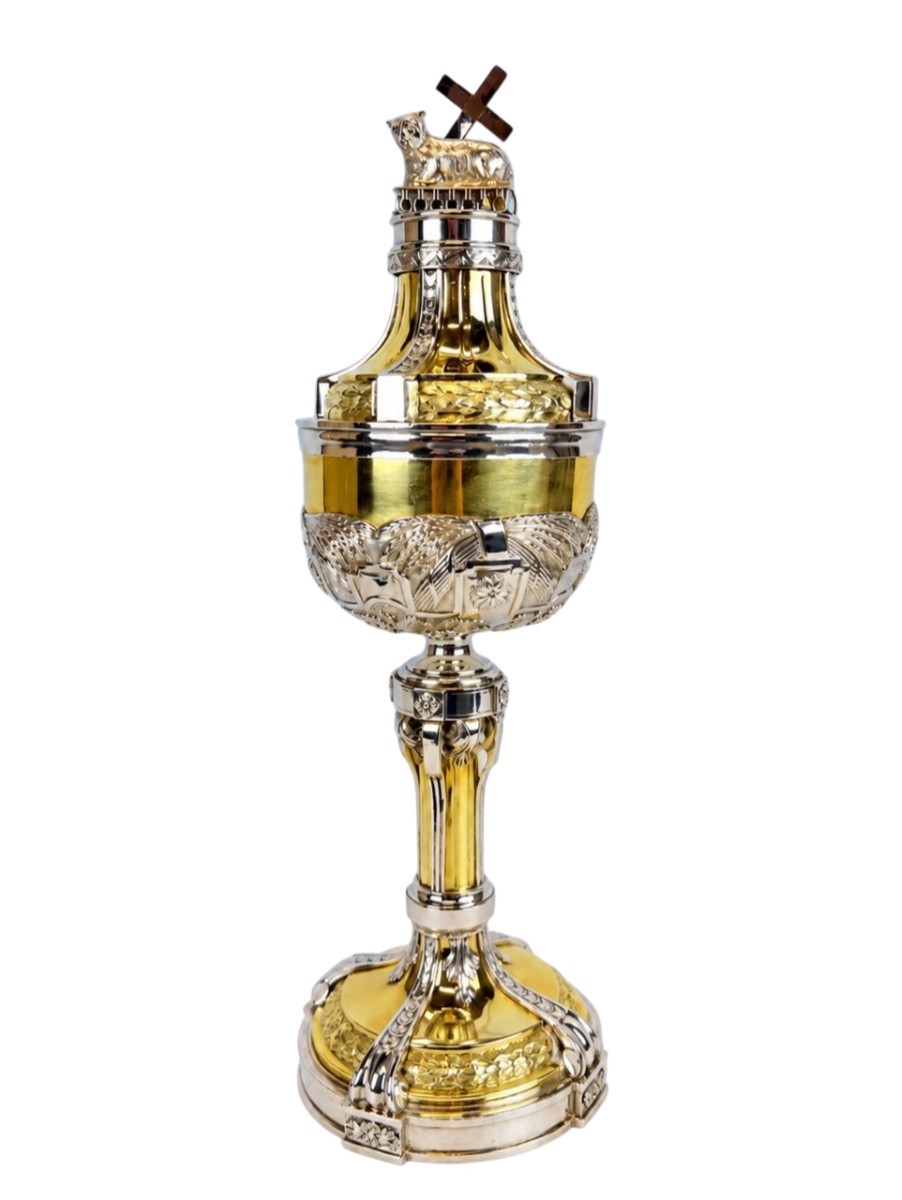
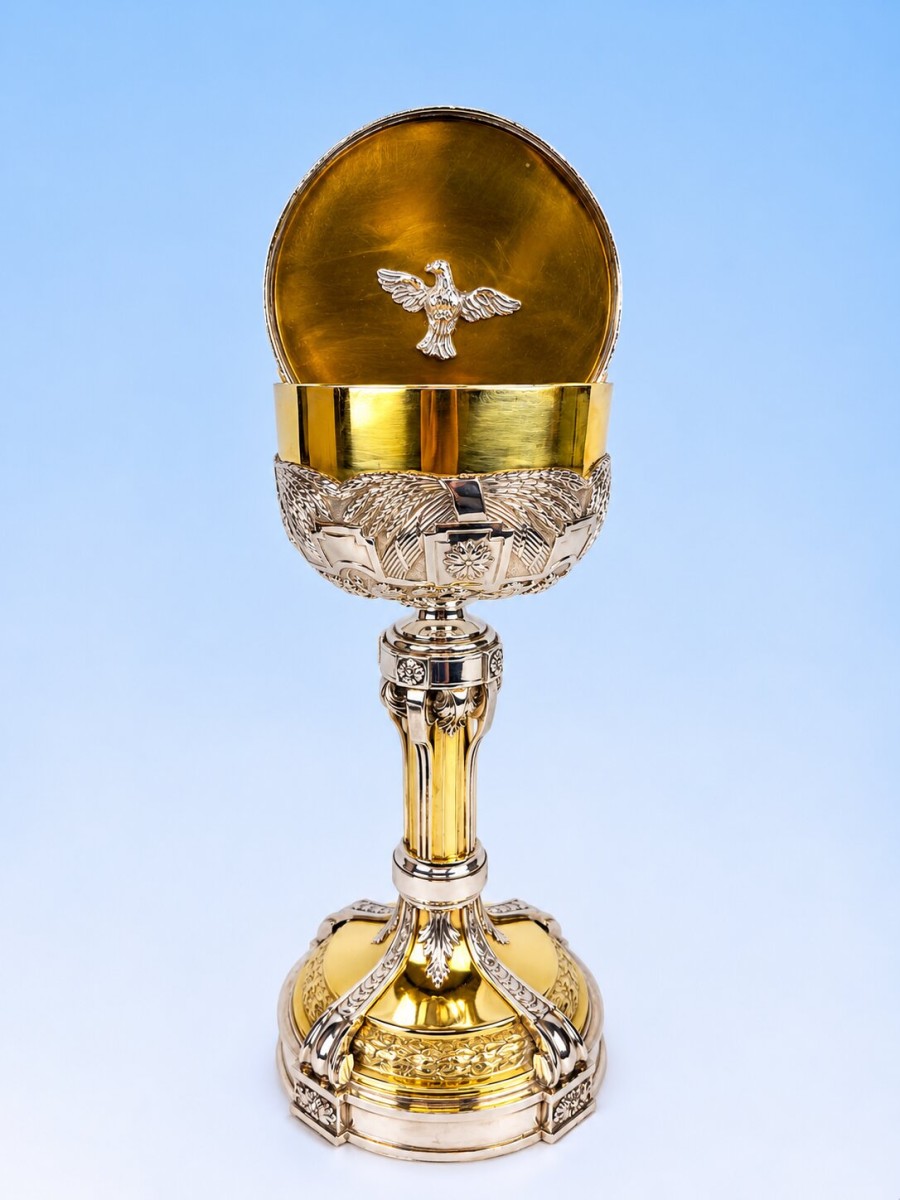
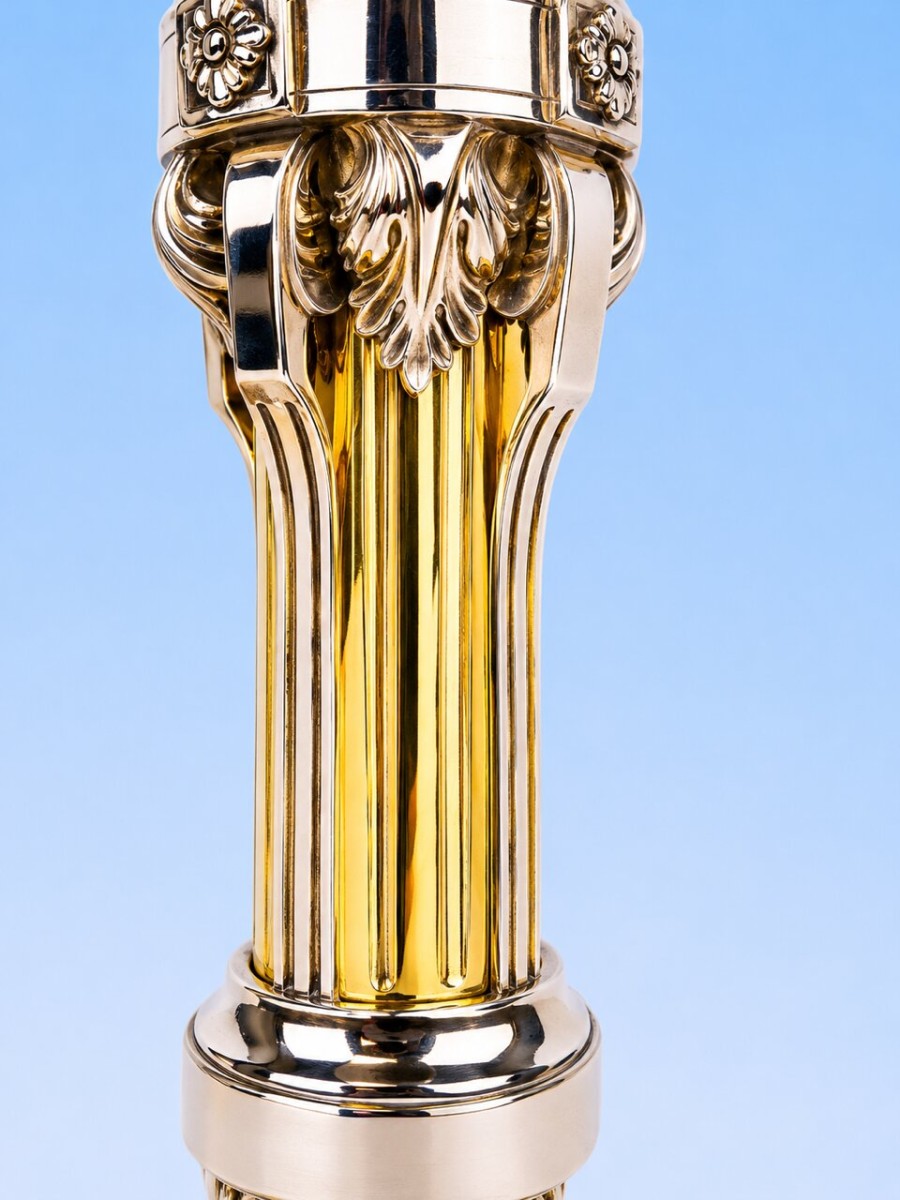
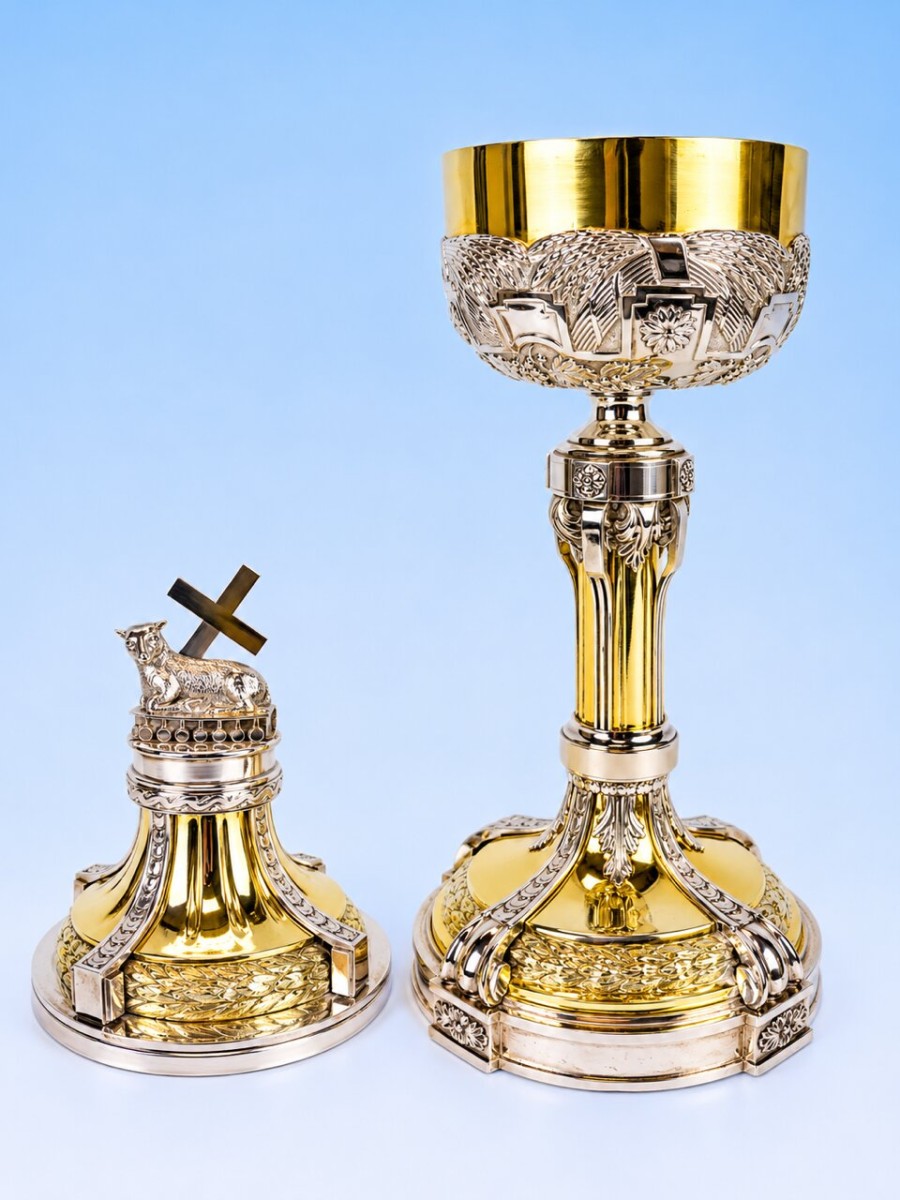
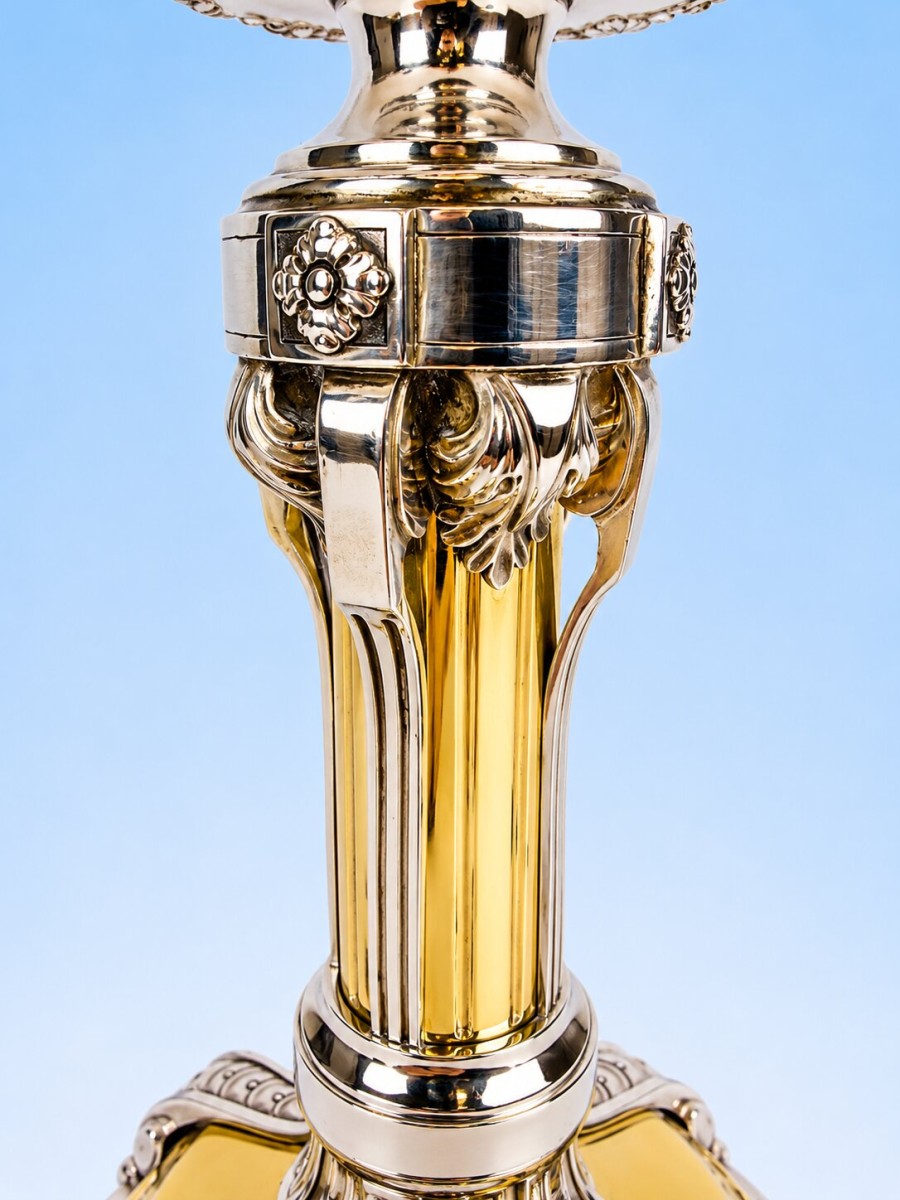

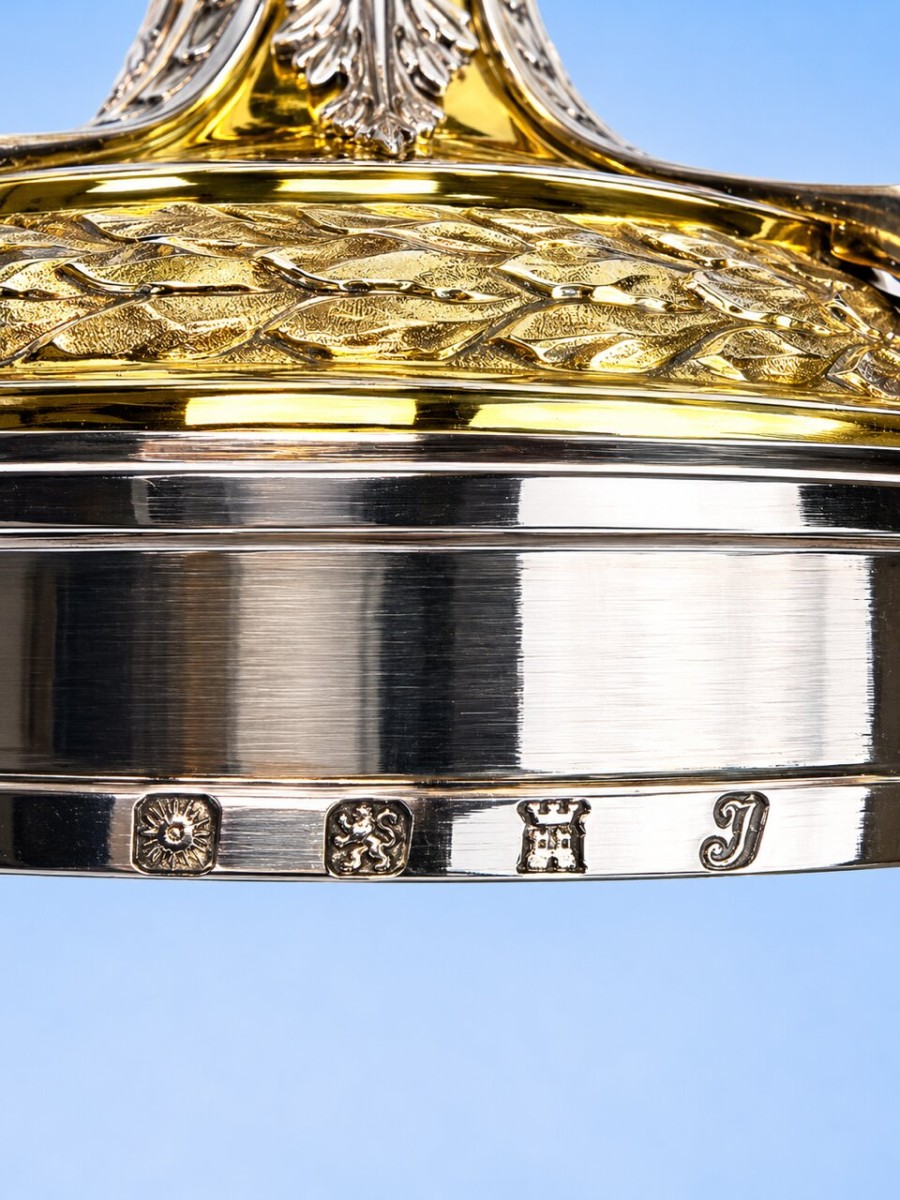
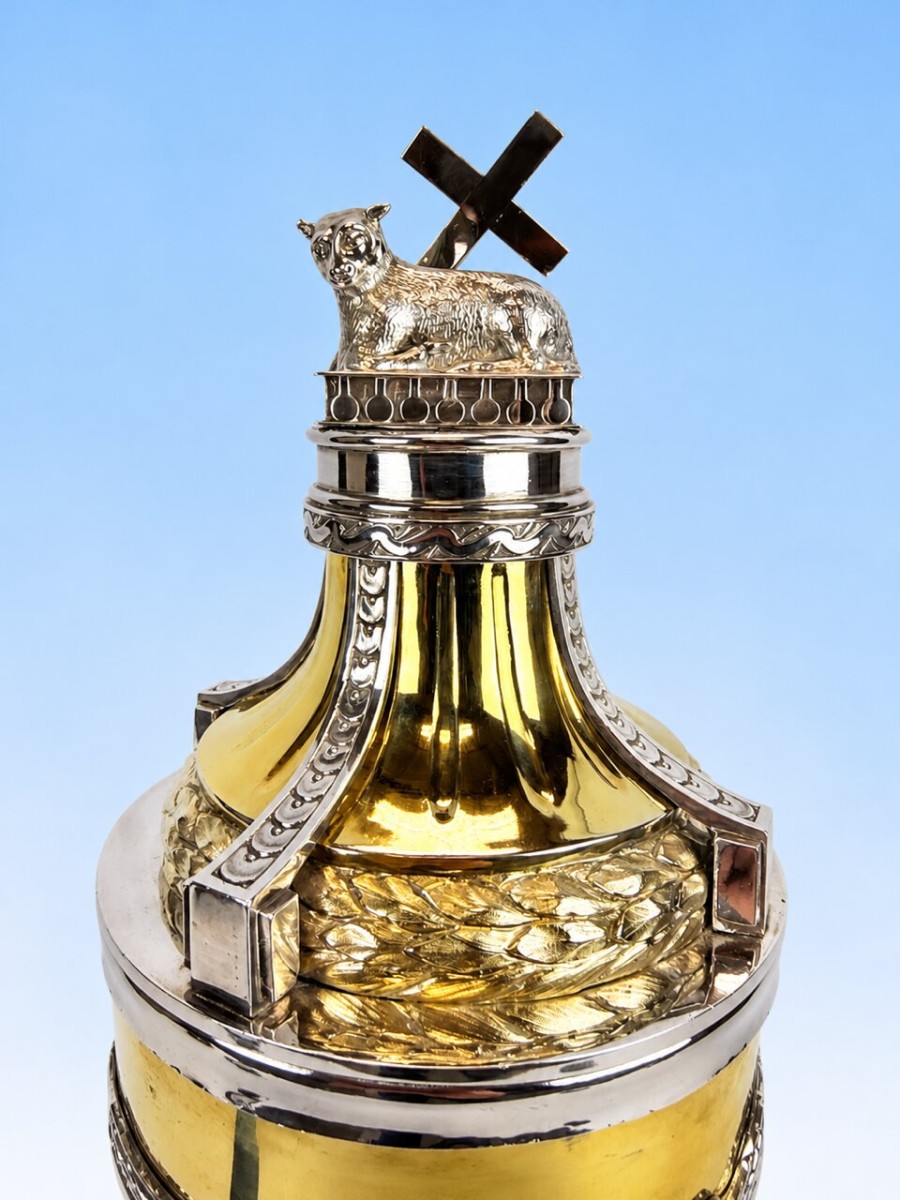
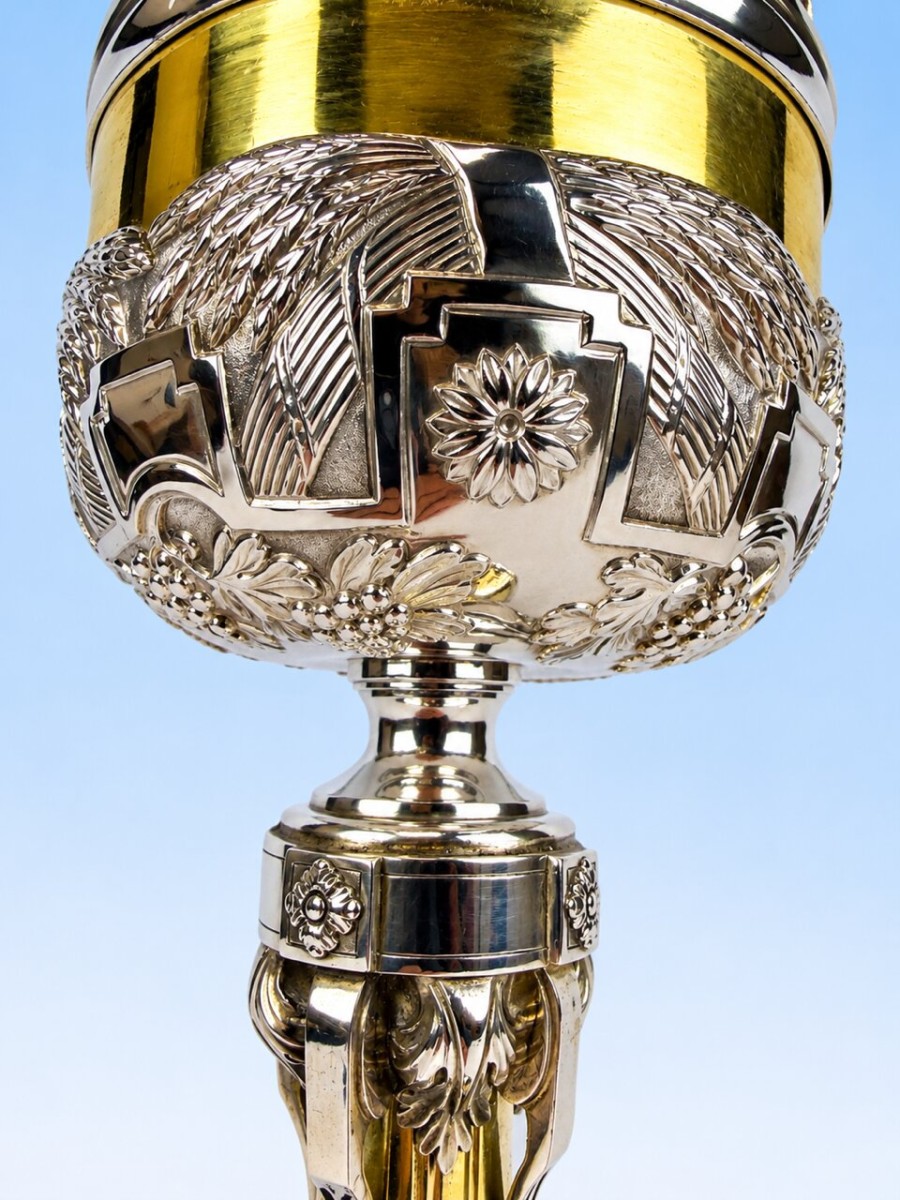
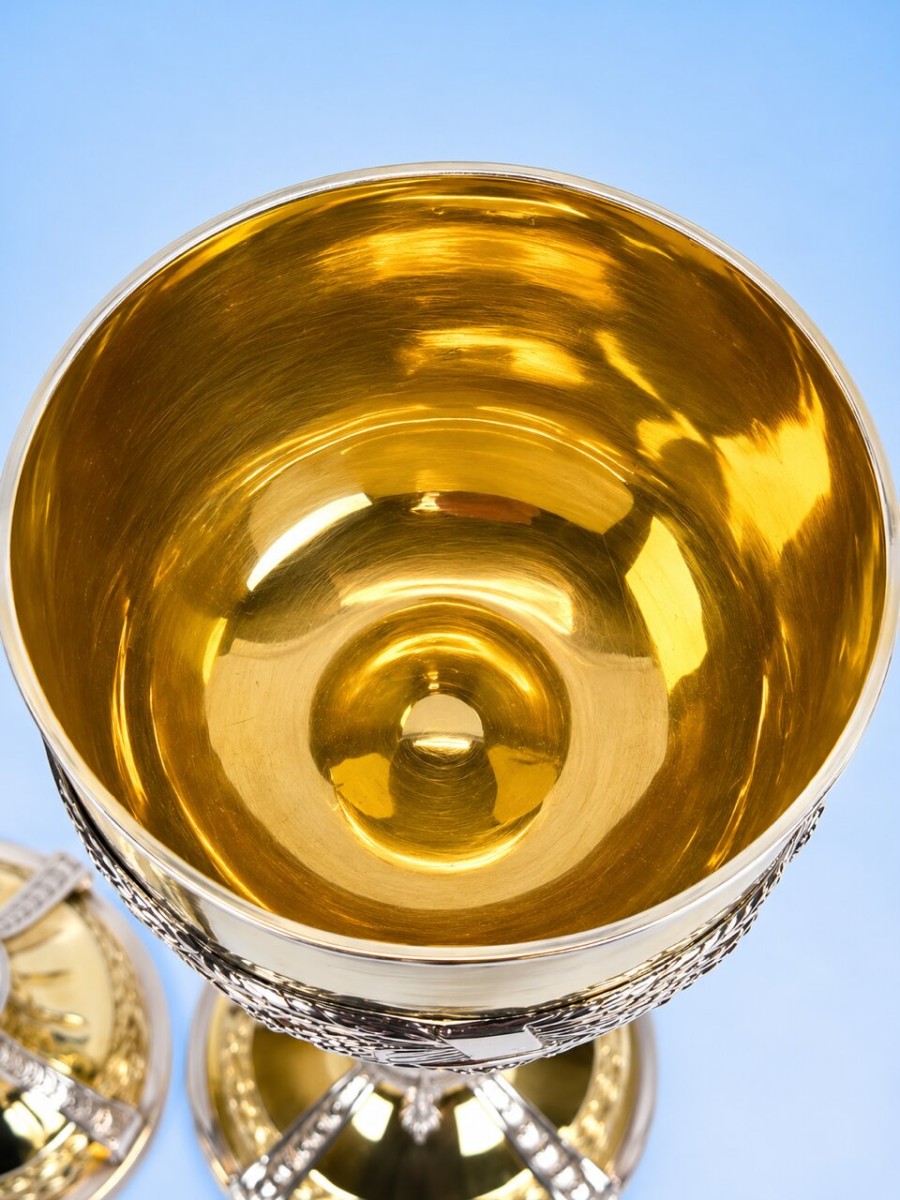
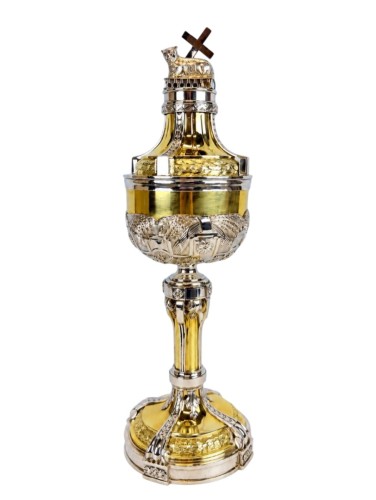
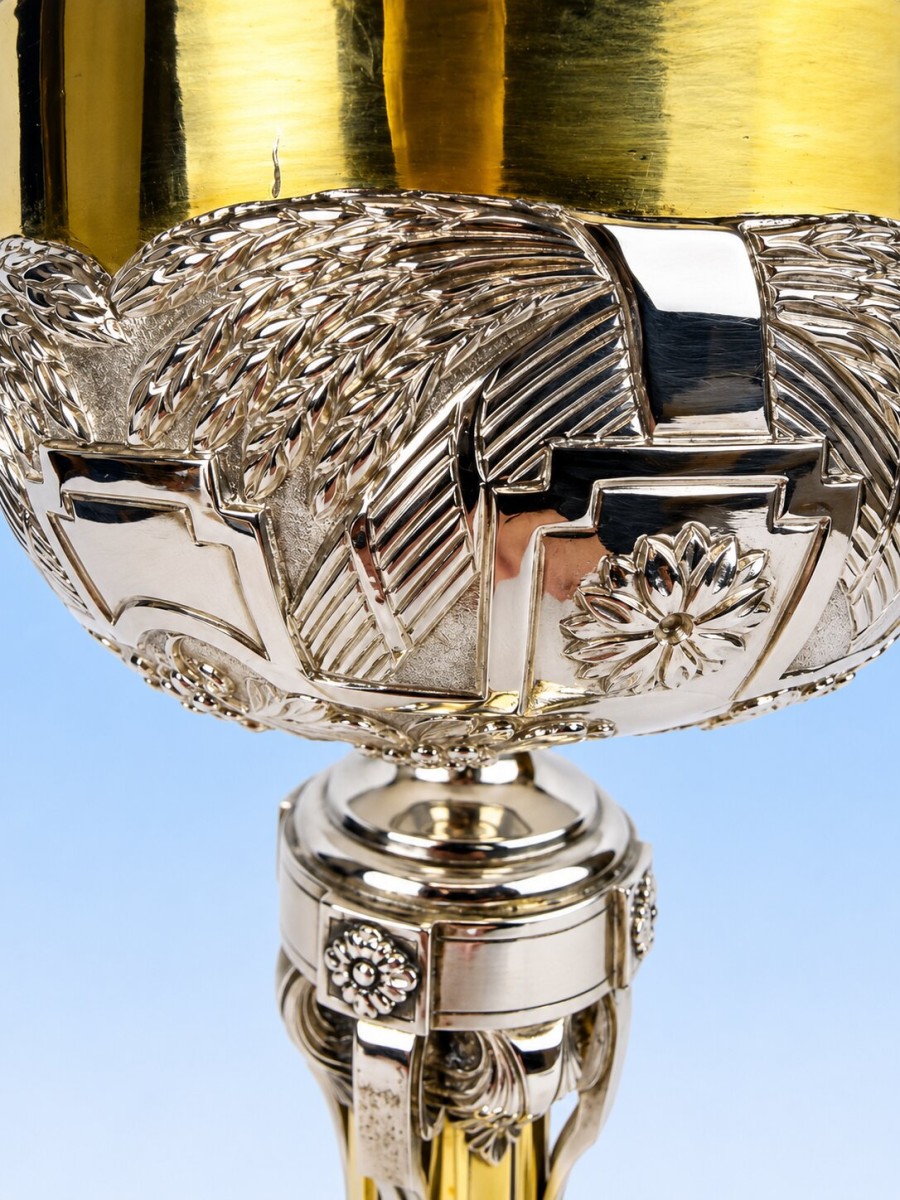
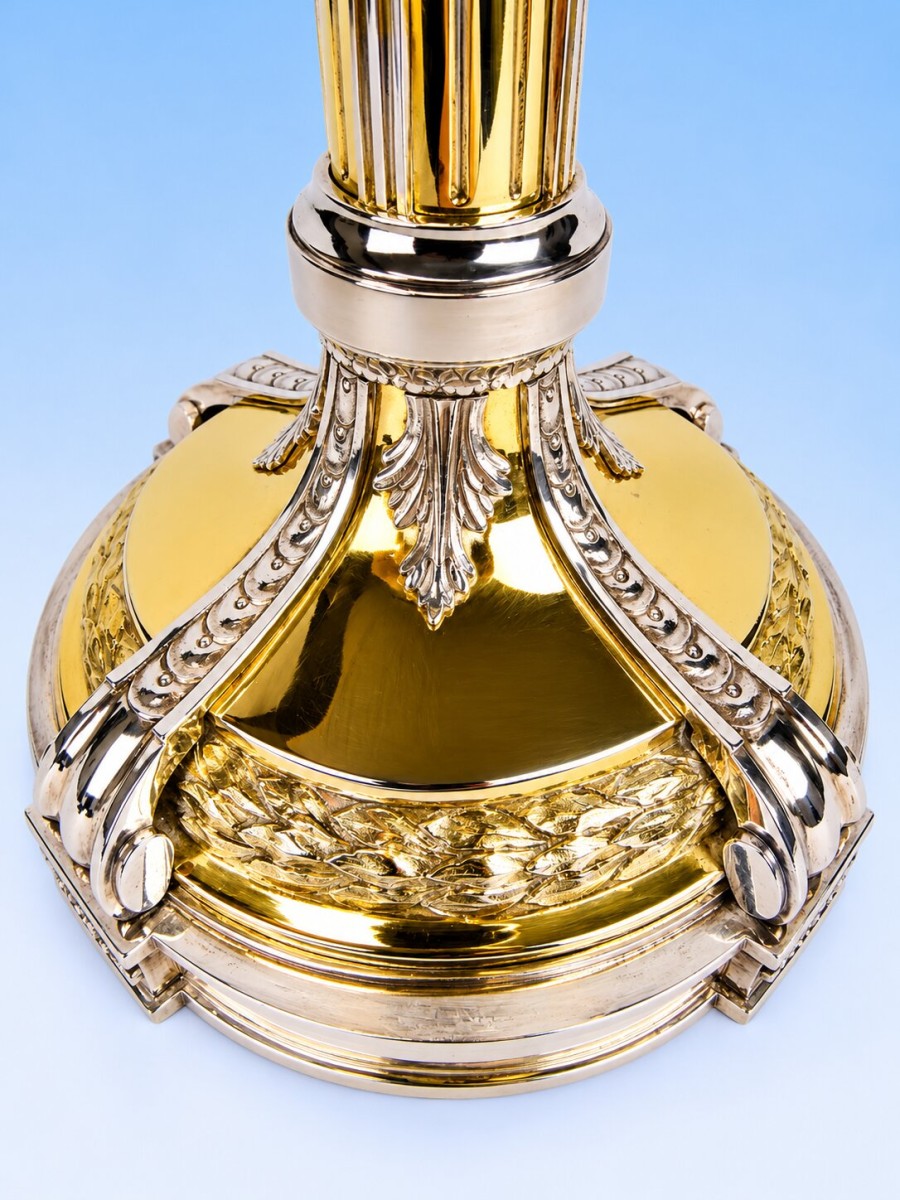
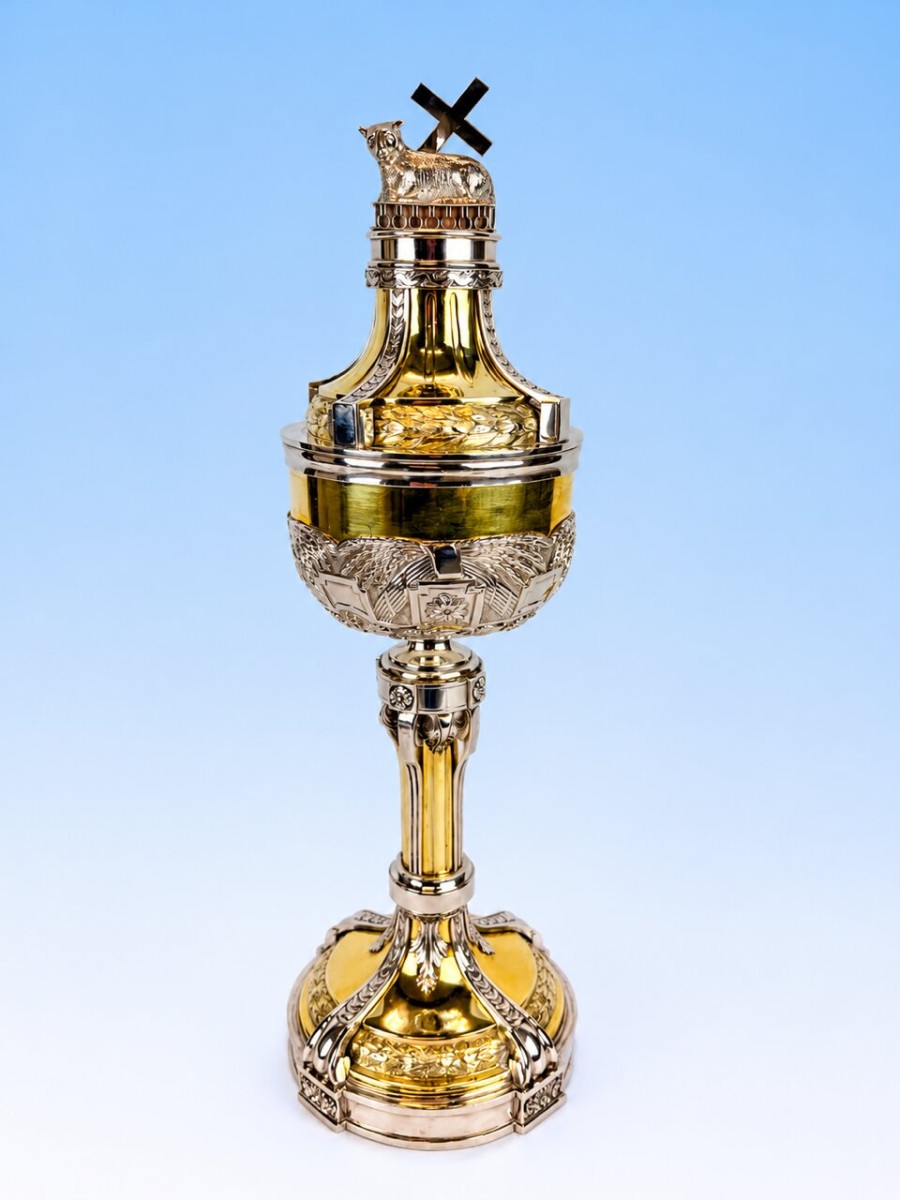
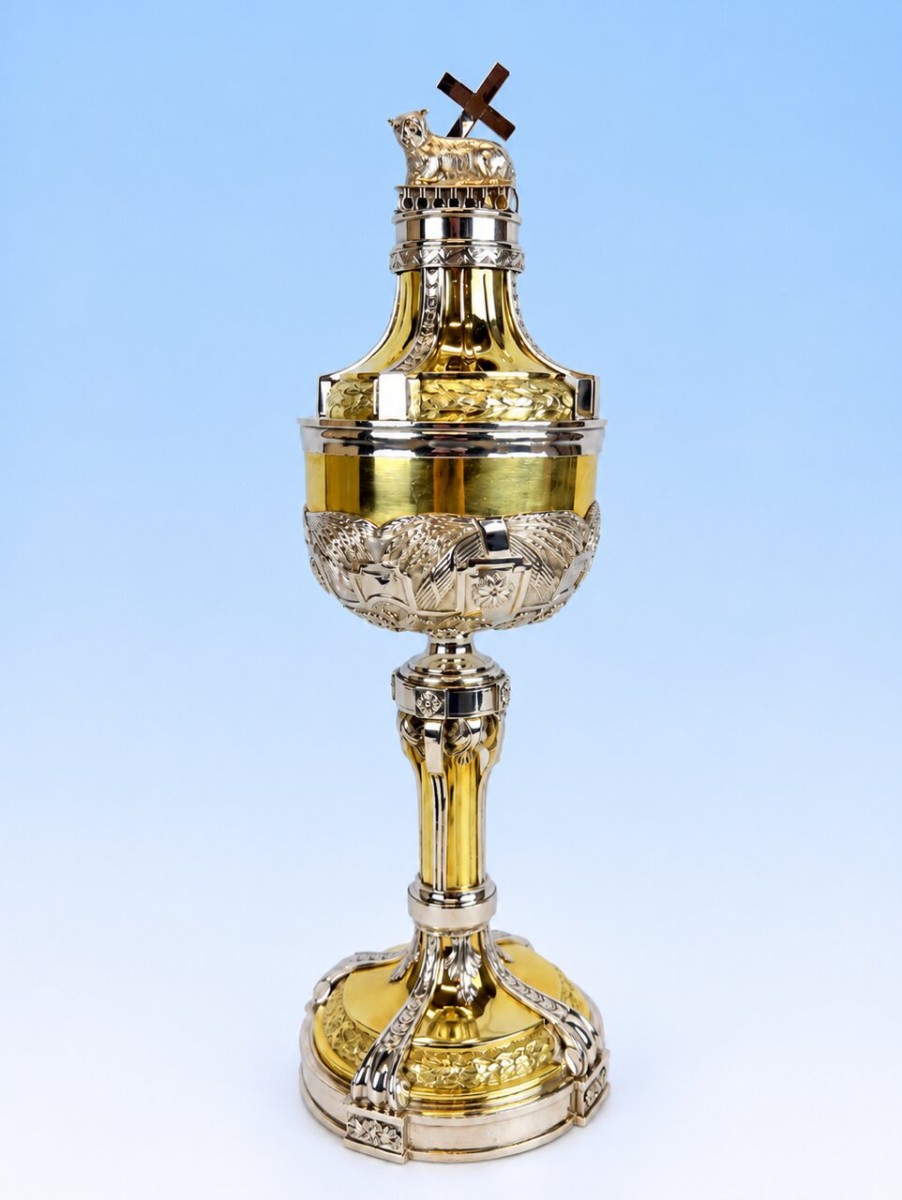
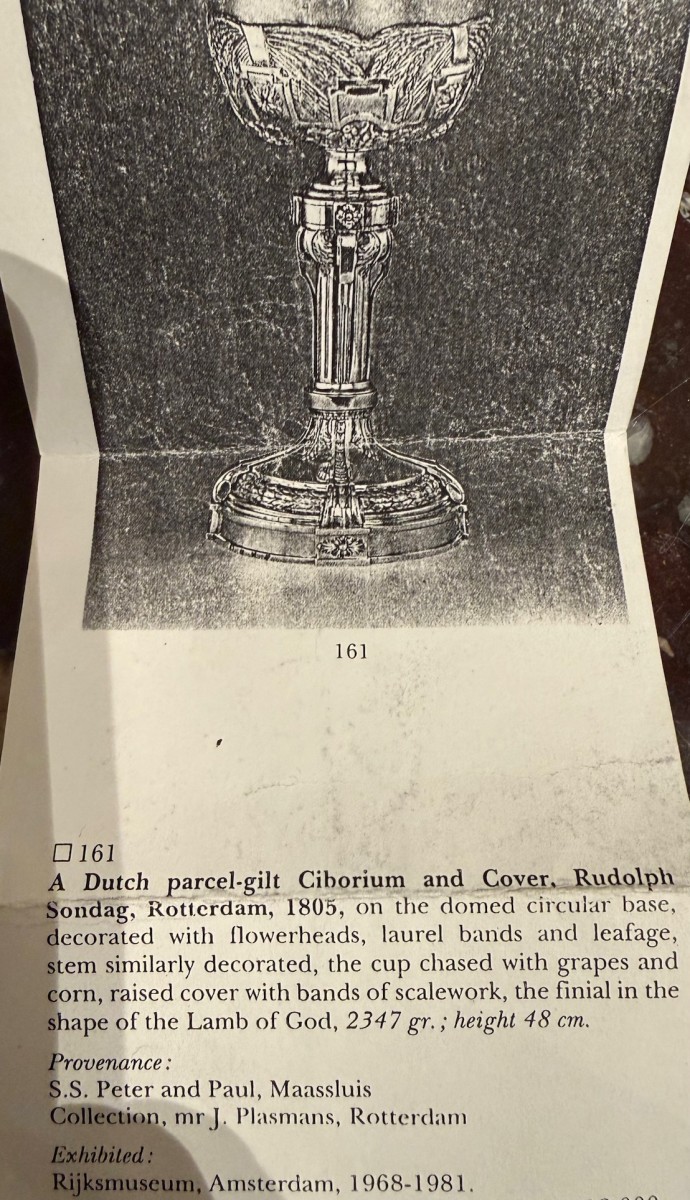
A Dutch silver parcel-gilt Ciborium and Cover, Rudolph Sondag, Rotterdam, 1805, on the domed circular base, decorated with flowerheads, laurel bands and leafage, stem similarly decorated, the cup chased with grapes and corn, raised cover with bands of scalework, the finial in the shape of the Lamb of God.
Exhibited:
Rijksmuseum, Amsterdam, 1968-1981.
Weight 2347 gr
H 48 cm. / 18.90 inch
Provenance:
S.S. Peter and Paul, Maassluis
Collection, mr J. Plasmans, Rotterdam
Rudolph Sondag (1726–1812)
Master Silversmith of Rotterdam
Rudolph Sondag ranks among the most distinguished Dutch silversmiths of the eighteenth century. Born in Rotterdam on 4 February 1726, he is thought to have been admitted to the city's silversmiths' guild in 1746. His distinctive maker's mark, depicting a sun in various forms, identifies an extensive and remarkably diverse body of work. He remained active until his death in 1812.
Sondag's surviving oeuvre encompasses both ecclesiastical and secular silver, demonstrating exceptional technical mastery and artistic versatility. Among his earliest known works is a tabernacle dating from 1754, followed by a ciborium of 1761 and a monumental eagle lectern of 1764. His secular commissions include ceremonial funeral shields made for the Porters' Guild in 1782 and an extraordinary set of four-light candelabra supported by sculptural elephant figures, executed in 1786.
His work illustrates the stylistic developments of eighteenth-century Dutch silver. Early pieces display the exuberant ornamentation and flowing rocaille motifs characteristic of the Louis XV or Rococo style. From approximately 1775 onwards, his designs increasingly reflect the restrained elegance, symmetry and classical vocabulary of Neoclassicism.
Beyond his achievements as a craftsman, Sondag was an accomplished entrepreneur and silver merchant. Archival evidence reveals his involvement in substantial silver transactions and his reputation as a trusted appraiser. The considerable number of surviving objects suggests a flourishing workshop serving both private patrons and ecclesiastical institutions.
Distinguished by the quality, ambition and diversity of his production, **Rudolph Sondag occupies a prominent position in the history of eighteenth-century Dutch silver**. His achievements place him alongside the leading silversmiths of Amsterdam and Utrecht, establishing his reputation as one of the foremost makers of large-scale silverwork of his generation.
and Cover, Rudolph Sondag, Rotterdam, 1805, on the domed circular base, decorated with flowerheads, laurel bands and leafage, stem similarly decorated, the cup chased with grapes and corn, raised cover with bands of scalework, the finial in the shape of the Lamb of God.
Exhibited:
Rijksmuseum, Amsterdam, 1968-1981.
Weight 2347 gr
H 48 cm. / 18.90 inch
Provenance:
S.S. Peter and Paul, Maassluis
Collection, mr J. Plasmans, Rotterdam
Rudolph Sondag (1726–1812)
Master Silversmith of Rotterdam
Rudolph Sondag ranks among the most distinguished Dutch silversmiths of the eighteenth century. Born in Rotterdam on 4 February 1726, he is thought to have been admitted to the city's silversmiths' guild in 1746. His distinctive maker's mark, depicting a sun in various forms, identifies an extensive and remarkably diverse body of work. He remained active until his death in 1812.
Sondag's surviving oeuvre encompasses both ecclesiastical and secular silver, demonstrating exceptional technical mastery and artistic versatility. Among his earliest known works is a tabernacle dating from 1754, followed by a ciborium of 1761 and a monumental eagle lectern of 1764. His secular commissions include ceremonial funeral shields made for the Porters' Guild in 1782 and an extraordinary set of four-light candelabra supported by sculptural elephant figures, executed in 1786.
His work illustrates the stylistic developments of eighteenth-century Dutch silver. Early pieces display the exuberant ornamentation and flowing rocaille motifs characteristic of the Louis XV or Rococo style. From approximately 1775 onwards, his designs increasingly reflect the restrained elegance, symmetry and classical vocabulary of Neoclassicism.
Beyond his achievements as a craftsman, Sondag was an accomplished entrepreneur and silver merchant. Archival evidence reveals his involvement in substantial silver transactions and his reputation as a trusted appraiser. The considerable number of surviving objects suggests a flourishing workshop serving both private patrons and ecclesiastical institutions.
Distinguished by the quality, ambition and diversity of his production, **Rudolph Sondag occupies a prominent position in the history of eighteenth-century Dutch silver**. His achievements place him alongside the leading silversmiths of Amsterdam and Utrecht, establishing his reputation as one of the foremost makers of large-scale silverwork of his generation.