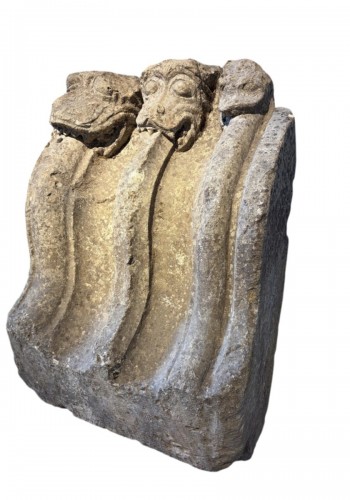
Offered by Jan Muller
REQUEST INFORMATION
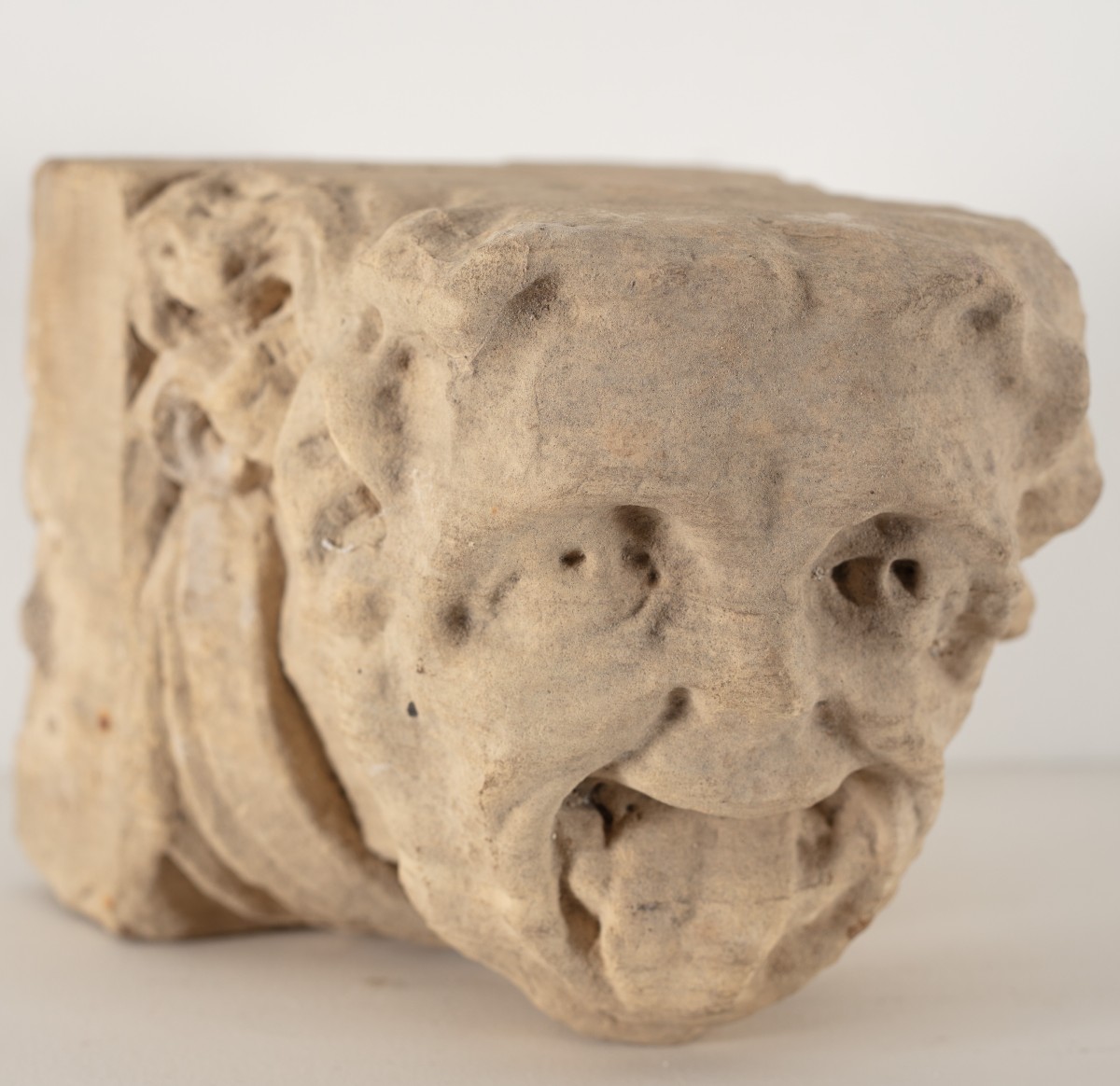
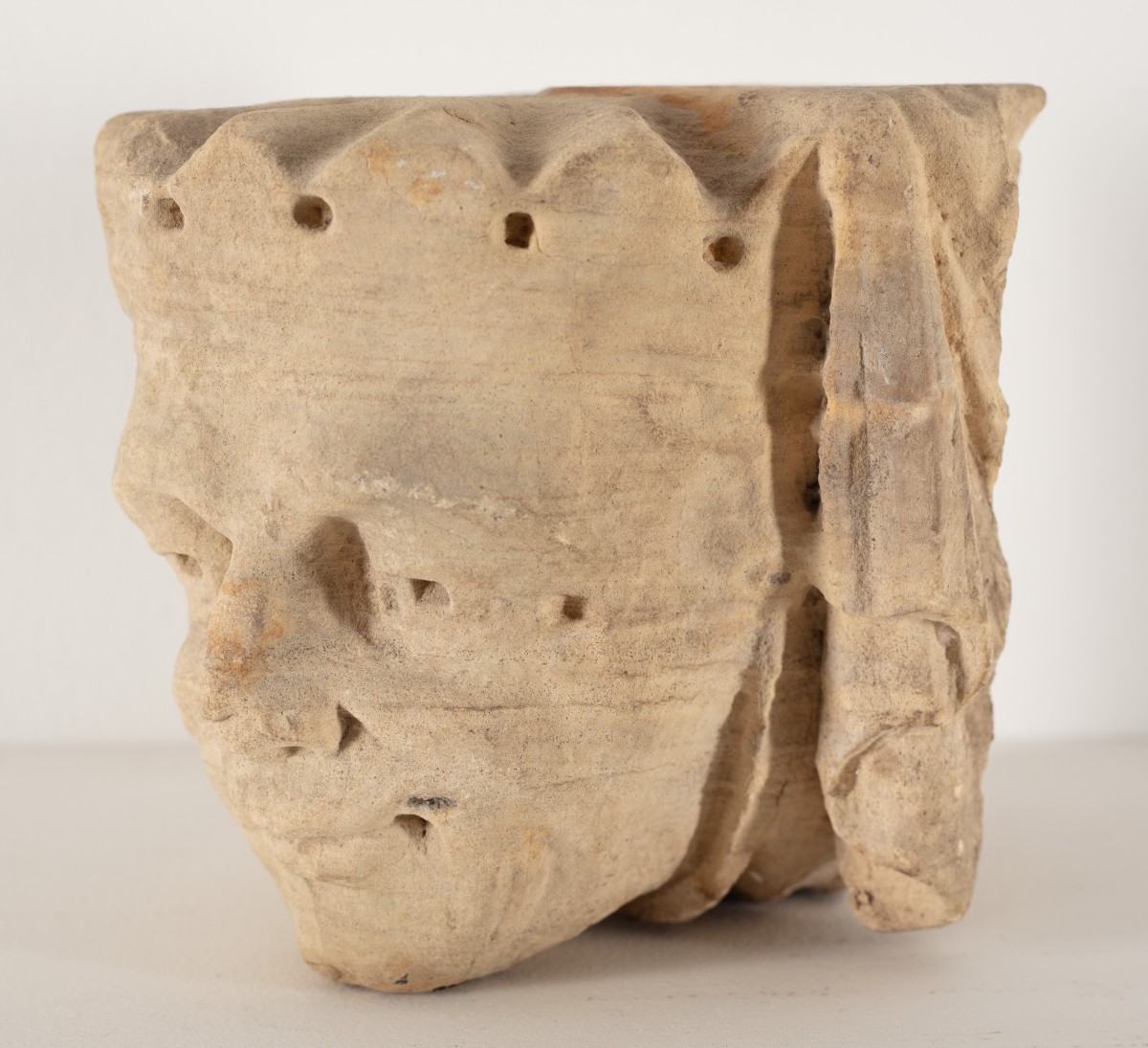

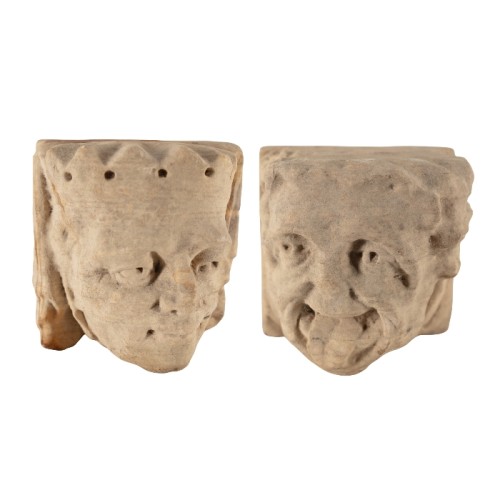
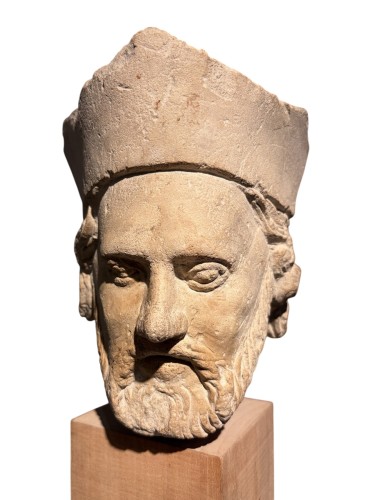
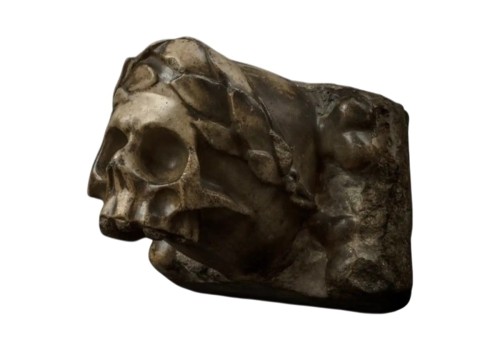
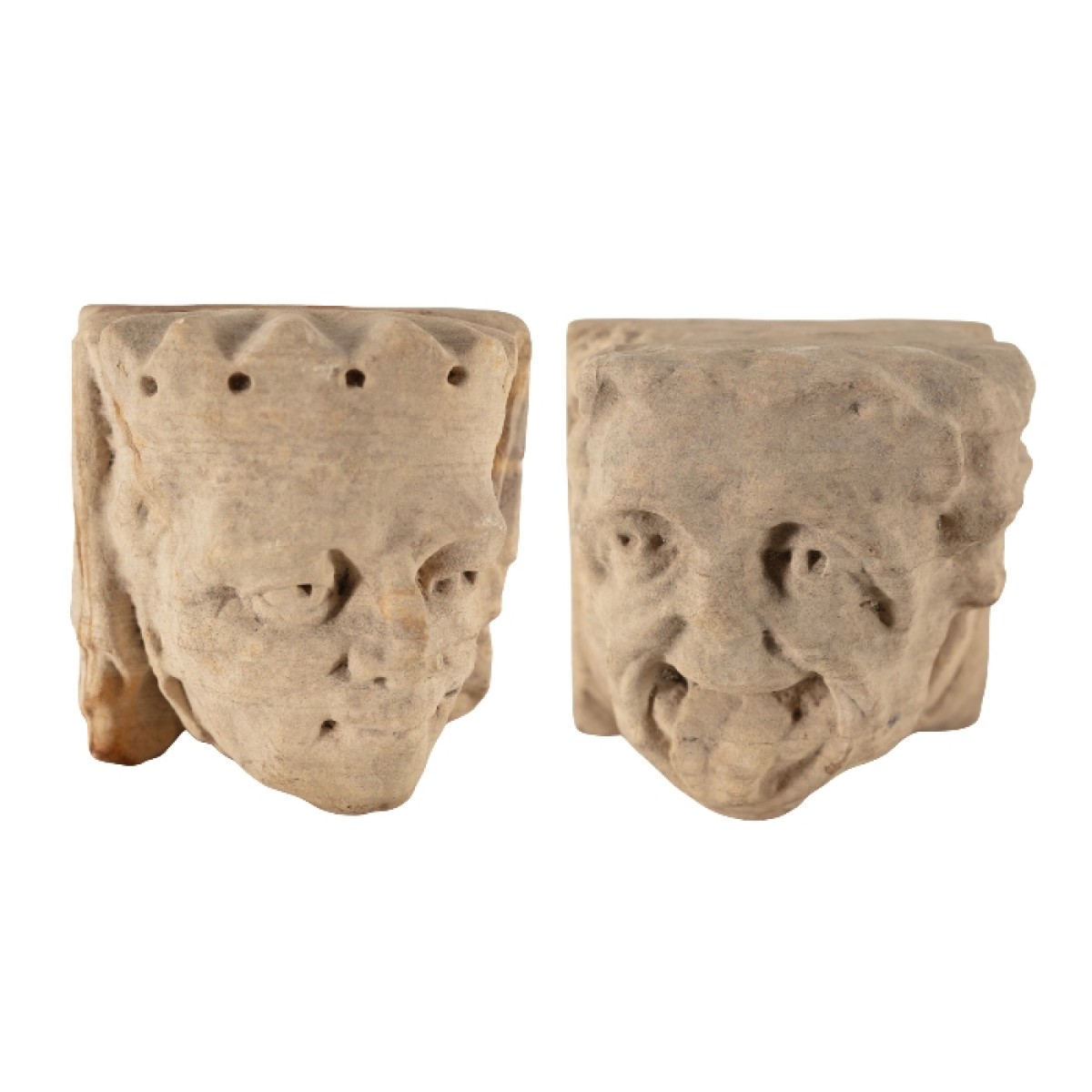
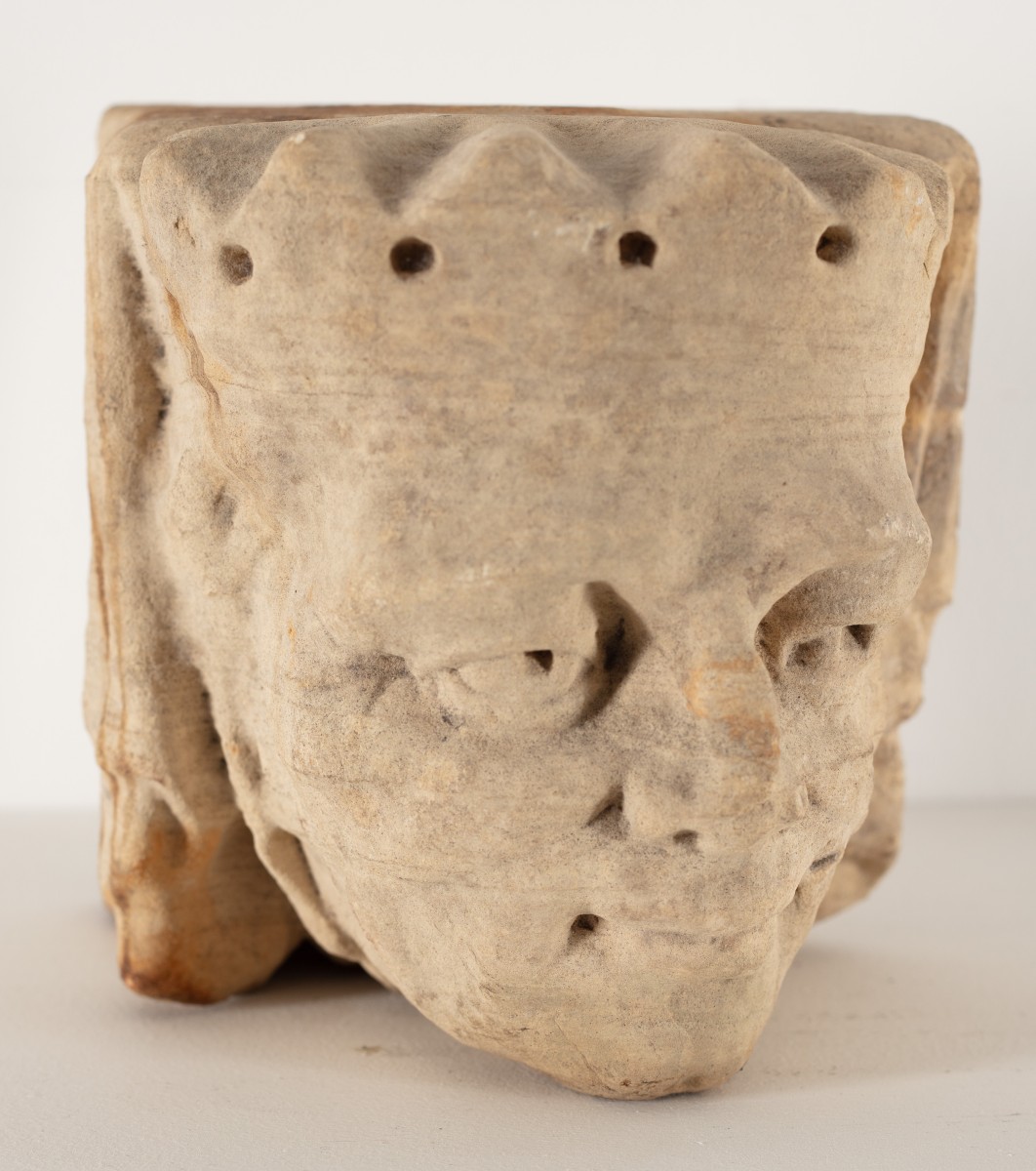
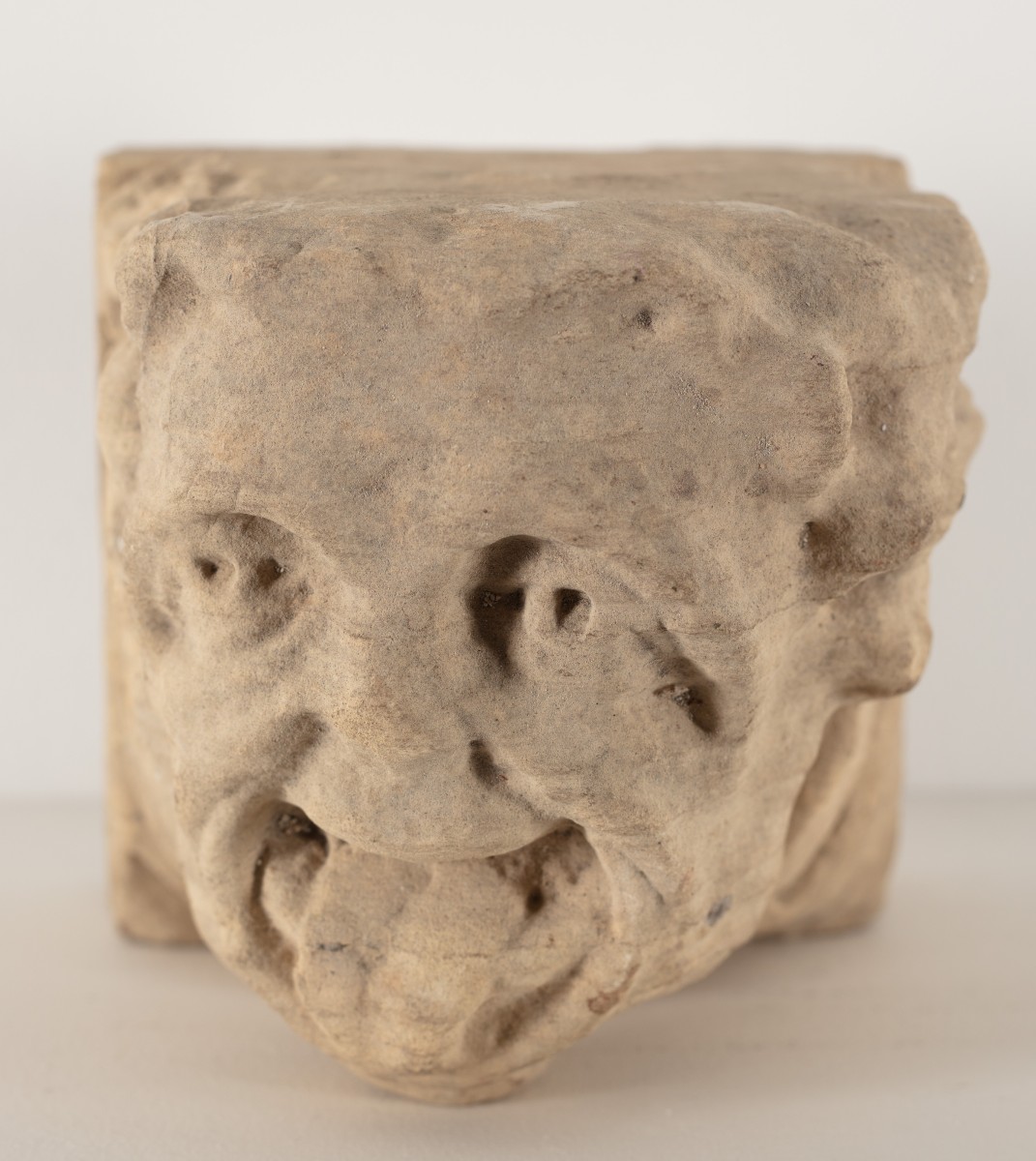
We see two human faces, each carved from a square block of limestone. One has a rather neutral face with a slight smirk. It wears a headdress that resembles a crown. On the band we see a row of triangular points and small holes. The second figure pulls a silly face: he sticks out his tongue and stretches his eyes wide open. He has curly hair. As a duo, one seems amused by the other.
In architecture, a grotesque is a fantastic or mythical figure carved in stone and fixed to the wall or roof of a building. Grotesques are often called gargoyles, but a gargoyle is in fact a figure that drains water away from a building. Grotesques often show whimsical, mythical creatures in dramatic or humorous ways, often as hybrids of mythical, human and animal features. Since the Middle Ages and the Renaissance they have been an important part of architecture and have developed stylistically alongside it. In the Middle Ages there was also a growing interest in showing personal character, which developed into the anthropomorphic style that became a staple of stone carving.
Many scholars see grotesques as protection against evil and as a reminder of the separation between earth and the divine. Although they appear mainly on churches and cathedrals, their human forms are mostly not directly religious. They often sit high on ledges and roofs, out of sight of ordinary visitors, and their humour is sometimes downright crude. Some scholars read that as a way of warding off evil.
Because stone is heavy, grotesques were carved in workshops and only afterwards lifted to the height of the building. The materials used included marble, sandstone and limestone. The square blocks from which the heads are carved suggest that they were set into a wall or vault.
Sculpted in limestone
Dimensions: 18 x 18 x 23 cm
Delevery information :
After reception of payment we can box and ship our items all over the world. Estimates of this service can be provided.