Offered by Jan Muller
REQUEST INFORMATION
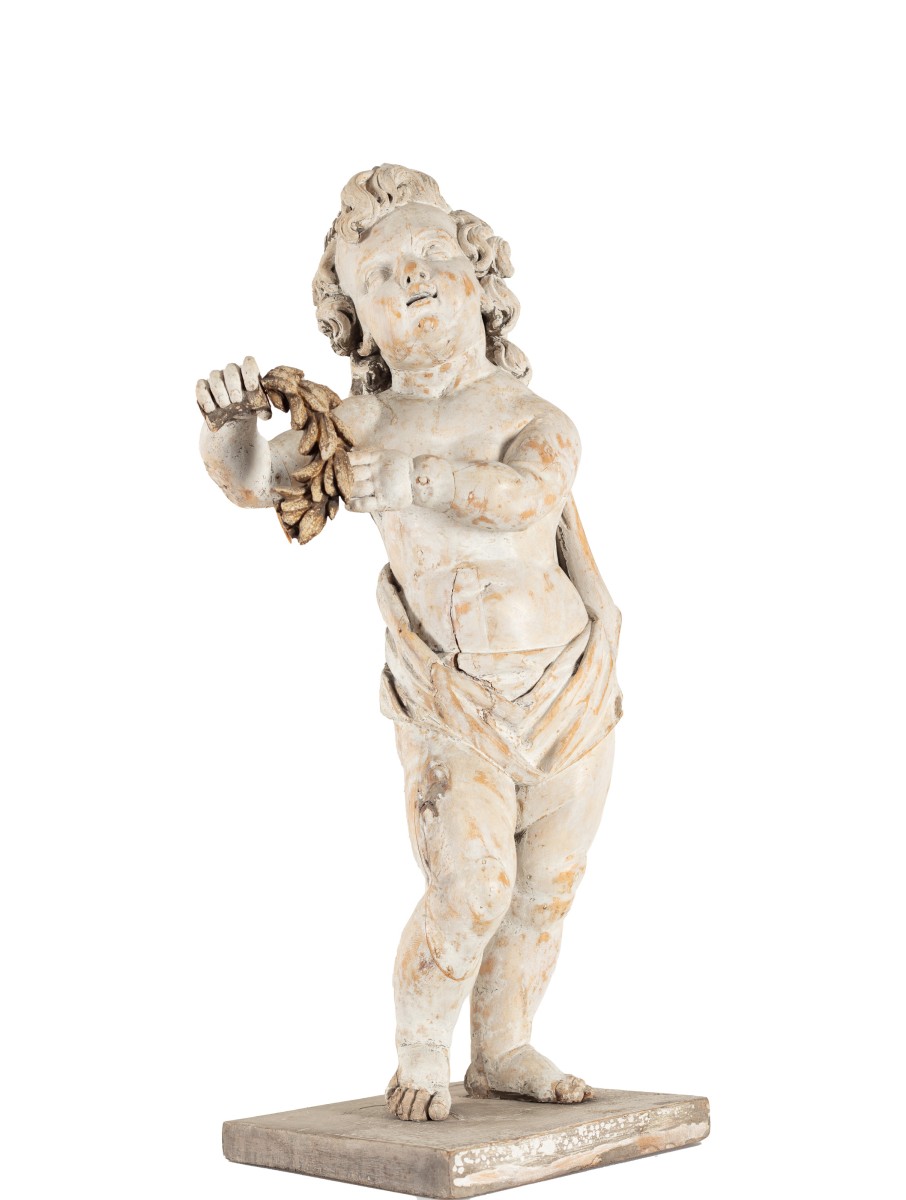
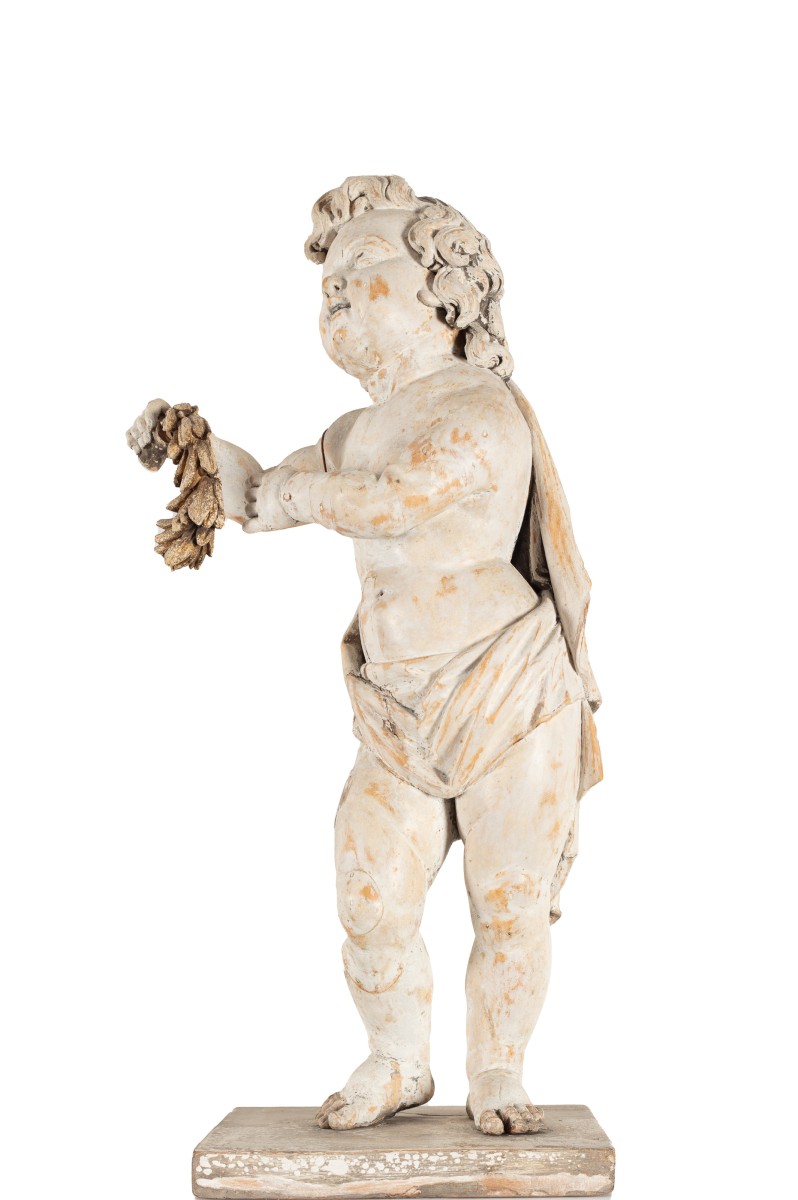
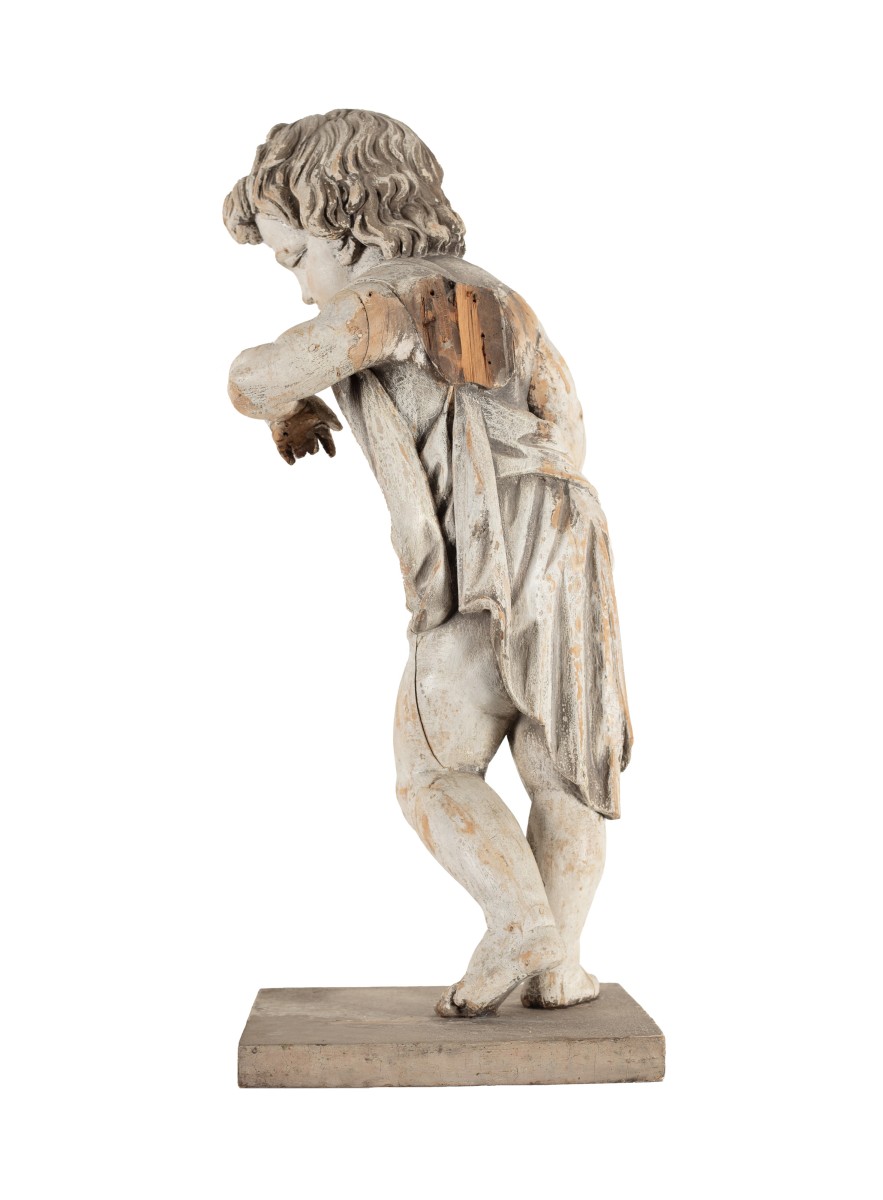

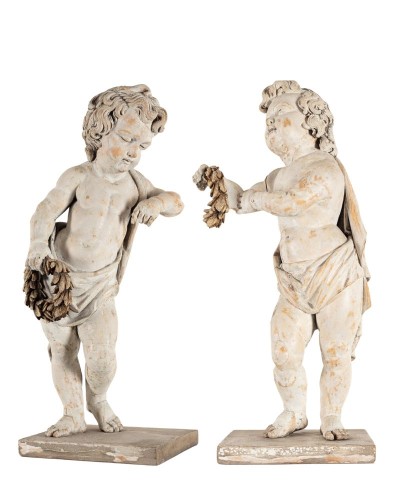
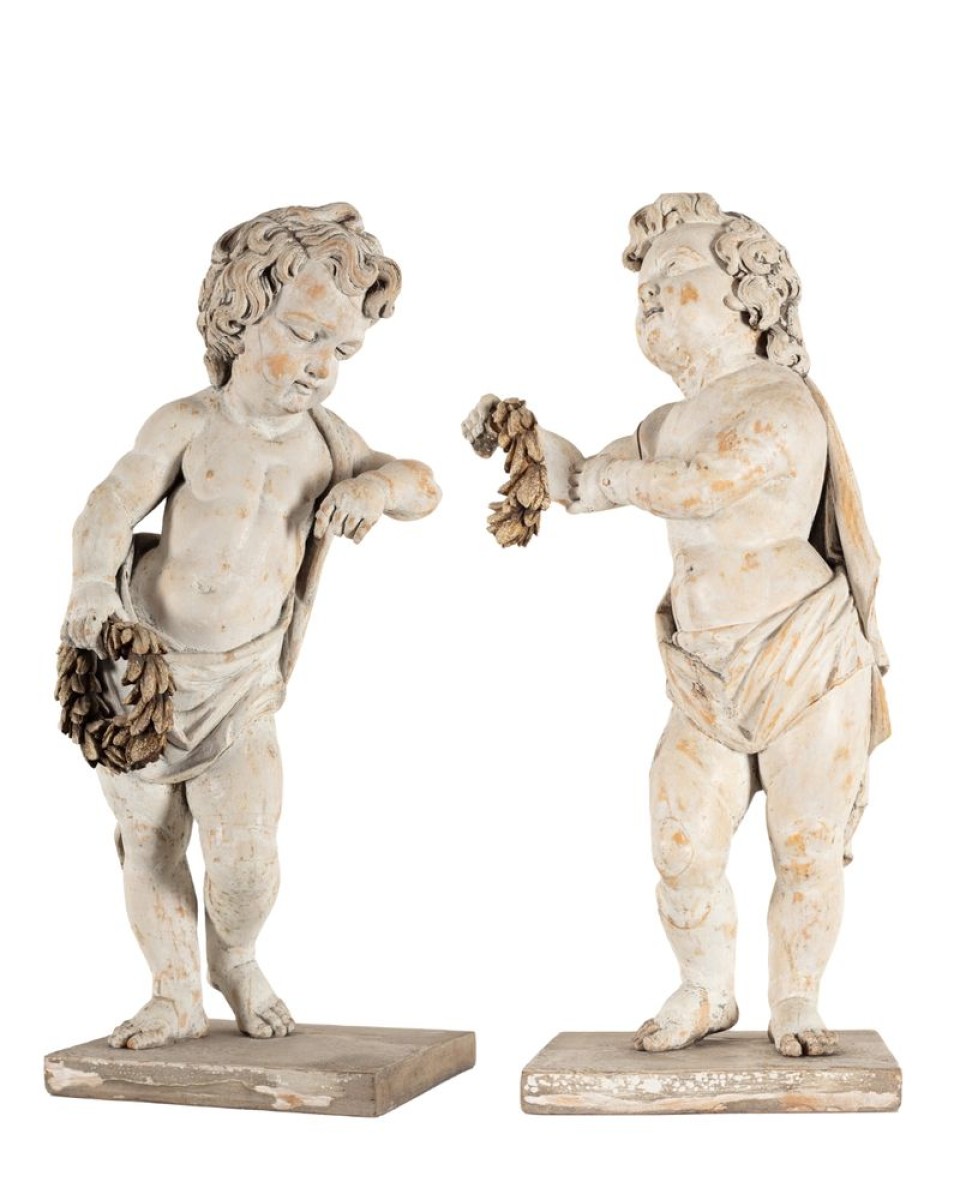
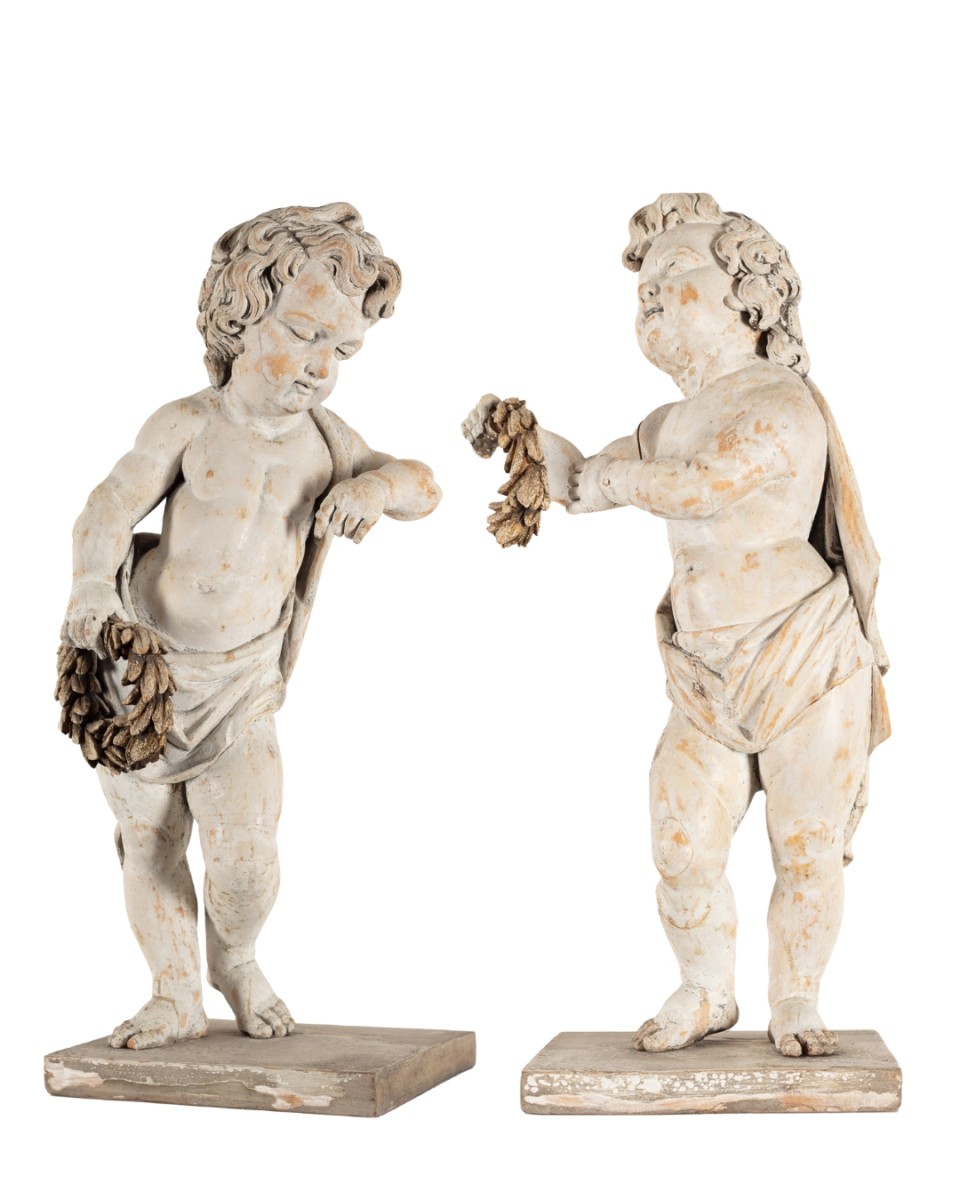
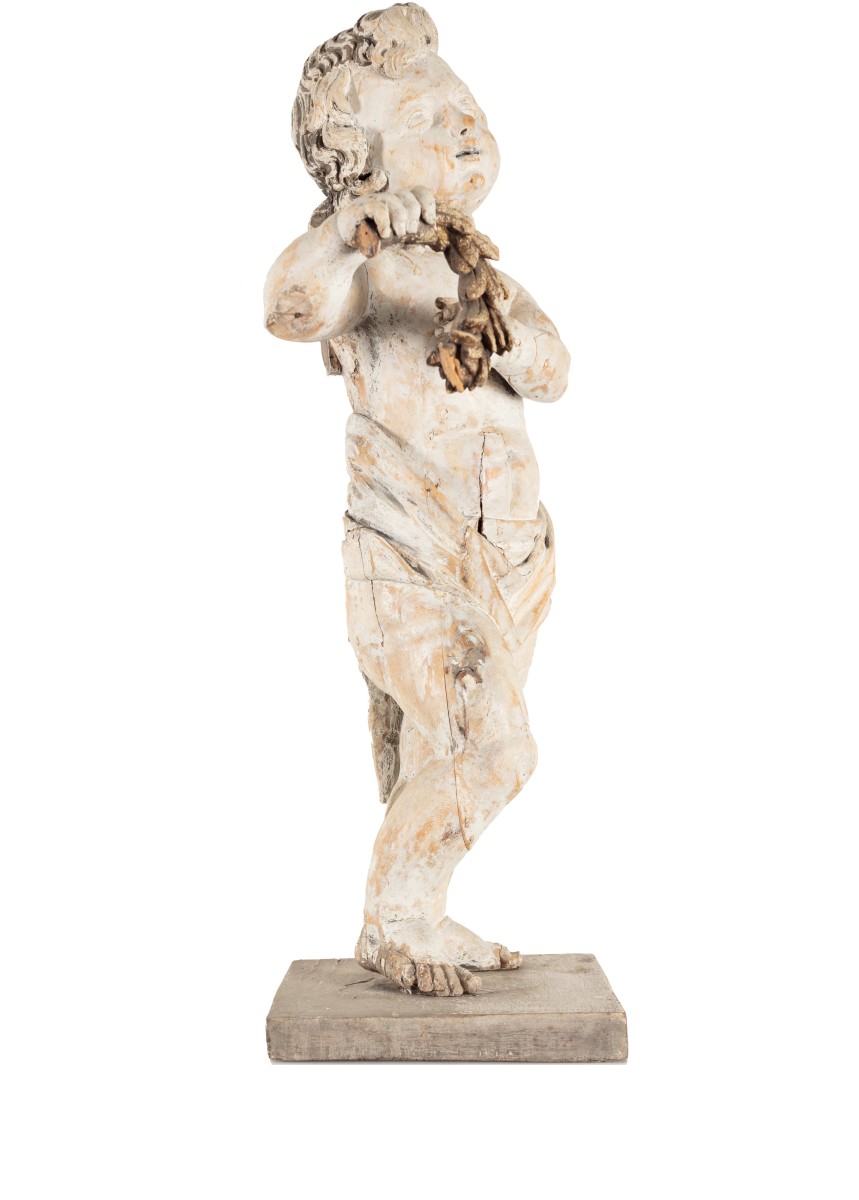
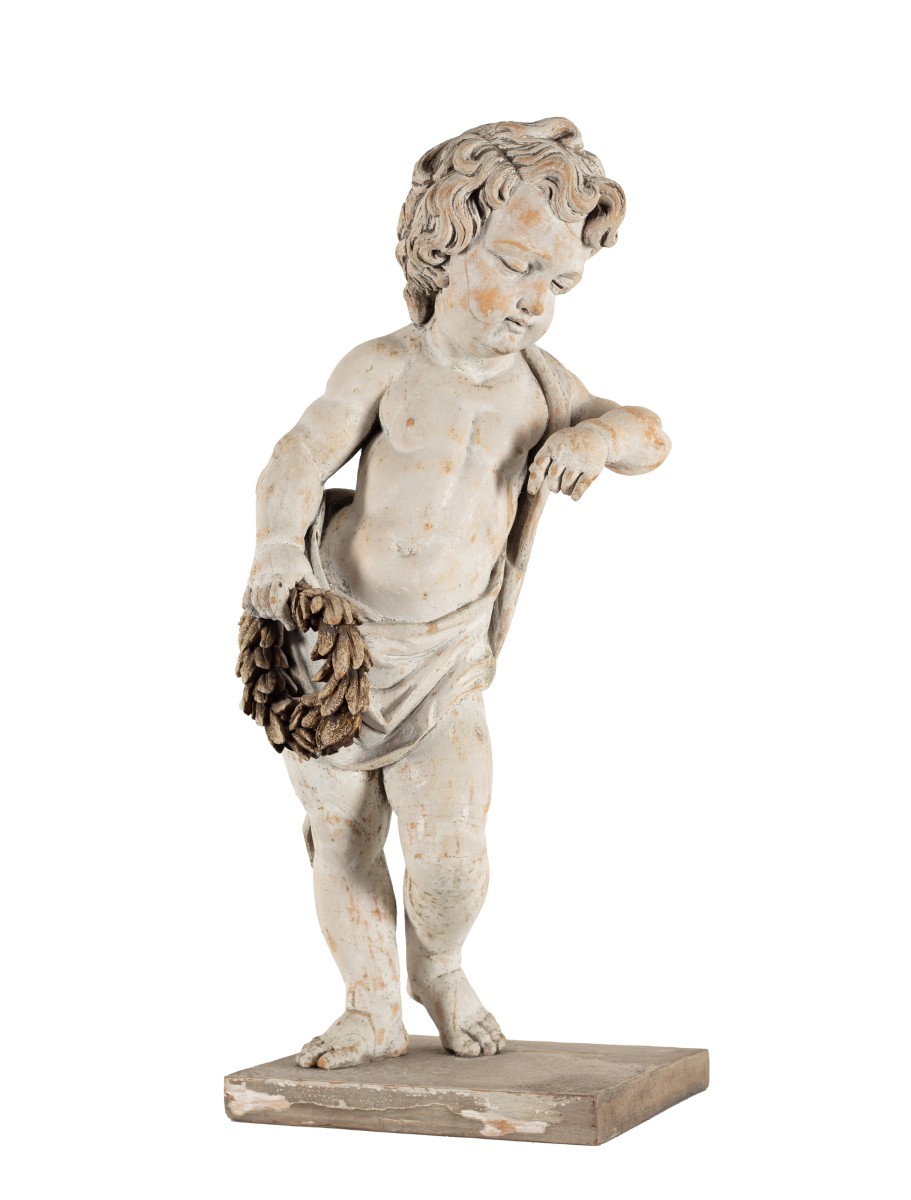
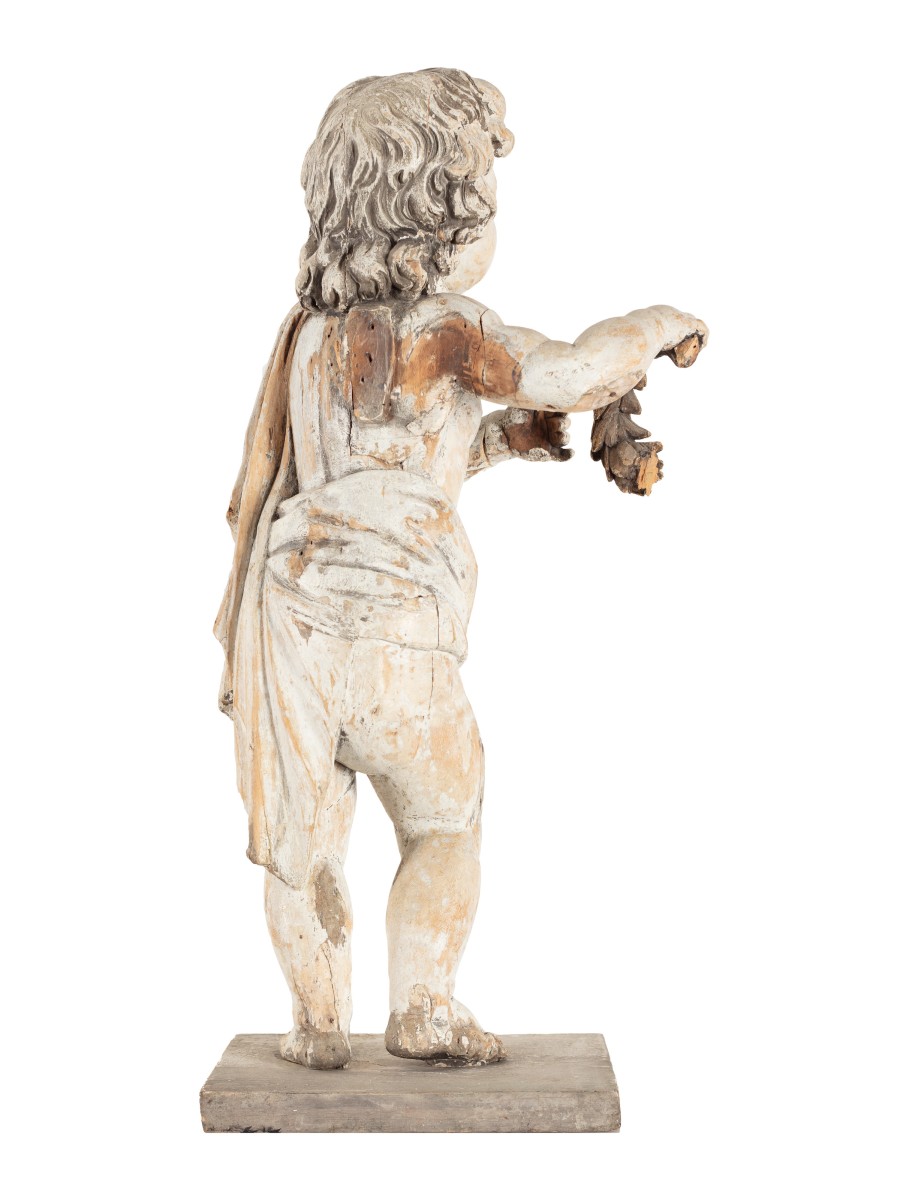
We see two putti, turned towards each other like mirror images, each standing on a rectangular wooden base. The one on the left keeps his head bowed and rests his elbow on something that can no longer be seen, while holding a laurel wreath low along his body. This suggests that the figures were originally part of a larger whole. The one on the right looks upwards and holds out a laurel wreath, as if offering it to his counterpart. Both have a cloth around their waist and shoulder, and both stand in contrapposto. Contrapposto is a pose in which the weight rests on one leg, giving the body a natural, relaxed curve. It is a classical principle that was rediscovered in the Renaissance. The laurel wreath has been a sign of victory and honour since antiquity.
A putto (plural putti) is a figure depicted in art as a chubby, usually naked and often winged little boy. Originally limited in symbolism to profane passions, the putto came to represent a sort of baby angel in religious art, often called a cherub, although in traditional Christian theology a cherub is actually one of the highest ranks of angel. The same figures also appear in representations of classical mythology and, increasingly, in decorative art. A putto representing Cupid is also called an amorino. In the Baroque, the putto came to express the omnipresence of God.
The putto disappeared in the Middle Ages and was revived in the Quattrocento, first and foremost by Donatello in Florence in the 1420s. Putti, Cupids and angels appear in religious and profane art from the 1420s in Italy, around 1500 in the Netherlands and Germany, during Mannerism and the late Renaissance in France, and throughout the Baroque, including in ceiling paintings. The iconography of putti is deliberately unfixed. They have no unique, immediately recognisable attribute, so that they can carry many meanings, such as love, heaven, peace, prosperity, mirth and leisure.
Sculpted in wood
Dimensions: 78 cm
Delevery information :
After reception of payment we can box and ship our items all over the world. Estimates of this service can be provided.