Offered by ArtHistorical
REQUEST INFORMATION
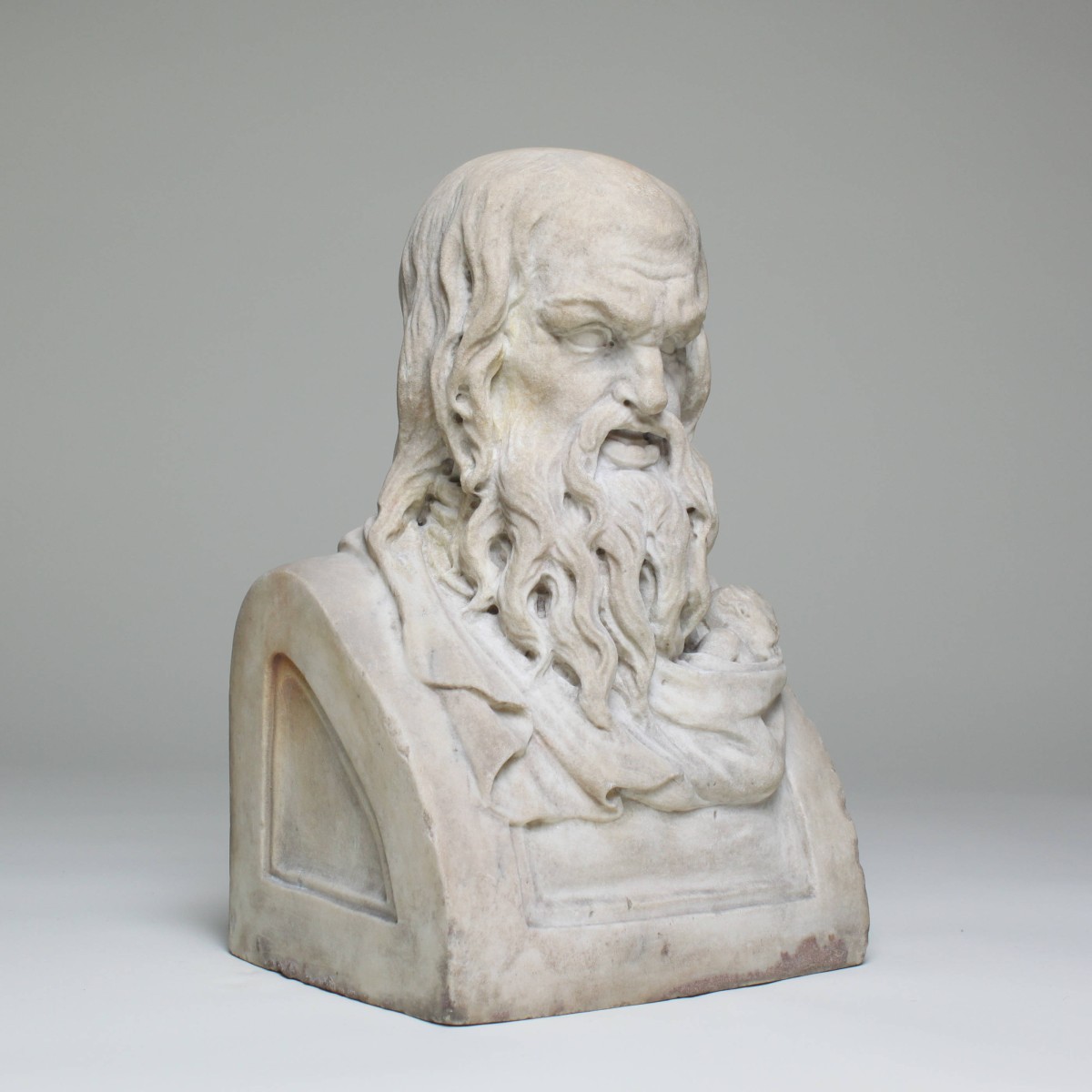
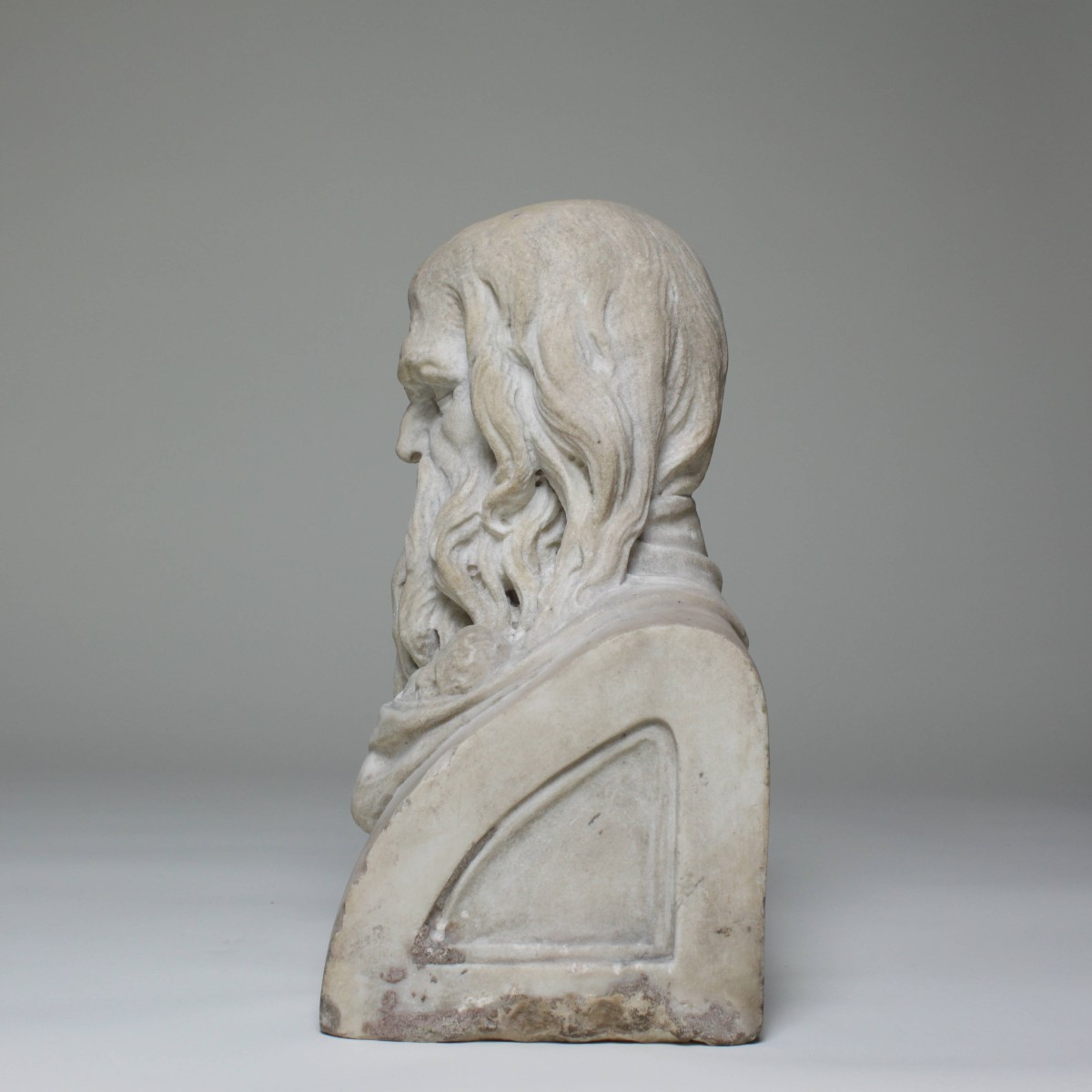

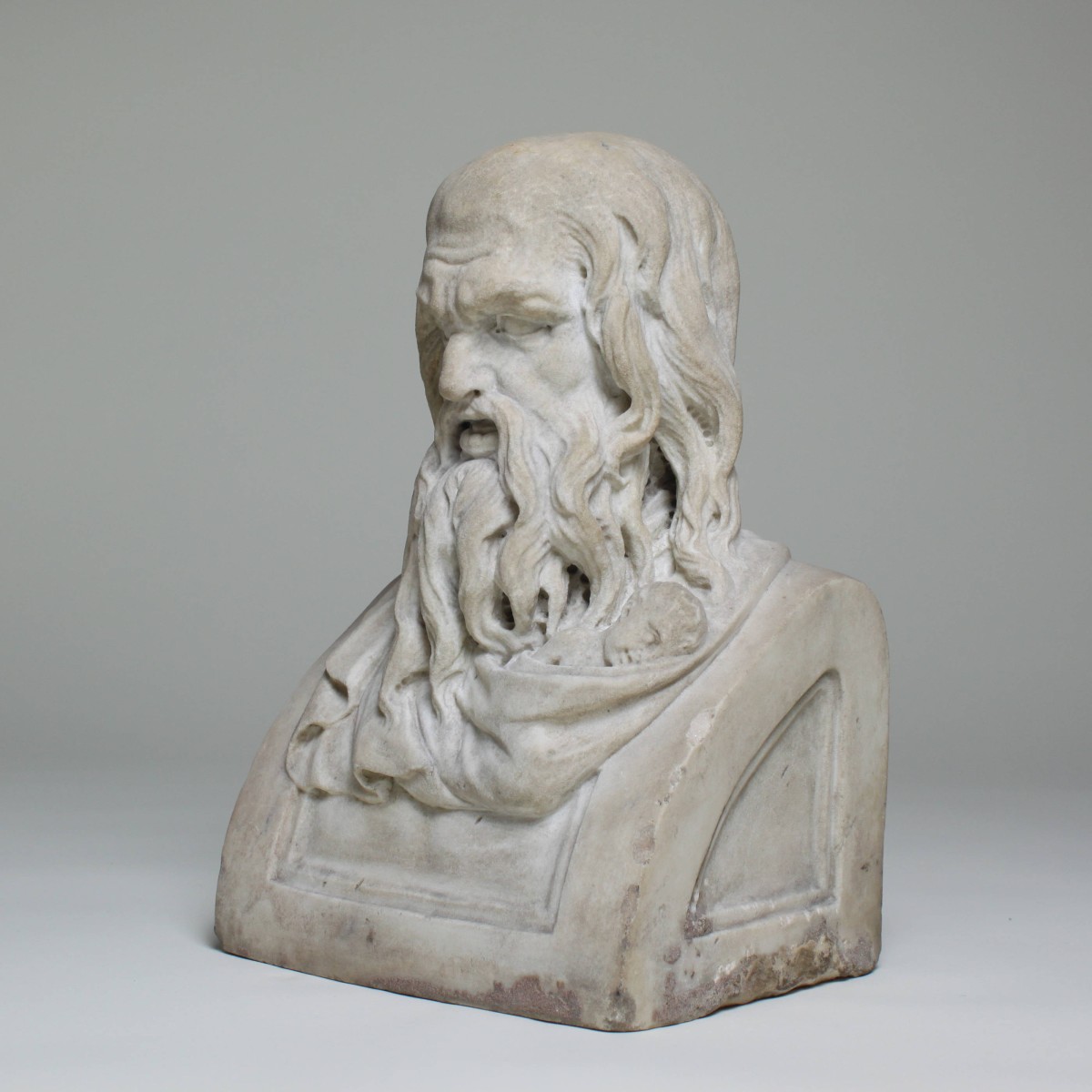
French, 18th century, After the Antique
Circle of Jean Raon (1630-1707)
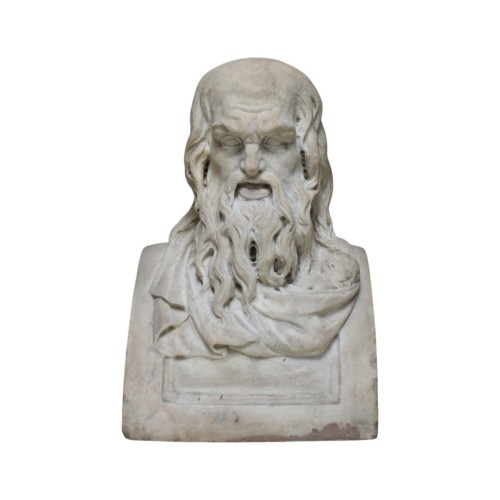
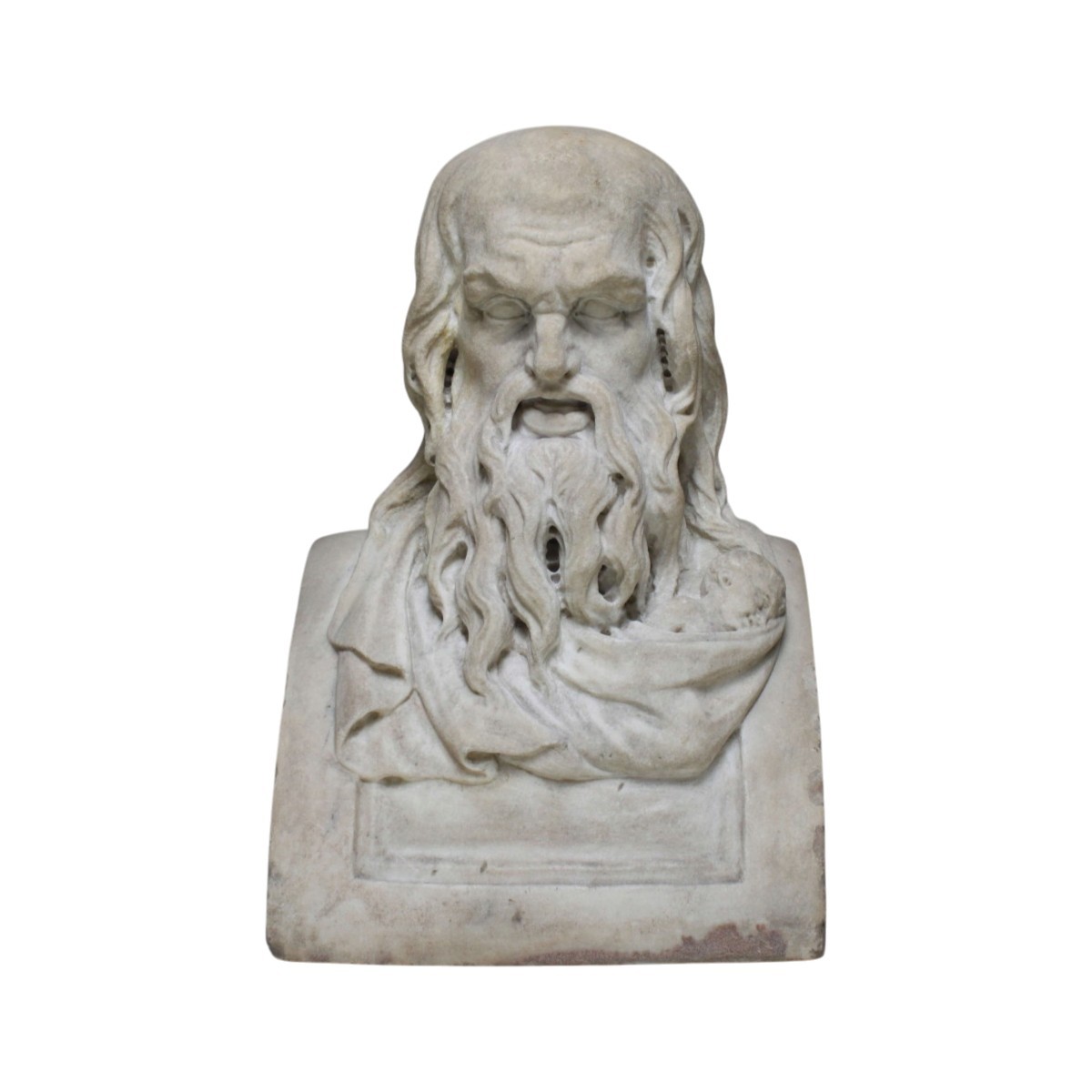
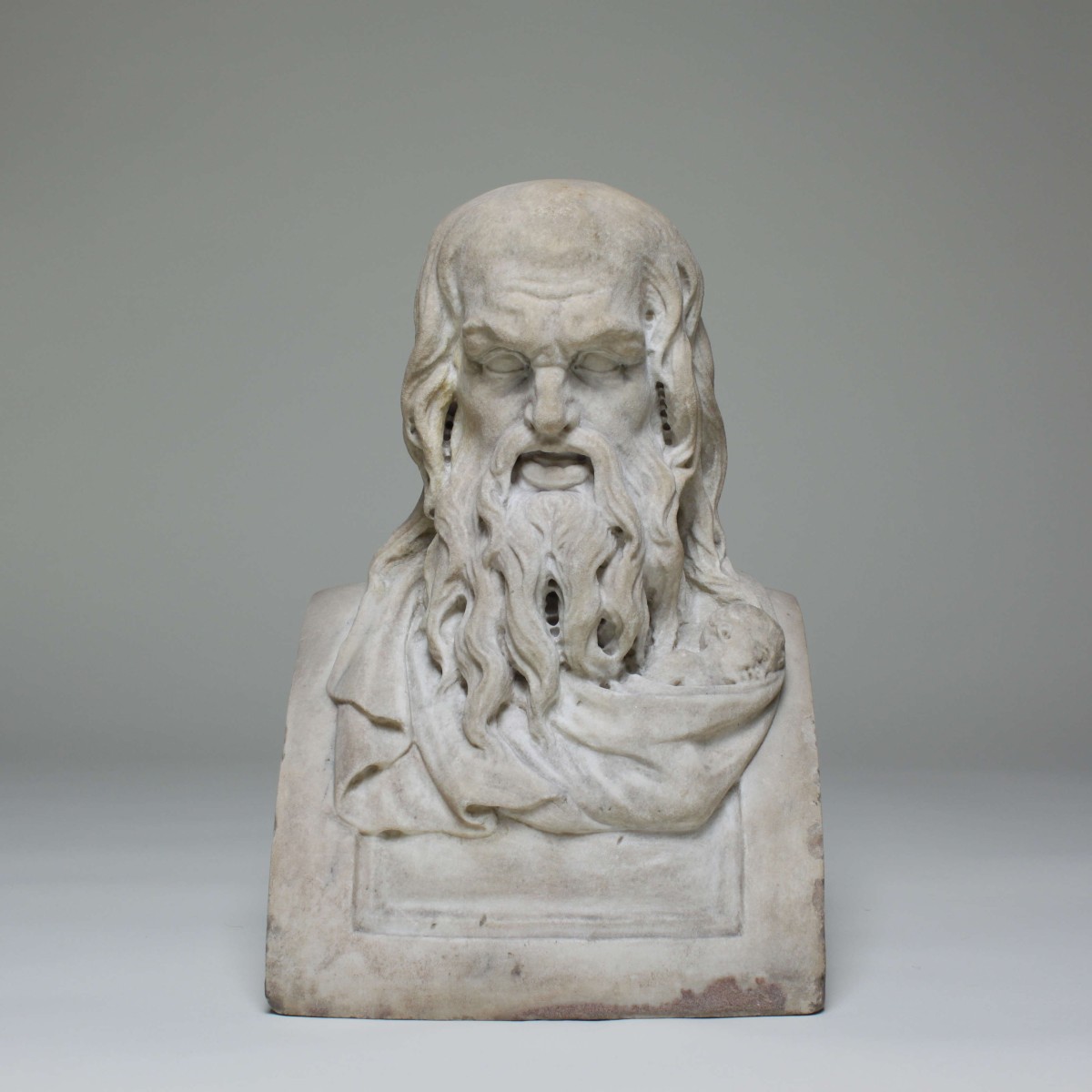
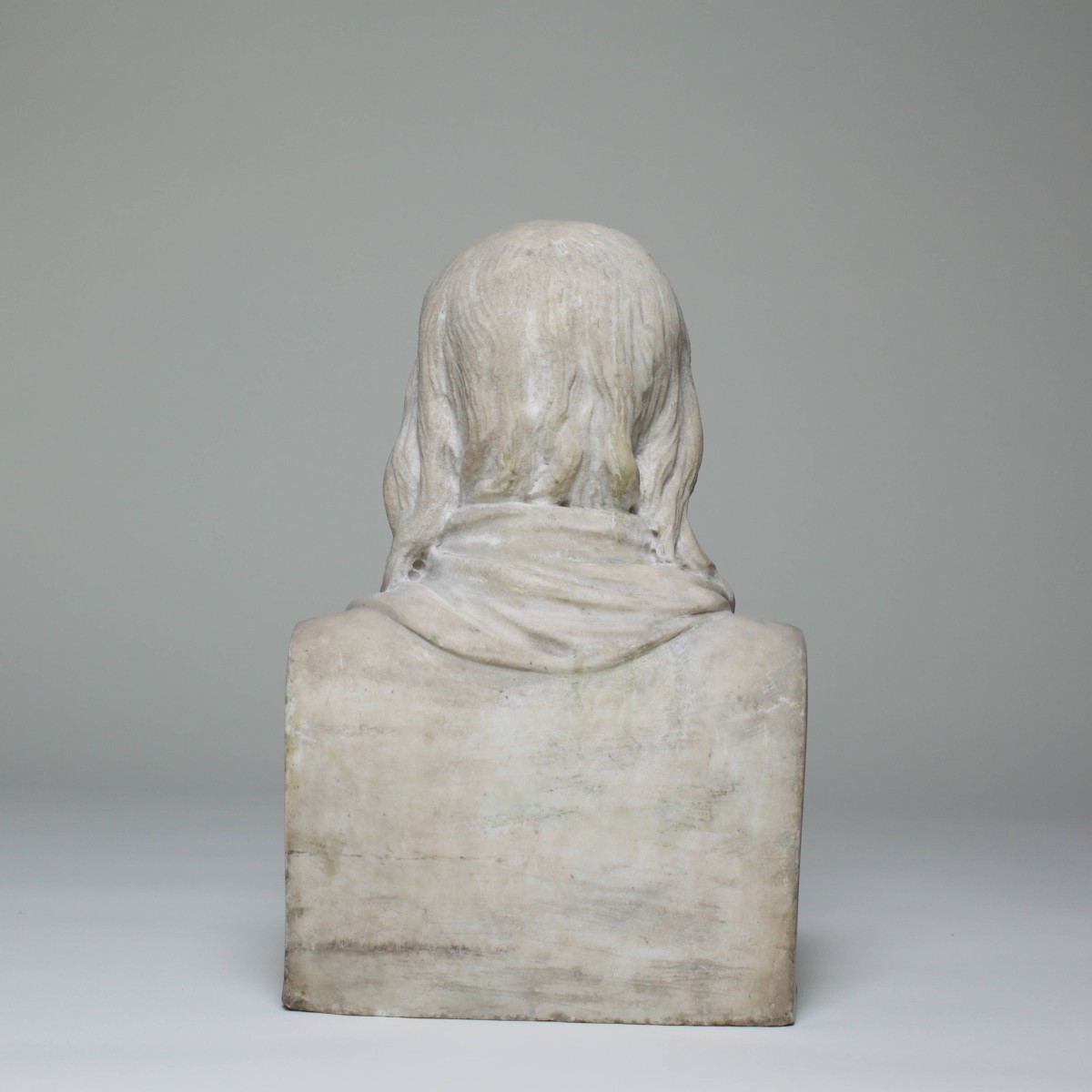
Herm Bust of Saturn, After the Antique
Marble, 30 cm. / 11 ¾ ins high
This marble herm depicts Saturn, the Roman god of agriculture, time and liberation, who was closely related to the Greek god of time, Kronos. In Roman mythology Saturn ruled ancient Latium during the Golden Age, an idealised time of prosperity and peace. As the god of seed-corn, Saturn was strongly associated with agriculture, hence why is typically depicted in ancient art holding a scythe. The remains of the Temple of Saturn dominate the western end of the Roman Forum and Saturn’s great festival, the Saturnalia, became the most popular of Roman festivals and is the origin for the mid-winter timing of Christmas and New Year.
The present herm presents Saturn as an elderly, balding and heavily bearded ancient god, wearing a fierce expression on his furrowed brows. He is identified by the unusual addition of a young child, who is wrapped up in his all’antica drapery on his left side. This clearly relates this herm to depictions of Saturn devouring his children, a popular subject in Renaissance and Baroque art, as well as being the title of a famous painting by Goya. A bronze figure of Saturn devouring one of his children by the French sculptor Simon Hurtrelle (1648-1724), executed circa 1700 and now in the Getty Museum (Acc. No. 85.SB.126), shows the god with a similarly balding head and holding a small boy in his arms.
The square truncation of the chest, which is emphasised by a raised border on the front and each side, is known as a herm and is derived from Graeco-Roman hermae, which were square columns surmounted with heads of gods as offerings, or with portraits of philosophers or kings. Such herm columns became a popular format amongst classicising French sculptors working for the King at the gardens of Versailles in the late seventeenth and early eighteenth-century.
Jean Raon (1630-1707), a French sculptor working in the second half of the seventeenth-century, executed a number of classical columnar terms for the Royal gardens at Versailles, as well as carving smaller-scale herms for interior decoration. See, for example, a marble herm of a Female Satyr (see Souchal, op. cit., no. 46), which exhibits similar concave mouldings around the front and sides of the busts, a distinctive feature of works by Raon.
Raon’s son, Jean-Melchior (1669-1719) also executed similar herms based on prototypes by his father, such as his Winter (see Souchal, op. cit., suppl. cat., no. 17). An attribution to the circle of Jean Raon and a dating in the first quarter of the eighteenth century, therefore, seems well-founded.
Delevery information :
For some items, we offer free delivery to UK, Ireland and mainland Europe. For other items, we can organise delivery at an additional cost to the buyer. Please contact us for more information.