Offered by White Rose Fine Art
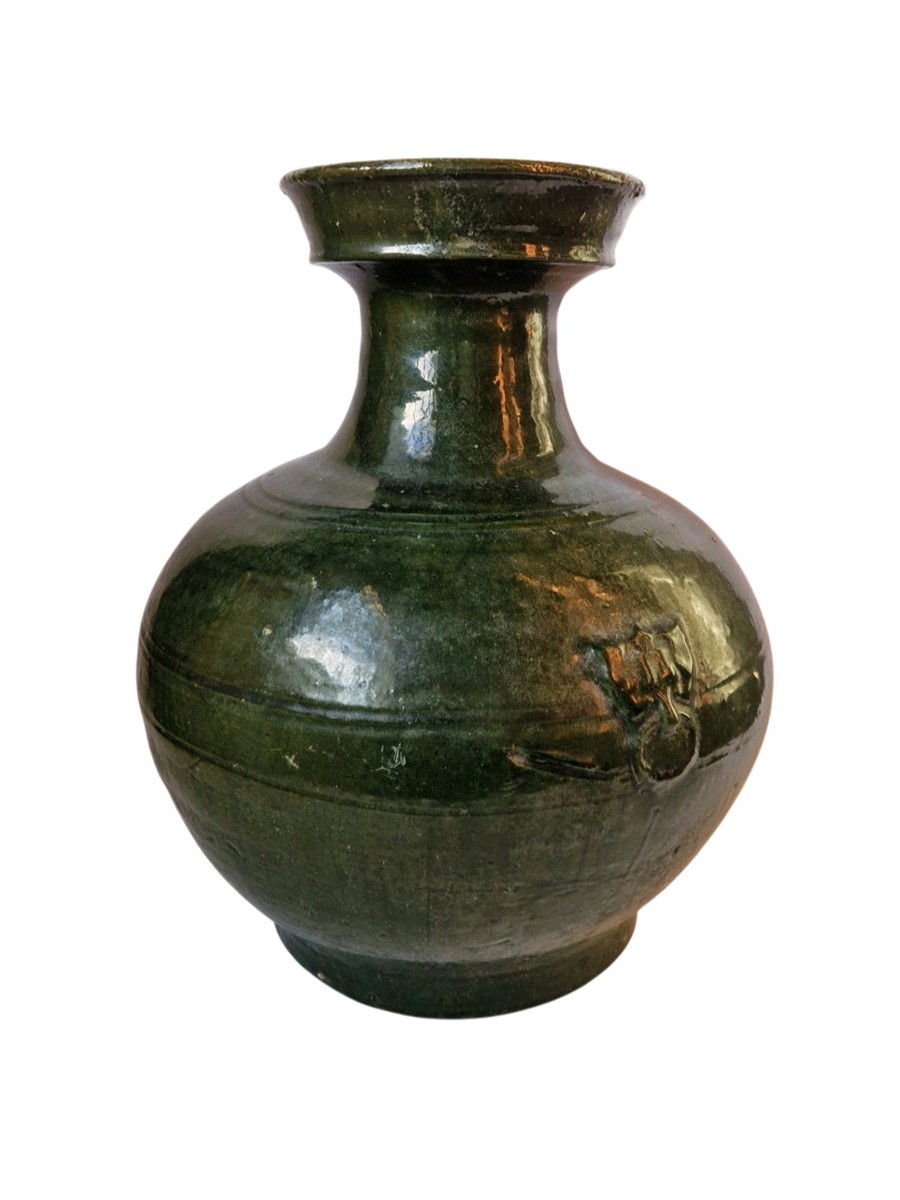
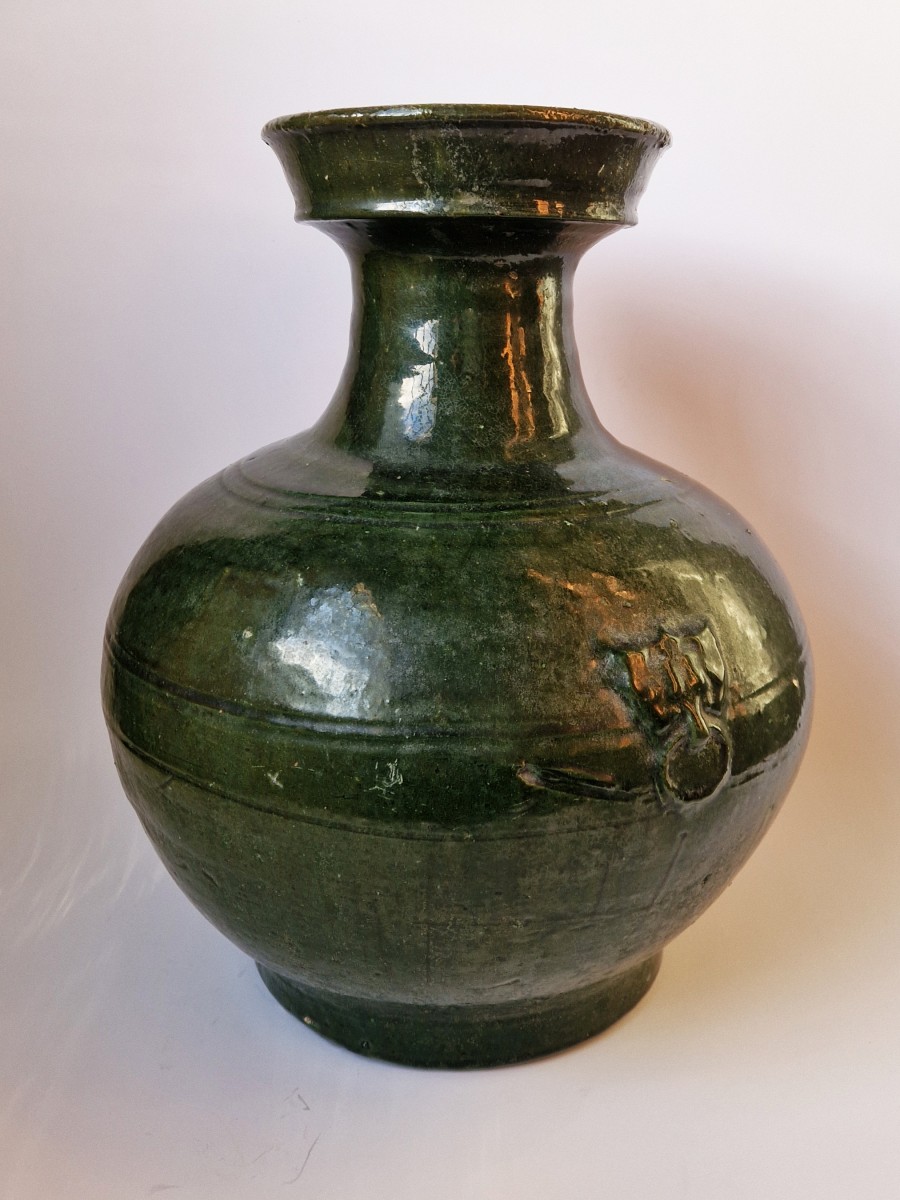
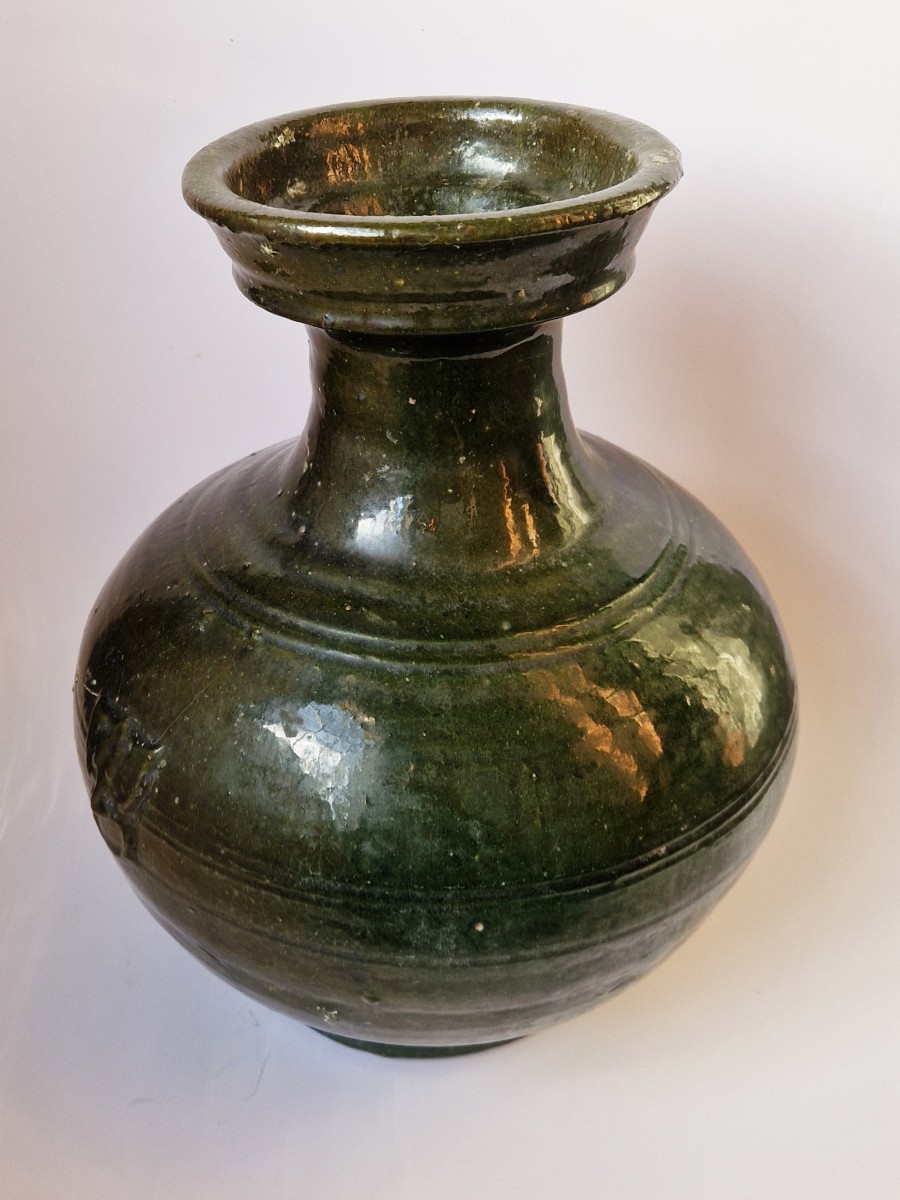
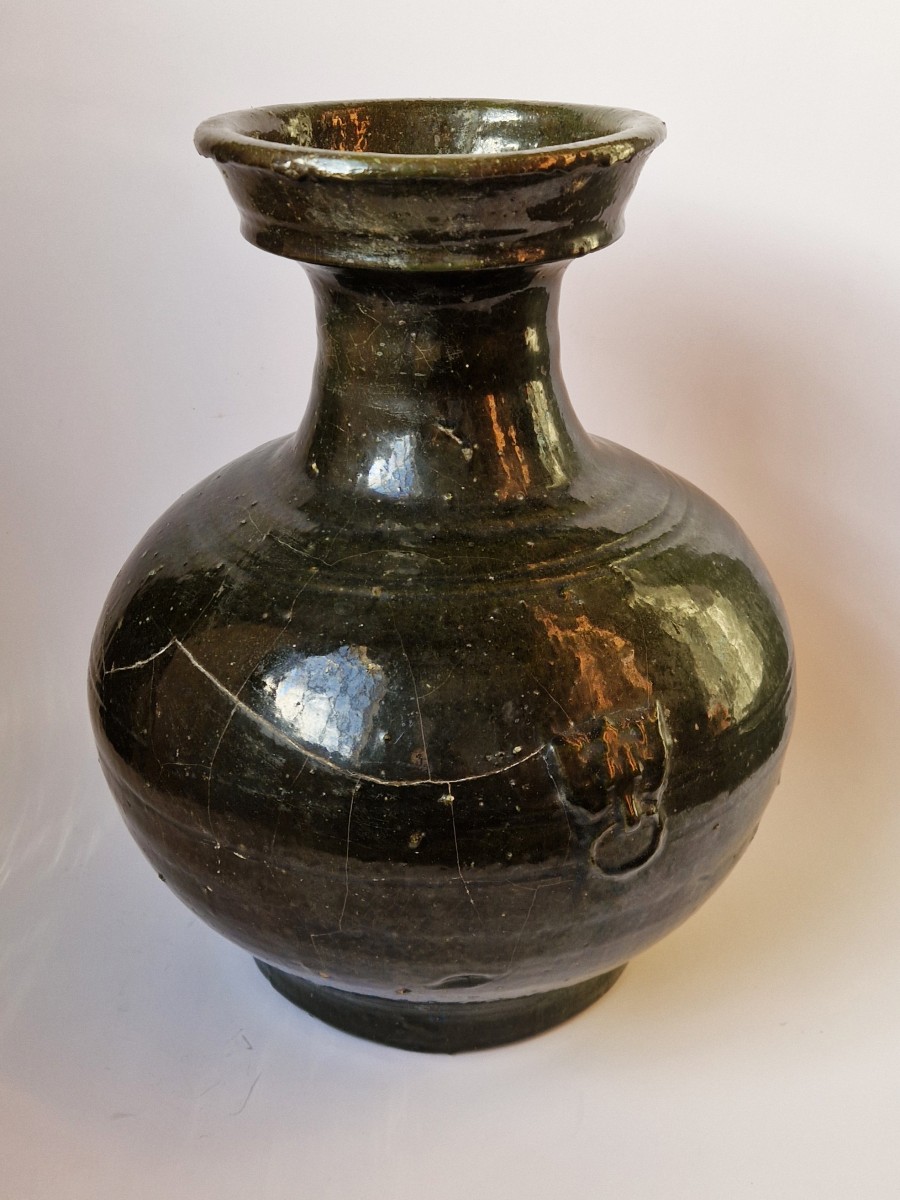
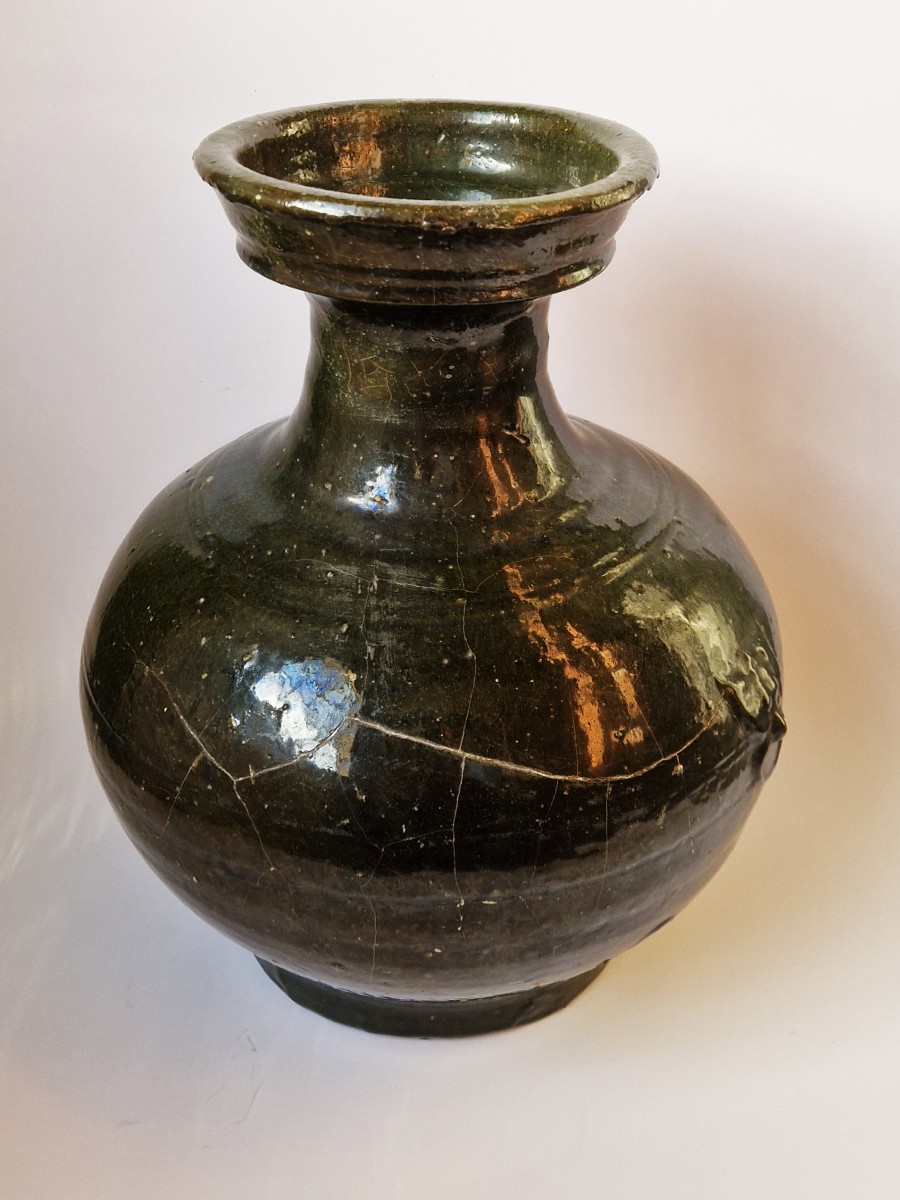

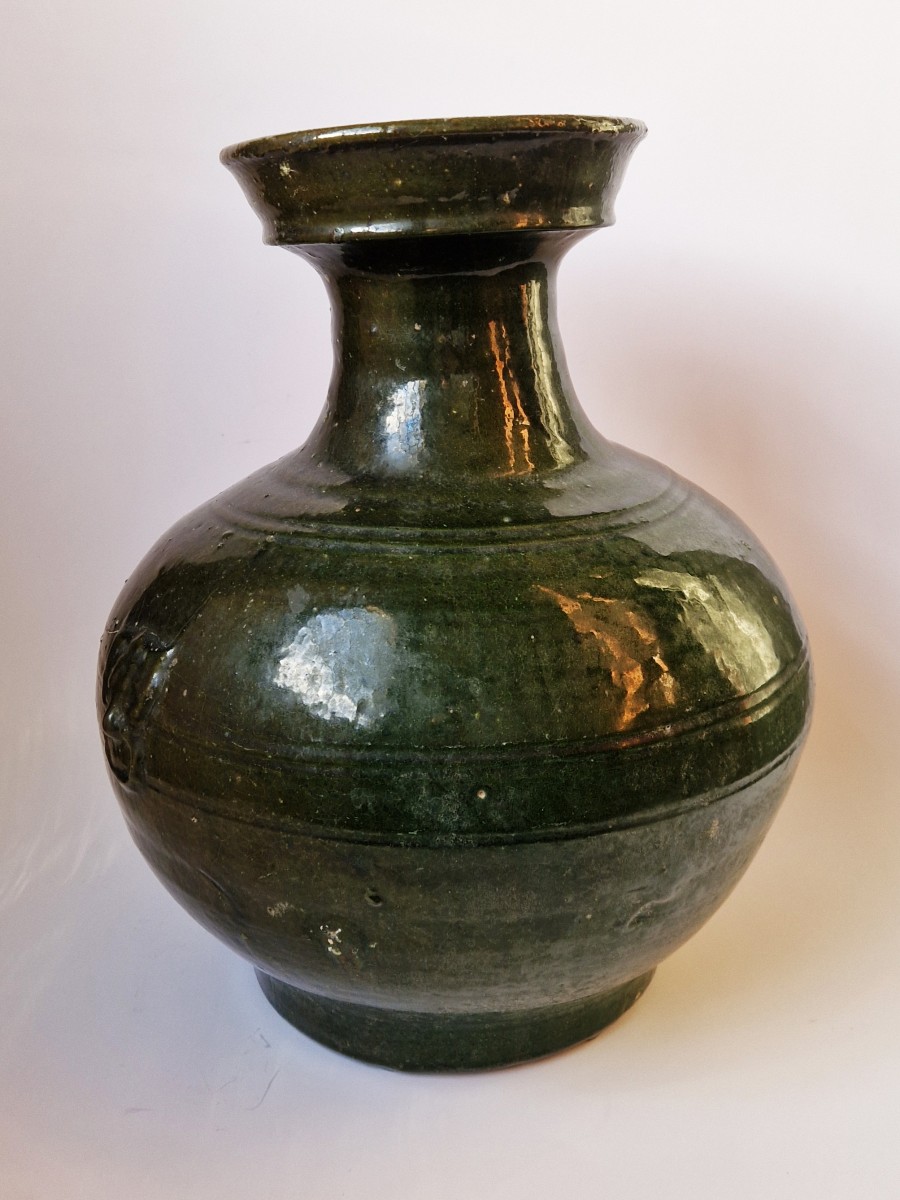
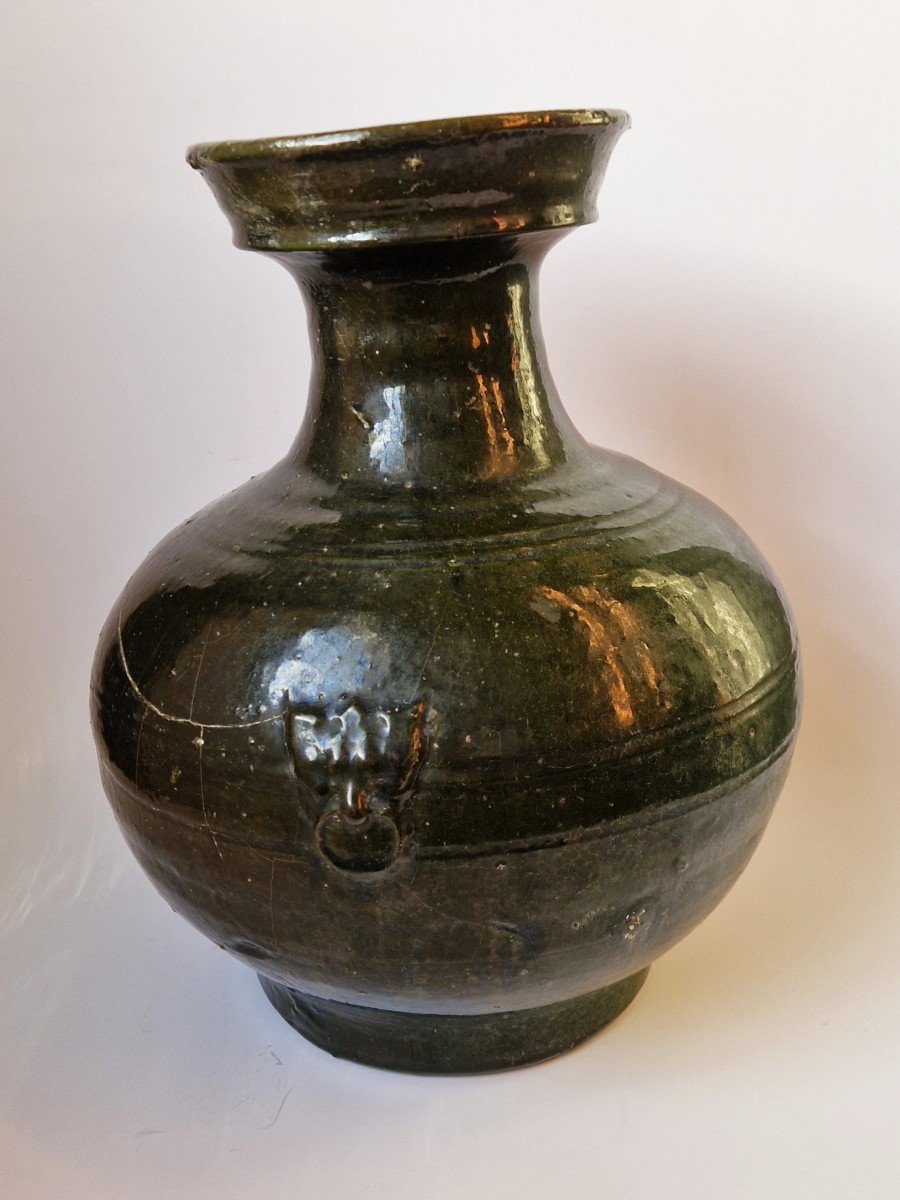
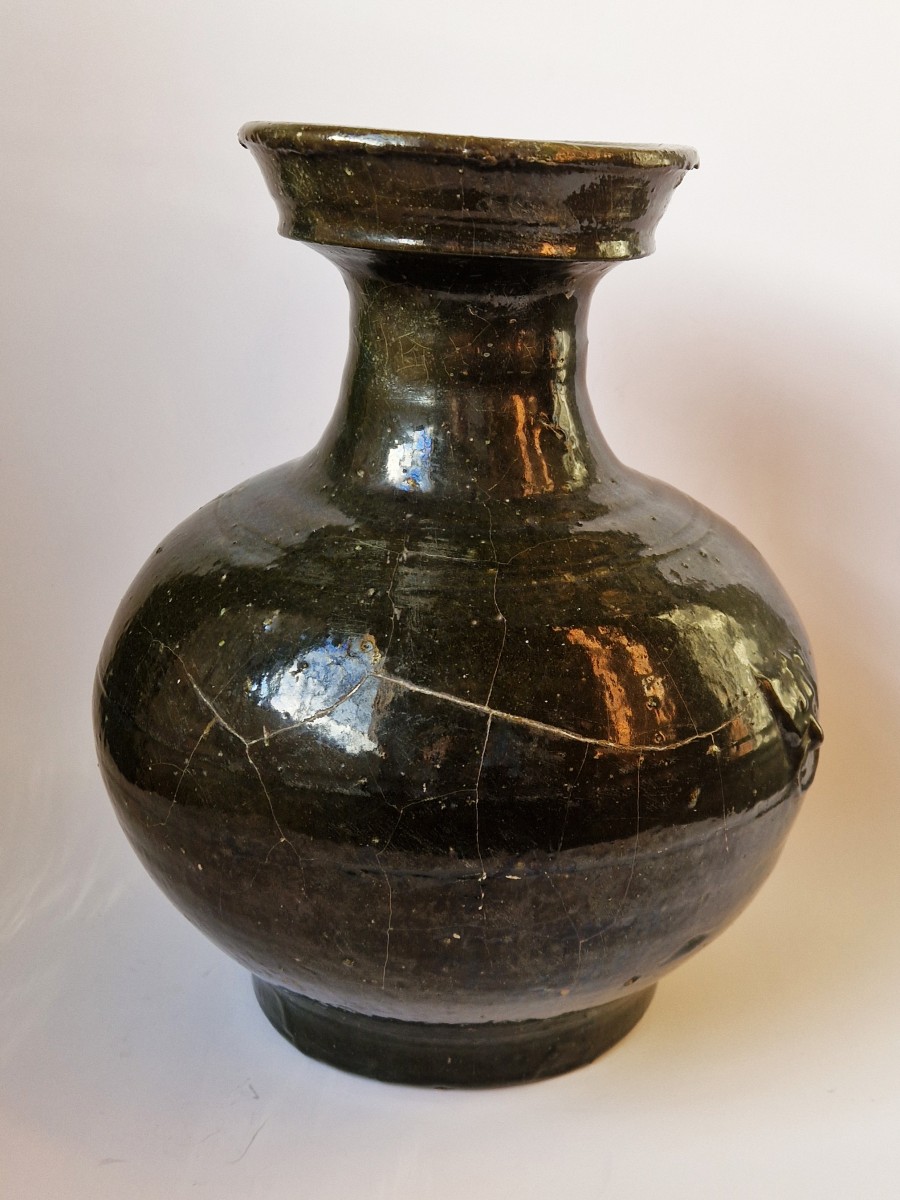
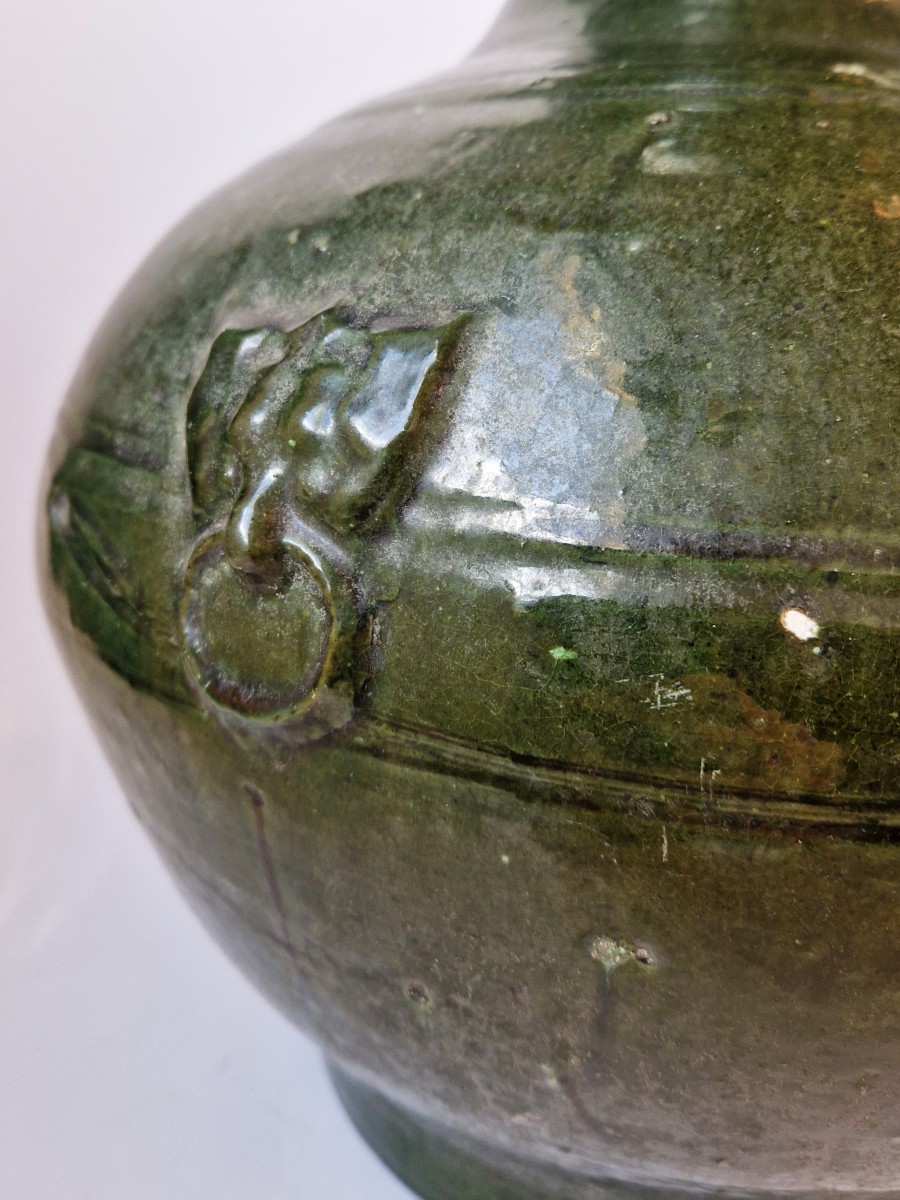
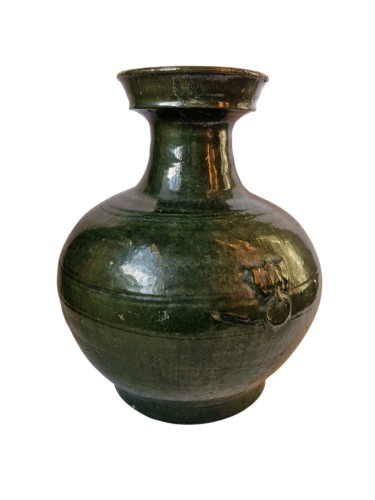
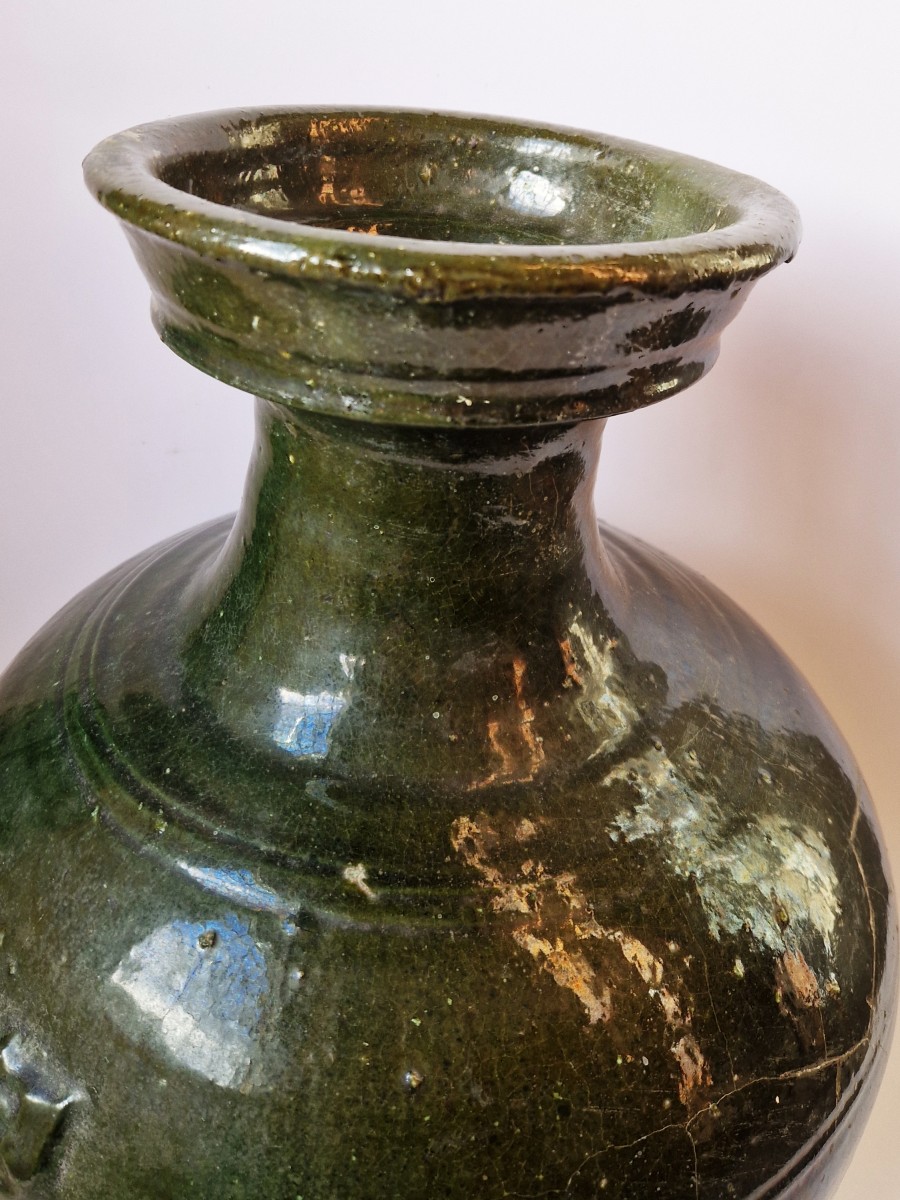
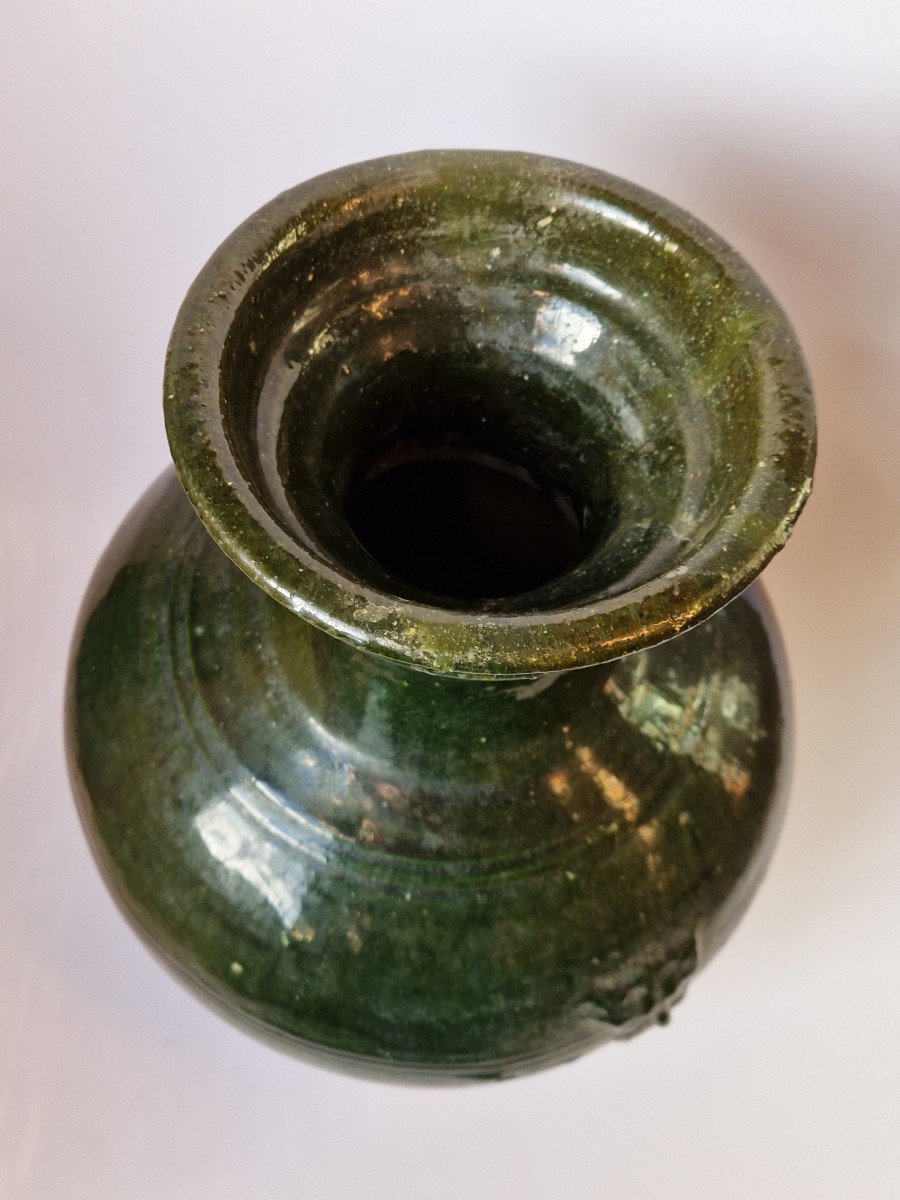
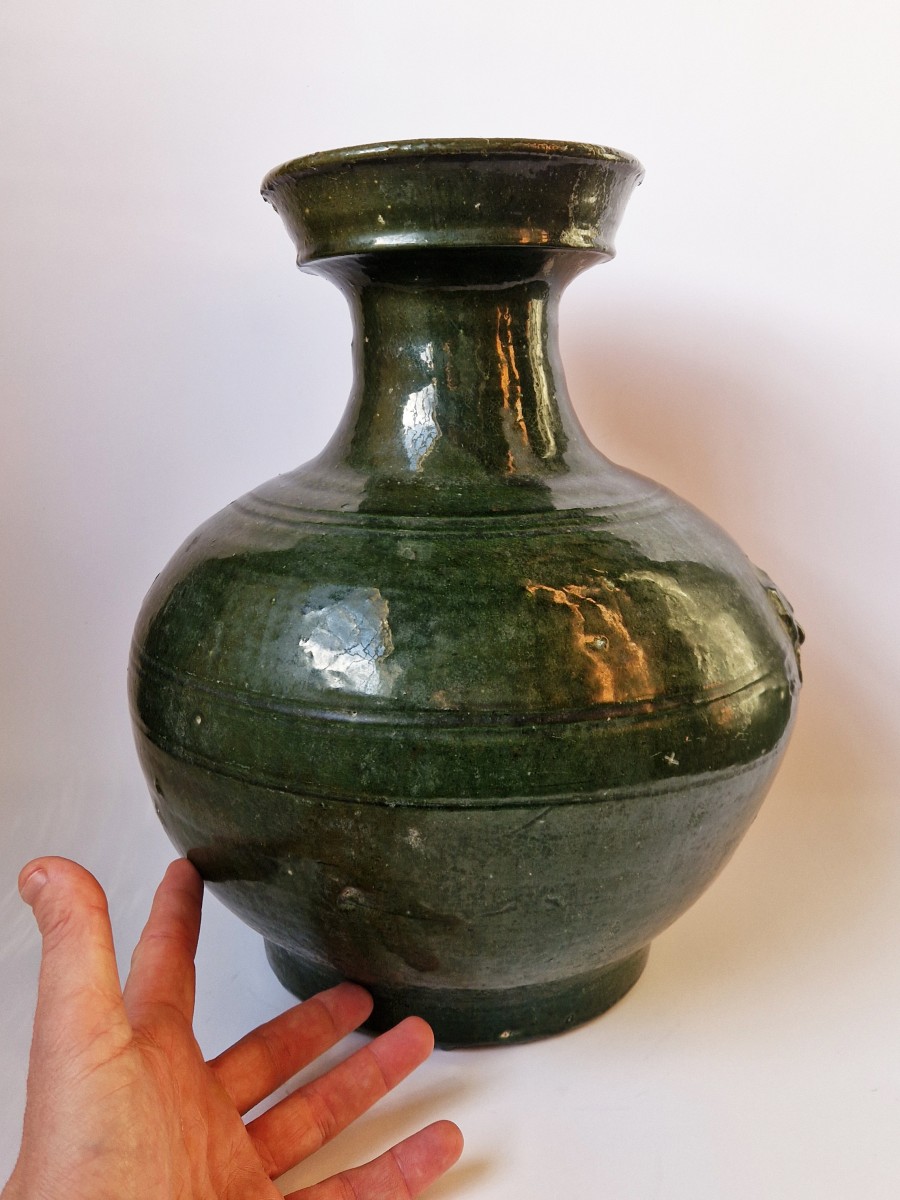
With a globular body rising from a flat base to a waisted neck, flanked by a pair of mask ring handles, covered overall with a dark green glaze
China, circa 206 BC - 220 AD
Height: 36 cm
Provenance:
With Banshan, Brian Page Antiques, Brighton, UK, 2005
Private collection, The Netherlands
This particular shape is known as a Hu: a vase of baluster-shape, copied from bronze vessels. The form is characterised by a pear-shaped body, which continues upwards in a sinuous curve towards a generous opening. The Hu type appears to have originated during the Shang Period (1600 – 1045 BC). In the Han dynasty, it was often used for storing food: indeed, many have been found in tombs, filled with foodstuffs to sustain the deceased in the afterlife.
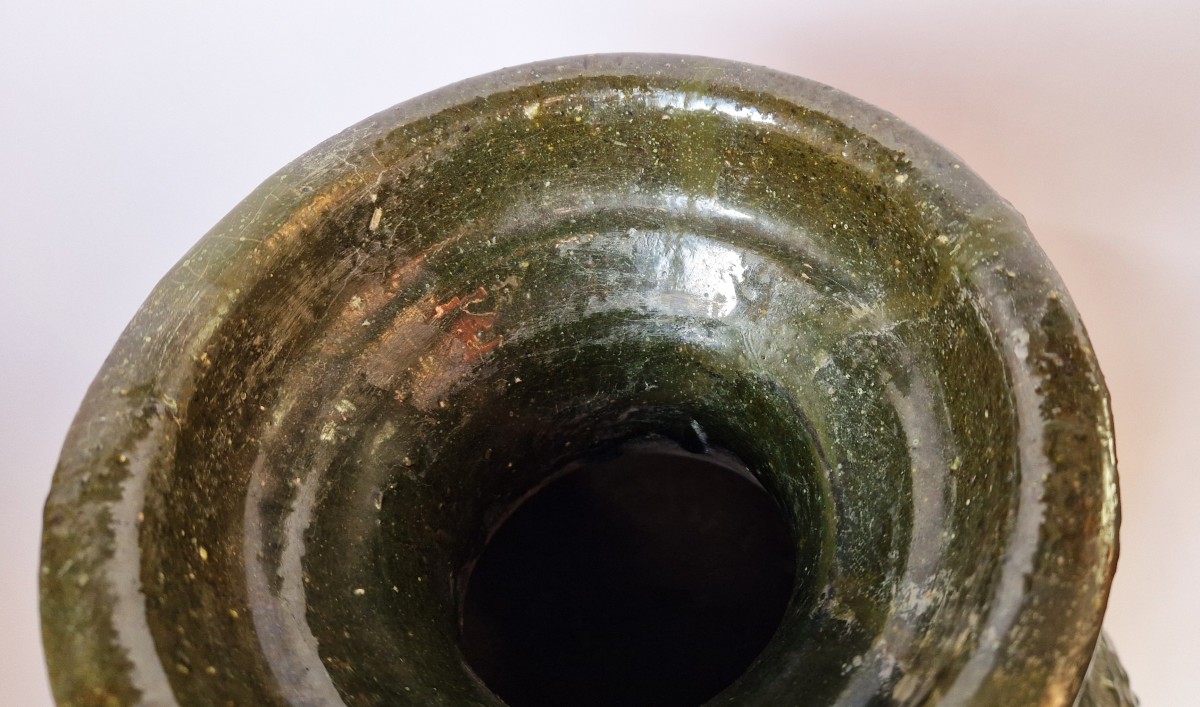
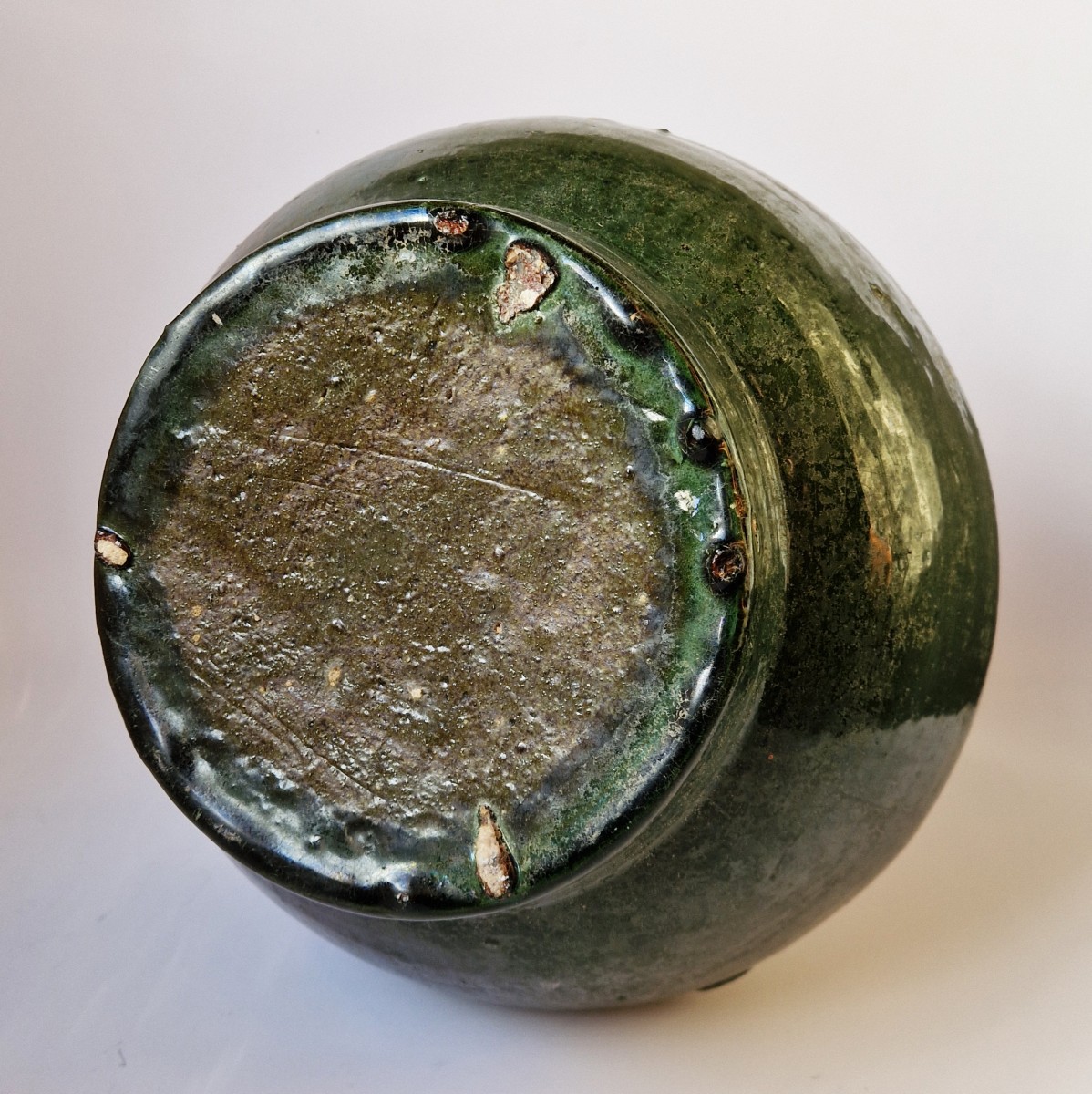
The dark green glaze is intended to imitate the patination of bronze. Vases of this kind were made predominantly in the Yue region, and were high-fired with a wash slip that contained a high proportion of iron. Indeed, the colour is produced by the reaction between the iron and heat. With three spur marks to the base.
Some large cracks and imperfections to the glaze and some restorations to the neck, otherwise in good condition for the age.
Shipping in Europe: EUR 25