Offered by Brozzetti Antichità
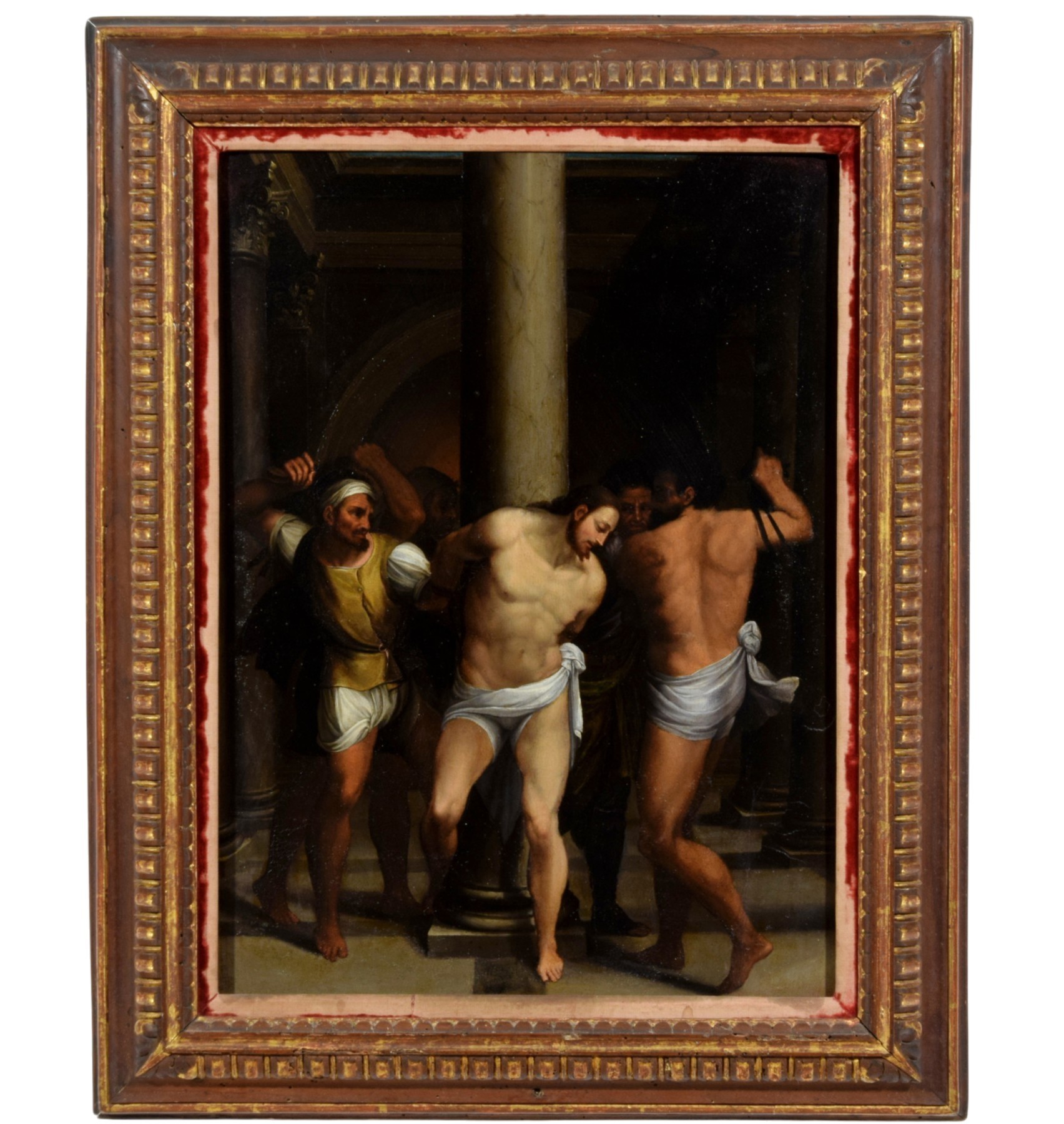
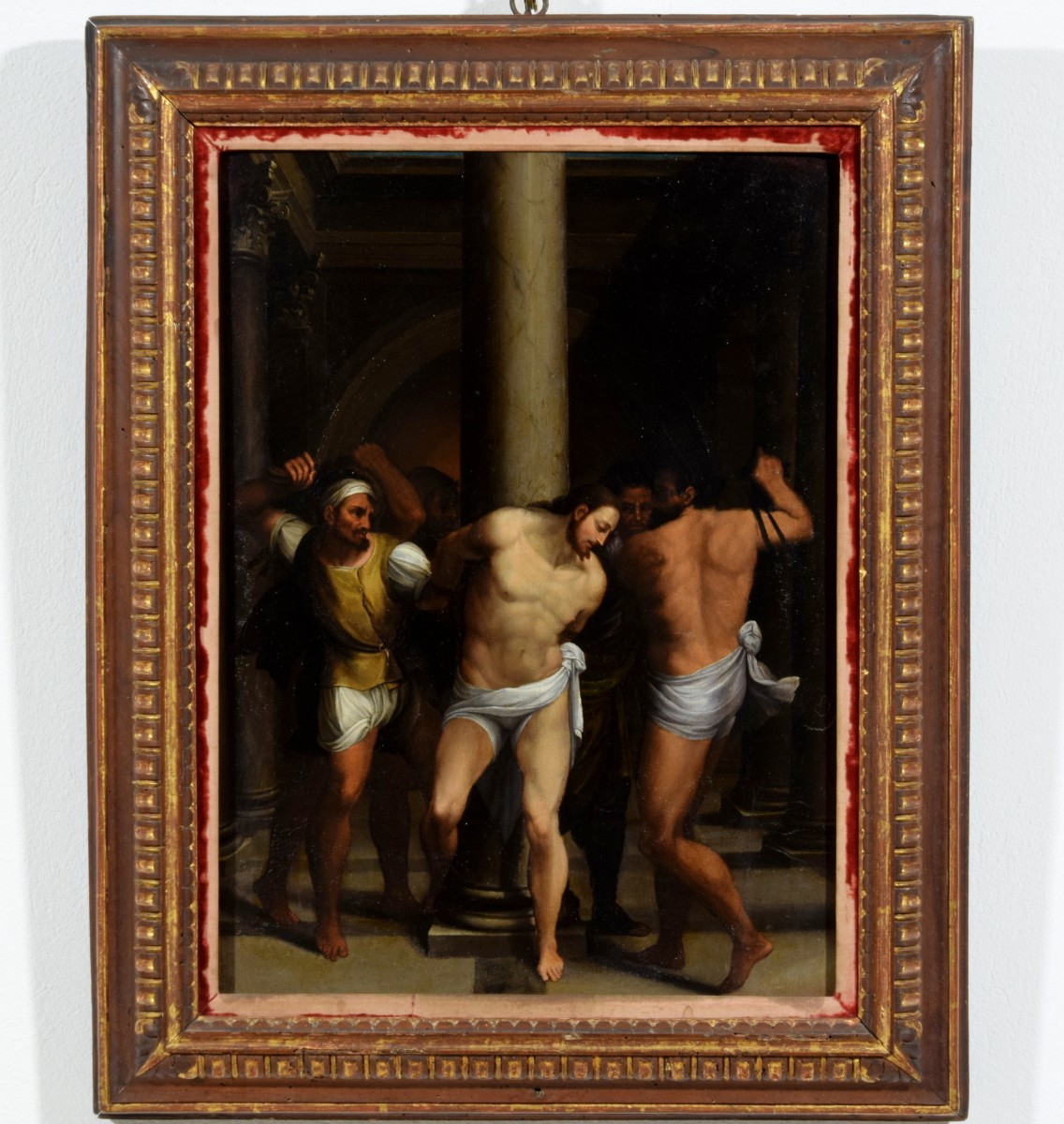
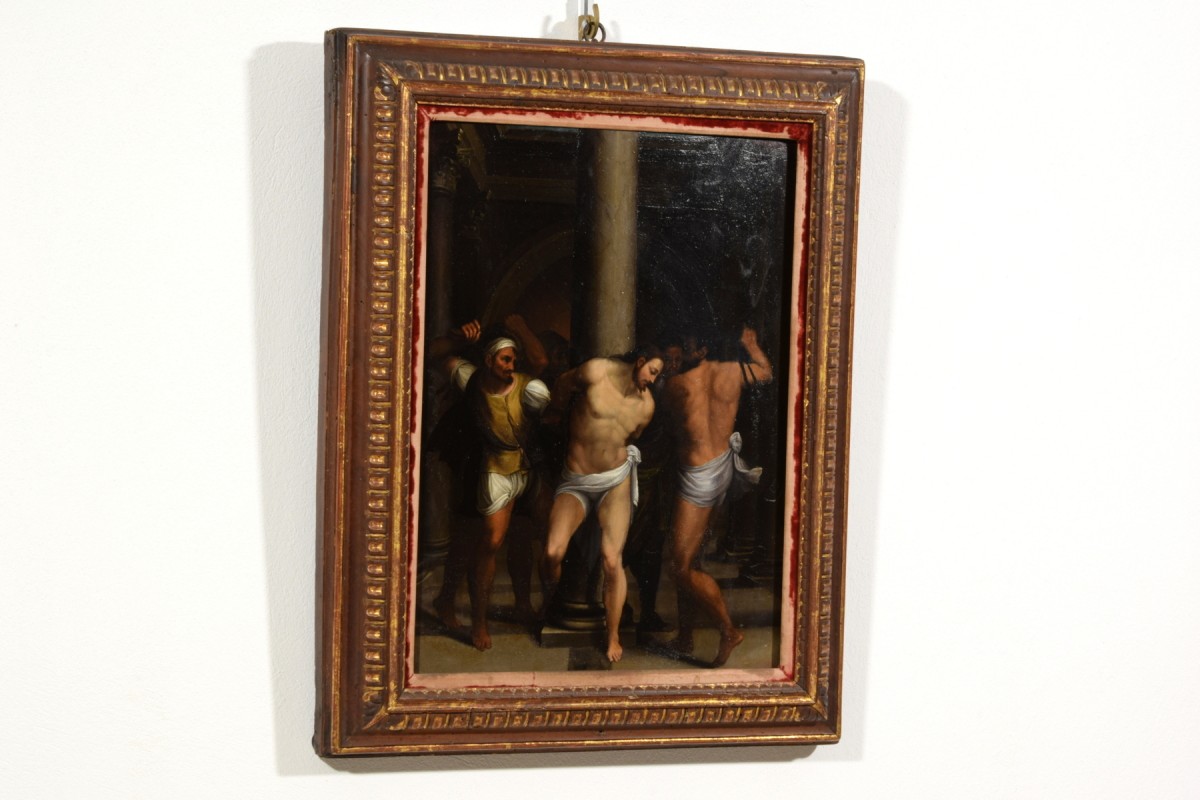
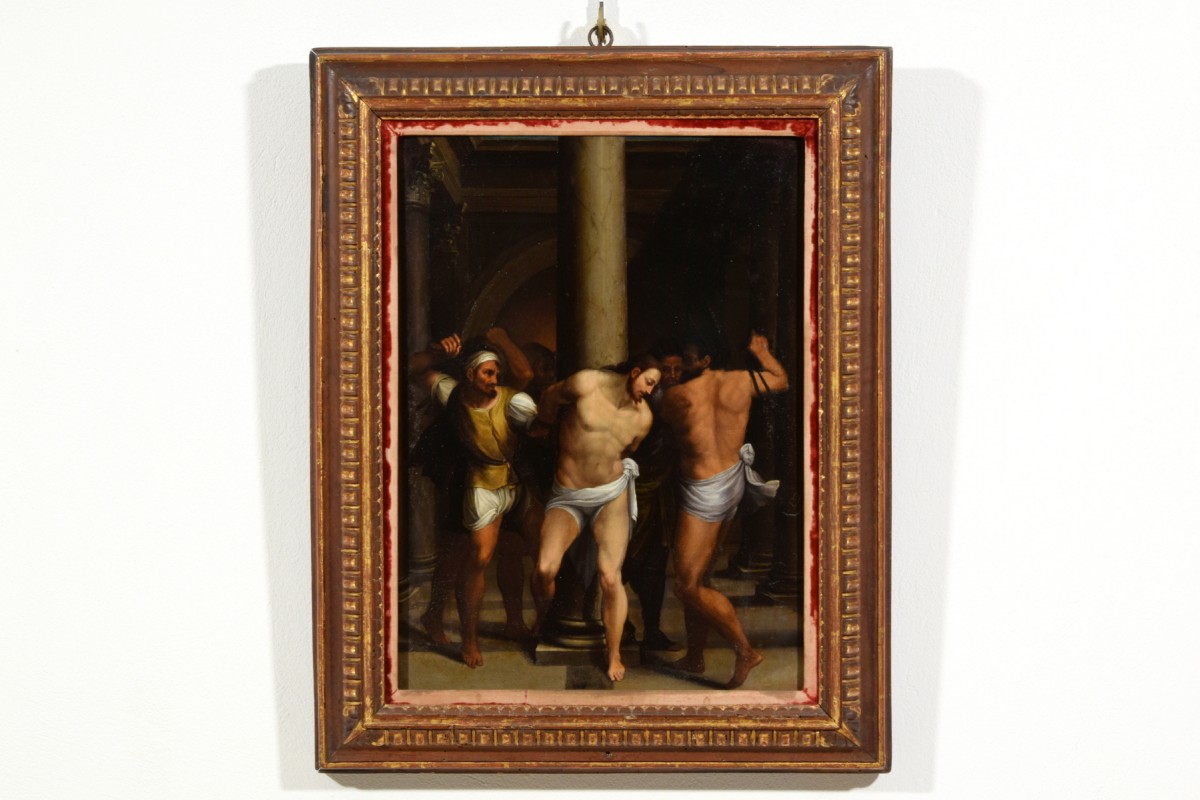
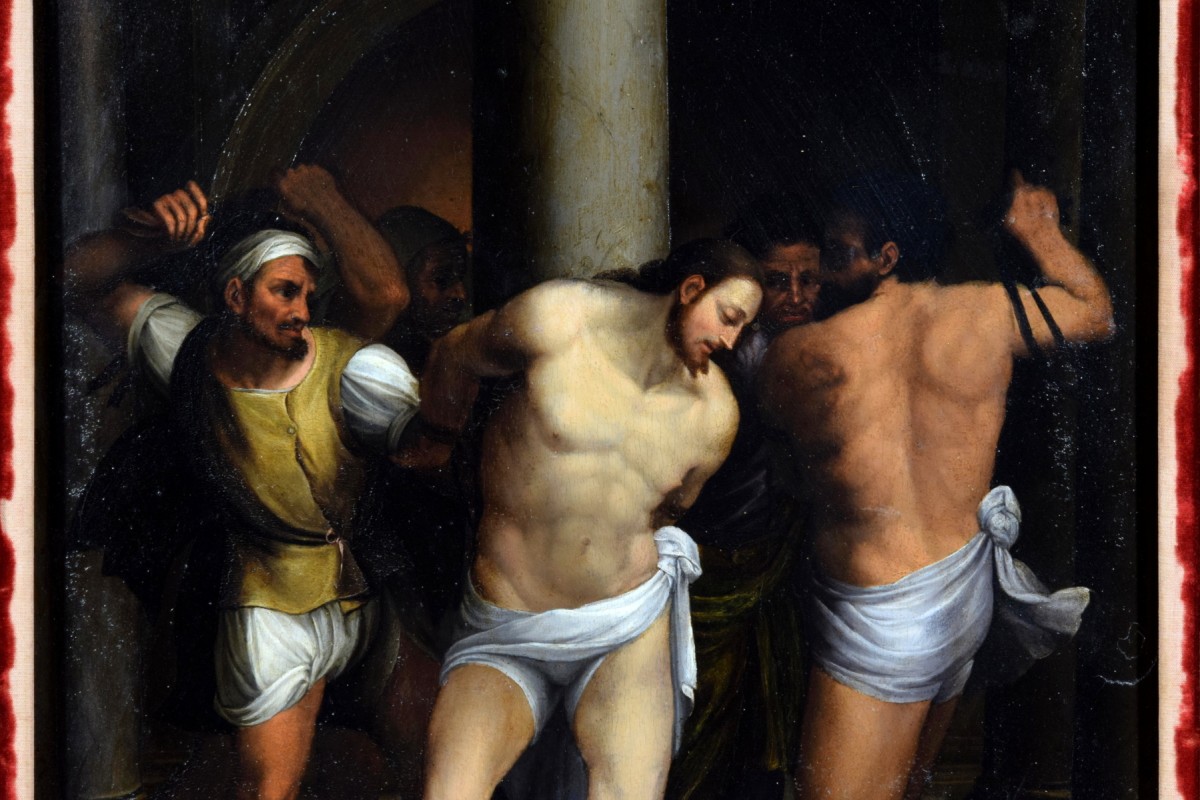

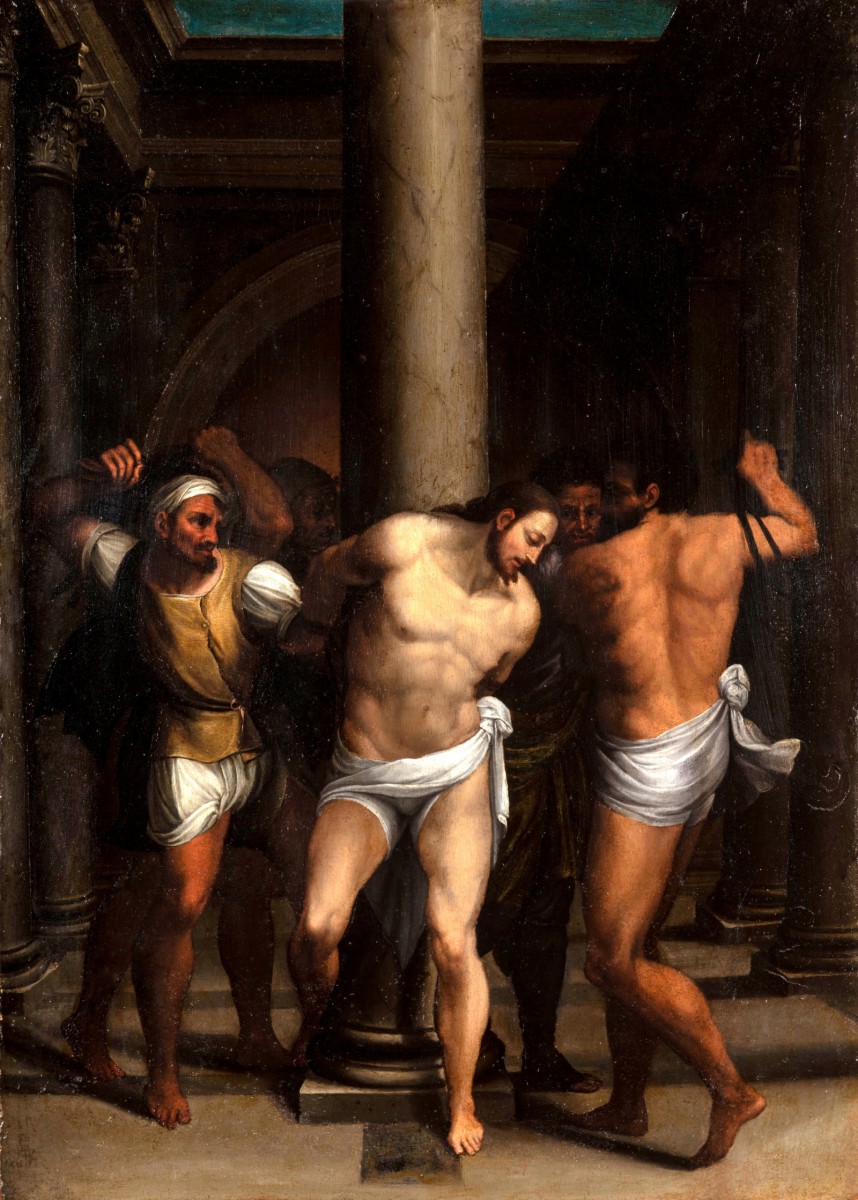
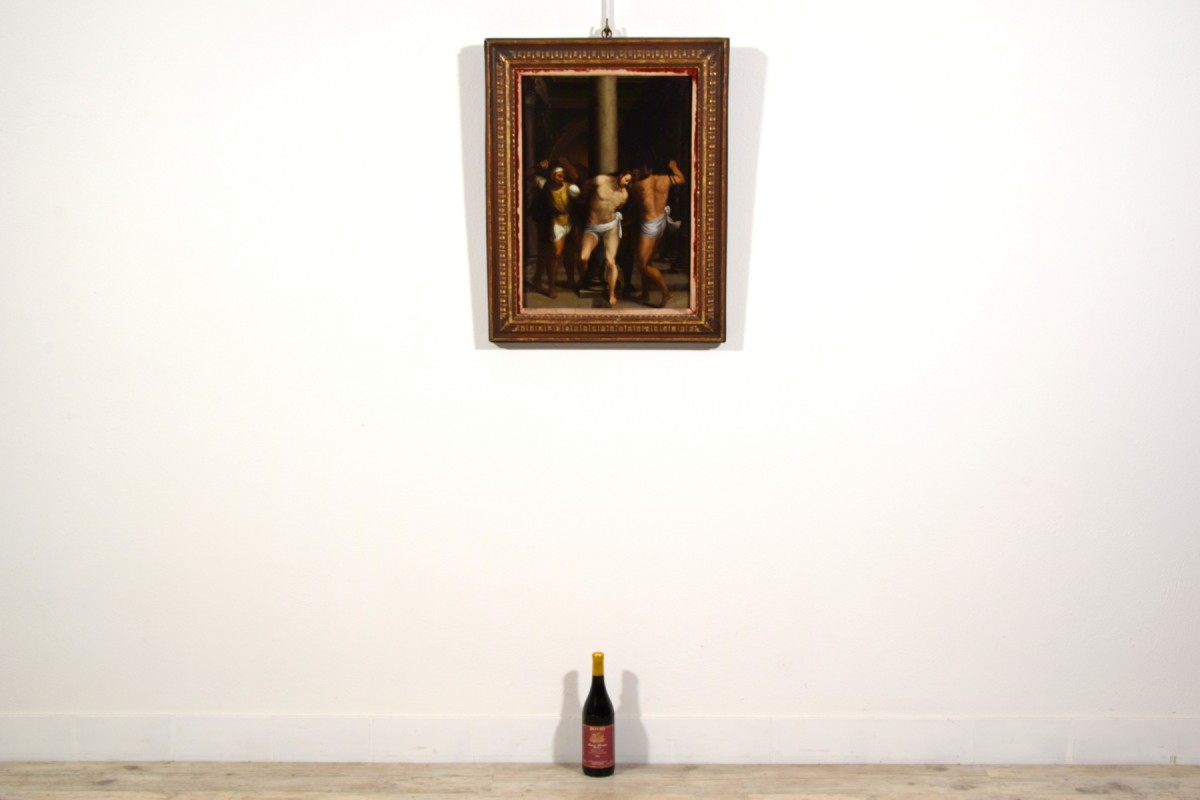
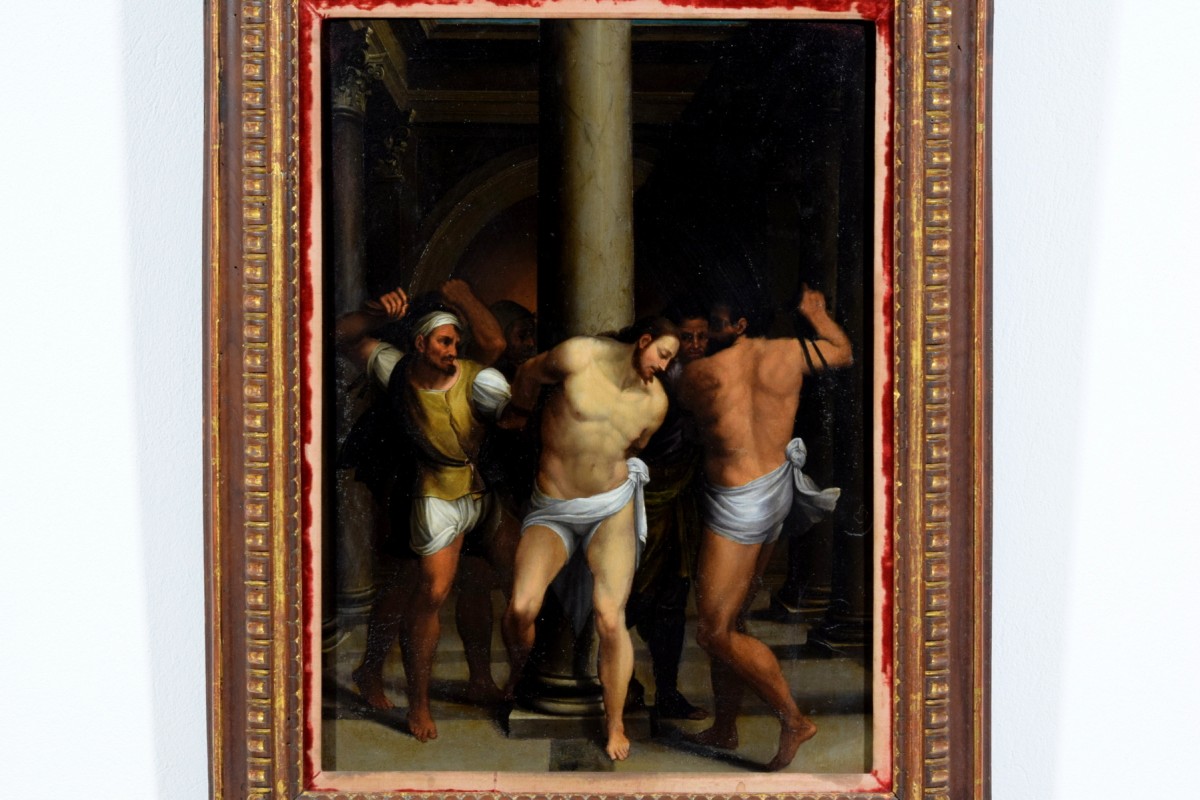
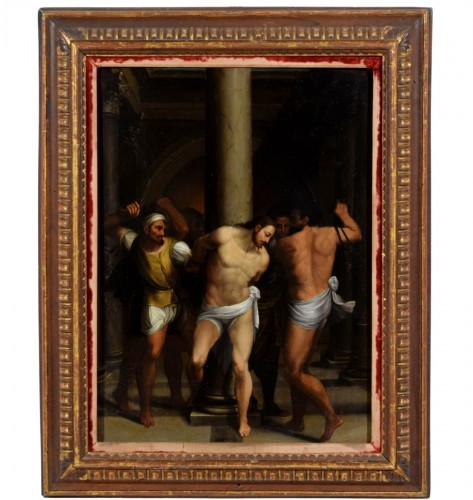
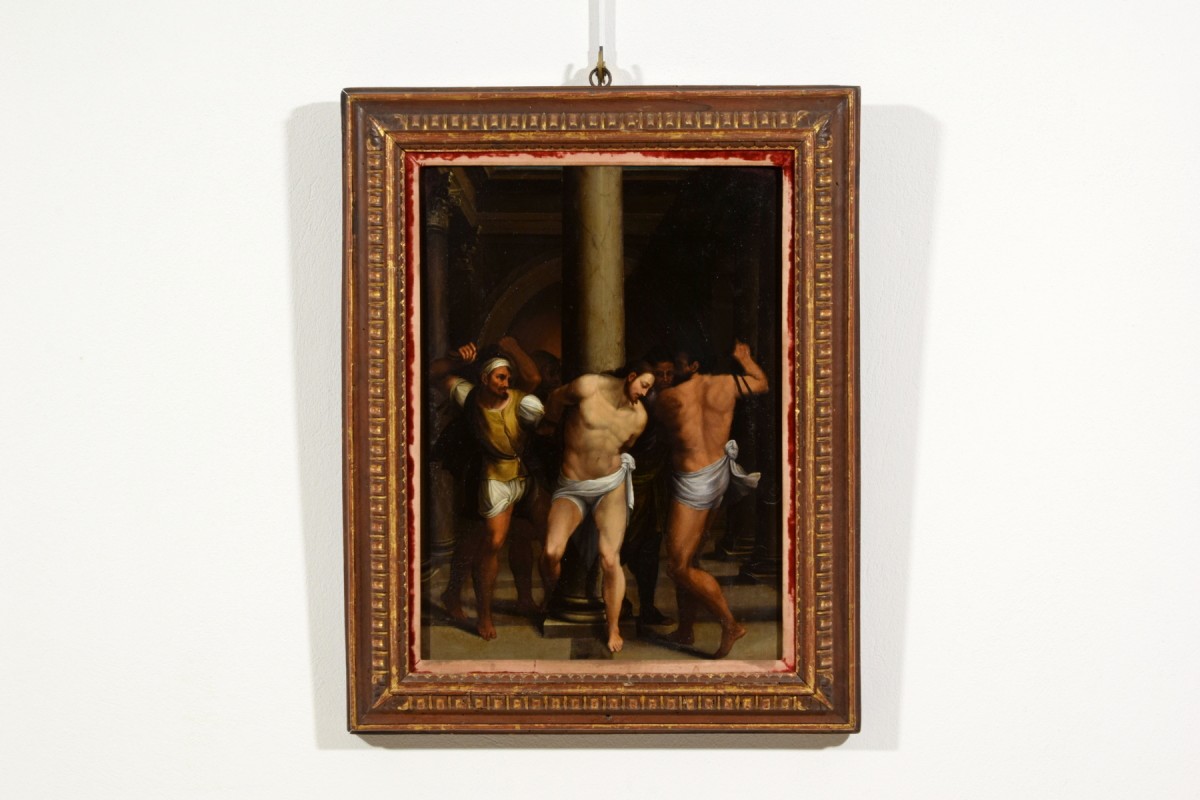
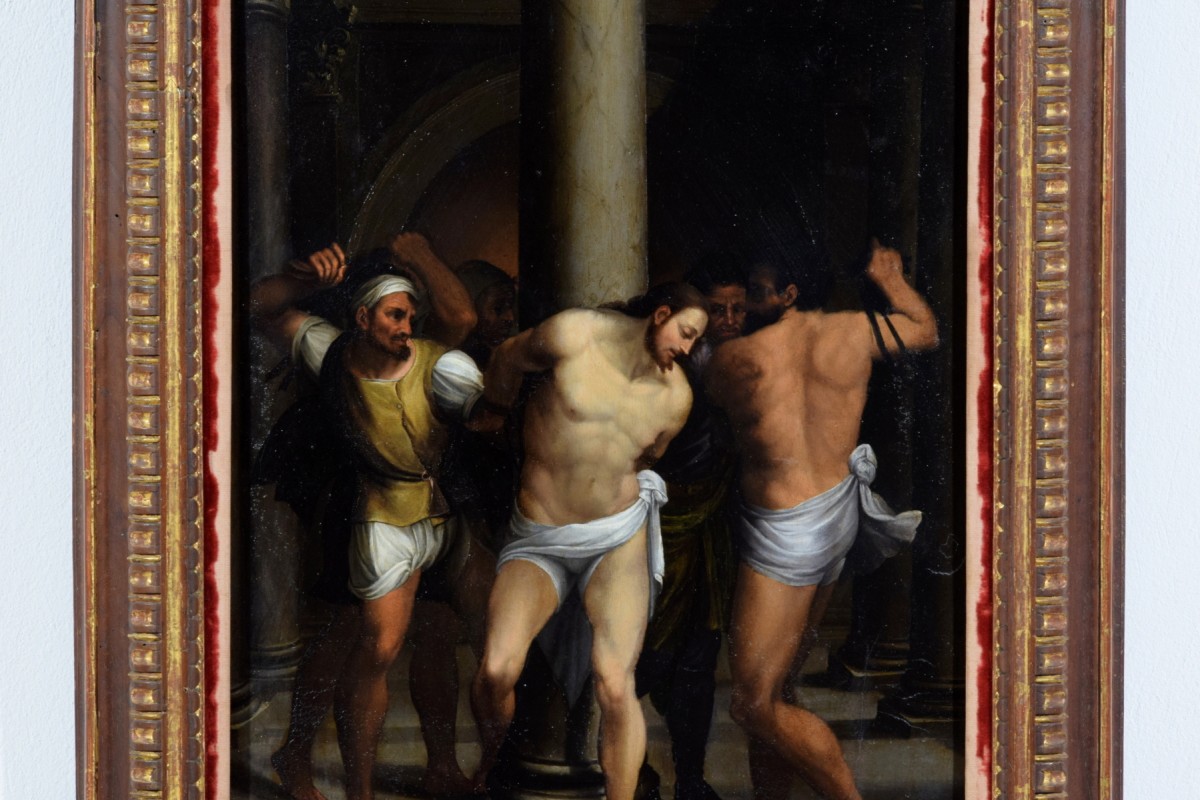
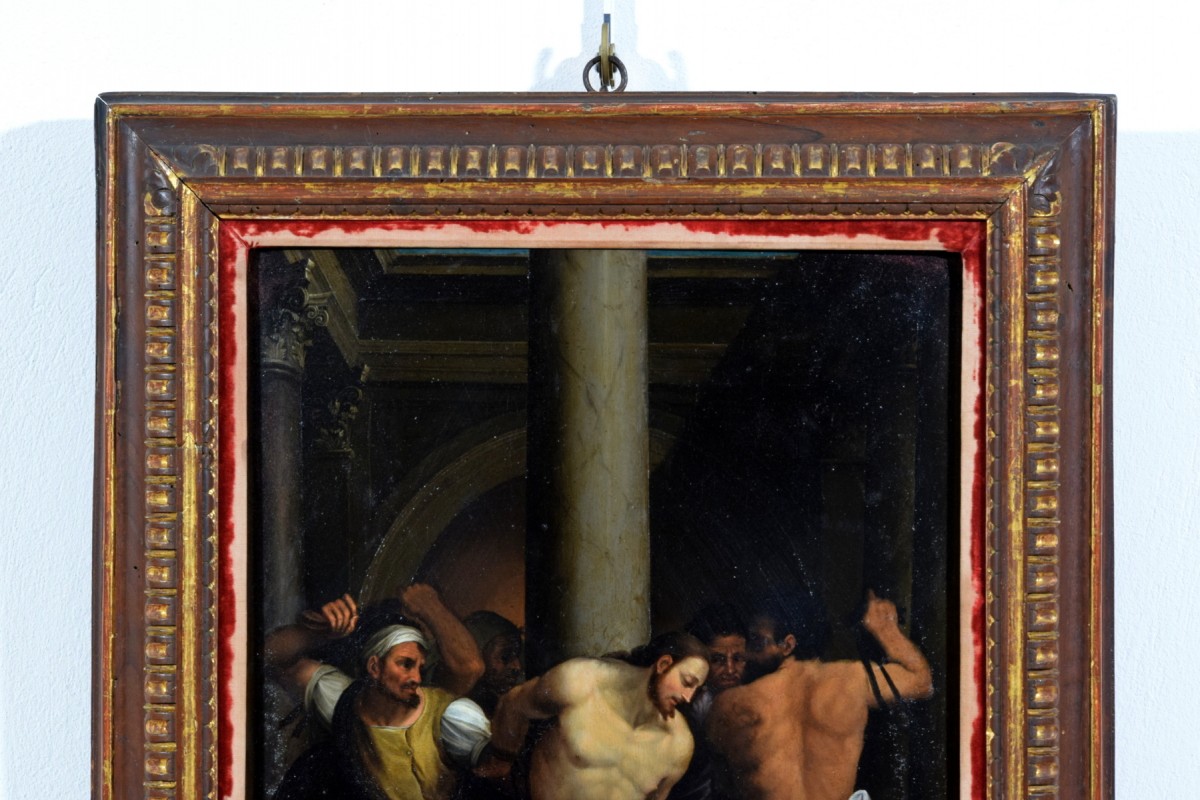
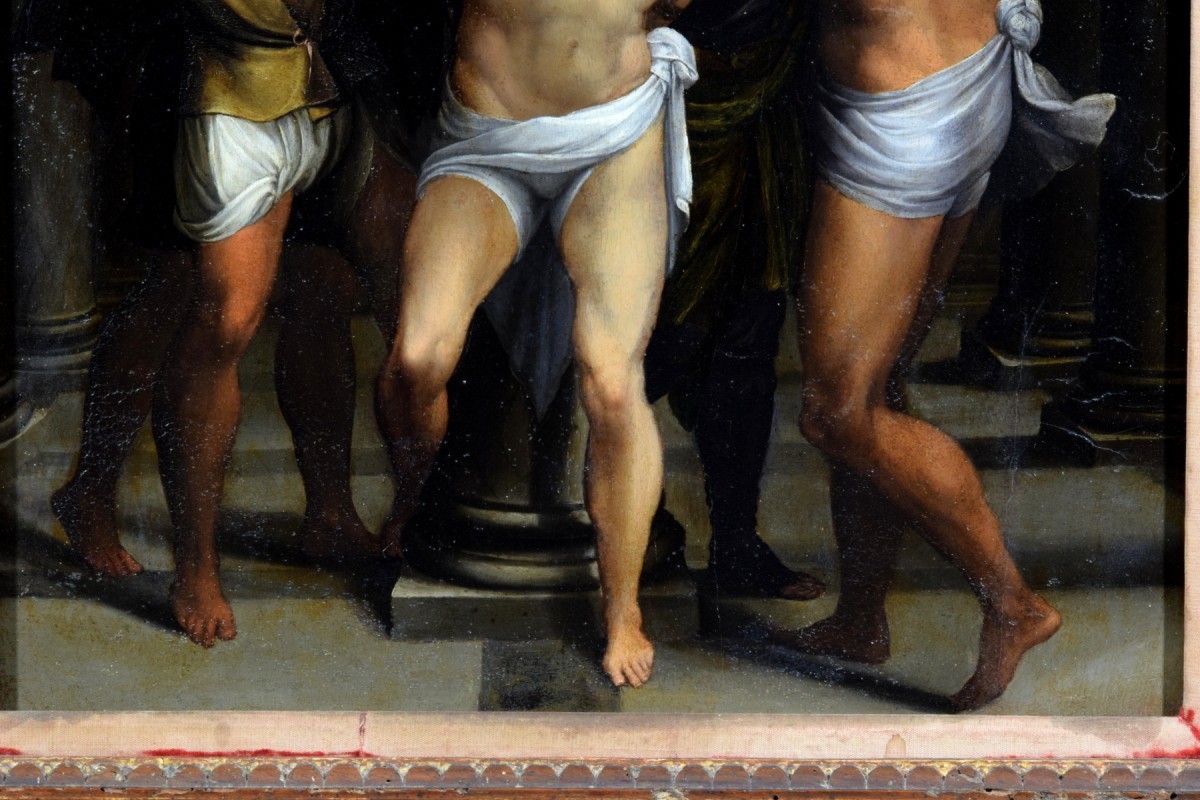
Flagellation of Christ, Roman painter of the second half of the 16th century, follower of Sebastiano del Piombo, oil on panel
The work, made in oil on panel, is an interpretation of the famous Flagellation of Christ painted by Luciani Sebastiano detto Sebastiano del Piombo (Venice 1485 ca. - Rome 1547) in the church of San Pietro in Montorio in Rome.
The subject was very successful and was repeated several times on canvases and tables by artists active in the 16th century. The work by Sebastiano del Piombo, painted in oil on wall, was commissioned to the painter by the banker Pierfrancesco Borgherini and was made between 1516 and 1524. Critics have long investigated the role of Michelangelo Buonarroti as the inventor of composition. The treatment of the subject outside its narrative context, as an iconic and contemplative image, had already distinguished precedents but no one had ever approached it in a monumental key for an altar of public use, This aspect helped to ensure that the work had an immediate and wide resonance. It became an important iconographic source and a reference for the subsequent interpretations of the theme, including the Flagellation by Caravaggio in the Museo di Capodimonte. The Borghese Gallery’s version, which is closer to the work of Marcello Venusti, dates back to 1570.
The extraordinary success of the work is evidenced, as well as by the replica that Sebastiano himself performed for the church of the Observance of Paradise in Viterbo (now in the city’s Civic Museum), from the numerous prints, faithful copies or variations, diffused in the context of the private destination easel painting. It is in this context that the painting proposed here fits.
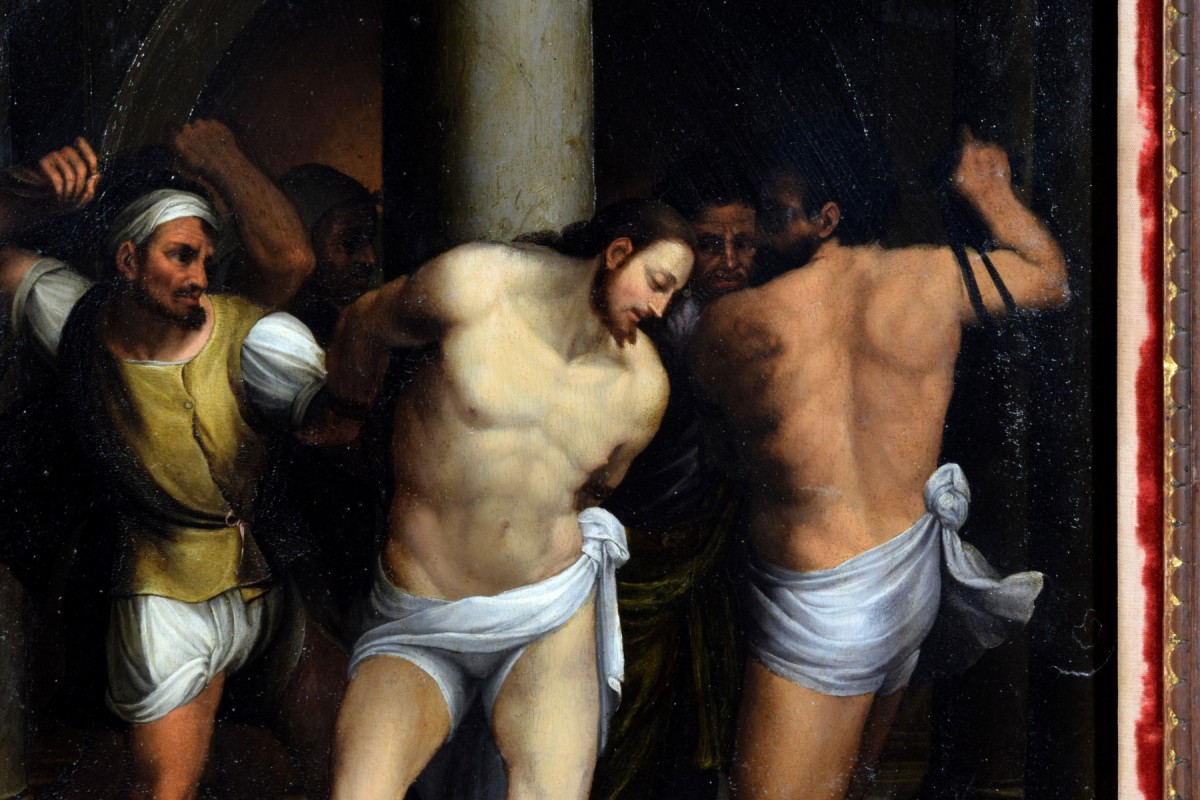
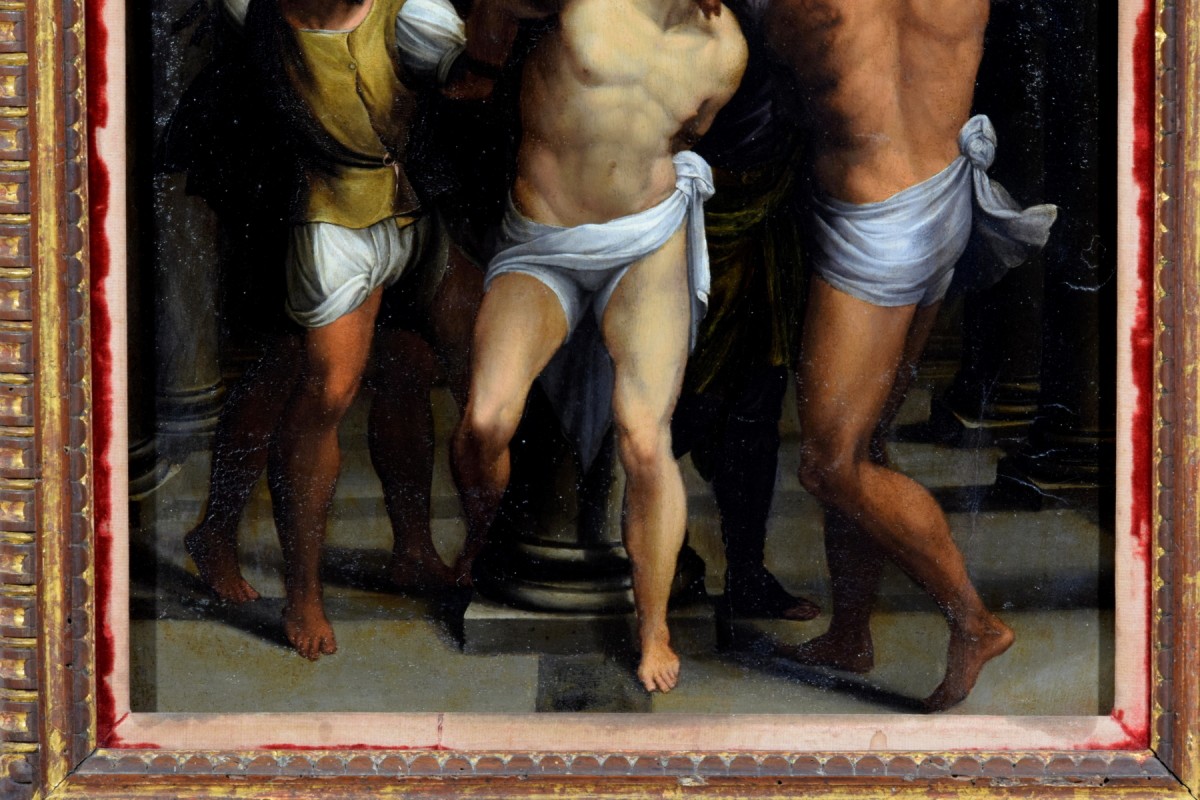
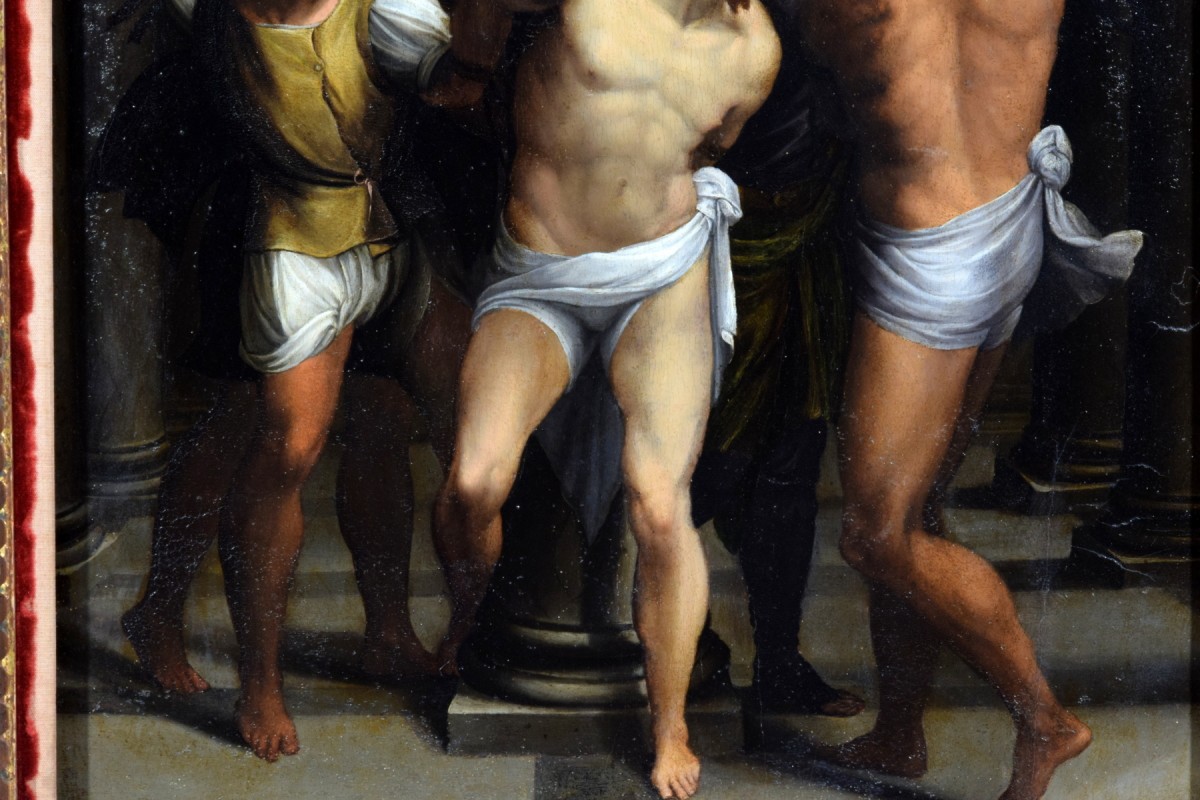
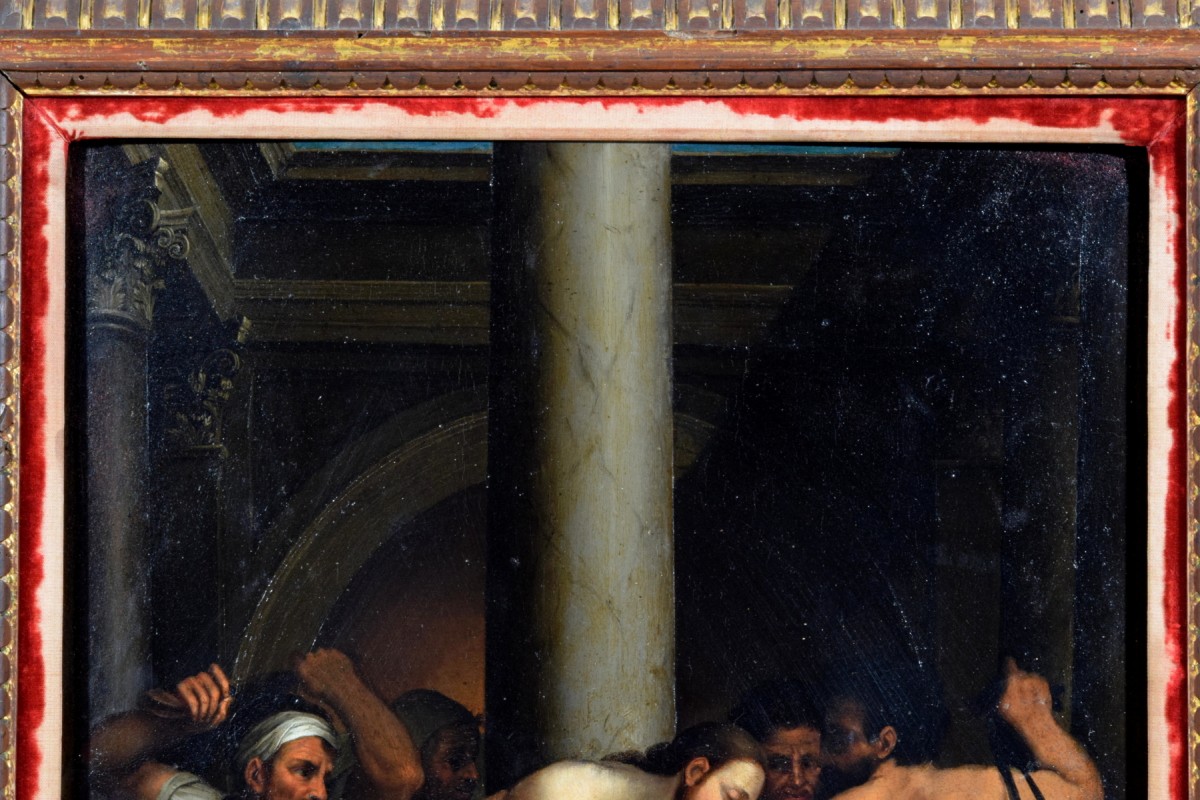
Christ is depicted in the centre of the composition, wrapped only by the shroud and tied to a column placed at the centre of a large Renaissance hall. His executioners are depicted on the back and side, placed in the background. The figures stand out from the darkness through a light that comes from the right and contributes to the drama of the scene. The light directly hitting the half-naked body of Christ, emphasizes the centrality of the figure, highlighting its anatomical performance. Compared to the painting on the wall by Sebastiano del Piombo, here is a setting of the group of executioners and the architectural setting very close to the table of the Borghese Gallery.
Of high pictorial quality and in excellent state of preservation, the work is a valid testimony to the great fortune that had the subject between the nobility and the rich bourgeoisie of the time.
Presented inside a frame made of wood carved in bois naturel with gold.
Object with XRF analysis