Offered by Brozzetti Antichità
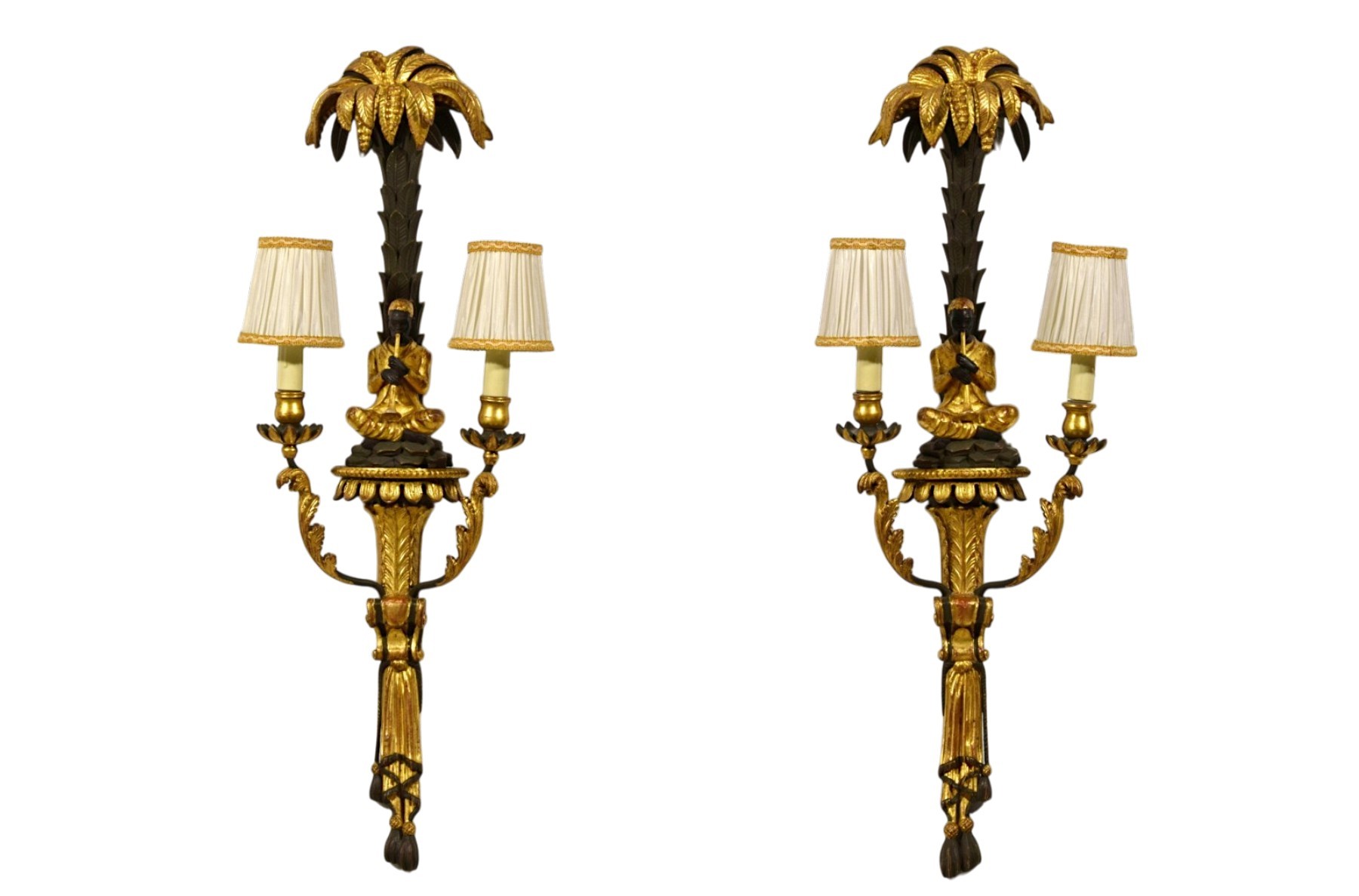
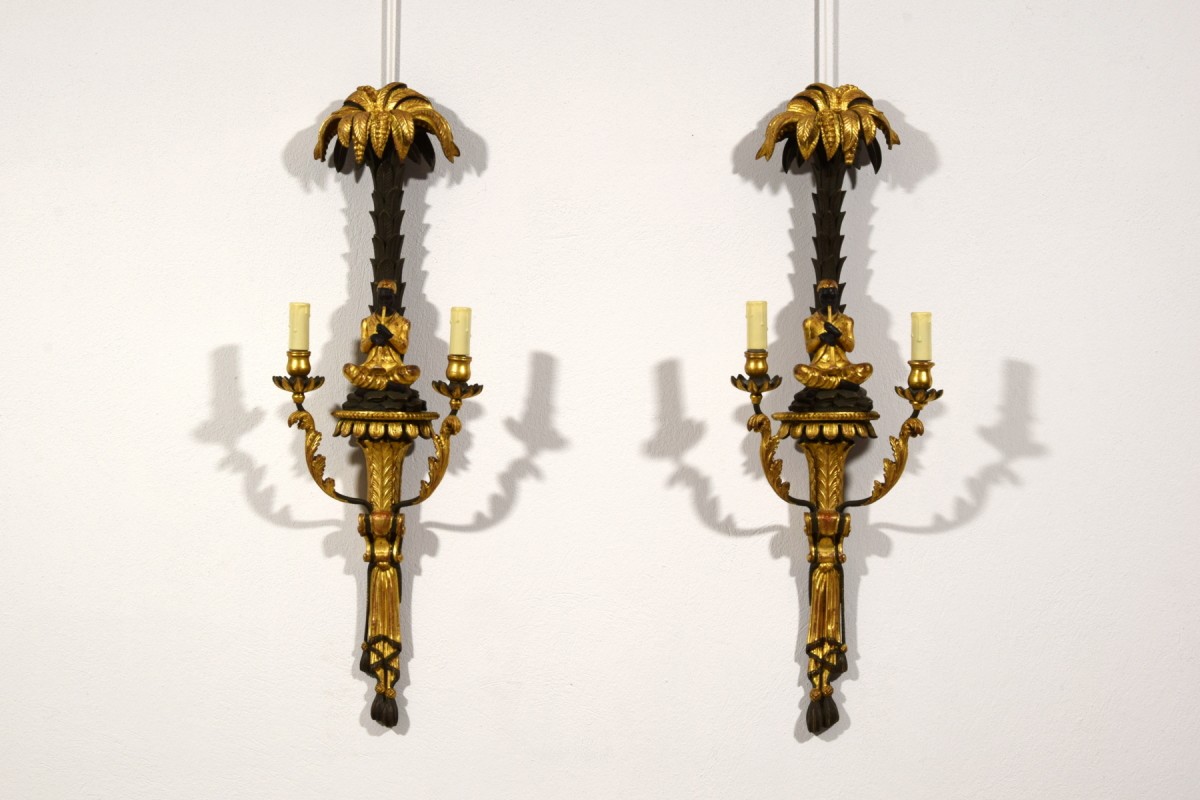
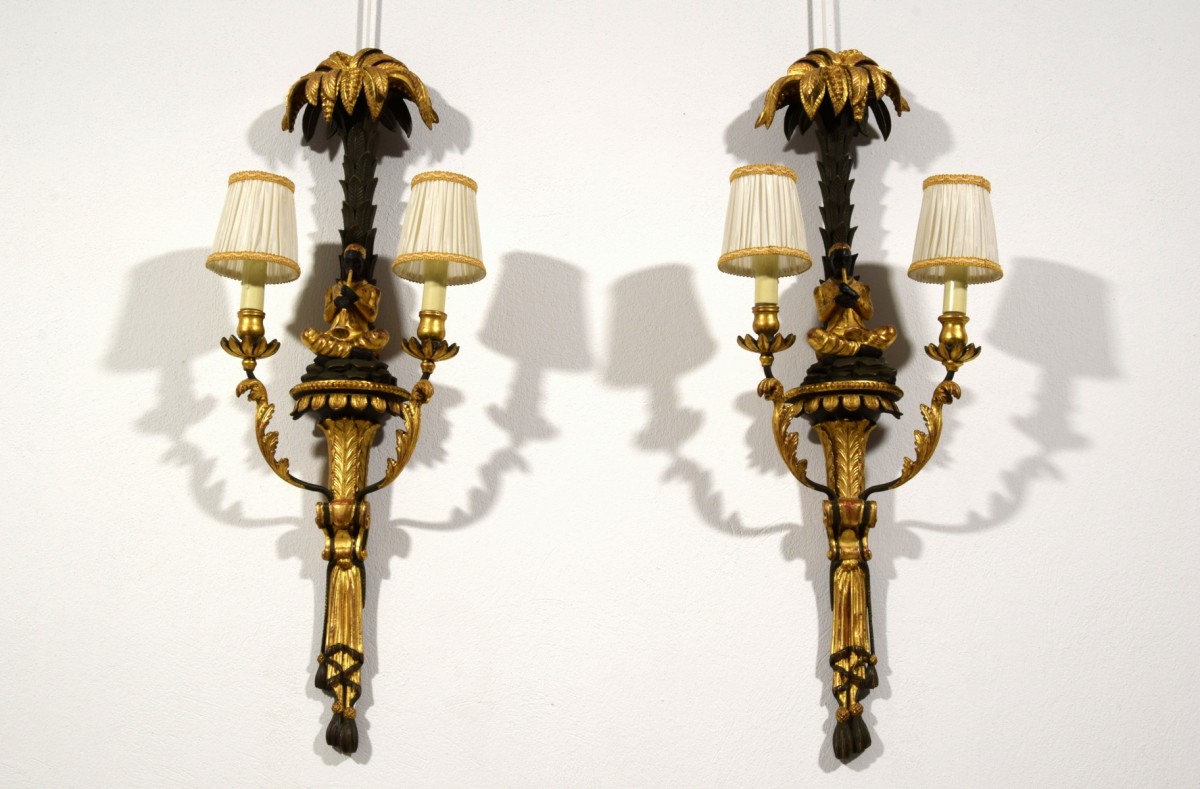
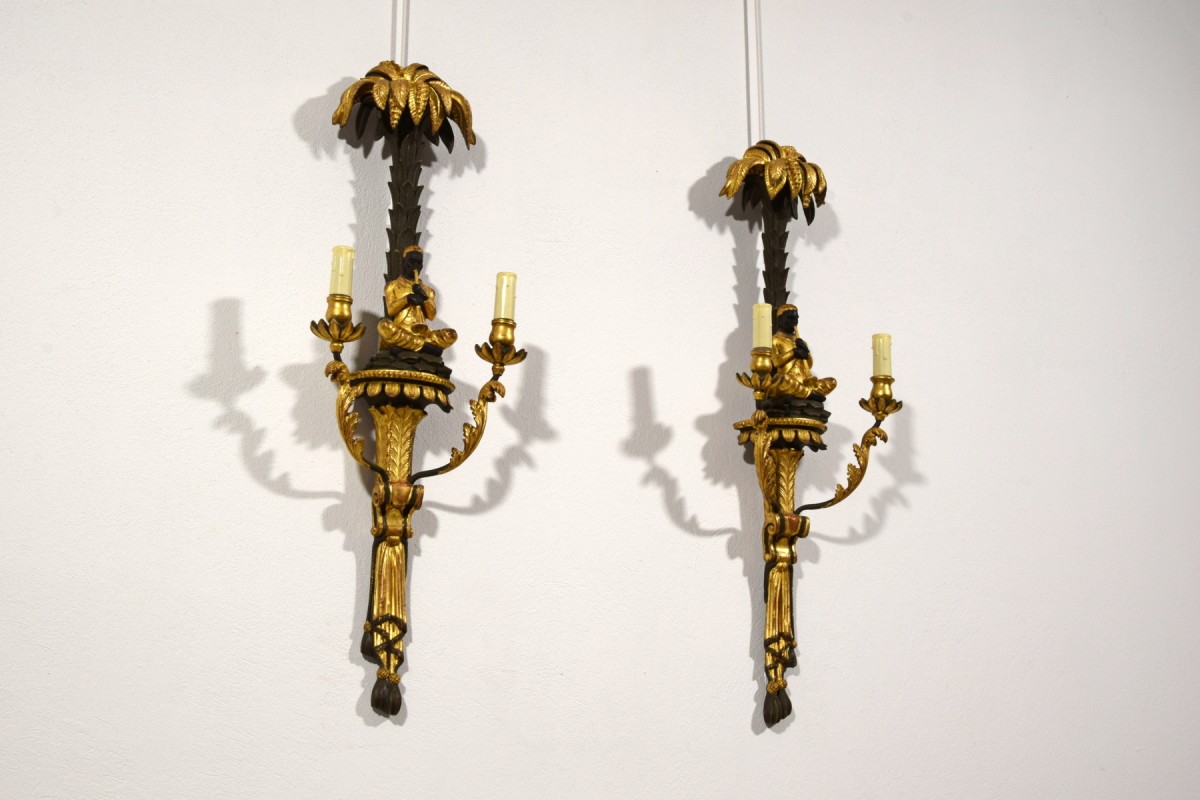
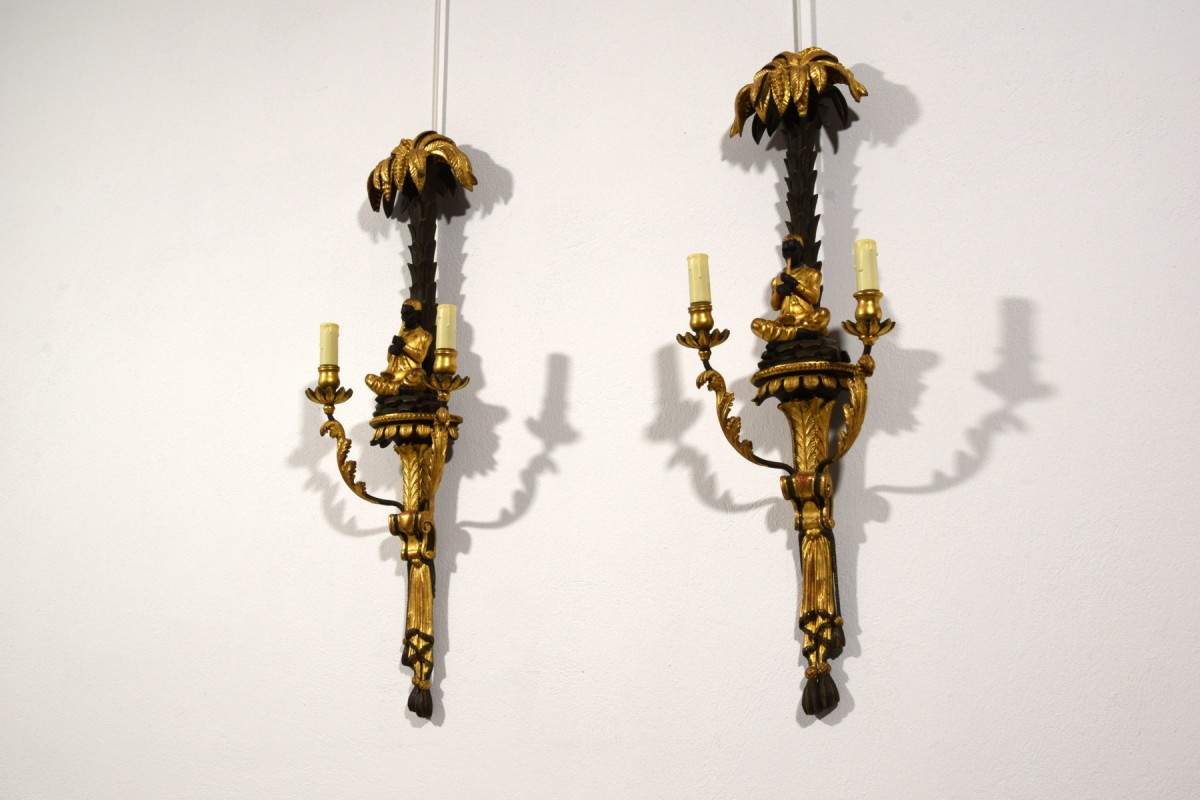

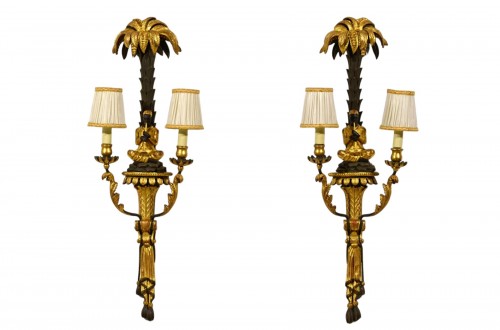
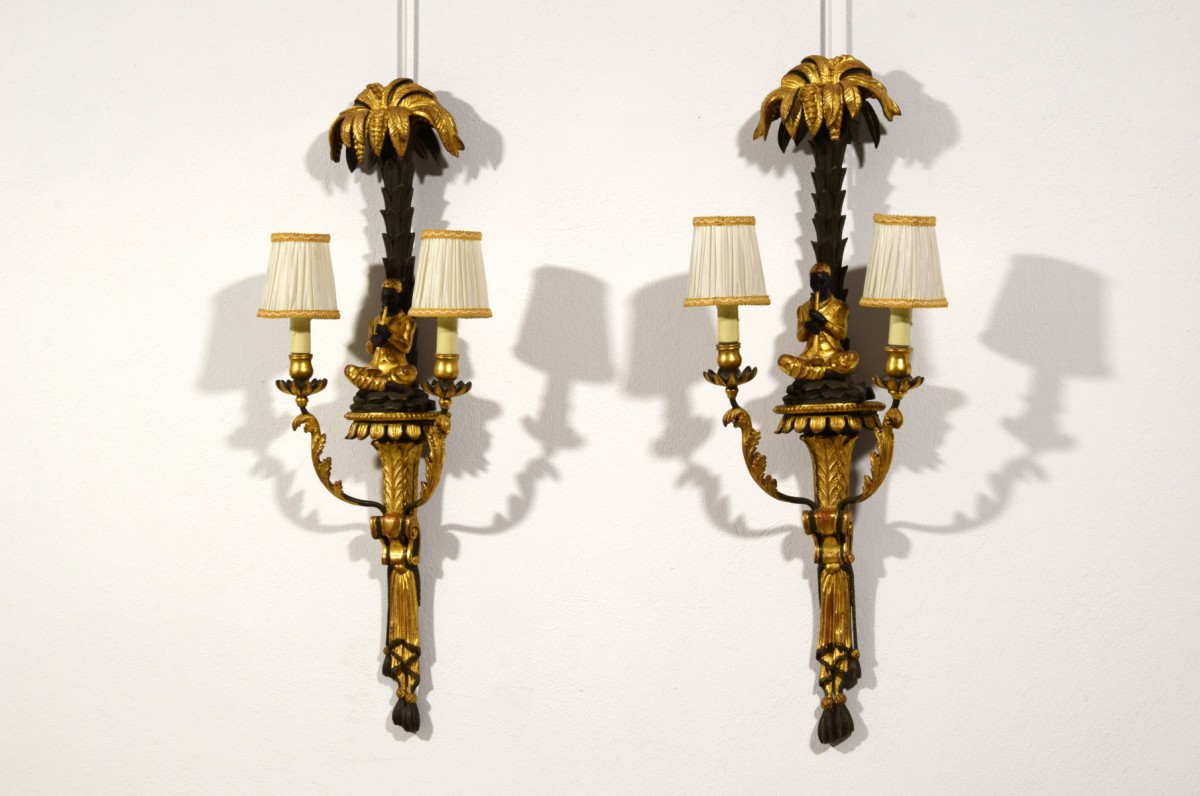
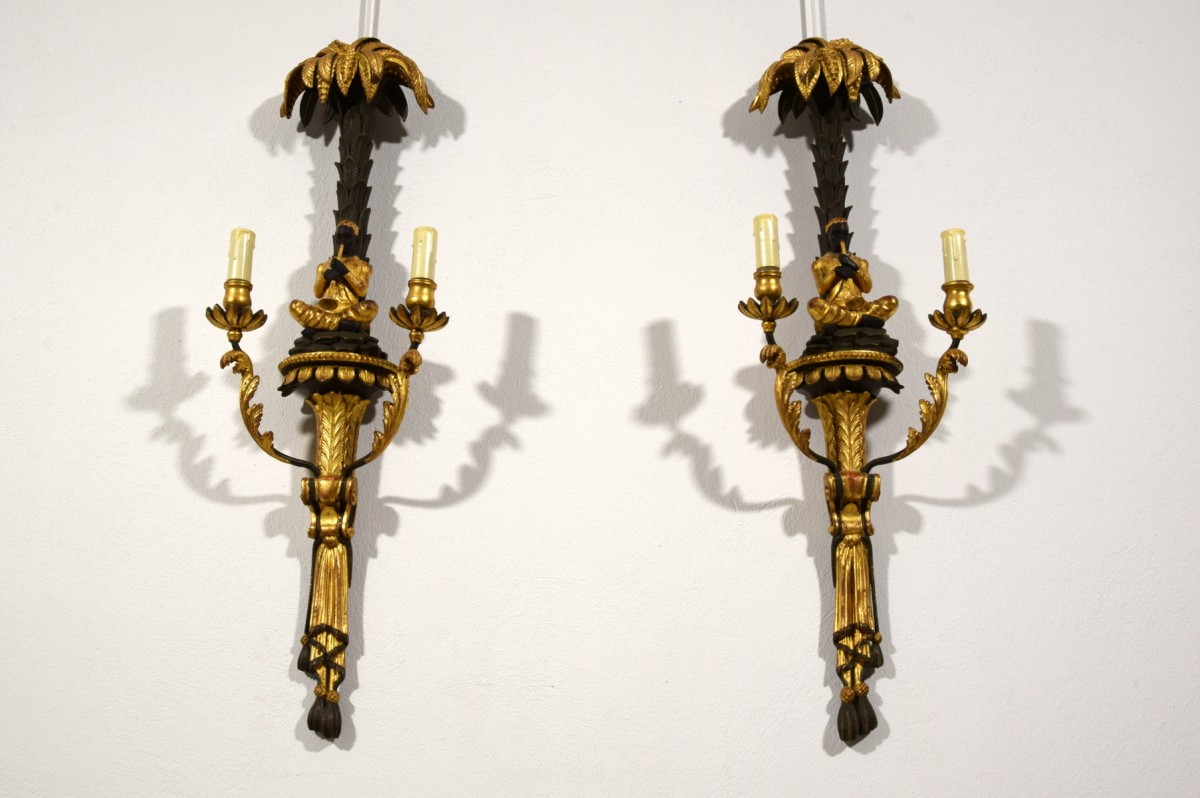
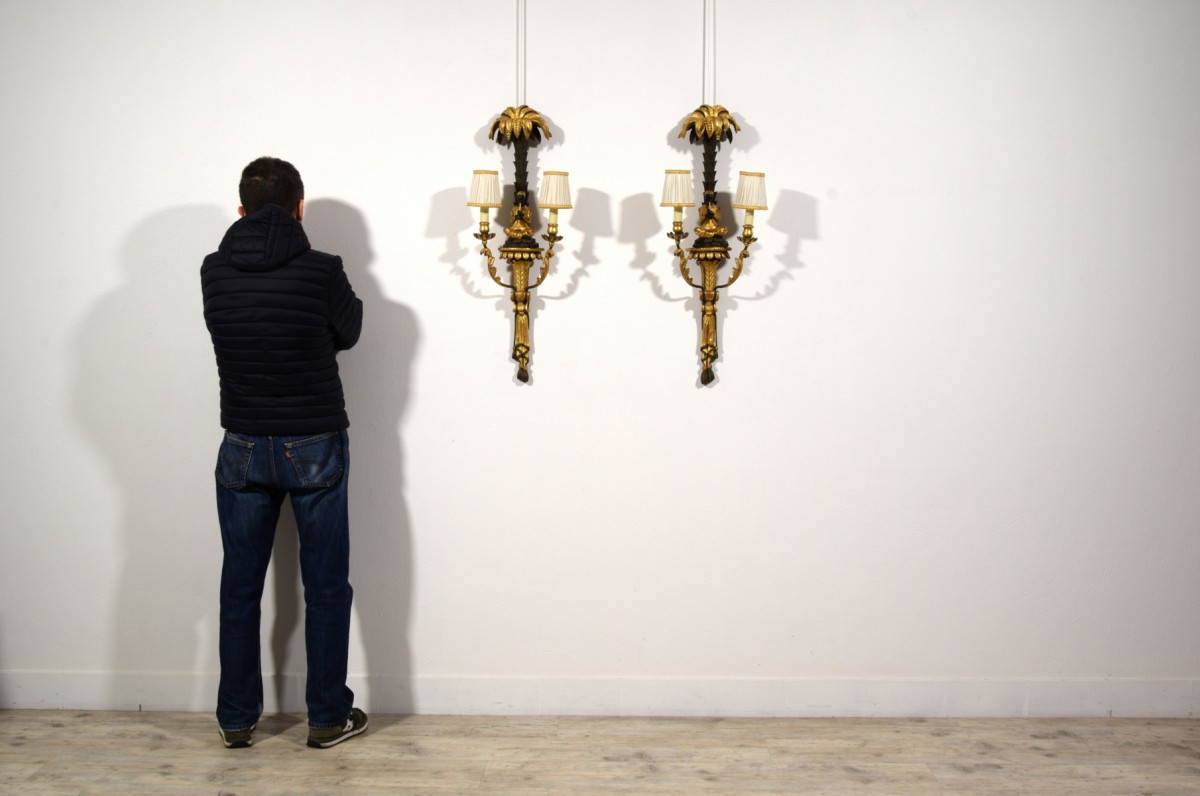
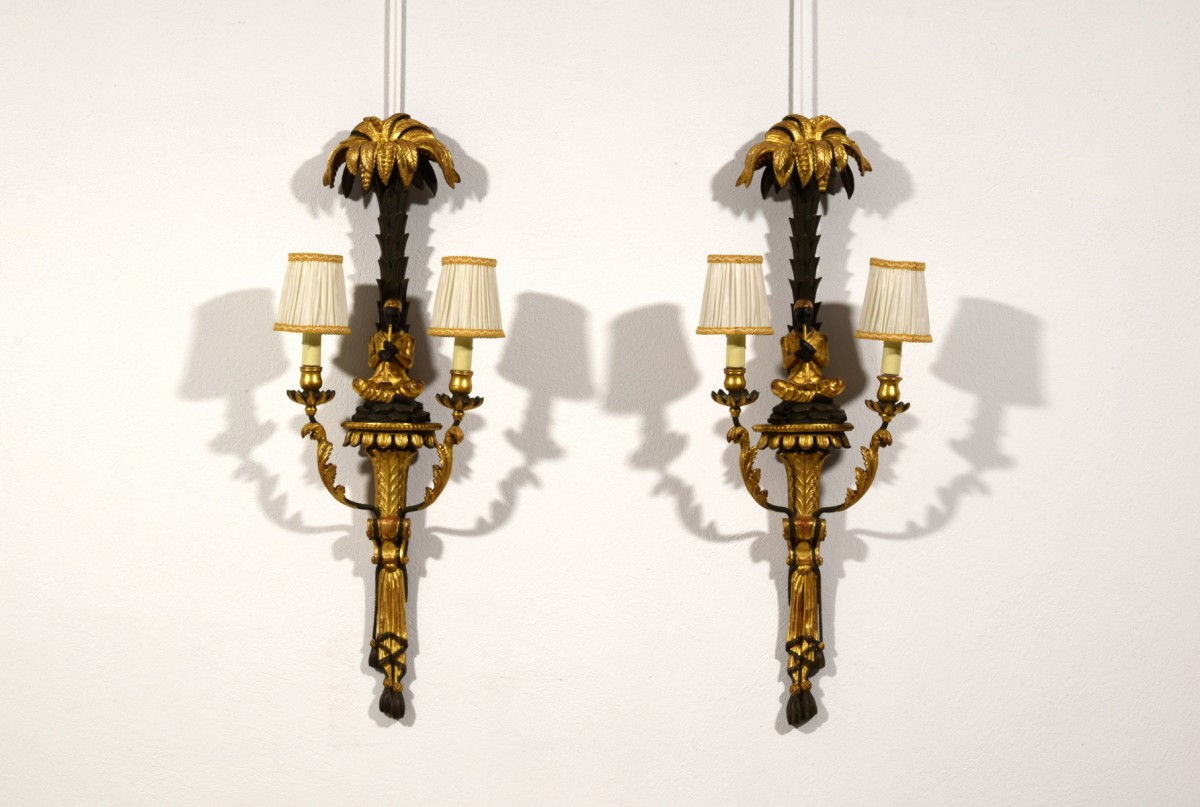
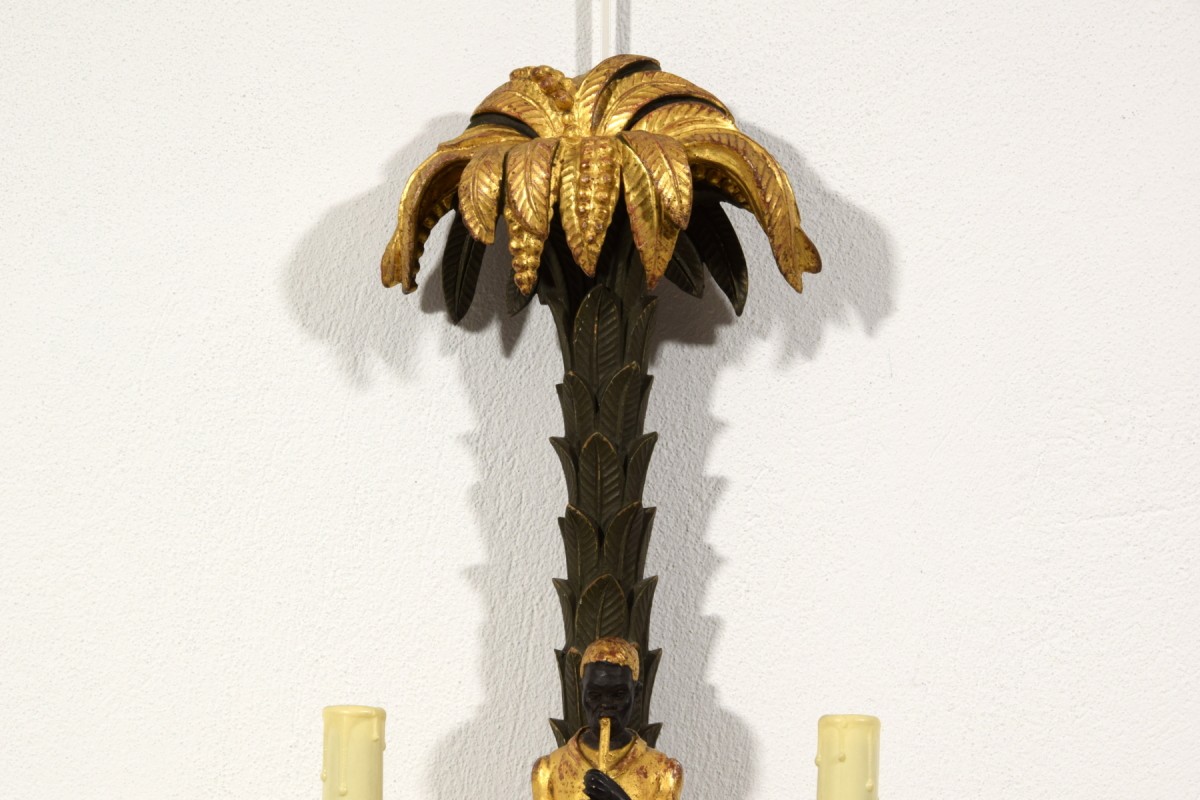
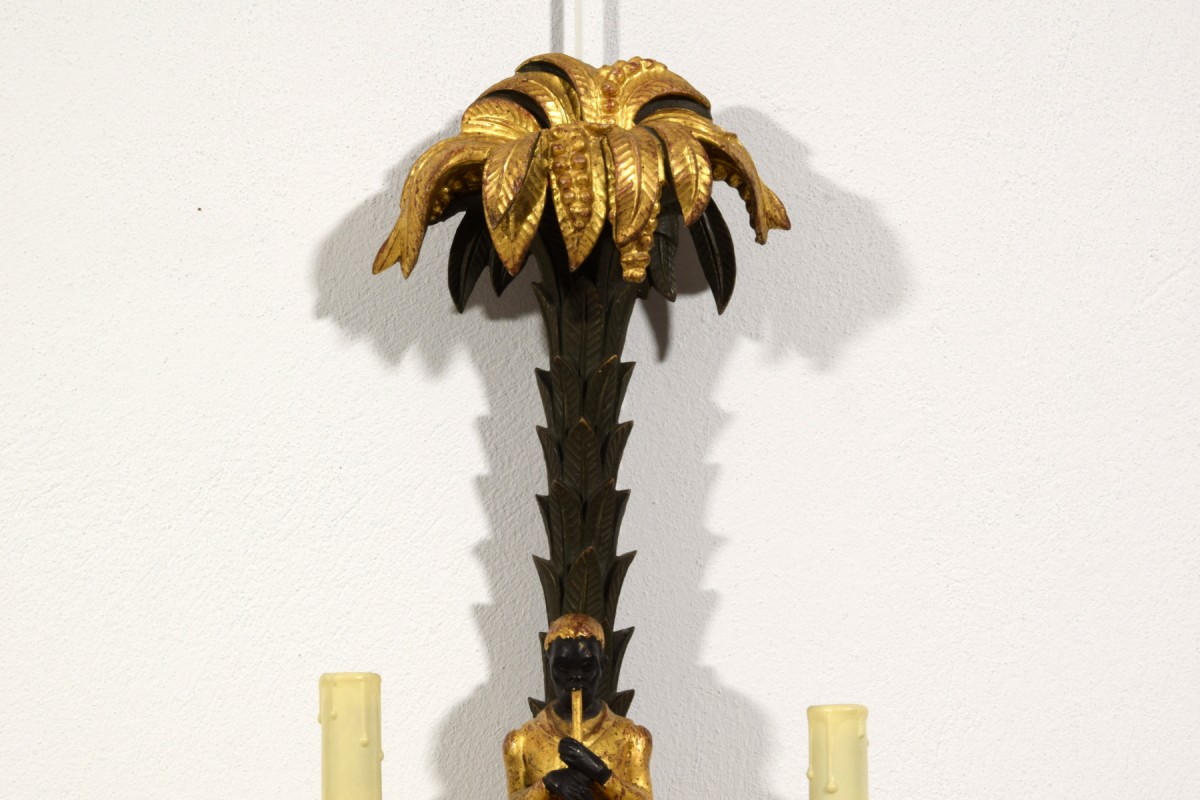
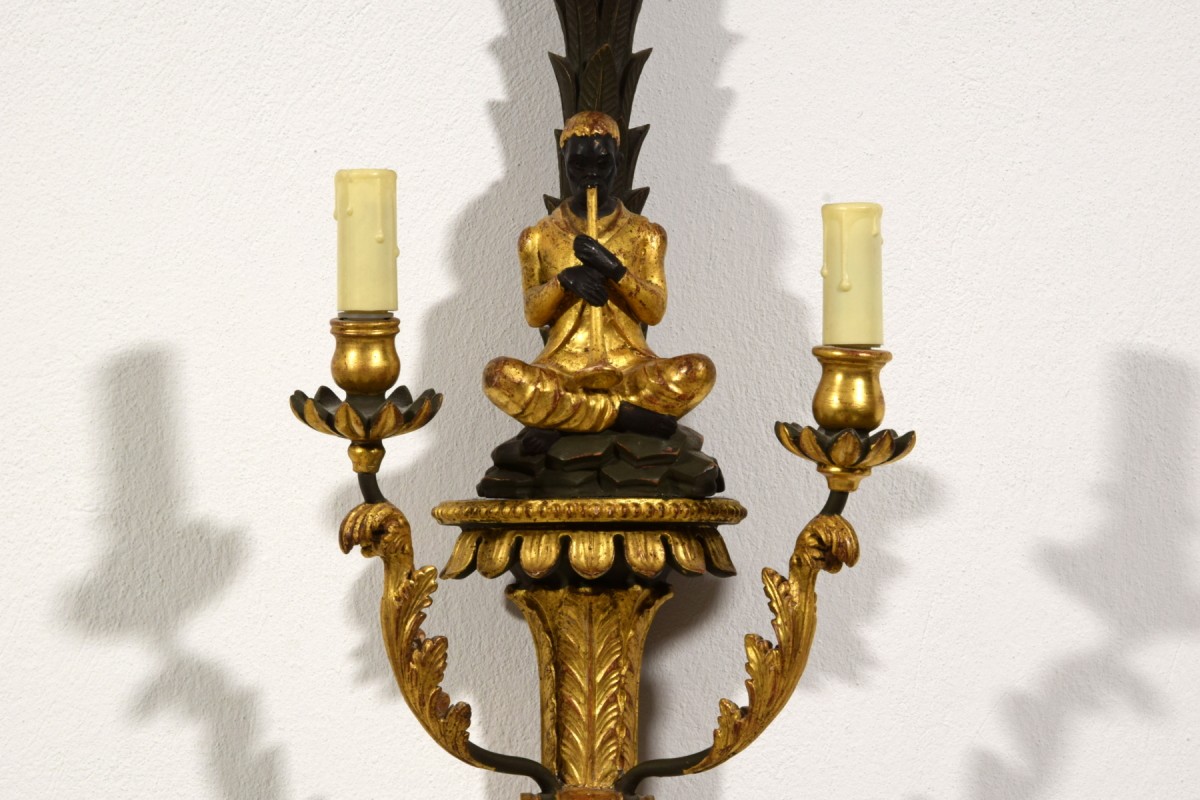
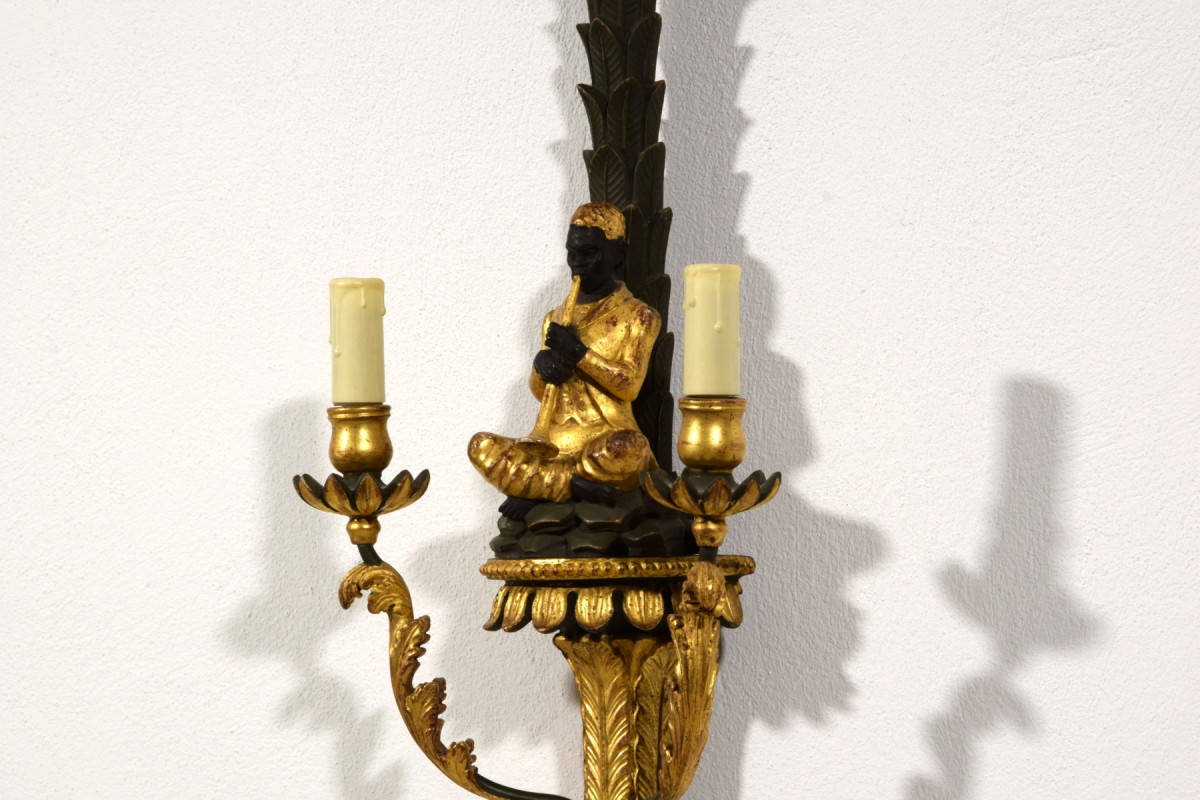
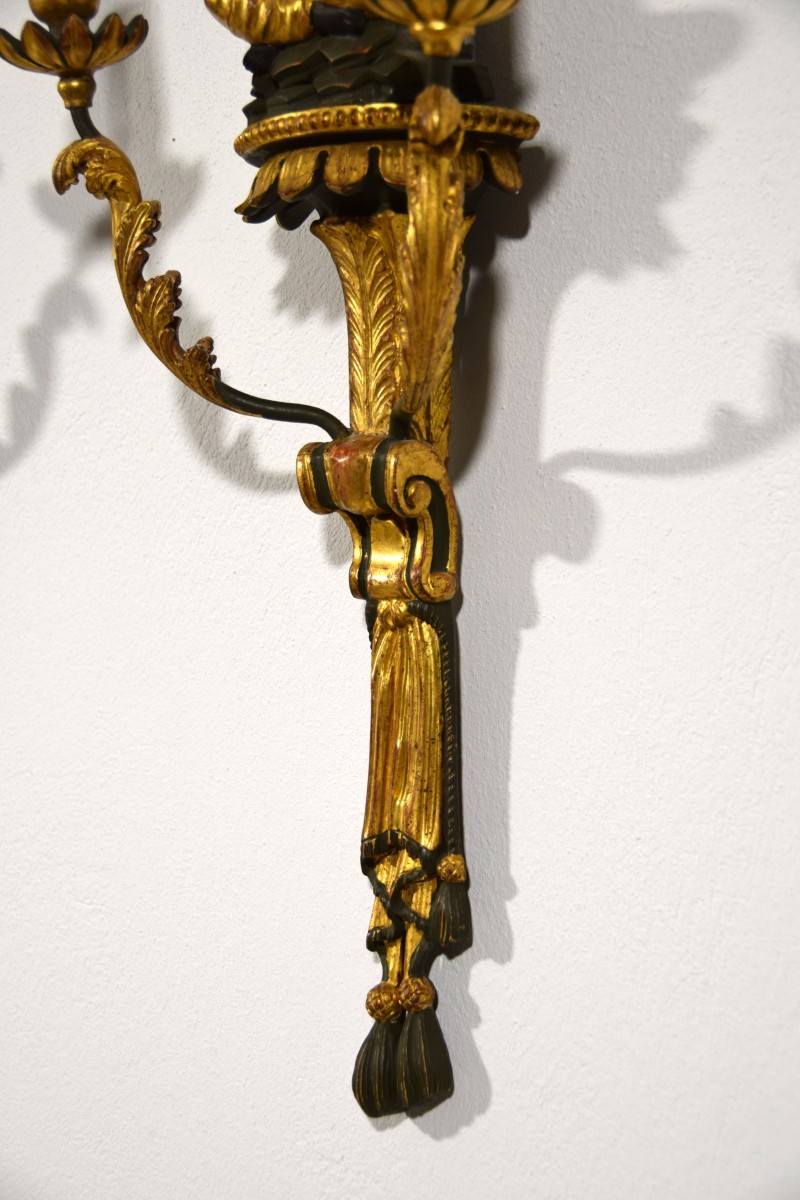
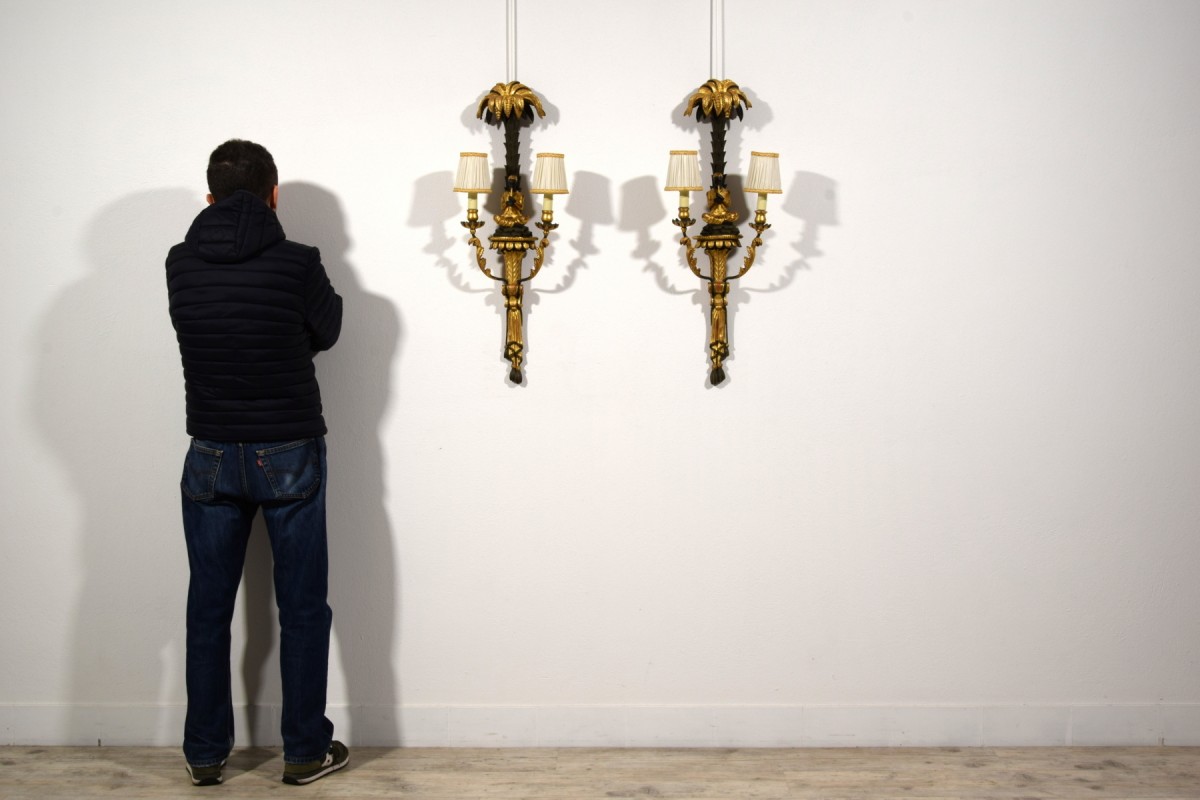
This pair of unusual wall appliques in carved, lacquered, and gilt wood, designed to imitate bronze, was produced in Tuscany in the early 20th Century and is distinguished by a pronounced exotic taste and a rich plastic quality. The structure of each applique is conceived as a tall vertical element rising in the form of a stylized palm: the trunk, lacquered in dark brown tones, is articulated by overlapping leaves that open at the top into a crown of gilded fronds, creating a slender and theatrical profile on the wall.
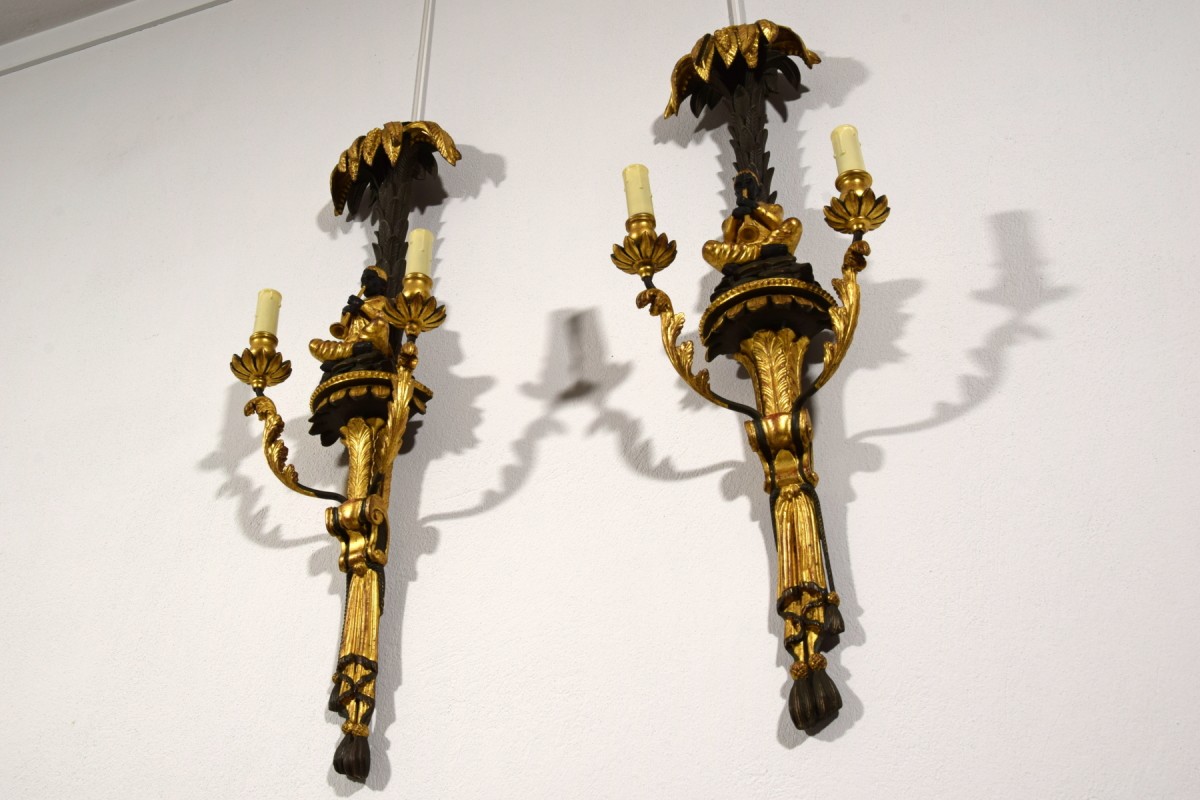
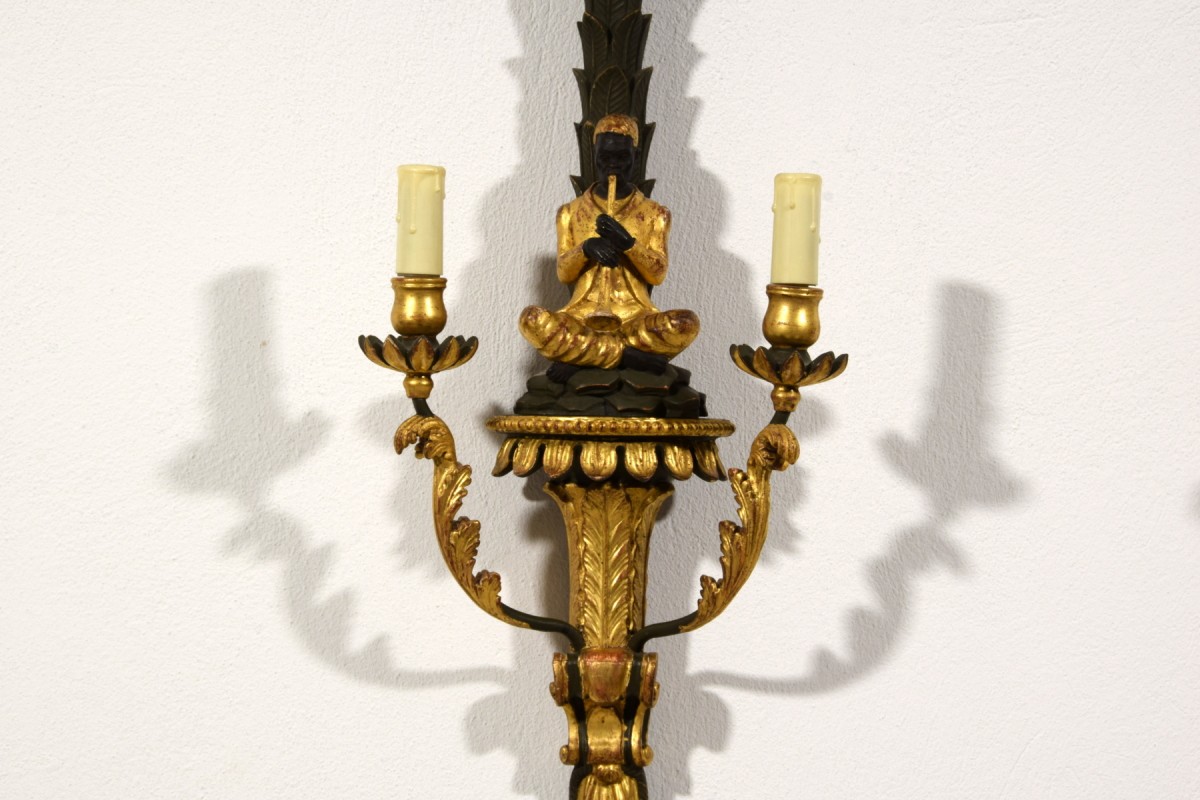
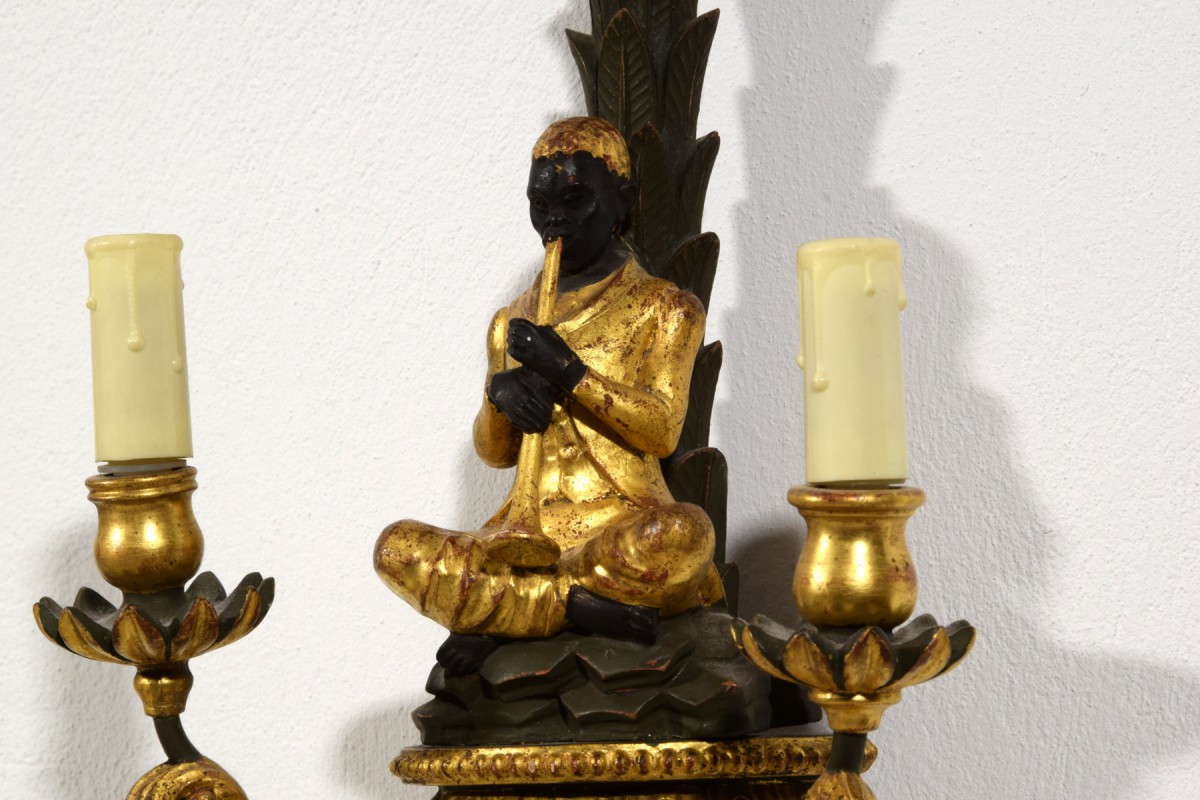
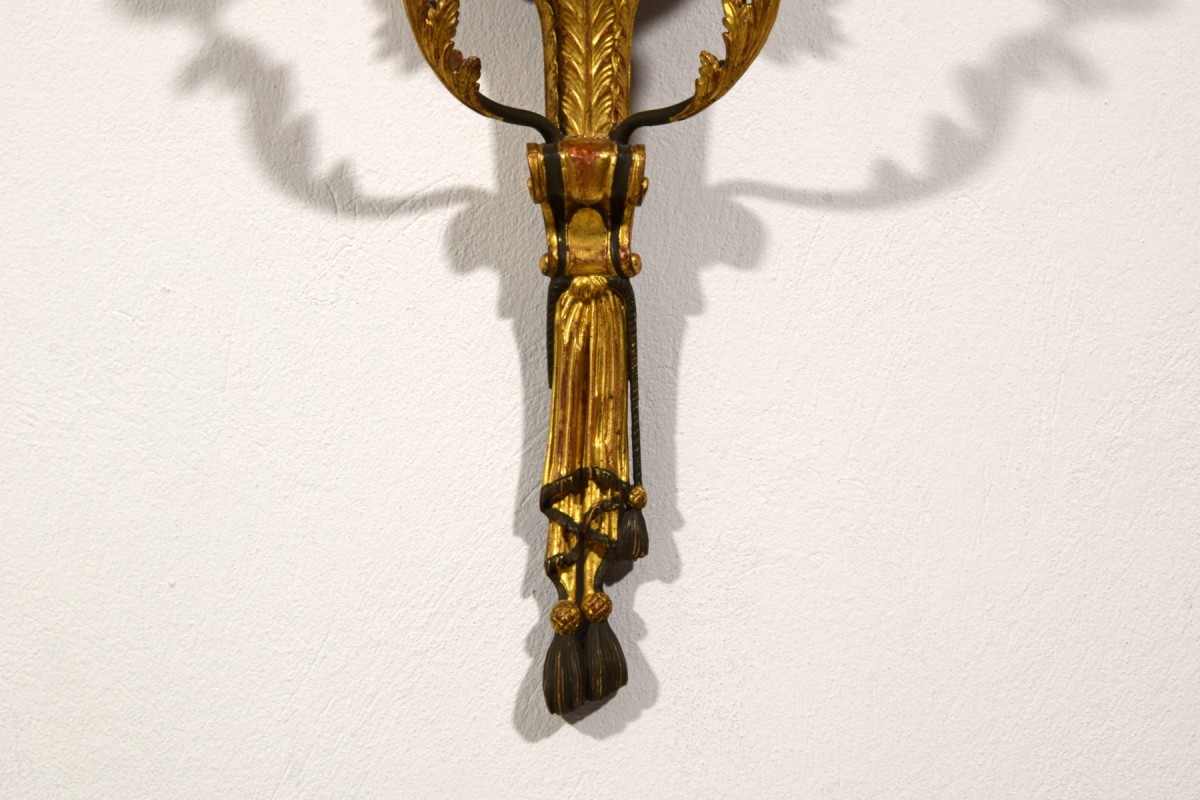
At the center of the composition, at the base of the trunk, is a finely carved Blackamoor musician seated on a rock: the figure, rendered fully in the round, displays great attention to facial features and costume details, and holds a wind instrument, lending the ensemble a playful and precious character typical of 18th–19th century decorative traditions linked to exotic taste and “à la turque” or “à la moresque” motifs. The base of the rock is semicircular and adorned with gilded leaves. Below, a flared acanthus-leaf element surmounts a scroll bracket from which extend two elegantly curved light arms, enriched with carvings of acanthus leaves, gadrooning, and small vegetal motifs, terminating in sculpted bobeches and candle holders. From the scroll element descends a drapery treated like a banner falling along the trunk, ending in tassels, gilded with brown lacquer details.
The current electrification allows for modern use without betraying the original candle-based design: the lamp holders, fitted with pleated light fabric shades, diffuse a soft and warm light that enhances the gilded surfaces. The lacquered and gilded wood finish creates a refined chromatic interplay, lending elegance and overall harmony.
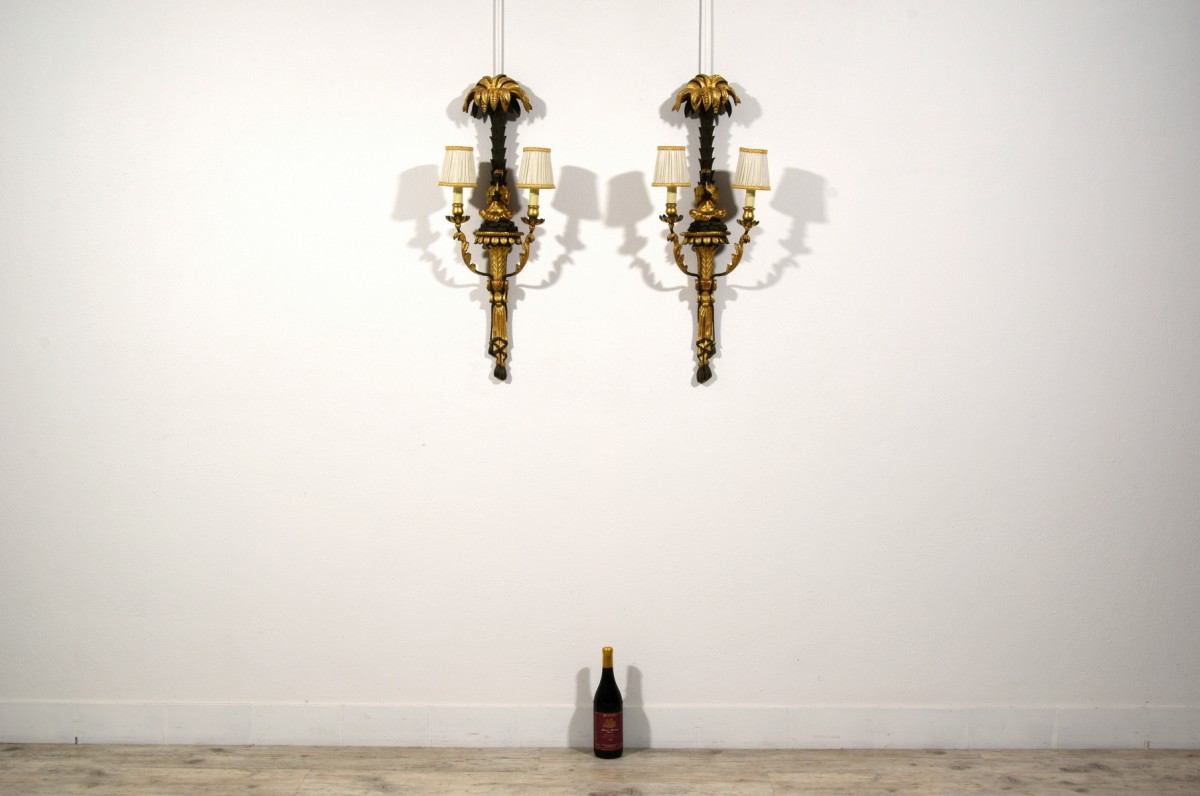
These particularly slender appliques are ideal as architectural elements on walls, even high ones: perfect in a dramatic entrance, along a corridor, beside a gilt mirror or above a console, integrated into boiserie, but also in a living room or bedroom with a classical or eclectic taste. The dialogue between the verticality of the palms, the rhythm of the arms, and the lively narrative of the Blackamoor musicians makes them highly distinctive, capable of introducing a note of exoticism into both historic and contemporary interiors.