Offered by Galerie Magdeleine
REQUEST INFORMATION

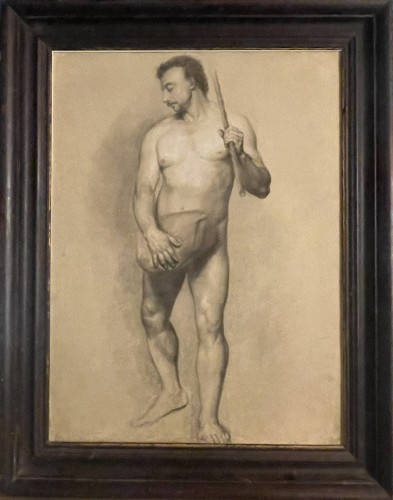
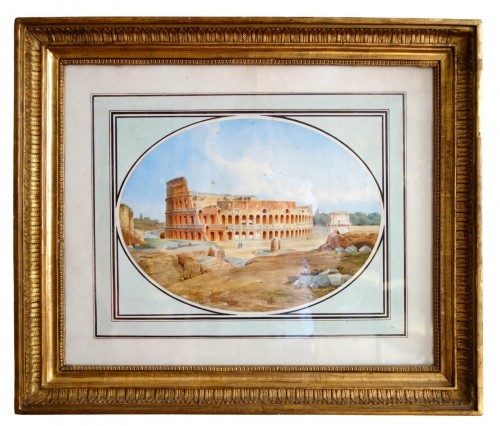
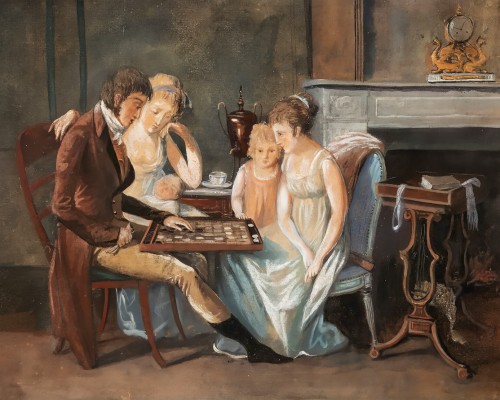
Paintings and drawings from the 17th to the 19th century
Pierre CHASSELAT (Paris, 1753 – Paris, 1814)
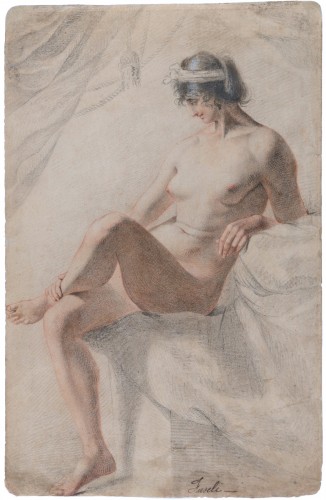
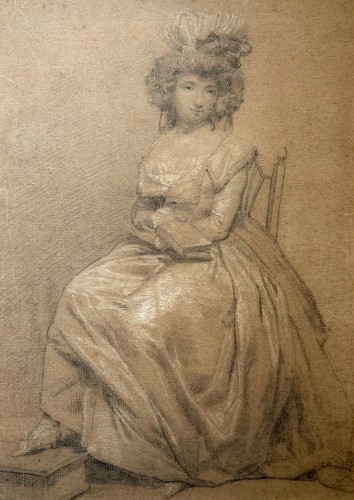
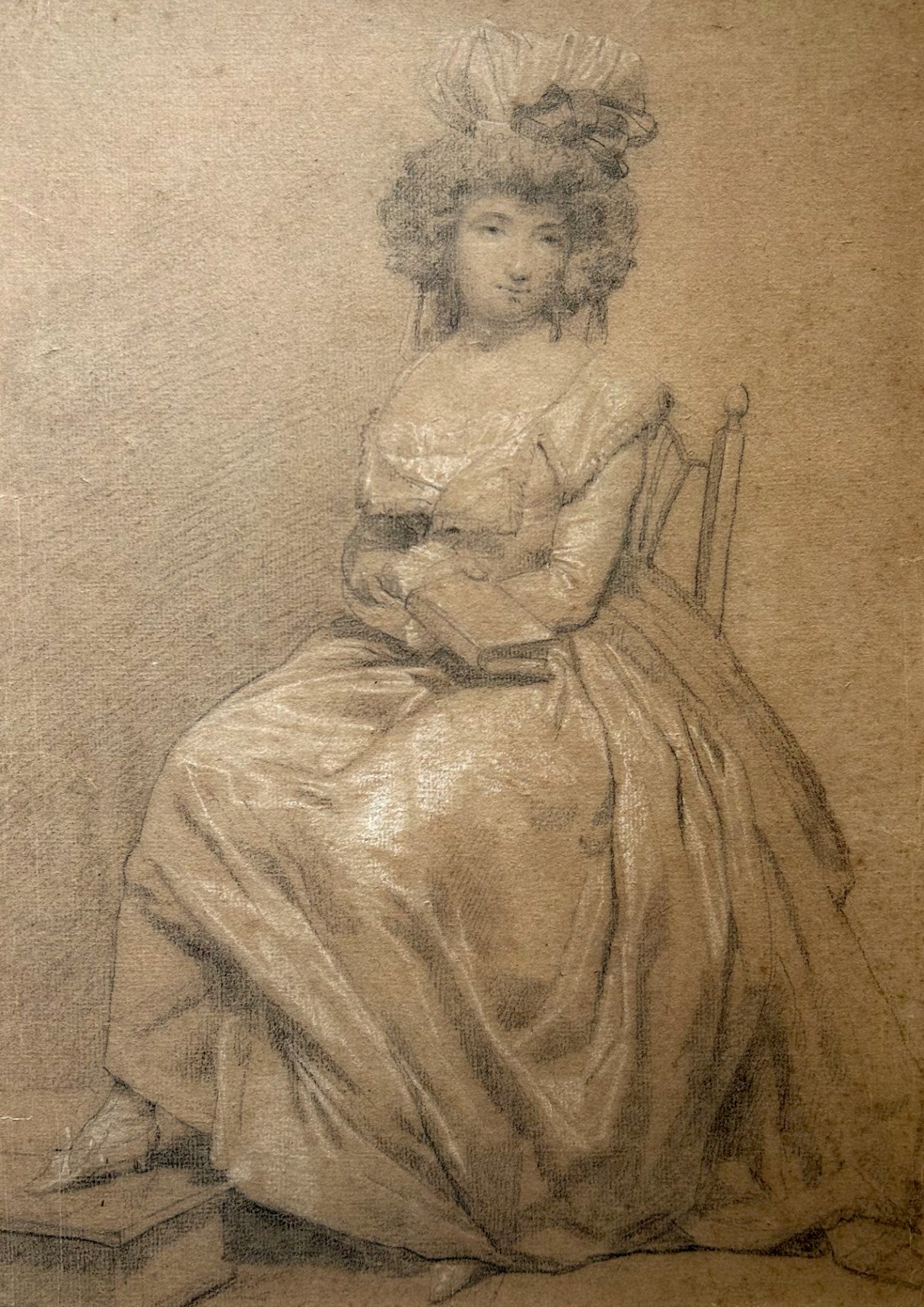
Presumed Portrait of Constance de Théis Seated
Circa 1798. Black chalk and white chalk highlights on brown paper. H: 44.5 cm; W: 32 cm.
Exhibition: Possibly Salon des Artistes Vivants, Paris, 1798, no. 84: “Two drawings, portraits, under the same number.”
Pierre Chasselat remains today a relatively little-known figure in French painting and drawing of the late 18th century, although his activity as a portraitist and miniaturist is documented from the final years of the Ancien Régime. Born and died in Paris, he was a pupil of Joseph-Marie Vien and pursued his career primarily as a miniaturist, eventually being appointed miniature painter to Mesdames de France. He exhibited at the Salon from 1793 to 1810.
The technique employed is particularly representative of Chasselat's graphic explorations. Here, the artist uses the brown paper as a true middle tone, allowing the support itself to contribute to the modeling of the forms. The white chalk is therefore not applied uniformly but reserved for areas of light, following a method that brings the drawing close to certain practices of pastel portraiture and miniature painting. Works by Chasselat that have recently appeared on the art market also demonstrate his enduring preference for female portraits executed in black chalk with white highlights.
The proposed identification of the sitter as Constance de Théis must be treated with caution. Born in Nantes in 1767, Constance de Théis was then one of the most remarkable women of letters of her generation.
Her literary work and her positions in favor of women's education and intellectual emancipation earned her a distinctive place in Parisian literary society. She later hosted a renowned salon at her residence on Rue du Bac.
The year 1797 marked a decisive moment in her public recognition. She published her Épître aux femmes under the name Constance D. T. Pipelet.
The text, which attracted considerable attention, responded in particular to the views of the poet Ponce-Denis Écouchard-Lebrun, who sought to confine women to the role of muses rather than authors. Constance de Théis, on the contrary, asserted their right to education, the arts, and intellectual creation. In one of the most celebrated passages of the Épître, she thus urged women to “take up the pen and the paintbrush once again.”
This circumstance gives the present drawing particular iconographic interest. The young woman is depicted holding an open book in her hand, an attribute that can hardly be regarded as purely anecdotal in a portrait of this nature. Indeed, in female portraiture of the late 18th century, the book is an attribute of reading, education, and culture; here, it takes on particular significance if the sitter is Constance de Théis.