Offered by Galerie PhC

European paintings from the 17th, 18th and 19th centuries.
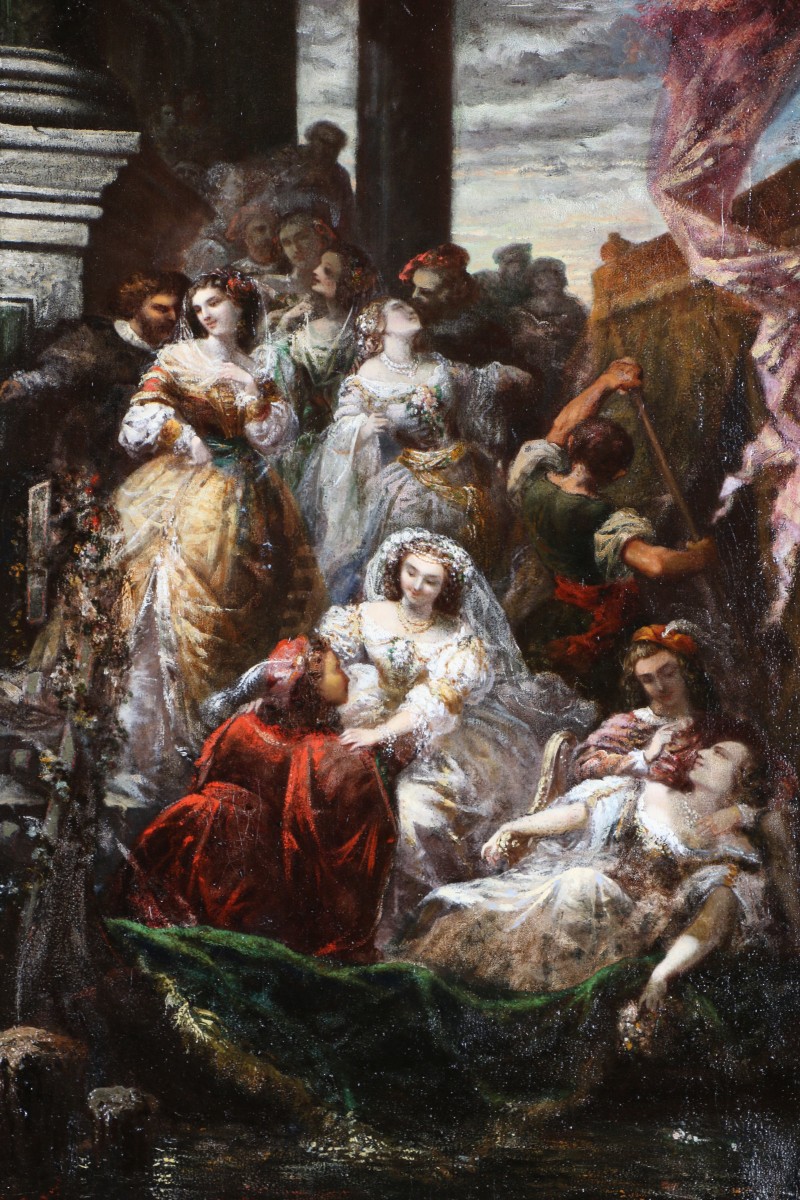
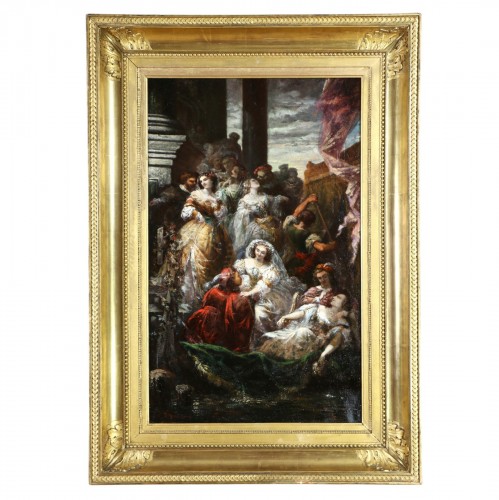
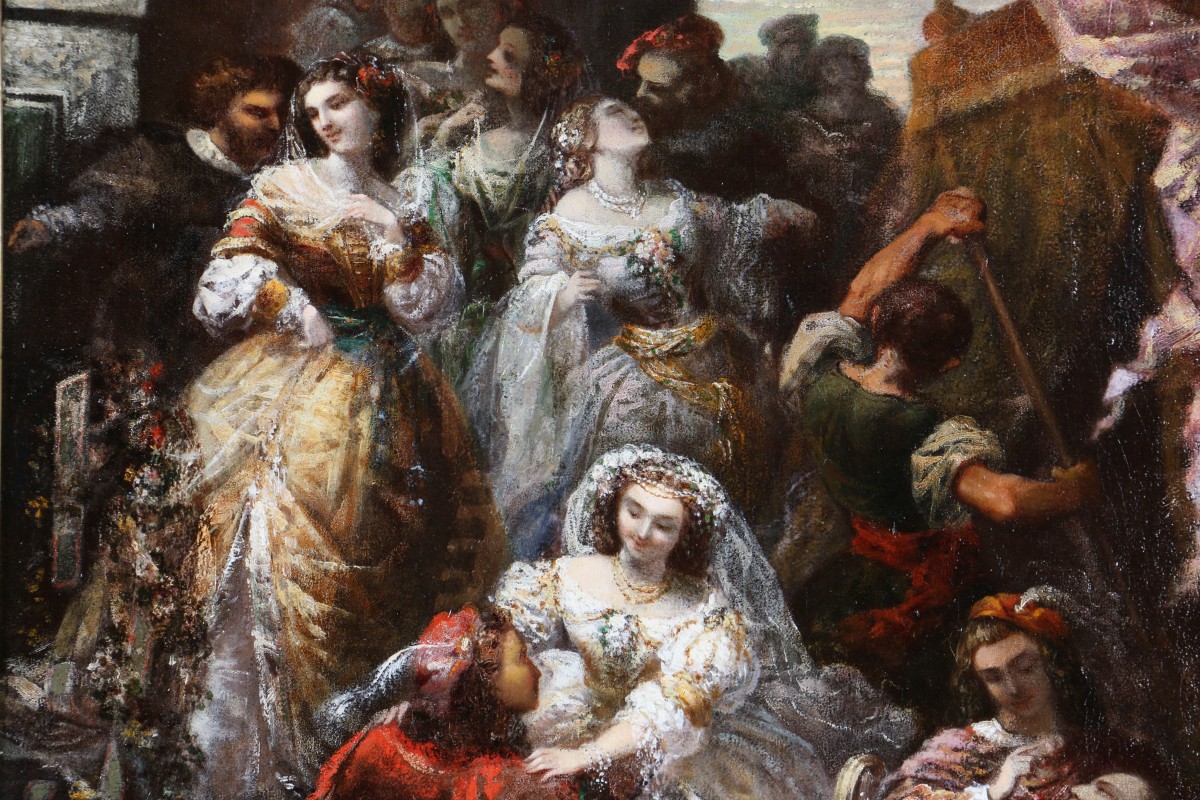
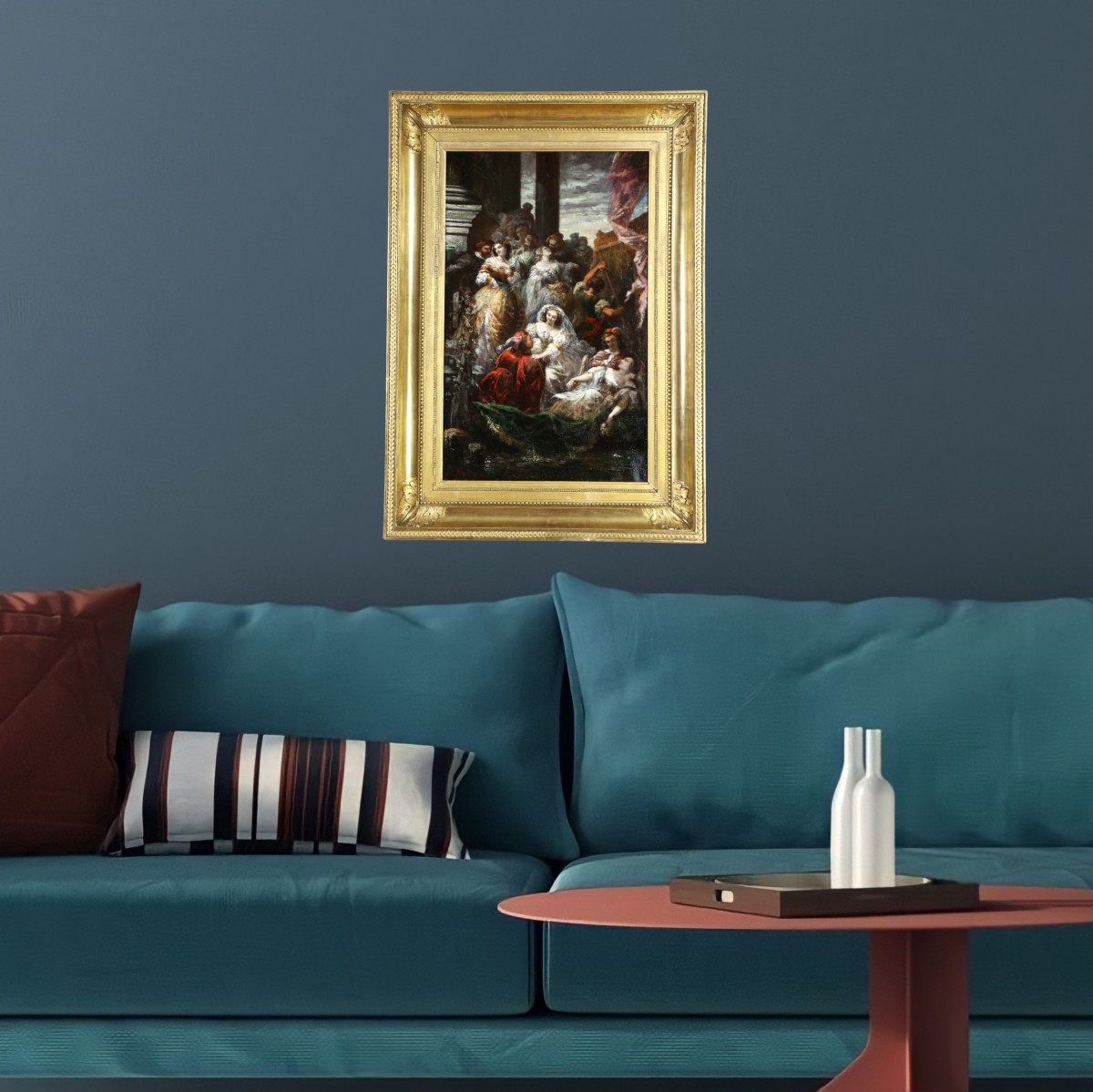
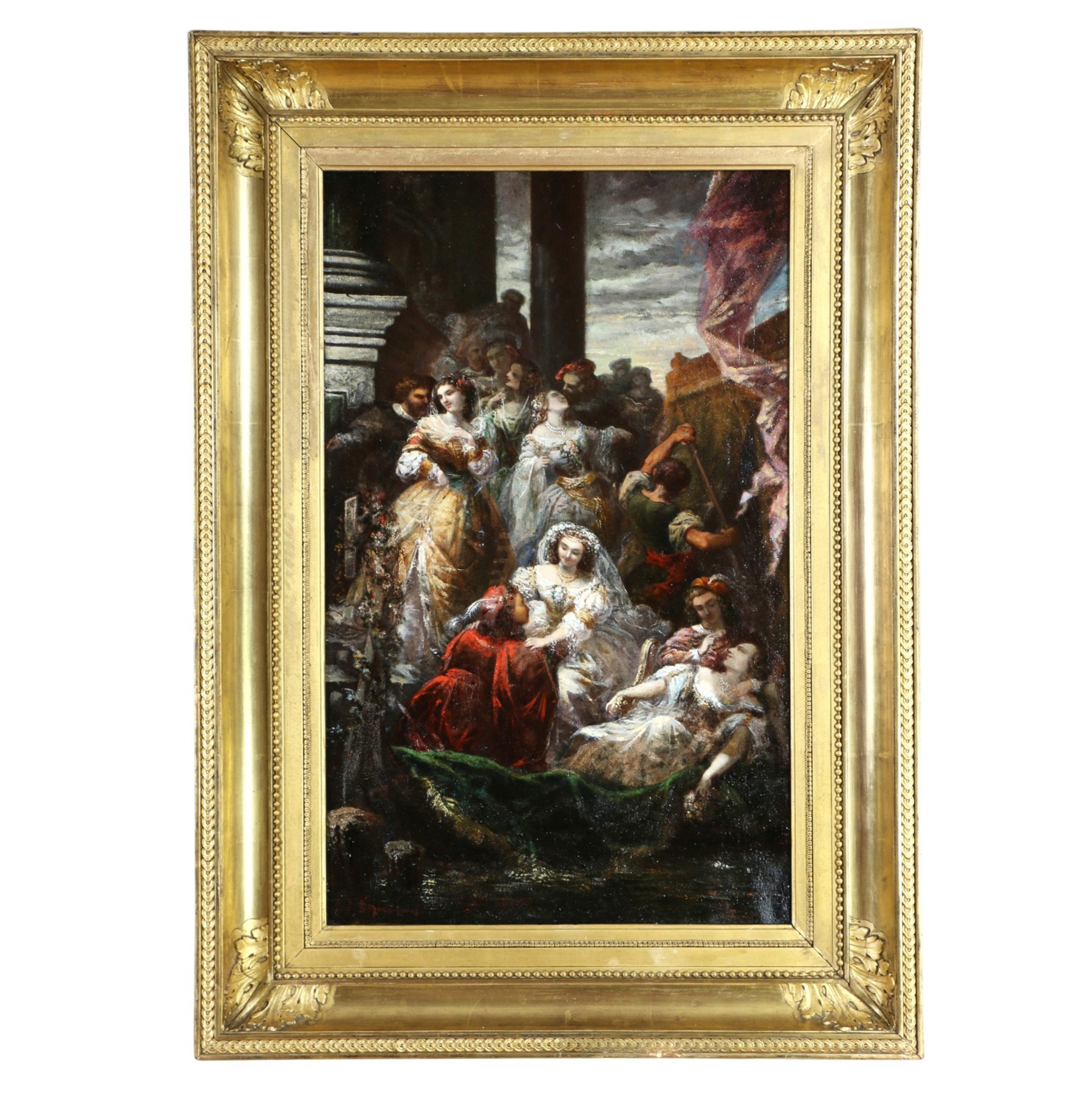
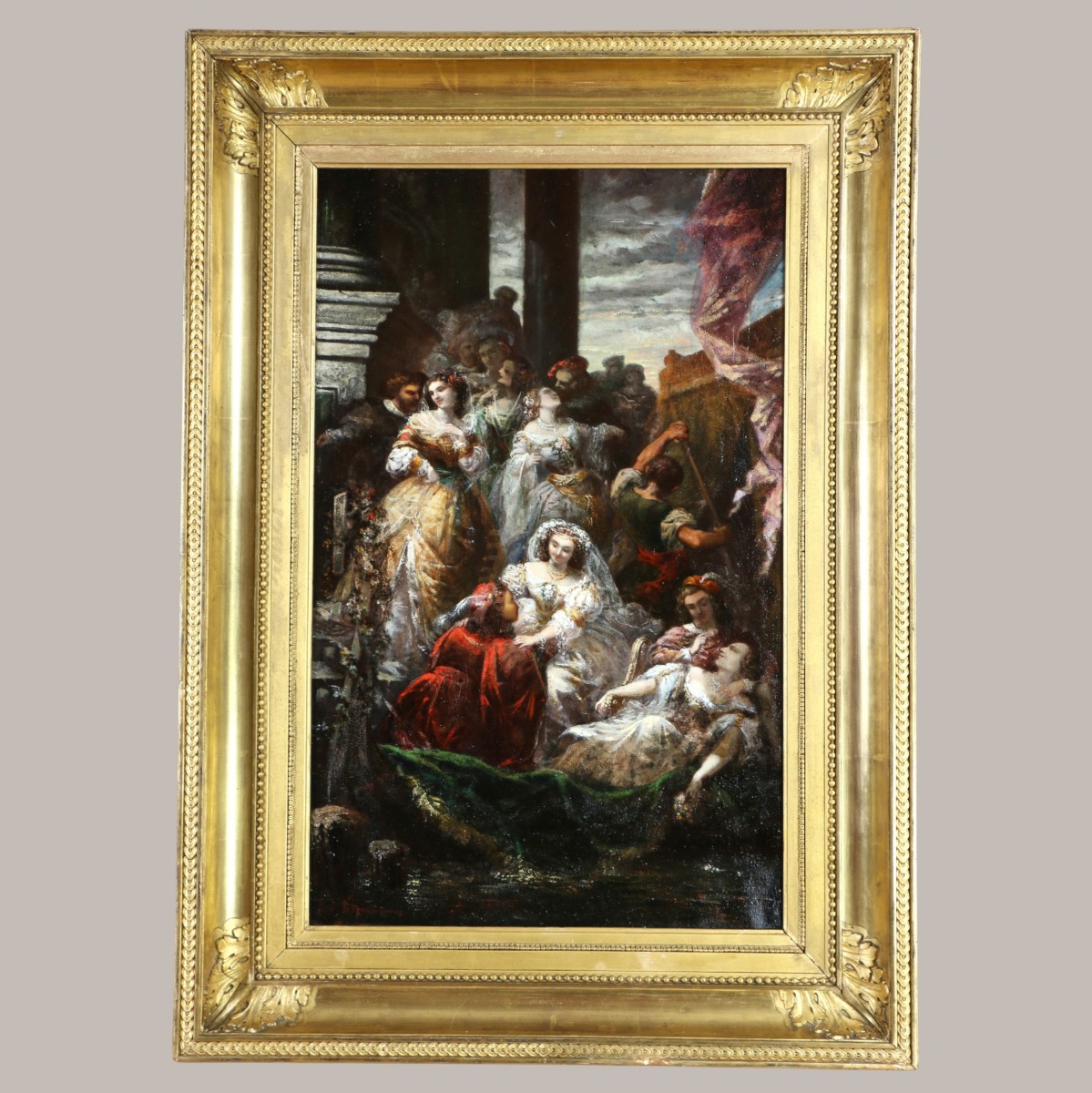
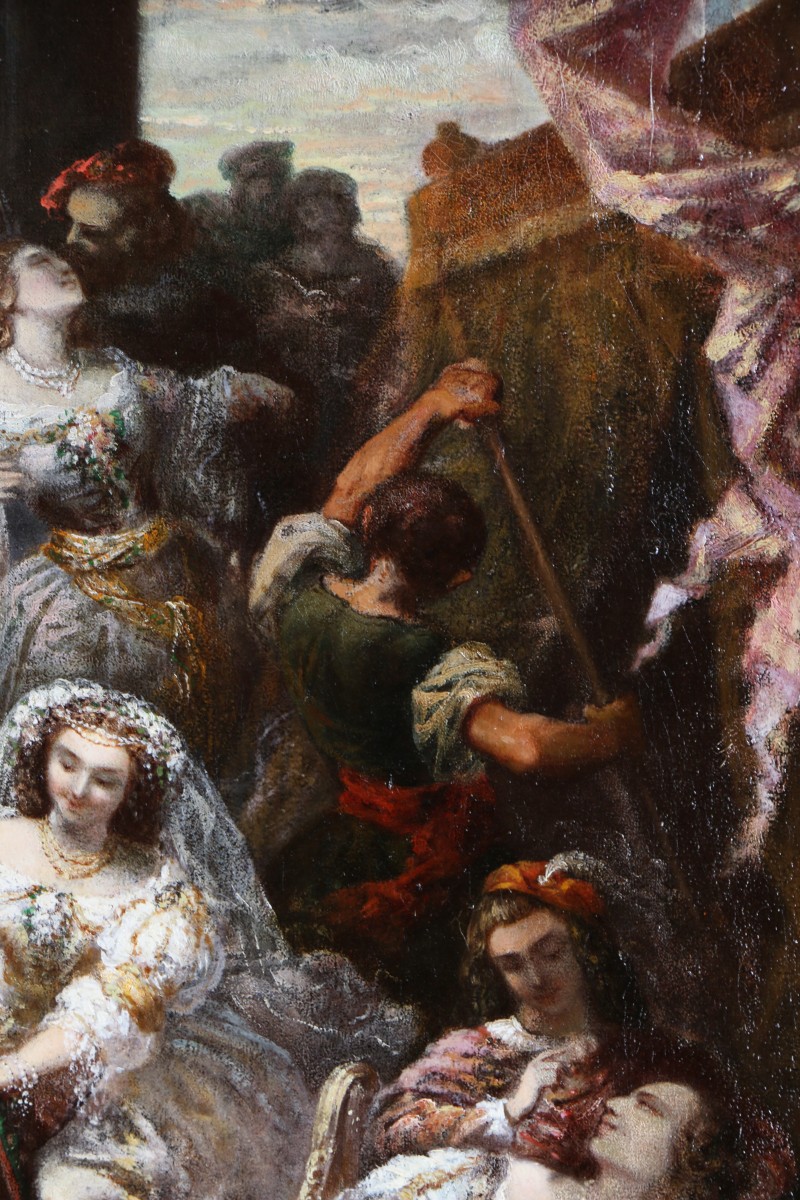
Attributed to Faustin Besson (1821–1882). Venetian-style fête under the Second Empire.
Oil on canvas, 80 cm x 51 cm.
Sumptuous period frame, 104 cm x 74 cm.
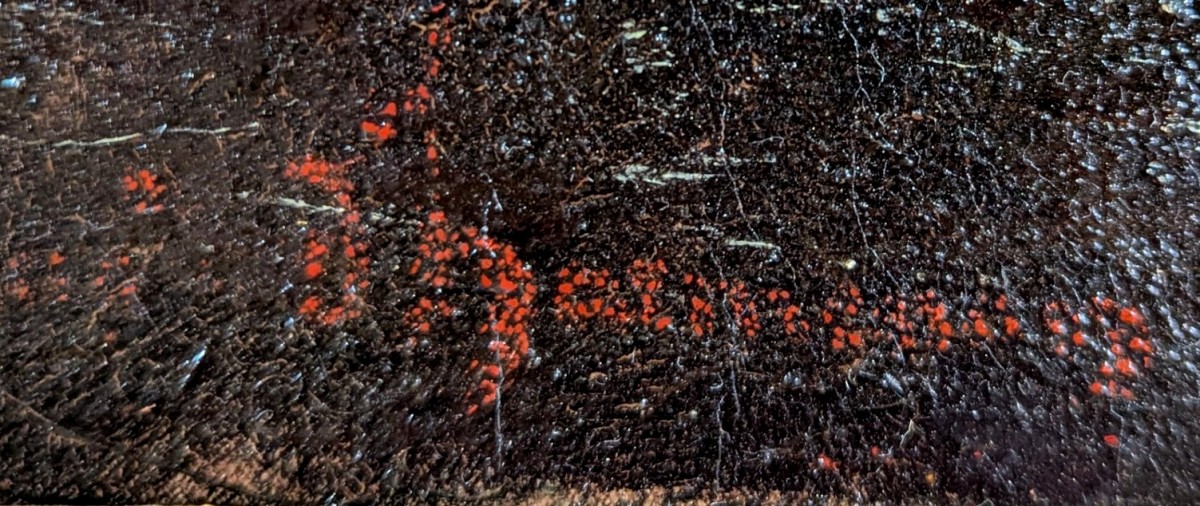
Traces of a signature.
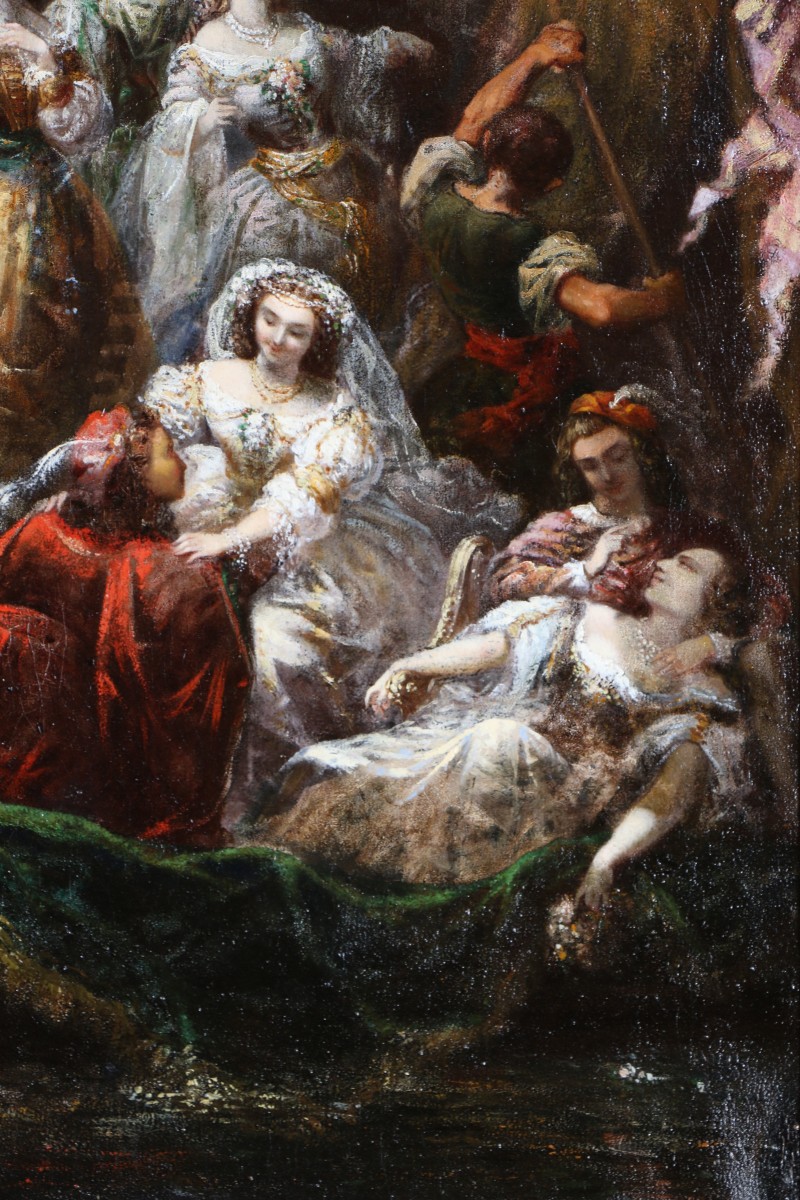
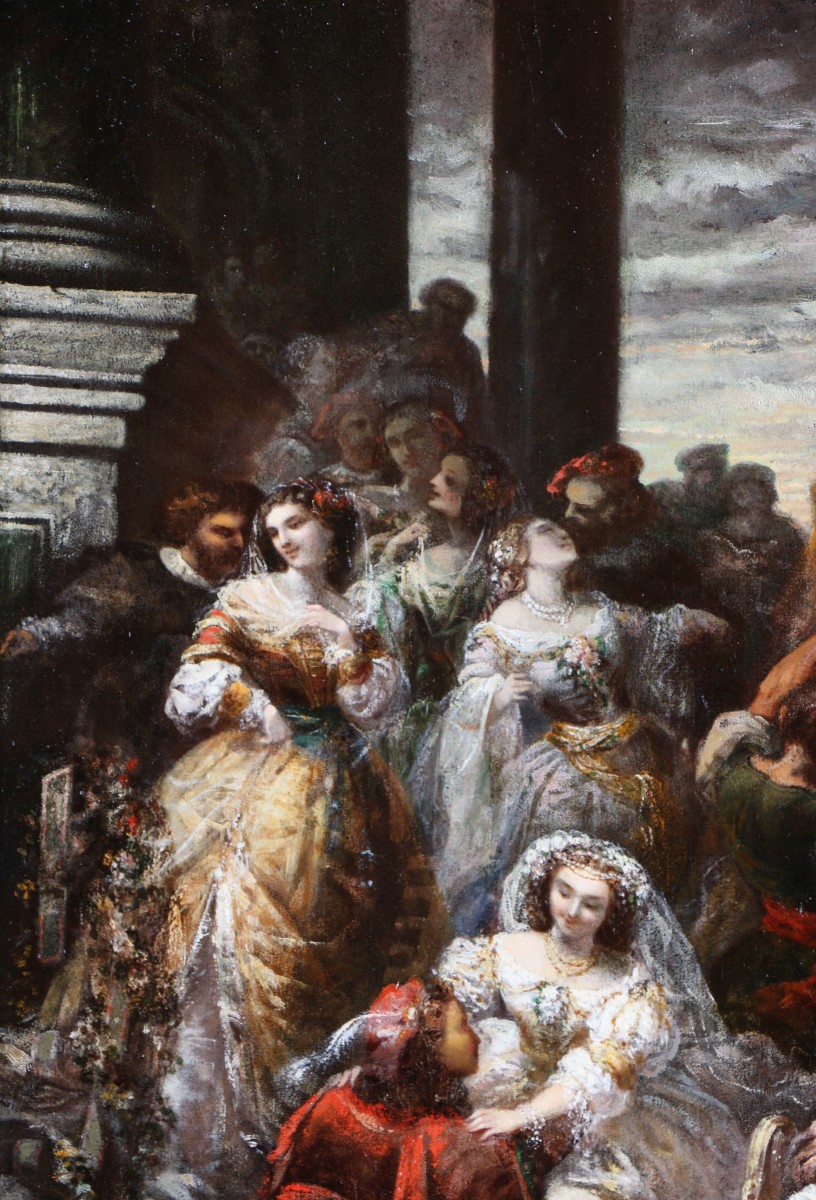
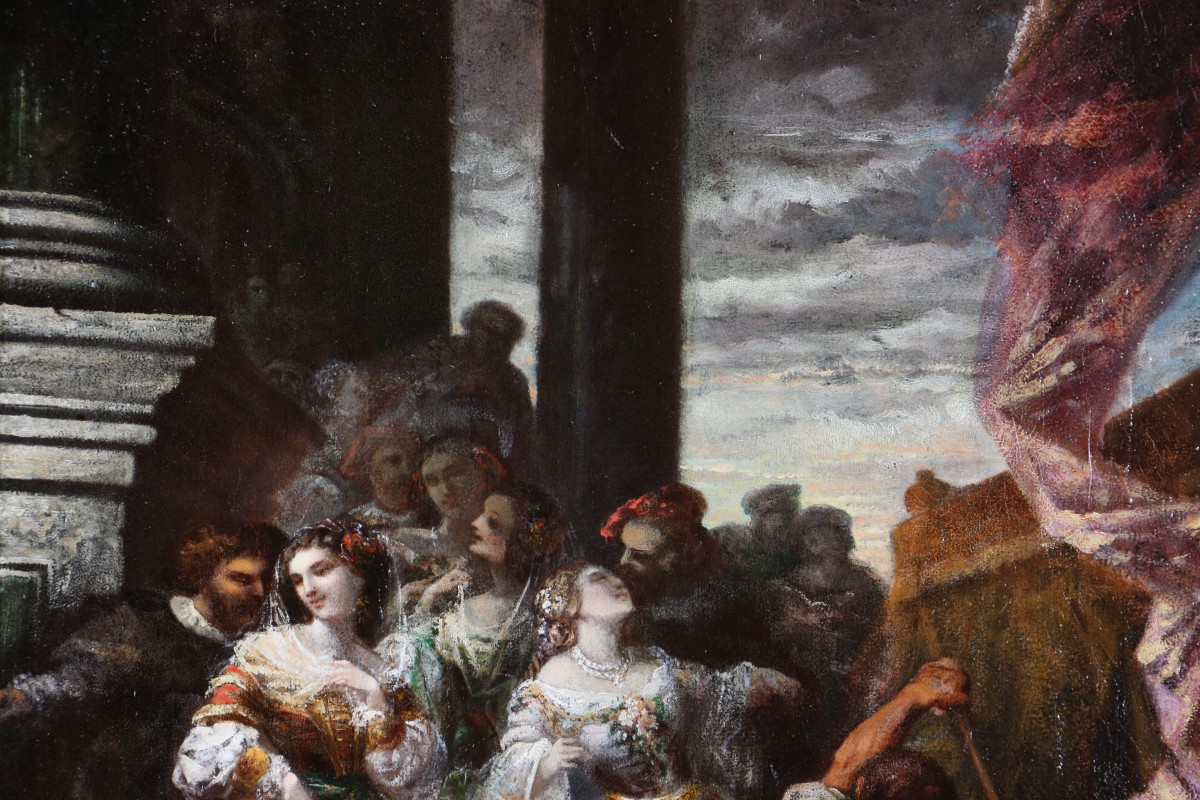
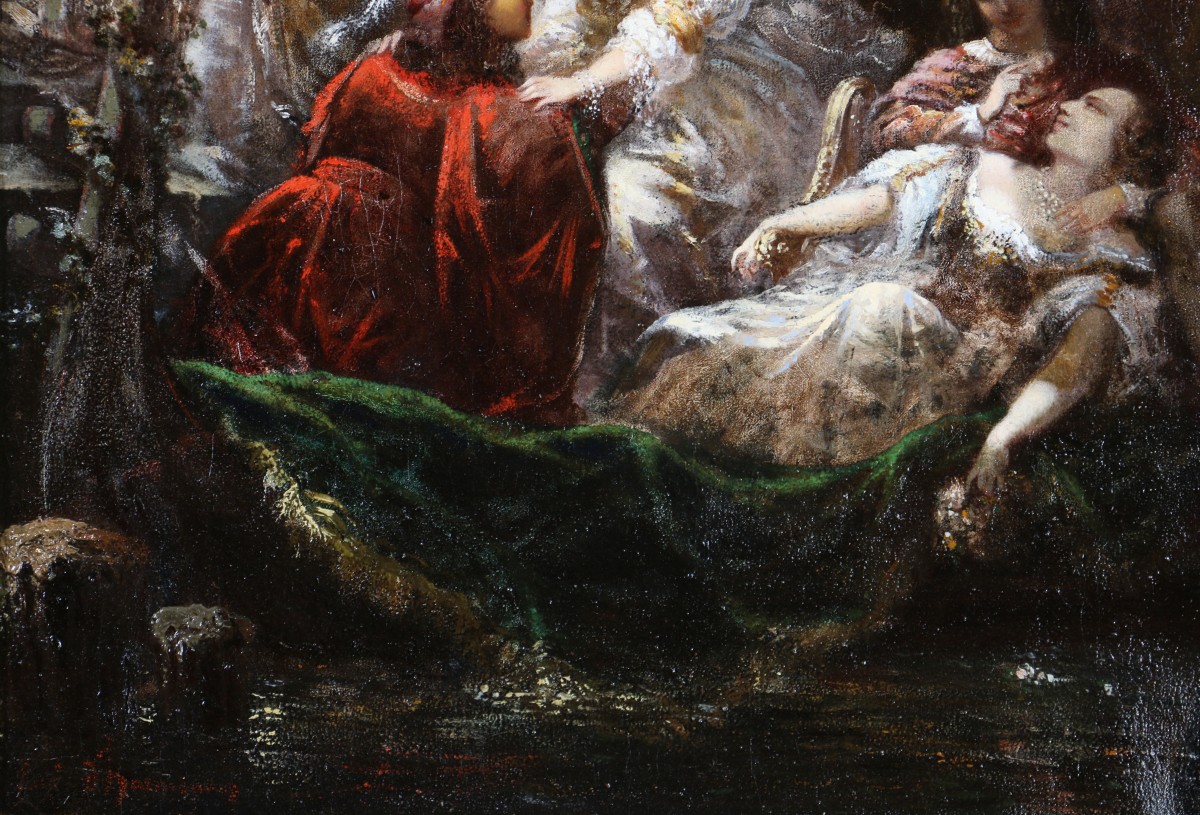
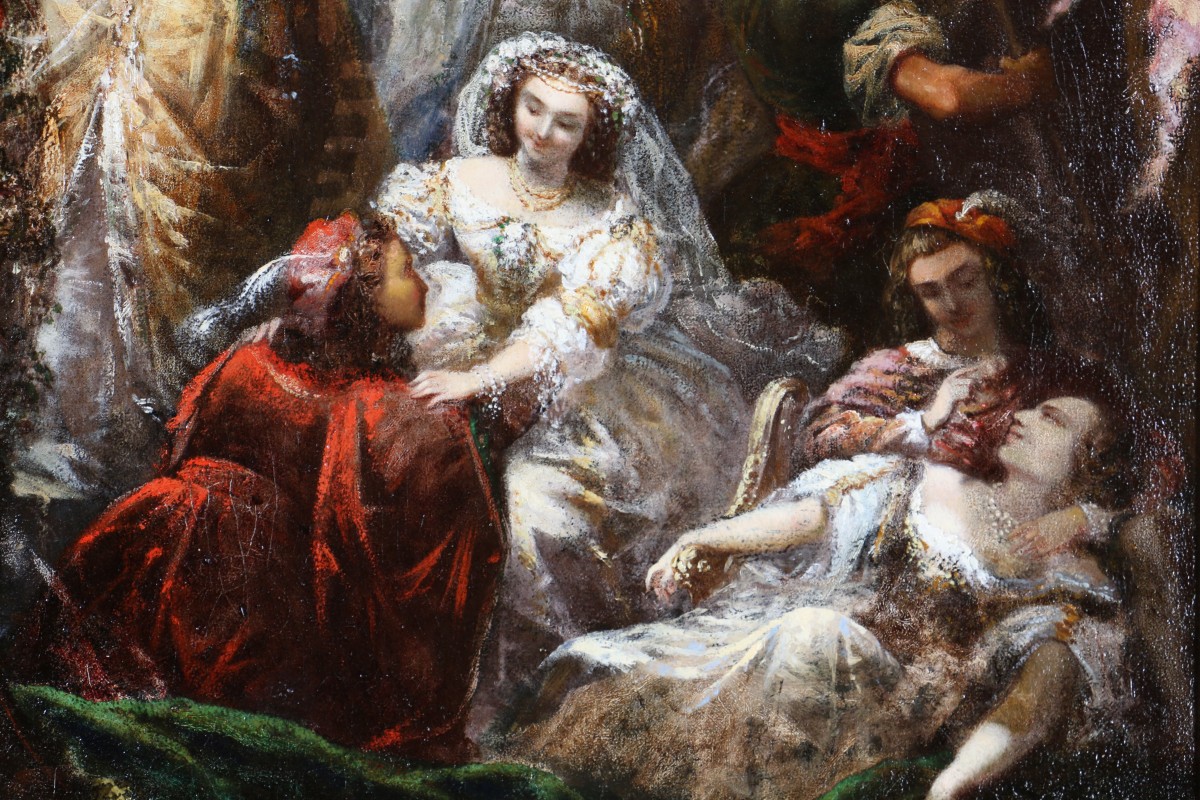
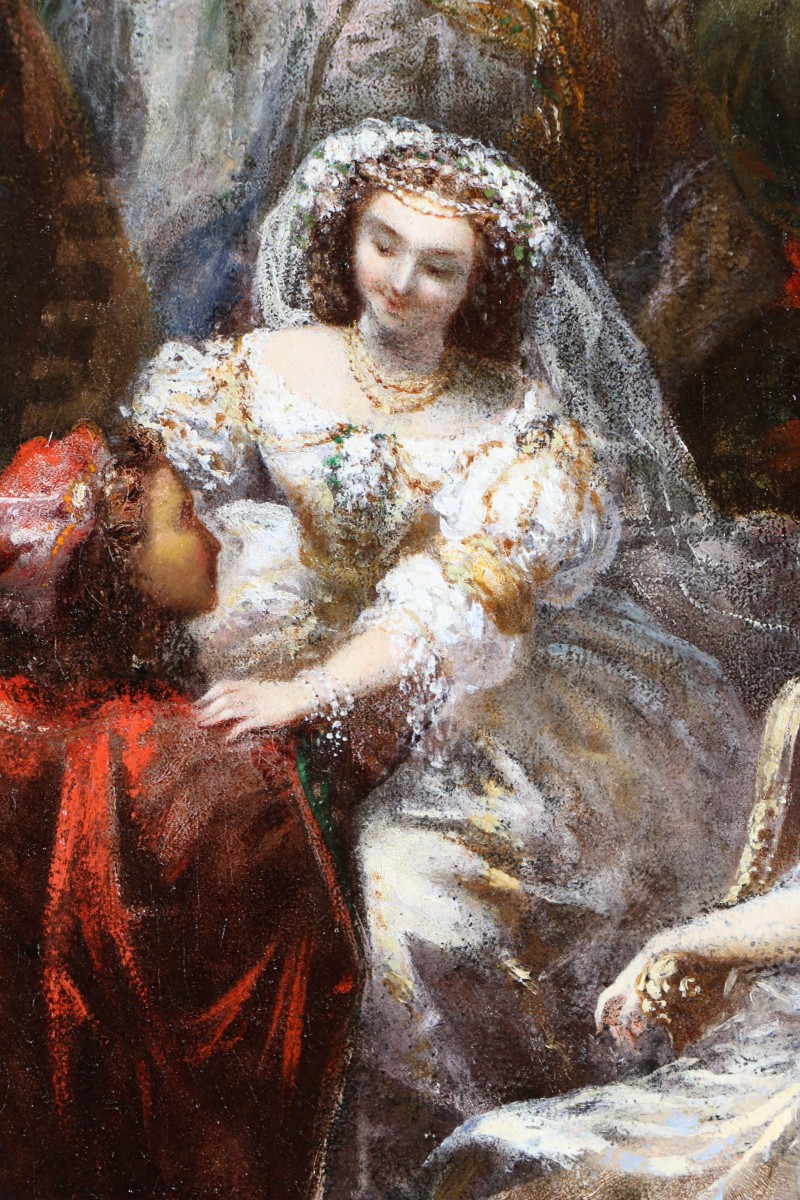
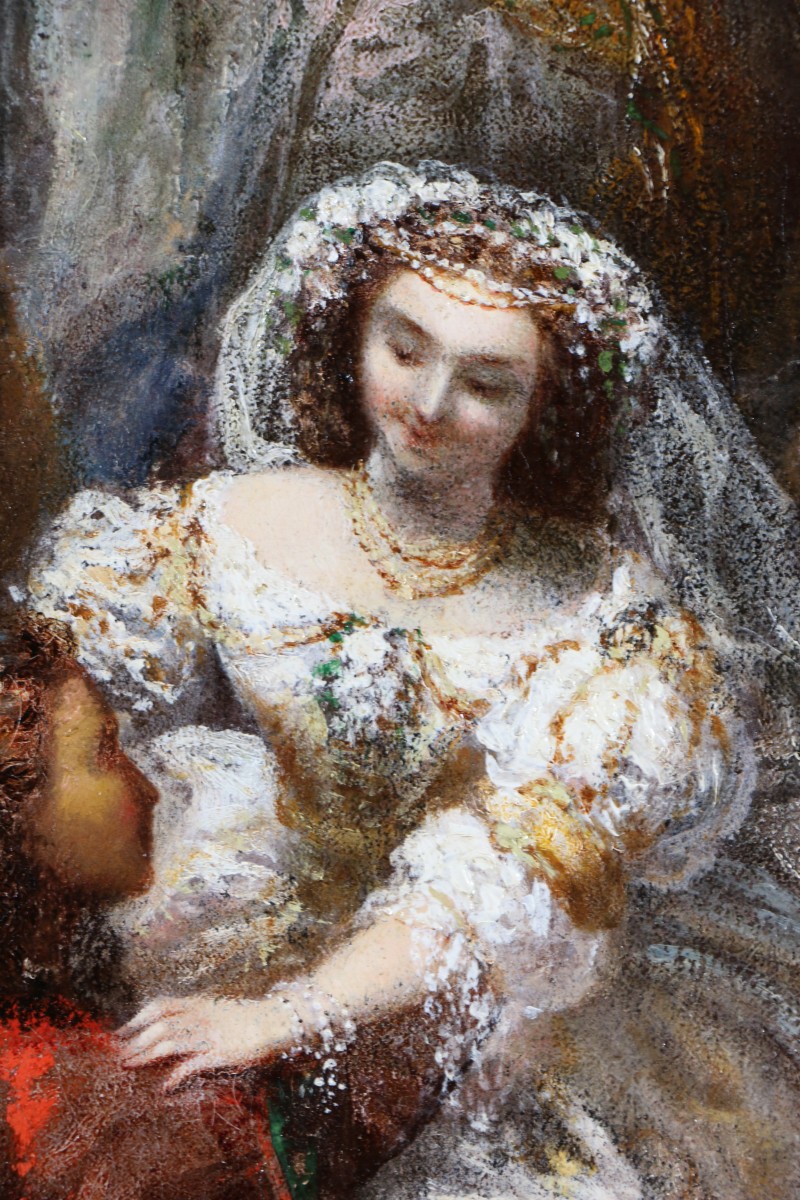
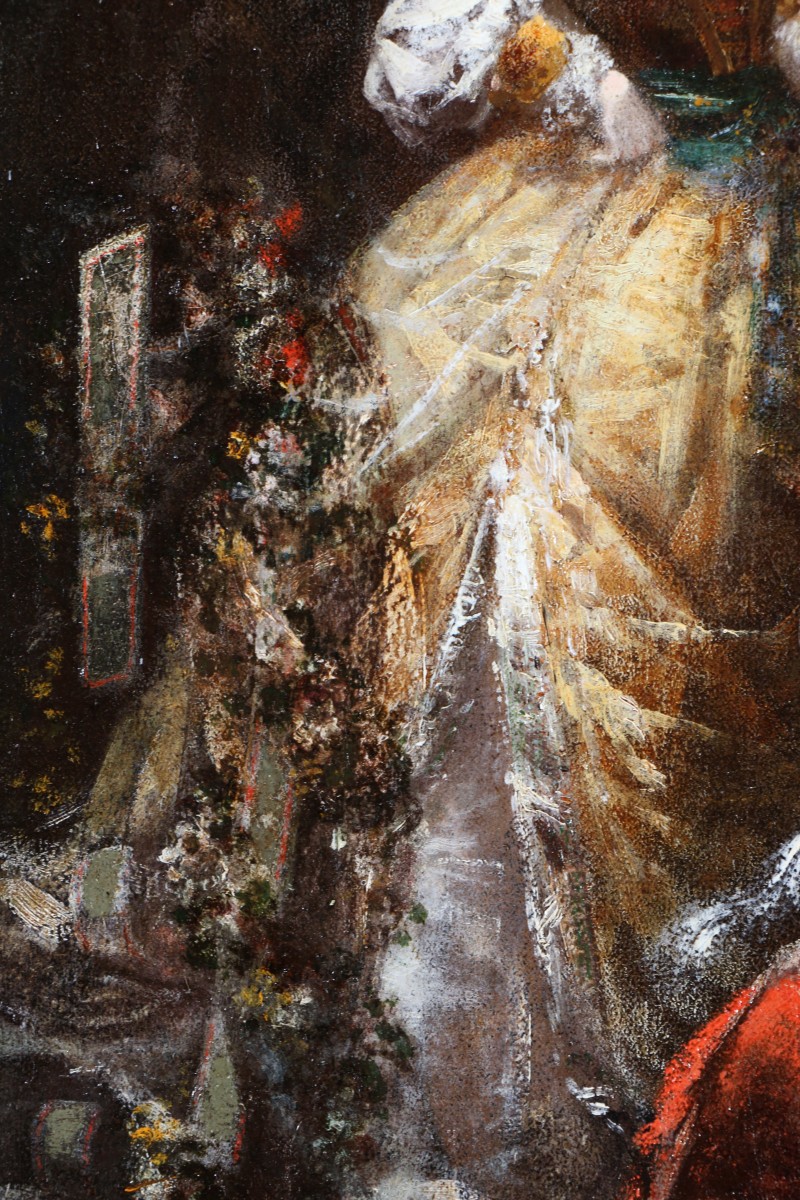
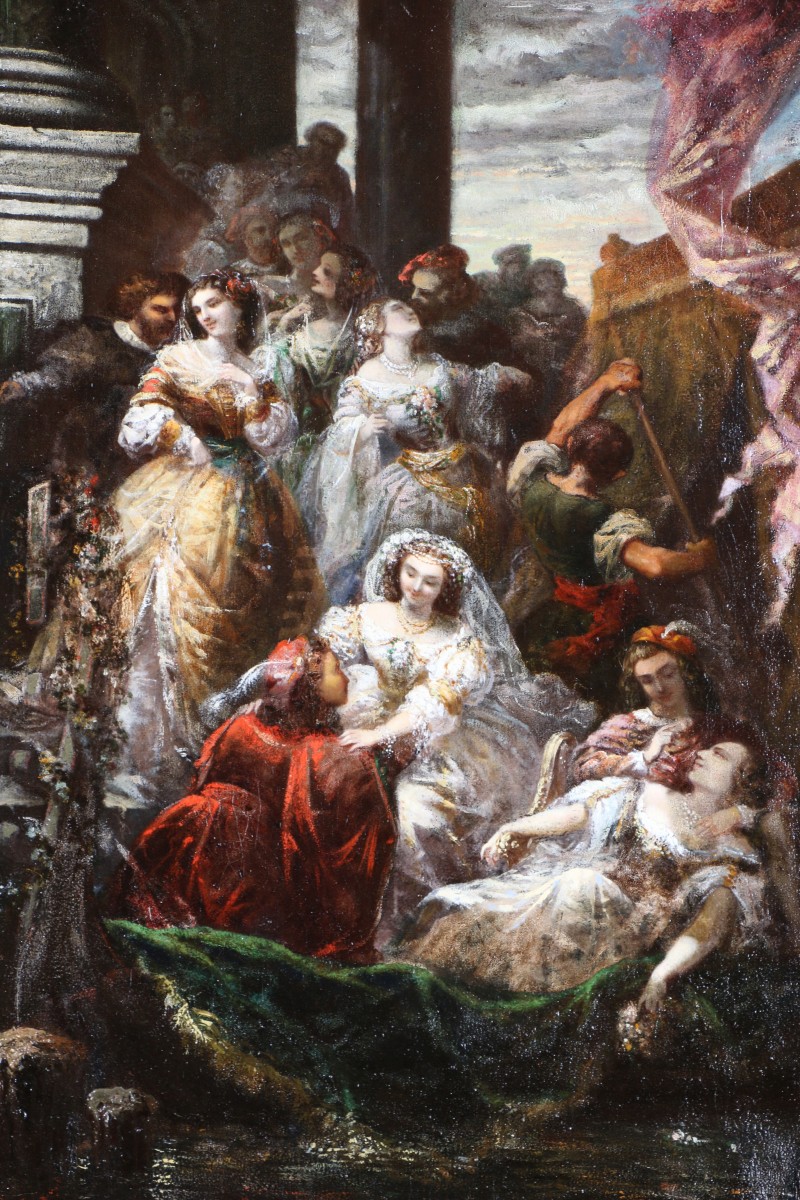
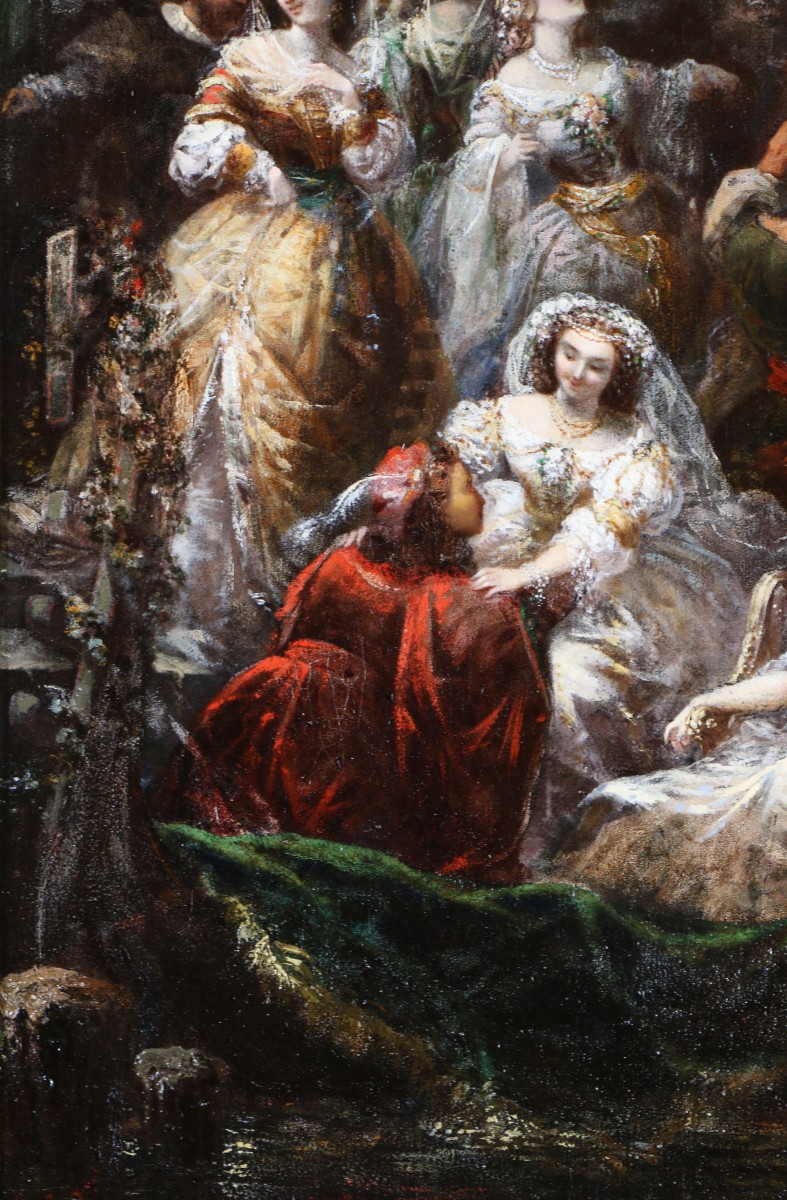
Venetian-style fête by a pool. Possibly evoking the grand costume ball held in 1863 at the court of Napoleon III and Empress Eugénie. Set against a sumptuous architectural backdrop open to the water, an elegant gathering dressed in Renaissance- and Venetian-inspired costumes crowds the edge of a pool. Conceived like a theatrical performance, the scene combines the intimate nature of a court celebration with the splendor of a Venetian tableau. In the foreground, several richly dressed young women occupy the area immediately beside the water. One, wearing a brilliant red gown, turns toward an elegant woman in a white dress, who wears a veil and elaborate jewelry. To the right, another young woman—appearing almost languid—rests in a voluminous light-colored gown, surrounded by her companions. Their relaxed postures, the exchange of glances, and the deliberately informal arrangement of the figures create the impression of a moment captured during a party rather than an official ceremony. A heavy green velvet drape edged with gold crosses the foreground, forming what appears to be the edge of a boat or a temporary waterside structure. Behind the central figures, a second group unfolds: women in satin gowns, men in historical costumes, and figures partially obscured by the semi-darkness extend into the background. On the right, a man dressed in green, with a red sash around his waist, wields a long pole. His presence is one of the composition’s most significant details: it immediately evokes the figure of a gondolier and helps lend the scene its Venetian character. A massive purple drape, lifted like a theater curtain, closes off the composition in the upper right corner. The artist thus contrasts the luminous richness of the white, yellow, and red dresses with a deliberately dark background. Lace, pearls, jewelry, flowers, satin, and velvet are rendered with lively, brilliant brushstrokes. The monumental architecture and the sky visible between the dark masses add depth to the composition, though they do not allow for the definitive identification of a real location. A possible reference to the grand costume ball of 1863 The scene invites comparison with the passion of Napoleon III’s and Empress Eugénie’s court for costume balls, masquerades, and *tableaux vivants*. The Musée d’Orsay notes that Eugénie organized costume balls during Carnival, appearing in guises such as a *dogaressa*, an odalisque, or in an 18th-century costume. One particularly compelling possibility is the grand costume ball held on February 9, 1863. The collections at the Château de Compiègne include a depiction of Empress Eugénie in *dogaressa* costume, documenting the lavish Venetian attire she wore to that Carnival ball. The château notes that she wore a gown of scarlet satin and black velvet, adorned with the Crown Jewels. In a retouched version of her portrait, the artist went so far as to create an imaginary Venetian setting around her, opening onto the Grand Canal. This documentation offers a particularly interesting parallel with the painting in question. The historicizing costumes, the abundance of finery, the masquerade atmosphere, the presence of water, the figure evoking a gondolier, and the manifestly theatrical nature of the setting all belong to the same world. Besson and Empress Eugénie His relationship with the Imperial Court is particularly significant. At the 1853 Salon, Besson exhibited a scene depicting Boucher enamored with Rosine, a fruit seller. The work captivated Empress Eugénie, who acquired it for the antechamber of her apartments at the Château de Saint-Cloud. Besson also created two overdoor paintings for Napoleon III’s study at Saint-Cloud. He also worked for the Tuileries, notably on the Imperial Palace’s decorative schemes. Indeed, his ability to compose vast decorative ensembles accounts for the particular ease evident in your painting: the multiplicity of figures, their arrangement in successive groups, the drapery, the architecture, and the highly dramatic treatment of light. Besson ultimately received the Legion of Honour in 1865—a crowning achievement of his career under the Second Empire.
Faustin Besson (1821–1882) and the World of the Second Empire
Attributing the work to Faustin Besson aligns particularly well with the nature of the composition. A painter—and, above all, a decorator—admired by Second Empire society, Besson caught the eye of Empress Eugénie. The catalogue of paintings at the Château de Compiègne specifically highlights the enduring presence of the 18th-century spirit in his work, as well as his taste for festivities and pageantry—a style notably influenced by Watteau. Indeed, the painting seems less an archaeological reconstruction of historic Venice than an expression of that distinctive Second Empire culture which sought to revive an idealized past through costume, décor, and celebration. The Venice depicted here is an imagined one: a city of balls, gondolas, sumptuous fabrics, and Renaissance splendor, all reimagined through the lens of 1860s high society. Compiègne, Saint-Cloud, or a Fantasy Setting? The link to Compiègne remains historically compelling given the prominence of imperial entertainments there. The famous house parties at Compiègne brought together artists, writers, musicians, and socialites from the Second Empire—gathering around the imperial couple in a world where performances and leisure activities played a central role.
Delevery information :
All our paintings benefit from careful and secure packaging. No geographic restrictions.