Offered by Galerie PhC

European paintings from the 17th, 18th and 19th centuries.
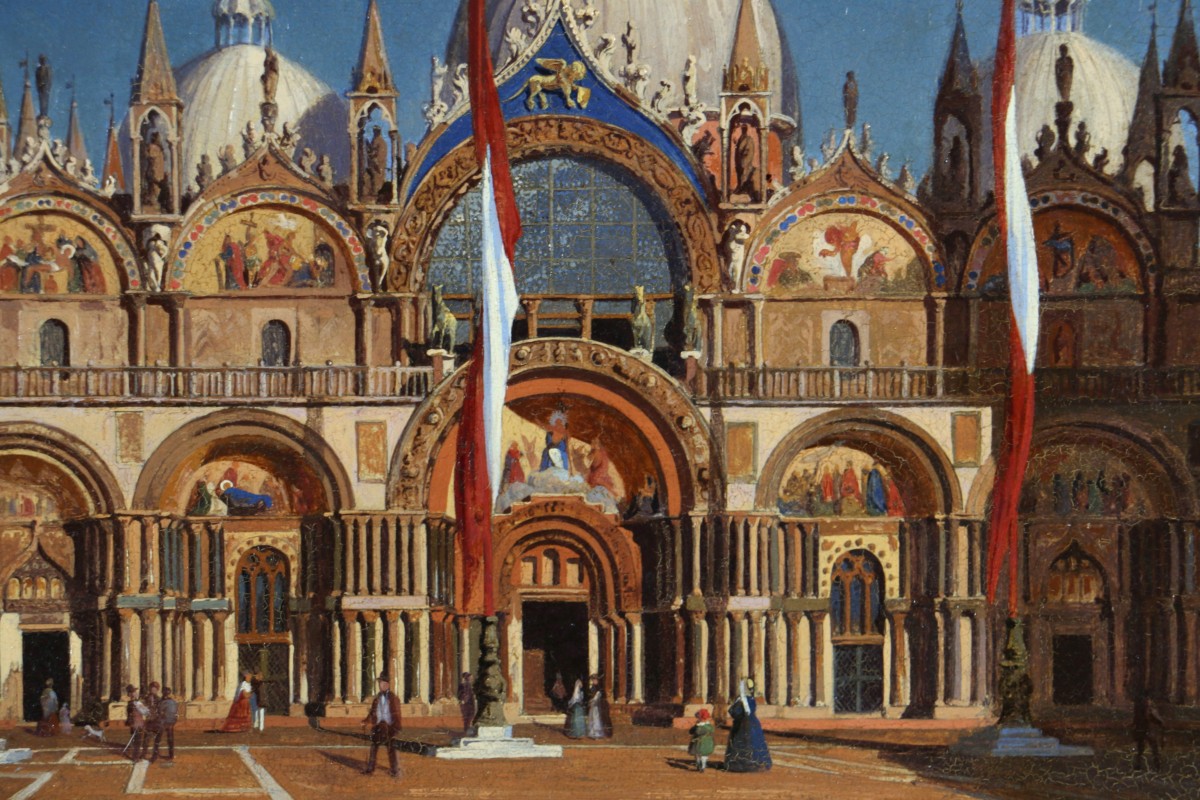
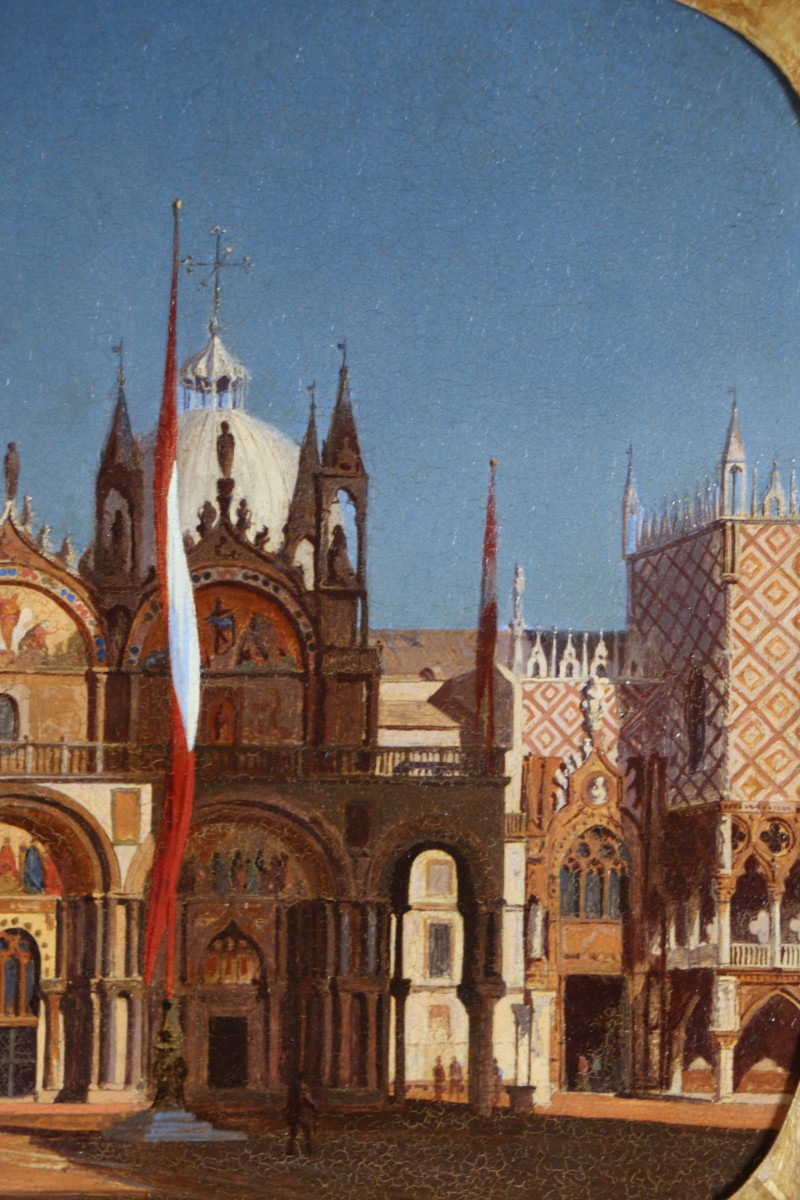
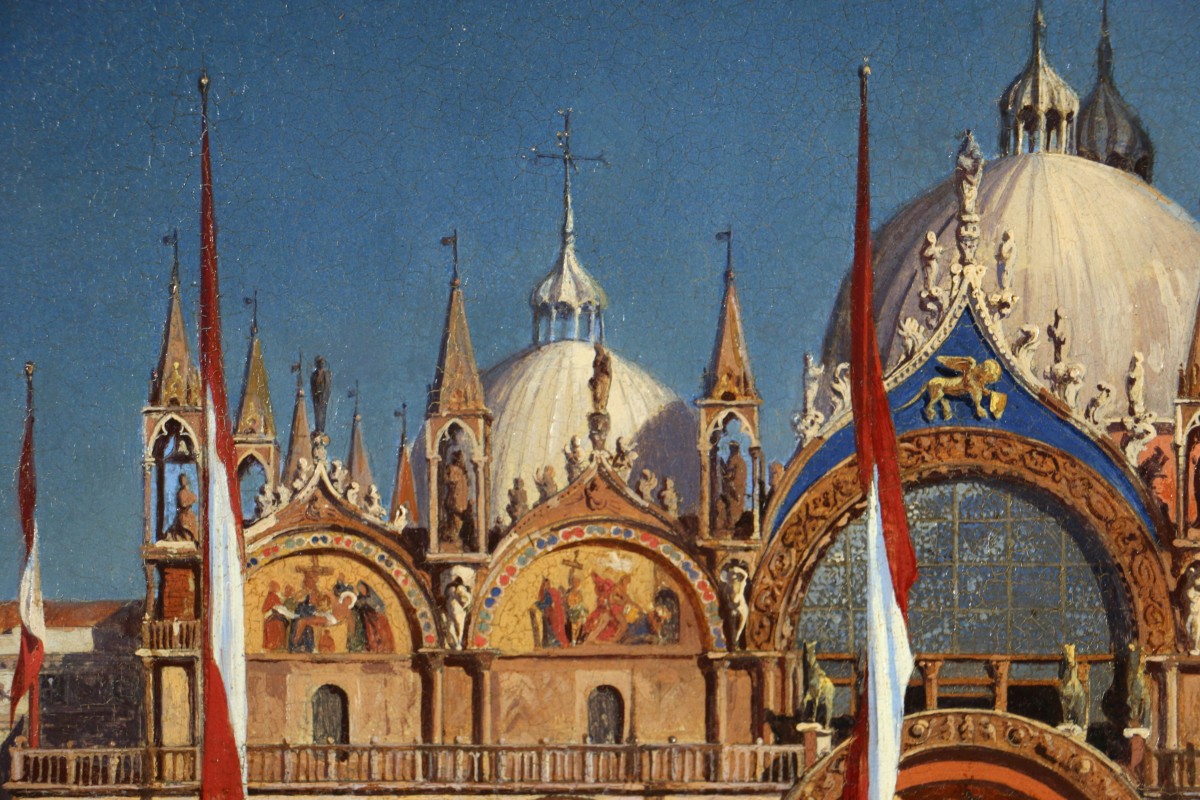
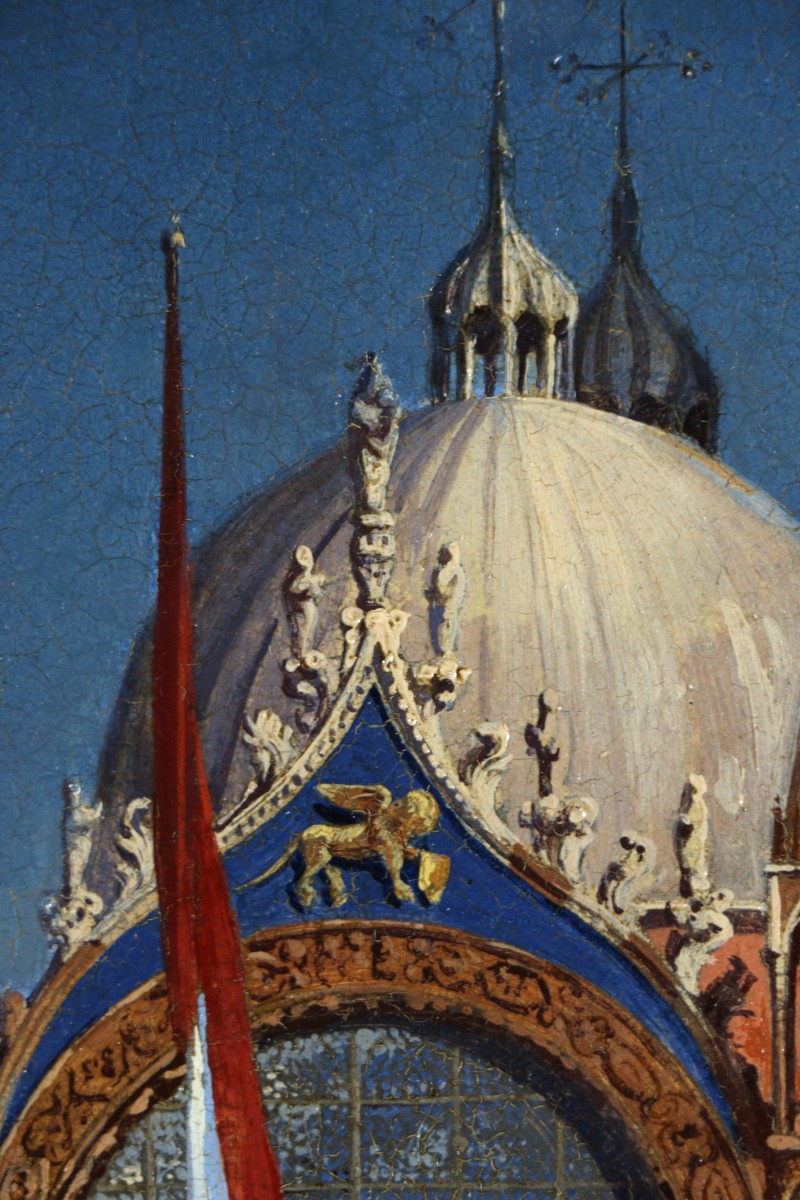
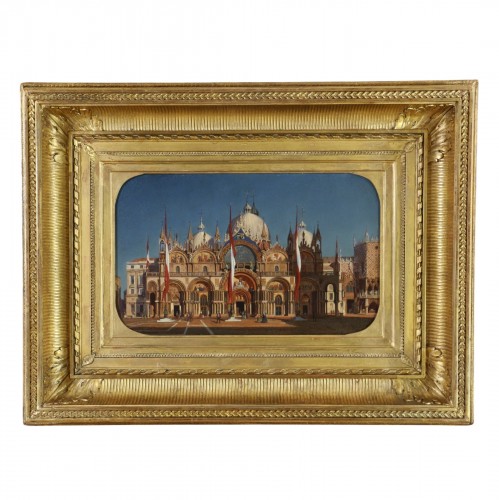
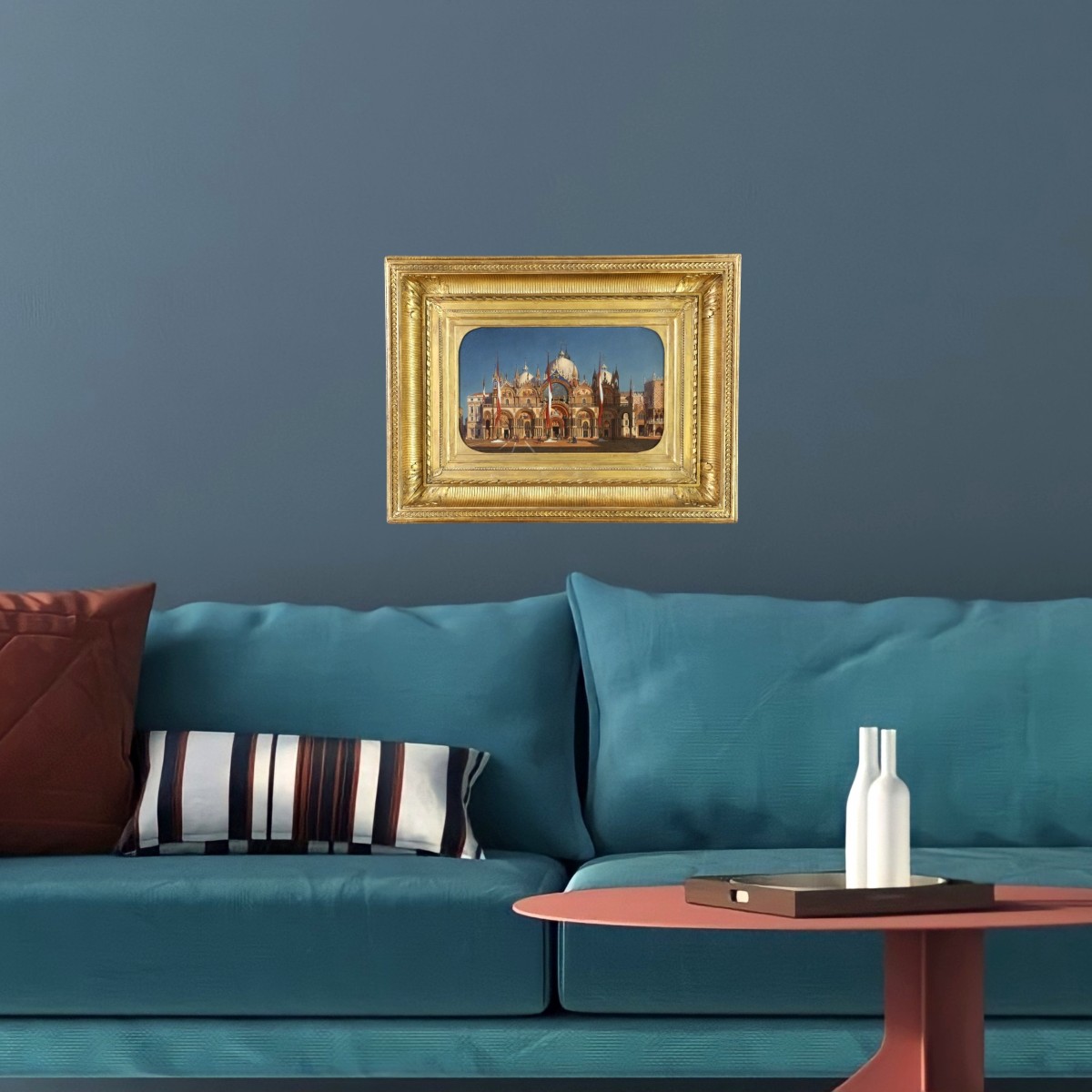
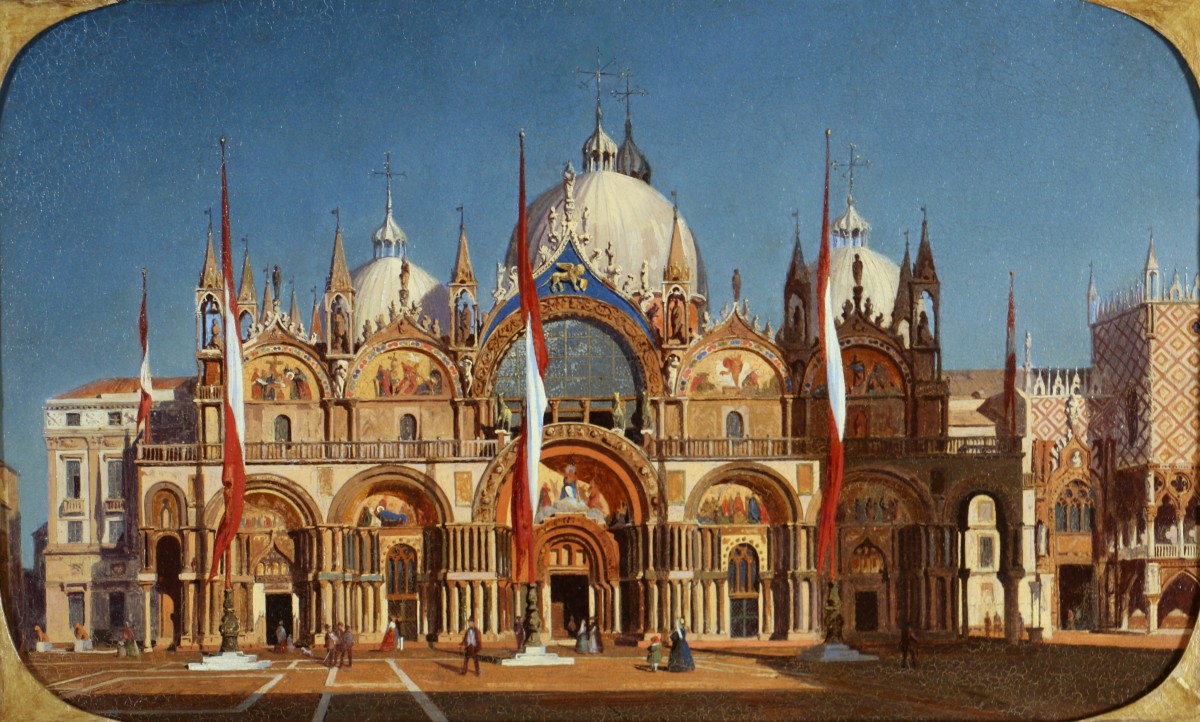
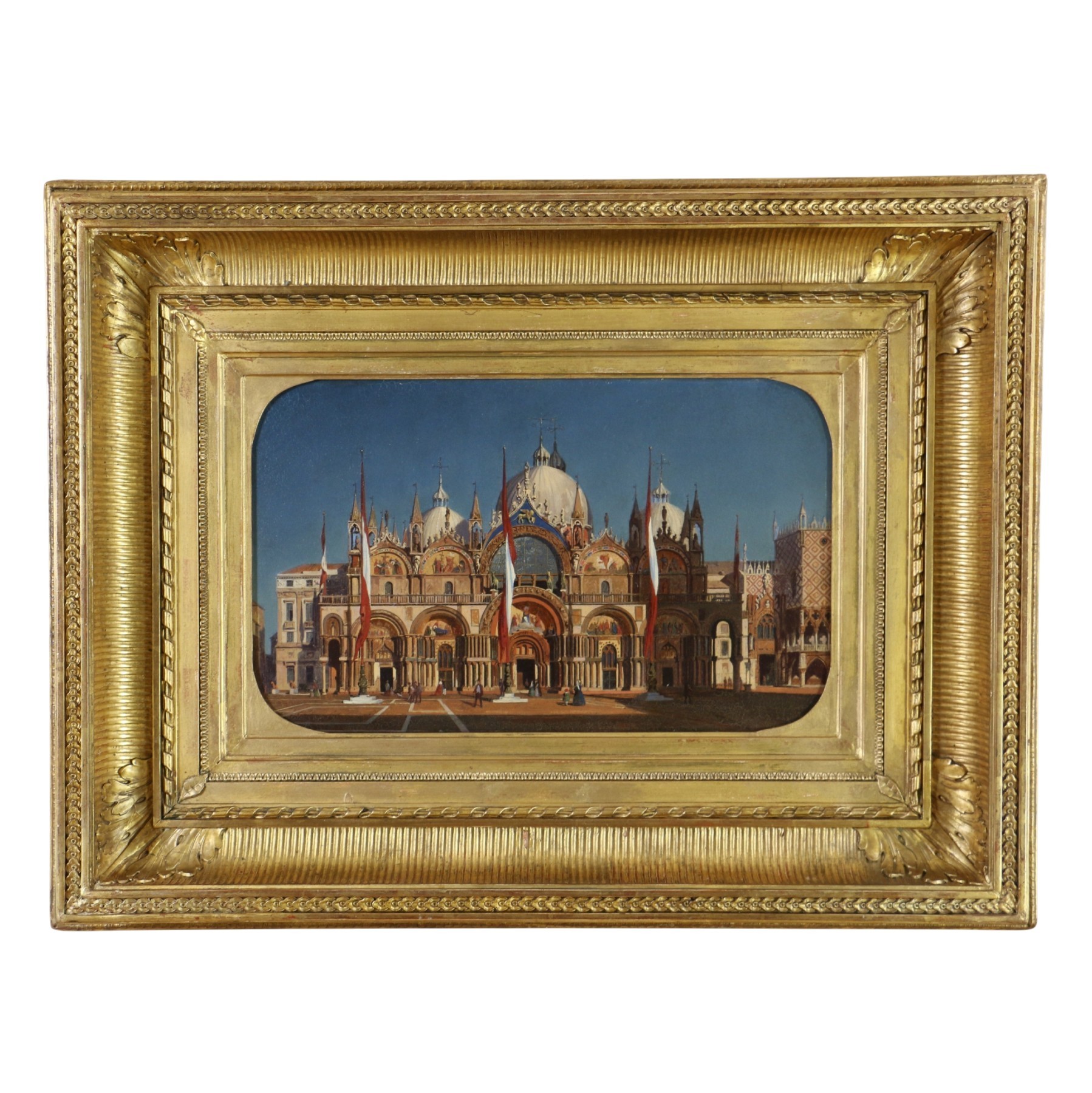
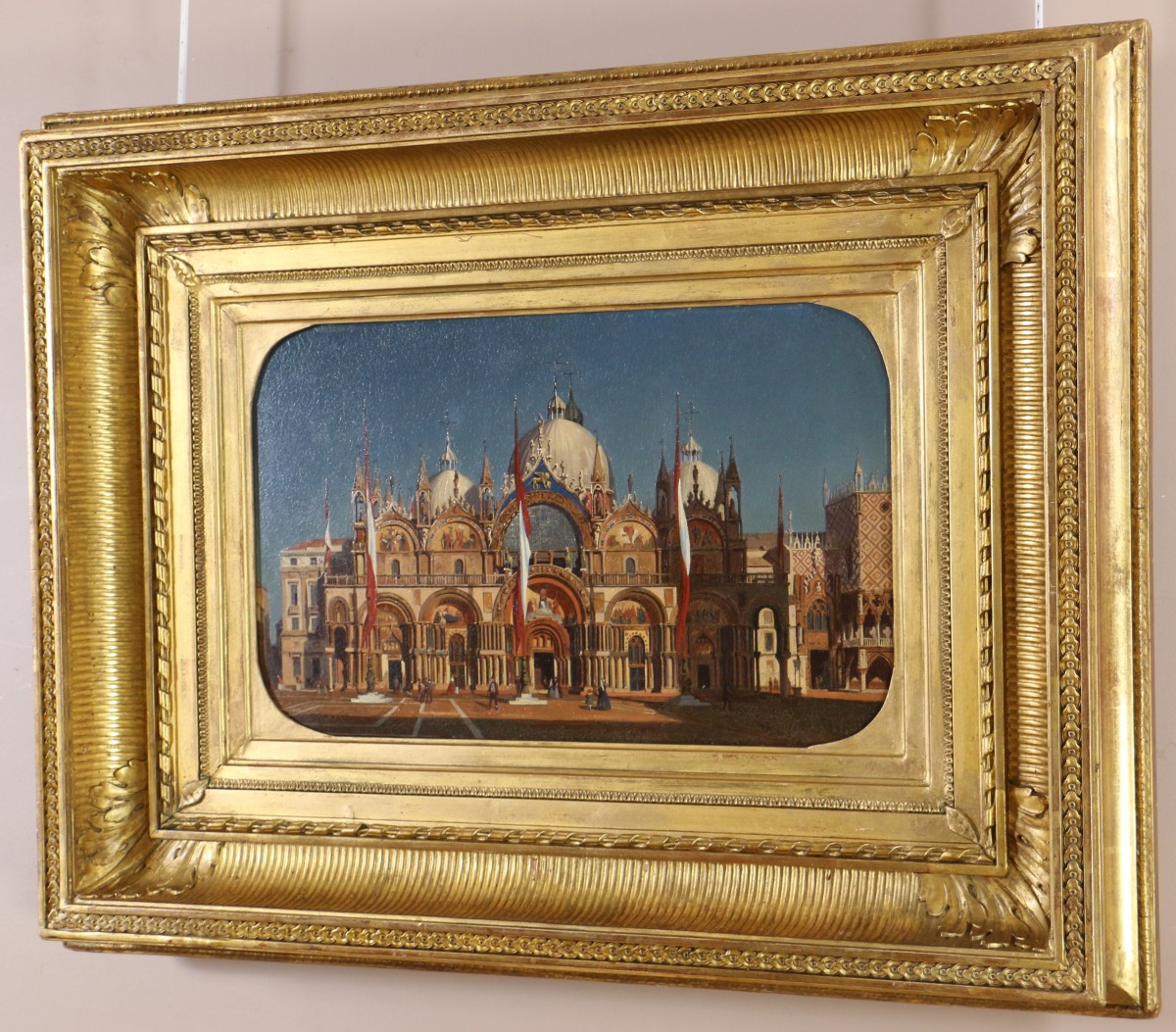
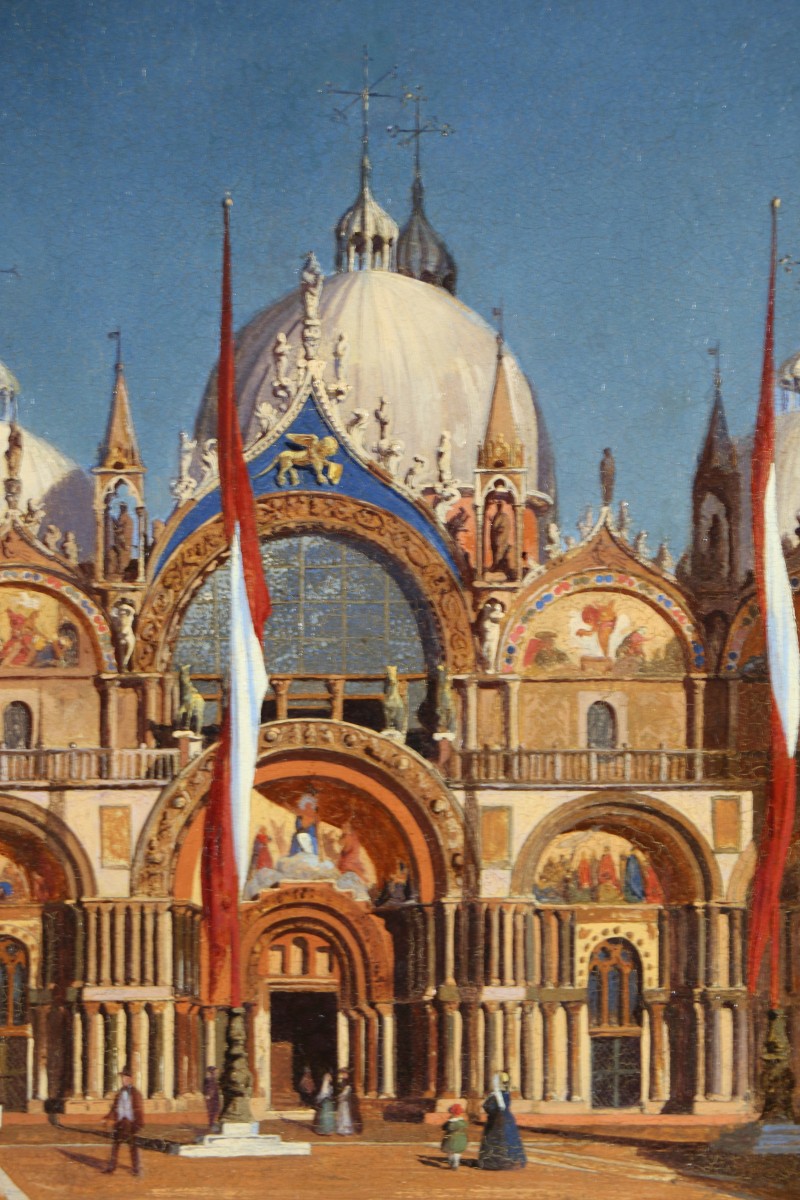
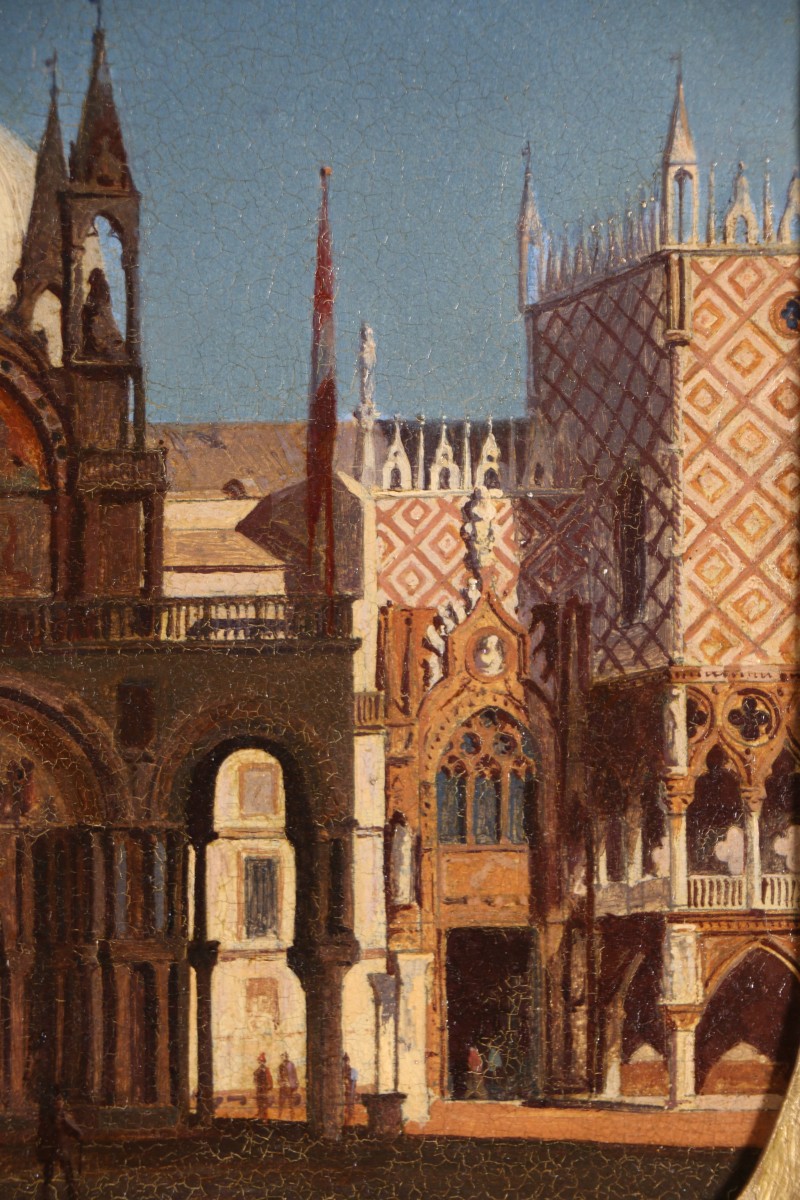
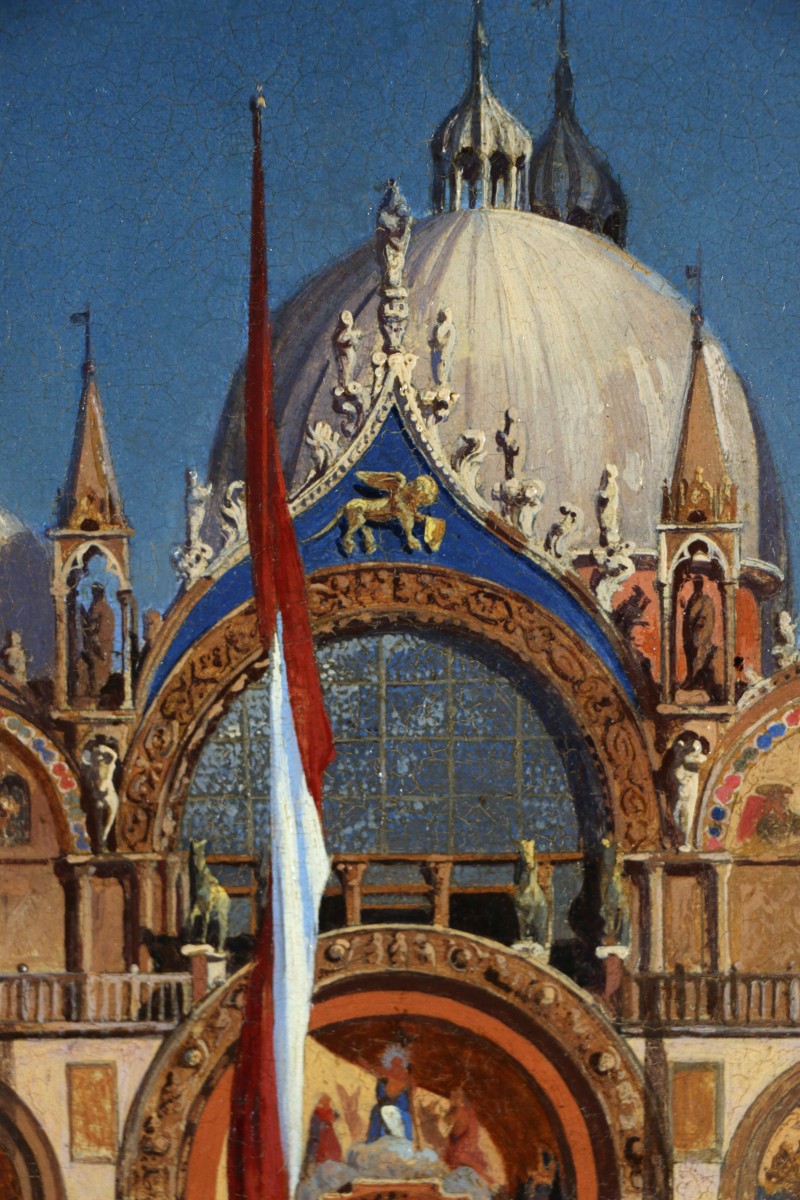
Attributed to Ippolito Caffi (1809–1866). TheBasilica of St. Mark in the low-angled sunlight, circa 1860.
Oil on metal, 45 cm by 27.5 cm
Superb antique frame, 75 cm by 57 cm, 8 cm deep.
This superb, beautifully framed painting depicts St.Mark’s Basilica bathed in the low, late-afternoon sun, creating atruly striking effect with its warm, contrasting colors. The artist lovedthis time of day; he painted numerous works using this color palettearound 1860 (from 1858, the year of his return to Venice, until his death in 1866).
Ippolito Caffi (1809–1866)
Trained at the Academy of Venice, his eventful career took him toParis, Naples, London, and Spain, with regular returns to Rome and Venice,not to mention a grand journey to the East (1843). He brought backnumerous drawings from all these places. He actively participated in the battles of the Risorgimento. Highlyrenowned, he received commissions from the pope and exhibited successfully in Venice,Milan, Rome, and Trieste, as well as in Paris and London. He wasprimarily a meticulous landscape painter, whose works—clear andrigorously constructed—sometimes serving as a pretext for curious effects ofartificial lighting but also for subtleties worthy of Corot—carry on thetradition of urban landscape painting established by Canaletto (The Pincio in the Morning, 1846; View ofTurin, 1850; Boulevard Saint-Denis in Paris, 1855; Venice, G. A. M.,Ca’Pesaro). The Correr Museum in Venice also houses a series of his drawings.(source: Larousse)Born to Giacomo and Maria Castellani, he studied in Belluno, then in Padua with hiscousin, the painter Pietro Paoletti, who worked with another Belluno-born painterof neoclassical taste, Giovanni De Min; and finally at the Academy of Venice, where he was able toencounter the 18th-century Venetian landscape painters. His *Rialto Bridge*, atCa’ Pesaro, is an example of this period.In this environment of serious dedication but little respite, Caffibegan to feel a sense of unease: thus, in January 1832,he moved to Rome with his cousin Paoletti. By frequenting his studio,Caffi perfected his technique, immersing himself in the genre of landscape painting. In early1833, Caffi opened his own studio, devoting himself to painting anddrawing.Although based in Rome, he often traveled to other cities to exhibit hisworks. While in Rome, he also took a hot-air balloon ride with the FrenchmanFrancisque Arban (1815–1849), accompanied by the photographer Giacomo Caneva (1813–1865),an experience that impressed him so deeply that it inspired him to paint two almostRomantic paintings.In 1841, he decorated the Roman-style room at Caffè Pedrocchi in Padua. In 1843, heleft for Naples and from there traveled to the East, visiting Athens, Turkey,Palestine, and Egypt; he returned to Italy in 1844, laden with sketches andartworks.In 1848, he left Rome for Friuli, where he enlisted in the war againstAustria; taken prisoner, he escaped and spent a year in Venice. In 1849,he settled in Genoa, then in Switzerland, and in 1850 in Turin.After a series of trips to London, where he exhibited at the World’s Fair,to Paris, and to Spain, he returned to Rome in 1855 and to Venice beginning in 1858,where he was tried for “the crime of public violence.”In 1860, he was held as a political prisoner in the San Severo prisons forthree months, due to his frequent visits to Turin and Milan, whicharoused the suspicion of the Austrian authorities. From there, he returned to Milan,then traveled to Naples, where he joined Garibaldi’s army. After 1860, withthe unification of Italy, Caffi returned to Venice and resumed painting.He died in the sinking of the ship Re d’Italia during the Battle of Lissa in1866, in the midst of the Third War of Independence.Caffi’s work, though inspired by 18th-century Venetian models, succeeded inmodernize the pictorial vocabulary of cityscapes, both through the exploration of newperspectives—as in his nocturnal scenes—and through unusual themes,such as hot-air balloon flight.Highly regarded during his lifetime, Caffi had to wait until the mid-1960s tobe taken seriously by art historians. The major exhibitionorganized in Venice to mark the centennial of his death led to a reassessmentof his painting. He produced a vast body of work, and part of it has beenlost.A few works are housed at the Municipal Museum of Belluno, while manyothers are in private collections and numerous museums.
Delevery information :
All our paintings benefit from careful and secure packaging. No geographic restrictions.