Offered by Antiquités Philippe Glédel

18th Furniture, country french furniture
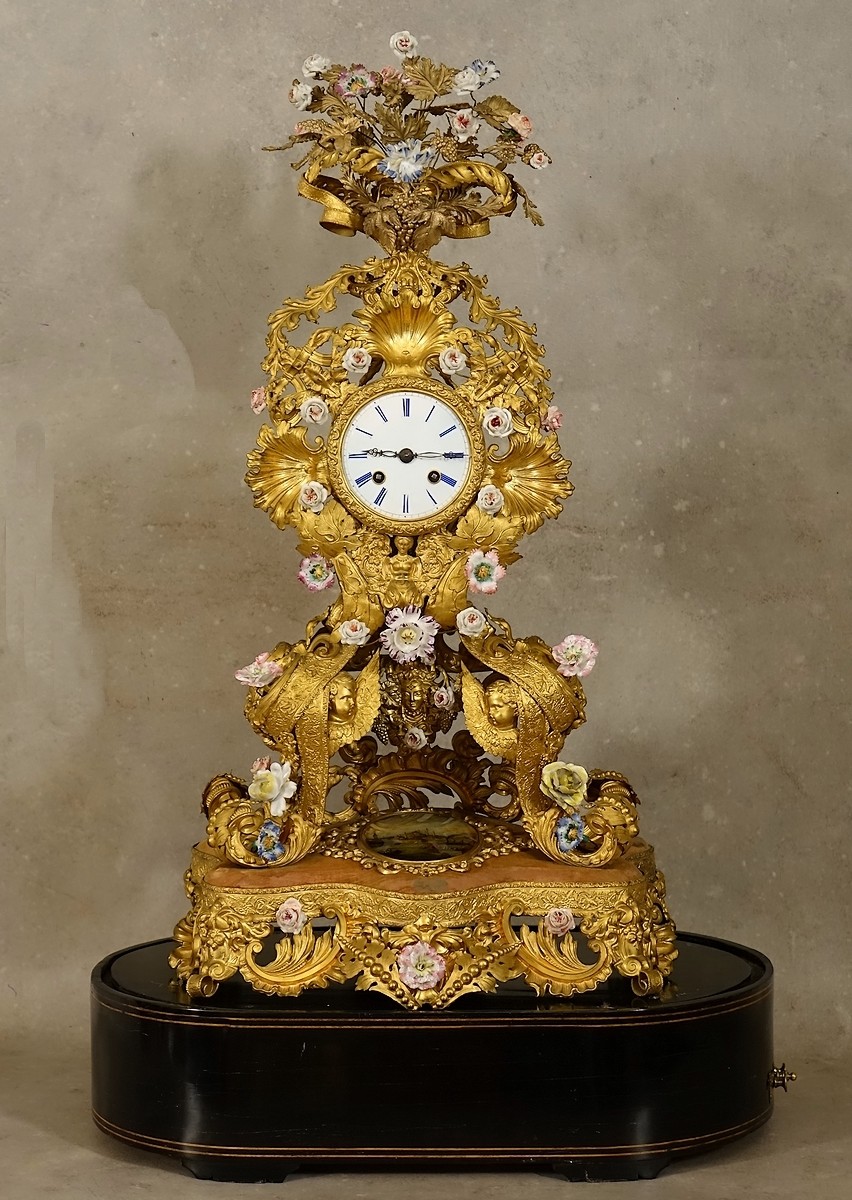
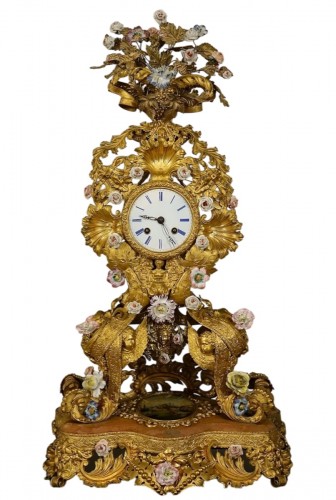
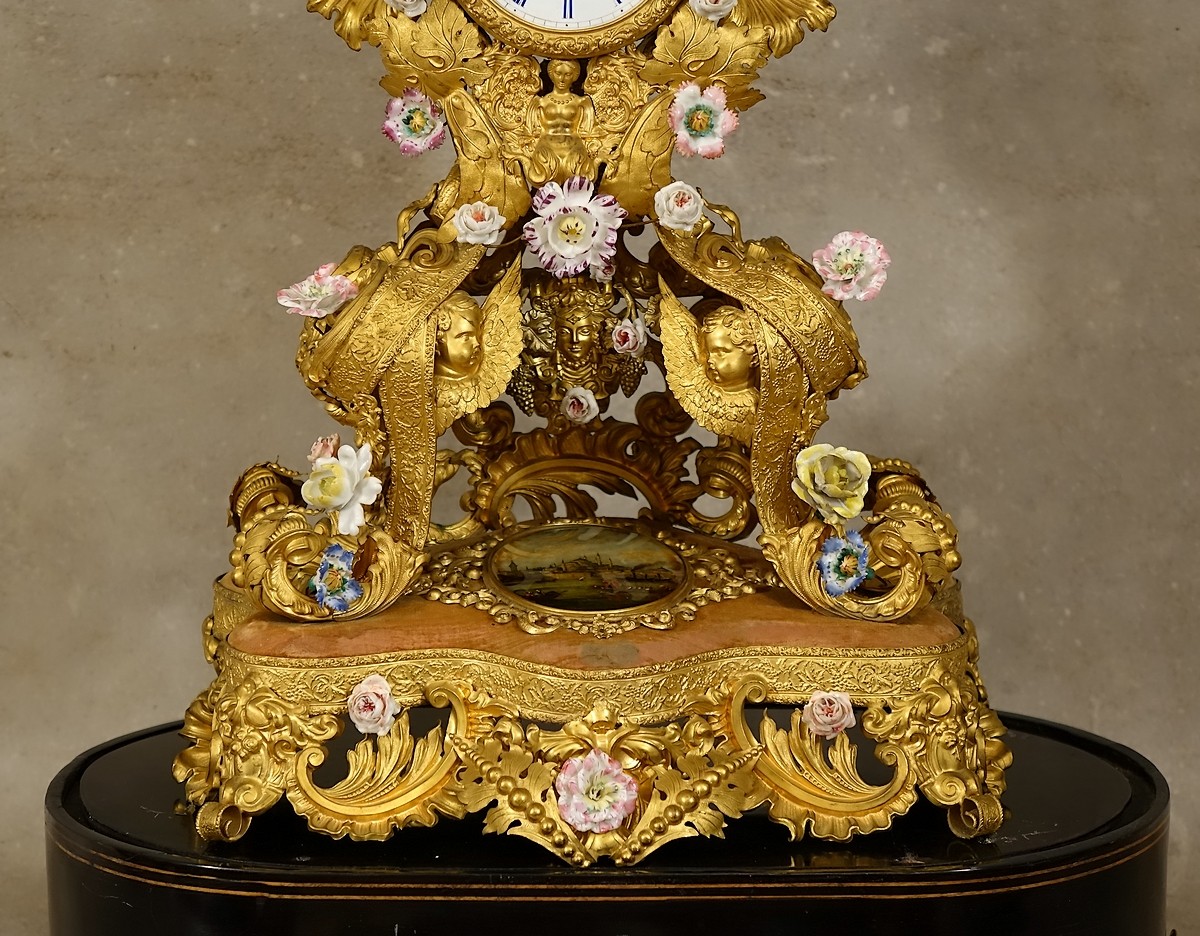
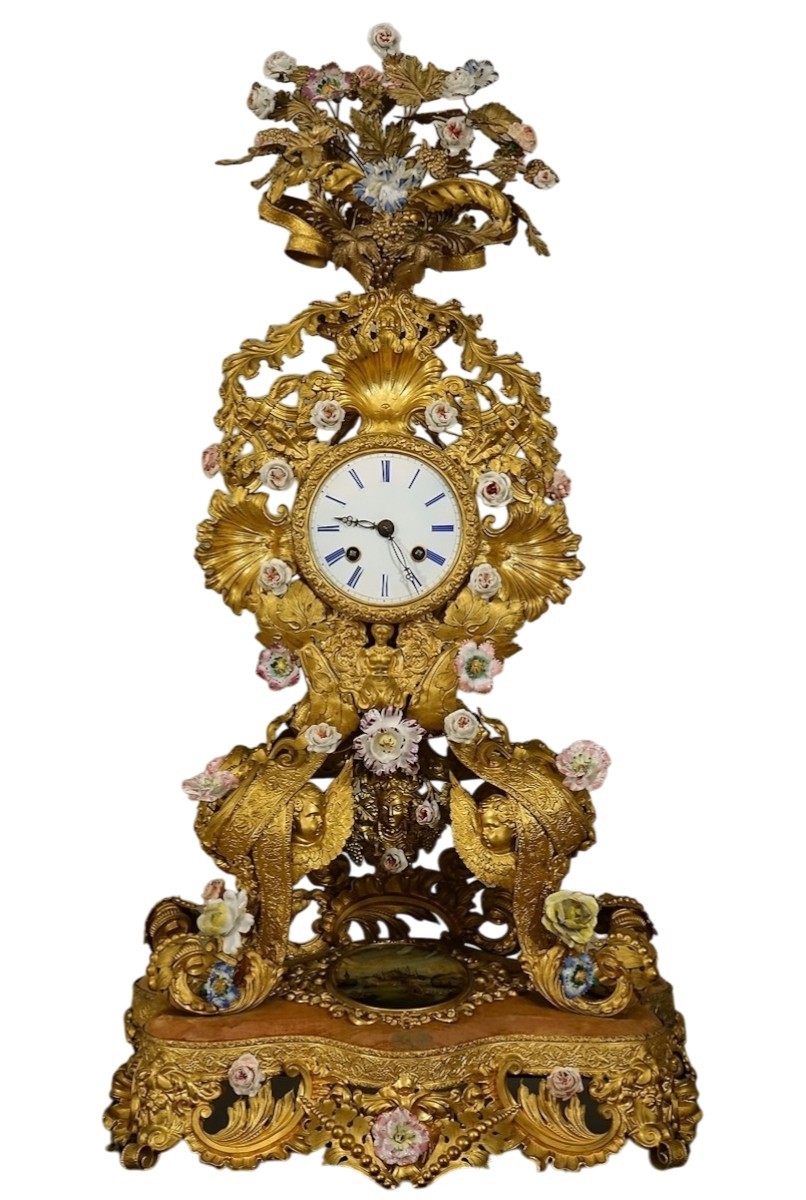
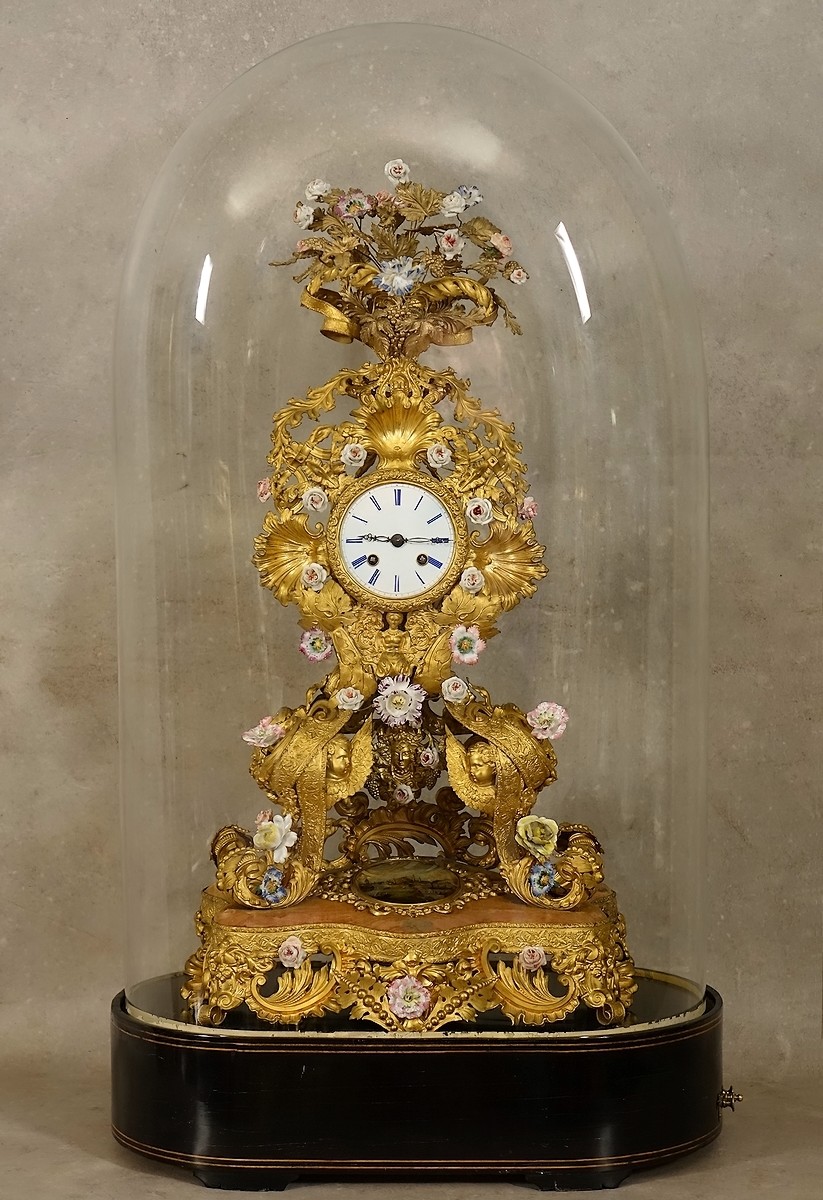
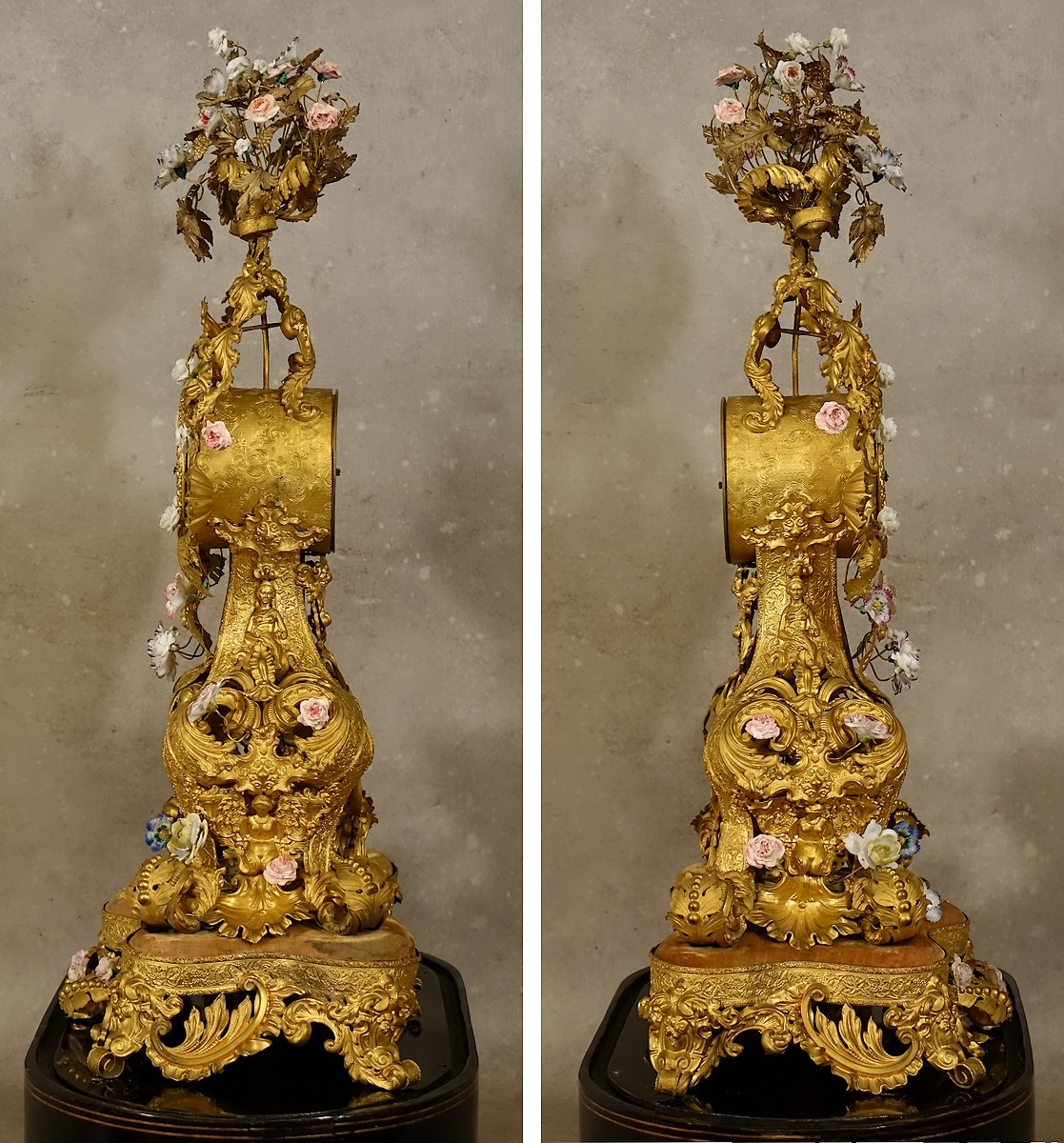
Orientalist clock with a view of Constantinople, in gilt tole and Paris porcelain flowers, decorated with “Turqueries,” under a glass dome and set on a musical box.
Louis-Philippe period.
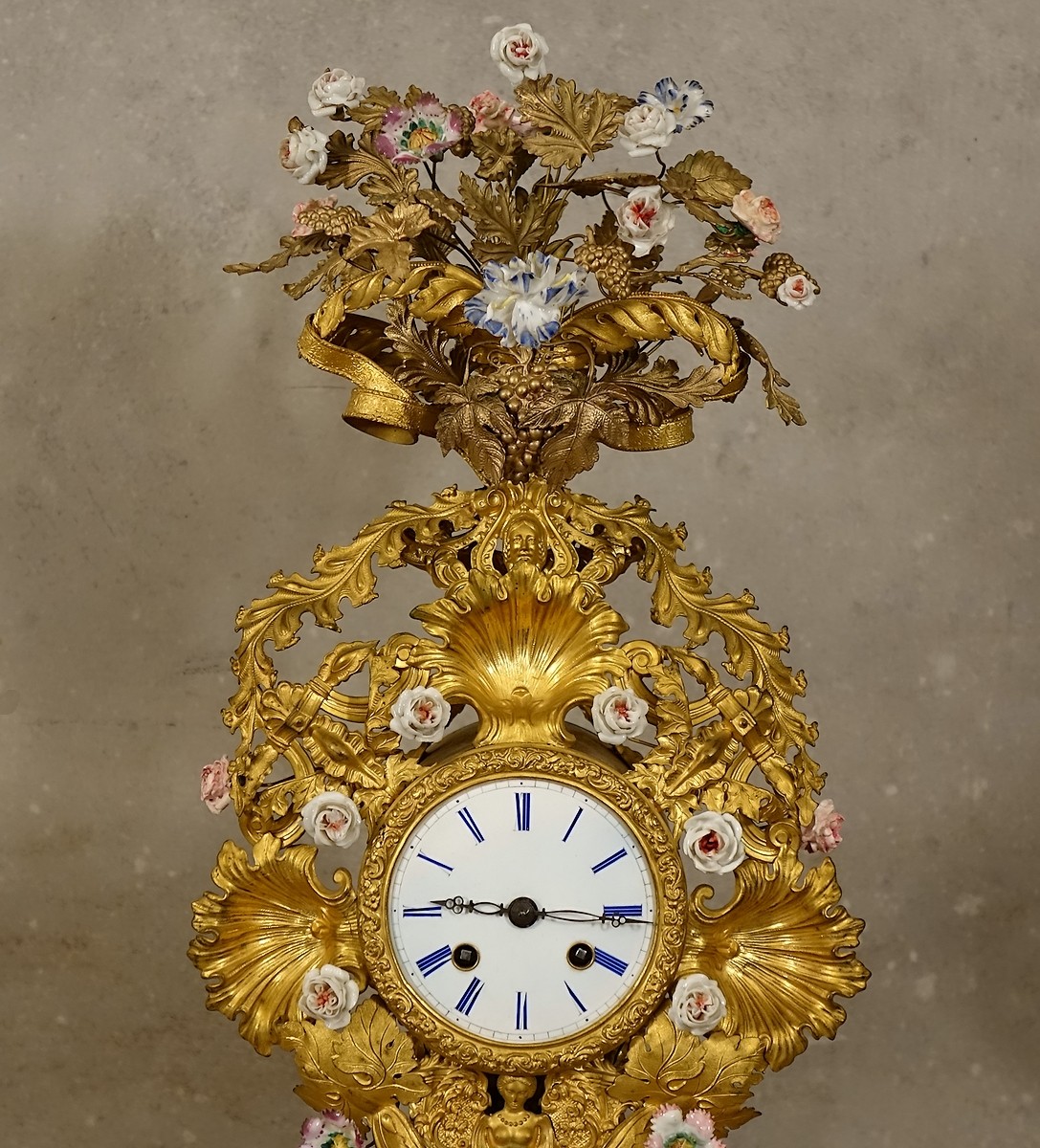
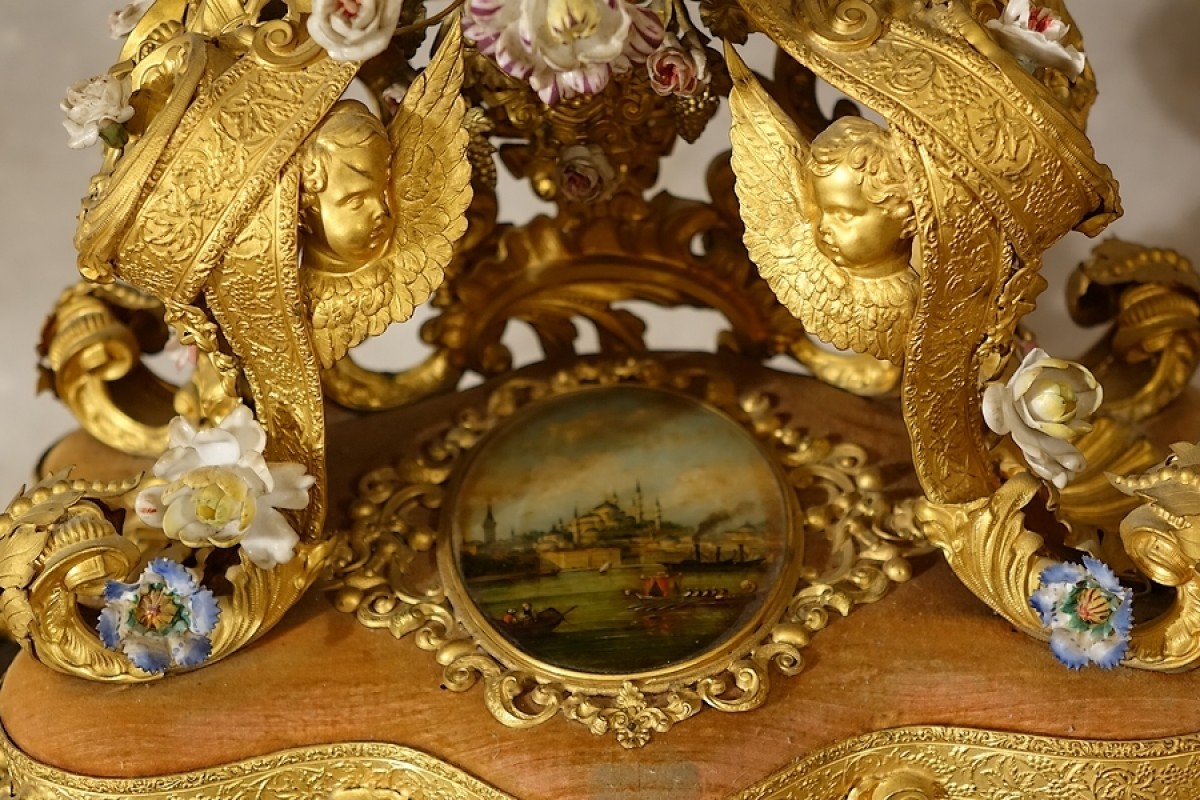
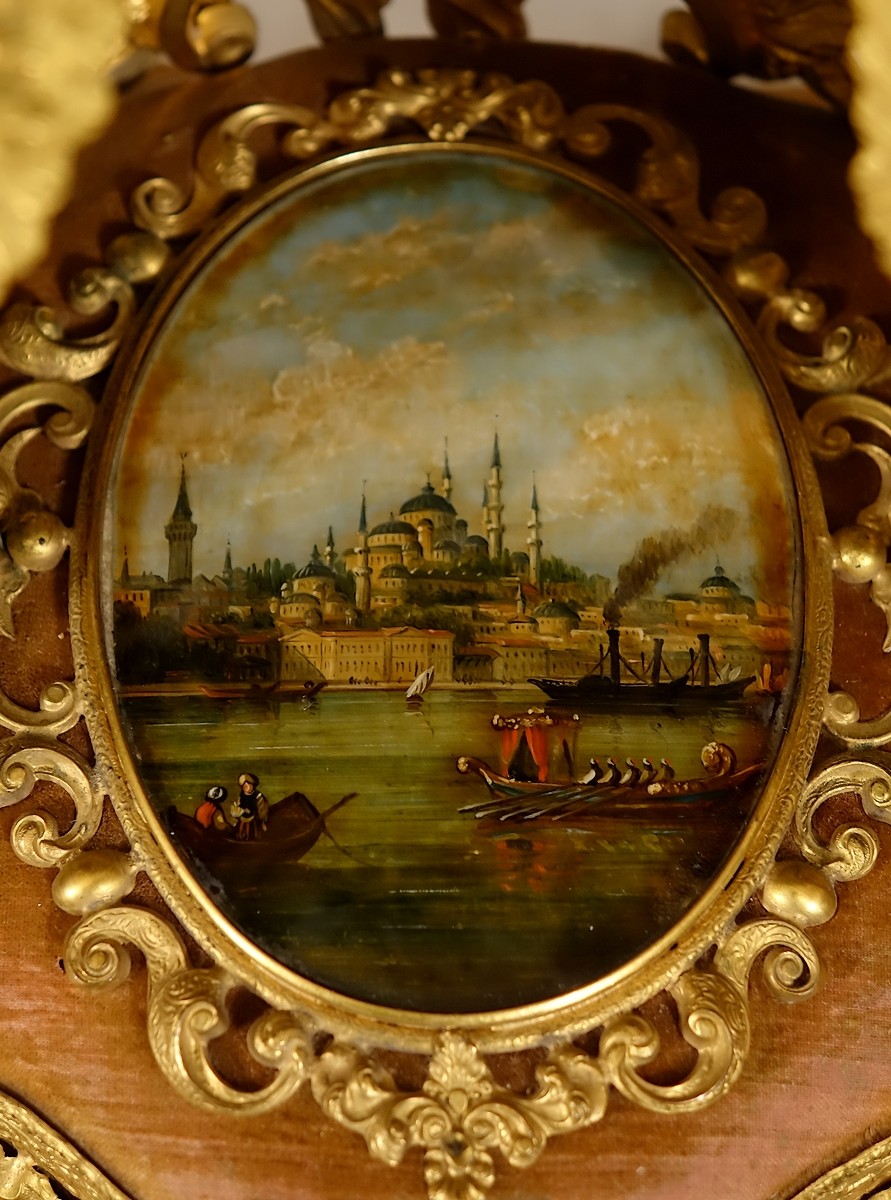
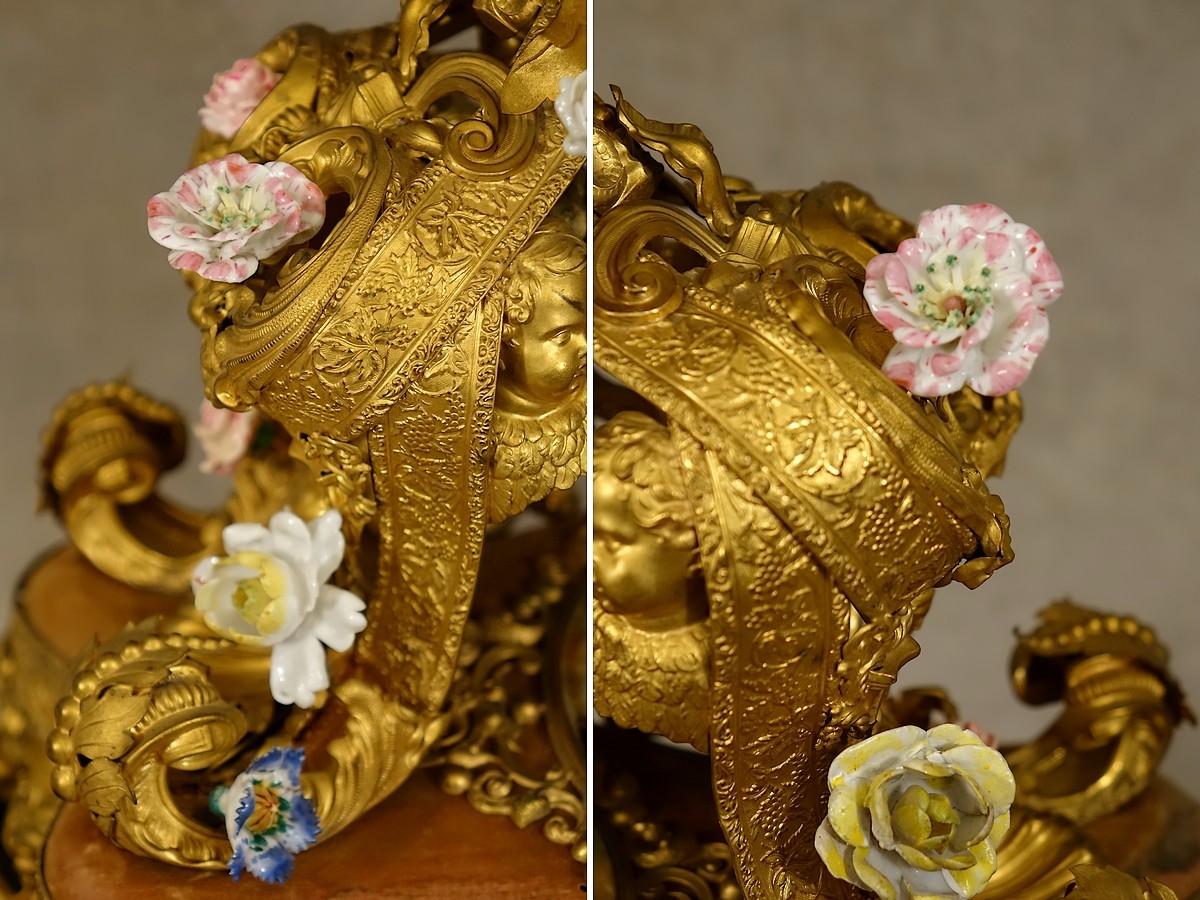
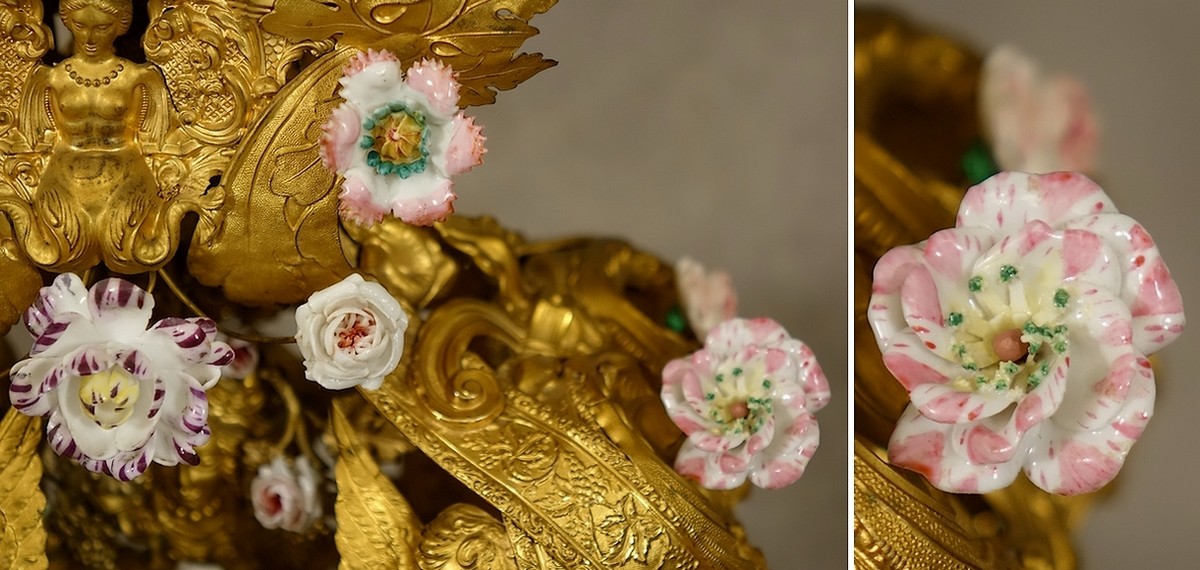
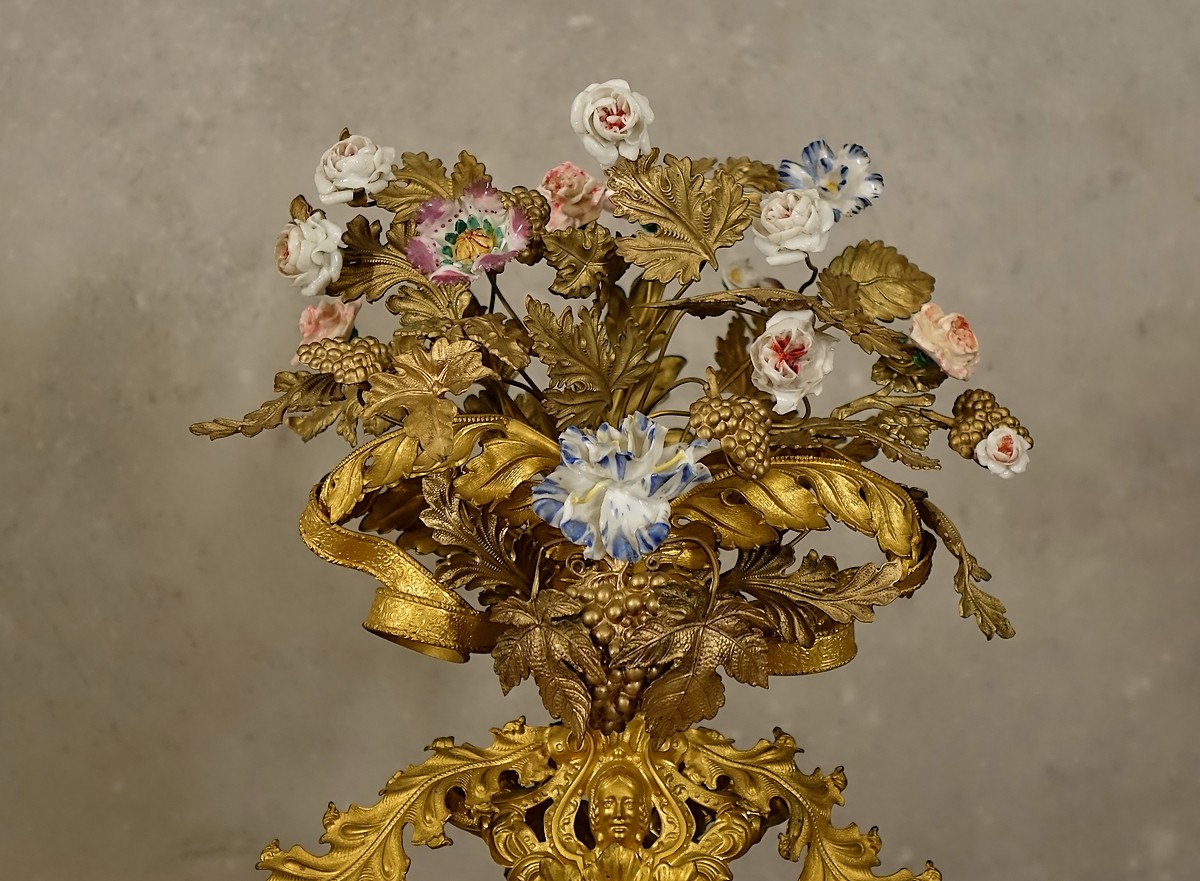
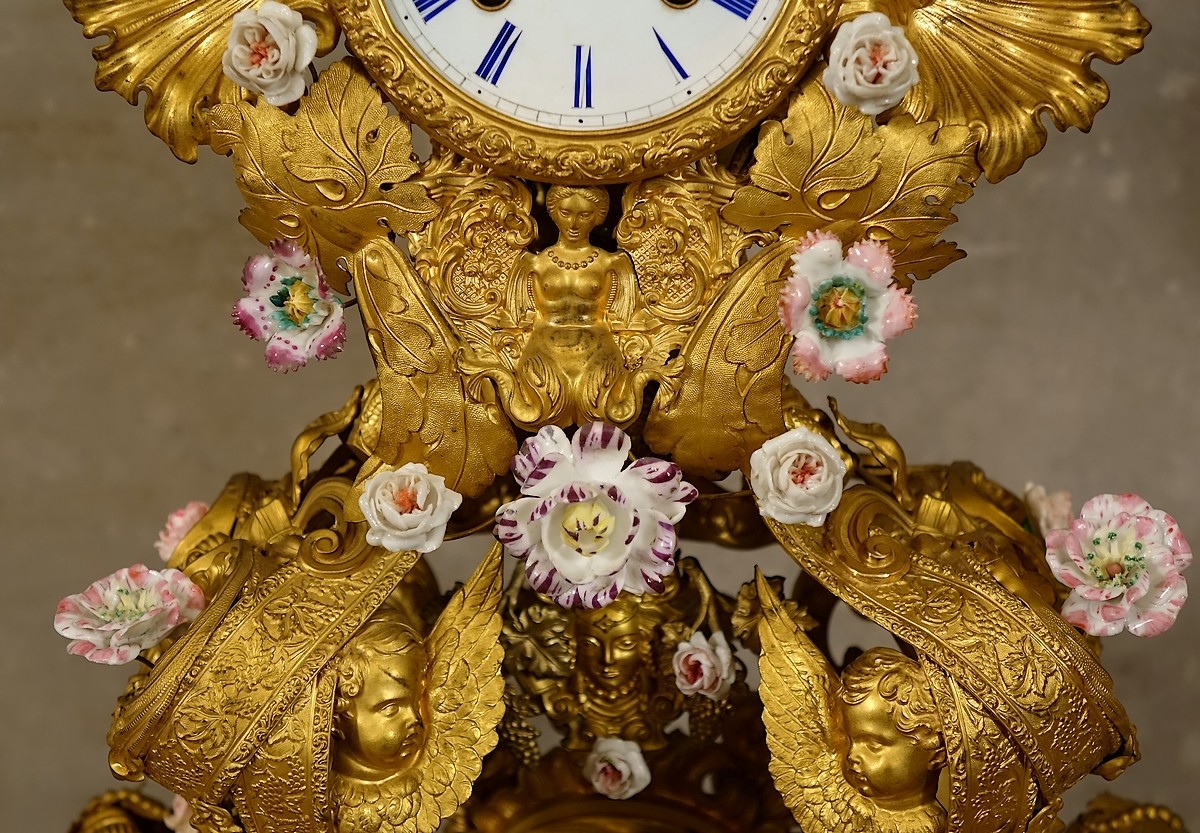
Among clocks of this type, this example stands out for its proportions, the richness of its decoration, and the quality of its execution. The gilt tole is engraved and repoussé-worked, in places almost reaching high relief. It features a profusion of ornaments: putti, masks and female busts, shells, plumes, pleated ribbons, rows of beads, acanthus leaves, vine shoots and bunches of grapes, and contains a remarkable miniature under glass depicting Constantinople viewed from the Bosphorus.
Numerous multicolored Paris porcelain flowers complete this decorative architecture. Their delicate modeling and variety of colors contrast with the brilliance of the gilt tole and reinforce the precious character of the ensemble.
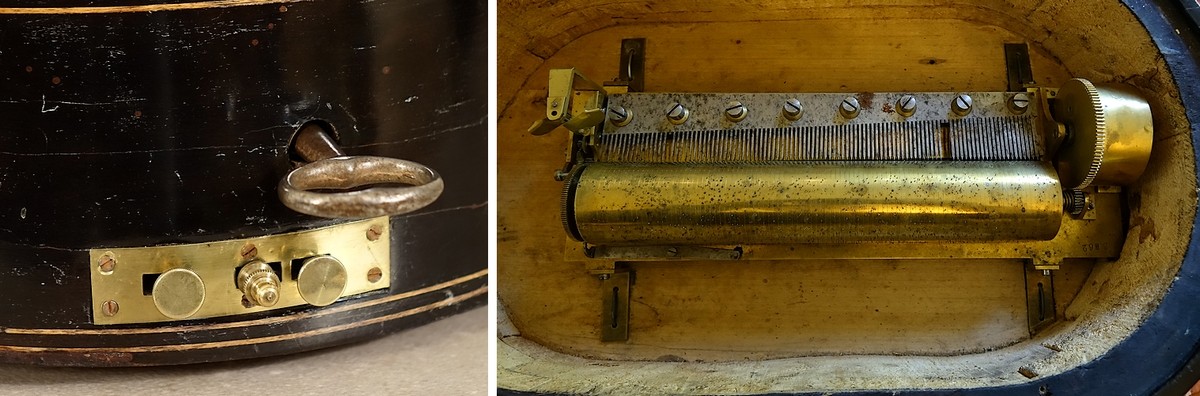
As an additional sign of luxury, the clock rests on an ebony-veneered base highlighted with light wood stringing. This base houses a musical box and supports a large glass dome protecting the ensemble.
The Orient and Turqueries during the reign of Louis-Philippe
From the 1830s onward, the traditional Grand Tour to Italy expanded to include journeys to the Orient. Steam navigation made Constantinople more accessible and renewed the interest of travelers, artists, and collectors in the Ottoman world.
The account of the 1833 cruise published by Marchebeus under the title Voyage de Paris à Constantinople par bateau à vapeur appeared in 1839. That same year, Louis-Philippe sent a diplomatic mission to Persia, which embarked aboard the steamship Le Véloce.
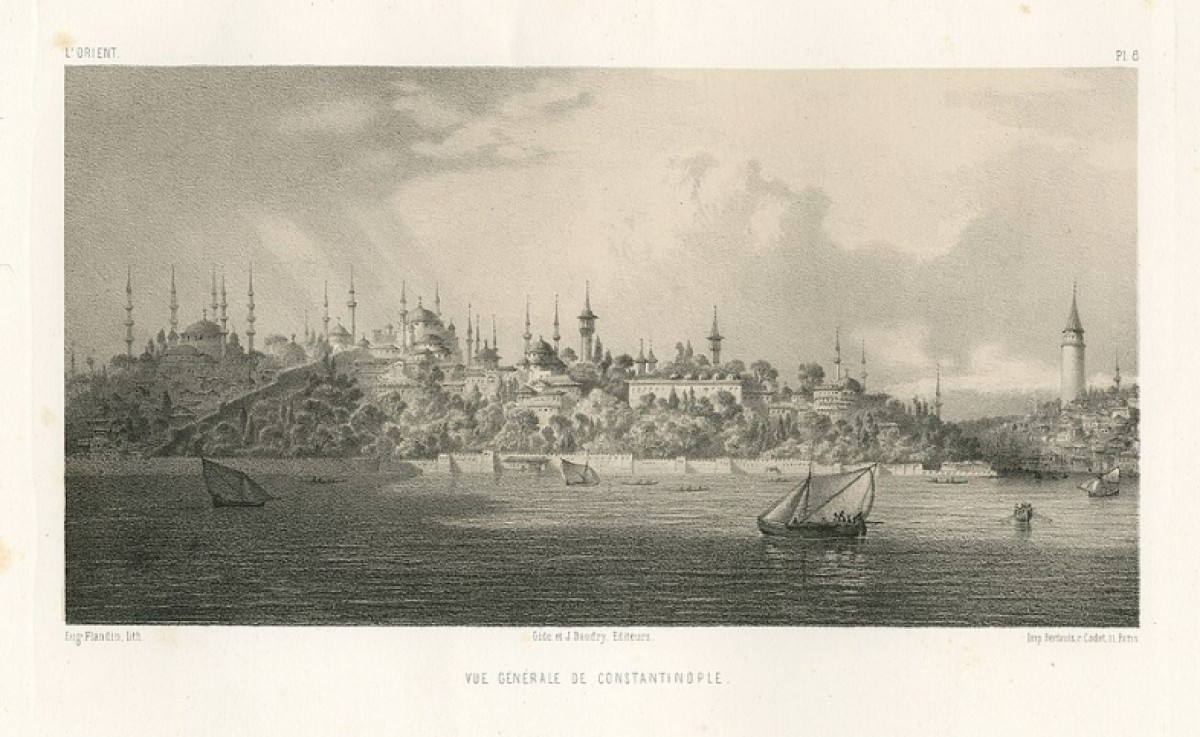
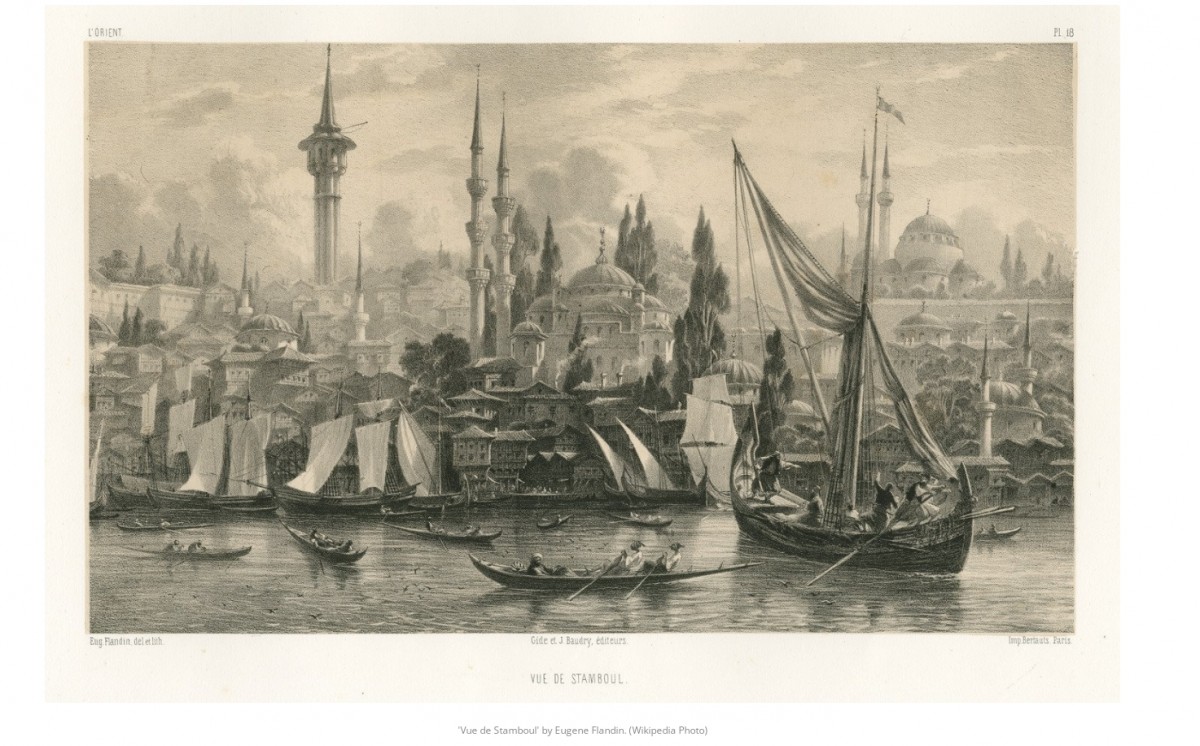
Although this mission remained something of a diplomatic failure, it was an artistic success. The architect Pascal Coste and the painter Eugène Flandin, selected by the Institut de France and the Académie royale des Beaux-Arts, published Voyage en Perse a few years later, a vast work comprising four volumes and numerous plates. The circulation of such publications revived the taste for Turqueries in France.
A remarkable view of Constantinople from the Bosphorus
As we have seen, the traditional Grand Tour, long centered on Italy, expanded during the reign of Louis-Philippe to include journeys to the Orient. Our clock bears witness to this new enthusiasm for the Ottoman world and for journeys by steamship to Constantinople.
Beneath the sun-shaped pendulum, a remarkable Ottoman miniature under glass, enhanced by a brass frame, unfolds a vast panorama of the Bosphorus. Caiques and various sailing and rowing vessels animate its waters, alongside a European steamship that may evoke Le Véloce. Beyond rises Constantinople, spread across its hills punctuated by numerous minarets; among them can notably be distinguished the Topkapi Palace, the Blue Mosque, and Hagia Sophia.
An example surpassing the models usually encountered
The rarity of this clock lies as much in its iconography as in its construction. The combination of a large gilt tole architectural structure — with abundant motifs of high-quality relief — Paris porcelain flowers, an Ottoman miniature offering a view of the Bosphorus and beautiful Constantinople, a glass dome, and a musical box forms a particularly ambitious ensemble.
The various elements are not simply juxtaposed: the metal decoration frames the view of Constantinople, the porcelain flowers animate the composition, and the musical box transforms the object into a visual and auditory spectacle.
This search for effect, characteristic of objects of great luxury, explains the strong decorative presence of this piece, particularly representative of the Orientalist taste under Louis-Philippe.
Condition and dimensions
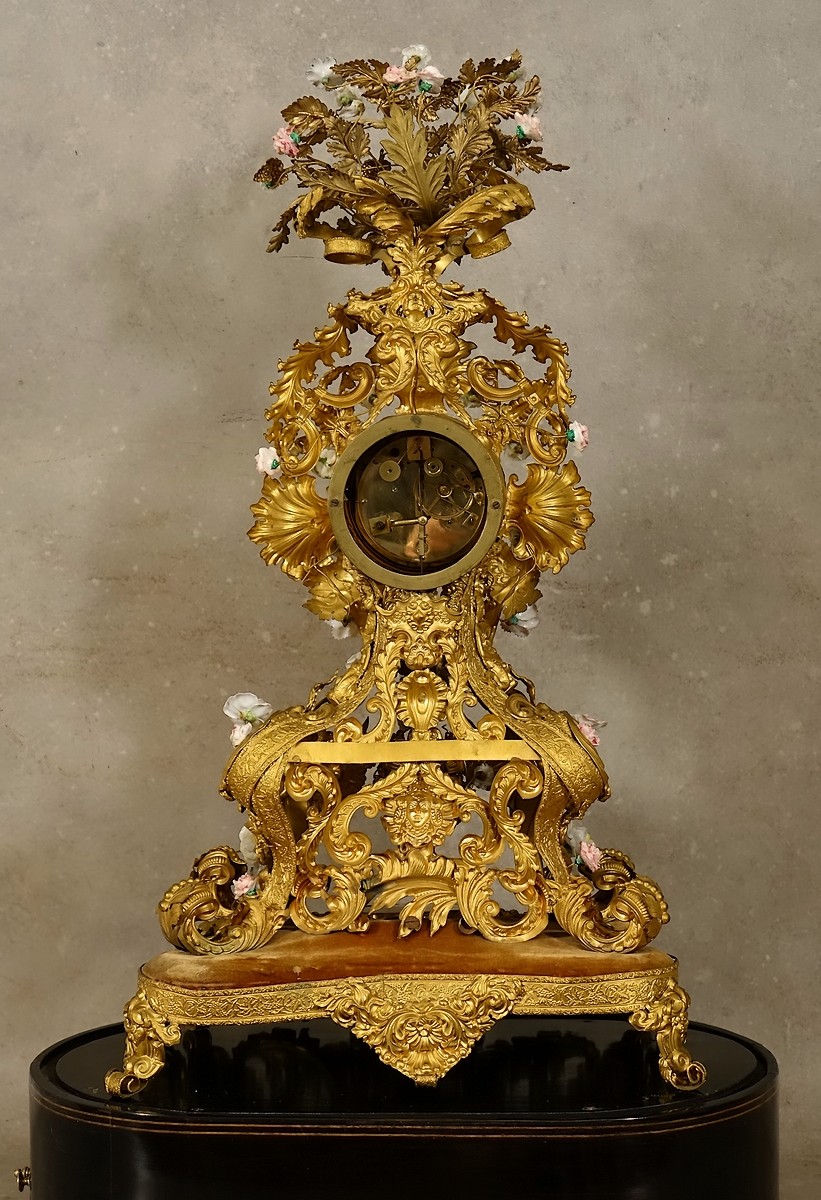
This clock is presented in excellent condition, retaining its gilding, with its glass dome and base intact. The movement (wire suspension / strikes the hours and half-hours / bell — not visible in the photograph of the back — is indeed present) and the musical box (with five melodies) are in working order, having been completely cleaned and serviced by our clockmaker, with two keys for their operation. The base has been restored and French polished.
To be noted: three broken teeth on the musical box comb, a few flowers with small chips, and several others (positioned on the sides of the clock) replaced.
Louis-Philippe period.
Dimensions:
Height: 66 cm (78 cm on its base).
Total height with glass dome: 85 cm.
Base: 48 × 28 × 11.5 cm.
Musical box: 35 cm.
Miniature: 11 × 8 cm.
Bibliography: Couleurs de la corne d'Or – Frédéric Hitzel.