Offered by Antichità Castelbarco

Alexander van Bredael (Antwerp 1663 – 1720)
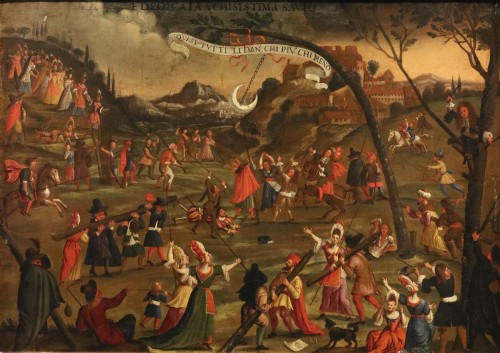
Allegory of Human Folly (based on an ancient proverb)
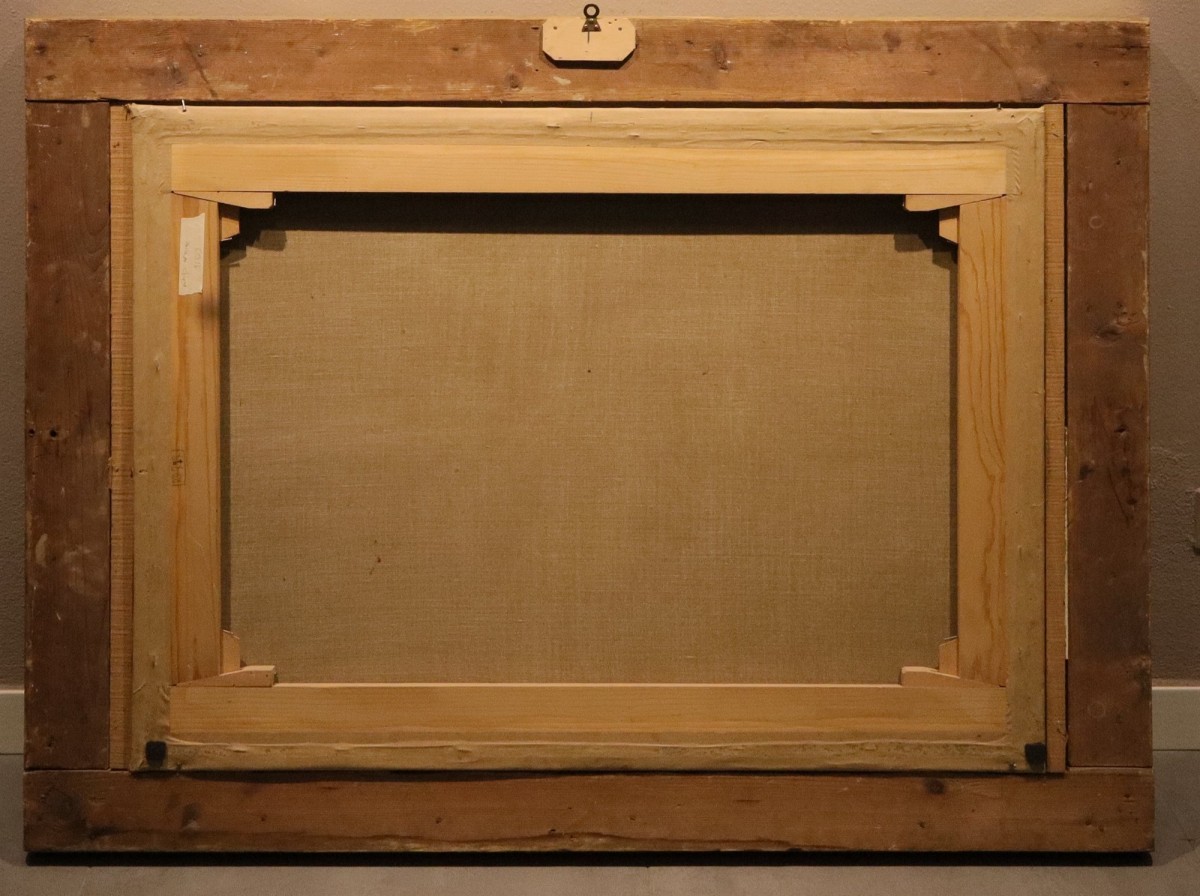
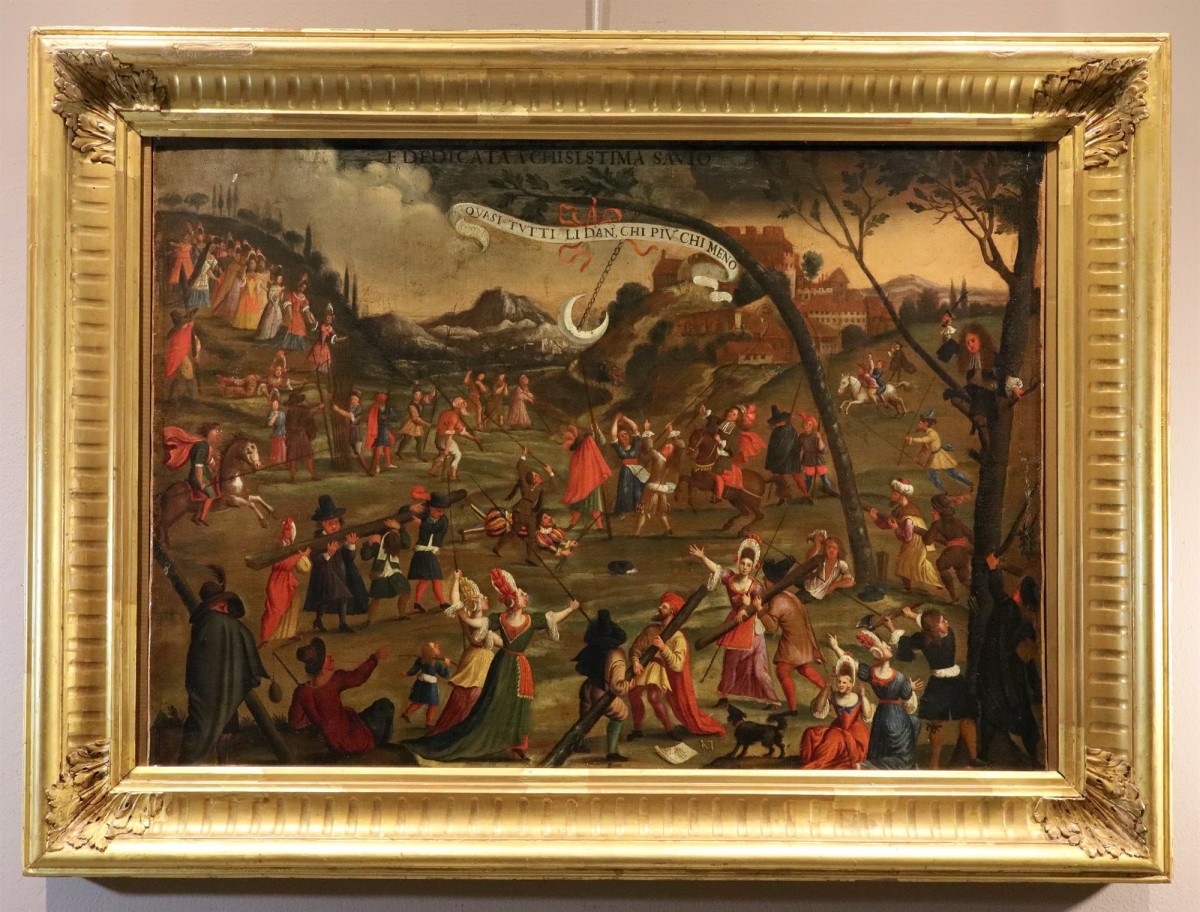
Oil on canvas 71 x 97 cm. Framed: 90 x 121 cm.
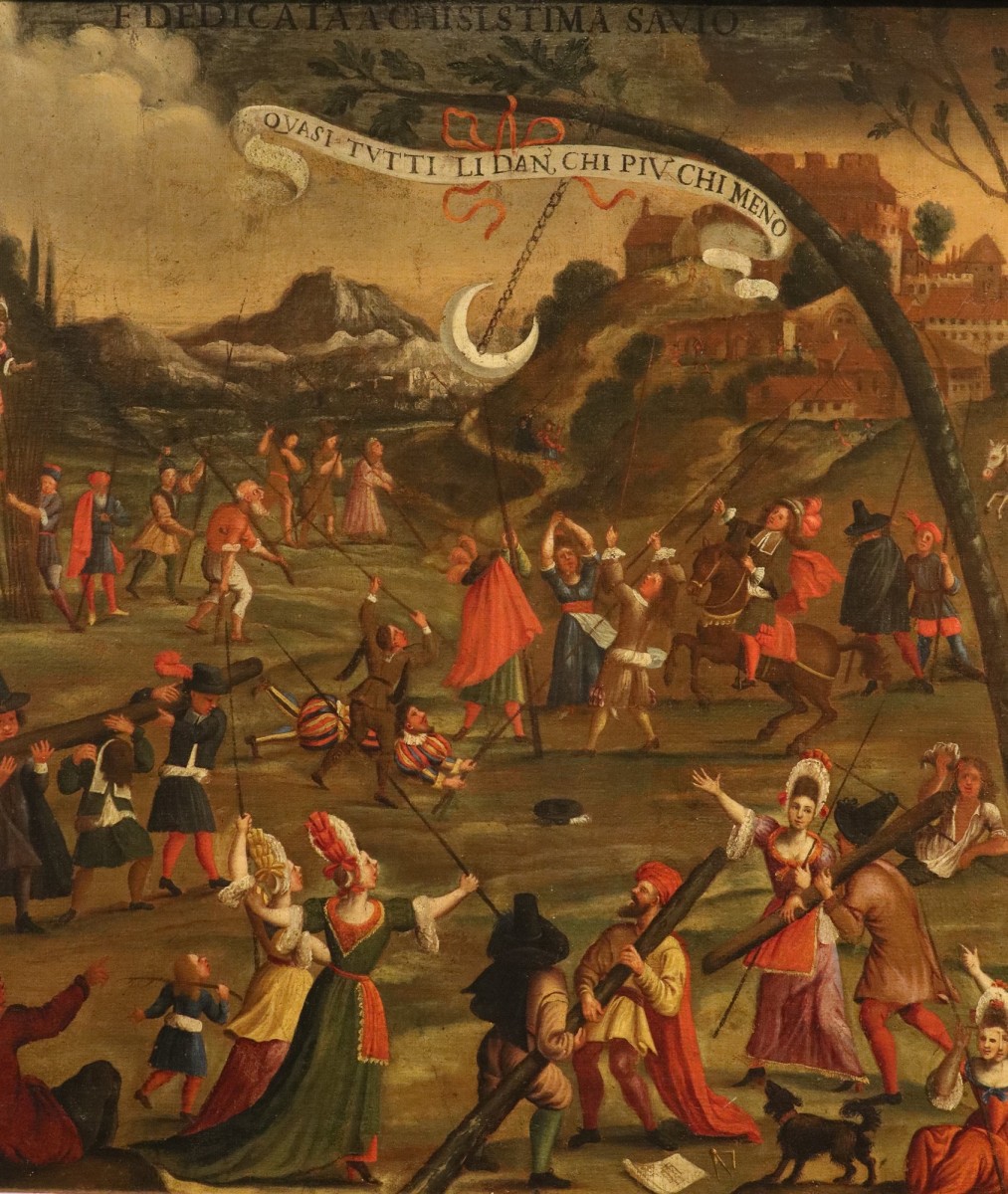
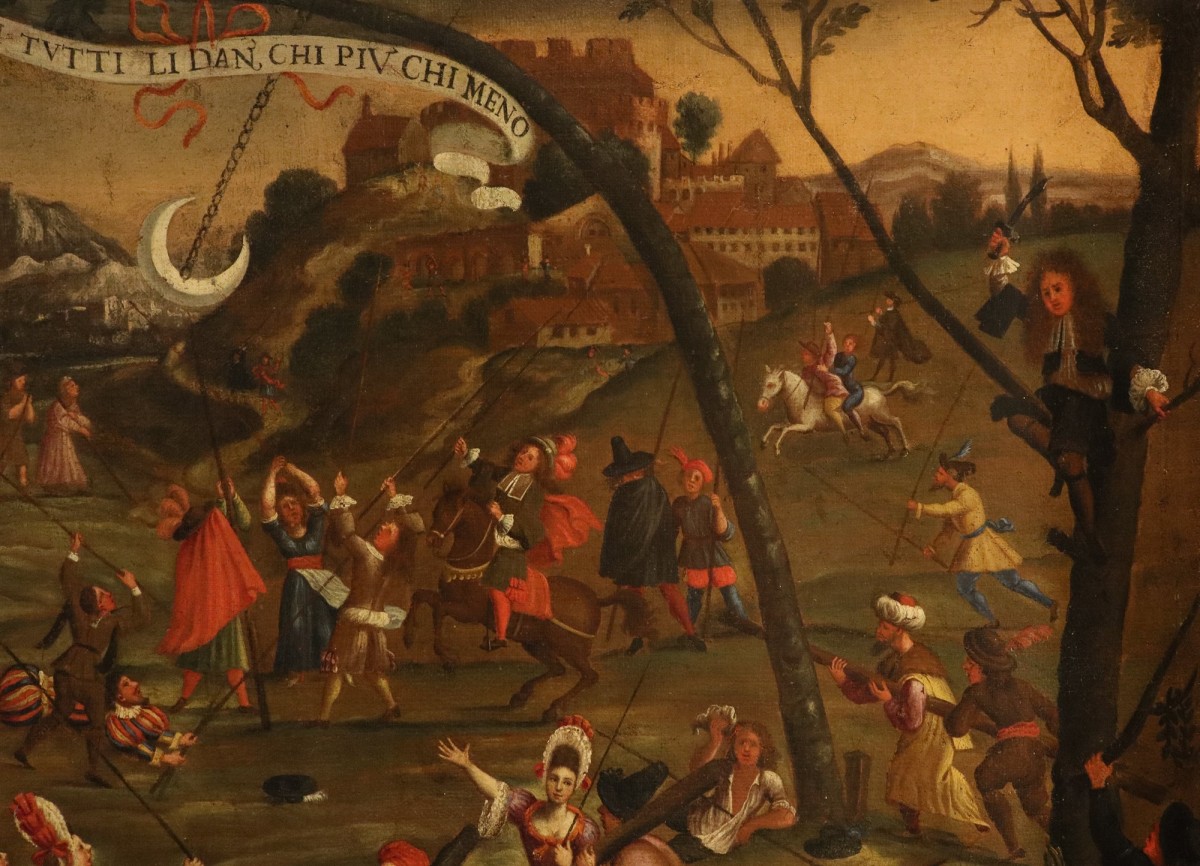
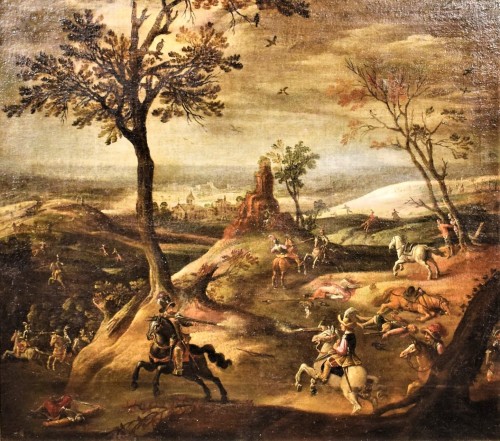
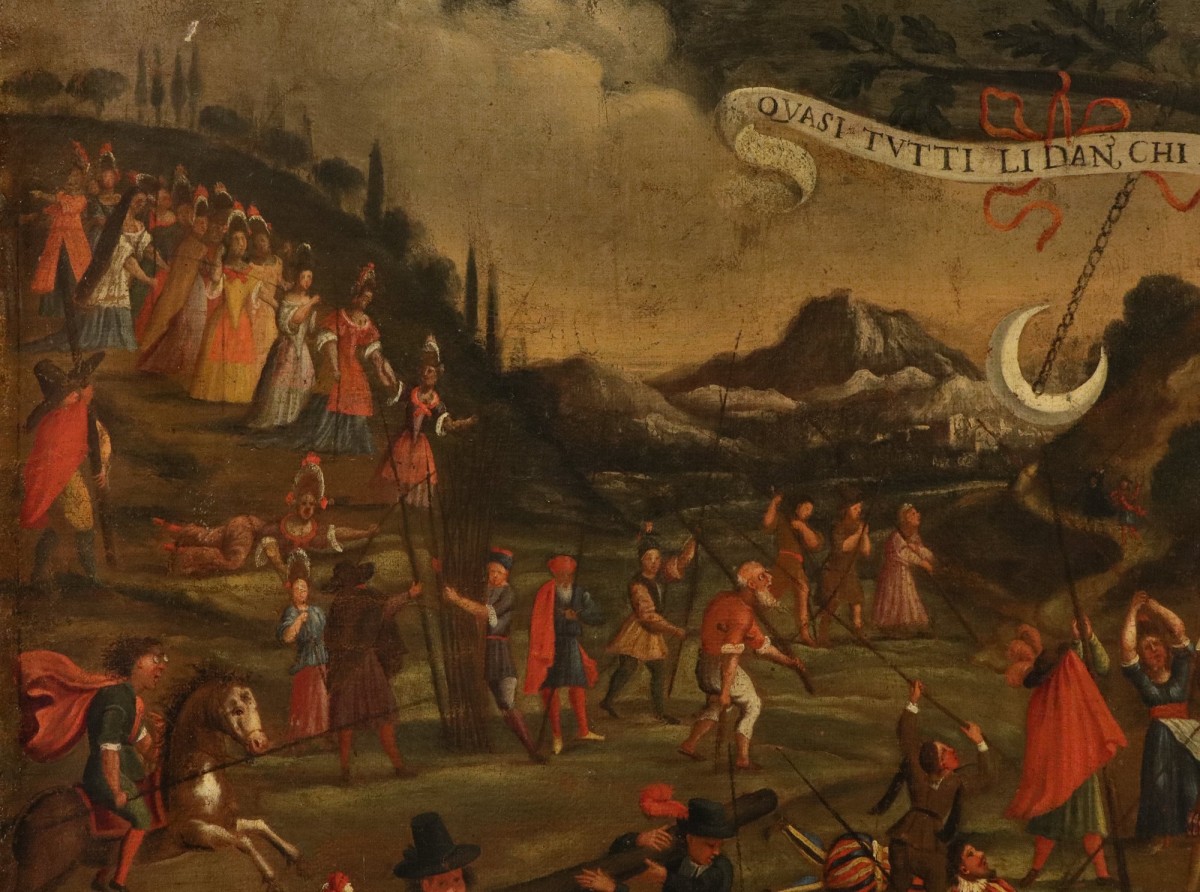
This fascinating painting, with its satirical and moralizing undertones, attributed to the Flemish artist Alexander van Bredael (Antwerp 1663–1720), is a sharp allegory of human folly and the illusion of wisdom.
Specifically, it is a painting based on a famous 1685 engraving by Giuseppe Maria Mitelli (Bologna 1634–1718), the creator of a series of highly famous popular prints based on the idea of giving visual form to popular sayings.
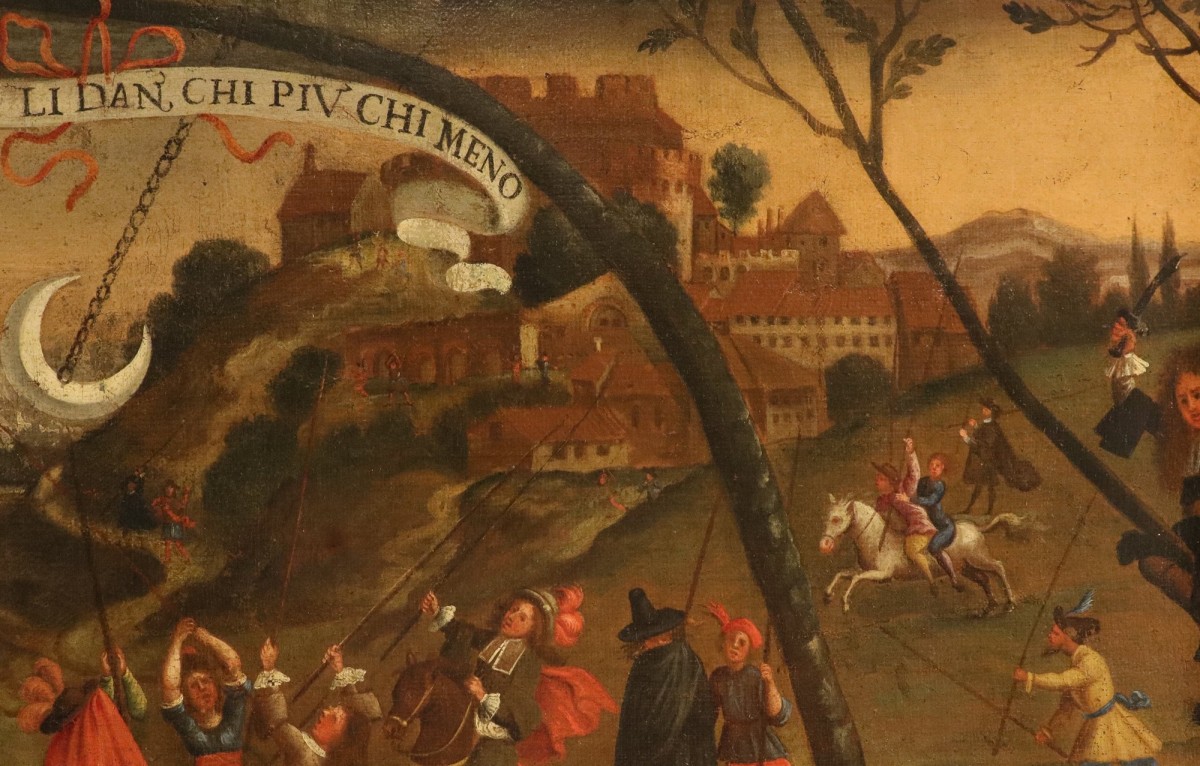
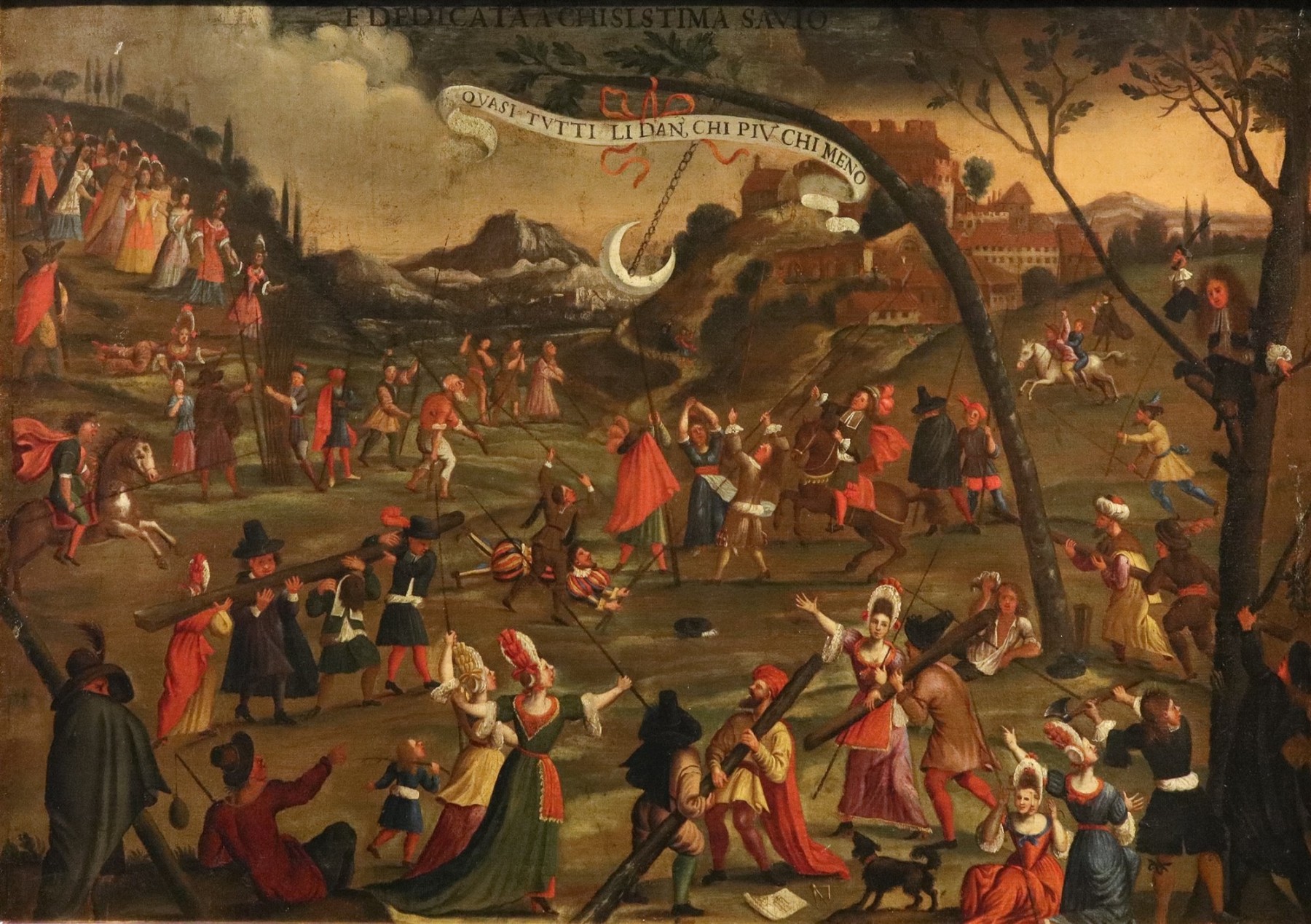
The conceptual core of the painting is revealed in the two main inscriptions inherited from Mitelli’s print, which also provide the work’s title: in the first, at the top, the ironic dedication “It is dedicated to those who consider themselves wise (or prudent),” while in the center, on a cartouche, the inscription “Almost everyone has them, some more, some less” stands out, satirically alluding to the bouts of folly indiscriminately bestowed upon every human being, without exception.
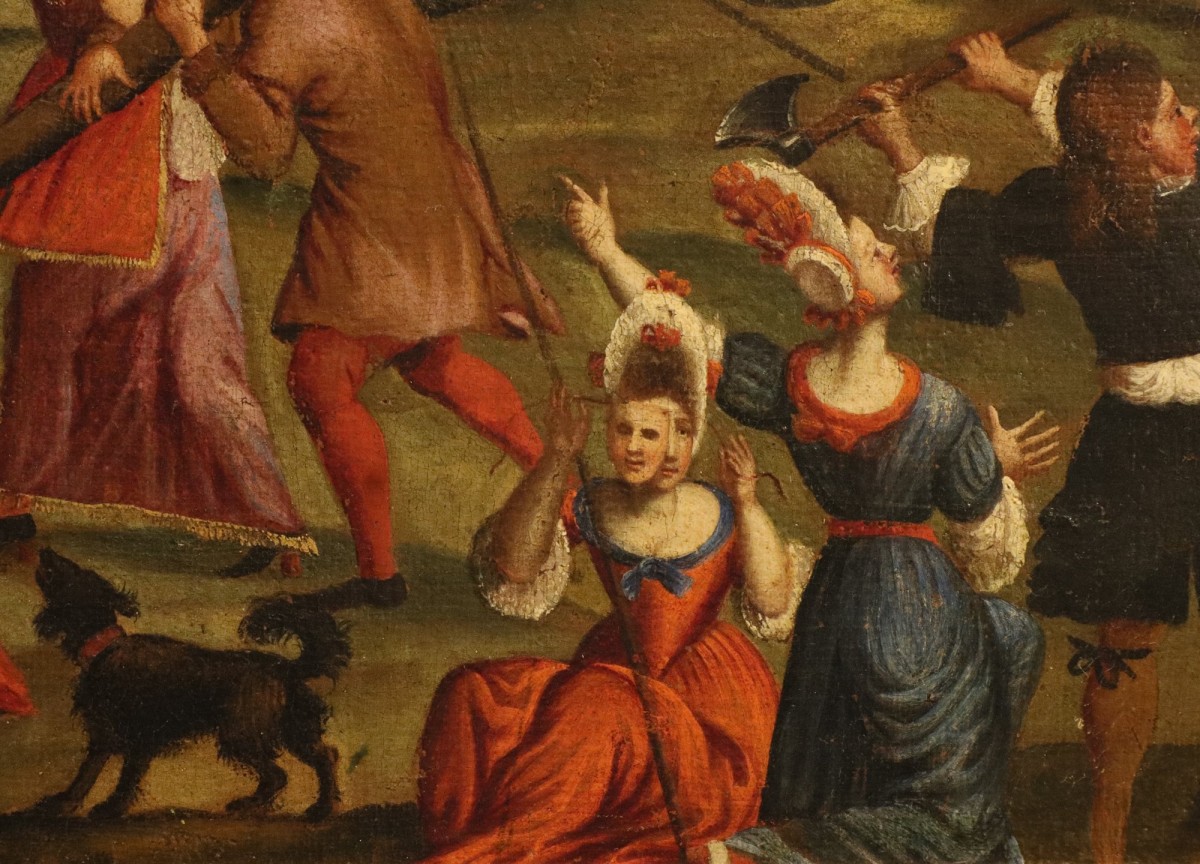
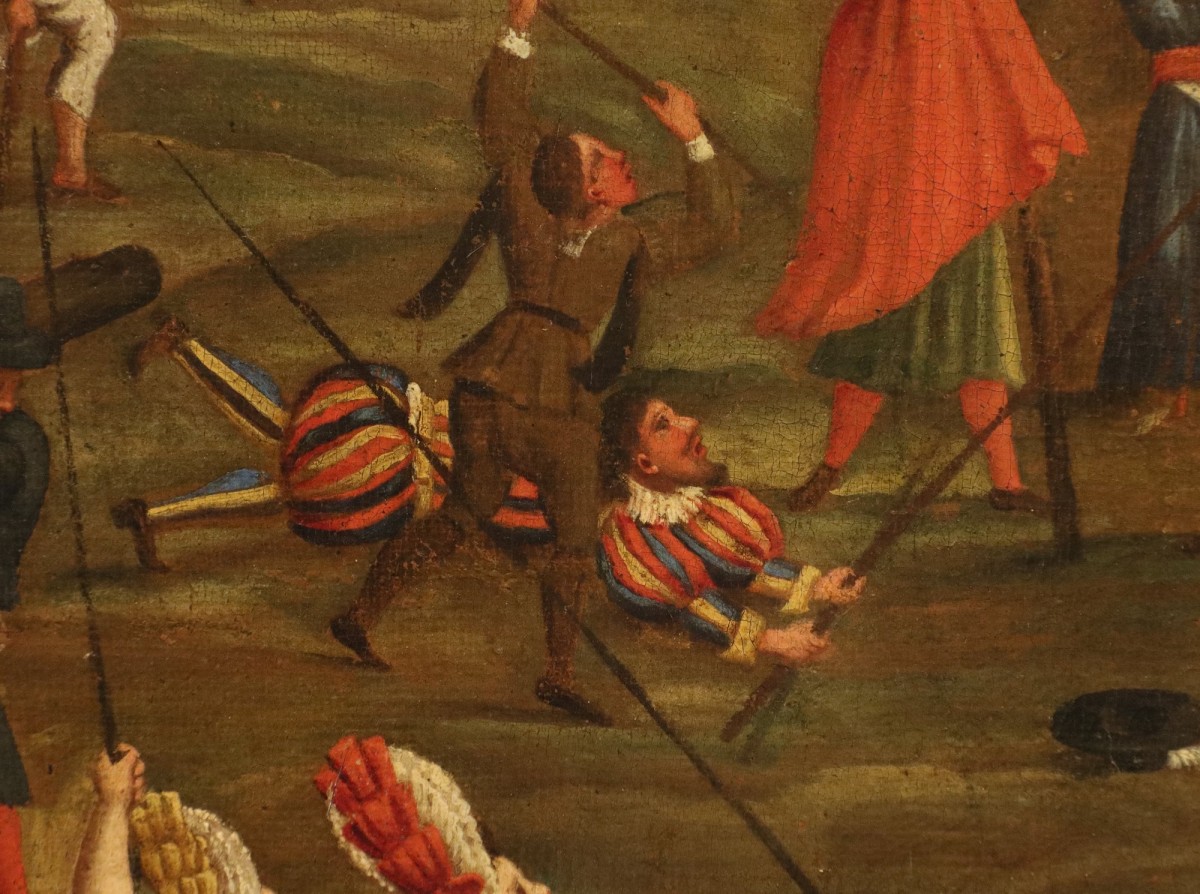
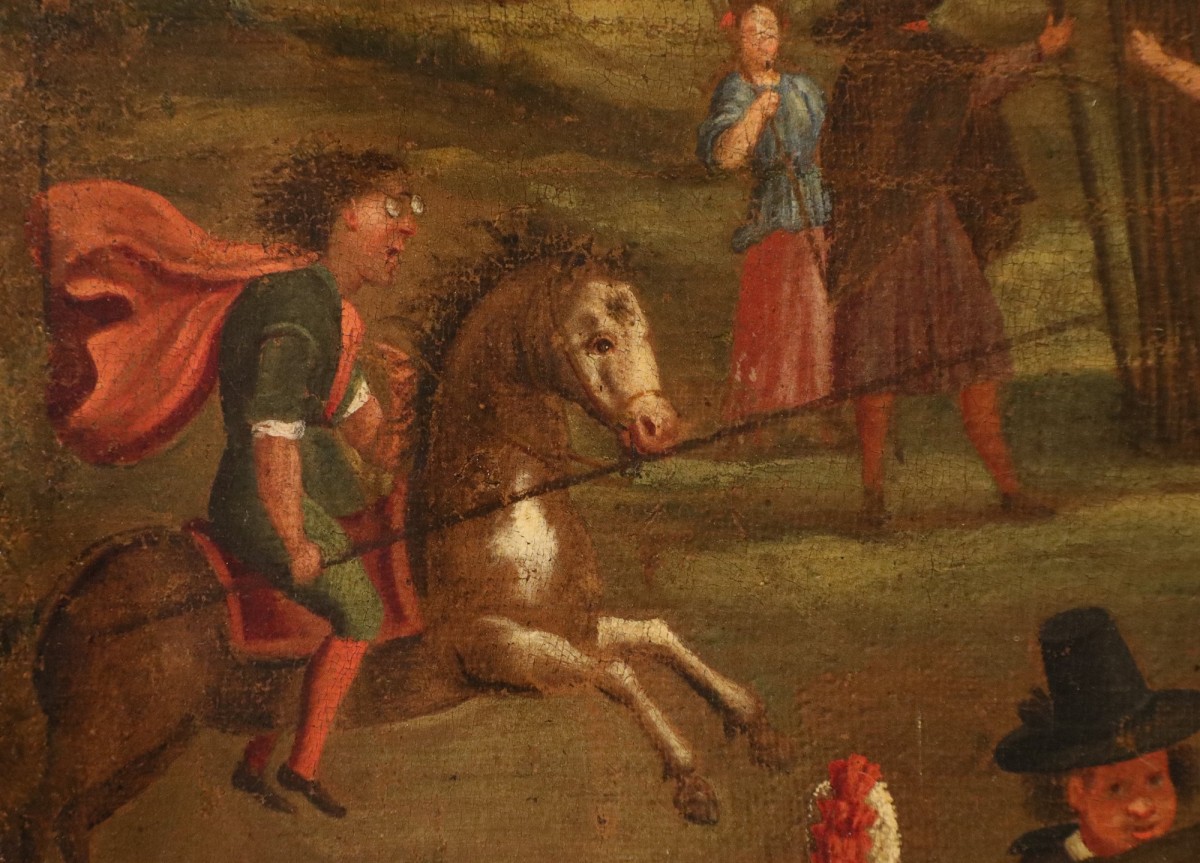
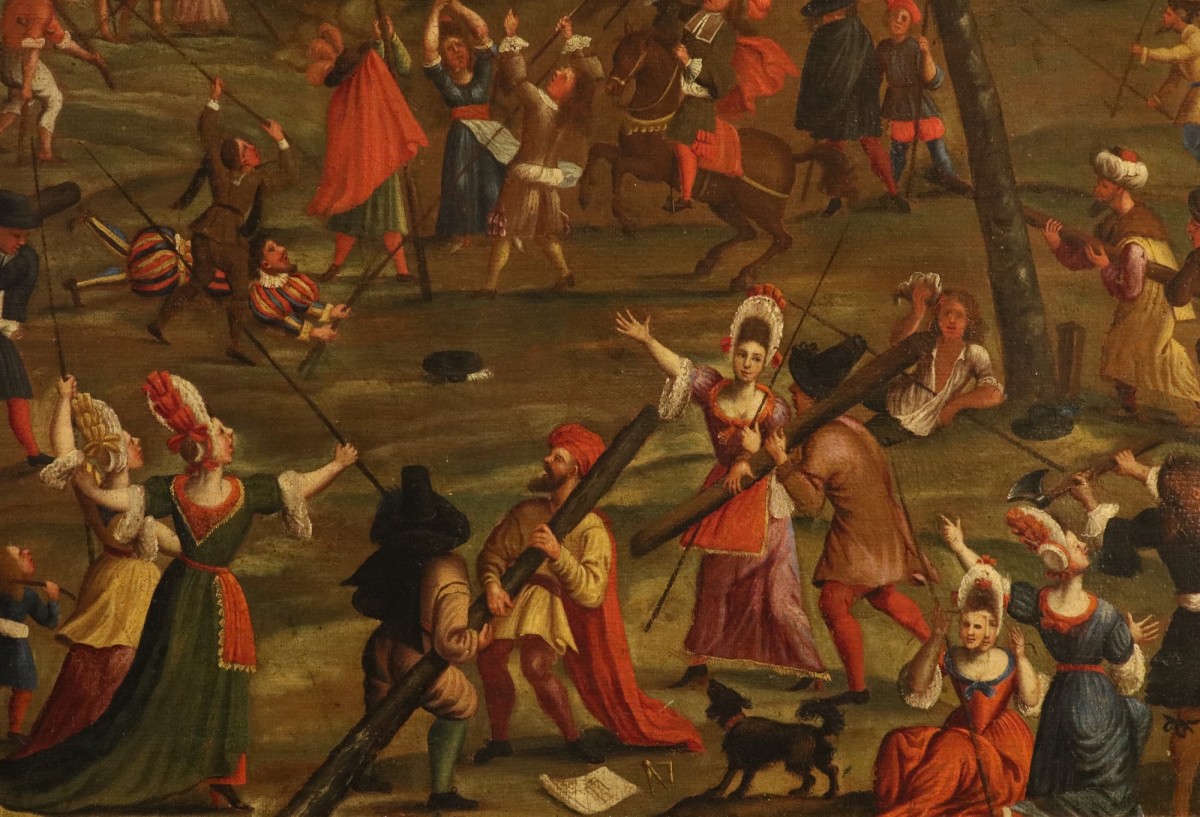
The scene, set in a hilly landscape dominated by a fortified fortress, is populated by a chaotic multitude of figures, men and women of every social class, on foot and on horseback, who rush forward with poles, branches, and sticks, trying to strike the effigy of a crescent moon (a traditional symbol of fickleness and madness), hanging from a tree.
An entire book could be written to explore the bizarre iconography of this painting, but we will limit ourselves as much as possible to analyzing its main aspects. We are looking at a complex composition, featuring numerous figures and allegorical symbols, which together suggest that all people—even those who consider themselves the wisest—occasionally behave in a foolish or ridiculous manner.
Even today, the saying “trying to hit the moon with a stick” refers to someone who tries to achieve something infinitely distant with completely inadequate means; it therefore means attempting an impossible and senseless endeavor, wasting one’s energy.
In cultural and literary tradition, the moon has, in fact, always been the universal symbol of madness, oddities, and human eccentricities. Beneath the moon, a chaotic crowd of characters moves about, arguing, dancing grotesquely, chasing one another, and behaving absurdly.
No one is spared: life is a grand performance in which madness befalls each of us, “some more, some less,” as the saying goes.
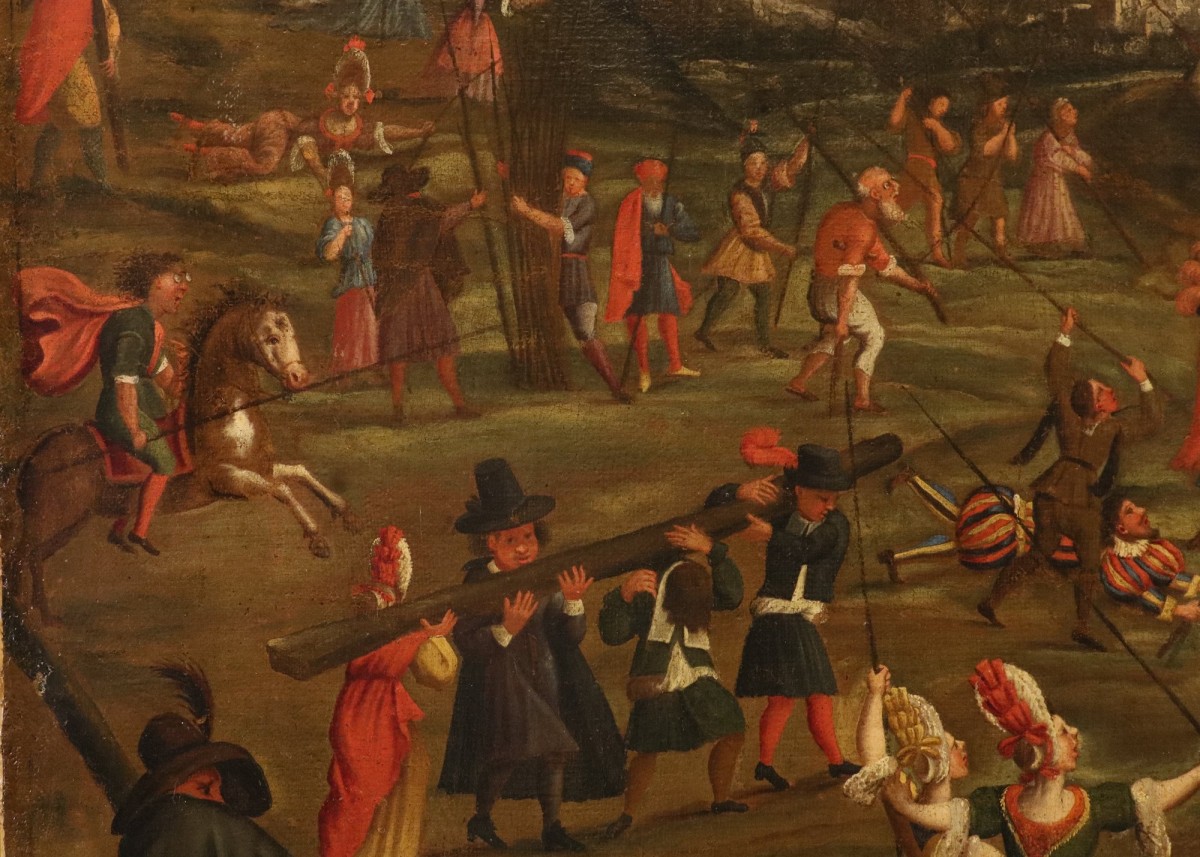
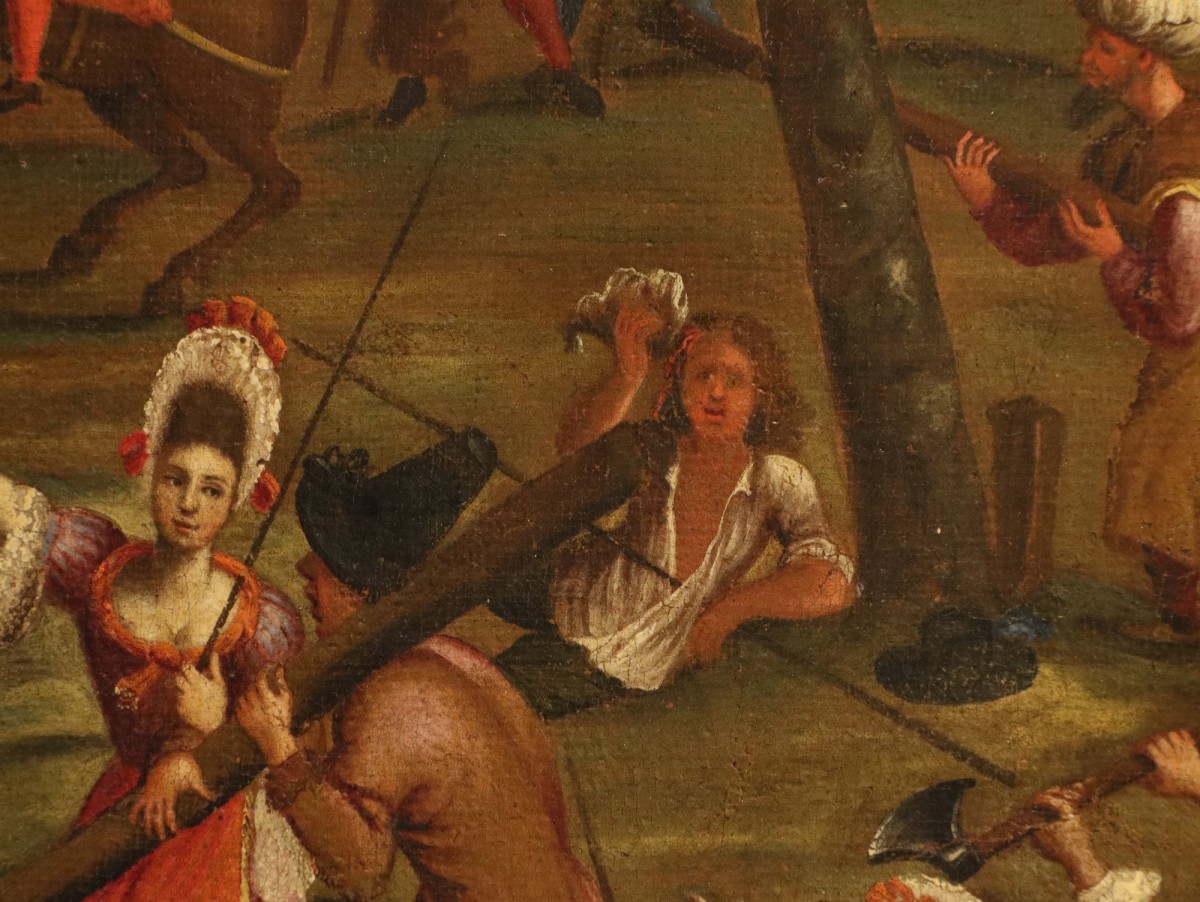
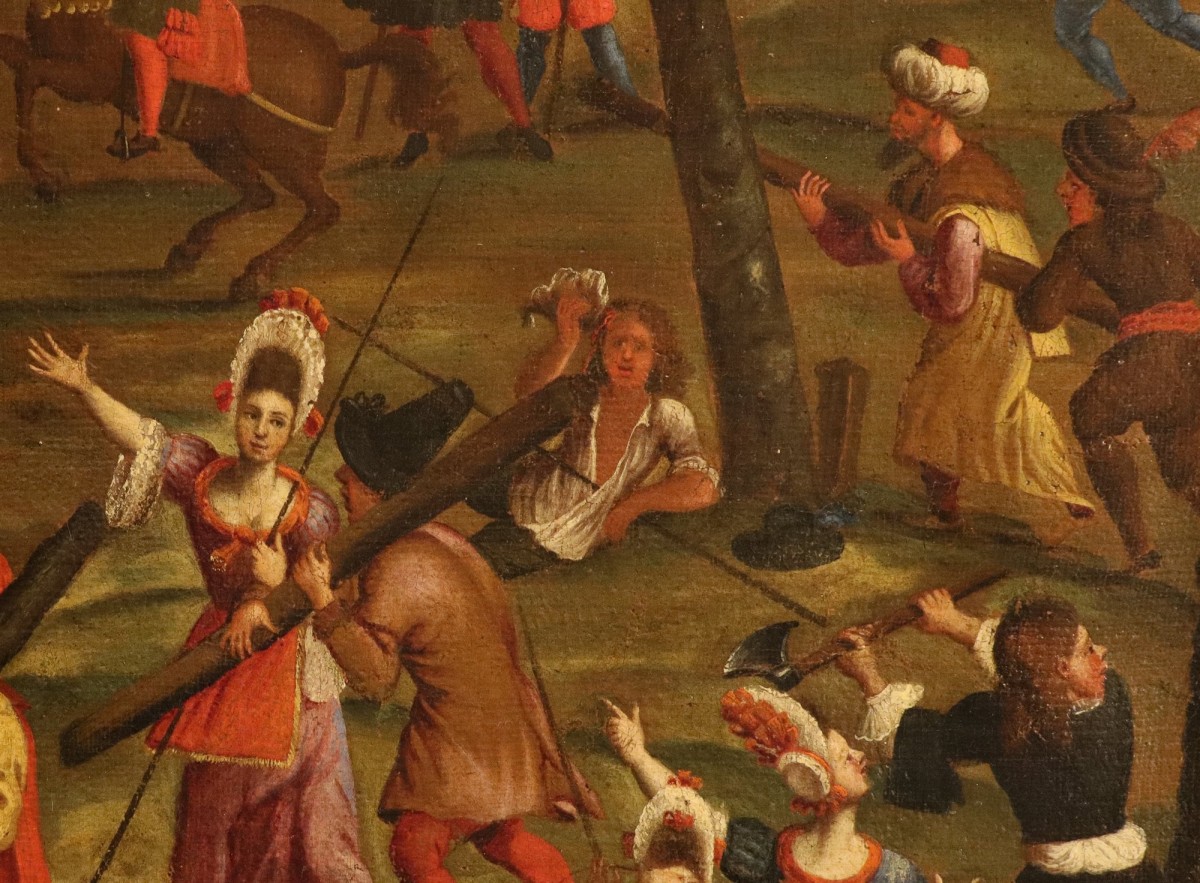
The work is dotted with mysterious and intriguing figures of strong symbolic value, including: a woman wearing a mask (symbolizing falsehood or pretense), a man striking his head with a stone (indicating the inner conflict he wishes to eradicate), and a man attempting to grasp a laurel wreath resting on a tree branch (alluding to the hunger for ambition).
The men trudging wearily forward while carrying heavy logs represent a metaphor for the absurd and arduous endeavors that man imposes upon himself.
In the Flemish painting tradition, visual depictions of proverbs and idioms of the time were very popular as a way to reflect on human follies (consider the series that Pieter Bruegel dedicated to this theme), and many workshops, including that of the Van Bredaels, used prints and engravings as models for this purpose.
Collectors of the time (and of subsequent centuries) were crazy about these paintings because they combined the fun of spotting absurd details with a profound moral lesson.
Delevery information :
We take care of and organise the transport of the purchased works, both for Italy and abroad, through professional and insured carriers.
We take great care We personally take care of the packaging, to which we devote a great deal of care: each work is carefully packed, first with arti- cle material, then with a custom-made wooden box.
Should you have the desire to see this or other works in person, we would be happy to welcome you to our gallery in Riva del Garda, Viale Giuseppe Canella 18, we are always open by appointment only.