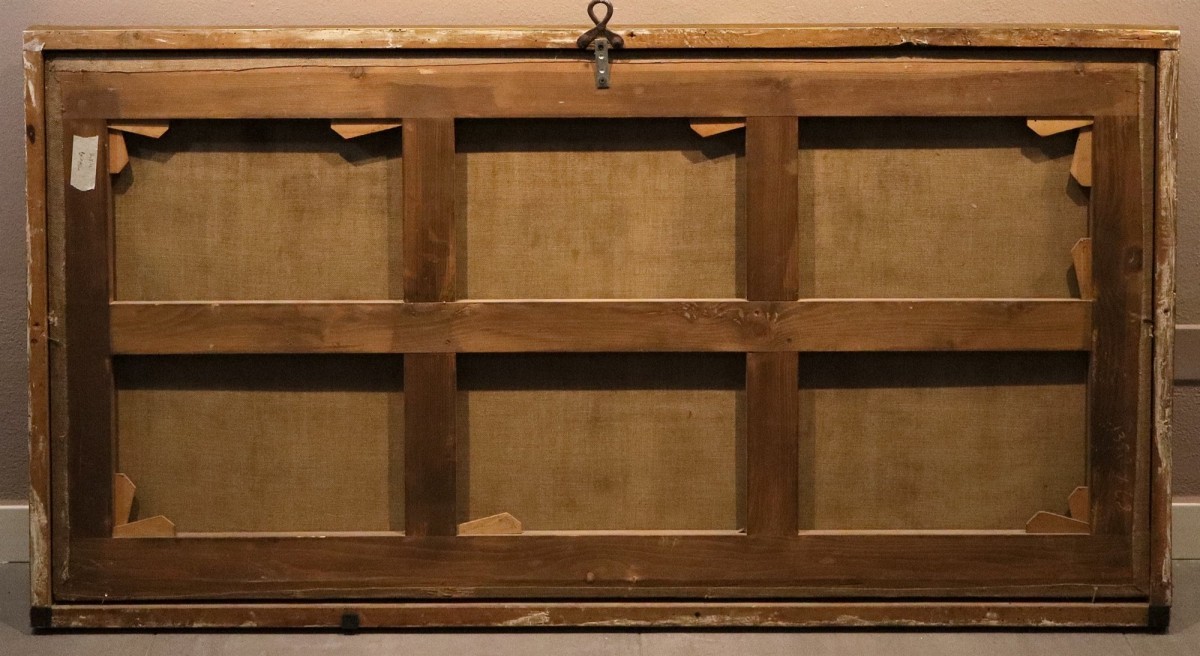
Offered by Antichità Castelbarco
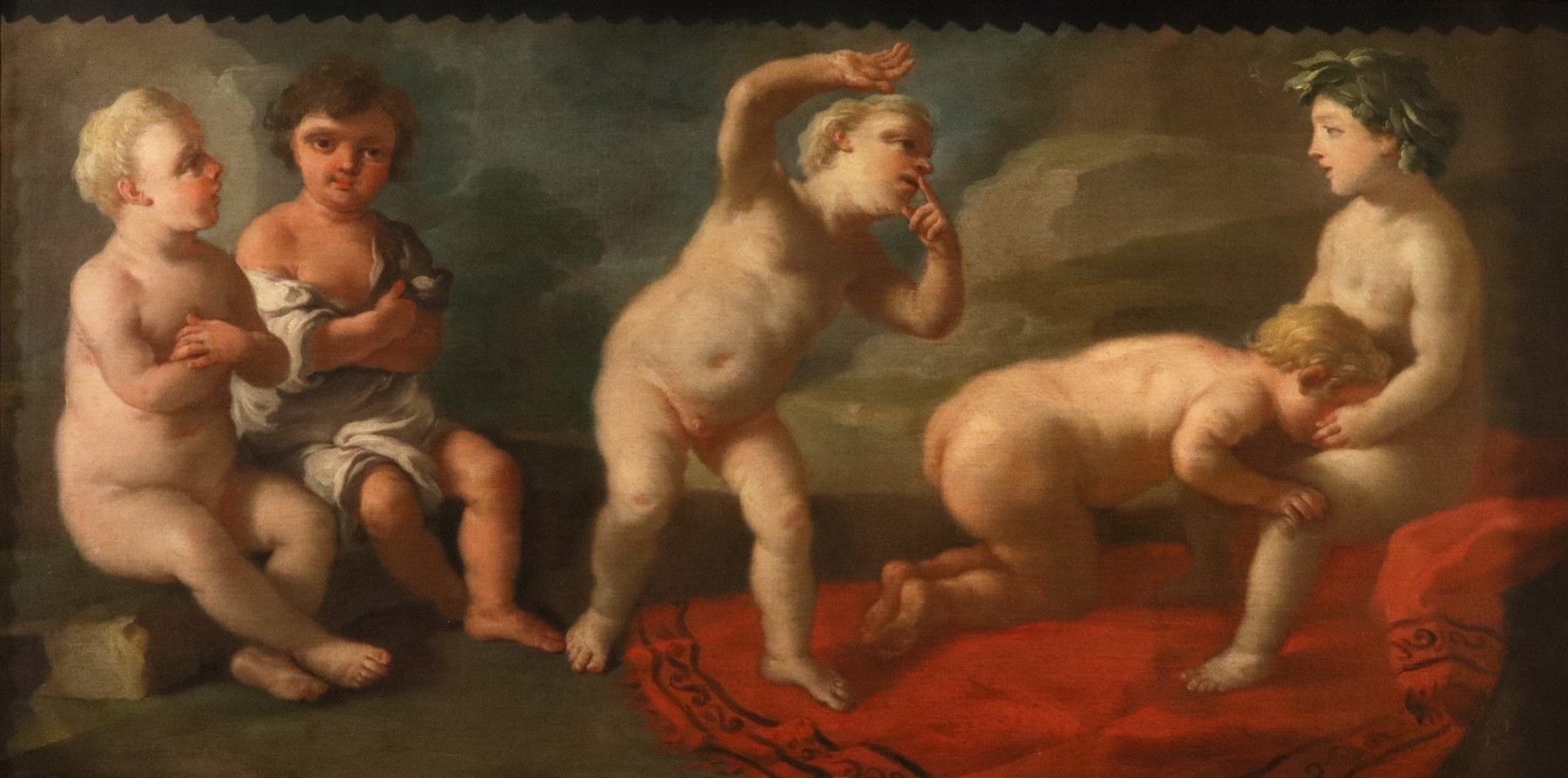
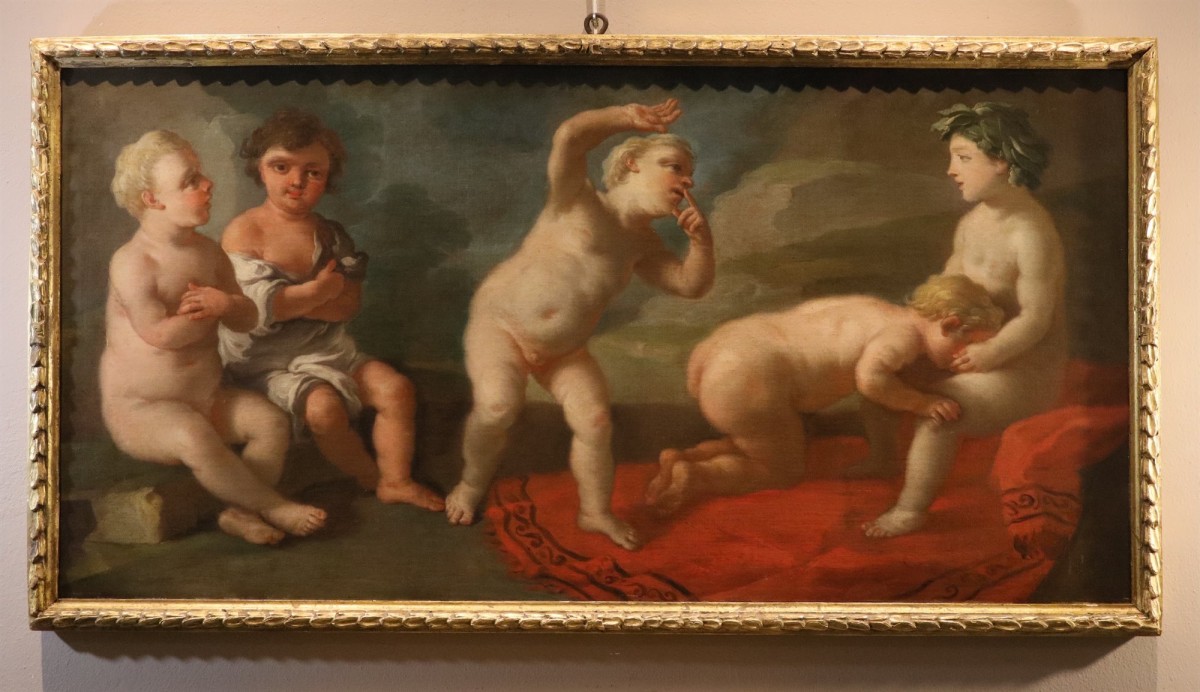
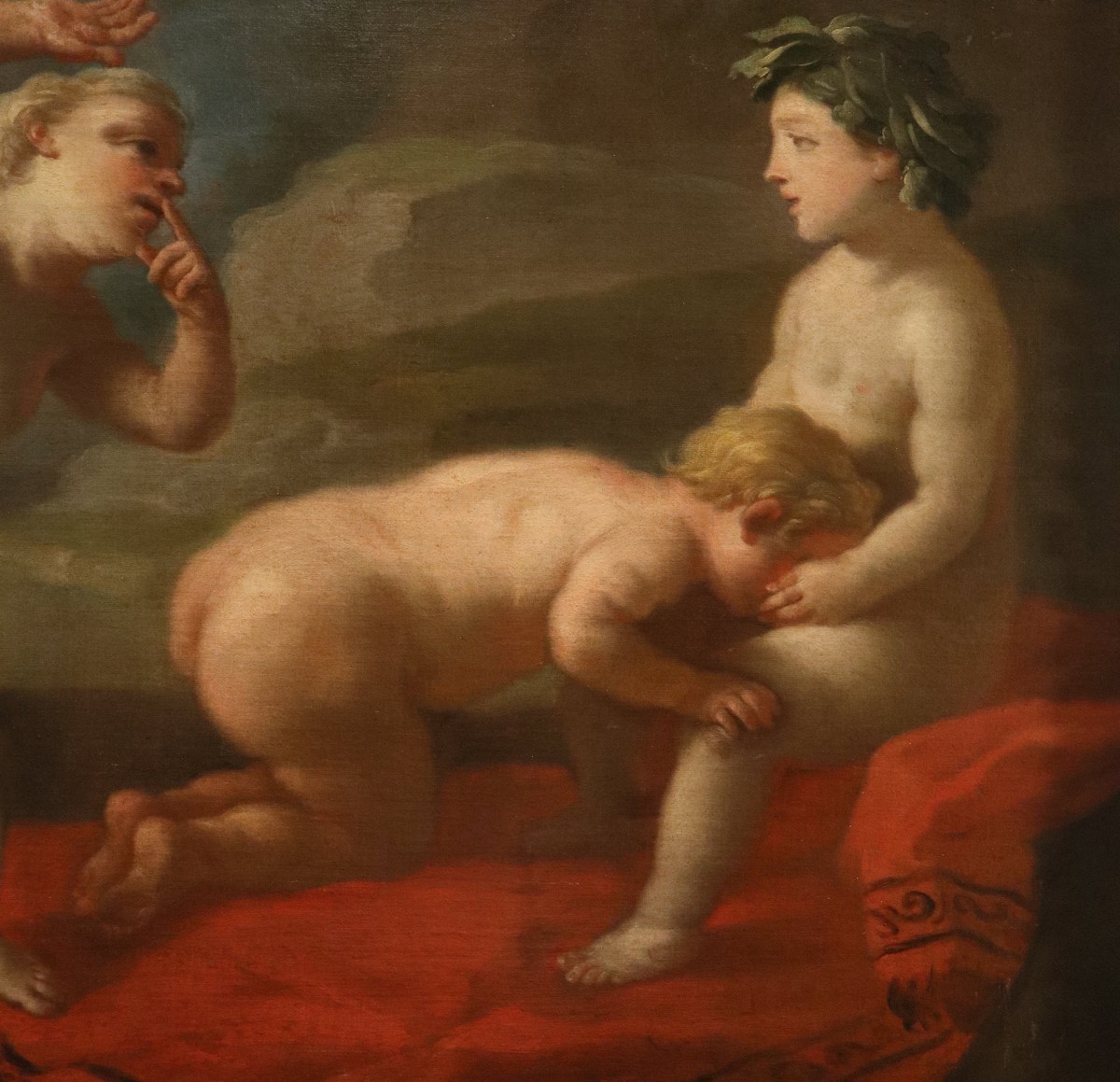
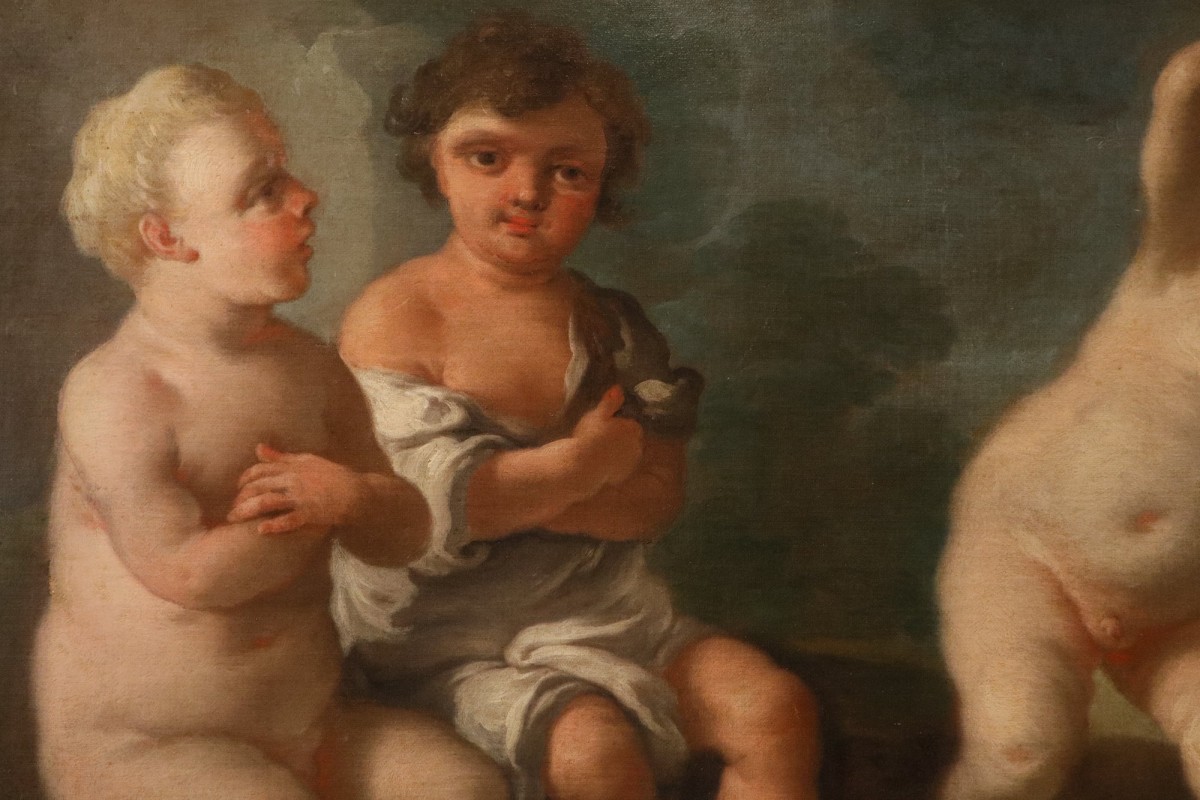

Francesco De Mura (Naples, 1696 – Naples, 1782) and workshop
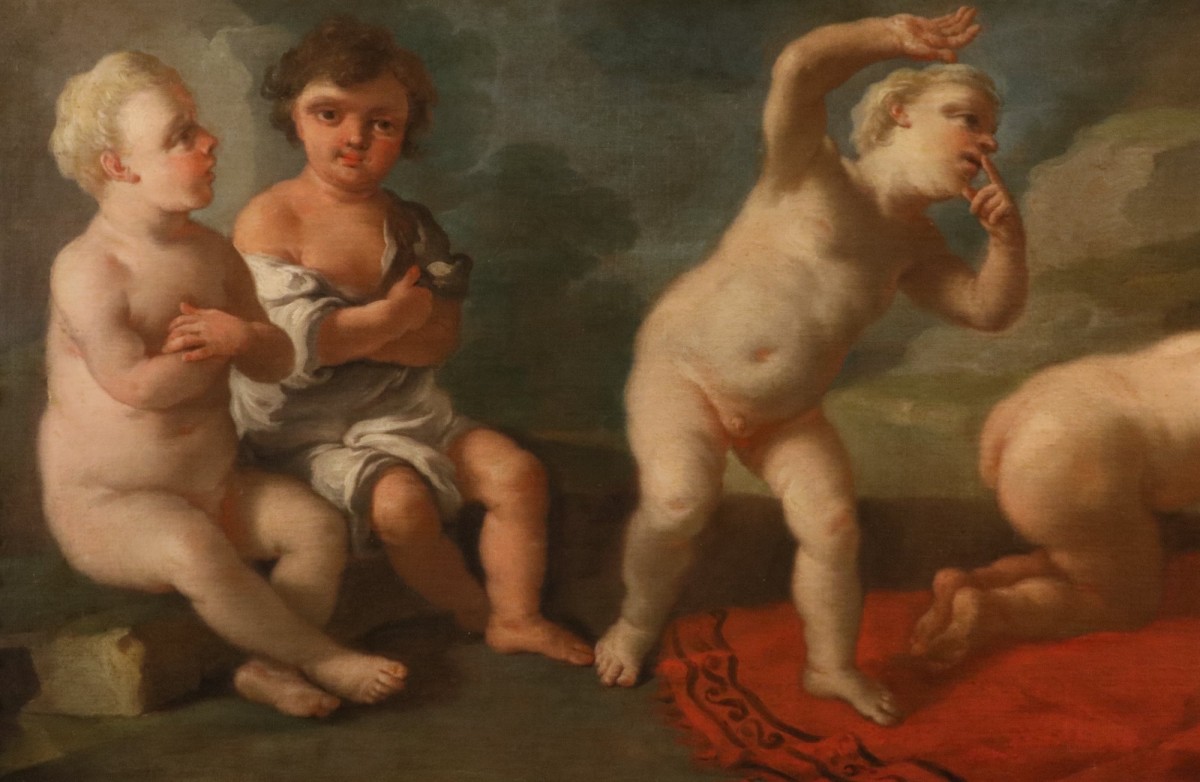
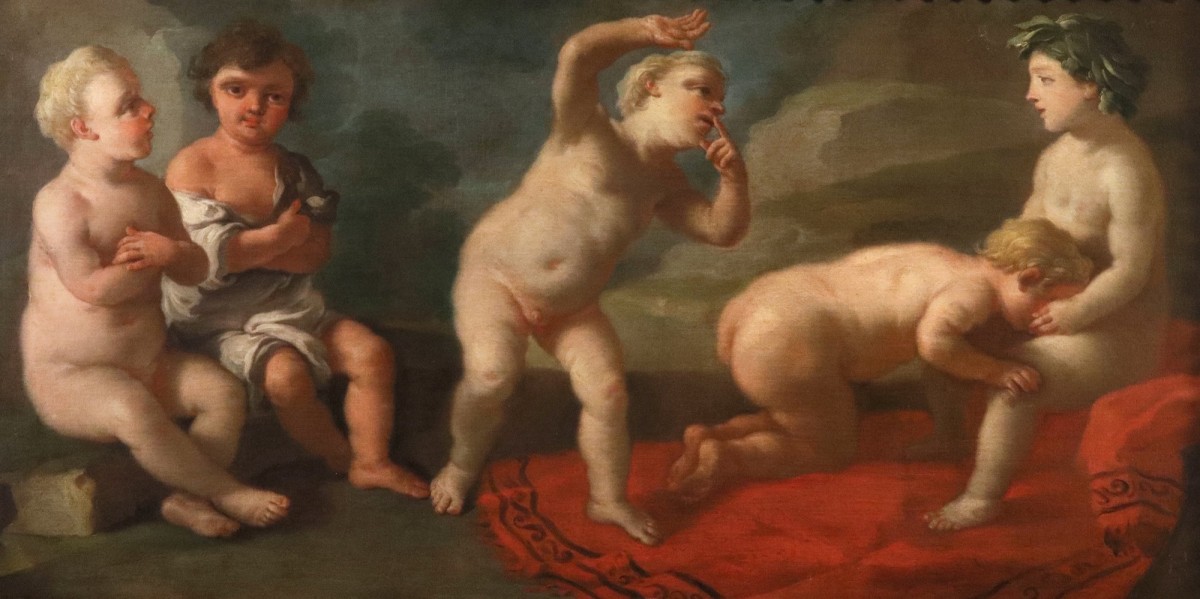
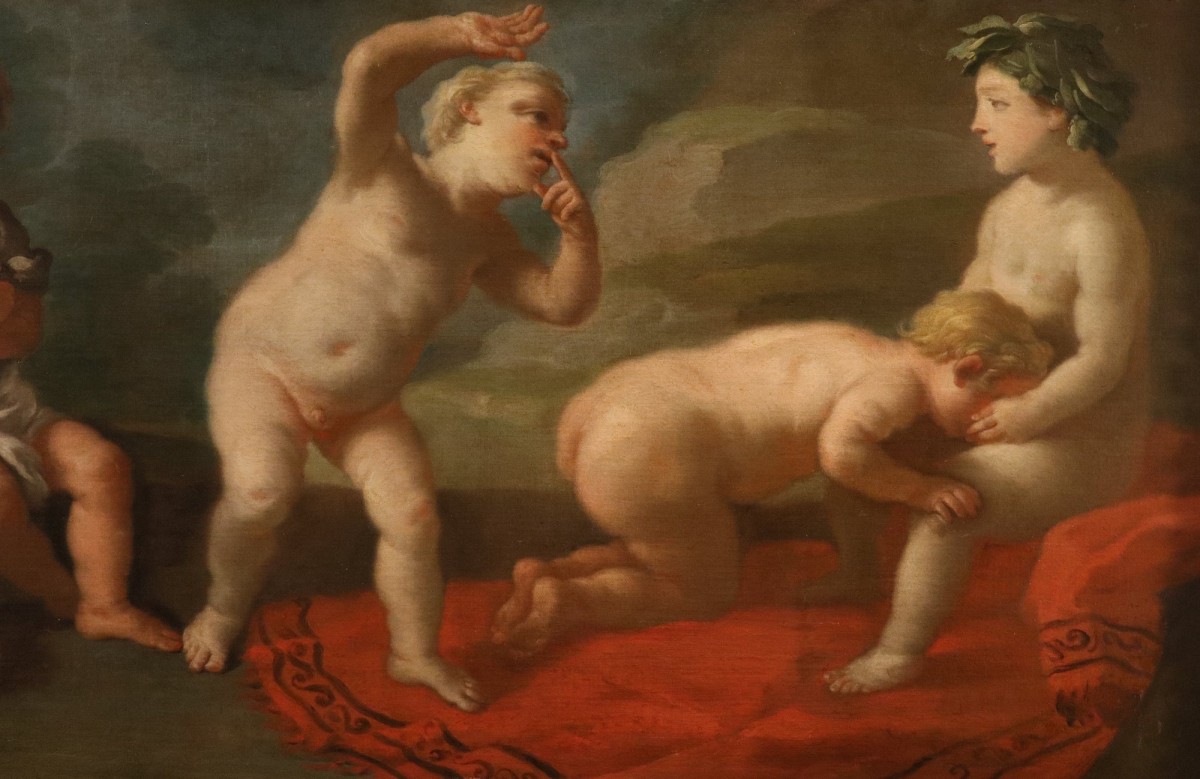
The Slap Game (Jeu de la Main Chaude or Le Frappe-Main)
Oil on canvas 68 x 136 Antique frame 75 x 141 cm.
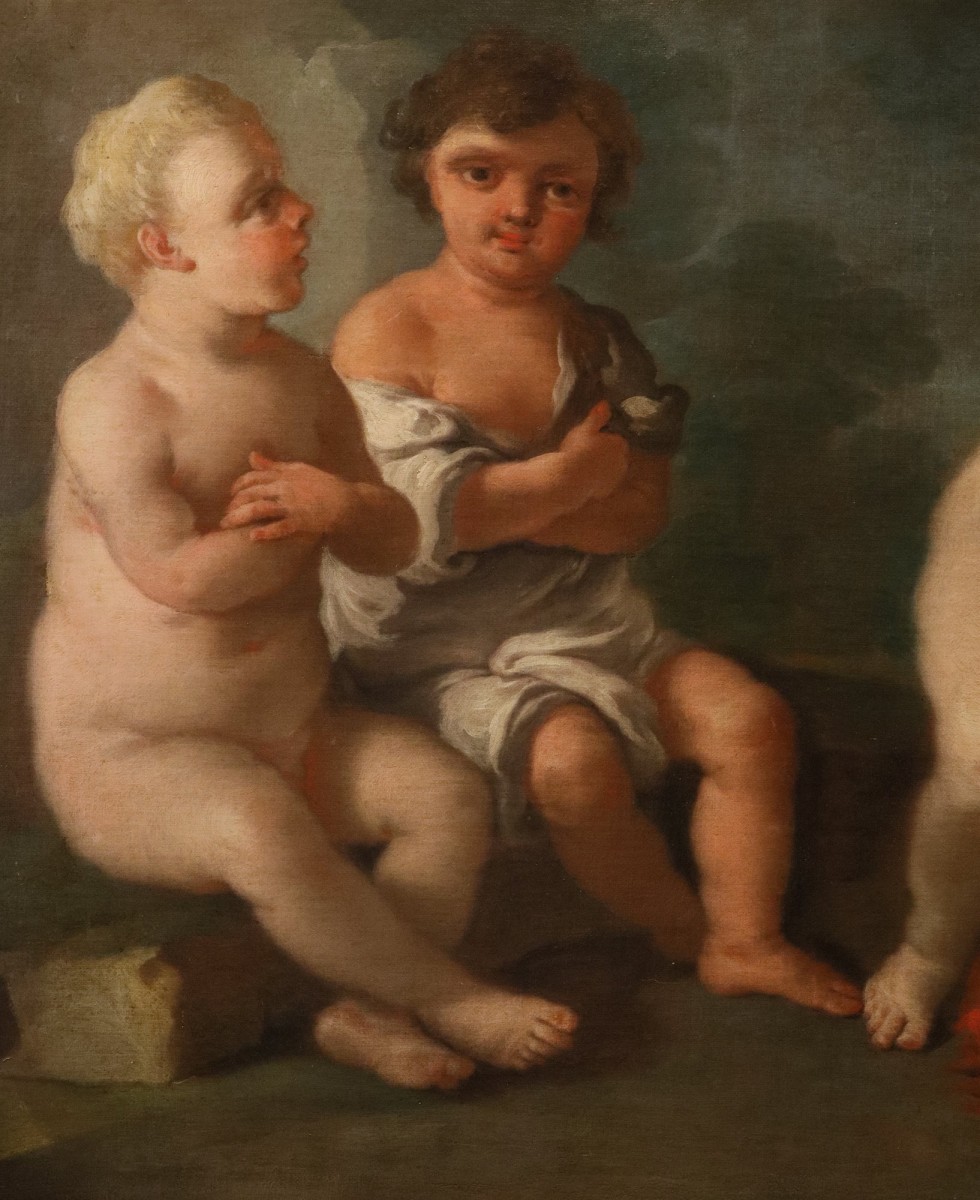
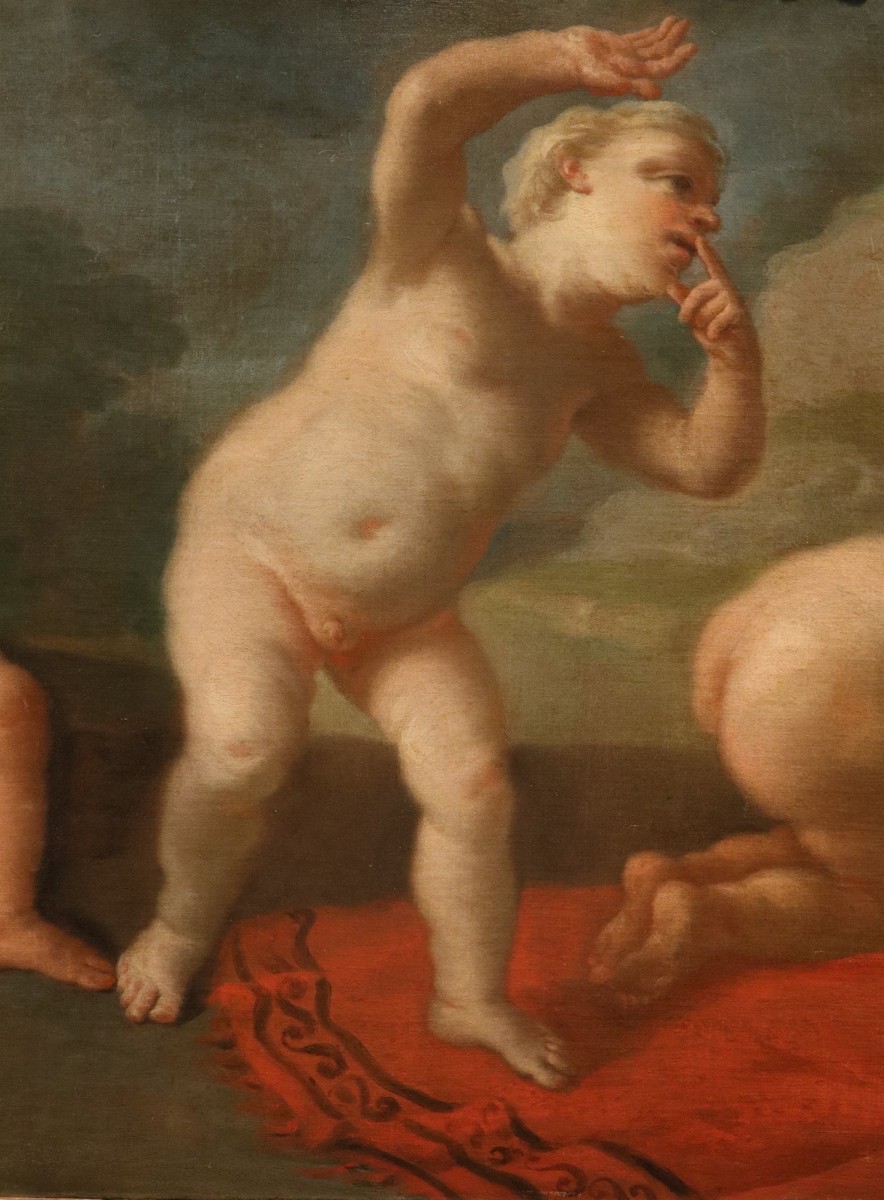
This intriguing painting, depicting a group of children engaged in the game of “slapping,” typical of the 18th century, is an extremely significant work attributed to the Neapolitan master Francesco de Mura (Naples, 1696 – 1782) and his workshop.
The work belongs to a trend that spread throughout Europe in the 18th century, originating from the many series of images depicting cherubs at play, and fully embodies the grace, lightness, and taste for amusement characteristic of the Rococo style.
The putti (childlike cupids or cherubs) abandon Baroque solemnity to become the protagonists of playful and comical scenes, engaging in carefree pastimes: they fly kites, blow soap bubbles, wrestle with toy wooden swords, play musical instruments, or engage in games typical of that period.
In addition to their ornamental function, these carefree subjects symbolize the fleeting nature of youth, innocence, and the triumph of a hedonistic and carefree world, in keeping with the “plaisir de vivre” of the time.
And, particularly in 18th-century Naples, this theme takes on a particularly charming form, where the grace of European Rococo blends with the theatrical vivacity typical of Neapolitan culture.
During the Bourbon era, Naples was one of Europe’s cultural capitals, and the figure of the playful putto filled noble palaces, churches, and royal workshops.
Francesco De Mura, one of the leading exponents of Neapolitan Rococo, played a central role in the spread of this pictorial trend, interpreting it with his highly personal stylistic signature based on aristocratic elegance, light colors, and extraordinary scenic luminosity
Returning our attention to our painting, attributed to Francesco De Mura or a student from his successful workshop, we see a depiction of the “slap game,” in which one player bends over to cover his face while another approaches and delivers a light blow (a “slap”) to his back, after which the player must guess the other’s identity.
De Mura devoted a great many works to this type of subject, drawing as an iconographic source on several prints by the French artist Jacques Stella (1596–1657), taken from a famous series titled “Les jeux et plaisirs de l’enfance,” dedicated to childhood games and populated by cherubs and children, and in particular to number 28, “Le Frappe-Main” (i.e., the “slap game” or “soldier’s slap”) (fig. 1).
Another source of inspiration was a series of engravings by Giacinto Gimignani titled “Scherzi e giuochi diversi de putti” (1647), one of which depicts the slapping game (fig. 2).
This series of prints became a veritable repertoire of visual models for decorative painters of the 18th-century Rococo period, such as Francesco De Mura in Naples, but also François Boucher in France. In the case of our artist, the Neapolitan painter does not slavishly copy the original prints but instead reworks them in a fully Rococo style, modifying the poses and the dynamics of the bodies according to a precise formal logic.
Finally, he did not draw from a single print but freely combined the range of poses from various prints.
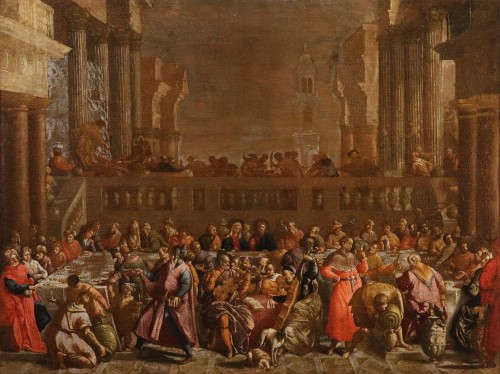
Let us now examine other variations of this specific subject created by De Mura; in particular, we will mention two works: one that passed through Christie’s (Fig. 3, Francesco De Mura, Putti Playing in a Landscape, London, July 10, 1992) and a second, with a similar composition, now at the Italian Consulate General in New York (fig. 4, Francesco De Mura, Putti at Play, New York, Italian Consulate General).
In this successful secular genre (often used for door panels, decorations in noble palaces, and furnishings) Francesco De Mura became one of the foremost interpreters and popularizers, so much so that it was widely adopted, imitated, and adapted by the painters in his circle and workshop.
Delevery information :
We take care of and organise the transport of the purchased works, both for Italy and abroad, through professional and insured carriers.
We take great care We personally take care of the packaging, to which we devote a great deal of care: each work is carefully packed, first with arti- cle material, then with a custom-made wooden box.
Should you have the desire to see this or other works in person, we would be happy to welcome you to our gallery in Riva del Garda, Viale Giuseppe Canella 18, we are always open by appointment only.