Offered by Galerie PhC

European paintings from the 17th, 18th and 19th centuries.
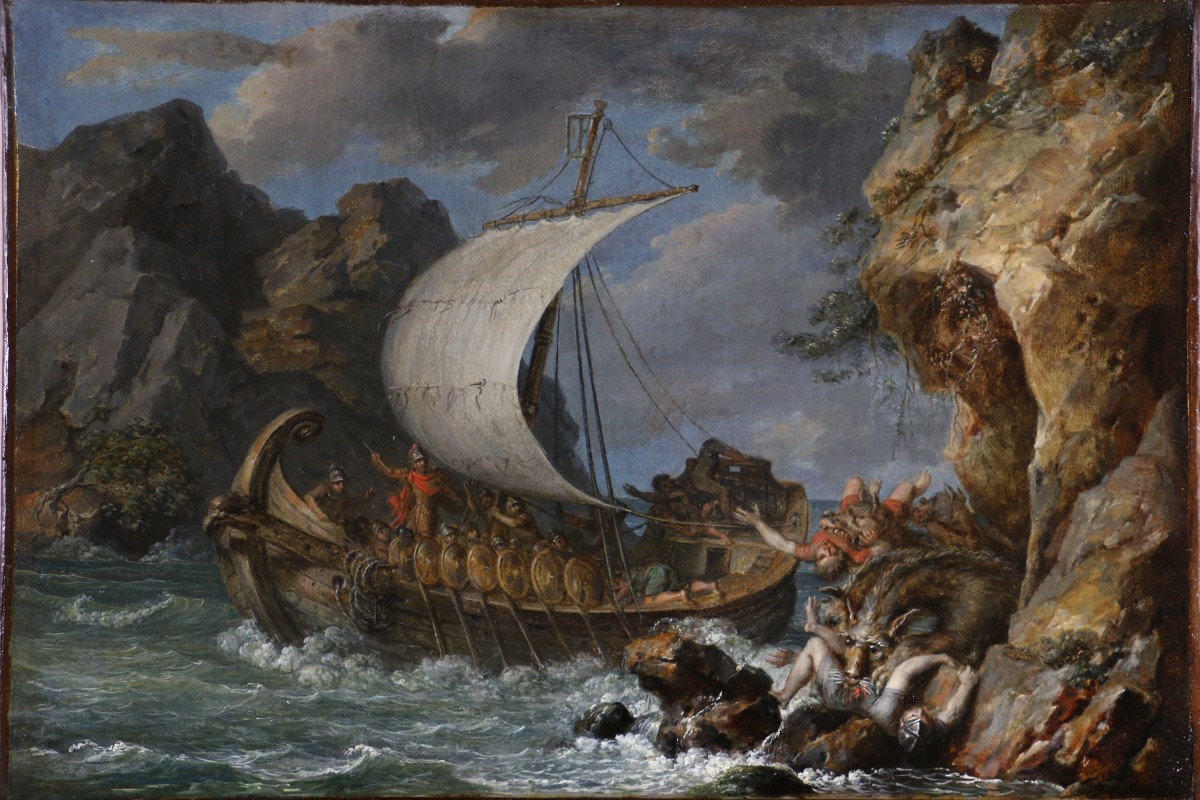
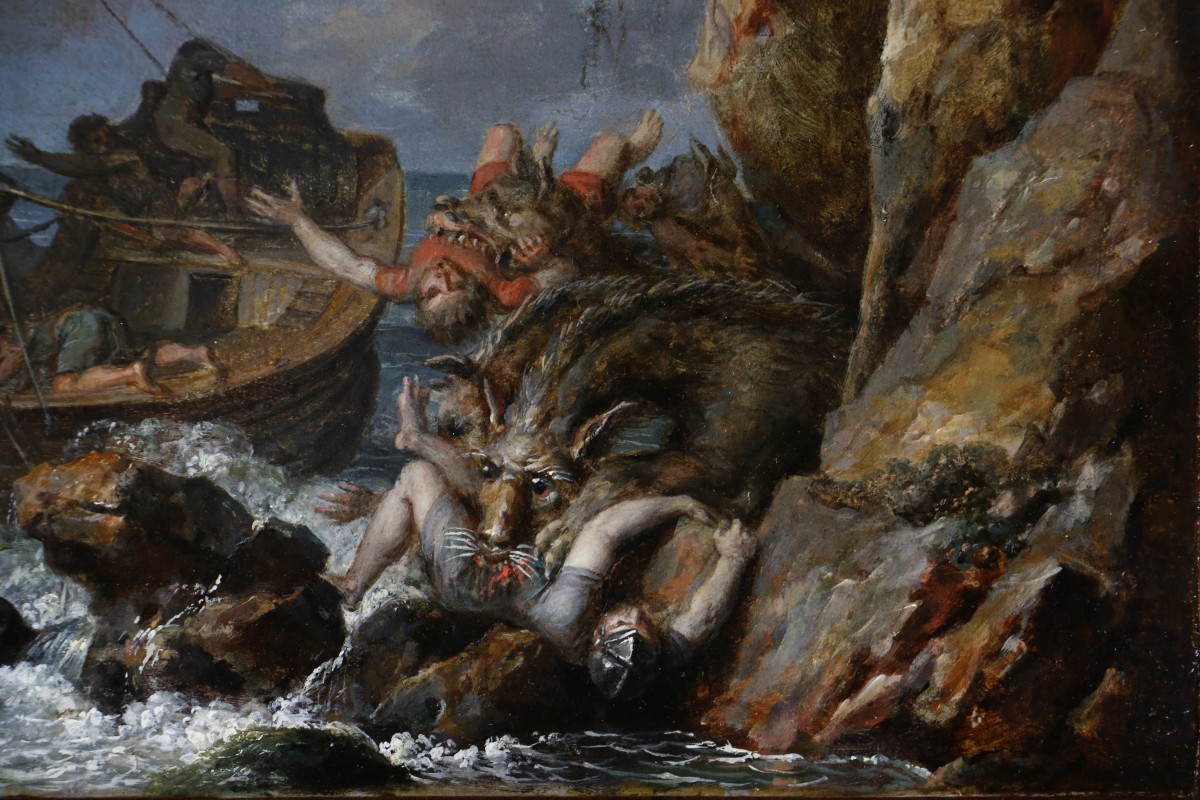
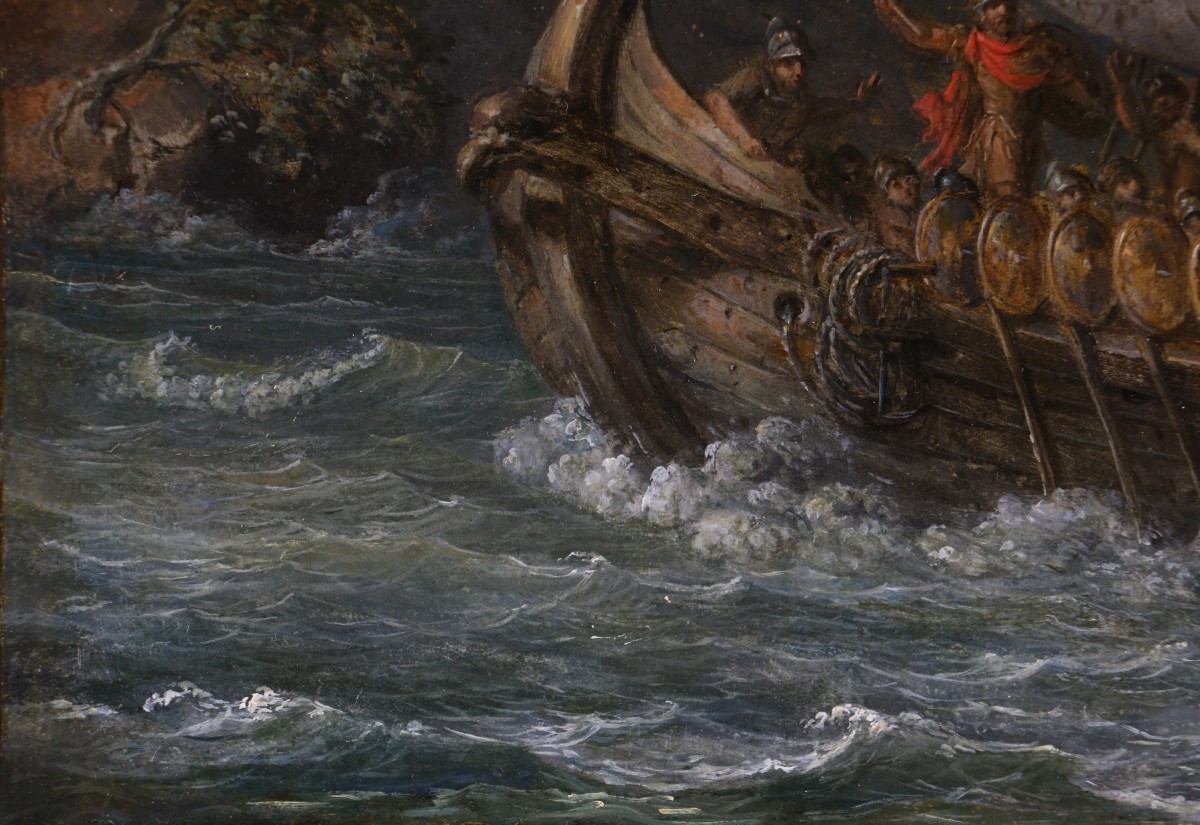
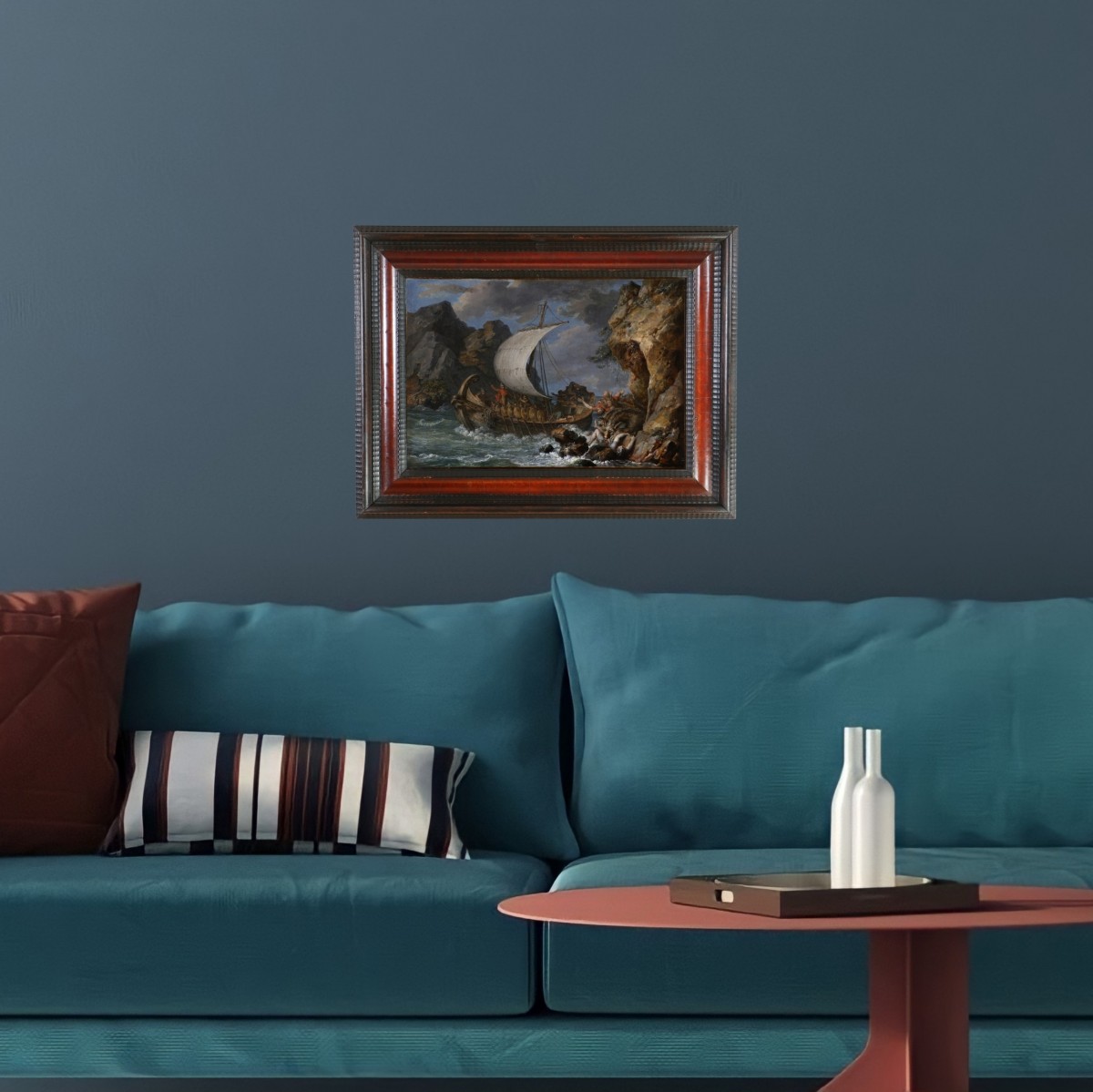
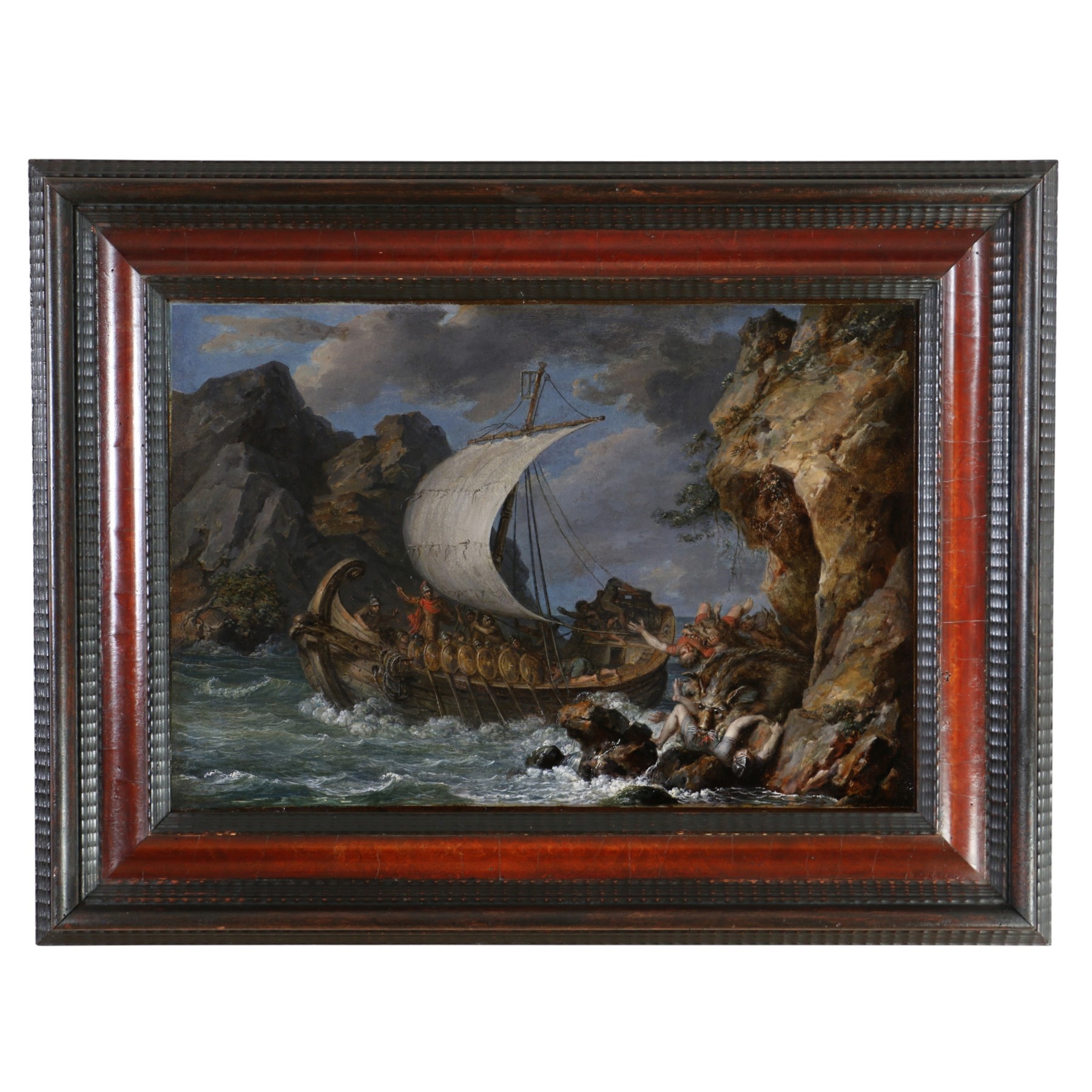
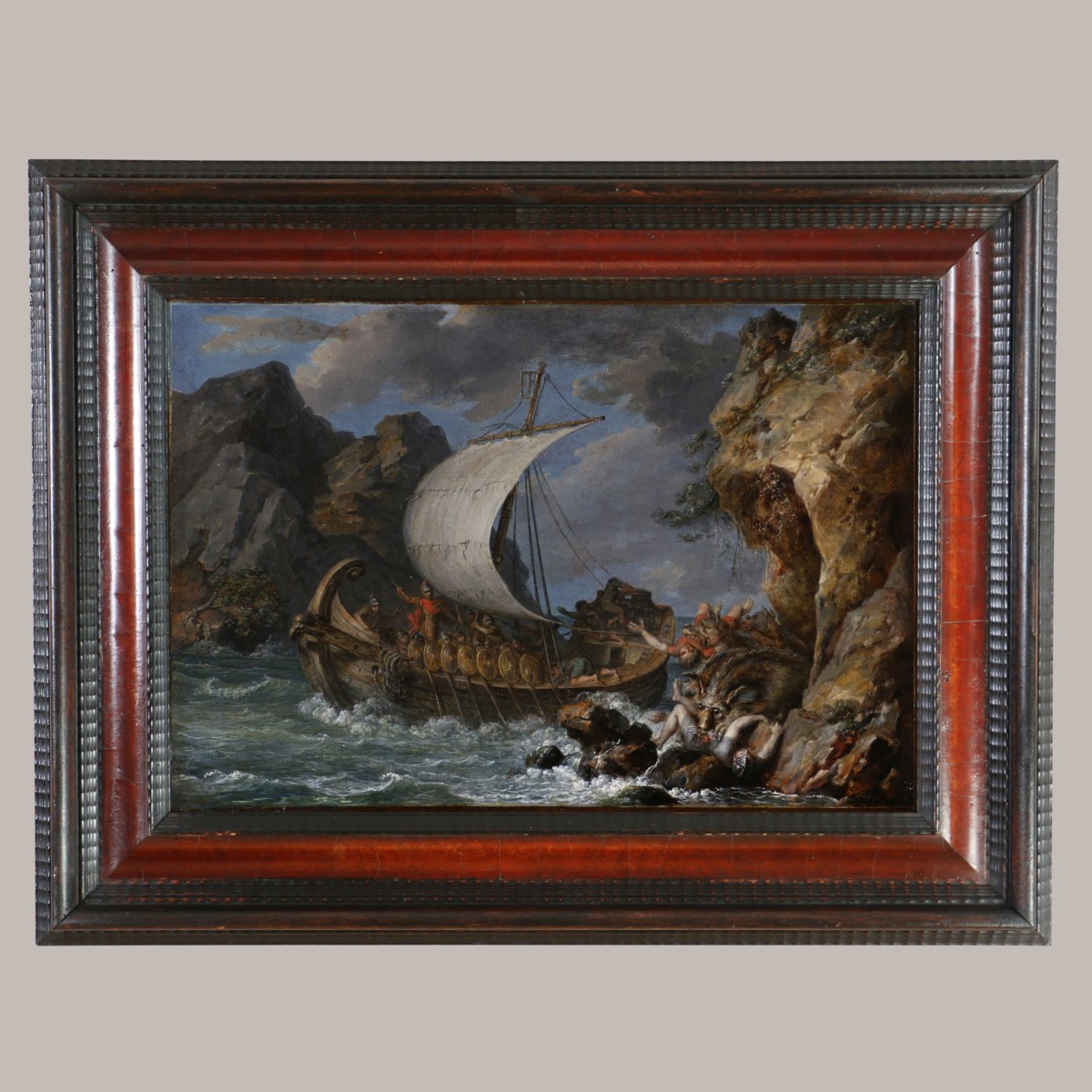
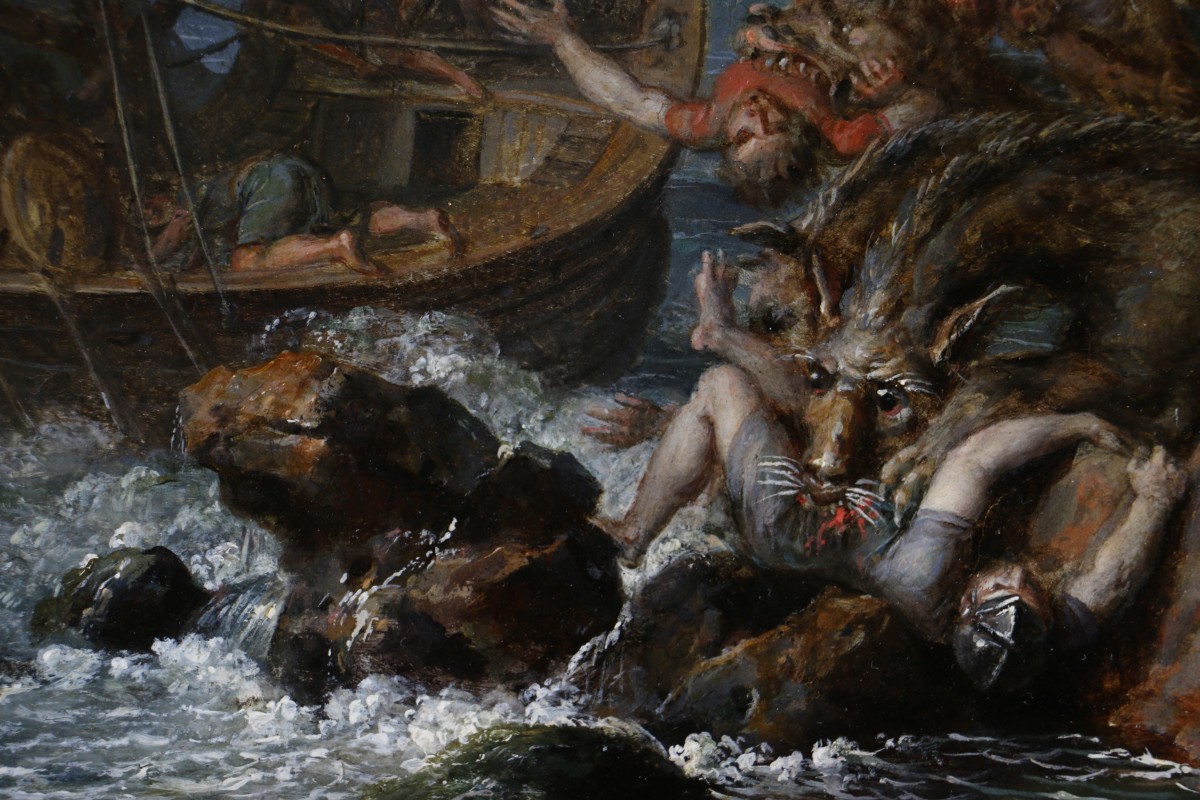
Neapolitan School, c. 1755–1770: *Ulysses and His Companions Confronting Scylla*. Attributed to Carlo Bonavia (active 1755–1788; died 1788).
Oil on paper laid down on canvas; 55 cm x 38 cm.
Frame: 74 cm x 57 cm.
Ulysses and Scylla
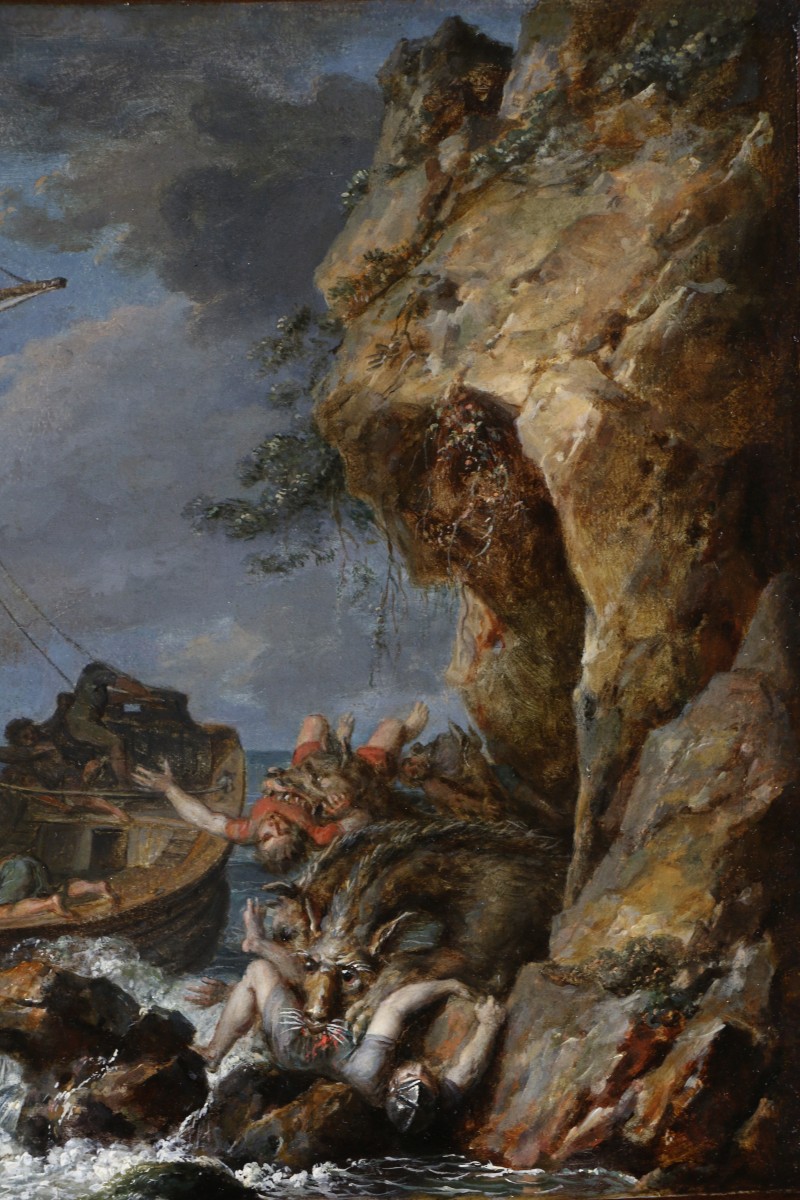
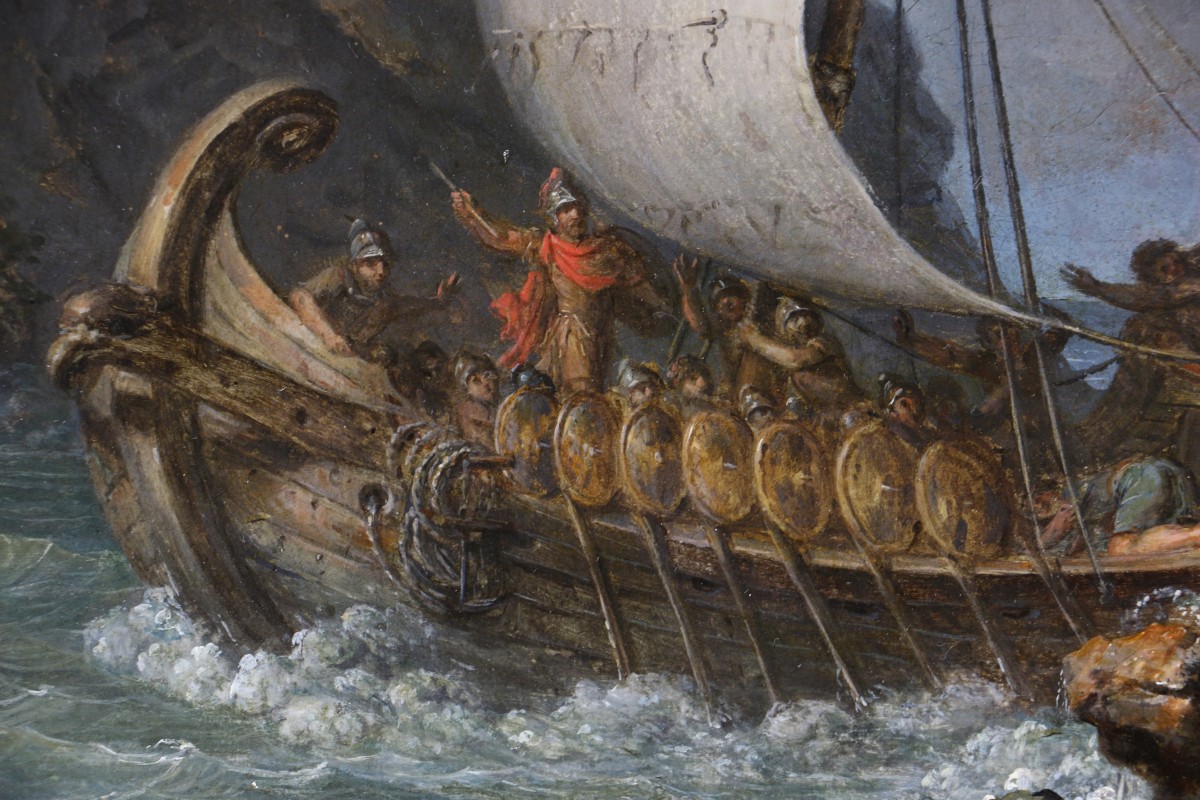
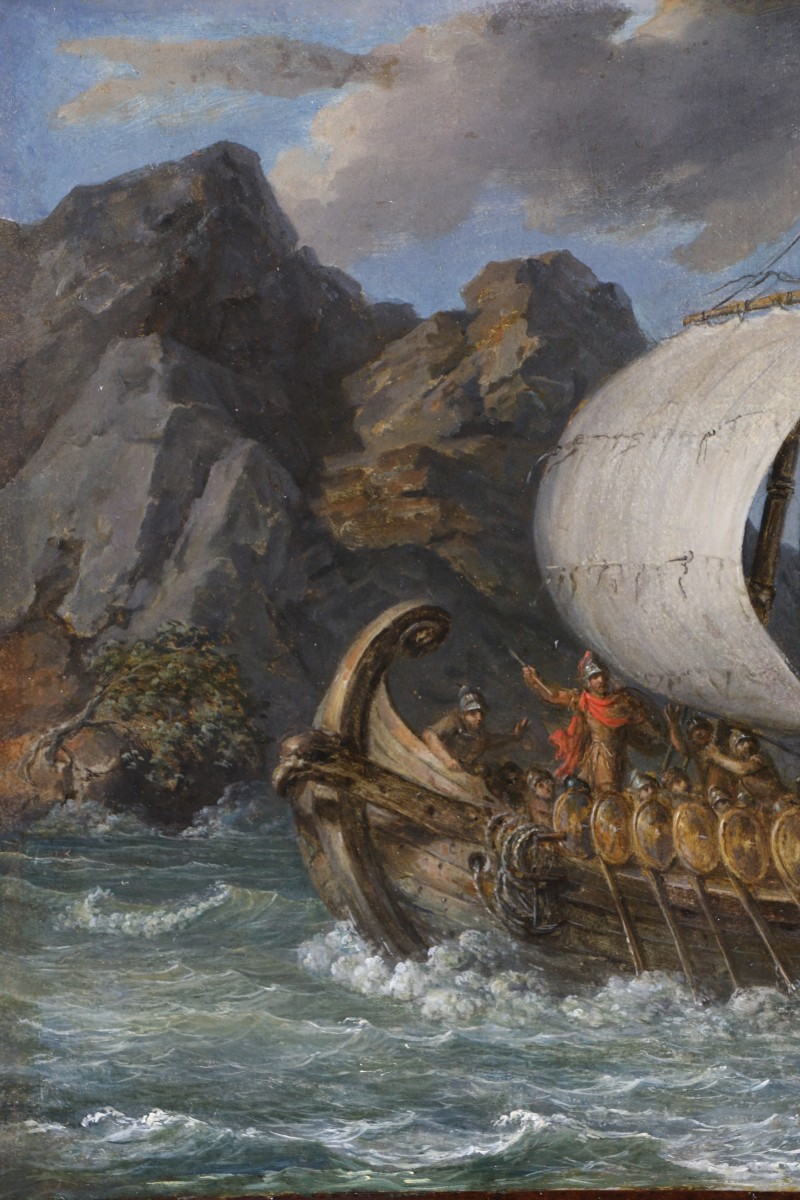
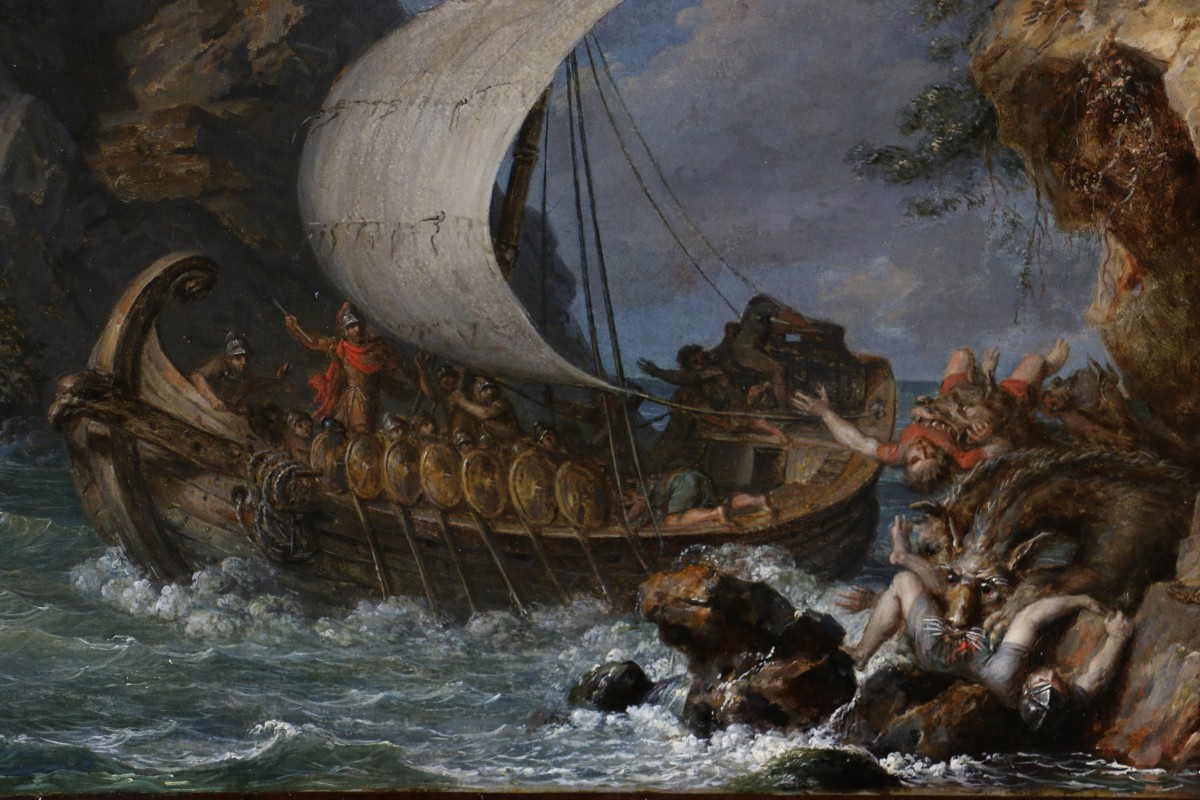
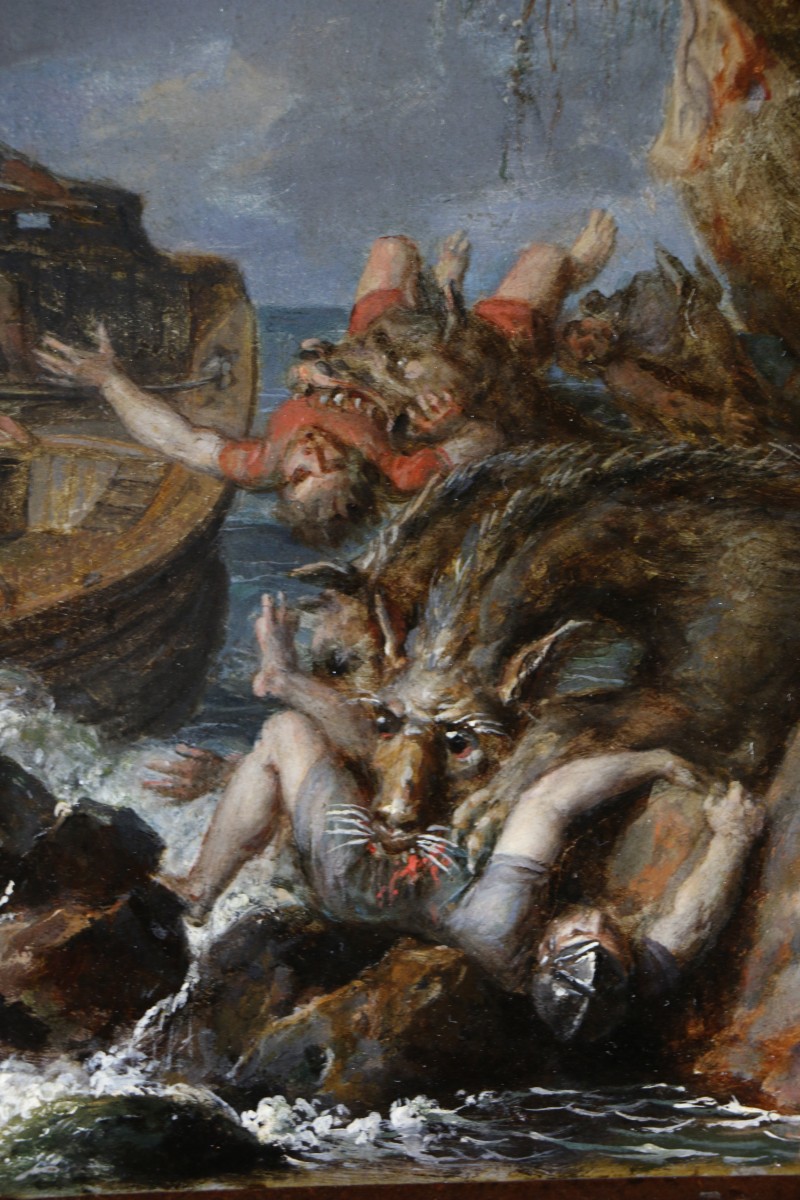
The scene most likely depicts an episode from Book XII of Homer’s *Odyssey*: the passage of Ulysses and his companions between Scylla and Charybdis during the hero’s return journey to Ithaca after the Trojan War. Warned by Circe of the danger awaiting him, Ulysses must navigate his ship through a narrow strait dominated by two perils. On one side lies Charybdis, a marine whirlpool that swallows and then spews out the sea’s waters; on the other stands Scylla, a monstrous creature concealed in a cave halfway up a sheer cliff. Homer describes Scylla as having six long necks, each ending in a fearsome head. As ships pass by, the monster lunges from her lair and seizes six sailors at once. Circe had advised Ulysses that it was better to sacrifice six companions than to risk the loss of the ship and the entire crew. The painter appears to have chosen the very climax of the narrative. Ulysses’ ship sails dangerously close to a towering rock face, while Scylla—almost blending into the darkness of her lair—thrusts her various heads toward the crew. Several of Ulysses’ companions are being torn from the ship and carried off toward the cliff. This arrangement corresponds remarkably well to the Homeric text, in which Odysseus recounts seeing his companions’ hands and feet raised above the ship as they called out to him one last time. The identification with Scylla is reinforced by the very topography of the composition. In Homer’s account, the monster does not appear freely in the open sea; instead, she remains hidden in a cave set high in a rocky cliff face, from which her long necks and heads lunge out to snatch passing sailors. The painter has specifically structured the landscape around the interplay between the cliff’s vertical mass, the dark cavern, the monster, and the ship forced to pass close by. The landscape thus plays a vital narrative role. The monumental cliff dominates much of the composition; wild vegetation clings to its crags while waves crash against its base. The ancient ship, its sides adorned with round shields, is caught in rough seas. The small scale of the human figures against the vast rock and sea heightens the dramatic and sublime nature of the episode.
Attribution
The work can be placed within the context of Neapolitan landscape painting from the second half of the 18th century, likely dating to around 1755–1770. Several characteristics suggest an attribution to Carlo Bonavia. The first point of comparison concerns the treatment of the sea. The waves are built up from blue-grey and green-grey masses, enlivened by light crests and cream-white foam applied with rapid brushstrokes. This atmospheric approach to seascapes belongs to a style—deeply influenced by Claude-Joseph Vernet—that flourished in Naples during the mid-18th century; Bonavia was one of its most characteristic exponents. Indeed, Bonavia’s works have frequently been confused with those of Vernet. The rendering of the rocks offers a second point of comparison. The cliff is not depicted analytically but constructed through the juxtaposition of large masses of brown, ochre, beige-grey, and cream. Small, light—and at times almost chalky—highlights accentuate certain fissures, while recesses are rendered using deep, dark masses. The vegetation is intimately integrated with this rocky structure: small, gnarled trees emerging from cracks, slender branches, dangling roots, and foliage composed of dark masses punctuated by small, light touches. This combination of observed nature and a largely recomposed landscape is particularly characteristic of Bonavia, whose landscapes and seascapes freely blend reality with invention. The figures also bear similarities to the *staffage* found in his works: rapidly sketched silhouettes, small dark heads, limbs indicated by a few bold strokes, and highlights on the flesh—along with red or ochre accents—that allow the figures to stand out against the landscape. The unusual emphasis placed here on a mythological scene is not inconsistent with the artist’s oeuvre; early sources described Bonavia as both a painter of views and a history painter, precisely because of the active figures included in his compositions. Finally, a material detail warrants particular attention. A marine painting signed by Bonavia, depicting a ship in rough seas off a rocky coast, is also executed in oil on paper laid down on canvas—a technique identical to that of the present work. This correspondence in support and technique, combined with stylistic similarities regarding the sea, rocks, and vegetation, provides further support for the proposed attribution.
Carlo Bonavia
Little is known about Carlo Bonavia’s biography, and his origins remain uncertain. Active in Naples during the second half of the 18th century, he is known primarily through his works; his known dated paintings span the years 1755 to 1788. A painter of landscapes and seascapes, Bonavia belongs to the Neapolitan tradition inherited from Salvator Rosa and Leonardo Coccorante, yet he was also deeply influenced by Claude-Joseph Vernet—to such an extent that their works have sometimes been confused. However, he developed a distinctive style characterized by freer brushwork, often chalky tones, and a predilection for rocky coasts, storms, shipwrecks, waterfalls, and imaginary landscapes. His compositions frequently combine spectacular natural scenery with small figures of fishermen, sailors, or travelers; he also incorporates literary or mythological subjects into some of his landscapes. Rugged rocks, wild vegetation, atmospheric effects, and turbulent waters are hallmarks of his artistic vocabulary. Bonavia appears to have enjoyed a significant international clientele, particularly among Grand Tour travelers, which explains the long-standing presence of many of his works in British collections. His body of work—now relatively rare—occupies a unique place in the 18th-century Neapolitan landscape tradition, bridging the gap between the Southern tradition and the revitalized approach to landscape painting introduced to Italy by Vernet.
Delevery information :
All our paintings benefit from careful and secure packaging. No geographic restrictions.