Offered by Art Revival
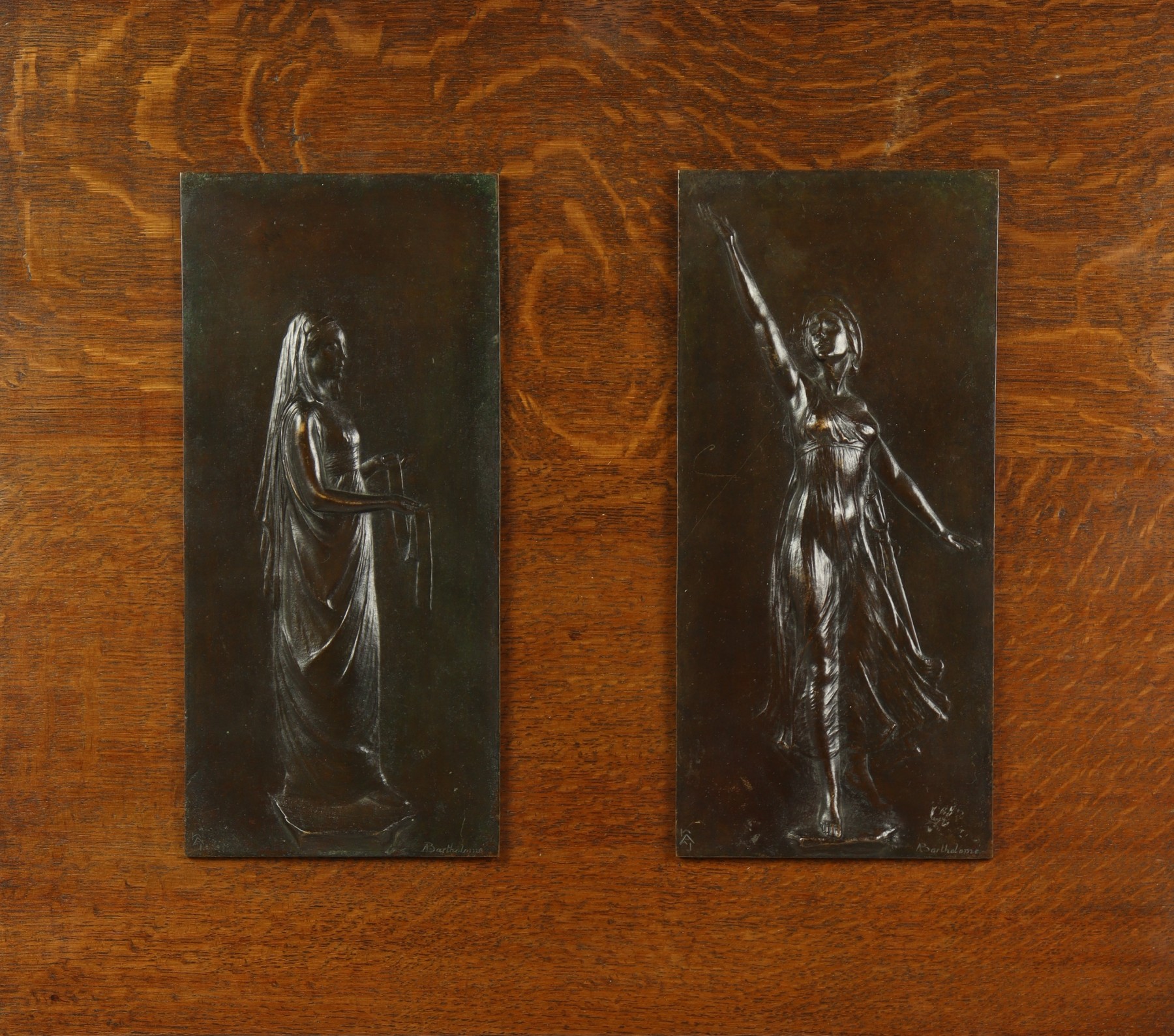
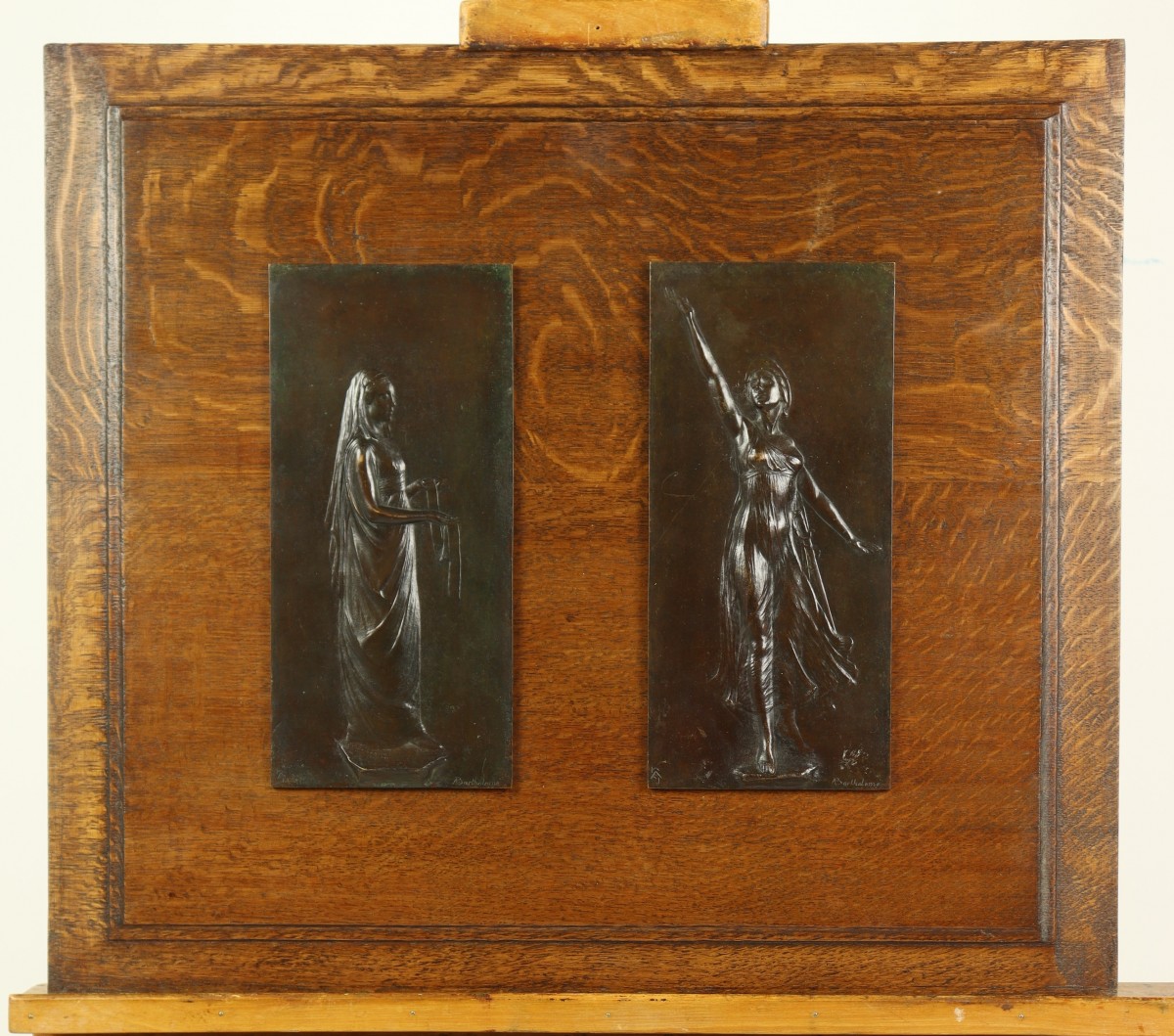
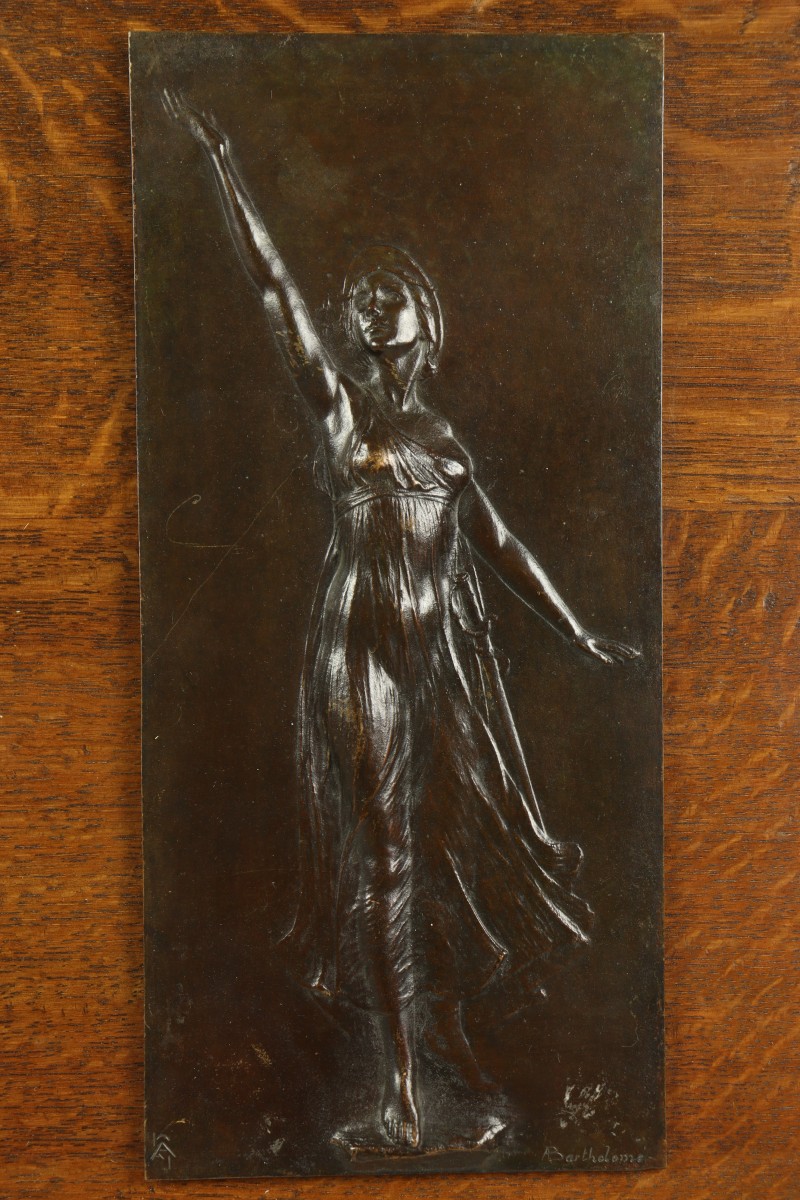
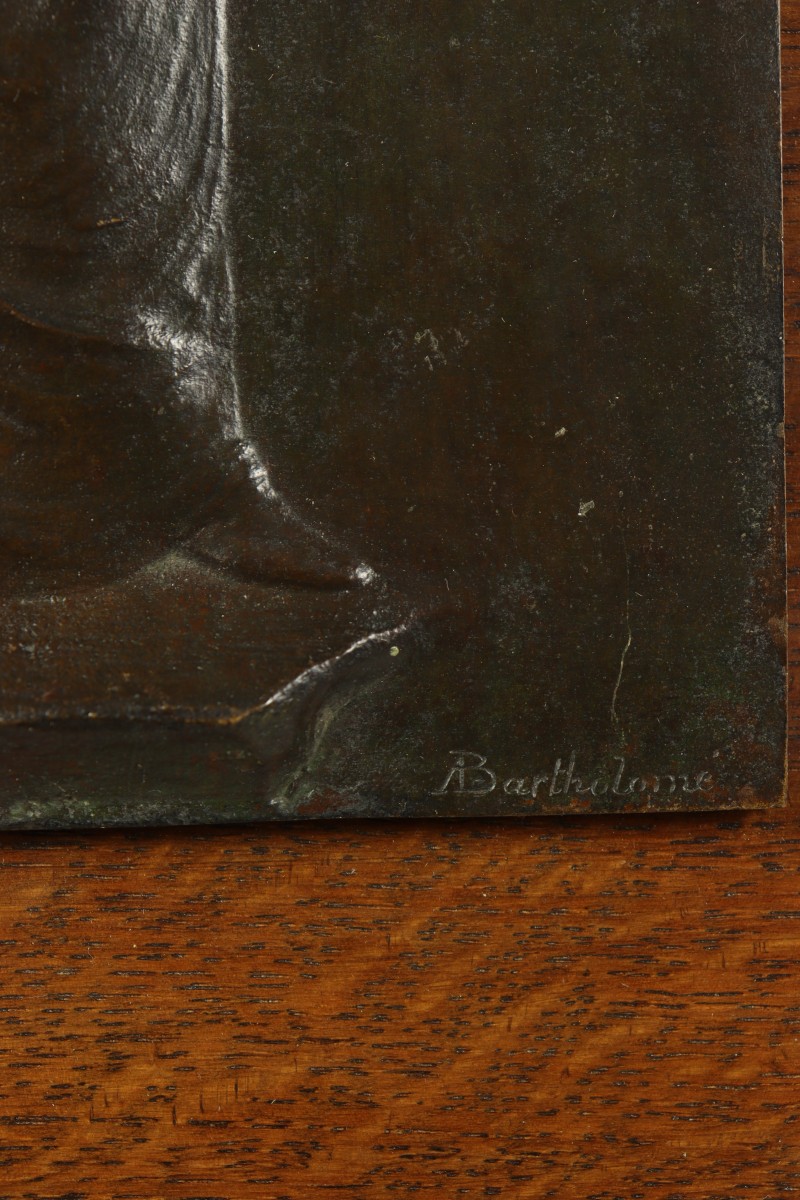
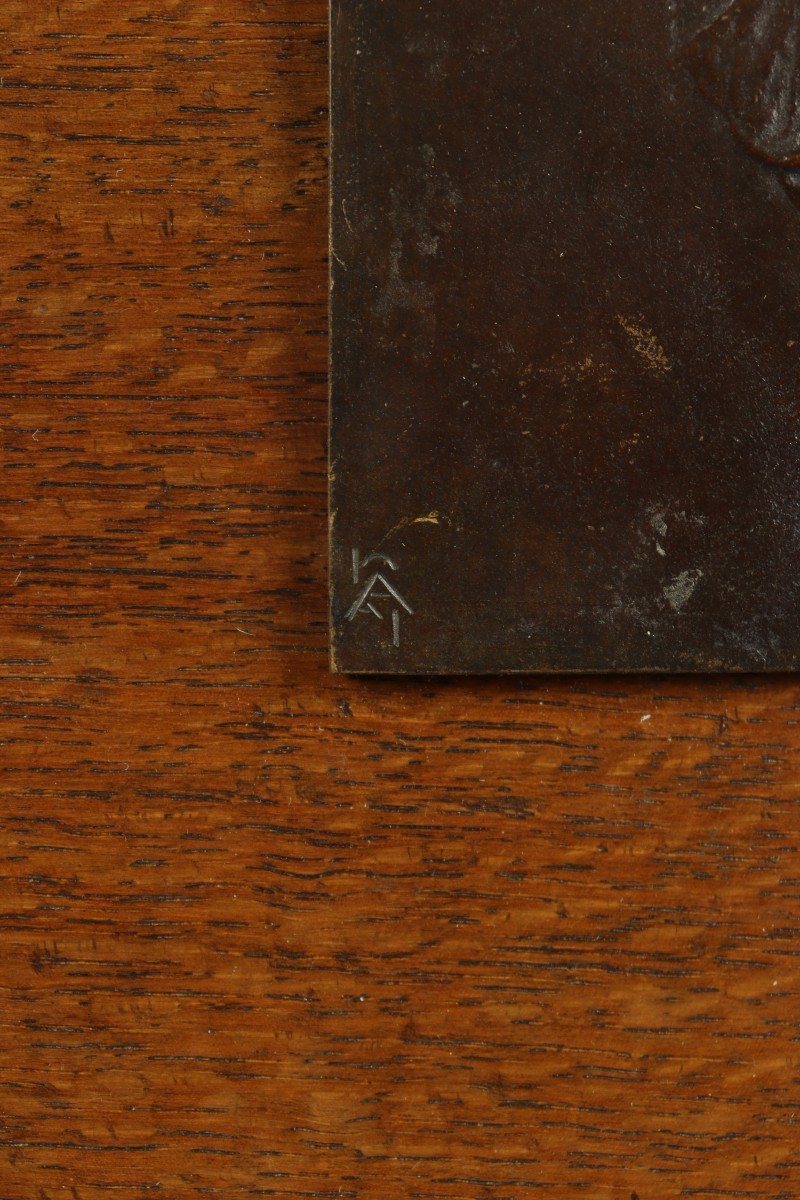

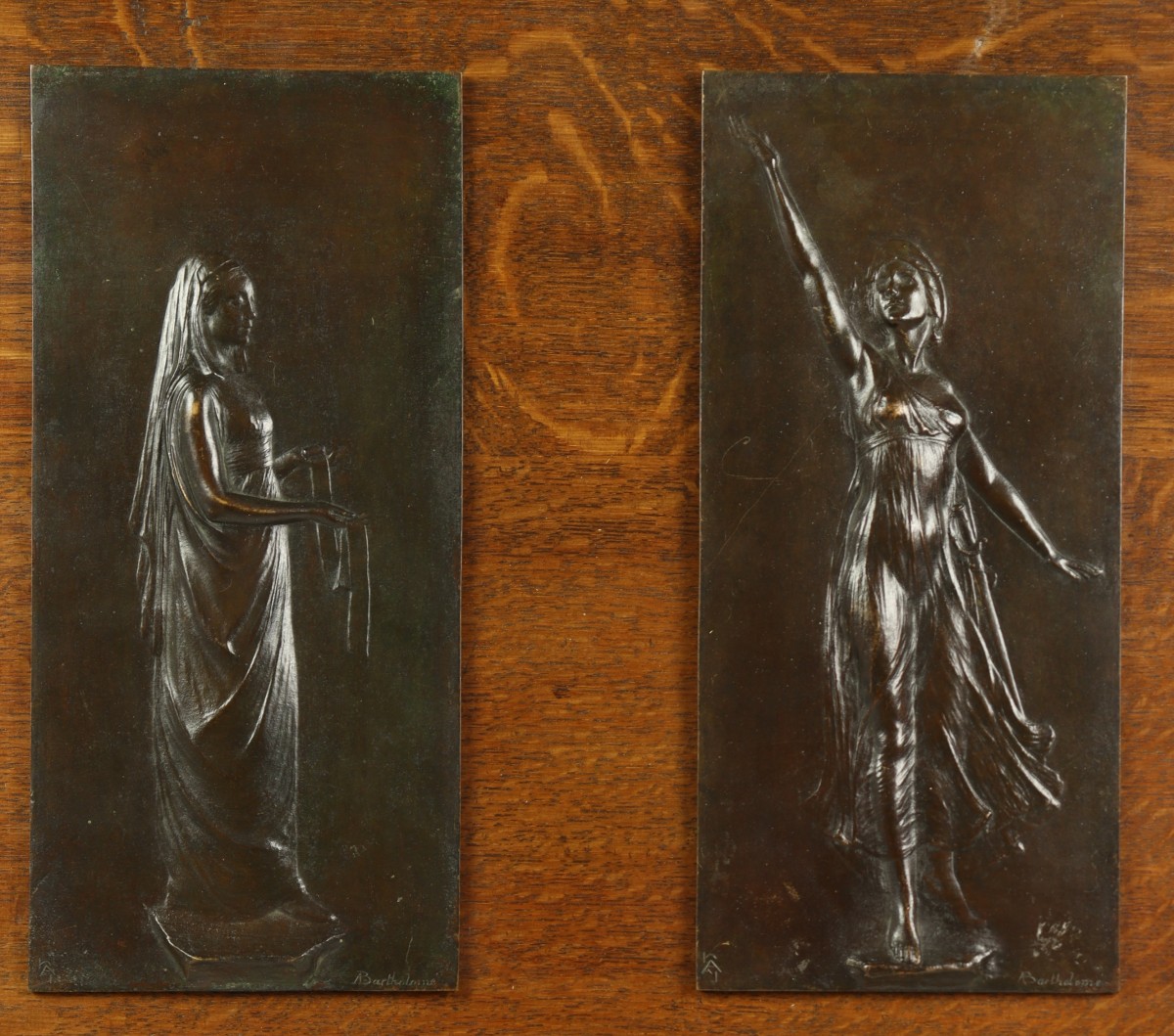
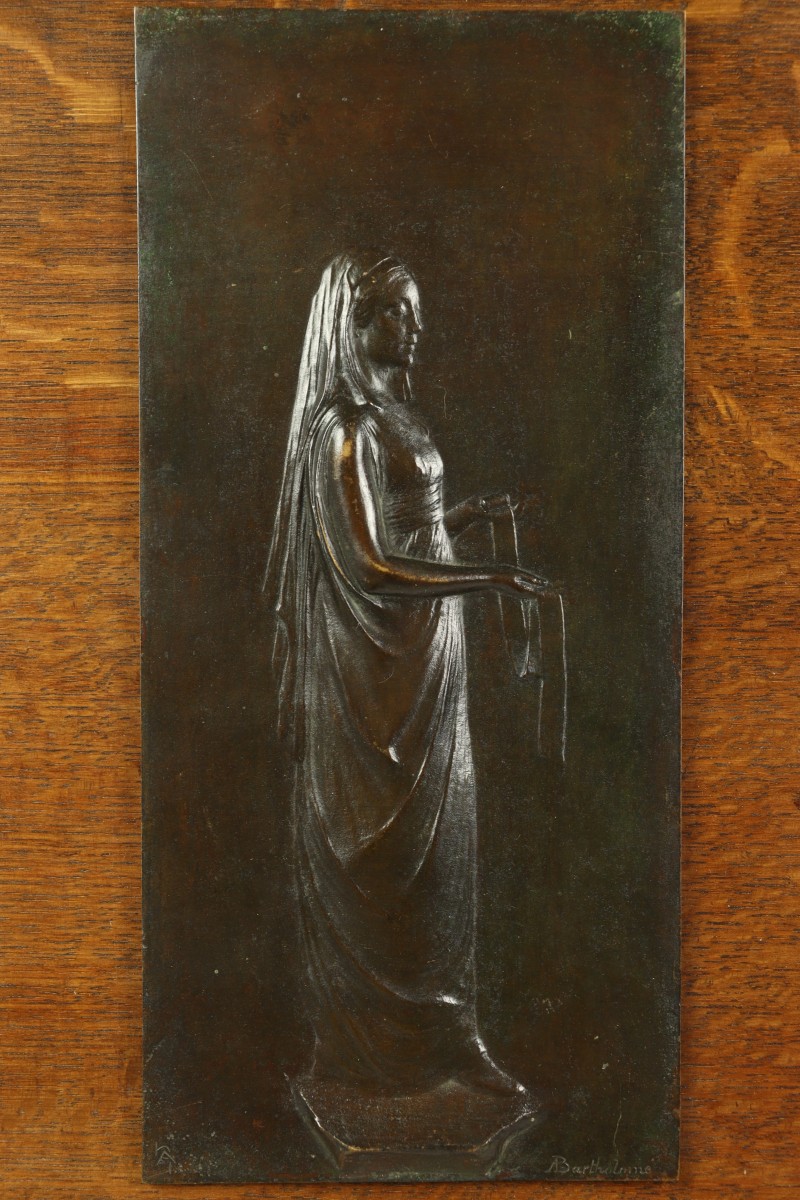
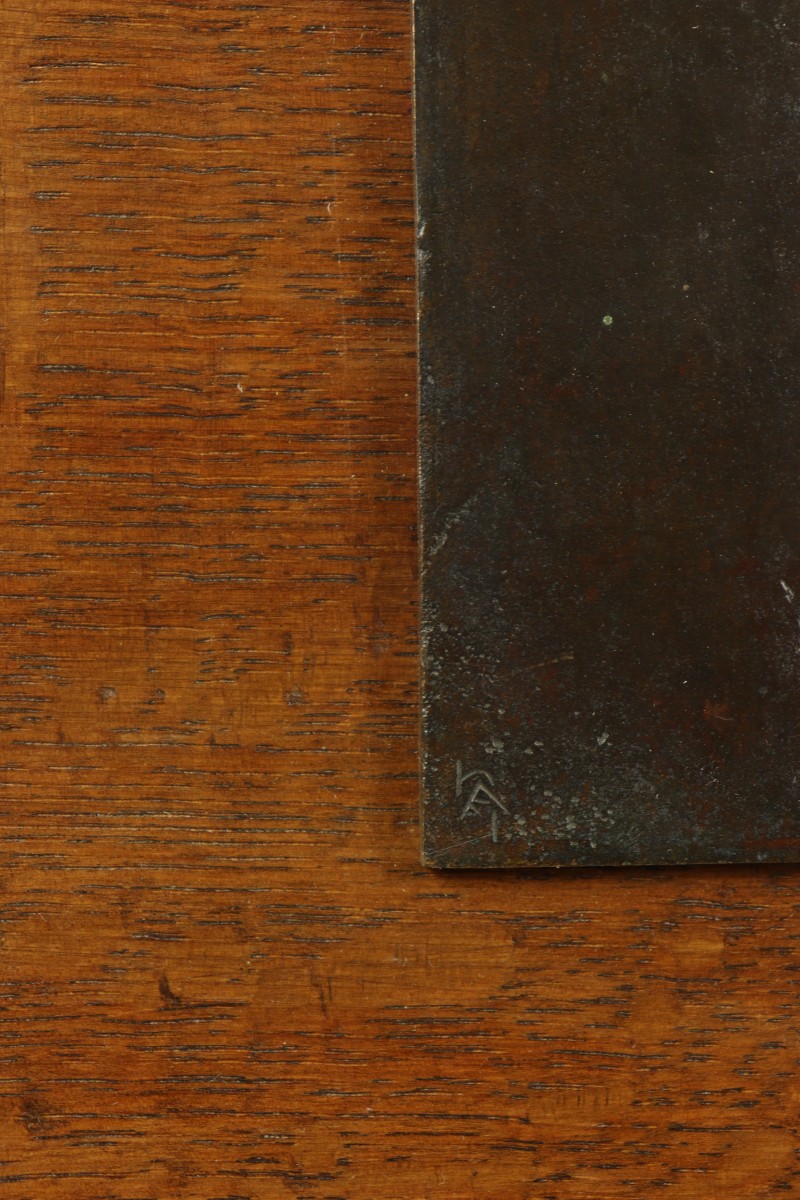
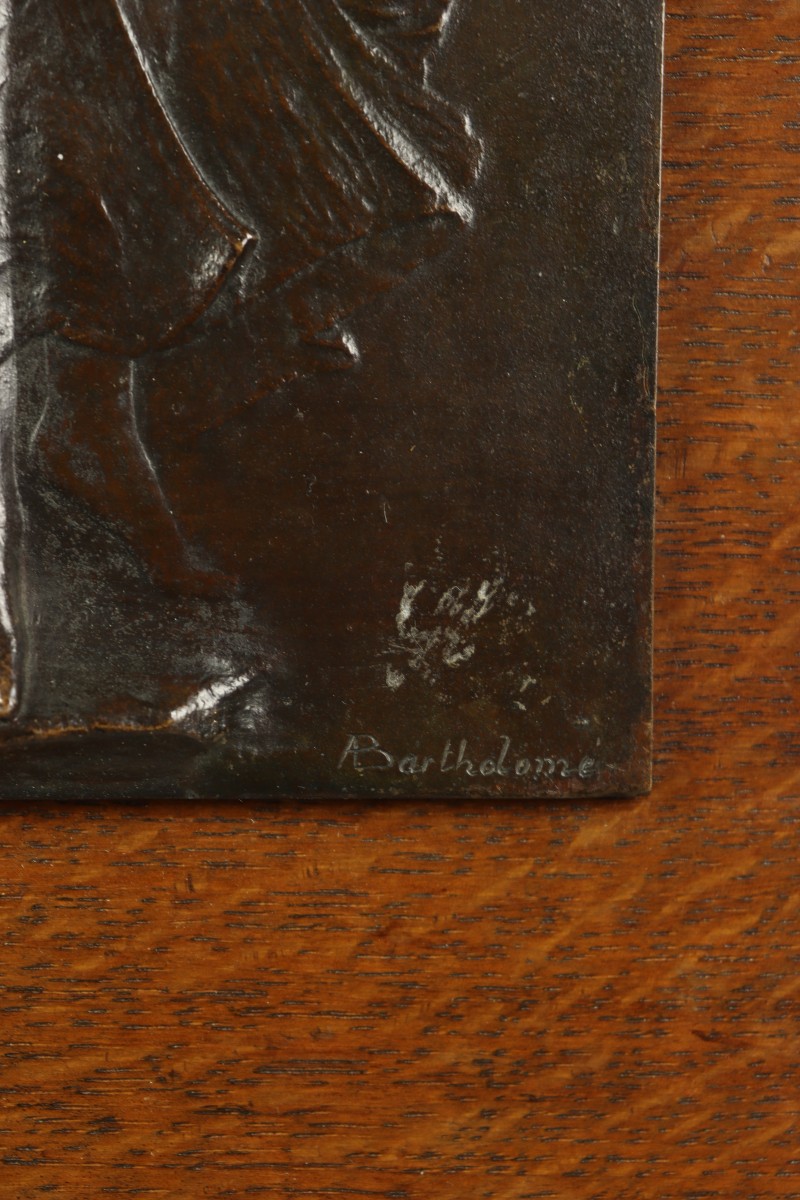
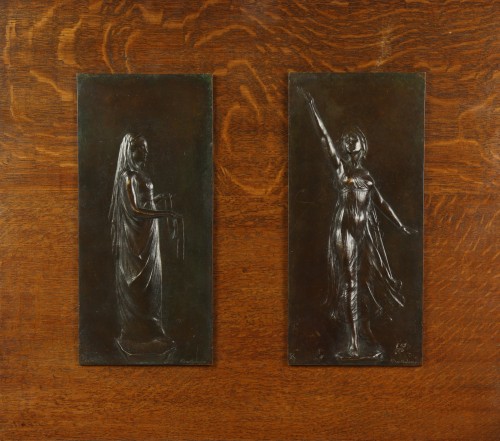
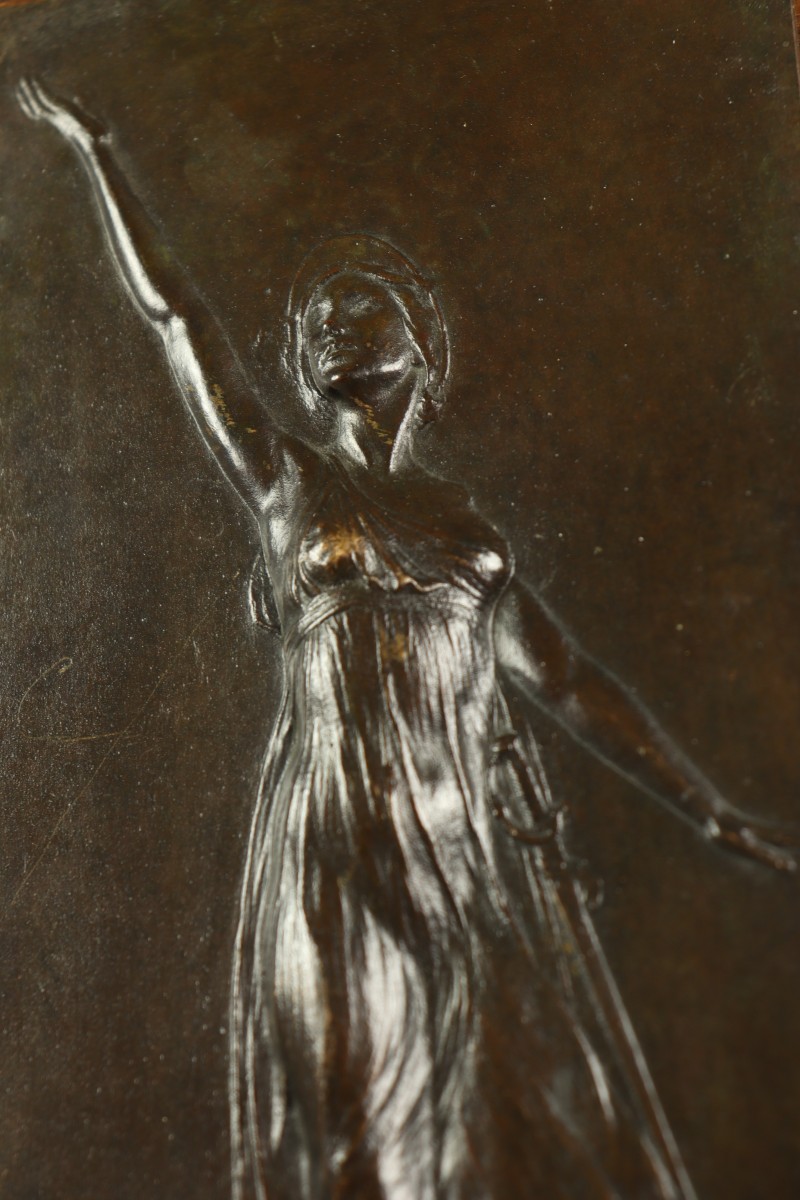
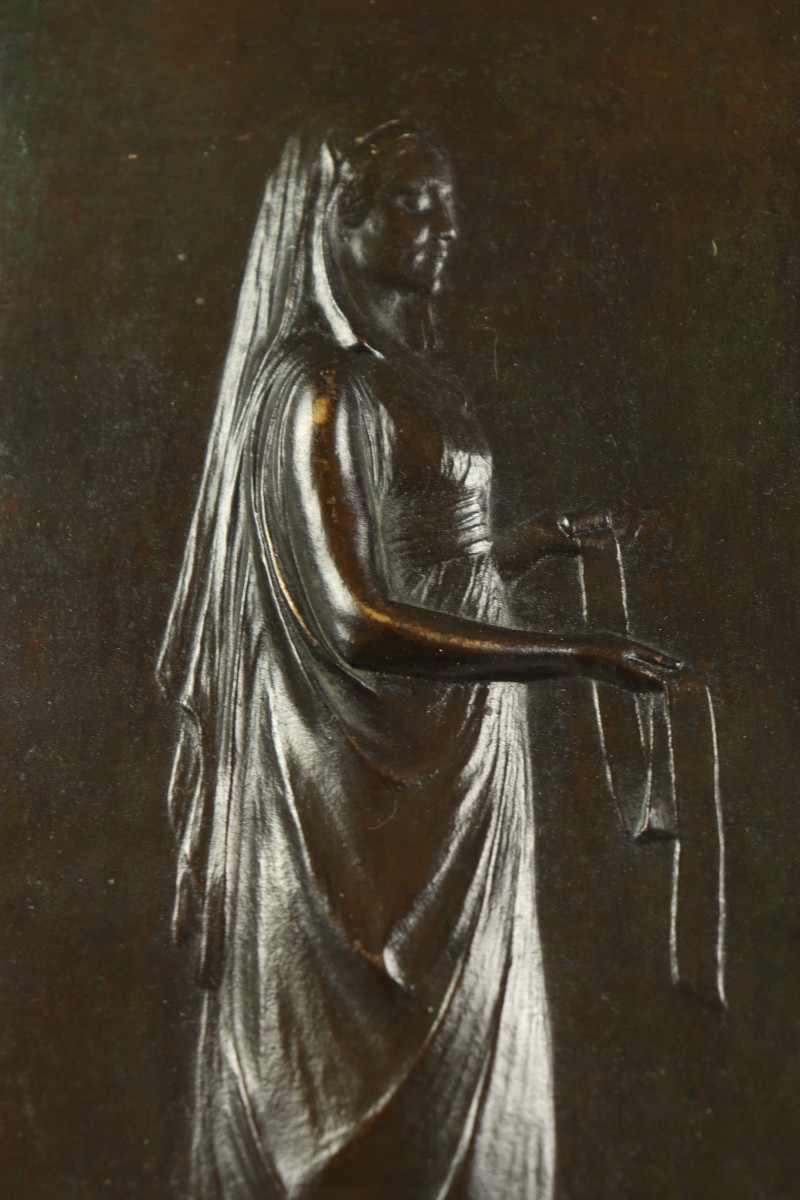
An allegory of surgery and aviation, a reduced-scale version of the bas-reliefs from the war memorial and the monument to Senator Émile Reymond de Montbrison, by Albert Bartholomé; bearing the foundry mark in the lower left corner, attributed to Hébrard.
Trained as a painter and a student of Gérôme at the École des Beaux-Arts in Paris, Albert Bartholomé formed a close friendship with Edgar Degas. After the death of his wife, Prospérie de Fleury, in 1887, he turned to sculpture and created a bronze funerary monument for her grave. From then on, he devoted himself primarily to monumental and funerary sculpture. His War Memorial at the Père-Lachaise Cemetery, unveiled in 1899, brought him widespread fame.
The two plaques shown here are scaled-down reproductions of the two flat reliefs designed by Bartholomé for the monument to Émile Reymond and the fallen of Montbrison: on the left, the allegory of Surgery; on the right, the allegory of Aviation. These two female figures originally flanked the bust of Senator Émile Reymond and symbolize his two main fields of activity: surgery and aviation.
Émile Reymond (1865–1914), a surgeon, senator from the Loire department, and aviation pioneer, was actively committed to the development of military aviation. Enlisted as an observer-aviator during World War I, he was seriously wounded during a reconnaissance mission and died of his injuries in Toul on October 22, 1914.
In 1915, a national committee undertook the task of erecting a monument in his memory, and Albert Bartholomé was chosen to design it. The project was later expanded to include the residents of Montbrison who had fallen at the front. The monument was completed and dedicated in 1920.
Plaque dimensions : 24.8x11.6cm