Offered by L'Egide Antiques
REQUEST INFORMATION

Porcelain, Scuptures, paintings and european Fine Arts, 18th and 19th century
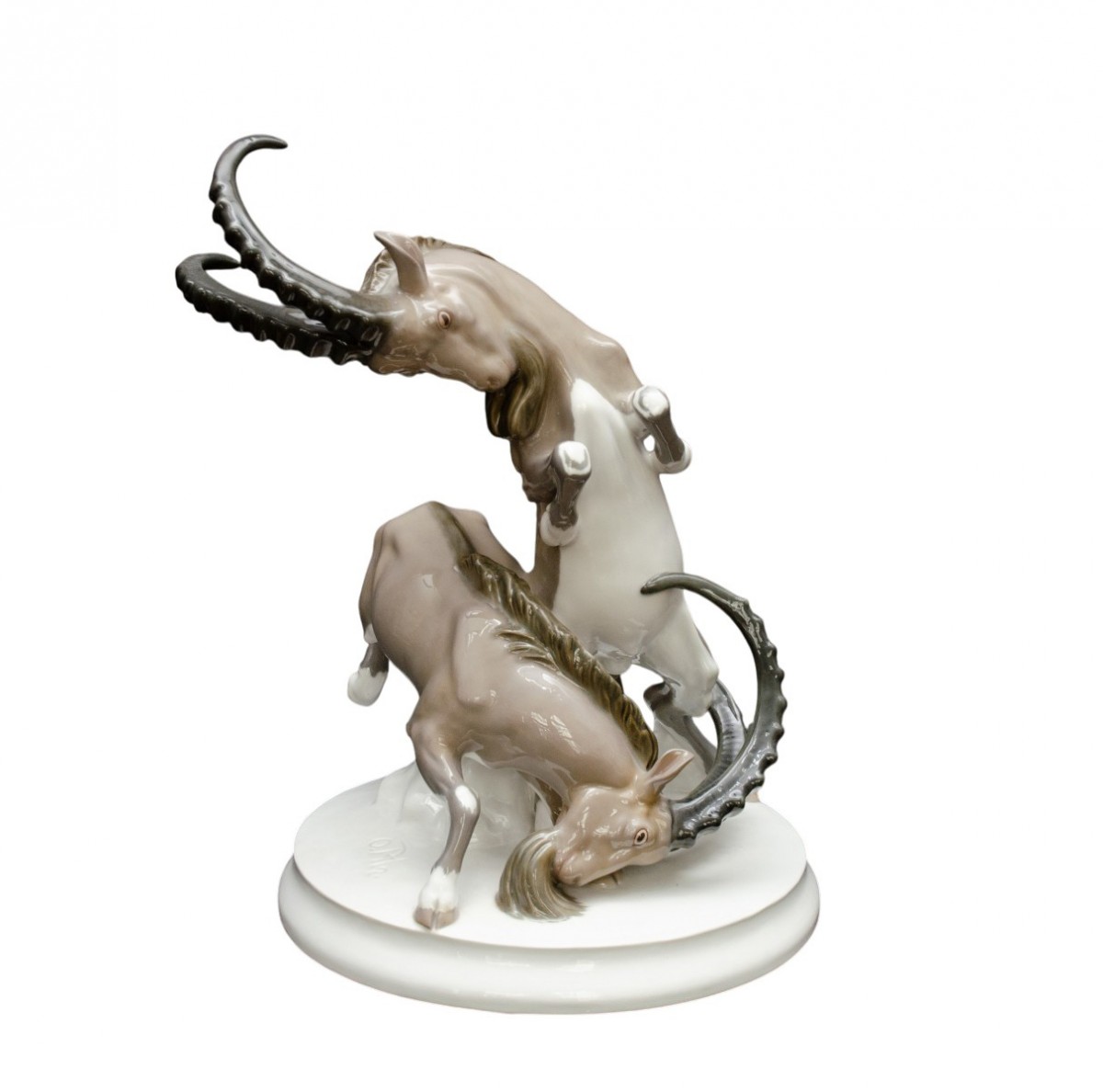
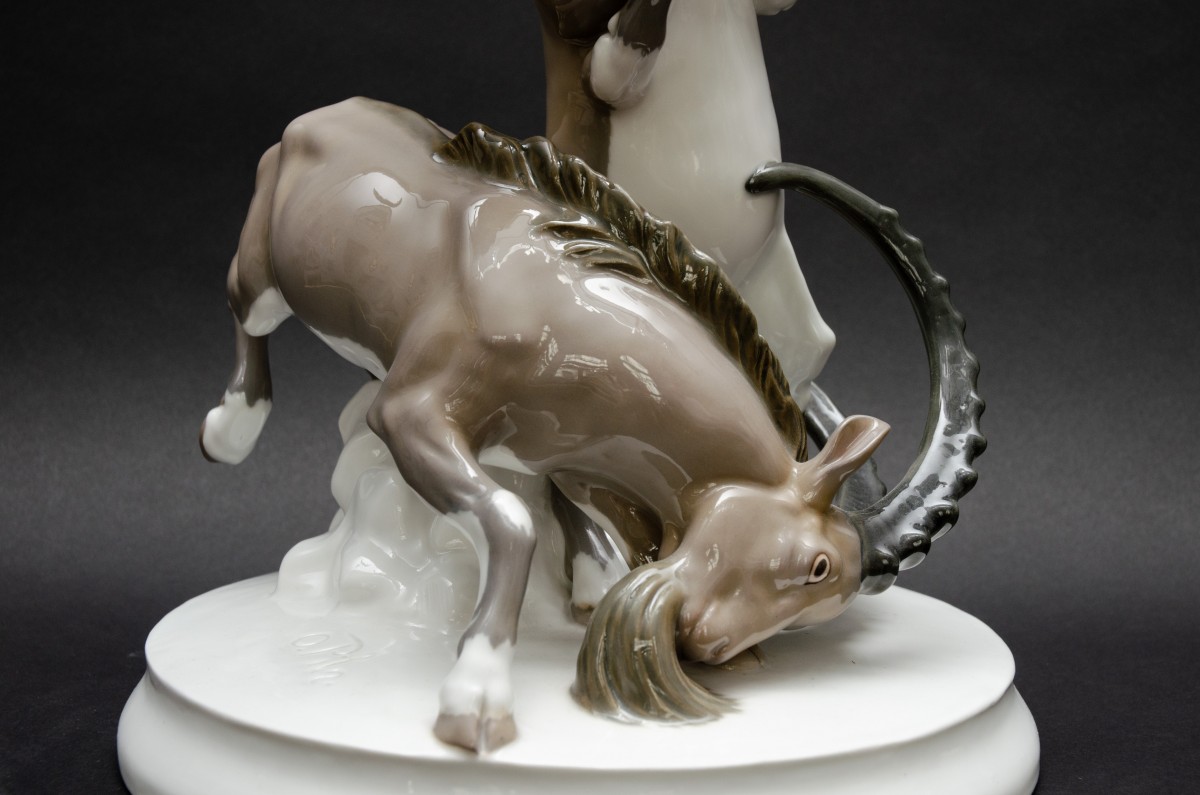
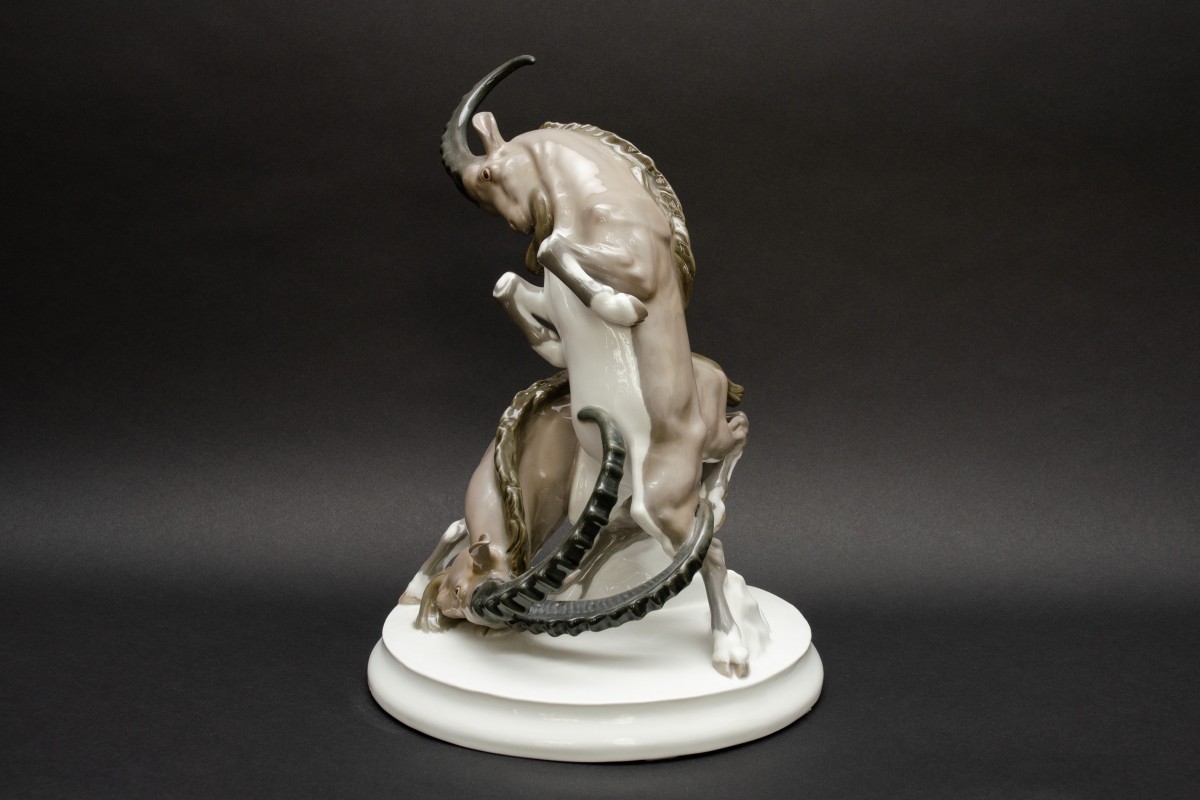
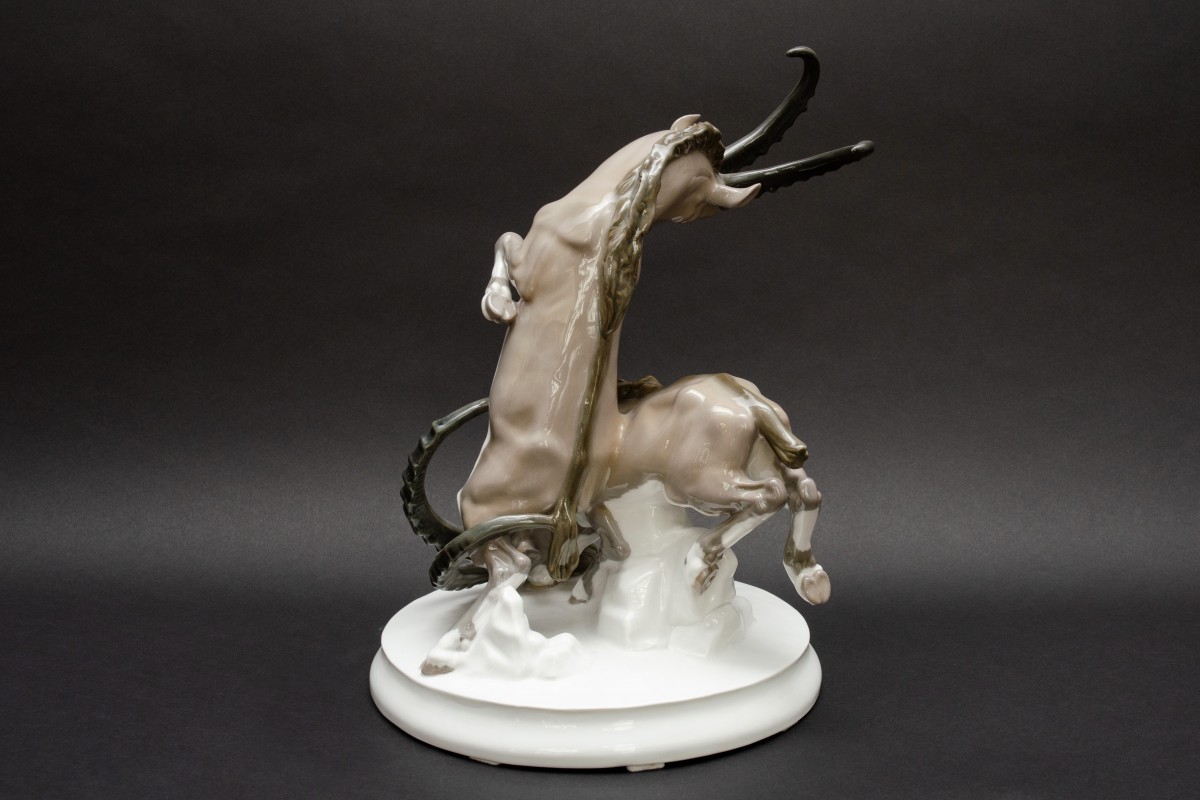
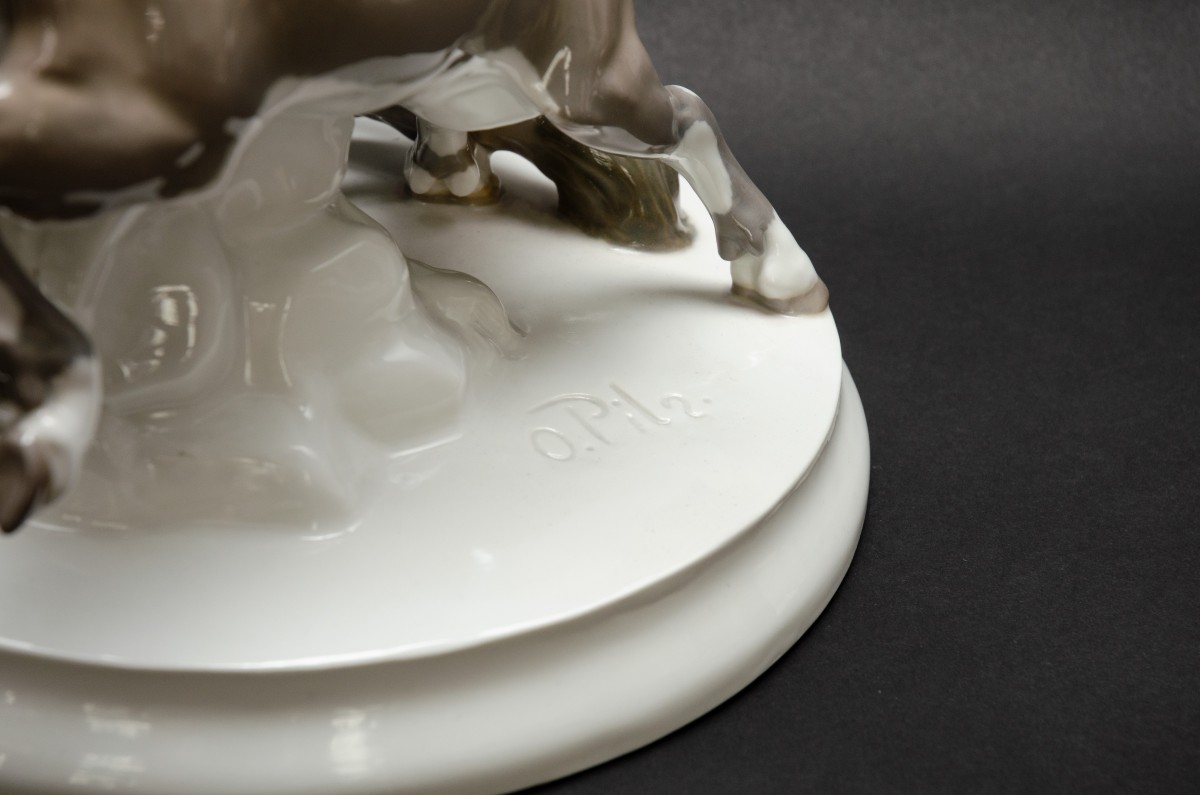
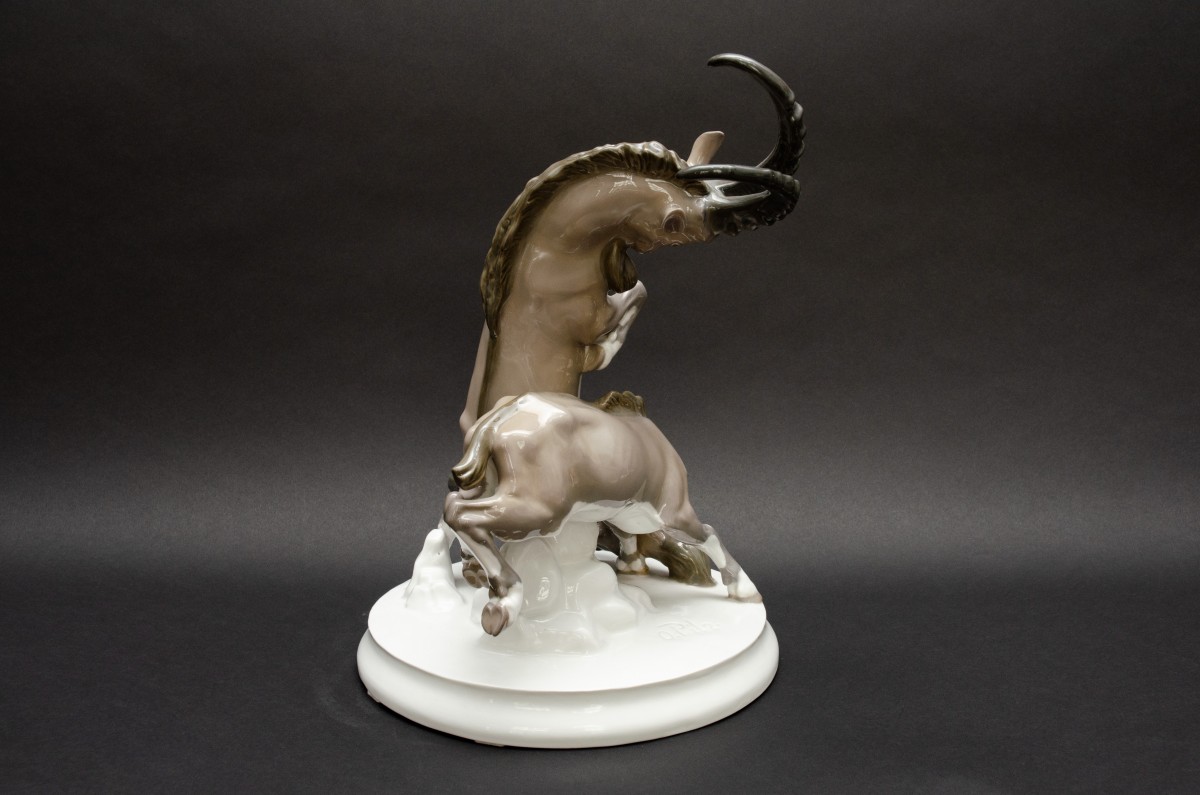
Fantastic large group representing two Capricorns in a swirling movement that makes this piece very impressive and unique. Modelled by Otto Pilz for Meissen in 1911. Great condition.
Size: H 38.5 cm – base diameter: 26cm
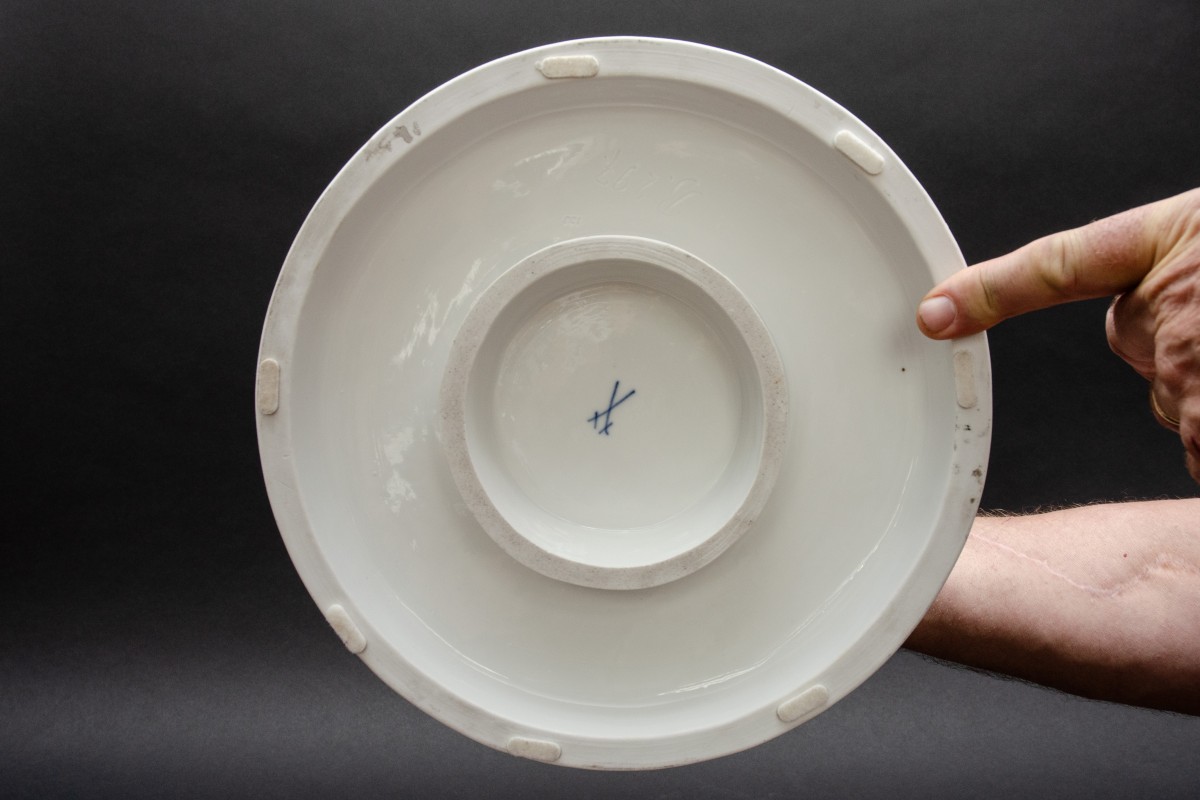
Meissen manufactory, Jugenstil period. The artist modelled it in 1911.
‘Steinböcke’ is one of Pilz’s most representative creations. The animals are arranged in a tense and expressive composition, with particular attention paid to the horns, coats and postures. Meissen now presents this model as a prime example of the flourishing of naturalistic animal sculpture in the early 20th century
Biography: Otto Pilz was born on 30 April 1876 in Sonneberg, Thuringia, a region then renowned for its toy, doll and porcelain factories. He studied at the Dresden School of Decorative Arts, then continued his training at the Berlin Academy of Fine Arts. He soon turned his attention to animal sculpture, which would remain his main field of work. In 1898, he travelled to the East with the sculptor and ceramist Oskar Erich Hösel. This relationship would play an important role in his subsequent association with Meissen: in 1903, Hösel became artistic director of the manufactory and embarked on a cautious modernisation of its production. The Meissen porcelain manufactory acquired around thirty of his designs between 1905 and 1913, including genre figures and animals, as well as nine figures depicting a monkey orchestra. Pilz also worked in Dresden and observed animals in zoos, on farms and in rural landscapes. He mainly modelled domestic and wild mammals. He was a member of the Deutscher Werkbund, an association founded in 1907 to bring together artistic creation, craftsmanship and industrial production. He died in Dresden on 1 April 1934.
History: Meissen was founded in 1710 in the Gothic Albrechtburg Castle. It was Europe’s first porcelain manufacturer. The previous year, in Dresden, the alchemist Johann Friedrich Böttger, a ‘gold-maker’ and prisoner of Augustus the Strong (Elector of Saxony and King of Poland), had discovered the secret of hard-paste porcelain. Initially, the factory produced fine stoneware known as ‘Böttger red’, featuring reliefs and engraved motifs. The first true porcelain, brought to market in 1713, was similar in style to that of China. From 1720 onwards, the porcelain became brilliant white, the colours of the glaze were improved, and the designs featured fantastical ‘chinoiseries’; this was the era of the painter-decorators, led by J. G. Höroldt. In the 1730s, under the direction of Count Brühl (until 1752), sculptors, led by J.J. Käendler, took centre stage, producing a range of figures, animals and birds, as well as dinner services richly decorated with relief work, not to mention vases and tableware. From 1756 to 1773, Meissen porcelain was marked with crossed swords meeting at the point between the hilts. This period marked the transition to the Neoclassical style. In 1774, Count Camillo Marcolini became director, a post he held until 1814. The more understated Neoclassical style came to dominate, but the manufactory declined due to economic pressures and international competition from the French Sèvres manufactory. In the early 19th century, technical innovations were introduced and the bodies were moulded in the contemporary popular style, which improved the situation. In 1830, the name changed from Königliche Manufaktur to Staatliche Porzellan Manufaktur. The superb modelling and painting are characteristic of Meissen porcelain, and over the following 50 years, its production was unrivalled, widely exported and often imitated. Throughout the 19th century, the quality of Meissen remained unchanged and there were few innovations, although the late 1890s and early 1900s marked the beginning of a more inventive approach to Art Nouveau. At the turn of the 20th century, Meissen sought to renew its artistic language. The manufactory remained famous for its 18th-century Rococo groups, but these were less in keeping with modern tastes. Under the direction of Oskar Erich Hösel, it therefore commissioned several external artists capable of introducing a more contemporary style of sculpture. Meissen is still in operation today.
Delevery information :
to be agreed with the customer depending on the object and the place of destination.