Offered by Antichità Castelbarco

Bernardino Campi (Cremona 1522–1591)
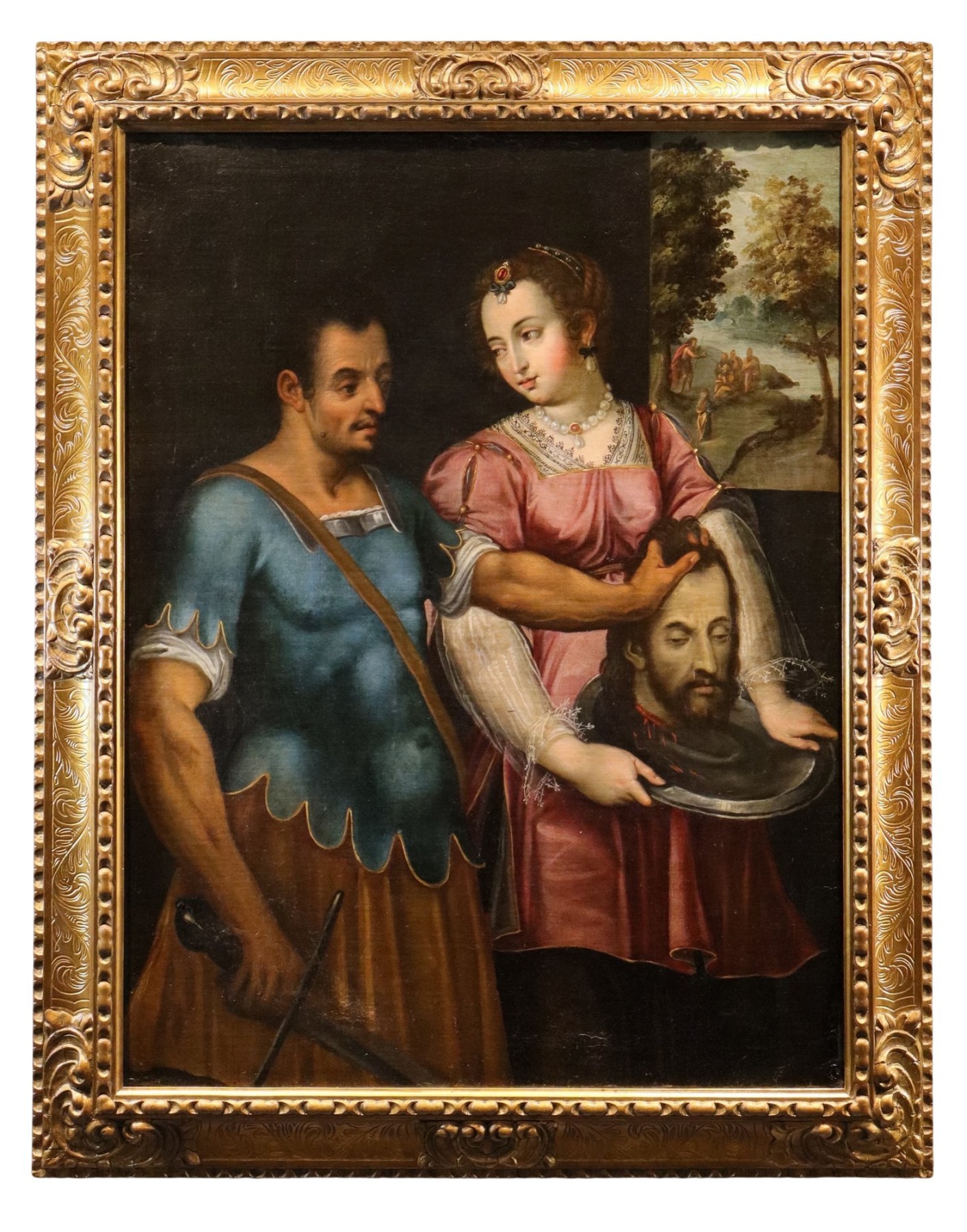
Salome with the Head of John the Baptist
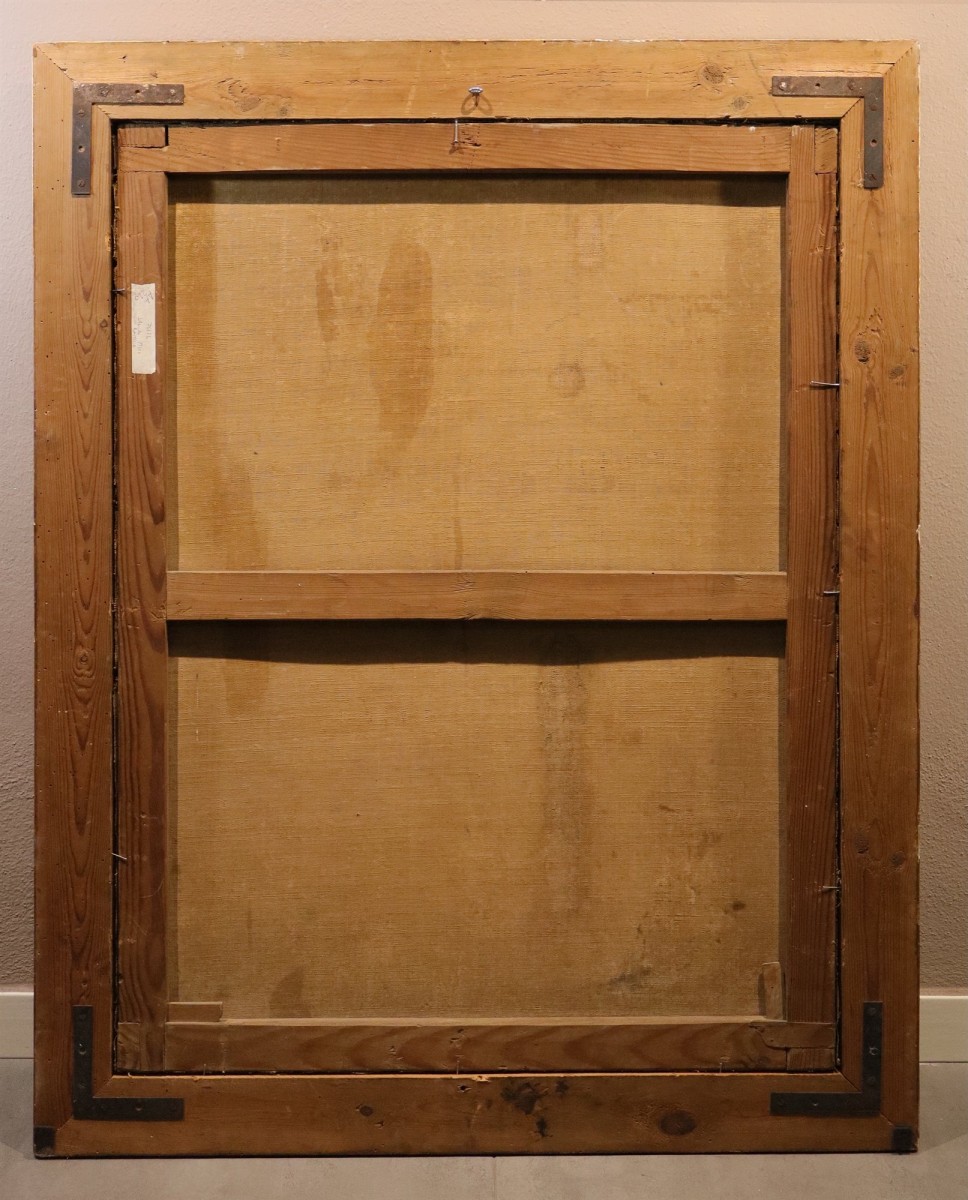
Oil on canvas 101 x 76 cm. – Framed 118 x 94 cm.
Provenance: Templum Fine Art Auctions, Barcelona (Spain), 9 October 2024, lot 65 (attributed to Bernardino Campi), estimate €40,000/50,000 EUR*
Private collection, Barcelona
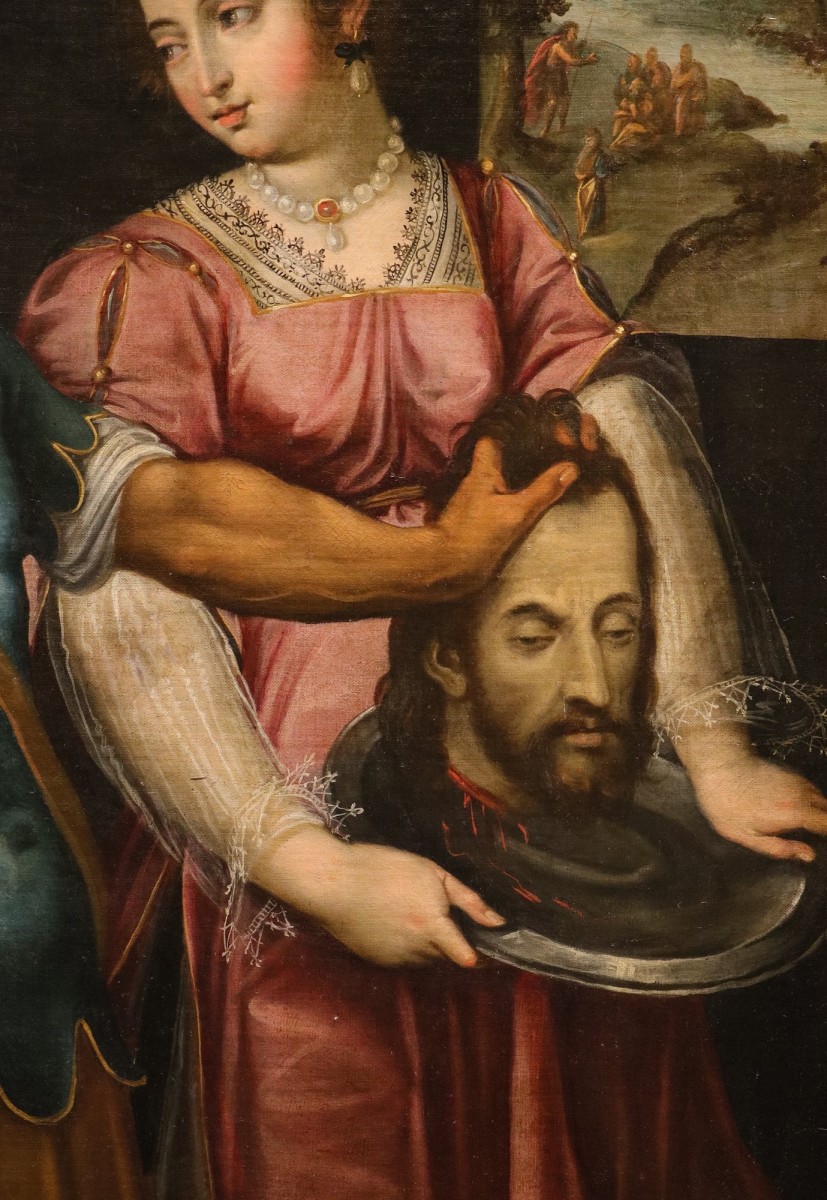
This fine painting depicts the biblical episode of ‘Salome with the Head of St John the Baptist’ and is attributed to the Italian painter Bernardino Campi (Cremona 1522–1591), one of the most distinctive exponents of Mannerism in northern Italy, reflecting the typical style of the 16th-century Cremonese school.
The work is painted on a large canvas, allowing for a monumental depiction of the figures in half-length, set against a theatrical backdrop rich in psychological detail.
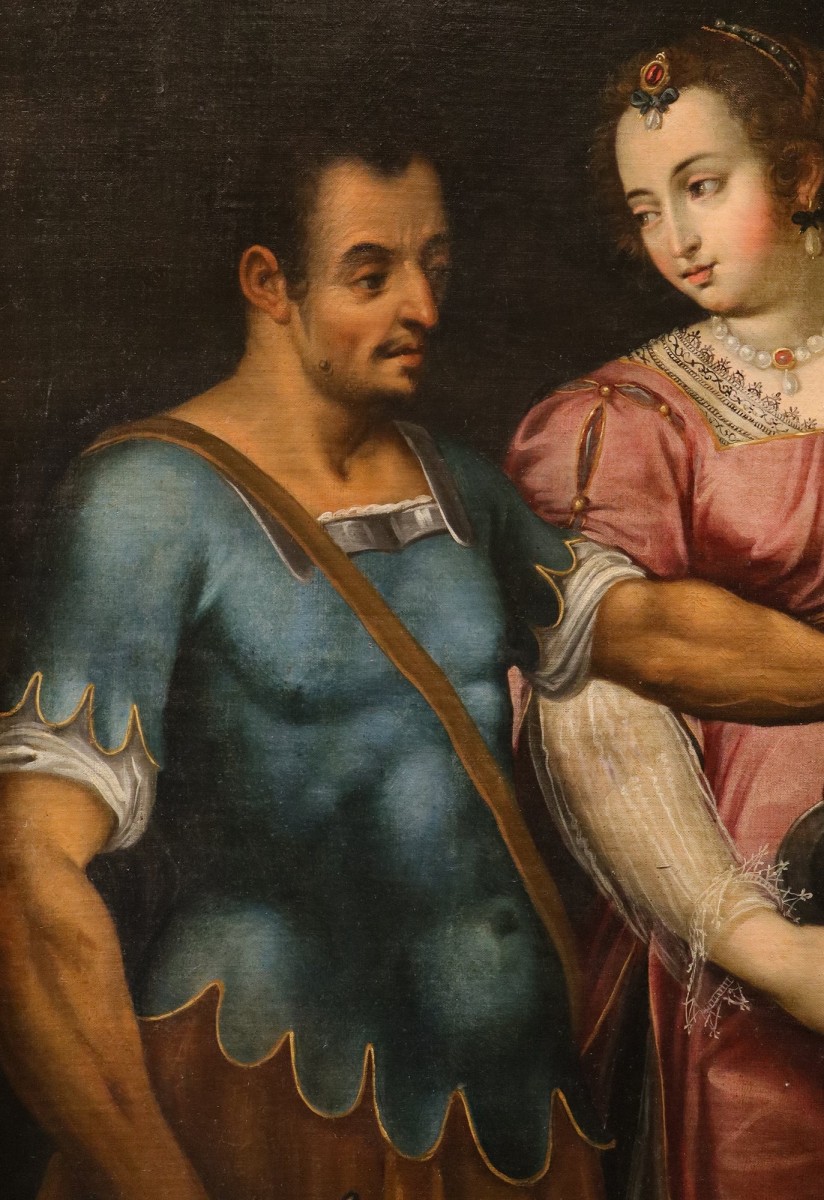
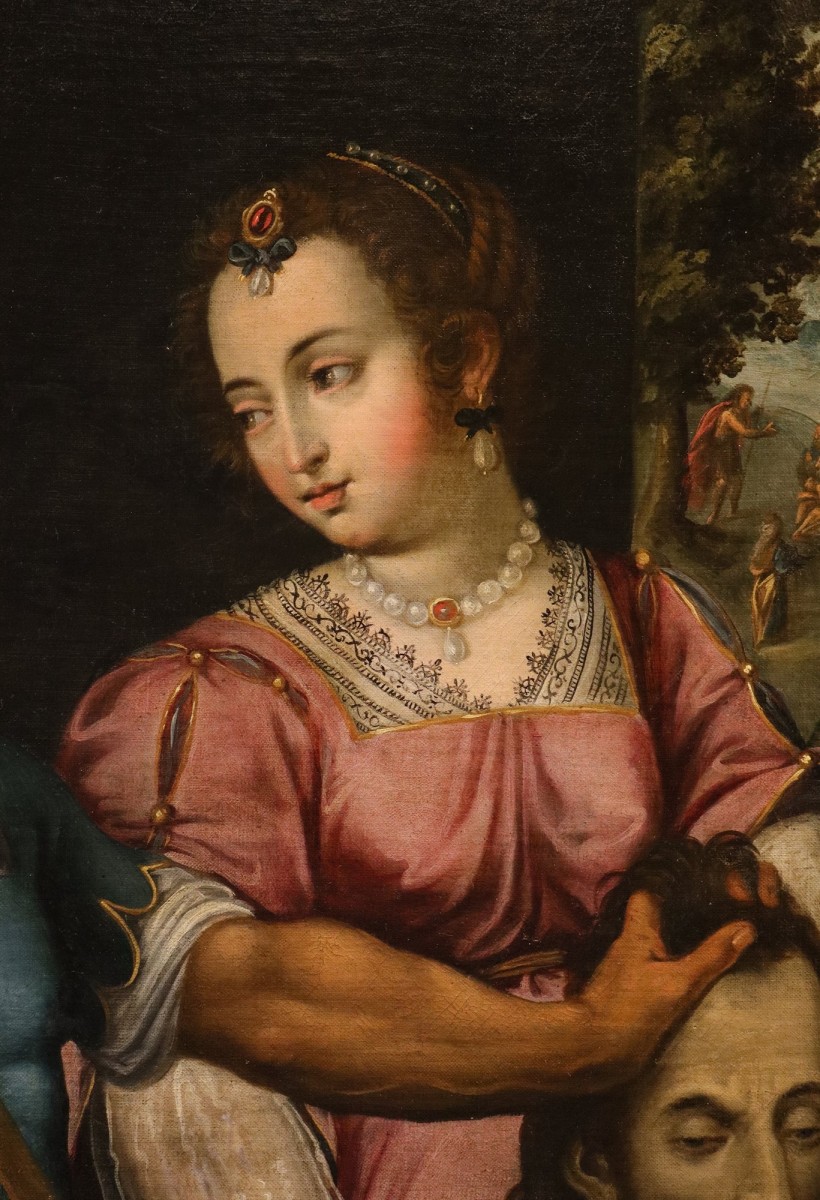
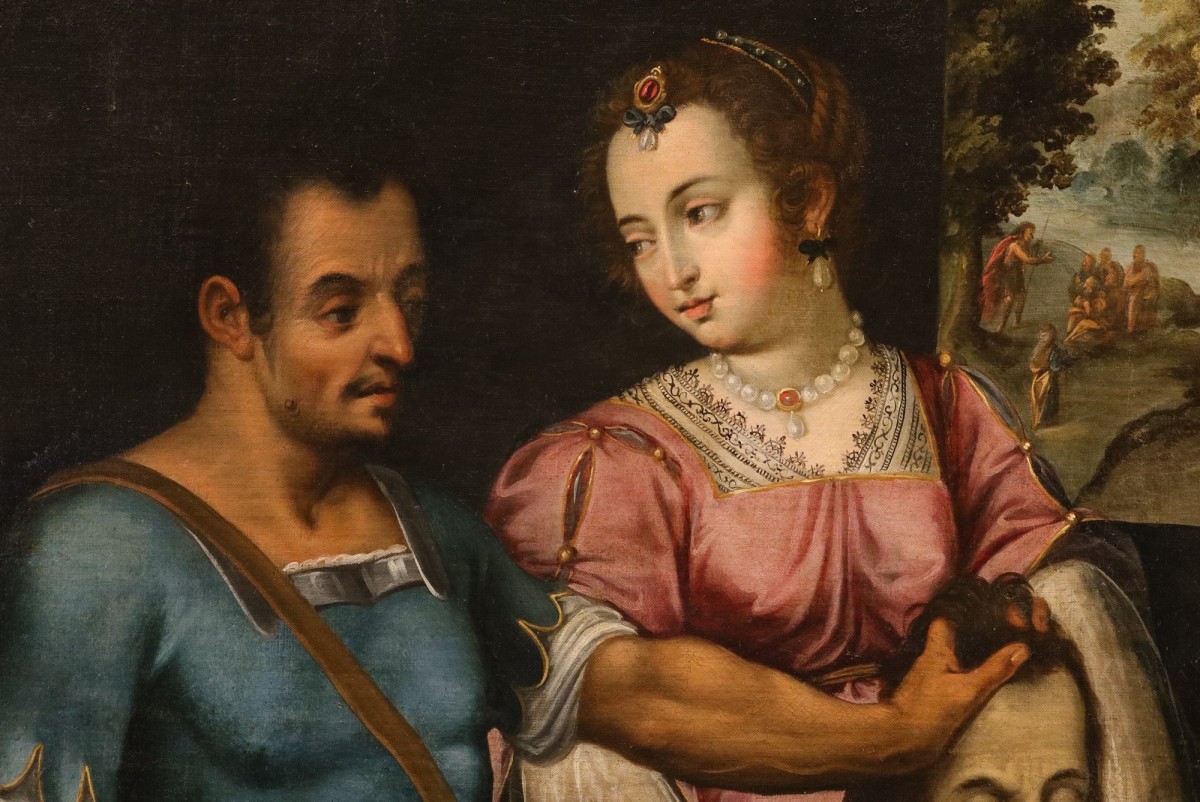
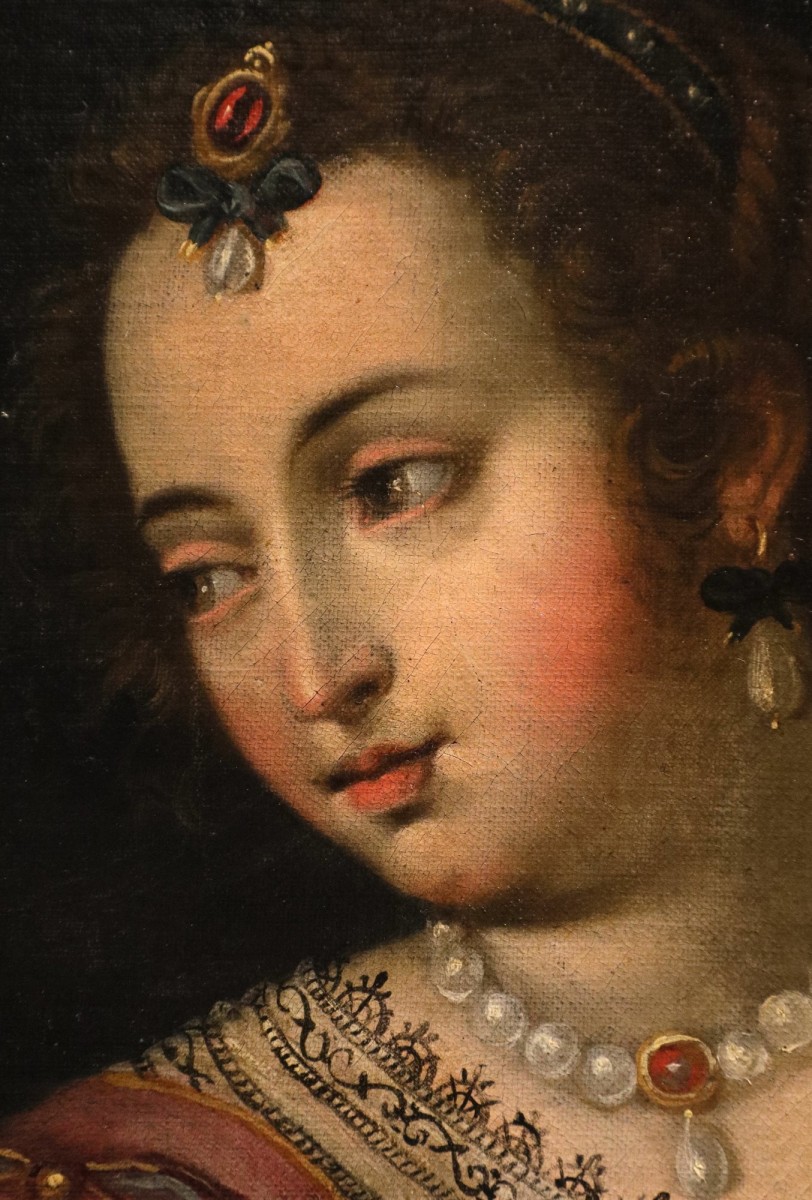
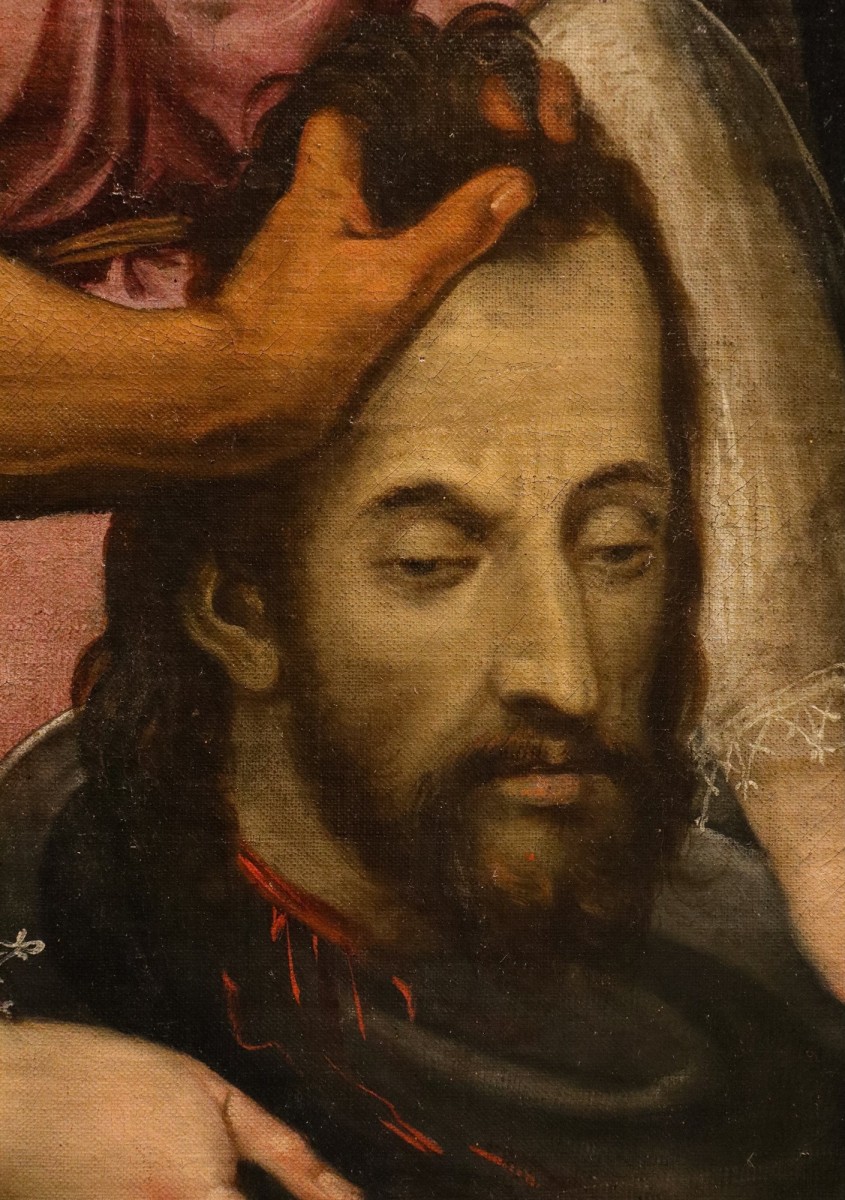
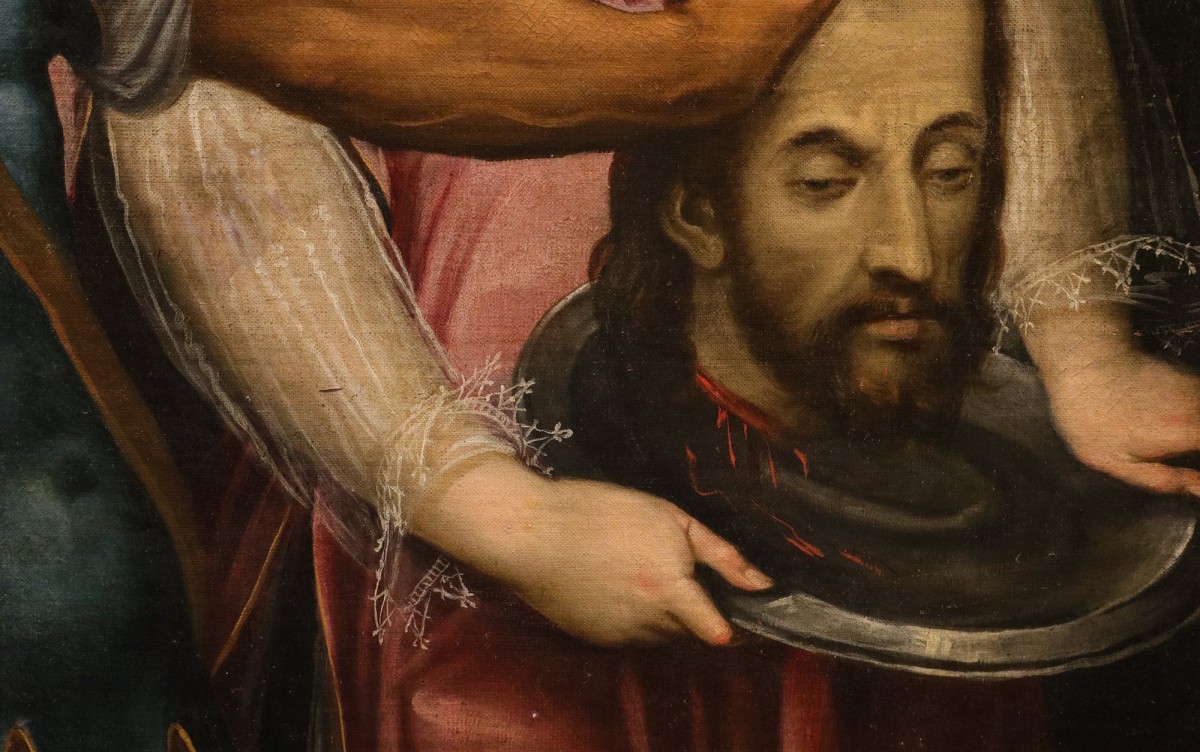
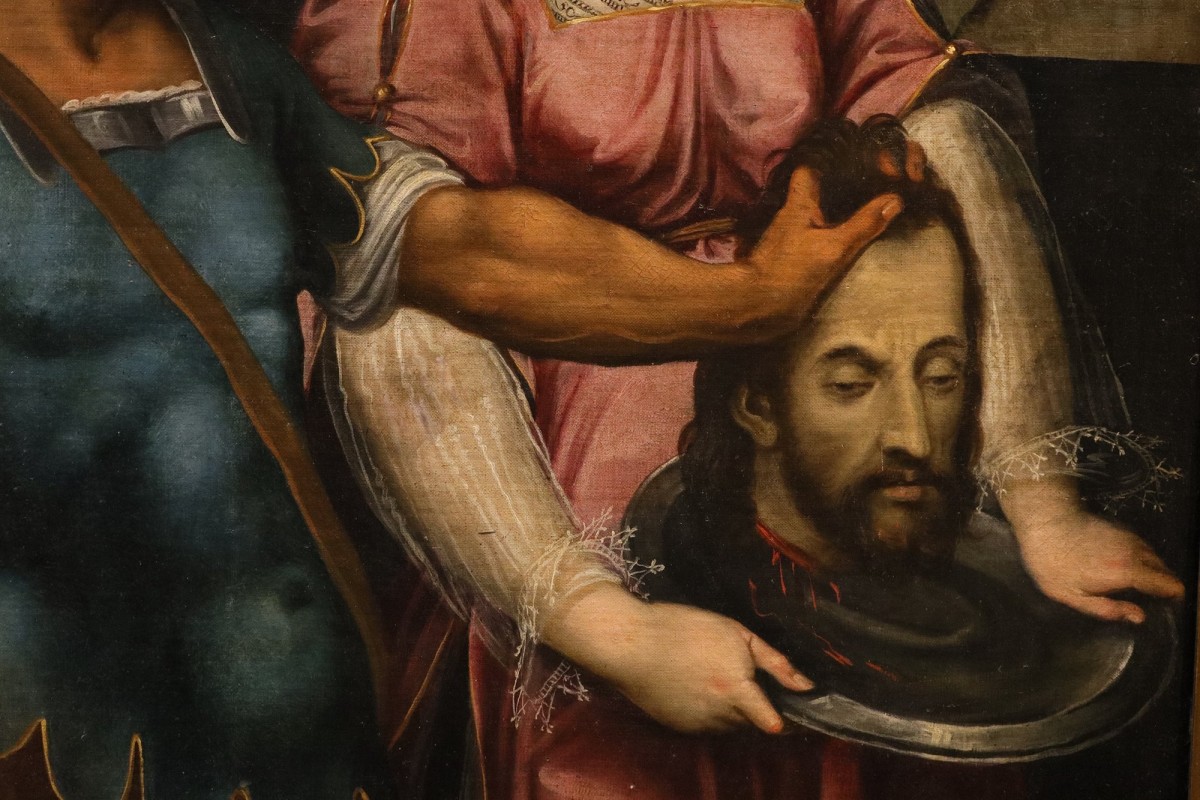
The beautiful Jewish princess Salome, portrayed with the features of a typical Renaissance aristocratic beauty, holds aloft a silver platter in a triumphant gesture, ready to receive the severed head of Saint John the Baptist from the guard.
As recounted in the biblical passage from Matthew (14:1–11), at the instigation of her mother Herodias, she obtained the head as a reward from King Herod, who had been enchanted by the sensual dance she performed for him during a banquet in his honour.
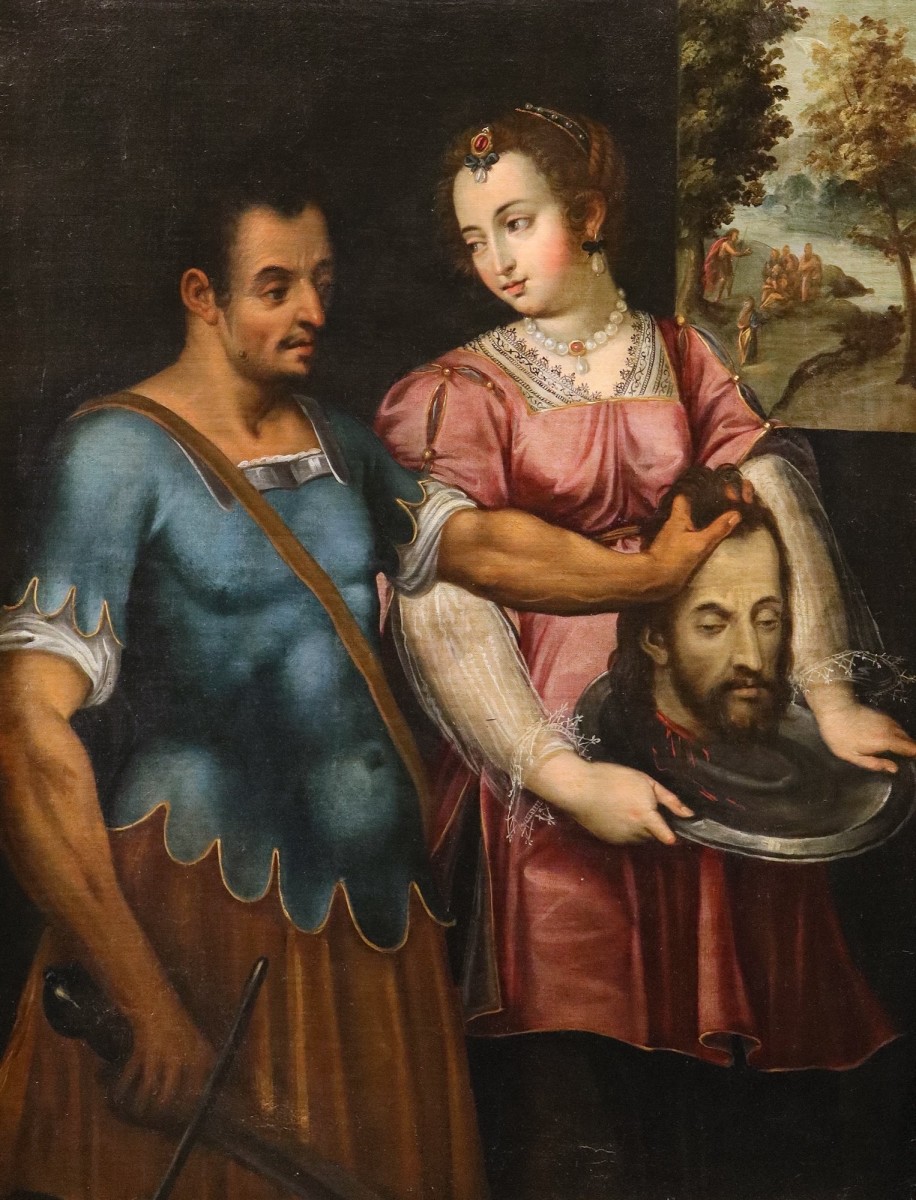
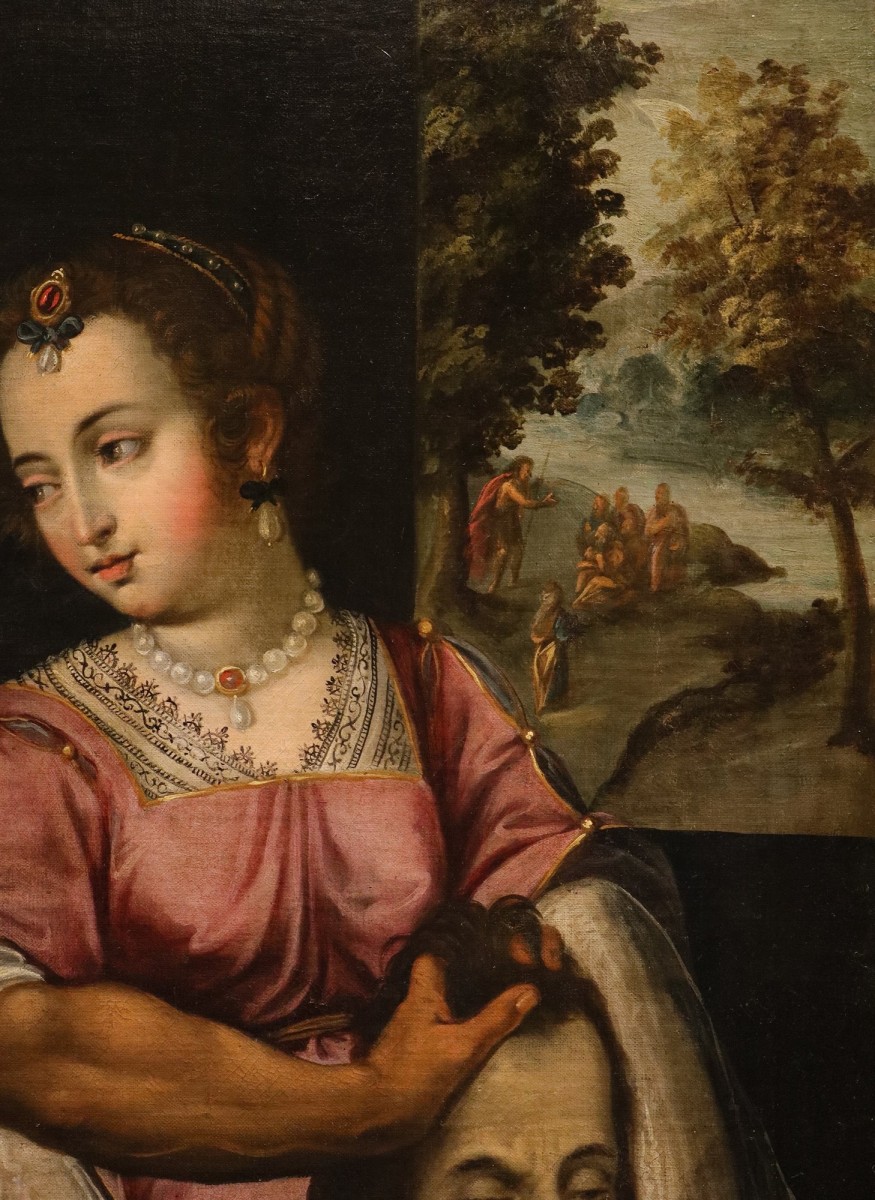
Analysing the composition, we can see the meticulous attention to detail in the strong visual and chromatic contrasts: in particular, Salome dominates the scene with a posture that combines grace and detachment, her gown featuring precious iridescent pink velvet fabrics, adorned with pearls around her neck and a finely braided hairstyle.
She is contrasted by the imposing figure of the guard, who wears sumptuous, light-reflecting lapis lazuli-blue metal armour, paired with an ochre-coloured fringed skirt, typical of Renaissance ‘all’antica’ depictions of Roman soldiers.
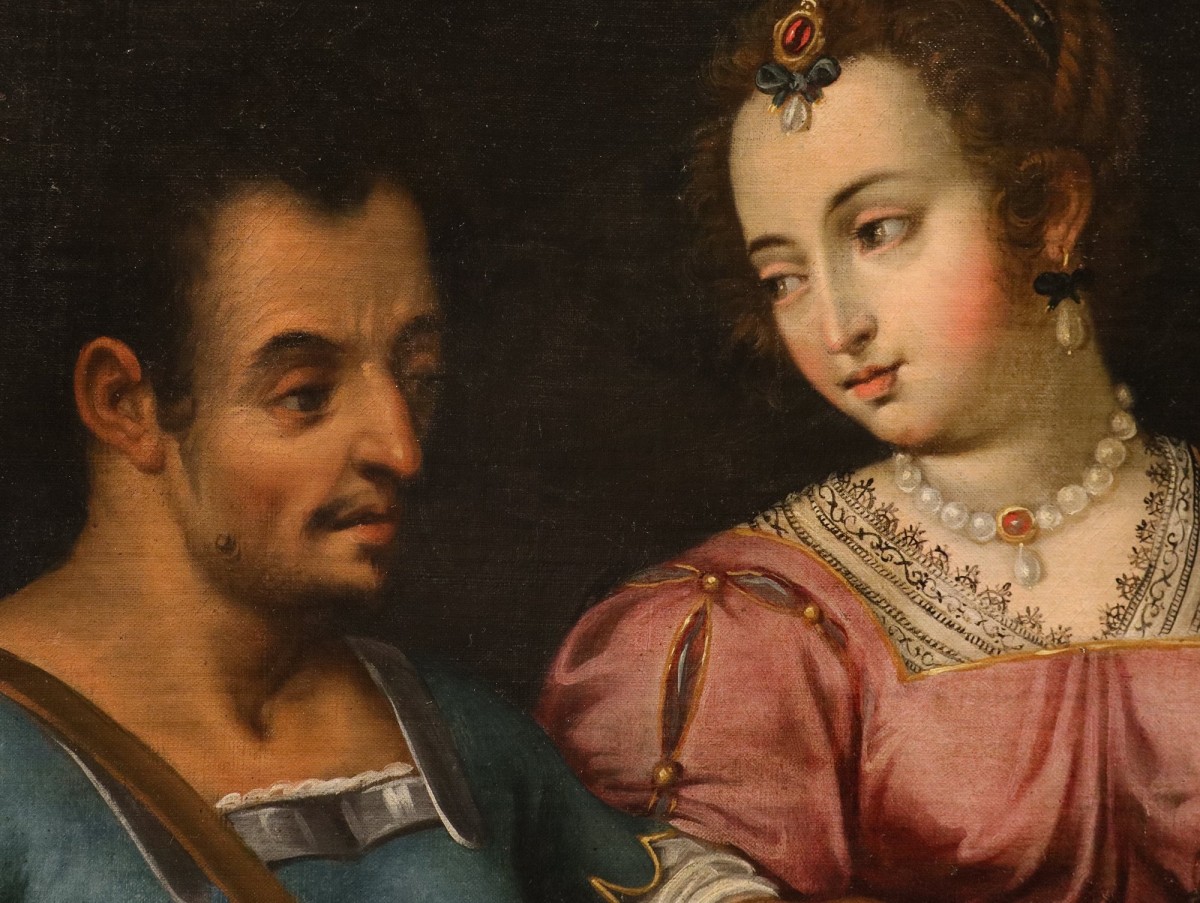
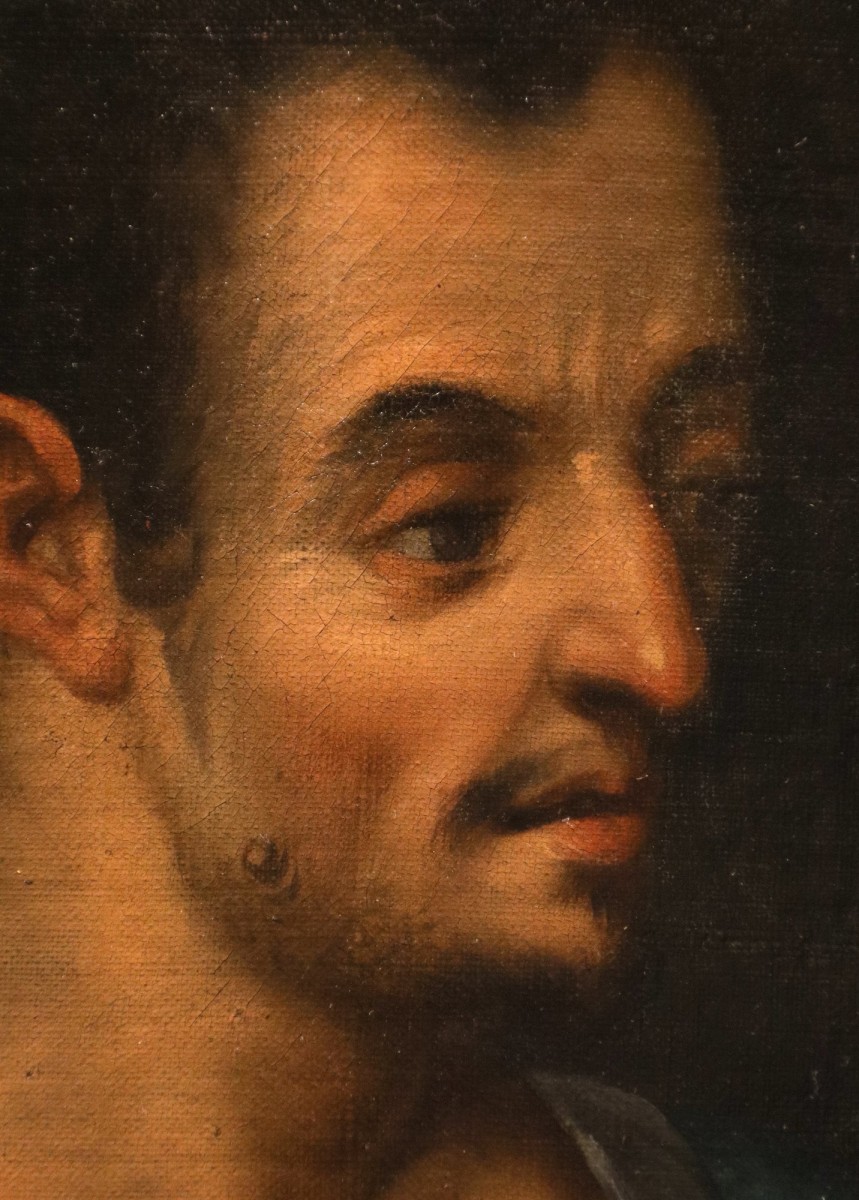
The most captivating element of the painting, and one of great pictorial refinement, is the silent interplay of gazes and the contrasting demeanours of the two figures, as well as the physiognomic contrasts of their faces: this stylistic choice transforms the scene into a psychological encounter of profound emotional intensity.
The woman, beautiful and with almost angelic features, does not gaze in horror at the macabre trophy but instead turns her gaze towards the guard, as if seeking his complicity, whilst holding the tray with aristocratic detachment. The soldier, on the other hand, observes it with a stern yet intensely human and compassionate expression, as he presents the tragic trophy.
From a stylistic point of view, this ‘Salome’ is a significant milestone in the career of Bernardino Campi (Cremona 1522–1591), a perfect example of his painting, which is characterised by an intellectual, elegant and sophisticated Mannerist style, heavily influenced by the sinuous lines of Parmigianino and the plasticity of Correggio’s figures.
Comparing other works by the painter and focusing on the faces of his female figures, we see that they share precise stylistic constants: idealised features, porcelain-like complexions and a formal smoothness that transforms these portraits into archetypes of icy aristocratic beauty.
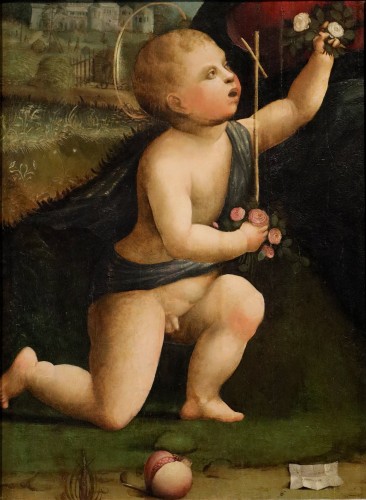
By way of comparison, we might mention the faces in ‘Saint Cecilia and Saint Catherine’ in the Church of San Sigismondo in Cremona (Fig. 1), that of the ‘Magdalene’ at the Art Gallery of New South Wales in Sydney (Fig. 2), and finally that of Salome in ‘The Beheading of John the Baptist’ in Cremona Cathedral (Fig. 3, detail).
The theme of the Beheading of John the Baptist was tackled on several occasions by the Campi workshop, and Bernardino himself, in addition to the work just mentioned, also produced a panel now housed in the Diocesan Museum of Milan (Fig. 4). Although each work is distinct from the others, we can observe in these pieces a compositional approach that makes extensive use of graphic prototypes and preparatory drawings circulating within the workshop.
The figure of the guard, and the profile pose with the outstretched arm—reminiscent of an ancient relief—are recurring geometric and anatomical motifs in Bernardino’s sketchbooks, used to balance the soft sinuosity of the female figures in the foreground.
Another ‘trademark’ inherent in Bernardino’s artistic style is his marked preference for a rich, vibrant and intensely luminous colour palette: from the soldier’s metal armour, with its hyper-realistic reflections, to the iridescent sheen of the fabrics or the cold surface of the silver plate, all of which demonstrate a technical mastery that Campi frequently employed as a virtuosic device to illuminate the scene.
Another fascinating detail found in his other works (see Fig. 2) is the glimpse in the corner – in this case, top right – where a faux opening reveals a wooded landscape in which a lively scene featuring John the Baptist along the banks of the Jordan can be glimpsed; this visual device of the ‘picture within a picture’, typical of Mannerism, not only lends spatial depth but also alludes to events preceding the painting’s creation.
Delevery information :
We take care of and organise the transport of the purchased works, both for Italy and abroad, through professional and insured carriers.
We take great care We personally take care of the packaging, to which we devote a great deal of care: each work is carefully packed, first with arti- cle material, then with a custom-made wooden box.
Should you have the desire to see this or other works in person, we would be happy to welcome you to our gallery in Riva del Garda, Viale Giuseppe Canella 18, we are always open by appointment only.