Offered by Antichità Castelbarco
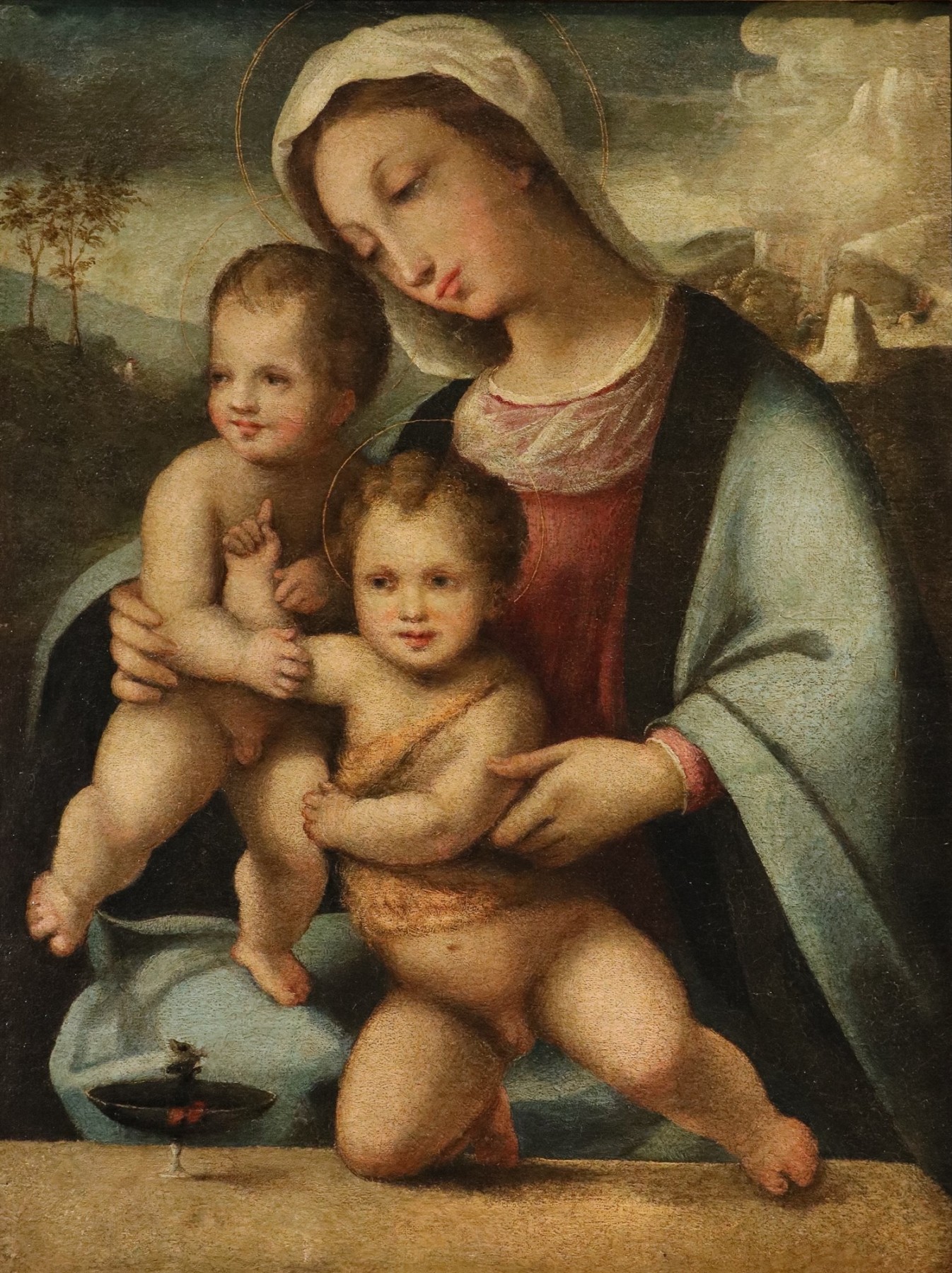
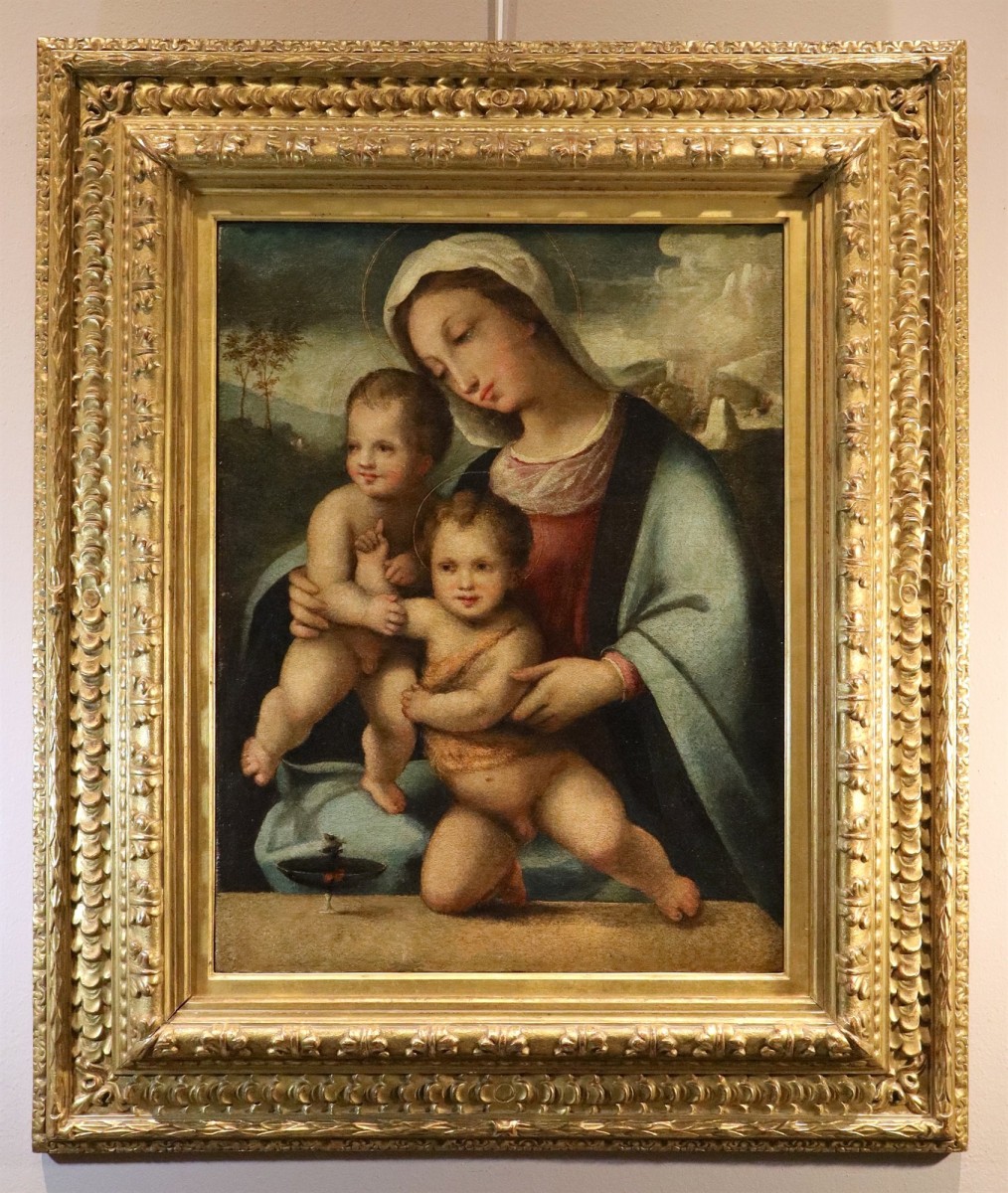

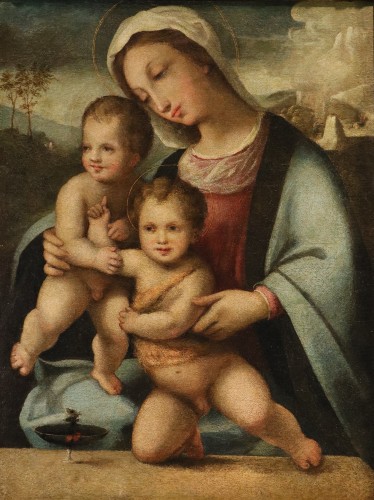
Madonna and Child with the Infant Saint John
Domenico Beccafumi (Monteaperti, 1486 – Siena, 1551) Workshop/Follower
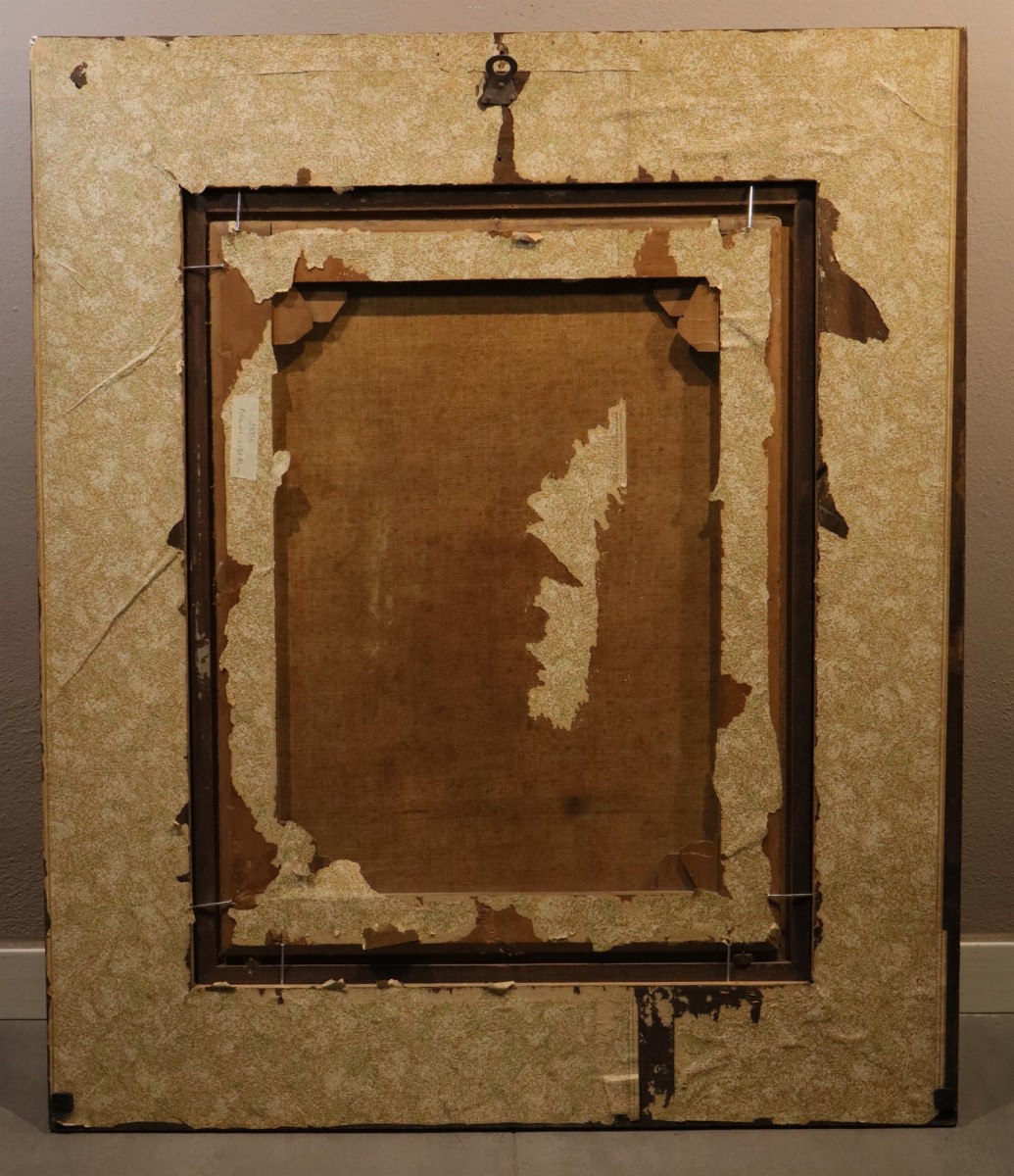
Oil on canvas 70 x 53 cm. Framed: 104 x 87 cm.
Further reading: ‘Il buon secolo della pittura senese’, A. Angelini, R. Longi (eds.), 2017, Pacini Editore
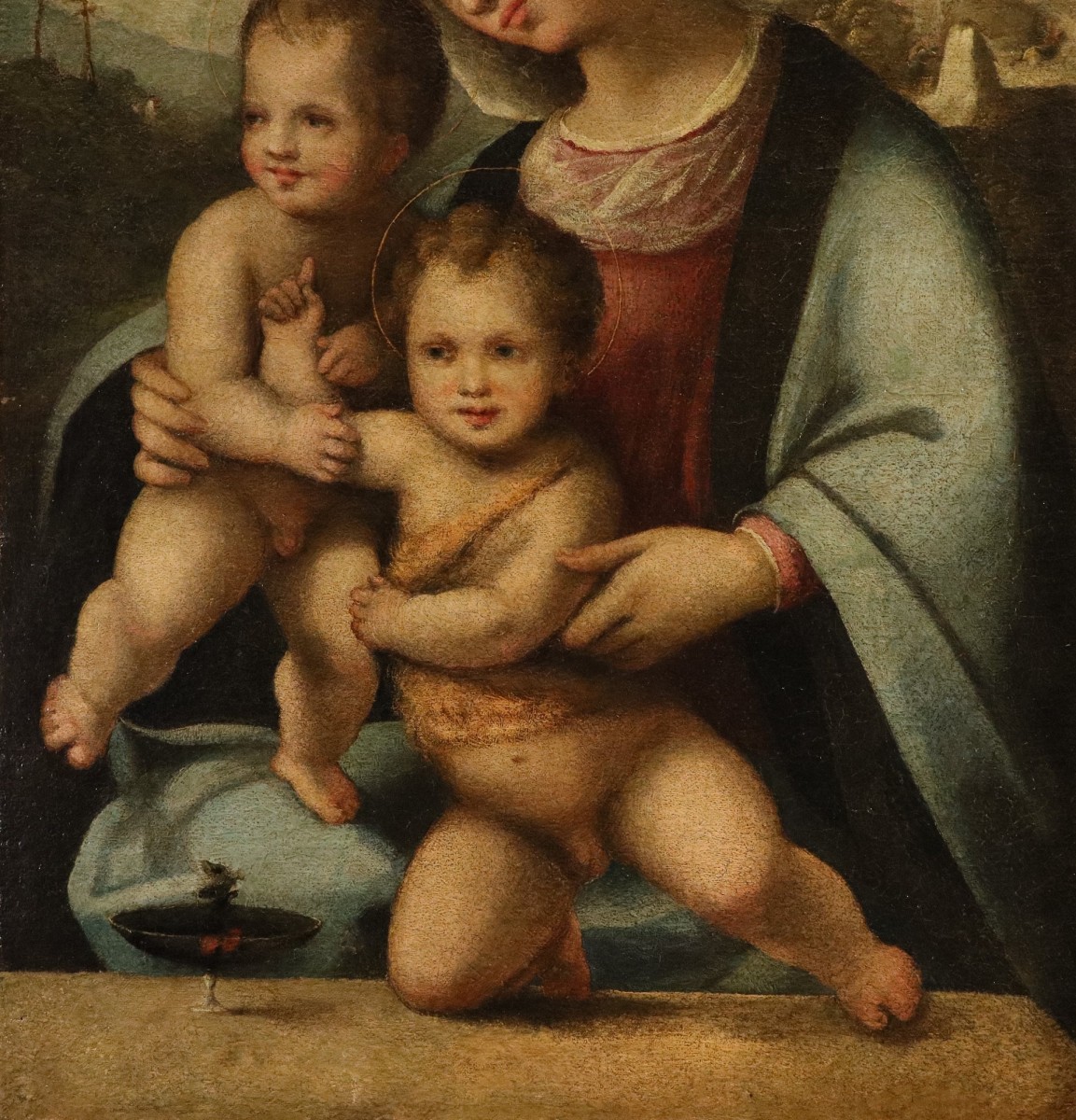
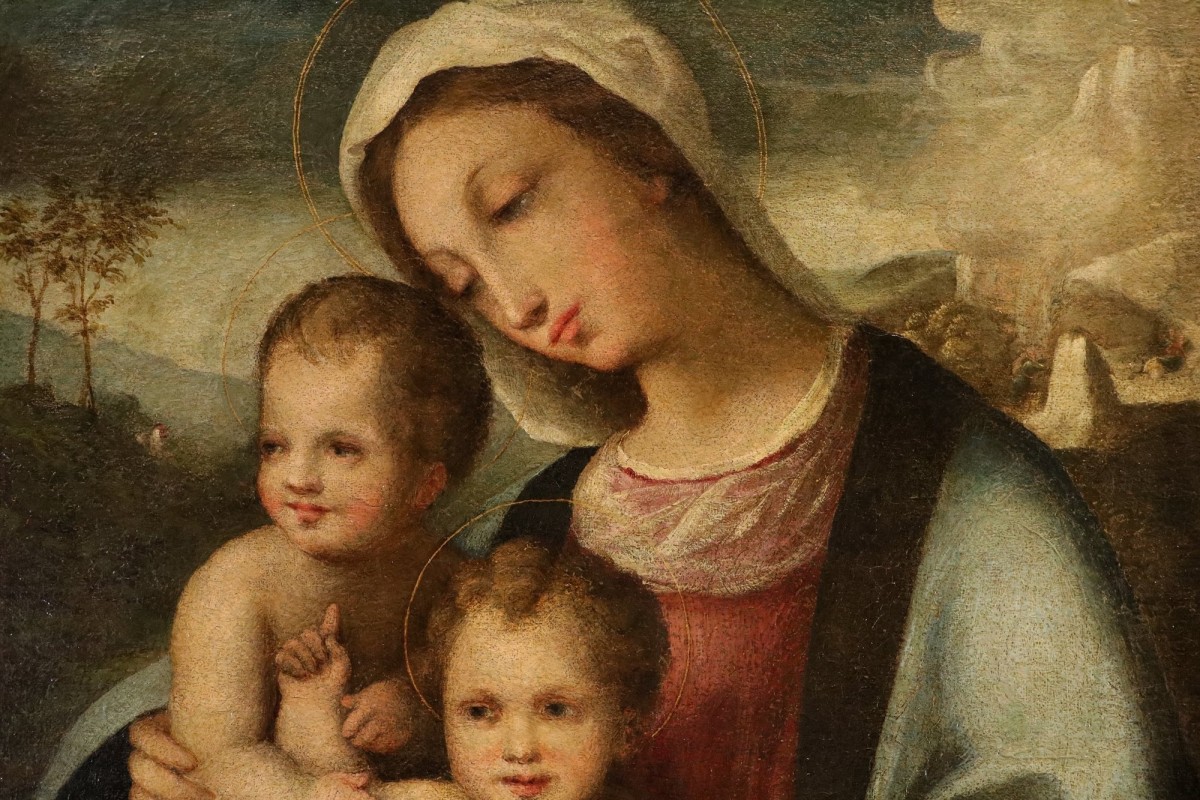
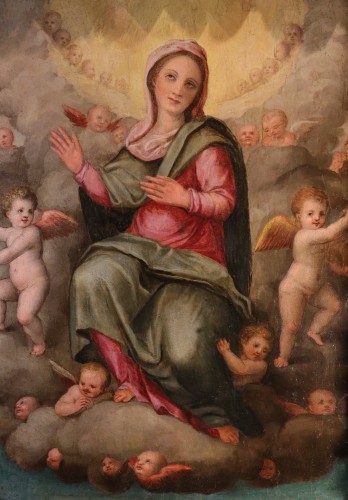
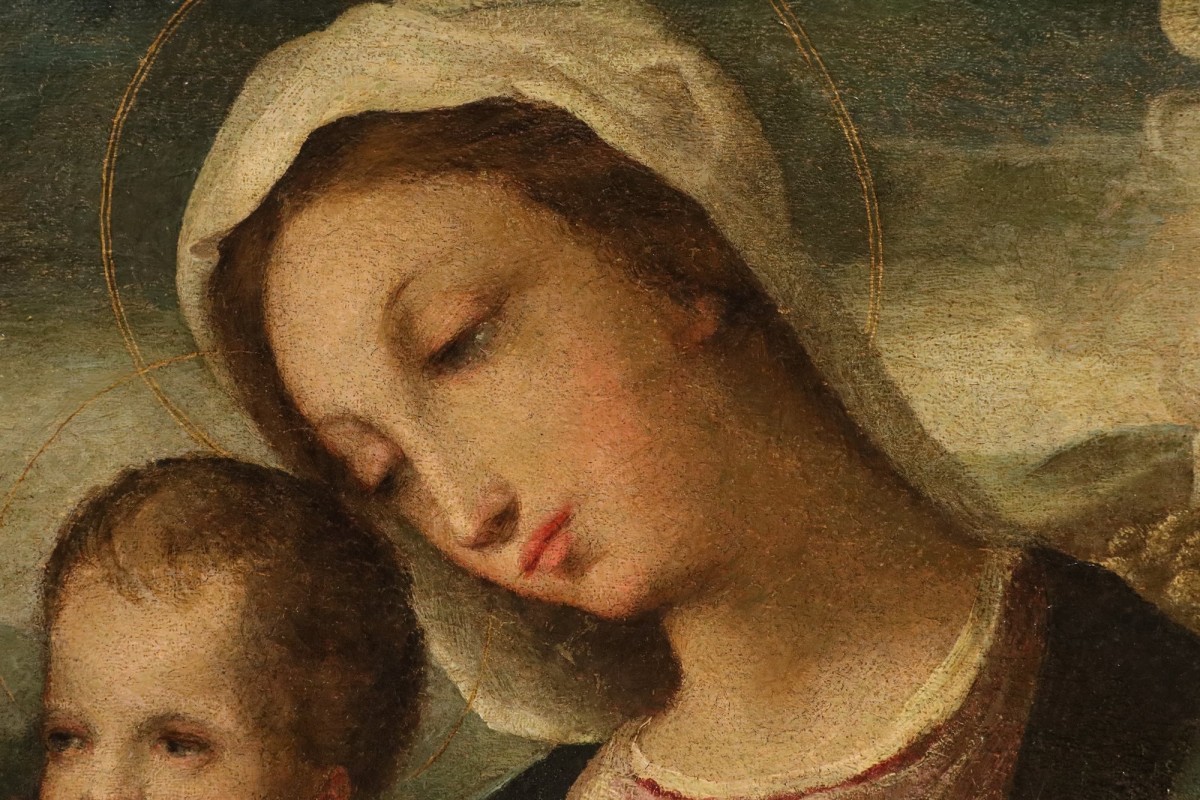
The work on offer, depicting the Madonna and Child with the Infant Saint John, is a most delightful reinterpretation of one of the early masterpieces by the master Domenico Beccafumi (Monteaperti, 1486 – Siena, 1551), painted around 1508–1510 and now housed in the Pinacoteca Nazionale in Siena (Fig. 1).
A Sienese painter, trained in the tradition of Renaissance artists such as Fra Bartolomeo and Filippino Lippi, he carved out a fundamental role in the history of art by helping to give rise to Mannerism in Tuscany, even before Pontormo and Rosso Fiorentino, who would later become its greatest exponents.
He distinguished himself because, in the sixteenth century, he continued that quintessentially Sienese tradition characterised by elegance and refinement, yet with a style based on a break from the classical balances of the Renaissance and on a visionary atmosphere, in which the figures are depicted in sinuous poses yet charged with emotional and psychological tension.
Returning now to the analysis of our work, created by an artist from his workshop or an immediate successor, we see his typical characteristics reproduced with great quality, reflecting the influences of Leonardo’s and Raphael’s painting in Siena and Florence.
Even at first glance, one can discern the strong artistic legacy that these two masters left to Beccafumi; in particular, the points of contact with Raphael’s ‘Madonna Terranova’ of 1505 (Fig. 2) are striking, and this work appears to have been one of the most important sources for this composition, not to mention Leonardo’s ‘Madonna dei Fusi’ (Fig. 3), which the position of our young Saint John seems to echo.
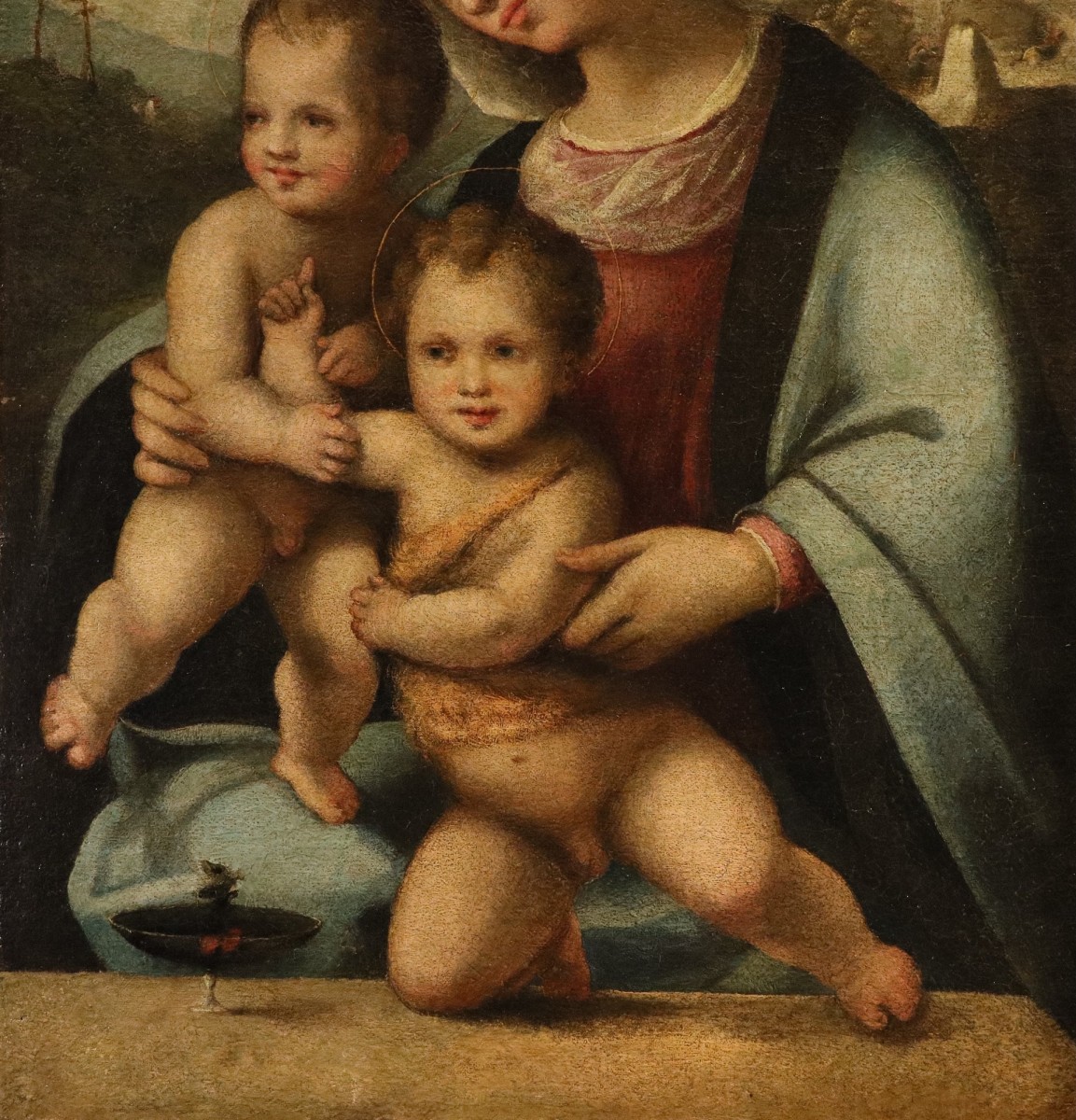
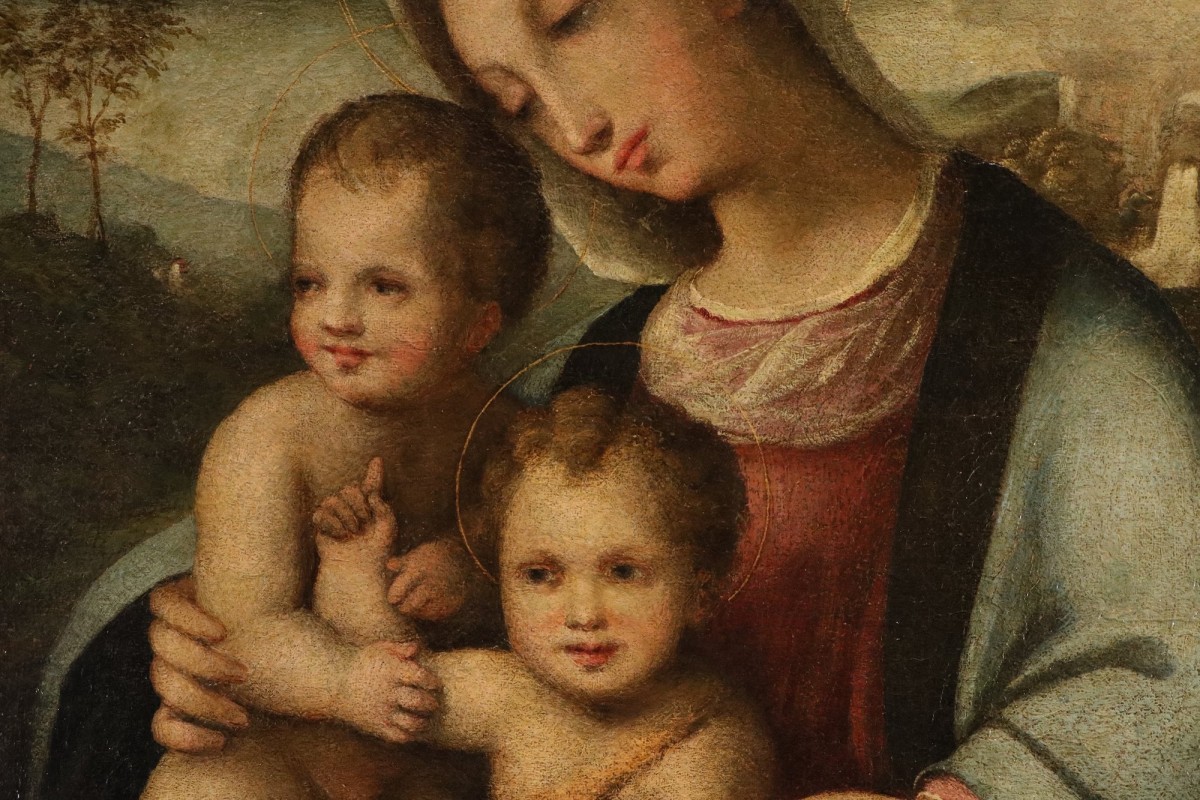
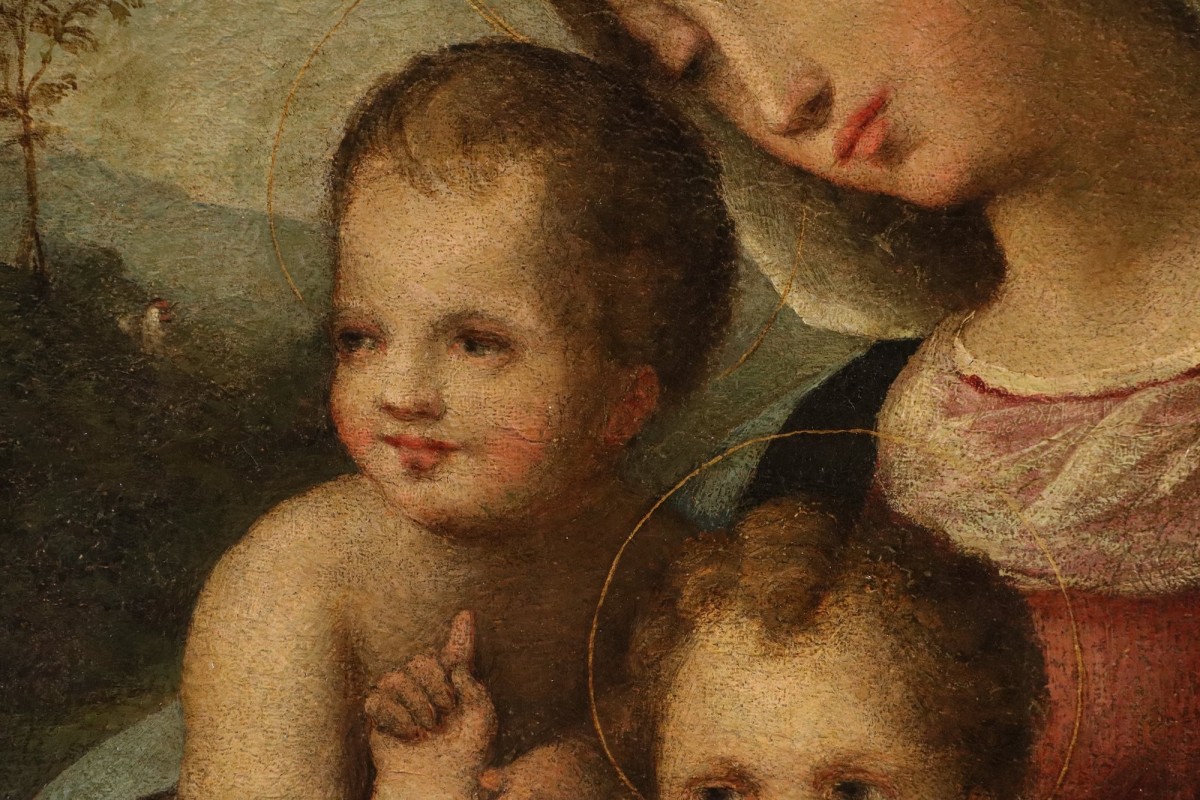
It is interesting to focus on the small Saint John the Baptist and, in particular, on his unusual centrality in relation to the Infant Jesus and the Virgin Mary: this compositional choice is certainly not accidental but embodies profound theological motivations.
Compared to many similar works, emphasis is placed here on the role of the Baptist—not merely a playmate for Jesus, but his Forerunner, who came to announce him by preparing the way for the Messiah.
What catches the eye is his gesture, with his index finger pointing towards the sky – symbolically towards Christ – evoking his mission as a witness (“Behold the Lamb of God”). His forward position, almost acting as a ‘shield’ or visual introduction to the divine figure behind him, emphasises his role as a mediator between humanity (the viewer) and Redemption.
The artist’s ability to render the complex emotional interplay between the two young cousins is truly spectacular and deeply moving: the intense dialogue of glances and postures, which seem to intertwine with one another, evokes the destinies of the two children.
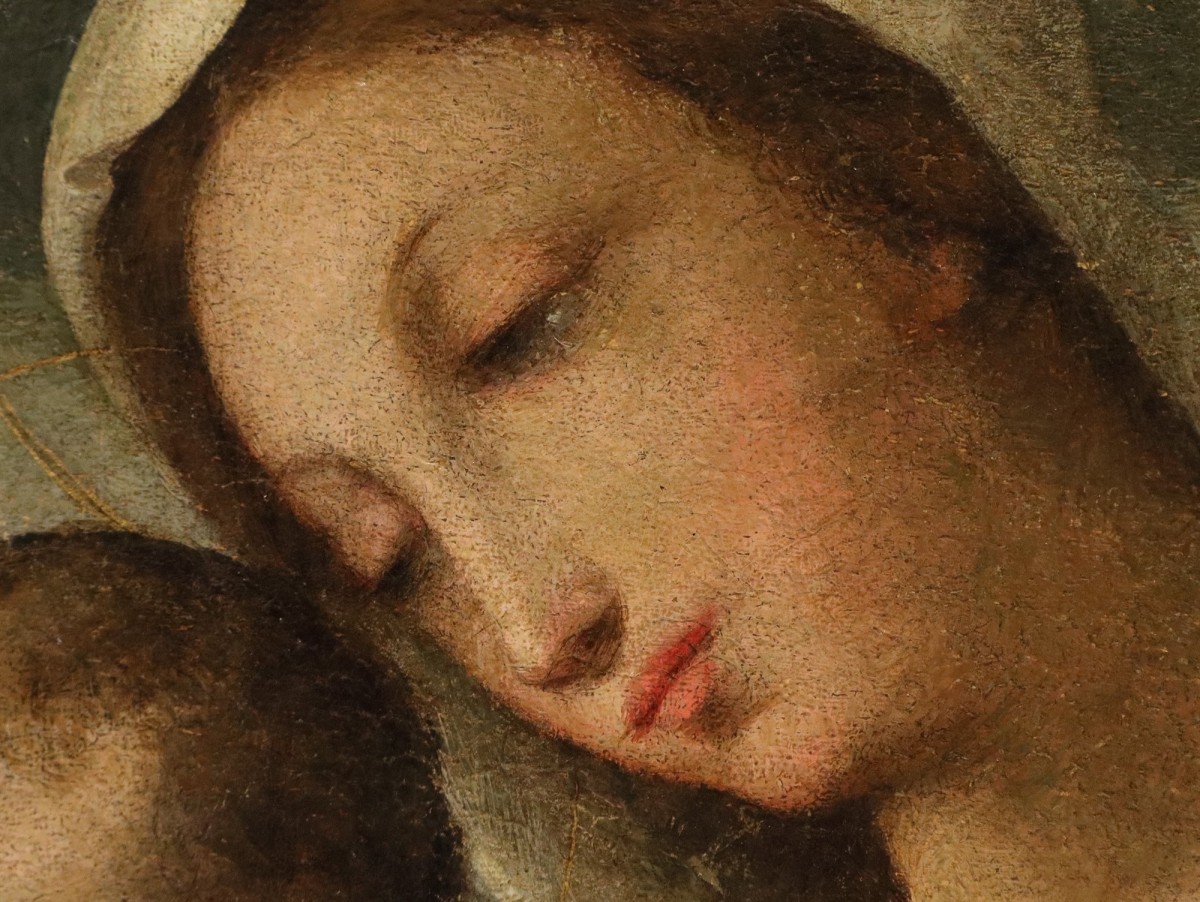
Their close and affectionate physical contact foreshadows the unbreakable bond that will culminate in the Baptism of Christ and, symbolically, in the sacrifice of the Passion, heralded by the sense of intimate acceptance that shines through the Virgin’s face.
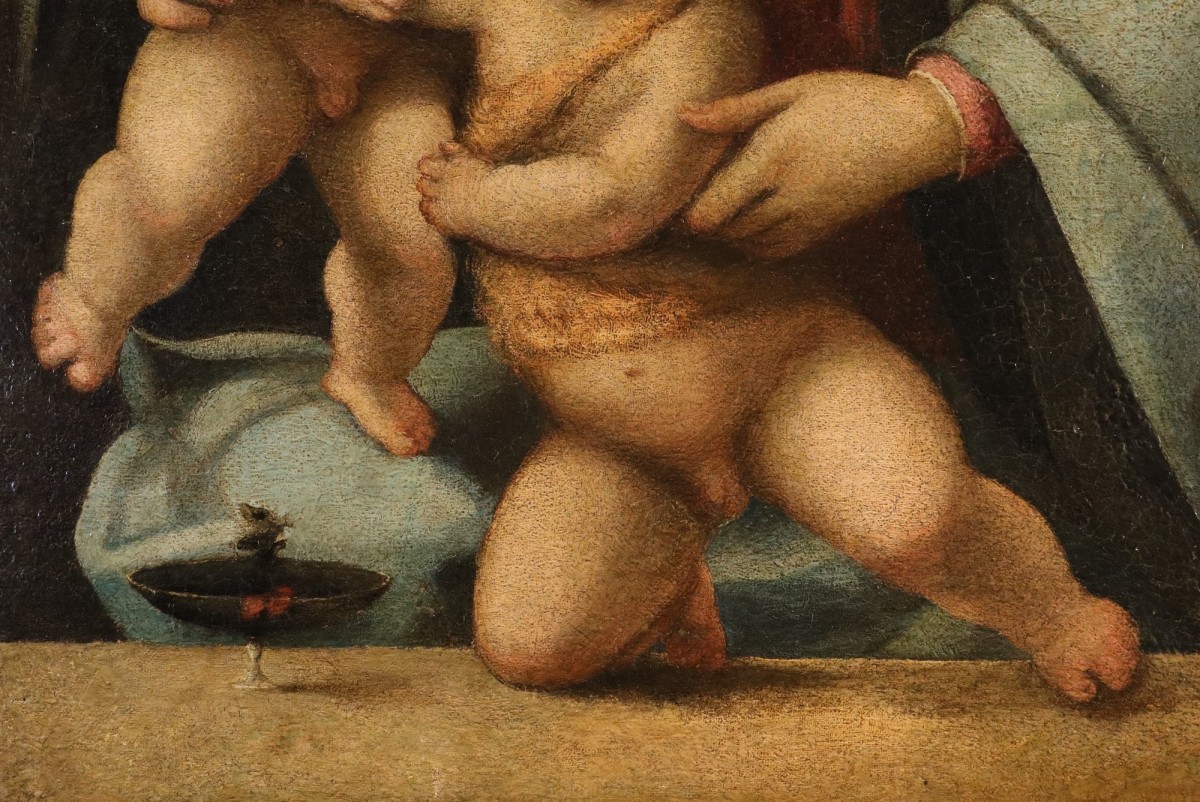
A small detail, yet one of great poetic beauty, added by our artist—probably at the client’s request—is the bowl in the foreground, upon which a butterfly seems to be about to alight and from which a red ribbon emerges; these are elements of profound theological significance.
Taken together, these three symbols could visually allude to the Paschal Mystery: through the sacrifice of the Passion (the red ribbon) and the Eucharist (the bowl), humanity is purified and receives the promise of eternal life and the Resurrection (the butterflies).
In Christian art, the butterfly indeed represents the Resurrection and the immortality of the soul, whose life cycle mirrors the parable of the life of Christ and of humankind.
Finally, the painting depicts, in the background, a captivating landscape—also evocative of the Northern masters and the style of Leonardo—which portrays the Holy Family during their flight into Egypt.
Delevery information :
We take care of and organise the transport of the purchased works, both for Italy and abroad, through professional and insured carriers.
We take great care We personally take care of the packaging, to which we devote a great deal of care: each work is carefully packed, first with arti- cle material, then with a custom-made wooden box.
Should you have the desire to see this or other works in person, we would be happy to welcome you to our gallery in Riva del Garda, Viale Giuseppe Canella 18, we are always open by appointment only.