Offered by Galerie PhC

European paintings from the 17th, 18th and 19th centuries.
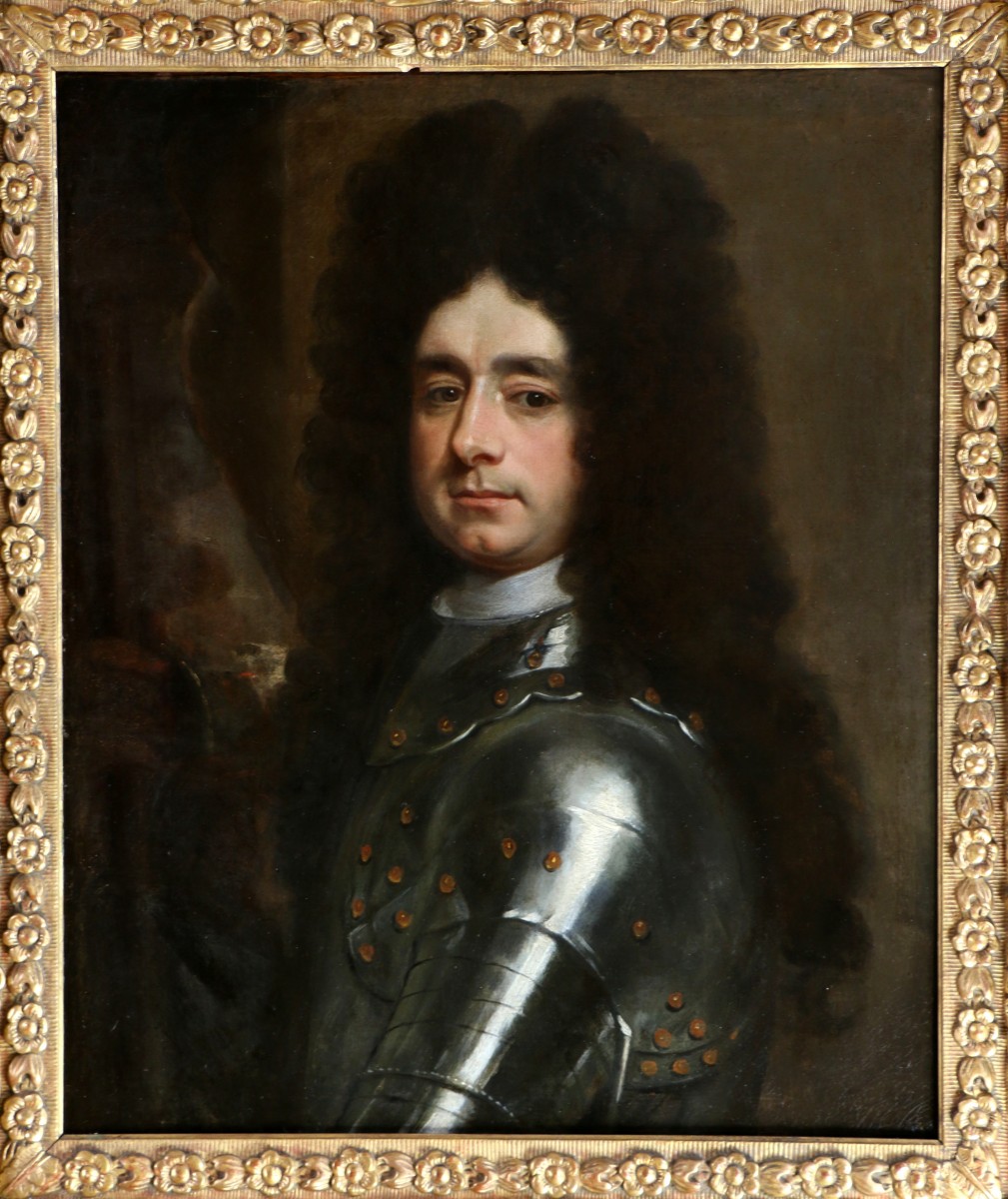
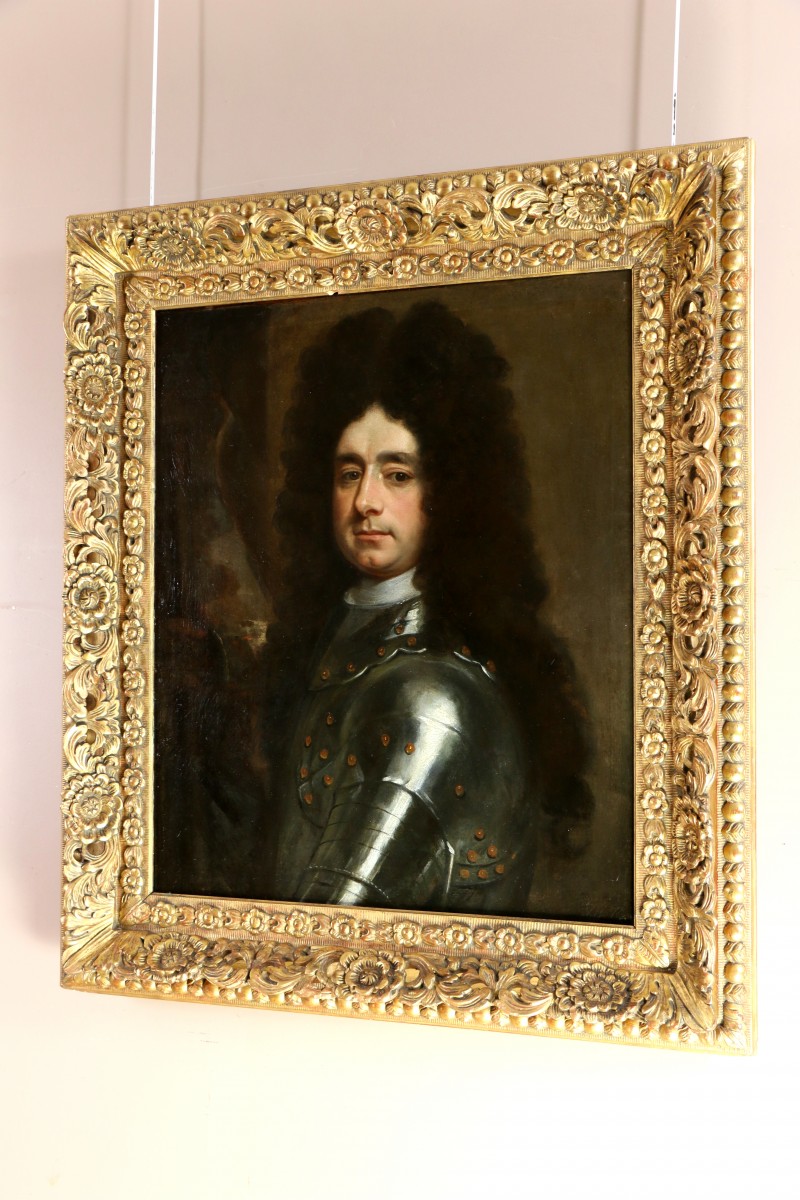
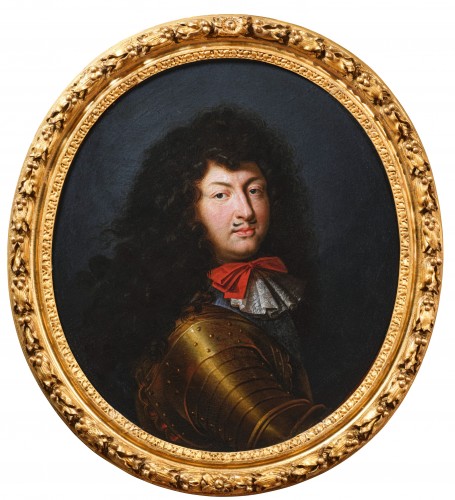
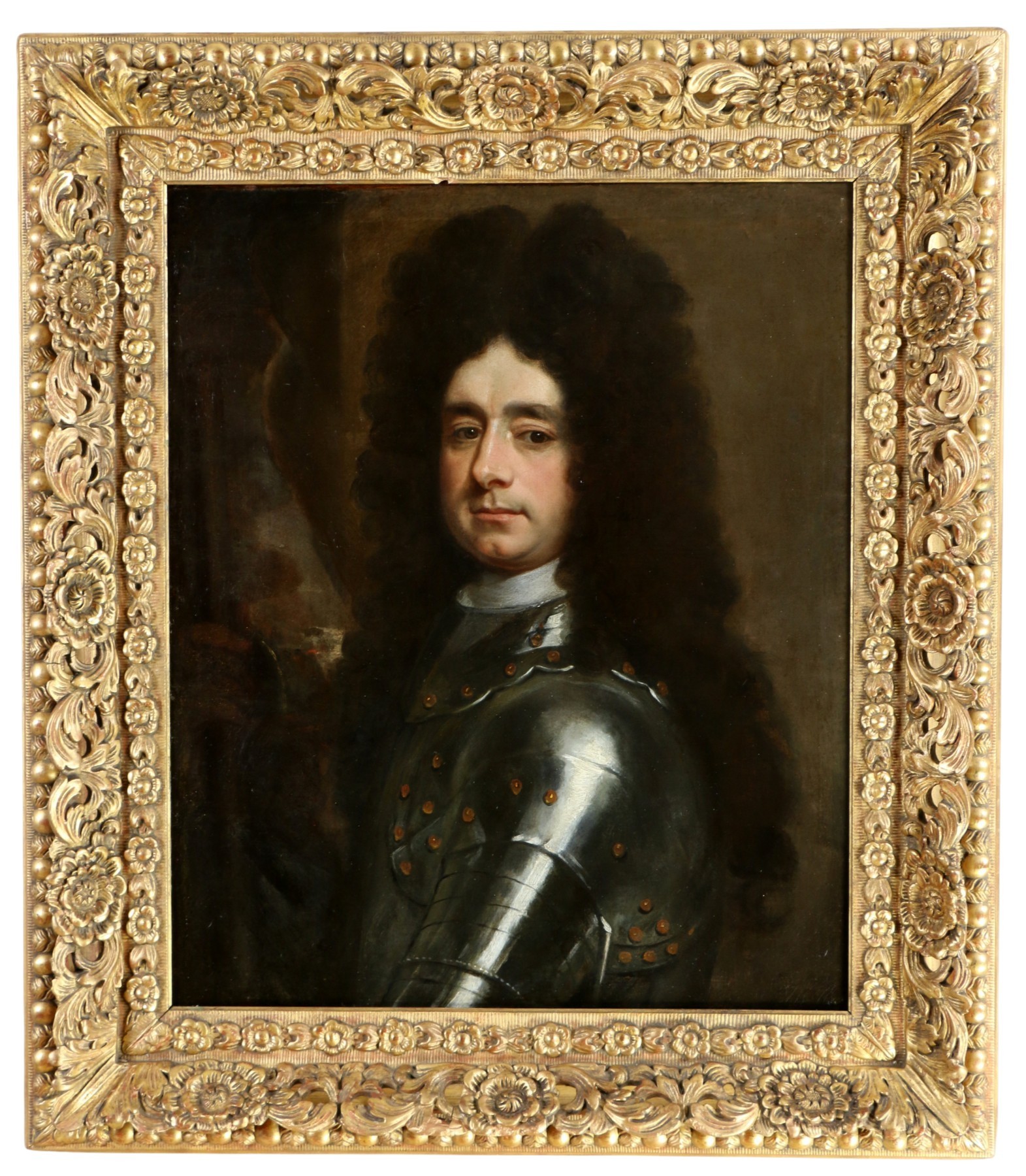
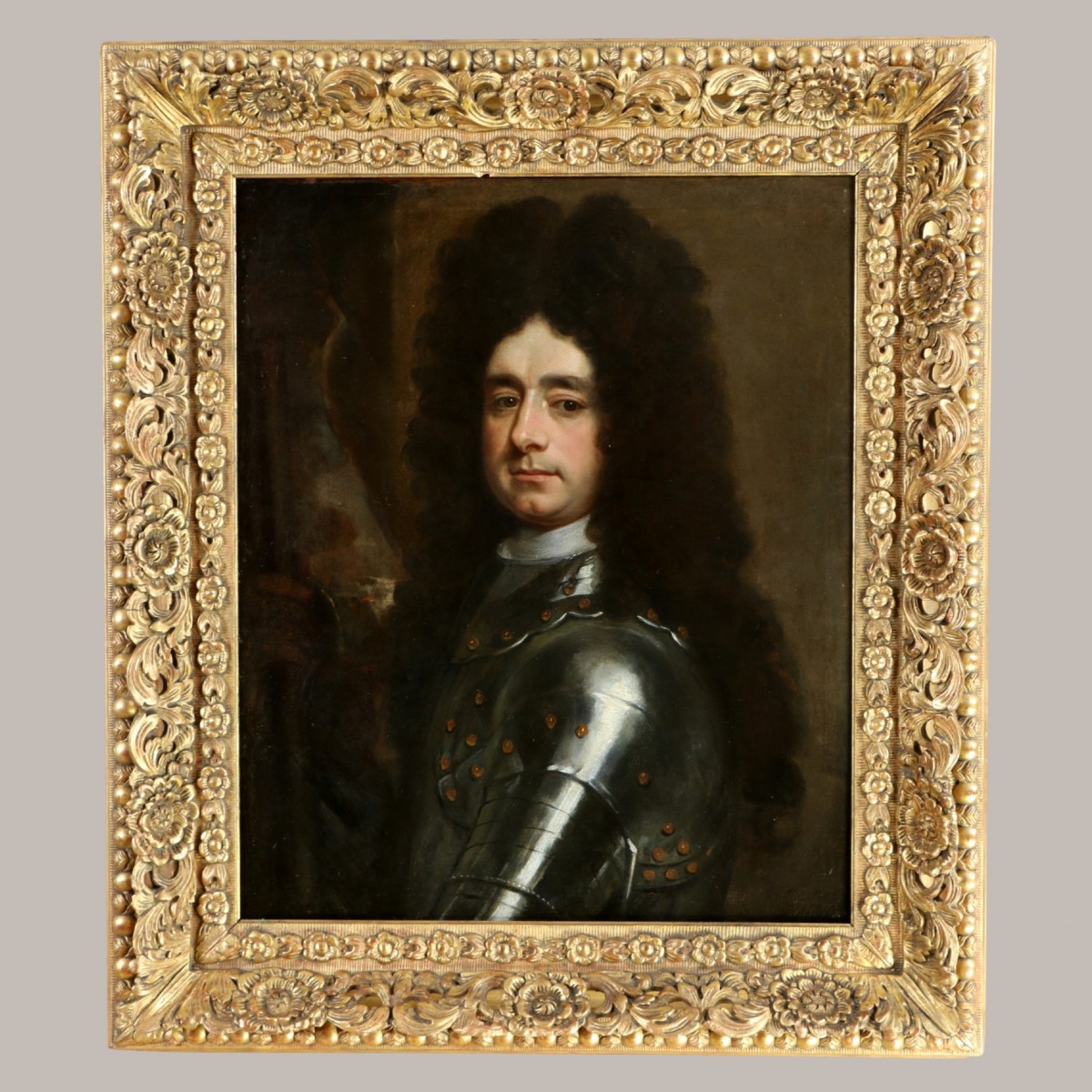
Sir Godfrey Kneller (1646–1723) attributed. Portrait of a Lord Commander, ca. 1690
Oil on re-stretched canvas,
76 cm by 63.5 cm
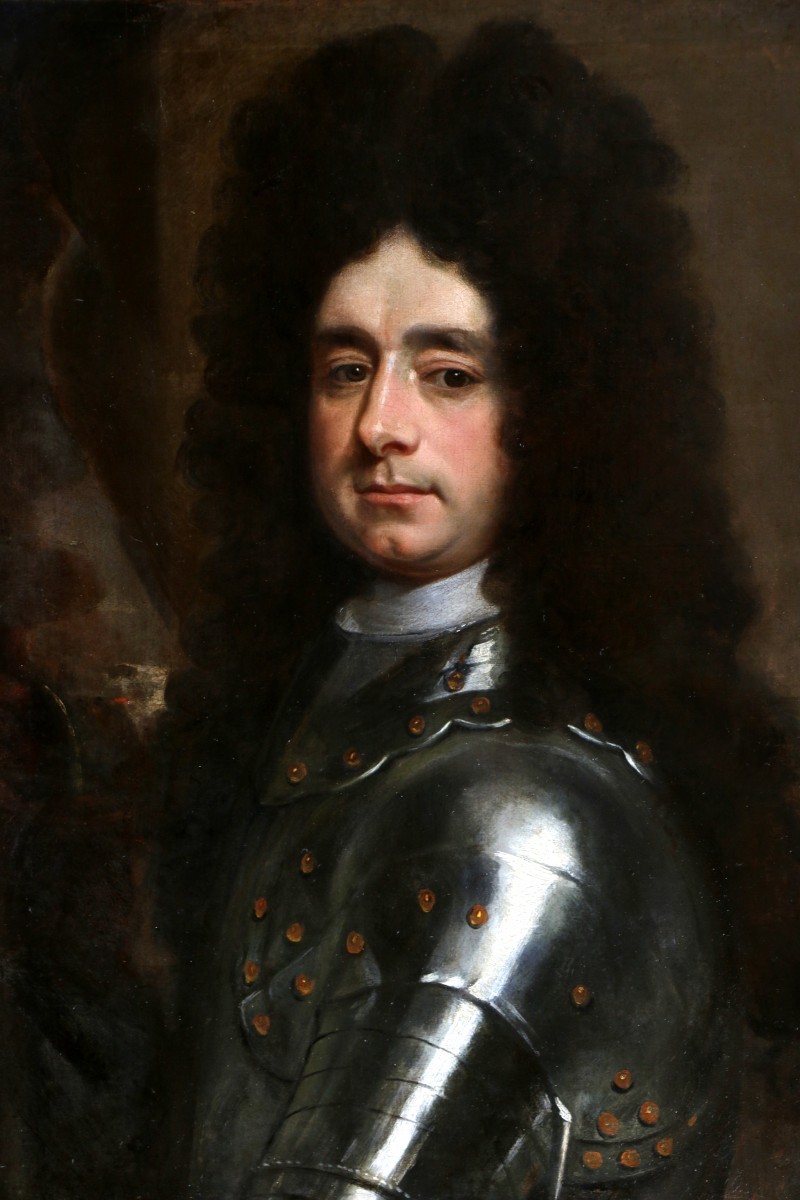
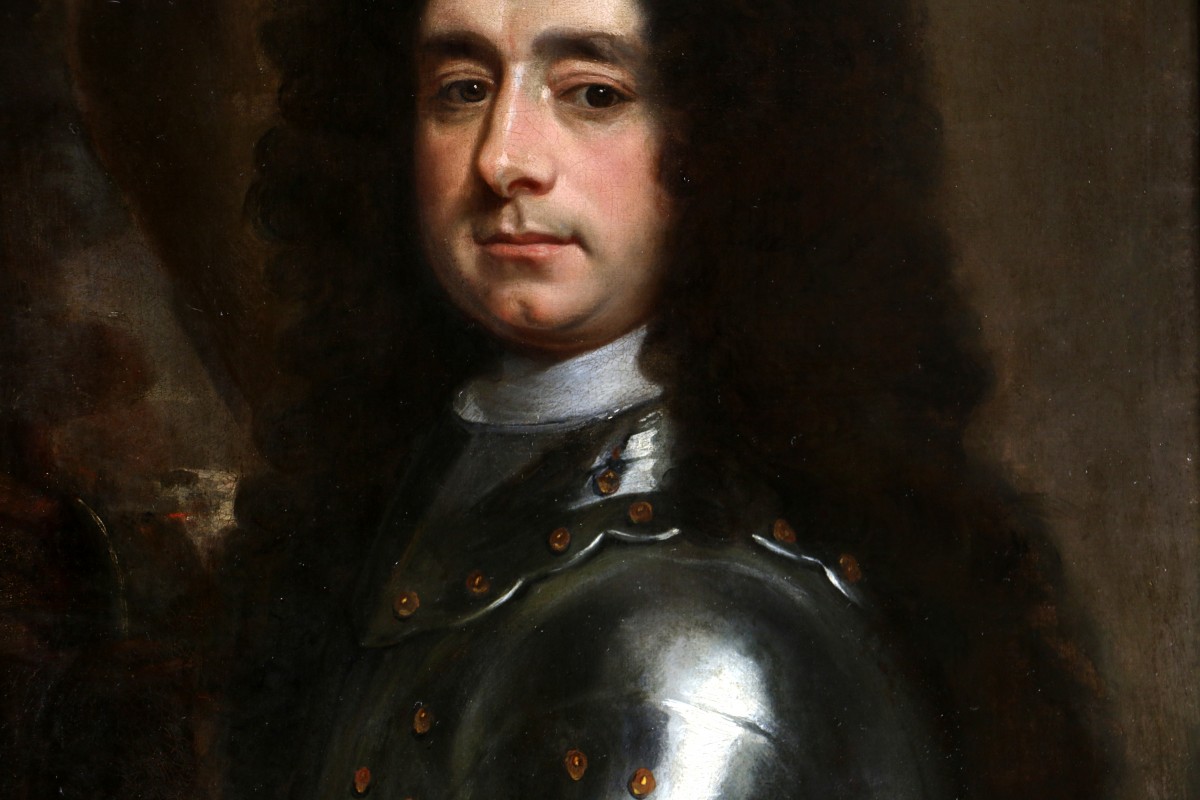
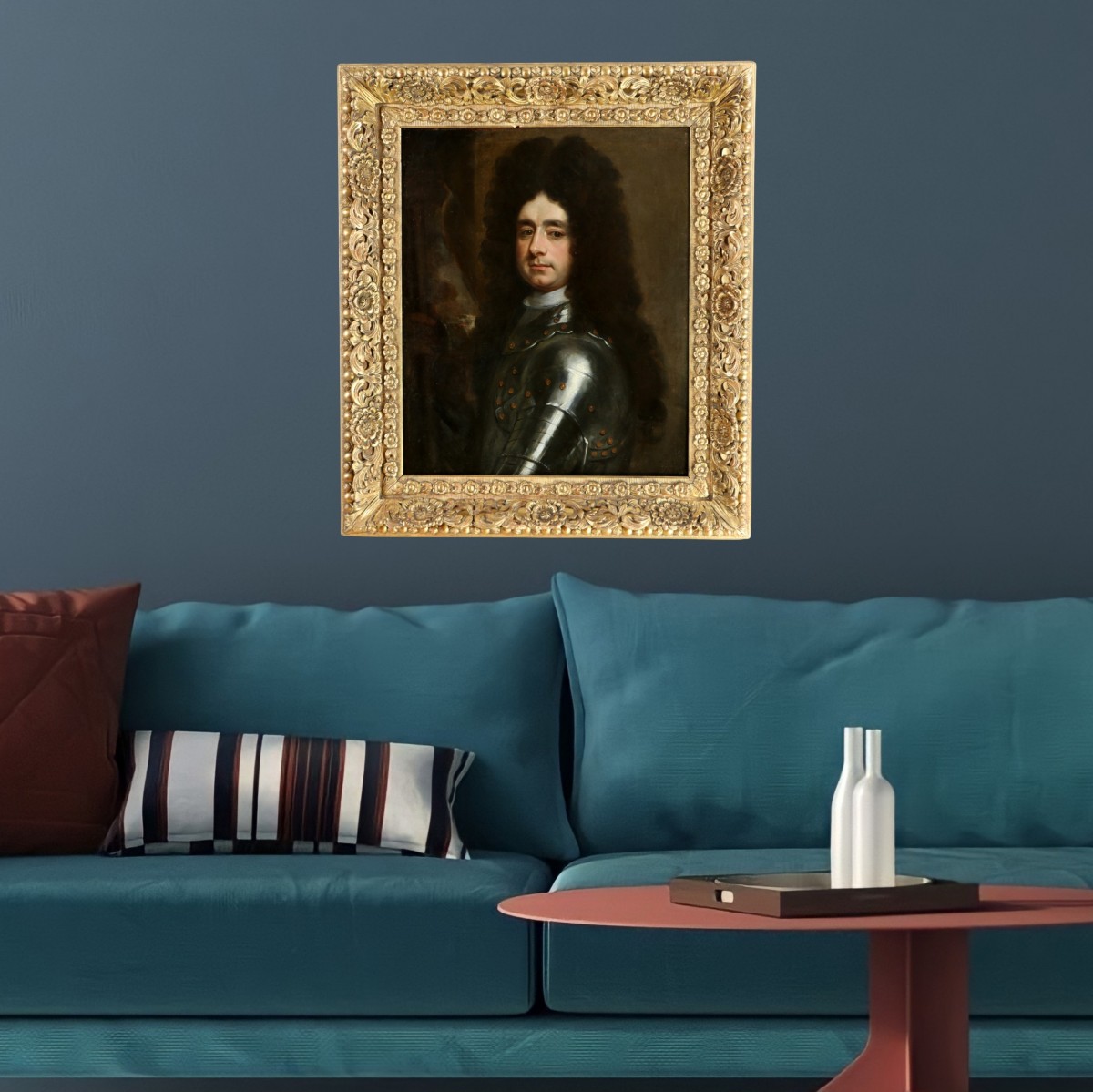
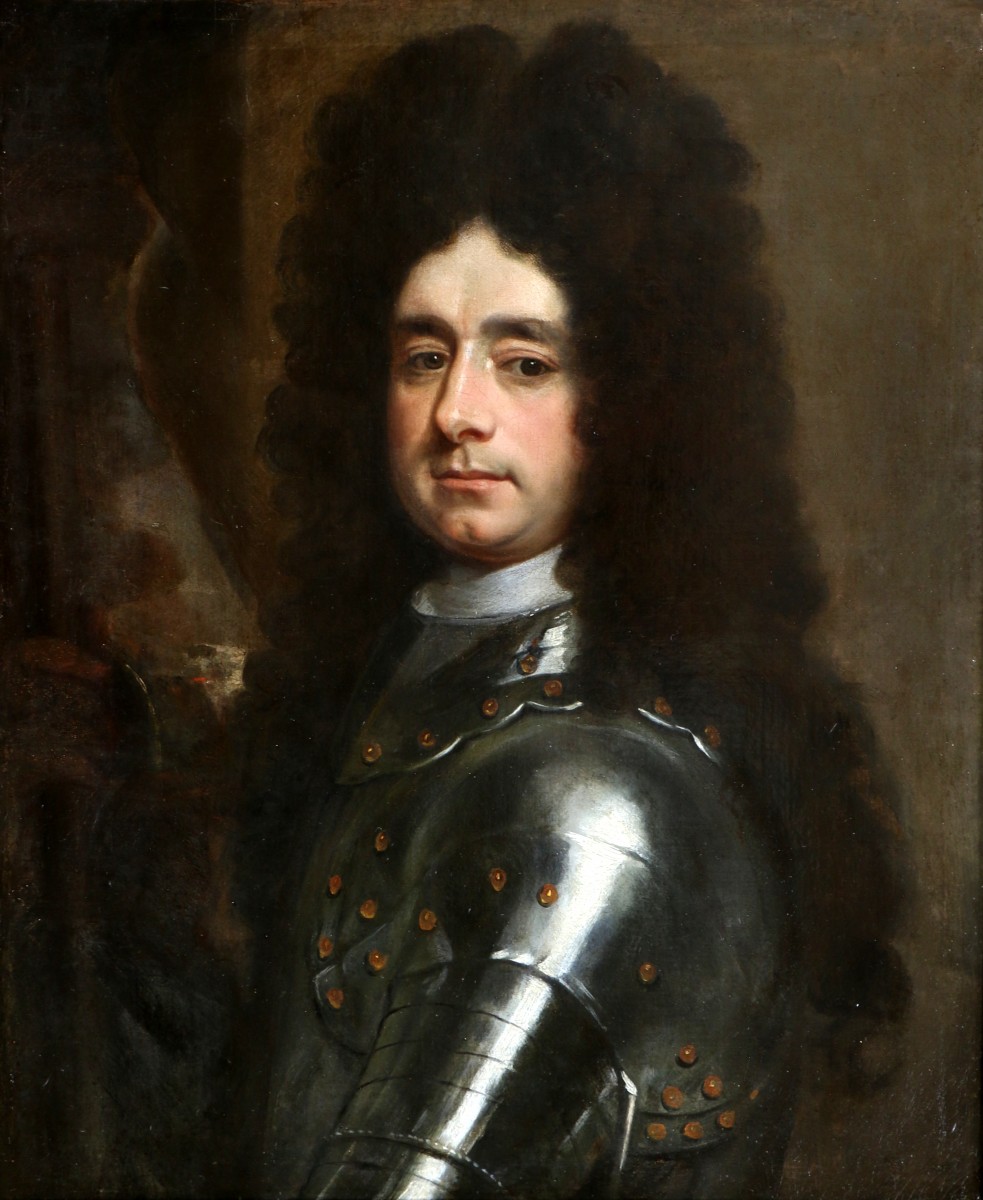
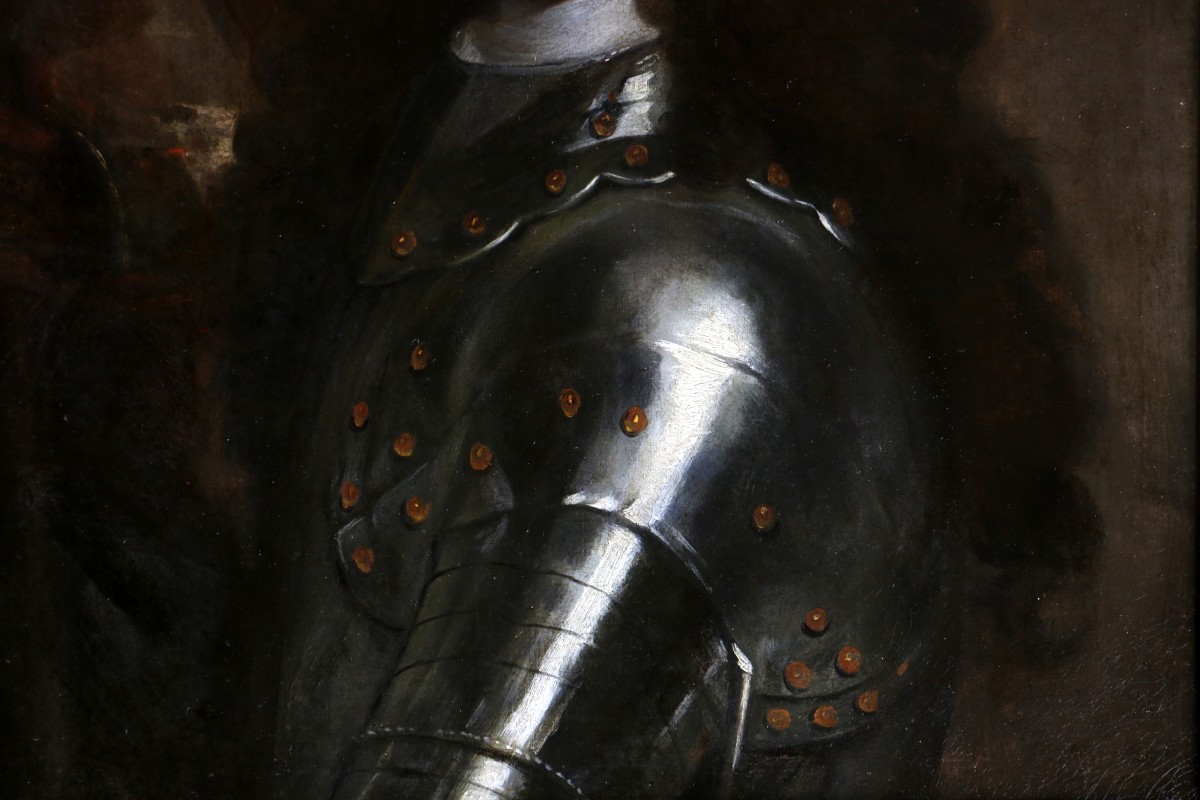
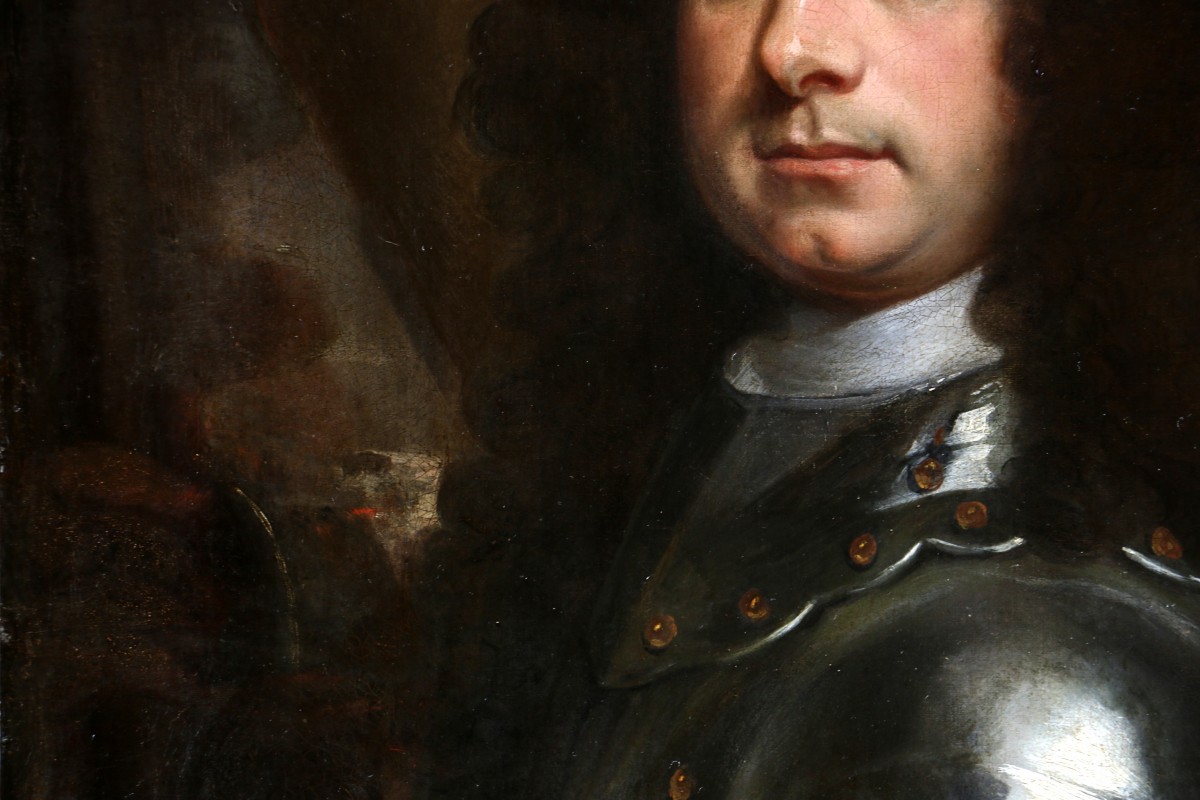
Spectacular antique frame, 101.5 cm by 88.5 cm Portrait of an Officer in ArmorThis portrait depicts a still-young man, shownin half-length, three-quarter profile, with his face turned toward the viewer. He wearsan imposing brown wig with long curls, characteristic oflate 17th-century English aristocratic fashion. The face, vividly litagainst a dark background, stands out for the delicacy of the skin tones andthe intensity of his gaze.The subject is clad in ceremonial armor made ofburnished steel, accented with gilded rivets. On the left, in the shadows, his handholds a command staff, an attribute that identifies this notas a mere aristocratic portrait in armor, but likely as the likenessof a figure holding an important military position.The composition is firmly rooted in thetradition of English portraiture developed by Sir Godfrey Kneller and hisstudio in the late 17th century. The dimensions of 76 × 63.5 cm correspondalmost exactly to the English format of 30 × 25 inches, frequently usedfor this type of portrait. The large wig, the armor, and the staff ofcommand also find numerous parallels among the portraitsof officers painted by Kneller during the reigns of James II and William III.The particularly careful rendering of the face,contrasting with the more hasty execution of the armor, the hand, and the background,could be consistent with the practices of Kneller’s studio, whereaccessories were often entrusted to assistants. These elementssuggest a date around 1690–1695, while the identityof this officer remains undetermined to this day.
Sir Godfrey Kneller (1646–1723)
Born in Lübeck in 1646 as GottfriedKniller, Godfrey Kneller trained in the United Provinces before spending time inItaly. He settled in England in the 1670s and, after the death ofSir Peter Lely in 1680, he quickly established himself as the leading portraitist ofthe British court.His long career allowed him to worksuccessively for Charles II, James II, William III and Mary II,Queen Anne, and George I. He painted monarchs, aristocrats,politicians, and military officers, developing a portraiture style that was both elegantand instantly recognizable. His military portraits, often characterizedby armor and the staff of command, occupy a significant place in hisbody of work, particularly during the reign of William III.At the head of a particularly active studio,Kneller frequently focused his own efforts on the faces, whilecostumes, armor, and backgrounds could be entrusted to his assistants.This organizational structure explains the existence of numerous versions and repetitionsof his compositions. These were also widely disseminated throughengravings, notably through the mezzotints by John Smith.Knighted by William III in 1692, and later createda baronet by George I in 1715, Kneller remains the dominant figure inEnglish portraiture between the late 17th and early 18th centuries. He died inLondon in 1723.
Delevery information :
All our paintings benefit from careful and secure packaging. No geographic restrictions.