Offered by Antichità Castelbarco

Nicola Malinconico (Naples, 1663–1726)
The Judgment of Paris
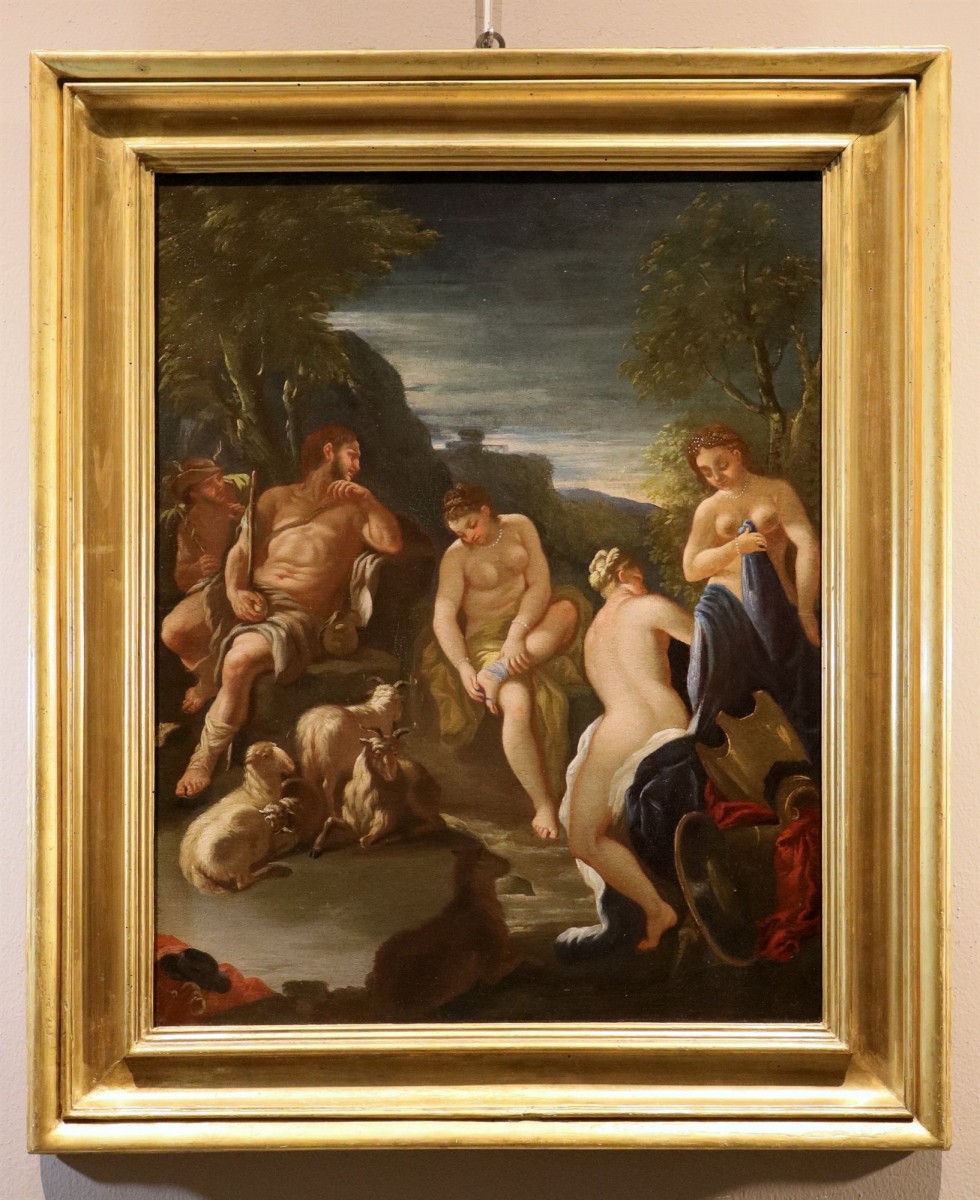
Oil on canvas 75 x 59 cm. - Framed: 96 x 80 cm.
Expert report by Prof. Giancarlo Sestieri (Rome, January 12, 2016)
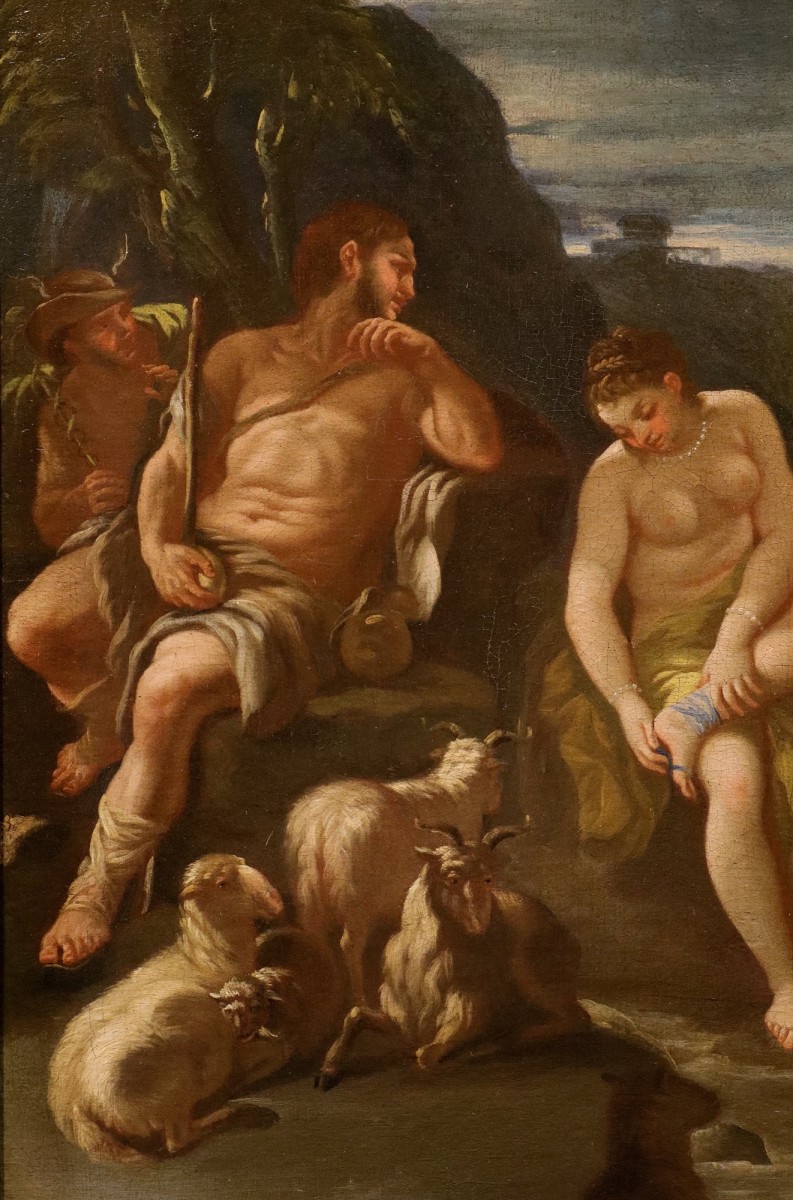
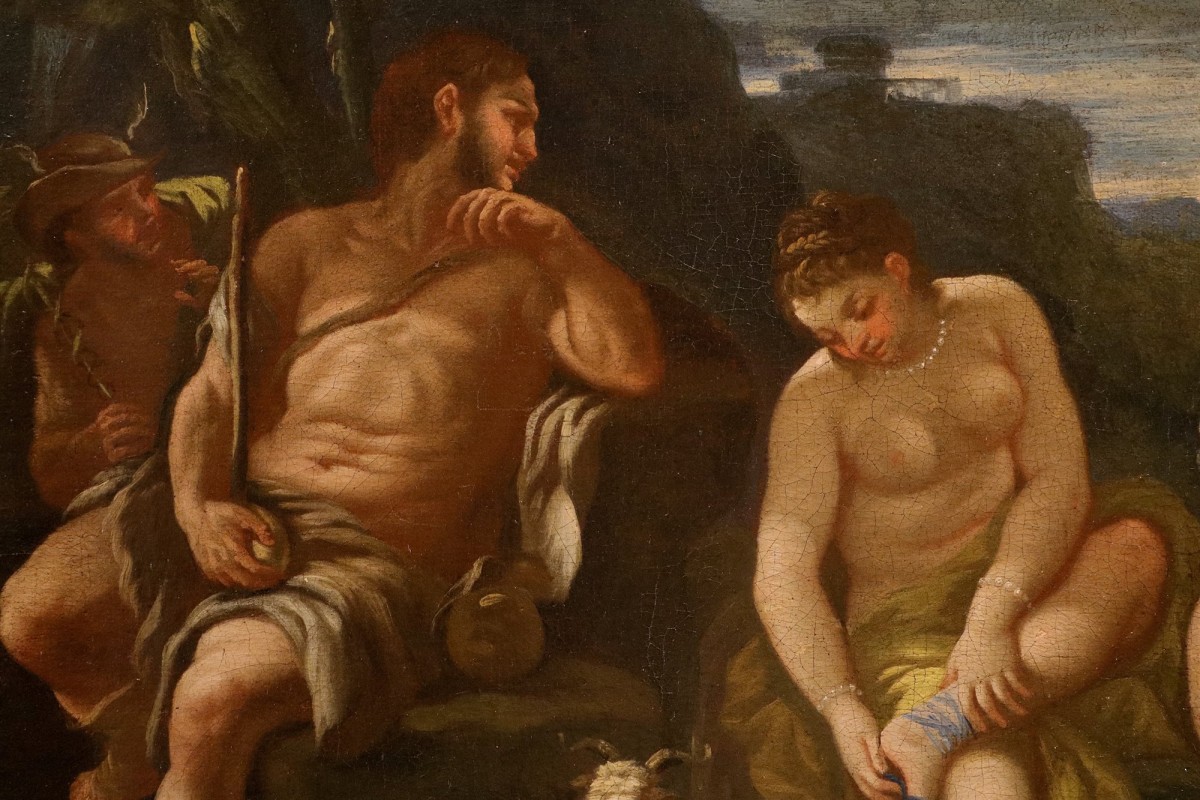
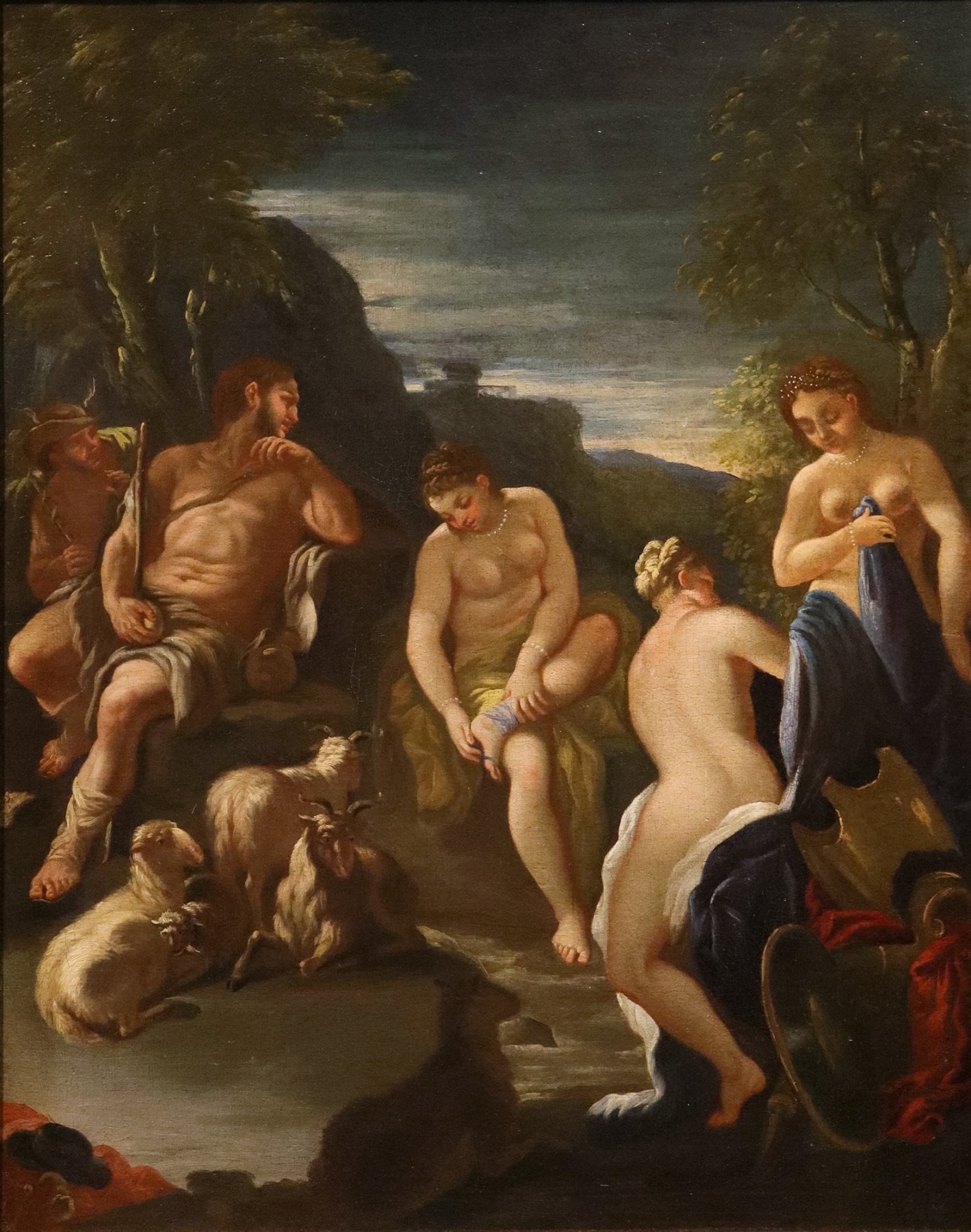
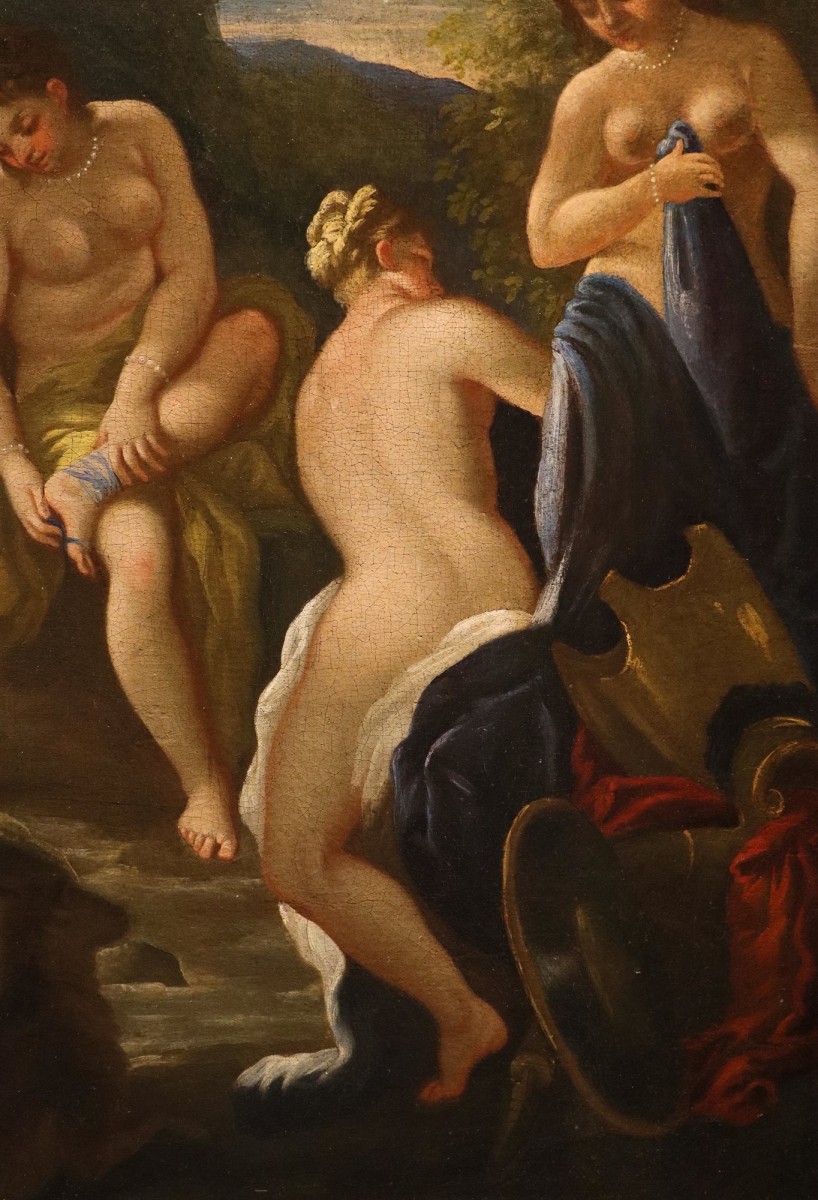
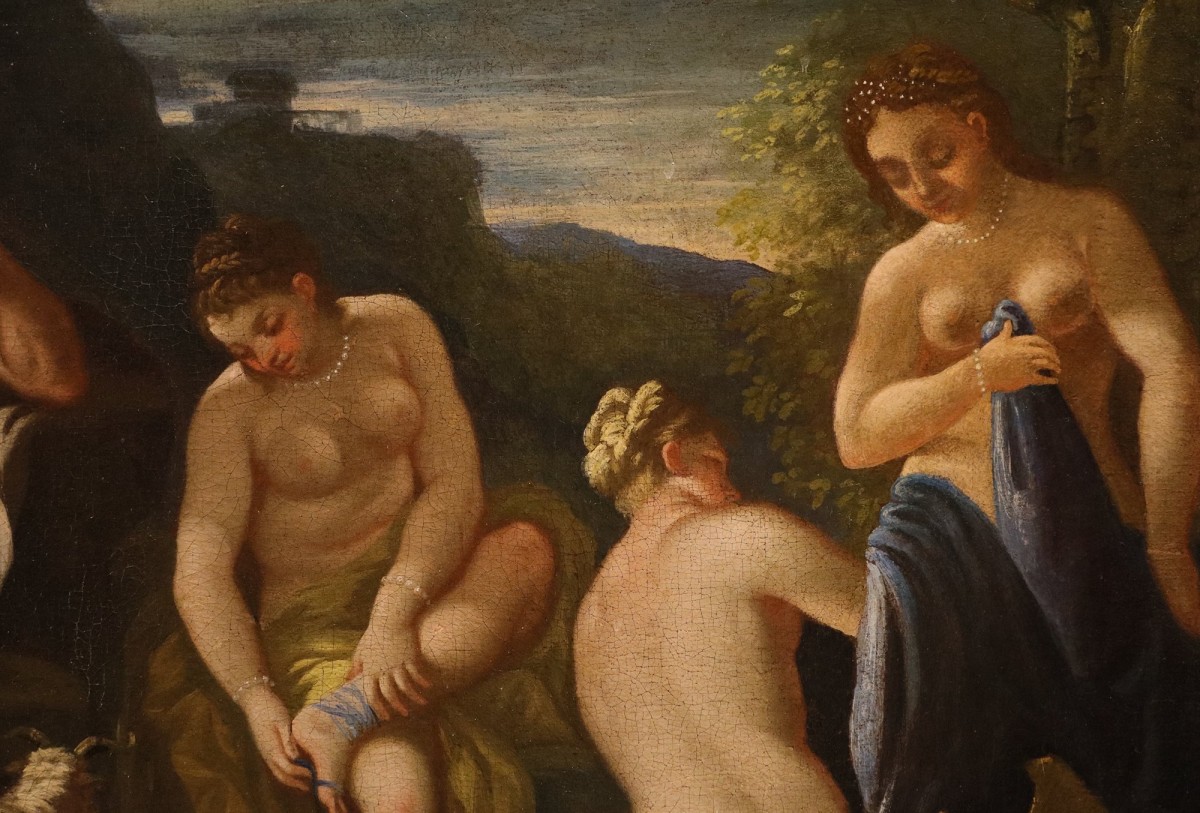
The painting depicted here portrays one of the pivotal moments in classical mythology: “The Judgment of Paris,” a legendary episode whose conclusion would contribute to the outbreak of the Trojan War and the founding of Rome.
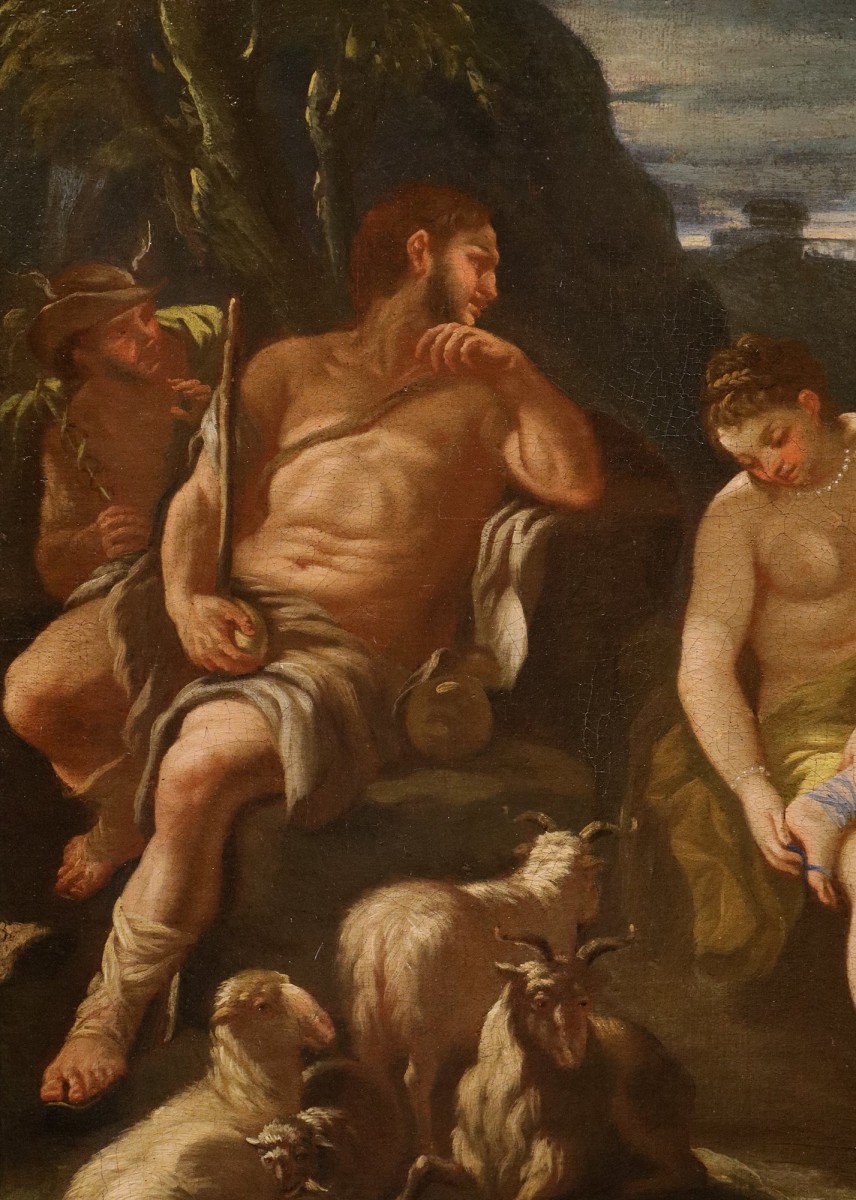
On the right, we see the Trojan prince Paris depicted as a young shepherd who, by order of Zeus, must choose which of Juno, Minerva, and Aphrodite he considers the most beautiful of the Olympian goddesses, while behind him peeks Hermes, the messenger of the gods who has guided the three contenders to this point.
Paris is depicted seated in a rocky setting, holding in his hand the famous golden apple (also known as the “apple of discord”), which he must award as a prize to the winner.
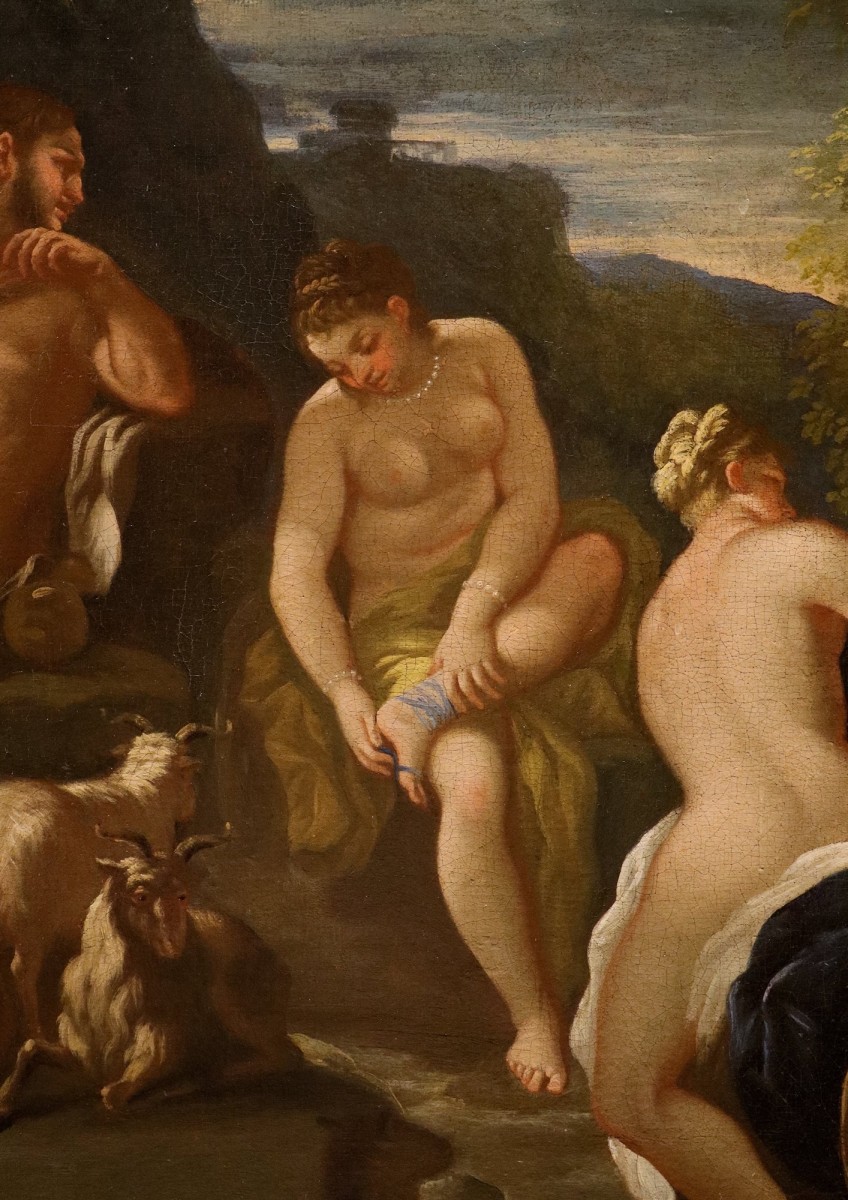
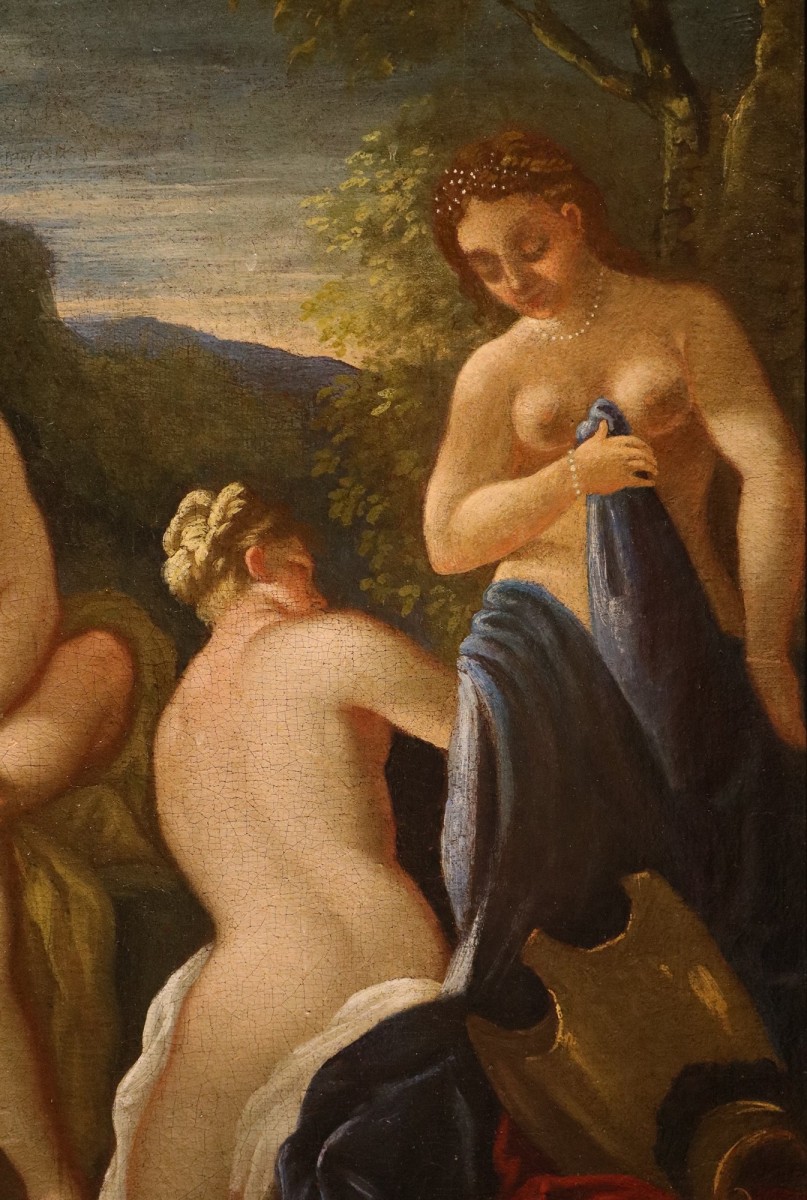
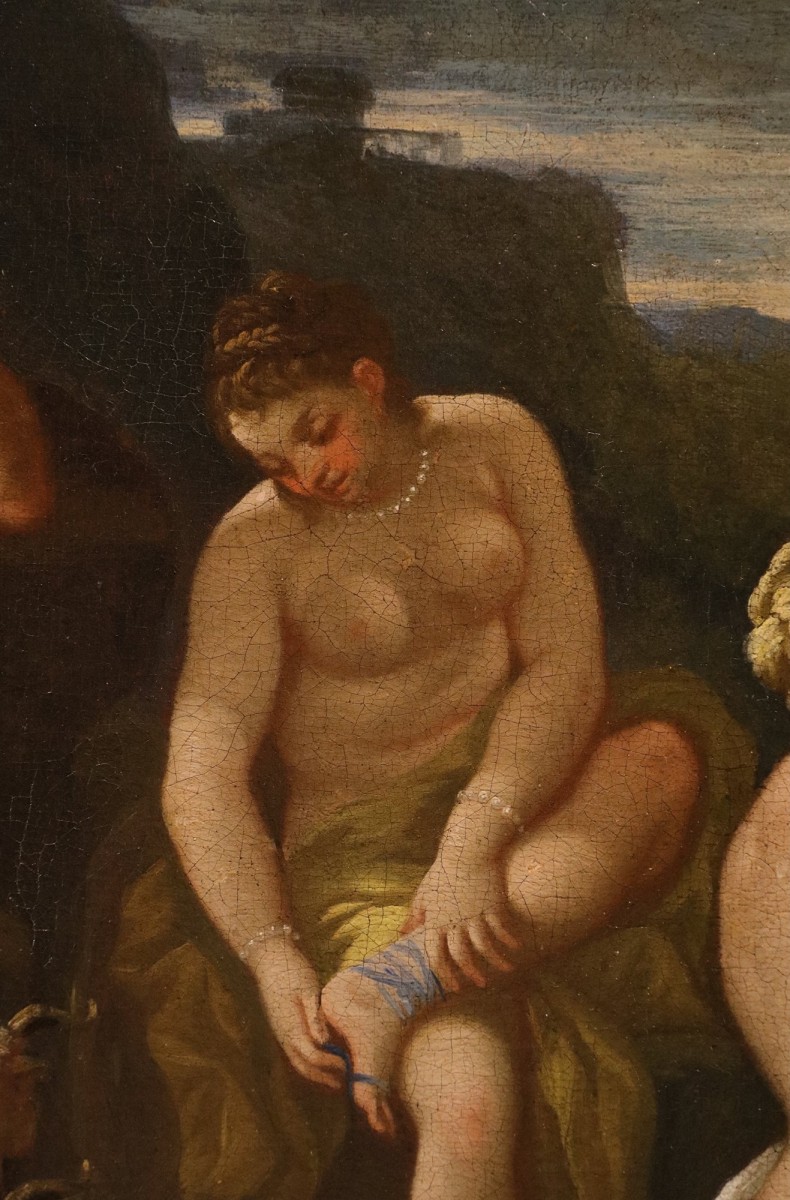
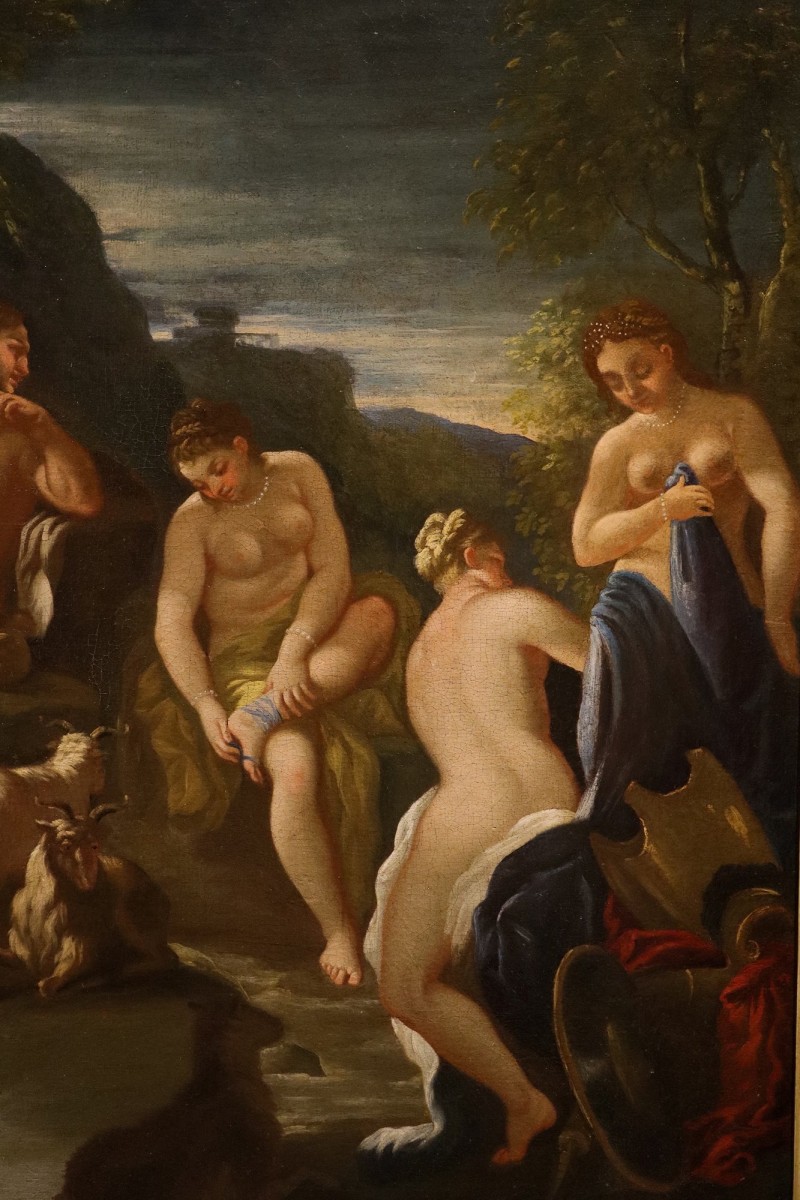
To the right of the scene, the three goddesses stand out, captured in the act of revealing their nakedness to display their absolute beauty and attempt to persuade the young man, the judge of this “pre-emptive” beauty contest.
As is well known, his choice will fall on Aphrodite, influenced by the promise that, once she was declared the winner, she would secure for him the love of the most beautiful woman in the world, Helen, wife of Menelaus, the king of Sparta, who, to avenge the affront he had suffered, would declare war.
Our beautiful painting is a variation on the famous “Judgment of Paris” painted by the Neapolitan artist Luca Giordano (Naples, 1634 –1705) around 1682, during his stay in Florence, and is now housed at the Hermitage Museum in St. Petersburg (**).
Our version faithfully follows the famous original and has been specifically attributed by Prof. Giancarlo Sestieri to a painter from Giordano’s workshop.
The scholar specifically attributes the work to Nicola Malinconico (Naples, 1663–1726), one of the master’s principal and most gifted direct pupils and an important exponent of the late Baroque Neapolitan school.
Also known for his exceptional ability to imitate Giordano’s stylistic signature, he produced numerous variations on mythological and pastoral scenes intended to adorn important noble residences.
In this specific case, due to the extraordinary popularity of the iconography of the painting in question, the work was replicated and reinterpreted numerous times by his very active Neapolitan workshop and his closest students to meet the demands of private patrons.
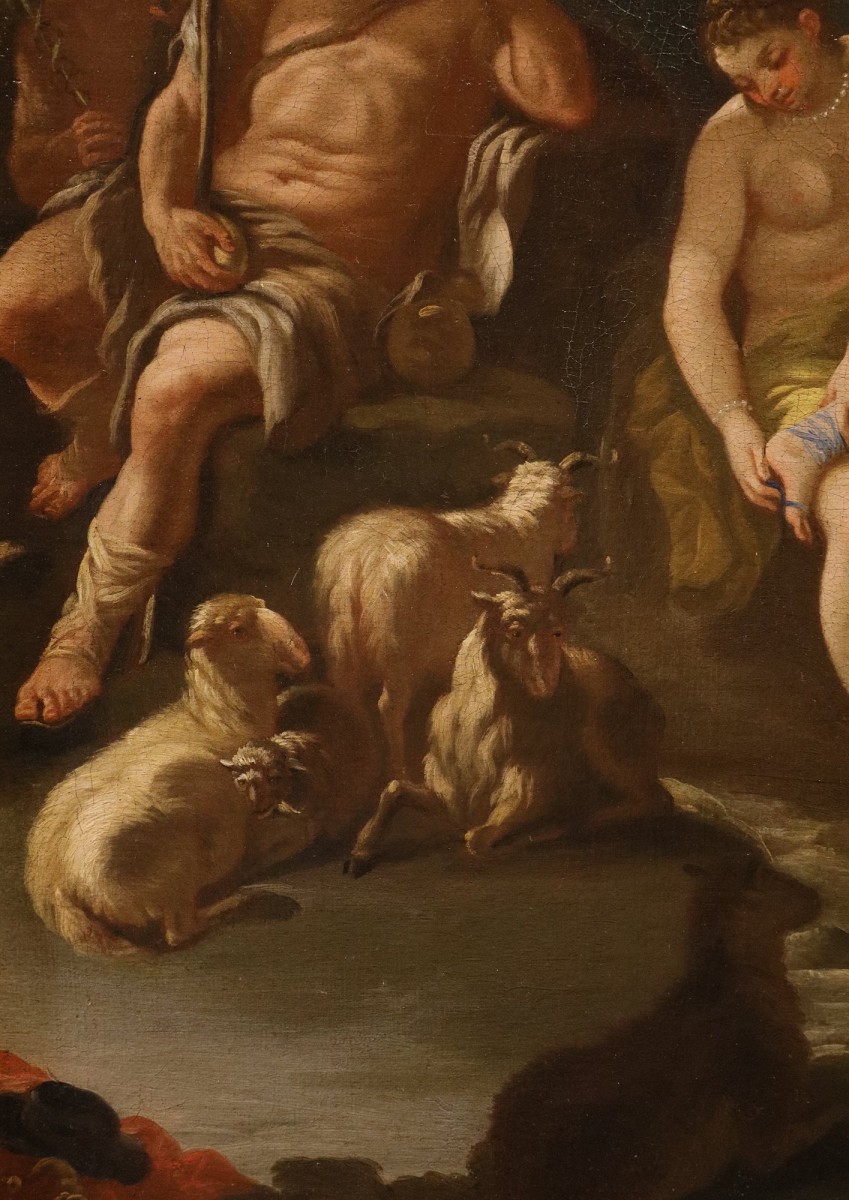
Compared to the original, our version is smaller in size and therefore has a simplified composition; we find the same theatrical arrangement, with a style characterized by strong contrasts of light and shadow that emphasize the anatomy of the figures and the atmosphere of the moment, demonstrating how deeply Giordano’s models had been internalized by the painters of his school.
Compared to Giordano’s autograph version, Malinconico’s interpretation is distinguished by a particular focus on the texture of the drapery and a modulation of light that, while remaining theatrical and Baroque, tends toward rich chromatic tones applied with great softness.
The bodies of the goddesses take on an academic grace typical of the painter’s mature phase, when he began to blend Giordano’s dynamism with the classicism of Francesco Solimena. ** Luca Giordano, The Judgment of Paris Oil on canvas, 247 x 326 cm. Hermitage Museum
Delevery information :
We take care of and organise the transport of the purchased works, both for Italy and abroad, through professional and insured carriers.
We take great care We personally take care of the packaging, to which we devote a great deal of care: each work is carefully packed, first with arti- cle material, then with a custom-made wooden box.
Should you have the desire to see this or other works in person, we would be happy to welcome you to our gallery in Riva del Garda, Viale Giuseppe Canella 18, we are always open by appointment only.