Offered by Ars Antiqua

Old Masters paintings, furniture, sculptures and modern art
Giacomo Francesco Cipper, known as il Todeschini (Feldkirch, 1664 – Milan, 1736)
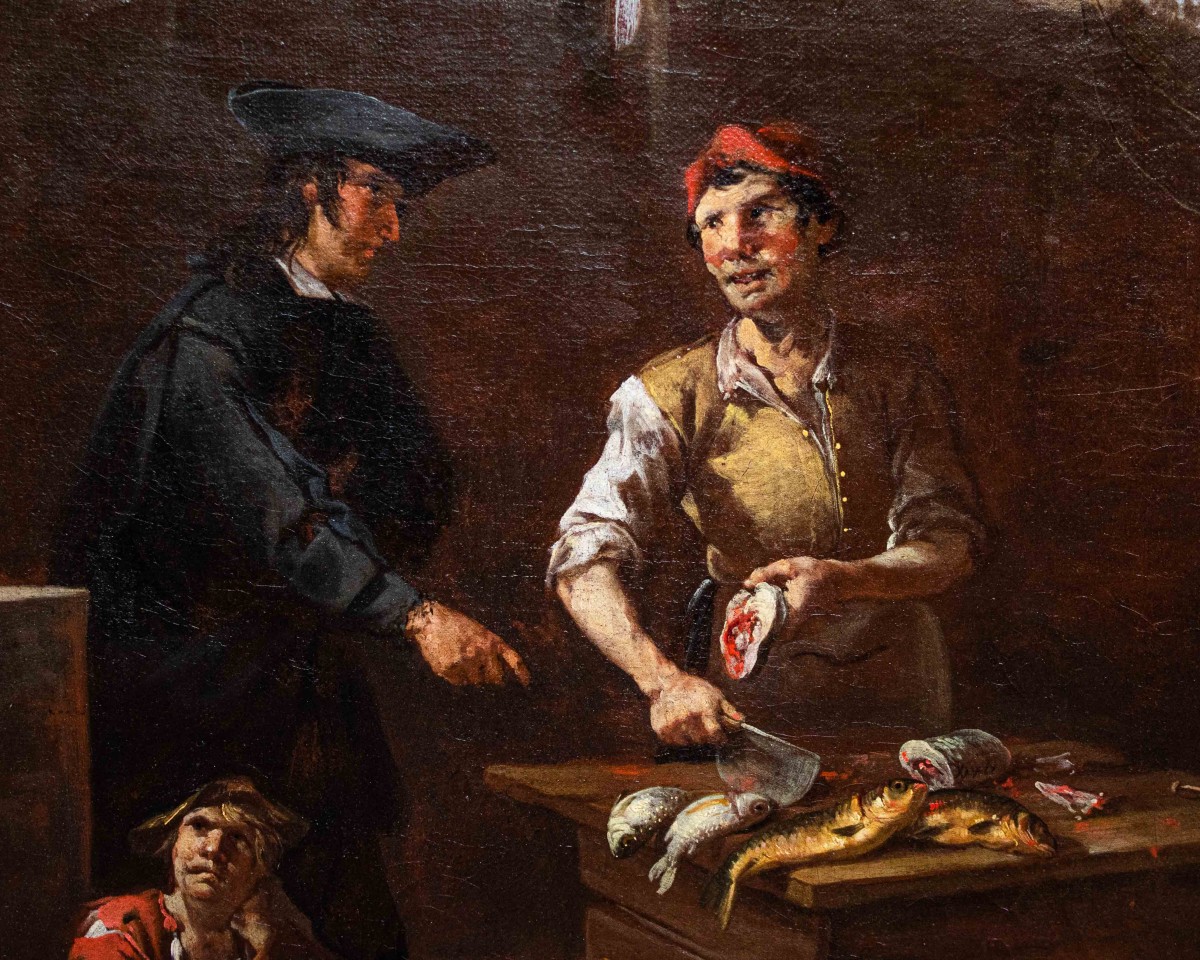
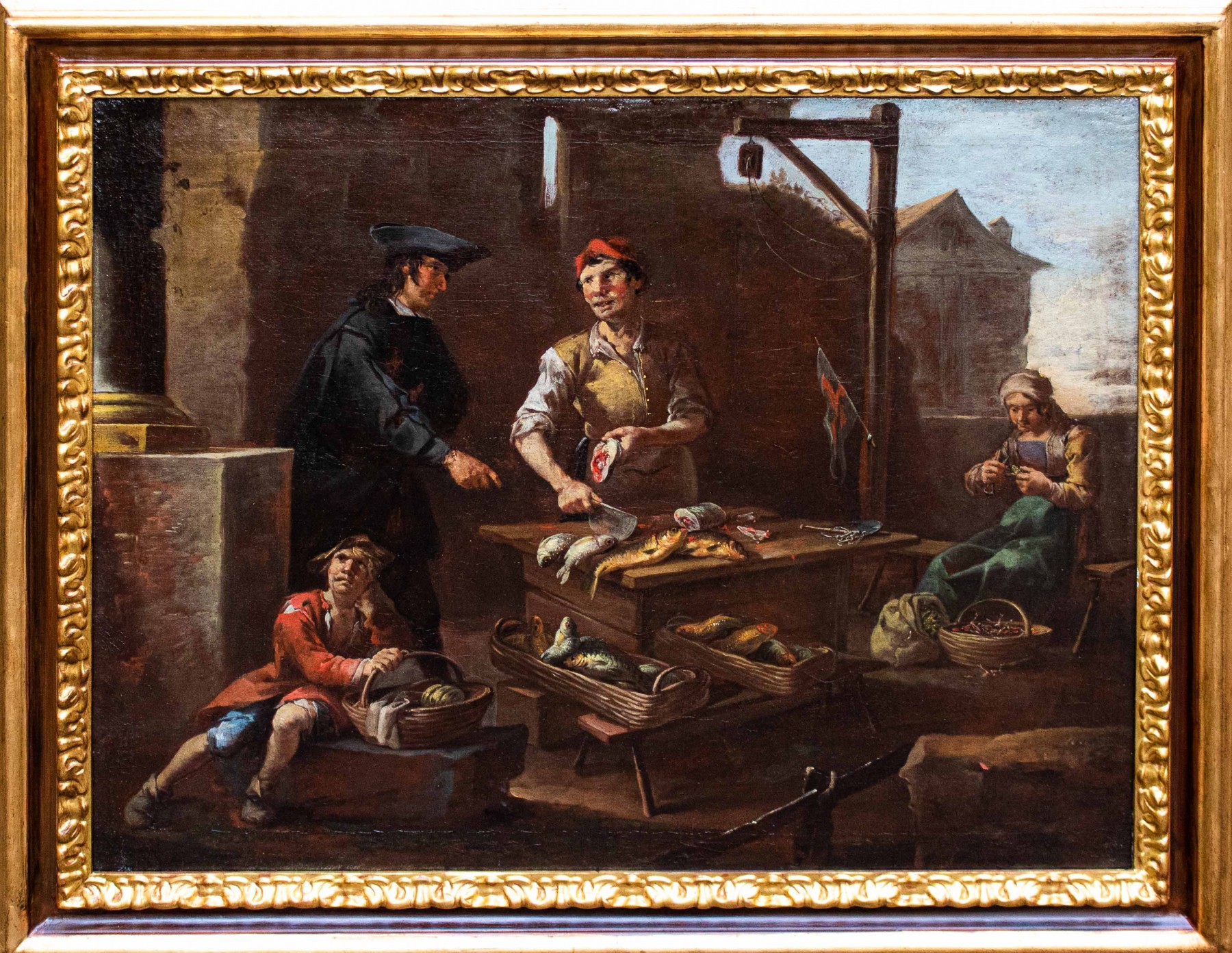
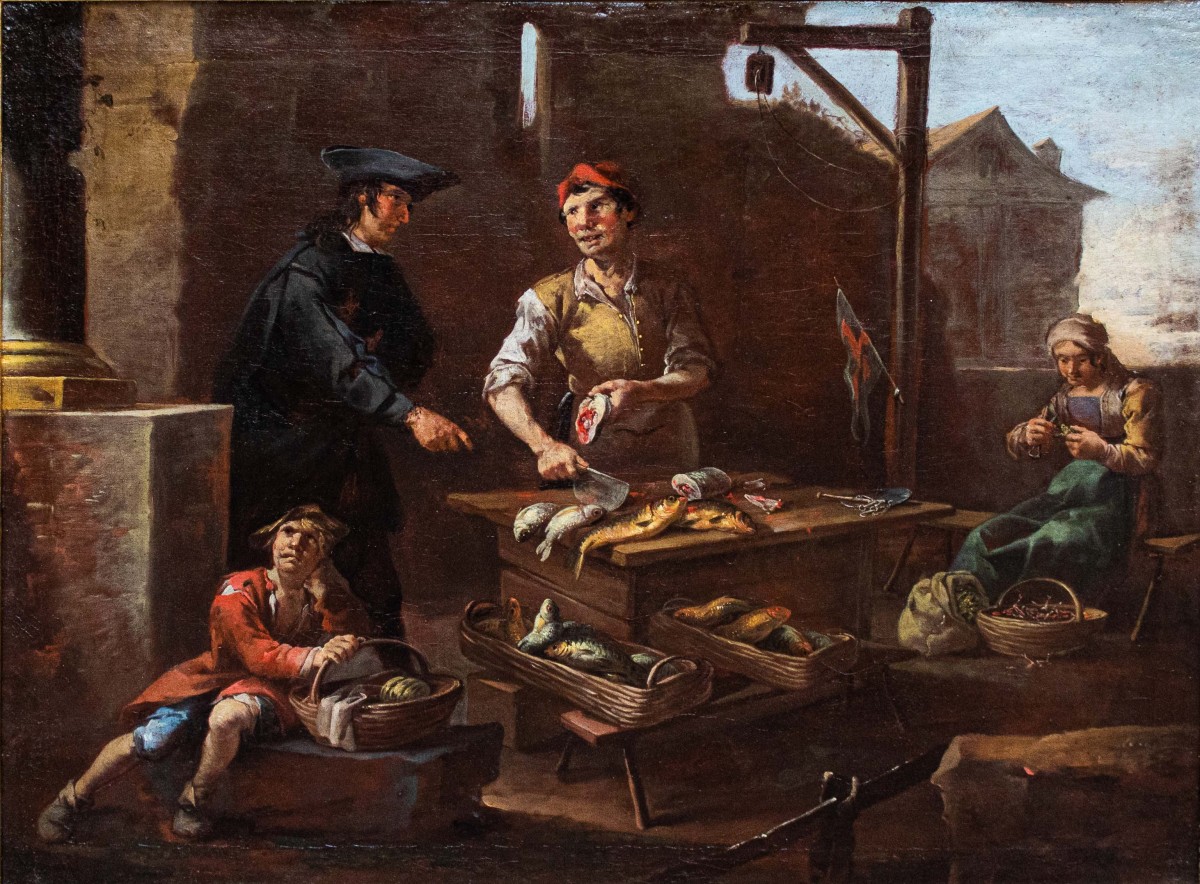
The Fishmonger
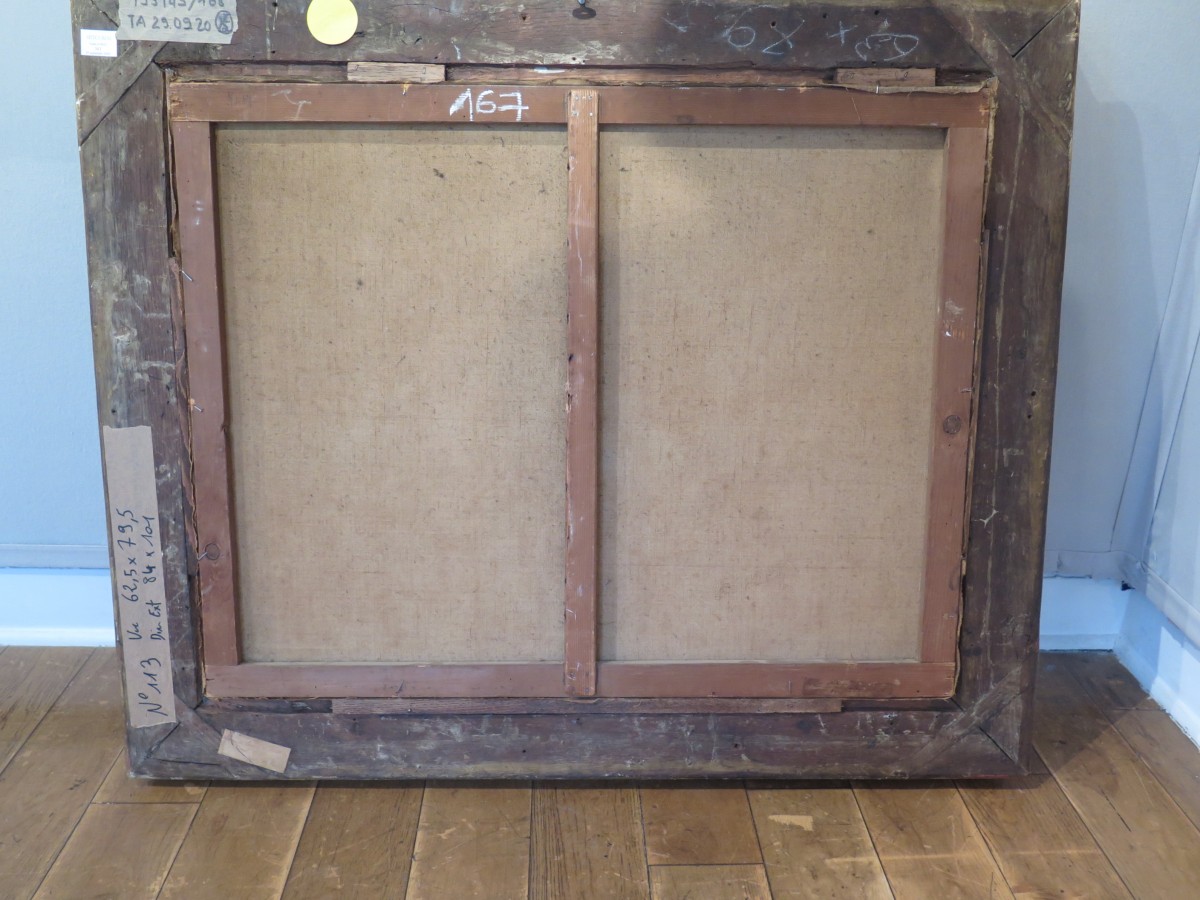
Oil on canvas, 64 x 83 cm
With frame 85 x 101 cm
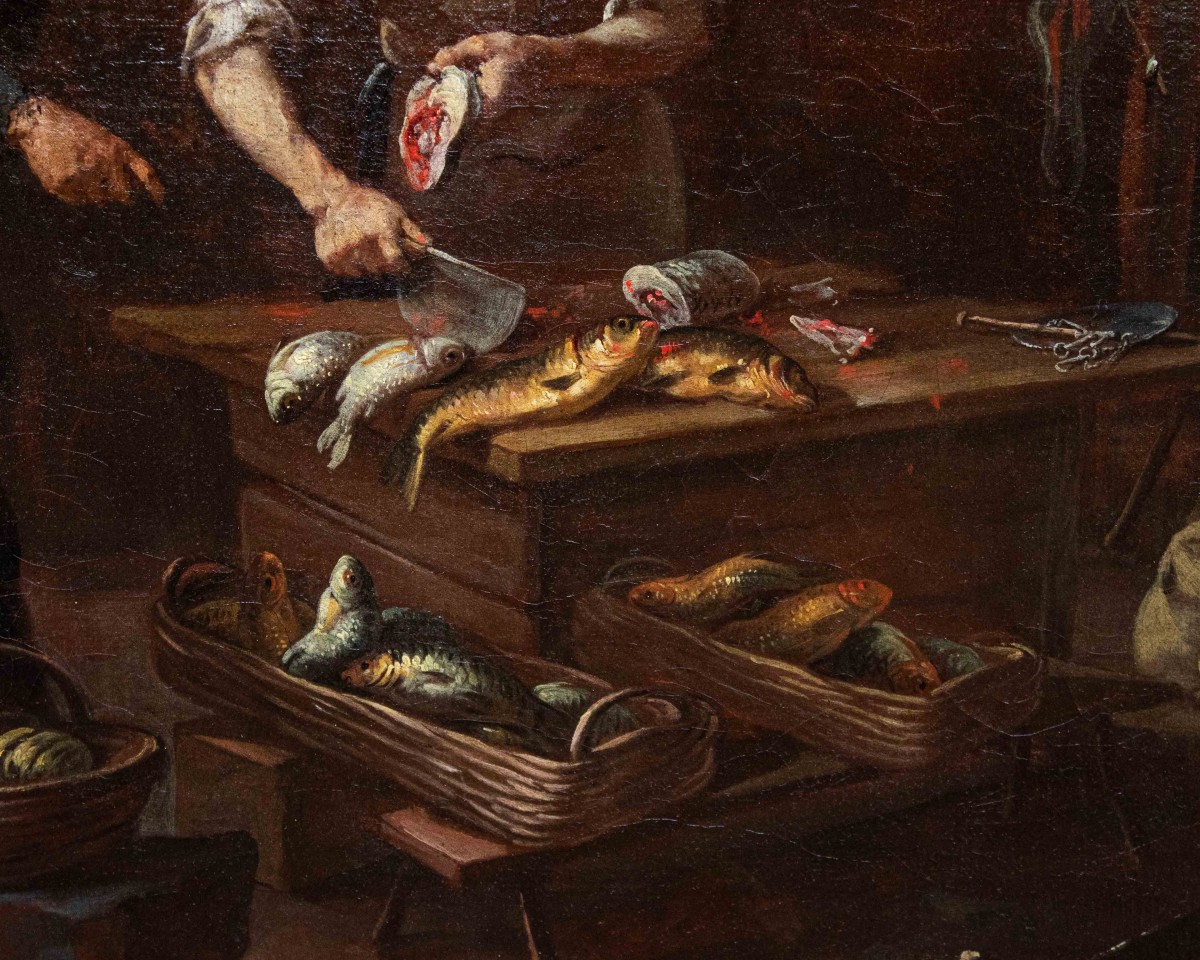
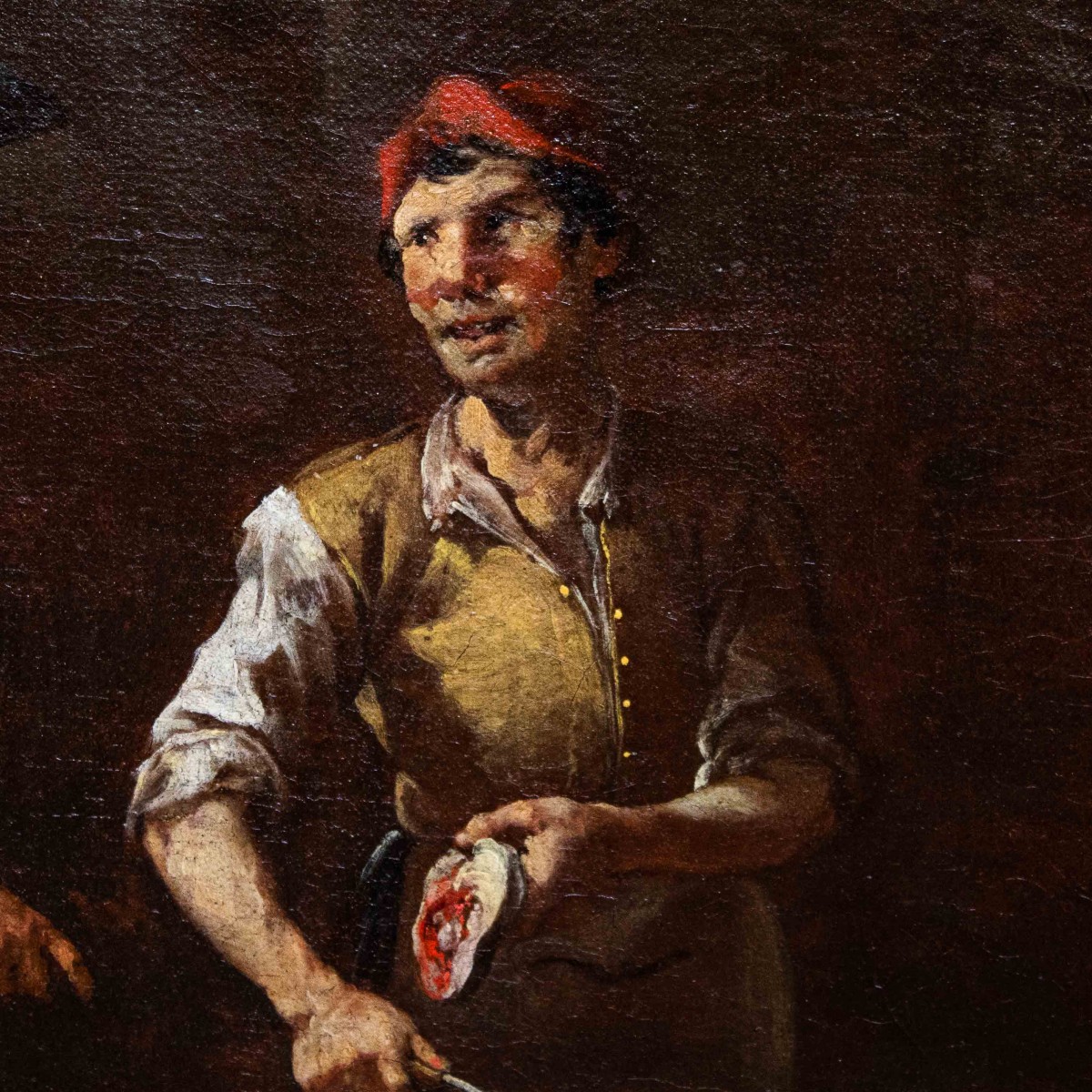
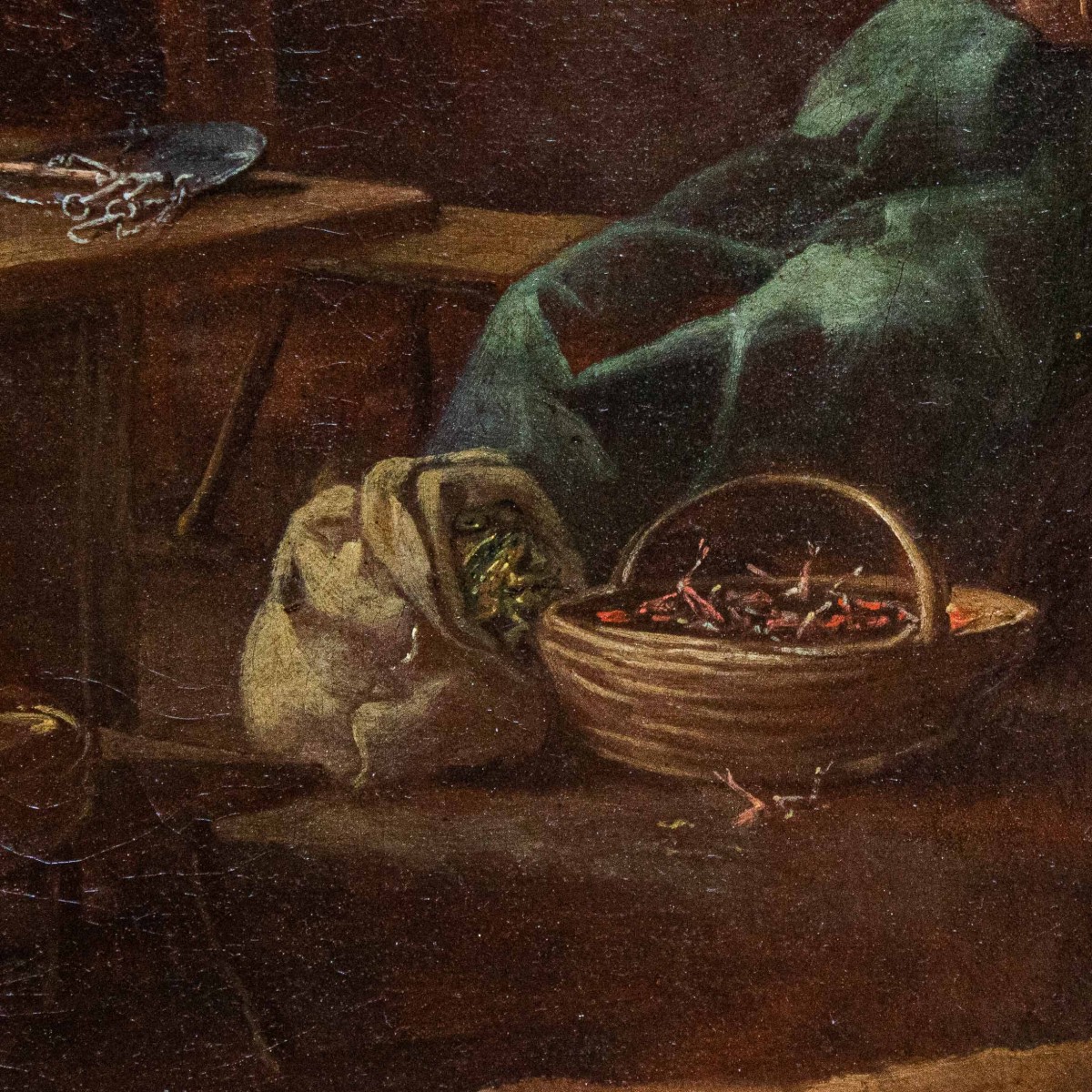
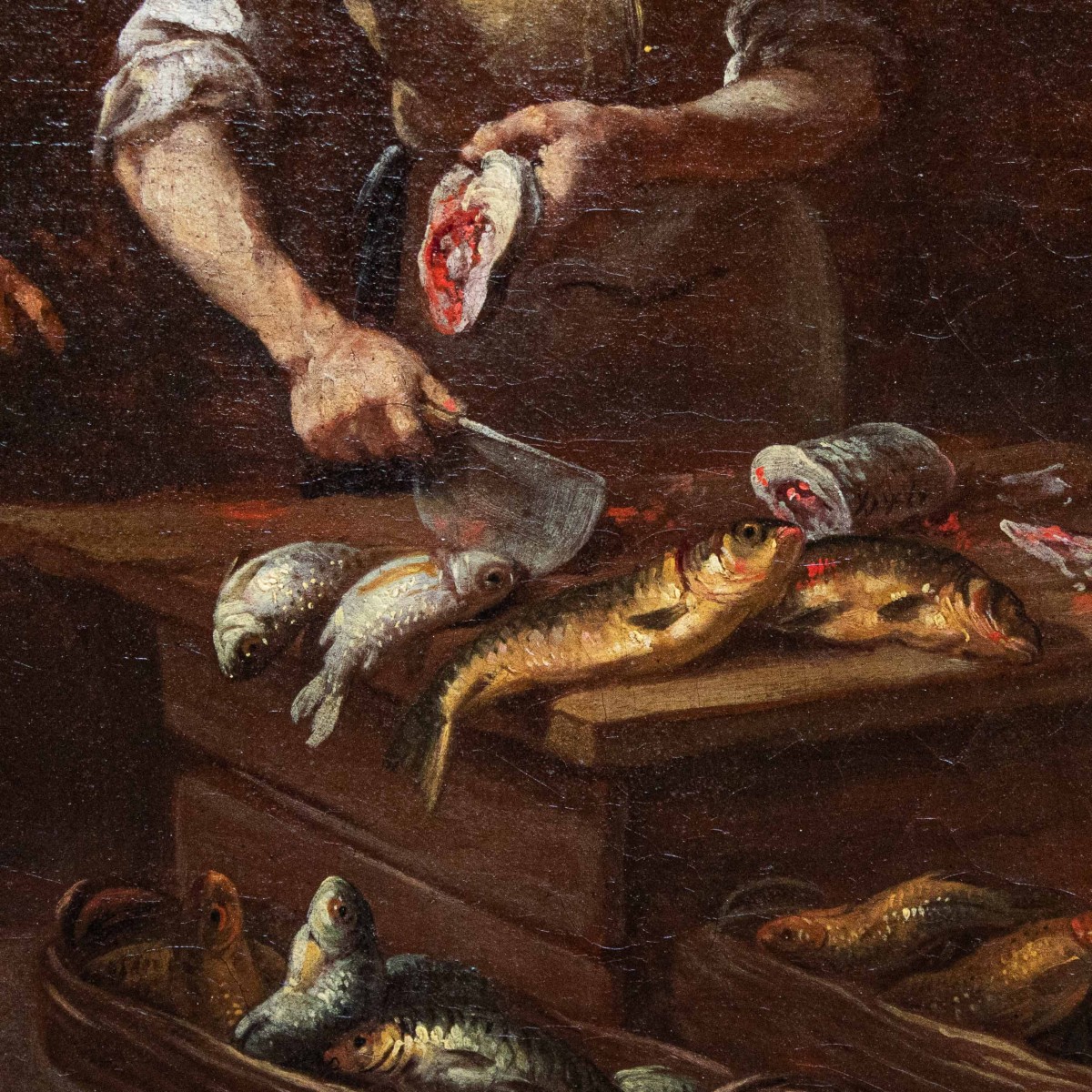
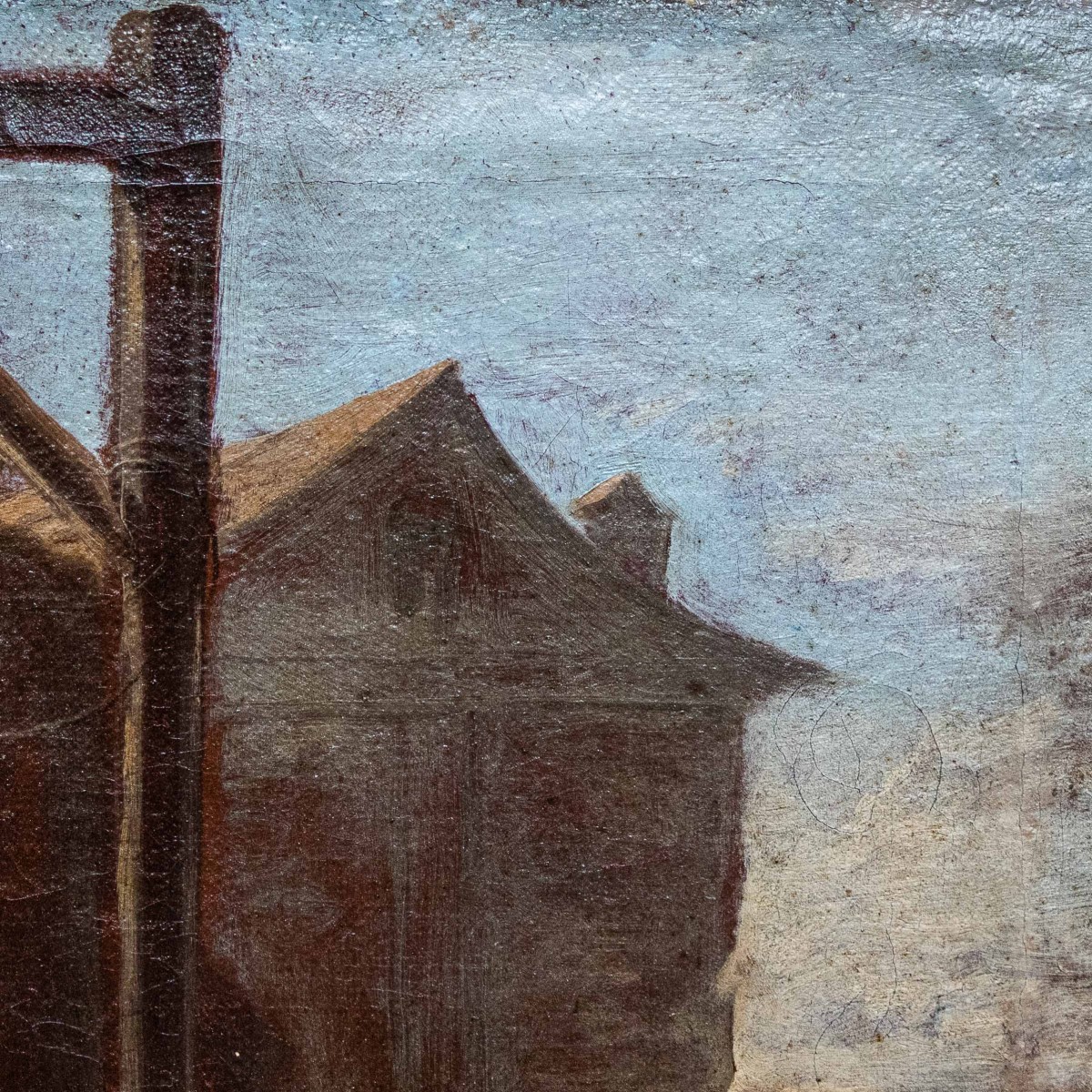
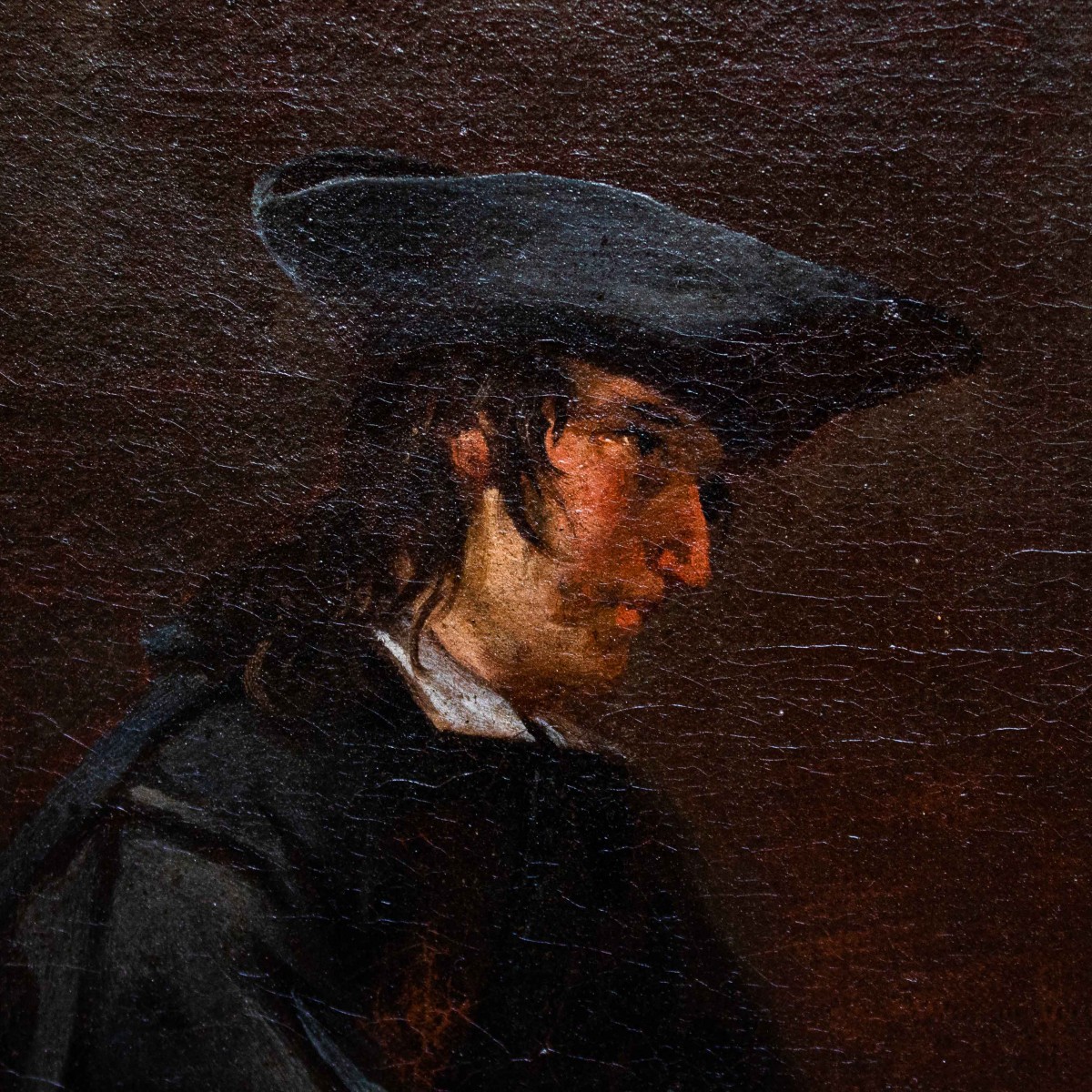
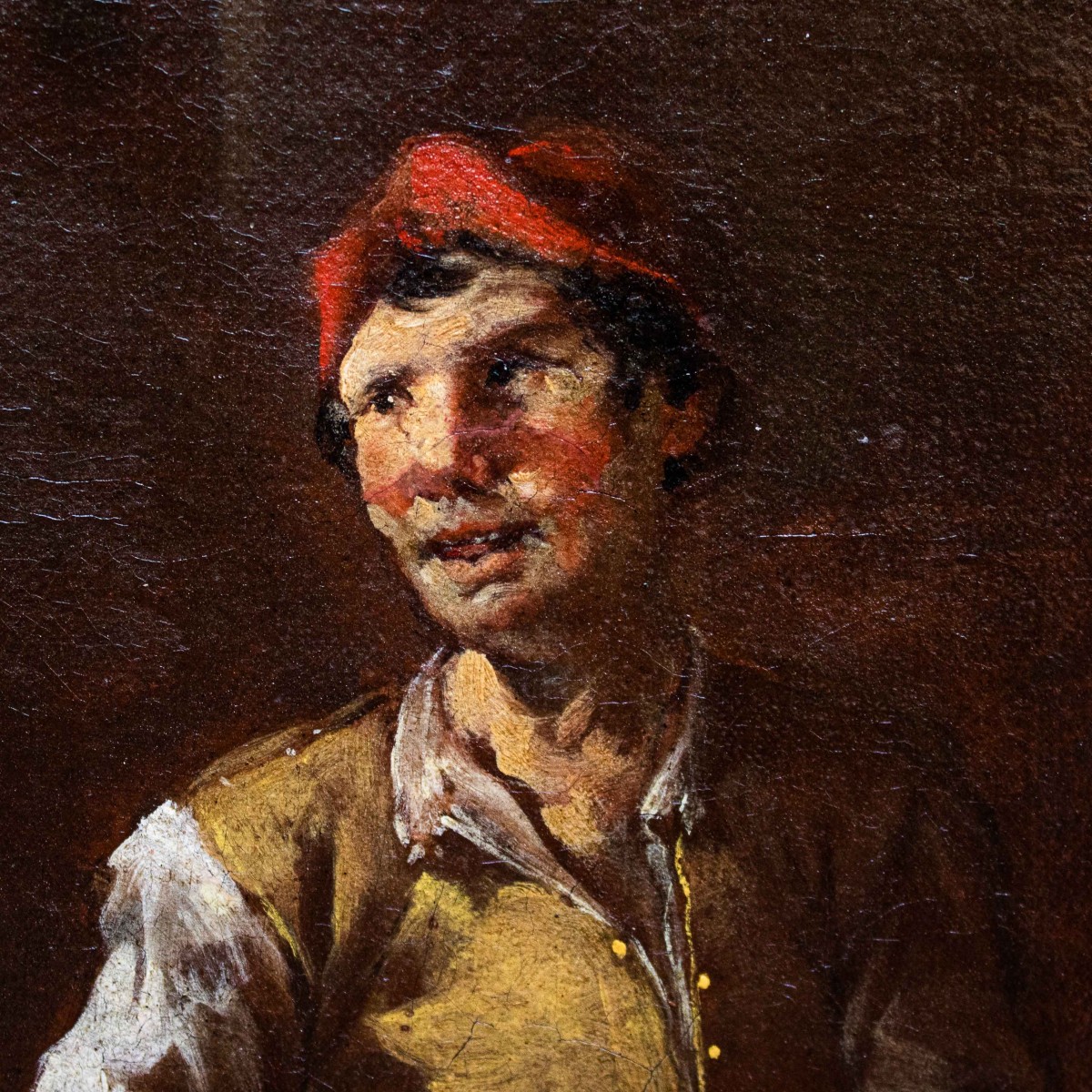
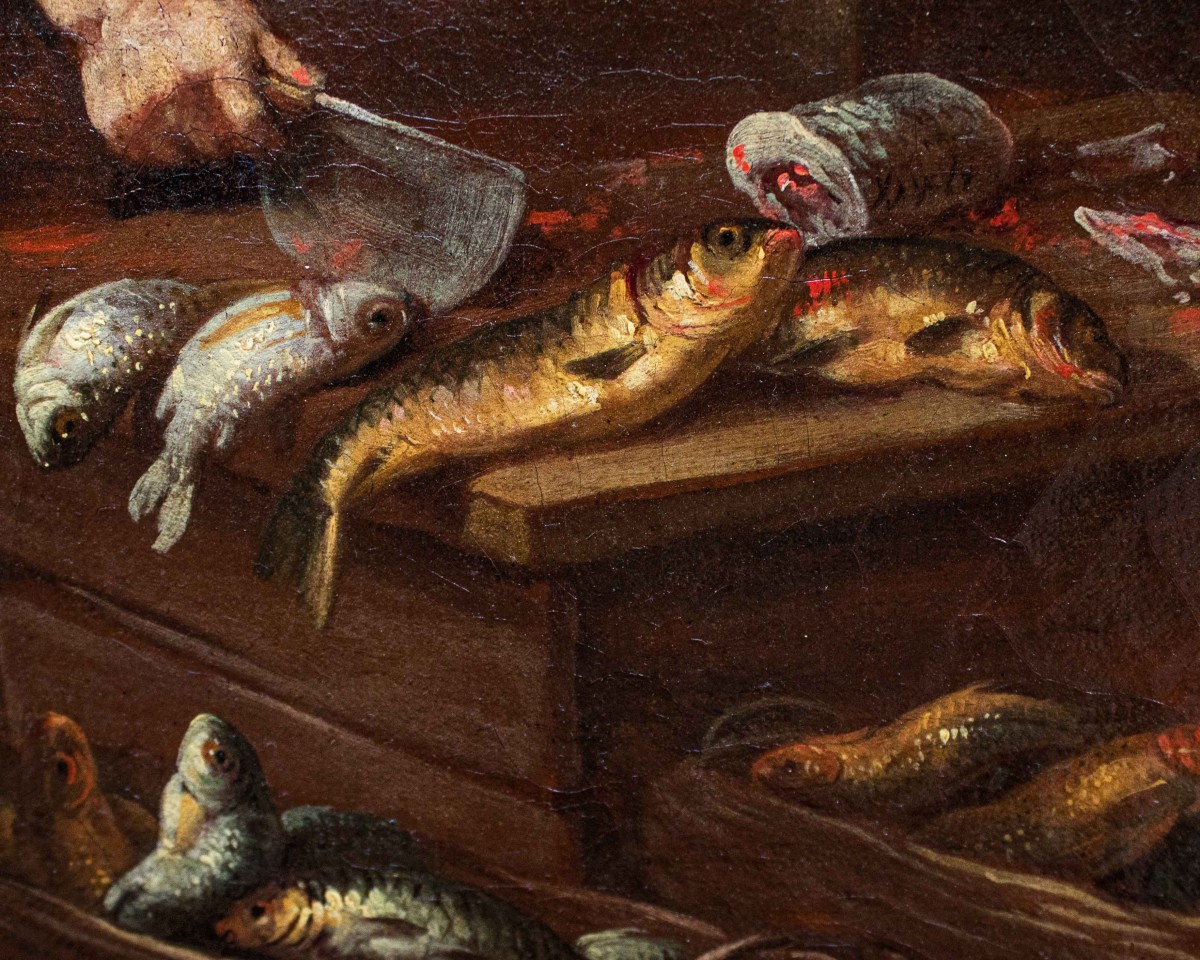
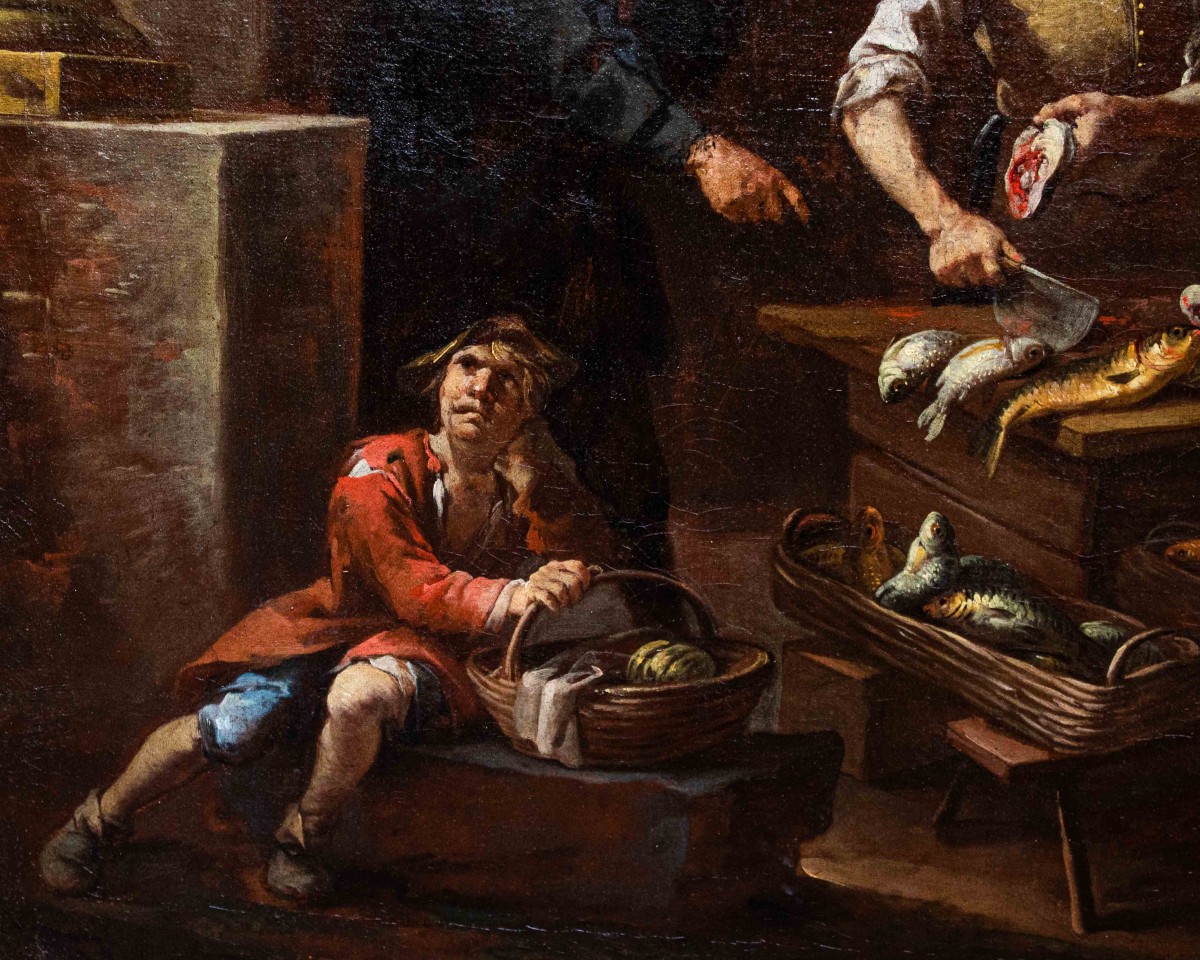
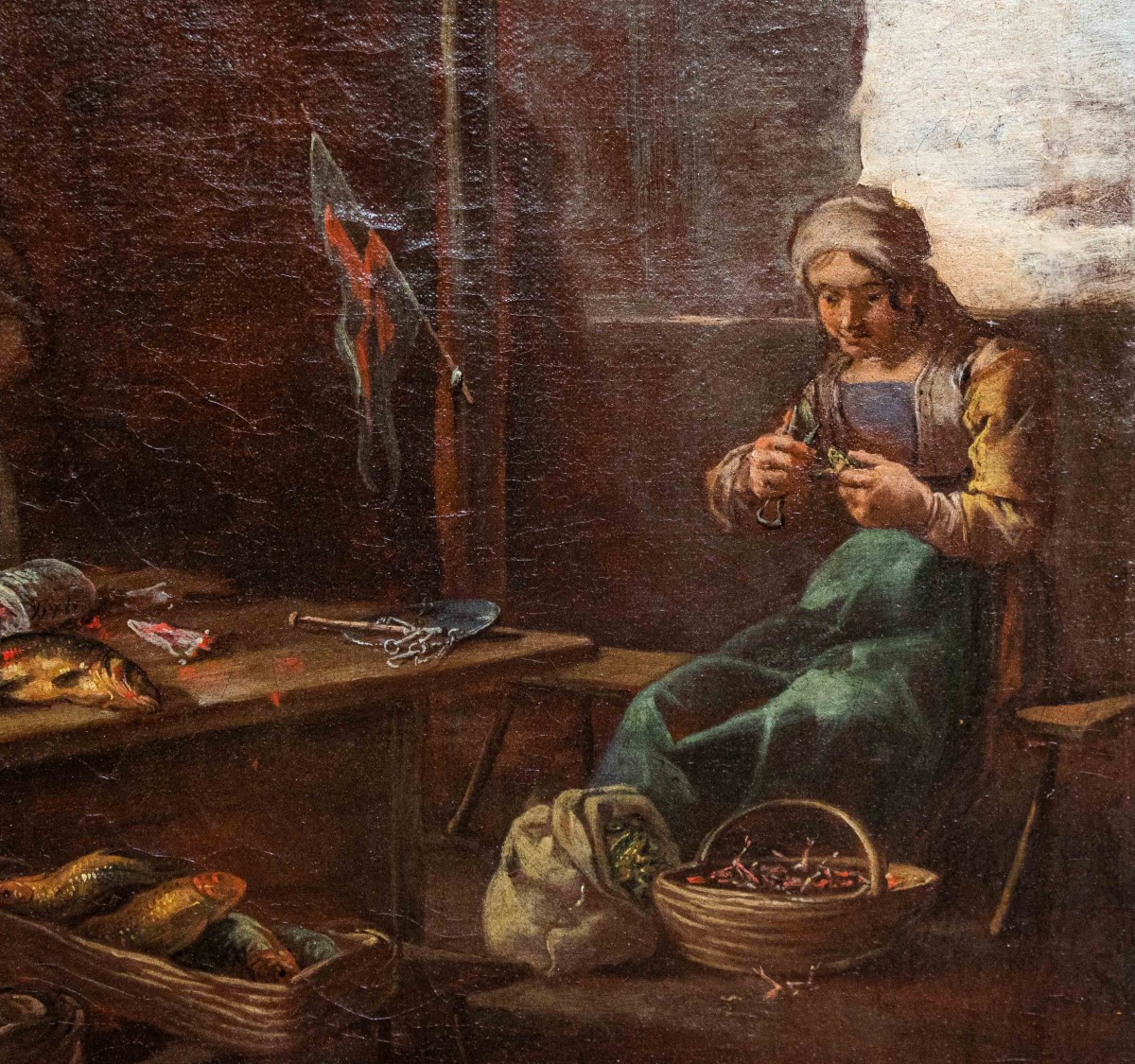
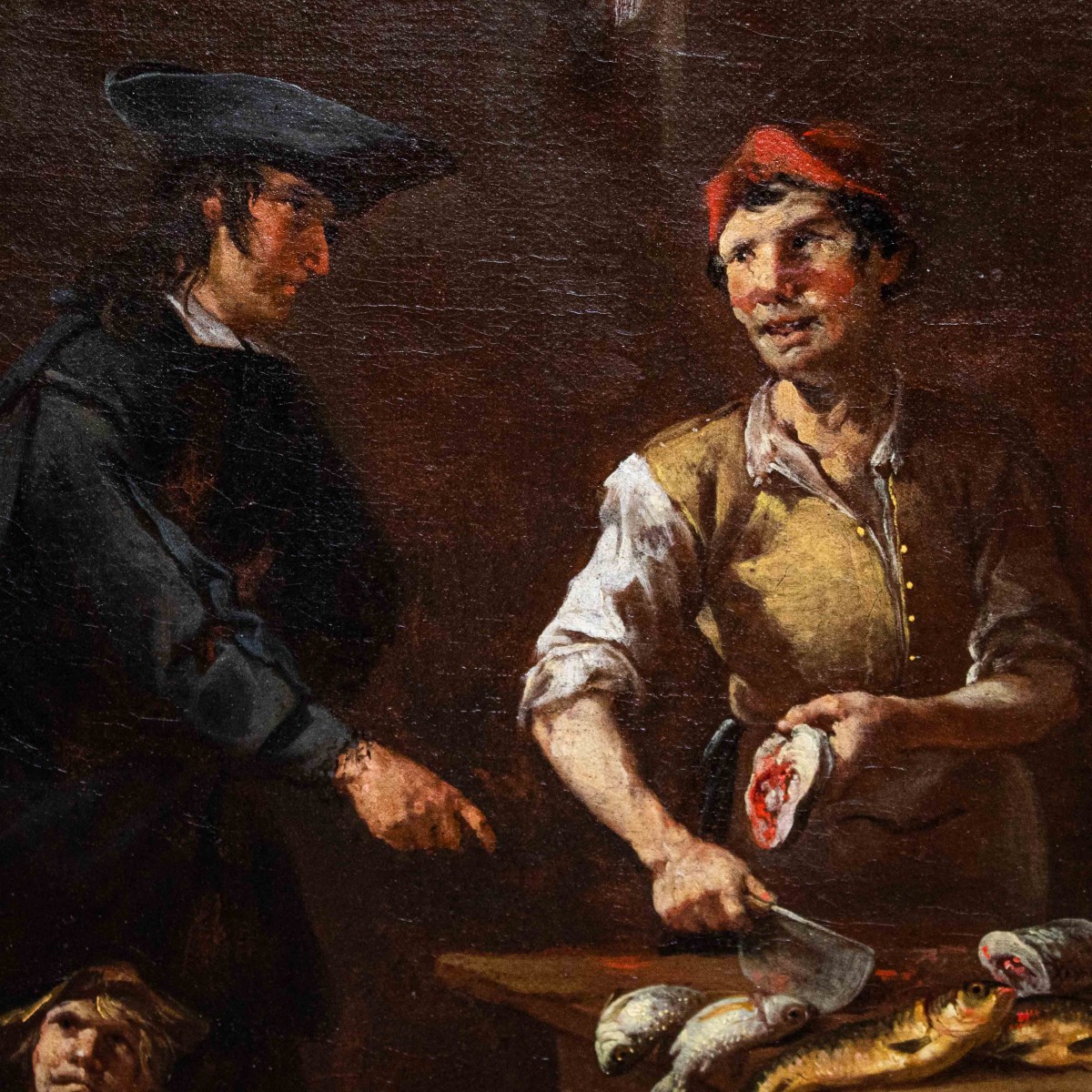
The crisp harbor air saturating the scene captures every small detail with vibrant realism, down to the still-moist scales of the fish on display. A family of fishmongers is portrayed going about their daily chores. While the young son is distracted and the wife patiently skins frogs (with the raw product in one sack and, curiously, the skinned outcome in another), the head of the family slices a large fish for a customer wearing a firmly pressed tricorn hat. The knowing look exchanged between the two, along with the hand gestures and the extraordinarily rendered veins on the vendor’s forearm, heighten the almost Verismo-like realism bursting from the entire scene: note the lively cheeks of those depicted and the bundle of hooks used to display the hanging goods, neatly arranged at the corner of the table.
The absolute lack of moralizing sentimentality with which the master artist, Giacomo Francesco Cipper, known as il Todeschini (1664–1736), treats his subjects once again demonstrates his artistic intent: to render the beauty of real life with lucid pragmatism. Unlike many of his contemporaries who turned everyday scenes into melancholic pathos, Todeschini faithfully adhered to a lively, optimistic depiction of life, illuminating his paintings with peasants, card players, and musicians. The artist sought to renew the 17th-century tradition of the Bamboccianti and reinterpret the models of Monsù Bernardo and Alessandro Magnasco in a personal key, aiming to transpose their ideas into a "monumental" spirit. At the same time, he dedicated himself to a realistic definition of everyday objects, food, and household items, pushing the comic and grotesque tradition to its ultimate conclusions. Austrian by birth but Lombard by adoption, Todeschini was already recorded as residing in Milan by 1696—an essential artistic hub from which he subsequently worked in the cities of Bergamo and Brescia. Cipper profoundly renovated the contemporary 17th-century Bamboccianti tradition, revolutionizing it through a personal figurative style marked by sculptural color and candid expressiveness. He began portraying the diverse humanity of the common people with a natural inclination; these depictions, however, are not without a healthy dose of irony, satirical verve, and, at times, overt licentiousness—a shift that mirrors the important reforms taking place in dialectal theater, particularly in Milan, which seems to accompany the artistic evolution connecting Todeschini to Ceruti.
The vibrant brushstrokes, steeped in realism and pathos, can be found in other works by Todeschini now in private collections, such as the Market Scene (Zeri Collection), where the figures, baskets, and still lifes of vegetables recall the stylistic traits of the painting in question; another Market Scene in a private collection; and finally, the facial features of the boy resting his head on his hand can also be spotted in a painting depicting a young man, likewise in a private collection. Lastly, compare the Genre Scene preserved at the Museo Ala Ponzone in Cremona.
Delevery information :
Les frais d'expédition seront calculés au moment de la commande en fonction de la destination, des dimensions et du poids du tableau, ainsi que de l'assurance couvrant la valeur totale de l'œuvre.
For paintings purchased from abroad: following payment, the application process to obtain the export license (ALC - Attestato di Libera Circolazione) will be initiated. All antiques shipped abroad from Italy require this document, which is issued by the Ministry of Cultural Heritage. The procedure may take 3 to 5 weeks from the date of request; therefore, the painting will be shipped as soon as the document is obtained