Offered by Schoppmann Art and Antiques
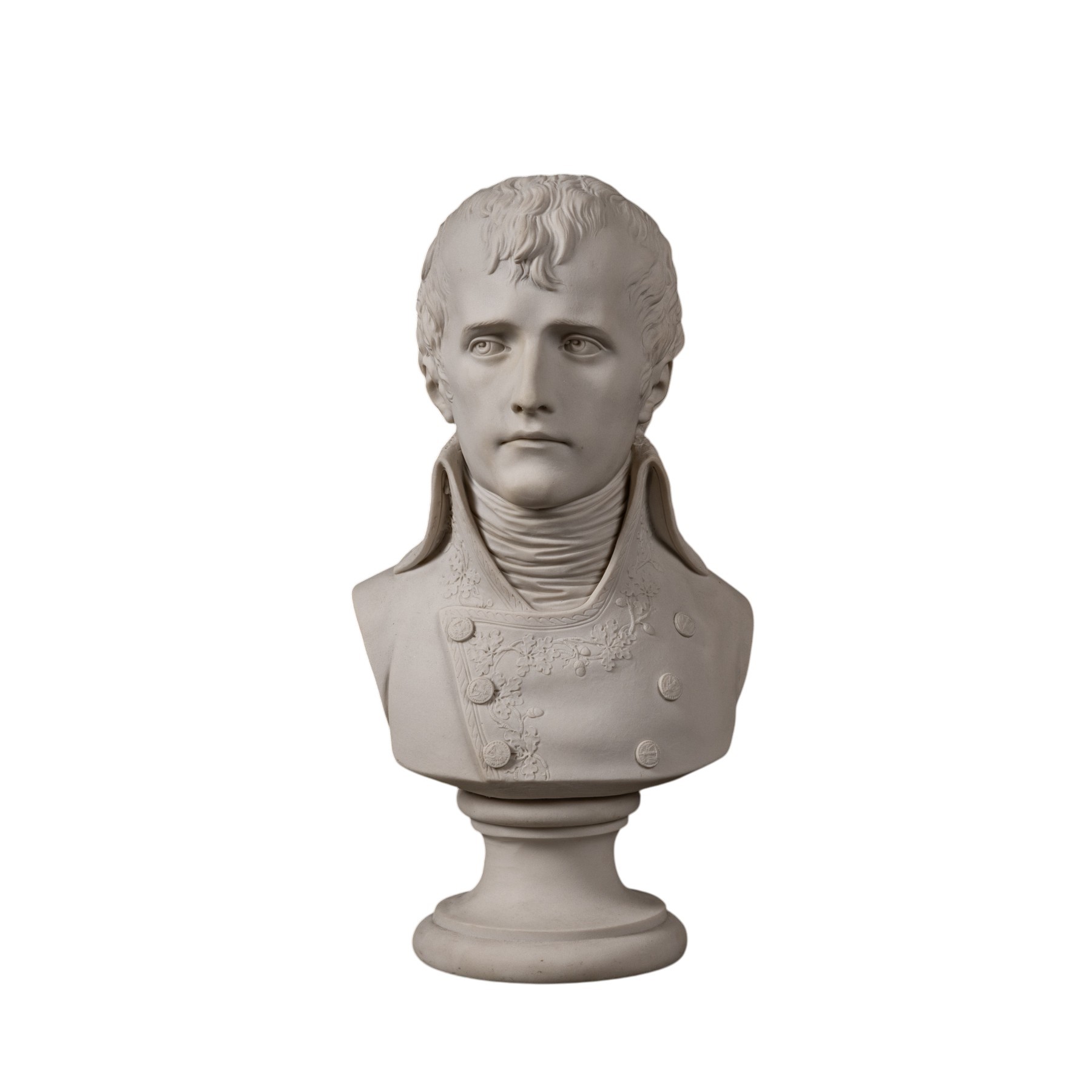
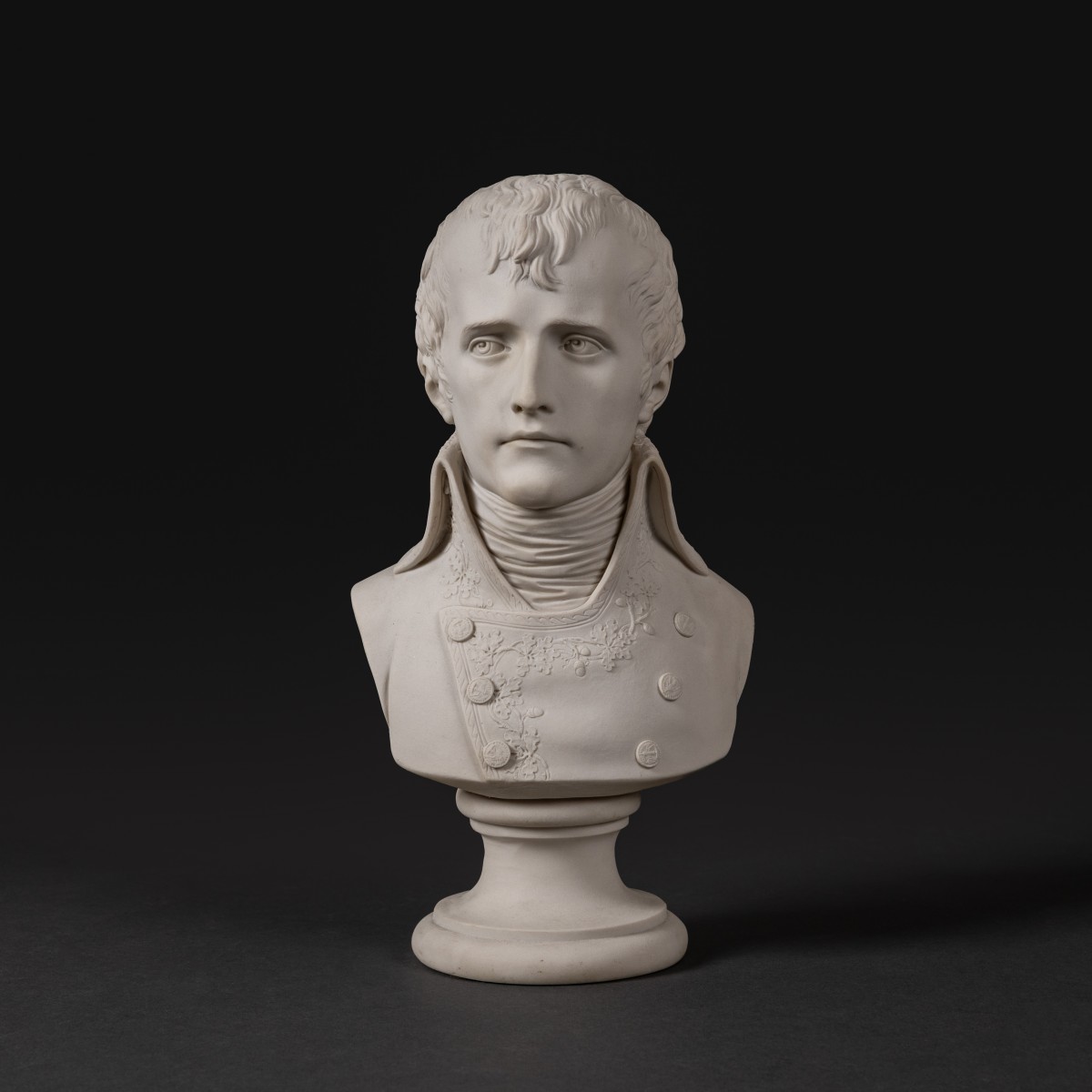
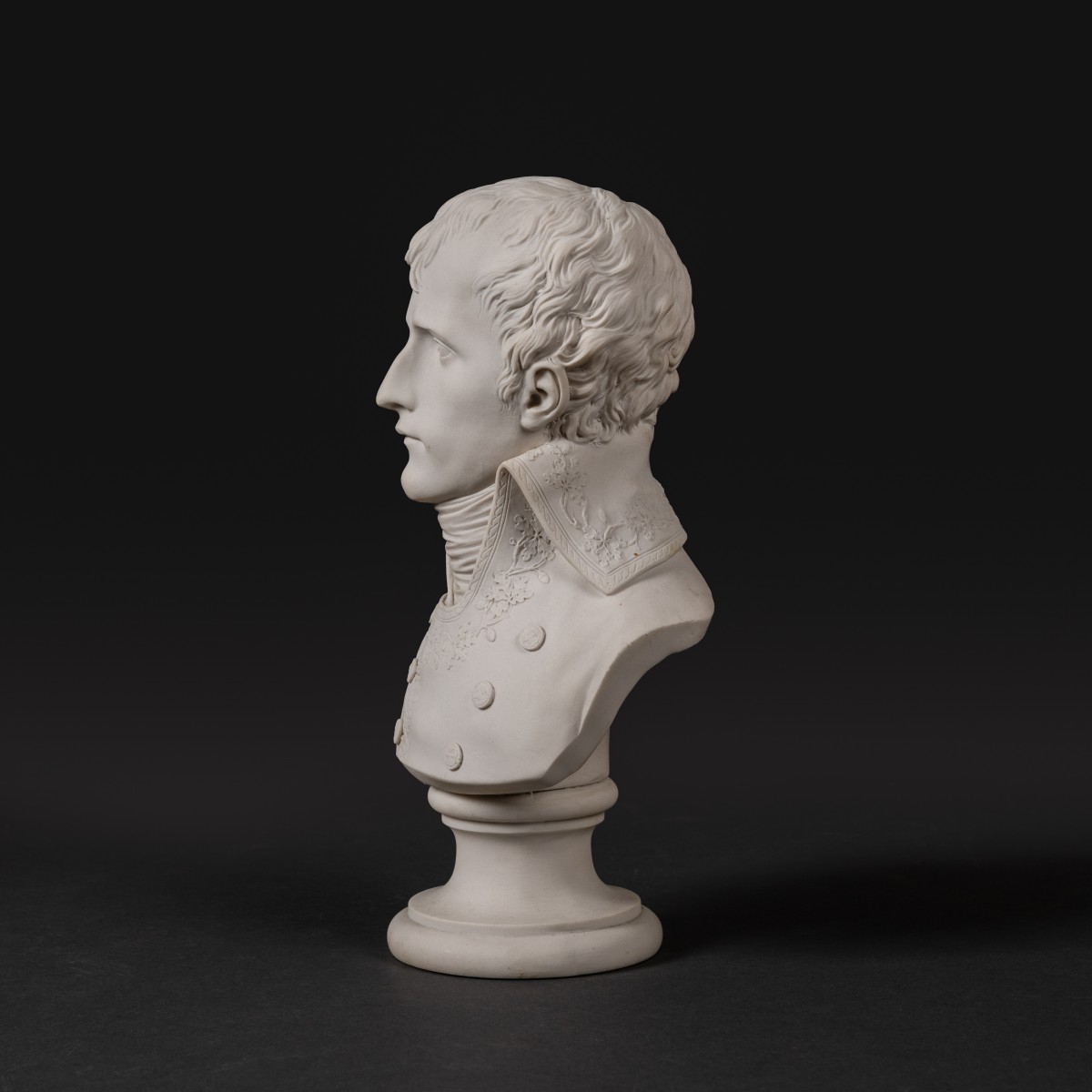
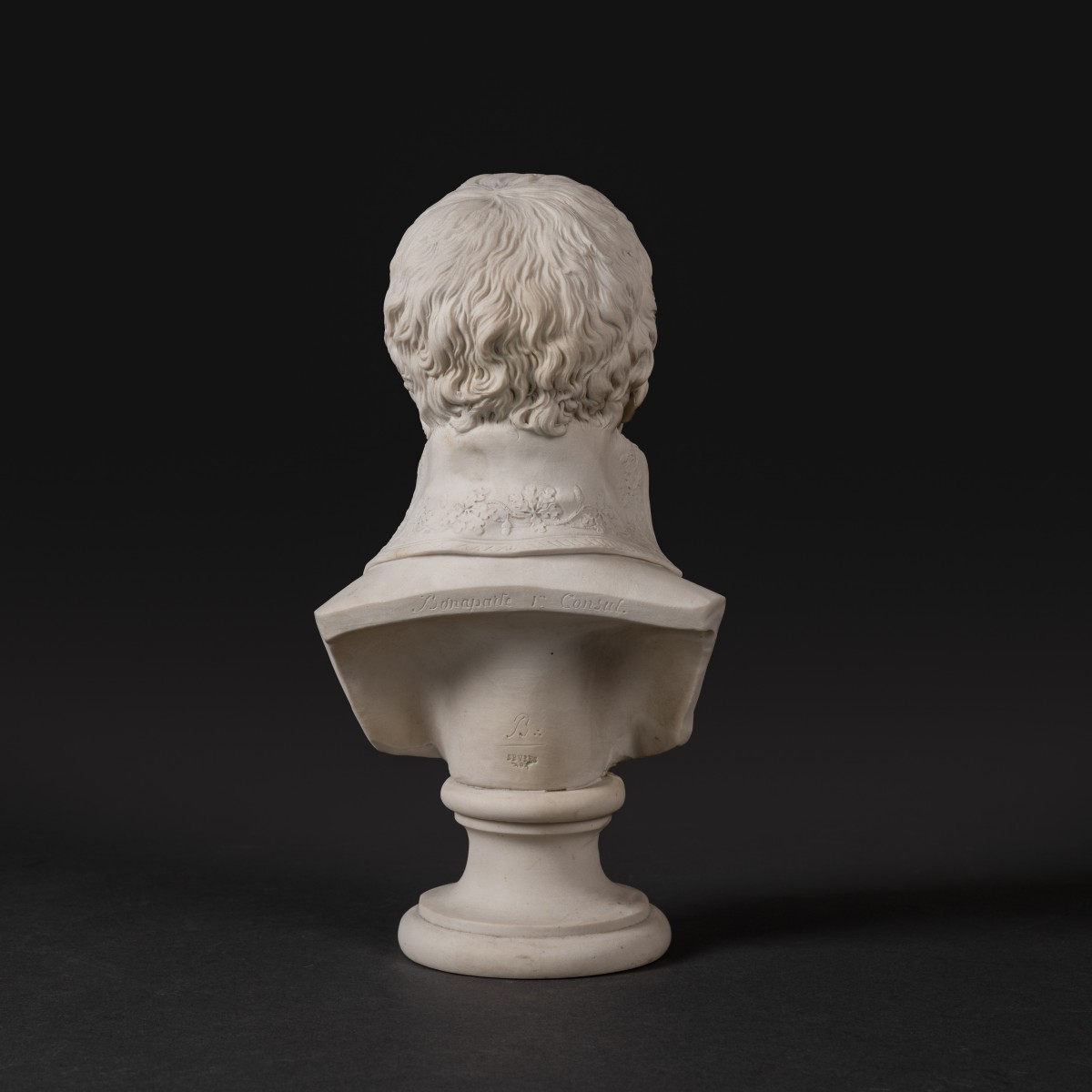
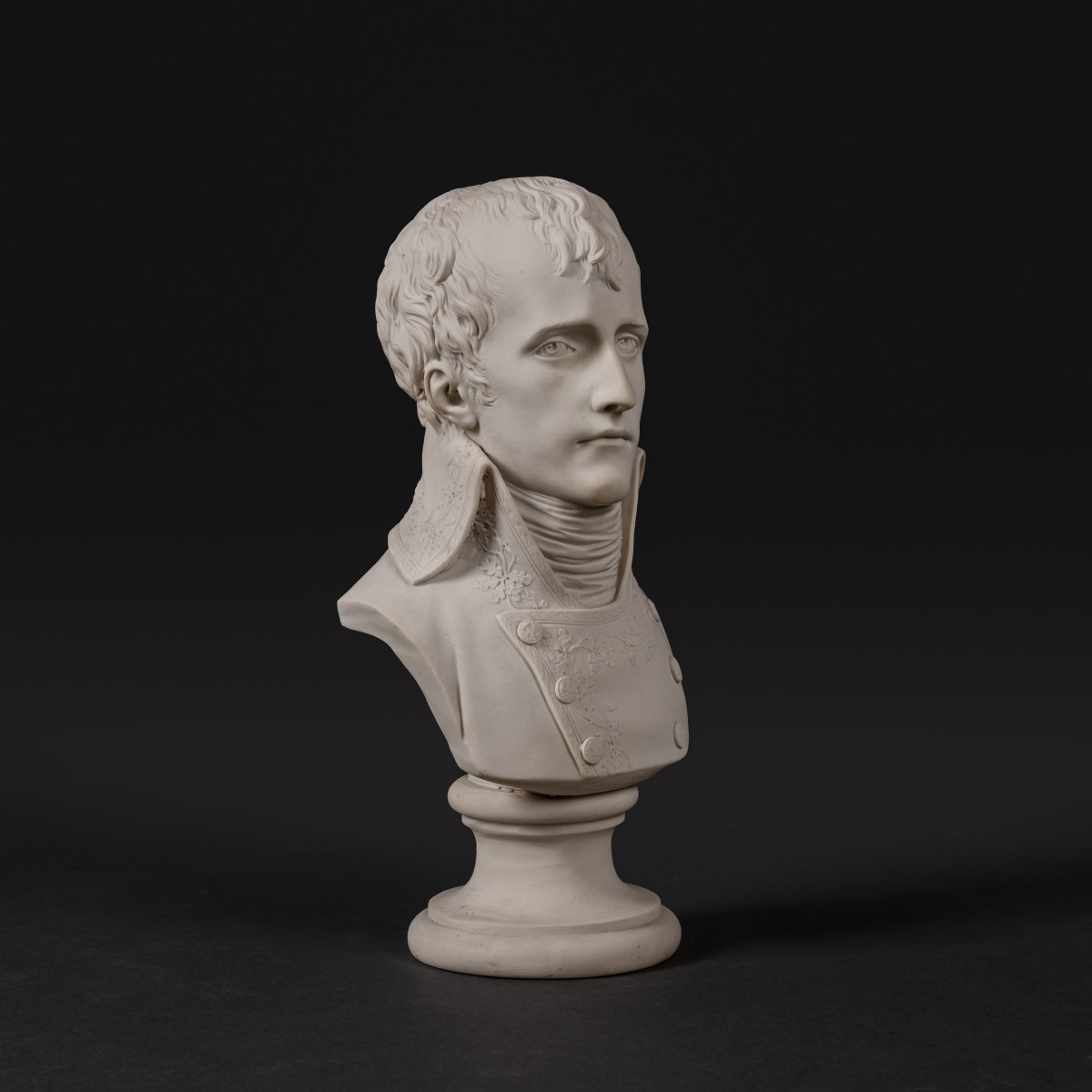

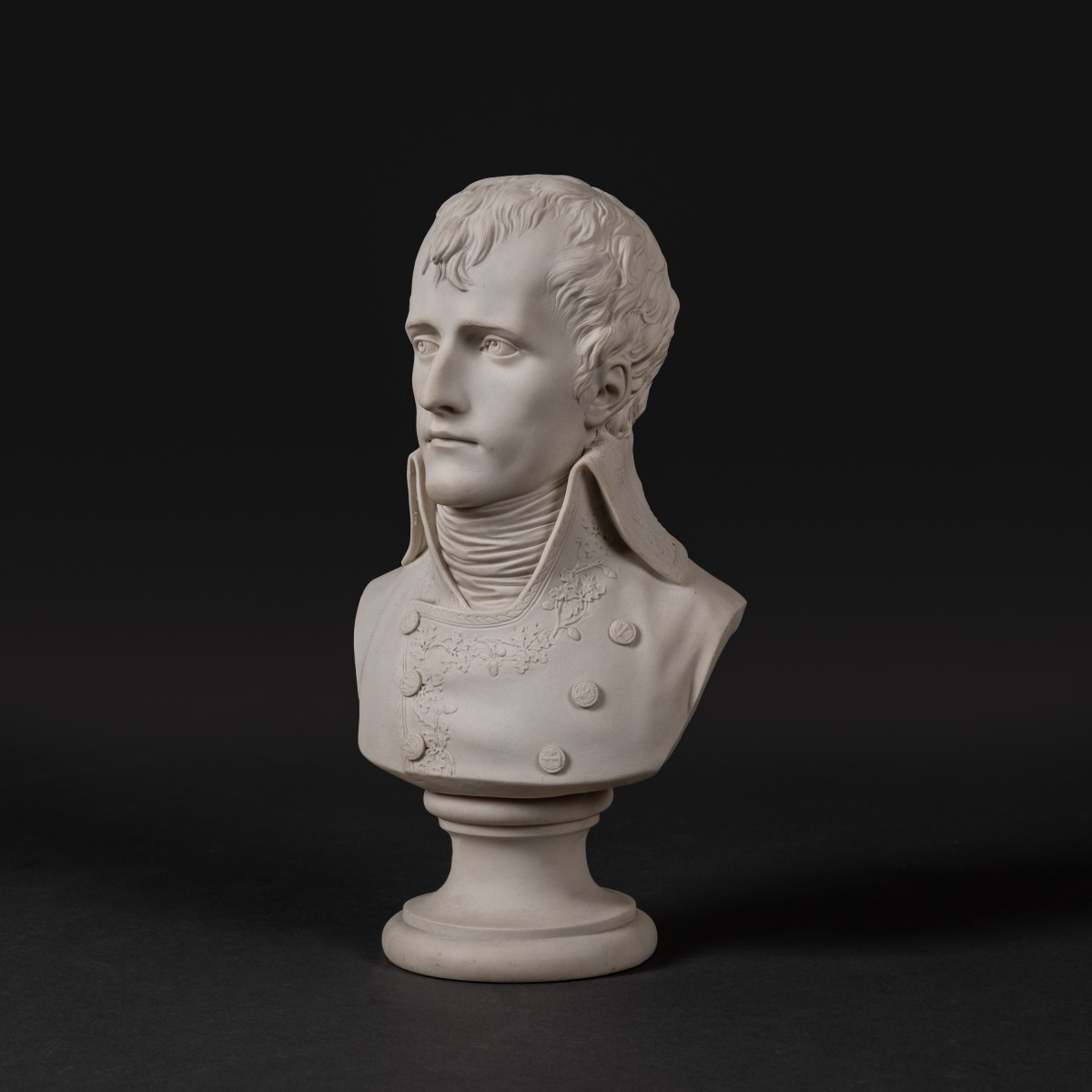
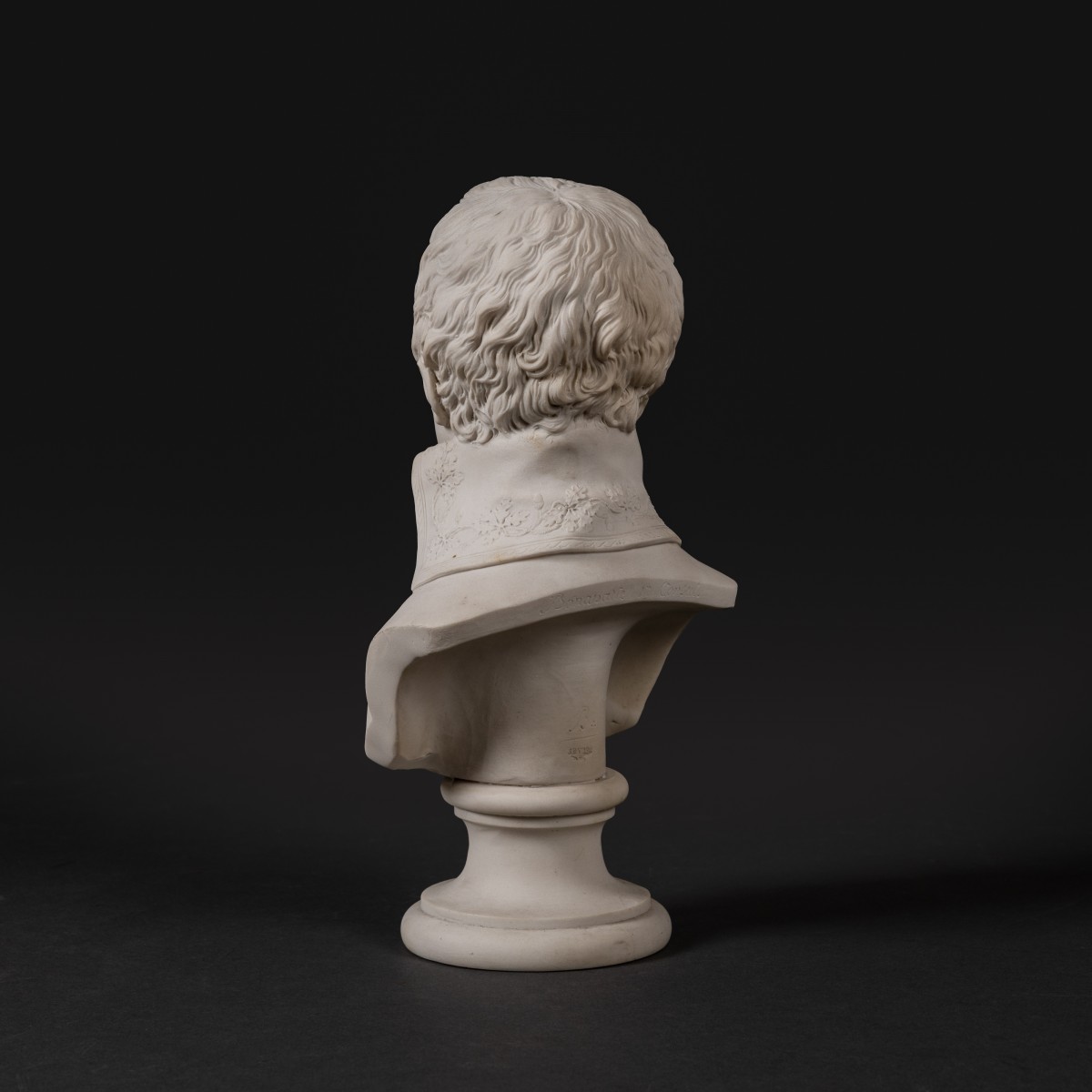
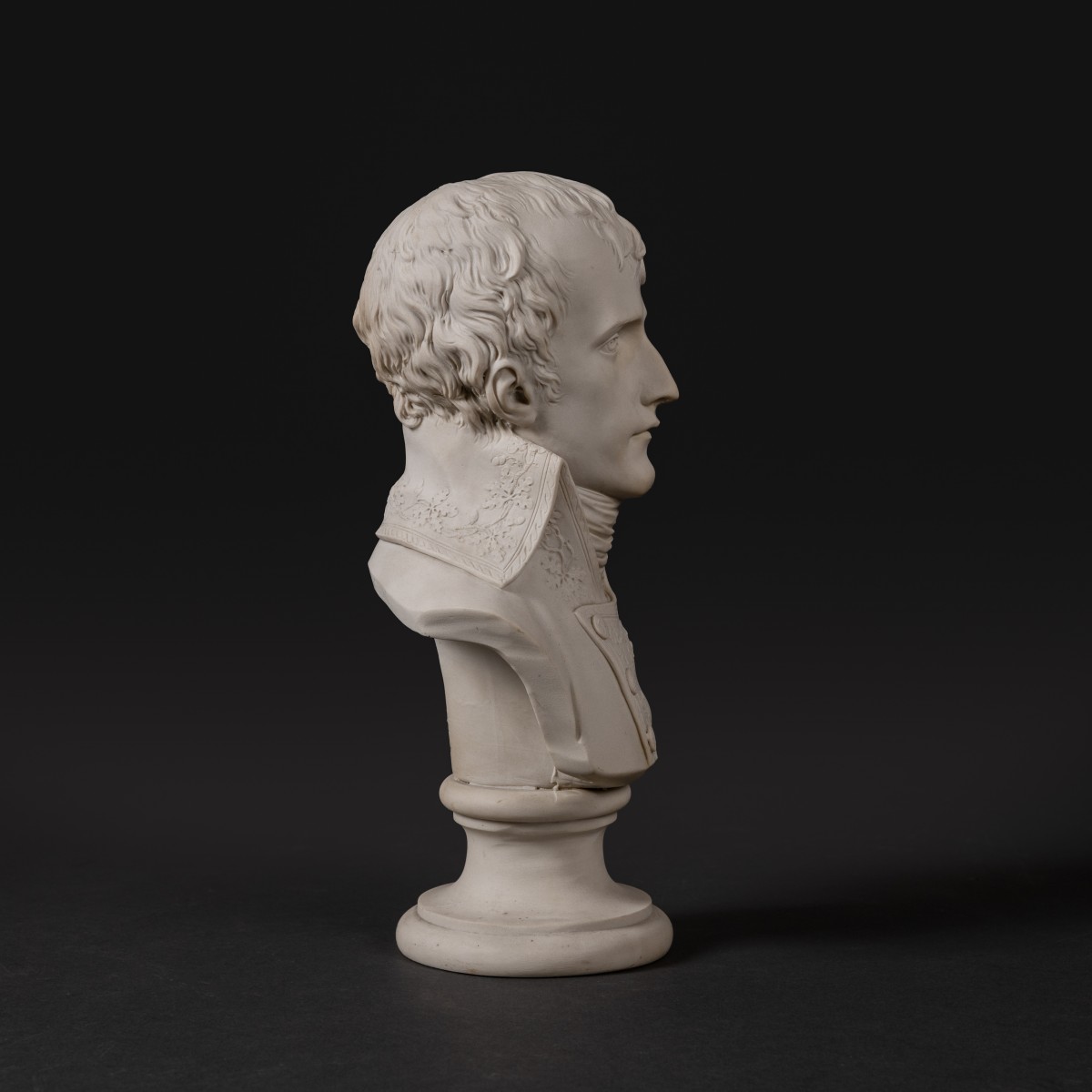
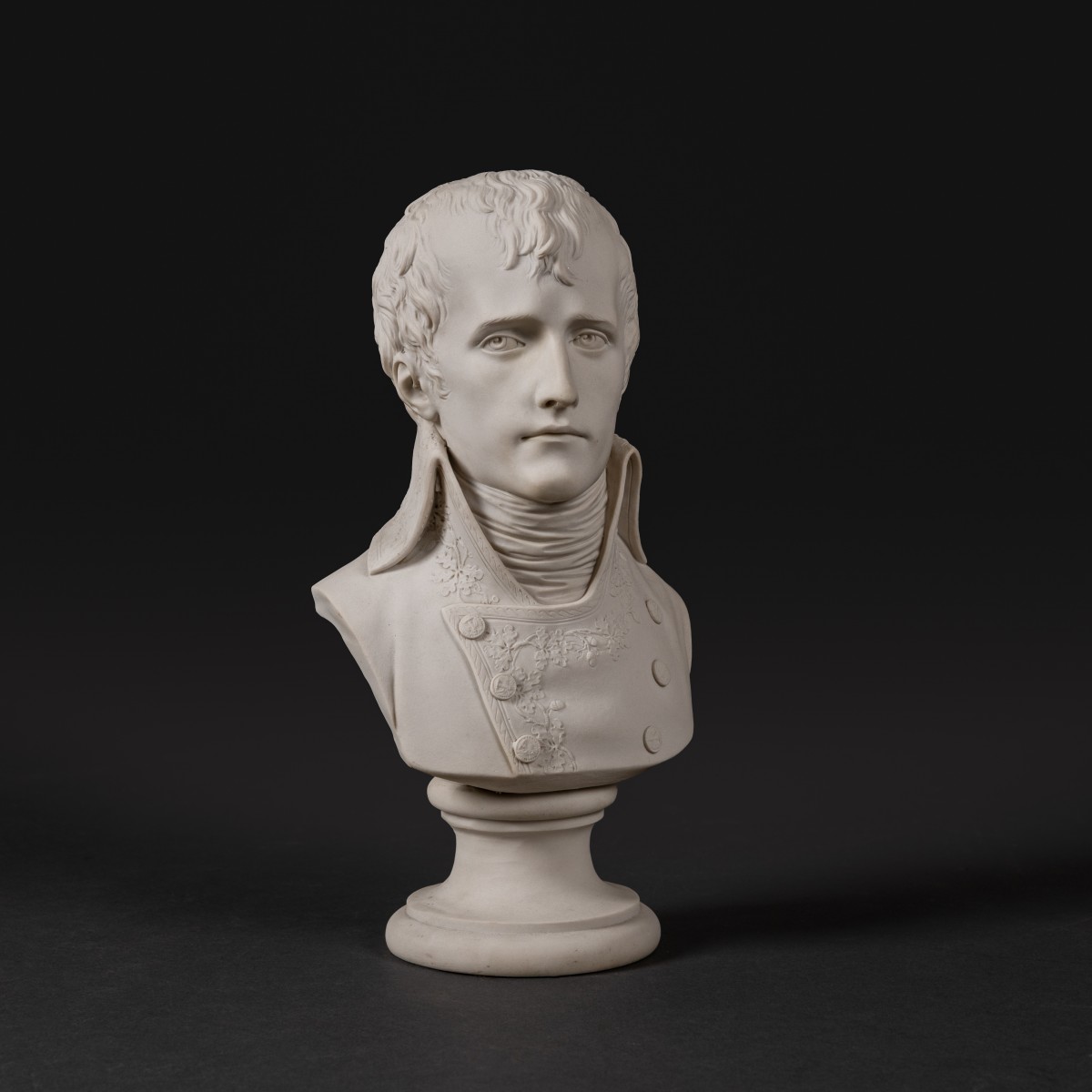
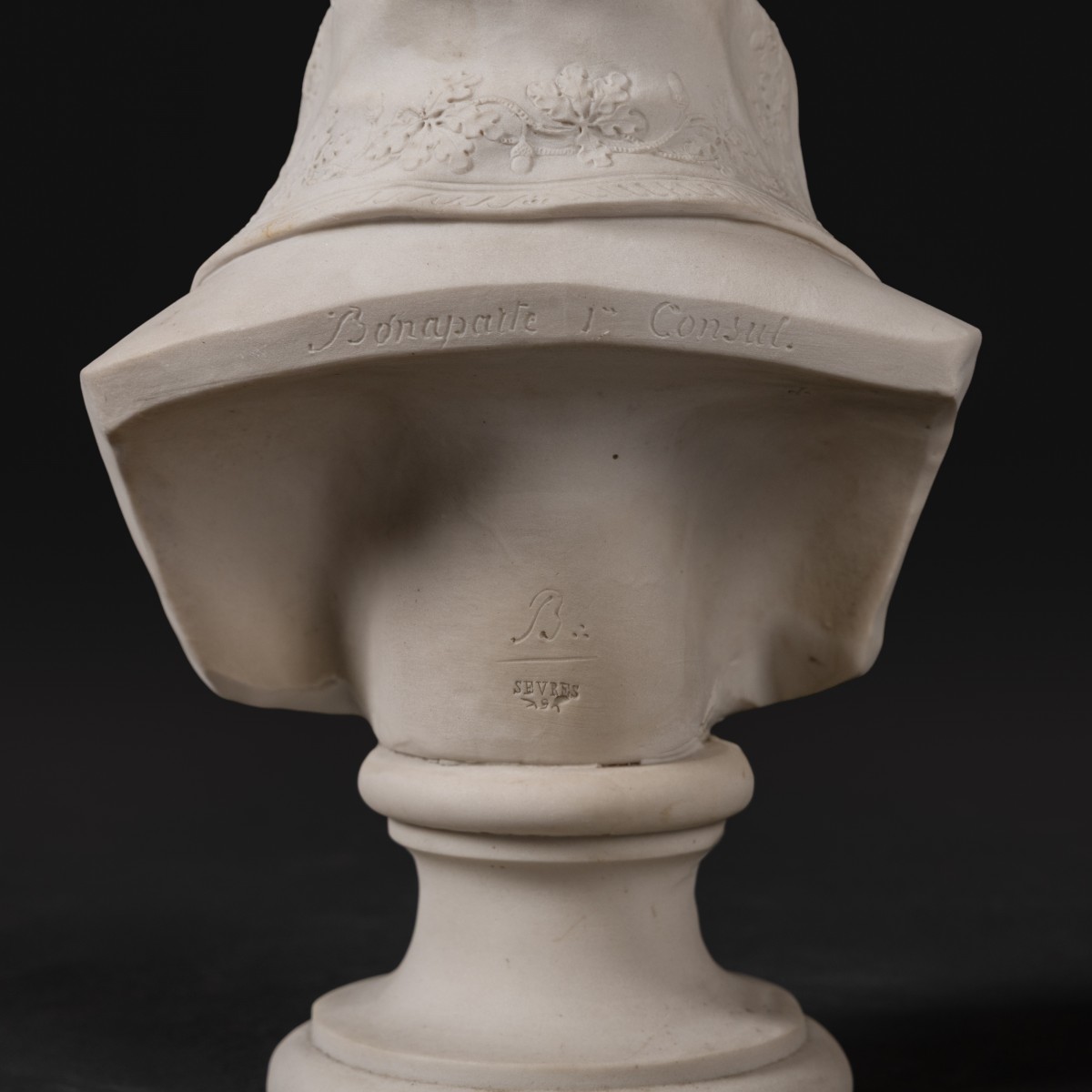
Marked with a "B" and three dots for Year IX; “Bonaparte Premier Consul” and stamped “Sèvres” on the mark
Dimensions: H. 28 (cm.)
Sèvres, 1800–1801
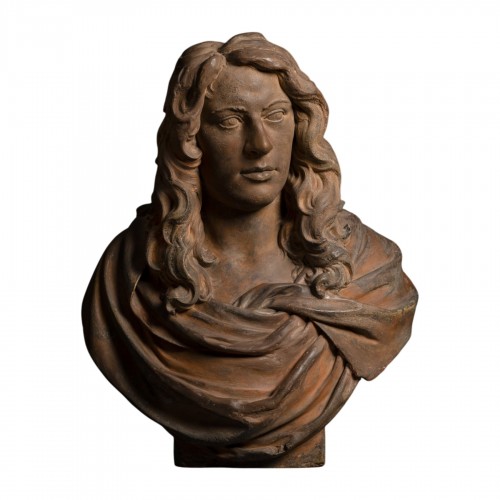
Bonaparte is depicted in a slight three-quarter right profile, with his gaze turned away. He is generally dressed in a double-breasted jacket.
This is a very rare example from the second series of official portraits of Napoleon Bonaparte produced at the Sèvres Manufactory.
The first series features a model with long, softer hair, while the third is the famous version based on Chaudet, a copy of which we will soon be offering for sale.
Louis-Simon Boizot (1743–1809)
A student of Slodtz, he won the Prix de Rome in 1762 and thus spent five years at the Académie de France. He became a member of the Academy in 1778. Furthermore, he owed his great renown to his role as head of the sculpture workshops at the Sèvres porcelain manufactory, while also working concurrently for Dihl and Guérhard. During the 1780s, he produced a whole series of decorative medallions as well as biscuit porcelain groups, all thoroughly neoclassical and particularly popular with an Anglo-Saxon clientele and certain haberdashers.
Bibliography:
Pierre Boyries, *De plâtre, de marbre ou de bronze: Napoléon—essai d’iconographie sculptée*, Tauriac, 1998.
Catherine Gendre (ed.) et al., Louis-Simon Boizot 1743–1809: Sculptor to the King and Director of the Sculpture Workshop at the Sèvres Manufactory (exhibition catalog), Paris, Somogy Éditions d’Art and Musée Lambinet, 2001
Boizot’s original model, dated 1800, is housed at the Sèvres - Cité de la Céramique and is illustrated by G. Lechevallier-Chevignard and Maurice Savreux in Le Biscuit de Sèvres: Directoire, Consulat et Premier Empire, Paris, 1923, no. 3.
Condition report: excellent condition, no damage or restoration
Delevery information :
All our objects are visible in Paris. Worldwide delivery by DHL.