Offered by Ars Antiqua
REQUEST INFORMATION

Old Masters paintings, furniture, sculptures and modern art
Baldassarre De Caro (Naples, 1689 – 1750)
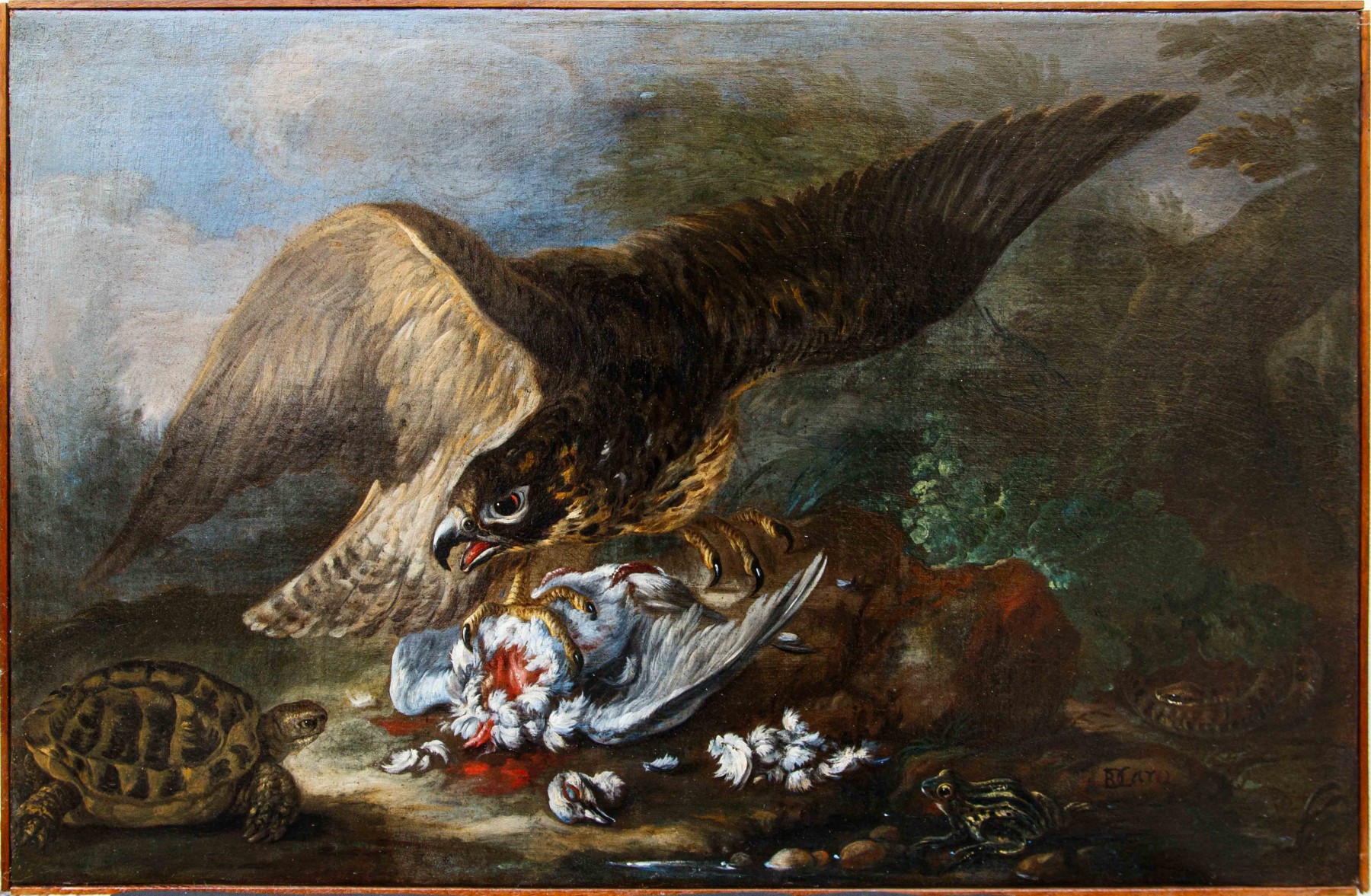
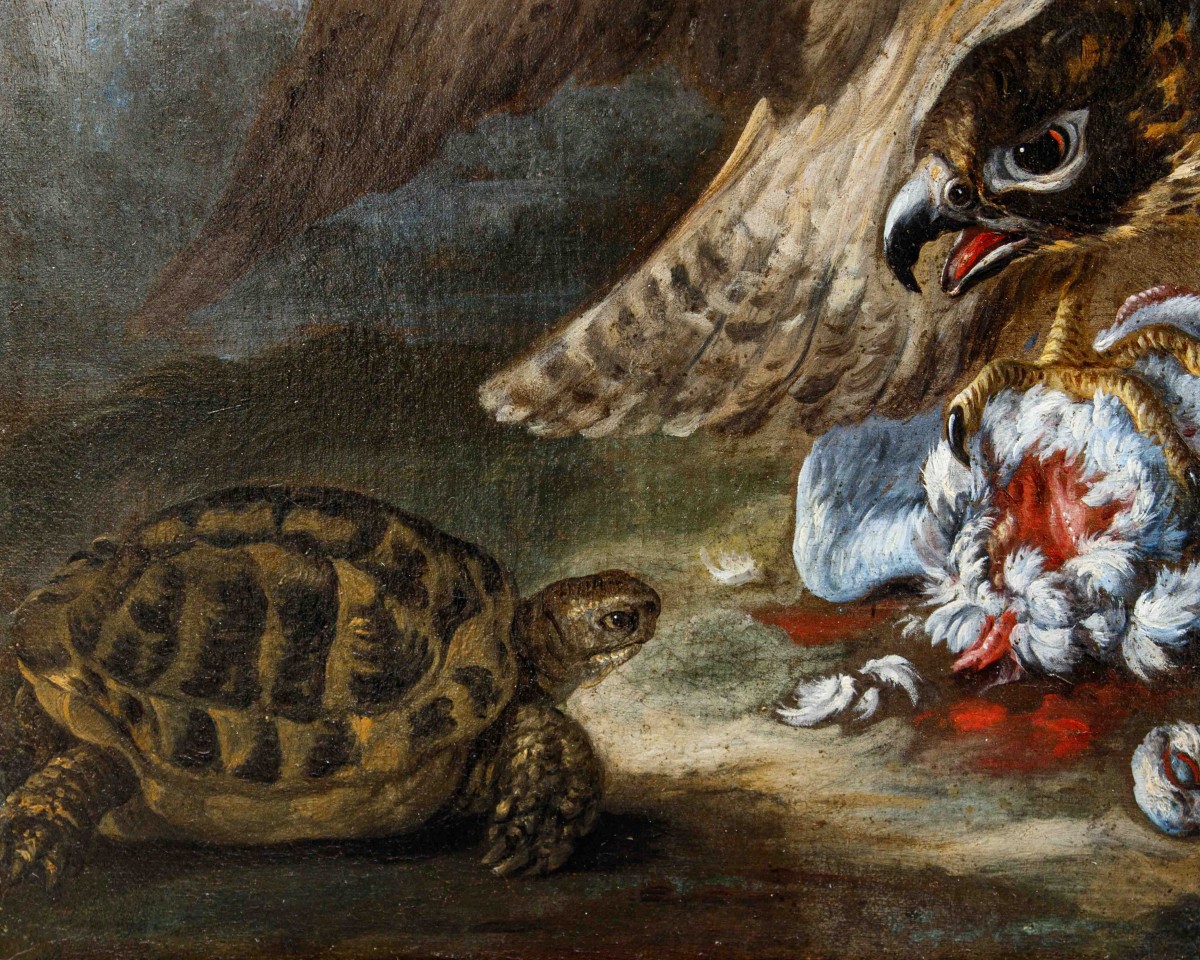
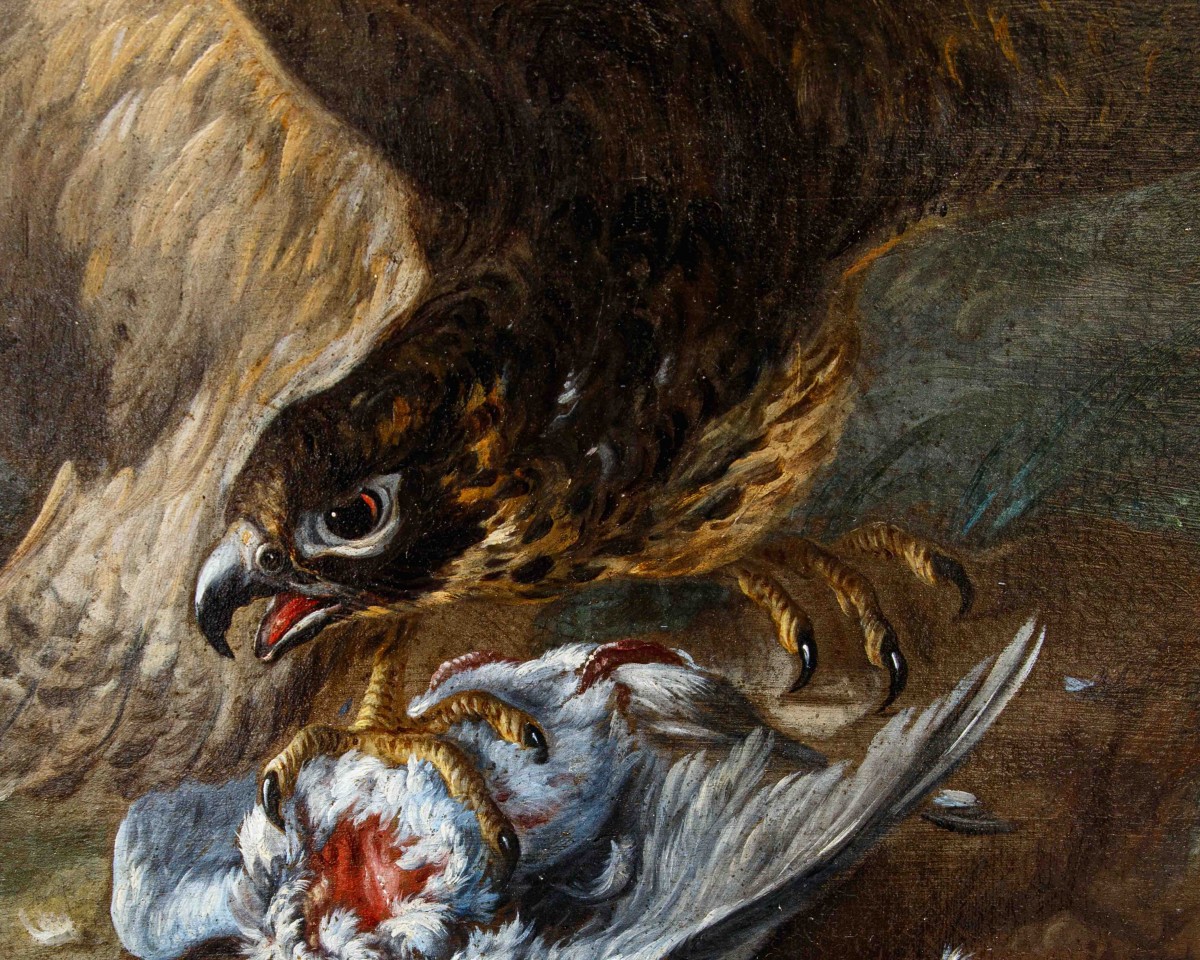
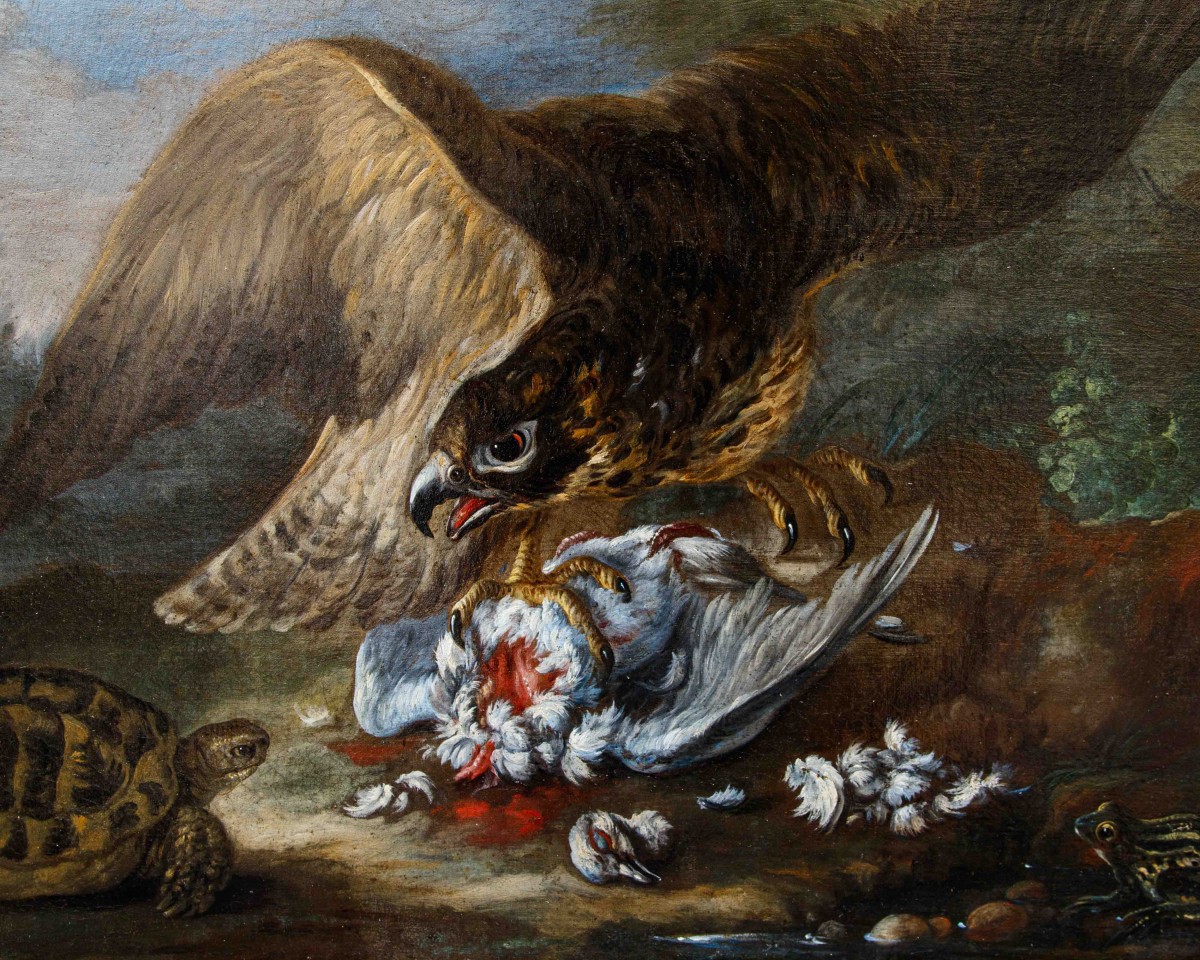
Raptor Capturing a Pigeon, Turtle, Frog, and Snake
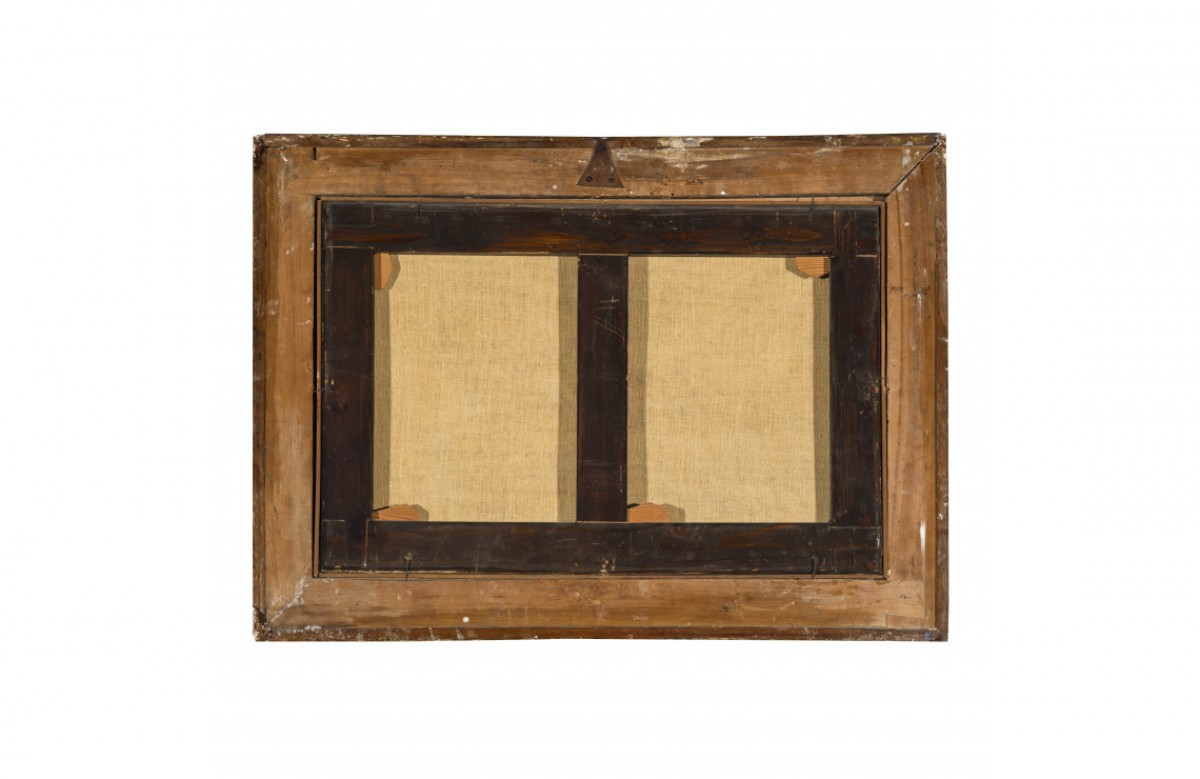
Oil on canvas, 50 x 76 cm
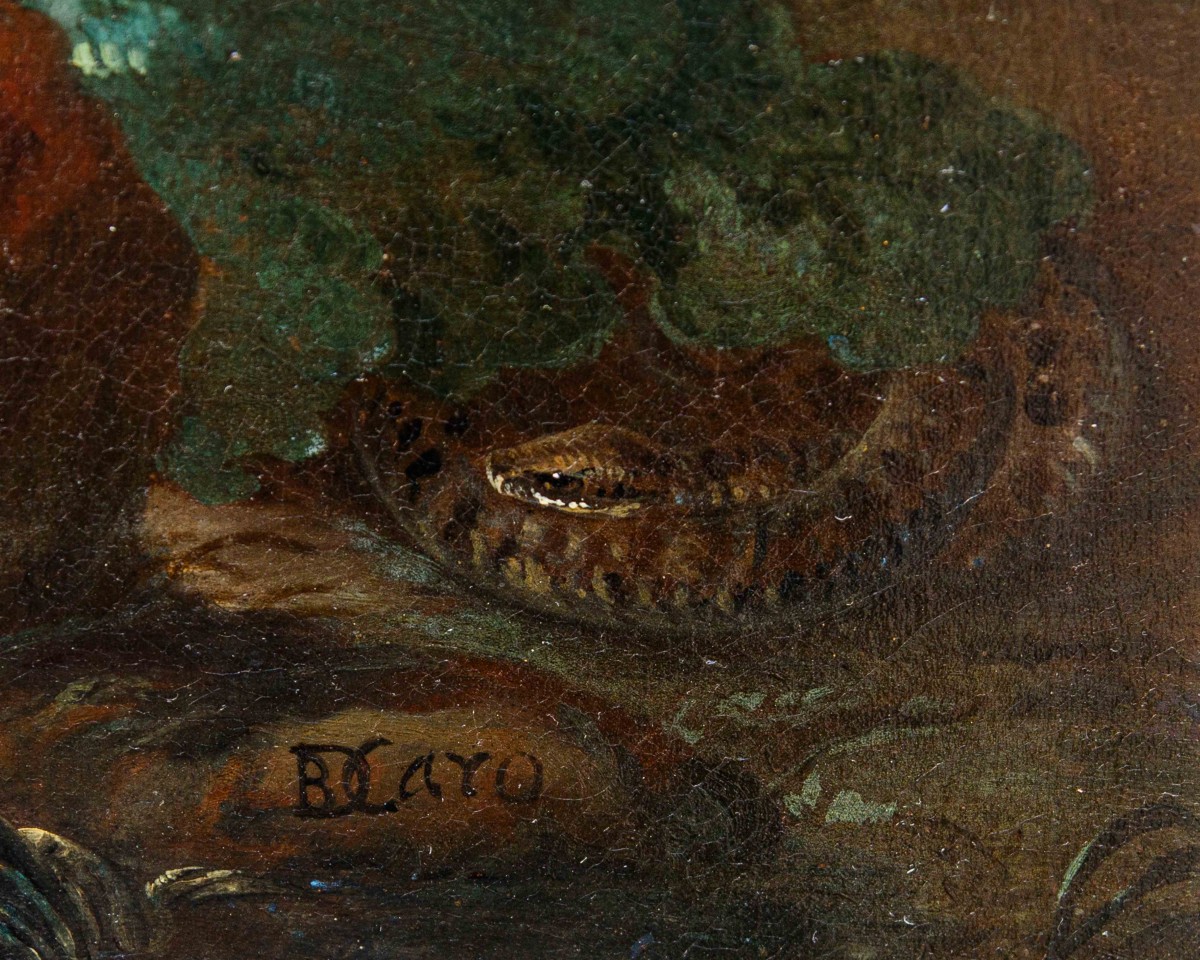
Signed lower right: “BDCaro”
Critical essay by Prof. Alberto Crispo
Born in 1689 in Naples, Baldassarre De Caro (Naples, 1689 – 1750) was primarily a painter of still lifes, game pieces, and floral compositions. According to the biographer Bernardo De Dominici (Le vite de' pittori, scultori e architetti napoletani, Naples 1742, III, p. 577), he was a pupil of the artist Andrea Belvedere, "... from whom [Belvedere] he first learned to paint flowers, of which he has painted many very natural pictures with freshness and mastery."
Over time, De Caro's stylistic direction underwent various shifts under the influence of 17th-century Dutch and Flemish painting models (Otto Marseus van Schrieck, Jan Fyt, Frans Snyders, Abraham Bruegel) and the animalistic tendencies of Giuseppe Recco's late period, eventually coming to favor abundant game compositions above all as his subjects. His pictorial style also changed register, aligning with the dominant trends that inspired the circle of Francesco Solimena: dark colors, dense shadows alternating with bursts of light, heavy color impastos, and twilight atmospheres.
An extremely prolific painter whose style—still rooted in the Spanish bodegón manner—was particularly appreciated and sought after by the 18th-century Neapolitan nobility and the Bourbon court, as evidenced by the numerous works preserved in the Neapolitan museums of Capodimonte and San Martino, the Royal Palace of Caserta, the Museo Correale in Sorrento, the Cavestany collection in Madrid, as well as in various private collections.
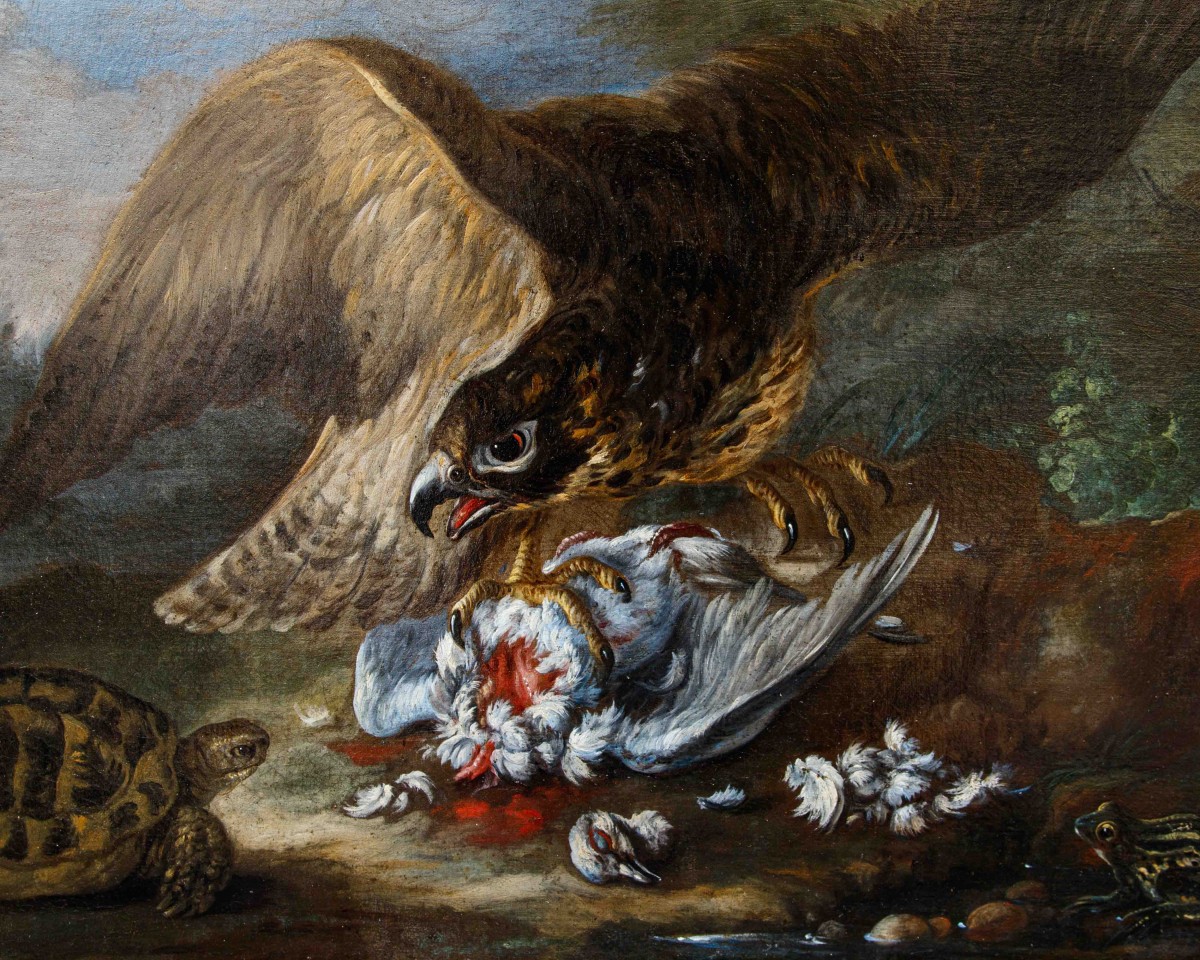
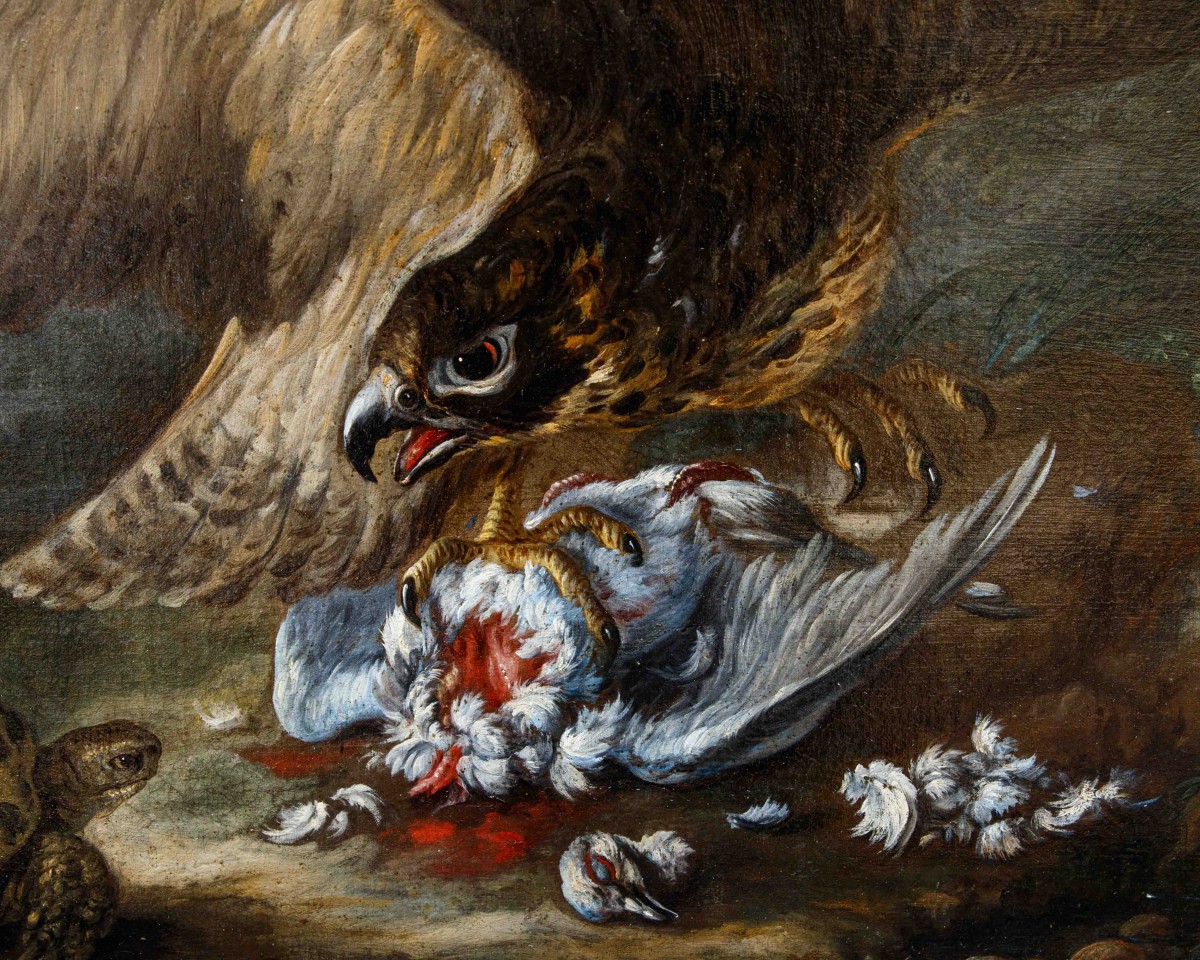
The work under examination—an oil on canvas signed "BDCaro" on a stone in the lower right—renders every single detail with extreme realism and skill, from the plumage of the raptor and the pigeon to the turtle's shell and the slimy back of the frog. The horizontally developed composition is characterized by strong dynamism and a somber palette heavily dominated by brown, gray, and dark green. Here, the artist's hand chooses to immortalize a moment of animal struggle: against a wild, wooded background lies the feathered carcass of a pigeon, over which the victorious raptor stands fiercely with wings outstretched and claws engaged. The majesty of this bird led to its adoption as a symbol since antiquity across diverse cultures, acquiring meanings associated with power, victory, and triumph. Serving as witnesses are two other skillfully executed animals: a turtle and a frog—the former a symbol of tenacity, resilience, strength, and longevity; the latter of fertility and metamorphosis—while on the right, partially hidden by a bush, lurks a coiled snake.
The canvas was originally designed as a pendant to another work, also signed, depicting two raptors, dead birds, and a snake, as documented in the records for both paintings published in the catalog of the Zeri Photo Library in Bologna (nos. 87207 and 97206).
Delevery information :
Les frais d'expédition seront calculés au moment de la commande en fonction de la destination, des dimensions et du poids du tableau, ainsi que de l'assurance couvrant la valeur totale de l'œuvre.
For paintings purchased from abroad: following payment, the application process to obtain the export license (ALC - Attestato di Libera Circolazione) will be initiated. All antiques shipped abroad from Italy require this document, which is issued by the Ministry of Cultural Heritage. The procedure may take 3 to 5 weeks from the date of request; therefore, the painting will be shipped as soon as the document is obtained