Offered by Tora Tori
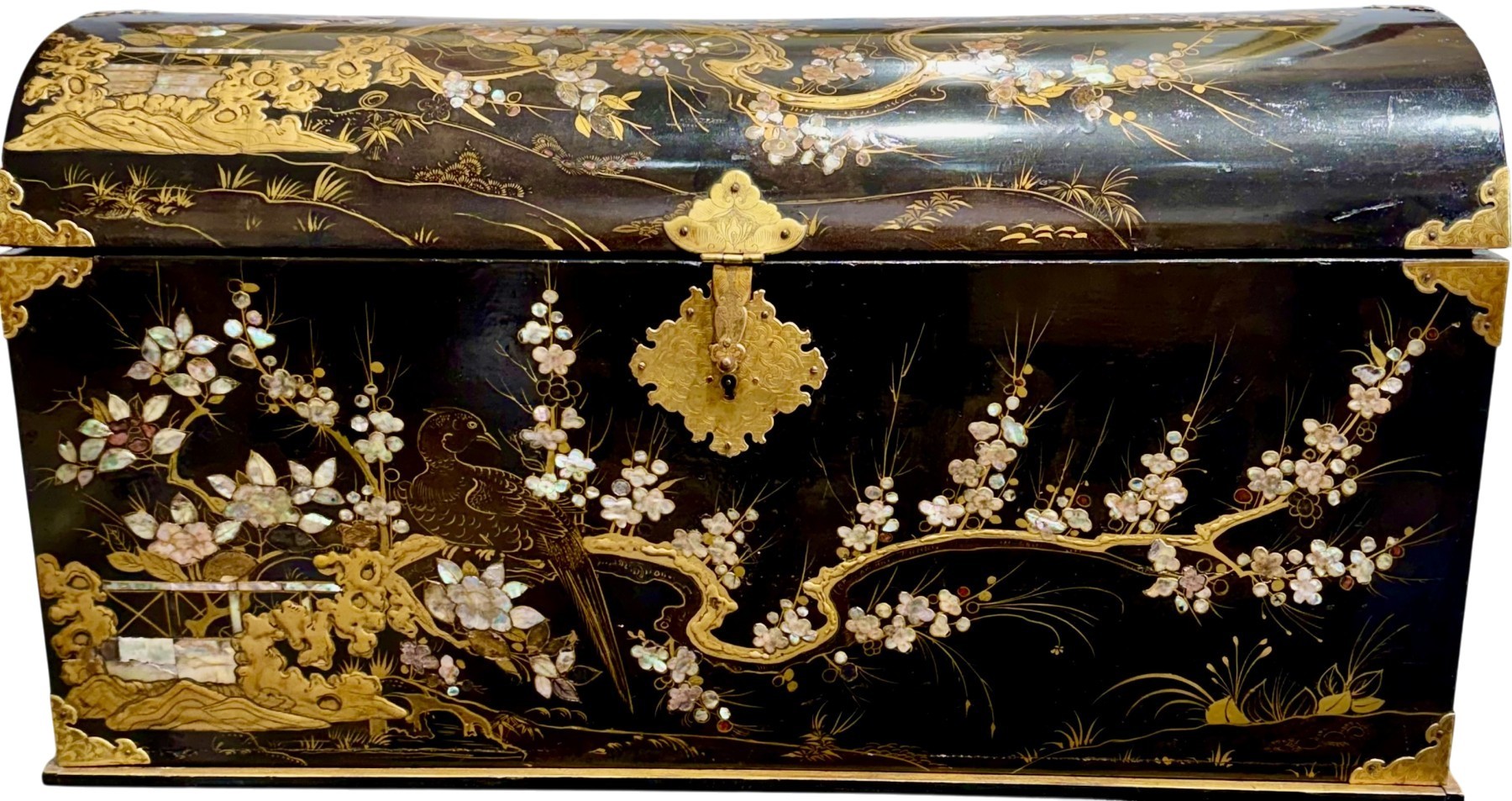
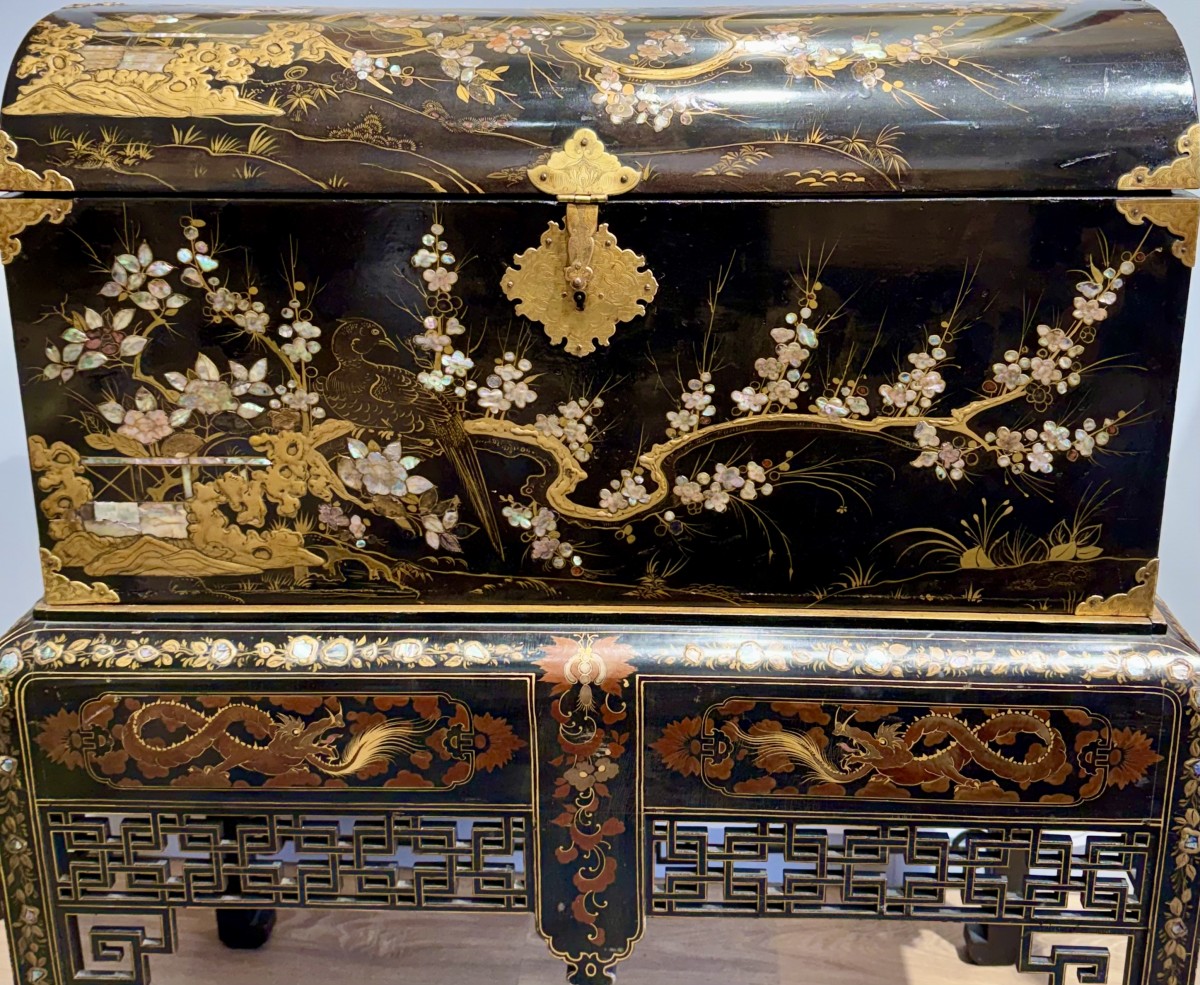
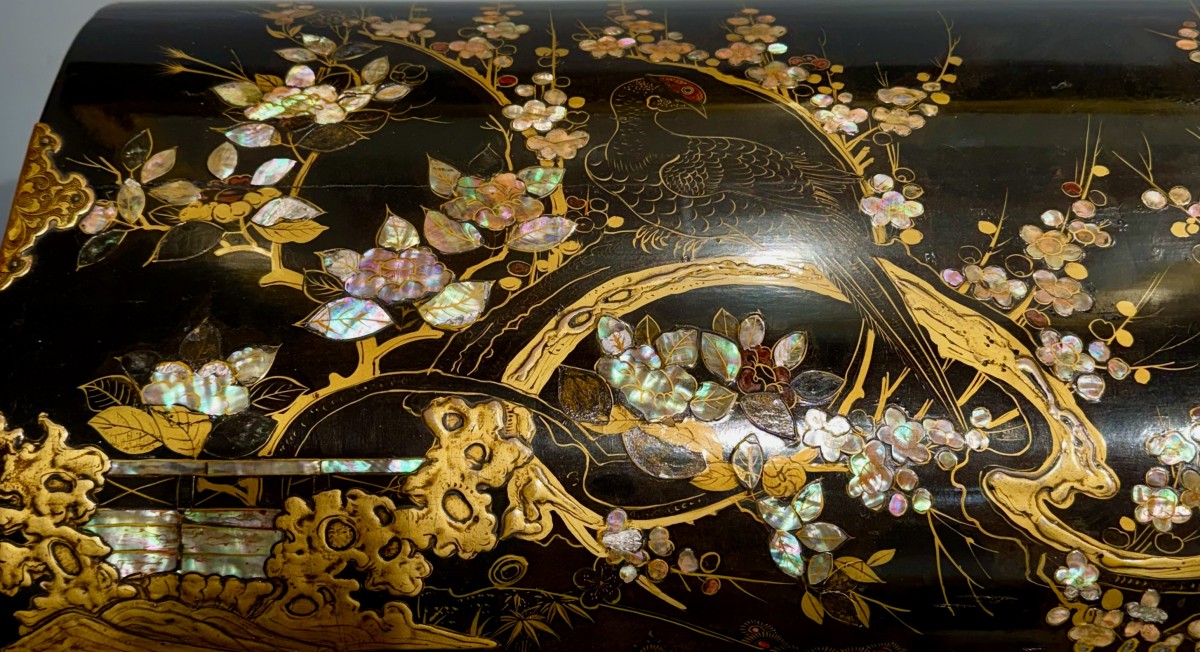

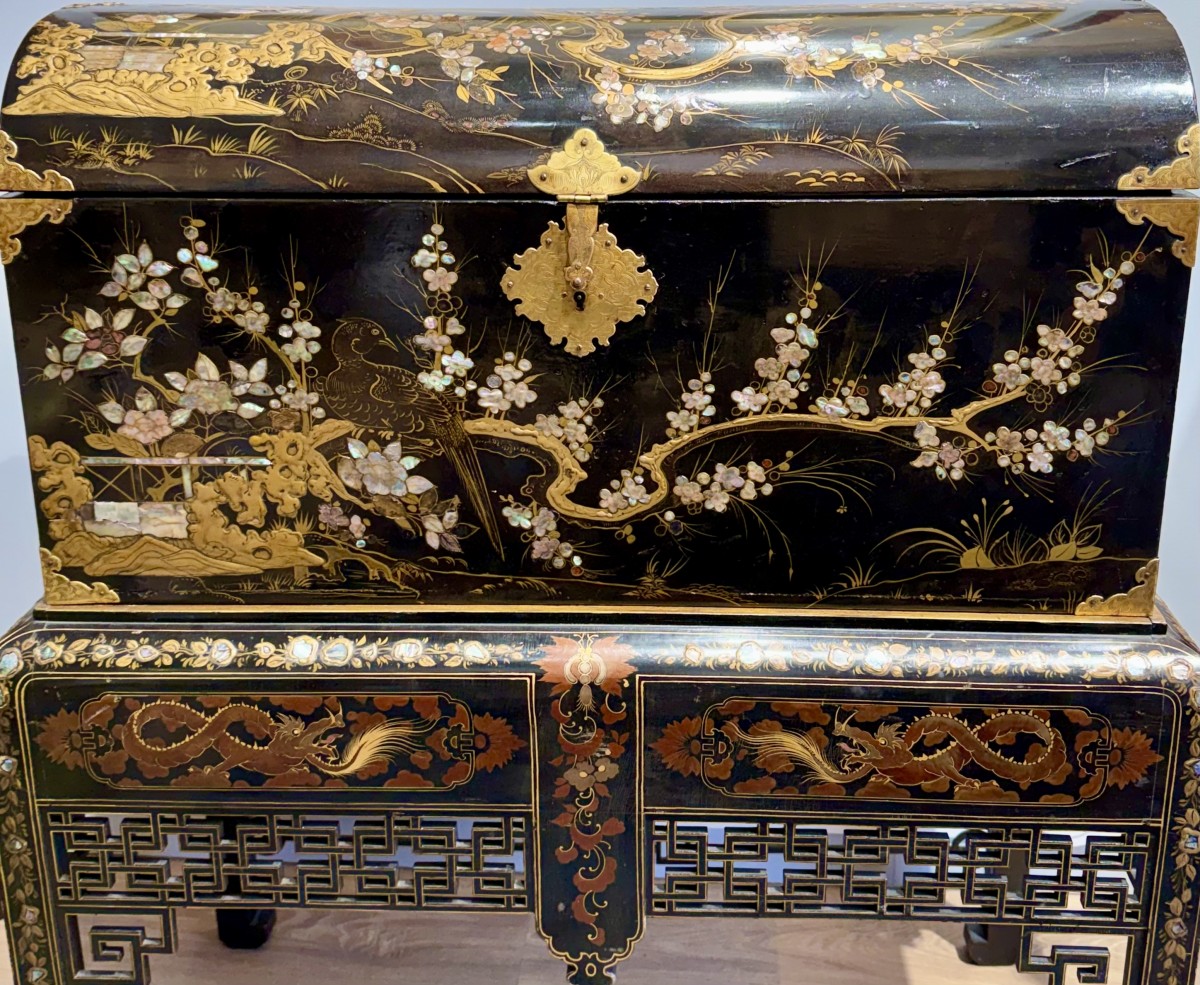
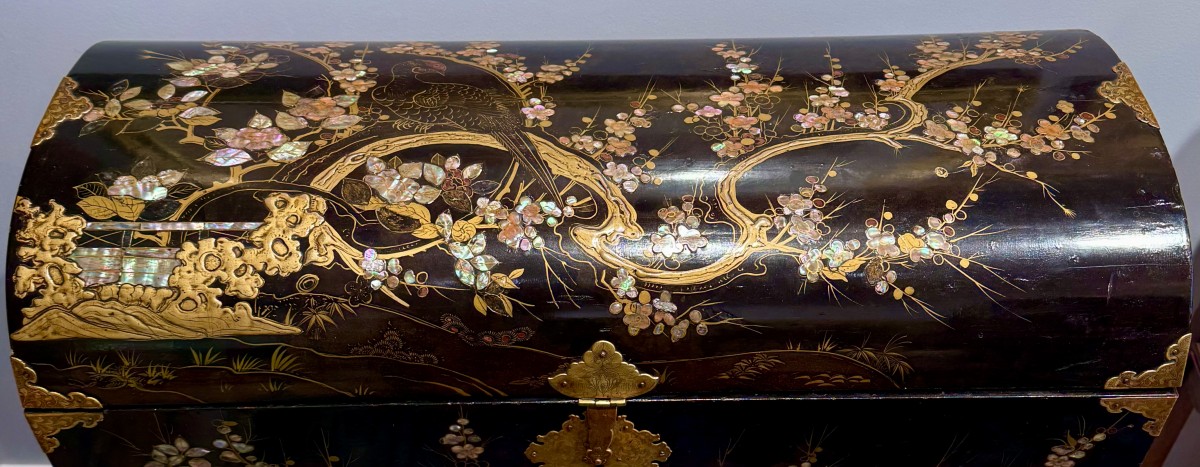
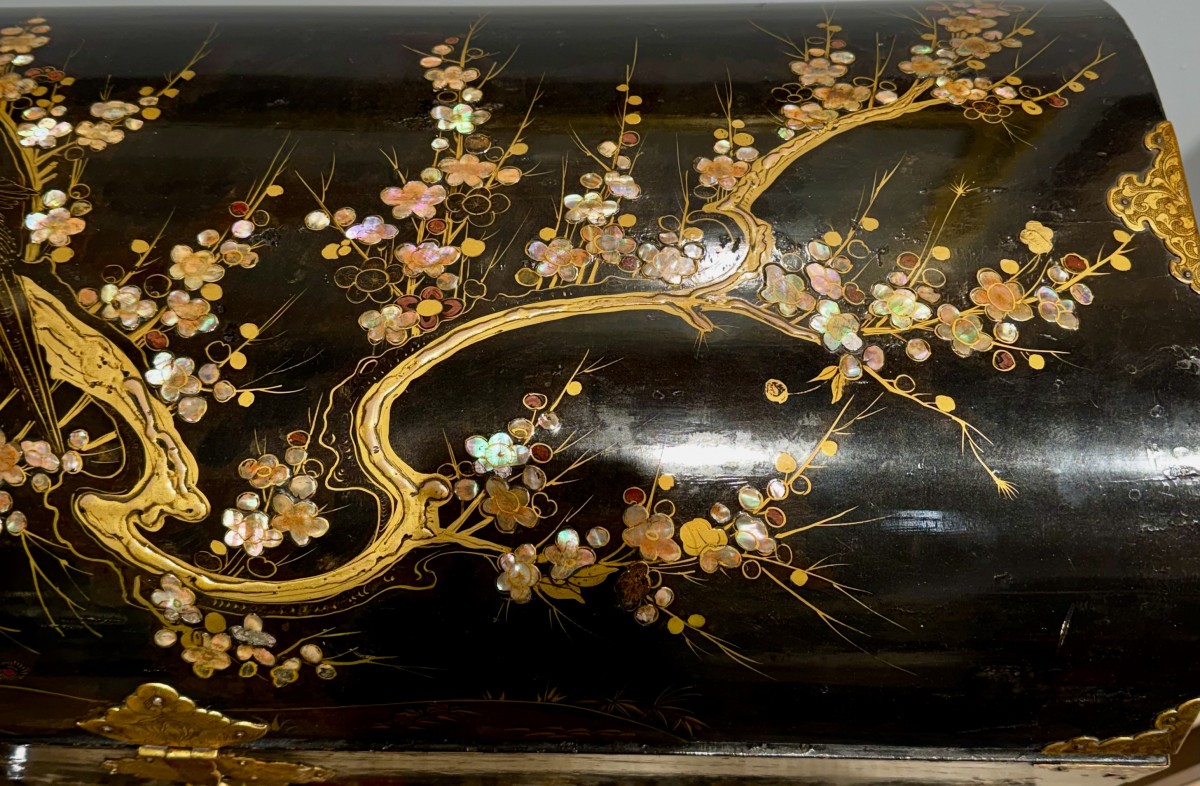
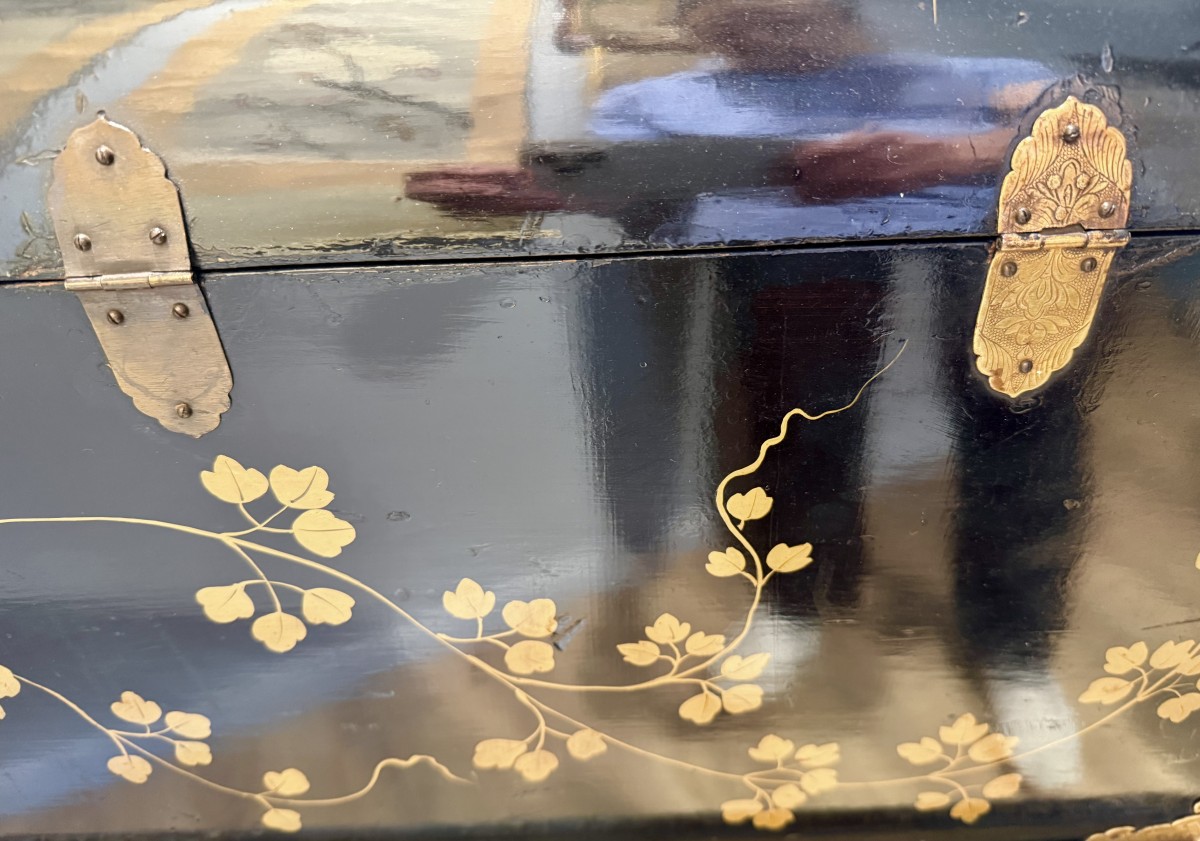
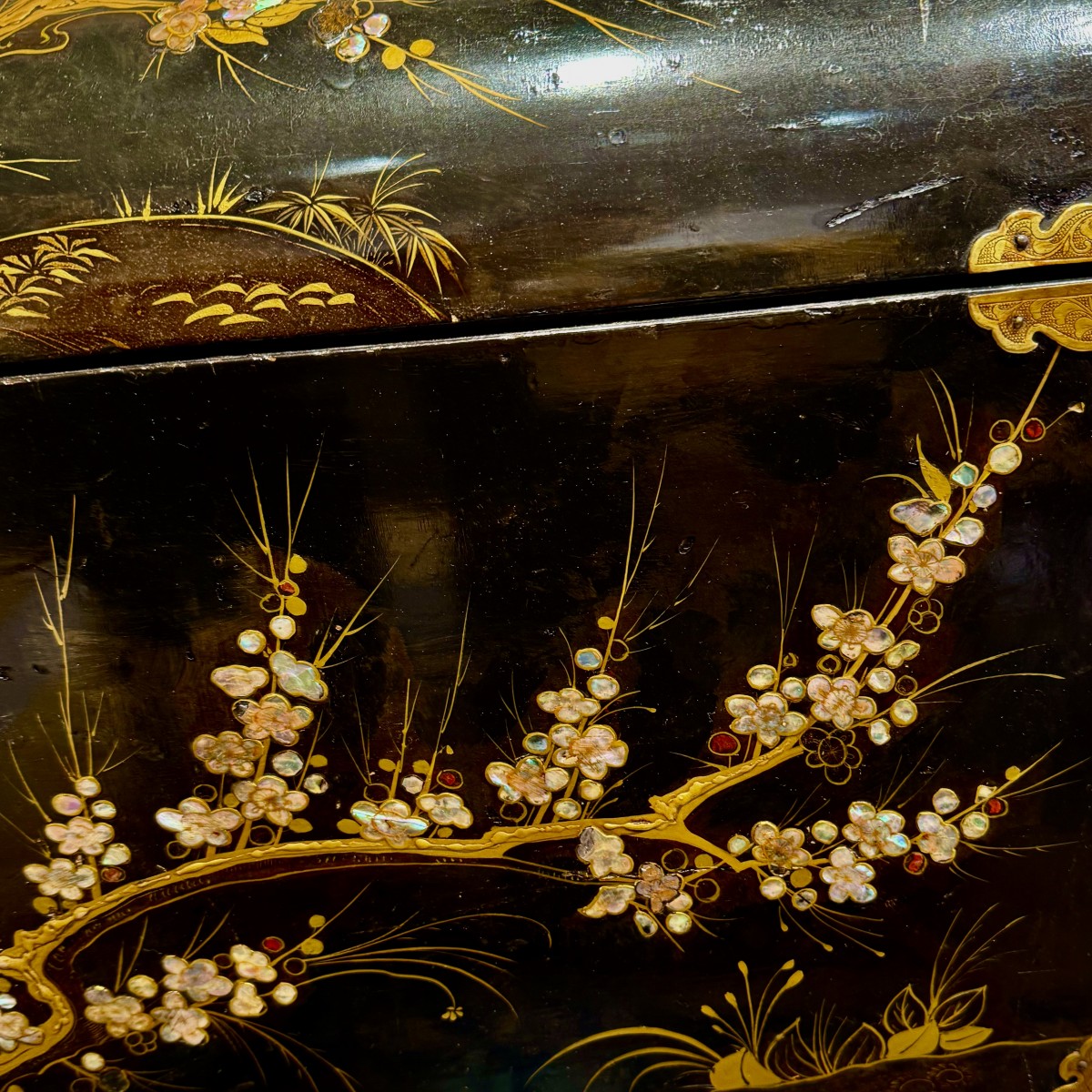
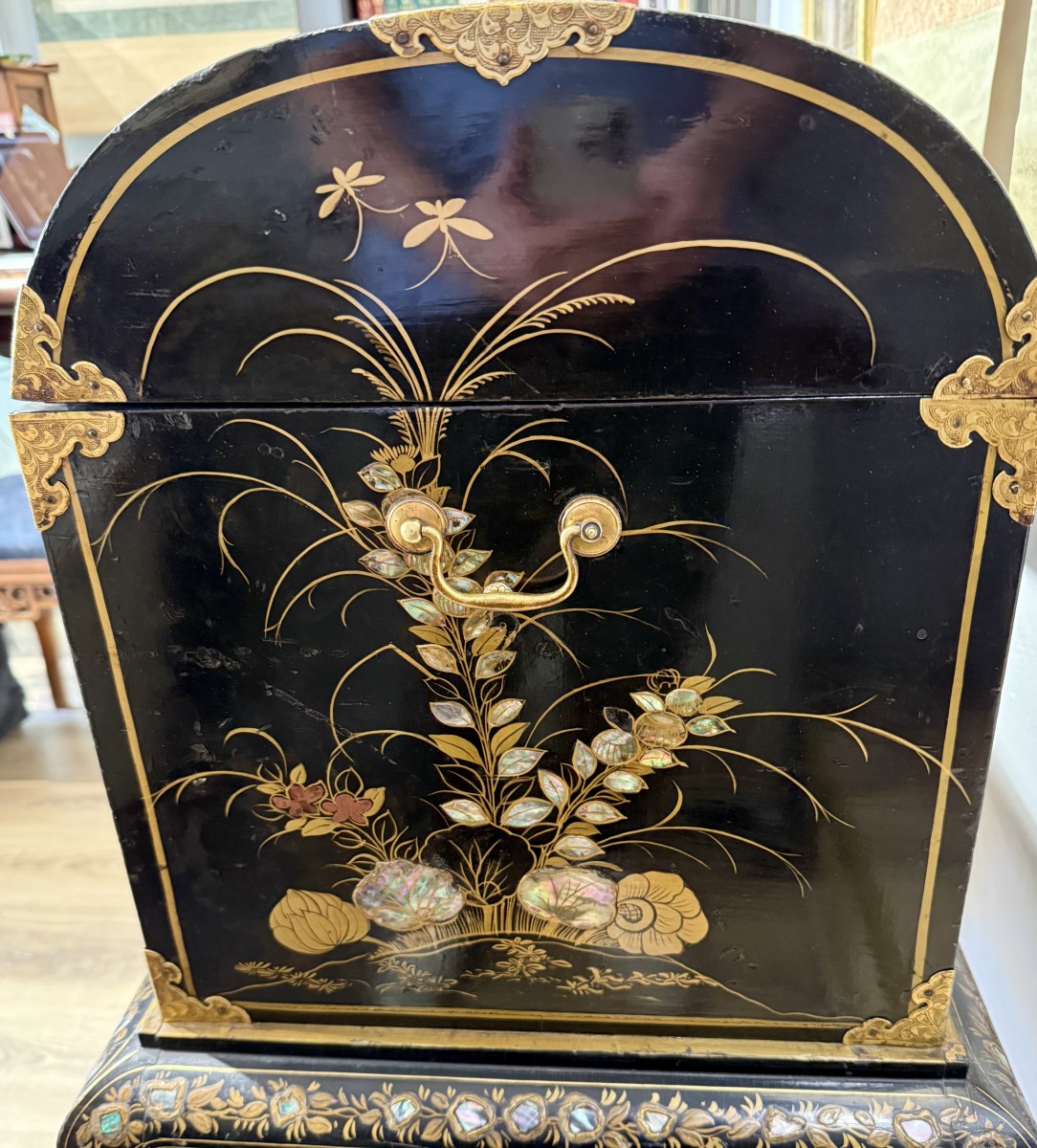
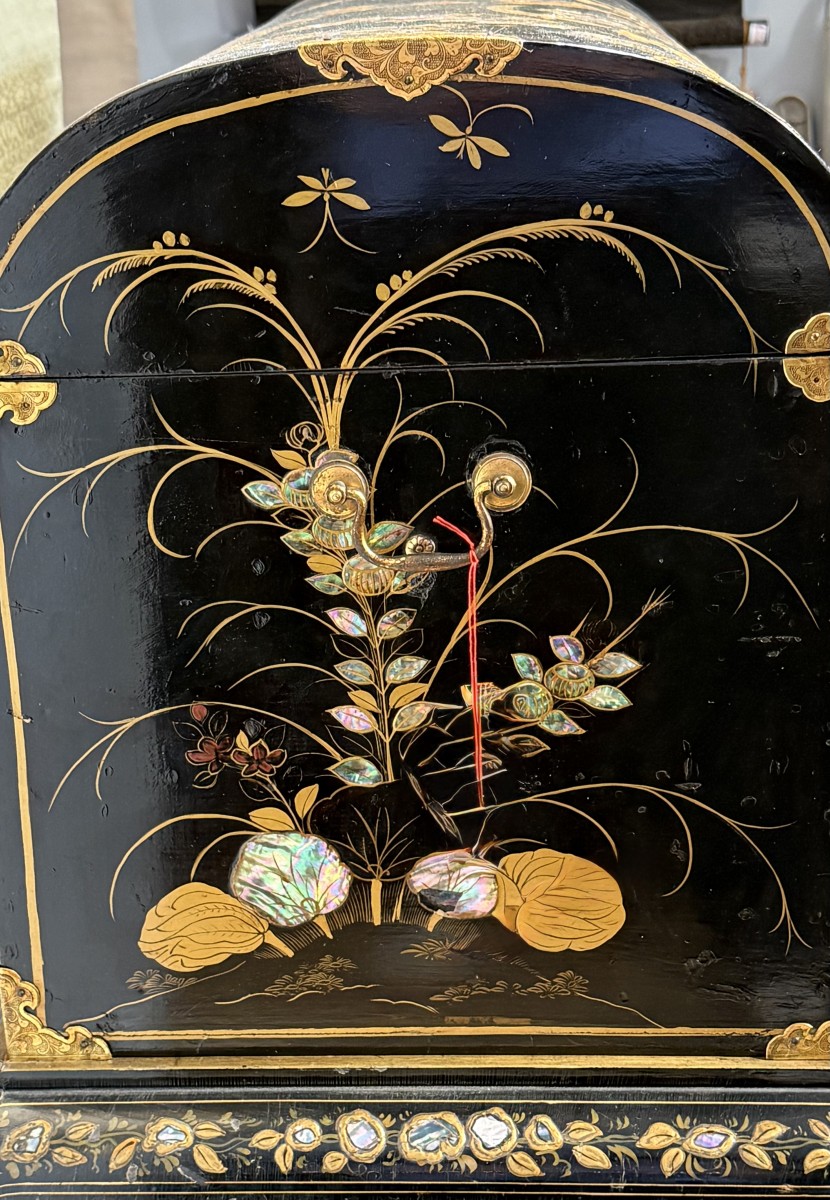
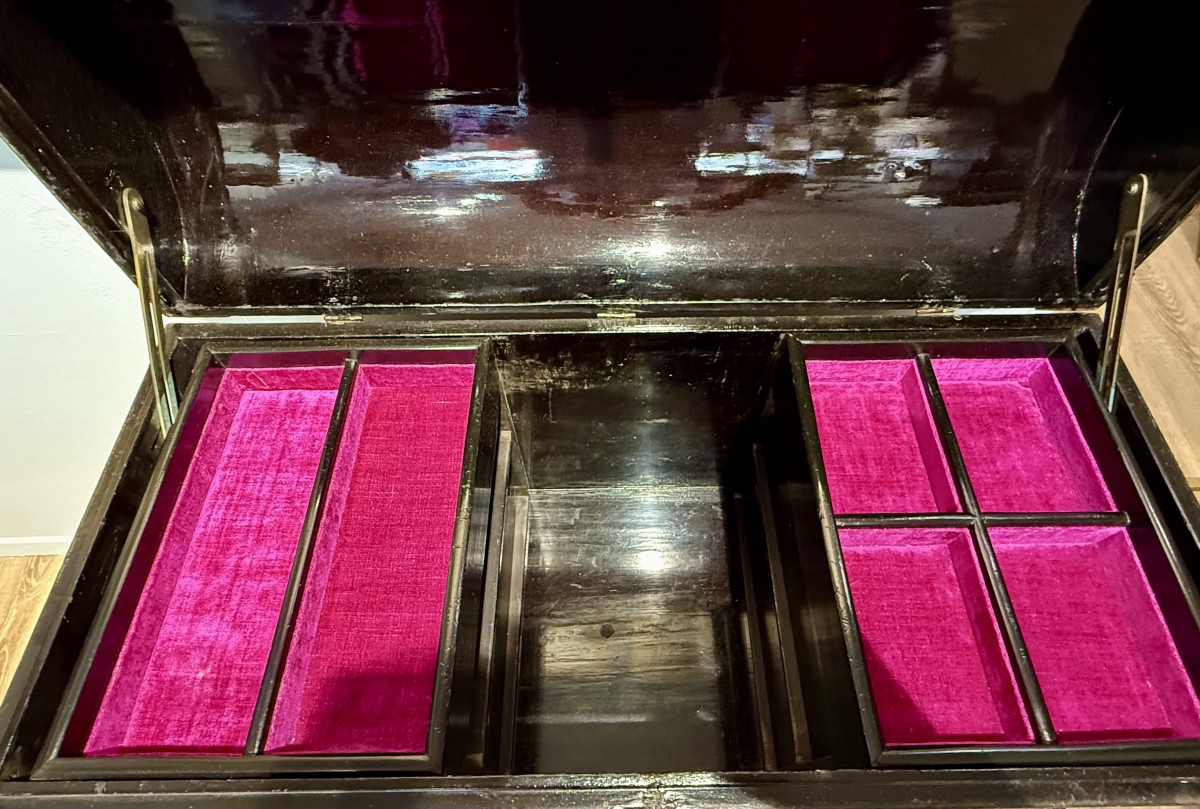
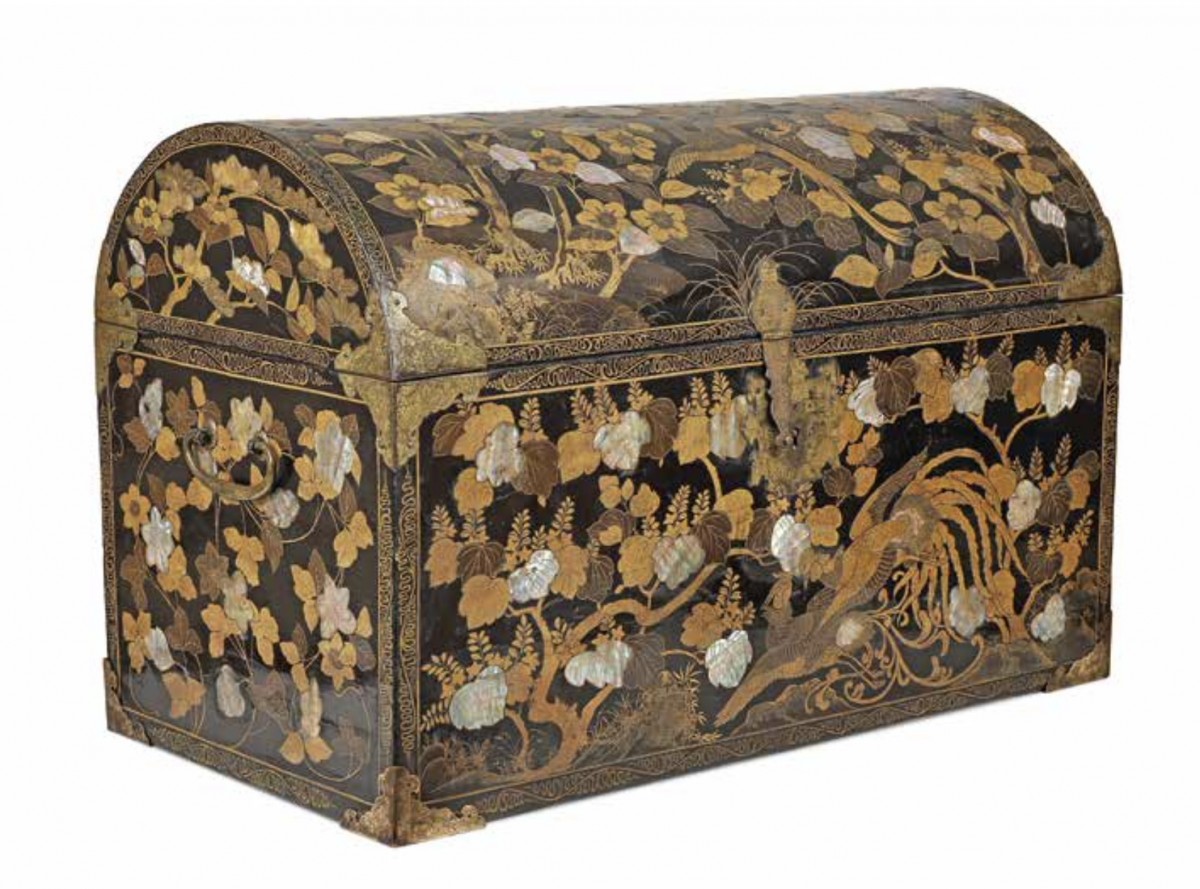
This namban chest is of exceptional size—and thus rare—featuring a rectangular shape and a domed lid. Set against a black lacquer (*ro-iro*) background, it displays magnificent gold lacquer decoration—utilizing both flat (*hira-maki-e*) and raised (*taka-maki-e*) techniques—depicting a pair of pheasants amidst foliage, prunus branches, and peonies, all enhanced by extensive mother-of-pearl inlay.
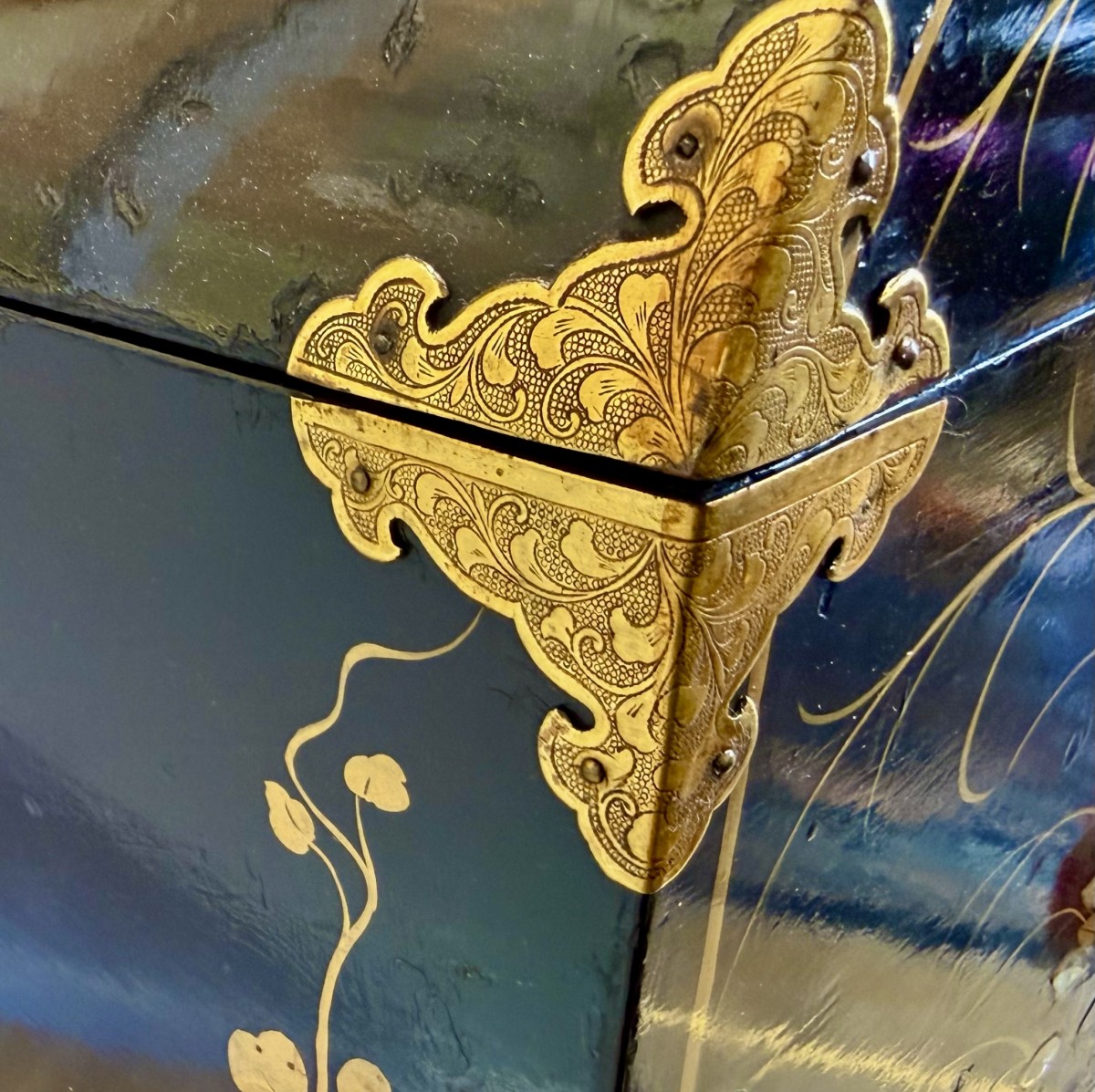
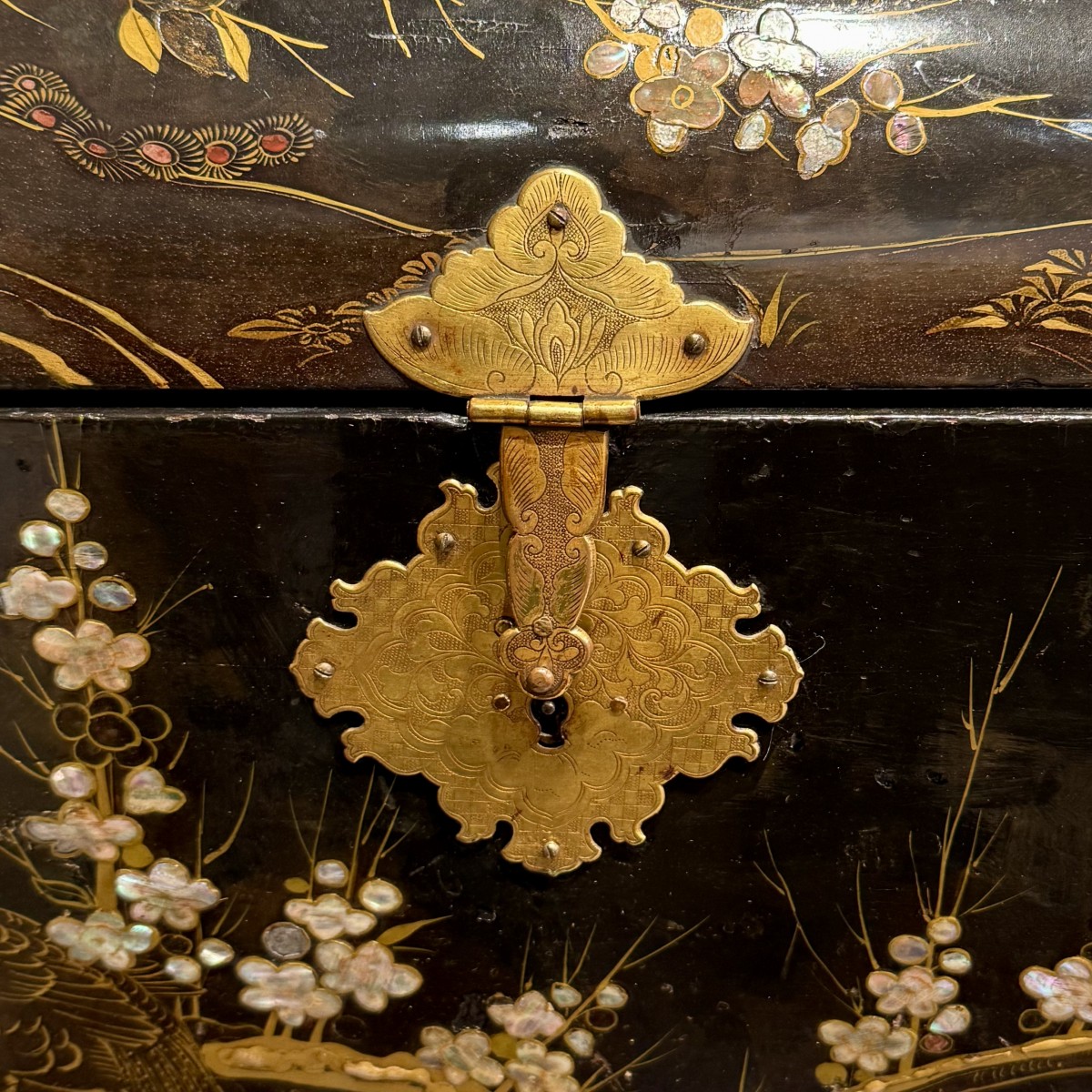
The corner mounts and lock are made of finely chased gilt bronze, decorated with scrolling foliage motifs.
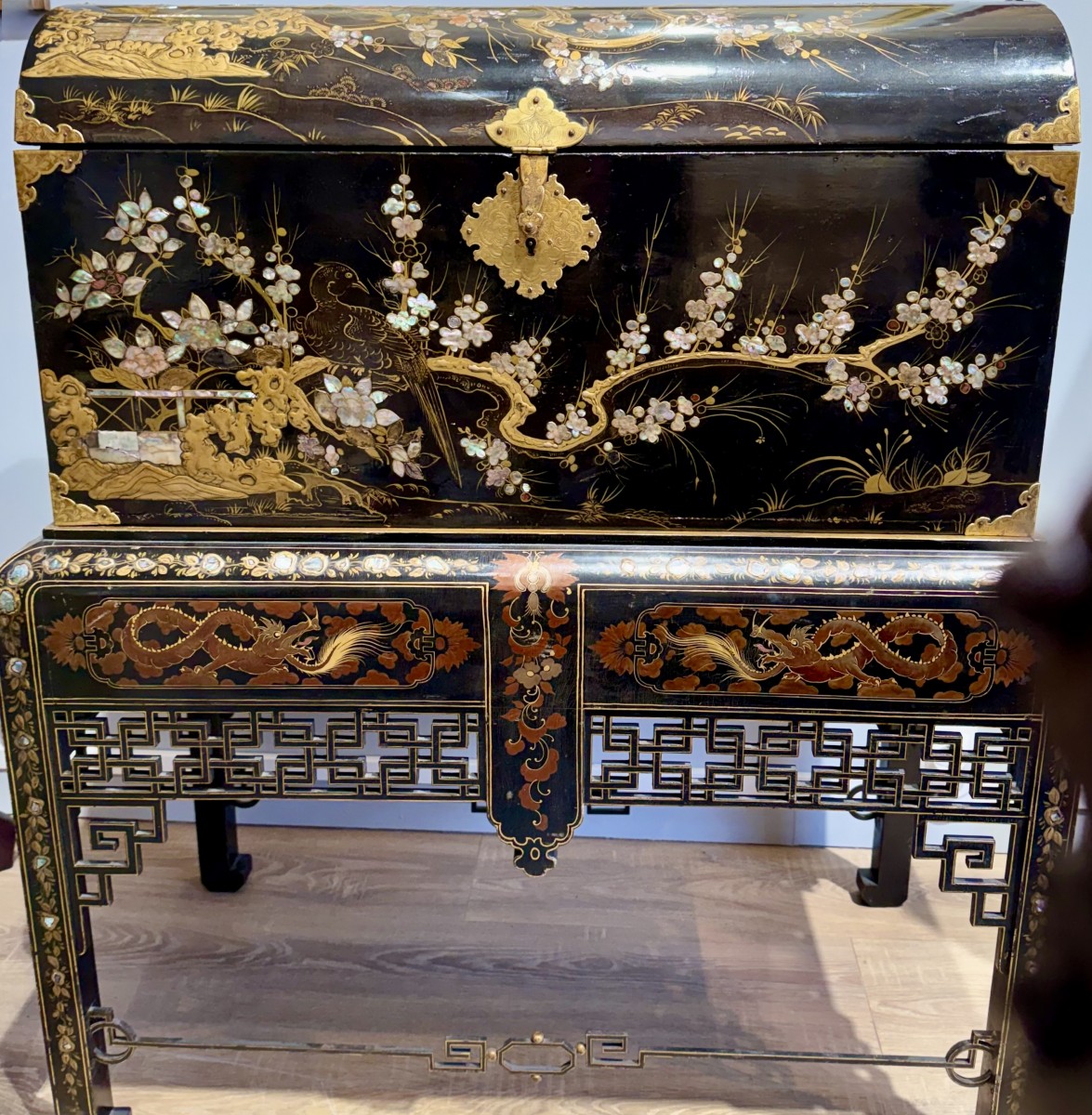
It rests on an elegant, custom-made stand in the Napoleon III style. Polychrome dragon decoration on the stand creates a seamless and elegant visual continuity with the chest.
Dimensions: H 42 x D 36.5 x W 79 cm.
Dimensions with stand: H 102 x W 87.5 x D 45.5 cm.
Compare with a similar chest in a Portuguese museum.
"Namban" chests (meaning "Southern Barbarians") were introduced to Japan by the Portuguese in the late 16th century, marking the establishment of trade relations between the two nations.
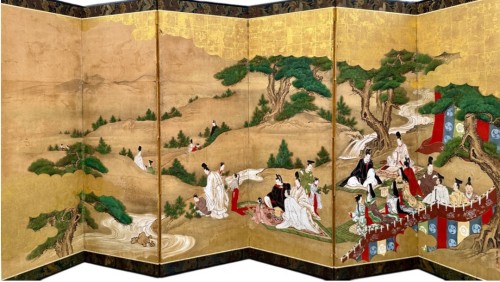
Namban art found expression primarily in folding screens and lacquerware—particularly liturgical and religious objects featuring gold, mother-of-pearl, and lacquer—which quickly garnered great interest among the Japanese elite.
Following the arrival of Portuguese missionaries who engaged in evangelization and Catholic proselytism, Toyotomi Hideyoshi (1537–1598) decided to abruptly put an end to their presence in Japan.