Offered by Galerie Lissier

Aubusson Royal Manufactory – Judith and Holofernes
Second half of the 17th century
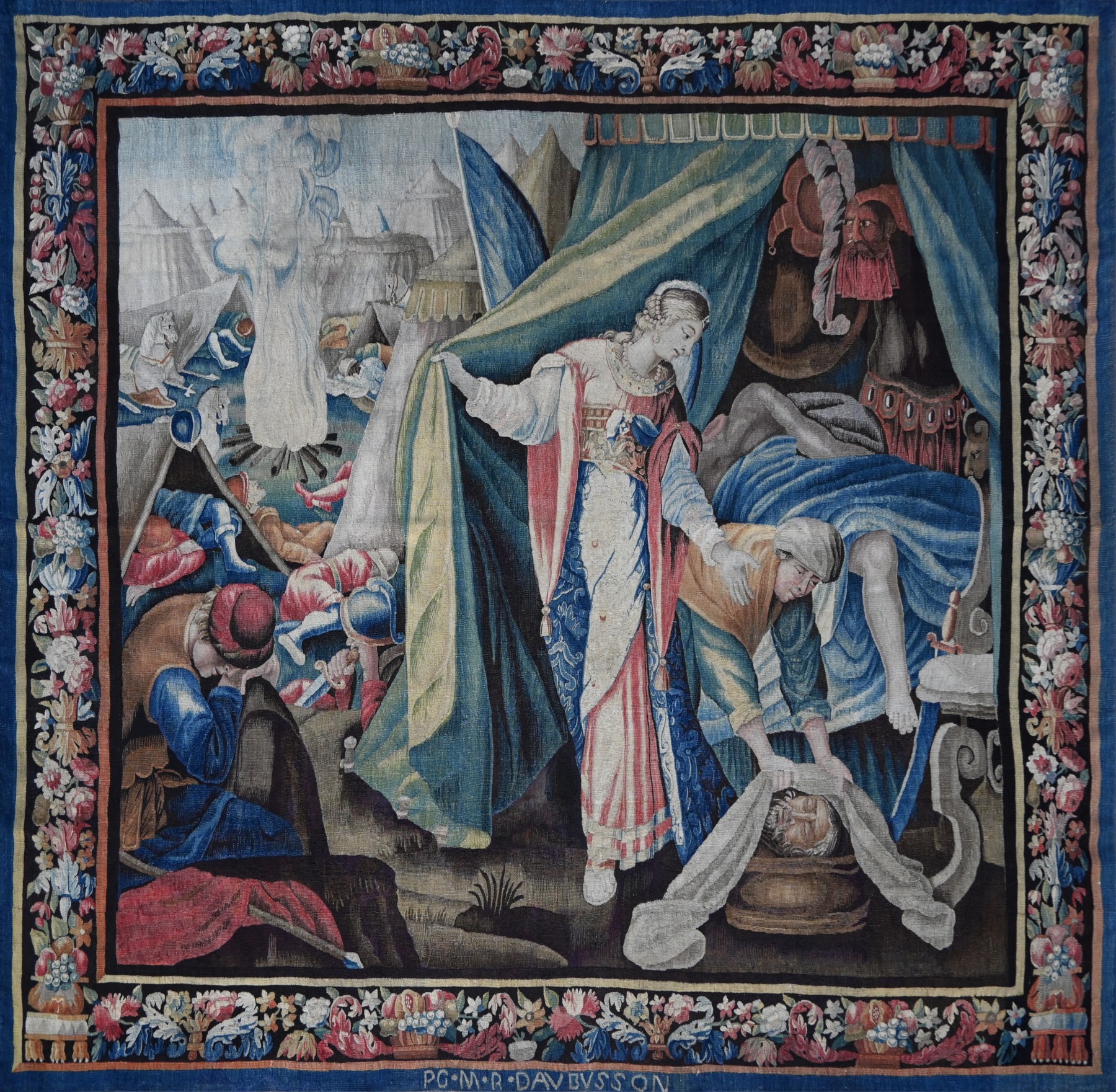
This Aubusson tapestry depicts one of the most dramatic episodes from the Book of Judith, an Old Testament narrative centering on the heroine Judith and her deliverance of the city of Bethulia.
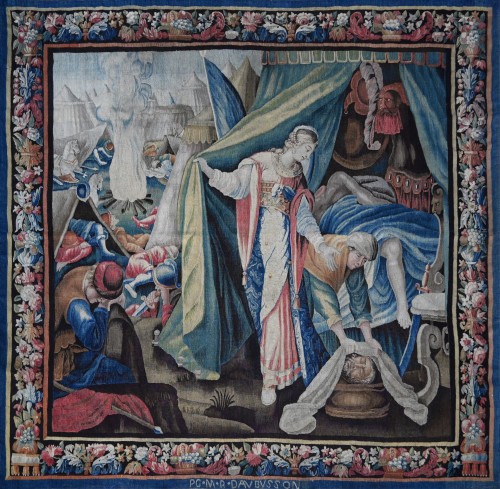
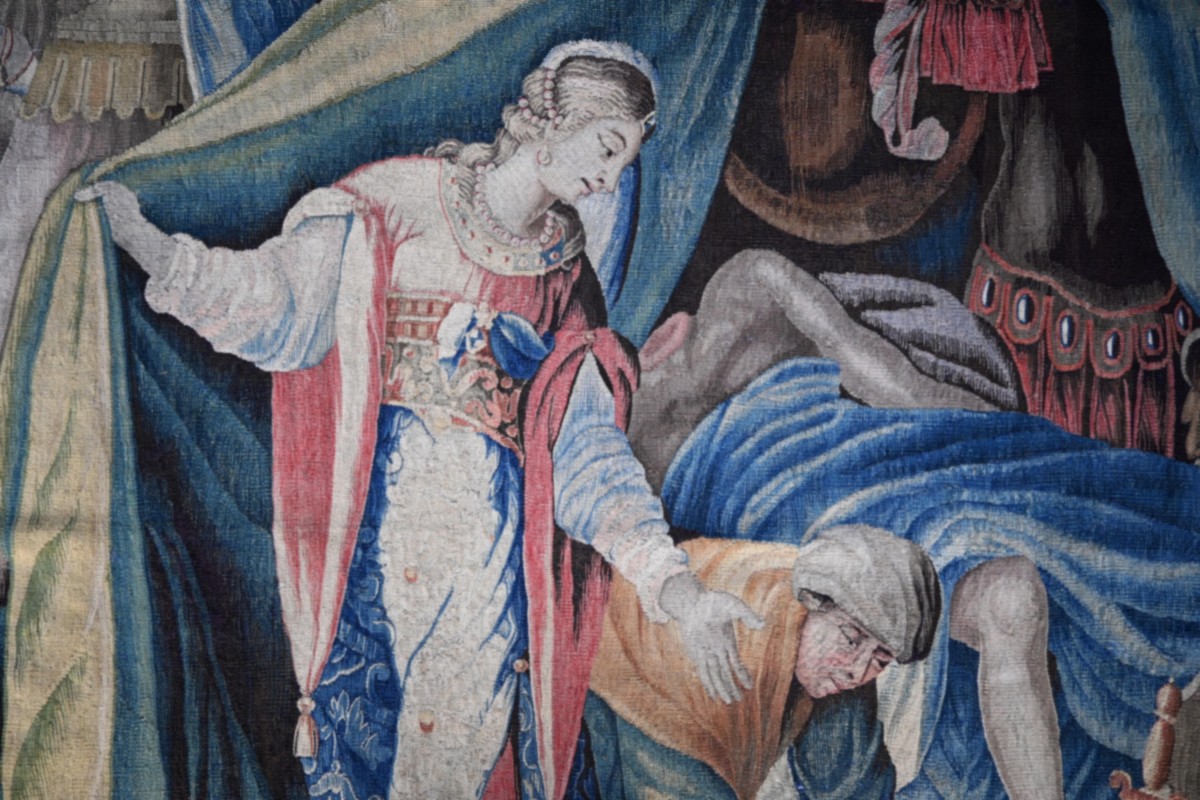
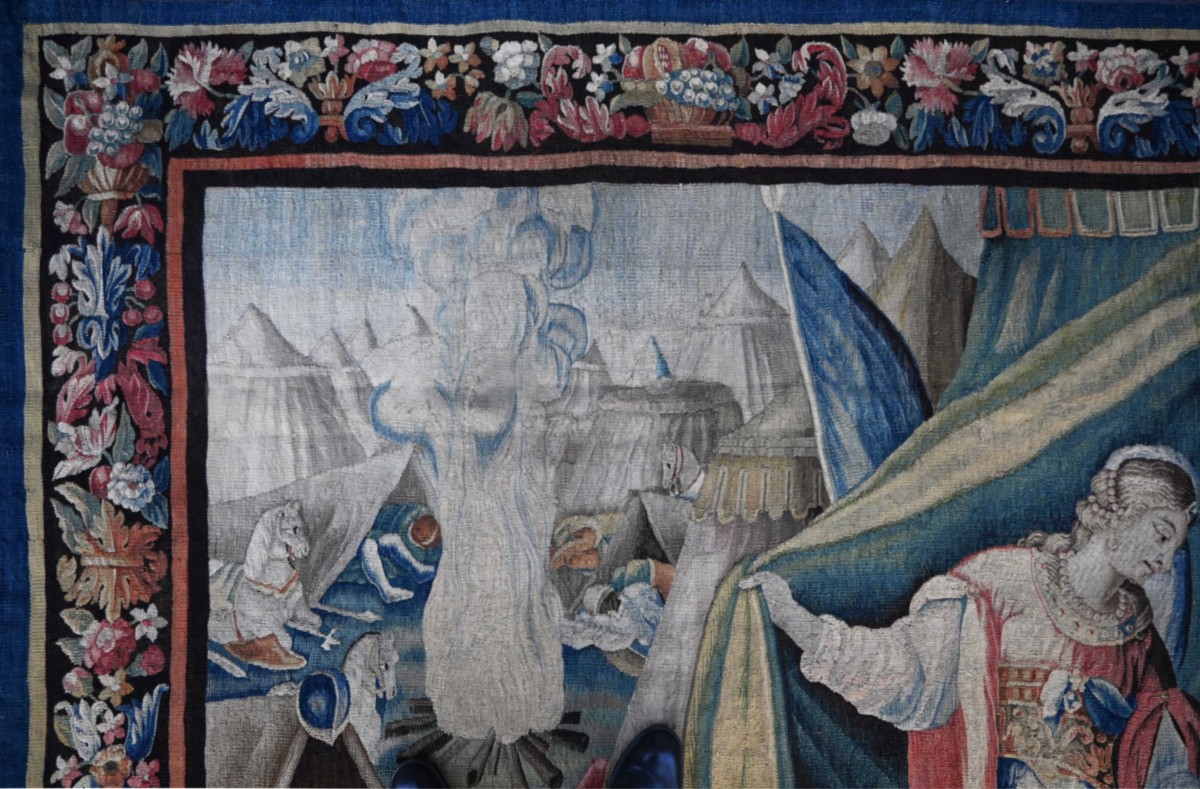
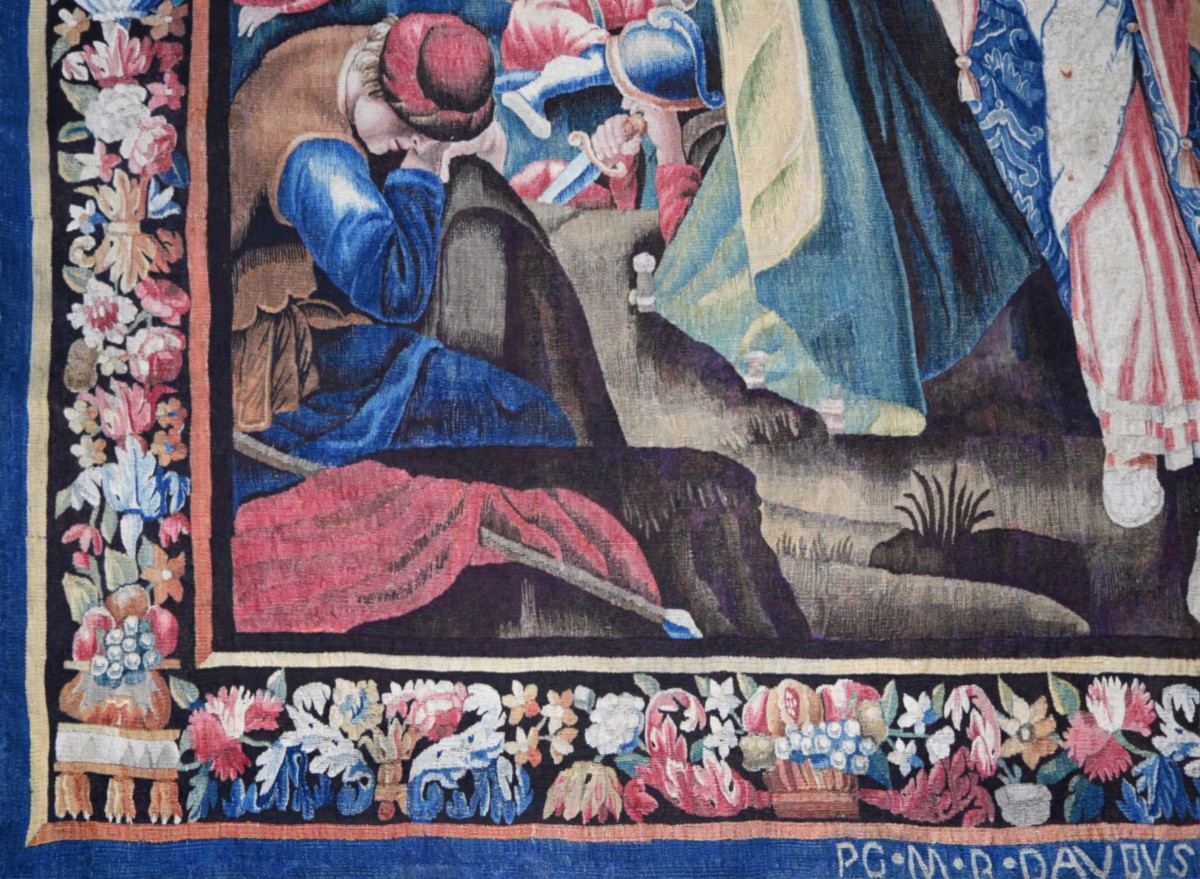
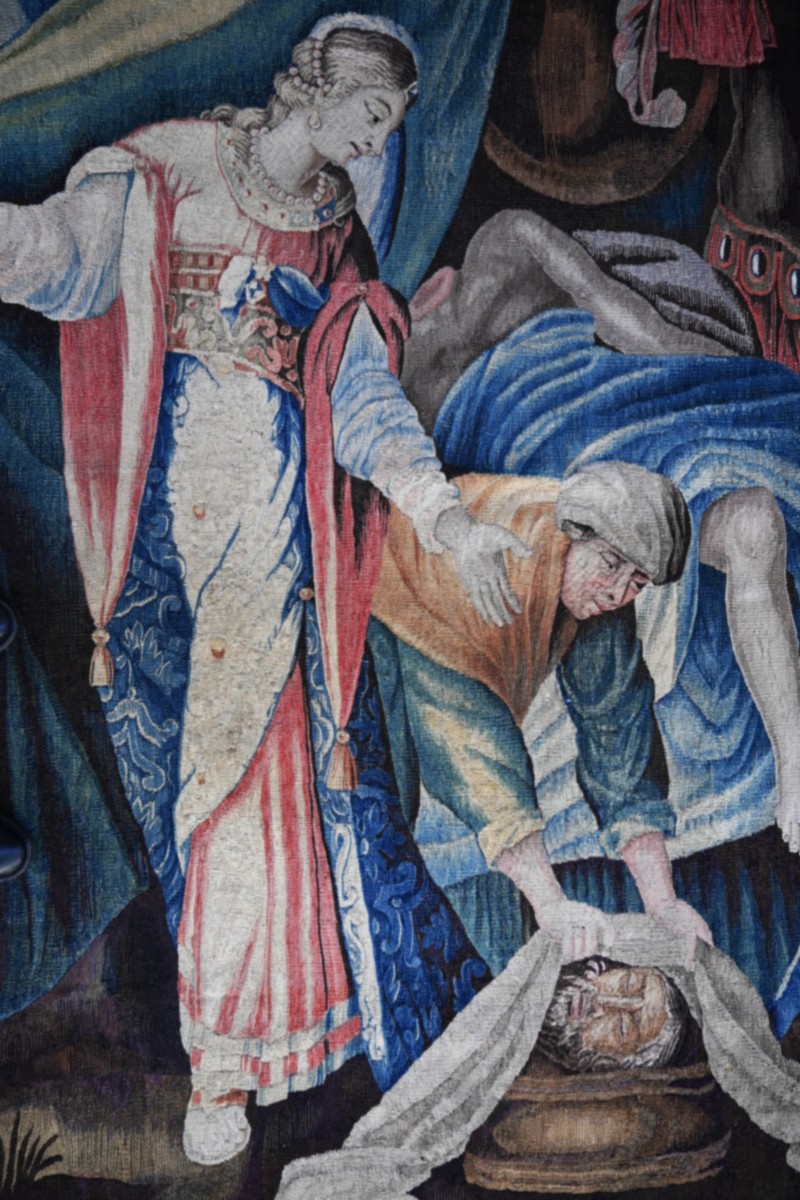
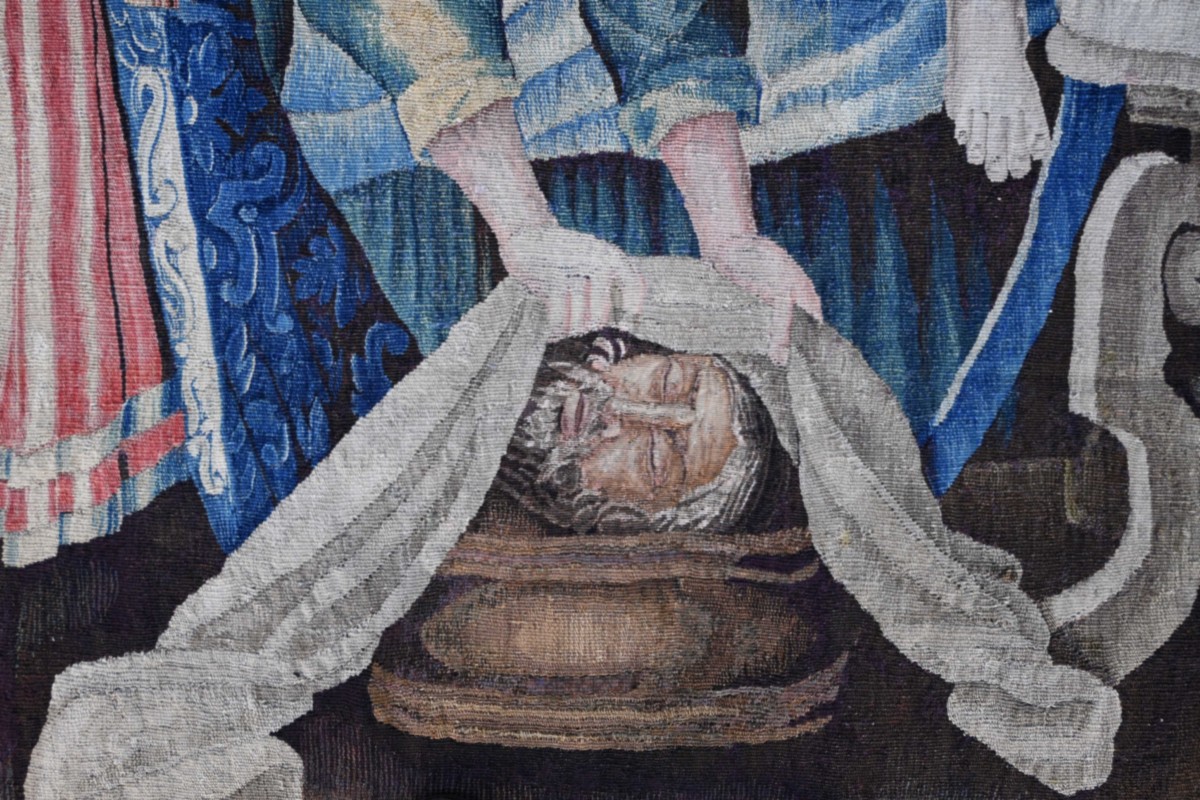
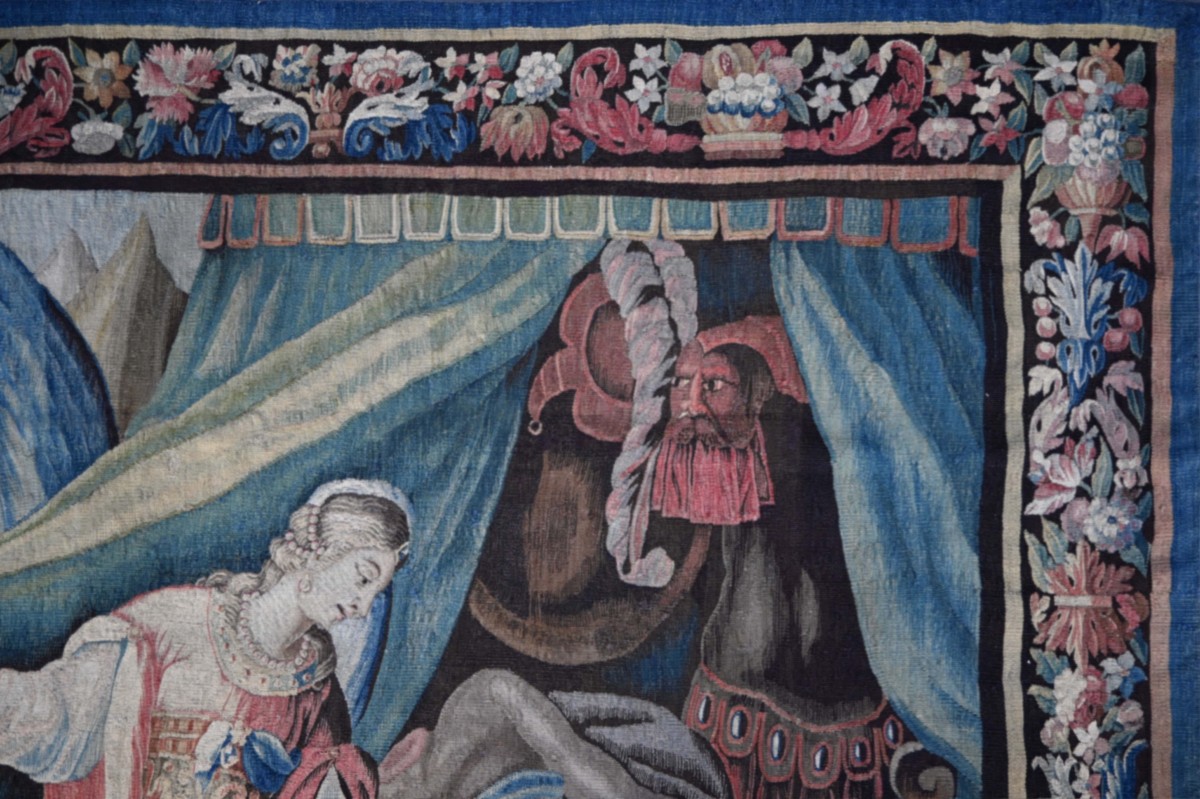
The scene captures the pivotal moment just after Judith has beheaded Holofernes, general of the enemy army. Judith—recognizable at the center of the composition by her long gown richly adorned with blue, red, and white patterns—stands within Holofernes’s tent. She pulls back the large tent curtain while her companions busy themselves around her. At her feet, a servant leans over the basket intended to hold the general’s head, while another figure gathers or carries the fabrics that had concealed the scene.
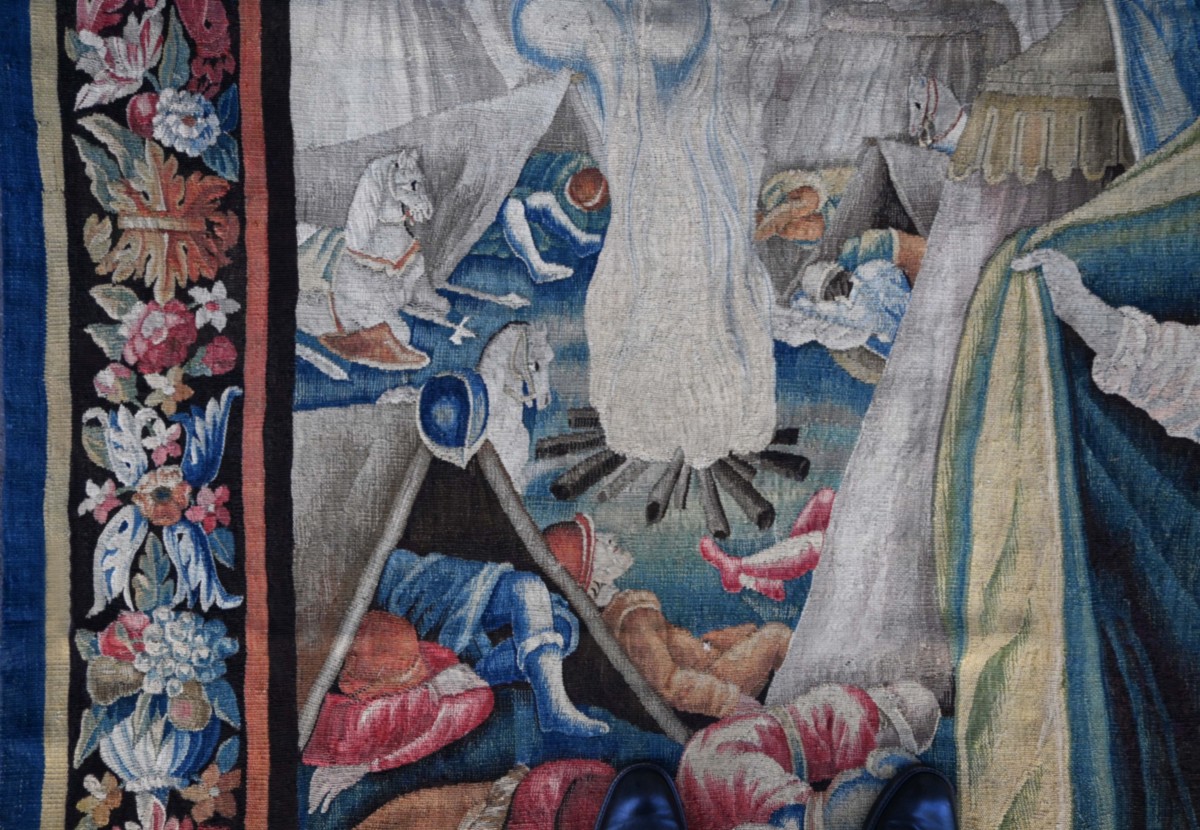
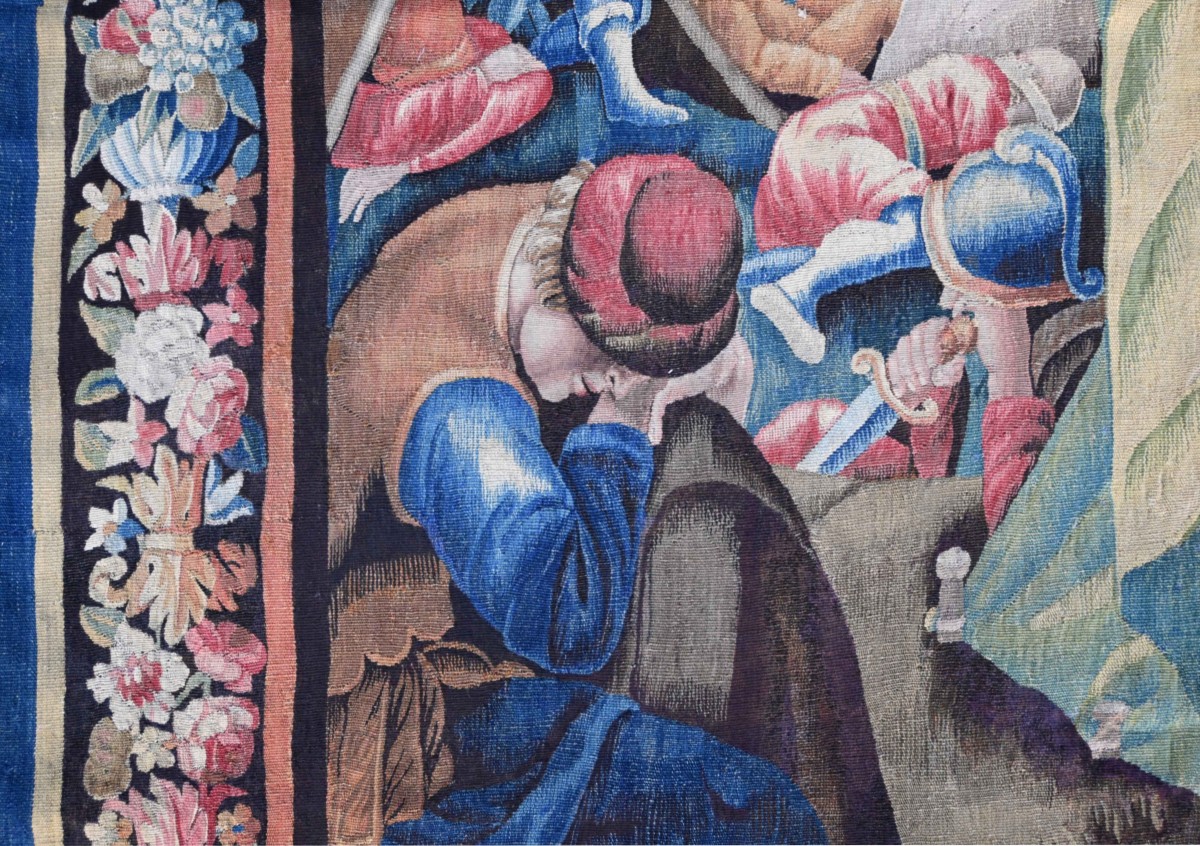
In the background, Holofernes lies stretched out on his bed beneath vast blue draperies. His head has just been severed from his body—the climactic moment of the story. To the right, a figure dressed in Oriental attire remains inside the tent, heightening the scene’s exotic and theatrical atmosphere. On the left, several figures—soldiers and servants—appear to be caught up in the flight and confusion following Judith’s deed.
The narrative unfolds within an Oriental military camp, evoked by the monumental tent, draperies, weapons, clothing, and architectural structures visible in the distance. The composition thus contrasts the commotion of the camp and the servants with the central figure of Judith, who is portrayed with a calm, determined demeanor. Her gesture of lifting the tent curtain also creates an opening toward the landscape and the city buildings in the background.
The tapestry is framed by a wide decorative border featuring baskets of flowers, bouquets, foliage, and floral motifs set against a brown background. This border forms a continuous frame around the narrative scene and contrasts with the large blue draperies inside the tent. The numerous floral motifs—bouquets, fruit, foliage, and baskets—are integral to the decorative vocabulary of Aubusson tapestries from this period.
This work belongs to a series of six tapestries depicting the story of Judith. The episodes follow the narrative sequence: Judith being implored by the people of Bethulia, Judith in prayer, Judith traveling to Holofernes’s camp, Judith before Holofernes, the beheading of Holofernes, and Judith returning to Bethulia with the general’s head. This composition represents the fifth episode in the series.
A notable feature of this series is the consistency of the figure of Judith: she is always depicted in distinctive Oriental attire, making her easily identifiable from one scene to the next. In this tapestry, her richly decorated gown, combined with the blue and red fabrics surrounding her, sets her clearly apart from the other figures.
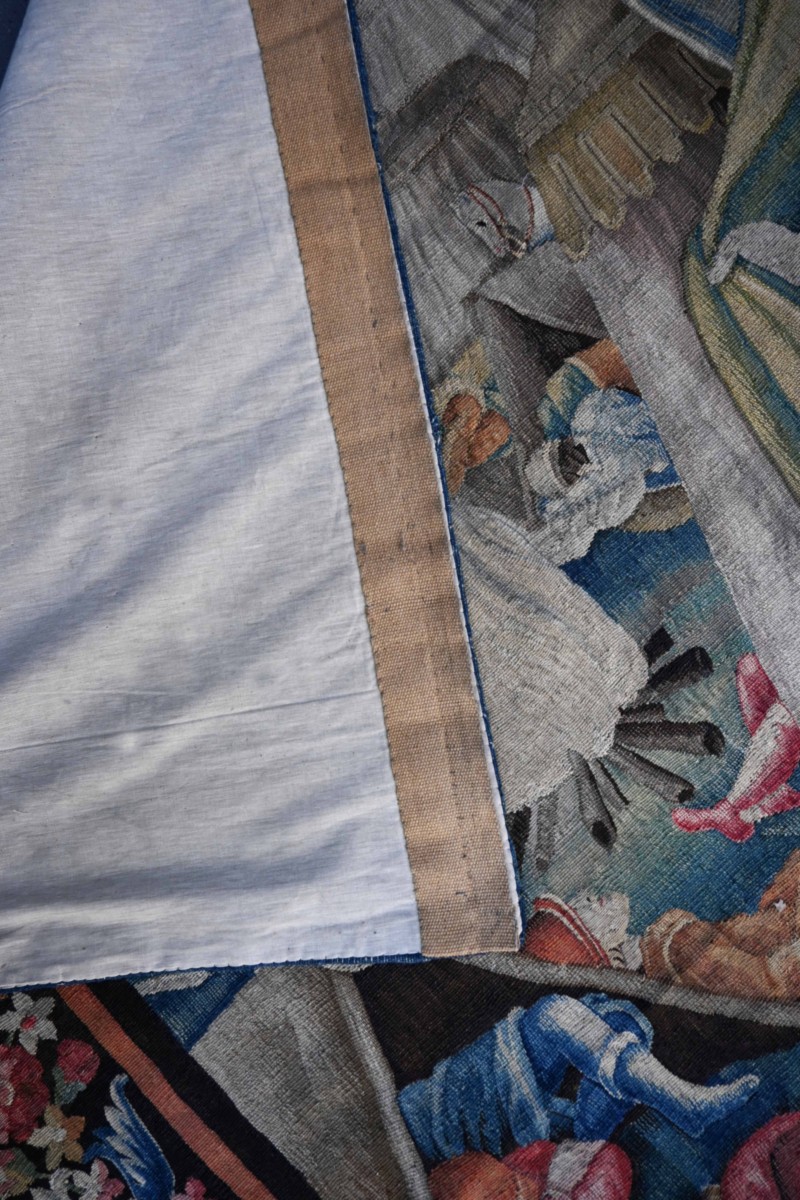
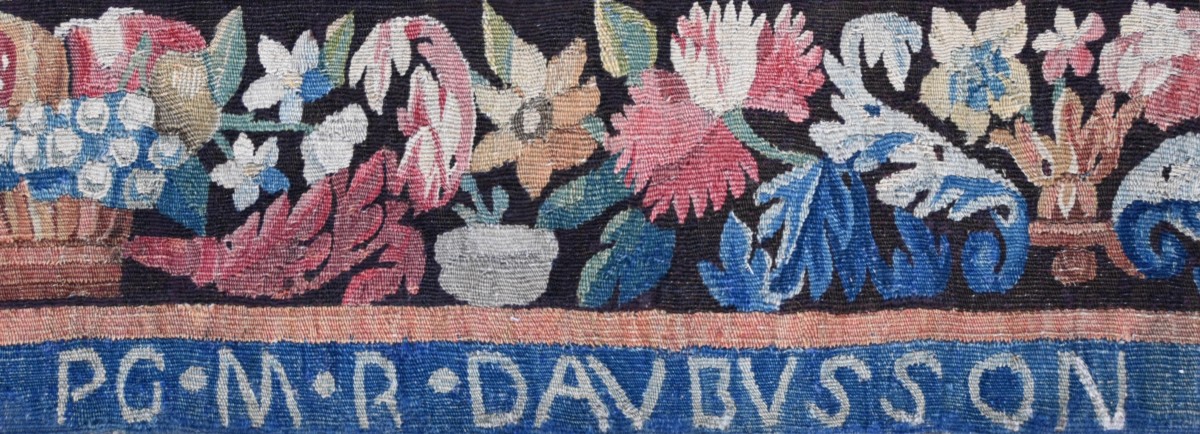
The tapestry bears the signature "M R D’AUBUSSON" on its blue selvage—indicating the *Manufacture Royale d’Aubusson* (Royal Aubusson Manufactory)—along with the initials "PG," likely associated with the workshop of Pierre Grellet. The Grellet family was a prominent name in Aubusson tapestry production, maintaining a distinguished reputation until the end of the 18th century.
With its biblical subject, theatrical composition, and abundance of fabrics, costumes, architectural elements, and floral ornaments, this tapestry combines religious narrative, historical depiction, and lavish decoration, reflecting the aesthetic of grand French narrative tapestries from the second half of the 17th century.
Delevery information :
Delivery Terms at Galerie Lissier :
We take great care to ensure that every work of art purchased on Anticstore reaches you safely and in the best possible condition.
Delivery:
All our merchandise is shipped free of charge via renowned carriers such as UPS or DHL, with full tracking, worldwide. We ensure that each tapestry or rug is delivered in secure packaging, guaranteeing its protection and integrity.
Customs Fees:
For deliveries outside the European Union, any customs duties, import taxes, or fees related to customs formalities are the responsibility of the buyer. We recommend consulting local authorities to understand the specific requirements in your country.
Our goal is to provide you with a serene and prestigious shopping experience, from our gallery to your space. Every acquisition reflects our commitment to quality, safety, and impeccable service.