Offered by Ars Antiqua
REQUEST INFORMATION

Old Masters paintings, furniture, sculptures and modern art
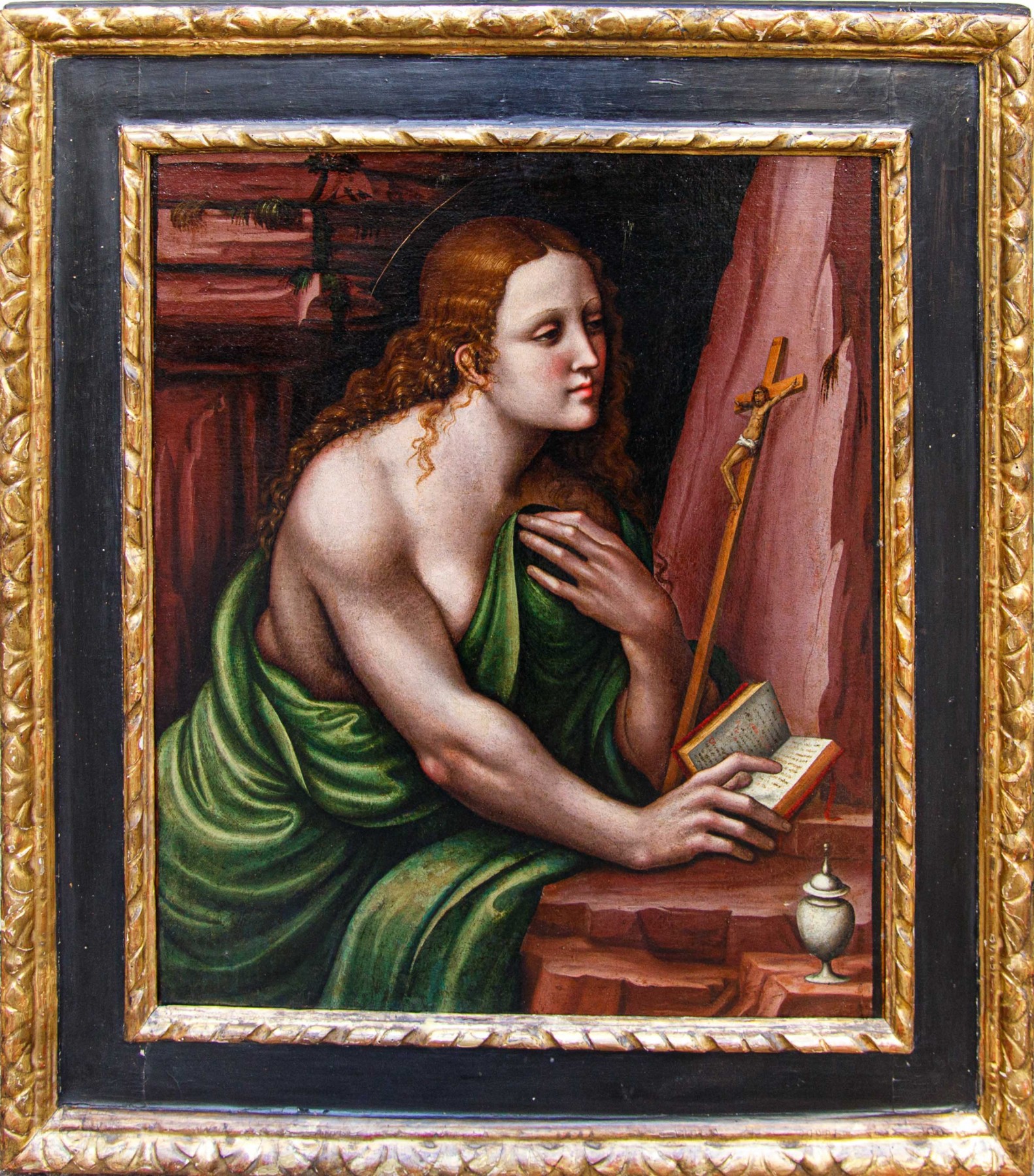
Pseudo Giampietrino B (active in Milan between the 3rd and 5th/6th decades of the 16th century)
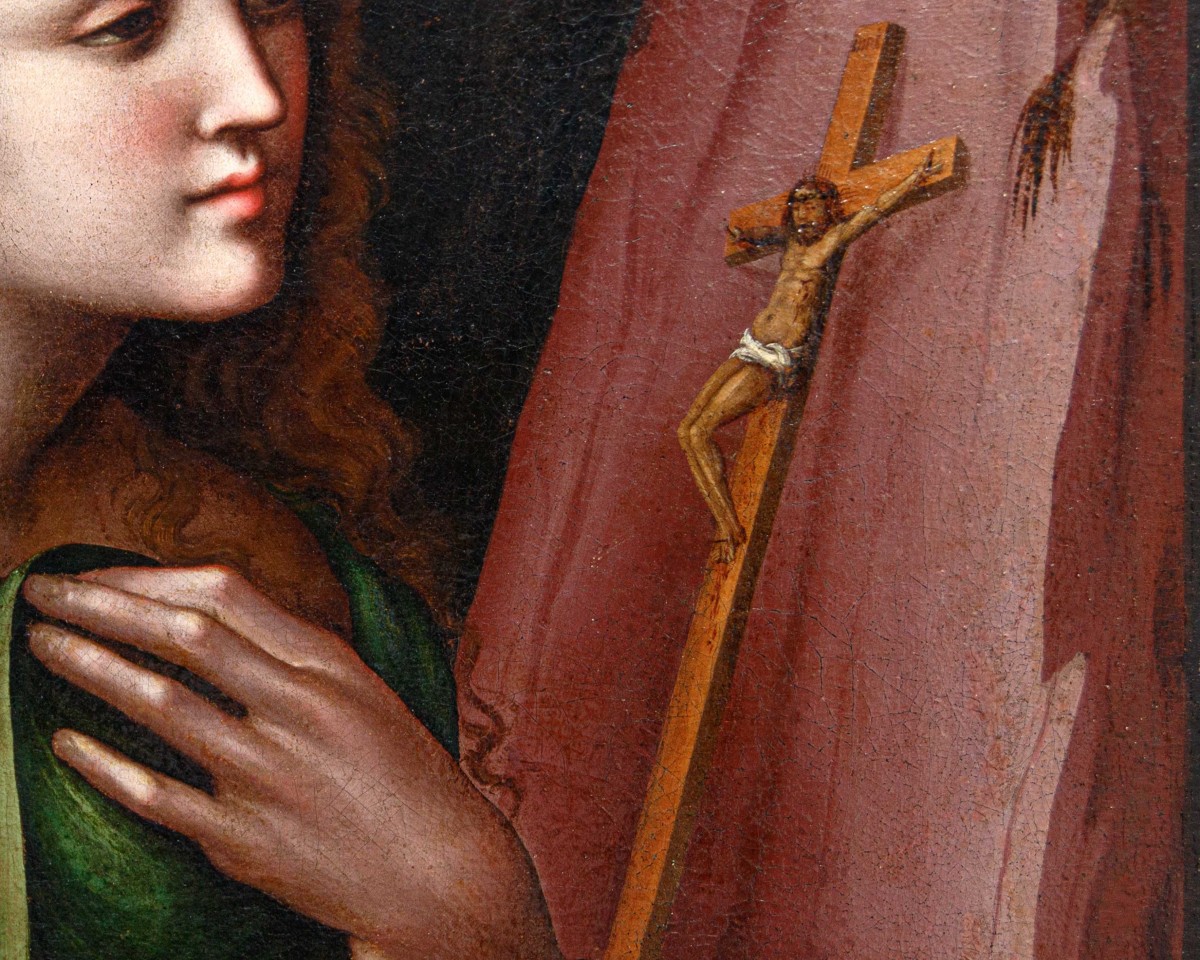
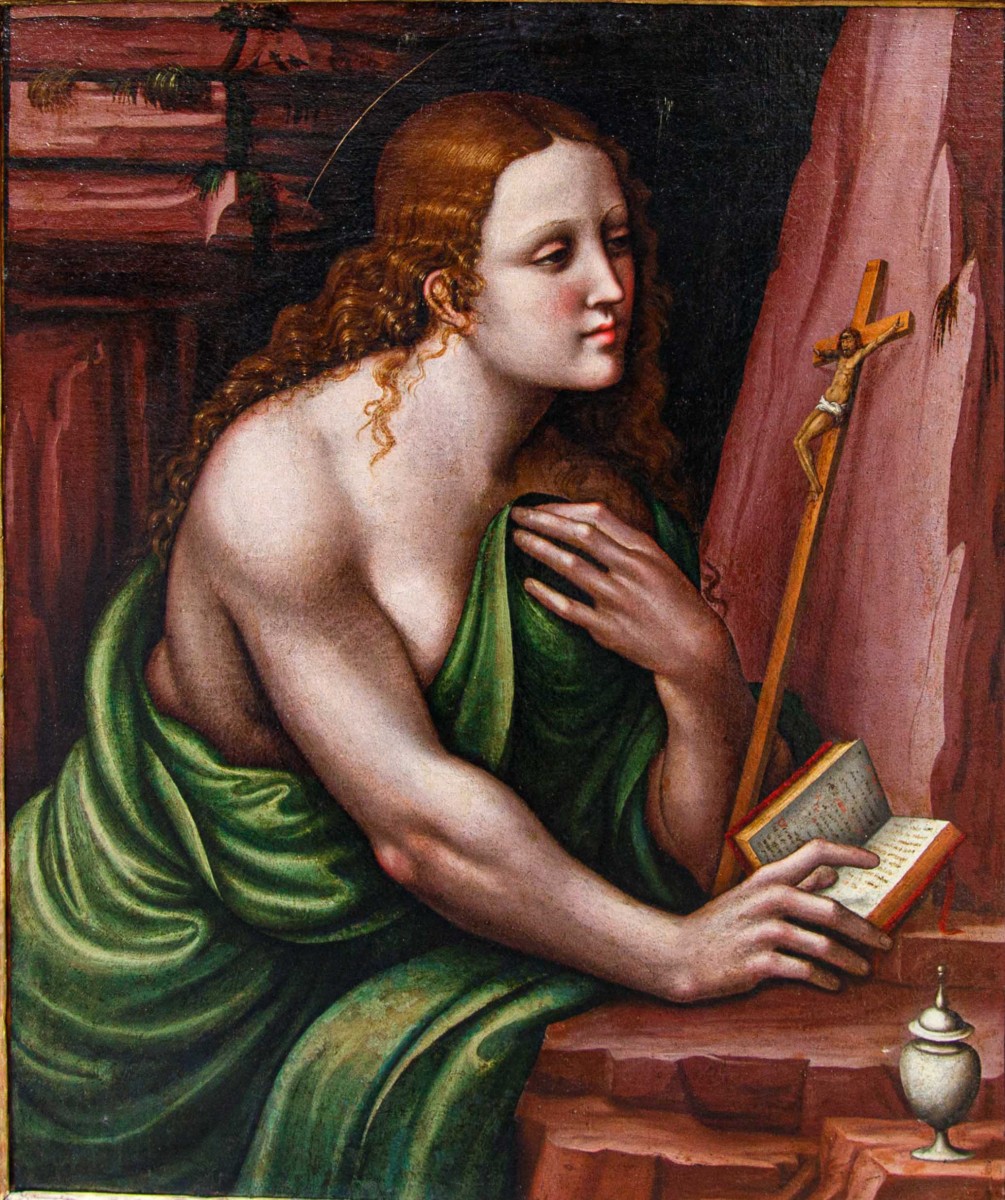
Penitent Magdalene
Oil on canvas, 75.5 x 65 cm
With frame, 100 x 90 cm
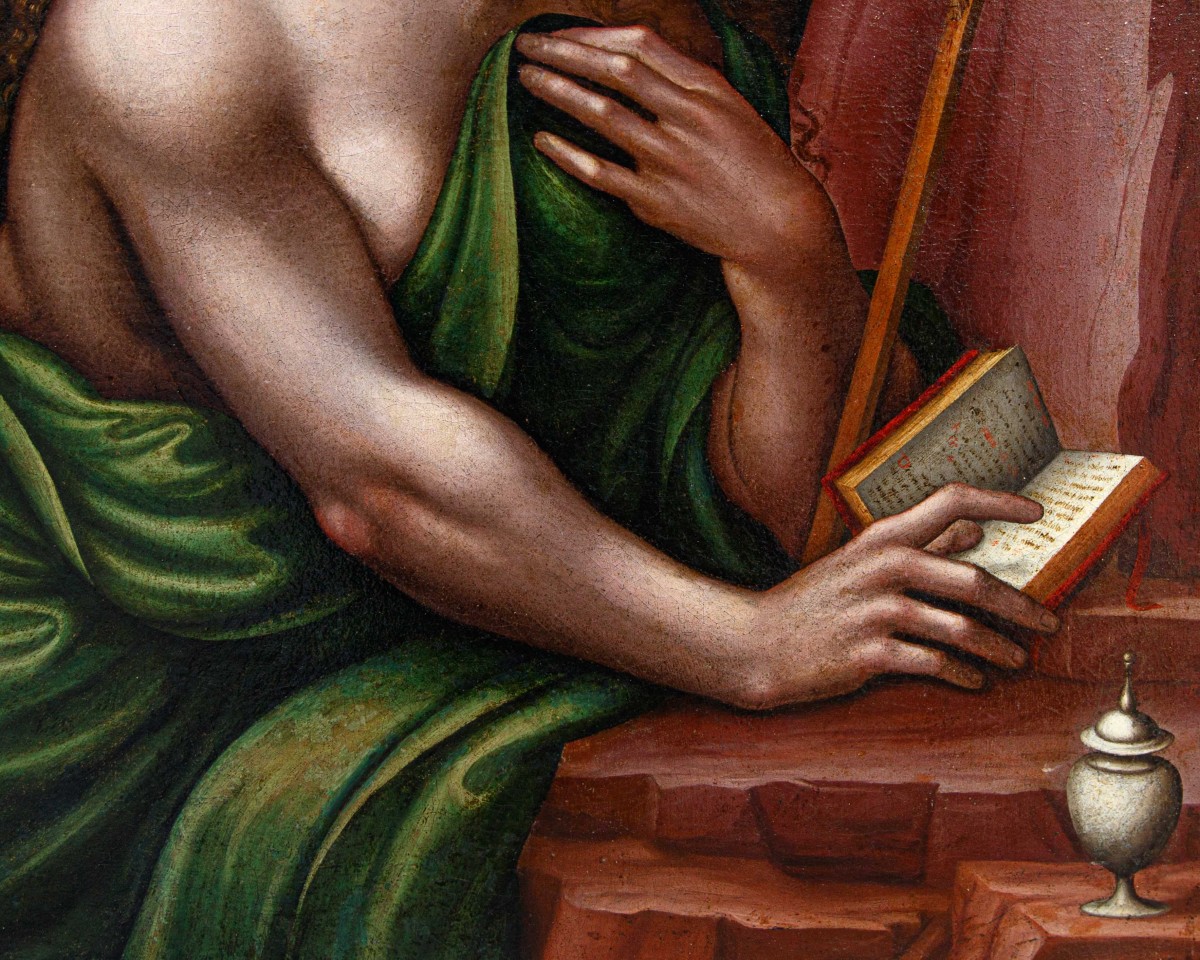
The painting under examination, depicting a Penitent Magdalene, belongs to the fruitful tradition of Milanese Leonardesque production from the first half of the sixteenth century. It is a work by the so-called Pseudo-Giampietrino B, a distinct artistic personality who nevertheless operated permanently within the workshop of Gian Pietro Rizzoli, known as Giampietrino. This figure of a collaborator—isolated by modern criticism to distinguish stylistic variations from those of the master—here reprises an iconography of extraordinary commercial and devotional success, which found one of its absolute pinnacles in the prototype housed at the Accademia Carrara in Bergamo.
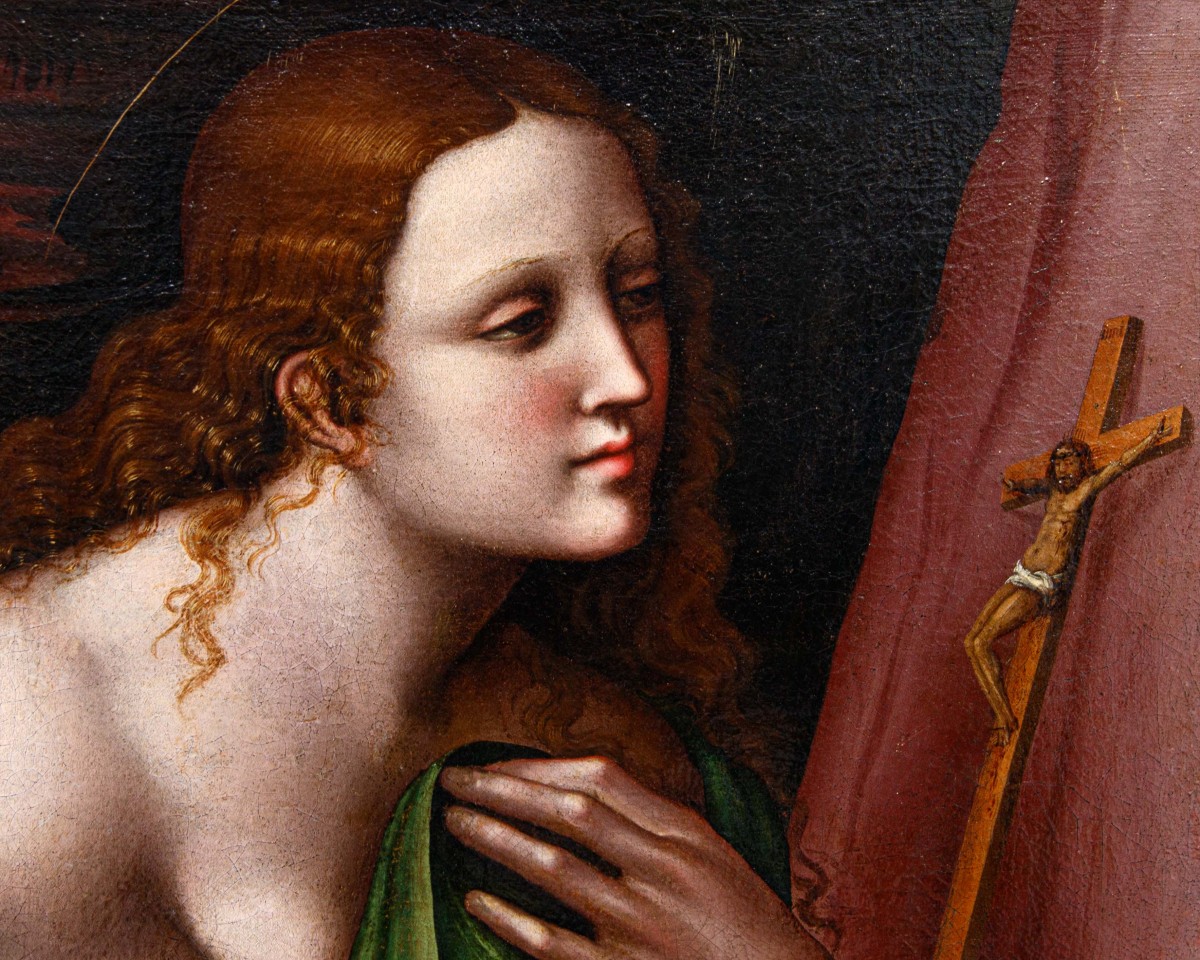
Giampietrino's oeuvre is characterized by a systematic idealization of the female figure, filtering Leonardo's legacy through an aesthetic of polished composure that finds its highest expression in cycles dedicated to famous women of sacred and profane history. Through subjects such as Mary Magdalene, Saint Catherine of Alexandria, and Lucretia, the artist codifies a canon of beauty with sculptural features and a vibrant emotional charge, where the skillful use of sfumato bestows an almost enameled luminosity upon the skin. These figures, portrayed with a grace that oscillates between devotional mysticism and tragic sensuality, bear witness to the painter's ability to transform the Vincian model into a distinctive stylistic trademark, making his heroines timeless archetypes of the Lombard Renaissance.
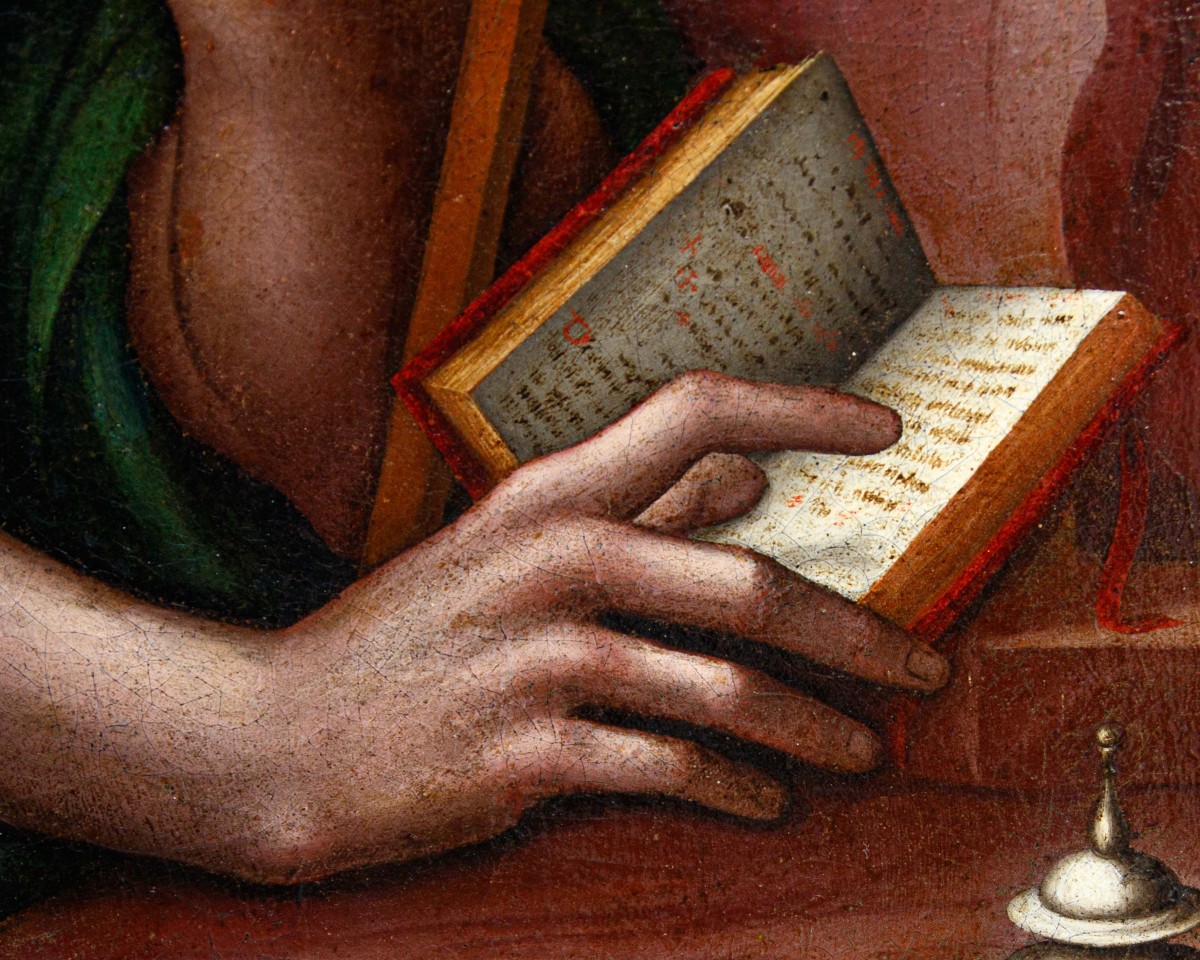
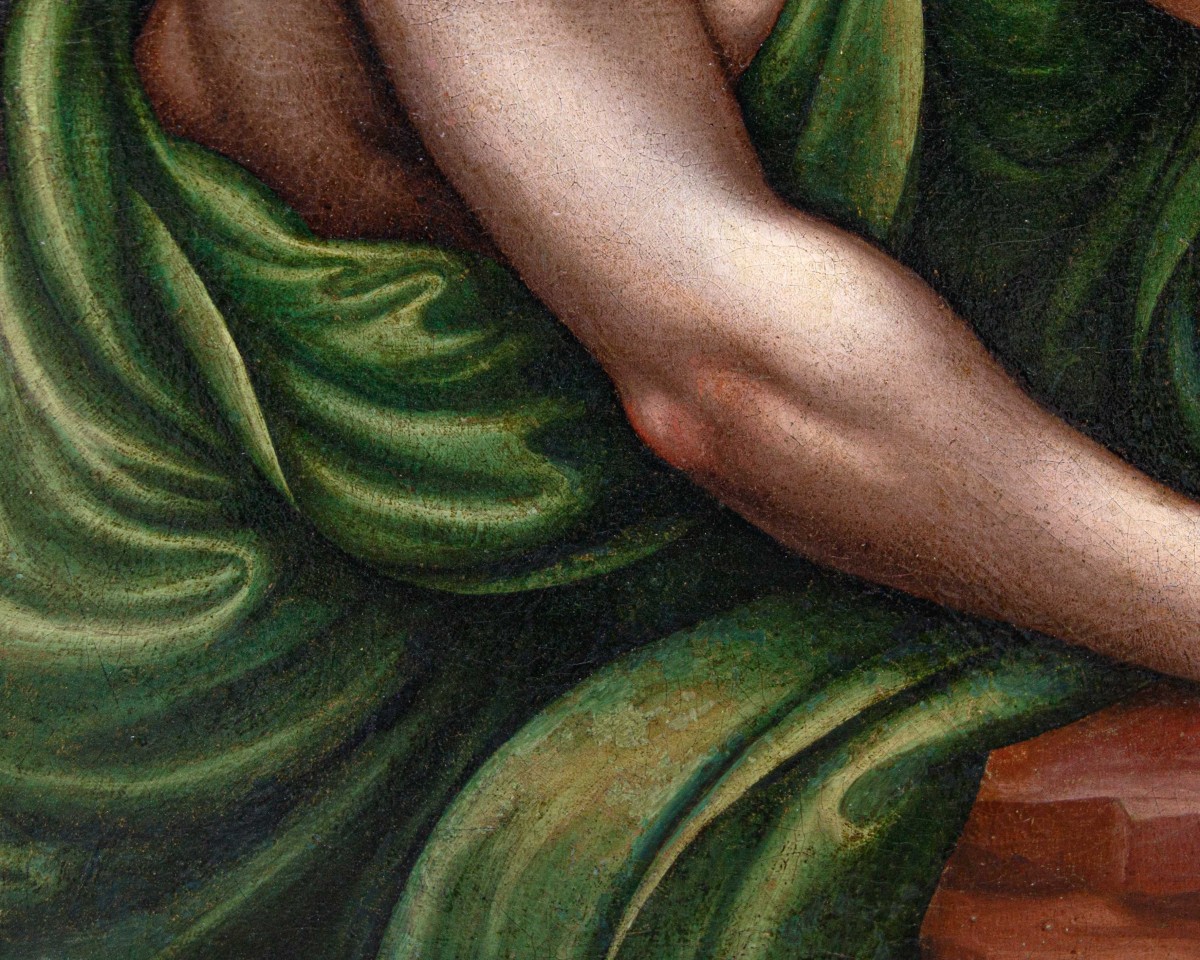
Compared to the Bergamo version by Giampietrino, where the saint's face is immersed in a soft, melancholic sfumato, the work of Pseudo-Giampietrino B reveals a different plastic sensibility. This translates into an almost sculptural anatomical rendering, especially evident in the definition of the forearm and shoulder, which appear more solid and less atmospherically blended. The organization of Giampietrino's workshop entailed the systematic use of cartoon drawings replicated with minimal variations to satisfy an aristocratic clientele eager for images of intense beauty and formal rigor. In this context, Pseudo-Giampietrino B emerges as a high-level painter, capable of maintaining the elegance of the original model while adopting a more graphic touch and drapery with almost metallic folds, as seen in the emerald green mantle wrapped around the figure.
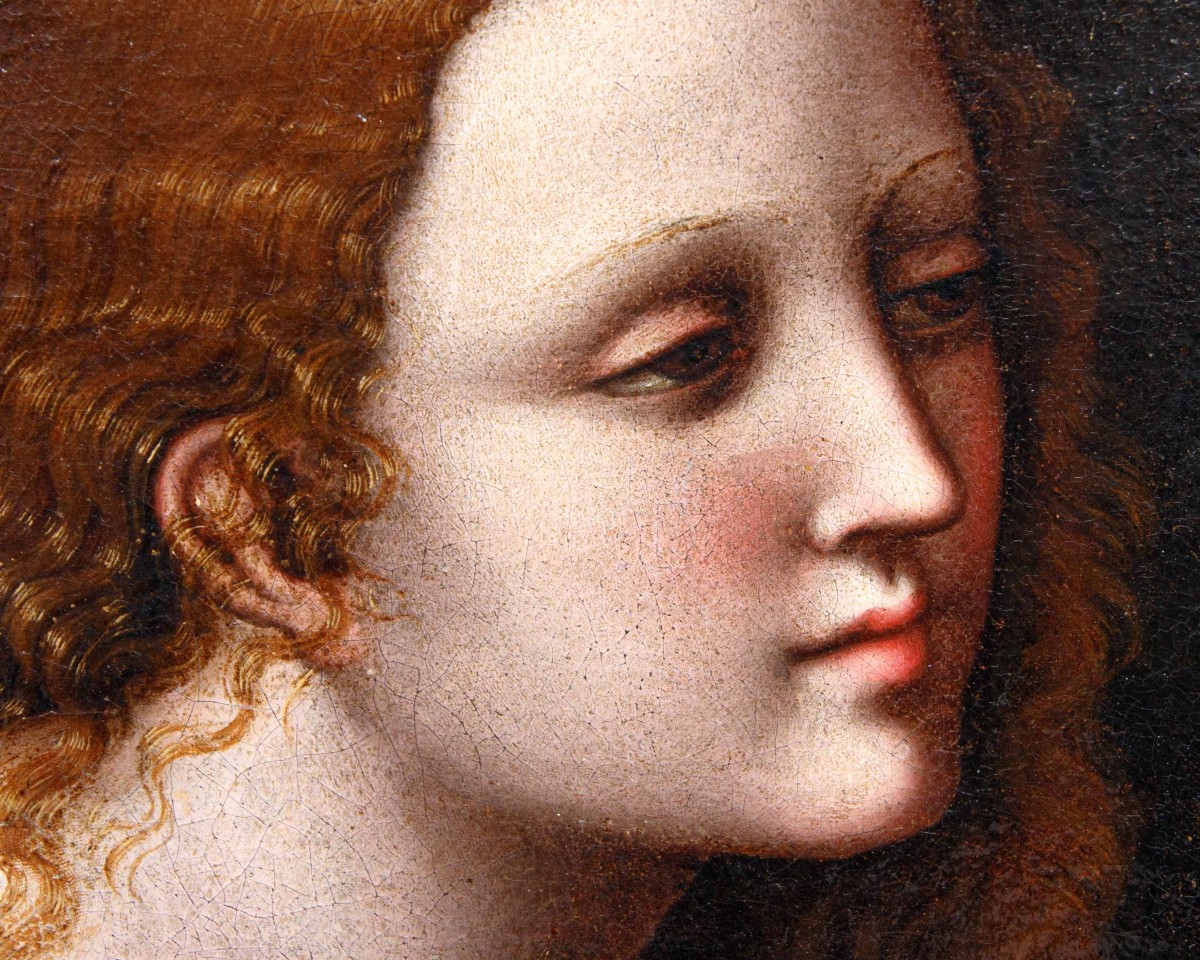
Characteristic features of his painting include a marked plasticity in the treatment of anatomy, a more accentuated use of chiaroscuro, and a subtle inclination toward caricature in facial physiognomy, balanced by a skill in rendering the golden hues of the hair with fine touches of color. The painter treats the same composition of the Magdalene—derived from the aforementioned Carrara model—in two other versions: the one in the Museo Horne in Florence and the one in the collection of the Earls of Wemyss and March in Scotland.
Delevery information :
Les frais d'expédition seront calculés au moment de la commande en fonction de la destination, des dimensions et du poids du tableau, ainsi que de l'assurance couvrant la valeur totale de l'œuvre.
For paintings purchased from abroad: following payment, the application process to obtain the export license (ALC - Attestato di Libera Circolazione) will be initiated. All antiques shipped abroad from Italy require this document, which is issued by the Ministry of Cultural Heritage. The procedure may take 3 to 5 weeks from the date of request; therefore, the painting will be shipped as soon as the document is obtained