Offered by Ars Antiqua
REQUEST INFORMATION

Old Masters paintings, furniture, sculptures and modern art
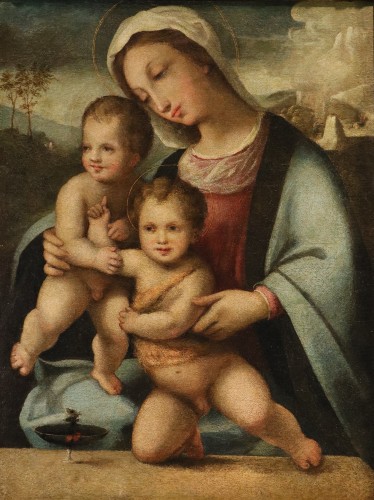
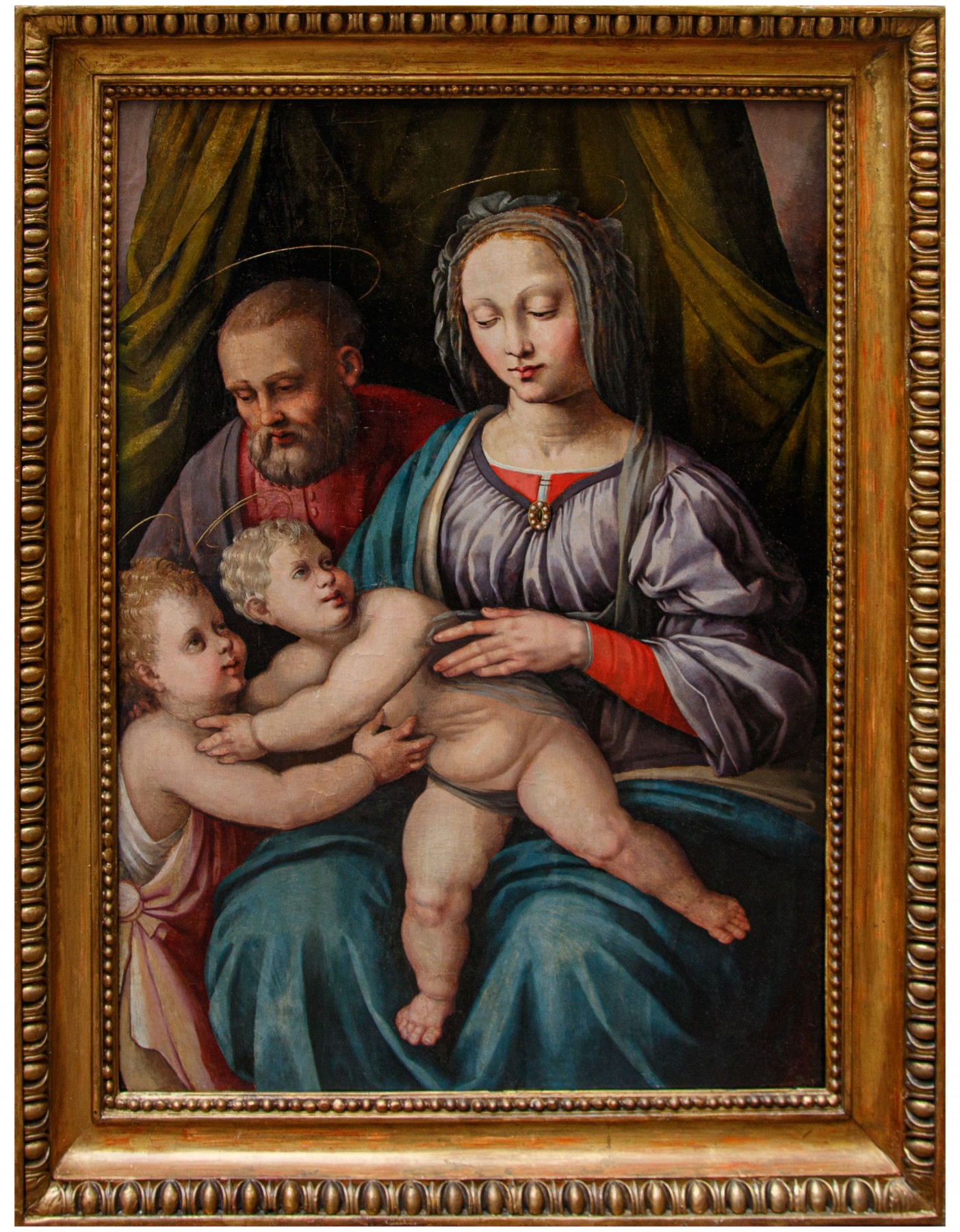
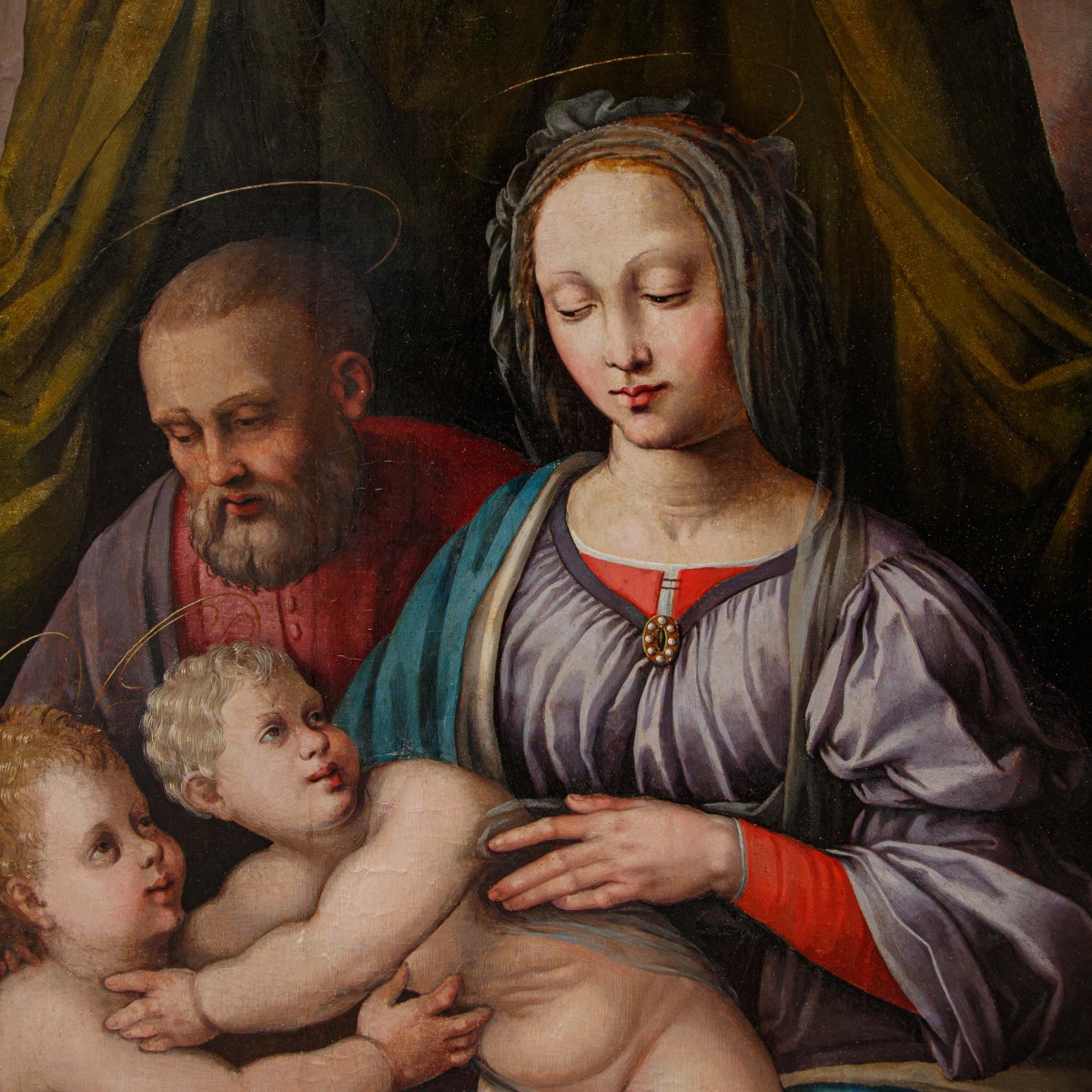
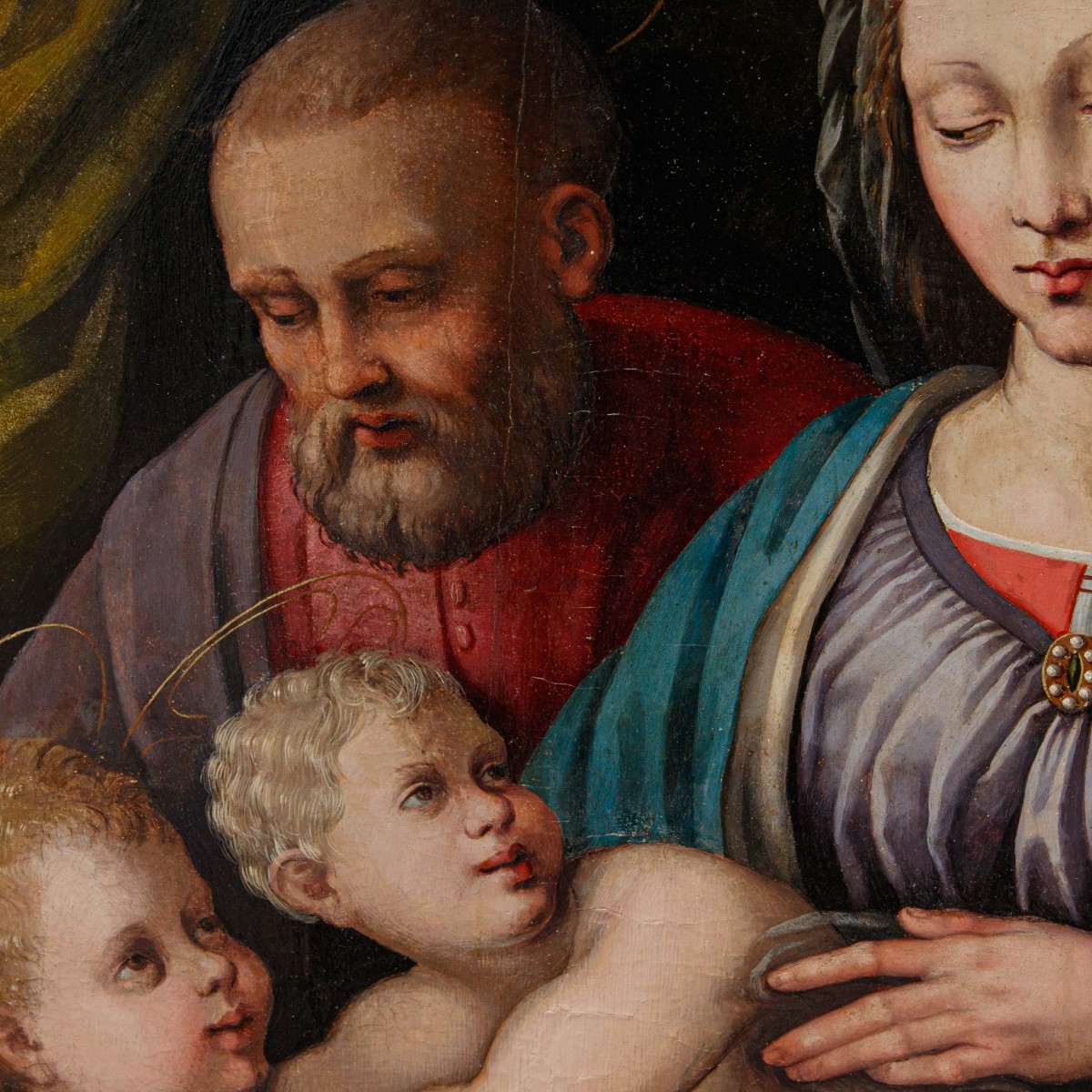
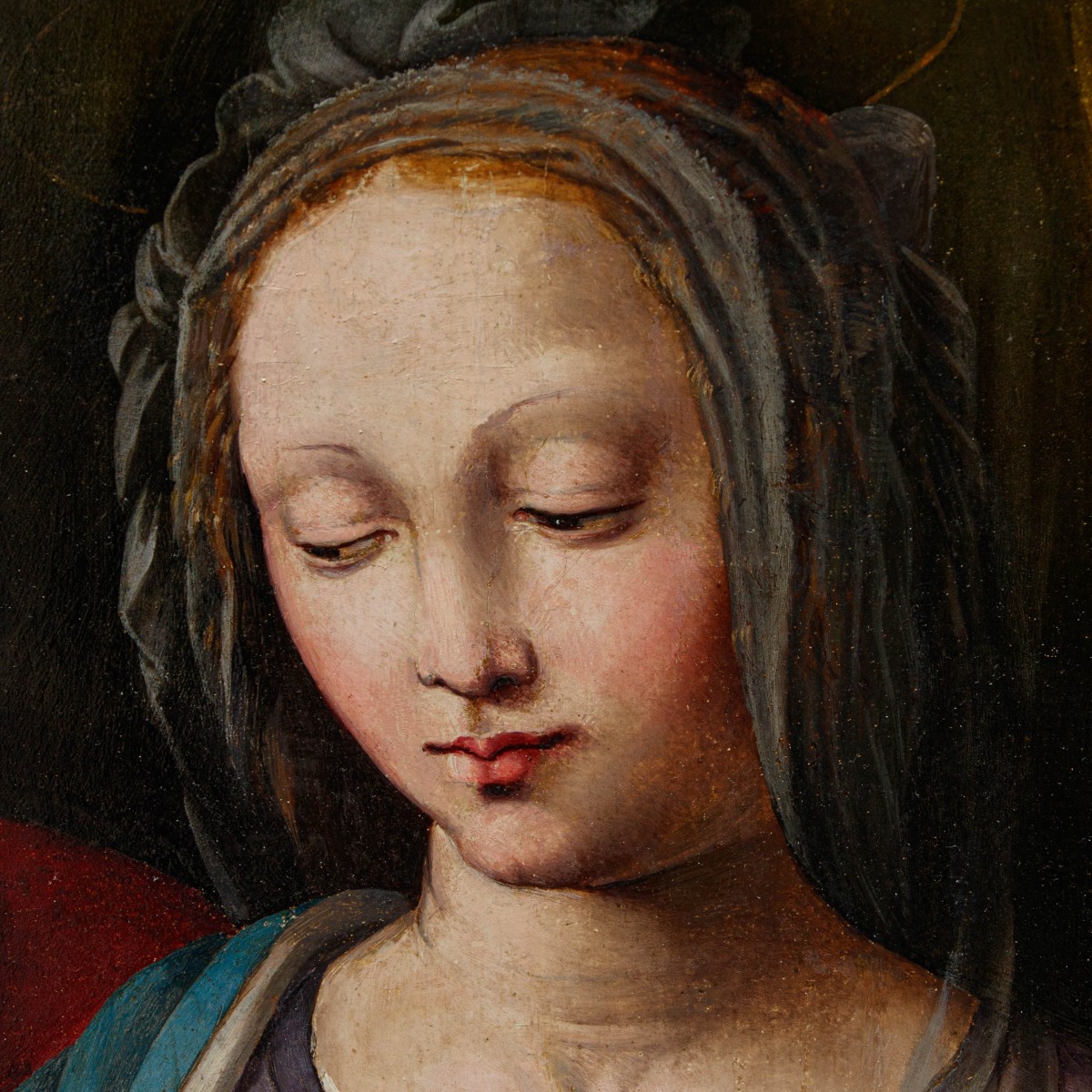
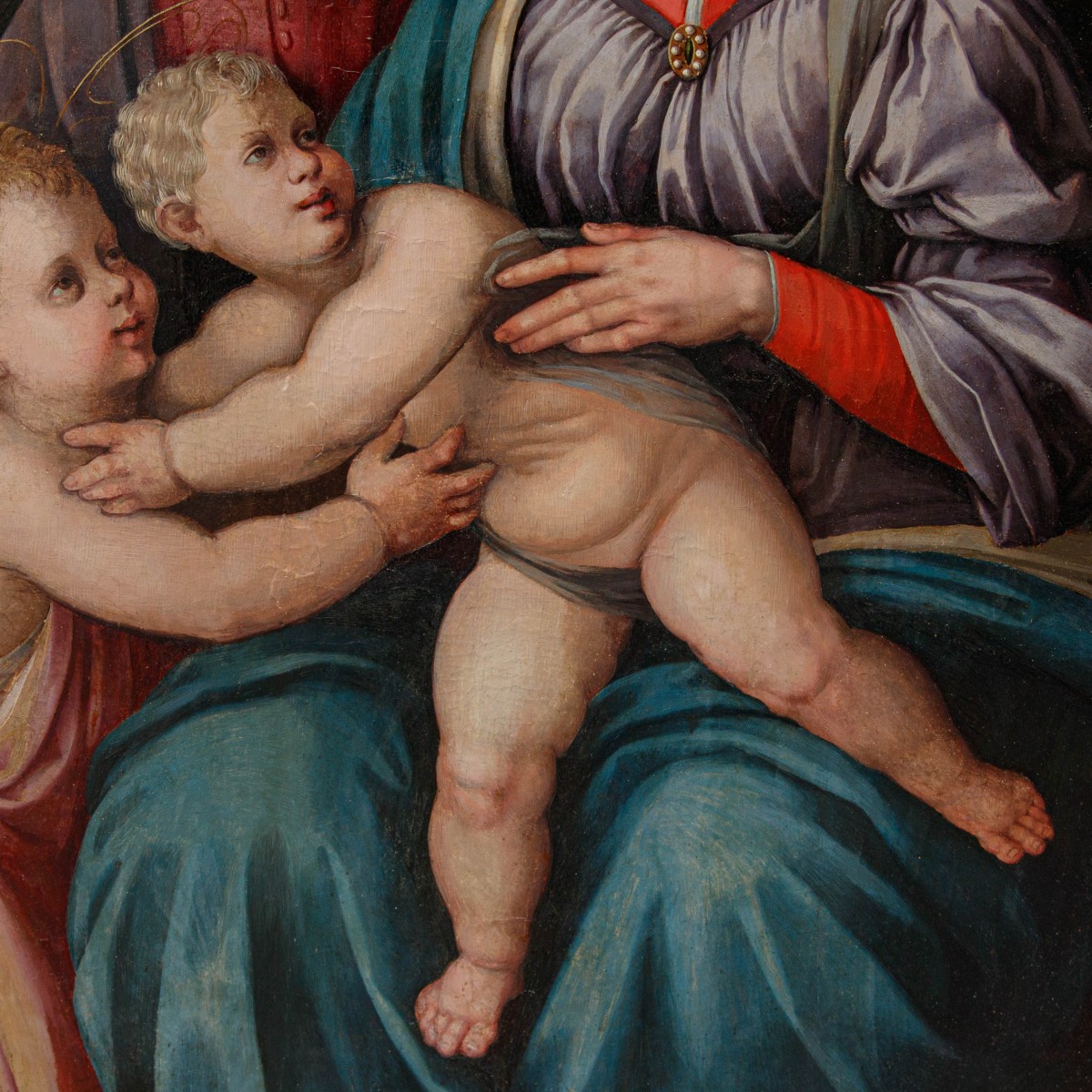
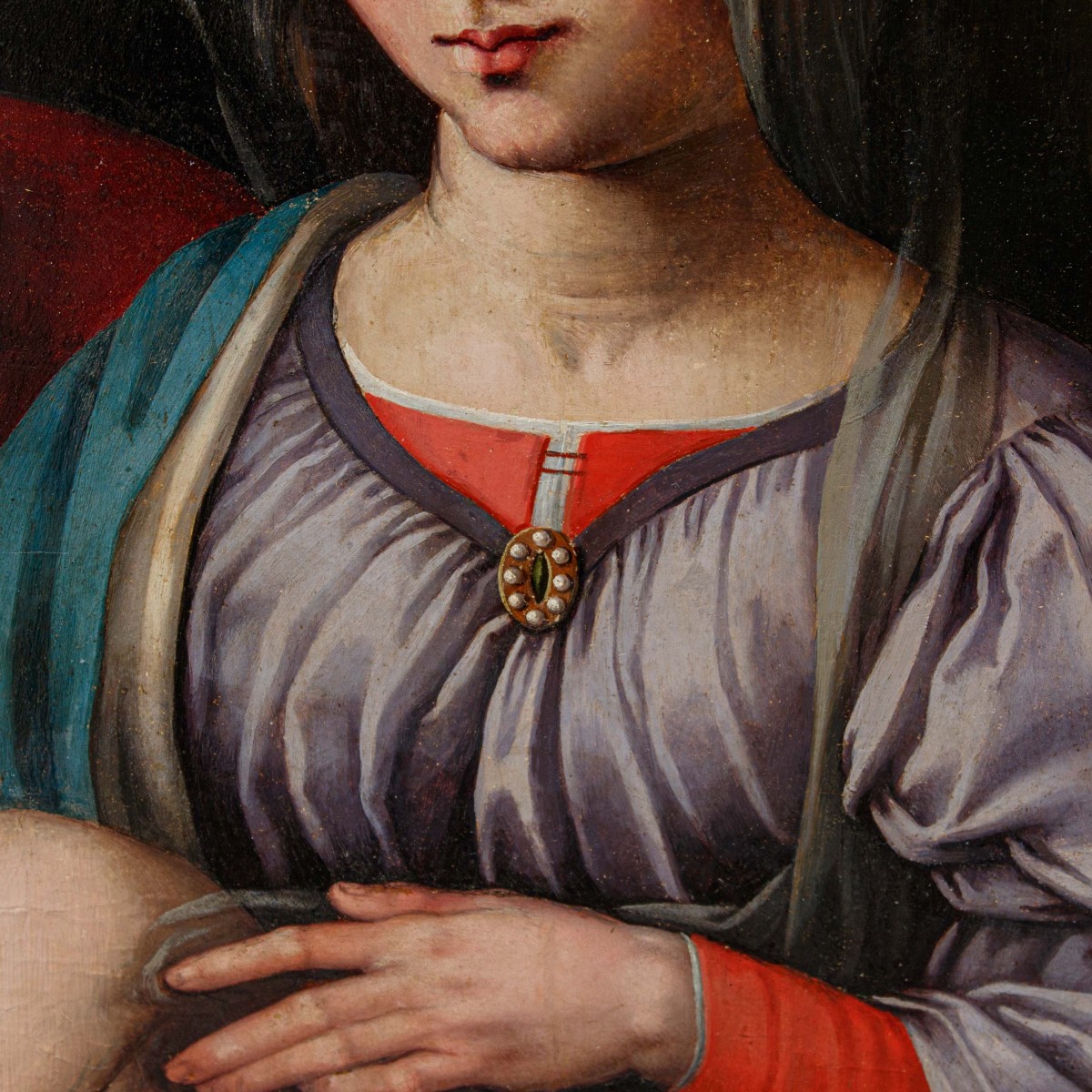
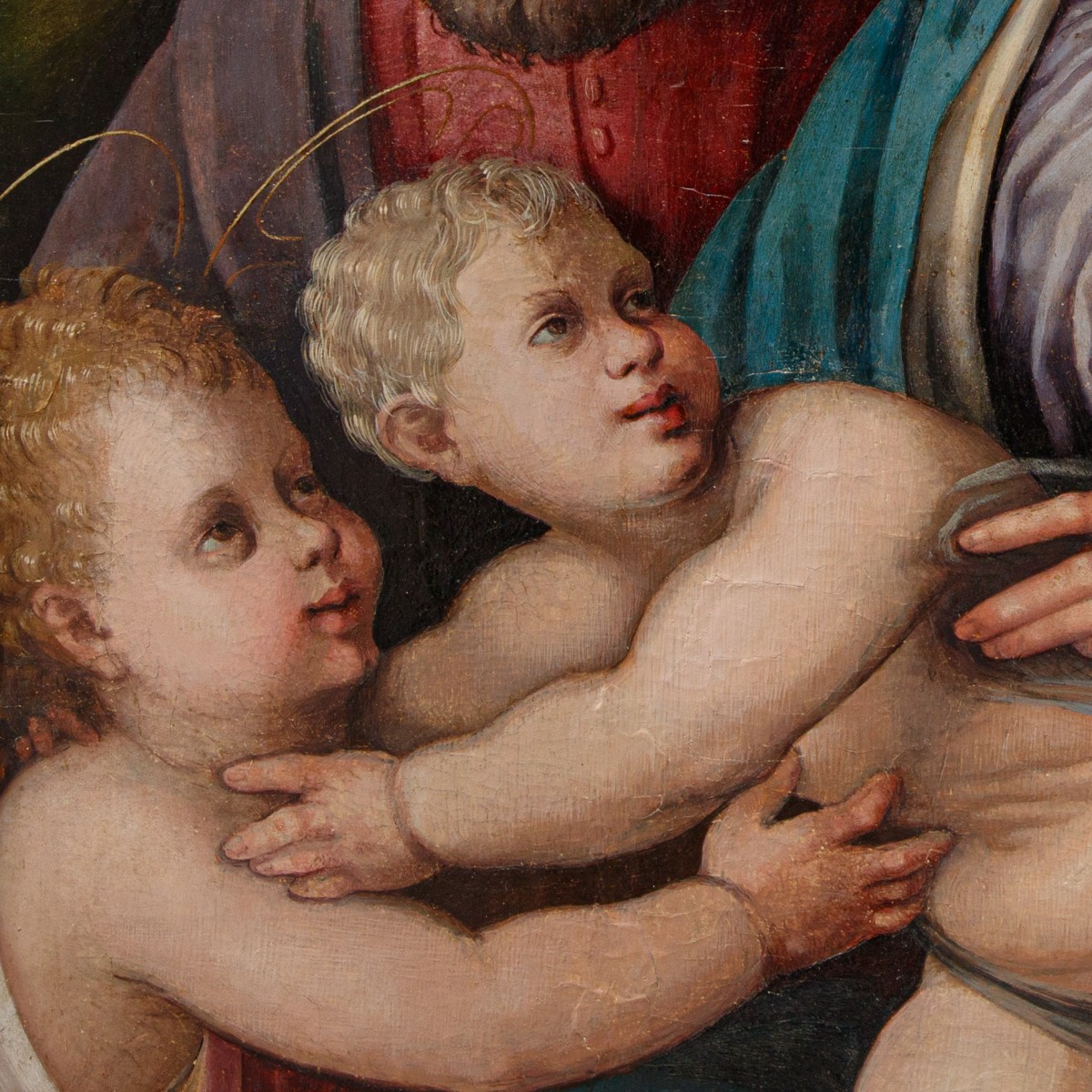
Within an interior whose spatial coordinates are defined solely by the drapery of a baldachin, the Virgin holds the Child in her lap; the young St. John the Baptist, on the other hand, is depicted in the act of embracing Christ while gazing towards Mary.
This panel, a remarkable testament to the artistic culture of early sixteenth-century Florence, has benefited from a new attributive study conducted by Prof. Del Priori in which, for the first time, the Master of Compianto Scandicci is identified with Bastiano da Sangallo, known as the Aristotelian (Florence, 1481 - 1551), an Italian architect, set designer, and painter.
Prior to this significant insight, the nucleus of homogeneous works that constituted a coherent stylistic group had been linked to the figure of an anonymous master active in Florence in the early sixteenth century and close to Francesco Granacci and Ridolfo del Ghirlandaio. This solution was offered in 1968 by Everett Fahy: the painter was called the 'Master of the Lamentation of Scandicci' because an emblematic work of his production was considered a panel with the Lamentation over the Dead Christ made for the church of San Bartolomeo in Tuto in Scandicci (FI), whose composition is partially borrowed from the famous Lamentation by Pietro Perugino now in the Palatine Gallery in Florence.
Nephew of the brothers Giuliano and Antonio da Sangallo, Bastiano was called the Aristotelian for his serious character. He was a set designer and painter, a pupil of Perugino and later of Michelangelo. He was in Rome with his brother Giovan Francesco, then from 1515 he was in Florence where he staged Machiavelli's Mandragola, together with Andrea del Sarto. Bastiano da Sangallo's work made a fundamental contribution, from the point of view of scenographic elaboration, to the Renaissance rediscovery of classical theater. As an architect, he followed several important projects: in particular, the Rocca Paolina in Perugia (1543-1545), the Rocca di Civita Castellana together with his cousin Antonio da Sangallo the Younger, and the construction site of Palazzo Pandolfini in Florence based on a design by Raphael. Aristotile da Sangallo or the Master of the Lamentation of Scandicci thus came under the influence of the pupils of Domenico Ghirlandaio in the first decade of the sixteenth century, first and foremost his son, Ridolfo: in reality, the group attributed to the Master testifies to multiple influences, from Raphael to the early works of Andrea del Sarto, offering us the profile of a lively personality who was extremely involved in the various trends of Florentine painting until around 1515. The painting in question can be easily compared, in addition to the panel in Budapest, also with the tondo with the same subject preserved in the Hermitage in St. Petersburg or with the Madonna and Child in the Museum of Fine Arts in Boston.
The painter does not renounce the sweetness of forms of the late fifteenth century, but nevertheless demonstrates his awareness of both the new relationship between figures and space introduced in Florence by Michelangelo with the famous Pitti and Doni tondos (see in this regard the panel of the Hermitage), and in other works of the division of the planes of the first Madonnas by Raphael, a model from which he also borrows the perceptive portraiture intent that informs the characters of our panel. The ovals of the faces of the three figures here are marked by a moving line of shadow that already suggests the premonition of the Passion.
Critical Analysis by Prof. Alessandro Delpriori
Delevery information :
Les frais d'expédition seront calculés au moment de la commande en fonction de la destination, des dimensions et du poids du tableau, ainsi que de l'assurance couvrant la valeur totale de l'œuvre.
For paintings purchased from abroad: following payment, the application process to obtain the export license (ALC - Attestato di Libera Circolazione) will be initiated. All antiques shipped abroad from Italy require this document, which is issued by the Ministry of Cultural Heritage. The procedure may take 3 to 5 weeks from the date of request; therefore, the painting will be shipped as soon as the document is obtained