Offered by Tobogan Antiques
REQUEST INFORMATION
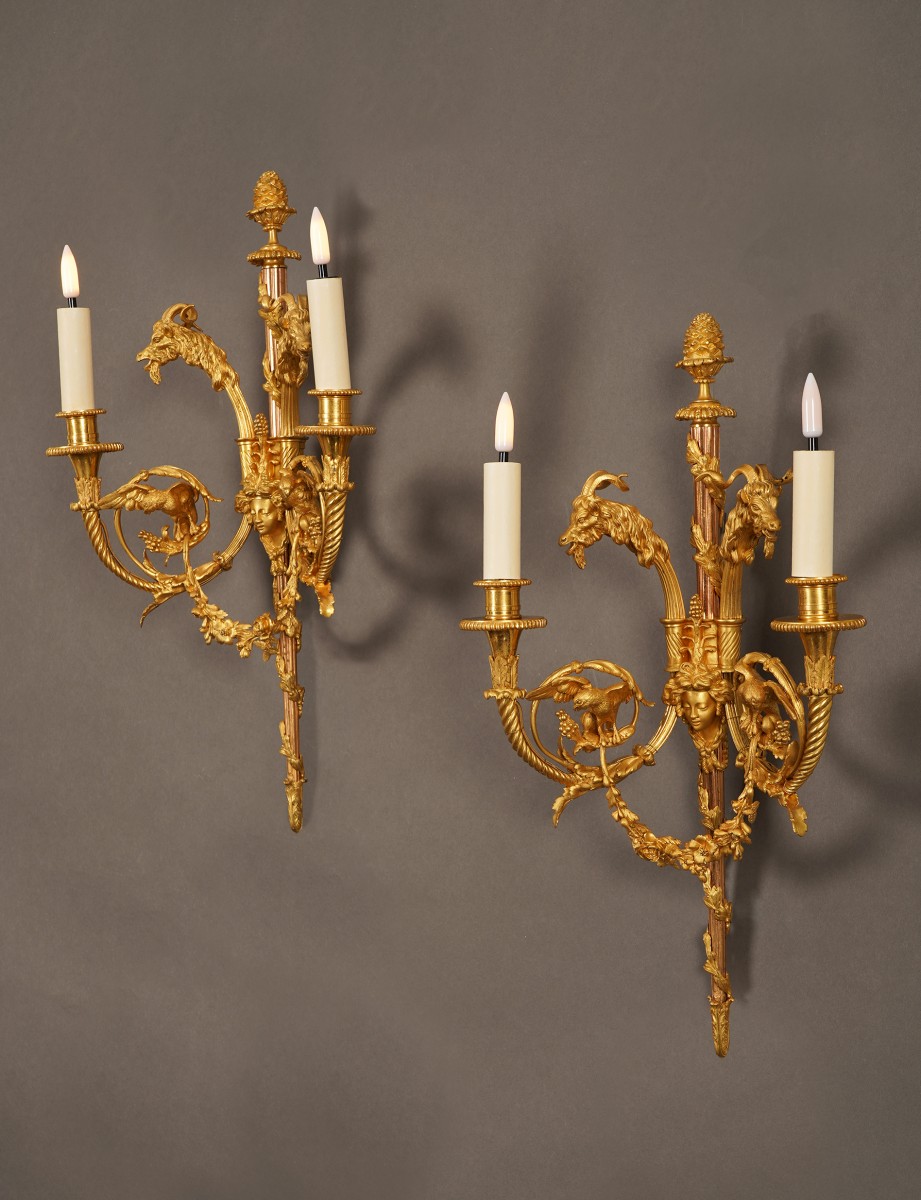
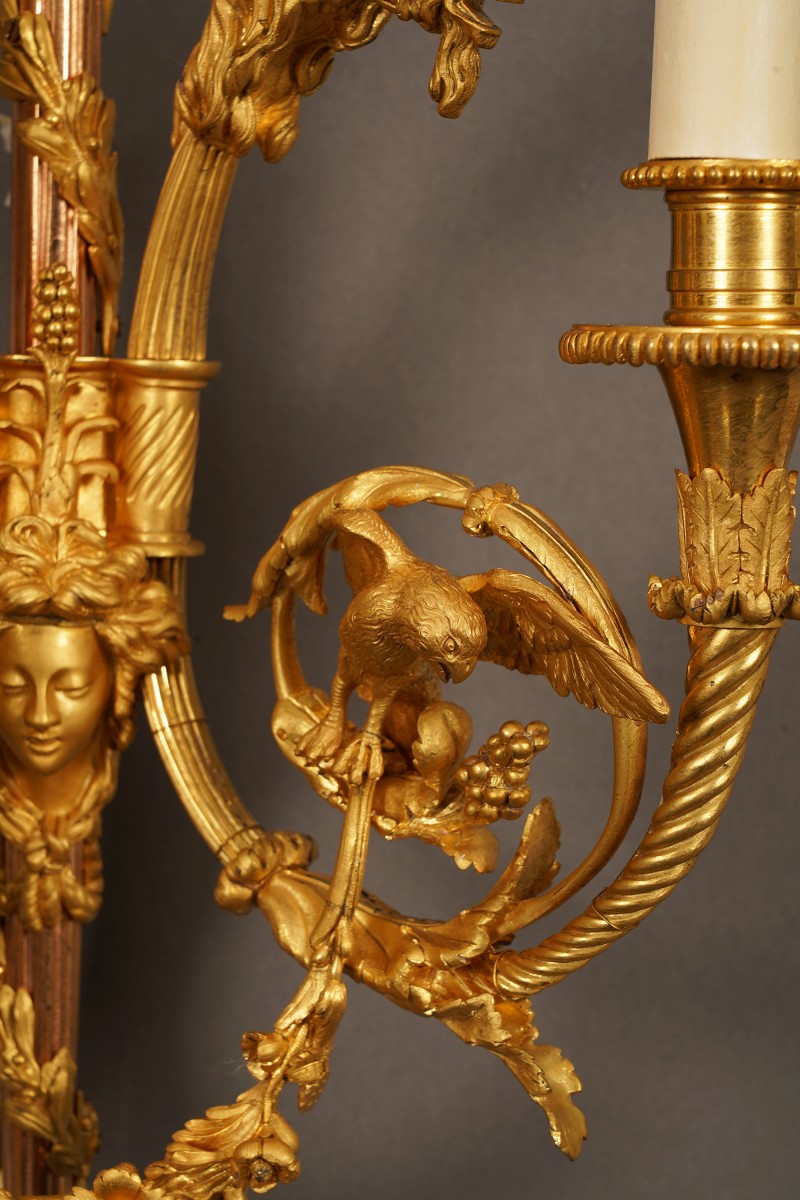

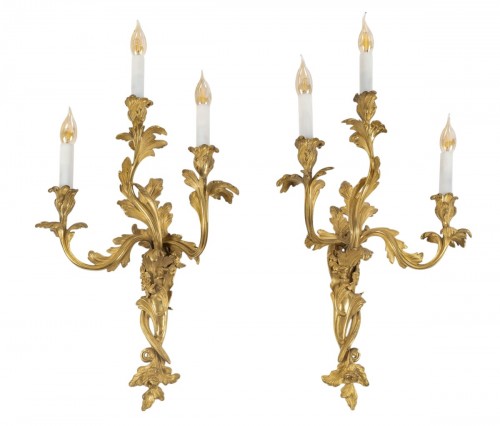
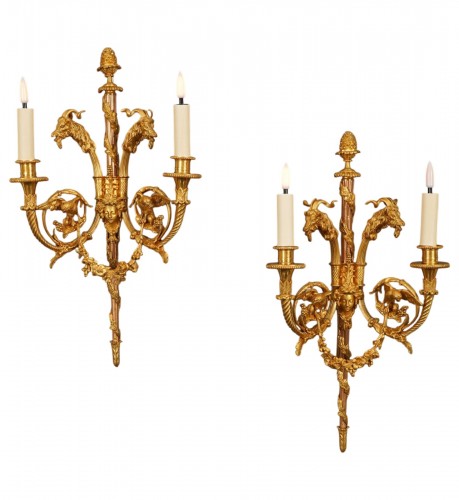
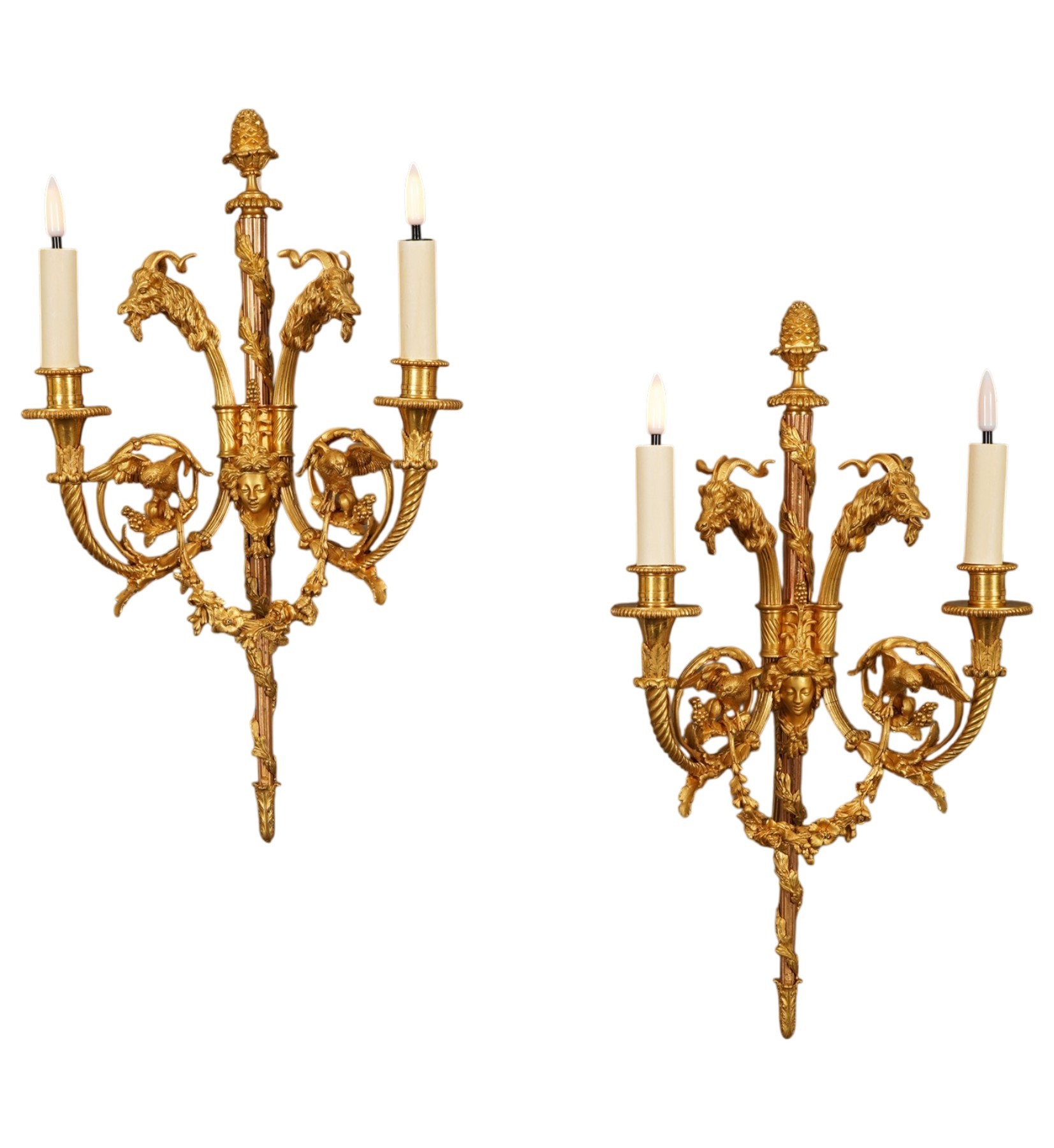
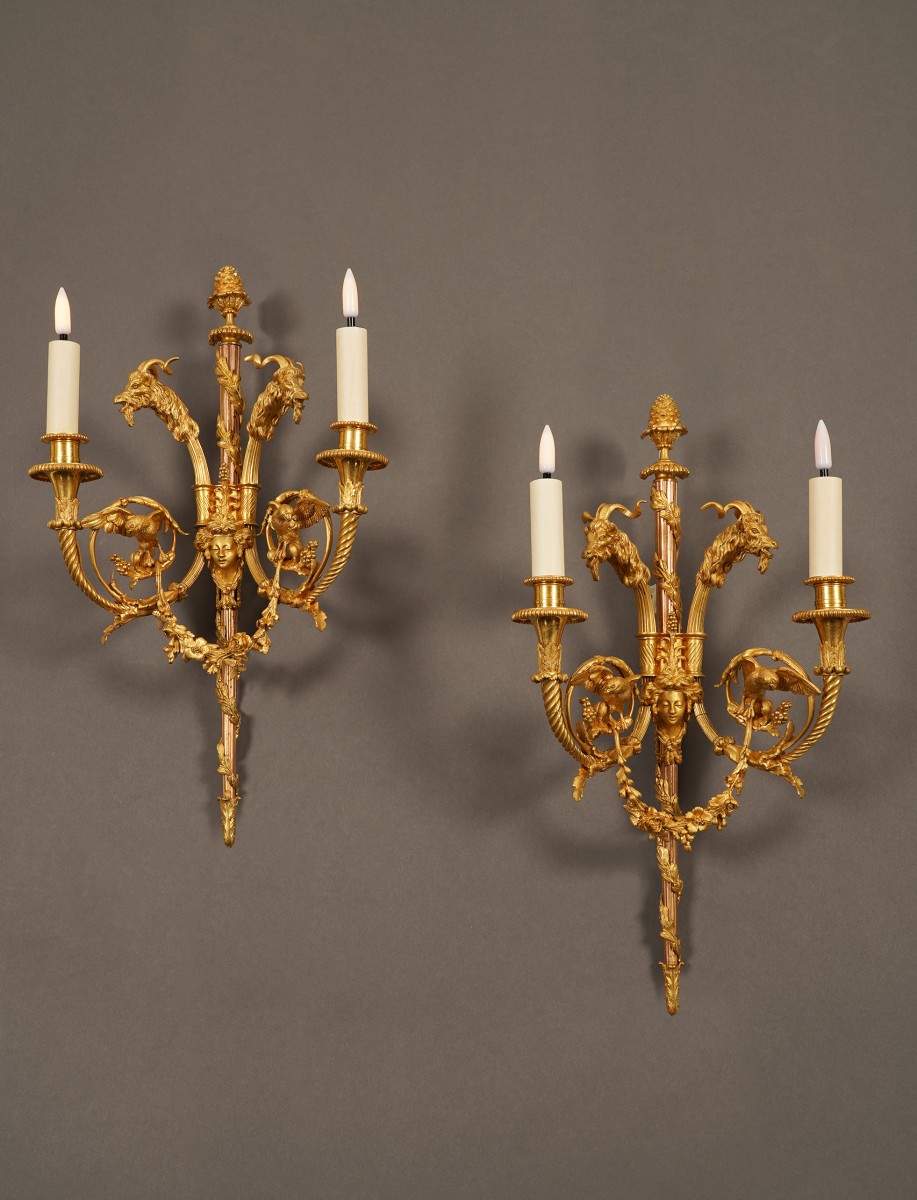
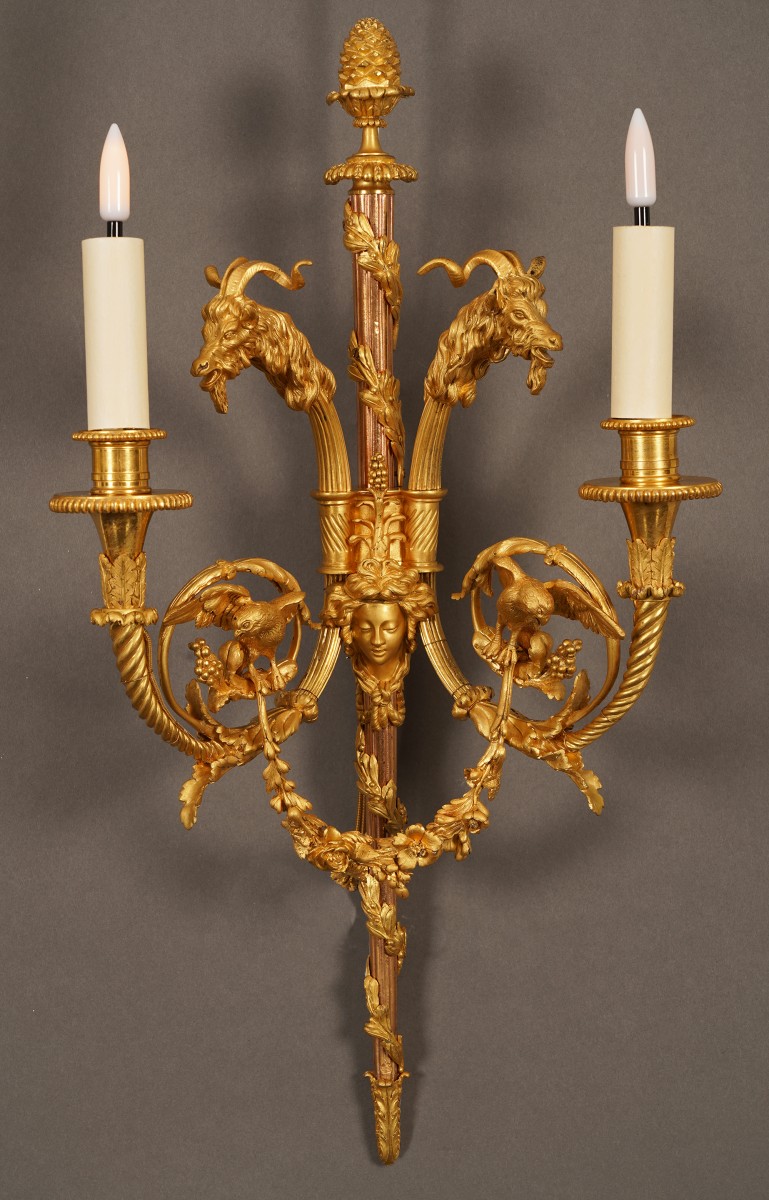
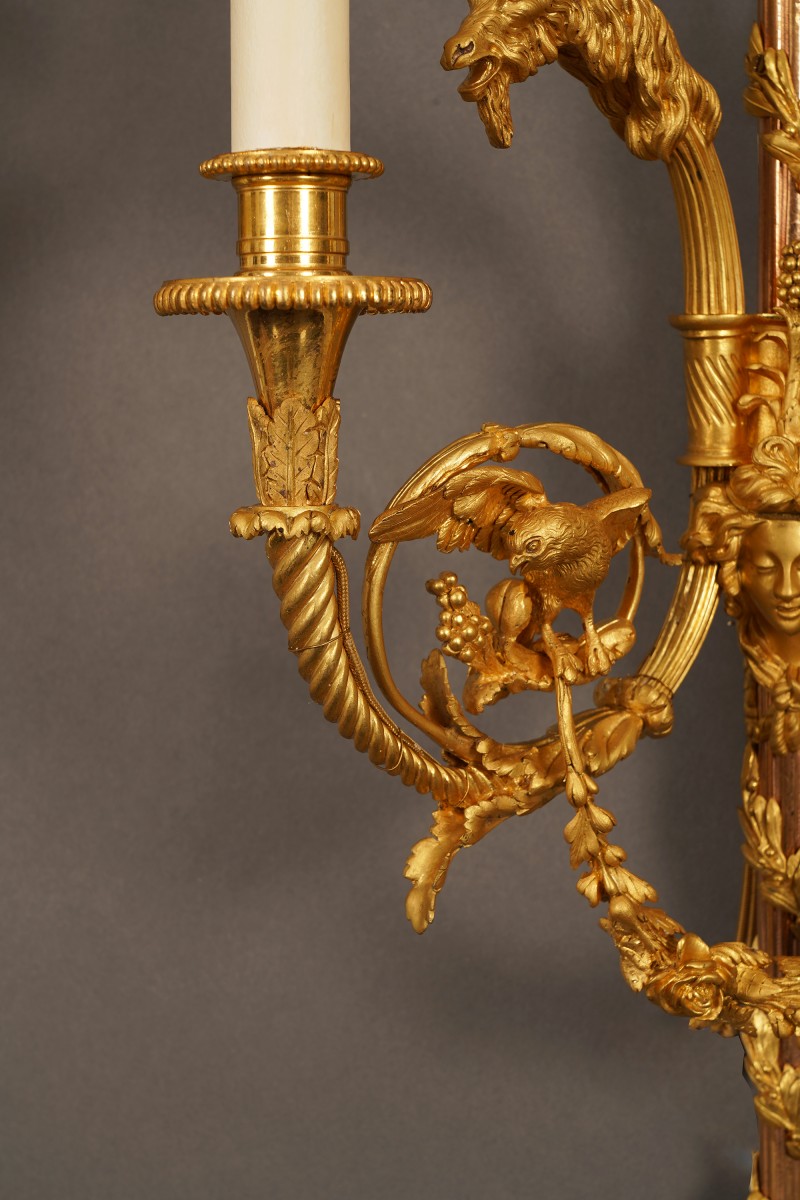
An elegant pair of Louis XVI-style wall sconces in chiseled and gilded bronze, each consisting of a thyrsus-shaped shaft centered with a feminine medallion, featuring fluting and scrollwork of leaves, surmounted by a pinecone. Topped with goat heads, the two twisted arms, adorned with acanthus scrolls and ending in cornucopias, are embellished with eagles holding a garland of flowers in their talons.
The design is based on a drawing attributed to Jean-Louis Prieur, circa 1780, held in the library of the Musée des Arts Décoratifs in Paris.
Examples of this same model are now housed in major collections, such as this pair by Pierre Gouthière at the Château de Fontainebleau (inv. no. F 616 C.2) and the pair at the Cleveland Museum of Art (inv. no. 1944.469.1).
Biography :
Henri Vian, a bronze artist active in the second half of the 19th century, created numerous interior decorative pieces: fireplaces, vases with bronze mounts, chandeliers, balustrades… all of the highest quality. His signature is usually in cursive, with the initial of his first name followed by his last name. On his later works, only the two initials “h.V.” appear. The firm, located at 5 Rue de Thorigny in Paris (the Hôtel Salé, now the Picasso Museum), continued under the direction of Madame Vian after her husband’s death in 1905.
Jean-Louis Prieur (1732–1795) was one of the most illustrious bronze casters of the Neoclassical period, born into a family of Parisian artisans specializing in the decorative arts. Active from about 1765 to 1775, he was admitted as a master sculptor at the Académie de Saint-Luc in 1765 and became a master foundryman “in clay and sand” in 1769. He is described as an “ornamental sculptor, modeler, and engraver.” Around 1770, he produced design drawings for bronze works. In 1777, he was living in the Faubourg Saint-Denis. Among other works, he created the gilded bronze ornaments for King Louis XVI’s Coronation Carriage. After his bankruptcy in 1778, Jean-Louis Prieur took refuge in the Enclos du Temple under the protection of the Count of Artois to escape his creditors and royal jurisdiction. His work as an ornamental artist then became his primary focus.
Bibliography :
H. Ottomeyer, et alii, Vergoldete Bronzen, T. I, Klinkhardt & Biermann, Munich, 1986, p° 241.