Offered by Franck Baptiste Paris
REQUEST INFORMATION
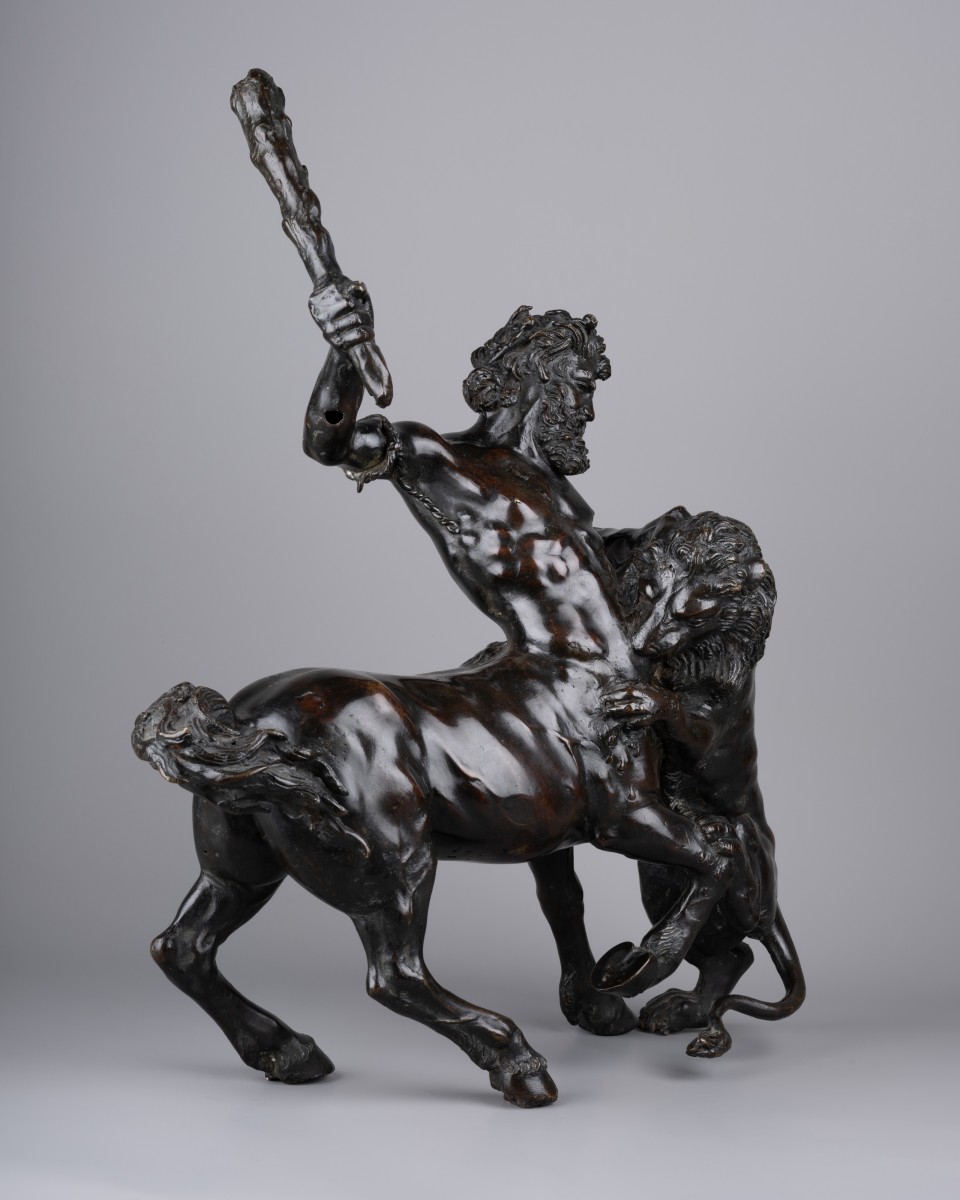

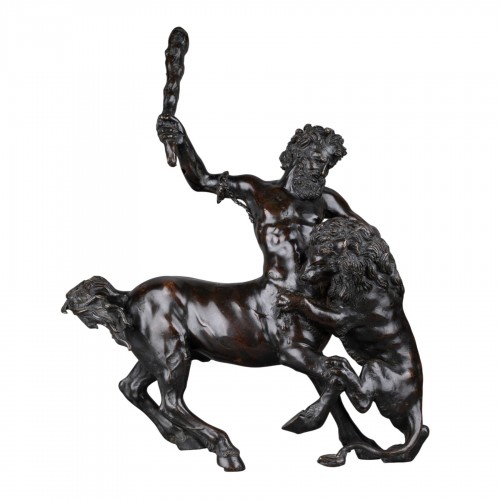
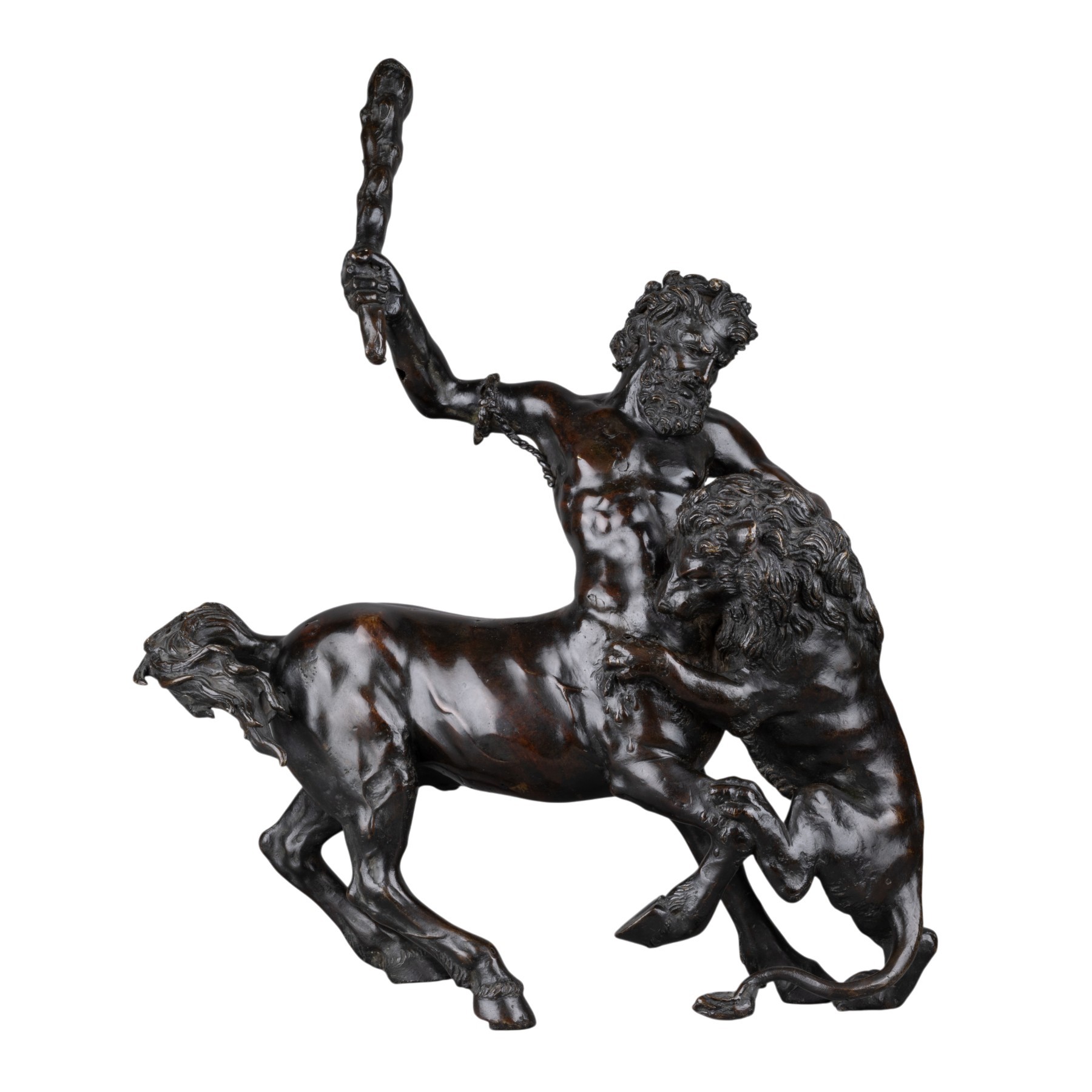
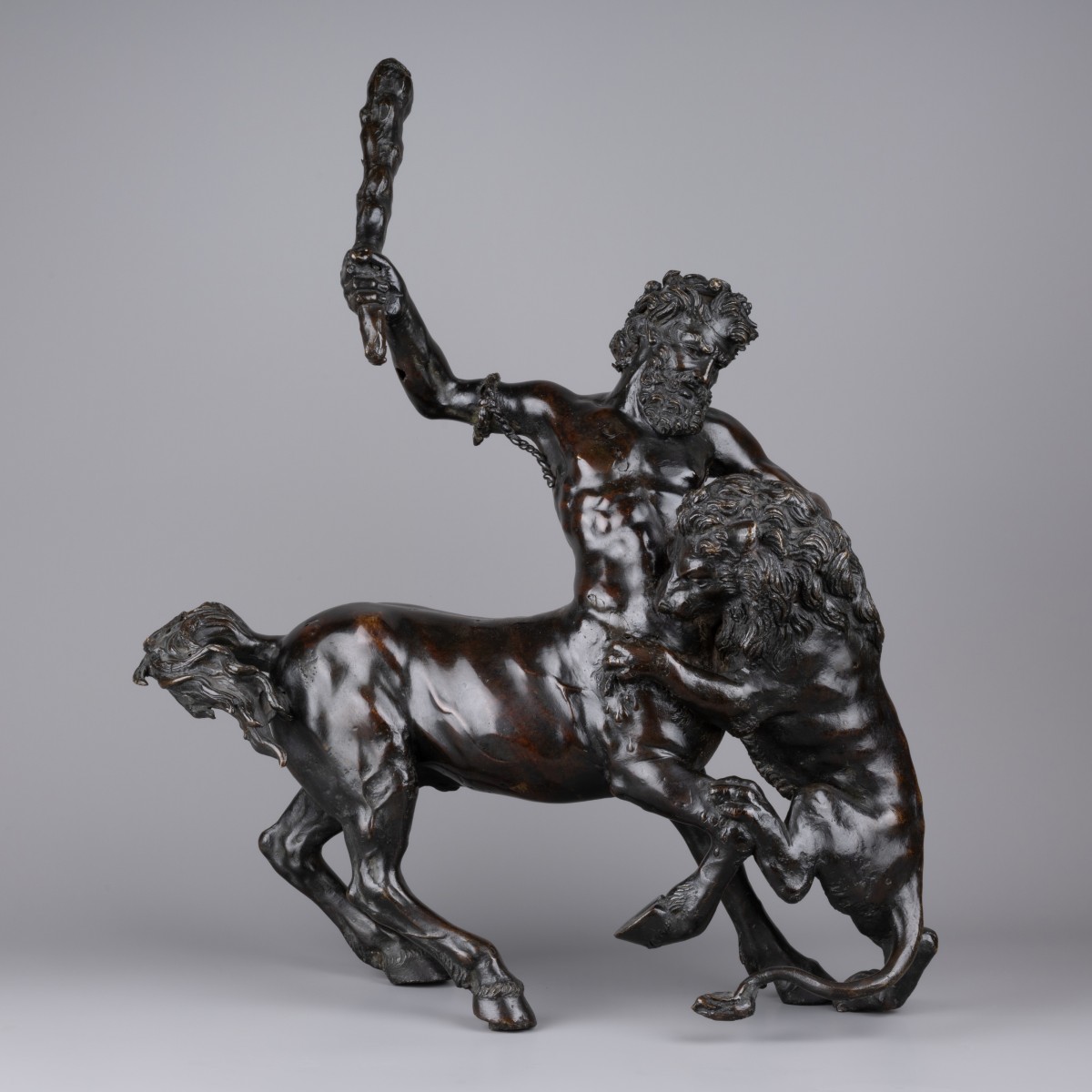
The centaur struggling with a lion, late 17th century early 18th century
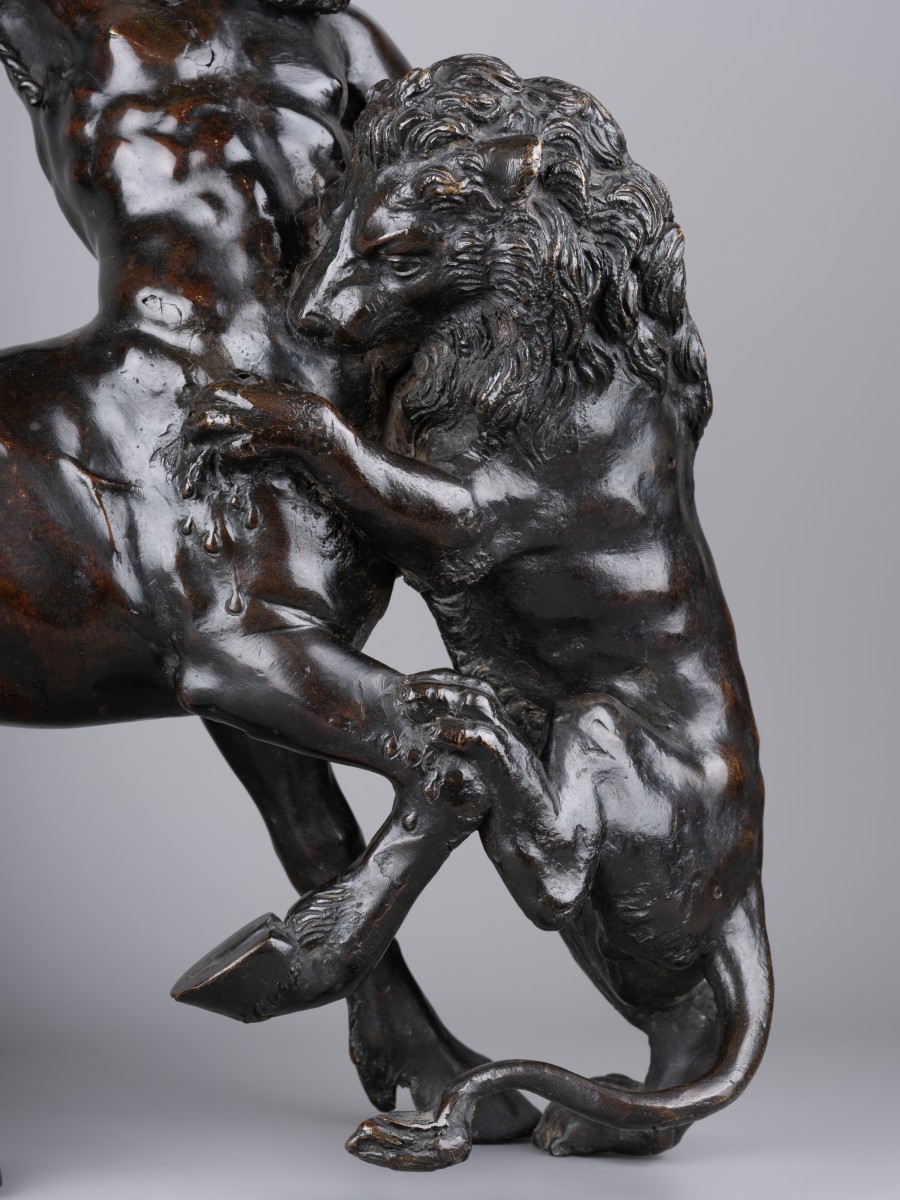
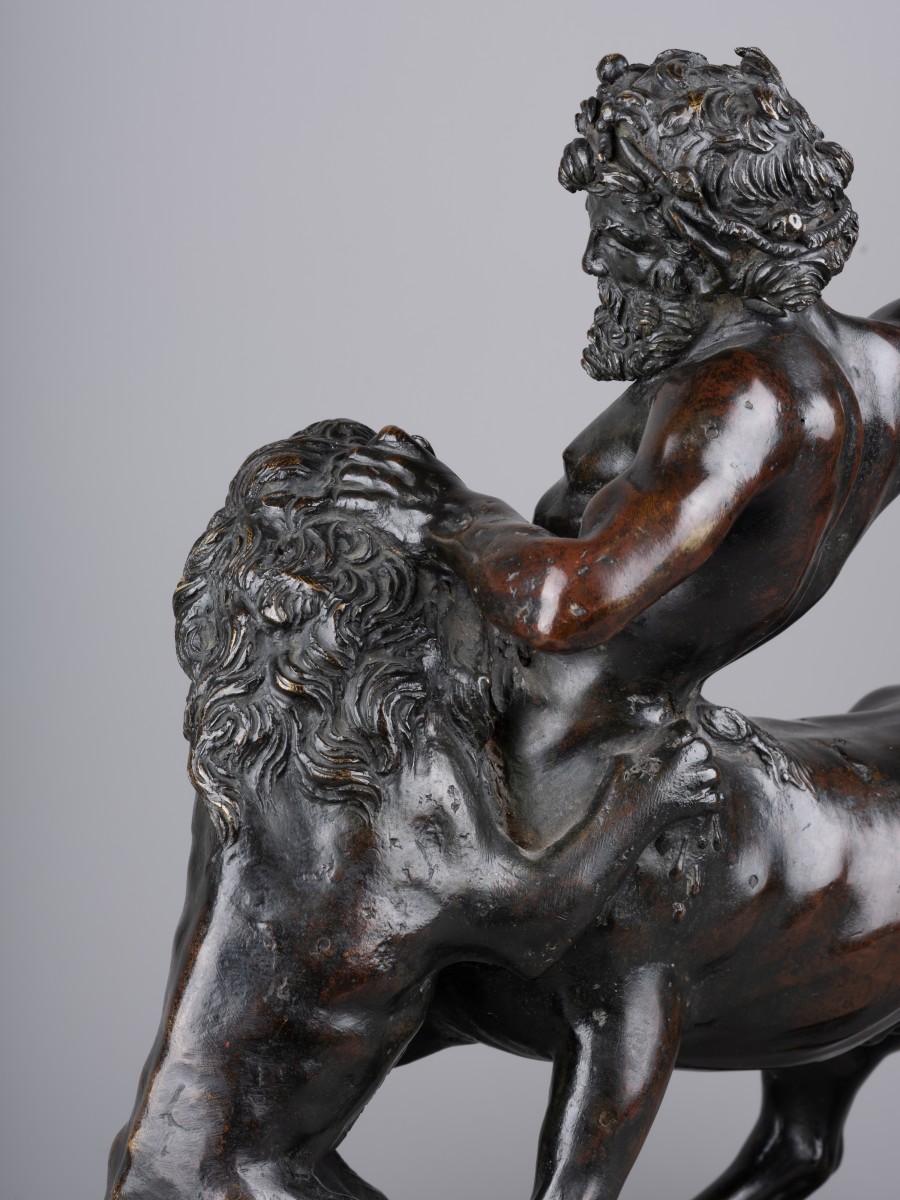
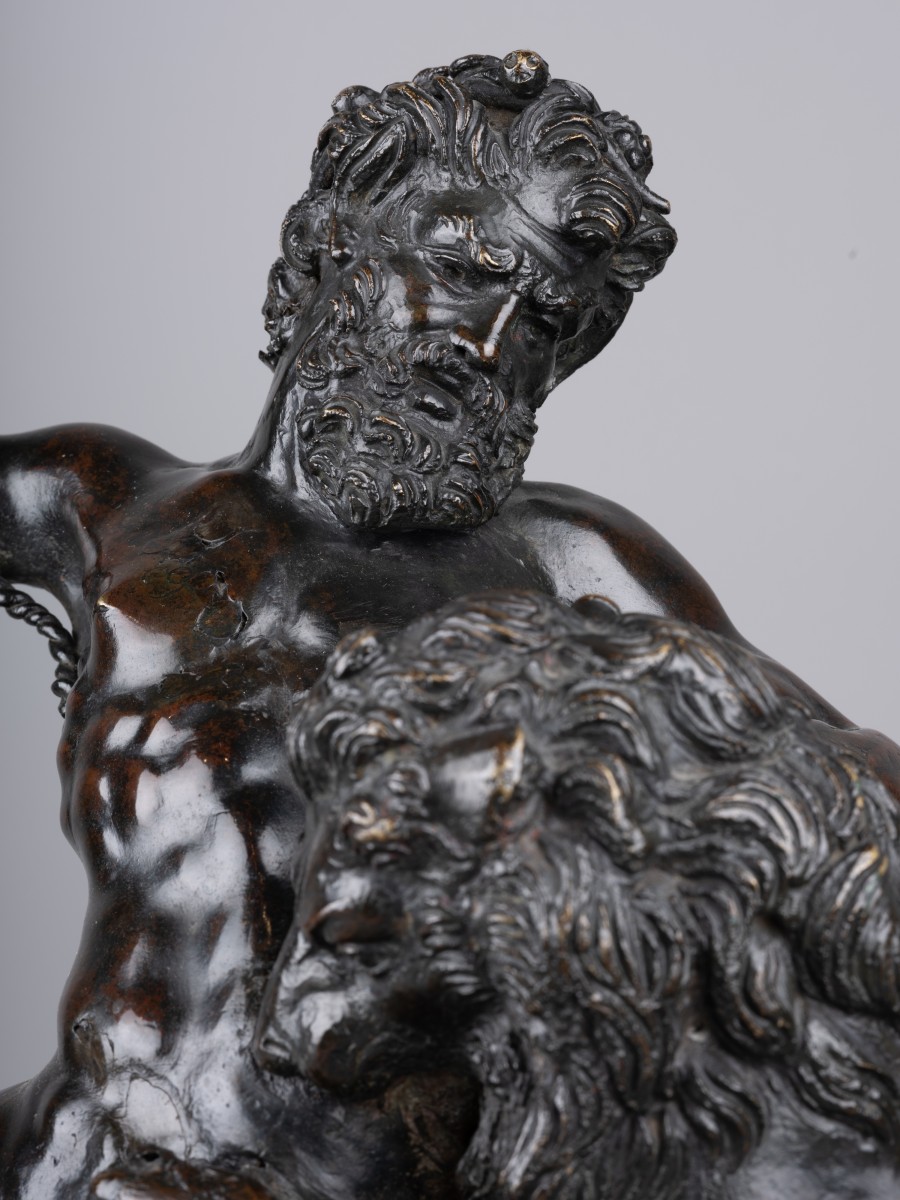
Rare bronze sculpture which represent the Centaur Chiron attacked by a lion. The feline is represented in full action, he has jumped and seized the centaur to the chest to try to make him fall, his fangs and claws are tearing his skin which let out streams of blood.
The scene is captured on the spot, and having anticipated the attack, the centaur launched at full speed slows down his race while carrying out a spectacular movement of contortion which enables him to adjust his target with his heavy club.
Lost wax cast bronze, nice patina medal.
Plentiful melting accidents.
European work from the late 17th century or early 18th century.
Dimensions :
Height : 45 cm ; Width : 35 cm.
Origin :
Private collection, Paris.
Similar model :
Sotheby's London sale, September 5, 2007, Lot 45 (£36,500)
The bronze of this sale was presented under N°77 during the exhibition "Bronzes de la Renaissance, de Donatello à François Duquesnoy" at the castle of Laarne (September - October 1967).
Our view :
Only one model of the centaur we present was known until then ; presented at the 1967 exhibition, it was announced as unique and attributed to the famous sculptor Jean de Bologne (1529-1609). The nervousness, the power of the composition and the perfect notions of anatomy, indeed, refer to the Florentine ideals of the 16th century.
The knowledge of ancient bronzes has greatly evolved in the last decades and a thorough study during the sale of the bronze in 2007 at Sotheby's, including a laboratory examination of the composition, has allowed us to propose a date between the end of the 17th century or the very beginning of the 18th century.
This decisive element and the casting accidents exclude a provenance from the workshop of Jean de Bologne and his students, who mastered the lost wax technique to perfection.
Researchers then began to look for a very great sculptor who had worked after Italian works.
The description of the sale also proposes a comparison with the works of the Flemish sculptor Willem Van Tetrode (1530-1587), who was a pupil of Benvenuto Cellini in Florence, especially in the face of our centaur, which has wide lips similar to other compositions of this master.
Sotheby’s experts also compare our work with the Milon of Crotone by Pierre Puget (1620-1694) which has a similar iconography. His workshop, located in the arsenal of Toulon, favored wood and marble, the workers were not very experienced in metal casting, and the few works in bronze that were produced had casting accidents and did not have a base, just like the centaur that we present.
It is obvious that the attribution by style of such a bronze remains difficult because our work is clearly a reinterpretation of the old centaur Furietti discovered in the ruins of Hadrian's villa in Tivoli in 1736 and now preserved in the Capitoline Museum in Rome.
His face is very similar, as well as his beard and his opulent hair.
It is therefore possible that our work was created as a result of the emulation that followed the discovery in the 1740s, as was the case for all the great works of antiquity that have come down to us such as the Laocoon, the Bull, the Farnese Hercules.
Our work is not a copy of the antique but a bold reinterpretation, because our artist has chosen to present the centaur a few moments before his fight, and if the ancient model already carries the remains of the lion, ours is in full action and allows a magnificient vision of the scene on all its sides.
This clearly demonstrates the work of a great sculptor, but only the discovery of a preparatory drawing or a delivery in the archives will allow us to attribute with certainty these two great bronzes.