Offered by Galerie Philippe Guegan
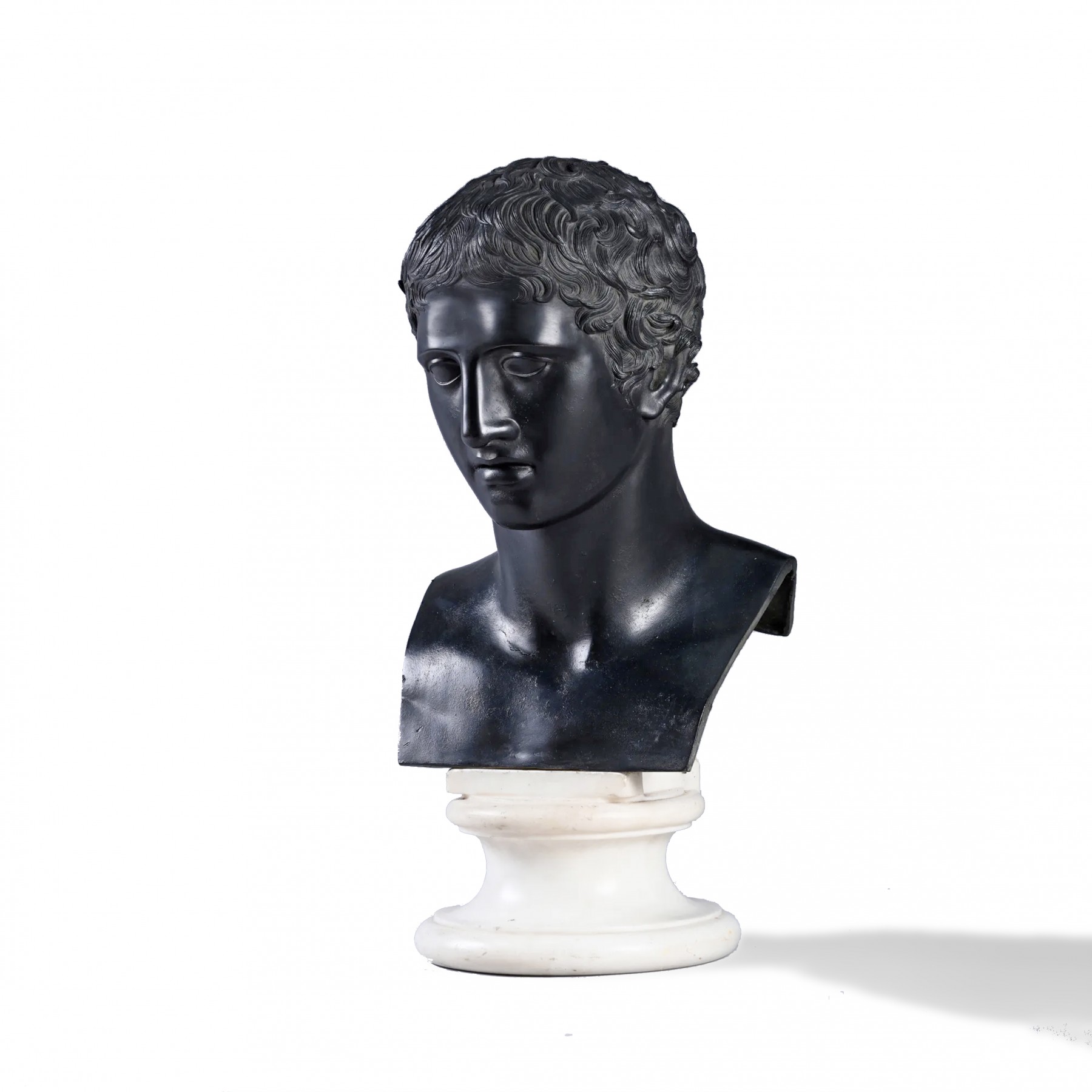
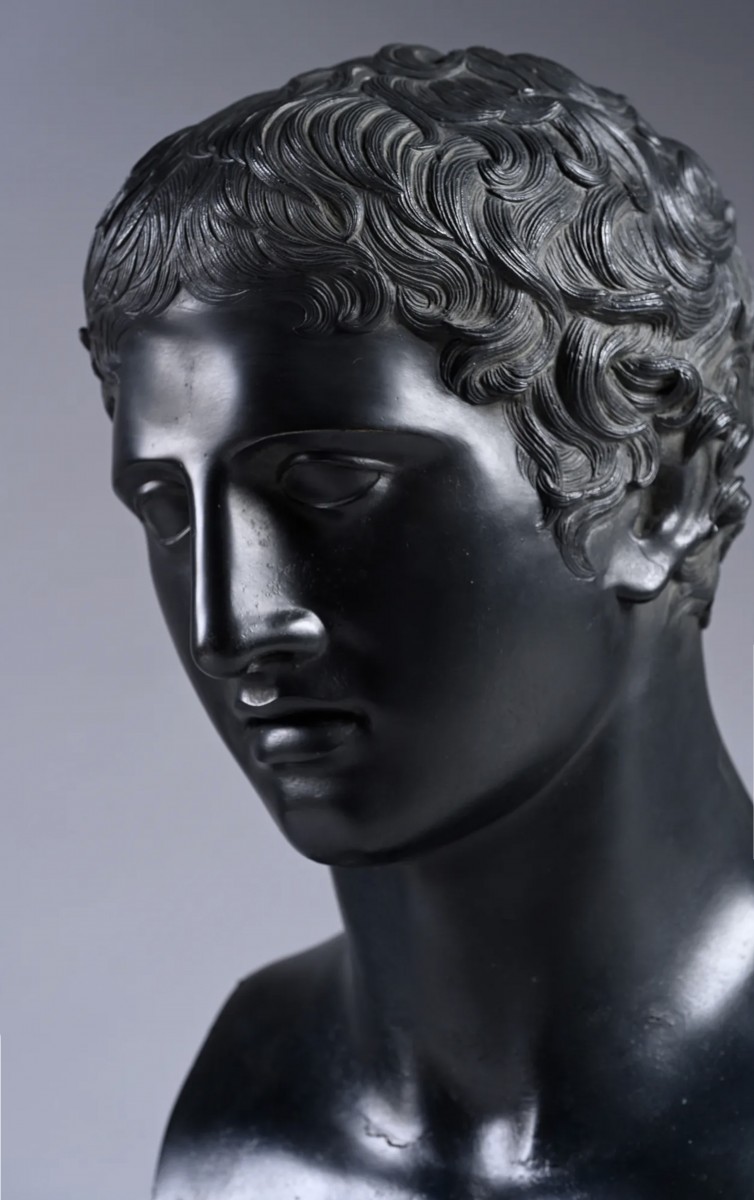
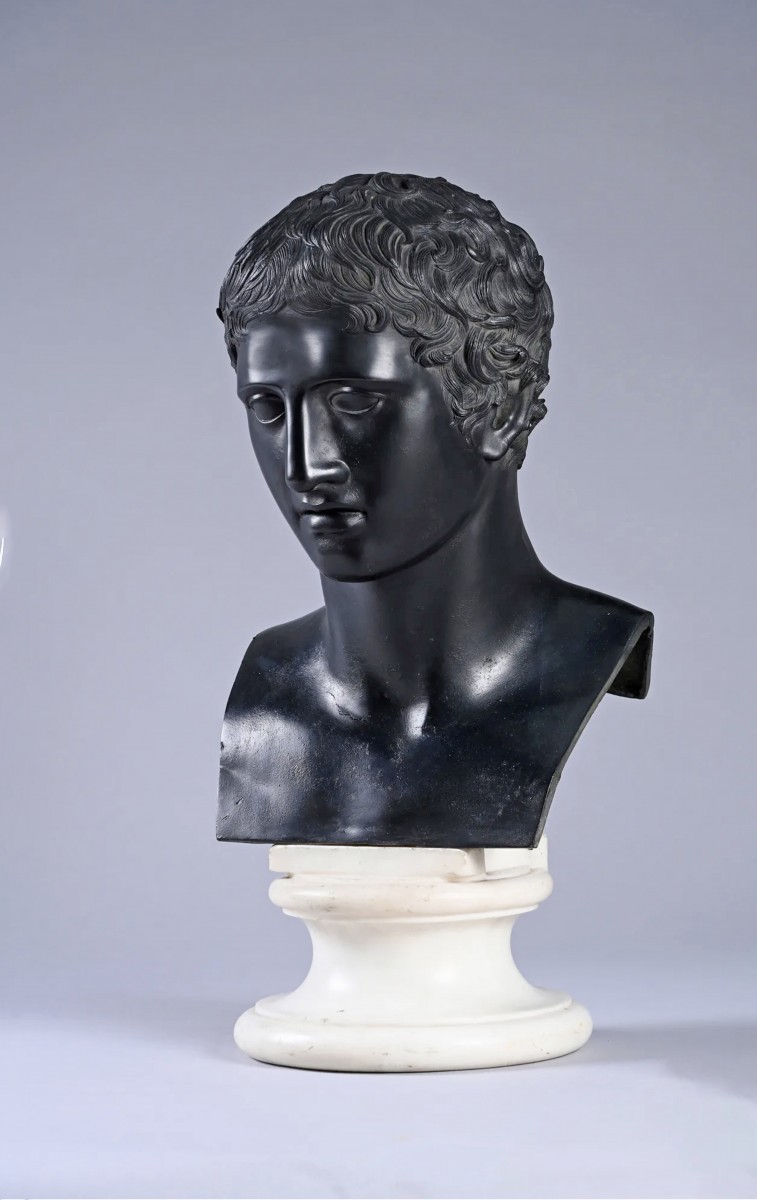
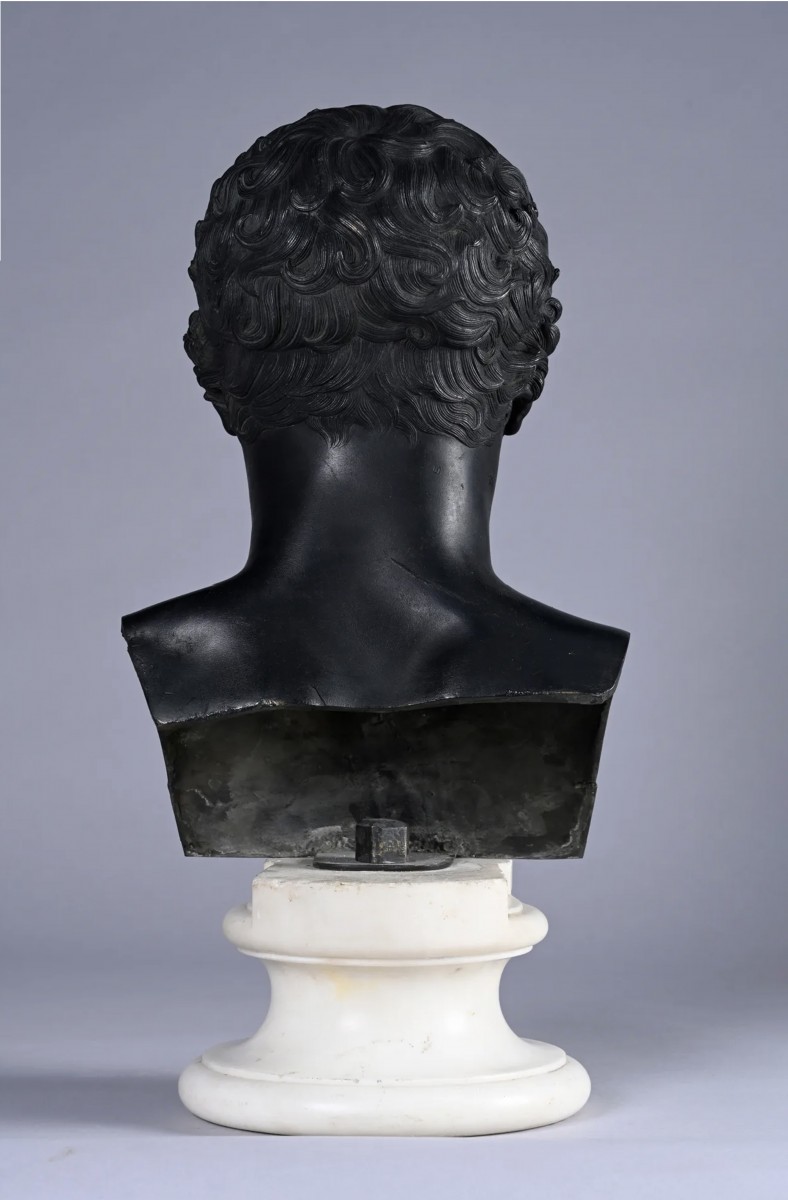

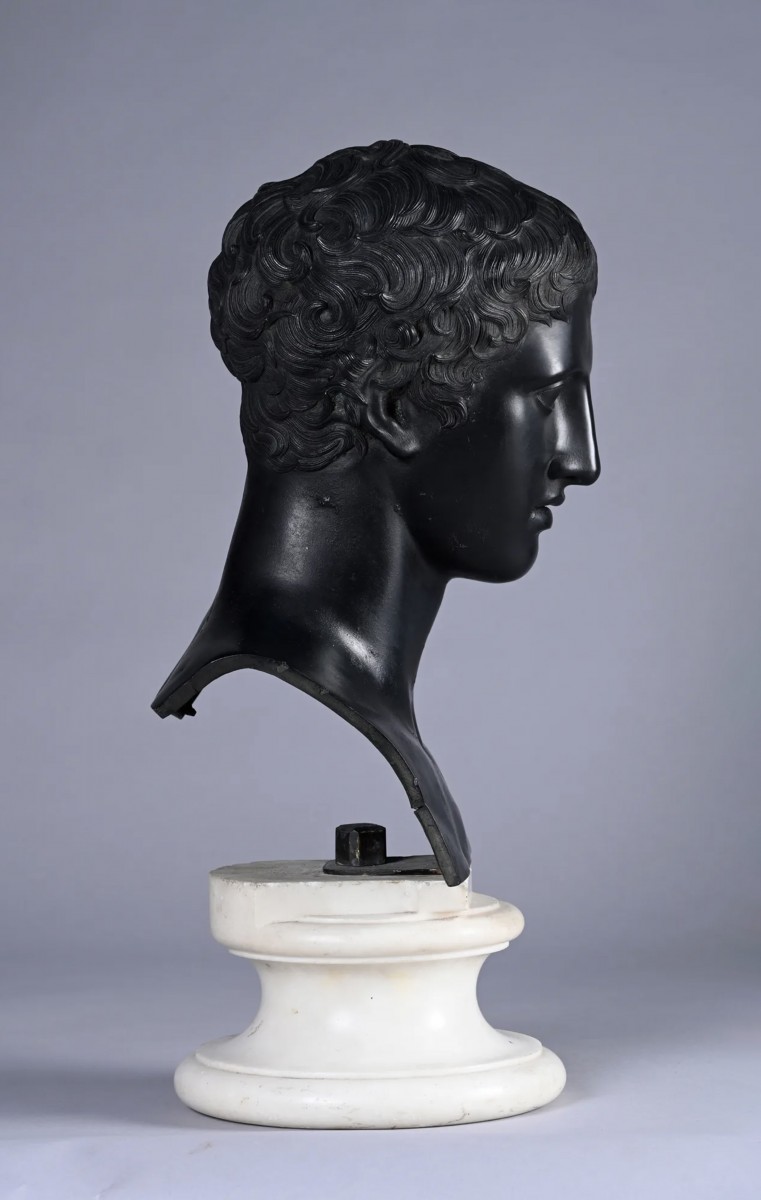
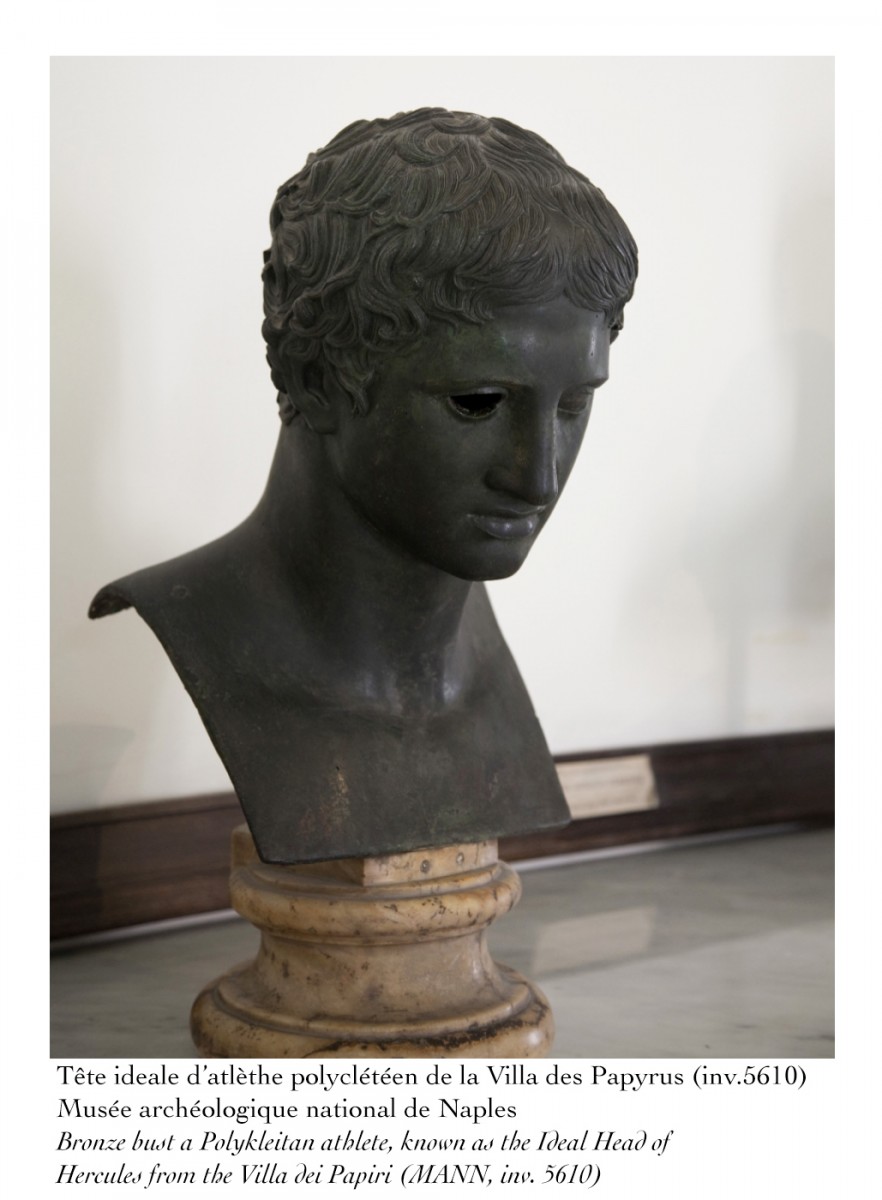
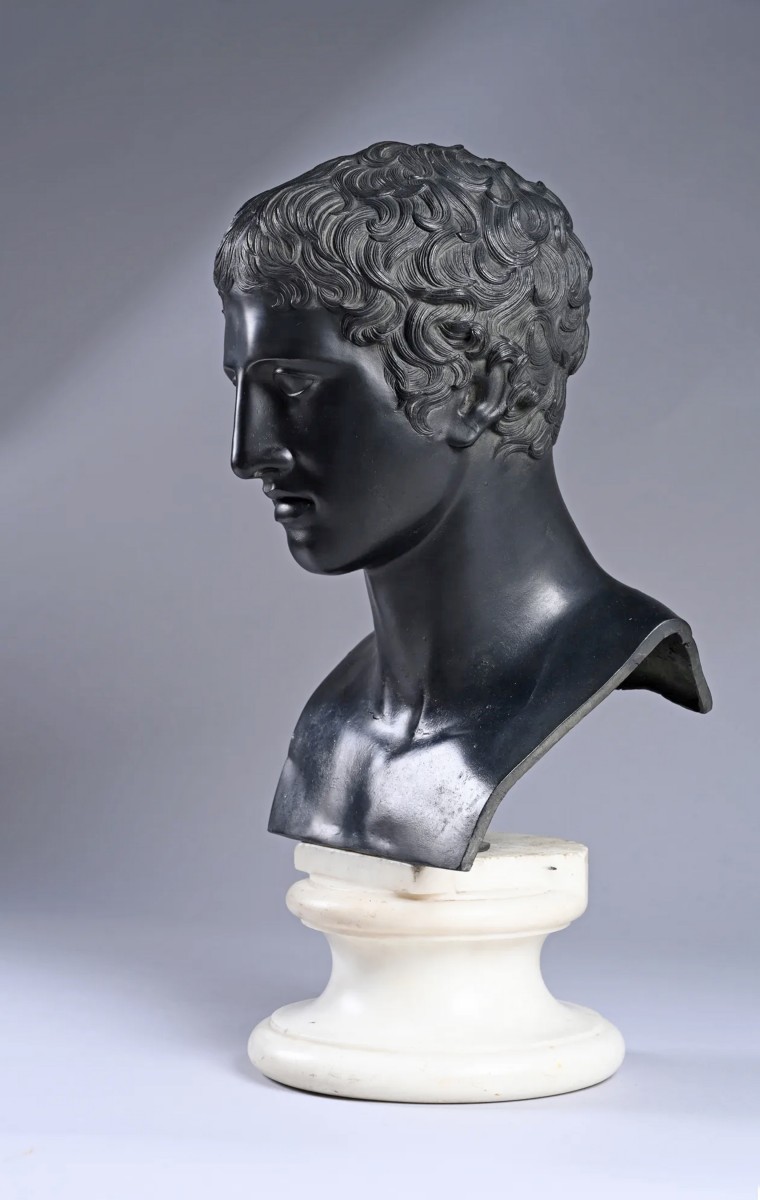
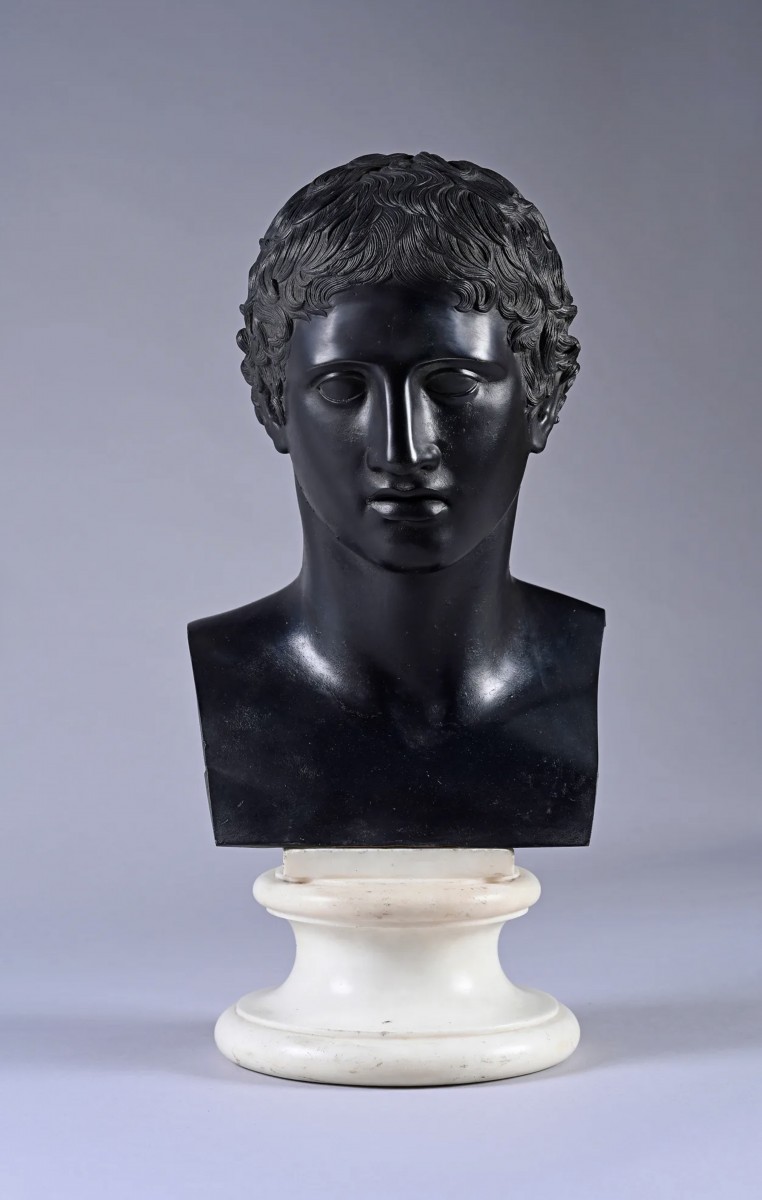
A bronze bust a Polykleitan athlete, known as the Ideal Head of Hercules from the Villa dei Papiri (MANN, inv. 5610)
Black-patinated bronze, white marble pedestal
Naples, late 19th century
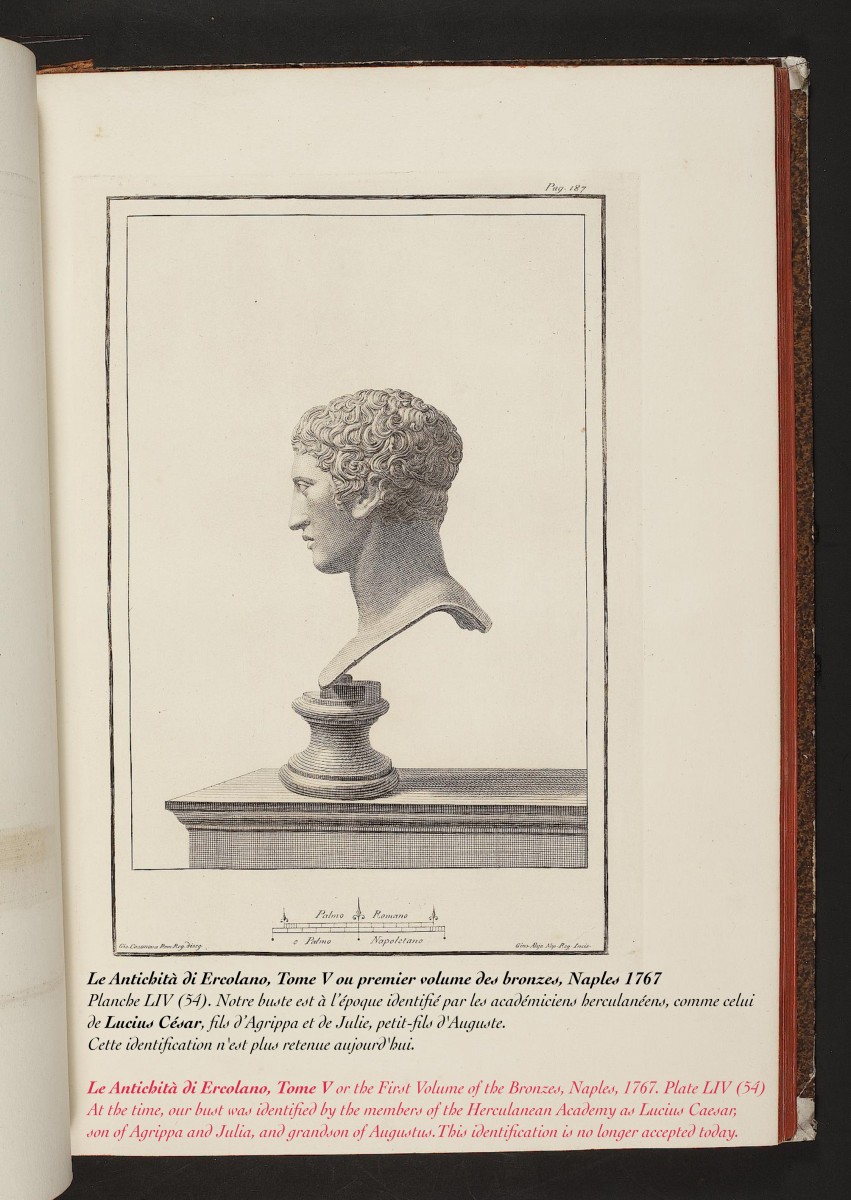
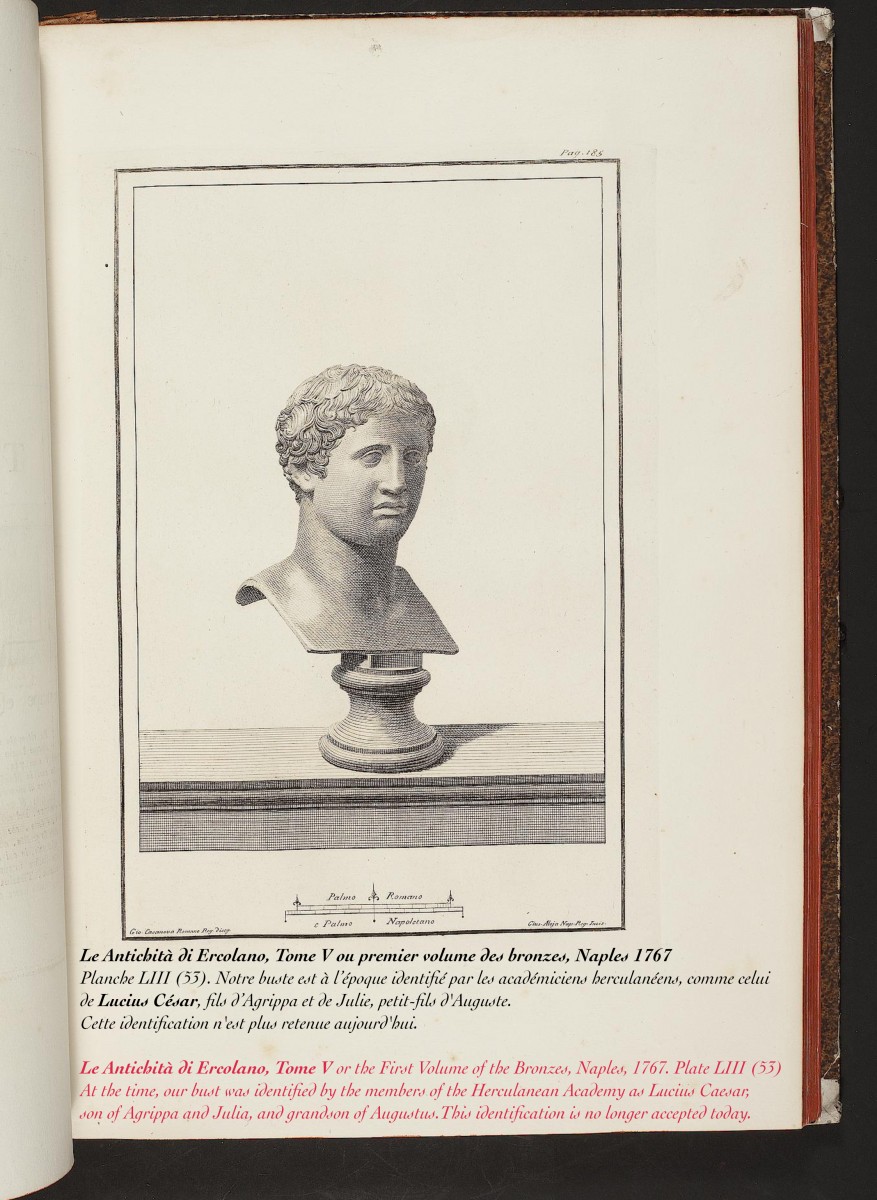
The original bronze head was discovered in May 1752 at Herculaneum during the excavations of the Villa dei Papiri and is now preserved in the National Archaeological Museum of Naples (MANN, inv. 5610). Formerly interpreted as a portrait of Lucius Cesar grandson of Augustus, it is today generally known as the Ideal Head, or Head of young Hercules.
Buried beneath more than twenty metres of volcanic deposits, the ancient city of Herculaneum began to be rediscovered in the early eighteenth century. In 1709 Prince d'Elbeuf initiated private excavations on his property at Granatello. In 1738, under the reign of Charles VII of Bourbon, the Spanish military engineer Roque Joaquín de Alcubierre (1702–1780) undertook systematic excavations on behalf of the Crown. The discovery, in the same year, of an inscription identifying the ancient theatre allowed the site to be officially recognized as ancient Herculaneum.
From the 1750s onwards, excavations at the Villa dei Papiri uncovered an exceptional group of bronze and marble sculptures, forming one of the most important collections of ancient statuary ever discovered in a Roman residence. Primarily concerned with recovering works destined for the royal collections, eighteenth-century excavations often paid little attention to archaeological context. Bronze heads were detached from their masonry supports, while any painted inscriptions or identifying marks on those supports were generally left behind. This loss of information explains why the identity of many portraits discovered at the Villa dei Papiri remains unknown today.
The bronzes were sent to the Royal Foundry at Portici, where they were restored under the supervision of the Roman sculptor Giuseppe Canart (1713–1791). Restoration involved reassembling fragments, reconstructing missing elements, and refinishing surfaces. Bronzes from Herculaneum generally received a dark brown to black patina, whereas those from Pompeii were presented with a green patina. During reassembly, several heads were given a slight forward inclination, in accordance with eighteenth-century taste and the conventions then employed for modern portrait busts.
This cast reproduces the so-called Head of Hercules from the Villa dei Papiri in the form in which it was restored and subsequently displayed in the Museo Ercolanense, established from 1758 within the Royal Palace of Portici, the Bourbon dynasty's summer residence. The pedestal mounting, the inclination of the face and the dark patina all reflect restoration choices made during the Bourbon period, and bear witness to an interpretation of Antiquity developed during the eighteenth century, which continued to be transmitted and disseminated among collectors and connoisseurs throughout the nineteenth century.
Bibliography: The Presentation of Bronzes from Herculaneum and Pompeii by Carol C. Mattusch, in The restauration of ancient bronzes, Naples and beyond. The J.Paul Getty Museum, Los Angeles, 2013.
Delevery information :
Please contact us upon this matter. For delivery abroad, we will ask door to door transportation to be quoted by independant shipping companies,