Offered by Galerie Eric Beaumont
REQUEST INFORMATION

Flemish and French paintings from the 17th, 18th, 19th and 20th centuries
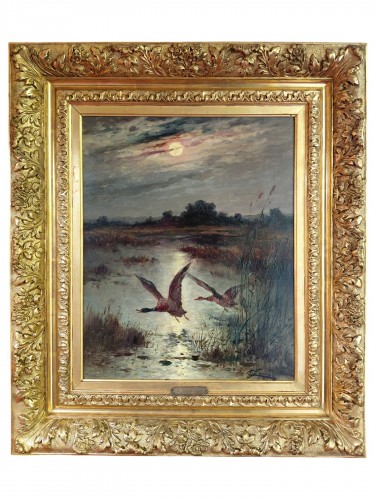
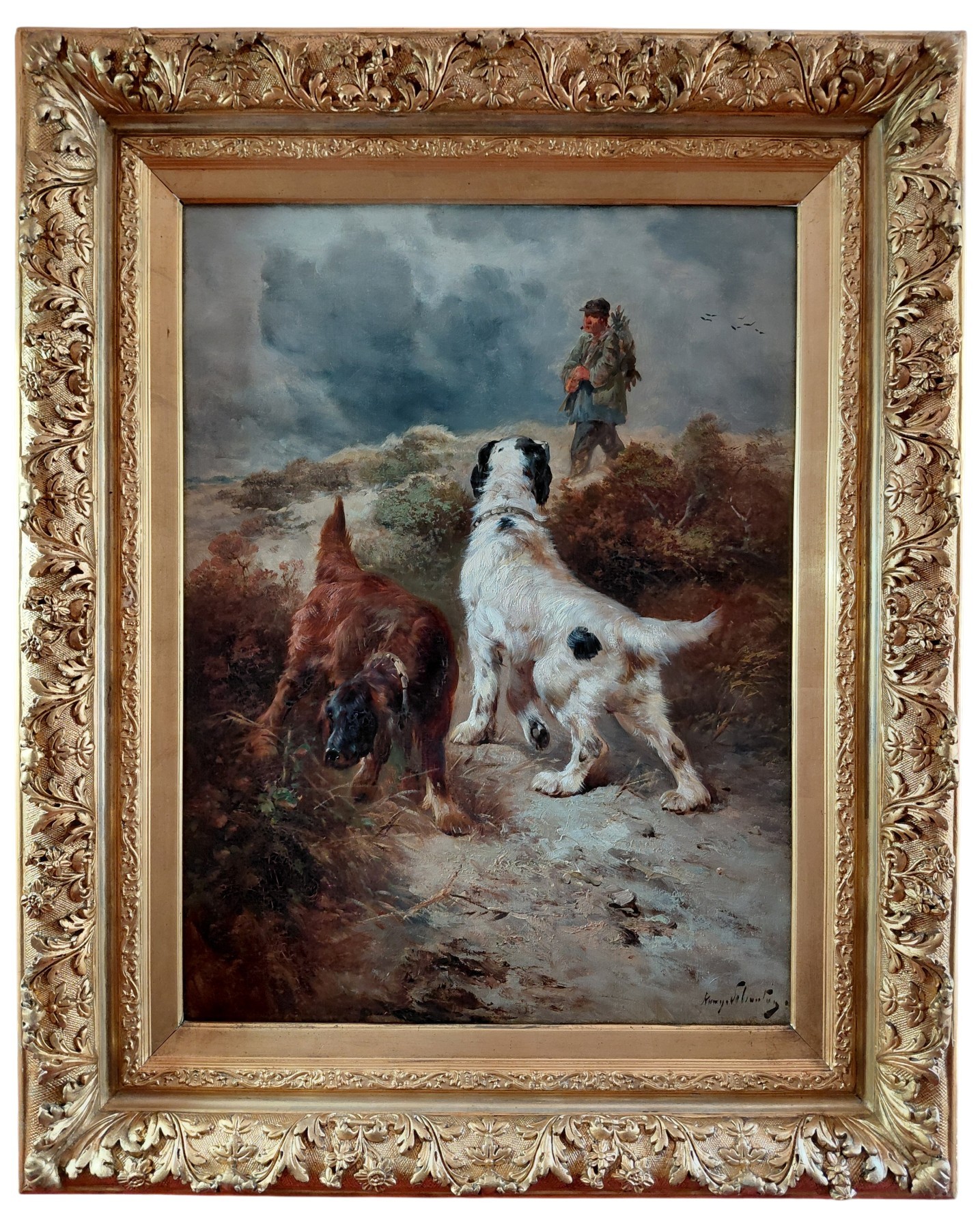
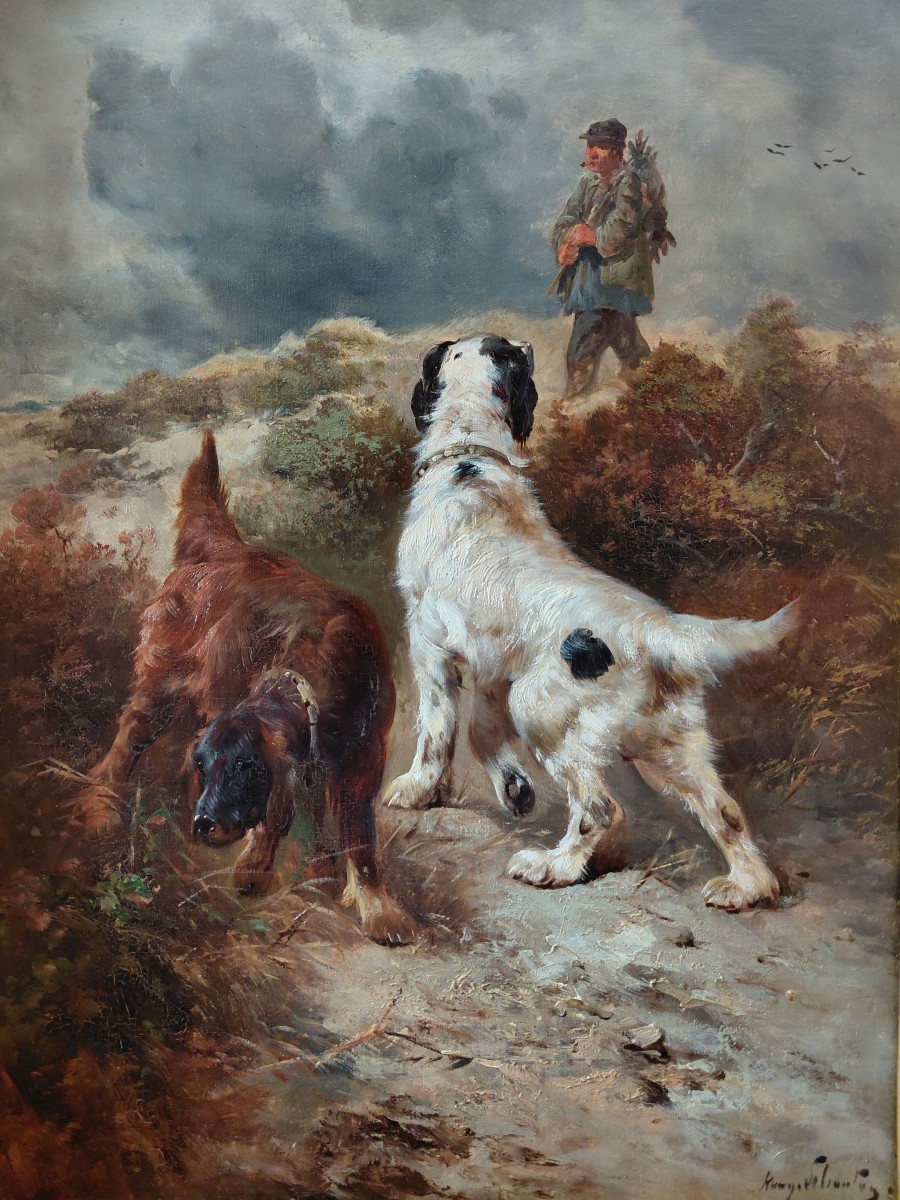
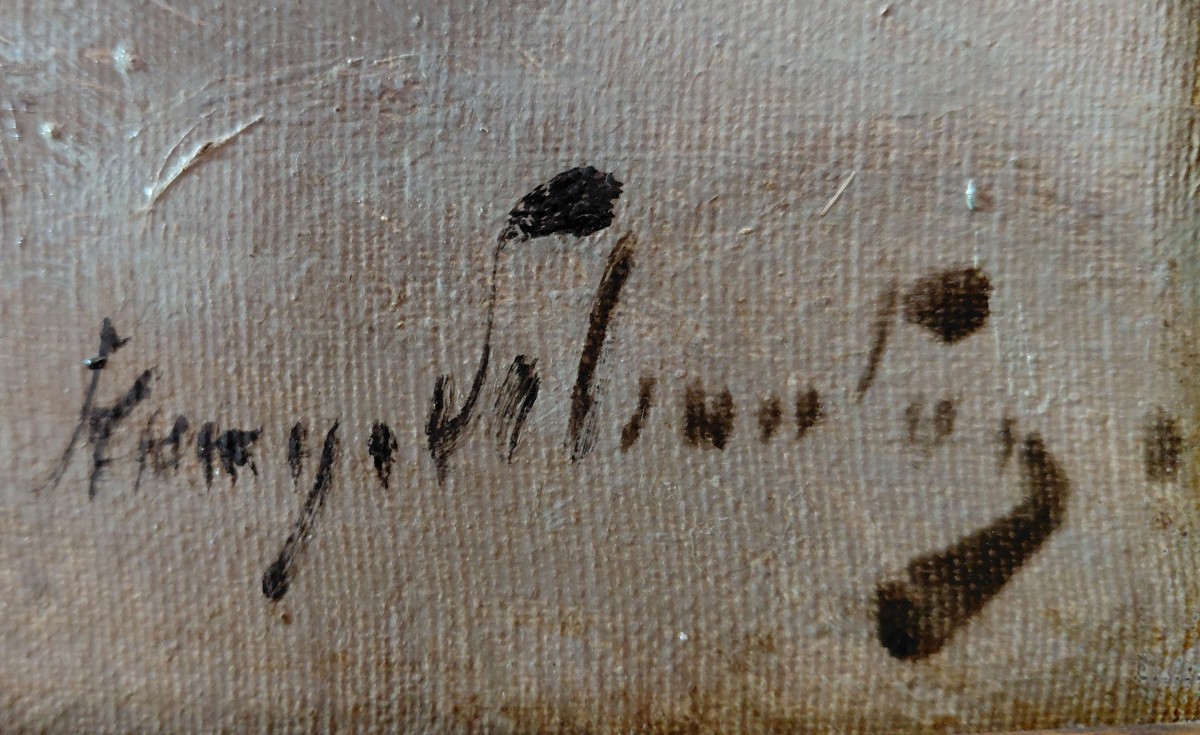
Henry Schouten (signed lower right)
Born in 1860 in Paris, died in 1927 in Ghent.
"Hunting Dogs"
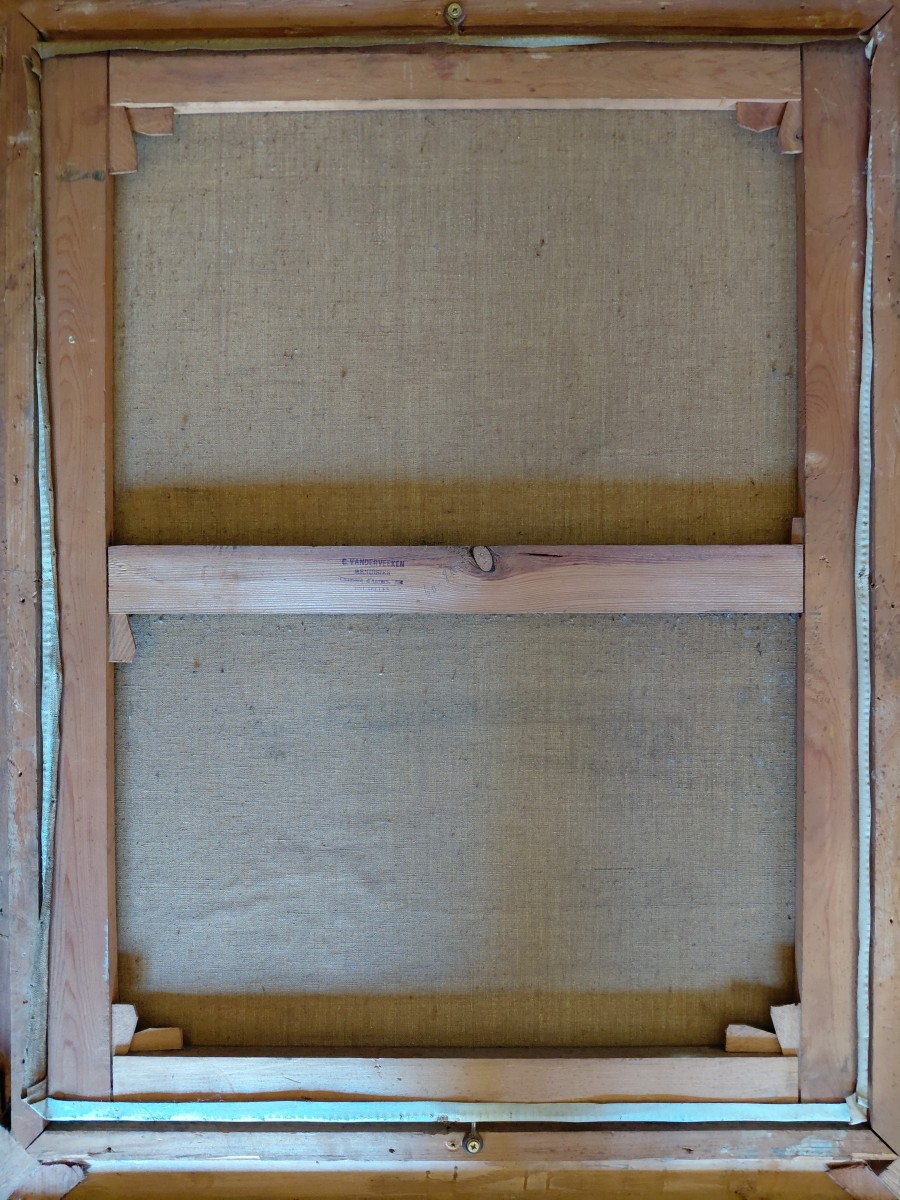
Oil on canvas. 79 cm x 58 cm
Original frame in wood and gilt stucco, 19th century
Biography:
Henry Schouten, born in Paris (8th arrondissement) on May 14, 1860, and died in Belgium in 1927, was a Belgian painter known for his landscapes, animal paintings, still lifes, and genre scenes.
A prolific painter, he exhibited at several Belgian triennial salons, at the L'Union des Arts artistic circle, and at the Salon des Artistes Français in Paris in 1882. The Charlier Museum in Saint-Josse-ten-Noode holds one of his paintings.
Family:
Henri (Henri Victor Pierre) Schouten, born in Paris (8th arrondissement) on May 14, 1860, was the son of Victor Schouten (1831), a painter born in Batavia, and Éléonore Laurent (1837-1864), who were married in Paris, formerly the 1st arrondissement, on November 9, 1858, and resided in the Faubourg Saint-Honoré. His half-brother Paul Schouten (1868-1922) was also a painter.
Henri Schouten married Marie Joséphine Hella (born in Rochefort on April 12, 1876) in Saint-Josse-ten-Noode on November 11, 1897. Their marriage allowed for the legal recognition of their two children: Marie Victor Pierre Henri Schouten (born in Saint-Josse-ten-Noode on December 6, 1894) and Éléonore Mathilde Olga Schouten (born in Saint-Josse-ten-Noode on December 28, 1896). The painter Charles Dehoy was one of their witnesses.
Education:
Born in Paris, Henri Schouten left France around 1866 to live with his father and stepmother in Belgium. The Schouten family first settled briefly in Mechelen, then in Brussels. From 1876 to 1881, Henri Schouten studied at the Royal Academy of Fine Arts in Brussels.
Career:
From 1881 onward, Henri Schouten exhibited at the L'Union des Arts art circle and at the Brussels Salon. His participation in the triennial exhibitions quickly became less frequent. In 1882, he exhibited at the Salon des Artistes Français in Paris. He specialized as an animal painter and easily sold his works to a public of art lovers eager to acquire his canvases.
Henri Schouten died in 1927 in Brussels or Ghent, according to conflicting sources. In 1943, a retrospective exhibition of his works was held in The Hague.
Characteristics
His pictorial range encompassed landscapes and primarily depictions of animals: cattle, sheep, horses, poultry, dogs, and farm animals. He also painted pastoral scenes, sometimes in collaboration with his brother Paul, who painted the figures, and still lifes of flowers and fruit.
In 1881, at the Union of Arts exhibition, the daily newspaper L'Écho du Parlement published this review: “A group of young painters and sculptors, mostly students or former students of the Academy, gathered under the name of Union of Arts, have just opened an exhibition of their works on Petite rue de l'Écuyer. […] Among the thirty or so artists, two immediately stand out: Mr. Schouten and Frantz Charlet. Mr. Schouten is no longer a student; he is an accomplished artist with a robust temperament. He is exhibiting two large animal heads, which are characterized by their precise drawing, true-to-life color, and bold execution. The very different characteristics of the two animals are well-defined. The bull's eye is lifelike, and the tip of the cow's muzzle is rendered with a rich, moist texture. It is an excellent work, which establishes Mr. Schouten's place among our finest animal artists.” "At least here's a painter who's also a draftsman."