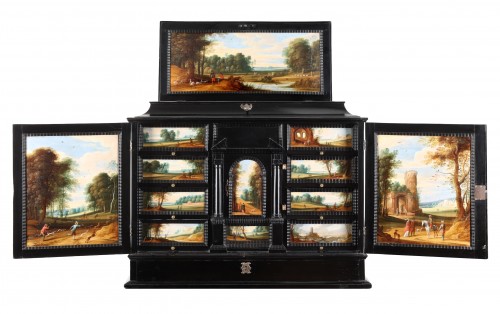
Offered by Jan Muller
REQUEST INFORMATION
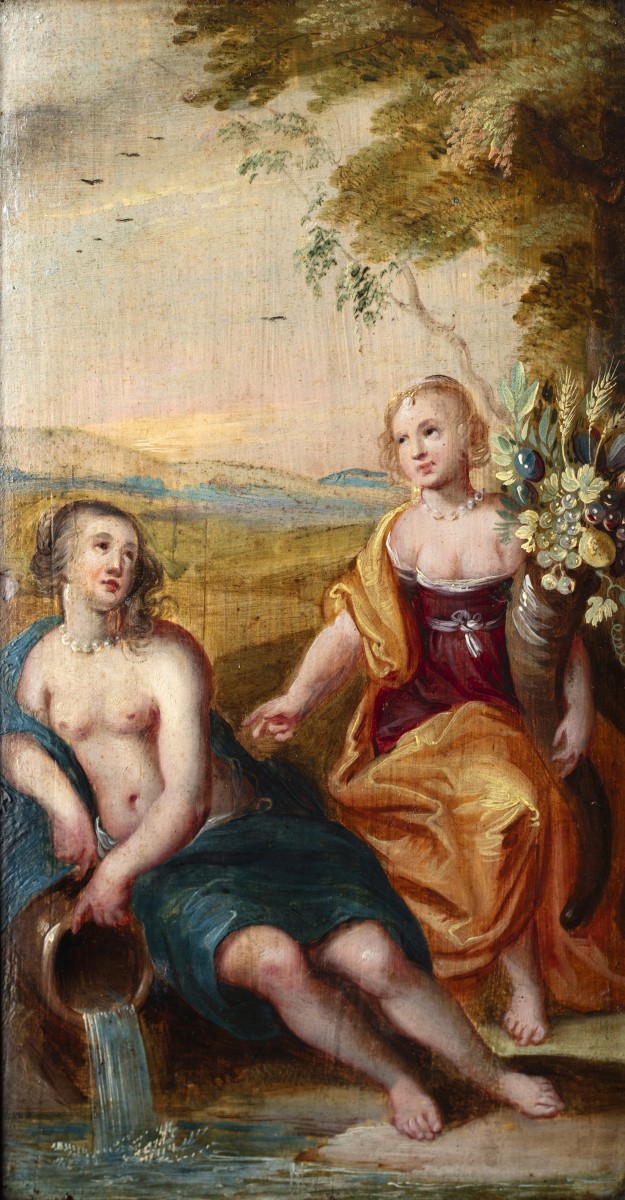

ANTWERP SCHOOL
17th century
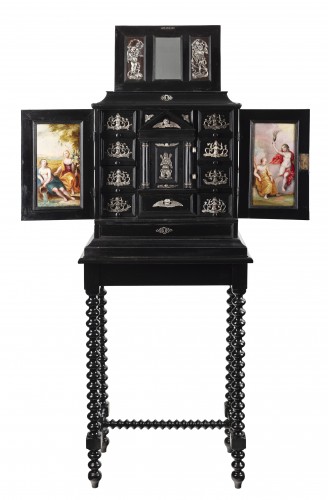
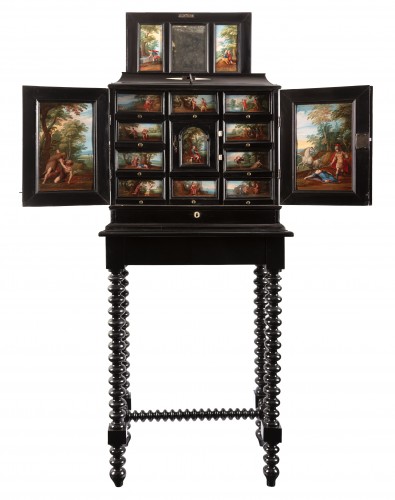
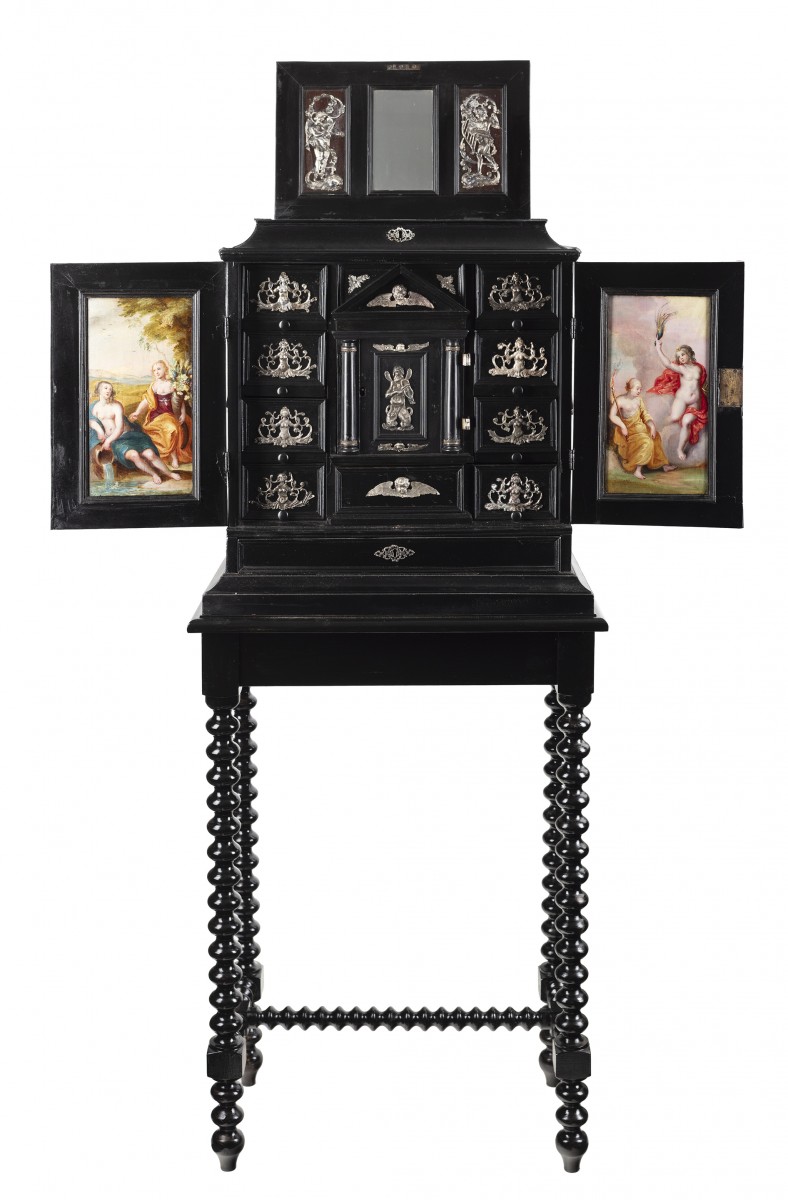
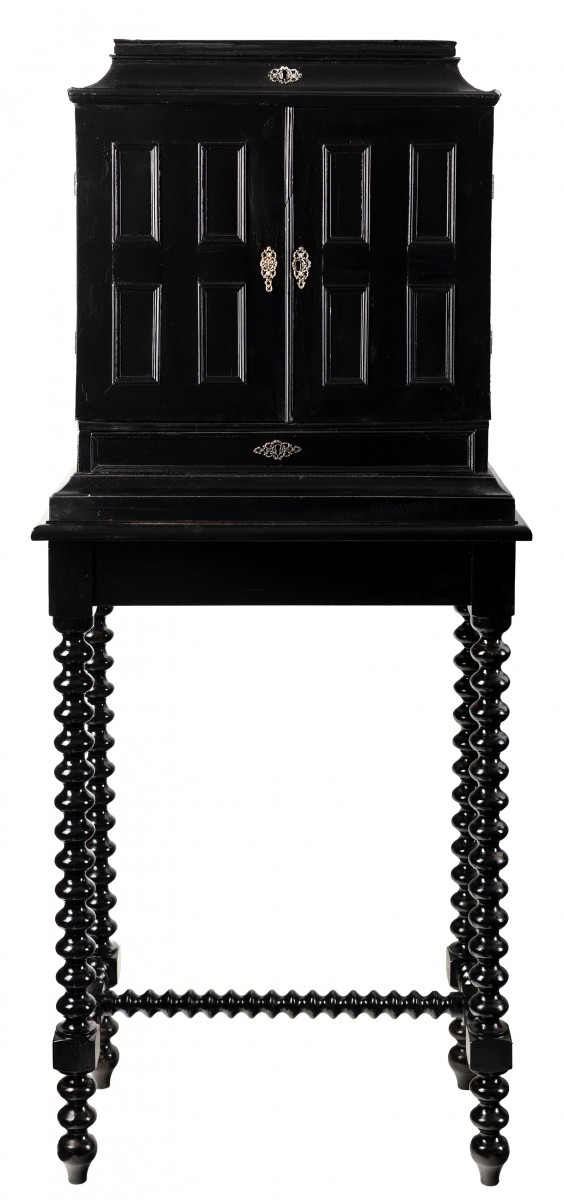
“Cabinet with silverwork and two painted doors”
Dimensions: 33 x 55 x 55 cm, 134 with stand, 80 cm width with opened doors
THE ARTIST
The term Flemish School refers to the painters and sculptors active in the Southern Netherlands between the 15th and 17th centuries.
In the 17th century, the Antwerp School became a leading center for the production of luxury cabinets, known for their craftsmanship, elaborate decoration, and artistic collaboration. Antwerp’s workshops produced and exported fine cabinets of curiosities (or kunstkasten), used to store valuable items such as jewels, coins, shells, textiles and documents. These cabinets often included hidden compartments and secret drawers.
The 17th century, the golden age of Holland and the Low Countries, saw the development of the fine and decorative arts. Ports such as Ghent, Antwerp and Bruges grew in importance and became major transit zones. Trade in works of art, handicrafts and imported luxury goods became very important. As one of Europe’s most vibrant cultural and commercial centers, Antwerp played a key role. Cabinetmaking reflected this atmosphere of international exchange and innovation. From around 1625, Antwerp cabinetmakers began experimenting with new forms and materials, creating furniture for wealthy merchants, nobles, and collectors both locally and abroad.
The so-called multimedia art cabinet or kunstkast became one of Antwerp’s most prestigious export products, turning the city into the leading centre for cabinet production in Europe. These complex pieces combined the skills of painters, engravers, cabinetmakers, locksmiths, glassworkers, embroiderers and silversmiths, turning furniture into miniature works of art.
In addition, the kunstkast’s incorporation of pictorial programs that quoted from popular paintings, prints and book illustrations not only advertised its own status as an innovative product, but also contributed to brand recognition of Netherlandish artists and imagery throughout the world. The integration of miniature oil paintings within the cabinet’s façade, often inspired by the works of Peter Paul Rubens and Frans Francken II, was a distinctive feature unique to Antwerp production. The materials, media and technical expertise displayed in kunstkasten showcased the diverse local community of artists and artisans that comprised Antwerp’s Guild of St. Luke.
These cabinets were not only luxury objects but also symbols of knowledge, curiosity, and artistic excellence. They reflected the spirit of collaboration within Antwerp’s Guild of Saint Luke, where artists and artisans worked together to create richly decorated masterpieces admired throughout Europe.
THE ARTWORK
A cabinet of curiosities, also known as a kunstkast, is a piece of furniture or a dedicated space designed to house a carefully assembled collection of art objects, natural specimens, and rare curiosities. Particularly popular in the sixteenth, seventeenth, and eighteenth centuries, these cabinets reflected the growing European fascination with the wider world following increased contact with distant and tropical regions after 1500.
In the seventeenth century, the kunstkast functioned as both a portable art gallery and a laboratory for optical experimentation and entertainment. This dual role made it especially appealing to the city’s large population of liefhebbers—knowledgeable art lovers and collectors. Unlike collections in some other countries, such cabinets in the Southern Netherlands were primarily owned by wealthy private individuals and served as prestigious showpieces within domestic interiors.
Far from being static objects, seventeenth-century kunstkasten were designed to be experienced dynamically. They could be moved from room to room, opened and closed, and explored from multiple angles. Their contents were revealed gradually, unfolding in several stages from the outer doors to the innermost compartments. This process transformed the cabinet into a multisensory experience, inviting close inspection and sustained engagement.
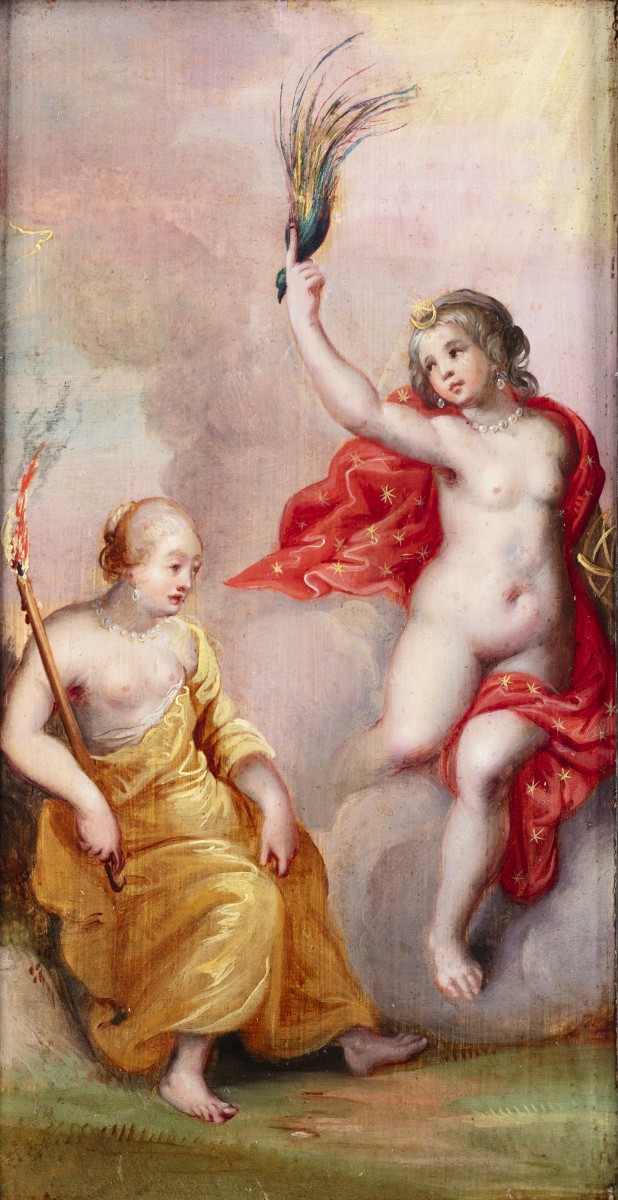
Painted decoration played an essential role in these cabinets. Both the exterior and interior doors were often adorned with scenes drawn from biblical, mythological, or historical narratives, such as episodes from the life of Christ or the Virgin Mary. Specific iconographic programs were frequently employed, and the painted scenes were often interconnected, turning the cabinet into a coherent Gesamtkunstwerk or total work of art. The combination of multiple media and pictorial idioms would have appealed strongly to collectors, who valued both the connoisseurial challenge and the opportunity to own a miniature, portable collection of artworks.
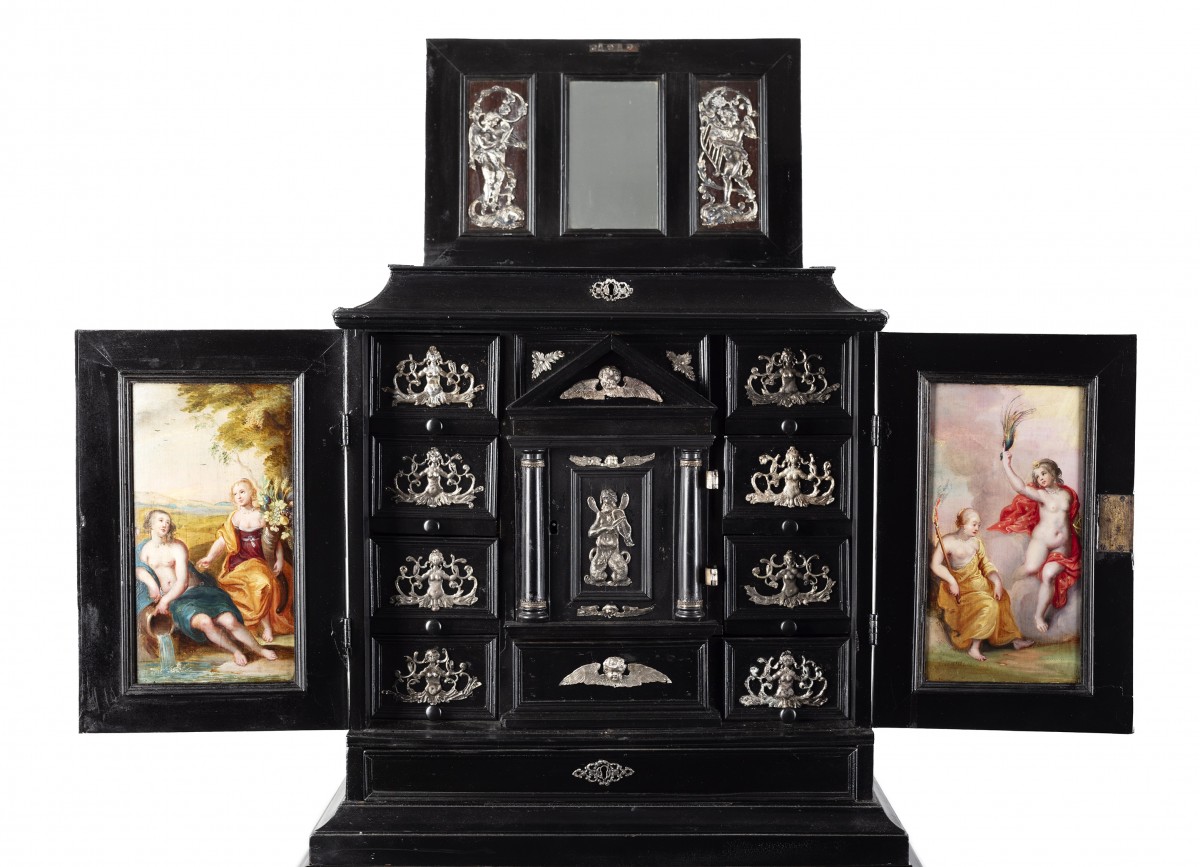
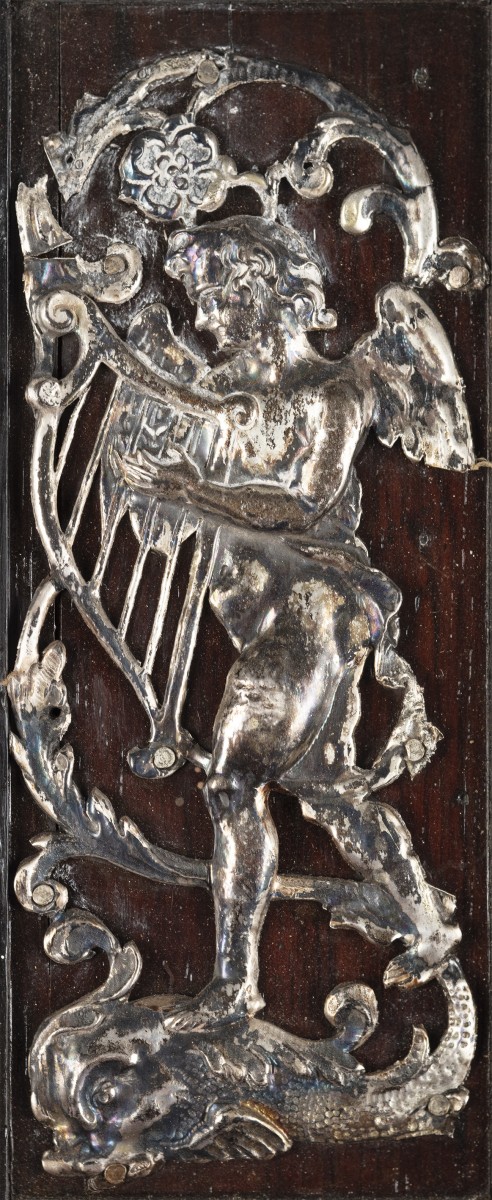
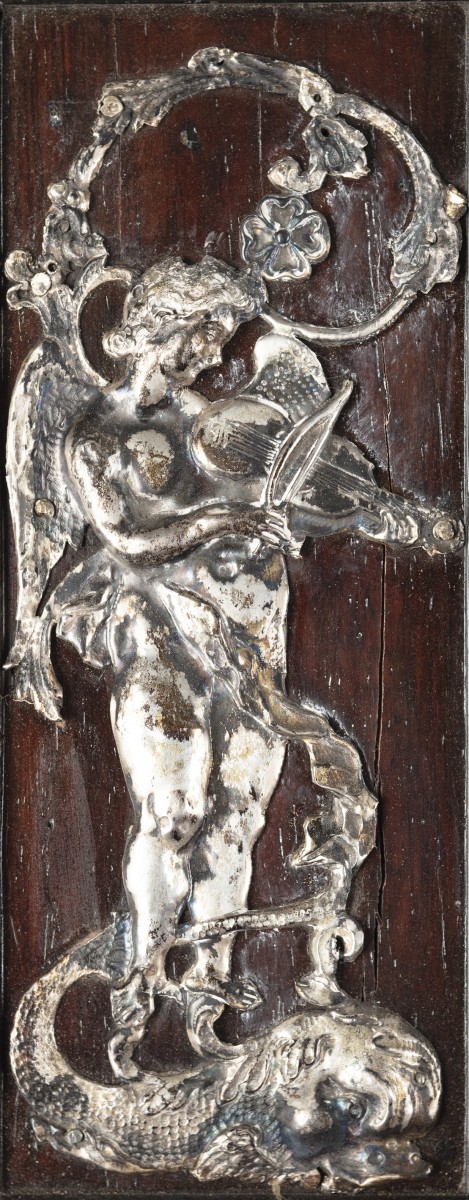
This particular cabinet exemplifies these qualities. The insides of the doors are painted, and at the center of the cabinet stands a temple-front structure that forms the visual and conceptual core of the composition. Eight shelves are decorated with silver figures, adding sculptural richness and material contrast. The top section of the cabinet opens as well and is similarly adorned with silver figures, with a mirror placed at its center, further enhancing the visual complexity and play of reflections.
At the heart of the cabinet is a small door concealing a secret or hidden compartment, underscoring the element of discovery that was integral to the experience of a kunstkast. Through its layered structure, varied materials, and carefully orchestrated visual program, the cabinet embodies the seventeenth-century fascination with knowledge, collecting, and the display of art and curiosities within a single, unified object.
Delevery information :
After reception of payment we can box and ship our items all over the world. Estimates of this service can be provided.