Offered by Stéphane Renard Fine Art
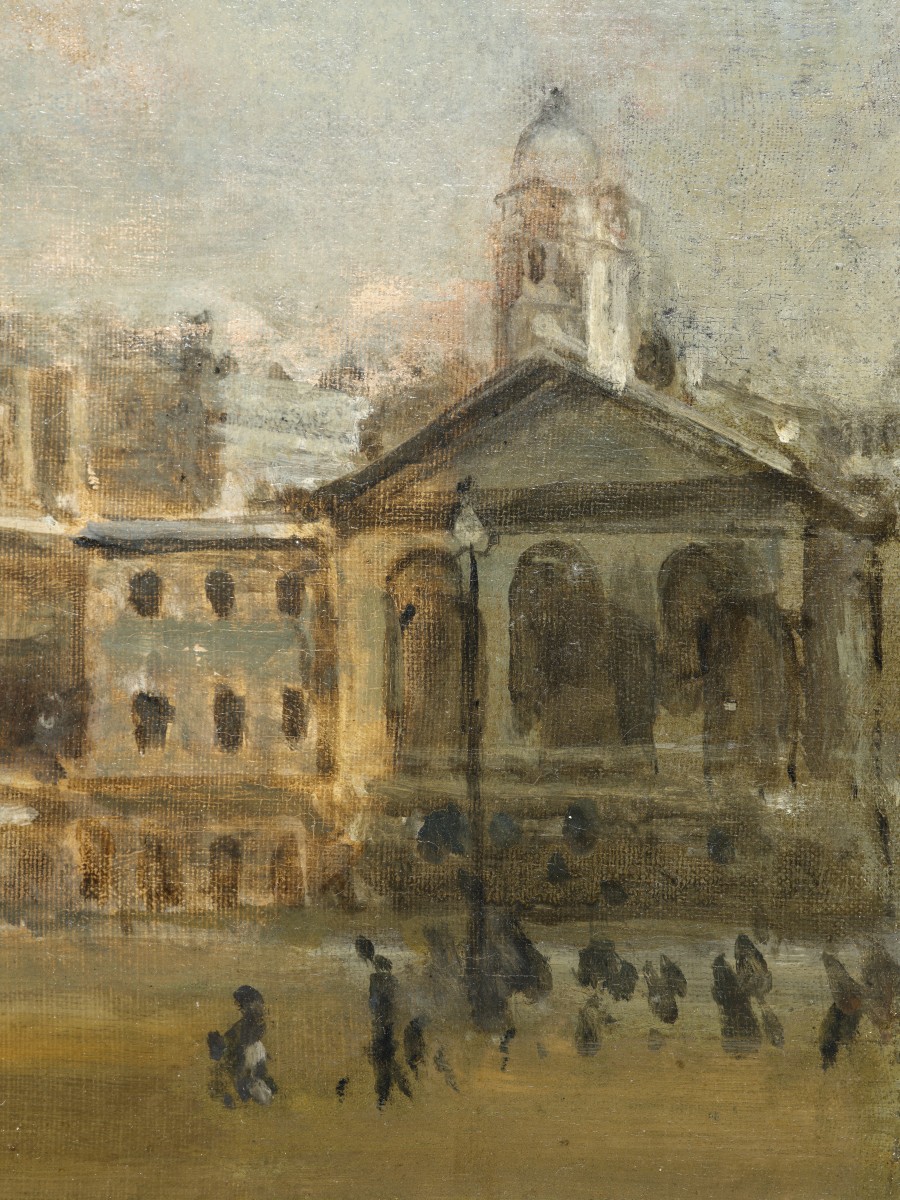

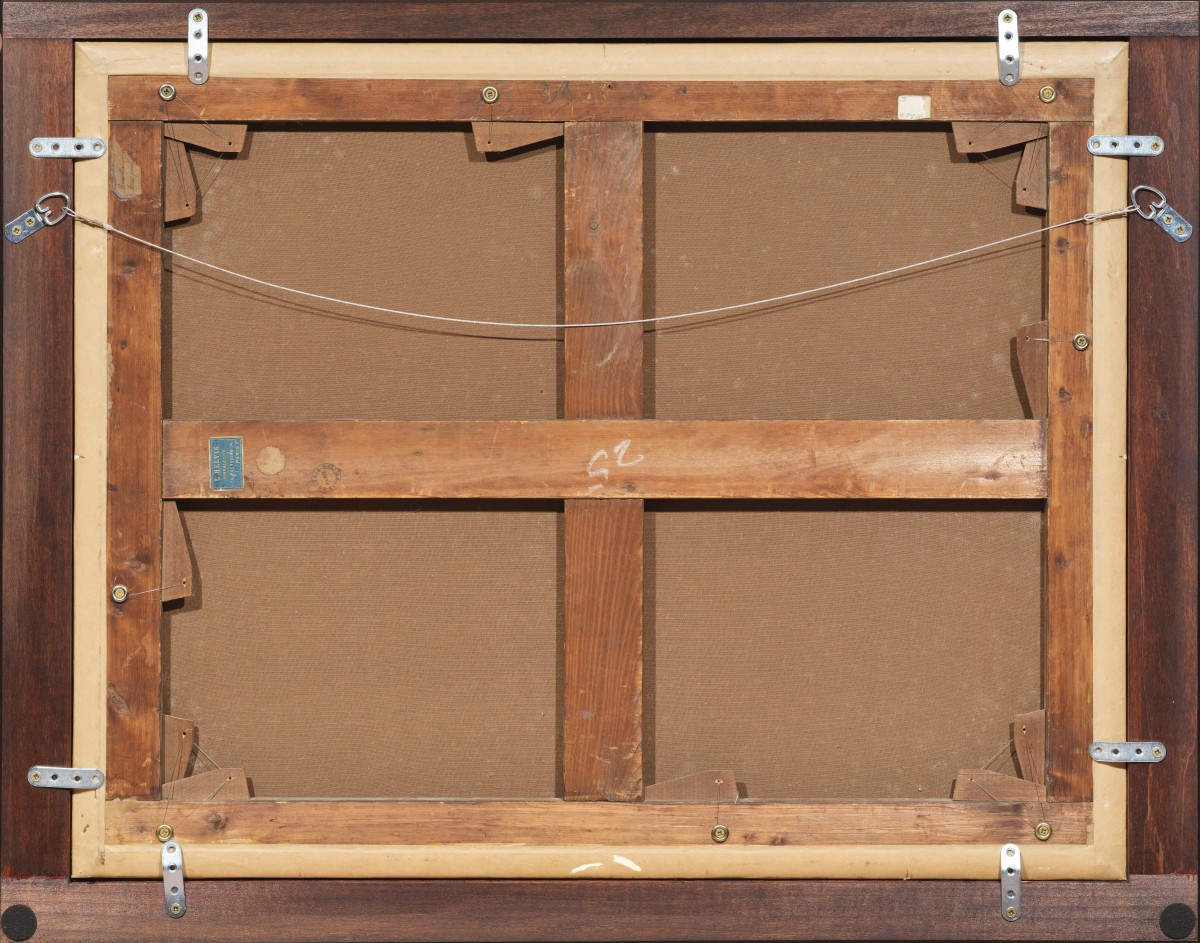
We would like to thank Mrs Jane Roberts for confirming the future inclusion of this painting in the artist’s online catalogue raisonné under number 1552, and for the information provided regarding its provenance.
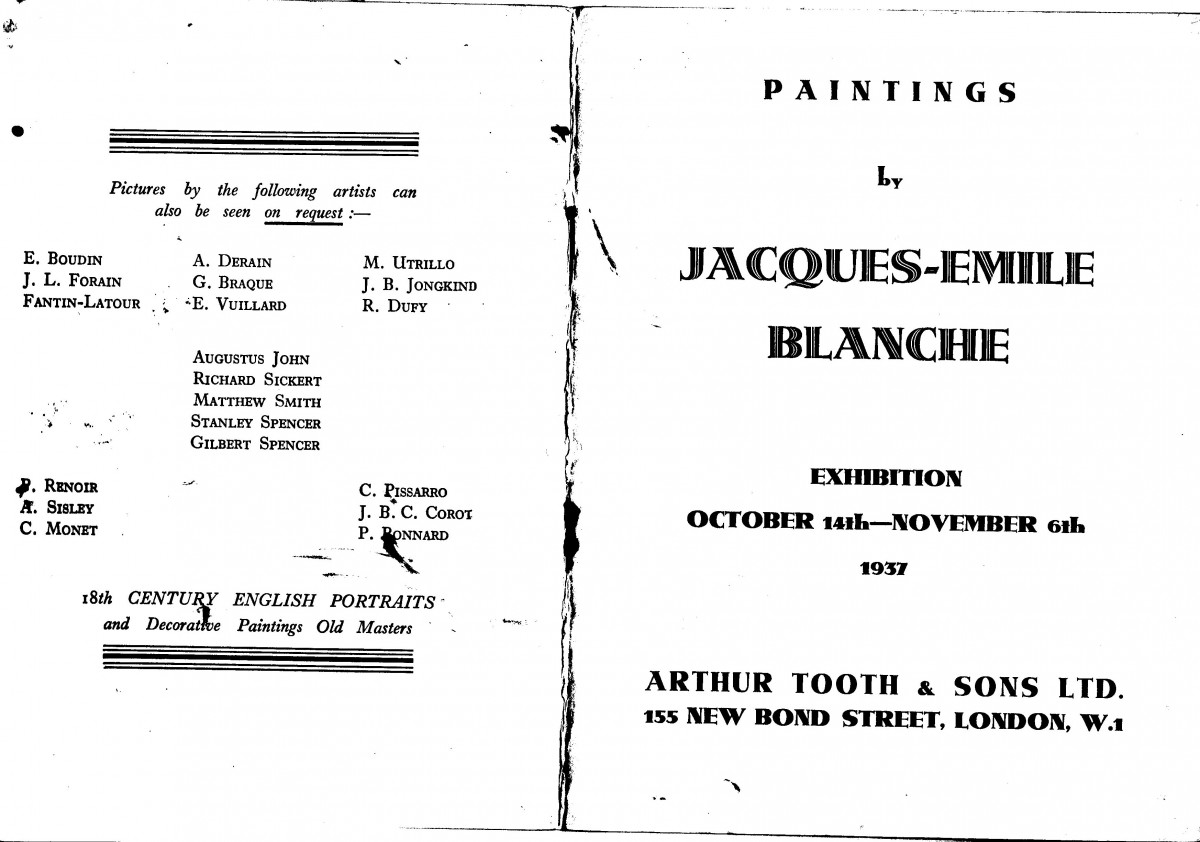
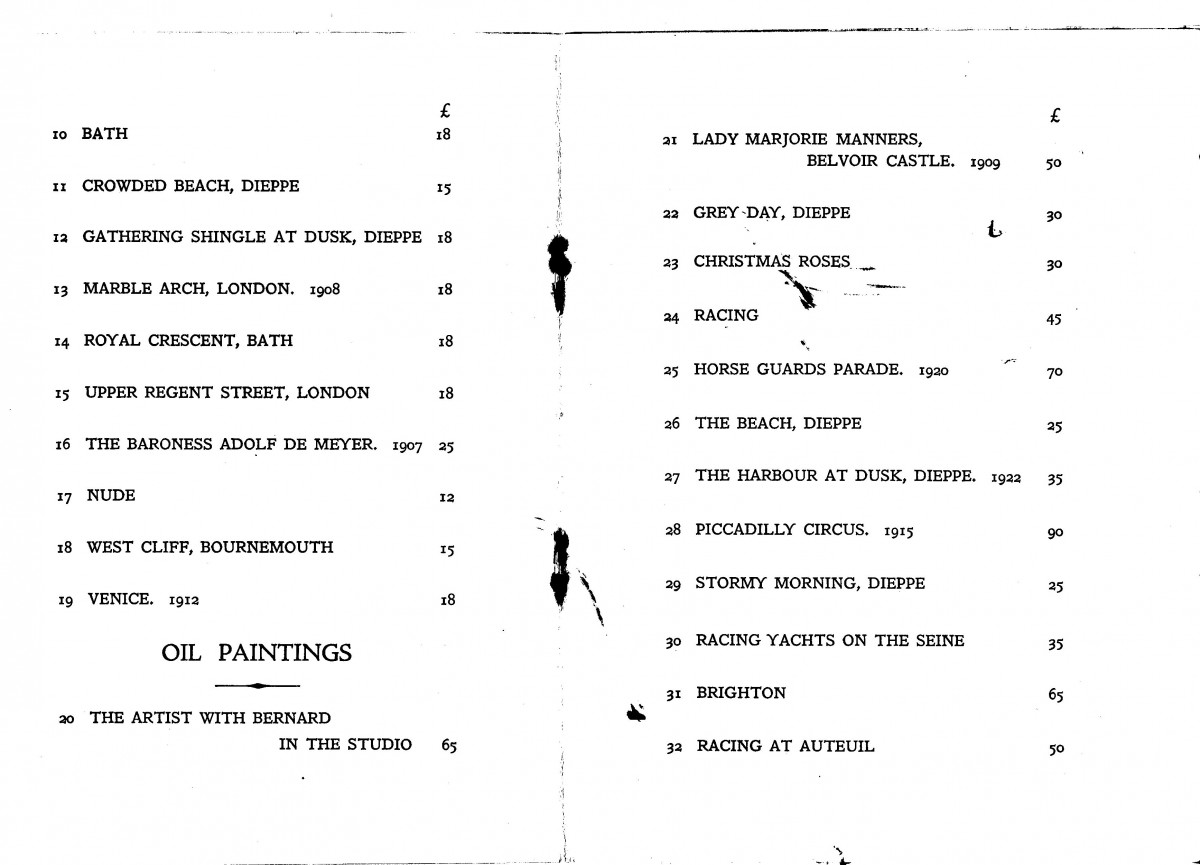
Provenance: Arthur Tooth & Sons (Paintings by J-E Blanche 14 October – 6 November 1937 – catalogue number 20) / Charles de Selincourt (1936–2024)
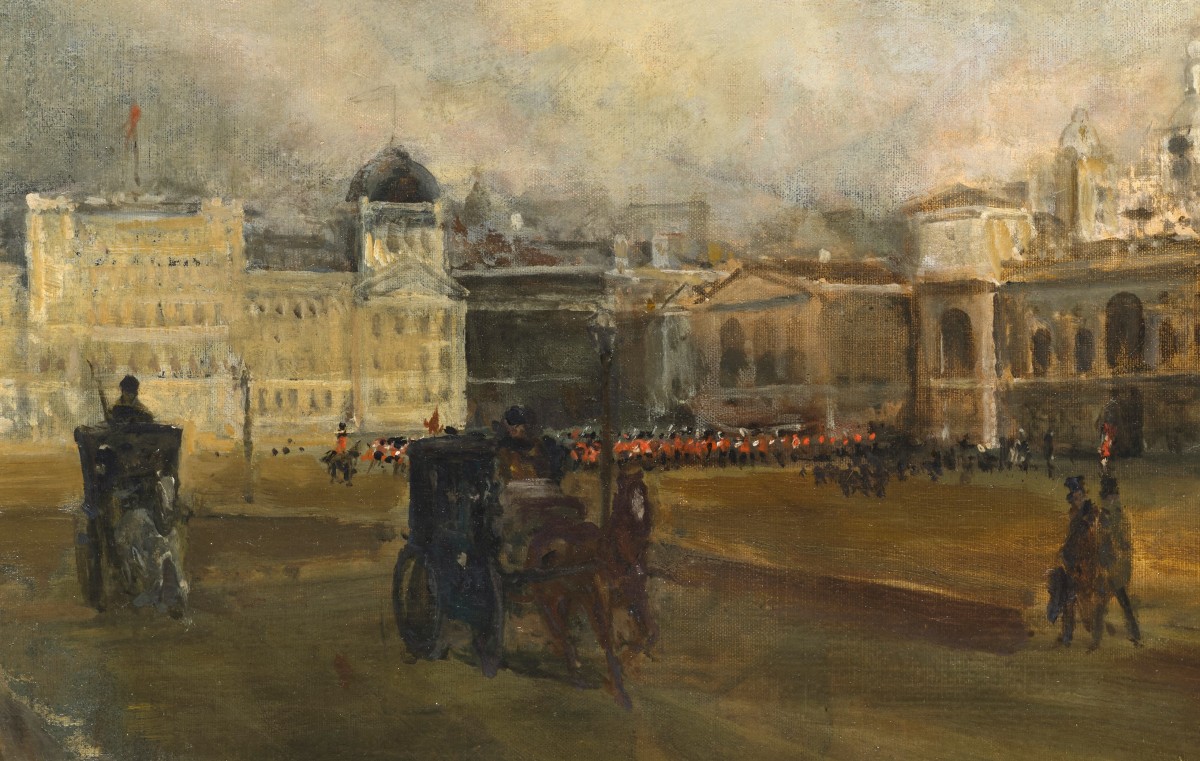
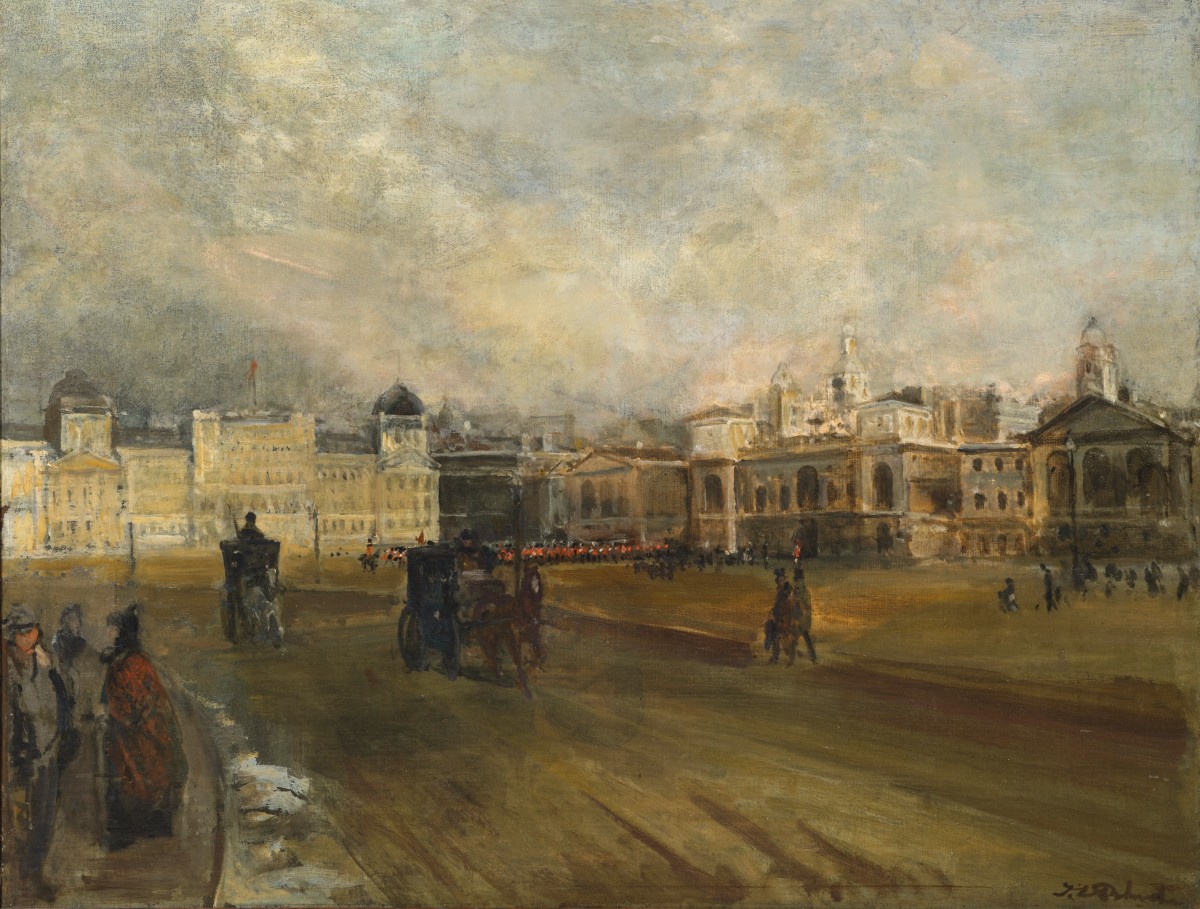
In this painting, created in 1920 (according to the catalogue of the Arthur Tooth & Sons gallery where it was sold in 1937), Jacques-Emile Blanche presents us with an ‘historical’ view of Horse Guards Parade, undoubtedly based on a photograph from the early 20th century, and painted at a time when Blanche, who had had a studio in London between 1906 and 1910, was visiting England less frequently.
This retrospective view also provides the painter with an opportunity to pay a tribute to Walter Sickert (1860–1942), an English painter of Danish and German origins, whom Blanche had met in London during the summer of 1882 and with whom he had become friends, by depicting the passers-by and horse-drawn carriages that enliven this canvas in a style very similar to that of his friend.
1. Jacques Blanche, a privileged life devoted to painting
Jacques-Emile Blanche, who would go by the name Jacques Blanche throughout his life, was born in Paris on 31 January 1861 into a family of psychiatrists: like his grandfather, Esprit Blanche (1796–1852), his father Emile (1820–1893) was also a psychiatrist and welcomed his patients into his home, a large house in Passy (the former residence of the Princess of Lamballe, which has since become the Turkish Embassy), where they stayed, much like in a boarding house. Dr Emile Blanche’s reputation enabled him to treat illustrious patients such as Gérard de Nerval, Theo Van Gogh, Charles Gounod, and Guy de Maupassant, who died there in 1893.
Raised amongst the residents, the young Jacques had a childhood that was, to say the least, unusual, overshadowed by the disappearance of his elder brother Joseph in 1868. He showed a great aptitude for drawing from a very early age, encouraged by his father, who had built up a rich collection of paintings and drawings thanks to his friendly connections with the greatest artists of his time (Delacroix, Corot, Degas …).
In 1872 his father sold his clinic in Passy and the family moved in 1873 to Auteuil, 15 Rue des Fontis (now Rue du Docteur Blanche), into a large house that Émile Blanche had built for himself in the middle of a park. Throughout his life, Jacques would have a separate studio in this garden, which he converted into a house after his parents’ death and which then became his Parisian home.
In 1895, Jacques Blanche married Rose Lemoinne, a childhood friend, a few days before his mother’s death. She remained his wife for forty-four years in a marriage founded on a tender and deep friendship, Jacques Blanche being, moreover, rather drawn to male friendships.
Largely self-taught in his exploration of painting, the young Jacques Blanche decided to become a painter around 1880. He initially benefited from Manet’s guidance between 1879 and the latter’s death in 1883. In 1881 he joined the studio of the painter Gervex (1852–1929). He also became friends with the painters Giovanni Boldini (1842–1931) and Paul-César Helleu (1859–1927), with whom he visited the painters Whistler (1834–1903) and James Tissot (1836–1902) during a stay in England in June 1885. Highly talented, Blanche developed a personal style, fuelled by the influence of his contemporaries, presenting a realistic and Neo-Impressionist vision rooted in the pictorial tradition of the 19th century.
A full-fledged member of a cultured and cosmopolitan elite, and an ardent Anglophile, Blanche became one of the leading portraitists of Parisian artistic and social circles, producing nearly nine hundred portraits, the most famous of which is undoubtedly that of Marcel Proust, painted in 1892 and now held at the Musée d’Orsay.
2. England, Blanche’s second home, and landscape painting
Blanche discovered England at the age of nine, his mother having decided to send him to safety across the Channel during the summer of 1870 as German troops were marching towards Paris. This stay marked the beginning of a long love affair between Blanche and England, which became a true adopted homeland, where he spent several consecutive years between 1900 and 1914, continuing after the war with frequent journeys between Auteuil, Dieppe and Chelsea.
Like other European or American painters who were either very active or based in the United Kingdom, such as Tissot, Alma-Tadema, Whistler, Sargent or Lazlo, Blanche found in England a large and affluent clientele who was particularly enthusiastic about his portraits.
The painting we are presenting is representative of Blanche’s landscape painting, a genre he practised throughout his life but which, unlike his portraits, does not constitute the best-known part of his work. A large proportion of these landscapes depict views of England, mainly of London or Brighton, reflecting his British patrons’ interest in landscapes. These landscapes are highly diverse, and it is rare for the artist to depict the same scene twice: the large view of Horse Guards Parade that we are presenting appears to be the only panoramic depiction of the place he produced, although two other paintings also evoke it: Trooping the Colours (1908) and The Entrance to the Royal Horse Guards (c. 1924).
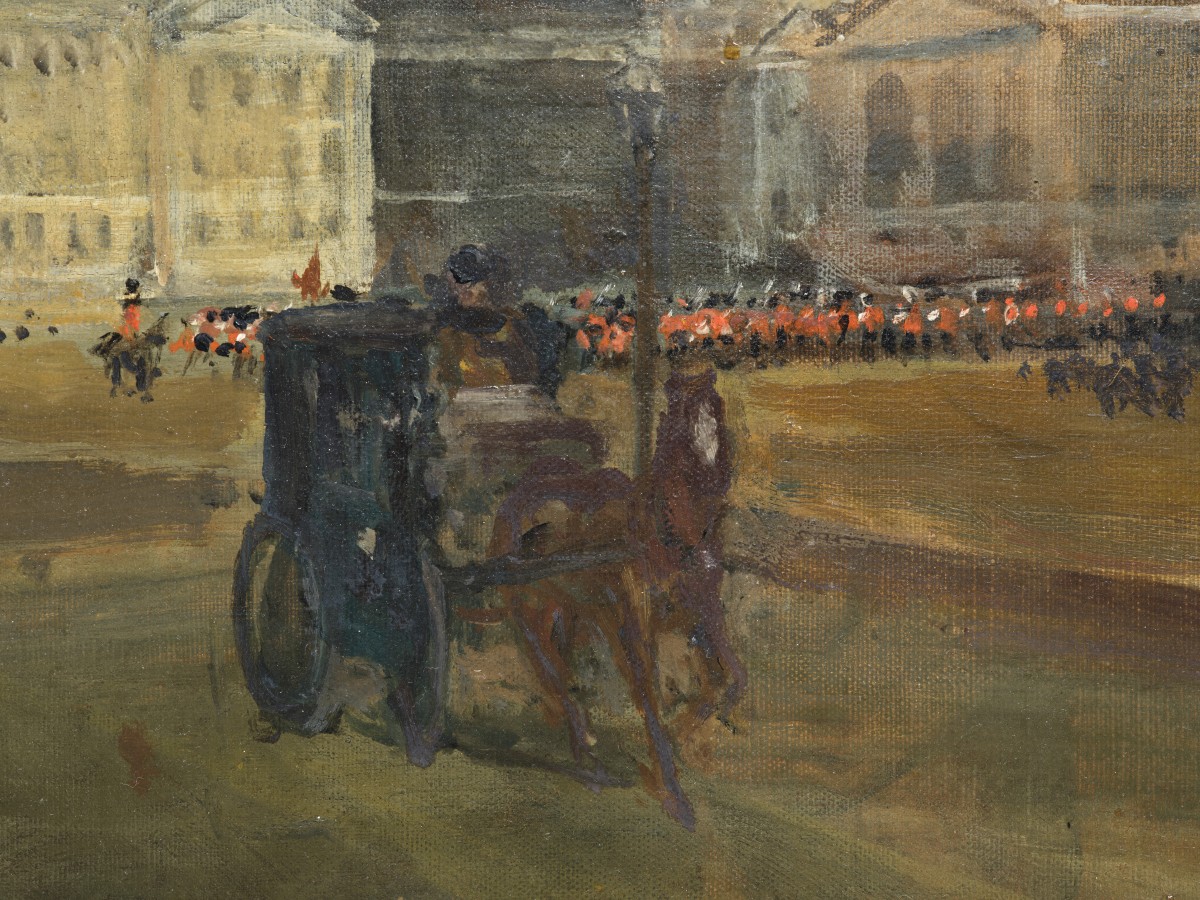
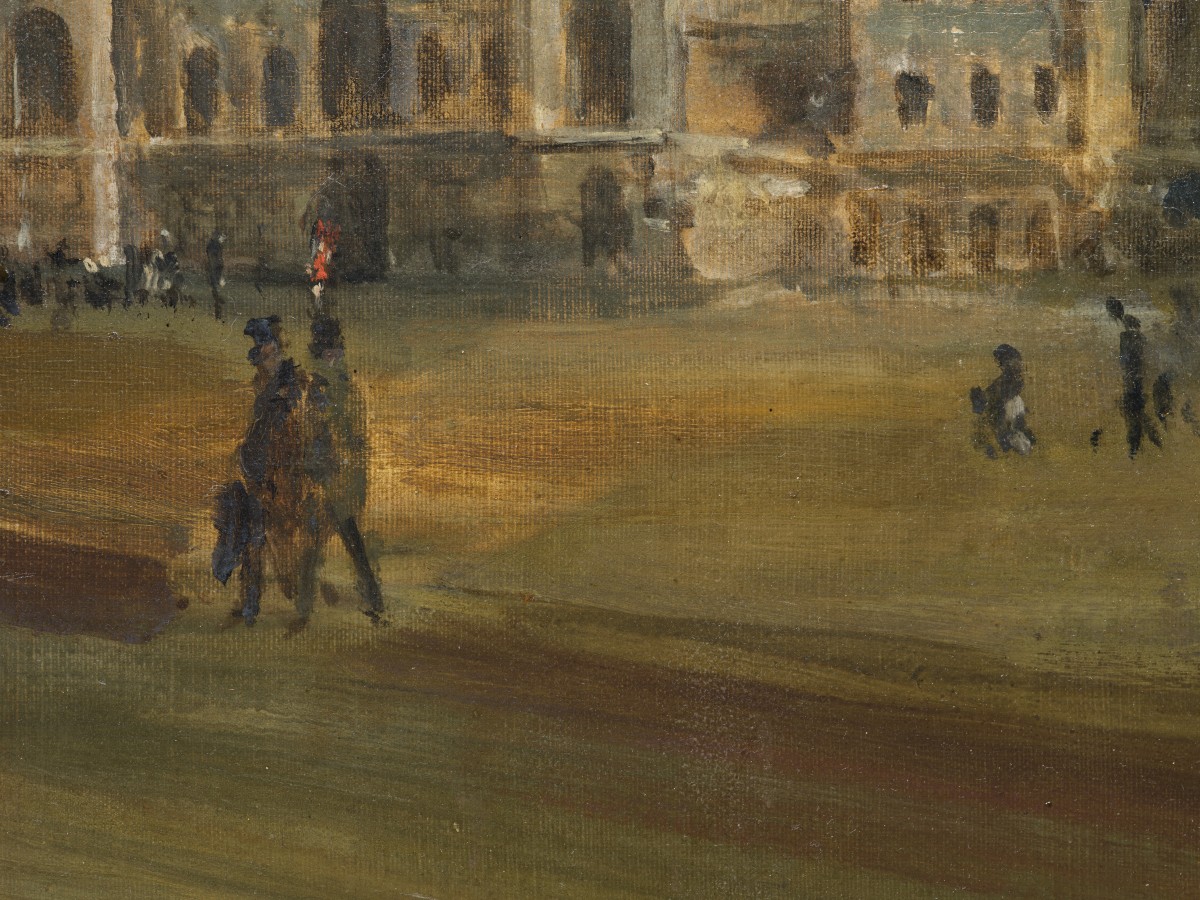
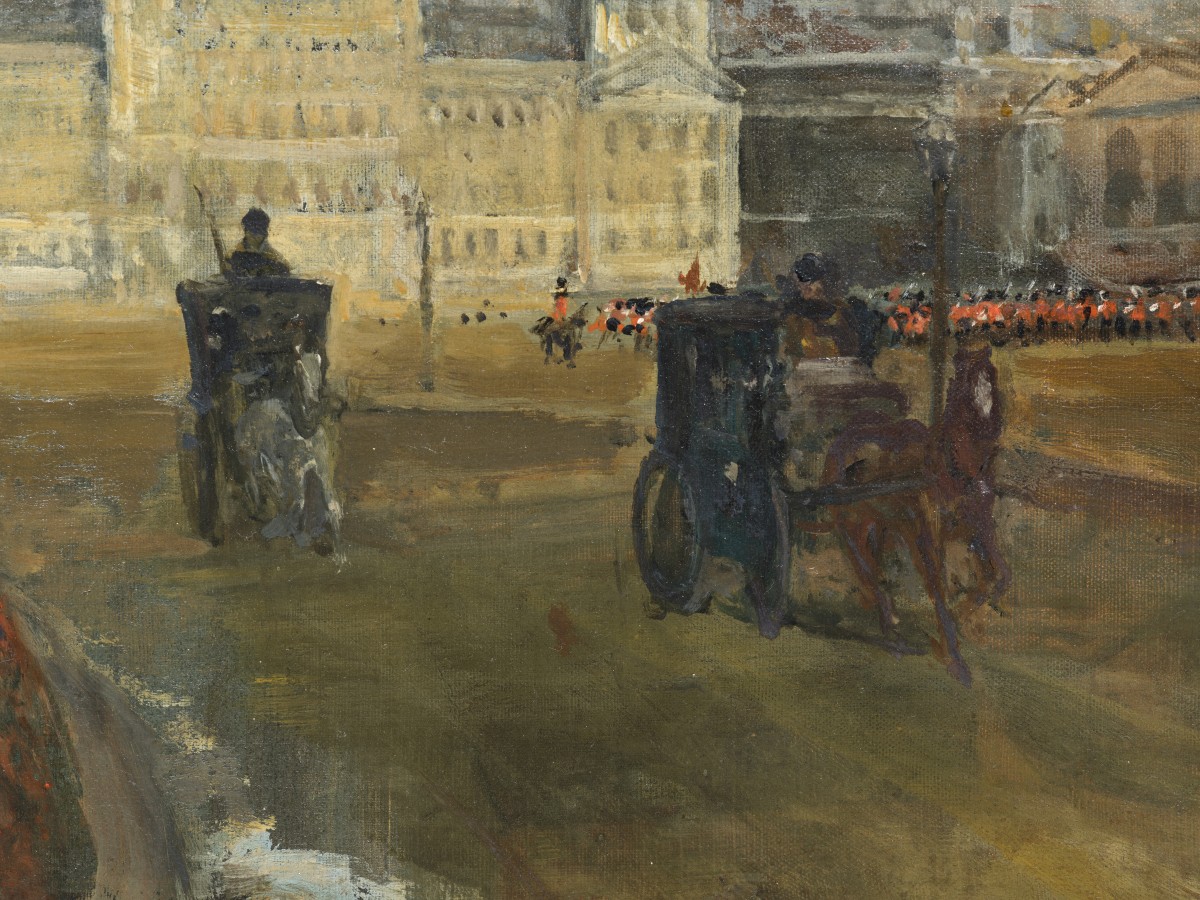
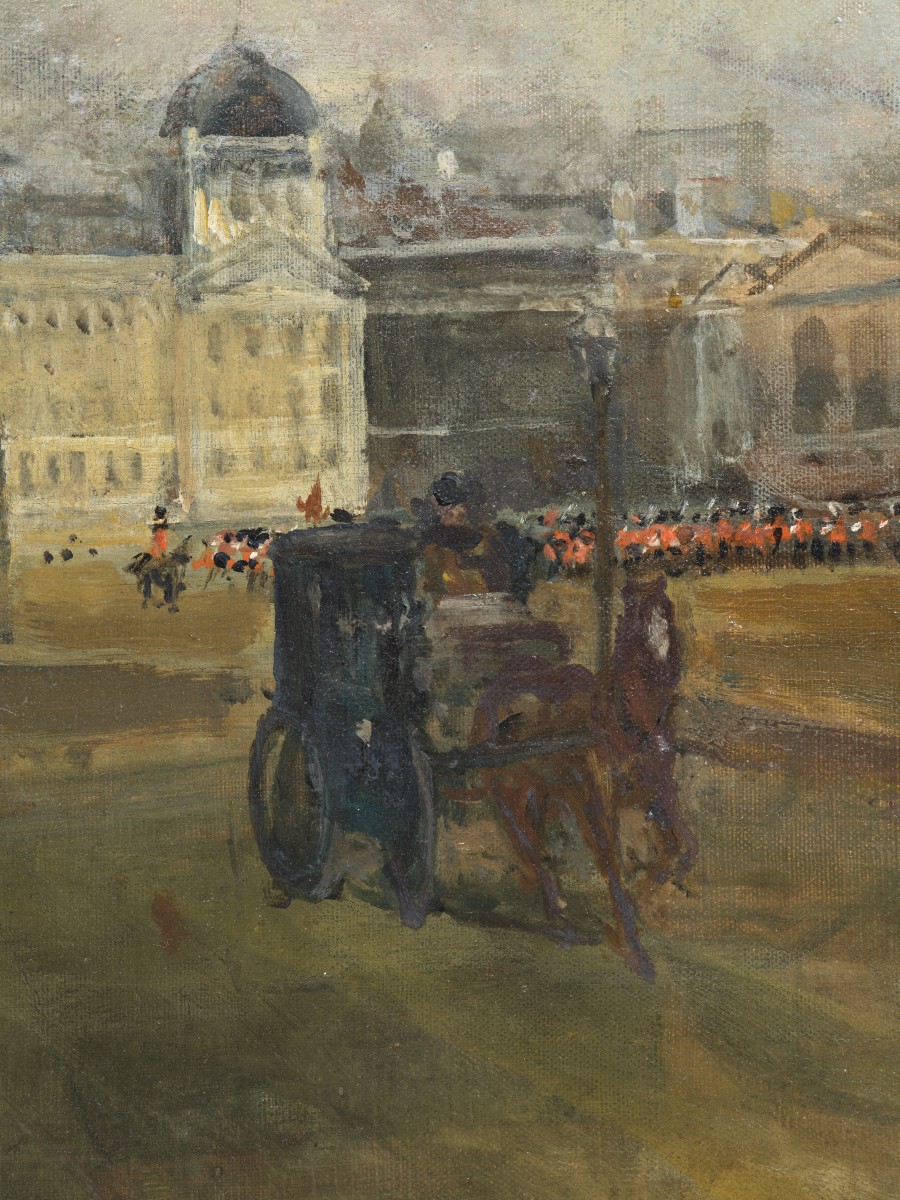
Horse Guards Parade is a parade ground situated on the edge of St James’s Park in London’s city centre. The vantage point chosen here by the artist, on the other side of Horse Guards Road, to the south-west of the parade ground, allows him to capture a comprehensive view of this large expanse of land. Employing an Impressionist touch, Blanche evocates the shifting nature of the sky and the movement of light, depicting a ray of sunlight illuminating the facades of the Admiralty whilst a regiment of Life Guards, represented by small red dots (for their tunics) and black dots (for their horses), is leaving the Horse Guards building.
The arrival of two horse-drawn carriages, the passers-by barely sketched in the foreground and those preparing to cross the road in the middle of the composition create a sense of movement that brings the painting to life. The sky, meanwhile, occupies almost half of the composition and is reflected in the foreground in the puddles at the edge of the road, guiding our gaze towards the fleeting glow on the façade of the Admiralty.
3. Provenance and framing
Our painting comes from the estate of Charles de Selincourt, a businessman and heir to a family of textile industrialists who was known for his love of yacht racing (he had been part of the crew that competed in the 1958 America’s Cup aboard the Sceptre).
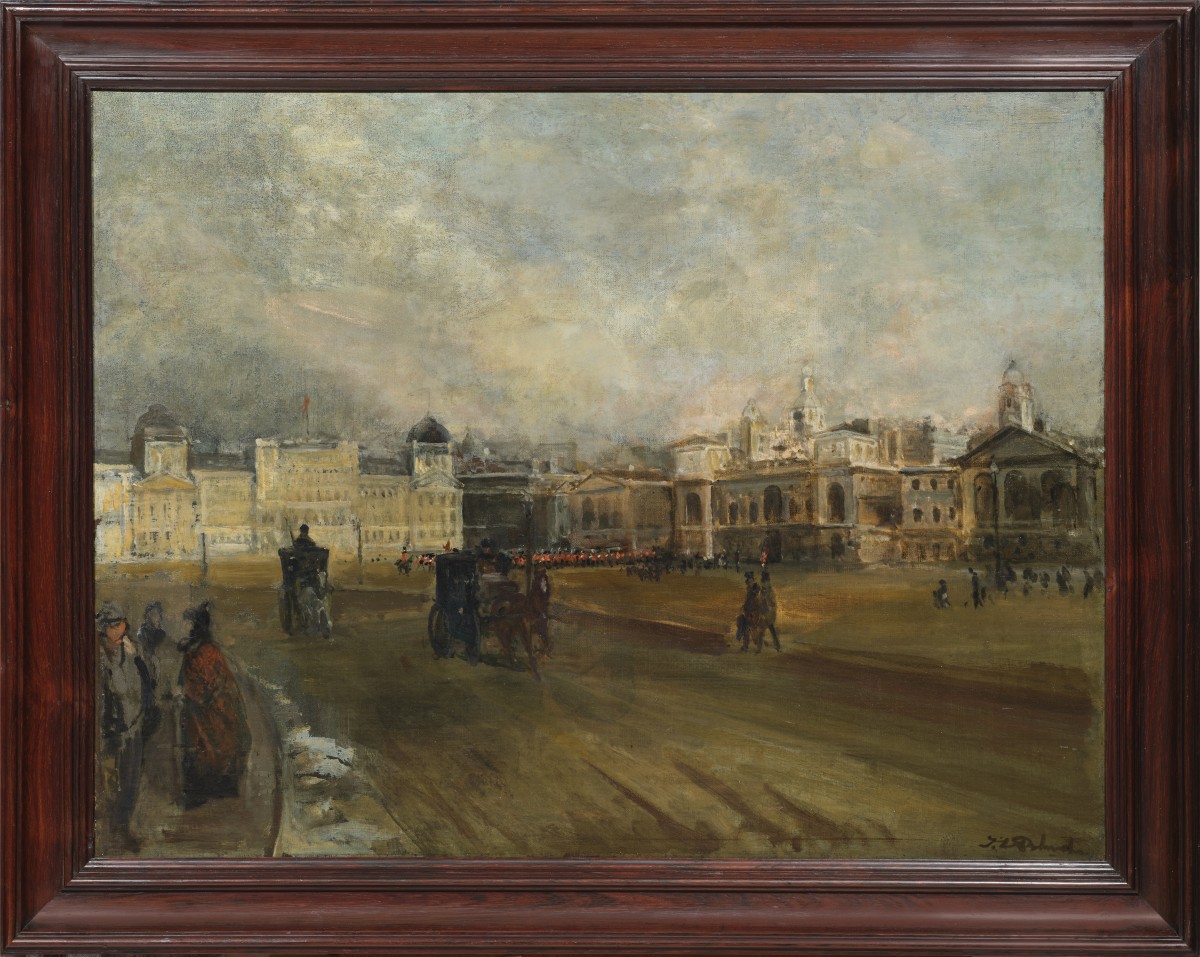
Since its acquisition, we have reframed this painting in an early 20th-century English mahogany frame whose warm colour harmonises particularly well with the tones of our painting.
Main bibliographical references:
Jane Roberts – Jacques-Emile Blanche – Gourcuff Gradenico 2012
Jane Roberts and Muriel Molines – Online catalogue raisonné
Delevery information :
The prices indicated are the prices for purchases at the gallery.
Depending on the price of the object, its size and the location of the buyer we are able to offer the best transport solution which will be invoiced separately and carried out under the buyer's responsibility.