Offered by White Rose Fine Art

Hendrick Verschuring (Gorkum 1627 – 1690 Dordrecht)
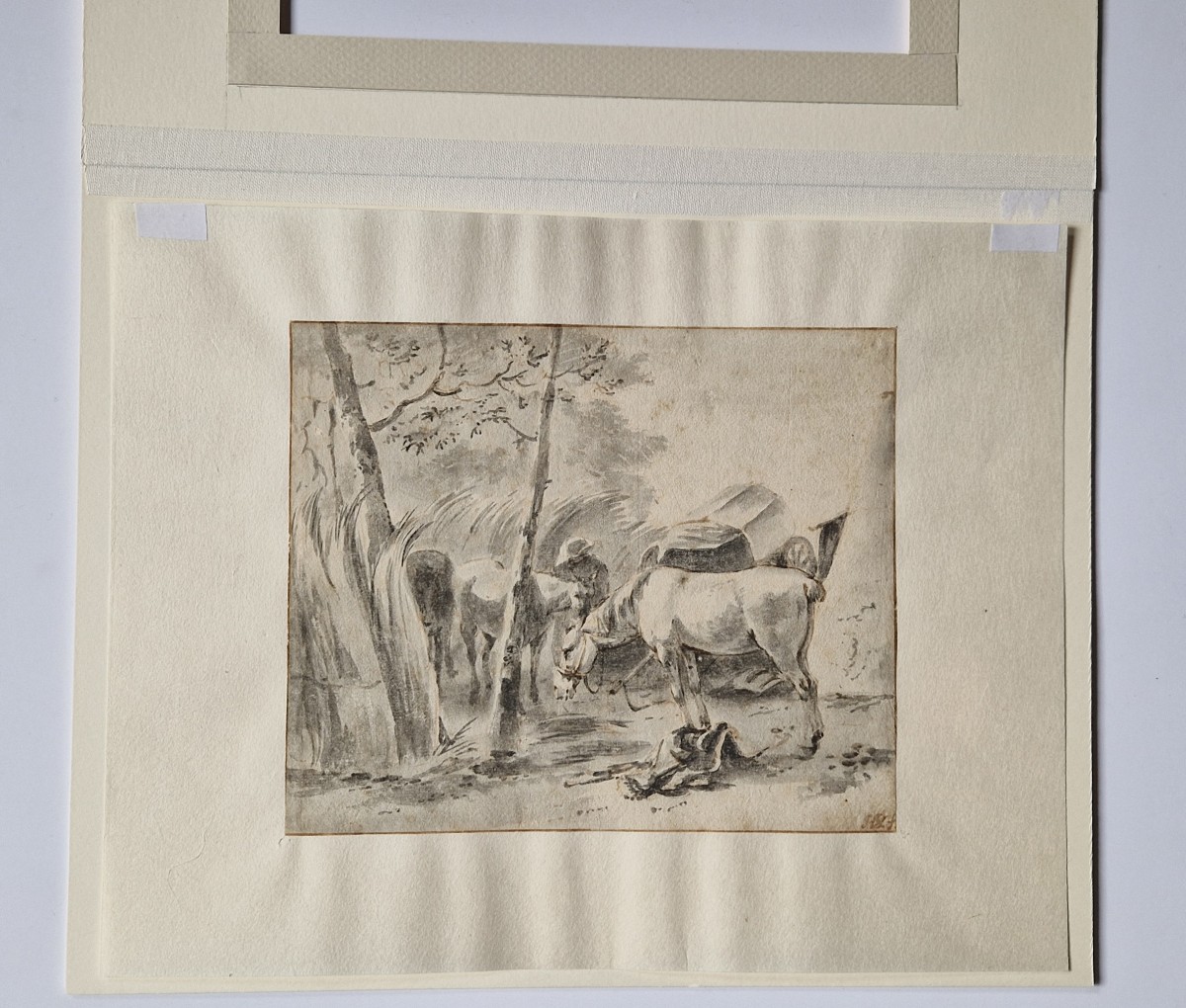
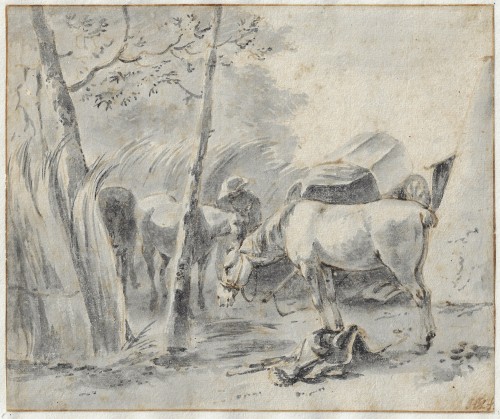
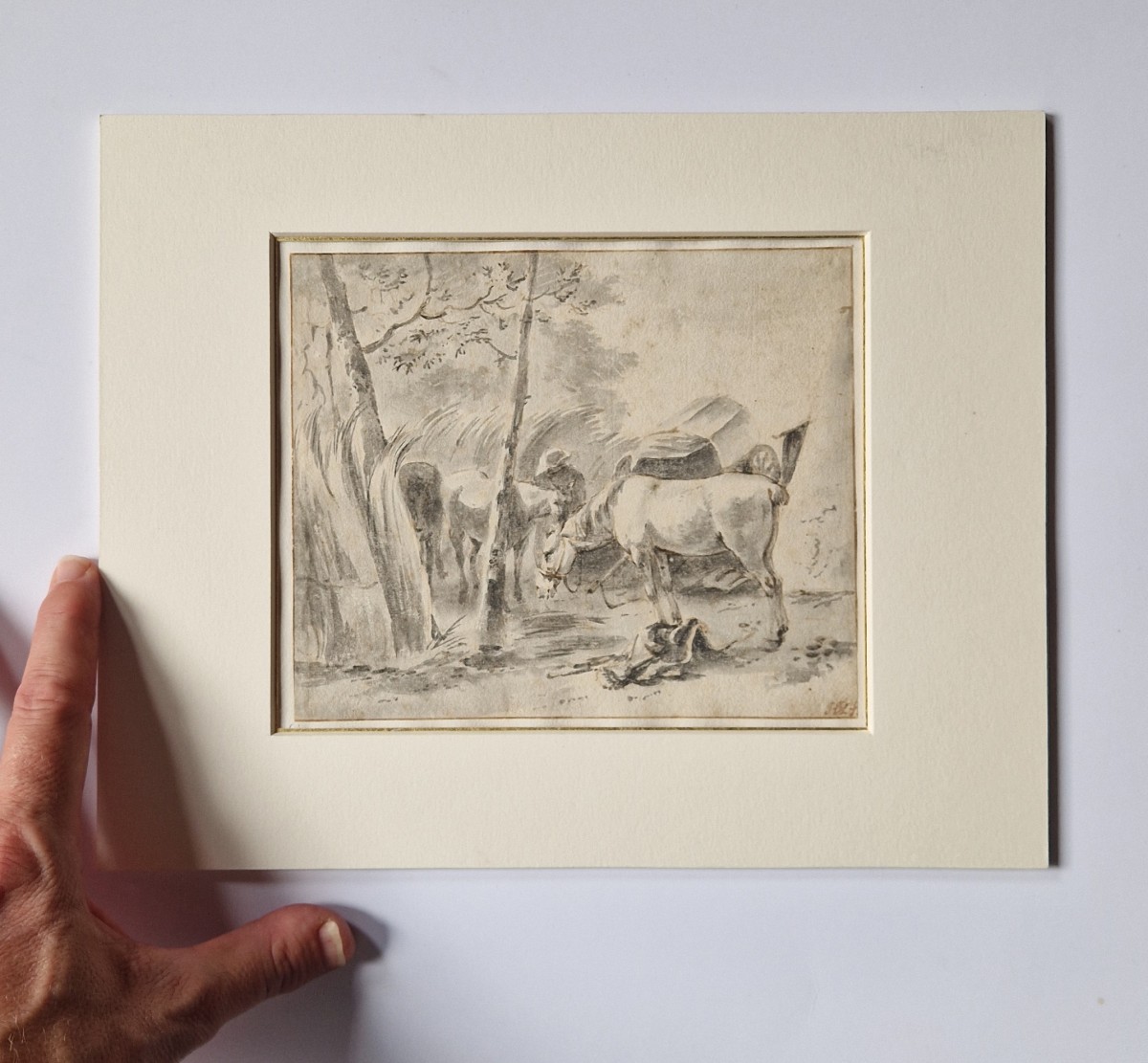
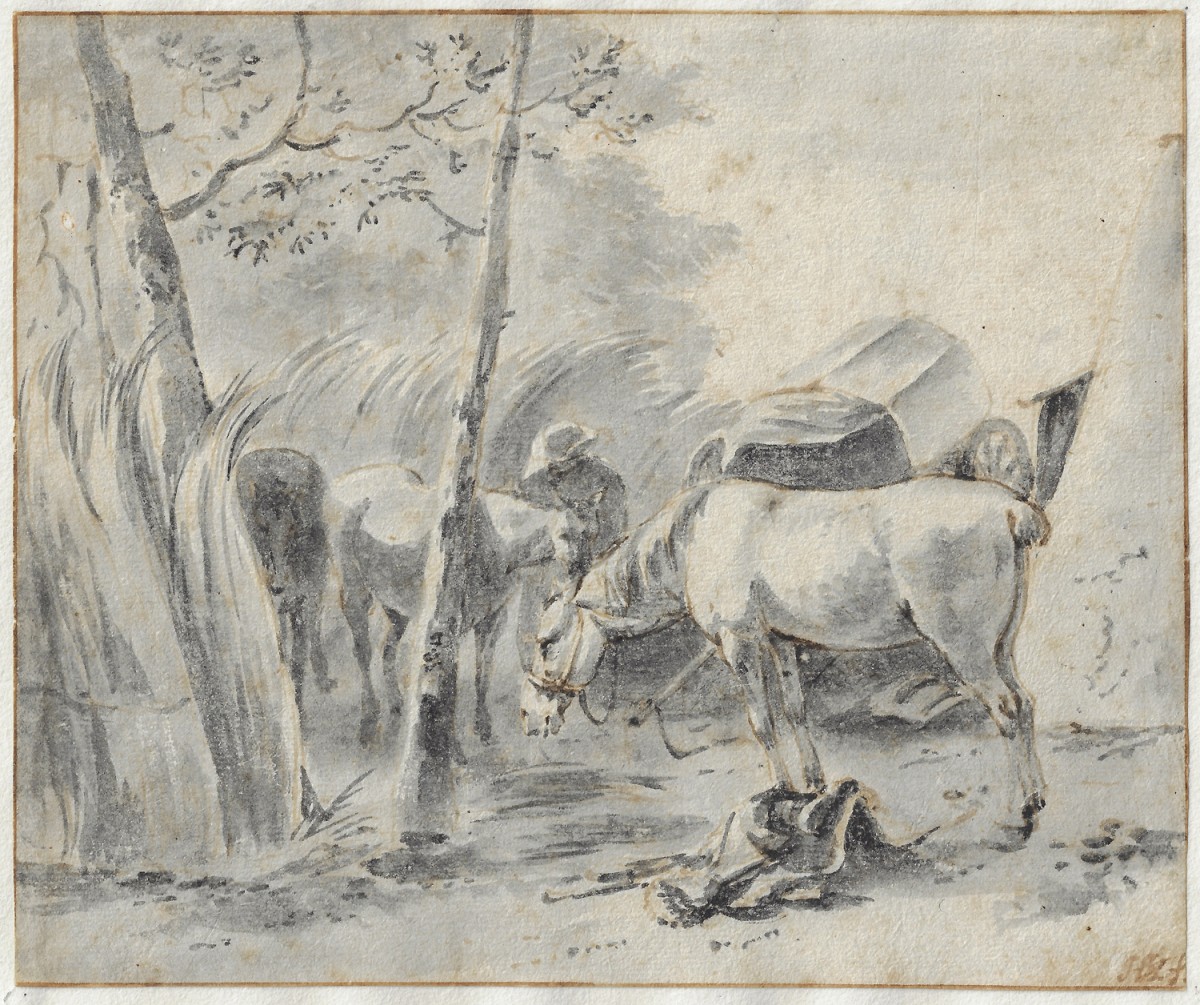
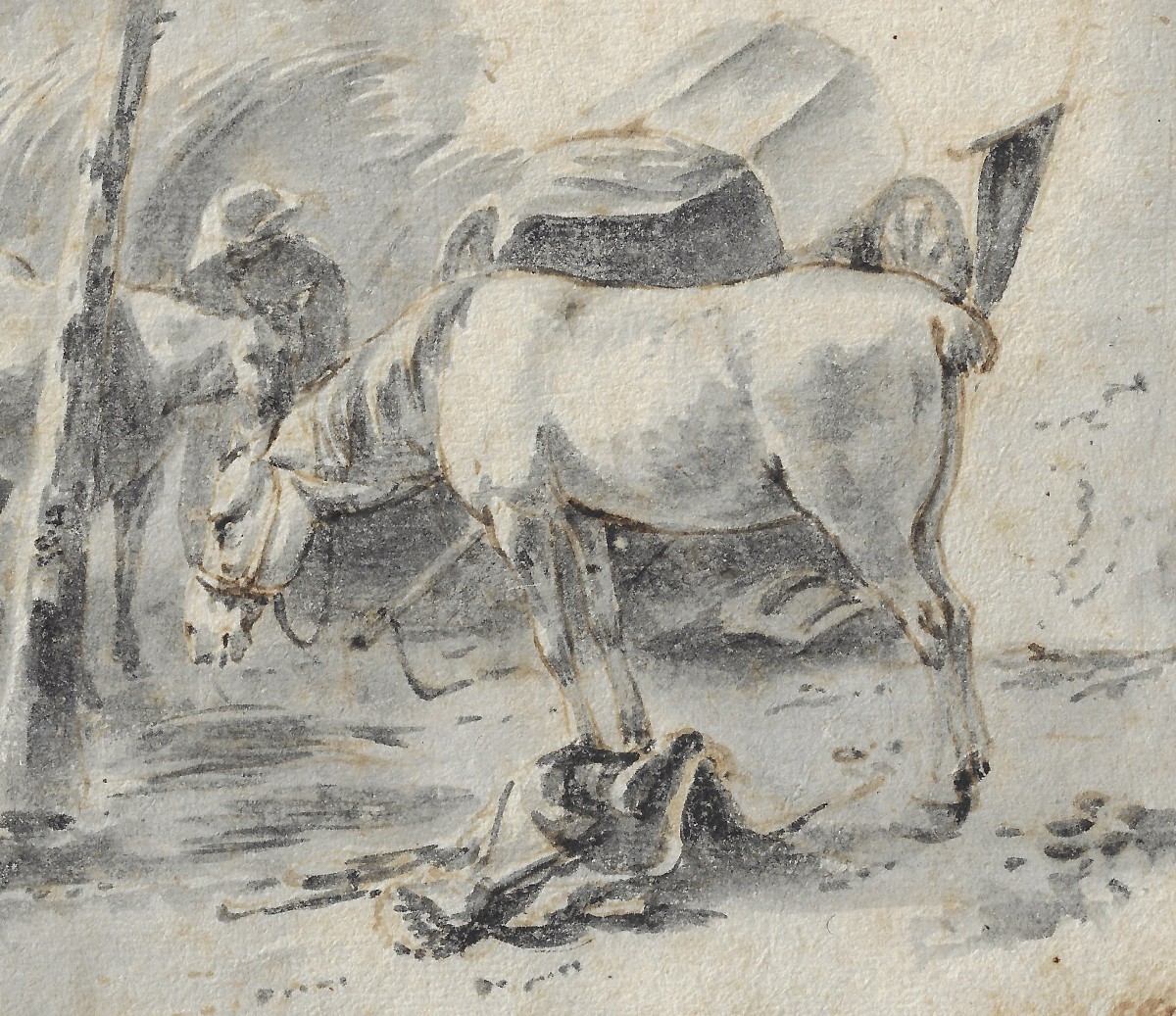
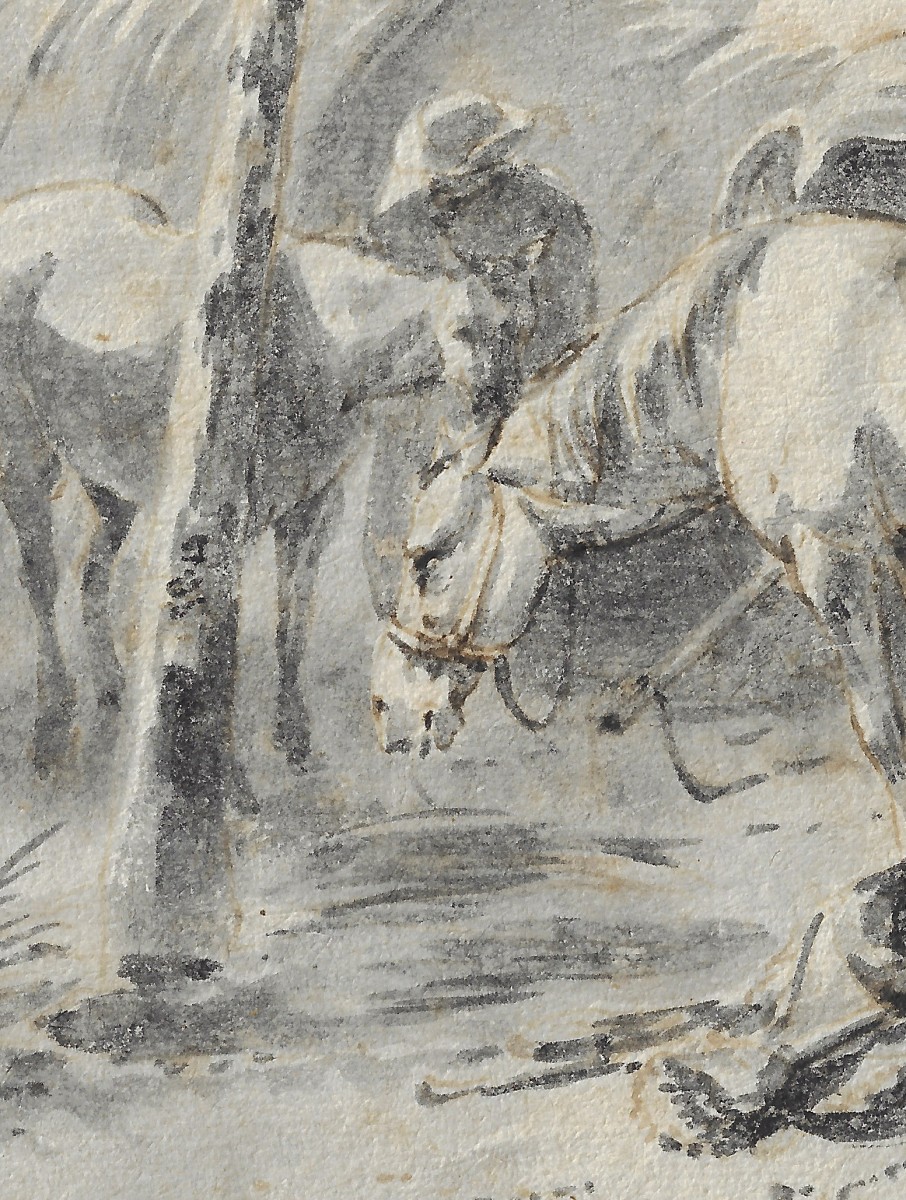
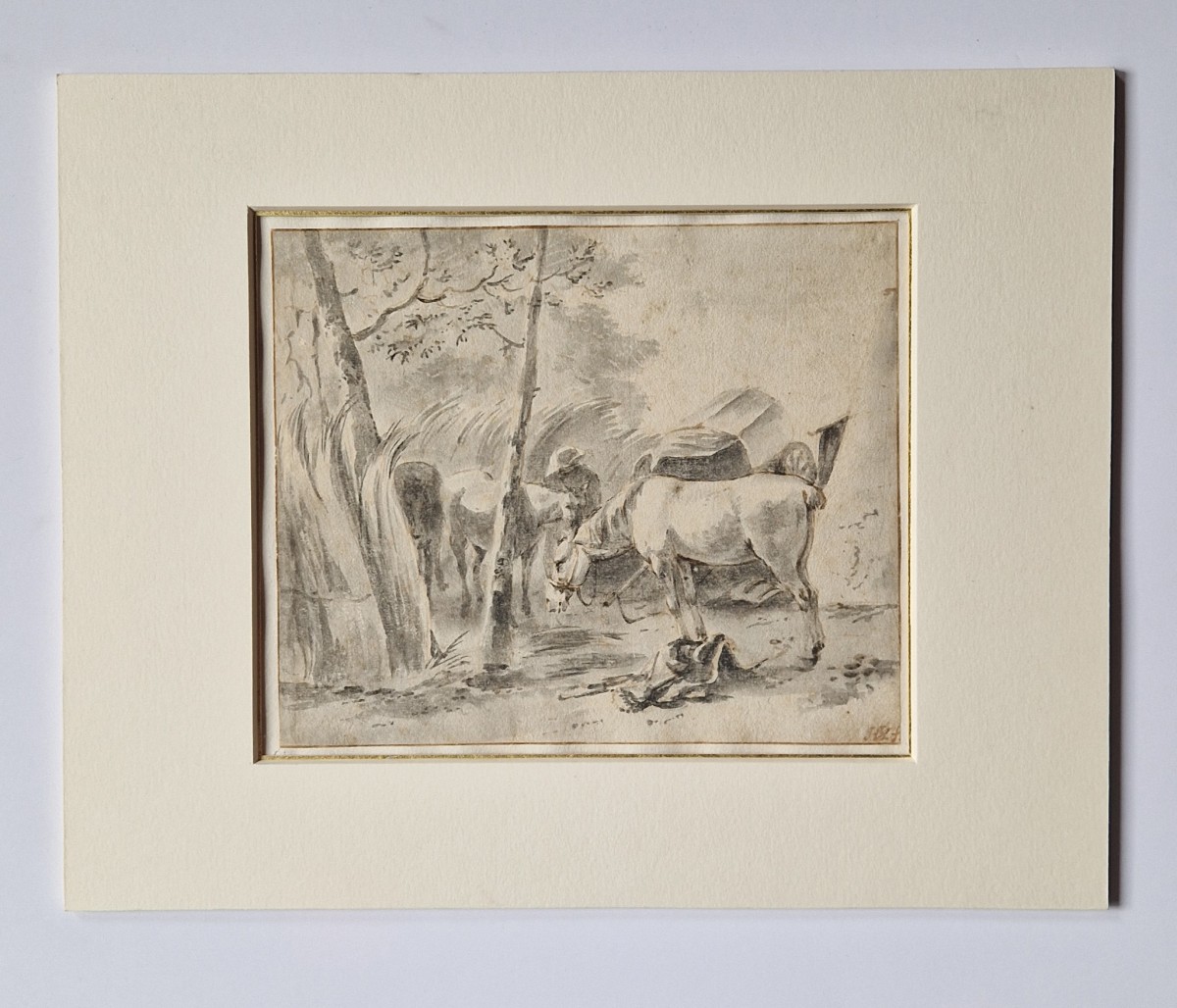
Horses Resting near a Carriage in a Field
Pen and brown ink, grey wash, brown ink framing lines, fragmentary watermark crowned shield, 148 x 179 mm (5.8 x 7 inch)
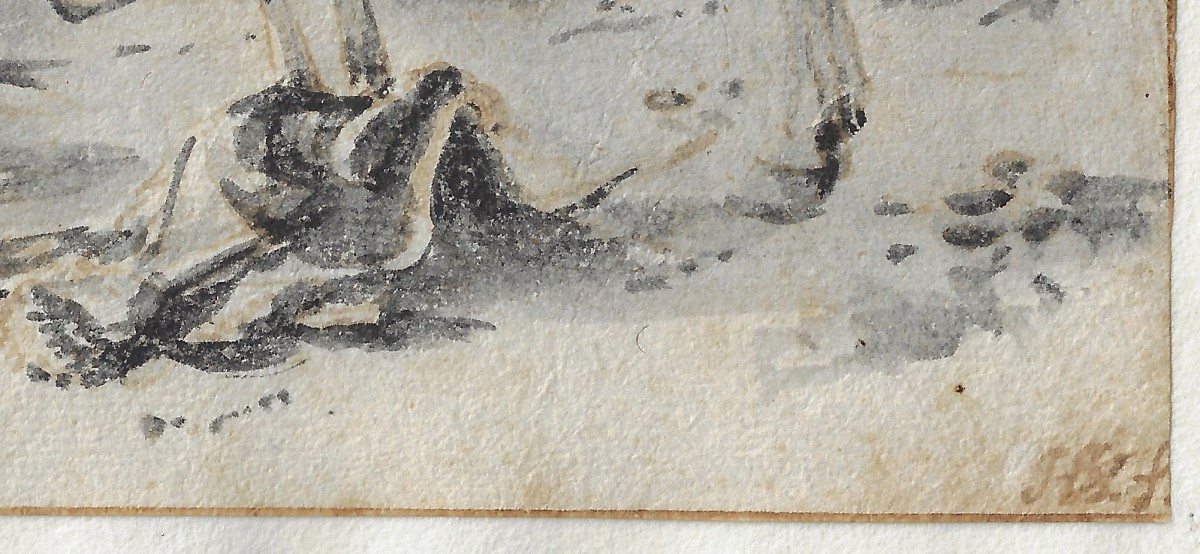
Signed with monogram ‘HVS f’ (pen and brown ink, lower right)
Provenance
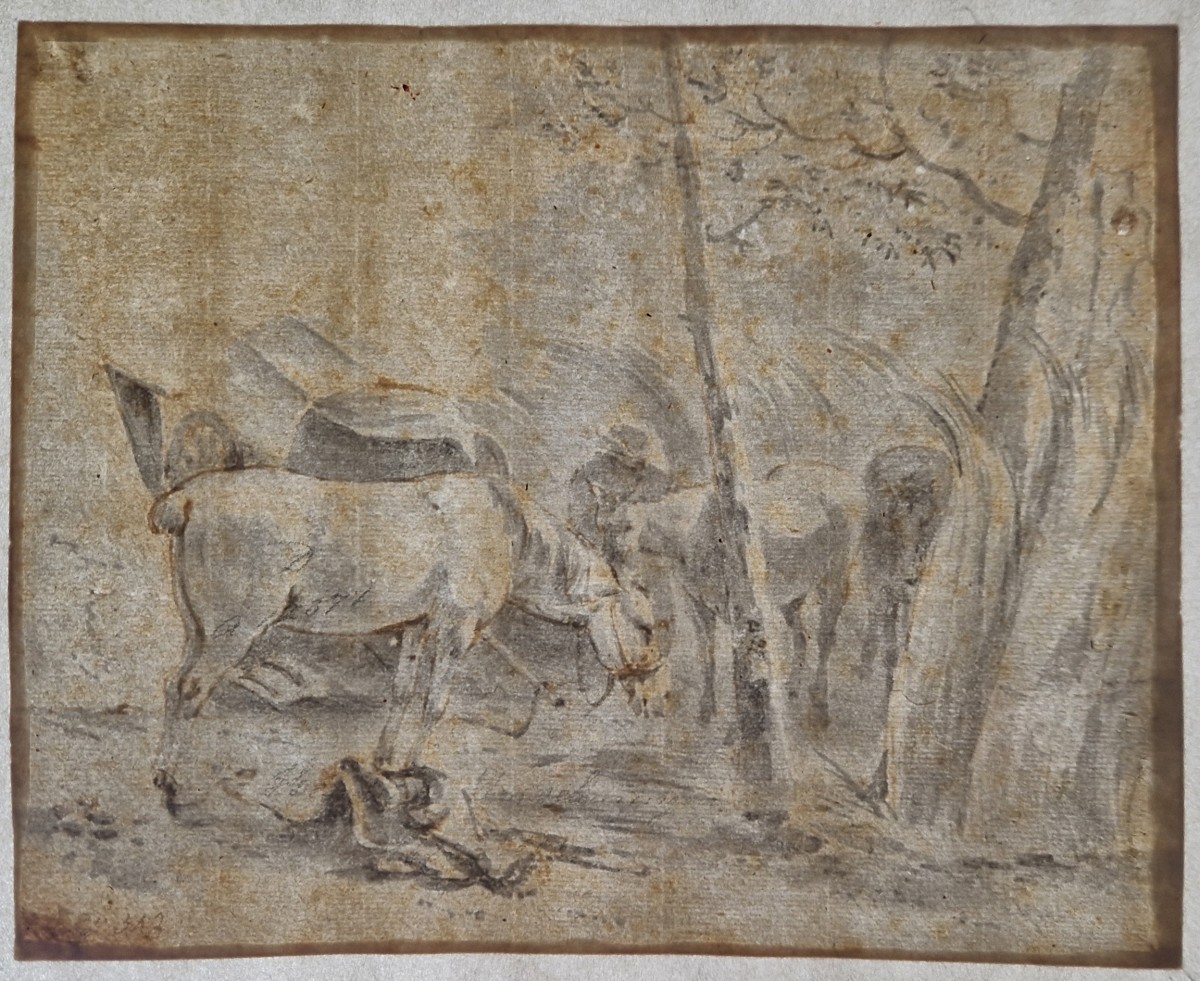
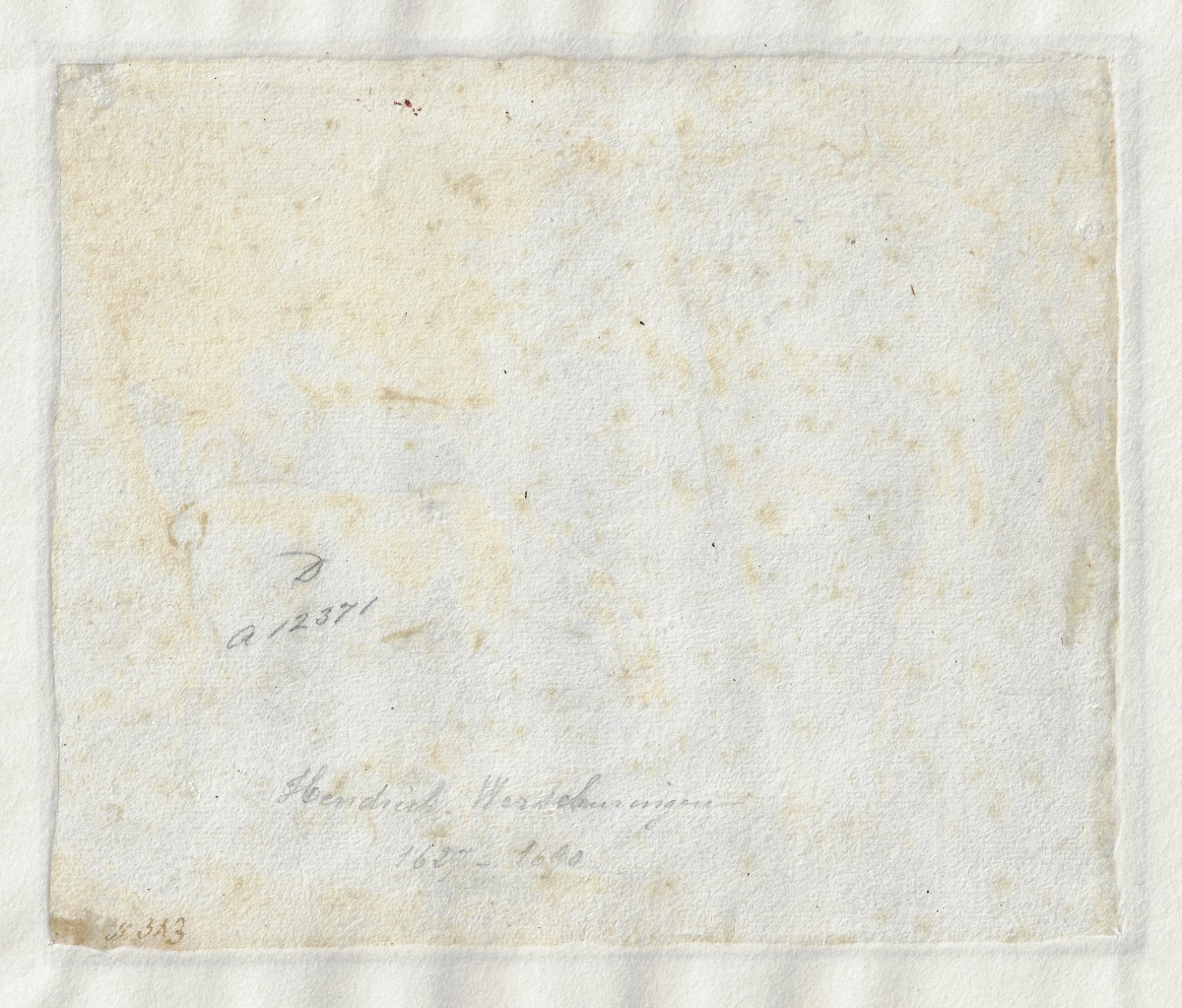
~ Inscribed ‘N 343’ (pen and brown ink, verso), possibly Jhr Johan Goll van Franckenstein (1722–1785), Amsterdam (Lugt 2987)
~ With dealer Jaap Wiegersma (1898–1967), Utrecht
~ Private collection, The Netherlands
***
Hendrick Verschuring was born in Gorkum in 1627, the son of Willem Verschuring, a captain in the service of the Dutch Republic and ‘hopman’ or flag bearer of the ‘schutterij’ civic militia.1 At the young age of eight, he was sent to learn drawing from the portrait painter Dirck Govertsz, as was recorded by the artists’ biographer Arnold Houbraken. Afterwards, aged thirteen, he entered the studio of Jan Both, where he remained for six years. Both’s Italianate landscapes influenced him greatly and encouraged Verschuring to embark on a journey to Italy, recording his impressions in drawings. Verschuring remained in Italy for a long time, more than a decade according to some authors, but in actuality probably around five years, and upon his return North painted Mediterranean scenes with figures and horses.
Paintings by Verschuring are preserved in the Historic Museum, The Hague, the Virginia Museum of Fine Art, Richmond, the Chrysler Museum of Art, Norfolk VA, the Galleria Nazionale, Rome and the National Gallery, London, while drawings by him can be found in the collections of the Herzog Anton Ulrich-Museum, Braunschweig, the Museum der bildenden Künste, Leipzig, the British Museum, London, and the Fondation Custodia, Paris.
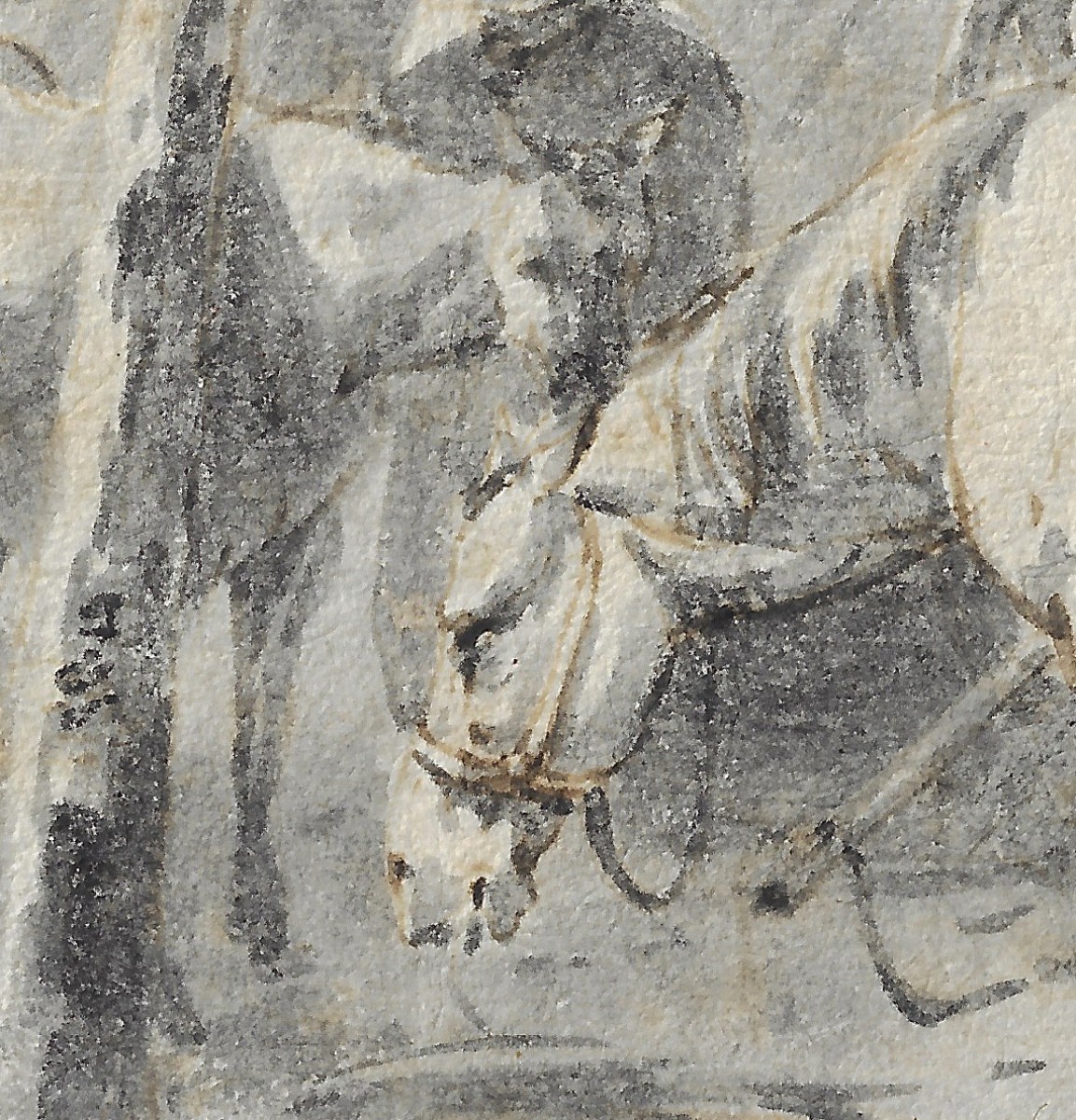
The present drawing is particularly accomplished and atmospheric, and seems to have been observed from life by the artist. It can for instance be compared to Verschuring’s drawing of a Man with a Horse and Two Dogs in the Rijksmuseum in Amsterdam, which also bears the artist’s distinctive monogram at lower right.2
1. For the artist, see Fieke Tissink and H.F. de Wit, Gorcumse schilders in de Gouden Eeuw, Gorkum 1987, pp. 58-71.
2. Pen and brown ink, grey wash, 132 x 122 mm, inv. no. RP-T-1888-A-1532(R).