Offered by Kollenburg Antiquairs
REQUEST INFORMATION

Specialised in 18th century furniture & decorative arts
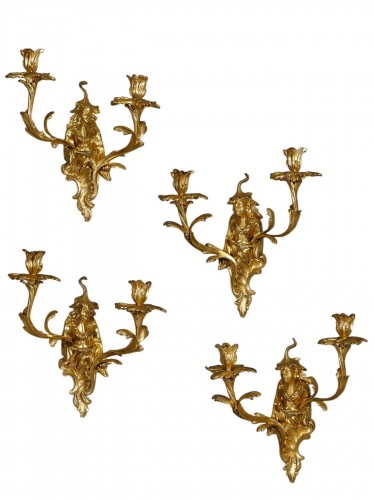
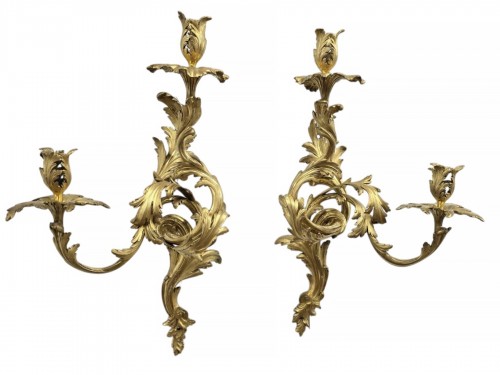
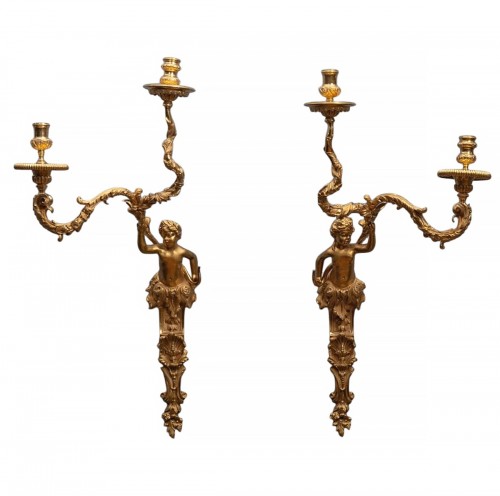
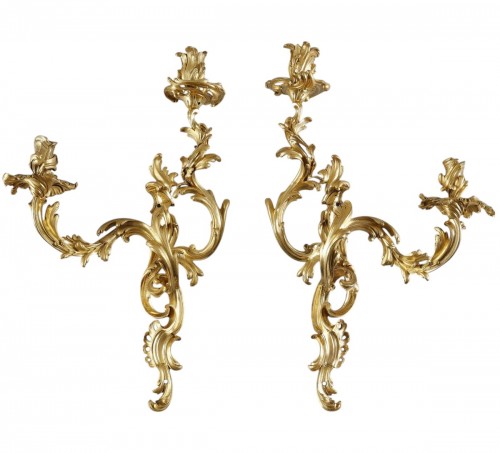
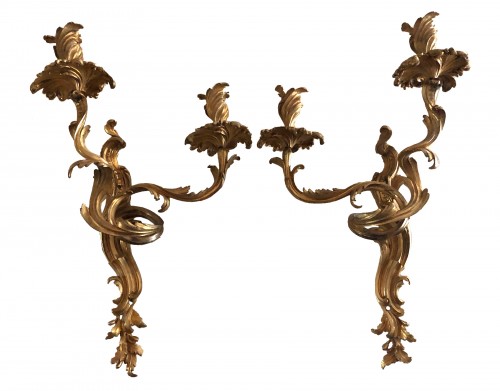
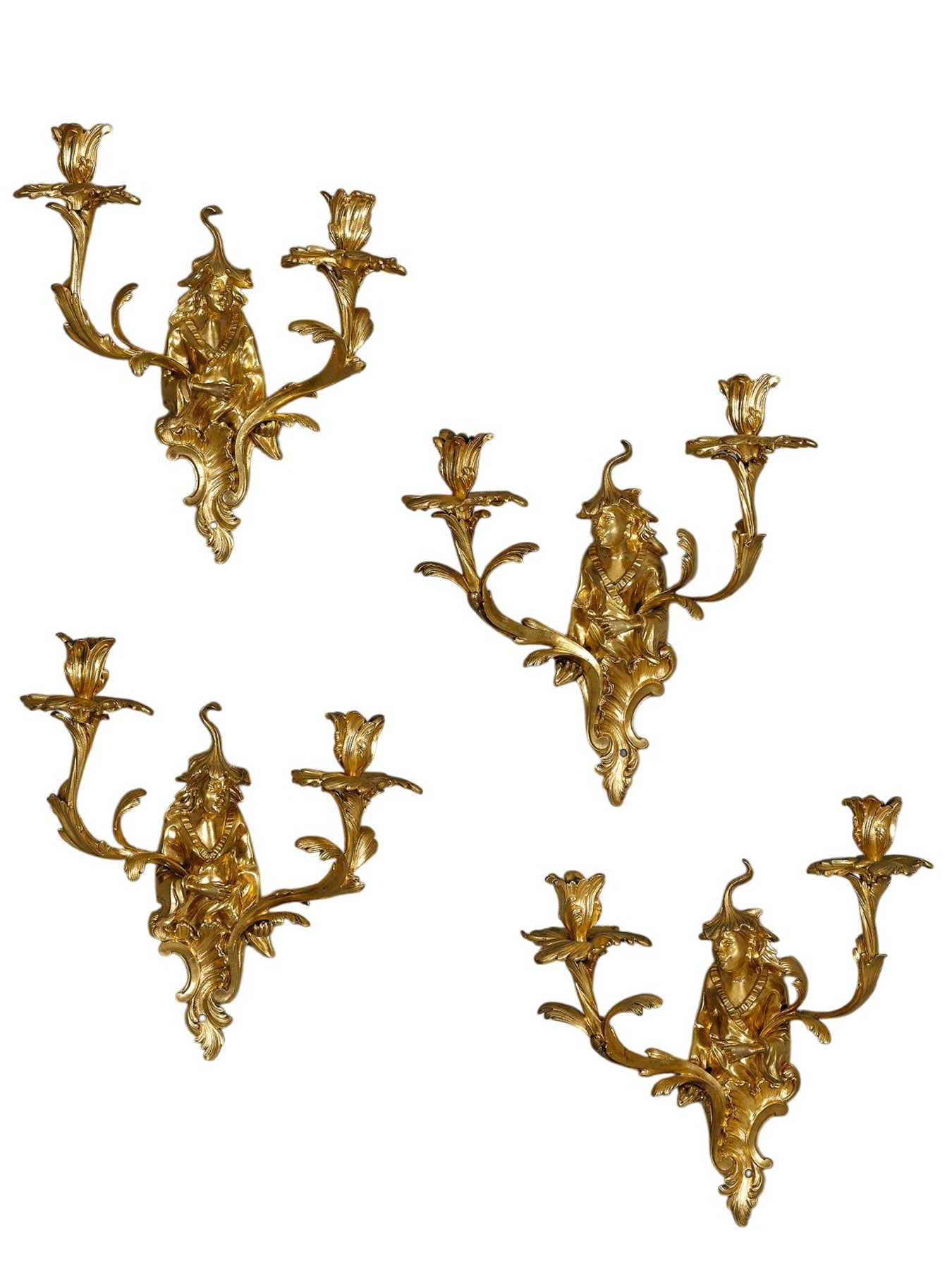
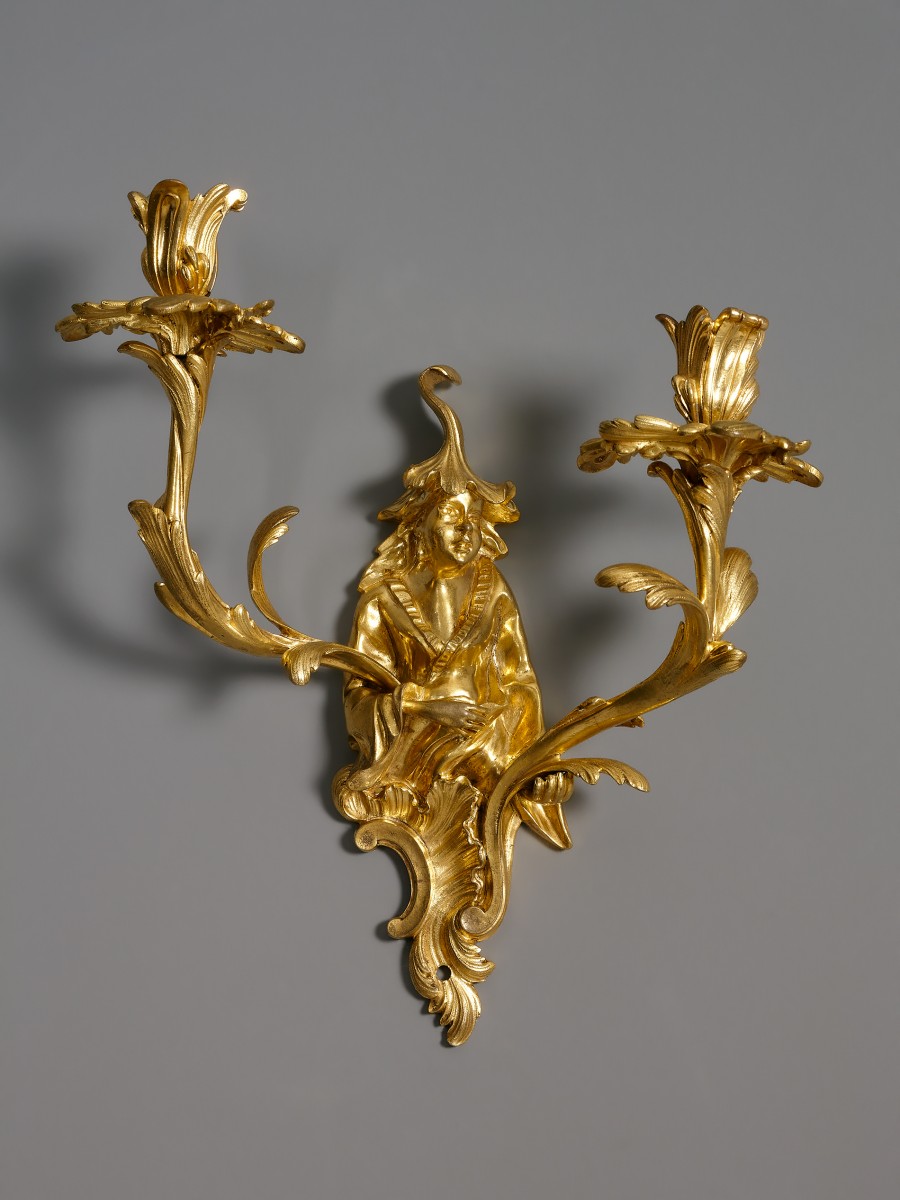
Four gilt bronze appliques, each with two arms that emerge from a rocaille-shaped wall plaque, surmounted by a fantasized oriental figure carrying the two unequal branch-shaped arms.
Chinoiserie is a European style: Certainly not an incompetent attempt to imitate the Chinese art, but rather an extremely fanciful interpretation based on what Europeans believed China to be like. In the absence of accurate information (Europeans were no longer allowed into China after 1657), people based their ideas on the stories of Marco Polo and personages such as the fictitious Sir John Mandeville, who reported on an entirely imaginary journey through China. The prints produced by Joan Nieuhof to illustrate the journey of the Dutch Embassy to the Chinese imperial court in 1655-1657 also influenced how Europeans perceived China. The result was an idealised, romanticised image of China in which the emperor was a wise man, all the ministers were philosophers and the upper class all lived in grand and magnificently furnished homes.
The European obsession with China reached a peak of elegance and frivolity in the 18th century, particularly under the influence of prints and paintings by Watteau and Boucher. People built pavilions in Chinese style, laid out Chinese gardens and furnished Chinese cabinets and parlours. The surviving cabinets and objects from this period offer a glimpse into how eighteenth-century Europeans viewed and idealized China. The style also reflected a certain global outlook on the part of the owner of such a room or object.
Similar appliques are to be found in the collection of the Rijksmuseum Amsterdam BK-16898-A/B/C/D. See also: Reinier Baarsen, Paris 1650-1900, Decorative Arts in the Rijksmuseum, 2013, pp. 190-193. Other similar appliques were sold at Sotheby’s Parke Bernet, New York, in February 1978 under lot 64-66. These wall lights, with the same figures, were located at Altdöbern Castle in Germany until shortly before WWII.