Offered by Galerie Lamy Chabolle
REQUEST INFORMATION

Decorative art from 18th to 20th century
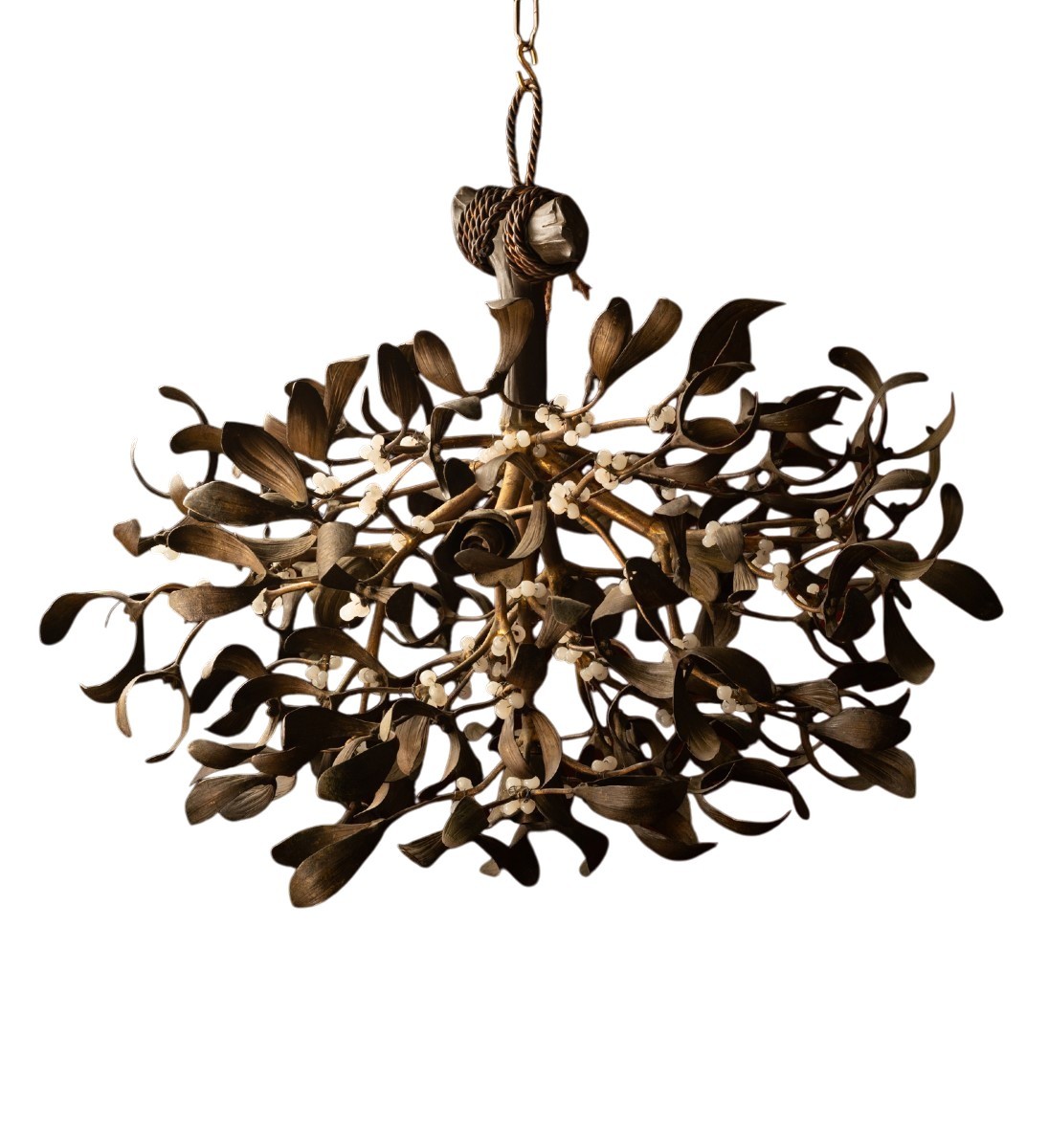
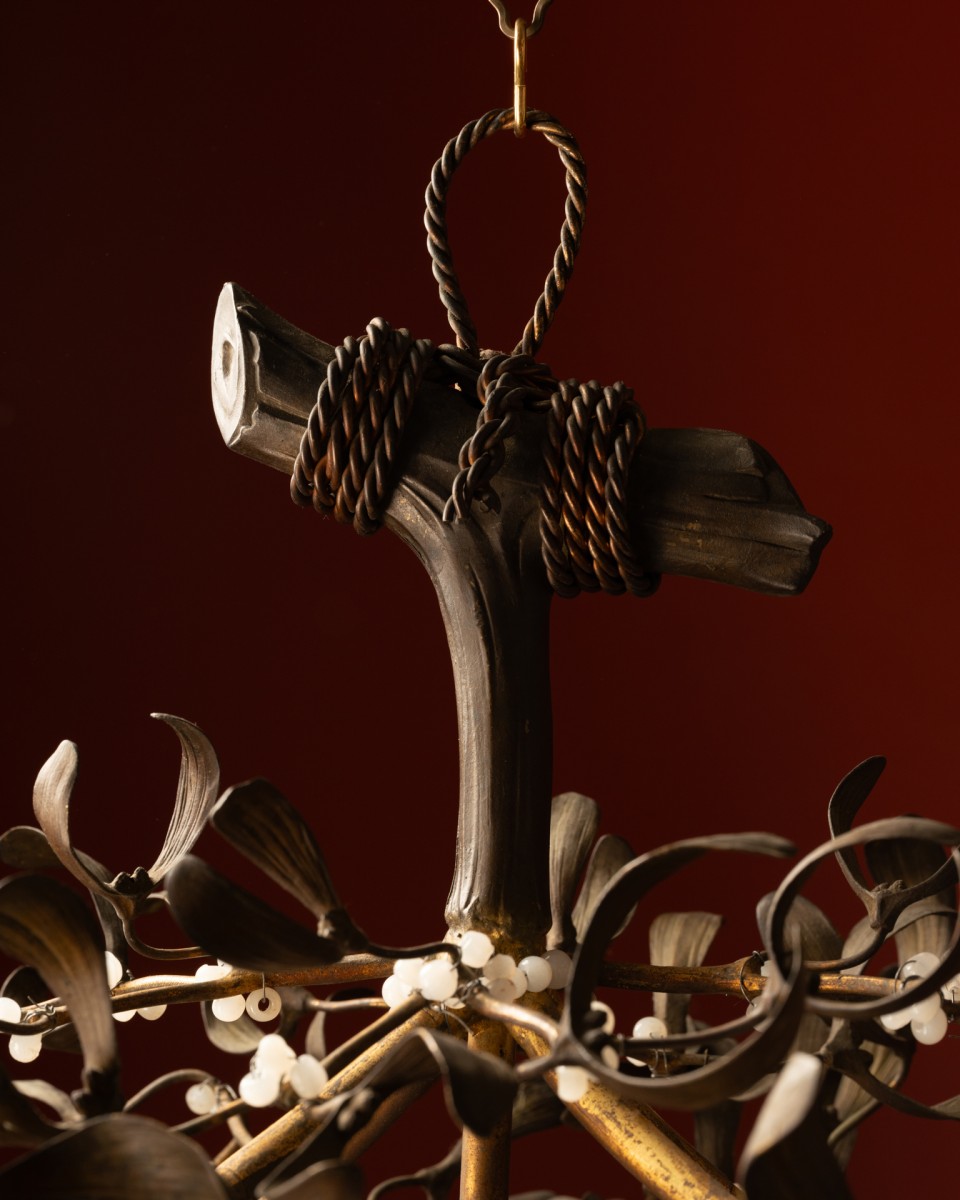
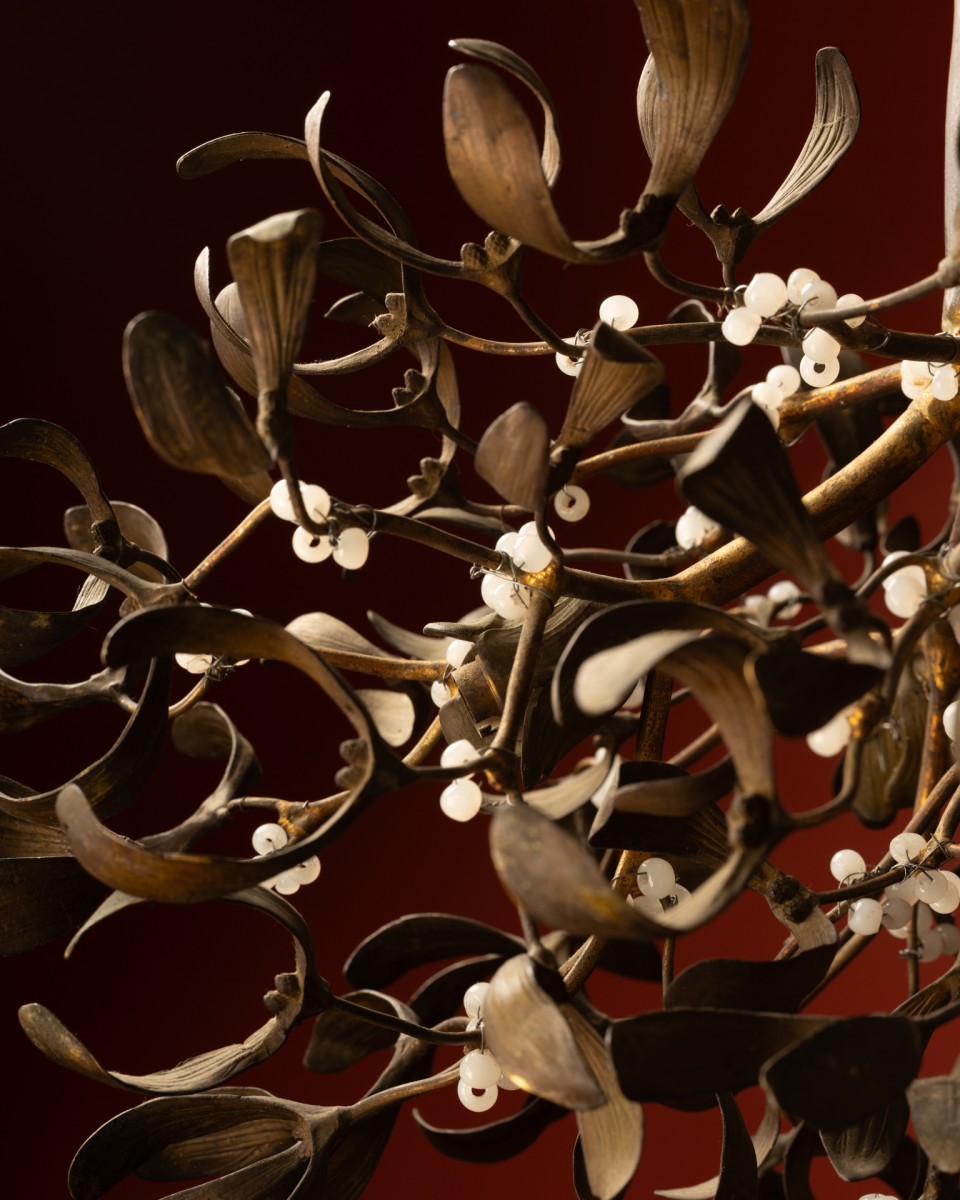
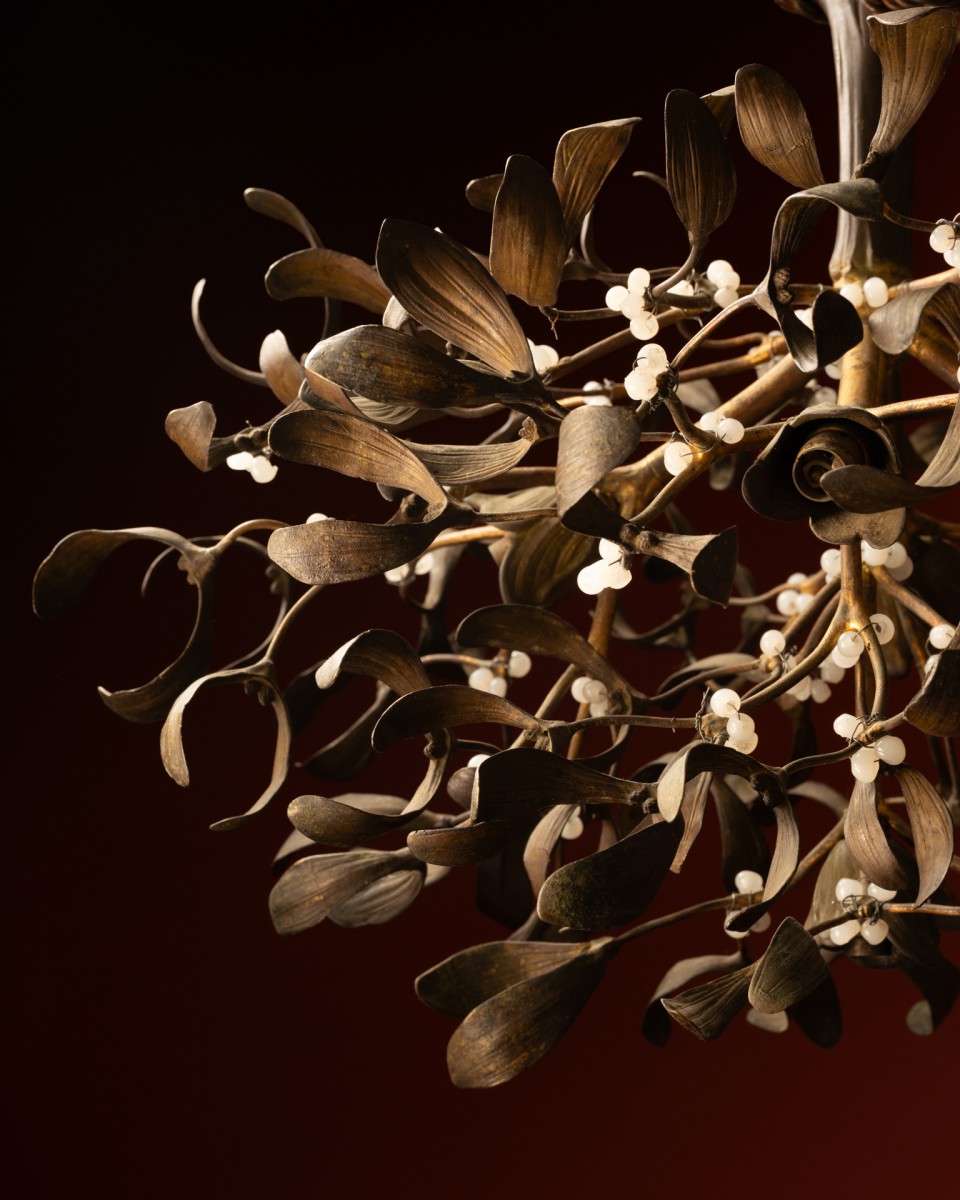
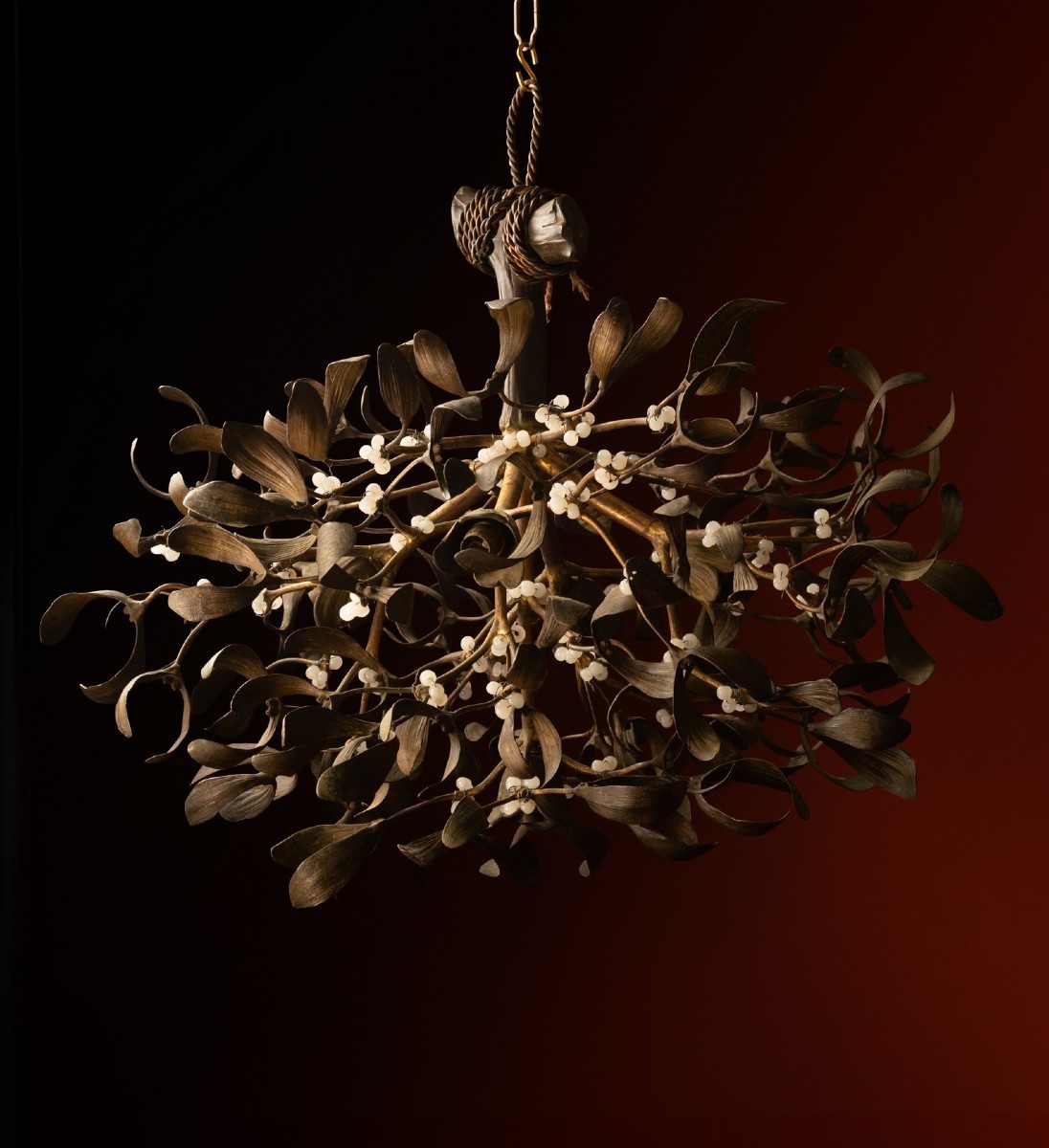
An Art nouveau Mistletoe chandelier, École de Nancy
Parcel-gilt bronze, opaline
Nancy
ca. 1900-1910
50 x 60 x 60 cm (19.7 x 23.6 x 23.6 in.)
Attributed to the artiste-décorateur Jacques Gruber on the basis of a similar chandelier held at the Musée de l’École de Nancy. In 1903, Gruber designed an extensive office suite for the executive Charles Masson, which included a desk, bookcase, filing cabinet, paneling, and most notably, five electric chandeliers. The ensemble was titled Au gui l’an neuf — a theme also adopted for a series of vases by Joseph and Pierre Mougin — referencing a belief then prevalent in public school manuals that the druidic ceremony of gathering mistletoe (Viscum album) marked the New Year in ancient Gaul.
At least one of the chandeliers designed for the Masson commission features the same patinated bronze mistletoe leaves and opaline pearl fruits as the present example. This chandelier differs from the Masson model only in its scale and the specific section of the branch from which it originates, which is here tied with a slender gilded bronze cord.
The mistletoe motif occupied a central position in the repertoire of the École de Nancy, serving as a symbol of renewal and a marker of Gallic identity following the loss of Alsace and Moselle in 1870. Émile Gallé had previously explored this iconography at the 1889 Exposition Universelle with his monumental table Le Rhin, carved by Victor Prouvé and inscribed with a passage from Tacitus's Germania: “The Rhine separates all of Germany from the Gauls.” Gallé also exhibited a Cabinet de chêne lorrain, œuvre française, adorned with bronze reliefs by Prouvé, one of which depicted a druid gathering mistletoe.
See Charles Delon, “Au gui l'an neuf !”, Manuel général de l'instruction primaire, t. XX, 1884 and Le Muse?e de l'École de Nancy. Œuvres choisies, Paris, 2009.